











































































Article Contents:
- Buy slatted wall panels: price and selection
- Buy slatted wall panels: what makes up the price
- Main types of slatted panels and cost differences
- Slatted MDF panels: price and when to choose them
- What is an MDF panel and why is it popular
- When MDF is the right choice
- What affects the cost of an MDF panel
- Slatted panels for painting: price and uniqueness of the solution
- Slatted wall panels: price per m2 — how to calculate correctly
- Why is the price of one panel not equal to the price per m2
- Step by step: how to calculate the cost of finishing
- Example of a full calculation
- What is included in the final cost of wall finishing with slat panels
- Panels
- Foundation Preparation
- Adhesive and fasteners
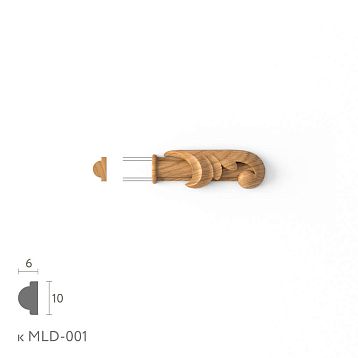
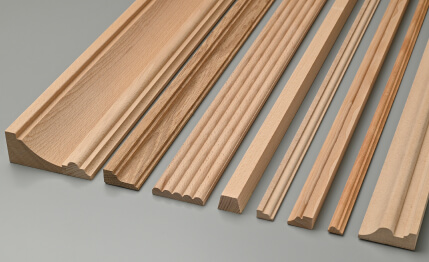
- Moldings around the perimeter
- Skirting
- Decorative corner elements
- Wall Decoration
- Lighting
- Installation
- Delivery
- Types of slat panels: a detailed breakdown for an informed choice
- MDF for painting
- MDF with Wood Finish
- Wooden Slat Panels
- Wall slat panels for interior finishing: photos and price — why you can't judge by the picture
- Price of MDF slat panels vs wooden ones: when the difference is justified
- How different types of slat panels compare in price: a practical scale
- How to choose slat panels before buying: a complete checklist
- Mistakes when comparing prices of slat panels
- Slat wall panels in interior design: where they work best
- Decorative slat panels: when to choose non-standard
- Where to buy slat wall panels: a systematic approach
- FAQ: popular questions with direct answers
- About the Company STAVROS




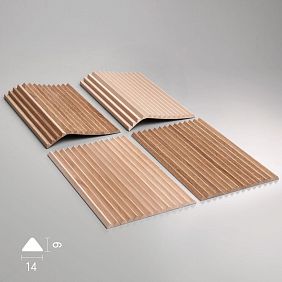
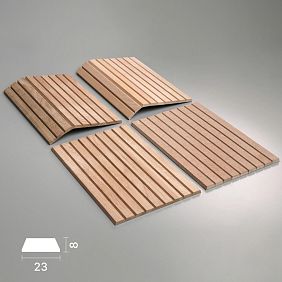
Buy slat wall panels: price and selection
The question of price doesn't come at the end of a conversation about finishing — it comes at the very beginning. And that's correct. Because renovation lives in real numbers, not in interior renders. But here's the paradox: most people searching for 'buy slat wall panels price' are looking in the wrong place. They compare the price of a single panel, not realizing that this is only a small part of the total cost.
This article is structured differently. We will break down pricing honestly and fully: what determines the price of slat panels, how to correctly calculate the cost of slat panels per m2, what is included in the final finishing budget, and how not to overpay where it's unnecessary. Plus — a complete breakdown of types, materials, and mistakes when comparing offers.
Read it like an instruction manual. No fluff here — only what you need to know before clicking the 'Order' button.




Buy slat wall panels: what makes up the price
The most common mistake when choosing slat wall panels is looking only at the cost of a single product. It's like choosing a car by only looking at the price of the wheels. The picture is incomplete.
The price of slatted panels consists of several layers. Understanding each of them is the ability to create a correct budget before starting the renovation, rather than being surprised by the final amount afterwards.
Here is what the wall finishing budget actually consists of:
-
The slatted panels themselves (material, size, coating)
-
Moldings around the perimeter — top, bottom, side
-
Baseboard along the bottom edge
-
Decorative corner and joint elements
-
Glue or mechanical fasteners
-
Base preparation (leveling, priming)
-
Installation work
-
Trimming and material allowance
-
Highlight if planned
-
Delivery
None of these points can simply be "forgotten." Each is real and affects the final amount. That is why the price of slatted wall panels is not a single line in a price list, but a system calculation.
slatted panels for walls STAVROS products have a clear system: panels, moldings, baseboards, decor. Everything is geometrically coordinated. You order a system, not a set of incompatible parts from different suppliers.
Our factory also produces:





Main types of slatted panels and cost differences
Before talking about specific numbers, you need to understand: the price of slatted wall panels fundamentally differs depending on the material. Not by 10–15%, but by multiples.
| Panel type | Where it is used | What affects the price | Price level |
|---|---|---|---|
| MDF for painting | Living room, study, commercial interior | Size, relief depth, primer quality | Base |
| Wood-look MDF | TV area, bedroom, hallway | Type of decorative coating | Medium |
| Wooden (solid wood) | Premium spaces, country houses | Wood species, finish, pattern uniqueness | High |
| Decorative wall panels | Accent areas, commercial interior | Profile complexity, coating | Medium |
The difference between basic and high price levels is real and significant. But something else is more important: a more expensive material is not always "better." It's a different task. MDF for painting for a design project with a precise color is more appropriate than solid oak under the same conditions. Wooden slats for a country study are more appropriate than MDF.
The right choice is one that exactly matches the room, style, and budget. Not "the cheapest" or "the most expensive" by default.
Get Consultation
Slatted MDF panels: price and when to choose them
Slatted MDF panel price is one of the most popular queries on this topic. And for good reason: MDF occupies the widest niche among all materials for wall finishing with slats.
What is an MDF panel and why is it popular
MDF (Medium Density Fiberboard) is a medium-density board made from wood fibers pressed at high temperature. Density — 720–880 kg/m³. Homogeneous structure without voids or knots. It is excellent for milling — this is why MDF produces the cleanest slatted profile with sharp edges and deep relief.
The price of MDF slatted wall panels is attractive for several reasons:
-
stable geometry — does not warp or dry out under normal conditions
-
predictability — each panel is identical to another
-
wide range of coatings — for painting, wood finish, enamel, lacquer
-
affordability for large areas without budget overruns
When MDF is the right choice
MDF panels are suitable where the following are important: precise geometry, wide color selection, the ability to fit the finish into a specific design system, and a reasonable budget for large areas.
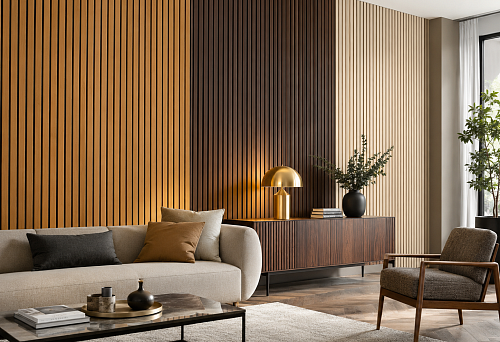
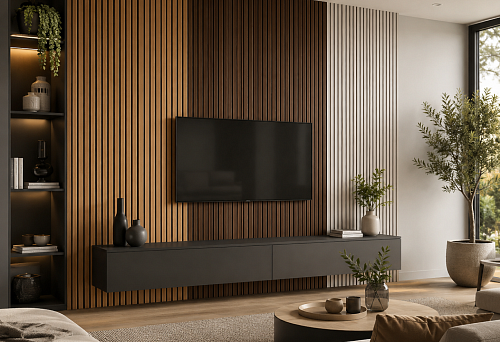
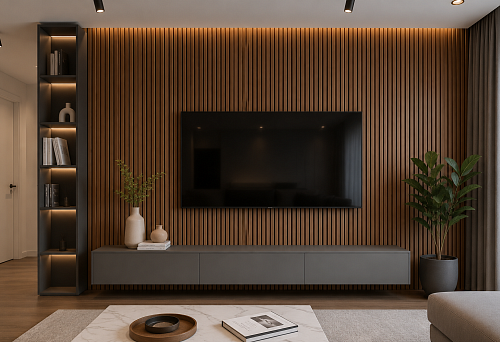
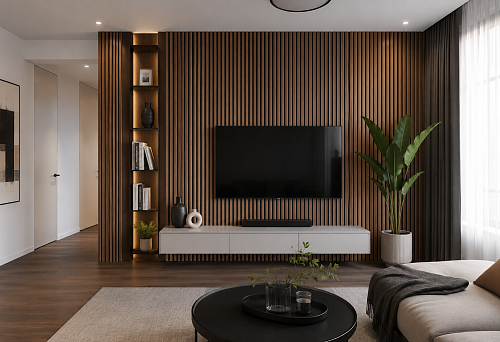
Living room. TV wall with slatted MDF panels in wood finish — a natural warm background, which is significantly more modest than the array, but visually convincing.
Study. MDF painted in a neutral tone creates a structured background without material dominance — an environment for concentration.
Hallway. The slatted rhythm on the accent wall of the corridor — a vertical that visually elongates the space. MDF is practical here: the hard surface with coating is resistant to mechanical impact.
Commercial interior. Meeting room, waiting area, reception — decorative slatted MDF panels with a properly selected coating deliver a professional result at controlled costs.
What affects the cost of an MDF panel
-
MDF density. High-density MDF (880 kg/m³) — cleaner profile, holds paint better, more expensive.
-
Thickness. Standard — 16–18 mm. A thicker panel — more material, deeper relief.
-
Slat width. Narrow slat (40–60 mm) — more frequent rhythm. Wide slat (120–150 mm) — calmer, larger scale. Wide is more expensive per unit, but when calculated per m² may be more economical.
-
Relief depth. Deep milling means more processing time. This is reflected in the price.
-
Coating. White basic primer is lower. Double "Prestige" primer with hand sanding is higher.
-
Panel length. Non-standard lengths are made to order with a surcharge.
Slat panels for painting: price and uniqueness of the solution
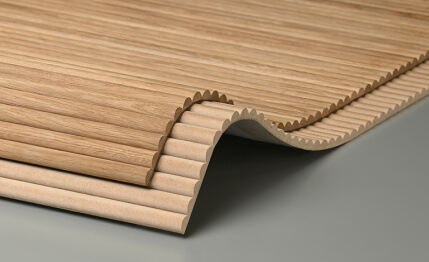
Among all categories Paintable lath panels hold a special place. It is a designer's tool, not just a finishing material.
The essence is in the freedom of color. White double primer with sanding — and the panel is ready to accept any acrylic water-based enamel. RAL, NCS, Farrow & Ball, any custom mix. This means: a slatted relief in the exact tone of the wall — a monochrome interior without a visible boundary between planes. Or a slatted accent in a contrasting color — a window frame, a furniture tone, a fabric color.
Slat panels for painting price is the cost of the panel itself plus painting. Painting must be done before installation: horizontal surface, spray gun, even layer, dry workshop. After installation, only the ends are touched up. This is the correct technology — and it is cheaper than trying to paint overhead after installation.
Why are slat panels for painting cost-effective with the right approach? Because you pay not for a ready-made coating, but for the opportunity to match the exact color. For design projects where everything is calculated down to the shade — this is not an additional expense, but a necessity.
Slat panels for walls: price per m2 — how to calculate correctly
This section is the most practical. Slat panels price per m2 is a key indicator for real budget planning.
Why is the price of one panel not equal to the price per m2
Simple example. Panel A costs X rubles, its size is 2700 × 120 mm = 0.324 sq. m. Panel B costs 0.9X rubles, its size is 2700 × 100 mm = 0.270 sq. m.
Let's calculate: A — X ÷ 0.324. B — 0.9X ÷ 0.270 = X × 3.33. Despite the apparent cheapness of panel B, its price per m2 is higher. This is a trap that people constantly fall into.
The correct calculation always goes through the cost per square meter. Only then can you compare panels of different sizes and make an informed decision.
Step by step: how to calculate the cost of finishing
Step 1. Measure the wall.
Width and height — in millimeters. For multiple walls — each separately.
Step 2. Subtract openings.
Doors, windows, niches — their area is subtracted. But leave a margin for trimming around slopes.
Step 3. Calculate the net area.
Sum of all finishing zones in sq. m.
Step 4. Determine the direction of the slats.
Vertical — panel length = room height (or close to it). Horizontal — panel length ≤ wall width.
Step 5. Calculate the number of panels.
Quantity = area (m²) ÷ area of one panel (m²). Round up.
Step 6. Add a margin for trimming.
Rectangular wall without openings — 10–12%. With openings — 15%. Non-standard geometry — 20–25%.
Step 7. Calculate the cost of panels.
Price of one panel × quantity (with margin) = cost of panels.
Step 8. Add additional elements.
Moldings around the perimeter + baseboard + corner decorative elements + joining moldings if necessary.
Step 9. Add installation.
Installation of slatted panels is a separate job. It depends on the area, geometry complexity, and availability of additional elements.
Step 10. Add delivery.
Long-length item. Consider this in your calculation, especially for remote regions.
Example of a full calculation
Wall 4200 × 2700 mm = 11.34 sq m. Minus door 900 × 2100 = 1.89 sq m. Net area: 9.45 sq m. Panel 2700 × 130 mm = 0.351 sq m. Quantity: 9.45 ÷ 0.351 = 26.9 → 27 pieces. With 15% margin: 27 × 1.15 = 31.05 → 32 pieces.
Molding along the top edge: wall width 4200 mm + sides = ~5,000 mm → 2 pieces of 2700 mm with trimming. Baseboard: 4200 mm → 2 pieces.
Final budget = cost of 32 panels + moldings + baseboard + decorative elements + installation + delivery. Everything — specific numbers that add up to a real amount without surprises.
What is included in the final cost of finishing a wall with slatted panels
Let's break down each expense item. Without this understanding, the budget will always be less than the real one.
Panels
Main item. Depends on material, size, coating, and quantity. Calculated through cost per m² including margin.
Foundation Preparation
The wall must be level and clean. If there are serious unevenness, plastering or leveling is needed. For adhesive installation, primer is required. This is a separate cost item that is often "forgotten" during the initial estimate.
Glue and Fasteners
MS polymer adhesive for wall panels is the primary fastening method combined with mechanical fastening. Consumption depends on the area. For frame installation, profiles, hangers, and screws are needed.
Moldings around the perimeter
Moldings made of polyurethane along the top edge of the slatted zone is a mandatory element. They cover the technological gap, frame the transition to the ceiling, and give the finishing zone architectural completeness.
The cost of moldings is a separate item that can be significant for large perimeters. Plan in advance.
Baseboard
The bottom edge of the slatted panel without a baseboard is an open end. A baseboard is always needed. A geometrically coordinated baseboard from the same catalog.
Decorative corner elements
decorative polyurethane elements at the corners of molding frames, at intersections of moldings. Point accents that complete the system architecturally. For a large number of corners, calculate in advance.
Wall decor
Polyurethane wall decor — pilasters, overlays, inserts — additional volume on the slatted background. This is not mandatory but a significant item when creating a full architectural system.
Backlighting
If LED lighting is planned behind the molding or in the gaps, tape, profile, dimmer, power supply are needed. This is a separate budget that should be allocated at the planning stage.
Installation
The installation cost depends on the area, geometry complexity, number of additional elements, and region. For a correct estimate, request a quote from the contractor after project approval.
Delivery
Long-length product with special packaging requirements. Consider this when calculating, especially if the order comes from another city.
Types of slatted panels: a detailed breakdown for an informed choice
MDF for painting
Paintable lath panels — a designer's basic tool. Double primer, sanding, ready for any color. Indispensable for design projects requiring precise wall and furniture tones.
Technical parameters: MDF 720–880 kg/m³, thickness 16–18 mm, standard length 2700 mm, slat width from 40 to 160 mm depending on the series.
Application: living room, study, commercial interior, meeting room, any space with a design concept requiring a precise color.
MDF with wood finish
wood-look slatted panels — embossed coating in the tone of oak or other species. Natural effect without the risks of solid wood instability. Stable geometry, minimal maintenance.
Application: TV area, bedroom, hallway, study. Ideal for those who want a natural tone without solid wood.
Wooden slat panels
Solid oak, beech, ash, walnut. Maximum naturalness, unique grain, premium effect. Requires acclimatization and periodic coating maintenance.
The price of decorative slatted panels in the solid wood category is higher than MDF. But it is solid wood that provides the living surface effect that cannot be replicated by imitation or veneer.
Application: country houses, premium apartments, executive offices, VIP zones of commercial interiors.
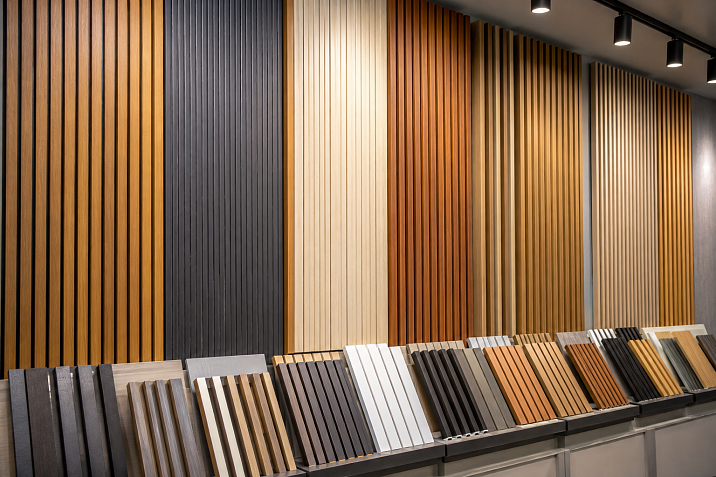
Wall slat panels for interior decoration: photo and price — why you can't judge by the picture
A separate issue is the danger of choosing 'by photo'. The key phrase 'wall slat panels for interior decoration photo and price' is popular: people want to see how the result looks. That's understandable. But a photo is an incomplete source of information.
What the photo doesn't show:
-
Surface texture. The smoothness of the lacquer finish, the matteness of the oil finish, the wood grain embossing — all of this can only be perceived in person. In photos, any surfaces look similar.
-
Geometric precision. The straightness of edges, uniformity of gaps, cleanliness of milling — these are production parameters that are only visible when inspecting a sample or a finished wall.
-
Real color. The color in a photo depends on camera settings, shooting lighting, and post-processing. The same 'warm oak' looks completely different in different images.
-
Depth of relief. A deep slat profile creates a pronounced play of shadows under side lighting. In photos with direct light, this is lost.
-
Joints in reality. How the joint between two panels looks under natural lighting can only be assessed in person.
-
Weight and density of the material. This is not visible anywhere except by holding the panel in your hands.
The right strategy: photos for inspiration and direction. Samples for the final decision. Only a sample under your lighting gives the answer to the question 'is this it?'.
STAVROS provides samples. This is not an advertising slogan — it's a working tool for those who make decisions responsibly.
Price of slatted MDF panels vs. wooden ones: when the difference is justified
One of the most common questions when purchasing: is it worth paying extra for wooden slatted panels, or will MDF give the same result?
The honest answer: it depends on the task.
When MDF is the right choice:
-
Need an exact color to match walls or furniture
-
Large area, limited budget
-
Room without special requirements for material naturalness
-
A design change is planned in 5–7 years
When wooden panels are the right choice:
-
Naturalness and tactility are essential
-
Country house with a natural materials concept
-
Premium project with no compromises
-
Need a unique pattern that cannot be replicated
When MDF with wood finish is the sweet spot:
-
Need a natural tone without the risks of solid wood
-
Geometric stability is more important than absolute naturalness
-
Budget above basic but below premium
You can overbudget in either direction. The goal is to find the exact match between material and task. That's when money works efficiently.
How different types of slat panels compare in price: a practical scale
Without specific numbers (they vary and depend on the specific series, size, and order volume), but with an understanding of the ratios:
MDF for painting — base cost per m². The widest selection of sizes and reliefs.
Wood-look MDF — 15–30% above the base level, depending on the type of decorative coating.
Solid wood — 2–4 times higher than MDF, depending on the species. Oak is at the lower end of this range, rare species are higher.
This scale is not absolute. A large batch of MDF panels with complex relief and premium sanding can cost as much as basic wooden slats. Calculate specifically.
How to choose slatted panels before purchasing: a complete checklist
A systematic approach is insurance against mistakes. Go through each item before placing your order.
1. Determine the material.
MDF for painting, wood-look MDF, or solid wood. The main criteria are the room's purpose and the visual concept.
2. Choose the room and area.
Accent wall? Full coverage? Zoning panel? The volume and type of installation depend on this.
3. Measure the height of the wall.
Standard panel length is 2700 mm. If the ceiling is higher than 2700 mm, a joint or non-standard length is needed.
4. Determine the width of the finishing area.
Accurate width is the basis for calculating the number of panels.
5. Choose the color and texture.
Only with a sample. No decisions based on a picture.
6. Assess the depth of the relief.
Deep relief with side lighting is more expressive. This is crucial for rooms with directional light.
7. Check compatibility with the baseboard.
Baseboard is required. From the same catalog.
8. Consider moldings.
Moldings made of polyurethane around the perimeter — a mandatory element of the system. Select before placing the order.
9. Place sockets and switches on the diagram.
Their position affects the installation diagram. Plan before, not during installation.
10. Determine the direction of the slats.
Vertical, horizontal, or diagonal. The calculation of the allowance depends on this.
11. Calculate the allowance.
Minimum 10–12% for a straight wall, 15–20% for non-standard geometry.
12. Clarify delivery conditions.
Timing, cost, packaging. Especially important for non-standard lengths.
Mistakes when comparing prices of slat panels
This is not a theoretical section. It is a list of real mistakes that lead to overpayment or disappointment.
Mistake 1: comparing the price of one panel without converting to m².
The most common one. A smaller panel at a lower unit price may be more expensive when converted to m².
Mistake 2: not accounting for additional elements.
Moldings, baseboards, corner pieces — these are real costs. In some projects, the cost of add-ons is 20–35% of the panel cost.
Mistake 3: not factoring in trimming.
“I’ll buy exactly by area” — and then they buy more, wait for a new batch, delay installation.
Mistake 4: choosing the cheapest material without analyzing the task.
A cheap panel with a thin coating, unstable geometry, and no compatible extensions is poor savings. The final result does not meet expectations, and there is a desire to redo it.
Mistake 5: they don't account for installation.
"We'll install it ourselves" sometimes works. But qualified installation of slatted panels with the correct fastening system and precise marking is a separate competency. The budget should account for it.
Mistake 6: they buy panels from one supplier and moldings from another.
The result is mismatched profiles, different sanding standards, and color conflicts. A single system supplier is not a marketing point but a practical requirement.
Mistake 7: they don't account for delivery.
Oversized goods. When ordering from another city or region, delivery can make up a significant portion of the budget. Plan ahead.
Mistake 8: they compare incomparable things.
MDF for painting and solid oak are not analogs with different prices. They are different tasks. Comparing "their price is lower" without considering material and quality is incorrect.
Slatted panels for walls in interiors: where they work best
Slat wall panels for interior decoration are a versatile material. But there are areas where they truly shine.
TV area. A slatted backdrop behind the screen is an architectural framing of the visual focus zone. The right tone and proper lighting — and the TV wall ceases to be just a "screen on the wall."
Area above the sofa. A vertical slat rhythm behind the sofa gives the seating area weight and significance. Molding frame around the perimeter turns a section of wall into a finished architectural panel.
Entryway. Vertical slats visually raise the ceiling and elongate the corridor. Practical wall protection in the highest traffic area.
Headboard in the bedroom. A natural backdrop behind the bed creates coziness without clutter. wooden lath panels with warm lighting — a space where you truly rest.
Home office. A structured backdrop behind the workspace. Slats organize the space visually.
Reception and meeting room. A slatted wall as a statement of standard. decorative polyurethane elements enhance the architectural character of the space.
Decorative slat panels: when to choose non-standard
Decorative slat panels are a category of products with a more complex or non-standard profile. Arched slats, panels with relief milling, products with combined cross-sections.
The price of decorative slat panels is higher than that of basic series: the complexity of the profile requires longer milling and precise equipment setup.
Application — accent areas where a non-standard visual effect is needed. Most often: premium living rooms, commercial spaces with custom design, objects with the concept of 'maximum architectural detail'.
Where to buy slat panels for walls: a systematic approach
When you understand the budget and the task, move on to choosing a supplier. Criteria for the right slat panel supplier:
Manufacturing, not resale. A direct manufacturer controls quality, knows the product parameters exactly, and can offer non-standard solutions.
Complete system. Panels + moldings + decor + baseboards — everything from one place with guaranteed geometric compatibility.
Samples. A supplier who does not provide samples forces you to make decisions based on photos. This is a risk.
Calculation based on your measurements. A professional manager will calculate the exact quantity without overload or shortage.
Transparent delivery terms. Especially for long-length items.
STAVROS slatted panels — this is a complete system: panels in different finishes, Moldings, decorative elements, trims and decor. Everything is manufactured in Saint Petersburg. Consultations and calculations are free. Samples are available. Delivery across all of Russia.
FAQ: popular questions with direct answers
How much do slatted wall panels cost?
The cost depends on the material, size, coating, order volume, and additional elements. For an accurate calculation, consider not the price of one panel, but the cost per m² including allowance, moldings, baseboards, and installation.
How to calculate the price of slatted panels per m2?
Wall area (m²) ÷ area of one panel (m²) = number of panels. Multiply by the cost of one panel. Divide by the wall area — you get the cost per m². Add a 10–15% allowance and additional elements.
Which slatted panels are cheaper?
MDF for painting is the base price level. MDF with wood finish is 15–30% higher. Solid wood is 2–4 times higher than MDF. But 'cheaper' doesn't mean 'better' — the choice depends on the task.
Why do slatted panel prices vary among different manufacturers?
The difference lies in the material, MDF density, coating quality, geometric precision, sanding, production control, and system completeness. A cheap panel without compatible moldings and baseboards ultimately costs more than a system order.
What is included in the final cost of wall finishing?
Panels, base preparation, adhesive or fasteners, trimming (allowance), moldings, baseboard, decorative elements, installation, lighting (if any), delivery.
Are moldings and baseboards necessary for slatted panels?
Absolutely. A molding along the top edge covers the technical gap and finishes the transition to the ceiling. A baseboard along the bottom is the finishing element for the lower junction. Without them, a slatted panel is an incomplete structure.
Can you buy slatted MDF panels for interior finishing and achieve a result like wood?
Yes — if you choose wood-look slatted panels a high-quality embossed coating. Visually — a convincing natural effect. Tactilely — embossing close to wood. Ideal for those who want a natural tone without the cost of solid wood.
Where to buy slat wall panels with transparent pricing?
In the STAVROS catalog. Panels, moldings, decorative elements — all items with specifications. Calculation based on your measurements — free. Samples for evaluation — available.
About the company STAVROS
STAVROS is a St. Petersburg manufacturer of decorative interior products, founded in 2002. Experience gained from restoring historical sites — the Hermitage, Konstantinovsky Palace, Alexander Palace — has defined the approach to quality: every product must meet the highest standard regardless of project scale.
Today STAVROS produces a complete system of decorative finishing: Rafter panels from MDF and solid wood, Panels for painting и wood-like, Moldings and cornices, decorative elements и polyurethane wall decor.
Production — St. Petersburg, controlled microclimate. Manual finishing sanding "Prestige". Delivery across Russia. Consultations, calculation by measurements, and system selection — free.
If you want to buy slat wall panels with clear pricing, a systematic approach, and a guarantee of compatibility for all elements — the STAVROS catalog and team of managers are ready to work on your project.