



























Article Contents:
- Three lines that solve everything
- Why baseboard is not a technical strip but an architectural element
- Baseboard height: the rule of proportion
- Baseboard profile and its connection with moldings
- How polyurethane wall decor works together with baseboard
- Moldings: verticals, frames, and wall rhythm
- Connecting molding and baseboard through color
- Wooden baseboard: when it is better than polyurethane
- When there is wooden furniture in the interior
- When the floor is wooden or wood-like
- When mechanical strength is needed
- When the baseboard should match the doors and staircase
- Top line of the wall: cornice, moldings, and stucco decor
- Wooden cornice: heavy classic in the literal sense
- Polyurethane stucco on the ceiling transition
- How to match the cornice and baseboard
- Frame for paintings and mirrors: connection with wall moldings
- Frame profile and molding profile
- Wooden mirror frame
- Frame strip as a system element
- Layout, glazing bead, and corner: fine trim that ties everything together
- Wooden layout: geometry on surfaces
- Wooden glazing bead: delicacy in its pure form
- Wooden corner and block: structure and decor
- How to connect baseboard, moldings, and furniture
- Furniture legs and baseboard color
- Decorative elements for furniture: scale matters
- Handles and hardware
- Furniture support: a load-bearing element with a decorative function
- How to choose a combination to match the interior style
- Mistakes when combining baseboard, cornice, and stucco
- Too low baseboard with large stucco
- Too many different wood shades
- Baguette does not match the style of moldings
- Cornice too heavy for a small room
- Baseboard and furniture are not color-coordinated
- Stucco is complex, baseboard is too simple
- Wood decor conflicts with floor color
- Furniture decoration is done in a different style
- Step-by-step logic for choosing wall decor considering baseboard and cornice
- How to choose everything you need at STAVROS
- FAQ: Answers to Popular Questions
Three lines that solve everything
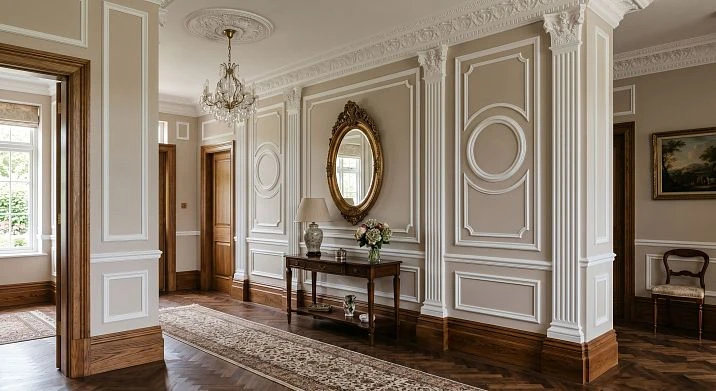
There is a simple test for any interior: look at the room and find three horizontal lines — lower, middle, and upper. The lower one is the baseboard. The upper one is the cornice or ceiling molding. The middle one is what happens between them: molding frames, stucco panels, decorative belts, accent zones. If these three lines are consistent in style, scale, and material — the interior looks architectural. If not — even expensive furniture won't save the situation.
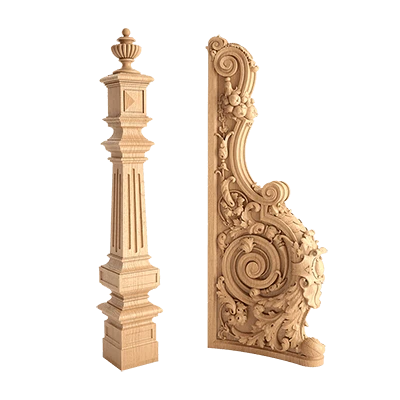
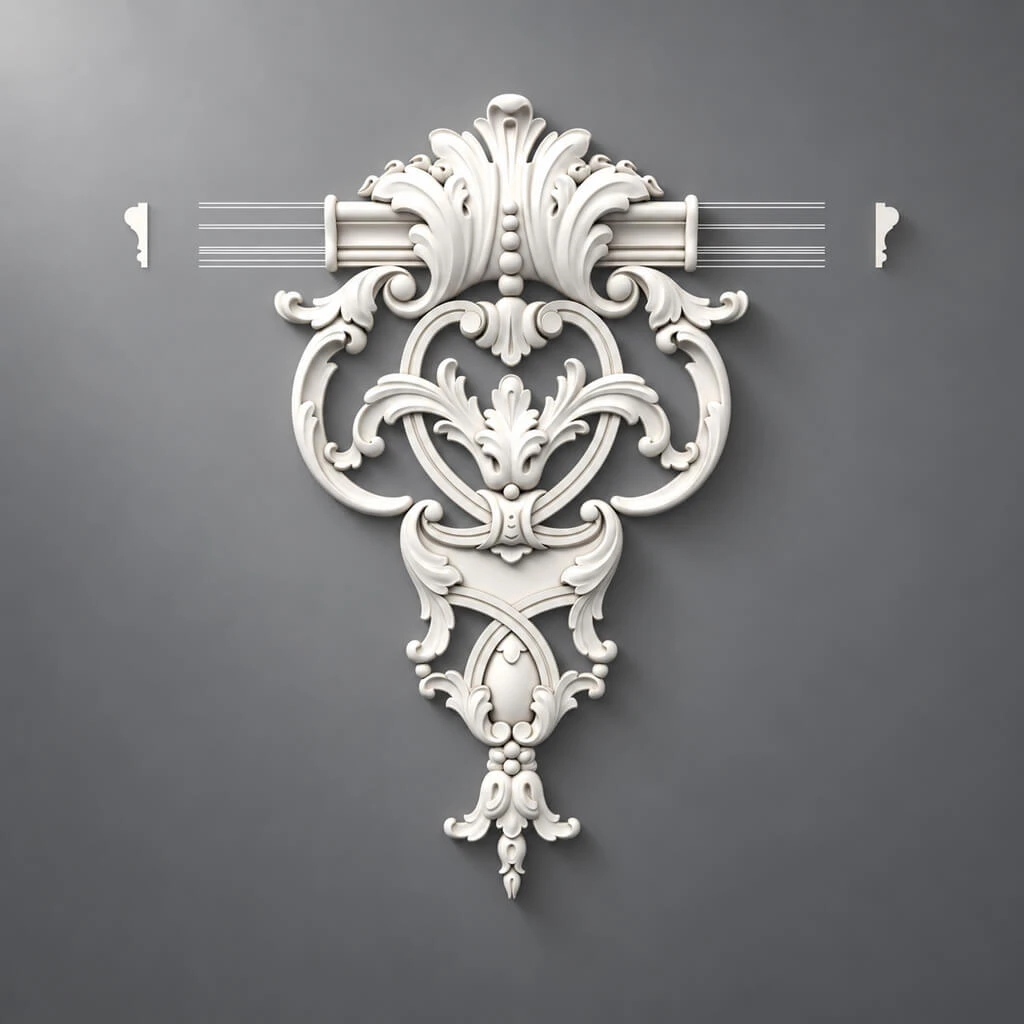
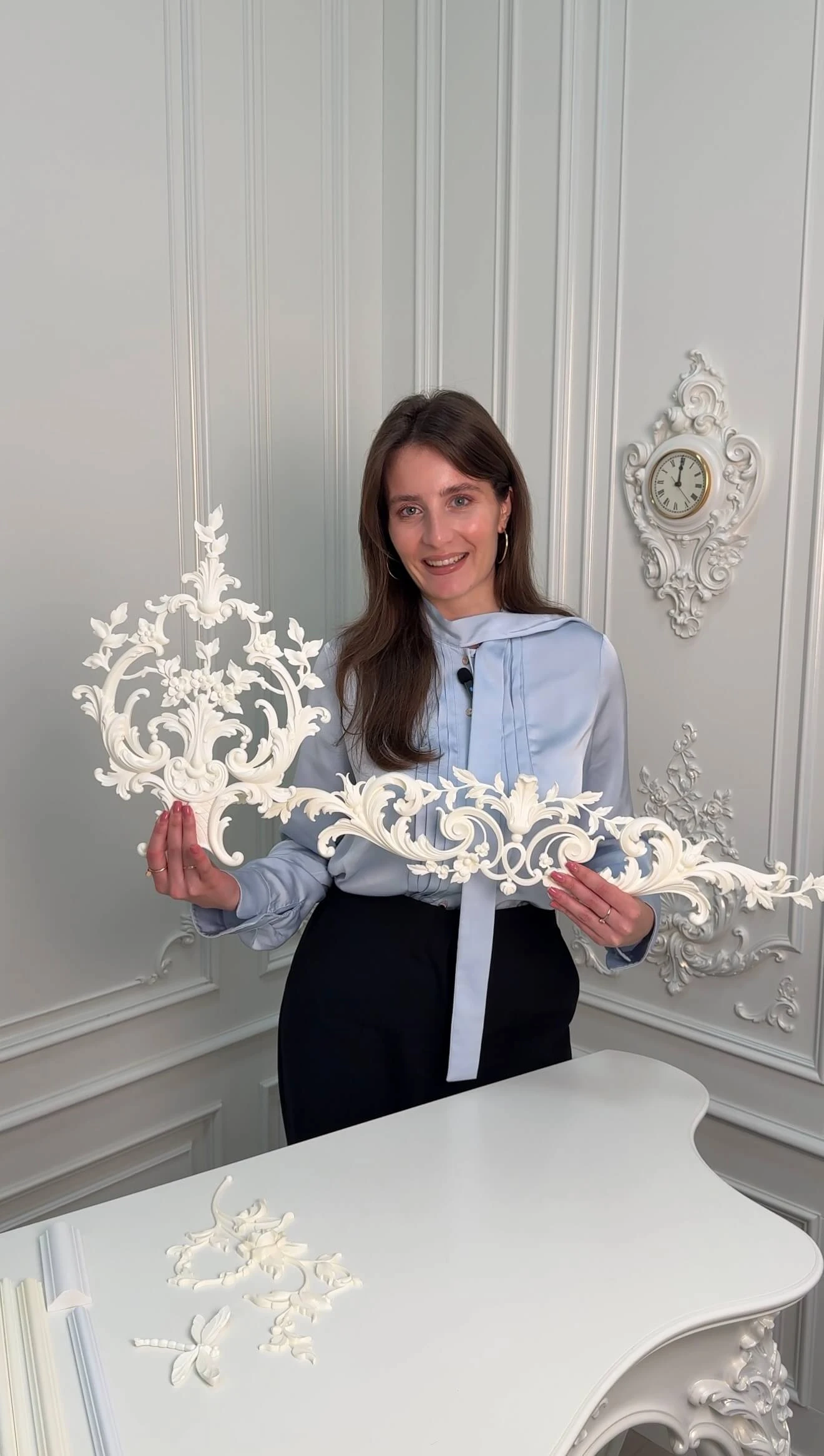
Polyurethane wall decor forms the middle and upper lines: moldings, frames, stucco friezes, cornice profiles. The wooden baseboard is responsible for the lower one. The wooden cornice, baguette, layout, and furniture details work as connecting elements — they transfer the style code of the wall to furniture, doors, paintings, and everything that fills the space between the floor and ceiling.
This article is about this connection. About how a wooden floor baseboard, wooden cornice, wooden baguette for paintings, layout, glazing bead, and moldings turn not into a set of separate purchases, but into a unified decorative interior system.

Why a baseboard is not a technical strip, but an architectural element
Most people think about the baseboard at the last moment. "We'll buy something at the hardware store." As a result — cheap white MDF 60 mm high under rich molding frames. It's like wearing a tie worth several thousand with a striped shirt from a fair. Formally — it's covered. Essentially — it doesn't work.
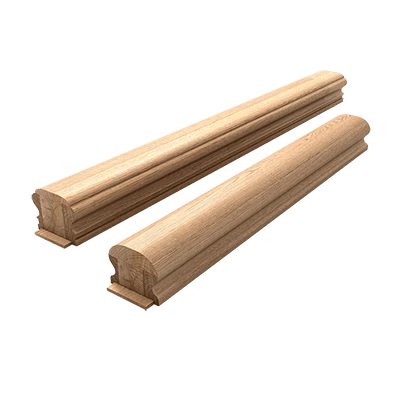
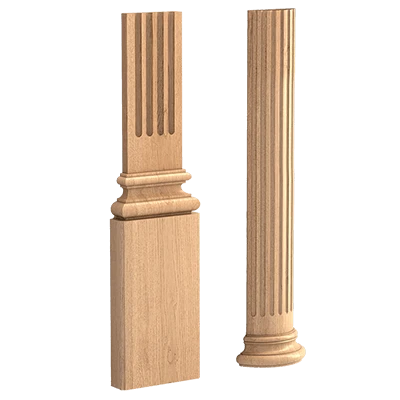
A wooden floor baseboard is the lower architectural boundary of the wall. It visually "closes" the wall from below, connecting the vertical plane with the horizontal floor surface. Its height, profile, and material set the tone for everything that happens above.
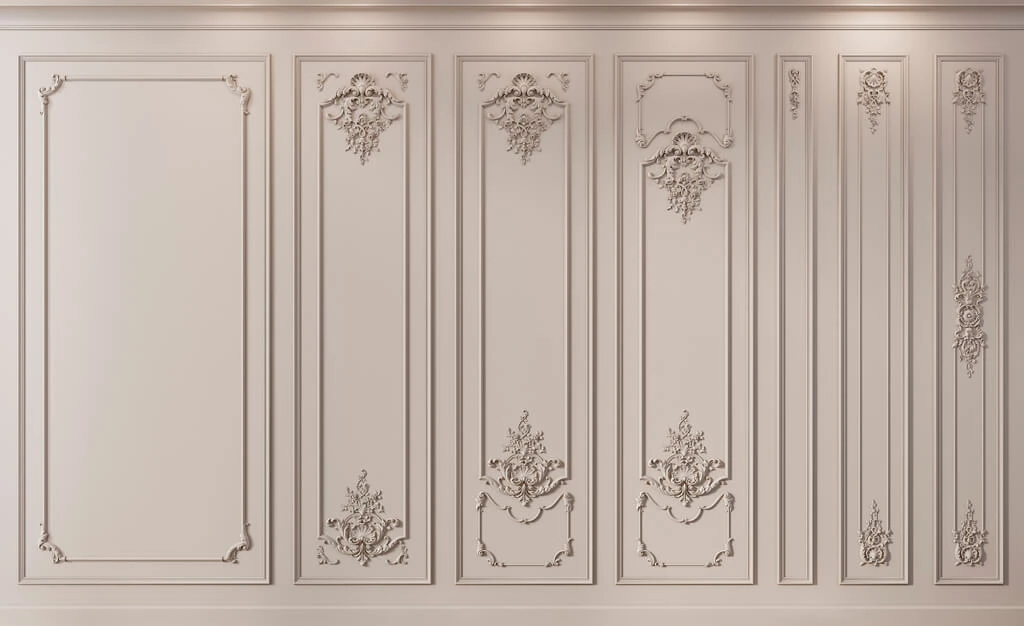
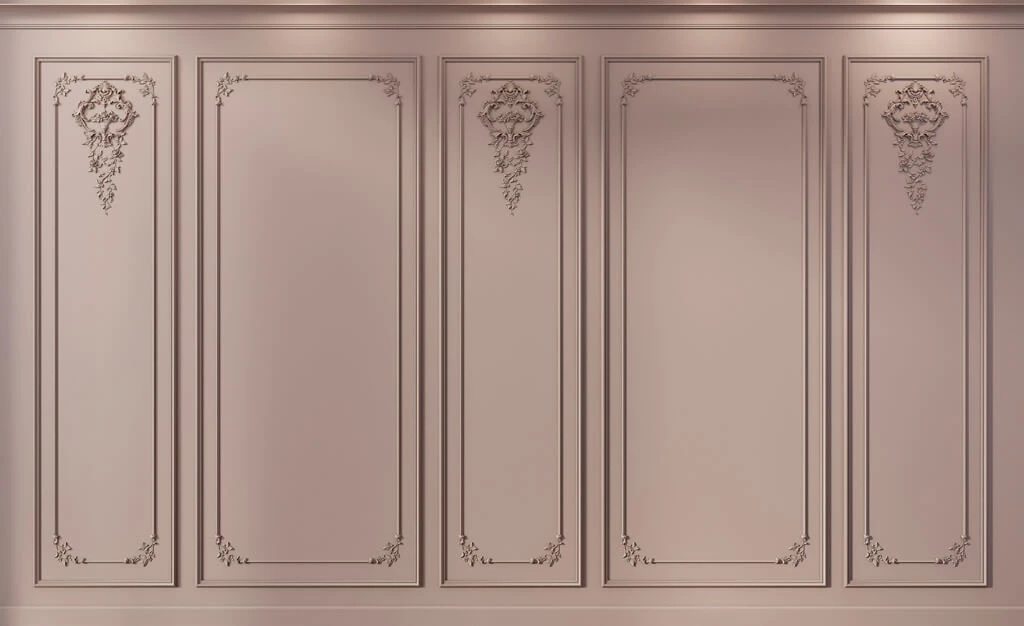
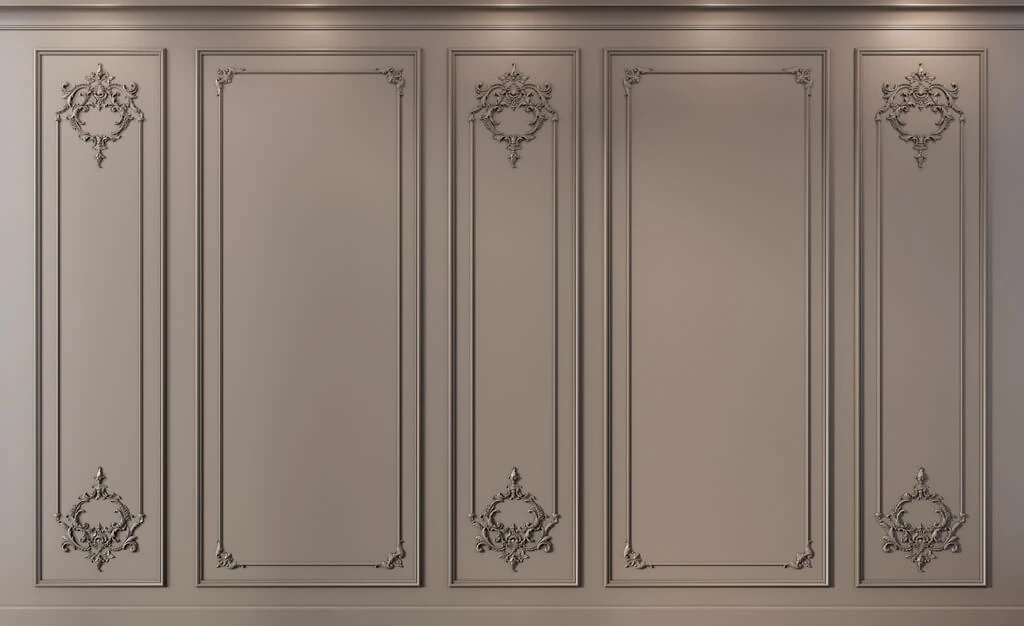
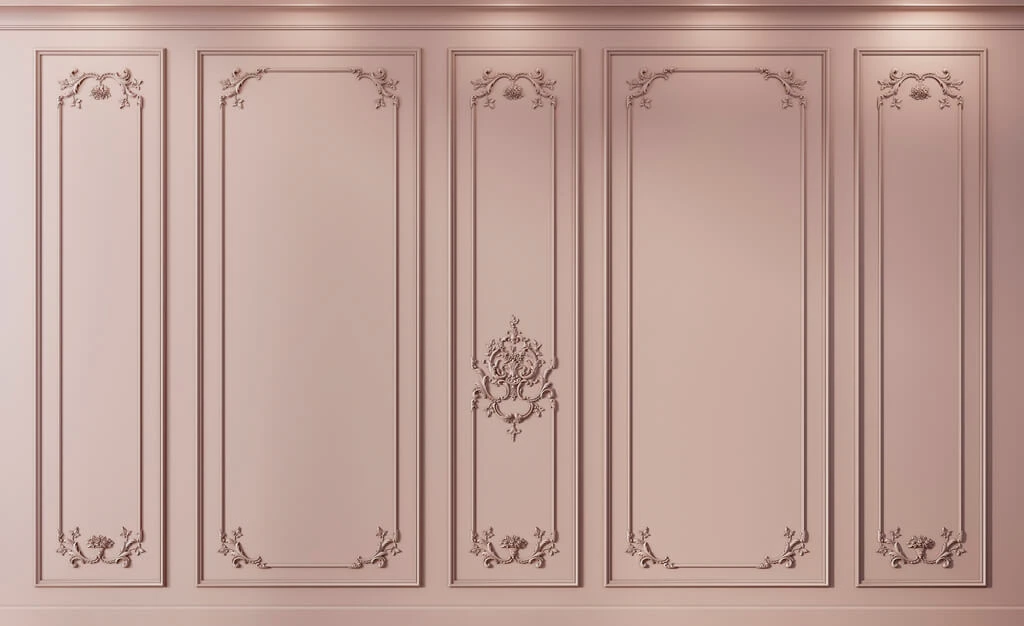
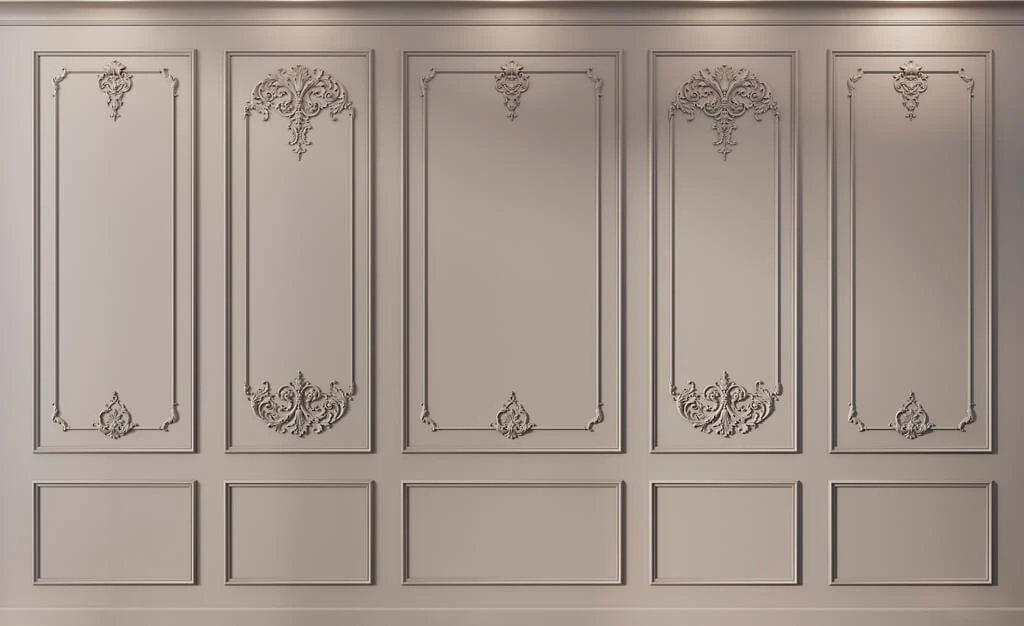
Why this is important specifically for . Clear lines, created using modern technologies, emphasize the strict aesthetics of the room. Each decorative element harmoniously fits into the overall concept, creating a sense of order and thoughtfulness.? Because molding frames on the wall create a visual rhythm that needs a base. The bottom molding frame is usually located at a height of 30–50 cm from the floor. If there is a massive, expressive wooden baseboard underneath, the frame looks "planted" on a reliable foundation. If there is a thin white strip underneath, the lower part of the interior seems unfinished and random.
Our factory also produces:


Baseboard height: rule of proportion
You should buy a wooden baseboard considering the ceiling height and the scale of the decor on the walls. Approximate proportions:
-
Ceiling 2.5–2.7 m — baseboard 80–100 mm
-
Ceiling 2.8–3.0 m — baseboard 100–130 mm
-
Ceiling 3.0–3.5 m — baseboard 130–160 mm
-
Ceiling above 3.5 m — baseboard from 160 mm and above
In country houses with high ceilings, a wooden baseboard 200–220 mm high is the norm, not a luxury. At this height, it creates a horizontal line that visually "strengthens" the wall and gives the room solidity.
Get Consultation
Baseboard profile and its connection with moldings
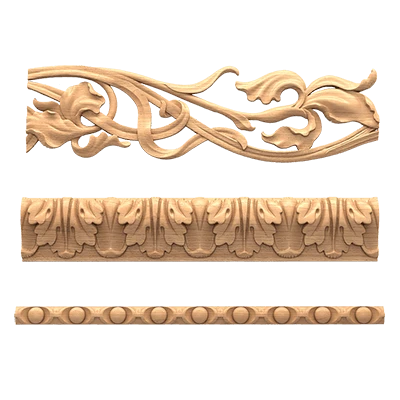
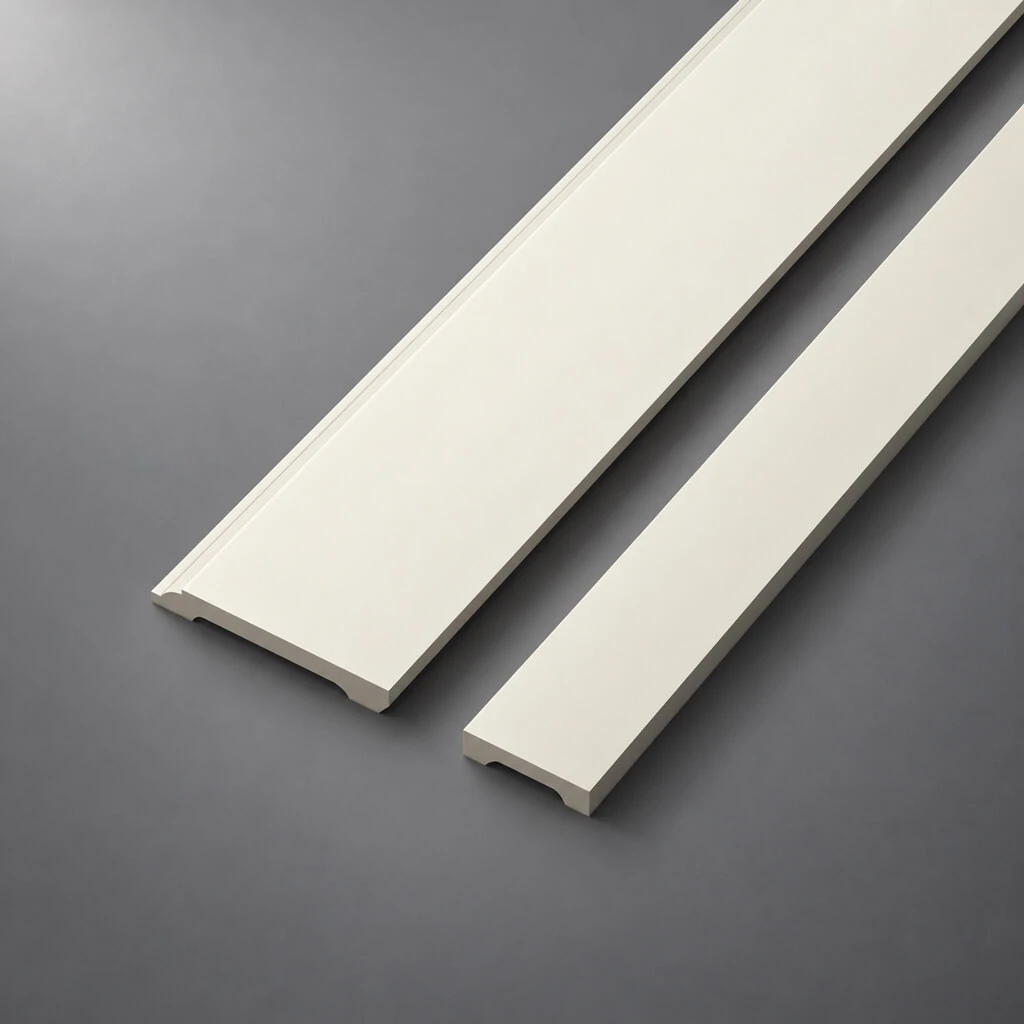
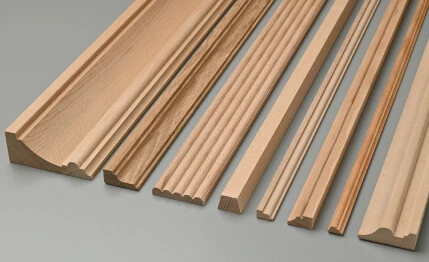
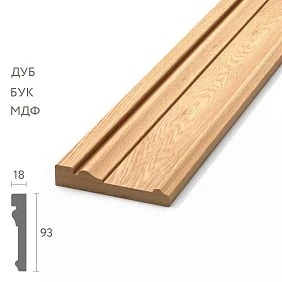
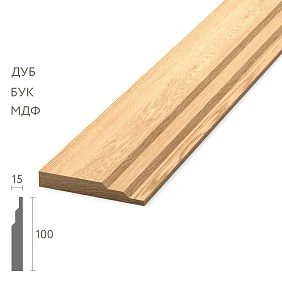
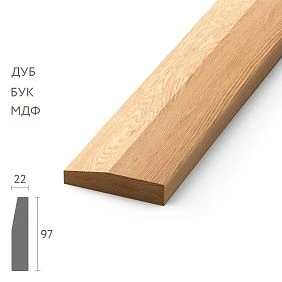
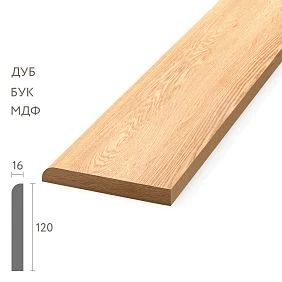
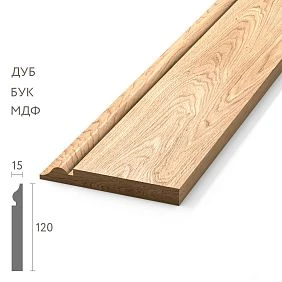
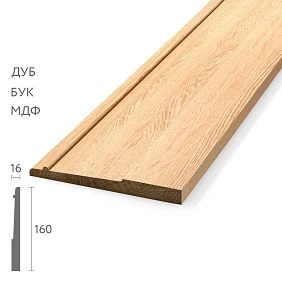
The profile of a wooden baseboard is its decorative face. A simple straight plank with a chamfer is suitable for neoclassicism and modern interiors. A baseboard with a recessed groove creates a play of shadows. A baseboard with a protruding profile — an edge, a molding, or a semicircular protrusion — is appropriate in a classic interior.
The baseboard profile should echo the profile of the wall moldings. If the molding has a rounded cross-section, a baseboard with a similar detail creates a sense of a unified system. This doesn't require a literal match, but a stylistic kinship is essential.
How polyurethane wall decor works together with the baseboard
Imagine the wall as a page of text. The margins are the baseboard at the bottom and the cornice at the top. The main text is the moldings, stucco, and frames on the wall plane. If the margins are too narrow, the text "falls off" the edges. If too wide, the text seems lost.
This is exactly the logic that works in interior design. Polyurethane moldings on the wall is the content. The baseboard and cornice are the margins that give this content the proper framing.
Moldings: verticals, frames, and the rhythm of the wall
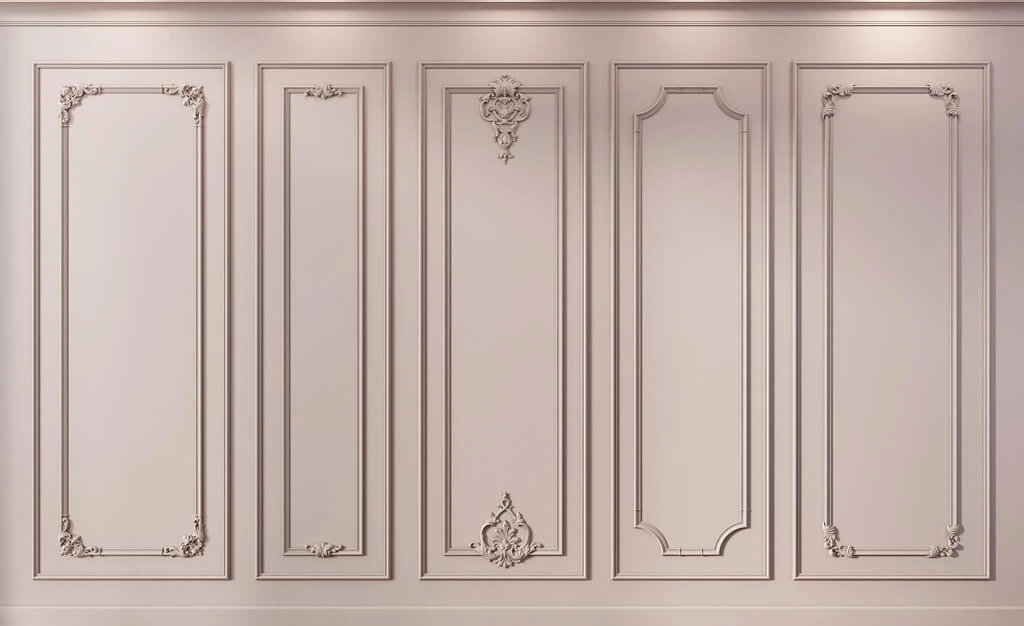
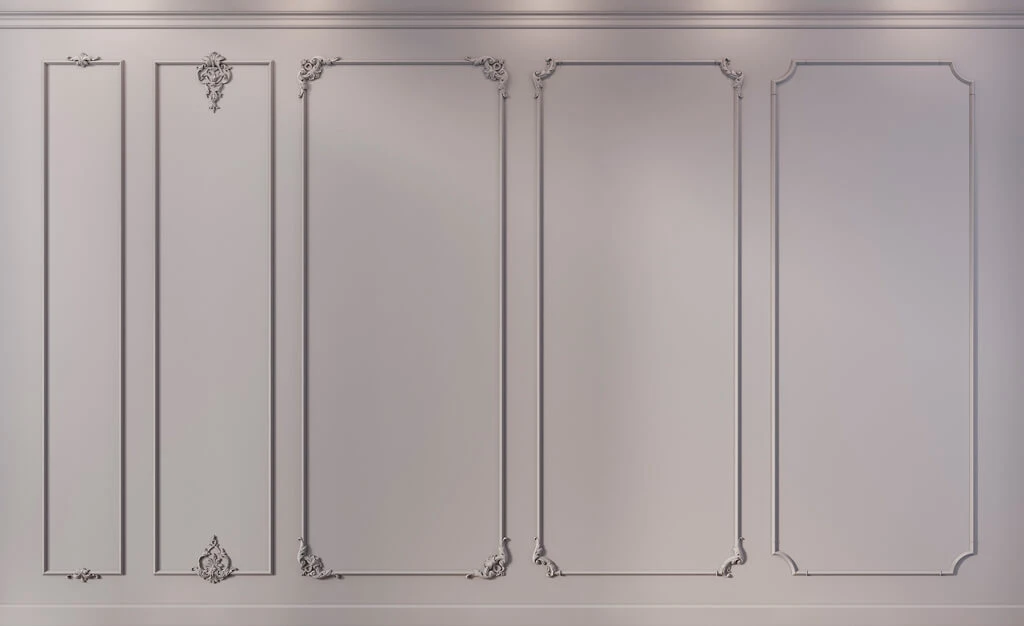
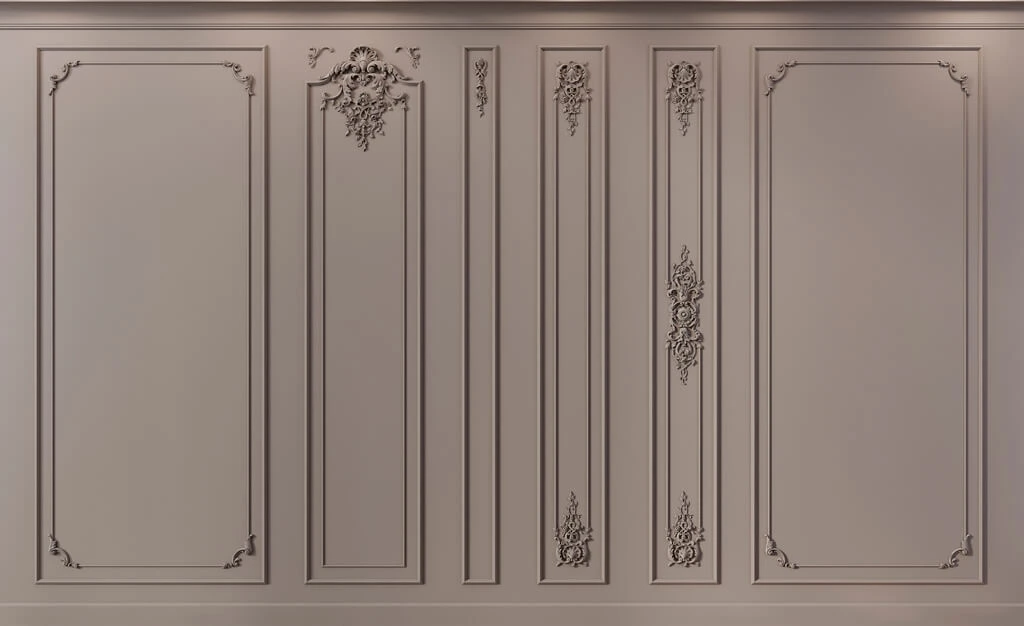
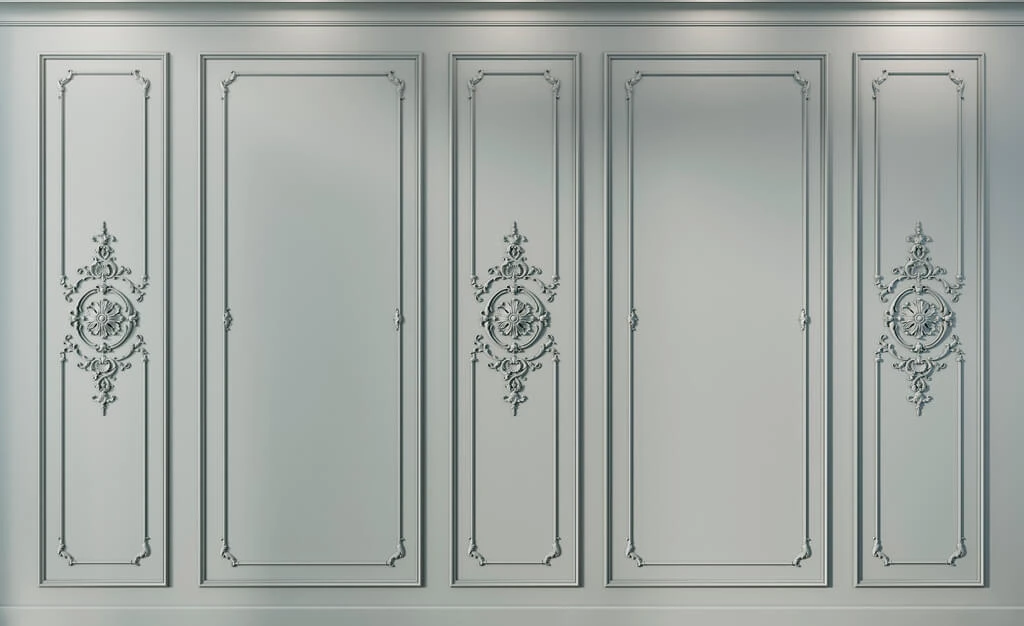
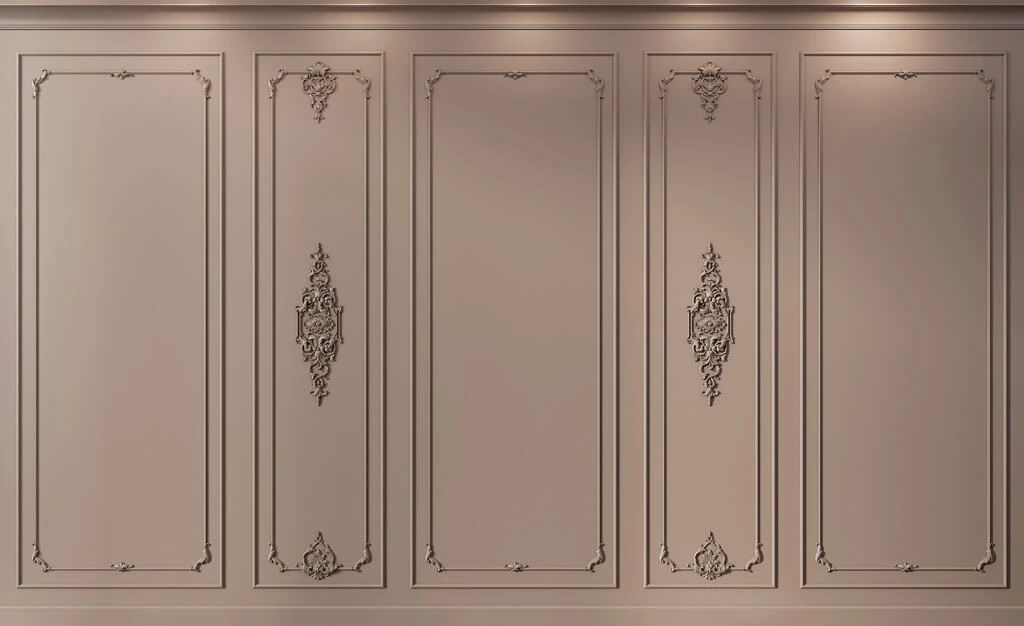
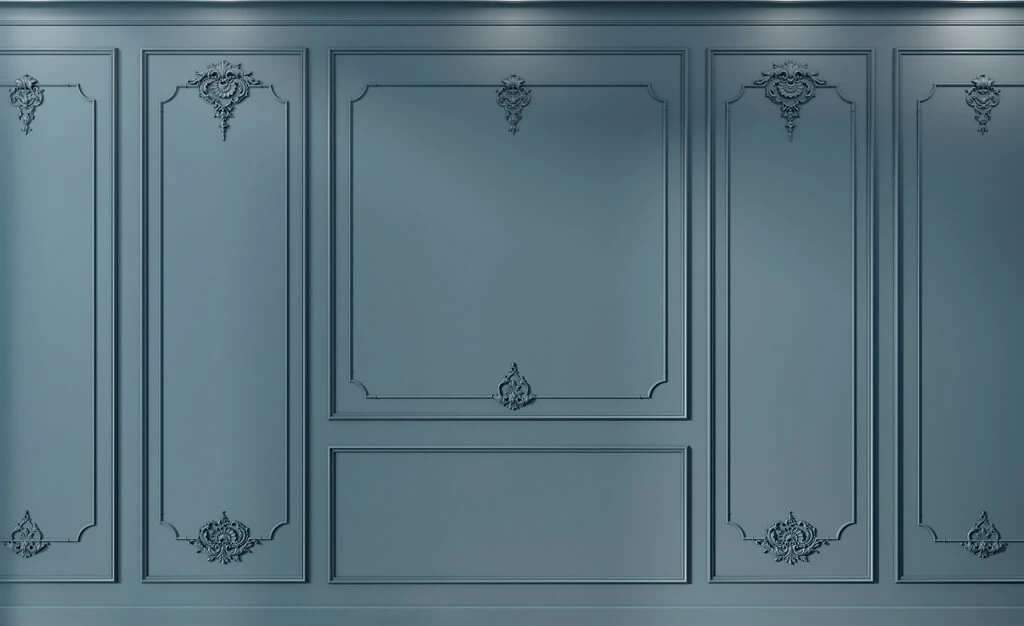
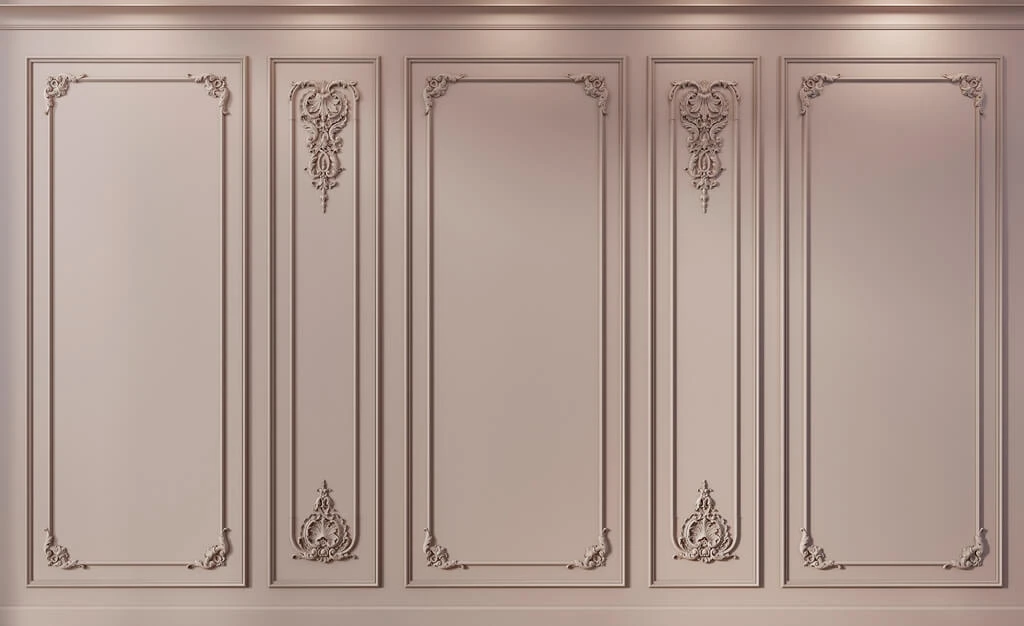
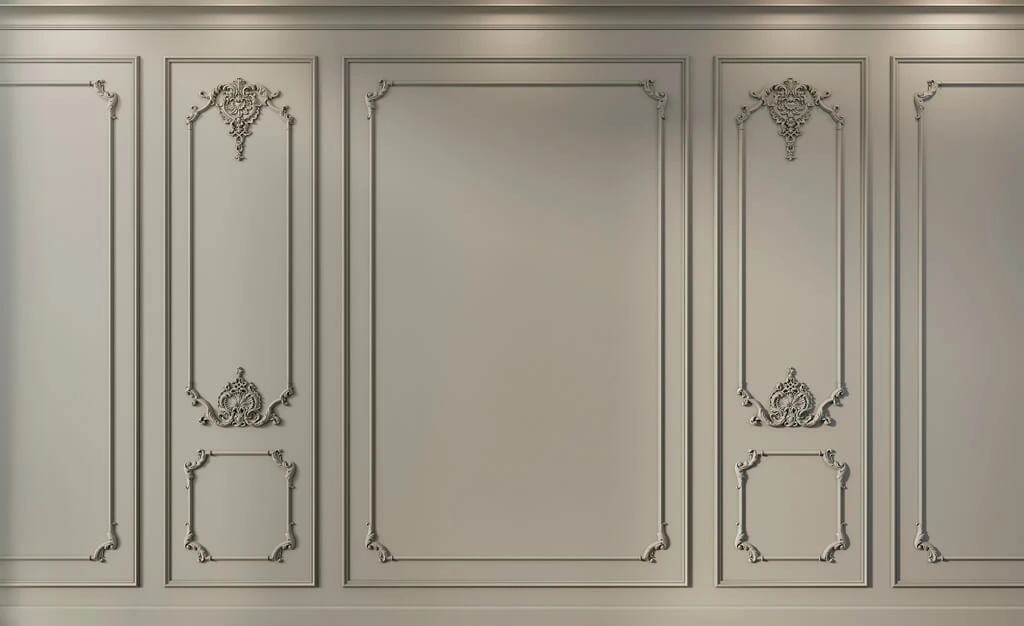
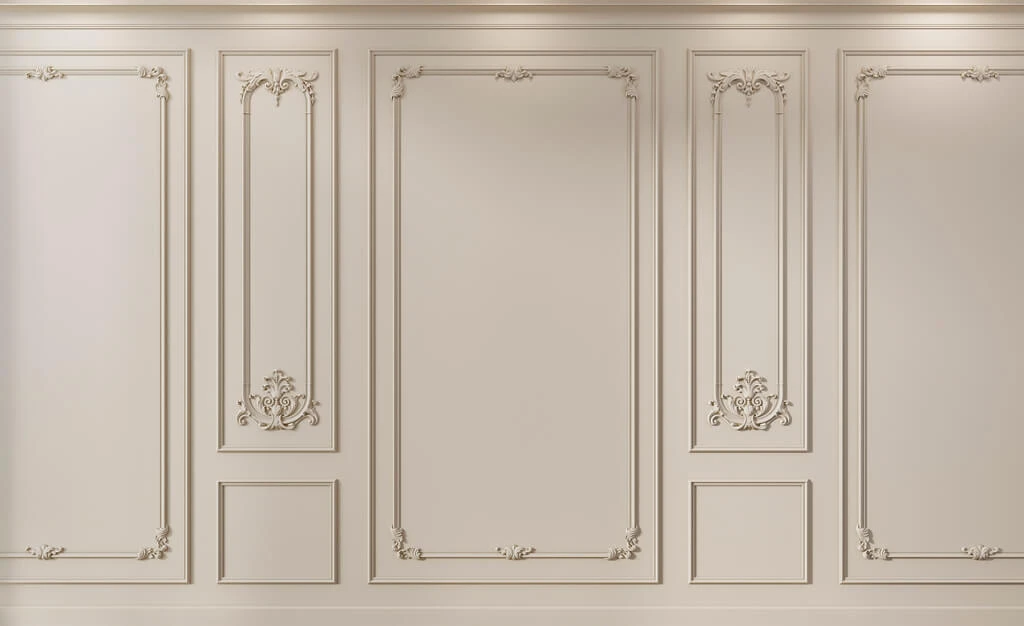
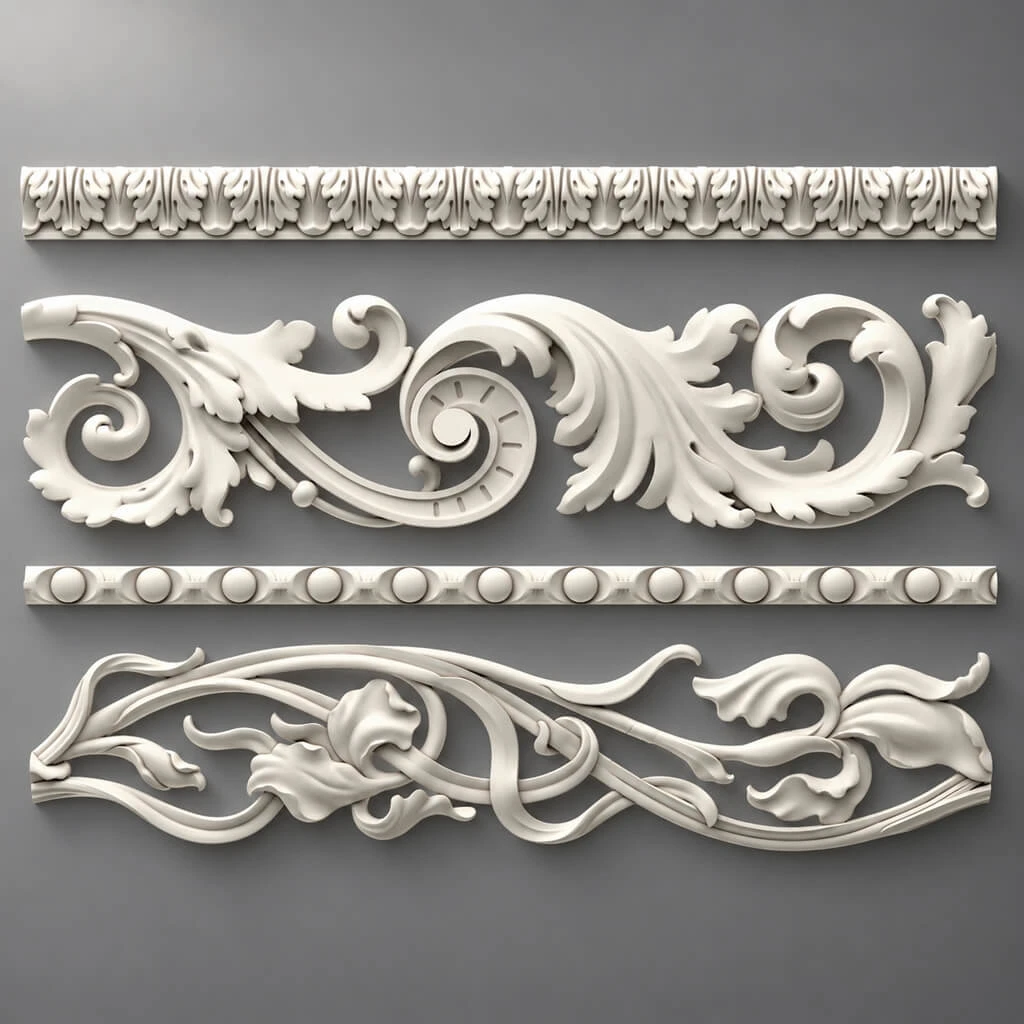
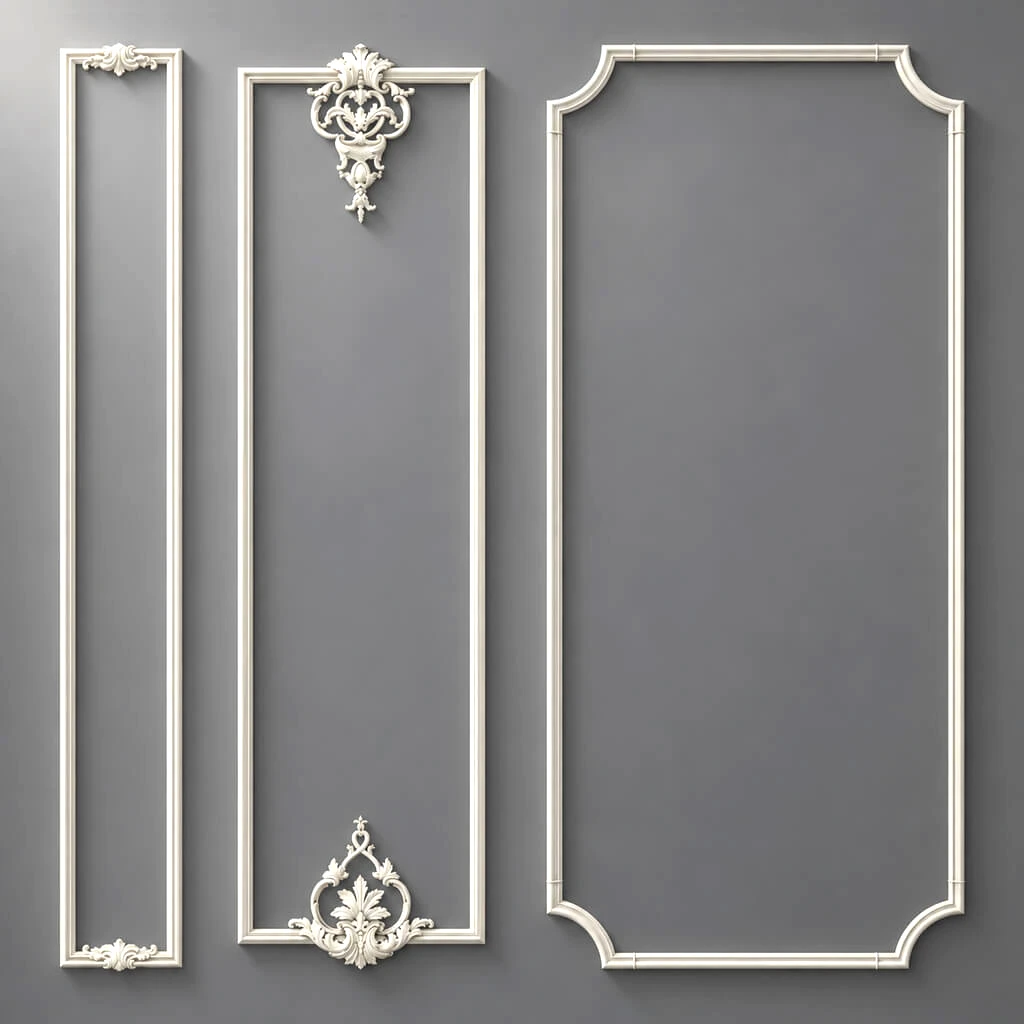
Moldings made of polyurethane is a tool for creating frame decor. They are used to build rectangular panels, vertical posts, and horizontal bands. The molding sets the rhythm of the wall: uniform frames create calm symmetry, frames of different scales create dynamics.
Molding frames work well in a range from 70 to 130 cm in width and from 90 to 180 cm in height, depending on the ceiling height and wall width. Frames that are too small look fussy, while those that are too large look heavy.
Connecting molding and baseboard through color
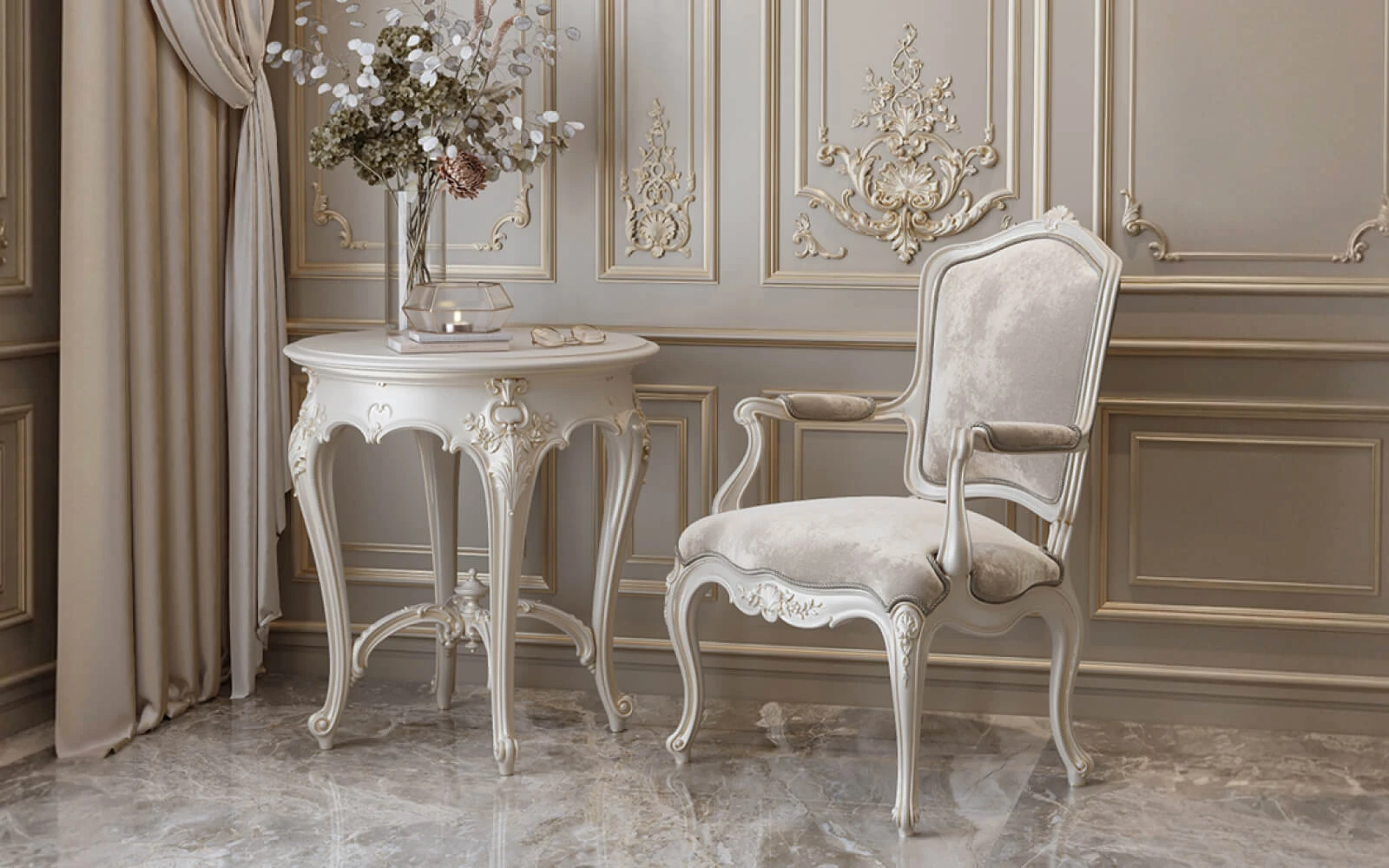
One of the most elegant techniques is to paint polyurethane decor to match the wall color, and highlight the wooden baseboard with tinting or painting to match the furniture color. Then the moldings blend into the wall, creating relief without visual noise, while the baseboard clearly marks the lower boundary — expressive and intentional.
The opposite technique: a contrasting molding (white on a colored wall) and a neutral wooden baseboard in a natural tone. Here, the moldings take center stage, while the baseboard plays a supporting role — it doesn't compete but provides stability.
Wooden baseboard: when it's better than polyurethane
Polyurethane baseboards exist and have several advantages: moisture resistance, precise profile, ease of installation. But a wooden floor baseboard is clearly the better choice in a number of situations. Let's examine these cases in detail.
When there is wooden furniture in the interior
If the room has solid wood or natural veneer furniture, a wooden baseboard creates a color and material connection between the floor and the furniture. Nothing is more organic than natural wood in several points of the interior: baseboard, furniture legs, wooden mirror frame, wooden handles. This principle of "wooden accents" creates a warm atmosphere that no polymer material can replicate.
Furniture and decor in such an interior work on the principle of color rhyme: dark oak on table legs echoes in the dark oak baseboard; light ash of the dresser resonates with the light wooden trim on door facades.
When the floor is wooden or wood-like
Laminate under oak, solid parquet, engineered board — all these floors require a baseboard close in material and tone. A wooden baseboard in this case is not an option but a rule. It creates continuity of the horizontal line at the base of the wall, blending with the flooring in character and texture.
Wooden decor in the lower part of the interior — baseboard, thresholds, wooden casings — creates a sense of completeness that plastic or polyurethane analogs cannot provide.
When mechanical strength is needed
Entryway, corridor, area near the kitchen island, children's room — places where the baseboard receives mechanical impacts: from the vacuum cleaner, furniture legs, toys, shoes. A wooden baseboard made of hardwoods — oak, beech, ash — withstands such loads many times better than polyurethane. Buying an oak wooden baseboard for the corridor is a wise investment: it will last decades, not years.
When the baseboard should match the doors and staircase
In most apartments, doors are made of wood veneer or MDF with a wood film. The door frame, architraves, and baseboard in the same tone create a unified wooden line that unifies the space. Add a wooden cornice in the same palette — and the interior gains a rare architectural consistency.
Upper wall line: cornice, moldings, and stucco decor
If the baseboard is the foundation, then the cornice is the crown. The transition from wall to ceiling in a classic interior is never abrupt: it is a zone where the architecture 'lands,' concludes, and finds peace. It is the cornice that creates this transition.
Wooden cornice: heavy classicism in the literal sense
A wooden cornice is a choice for interiors with massive wooden furniture, a wooden staircase, wooden beams, or panels. In such spaces, a wooden cornice is organic: it completes the 'wooden' story of the interior at the top, just as the baseboard does at the bottom.
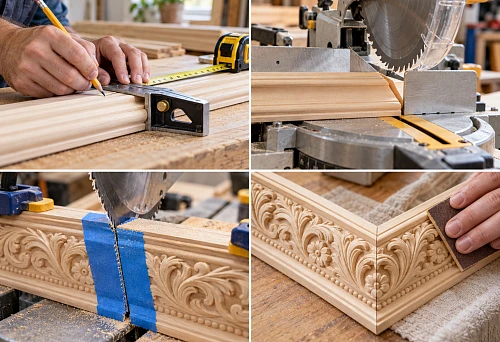
A wooden cornice requires a solid base and precise installation — it is heavier than its polyurethane counterpart and does not forgive carelessness in corners. However, its texture and mass create a feeling of real architecture, not just a decorative layer.
Polyurethane stucco on the ceiling transition
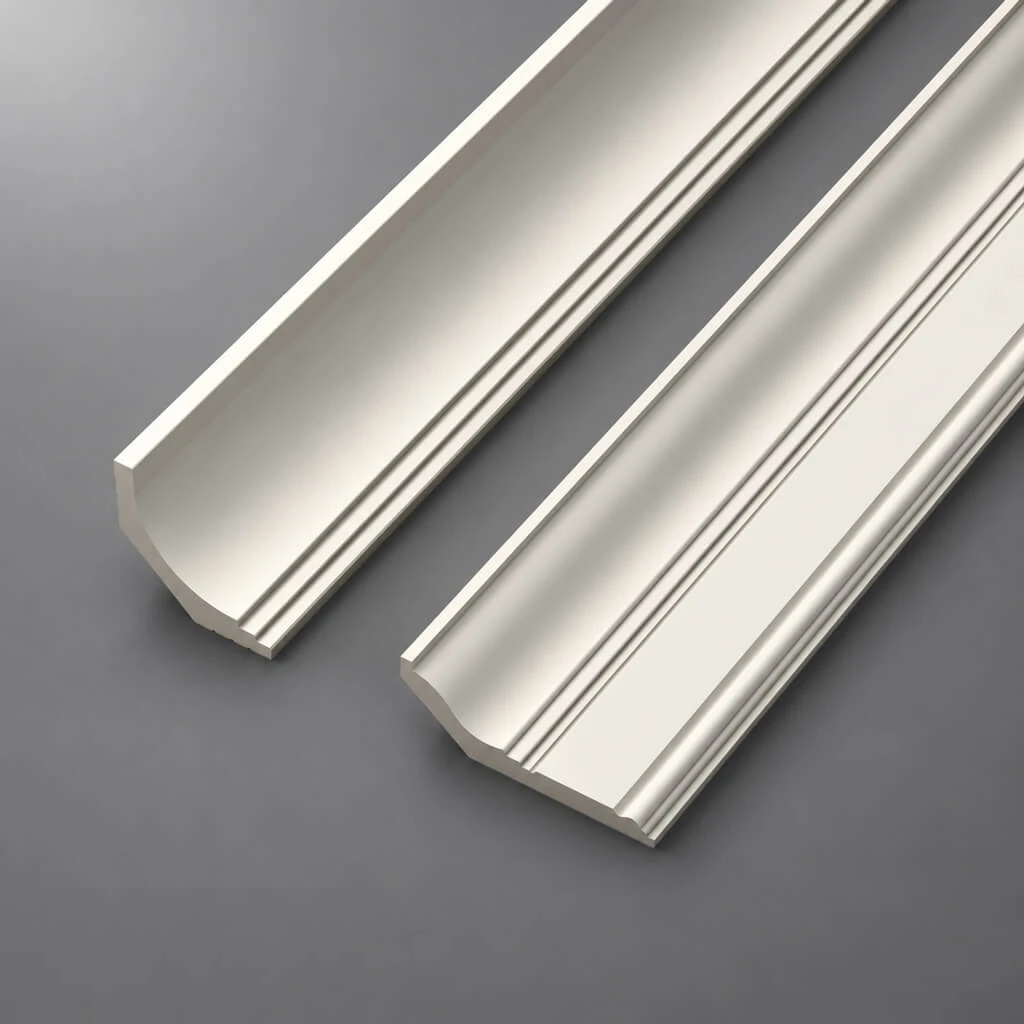
For most apartments, polyurethane stucco decoration for walls and ceilings is a more practical option. It is lightweight, mounts on liquid nails, requires no additional fasteners, and allows for the reproduction of complex profiles. A polyurethane cornice can imitate a wooden surface, plaster stucco, or a modern geometric profile — depending on the collection.
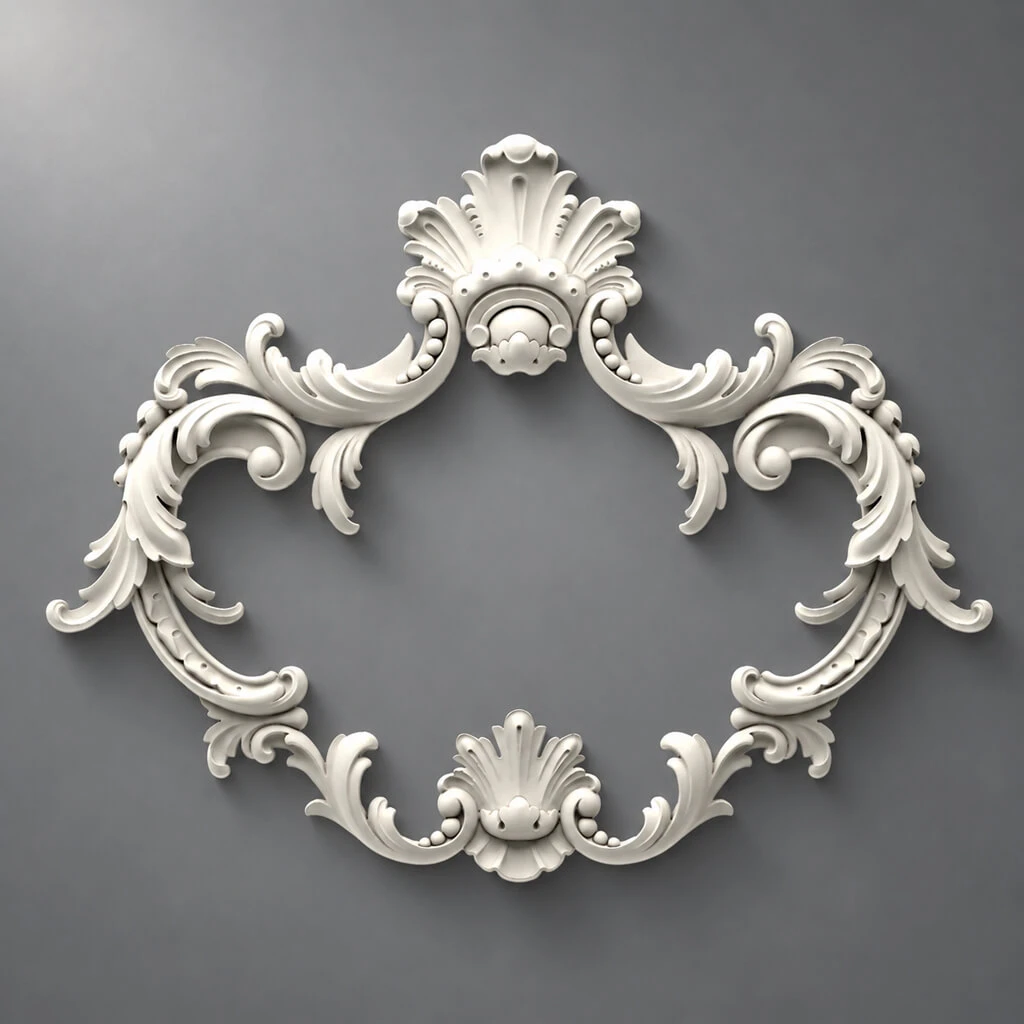
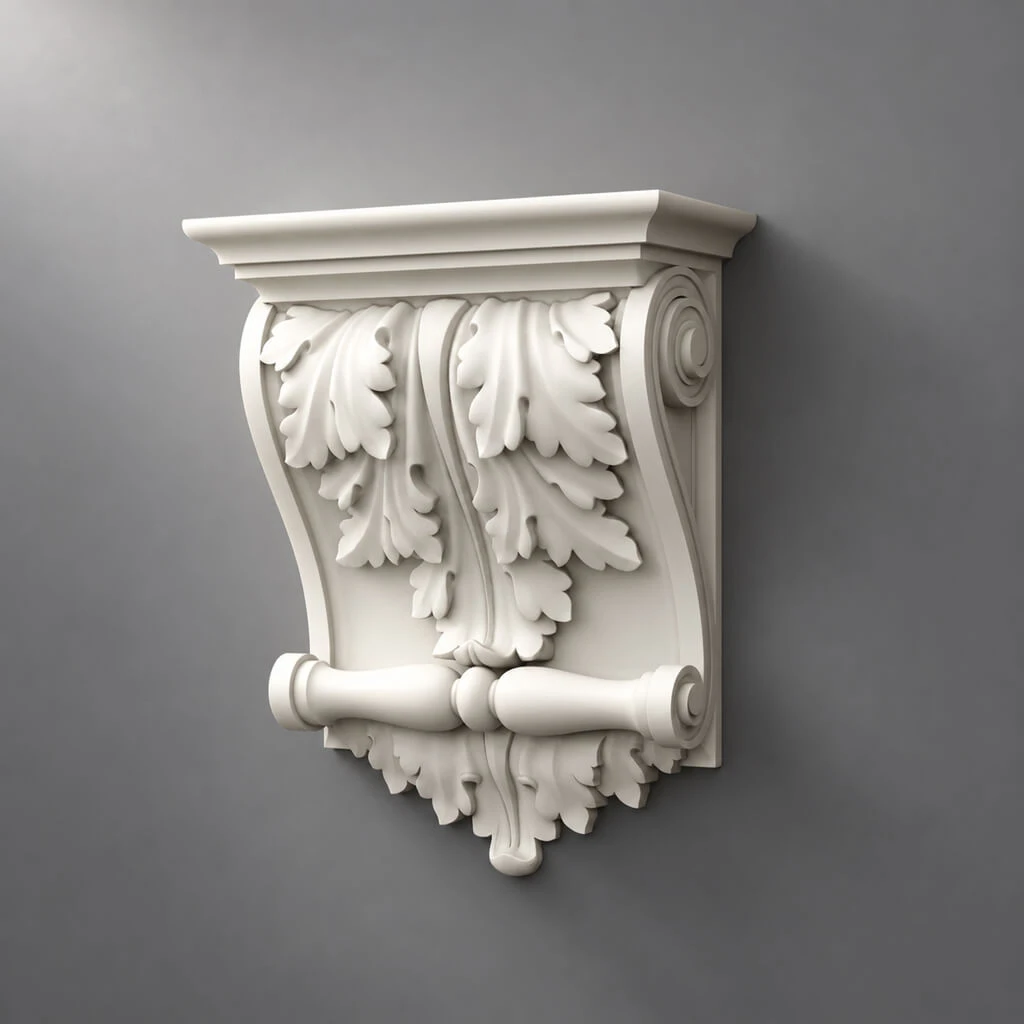
decorative wall molding from the STAVROS catalog includes ceiling cornices, transition profiles, and corner elements — everything needed for proper design of the top wall line.
How to coordinate cornice and baseboard
The main principle: the cornice and baseboard should be from the same "world" — not necessarily the same material, but in the same stylistic logic. A massive wooden cornice with a small plastic baseboard is a dissonance. A lightweight polyurethane cornice and a heavy dark oak baseboard can work as a deliberate contrast, but requires a confident hand and a clear understanding of what is happening.
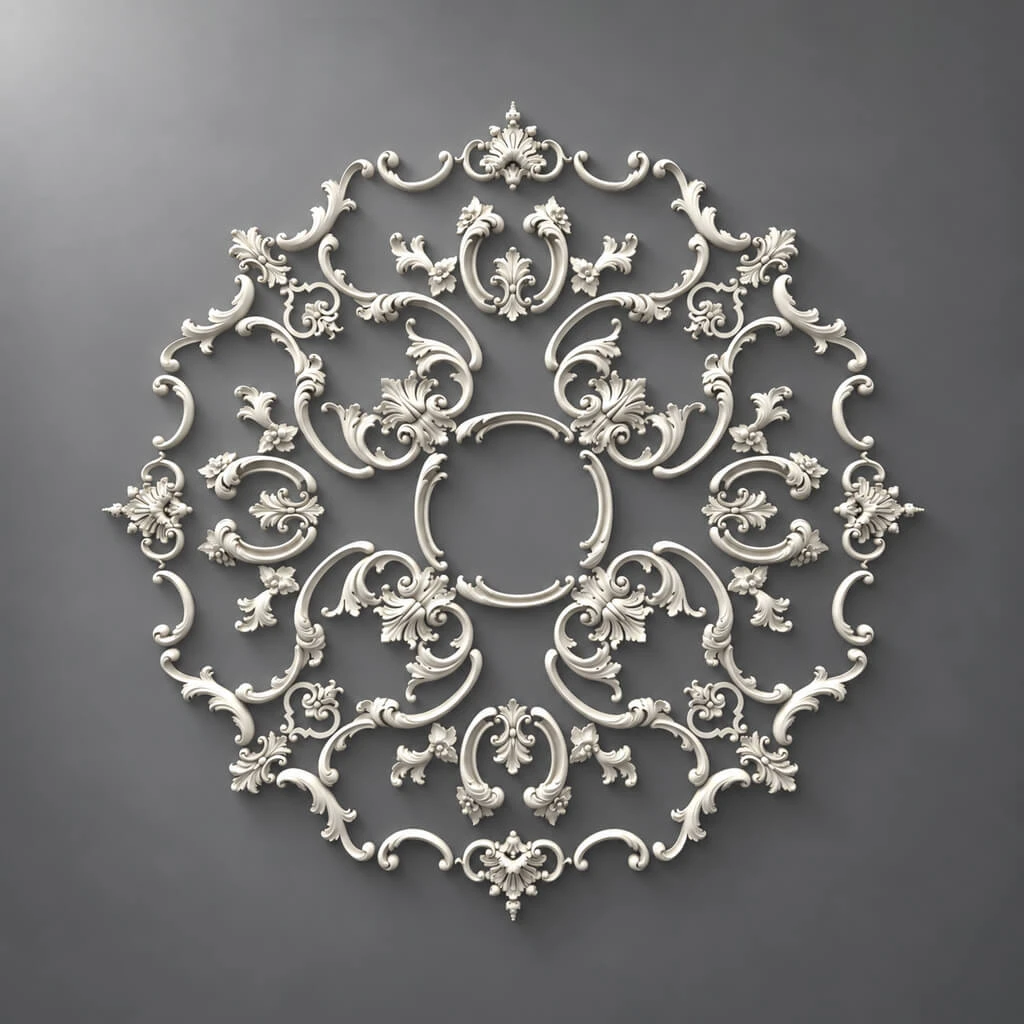
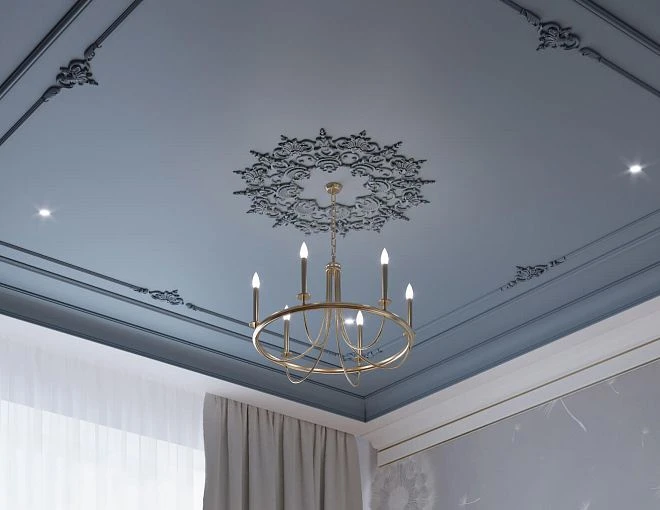
Stucco elements in the wall/ceiling transition zone can be more expressive than the wall moldings themselves — the ceiling is not "loaded" with decor as much as the wall, and allows for a more active profile.
Picture and mirror frame molding: connection with wall moldings
A picture without a frame on a wall with molding frames is like an inserted word in a foreign language. Formally present, but essentially out of place.
Wooden picture frame molding in a classic interior is a mandatory element. But it only works when its profile, scale, and color are coordinated with the wall decor.
Frame molding profile and molding profile
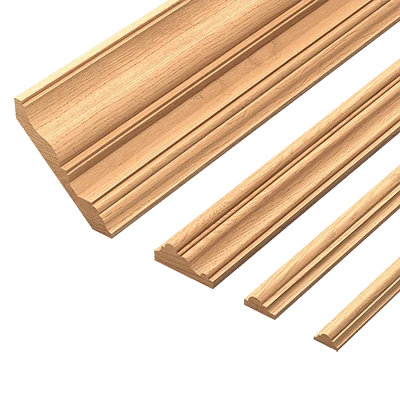
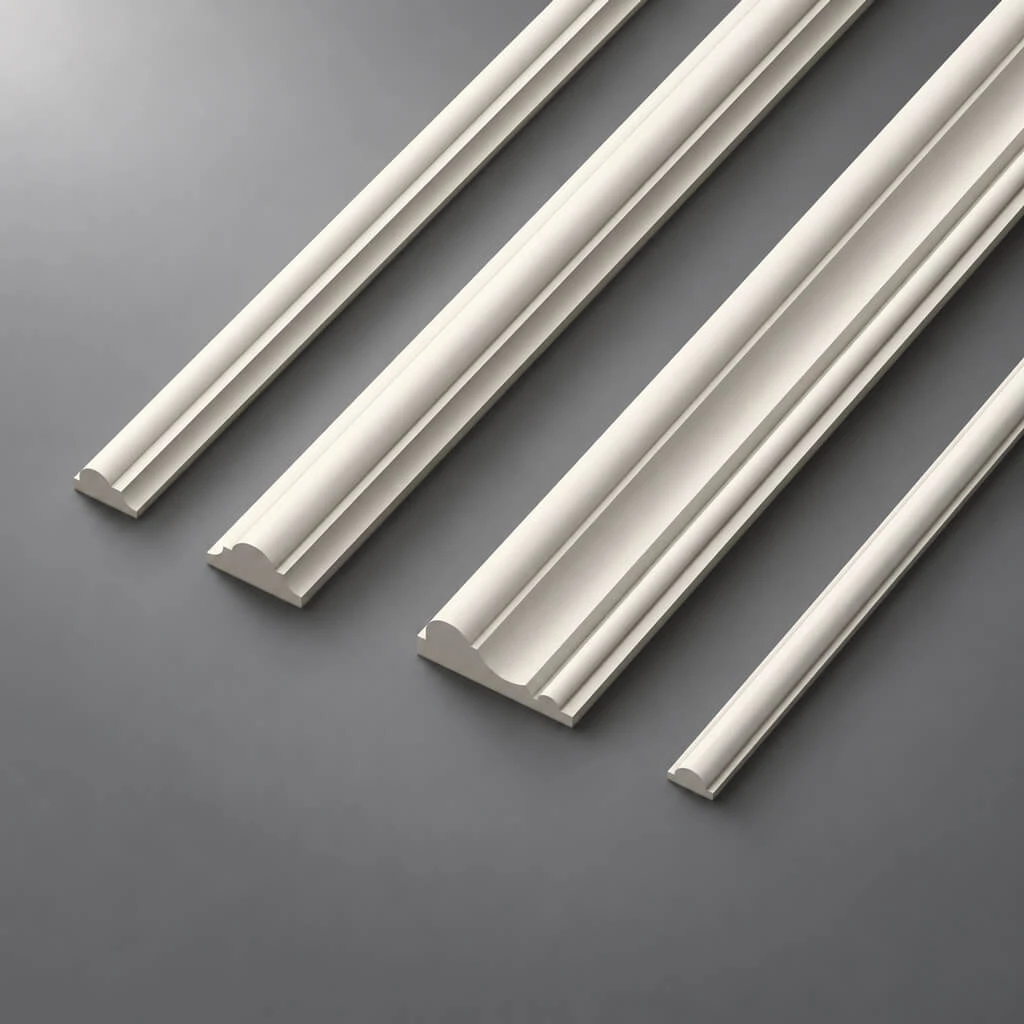
Look at the cross-section of the molding and the cross-section of the frame molding as relatives: they should have common features. If the molding has a semicircular protrusion and a smooth step — a wooden frame molding with a similar profile will create the feeling that the picture frame is part of the same architectural system. It is worth buying wooden frame moldings for several pictures in one room from the same series: this creates unity.
A wooden picture frame baguette should not be too wide where wall moldings already create a frame decor. In this case, a narrow baguette strip, a delicate profile. If the walls are more neutral and there is less decor, you can afford a wider, more expressive profile.
Wooden baguette for mirrors
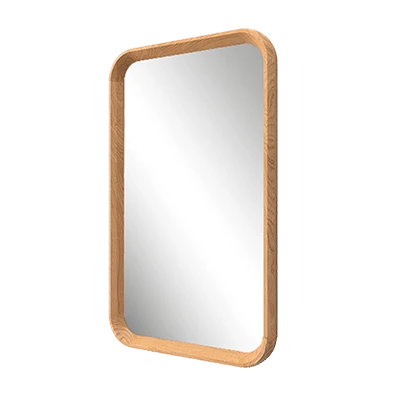
A mirror in a wooden baguette is an object that sits between furniture and wall decor. It simultaneously hangs on the wall (as decor) and performs a function (as a household item). That is why the profile of the mirror baguette should be coordinated with both the moldings and the furniture.
If the furniture is dark, the wooden baguette should be in the same tone. If the furniture is light and the moldings are white, the wooden baguette can be gilded or patinated: this creates a warm accent without conflict.
Baguette strip as a system element
A baguette strip is not only a material for making frames. In decorative work, it is used to create shelves for paintings, horizontal bands above dressers, decorative cornices above windows. A thin baguette strip in the color of the wooden baseboard, run horizontally at a height of 150–180 cm from the floor, creates an additional line — an analogue of the traditional "picture rail" in old interiors.
Layout, glazing bead, and corner: small details that tie everything together
There are details that do not catch the eye. But it is they that create the feeling that the interior is made by a craftsman's hands, not assembled from whatever was available.
Wooden layout: geometry on surfaces
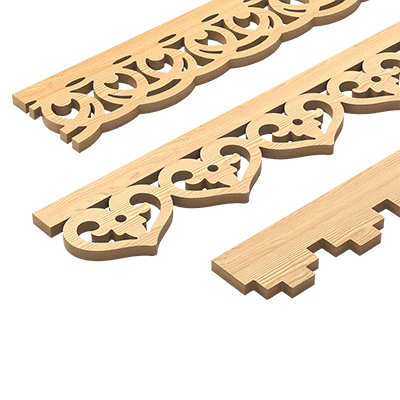
A decorative wooden layout is a narrow strip that is glued or nailed onto flat surfaces, creating a pattern. It is a tool for transferring wall decor to furniture, doors, panels, and partitions.
If the walls have polyurethane molding frames and the furniture facades have flat wooden trim with a similar rectangular pattern, the interior gains a rare architectural coherence: walls and furniture speak the same geometric language. It's a simple technique, but it works flawlessly.
Wooden trim can be purchased for several purposes:
-
Shaped wooden trim — for classic facades with profile decor
-
Flat wooden trim — for neoclassicism and modern interiors
-
Decorative wooden trim with colored tinting — for children's rooms and studies
Important: the color of the trim should match the color of the wooden baseboard and wooden baguette. If the baseboard is dark walnut, the trim in the same tone on cabinet facades creates a unified horizontal line of dark wood in the interior.
Wooden glazing bead: delicacy in its pure form
A wooden glazing bead is a narrow decorative strip, 8 to 15 mm wide, used to secure glass in cabinet and display case doors, to create thin decorative lines on panels and facades, and to finish joints in non-standard structures.
It is worth buying a wooden glazing bead from the same species as the main wooden interior elements: if the baseboard is oak, the glazing bead should also be oak. This seems insignificant until you see the result: unity of species gives unity of texture, which reads as quality.
In a classic sideboard with glass doors, the glazing bead plays the role of an internal molding: it holds the glass and simultaneously creates a decorative frame that echoes the wall moldings. A small detail — but without it, the sideboard looks like a warehouse, not furniture from a respectable home.
Wooden corner and block: structure and decor
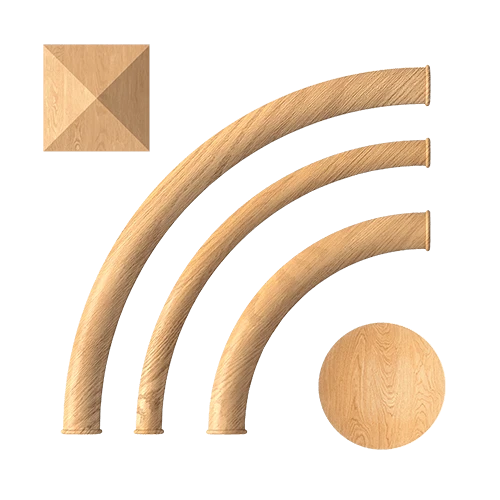
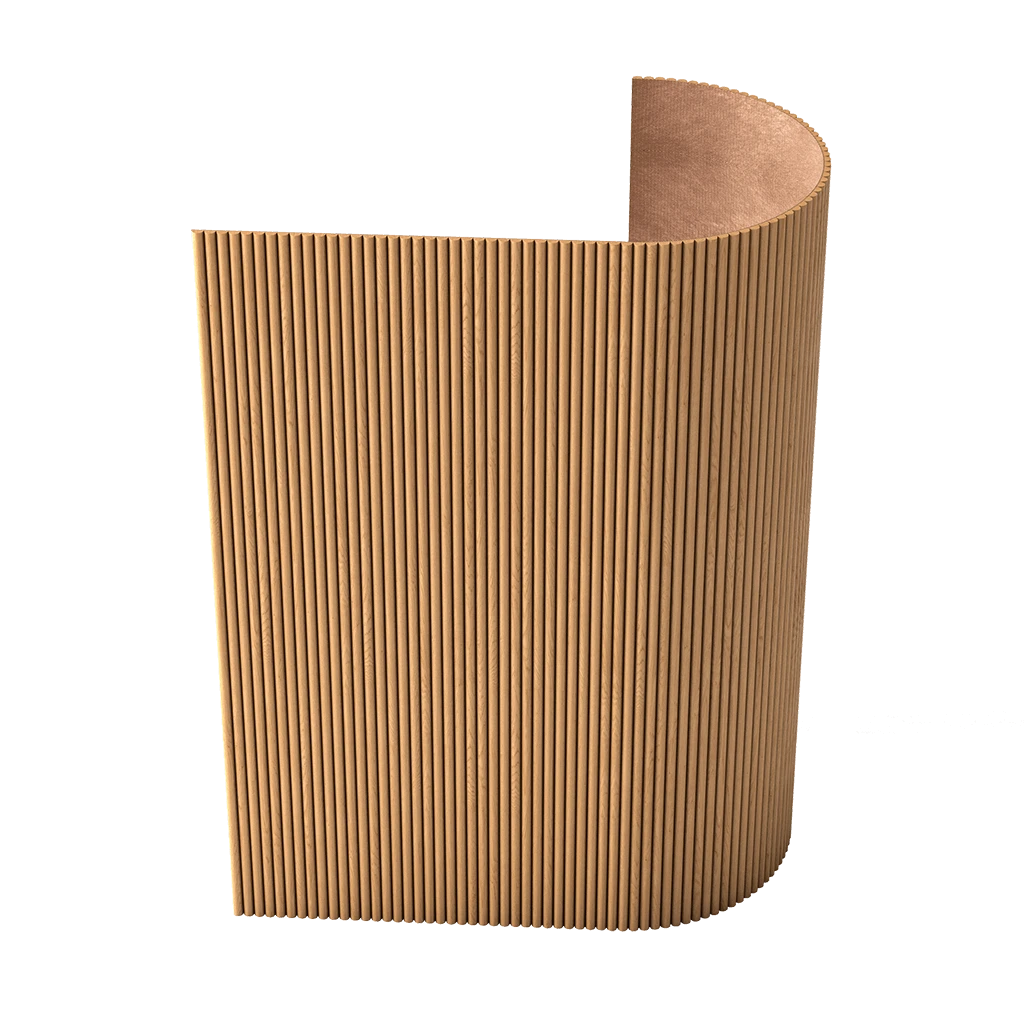
A wooden corner is used to finish external and internal corners of furniture cabinets, decorative panels, and shelves. It hides joints while adding sharpness to edges. In interiors with wooden slats on walls, a wooden corner covering vertical joints creates neat geometry without visible technical solutions.
A wooden block is used as an auxiliary element during installation: to create a wooden frame for slats, to form decorative niches, and to reinforce the load-bearing function of shelves. In open structures, it also becomes a decorative element — especially in interiors with a country house or Scandinavian classic style.
How to connect baseboard, moldings, and furniture
This is a practical question that everyone doing renovations faces. You can buy the right baseboard, install beautiful moldings, and still end up with an interior where furniture exists on its own and walls exist on their own.
Furniture legs and baseboard color
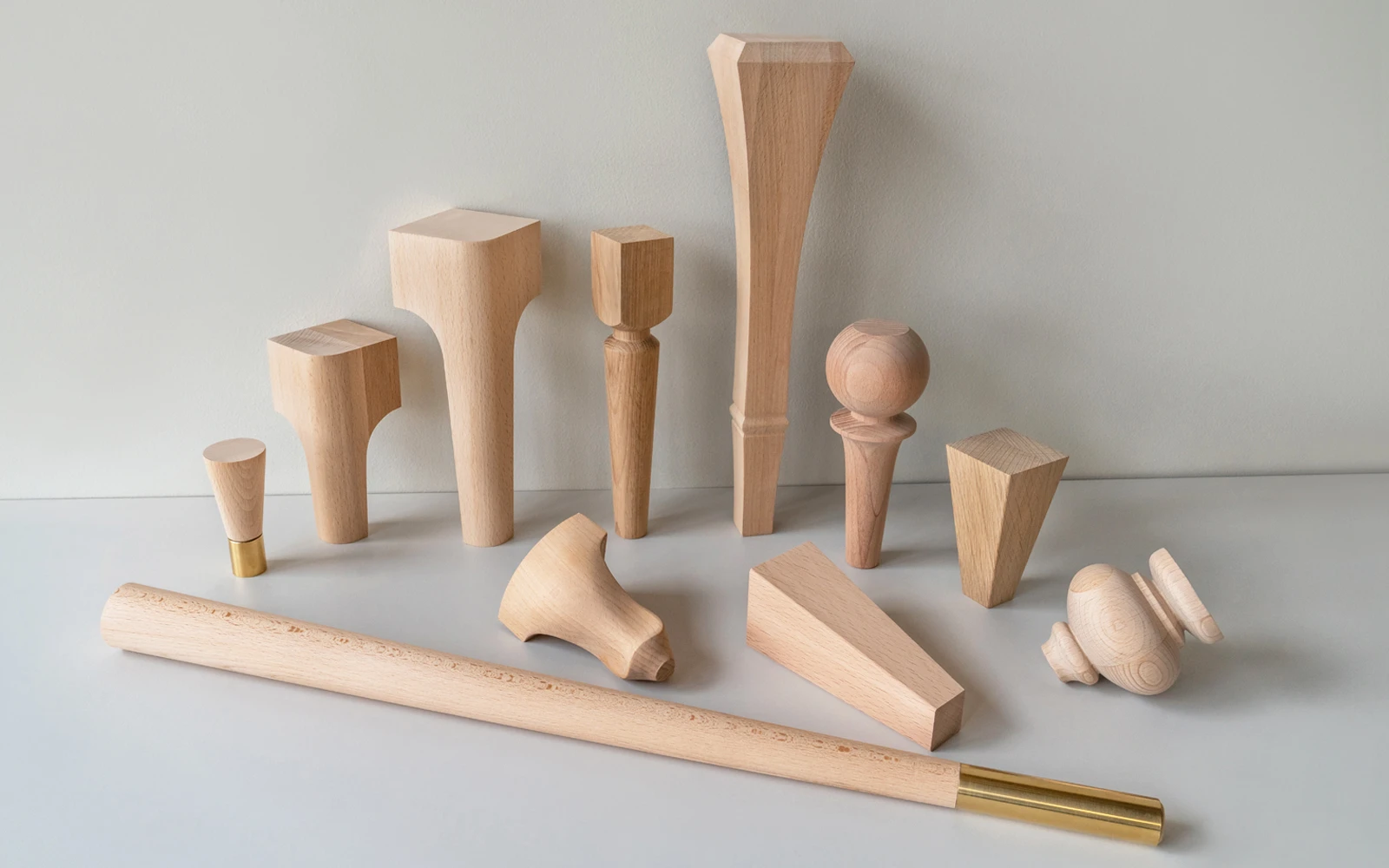
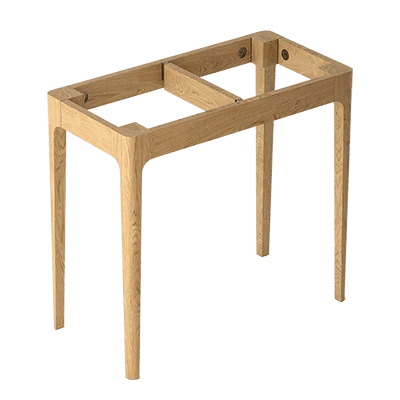
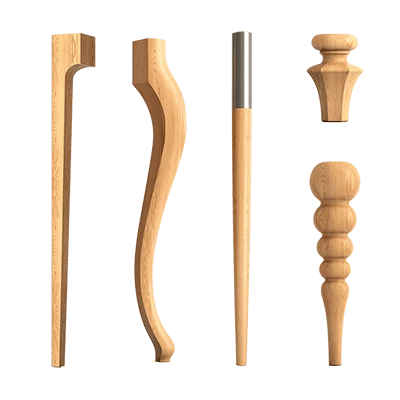
Wooden furniture legs should be purchased with the color of the wooden baseboard in mind. An exact match is not necessary, but the shade should be from the same range. A dark wooden baseboard and dark furniture legs create a unified vertical-horizontal structure that 'holds' the interior. A light baseboard and light legs do the same in an airy palette.
Buying furniture legs made of the same wood species as the baseboard is the ideal scenario. In practice, this is not always possible, so focus on the tint tone: matte dark oak in the baseboard and matte dark beech in the legs will work.
Decorative elements for furniture: scale matters
decorative elements for furniture Polyurethane overlays, corner elements, and friezes should be similar in scale to the moldings on the wall. If the wall molding is 40 mm wide and the furniture front overlay is 15 mm, the scale gap will read as inconsistency. The scale of details is not a trifle: it is what creates a sense of unity.
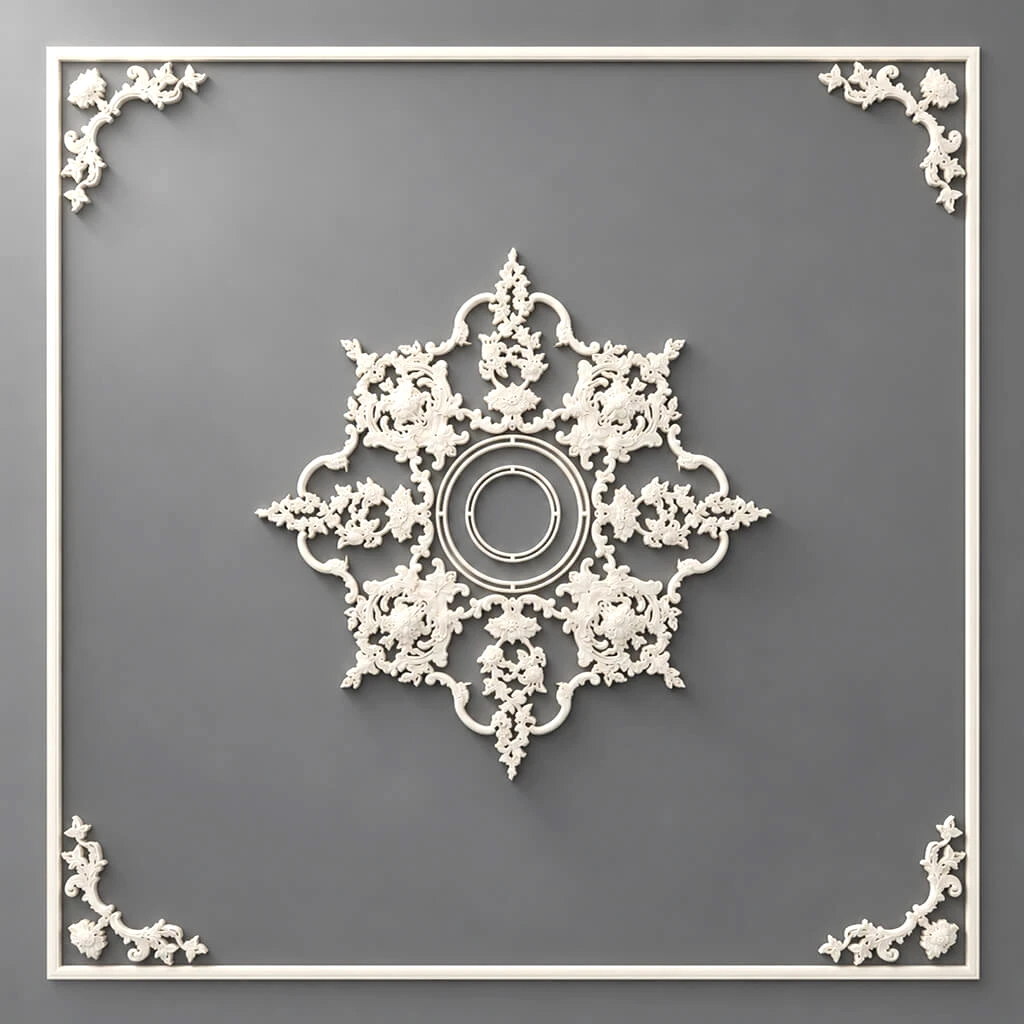
Decor for Molding Made of polyurethane — corner and center overlays for wall frames — can also be used in furniture solutions: a central medallion on a cabinet door, corner elements on a sideboard facade. This creates a direct visual connection between the wall and the furniture.
Handles and hardware
Decorative hardware in a classic interior is not just a function, it's the finishing touch. A wooden handle on dresser drawers matching the baseboard tone is a delicate detail seen up close. It should be made of the same wood, the same shade, with a profile that echoes the molding profile.
If the baseboard is dark — wooden handles in a dark tone. If the baseboard is in a natural light tone — handles can be chosen lighter or contrast can be added with a copper or brass metal element. Furniture decor in a classic interior is not a random choice from a catalog, but a continuation of the same concept embedded in the baseboard, molding, and cornice.
Furniture support: a load-bearing element with a decorative function
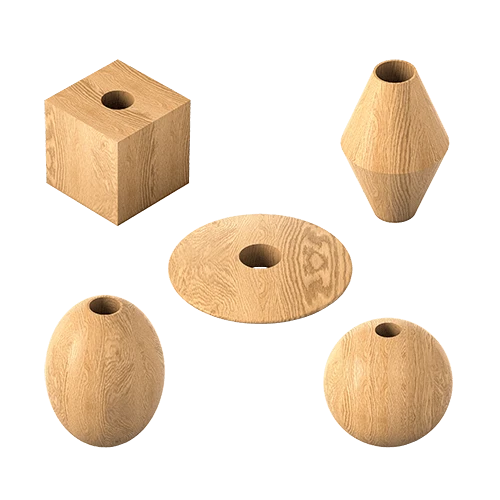
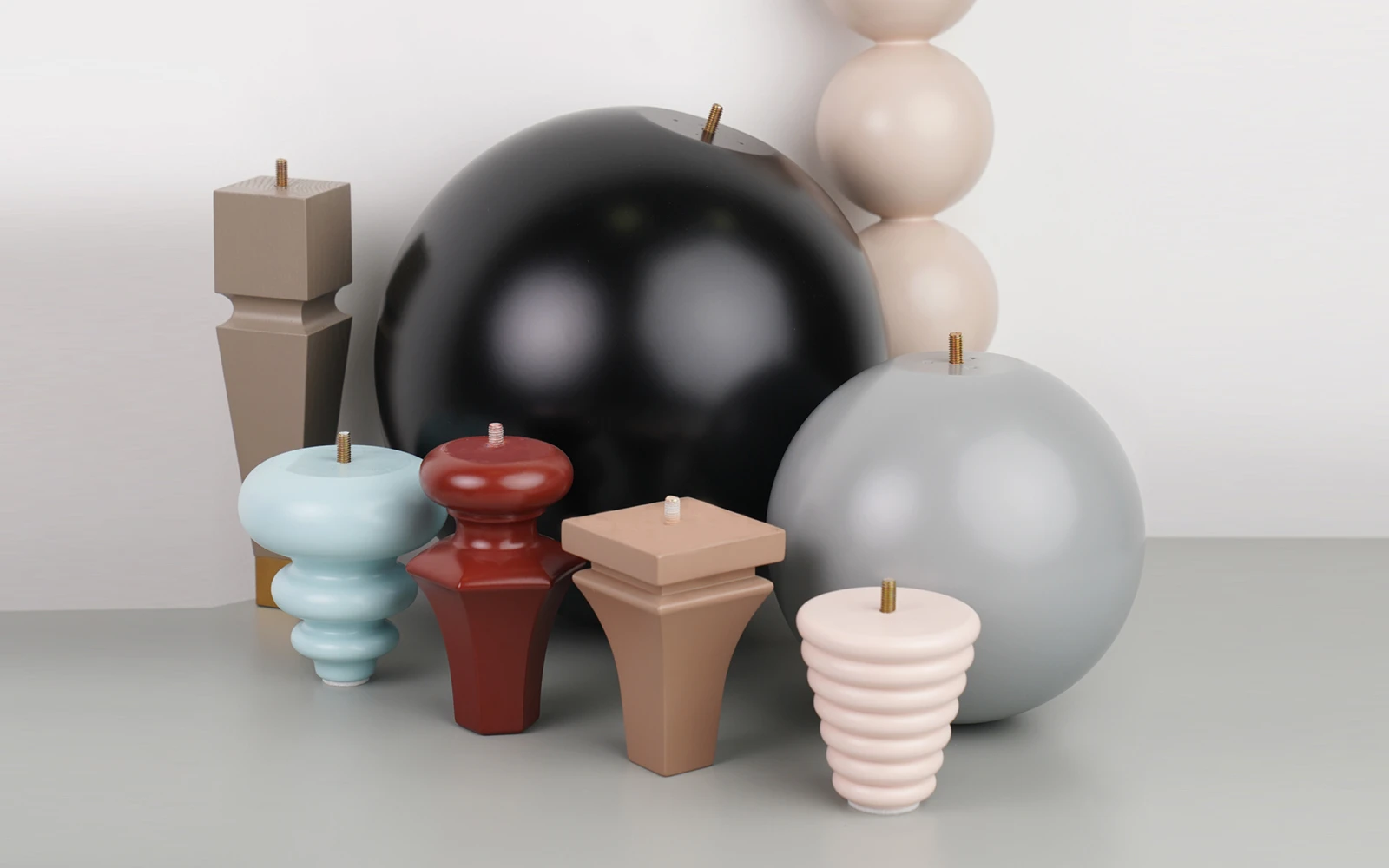
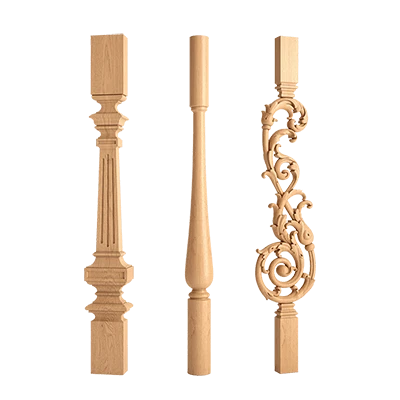
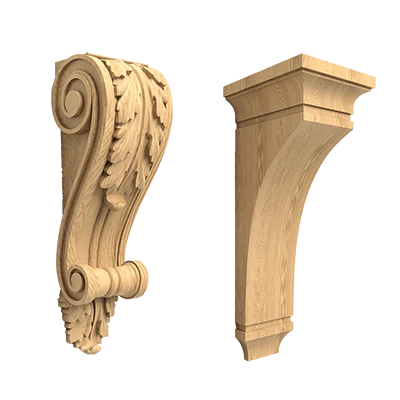
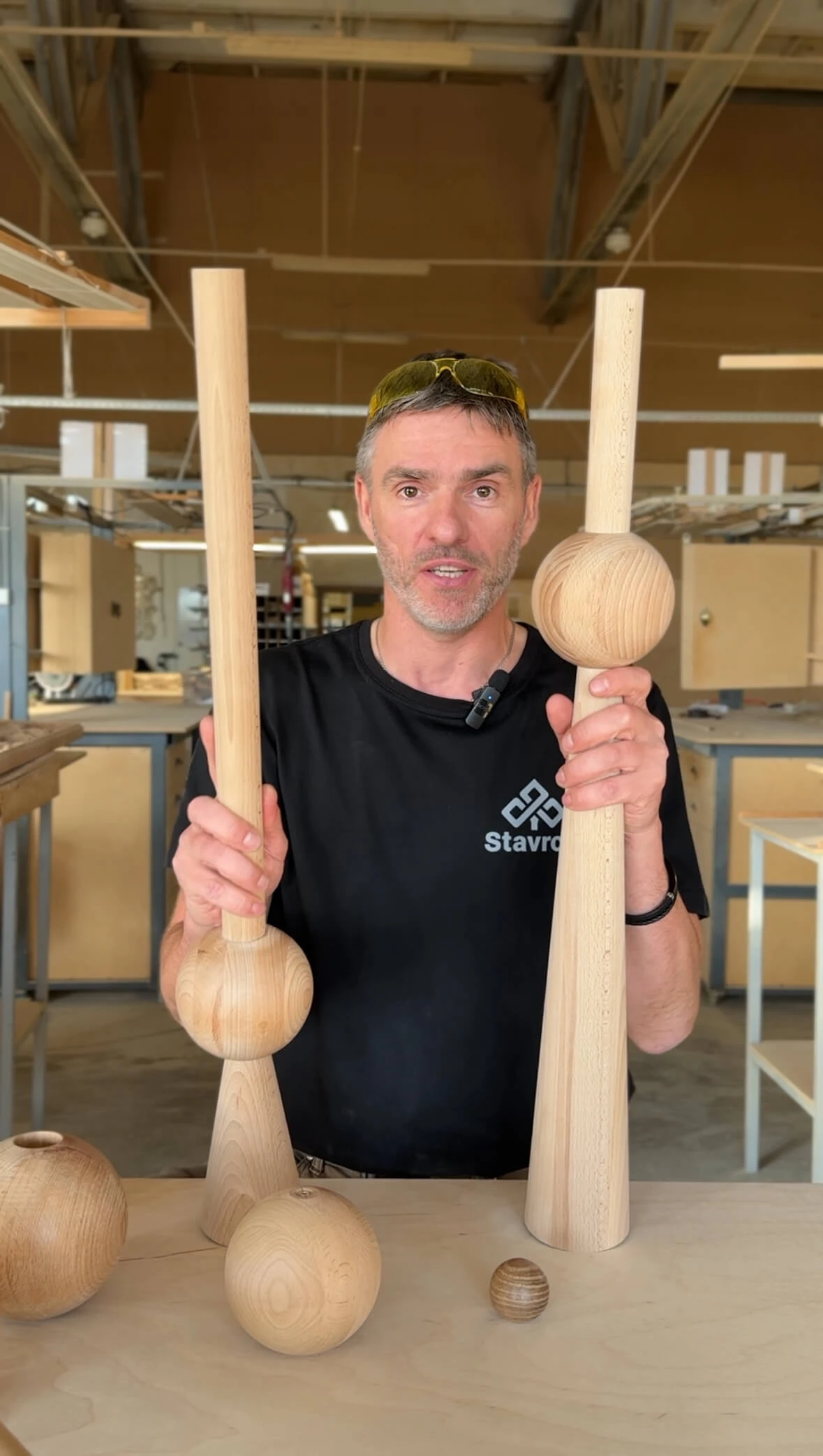
Decorative furniture support under a console, cabinet, or shelf is a detail that is visible. A vase-shaped furniture support in the tone of the wooden baseboard completes the circle: wall decor, furniture legs, handles, and supports — all details in a unified register.
How to choose a combination for the interior style
| Style | Skirting board | Moldings and stucco | Wooden decor |
|---|---|---|---|
| Classic | High wooden, 120–160 mm, dark tone | Versailles Lightrich frames, cornice | wooden cornice, wide baguette, furniture legs |
| Neoclassical | wooden 80–100 mm, neutral tone | Neoclassicalstrict frames, horizontal belt | layout on facades, wooden handles, baguette |
| Modern Classic | simple wooden or polyurethane | Neoclassic Lightlight frames | wooden slats, thin baguette, wooden legs |
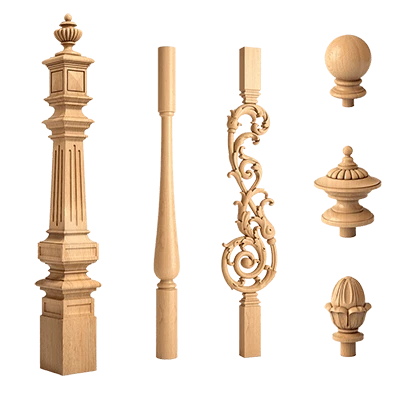
| Suburban house | wooden high, natural tone | moldings with cornice, moderate stucco | Wooden cornice, balusters, panels, wooden furniture |
| Apartment (standard) | Wooden 80–100 mm | Molding frames without overload | Wooden baguette, furniture handles, glazing bead |
Mistakes when combining baseboard, cornice, and stucco
The experience of decorators and designers is largely the experience of mistakes. Let's list the most characteristic ones: those that occur again and again.
Too low baseboard with large stucco
Molding frames 150 cm high and 80 cm wide on the wall — and a baseboard 60 mm high underneath them. The proportion is broken: the upper part of the wall is "heavy", the lower part is "weightless". The eye finds no support. The height of the baseboard should be proportionate to the height of the molding frames.
Too many different shades of wood
The design of stucco molding on the wall can be anything — white, cream, patinated. But if one room has four different shades of wood: a reddish baseboard, a dark baguette, gray-brown sofa legs, and a light glazing bead on the sideboard — that's visual chaos. Maximum two tones of wood: main and accent.
The baguette does not match the style of the moldings
Strict geometric moldings the Neoclassic collection on the wall — and a lush Baroque gilded baguette with curls on the painting. It's like speaking English and inserting random Spanish words. The profile and style of the baguette should match the character of the moldings.
The cornice is too heavy for a small room
Types of stucco for cornices range from narrow profiles 40 mm wide to monumental cornices 250 mm wide or more. In a room of 14 sq. m with a ceiling of 2.7 m, a massive cornice creates a feeling of pressure. Rule: the smaller the room, the lighter and narrower the cornice should be.
The baseboard and furniture are not related in color
A light wooden baseboard — and dark furniture with metal legs. There is no color or style connection. The interior falls apart into independent fragments. Furniture and decor should have at least one common note — the color of the wood, the tone of the metal, or the character of the profile.
The stucco is complex, the baseboard is too simple
Decorative stucco on the walls — ornamental frames, stucco rosettes, rich cornices — and a wooden baseboard with a simple straight profile. The gap between the richness of decor at the top and the asceticism at the bottom destroys the hierarchy. The baseboard should be proportionally expressive.
Wooden decor conflicts with the floor color
A dark wooden baseboard against a light parquet creates a clear horizontal line — this is acceptable as a deliberate contrast. But a reddish pine baseboard against a gray concrete floor is a conflict without a concept. The baseboard color should either support the floor tone or deliberately contrast it.
Furniture decoration is done in a different style
Overlay elements for furniture are chosen in a Baroque style, while the walls are decorated with strict neoclassical molding. Furniture decoration is not an independent process, but a continuation of the wall concept. The style of decorative elements for furniture should be consistent with the style of wall decor.
Step-by-step logic for choosing wall decor considering baseboard and cornice
Many people wonder: where to start? With moldings or with the baseboard? With the cornice or with the furniture? We offer a practical sequence.
Step 1. Determine the ceiling height and interior style. This sets the scale for all decor.
Step 2. Choose wall moldings. Polyurethane wall decor — this is the main tool. Choose a collection: classic, neoclassical, light modern decor.
Step 3. Select the baseboard. Determine the height based on proportion to the moldings. Color — based on proportion to the furniture and floor.
Step 4. Choose a cornice. For classic style — more expressive. For neoclassical — restrained. A wooden cornice — only if there are many other wooden elements in the interior.
Step 5. Choose a wooden baguette for paintings and mirrors, matching its profile with the moldings.
Step 6. Choose furniture decor — legs, handles, supports, overlays — based on the style and color of the baseboard and moldings.
Step 7. Finish with details — layout on facades, glazing bead in showcases, corners on shelves.
It is in this sequence — from large to small, from architecture to details — that an interior is built that looks thoughtful, not assembled from random purchases.
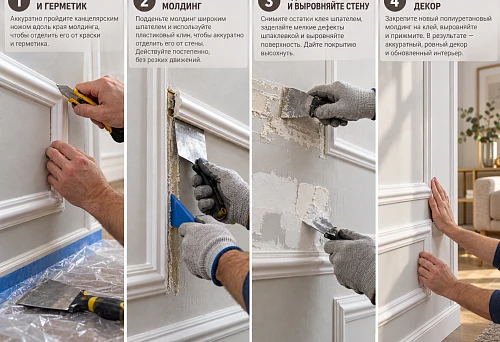
Detailed installation instructions are in the article about installing polyurethane moldings: it covers clean corners, hidden joints, and painting rules. And a practical guide to working with with polyurethane moldings will help avoid mistakes during installation.
How to choose everything you need at STAVROS
STAVROS manufactures polyurethane decor for walls and ceilings from European raw materials with a density from 150 to 420 kg/m³. The catalog covers all levels of the interior — from cornice profile to furniture overlays.
What can be found in the STAVROS catalog to solve the tasks described in the article:
-
Polyurethane wall decor — molding frames, relief panels, ready-made sets in 15 collections. Suitable for classic, neoclassical, and modern interiors.
-
Polyurethane moldings, cornices, and baseboards — a wide selection of profiles for the top, middle, and bottom lines of the wall.
-
decorative elements for furniture — overlays, corner and center elements for updating facades and cabinets.
-
Decor for Molding — corner and center overlays for reinforcing molding frames and creating decorative accents.
-
Versailles Light collection — for formal living rooms and country houses with rich classic decor.
-
Neoclassic Collection и Neoclassic Light — for apartments where classic style is needed without baroque heaviness.
All STAVROS products are compatible in styles and scales within collections, which simplifies selection: you don't need to be a designer to assemble a cohesive interior—just choose a collection and follow the logic of proportions.
STAVROS provides free and relevant advice on selecting decor for a specific project. Because STAVROS understands: a good interior starts with the right choice, not an expensive budget. Contact us to confirm shipping to your destination., in-house production, a wide selection of profiles and collections—all this makes STAVROS a reliable partner for those creating interiors with character.
FAQ: Answers to popular questions
Can you combine wooden baseboards and polyurethane wall decor?
Yes, this is one of the best combinations for classic and neoclassical interiors. Polyurethane decor frames the wall plane — molding frames, cornices, stucco accents. A wooden baseboard completes the wall at the bottom and creates a connection with the floor and wooden furniture details. The materials do not compete but complement each other.
Which baseboard should I choose to match the stucco on the wall?
Determine the baseboard height based on the scale of the molding frames and ceiling height. For a classic interior with rich moldings — a baseboard height of 100 mm or more. For neoclassical — 80–100 mm with a smooth or calm profile. Color — matching the furniture or door, profile — in the style of the moldings.
Can I use a wooden cornice together with polyurethane stucco?
Yes, if they match in style and scale. A wooden cornice is organic where there are many wooden elements in the interior: solid wood furniture, wooden doors, wooden stairs. In an apartment with standard ceiling height, it is better to choose a wooden cornice with a moderate profile so as not to overload the wall/ceiling transition.
How to choose a wooden baguette for a wall with moldings?
Focus on the molding profile: the baguette style should be from the same style family. Classic molding with ornament — a wide wooden baguette with a stucco profile. Geometric neoclassical molding — a narrow wooden frame with clean lines. If the wall is already saturated with molding decor, it is better to choose a more restrained baguette.
What is more important: baseboard, cornice, or moldings?
They work as a system, and each element is important in its place. The baseboard closes the lower boundary of the wall, the cornice closes the upper one, and the moldings form the main decorative plane. Remove one — and the system falls apart: either the wall "falls" down without a base, or "floats" up without a cornice.
Is layout on furniture facades needed if the walls are already decorated with moldings?
Yes, it is precisely the decorative wooden layout on the facades that creates a connection between the wall and the furniture. It transfers the frame rhythm from the wall to the furniture, making the interior cohesive. Without this link, the furniture remains an extraneous object against a beautiful background.
How to choose a glazing bead for a sideboard in a classic interior?
The glazing bead should be made of the same wood species as other wooden details in the room: baseboard, legs, handles. Width — 10–14 mm, profile — calm, without excessive relief. Coloring or tinting — to match the sideboard facade or slightly darker to create a delicate contrast.
How to connect a dark baseboard with light moldings?
This is a classic two-color interior technique: a light wall with white or cream moldings and a dark wooden baseboard at the bottom. To make the transition not look abrupt, you can add a horizontal belt of molding at the height of the baseboard — it will become a "buffer" between the dark wood and the light wall.