








































Article Contents:
- A frame is not just a border. It's part of the wall.
- Why picture frame molding and wall decor must speak the same language
- Three rules of consistency
- What polyurethane wall decor brings to the context of paintings and mirrors
- Molding frames as "homes" for paintings
- Ornamental molding creates wall hierarchy
- Wooden picture frame molding: function, beauty, and its place in interior design
- Where wooden picture frame molding works best
- Buying wooden picture frame molding: what to consider
- How to match wooden picture frame molding with moldings
- Thin moldings — laconic baguette
- Classic frames — expressive baguette
- Geometric decor — geometric baguette
- Color: wood in one palette
- Baguette strip, glazing bead, layout, and corner: small details with big meaning
- Baguette strip: thin frame without weight
- Wooden glazing bead: delicate transition
- Wooden layout: lines that unite
- Wooden corner: purity at joints
- Paintings on the wall with moldings: placement rules
- Along the molding frame axis
- Gallery wall with moldings
- Large painting and moldings
- Mirror in a wooden frame: more than just a function
- Mirror as a central wall element
- Shape of the mirror frame and stucco molding
- Decorative panel, textile inserts, and molding niches
- Panel in a molding frame
- Fabric inserts: temperature and sound
- How to connect a wooden frame with furniture decor
- Bagette and furniture legs: tonal rhyme
- Decorative elements for furniture and stucco
- Furniture decor: metal in the right tone
- Interior styles and rules for working with baguette
- Living room furniture: how to connect it with wall decor and baguette
- Mistakes when combining wooden baguette and stucco
- Disproportionate baguette and molding
- Three different wood tones in one room
- Painting off the axis of the molding frame
- Wooden baguette not connected to furniture
- Stucco molding and wooden baguette of different styles
- Too many frames on one wall
- No single central axis
- How to choose everything you need at STAVROS
- FAQ: Answers to Popular Questions




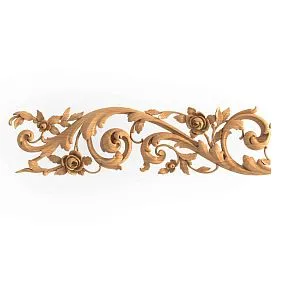
A frame is not just a border. It is part of the wall
There is an observation that doesn't come immediately, but then never lets go. Enter any room where a single painting hangs. Just a painting on a nail. No moldings around it, no dialogue with the furniture, no connection to the baseboard or cornice. It hangs — and that's it. Beautiful in itself. But lonely. As if it ended up there by chance.
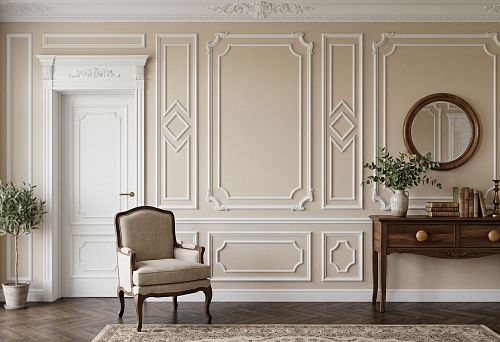
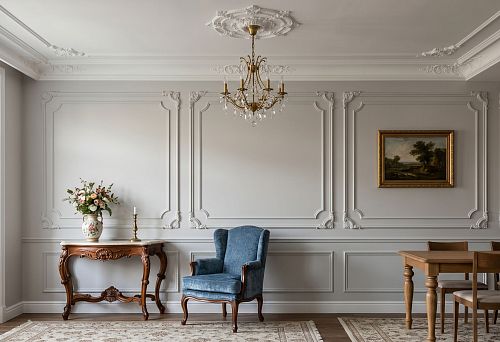
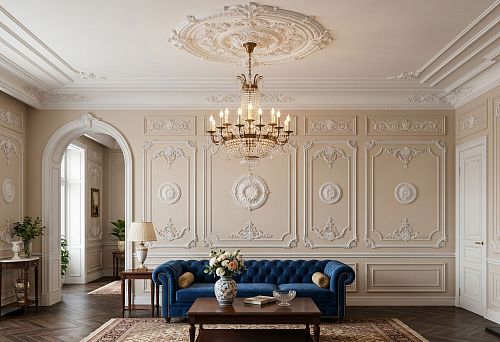
Now imagine the same painting, but in a different interior. On the wall — molding frames, light polyurethane decor, a thin horizontal band. The painting hangs exactly along the axis of the molding frame. The wooden baguette matches the tone of the baseboard and wooden furniture details. The proportions of the frame respond to the proportions of the moldings. And that's it — the painting is no longer lonely. It has become part of the interior. It has grown into the wall.
It is precisely this distinction between a "hung painting" and a "painting integrated into the interior" — the essence of this article. Polyurethane wall decor creates the architecture of the wall, the wooden baguette frames what is placed on it. When both of these elements work in harmony — the wall ceases to be a background and becomes a full-fledged work of interior art.




Why the baguette and wall decor must speak the same language
Imagine a person in an impeccable classic suit and... sneakers. Each element is quality in itself. But together they don't work — because they belong to different style systems. Roughly the same happens when on a wall with polyurethane moldings and classical stucco molding hang a painting in a wide dark modern frame with metal trim.
The conflict is silent but palpable. The wall speaks the language of classicism, the painting speaks the language of minimalism. The interior becomes neither one nor the other.
Our factory also produces:


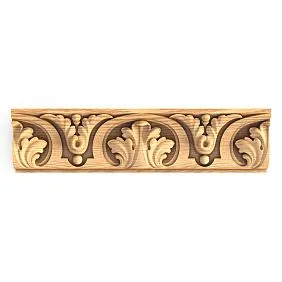
Three rules of consistency
First rule: style. The wooden frame and moldings should belong to the same style family. Classic ornamental decor on the walls — a frame with a light profile, possibly with a thin patina or gilded edge. Laconic Neoclassic Light on the walls — a simple, clean wooden frame without excessive ornament.
Second rule: scale. The width of the wooden frame profile should be proportionate to the width of the molding. A thin molding of 20–25 mm — and a heavy wide frame of 80 mm — a scale dissonance. They exist in different weight categories.
Third rule: color. The tone of the wooden frame should be matched to at least one of the wooden elements in the room: baseboard, door casing, furniture legs. One tonal thread running through all the wooden details is what creates unity.
Get Consultation
What polyurethane wall decor provides in the context of paintings and mirrors
The answer to the question "why moldings if there is a frame?" is simple: because they do different things. The frame frames the object itself. The molding system frames the wall and creates an "architectural address" for that object.
Molding frames as "homes" for paintings
decorative wall molding creates fields — rectangular zones inside which a painting or mirror is perceived as an organic part of the wall, rather than as a hanging object. A painting inside a molding frame is a painting that "lives" in the wall. A painting outside the frame is a painting that is "stuck" to the wall.
The difference is subtle but psychologically significant. A molding frame creates predictability — the brain sees the frame and understands: there should be a painting here. This is a place for a painting. This is correct.
This principle works especially well in the living room, where the wall behind the sofa becomes the main decorative plane of the room. Several paintings in wooden baguettes, correctly positioned along the axes of the molding frames, create a cohesive gallery wall — with minimal cost and effort.
Stucco creates a hierarchy of the wall
Polyurethane molding on walls — these are not only frames. These are corner overlays, horizontal belts, central medallions. They create a hierarchy of the plane: somewhere the wall is "quiet", somewhere it "speaks". And paintings should be placed in "speaking" zones — where a place has been prepared for them.
polyurethane decor can be painted in the color of the wall — then the moldings create relief without color noise. Or highlighted with white, gold, gray — creating a clear contrast. In both cases, they set the structure within which the wooden baguette and paintings find their logical place.
Wooden baguette: function, beauty, and place in the interior
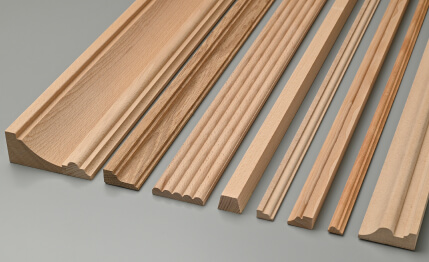
A wooden baguette is a frame for a painting, mirror, or decorative panel. The word "frame" is too modest here: a good wooden baguette for paintings is a work of small decorative architecture. A profile with curves and chamfers, patina or tinting, precise 45° angles — all this requires skill and knowledge.
Where a wooden baguette works best
In a classic interior, a wooden baguette for paintings is irreplaceable. No metal, plastic, or synthetic analogue creates that feeling of expensive substance that wood with proper surface treatment gives. Oak with dark tinting and wax coating next to wall decor Versailles Light — this is a combination that works without additional explanations.
In a neoclassical interior, a wooden baguette becomes more delicate: a narrow profile of 20–35 mm, without ornamentation, with a simple chamfer or soft bevel. Next to Neoclassic decor such a baguette looks like a precise stylistic rhyme — not accidental, not randomly bought, but consciously chosen.
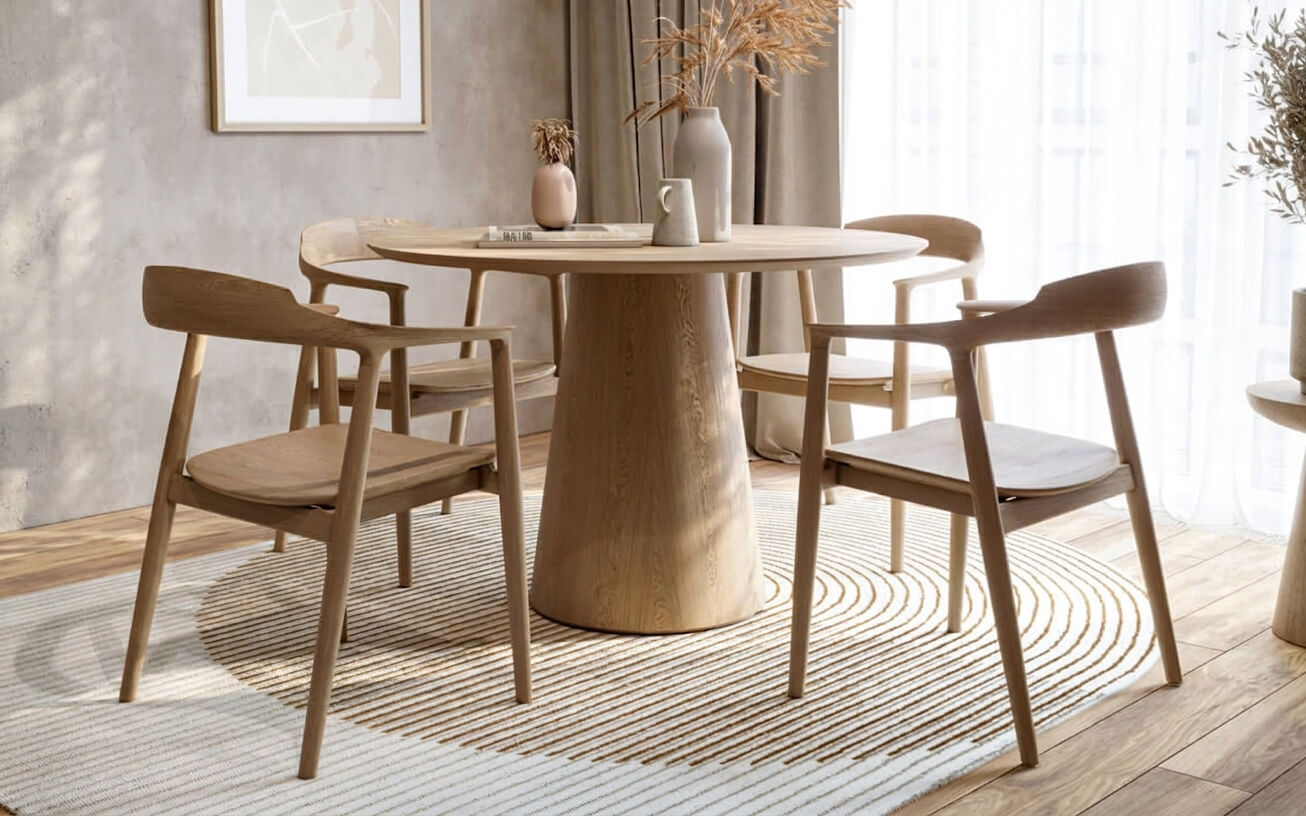
In a country interior, a wooden baguette can be more massive: a wide oak profile with natural texture, without patina, with an oil-wax coating. Next to wooden furniture details, wooden baseboards, and natural materials — this is an organic choice.
Buying a wooden baguette: what to consider
Buying a wooden baguette for paintings does not mean going to the nearest art supply store and picking "what fits the size." You need to consider:
-
Profile width — depending on the size of the painting and the moldings on the wall
-
Profile height (depth) — the larger the painting, the deeper the frame should be
-
Wood species — for tinting or painting
-
Tint of toning — coordinated with the wooden details of the room
-
Surface type — matte, satin, lacquered, waxed, with patina
The most common mistake: buying a baguette "once" for one painting, without thinking about other paintings and mirrors in the room. A single profile and tone for all frames in one room is a basic requirement for a coordinated interior.
How to choose a wooden baguette for moldings
This is a practical question with specific answers.
Thin moldings — laconic baguette
Neoclassic Light — these are delicate frames on a thin molding. Molding profile 20–30 mm. For paintings in such an interior, you need a baguette with a similar visual weight: profile width 20–35 mm, simple bevel or soft chamfer, neutral tone. No wide ornamental frames with gilding — they will destroy the delicacy of the molding decor.
Classic frames — expressive baguette
Versailles Light — these are moldings with ornamental corner overlays, a more expressive profile, rich plasticity. Here the wooden baguette can be significantly wider: 40–60 mm, with a profile, possibly with fine patination or a light gilded edge inside. This is not dissonance — it is a dialogue of equals.
Geometric decor — geometric baguette
Strict rectangular moldings in the Art Deco or geometric neoclassical style require a corresponding baguette: straight lines, clear angles, minimal rounding and ornamentation. A square or rectangular wooden baguette profile without curves is the precise answer to a geometric wall.
Color: wood in the same palette
The design of the stucco and the character of the wall set the tonal palette. If the wall is warm — warm oak, beech, ash with warm tinting. If the wall is cool (gray-blue, pearlescent) — neutral wood with gray tinting or a bleached surface.
Types of stucco on walls also affect the tone: white stucco — neutral or white baguette for palette purity. Tinted stucco in cream tones — warm wood. Dark accent wall — light contrasting baguette.
Baguette strip, glazing bead, layout, and corner: small details with big meaning
Beyond full framing, there is a whole world of fine decorative trim that helps unify a wall composition into a cohesive whole.
Baguette strip: a thin frame without weight
A baguette strip is a narrow profile plank 10–20 mm wide. It is used to create thin decorative frames for textiles, panels, wallpaper inserts, and small-format watercolors. In interiors with moldings, a baguette strip can be used as an inner frame — between the molding and the wall surface inside the frame.
This technique creates a double frame: the outer one — polyurethane molding, the inner one — wooden baguette strip. Between them is a small gap (5–10 mm) that creates a shadow. The effect is depth, volume, sophistication. It gives the impression that the wall was custom-made.
Wooden glazing bead: a delicate transition
Wooden glazing bead — a narrow profiled strip 8–14 mm — is used to cover ends, transitions, and junctions. Where a wooden baguette meets a molding frame or where a strip transitions to another material, the glazing bead creates a clean, neat boundary.
You should buy a wooden glazing bead from the same species as the main wooden element. Ash glazing bead for ash baguette, oak for oak frame. Even if it's barely visible, matching the tone and texture gives a sense of neatness that is subconsciously perceived.
Wooden layout: lines that unite
Decorative wooden layout is a thin strip with or without a profile that is glued or attached to a flat surface. Its function in the context of wall decor is to repeat the rhythm of moldings on surfaces that do not carry molding decor.
A flat wooden layout 10–15 mm on a cabinet door, on a console facade, on a mirror frame is a way to transfer the rhythm of the wall to the furniture. If moldings create rectangular fields on the walls, the layout on door facades creates the same geometry — and the entire room begins to read as a single space.
A figured wooden layout with a profile is a more decorative option for classic interiors. It creates a more pronounced relief and suits richer molding decor.
Wooden corner: cleanliness at joints
A wooden corner is an angled strip that covers external and internal corners when joining wooden elements. Where wooden decor transitions from one wall to another, the corner creates a clear vertical line — architecturally clean, without gaps or mismatches.
In an interior with moldings the wooden corner should be proportionate — no wider than the molding, no thinner than the baguette strip. This is a detail that goes unnoticed when it is present. But it is immediately noticed when it is missing.
Paintings on the wall with moldings: placement rules
Placing a painting is not just about 'at what level to hang it.' It's about the relationship between the painting, moldings, furniture, and the entire wall plane.
Along the axis of the molding frame
When molding frames create rectangular fields on the wall, it is logical to place the painting exactly in the center of such a field — both horizontally and vertically. A central painting within the frame creates a complete mini-composition: the frame is the 'border' for the painting, which does not need to be seen separately — it is part of the wall.
The standard height of the painting's center from the floor is 145–165 cm. This is the eye level of a standing person. In living rooms where people sit, the height can be lower — 120–135 cm.
Gallery wall with moldings
A gallery arrangement — several paintings of different formats on one wall — looks much more convincing if it is subordinated to the molding grid. Each painting gets a 'cell' in the molding system, and the chaos of the arrangement disappears.
For a gallery wall, the wooden picture frame should be uniform for all: one profile, one tone. Different formats, different content — but a single frame. This creates rhythm without monotony.
Polyurethane wall decor with horizontal bands helps organize a gallery wall even more structurally: the upper tier of paintings is above the band, the lower tier is below.
Large painting and moldings
A single large painting (from 80×100 cm) on a wall with moldings requires special attention. If the molding frames create several fields, the large painting should occupy only one of them. If it "overlaps" several frames, a conflict of scales arises.
A large painting in a wooden frame next to active moldings is a competition between two dominant elements. No one can win. For a large painting to look good, the stucco around it should be calmer: minimal moldings, delicate stucco.
A mirror in a wooden frame: more than just a function
A mirror is a special object. It reflects the room, doubles the space, creates an illusion of depth. In an interior with decorative wall molding a mirror in a wooden frame can become the main accent of the wall.
Mirror as a central element of the wall
A mirror in a wooden frame above a console or chest of drawers is a classic solution for a hallway, living room, or dining room. The mirror frame is selected to match the tone of the console or chest of drawers: if the furniture is light ash, the wooden frame should be made of the same ash or have a similar tint.
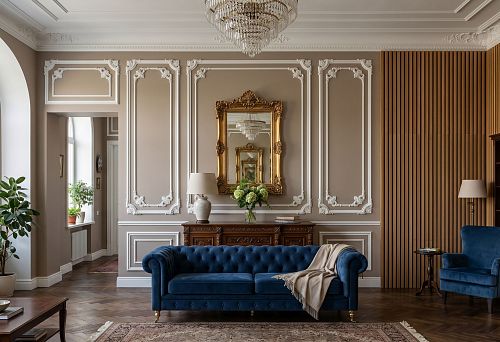
Molding frames around the mirror enhance its significance: a mirror inside a molding niche or surrounded by decorative molding fields looks like an architectural element, not something "bought in a store." Wall decor Neoclassic with symmetrical frames on both sides of the mirror is a simple and powerful compositional technique.
Shape of the mirror frame and stucco
A rectangular mirror in a rectangular wooden frame is a geometrically consistent solution for most interiors. A round mirror in a wooden frame is more unconventional, fitting in classic and neoclassical styles where round elements (ceiling rosettes, medallions) create a soft rhythm.
If the mirror is large, the stucco around it should be minimal. The mirror itself is a powerful decorative object: it reflects the room and "creates" a second interior within itself. Competing with it using stucco means creating visual noise.
Decorative panels, textile inserts, and molding niches
In addition to paintings and mirrors, the wall can feature decorative panels—three-dimensional or flat. These include wallpaper inserts in molding frames, acoustic panels with fabric upholstery, wooden decorative compositions, and wall bas-reliefs.
Panel in a molding frame
Decorative panel, framed polyurethane moldings, is a technique widely used in classic interiors. Wallpaper or fabric of different colors or textures fills the fields of molding frames. The result: a wall with expressive play of textures and shades, but a strict architectural structure.
Here, a wooden frame is used as an inner border—between the molding and the wallpaper or fabric. It creates a clear transition and adds a warm wooden accent to the polyurethane molding.
A frame strip inside such a system is a "frame within a frame." If the molding is 40 mm wide and the inner strip is 10 mm wide, you get a multi-layered border that, with the right tone, looks like expensive finishing.
Fabric inserts: temperature and sound
Acoustic panels with fabric upholstery in molding frames are a modern functional solution that also fits into classical aesthetics. The panel inside the molding frame looks like a decorative element. The fabric is selected to match the wall color or an accent color of the interior.
A wooden baguette around the perimeter of such a panel creates a visual and tactile contrast: cool fabric / warm wood. This adds depth of perception — both acoustically and aesthetically.
How to connect a wooden baguette with furniture decor
A wall with moldings, paintings in wooden baguettes, a mirror — all of this should be coordinated with the furniture that stands in front of the wall. Otherwise, a beautiful wall and random furniture exist in the same room, but not in the same interior.
Baguette and furniture legs: tonal rhyme
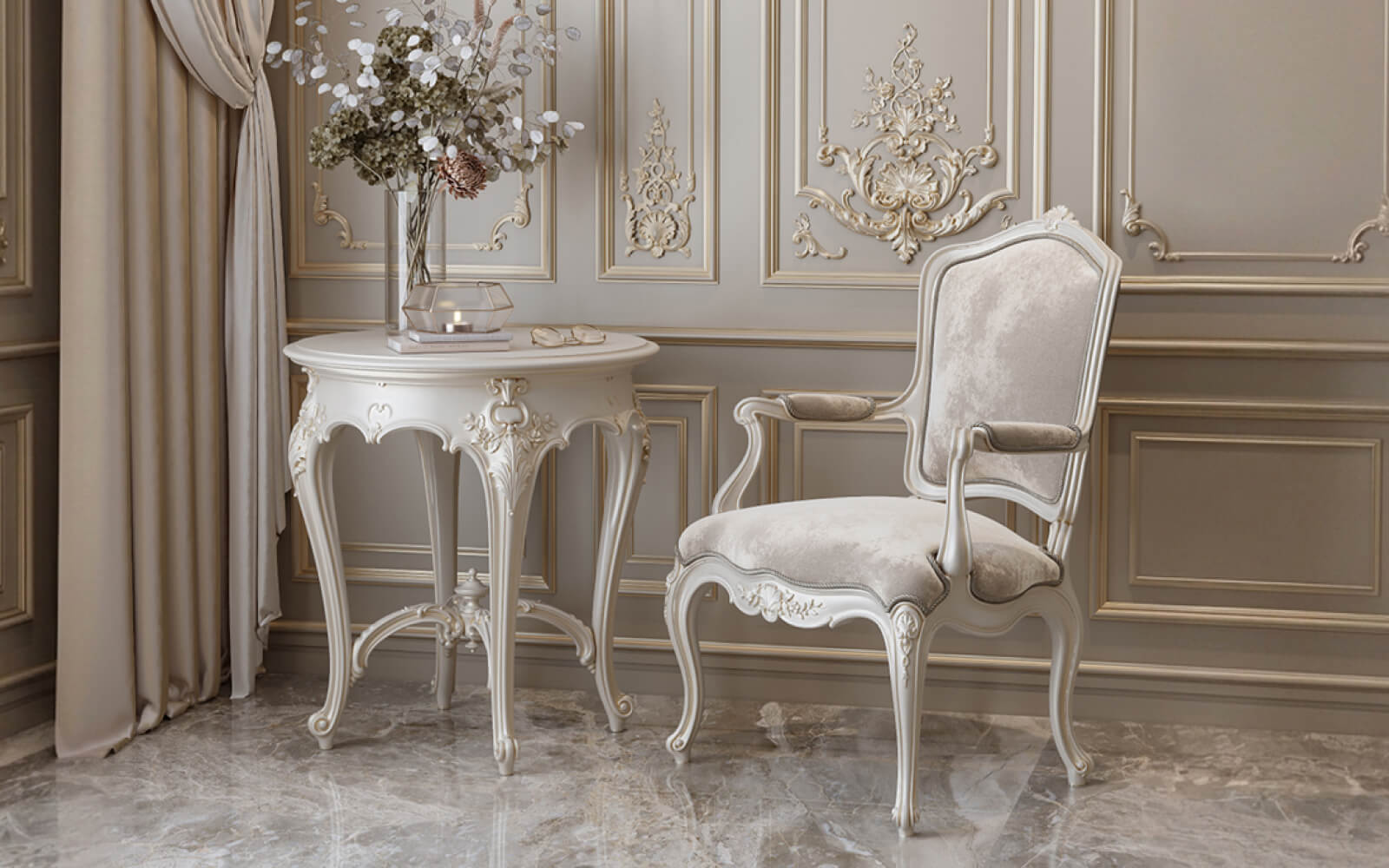
The tone of the wooden baguette and the tone of the wooden furniture legs form the wooden axis of the interior. The same tint tone of the baguette and furniture legs creates a unified wooden system: legs at the bottom, picture frames at the top. The eye travels through this system, noting consistency.
Decorative elements for furniture and stucco
decorative elements for furniture made of polyurethane — overlay frames and corner elements on facades — transfer the plasticity of wall decor to furniture. If the wall has molding frames and next to them paintings in wooden baguettes, then overlay frames on the cabinet facades create a third frame system: moldings on the wall / wooden baguette on paintings / polyurethane frames on furniture. All three speak of the same thing — the frame as the main decorative motif of the interior.
Decorative hardware: metal in the right tone
Metal details — handles, hinges, plates — should support the theme of the wooden baguette. A brass handle next to a warm-toned wooden baguette is harmony. Matte black hardware with dark oak baguette is modern classic. Chrome hardware with any wooden details is neutral or cool, but sometimes appropriate in modern classic with a cool color scheme.
Interior styles and rules for working with baguette
| Style | Wooden baguette | Wall decor |
|---|---|---|
| Classic | Wide profile, dark oak, possible thin patina | Versailles Light, rich molding frames |
| Neoclassical | Narrow profile 20–35 mm, strict bevel, no ornament | Neoclassical, geometric frames |
| Modern Classic | Simple profile, neutral tone, possible chamfer | Neoclassic Light, delicate frames |
| Suburban house | Wide oak profile, natural texture | Stucco molding, wide cornice, wooden baseboard |
| Office | Dark wood, strict profile | Horizontal molding panels |
| Hallway | Medium profile, tone matching furniture | Vertical moldings, framed mirror |
Living room furniture: how to tie it with wall decor and baguette
Light classic living room furniture is a popular request, driven by the desire to make the space airy. Light furniture, molding frames in the wall color, light-toned wooden baguette — this system works to create a feeling of lightness without losing architectural expressiveness.
Classic furniture for the living room in an apartment with a wooden baguette for paintings is an interior where everything speaks of one thing: taste, quality, attention to detail. Classic-style living room furniture that matches moldings and baguette is not a coincidence, it is a system.
Mistakes when combining wooden baguette and stucco molding
Disproportionate baguette and molding
A wide, heavy wooden baguette next to a thin, elegant molding. One speaks loudly, the other is barely audible. As a result, the wall looks disjointed — even if both elements are of high quality.
Three different wood tones in one room
One tone for the wooden frame, another for the furniture legs, a third for the baseboard. Or two close but mismatched wood tones in frames of different paintings. The result is a feeling of sloppiness that is hard to explain but easy to sense.
Painting off the axis of the molding frame
A painting in a wooden frame shifted away from the center of the molding frame. It literally 'looks' out of place. Molding frames create centers of gravity—and paintings should follow these centers.
Wooden frame not connected to furniture
A beautiful wooden frame for paintings and random furniture without wooden details. The frame 'hangs' in the interior without support from below. A wooden detail requires a wooden continuation: legs, handles, overlays, baseboard—something.
Molding and wooden frame of different styles
Baroque ornamental molding on the walls and a strict geometric wooden frame. Or vice versa: laconic neoclassical decor and a heavy carved gilded frame. The style of the molding and the style of the frame are two voices in one choir. They must sing in unison.
Too many frames on one wall
Three molding frames, each with a painting in a wooden frame, plus a decorative insert above each frame, plus a panel below. The wall is suffocating. Rule: one main decorative accent—and supporting elements. Not three main ones at once.
There is no single central axis
Paintings and mirrors are hung without a single horizontal axis. One object is higher, another lower, and a third is off to the side entirely. Any gallery — real or home — thrives on a single horizontal line along which either the centers of objects or their top edges are aligned.
A skilled person installing polyurethane molding creates visual axes that make it easy to orient when hanging paintings. And installation of polyurethane molding forms zones where objects find their architectural place.
How to choose everything you need at STAVROS
STAVROS is a manufacturer of polyurethane decor from European raw materials. High material density, precise profile, stable dimensions, excellent compatibility with acrylic paints. Production in Russia, in-house quality control at every stage.
To create a wall with wooden picture rail, moldings, and stucco in the STAVROS catalog:
-
Polyurethane wall decor — 15 collections for classic, neoclassic, and modern interiors: from light Neoclassic Light to rich Versailles Light
-
moldings, cornices, and baseboards — profiles for frames, horizontal bands, and cornice transitions
-
Polyurethane moldings — ceiling rosettes, corner elements, decorative bands
-
Decor for Molding — corner and central overlays for reinforcing frame systems
-
decorative inlays for furniture — for transferring decorative wall patterns to furniture facades
STAVROS is not a parts store. It is a system for creating interiors. When you select moldings, stucco, cornices, and furniture overlays from one company, you get elements that follow a single stylistic and dimensional logic. This is what distinguishes an interior with wooden baguettes and stucco from an interior with decor "from different places."
Free consultation on selecting decor for a specific project. Delivery throughout Russia. Working with private clients, designers, and architects.
FAQ: Answers to popular questions
Can wooden baguettes and polyurethane wall decor be combined?
Yes. This is one of the best combinations in an interior. Polyurethane decor creates wall architecture, while wooden baguettes frame paintings, mirrors, and panels. The main condition is consistency in style, scale, and wood tone.
How to choose a wooden baguette for a wall with moldings?
Focus on three parameters: the style of the moldings, their width, and the room's color scheme. Thin moldings — a delicate narrow baguette. Classic frames — a more expressive profile. Tone — in harmony with the wooden details of furniture, baseboards, or doors.
What is better for a painting: a wooden baguette or a molding frame on the wall?
Both elements work best together. A molding frame on the wall creates an "address" for the painting, while the wooden baguette frames the painting itself. A painting inside a molding frame with a wooden baguette is a complete wall composition.
Can a baguette strip be used instead of moldings?
For thin decorative frames — yes. But a baguette strip does not replace a full molding: it has less profile, less architectural weight. For a real frame system on the wall, you need polyurethane moldings.
How not to overload the wall with baguette and stucco?
Choose one main accent: a painting, mirror, or stucco. The other elements are supporting. One dominant plus several supporting details — this is the rule of any well-constructed wall composition.
What wood tone to choose for the baguette?
The wood tone for a wooden baguette should fit into the room's "wood system": baseboard, doors, furniture. One or two wood tones maximum. Warm room palette — warm wood. Cool palette — neutral or bleached wood tone.
How to place several paintings in wooden baguettes on a wall with moldings?
Use molding frames as "cells." Each painting — in its own cell or along the axis of the central frame. A single wooden baguette for all paintings. Alignment along the horizontal axis: either by centers or by top edges. Then the gallery wall looks like a well-thought-out composition, not a chaotic collection.