











































































Customers also buy



Yulia Kh.
March 24, 2026
I was satisfied with the quality of the products; we purchased furniture legs. I would especially like to highlight the professionalism of manager Oksana—very client-oriented, competent, and precise specialist. She even arranged additional trimming of some elements as an extra service for us. Huge thanks!
Incognito 7.
March 24, 2026
One of the few firms that is pleasant to interact with on renovation matters. Adequate, responsive managers. Adherence to deadlines. Execution of even complex projects. Bravo! May there be more such firms!!
Marina D.
February 15, 2026
The company ordered the pens for us when we ordered furniture. But I decided to write a review personally because they are amazing! Stylish, expensive, high-quality!
More than 20 years on the market
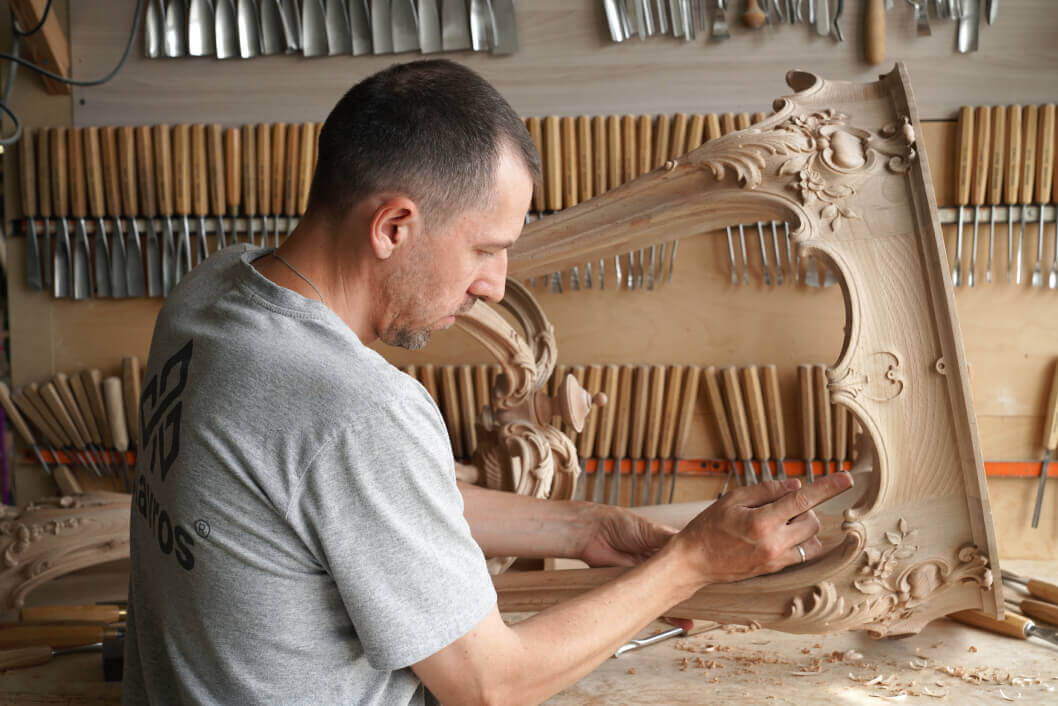
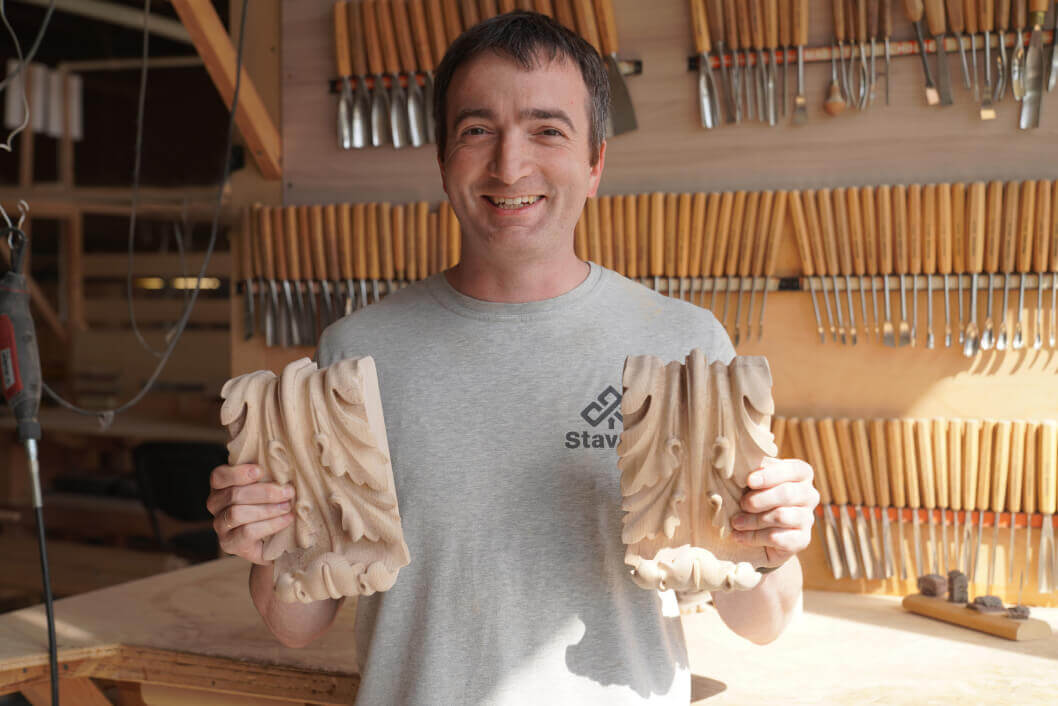
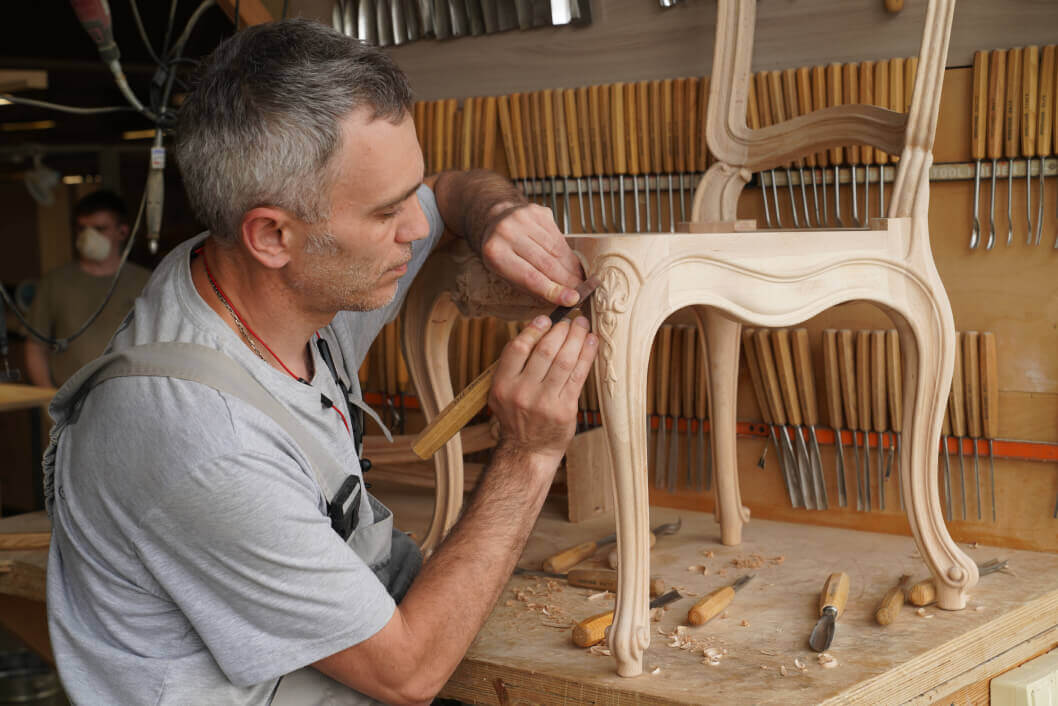
The company's success began in 2002, when two artists — Andrey Ragozin and Evgeny Tsapko — created a small creative workshop for producing wooden carved items. The masters' work was quickly noticed, and within a year they were invited to participate in the reconstruction of the Konstantinovskiy Palace in Strelna.
After the success of this project, the company focused on recreating palace interiors, furniture, church furnishings, and carved decorations in various artistic styles. They worked with cultural heritage sites: The Hermitage, the Alexandrovsky Palace, the Troitsko-Izmaylovsky Cathedral, the Sheremetyevsky Mansion, and many others.
The masters' task — and still is — to create wooden items with the highest level of detail and understanding of every element, based on impeccable knowledge of artistic laws and interior styles.
STAVROS Guarantees
Quality of products without complaints
We save your time, peace of mind, and budget
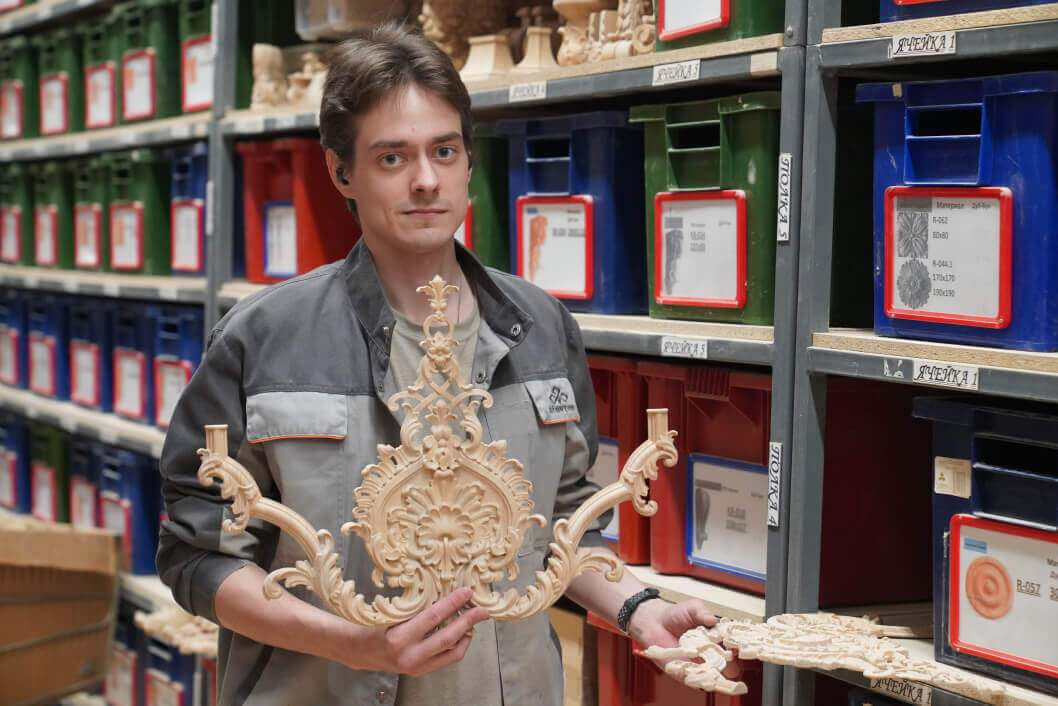
Large warehouse program
We solve your tasks with maximum speed
Adherence to production deadlines
Streamlined process reduces all risks
Delivery from 1 piece throughout Russia
Quality service regardless of order volume
Your positive business reputation
Reliable partner — the foundation of your business
More products in the category Wooden Molding


Frequently asked questions
Our showrooms are located in Saint Petersburg and Moscow. Production is located in Saint Petersburg.
Moscow contacts: https://www.stavros.ru/contacts_all/?tab=msk
Contacts of Saint Petersburg: https://www.stavros.ru/contacts_all/?tab=spb
- Send request by email [email protected]
- Write to us at Telegram
- Write to us at WhatsApp
- Order by phone +7 (800) 555-46-75
- Visit our showroom in Saint Petersburg and Moscow
Yes, we ship orders throughout Russia and to CIS countries.
We cooperate with transportation companies such as СДЭК and DPD.
You can also arrange pickup of your order through any convenient transportation company for you.
Delivery cost depends on the size, weight of the item, and delivery address.
When placing an order, the delivery cost is calculated automatically and displayed as a separate line on our website.
Prices and availability of items on the website are always current. Data is updated daily.
Note: items in stock are stored on the warehouse in unpolished form and shipped within 3 working days.
If the item is not in stock, average production time: 5–10 working days.
This is the quality of polishing of the items.
Standard — machine polishing, at a more attractive price.
Prestige — detailed hand polishing, items do not require further work.
More details: https://www.stavros.ru/information/kachestvo/
This is the type of veneer of the items.
Under enamel: produced by gluing wooden laminates without color and texture matching. Contrast tonal and textural differences are noticeable. This blank should be chosen if the item is intended for opaque coating.
Under tinting: produced by gluing wooden laminates with color and texture matching. Tonal and textural differences may occur. This blank should be chosen if the item is intended for semi-transparent finish.
More details: https://www.stavros.ru/information/kachestvo/
Beech — dense, non-porous wood, most often used for items covered with enamel.
Oak — dense, porous wood with clearly visible natural grain. Due to its strength and decorative properties, it is often used in items with semi-transparent coating, highlighting the wood pattern.
Custom-made, if non-standard items are required, we can produce products from other types of wood, including blanks provided by the customer, manufactured according to our technical specifications.
All our furniture legs can withstand a vertical load of at least 100 kg.
Average production time for custom-made items: 5–10 working days.
Most items are stored on the warehouse in unpolished form. We need time to polish and pack orders.
Yes, we manufacture non-standard items according to individual projects, but we only accept orders with a minimum quantity.
We can manufacture items of the desired size, but we only work with bulk orders. For details, please consult the sales department manager.
Yes, some of our products can be used outdoors. For example, polyurethane items, as well as carved door casings made of pine.
Other items are produced to order using PUR glue, if minimum quantity is available. No warranty is provided for such products, as outdoor conditions are considered aggressive.
Yes, we paint items when ordering products for a total amount of 150,000 rubles or more.
- Dust removal. After sanding, the surface must be dusted.
- Priming. Apply primer in an even layer.
- Matting. After the primer has fully dried, the surface should be matted (lightly sanded for better adhesion).
- Finish coating. Apply finish coating: lacquer or enamel, in 2 layers, with interlayer drying.
More details: https://www.stavros.ru/information/sovety/
Apply adhesive to the decor. Place it on the surface and press briefly. Then, lift the decor from the surface and leave it open for 3–5 minutes. Press the decor firmly onto the surface and hold for 5–10 seconds.
More details: https://www.stavros.ru/information/sovety/
Ideally, you should prepare a design project before placing an order.
You can do this yourself by downloading drawings of our products from our website, or you can order a project from us.
If the number of decorative elements and fittings is small, our company's manager can assist you with selection.
Unfortunately, this service is not provided.
The packaging method depends on the type of items, but in each case, we ensure sufficient protection for safe transportation.
We most often use corrugated cardboard and stretch film. Fragile items are additionally secured on a rigid base to prevent damage during transport.
We ship all items starting from 1 piece.
Room measurements and item installation can be performed by our partners — carpentry companies represented in most regions of Russia.
Often searched in category Carved decor
Wooden molding K-130 made of oak or beech
There are products that need no lengthy introduction. They speak for themselves—through their shape, proportions, and pattern.Wooden molding K-130 from the STAVROS catalog is precisely such a product. Carved, expressive, with a smooth floral ornament, it is created for those who understand: decorative finishing is not just 'adding something to the wall.' It is the language through which an interior speaks of its character.
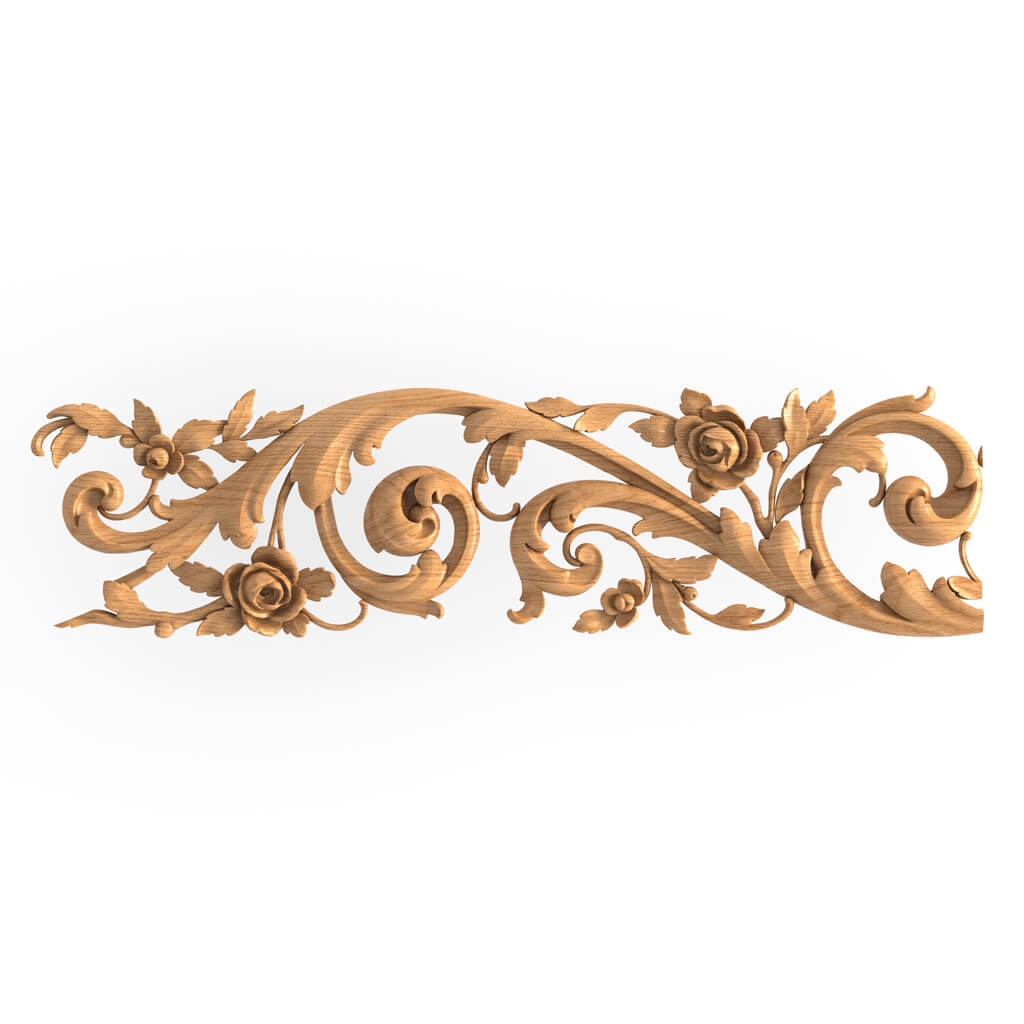
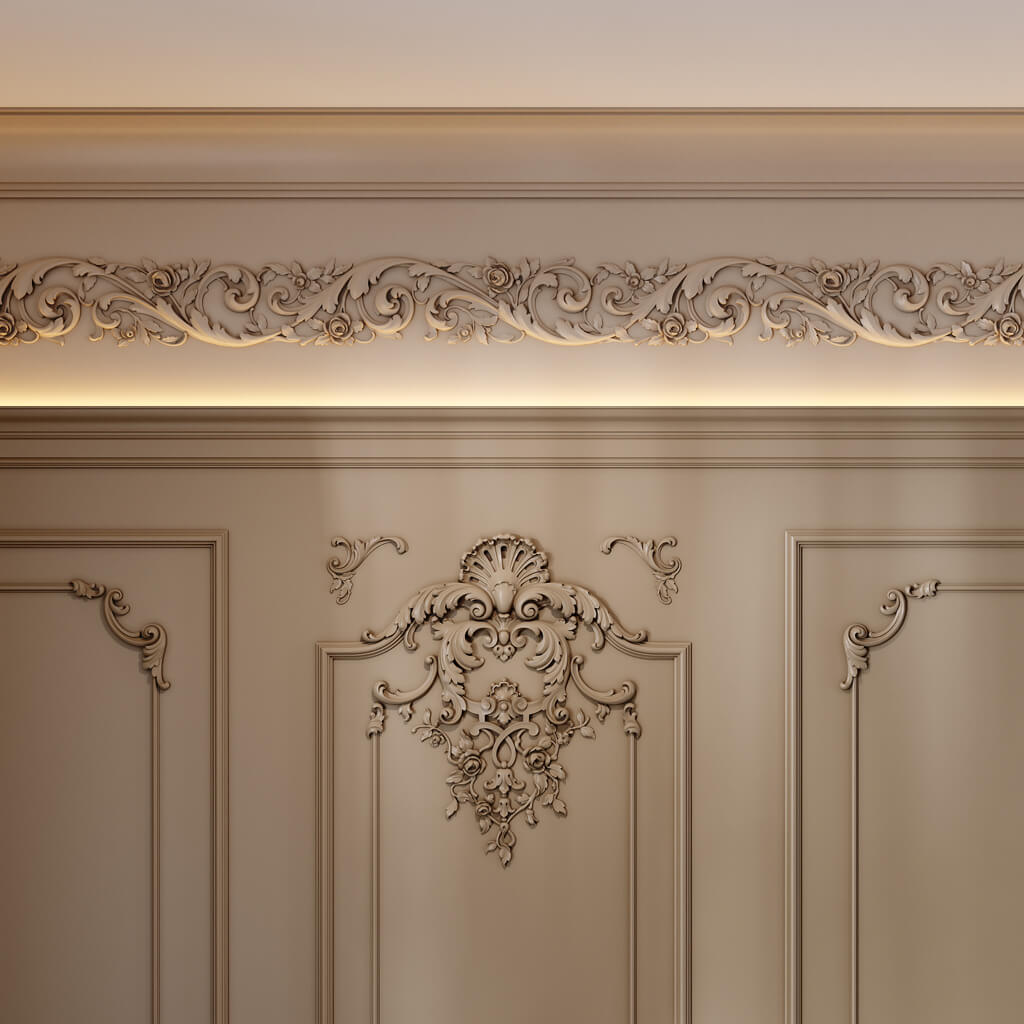
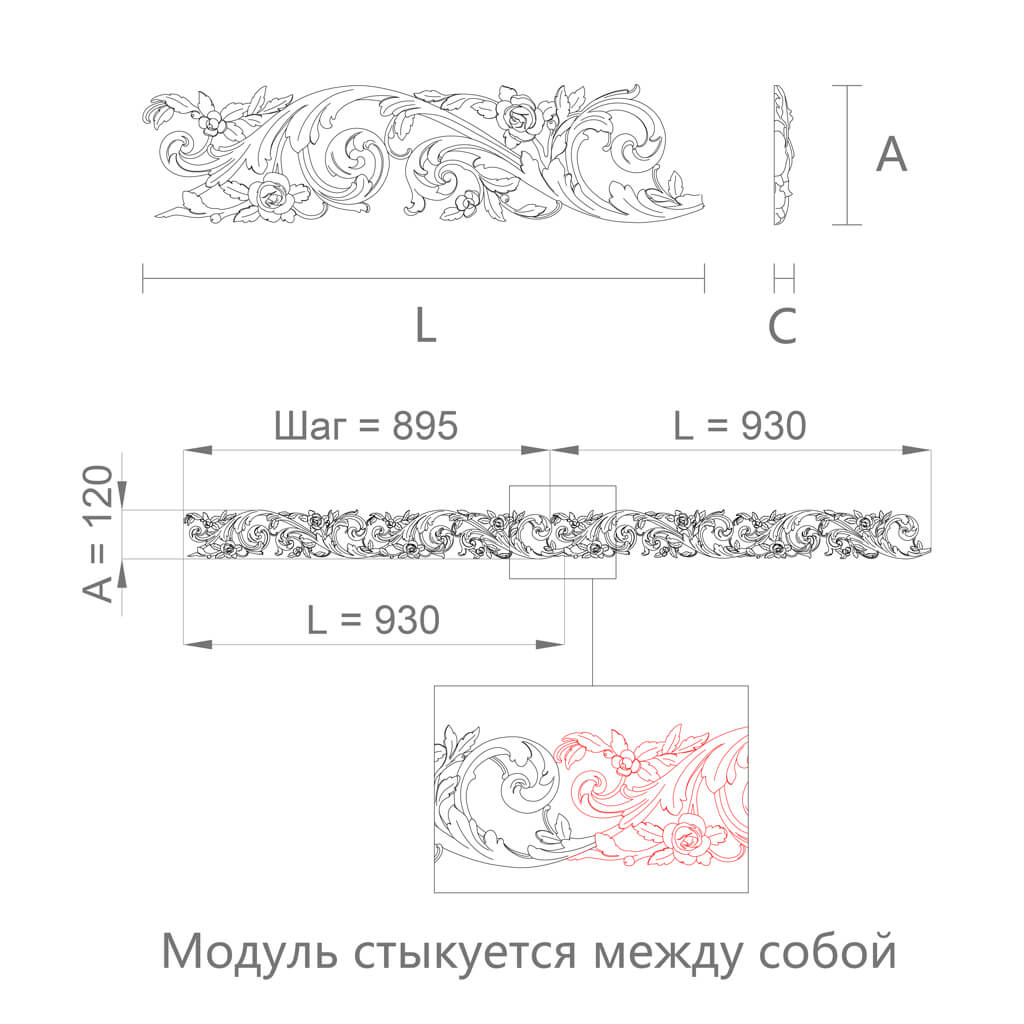
Carved wooden molding K-130 is an applied decorative element made of beech with dimensions of 120 × 17 × 930 mm. A height of 120 mm makes it visually substantial and decoratively expressive. A length of 930 mm is a convenient modular format for extended decorative lines. A thickness of 17 mm is sufficient for a full, relief ornament and reliable mounting on a flat surface. The product is suitable for enamel, joins together along the ornament, and is used on walls, furniture fronts, door panels, decorative frames, and panels.
Buy wooden molding K-130 can be found in the STAVROS catalog in the section decor for moldings and applied elements with delivery across all of Russia, with orders starting from one item.
Wooden molding K-130 for walls, furniture, and decorative compositions
What is the difference between a molding and a trim? This is a question that arises for everyone who works with wooden applied elements for the first time. The answer is simple: a trim is a linear profile that creates a border, divides planes, and forms a frame. A molding is a decorative panel with a pattern that is itself an ornament. It does not so much limit as it decorates.
Decorative wooden moldingK-130 is an ornamental panel. Its height of 120 mm allows for a full-fledged plant motif with scrolls, leaves, and floral elements. The width and plasticity of the pattern correspond to the classical decorative language: not overloaded with details, not simplified to schematics—a lively, expressive, professional ornament.
Where is K-130 used?
Decorative wall moldingK-130 is a versatile tool for several tasks:
-
Wall panels and decorative belts: a horizontal strip of molding on the wall divides it into zones, creates a visual rhythm, and adds volume
-
Furniture fronts:wooden molding for furnitureis applied to flat fronts of cabinets, sideboards, buffets, and transforms them
-
Doors: a horizontal decorative strip on the door leaf is one of the techniques of classic door design
-
Portals and niches:Carved molding for facadesFrames portal zones, niches, fireplaces, giving them a solemn, finished look
-
Decorative frames and inserts: used as a central decorative belt between horizontal profiles in complex K-130 molding systems
Which style does K-130 correspond to
Molding for classic interiorK-130 — a choice for classic, neoclassical, and transitional styles: Provence, French classic, Italian style. Floral ornament with flower elements — a recognizable motif that looks equally organic in a formal living room and a cozy bedroom.
When painted in a solid white or cream color, the molding becomes delicate, almost neutral — the ornament is present but not overwhelming. When painted in an accent color (dark green, anthracite, deep blue) — it turns into a strong artistic statement.
Size 120 × 17 × 930 mm for long decorative lines
Three numbers. But behind each — a specific function, a specific solution, a specific professional meaning.
930 mm: a length convenient for installation and joining
Wooden molding 120 × 17 × 930 mm— a format just under a meter in length. This is a standard size for convenient installation: the product is not too long (does not sag, does not require two installers) and not too short (minimal number of joints for a standard 3–4 meter wall).
For a wall 3 meters wide, about 3–4 modules will be needed. For a facade 90–100 mm wide — exactly one module in length. The calculation is transparent, installation is predictable.
Carved wooden molding 930 mm— this is also the standard ordering unit: you know exactly how many meters need to be covered and calculate the number of modules without a 'guesswork' margin.
120 mm: the height that gets noticed
A height of 120 mm is neither a 'narrow strip' nor an 'extra-wide frieze.' It is the golden mean of a decorative belt:
-
Wide enough for the ornament to unfold in full force
-
Moderate enough not to overwhelm other interior elements
-
The ideal proportion for walls 2.7–3.2 m high: at this height, a 120 mm decorative belt occupies about 4–5% of the surface — just enough to create an accent without overloading the composition
Long decorative moldingWith a height of 120 mm, it works both as an independent decorative element and as part of complex multi-level systems with moldings and applied ornaments.
17 mm: thickness that ensures relief
Seventeen millimeters is a full volume for carved ornamentation. With this thickness:
-
The ornament is carved to a depth of 8–12 mm without the risk of piercing the part
-
The ribs and transitions of the relief remain strong during transportation and installation
-
The product does not 'look flat' on the wall—it has a noticeable shadow under side lighting
Compare: polyurethane analogues are often made with a thickness of 8–10 mm. The relief there is less deep, the shadow is less expressive. The wooden K-130 clearly wins here.
Proportions of the K-130 compared to analogues in the series
| Article | Height (mm) | Thickness (mm) | Length (mm) | Modularity |
|---|---|---|---|---|
| K-130 | 120 | 17 | 930 | Yes |
| K-120 | ~90 | ~15 | 930 | Yes |
| K-140 | ~150 | ~20 | 930 | Yes |
K-130 is the medium format in the series. The most versatile in height: expressive enough for formal spaces, delicate enough for residential interiors.
A modular molding that connects to each other
This is a truly strong feature of the K-130 that's worth explaining in detail, because it's precisely what distinguishes a professional product from just a 'pretty plank'.
What does 'module connects' mean
Pattern on modular wooden moldingK-130 is designed so that when two adjacent modules are joined, the pattern continues without interruption. The left edge of one module and the right edge of the next form a continuous ornamental line. The joint becomes an inconspicuous technical point, not a visible boundary.
This is not trivial. To achieve this effect, the pattern must be precisely calculated and symmetrically arranged: the start of the pattern at one end of the module and its completion at the other must be mirror-matched. This is work done during the design of the K-130 template—and it's work that saves your time and nerves during installation.
Why modularity is so important in practice
Imagine a wall 4,200 mm wide. You need to lay a decorative belt along its entire length. Without a modular product, you have two options: order one solid piece 4.2 meters long (inconvenient, expensive, difficult to transport) or cut pieces from long planks and manually adjust the pattern at the joints (labor-intensive, high risk of error).
The situation is similar withmodular decorative moldingK-130 — neither one nor the other. You take 5 modules of 930 mm each (total 4,650 mm with allowance), join them tightly — and the pattern runs in a continuous line without visible seams. The remainder is trimmed at the edge.
Molding joins seamlessly with itself— this is not an advertising phrase, but a specific technical characteristic that reduces installation time and ensures a professional result.
For which objects modularity is especially important
-
Long wall belts in living rooms, halls, corridors — where continuity of the pattern is critical for perception
-
Decorative friezes in spaces with large horizontal extent
-
Furniture systems with several identical facades side by side — K-130 creates a continuous ornamental row along the entire length of the cabinet
-
Wall niches — framing a niche with a decorative belt featuring the same pattern along the entire perimeter
-
Portals — a horizontal decorative strip above an opening, composed of several modules
How to correctly calculate the number of modules
The formula is simple:
Decorative line length (mm) ÷ 930 + 1 spare module = quantity to order
Example: a wall 3,600 mm ÷ 930 ≈ 3.87 → 4 modules + 1 spare = 5 pieces.
A spare module is always needed: during edge installation, one module is trimmed, and the cut piece may not match the pattern with the required fragment from another location. The spare eliminates the need to purchase one additional part and wait for delivery.
Beech and its use under enamel
Material in wooden decor is not just 'what it's made of.' It directly determines how the product will behave in the finishing process. And in the case ofwooden molding K-130choosing beech is a deliberate and technically justified decision.
Why beech is the right material for paintable molding
Beech moldingK-130 — the standard for all projects under covering enamel. There are several reasons, all of them pragmatic:
Fine grain. Beech is a wood species with a dense, homogeneous fiber structure. The pores are small and evenly distributed. Standard acrylic primer seals the surface in 1–2 coats, without requiring special fillers or multi-layer priming.
Neutral tone. The creamy-pink base color of beech does not show through the enamel — even a single coat of white coating gives a uniform result. This is important when painting in light and pastel shades, where even a slight 'show-through' of the base is visible.
Uniformity across the cross-section. Beech does not have pronounced resin pockets, knots, or density variations, which appear as defects when painted. The surface after sanding is smooth, without surprises.
Responsiveness to sanding. Beech sands easily and evenly. Transitions between individual elements of the ornament are smoothed out without loss of edge clarity in the pattern.
Wooden molding for enamel: the correct coating scheme
Wooden molding for enamelK-130 is processed according to the following scheme:
-
Mounting on a flat surface — carpenter's PVA or mounting adhesive around the perimeter, pressing, drying
-
Sealing end joints (in modular joining) — wood putty, drying, sanding with P180
-
Sanding the entire surface with P220 — opens pores, removes fuzz
-
Acrylic primer 1–2 coats with intermediate sanding P280–320
-
Finish enamel 2 coats with P400 sanding between them
After such treatment, the surface of the molding and the wall (or facade) becomes visually unified. The K-130 pattern reads as a relief motif, not as a 'glued-on slab'.
Which colors work especially well with K-130
Carved molding for paintingK-130 accepts any color — and in each case, the look turns out different:
-
Pure white (RAL 9003): classic in its purest form. The relief of the pattern is revealed through the play of shadows in side lighting — restrained and elegant
-
Ivory color (RAL 1013, 1015): warm, cozy neutrality. One of the most sought-after options for living spaces
-
Gray-white, light gray: modern neoclassicism. Laconic with character
-
Soft Greige (NCS S 1010-Y20R): intimacy, warmth, design precision. Beige-gray shades are currently at the peak of demand in the interior market
-
Saturated color — dark blue, deep green, anthracite: an accent wall or decorative insert. K-130 in a dark coating is an interior statement
Plant-based carved ornament for classic decor
Ornament is the soul of any carved decorative piece. Size, material, format — these are characteristics. The pattern is the image. And in the case of K-130, the image deserves a separate discussion.
What is depicted on K-130: description of the ornament
Carved molding with floral ornamentK-130 is a smooth, flowing plant-based composition in the classic spirit. Central elements — floral motifs with petals, surrounded by leaves and curved stem-scrolls. The pattern unfolds along the entire length of the module rhythmically, with clear repeating accents.
Wooden molding with roses— this is often how pieces with such ornamentation are called. A flower in a classic plant-based motif is not a literal botanical rose with detailed petals. It is a stylized floral element, adapted for carving: without excessive details, with refined volumes, with characteristic plasticity that reads well both up close and from a distance of several meters.
How the ornament relief works under different lighting
One of the main questions when choosing carved decor is how it will look in specific lighting. The answer for K-130:
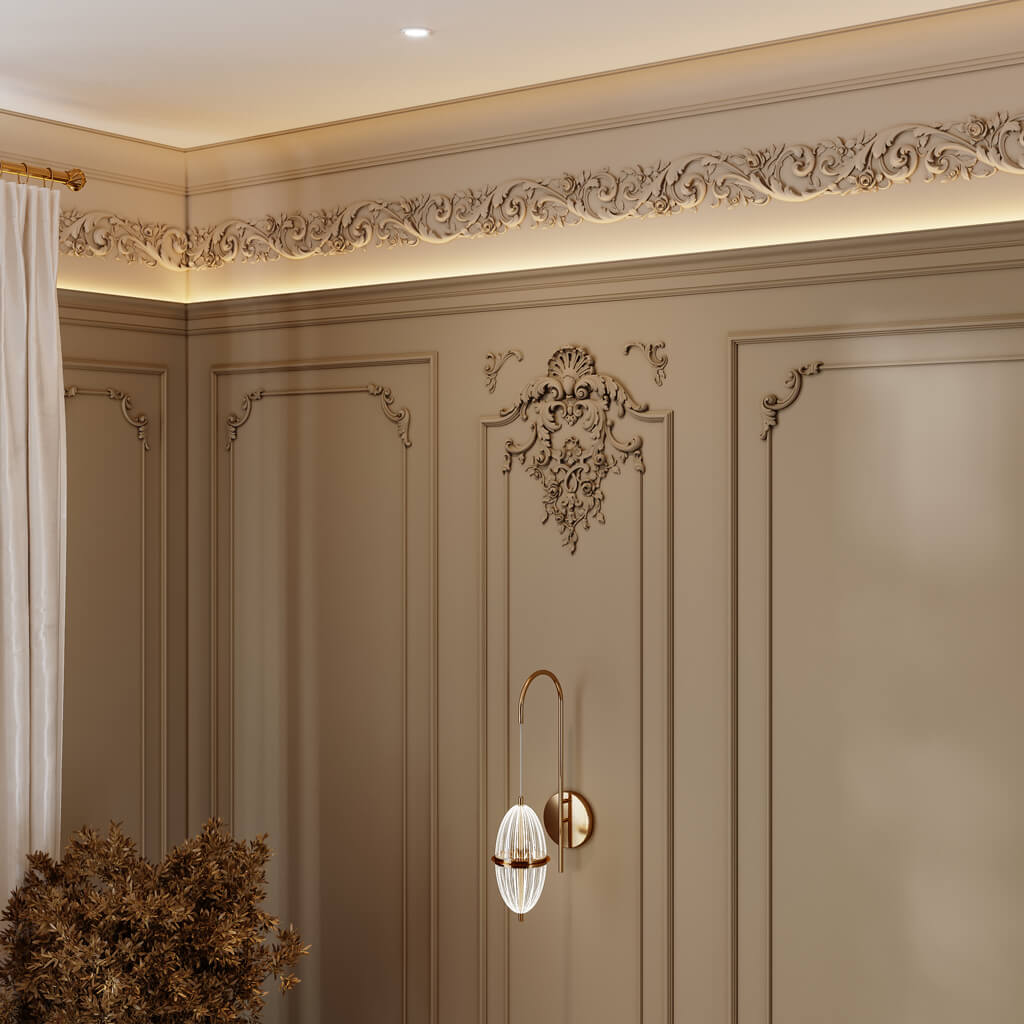
With directed side lighting (wall sconces, floor lamps, directional spotlights angled toward the wall), the ornament relief creates deep, expressive shadows. Floral motifs gain volume, scrolls 'come alive'. The effect is theatrical, decorative, intense.
In diffused light (daylight from a window, ceiling fixtures with a diffuser), the pattern is perceived softly — a textured stripe on the wall, a delicate relief that doesn't shout but is present.
With frontal lighting (spotlight directly on the wall), the relief casts almost no shadow. The pattern 'recedes into the plane'. This must be considered when designing lighting in the area with K-130: a side or angled light source significantly outperforms a frontal one.
For which styles is K-130 organic
Decorative molding with a floral patternK-130 is organic in:
-
Classic: white or cream surfaces, symmetry, stucco, molding frames — K-130 is natural here, as part of the whole
-
Neoclassical: restrained plasticity, a mix of classical motifs with modern simplicity — K-130 introduces the necessary element of historical quotation without archaism
-
Provence: soft colors, floral patterns, natural wood — K-130 is ideal in this context
-
French classic: profiles, pilasters, frames, ornamental belts — all this is the native language of K-130
-
Modern neoclassical: when the interior is 'modernized,' but a classical ornamental statement is intentionally left in it
Application in interior and furniture projects
Let's get specific. How exactly is thewooden wall panel molding K-130 mounted and used in real projects?
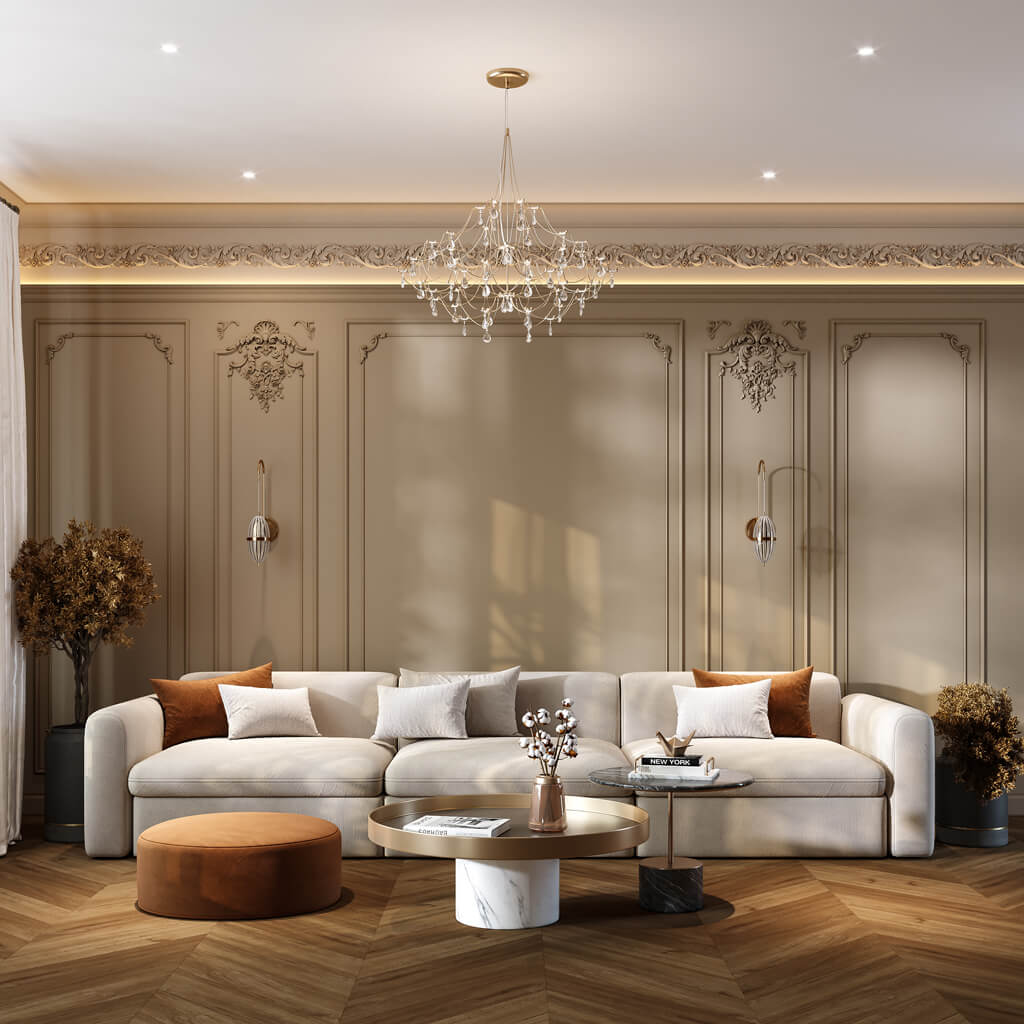
Wall panels: horizontal decorative belt
The most common scenario is a horizontal belt of K-130 on the wall. It is installed at a specific height (most common: 90–95 cm from the floor — chair back height; 140–150 cm — 'eye-level belt'; 240–250 cm — transition zone to the cornice).
Wooden wall molding at 90–95 cm creates a 'chair rail line' — a classic technique dividing the wall into lower (wooden, fabric, textured) and upper (painted, plastered) zones.
At 240–250 cm — it forms a decorative cornice belt, visually 'lowering' a high ceiling or giving it a finished look.
Doors: horizontal decorative insert
Decorative door beadingK-130 is used as a horizontal decorative strip on the door panel—between molding frames, in the upper area of the door, above the central crosspiece.
This technique adds visual "weight" to the door without burdening it with molding decor. One horizontal strip of K-130—and the door transforms from a flat slab into a multi-layered decorative piece.
K-130 works especially well on doors in combination withwooden moldings MLD-004: the molding forms frames, K-130 occupies the space inside the upper frame as an ornamental belt.
Furniture fronts: transforming a flat object
Beading for furniture frontsK-130 is a way to turn a standard flat front made of chipboard or MDF into a decorative object.
A 600 mm wide front, finished to resemble enamel, with a horizontal strip of K-130 in the upper or central part—this is no longer "budget furniture," but a piece with design. Especially relevant for:
-
Wardrobe cabinets with wide fronts
-
Kitchen top cabinets
-
Banquette benches with front decorative inserts
-
Classical buffets with a pronounced ornamental belt
Portals, fireplaces, and niches
Carved molding for interiorK-130 in the fireplace or portal area is one of the most effective application scenarios. A horizontal strip above the fireplace opening, around the perimeter of a niche, or as a finishing touch to the portal zone is a strong, expressive element.
Here, the modularity of K-130 is especially valuable: the width of a fireplace is rarely a multiple of an even number of meters, so the ability to join several modules with trimming to the required size is a practical advantage.
Decorative belts in corridors and halls
A long corridor without decoration is a boring, monotonous space. A horizontal belt made ofdecorative molding K-130at a height of 140–150 cm transforms the corridor into a gallery space. The wall proportions change: a sense of 'liveliness' emerges, with ornamental movement along the long plane.
In lobbies — K-130 as part of a boiserie system between lower panels and the upper wall zone. This is a classic technique for representative interiors that works equally well in a private home and a public space.
Why you should buy wooden molding K-130
Nine arguments without fluff — because if a product is good, long introductions aren't needed.
Expressive ornament with full relief
17 mm relief provides depth that polyurethane alternatives lack. The ornament is legible from a distance, responds to side lighting, and looks like natural carving — because that's exactly what it is.
Modular format — continuous decorative line
Joinable carved moldingK-130 allows covering walls of any length without visible breaks in the ornament. This is a professional solution that simplifies installation and guarantees a clean result.
Beech is a material tested by centuries
solid wood molding— is not a substitute. It is a natural wood species with physical properties refined over hundreds years in furniture and decor production. Beech holds its shape, does not delaminate, and does not deform under stable interior conditions.
Perfect base for enamel
The fine grain of beech, its neutral tone, and responsiveness to sanding — K-130 accepts enamel exactly as desired: evenly, without defects, without the base showing through.
Universality of Application
Walls, facades, doors, portals, niches, frames —wooden molding for classic furnitureand interior K-130 works equally well in all these contexts. One article number — multiple tasks.
Compatibility with the STAVROS molding system
K-130 organically combines with molding profilesMLD-004and other products from the catalogSTAVROS wooden moldingThe K-130 ornament style follows the classic decorative language of the entire line — a single source, a single standard.
Order from one piece — convenient for any scale
Buy decorative moldingK-130 can be ordered from a single module. For a private client with one bedroom wall — three pieces. For a furniture manufacturer with a run of 200 sets — 400 pieces. The terms are the same.
Delivery across Russia
Order carved wooden moldingK-130 can be ordered online. Delivery to any region. Products are packed with protective padding — the ornament arrives intact.
Natural wood: restorability
Unlike polyurethane counterparts, the wooden K-130 can be restored: sanded, refinished, and mechanical damage repaired. This is a material for decades, not just a repair cycle.
Frequently asked questions
Is K-130 molding suitable for long wall compositions?
Yes — the K-130 is specifically designed for long wall decorative belts. The module length of 930 mm is convenient for installation, and the ornament is designed for seamless joining without visible pattern breaks. For a wall 3–4 meters long, 4–5 modules will be required.
Can K-130 modules be joined together?
Yes. This is one of the key features of the product: the ornament on the ends of the module is designed so that when two adjacent pieces are tightly joined, the pattern continues seamlessly. The joint becomes invisible after sanding and painting.
Is K-130 suitable for enamel?
Yes, without restrictions. Beech is an optimal base for opaque painting. Scheme: installation → sanding with P220 → acrylic primer 1–2 coats → finish enamel in 2 coats with intermediate sanding.
Can K-130 be used on furniture fronts and doors?
Yes. Wide furniture fronts (from 400–500 mm), door panels, and panels—all these are correct and common application scenarios for the K-130. On a front or door, the K-130 is mounted horizontally as a decorative strip.
For which interiors is the K-130 ornament suitable?
The classic floral ornament of K-130 is organic in classic, neoclassical, French style, and Provence. When painted in modern shades (gray-white, Greige, anthracite), K-130 reads correctly even in modern neoclassicism.
How many modules are needed for a 3.6 m wall?
3,600 ÷ 930 ≈ 3.87. So, at least 4 modules lengthwise + 1 spare for the end cut. Total 5 pieces for one 3.6 m wall.
How to mount K-130 on the wall?
Mounting adhesive for wood or liquid nails around the perimeter of the back side. If necessary — additional fastening with finishing nails followed by filling the holes. Module joints — wood filler, sanding, primer.
Where to buy wooden molding K-130?
In the STAVROS catalog, in the section for wall decor and molding systems. Current price, availability, and delivery terms — in the product card on the website.Buy decorative molding online with order confirmation by a manager.
Your request has been sent!
Our manager will contact you within 5 minutes