








































Article Contents:
- Two materials — one logic
- Why wooden slats and molding work together
- Slat as rhythm, molding as structure
- What polyurethane wall decor provides
- Moldings: proportion and symmetry
- Stucco on walls: accent and semantic point
- Painting polyurethane decor
- What wooden slats on the wall provide
- Verticality as a way to raise the ceiling
- Warmth and texture: what polyurethane lacks
- Wooden slats on the wall: technical parameters
- Where to best combine wooden slats with moldings
- Living room: TV wall and sofa area
- Bedroom: headboard zone
- Hallway: narrow walls and non-standard formats
- How not to overload a wall with slats and stucco
- The rule of one dominant element
- Scale: slats and moldings from the same 'world'
- Wood color and wall color
- Batten strip, layout, and glazing bead: details that complete the composition
- Bagette rail: horizontal as a tool
- Wooden layout: transferring rhythm from wall to furniture
- Wooden glazing bead: delicacy at joints
- Wooden corner and bar
- How to connect wooden slats with furniture
- Legs, handles, supports: wooden rhyme
- Decorative elements for furniture: linking wall and facade
- Decorative hardware: not a random choice
- Which styles are suitable for combining slats and polyurethane decor
- Modern classicism
- Jatoba
- Neoclassicism
- Country interior
- Office
- Mistakes when combining wooden slats and stucco molding
- Too many vertical lines
- Slats and moldings of different scales
- Conflict between wood and floor color
- Random wooden baguette
- Stucco molding not related to slats in scale
- Slats override the logic of the wall composition
- No single wall center
- Step-by-step plan for creating an interior with slats and moldings
- How to choose everything you need at STAVROS
- FAQ: Answers to Popular Questions


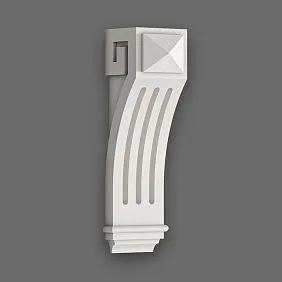


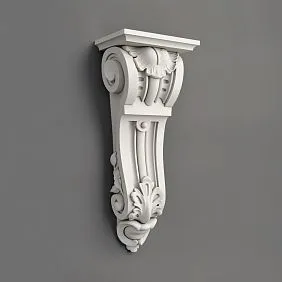
Two materials — one logic
When designers talk about a "warm modern interior," they almost always mean the same thing: a combination of natural wood texture with architectural clarity of decor. Slats provide the former. Moldings and stucco provide the latter. And this is their perfect compatibility: they do not duplicate each other, but fulfill different needs of the same space.
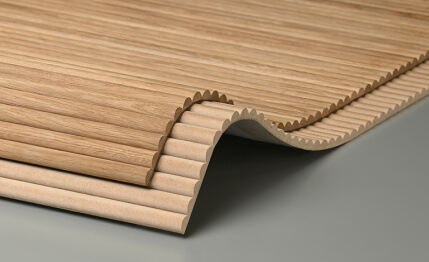
Wooden slats are a tool of rhythm, warmth, and verticality. They structure the wall differently than moldings: not with frames and rectangles, but with continuous lines that stretch from floor to ceiling. This is the breath of the wall. This is upward movement.
Polyurethane wall decor — an architectural tool. Molding frames, horizontal belts, stucco accents, corner overlays — they create proportions, symmetry, and meaningful zones on the wall plane. Where slats create movement, moldings create a stop — a viewpoint, an accent, a center.
When these two systems are combined skillfully, the wall acquires a rare quality: it is simultaneously alive and orderly. Warm and architectural. Modern and classically grounded.
How exactly this works is discussed in this article.




Why wooden slats and stucco work as a pair
Ask yourself a simple question: what happens when only slats are applied to a wall? The space gains rhythm and texture, but often a feeling of incompleteness. The wall "hums" with verticals but has no semantic center. There is no frame, no accent, no point for the eye to stop.
Now the reverse situation: only moldings and stucco without wood. The wall is architectural, precise, proportional. But somewhat cold. Too correct. It lacks the warmth of living material, the tactility that wood creates.
That is why Wooden boards in interior и Polyurethane moldings — this is a duet, not a competition. One material provides what the other lacks.
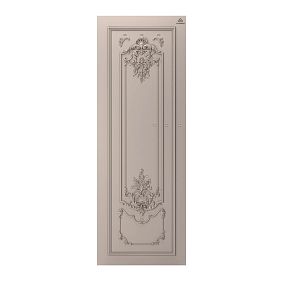
Our factory also produces:


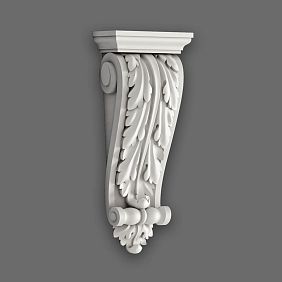
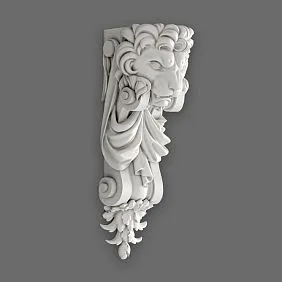


Slat as rhythm, molding as structure
A wooden slat on the wall is a line. One slat means nothing. Three slats are already the beginning of rhythm. Five to seven slats with equal spacing form a rhythmic section that the eye perceives as a single decorative object.
A molding frame is a border. It fixes a fragment of the wall, highlighting it from the general field. Inside the frame, there can be a smooth painted surface, decorative stucco, or — which is especially interesting — vertical slats.
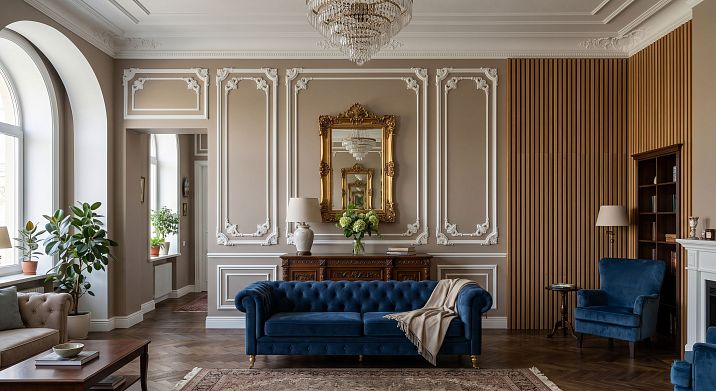
This is exactly the scheme that works in modern classic interiors: molding frames set the fields, inside which slats create texture. A frame without slats is architectural. Slats without a frame are warm but chaotic. A frame with slats inside is both architecture and warmth at the same time.
Get Consultation
What polyurethane wall decor provides
Before talking about combining with slats, you need to clearly understand what exactly it brings to the interior polyurethane decor.
Moldings: proportion and symmetry
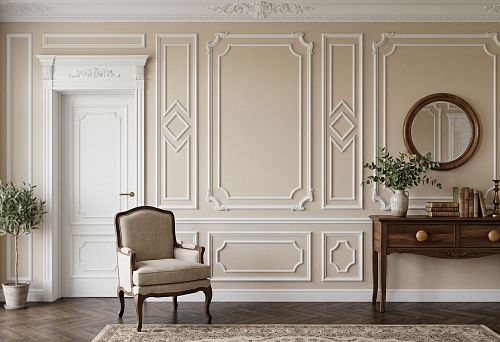
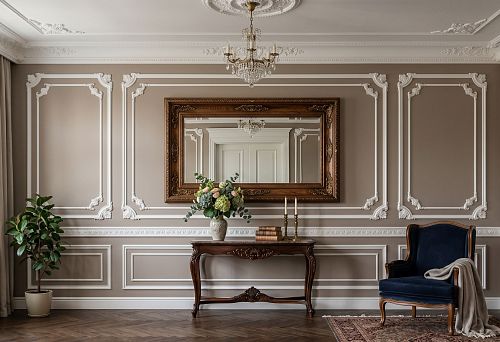
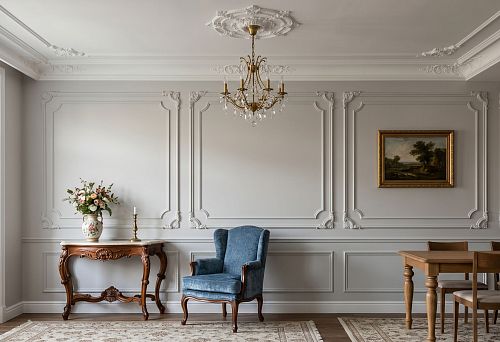
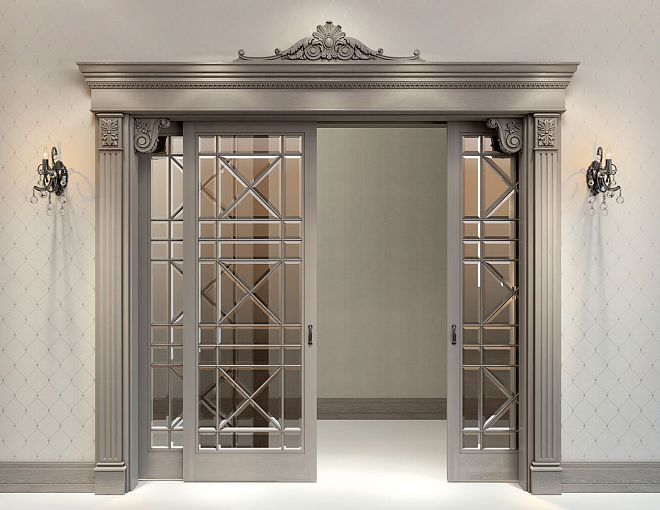
Moldings made of polyurethane — these are profile strips used to build rectangular frames, horizontal belts, and vertical posts. Their main function is to organize the wall. To divide a large plane into parts, each of which is proportionate to a person and perceived as harmonious.
A molding frame with an aspect ratio of 1:1.6 is the "architectural golden standard." The eye perceives such a frame as correct, stable, and beautiful — at the level of an innate sense of proportion. Three such frames in a row on a wall create a rhythm that works better than any wallpaper.
Stucco on walls: accent and semantic point
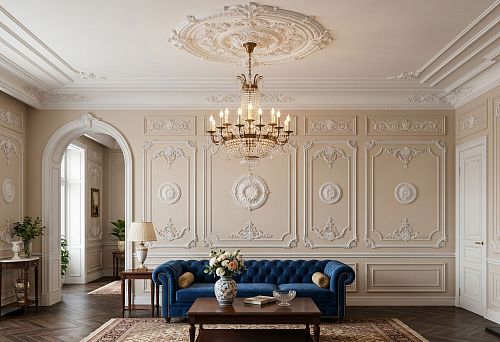
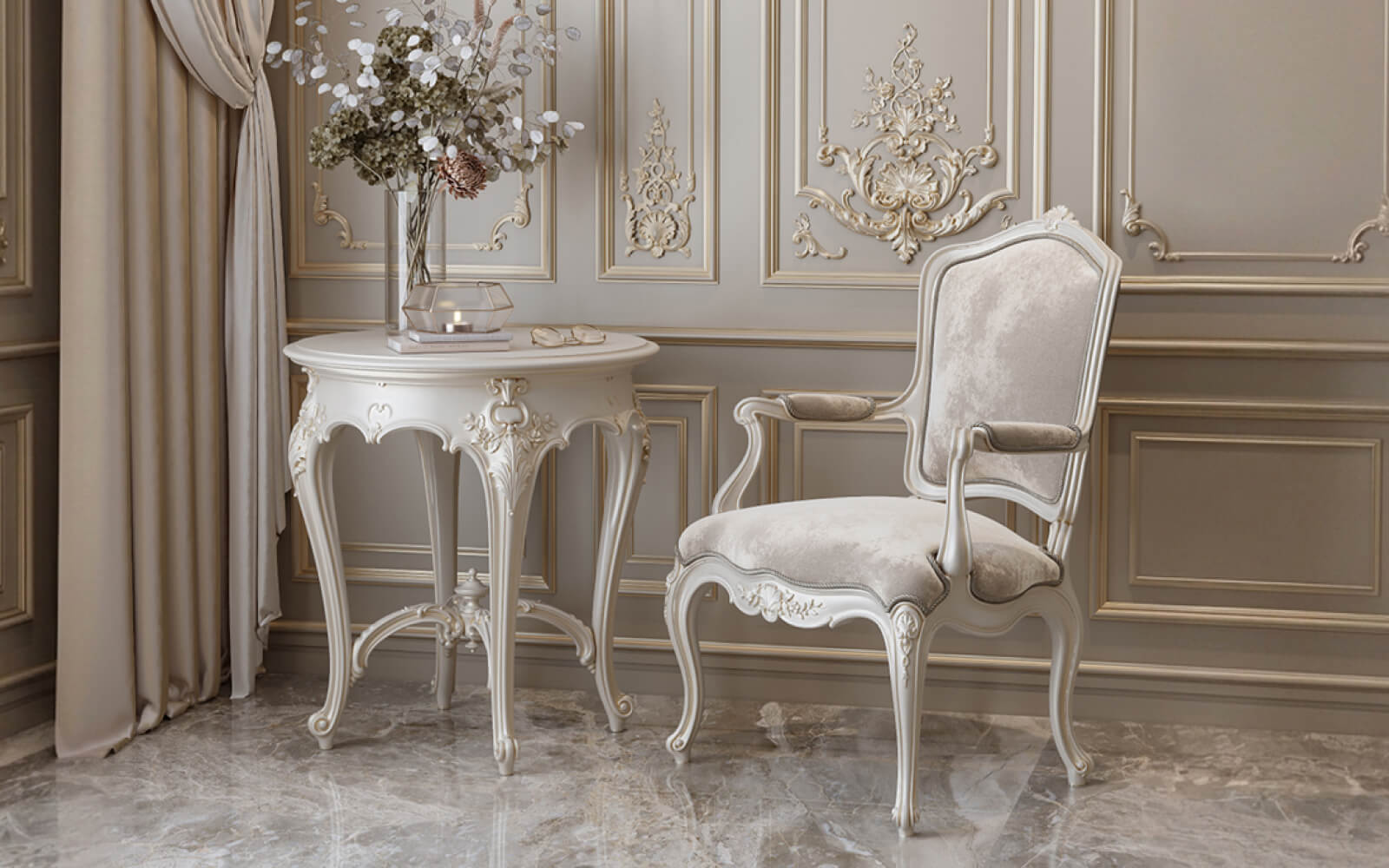
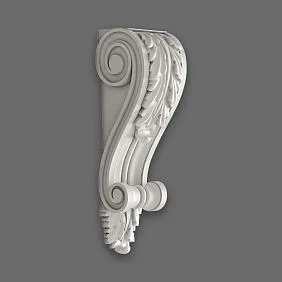
decorative wall molding creates a hierarchy: there is the main element (above the sofa, above the fireplace, above the headboard) and the supporting one (frames around the perimeter, horizontal belts). A stucco accent — a rosette, medallion, or ornamental overlay — fixes the center of the wall. Without it, the wall may be proportional but faceless.
Decor for Molding — corner and center overlays — reinforce the frames and give them decorative weight. These are small elements, but it is they that turn the molding from a construction strip into an architectural detail.
Painting polyurethane decor
Polyurethane molding on walls easily painted with acrylic paints. This opens up two fundamentally different approaches to combining with wooden slats.
First approach: moldings in the color of the wall, slats in natural tone or tinted. Here, the slats are the main decorative accent, the moldings shape the architecture unobtrusively, “dissolving” into the wall.
Second approach: moldings white or contrasting, slats in a neutral wood tone. Here, the moldings are the main ones, the slats are a warm background inside the frames or next to them.
The choice of approach depends on what you want to emphasize in the interior: the naturalness and warmth of wood or the architectural precision of the decor.
What wooden slats on the wall provide
A wooden slat on the wall is perhaps the most versatile element of a modern interior. It works in minimalism, Scandinavian classics, Japandi, modern neoclassicism, and even in strict classical interiors — if used carefully.
Vertical as a way to raise the ceiling
Vertical wooden slats in the interior visually elongate the wall. This is the physics of perception: parallel vertical lines emphasize the vertical dimension of space, and the eye moves upward along these lines, making the ceiling feel higher than it actually is.
For apartments with a ceiling of 2.5 m, this is almost a mandatory technique. Narrow wooden slats with a spacing of 8–12 cm create a stable vertical rhythm that visually “raises” the ceiling by 20–30 cm. The effect is easy to confirm in practice: try it in a room with a low ceiling and you will immediately feel the difference.
Warmth and texture: what polyurethane lacks
Wooden decor creates a feeling of living material. The wood fibers, the change in tone depending on the lighting angle, the slight irregularity of the surface — all this makes the interior warm and livable.
It is this texture that makes wooden slats an indispensable addition to polyurethane decor: polyurethane is always correct and uniform — the slat brings a living element, human, imperfect in the best sense of the word.
Wooden wall slat: technical parameters
Standard parameters of decorative wooden slats for the interior:
-
Width: 20–50 mm (most popular 25–35 mm)
-
Thickness: 10–20 mm
-
Spacing between slats: 5–15 cm (depends on desired rhythm density)
-
Height: usually from floor to ceiling or from the top edge of the baseboard to the cornice
-
Wood species: pine, spruce, oak, ash, birch, larch
The price of a wooden batten depends on the wood species and surface treatment. Pine and spruce are budget-friendly options for painting. Oak and ash are more expensive but have expressive natural textures that are better to tint rather than paint over.
Where is it best to combine wooden battens with moldings
| Zone | What to give the battens | What to give the moldings |
|---|---|---|
| Living room (wall behind the sofa) | Vertical rhythm, warm accent | Neoclassical molding frames around the perimeter of the zone |
| TV zone | Side vertical inserts | Calm moldings around the niche |
| Bedroom (headboard) | Reiki in the central part | Neoclassic Light stucco frame at the headboard |
| Hallway | Narrow vertical inserts in the piers | Moldings on wide walls |
| Office | Side rail near the work area | Strict horizontal panels |
| Commercial space | Zoning with rails | Molding accents at the entrance |
Living room: TV wall and sofa area
The two most important walls in the living room are behind the sofa and opposite the sofa (TV wall). Each requires its own approach.
Wall behind the sofa. This is a decorative wall where the eye rests. A strong technique: molding frames around the perimeter, with vertical slats in a warm tone inside the central frames. The frames create architecture, the slats create texture. Result: a warm, expressive, but not overloaded wall.
TV wall. Here, it's better to use slats as side accents: on both sides of the TV, creating vertical flanks. In the center — a molding niche for the TV or a horizontal belt. Symmetry is important here: the TV wall is a frontal zone, it is perceived directly, and any asymmetry immediately catches the eye.
Bedroom: headboard zone
The accent wall at the headboard in the bedroom is a fertile place for combining slats and moldings. A classic technique: a wide molding frame across the entire width of the headboard, with vertical slats in a warm tone inside it. The frame sets the center of the bed, the slats create a cozy background. On top of the slats or above the frame — an elegant stucco accent from Neoclassic Light collections.
In the bedroom, wooden decor works to create a feeling of warmth and peace. This is a space for relaxation, and natural materials — in this case, wood — create the right mood.
Hallway: narrow walls and non-standard formats
The hallway is often an awkward space: narrow, elongated, with an abundance of doorways. Wooden slats help cope with this complexity: vertical inserts in the piers between doors create rhythm and visually expand the space. Moldings on wide end walls add architecture.
In the hallway, it's better to make the wooden decor match the door and wooden baseboard — so that everything reads as a single wooden system, rather than a set of separate purchases.
How not to overload a wall with slats and stucco
The question of measure is the main one in any decor. One of the most common mistakes: saw a beautiful wall with slats, saw a beautiful wall with moldings — decided to combine both ideas. The result is a wall that screams instead of speaking.
Rule of One Dominant
Each wall should have one decorative dominant. Either slats or moldings — but not both with equal strength. If slats occupy the central field of the wall, moldings should frame them, not act as independent decor. If moldings are the main element, slats work as a background inside the frame, not as a standalone story.
Scale: slats and moldings from the same 'world'
Thin slats 20 mm wide and massive moldings 80 mm wide create a scale conflict. They don't work together: one element 'overpowers' the other. Rule: the scale of slats and the width of moldings must be proportionate. Thin slats — narrow moldings. Wide slats — more massive profile.
Wood color and wall color
The design of moldings and slats should be coordinated in tone. If the wall is a warm beige tone — slats from natural oak or ash with warm tinting. If the wall is cold gray — slats from bleached oak or pine with gray tinting.
Classic mistake: reddish untreated pine slats on a cold gray-blue wall. Result — the wood tone 'falls out' of the color scheme, the wall looks inconsistent. Types of moldings and wood tone should exist in the same tonal family.
Picture frame slat, layout, and glazing bead: details that complete the composition
In addition to decorative wall slats and moldings, there are smaller elements that help finish and connect the decorative system.
Picture frame slat: horizontal as a tool
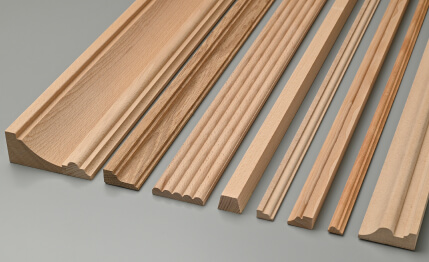
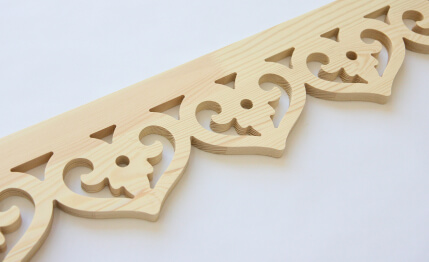
A baguette strip is a narrow decorative plank with a figured profile. In an interior with wooden slats and moldings, it serves as a horizontal accent: placed across vertical slats at a height of 160–180 cm from the floor, it creates a "picture rail" — a traditional element that allowed hanging pictures without nails in old interiors.
A baguette strip in the same tone as the vertical wooden slats creates a cross of horizontal and vertical rhythm — this is a strong technique that makes the wall expressive without extra details.
Wooden layout: transferring rhythm from the wall to furniture
Decorative wooden molding — this is a narrow strip glued or nailed onto flat surfaces. Its main task in an interior with slats is to transfer the vertical rhythm from the wall to furniture facades, doors, panels.
If the wall has vertical slats with a 10 cm spacing, a similar pattern from flat wooden layout on cabinet facades creates continuity of wall decor in furniture. The wall and furniture begin to "speak" the same language — and this is exactly what makes the interior cohesive, rather than assembled from separate purchases.
Figured wooden layout with a profile is a more expressive option for classic facades. Flat wooden layout is for modern, neoclassical, and Japandi interiors.
Wooden glazing bead: delicacy at joints
A wooden glazing bead 8–14 mm wide is an element of completion and transition. Where a wooden slat meets a molding or door frame, the glazing bead covers the seam and creates a clean, neat border. Without it, any joint looks technically unfinished.
It is worth buying a wooden glazing bead from the same species as the slats — then there will be no tone difference at the joint. Ash glazing bead for ash slats, oak for oak.
Wooden corner and block
A wooden corner is used to finish external and internal corners when transitioning slatted decor from wall to wall or from wall to partition. It creates a clear vertical boundary where the slatted pattern ends. Without the corner, the angle looks like unfinished construction.
A wooden block in slatted structures is used as a mounting element: slats are attached to it, ensuring a single plane and the required distance from the wall. In open structures where the mounting block is visible from below or above, it can be painted to match the slats' color — then it becomes a decorative element.
How to connect wooden slats with furniture
Wooden slats on the wall are a strong decorative element. But if the furniture does not support their tone and character, the wall will look like a beautiful background unrelated to what stands in front of it.
Legs, handles, supports: wooden rhyme
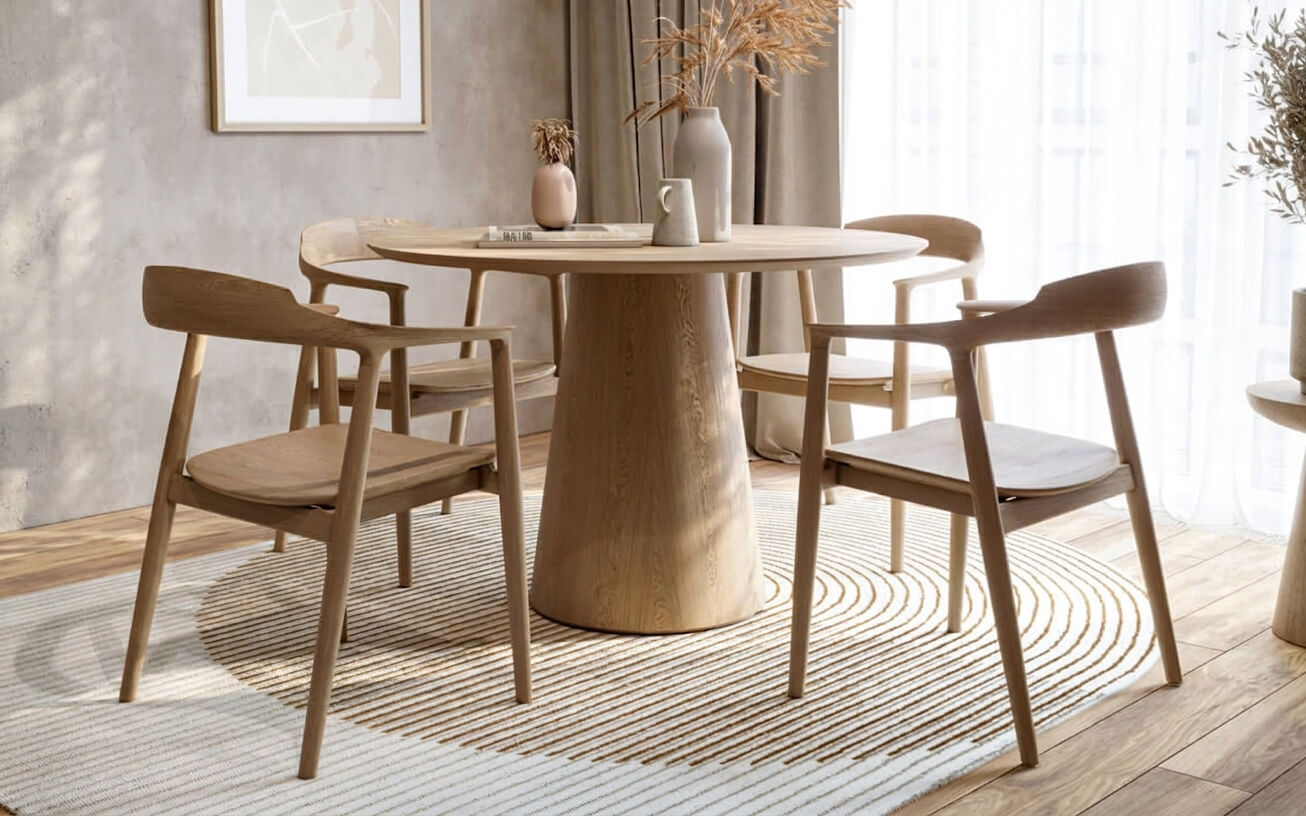
Wooden furniture legs in the same tone as the slats create a visual rhyme that unites the wall and furniture. It doesn't have to be the same wood species or texture — a close tint tone is enough.
A decorative furniture support under a console, dresser, or shelf is a visible detail. If the support matches the slats' tone, the console is perceived as part of the same "wooden story" as the wall.
A wooden handle on dresser drawers or cabinet doors is the final touch of the wooden system. A wooden handle in a natural tone next to wooden slats is a consistency that everyone feels, but few can explain.
Decorative elements for furniture: linking the wall and facade
decorative elements for furniture made of polyurethane allow transferring the plasticity of moldings from the wall to furniture facades. If there are molding frames on the wall — polyurethane overlay frames on cabinet doors create a direct visual continuation. This is a powerful technique that, with minimal cost, creates the feel of a designer project.
Furniture decor should be coordinated with the character of the slats: if the slats are made of natural wood with visible texture, overlay elements are best painted in a neutral tone to avoid competition. If the slats are painted the color of the wall, the overlays can be white or contrasting, drawing attention to the facades.
Decorative hardware: not a random choice
Decorative hardware in an interior with wooden slats is metal in the tone of wooden accents. Matte brass next to warm oak is a classic combination. Matte black metal next to dark slats is modern classic. Chrome hardware next to natural wood is a conflict of temperatures: cold metal versus warm wood.
Which styles are suitable for combining slats and polyurethane decor
Modern classic
This is the most organic style for this combination. Wall decor Neoclassic — strict rectangular frames — and wooden slats inside the frames or in separate zones of the wall. Moldings white or the color of the wall. Slats in a warm wood tone. Furniture with wooden legs, wooden handles, and overlay decorative elements.
Result: a warm, restrained, modern interior with architectural clarity.
Japandi
Wall decor in Japandi style — a special direction where Japanese minimalism meets Scandinavian warmth. Wooden slats here are the main decorative element: thin, with a fine pitch, made of light ash or oak. Molding is minimal, concise, geometric.
Color palette: natural wood, gray-beige wall tones, dark accents in metal. No gilding, no ornamentation. Silence, geometry, naturalness.
Neoclassicism
Neoclassic Light with wooden slats is a delicate, airy interior. The frames are thin, the moldings have a light profile. The slats are like a soft warm accent in certain areas. For apartments with a ceiling height of 2.5–2.8 m, this is the optimal combination: stucco does not overwhelm, slats add verticality and warmth.
Country interior
In a country house, wooden slats can be larger — made of solid oak or larch, 40–50 mm wide. The moldings are more expressive — with a wider profile. The slats can be placed in the lower zone of the wall (up to a height of 140–160 cm) instead of a classic panel. This creates the effect of wooden paneling, typical for a country interior, but with an architectural finish of molding on top.
Office
In a study, wooden slats near the work area create a "working background" — warm but businesslike. Molding panels on other walls add strictness and architectural quality. Decorative stucco here is appropriate in a restrained manner — horizontal belts, simple frames without ornament.
Dark wood in a study is a traditional choice: oak with dark tinting, walnut, wenge. Moldings in the color of the wall or dark — for a restrained, professional interior.
Mistakes when combining wooden slats and molding
Too many vertical lines
Frequent slats with a pitch of 5 cm across the entire wall — this is no longer rhythm, it's an ornament. The eye has nothing to catch onto. Optimal pitch: 8–15 cm. If you want greater density, reduce the width of the slats, but not the pitch.
Slats and moldings of different scales
Thin slats 20 mm and wide molding 90 mm on the same wall — a scale conflict. The elements don't "talk" to each other. They are from different systems.
Conflict between wood and floor color
Reddish pine slats and dark wenge on the floor — this is a temperature and tonal conflict. Rule: the tone of the slats should support the floor tone or deliberately contrast with it — but not diverge randomly.
Random wooden picture frame
Slats and moldings are coordinated, but the wooden picture frame is chosen at random: too dark, too wide, wrong profile. The frame is part of the interior's wood system, not an independent object.
Stucco is not related to slats in scale
Decorative stucco with large ornament next to thin light slats. The ornament "overpowers" the delicacy of the slats. Next to thin slats, stucco should be laconic — geometric, without excess relief.
Slats override the logic of the wall composition
Slats are run through molding frames without considering their boundaries. The frame becomes invisible — the slats "cross out" its rhythm. Slats should be either inside the frame or outside the molding zone — but not "through" them.
No single center of the wall
Reiki everywhere, moldings everywhere — but there is not a single point that attracts the eye. The interior is as flat as monotonous text. An accent is needed: a central stucco frame, a large ceiling rosette, a mirror in a wooden baguette — something that makes one area more important than the others.
Step-by-step plan for creating an interior with slats and moldings
A practical sequence for those who want to get a result, not just a beautiful idea.
Step 1. Define the style — modern classic, neoclassical, Japandi, country.
Step 2. Choose a dominant wall (usually behind the sofa, at the headboard, near the TV) and background walls.
Step 3. Decide what will be the main element on the dominant wall — slats or moldings. The second element will be supporting.
Step 4. Choose a collection of moldings: Neoclassical, Neoclassic Light, Japandi.
Step 5. Select slats by wood species, width, and tint tone. Coordinate with the color of the floor and furniture.
Step 6. Determine details: baguette slat, layout on furniture, glazing bead at joints, corner piece on external corners.
Step 7. Select furniture decor — legs, handles, supports — to match the wooden slats.
Technical details of molding installation — in the article about installing polyurethane moldings. Working with stucco — in the practical guide to stucco installation.
How to choose everything you need at STAVROS
STAVROS is a manufacturer of polyurethane decor from European raw materials with a density of 150–420 kg/m³. The catalog covers everything needed to create a decorative system "wall + moldings + furniture decor."
What you will find in the STAVROS catalog for the topic of this article:
-
Polyurethane wall decor — 15 collections from Versailles Light to Japandi: for classic, neoclassic, modern, and Japanese minimalism
-
moldings, cornices, and baseboards — a wide selection of profiles for frames, belts, cornice transitions
-
Polyurethane moldings — rosettes, friezes, corner elements, cornice profiles
-
Decor for Molding — corner and center overlays to enhance frame decor
-
decorative inlays for furniture — to transfer wall style code to furniture facades
STAVROS works with private clients, designers, architects, and construction teams. Free consultation on selecting decor for a specific project. In-house production. Delivery across all of Russia.
If you want an interior where wooden slats and polyurethane decor work as a single system, STAVROS will help you choose exactly the elements your space needs. Not just to sell decor — but to help create an interior. That is the main difference of STAVROS.
FAQ: Answers to popular questions
Can wooden slats and moldings be combined on one wall?
Yes, if you properly distribute the roles. Wooden slats inside a molding frame create a warm textured accent. The moldings around the perimeter set the architecture. Both elements work without competing.
What is better: wooden slats or polyurethane wall decor?
This is not an "either-or" choice, but a matter of priorities. Slats provide a living texture and vertical rhythm. Polyurethane decor provides architectural structure and stucco accents. Together, they give more than separately.
Where is it best to use wooden slats with moldings?
In the living room (behind the sofa, near the TV), in the bedroom (at the headboard), in the hallway (in the wall spaces), in the study (near the work area). Anywhere you need a warm vertical line and architectural clarity at the same time.
How to choose the color of slats to match the moldings?
Focus on the tone of the wall and furniture. A warm wall — warm wood. A cool palette — neutral or bleached wood. Do not use more than two wood tones in one room.
Can slats be used in a classic interior?
Yes, but in moderation. In a classic interior, slats work as a delicate wooden accent — inside molding frames, on the lower part of the wall, or in a paneled area. Not as the main decorative element, but as a warm addition to moldings and stucco.
How are wooden slats attached to the wall?
With mounting glue or liquid nails — for lightweight slats. With screws into a wooden mounting block — for heavy slats or when hidden fastening is needed. The mounting block also allows leveling the slat plane on uneven walls.
Which wood species is best for decorative planks?
Pine is suitable for painting — an economical option with a smooth surface. For tinting and varnish — oak, ash, beech: expressive texture, durability, density. For a country interior — larch: strong, rot-resistant, holds tinting well.