Article Contents:
- What is a wooden baguette and where is it used
- Baguette — more than just a picture frame
- How a picture baguette differs from a regular profile
- How to choose a baguette for a painting
- Painting and frame — a dialogue of two equals
- Principle 1: Frame width is proportional to canvas size
- Principle 2: Profile depth and the "visual weight" of the frame
- Principle 3: Baguette color and the painting's color scheme
- Principle 4: Profile style and image genre
- Wooden baguette for a mirror: framing by all the rules
- Mirror in a wooden frame — an architectural object
- Hallway: the mirror greets guests
- Bedroom: mirror in an intimate context
- Living room: mirror as a decorative accent
- Narrow or wide frame: how to choose the right width
- Not 'beautiful,' but 'proportional'
- When a narrow wooden frame is needed
- When a wide wooden frame is needed
- Medium-width frame: a versatile option
- How to choose a wooden frame to match the interior style
- The frame is part of the interior, not an exception to it
- Classic and neoclassic
- Provence and Country Style
- Scandinavian Style
- Modern classic (neoclassical with clean lines)
- Loft and Industrial Style
- Color and material of wooden baguette: how to choose for furniture and decor
- Wood speaks its own language
- Natural beech: warm neutrality
- Oak: expressiveness and status
- Dark tinting in walnut or wenge
- For painting: endless possibilities
- How wooden baguette differs from baguette strip, layout, and molding
- Terminology: four words — four roles
- Summary table
- Wooden baguette as part of a wall decor system
- Frames and moldings: a unified interior language
- Gallery wall: how to build a system
- Frames on the wall without images
- How to make a frame from a wooden baguette yourself
- From profile to finished frame: five steps
- Wooden picture frame: why solid wood is better than plastic and MDF
- Honest material for honest decor
- Flat wooden layout and its place in the decor system
- Common mistakes when choosing a wooden baguette for a painting and mirror
- Mistake 1: Frame too thin for a large painting
- Mistake 2: Too heavy profile for a small image
- Mistake 3: Random color not related to the interior
- Mistake 4: Different frames in one gallery
- Mistake 5: Frame mismatch with the painting genre
- Mistake 6: Ignoring frame and wall proportions
- Wooden baguette and furniture and decor: a unified system
- When the frame continues the language of furniture
- FAQ: popular questions about wooden baguette
- Where to buy wooden baguette and baguette molding
- STAVROS: wooden baguette and solid wood moldings for frames and interiors
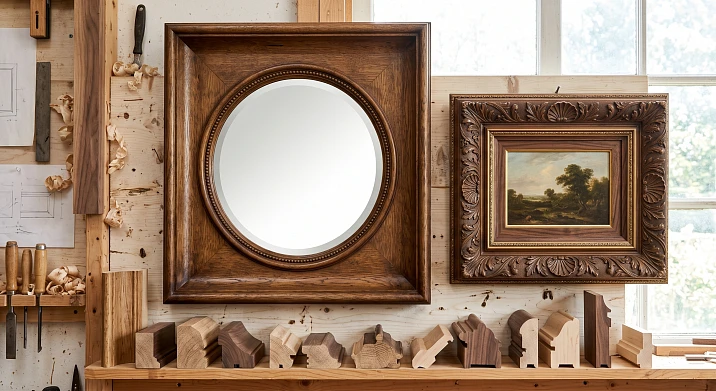
A painting without a frame is just canvas. A mirror without a baguette is just glass. It is the frame that transforms an object from the category of "functional item" into the category of "part of the interior." And that is why choosing a wooden baguette for a painting and mirror is no less important than choosing the painting or mirror itself.
But here is the paradox: most people spend hours choosing a painting and minutes choosing a frame. They grab the first baguette that fits in size — and then wonder why the interior doesn't come together. Why an expensive mirror looks cheap. Why a beloved painting "doesn't read" on the wall.
The answer is almost always in the frame. In its width, profile, color, style. In whether it matches the scale of the image, the spirit of the interior, and the character of the furniture nearby.
What is a wooden baguette and where is it used




Baguette — more than just a picture frame
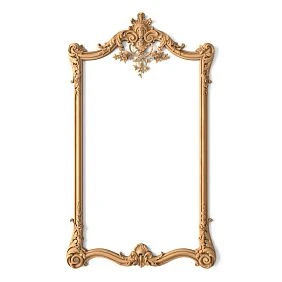
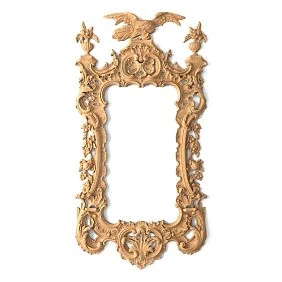
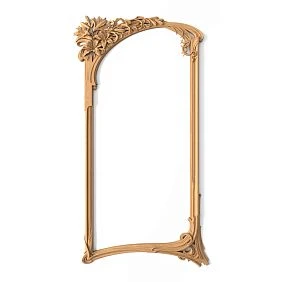
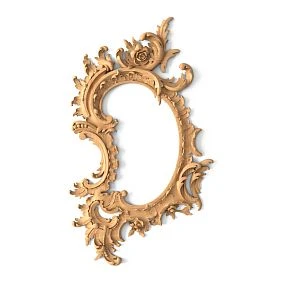
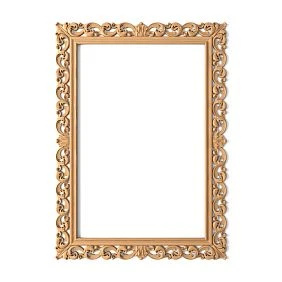
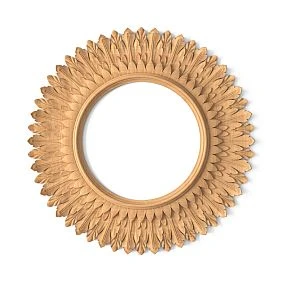
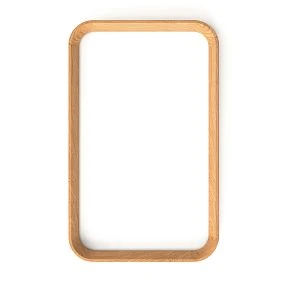
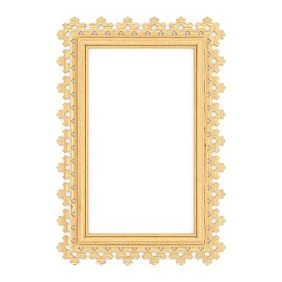
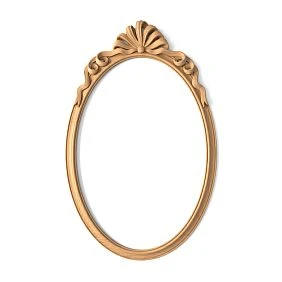
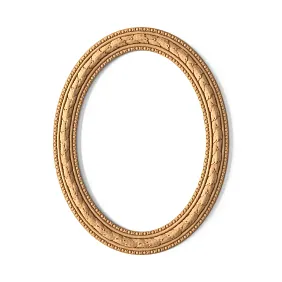
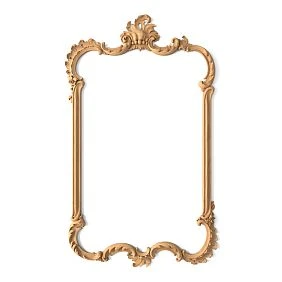
The word "baguette" in the context of interior and decor refers to a profiled wooden element — with a characteristic cross-section: the front side has a decorative relief (flat, rounded, figured), the back side is flat or has a selected groove for inserting glass and backing.
Wooden Picture Frame is used much more widely than commonly thought:
Picture frames. Classic use — framing paintings, graphics, watercolors, posters, photographs. The baguette forms a frame: four segments joined at a 45° angle.
Mirror frames. A mirror in a wooden baguette frame is one of the most expressive interior elements. In the hallway, bedroom, living room, above a console or dresser.
Decorative wall frames. An empty baguette frame on the wall is an independent decorative object. A trendy technique in modern interiors: frames of different sizes combined into a gallery wall.
Framing niches and openings. Baguette as an architectural element — framing a doorway, window opening, arch. Here it works as a molding with an expressive profile.
Decorative wall panels. Baguette frames form rectangular fields on the wall — combined with moldings, this is a classic wall finishing technique.
Interior furniture decor. Small sections of baguette profile are used as applied decorative elements on cabinet fronts, dressers, headboards.
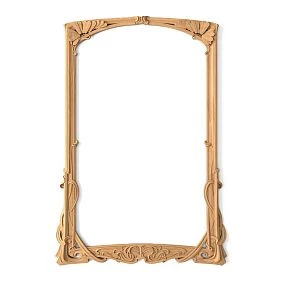
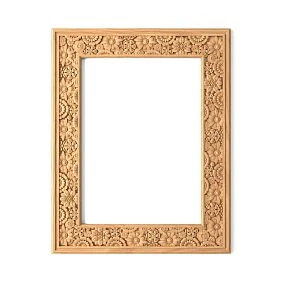
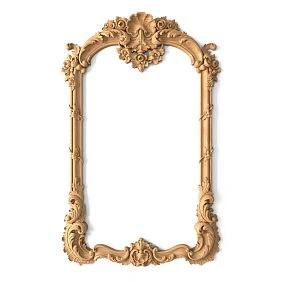
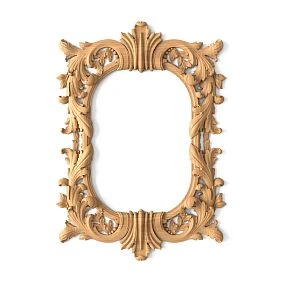
Our factory also produces:
How picture molding differs from a regular profile
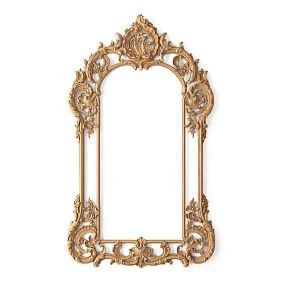
The key feature of a baguette is the presence of a "rabbet": a groove along the inner edge into which the glass, mat, or the painting itself is inserted. This is a technical element that distinguishes a baguette from a simple molding or strip.
Get Consultation
How to choose a frame for a painting
Painting and frame — a dialogue of equals
Choosing a frame for a painting is an art of compromise. The frame should not overpower the image nor get lost next to it. It should "hold" the painting — define its boundaries, which both highlight and complement.
A few principles that always work.
Principle 1: Frame width is proportional to canvas size
A small painting 20×30 cm with a wide frame of 80 mm looks cramped — the frame "eats" the image. A large canvas 80×100 cm in a narrow frame of 20 mm seems unprotected — the frame does not hold the scale.
Approximate proportions:
| Picture size | Recommended molding width |
|---|---|
| Up to 30×40 cm | 20–40 mm |
| 40×60 — 60×80 cm | 40–60 mm |
| 60×80 — 80×120 cm | 50–80 mm |
| Over 80×120 cm | 70–120 mm |
These are not strict rules, but guidelines. Artistic effect may require deviations — a wide frame on a small painting as an artistic technique, a narrow frame on a large canvas as a minimalist solution.
Principle 2: Profile depth and "visual weight" of the frame
A frame can be narrow but with deep relief — and it will look massive. Or wide but flat — and it will look concise.
Profile depth 5–10 mm — almost flat frame, minimalist look, for modern interiors and light graphics.
Depth 15–25 mm — expressive profile with shadows, for classic and neoclassical interiors.
Depth 25–40 mm — rich relief, significant "mass" of the frame, for formal paintings, mirrors in classic interiors.
Principle 3: Baguette color and painting's color palette
The frame should connect the painting with the interior — not contradict either.
Neutral natural wood tone (light beech, warm oak) — suits most paintings in warm tones. Organic in light interiors with wooden accents.
Dark walnut or wenge stain — for dramatic, contrast images. Pairs well with dark furniture.
White or cream enamel — for light and pastel paintings, watercolors, botanical illustrations. Ideal for Provencal and Scandinavian interiors.
Gilding, bronze — for classical canvases, ceremonial portraits, still lifes in the style of old masters.
Principle 4: Profile style and image genre
Carved or classically profiled wooden picture molding — for academic painting, classical genres, ceremonial portraits.
Flat or succinctly profiled — for modern painting, abstraction, photography, posters.
Wooden frame for a mirror: proper framing rules
A mirror in a wooden frame — an architectural object
A mirror in a frame is no longer just a functional item. It is an interior element that occupies wall space and shapes the room's image. The requirements for choosing a frame here are stricter than for a painting: the mirror "multiplies" the interior by reflecting it — and the frame is always visible.
Hallway: the mirror greets guests
The hallway is the first space in the home. A mirror is a must here, and its frame sets the style for the entire hallway. A few solutions:
Narrow classic frame. Molding 40–60 mm with a moderate profile, tinted to walnut or light wood. Suitable for most hallways — neutral, elegant, durable.
Wide decorative frame. Molding 80–100 mm, carved or with a shaped profile. For hallways with high ceilings, rich decor, classic furniture.
Frame matching the wall or furniture color. Frame made of molding under white enamel — if the hallway is in white or light tones. Creates the effect of a "built-in" mirror.
Bedroom: mirror in an intimate context
In the bedroom, a mirror in a wooden frame is an element interacted with daily. It should be pleasing to the eye, coordinated with the bed and nightstands.
Above the vanity table — a frame in the same tone as the countertop. Above the dresser — a frame echoing the dresser handles or furniture legs. At the headboard as a decorative element — a frame coordinated with the headboard in width and style.
Living room: mirror as a decorative accent
A large mirror in a rich wooden frame above the fireplace or console — a classic technique that works timelessly. Here buy wooden molding it should be wide: 80–120 mm, with an expressive profile.
Important: a mirror in the living room works not only as a reflector — it visually doubles the space. A large mirror in a rich frame on a dark wall is one of the most "expensive" decorative effects at relatively low cost.
Narrow or wide frame: how to choose the right width
Not "beautiful," but "proportional"
Frame width is the parameter that most often determines the success or failure of the entire solution. And the main criterion here is not "like / dislike," but proportionality.
When you need a narrow wooden frame
A narrow frame (15–40 mm) is the solution for:
-
Small paintings and photographs. Frames up to 40 mm leave the central place to the image without overwhelming it.
-
Light graphics, watercolors, prints. Works on paper often require space — a mat inside a wide frame replaces a wide frame.
-
Modern and minimalist interiors. A narrow frame is an attribute of Scandinavian, minimalist, industrial style.
-
Gallery walls with multiple images. Uniform narrow frames create rhythm and unity without visual noise.
When you need a wide wooden frame
Wide frame (60–120 mm and more): a solution for:
-
Large canvases. A painting 80×100 cm or larger requires a frame proportionate to its format.
-
Mirrors in formal rooms. A large mirror in the hallway or living room benefits from a rich, wide frame.
-
Classic and neoclassical interiors. Here, a wide profile with decoration is part of the architectural language.
-
Accent walls. One large painting in a wide frame is the focal point of the entire room.
Medium-width molding: a universal option
A frame of 40–60 mm is the sweet spot. It suits most medium-format paintings, mirrors in the bedroom and hallway, and modern classic interiors. This width is both expressive enough and neutral enough.
How to choose a wooden molding to match your interior style
The frame is part of the interior, not an exception to it
Wooden frame for a mirror or painting is always perceived in context. Nearby are furniture, curtains, wall moldings, baseboards, decorative details. And the frame should be part of this system.
Classicism and neoclassicism
Bagette: wide, 60–120 mm, with expressive relief — heel, scotia, shelf, spoon. Carving on the front plane is possible.
Material and coating: natural oak or beech under dark varnish — "English" classic. White enamel — for "light" neoclassicism. Gilding — for formal interiors.
Combination with interior: frame from wooden molding harmonizes with classic furniture — in tone, in level of decor, in proportions.
Provence and country
Bagette: medium, 40–70 mm, with a soft smooth profile. No sharp transitions, no rigid geometry — only smooth curves.
Coating: white or cream enamel. A "weathered" wood effect is possible — slightly worn paint with the wood texture showing through underneath.
Combination: frames in Provencal style harmonize with furniture in white and cream enamel, with linen curtains, with ceramic and wooden decorative details.
Scandinavian style
Bagette: narrow, 15–30 mm, flat or with minimal profile. A thin line emphasizing the boundaries of the image — and nothing more.
Coating: natural light wood without tinting, white or black enamel.
Combination: uniform frames on a gallery wall in a Scandinavian interior — rhythm, purity, and air at the same time.
Modern classic (neoclassical with clean lines)
Molding: medium, 40–60 mm, with moderate relief — one heel or shelf, without complex ornament.
Finish: tinting to match the furniture — light walnut, dark oak, or a single color with the walls.
Combination: frames align with wall moldings, floor baseboard, wooden door casings.
Loft and industrial style
Molding: minimalist, flat, made of dark wood. Or — a contrasting approach: a rich classic frame in a loft interior as a deliberate stylistic accent.
Finish: dark oil, stained oak, or natural untreated texture.
Color and material of wooden molding: how to choose for furniture and decor
Wood speaks its own language
The natural texture of wood in a frame is a completely different matter compared to a painted frame. Under clear varnish or oil, the wood lives, breathes, and changes shade depending on the lighting angle. Under enamel, it hides the texture but gains a clean, monolithic surface.
Natural beech: warm neutrality
Beech is the most common wood species for baguettes. Light, uniform tone, fine-grained structure. Under clear varnish, it has a warm cream-yellow shade. Ideal for:
-
Scandinavian interiors with light wooden furniture.
-
Modern classic in light tones.
-
Provence and country styles combined with white furniture.
Oak: expressiveness and status
Oak Wooden decoration is about texture. A pronounced natural pattern with radial rays. Under oil or tinting, it ranges from light honey to rich coffee shades.
An oak baguette for a painting in a living room with oak parquet and oak furniture is a system where each element reinforces the overall theme.
Dark tinted finish in walnut or wenge
A dark frame is contrast and drama. A dark molding on a white wall is a strong visual technique. It "holds" the image inside the frame, creating a clear boundary between the picture and the wall.
Pairs well with dark furniture in walnut or wenge, and with dark moldings.
For painting: endless possibilities
If the molding is purchased for painting, you can get a frame of any color. This is especially valuable when you need to:
-
Make the frame match the wall color (the "invisible" frame effect).
-
Match the frame color with the accent color of the interior.
-
Create a contrasting frame for a specific color concept.
How a wooden molding differs from a baguette strip, trim, and crown molding
Terminology: four words — four roles
In woodworking and interior decor, several similar concepts are often used as synonyms — and cause confusion. Let's clarify them precisely.
Wooden baguette — a profiled element with a rabbet for inserting an image or mirror. Designed for making frames. Has a decorative front surface and a structural groove on the back.
Picture frame strip — same as baguette, but the term emphasizes the "strip" — a blank for frames. Sometimes "baguette strip" denotes a simpler, less decorative profile used in the production of budget frames.
Wooden molding — a linear profile for covering joints, decorating transitions between surfaces. Flat or with a slight chamfer. Not intended for frames — no rabbet for inserting glass. Used in furniture and finishing.
Molding — a decorative profiled element for walls, ceilings, furniture facades. A broad concept including cornices, friezes, pilasters, surrounds. Molding may resemble a baguette in profile but does not have the function of a frame.
Summary table
| Term | Rabbet (groove) | Main function | Application |
|---|---|---|---|
| Wooden picture frame molding | Present | Picture/mirror frame | Frames, surrounds |
| Baguette strip | Yes / sometimes | Frame production | Budget-class frames |
| Layout | No | Joint sealing | Furniture, finishing |
| Molding | No | Decorative profile | Walls, ceilings, furniture |
Wooden baguette as part of a wall decor system
Frames and moldings: a unified interior language
One of the most expressive ideas in interior design is the consistency of the picture (or mirror) frame with the wall decor. If there are moldings on the walls or Wooden plank — the frames should be of the same wood species and in the same finish tone.
When there is a system of rectangular frames made of moldings on the wall, paintings in frames made of the same baguette are hung inside these fields. The result is a "picture in a frame, frame in a frame" — a deep classical composition.
Gallery wall: how to build a system
A gallery wall is a collection of paintings, photographs, and decorative frames of different sizes, united on one wall. Principles for choosing frames for a gallery wall:
Single wood species. All frames made from one material — all beech or all oak with a single finish. Mixing species disrupts the system.
Single finish tone. White frames or frames of one tint tone — each supports integrity.
Different widths with a single style. Variety in frame sizes makes the gallery lively, while a single profile style ties them into a system.
Connection with furniture. Gallery wall above a sofa: frames should be close in tone to the sofa upholstery or to the furniture legs in the room.
Frames on the wall without images
Empty frames made of wooden baguette on the wall — a deliberately avant-garde or ironic technique. Frames of different sizes, hung in a certain rhythm, create an architectural accent. Works especially well in light minimalist interiors.
How to make a frame from a wooden baguette yourself
From profile to finished frame: five steps
Assembling a frame from wooden baguette buy — an accessible skill. It doesn't require professional tools, only accuracy and precision.
Step 1: Measurement. Measure the painting (or mirror) accurately. For example: 40×50 cm. This is the internal size of the frame — the "clear opening" size. To this, you need to add the width of the baguette rabbet (groove depth × 2) so that the painting sits securely in the groove.
Step 2: Calculating blank lengths. Length of each side = internal size + 2 × profile width. Horizontal and vertical sides have different lengths.
Step 3: Cutting at 45°. Each piece is cut at both ends at a 45° angle using a miter box or miter saw. Precision is critical: even a 0.5° deviation will create gaps at the corners.
Step 4: Assembly. Corners are fastened with special frame clips (corner brackets) or glue + painter's tape until set. A professional option is an underpinner (pneumatic tool for driving staples into frame corners).
Step 5: Inserting the image. In the rabbet, place (if needed) glass, then a mat, then the image, then cardboard. Everything is secured with glazier's points or clips along the back of the frame.
Wooden picture frame: why solid wood is better than plastic and MDF
Honest material for honest decor
The market offers frames made of plastic 'like wood', MDF with film, and cheap laminated profiles. They all look acceptable in catalog photos. In reality, the difference from real wood is obvious from a meter away.
Wooden picture frame From solid wood:
-
It has a living texture that cannot be reproduced by imitation.
-
It weighs enough to feel like an object, not a toy.
-
It is repairable: a scratch can be sanded and repainted.
-
It lasts for decades without delamination, peeling edges, or yellowed film.
A plastic frame loses color after 5–7 years, becomes brittle, and develops a web of cracks. A wooden frame after 50 years is either still in service or has become an antique.
Flat wooden molding and its place in the decor system
Alongside the topic of wooden baguette — Flat wooden strip: a linear element with a flat surface and minimal profile. It is not a picture frame, but is actively used:
-
For creating decorative frames on walls (without the function of holding an image).
-
For decorating furniture facades.
-
For decorative wall division — horizontal and vertical lines.
In combination with a wooden baguette, the layout forms a system: the layout creates lines and frames on the walls, the baguette holds the mirror in the center of this system. Coordinated by wood species and tone, they create a unified architectural decor.
Also organically used in this system Wooden corner bracket — for decorating transitions and corners where frames and layouts meet.
Common mistakes when choosing a wooden baguette for a painting and mirror
Mistake 1: Frame too thin for a large painting
Watercolor 60×80 cm in a 15 mm frame — the image "falls out" of the frame, loses its border, seems unprotected. The minimum baguette for paintings of this format is 40–50 mm.
Mistake 2: Too heavy profile for a small image
A small graphic work 20×30 cm in a wide gilded frame 100 mm — the frame overwhelms the image. The viewer sees the frame, not the painting.
Mistake 3: Random color not related to the interior
"I liked the frame" — but it is made of dark walnut, while all the furniture in the room is light. The frame will stand out from the interior just like a random piece of furniture of an incompatible style.
Mistake 4: Different frames in one gallery
White frame, dark frame, gold frame — all on one gallery wall. Without a concept, this is chaos, not a gallery. Either all frames are the same color, or the same style with different tones.
Mistake 5: Mismatch between frame and painting genre
Modern abstraction in an ornate classic carved frame — intentional contrast (works only with designer input). A random such choice is a mismatch that irritates the eye.
Mistake 6: Ignoring proportions of frame and wall
Too small a painting in a small frame on a large empty wall — both the frame and the painting get lost. On a large wall, you need either a large canvas in a wide frame or a well-thought-out gallery of several works.
Wooden baguette and Furniture and Decorunified system
When the frame continues the language of furniture
The highest level of working with wooden baguette is when the frame is not chosen separately, but designed as part of the overall interior system.
In this system:
-
with a classic profile creates a sense of solidity, reliability. — the bottom line of the space.
-
Wooden plank on the walls — vertical accents.
-
Wooden decoration on furniture facades — details.
-
Wooden baguette in frames of paintings and mirrors — the finishing touch.
All these elements are from the same species, in the same tone, with a unified processing logic — and the space acquires a wholeness that is not explained, but felt.
FAQ: popular questions about wooden baguette
How is wooden baguette different from plastic?
Natural texture, durability, possibility of repair and repainting. Plastic loses color and becomes brittle. Wood lasts for decades.
How to choose the width of a baguette for a mirror in the hallway?
For a small mirror (up to 60 cm on the smaller side) — a frame of 40–60 mm. For a large mirror (over 80 cm) — a frame of 60–100 mm. Follow the proportion: the frame width should be 8–12% of the smallest mirror dimension.
Can I assemble a frame from a wooden baguette myself?
Yes. A sharp knife or miter saw, miter box, glue, and corner clamps are enough. The main thing is precise cutting of corners at 45°.
Which wooden baguette to choose for white furniture?
White enamel or cream tinting — for Provence and neoclassical style. Natural light beech — for Scandinavian style. Both options harmonize with white furniture.
Where is the boundary between wide and narrow baguette?
The conventional boundary is 50 mm. Baguette up to 50 mm is narrow, from 50 mm is wide. Medium-wide (40–60 mm) is a universal option for most tasks.
Where to buy wooden baguette and baguette molding
Full range for frames, framing and interior decor:
-
buy wooden molding — all moldings from solid wood.
-
Wooden molding — for decorative lines and joints.
-
Wooden picture frame — detailed article on choosing a frame.
-
Flat wooden strip — for wall frames.
-
with a classic profile creates a sense of solidity, reliability. — for coordinated floor decoration.
-
Wooden corner bracket — for corner transitions.
-
decor for furniture — overlay decorative elements.
-
Furniture and decor from solid wood — full catalog.
STAVROS: wooden baguette and solid wood moldings for frames and interiors
The frame is the last detail to be installed and the first to be seen. That is why wooden baguette for paintings and mirrors should be chosen deliberately — with an understanding of width, profile, material, and stylistic context.
STAVROS supplies wooden baguette and molded trim made from beech and oak solid wood — with precise profile, clean surface finish, and stable dimensions. In one catalog — all necessary moldings: from wooden baguette to trims, slats, corners, and baseboards.
STAVROS works with professional framing workshops, designers, furniture manufacturers, and private customers across Russia.