Article Contents:
- Purchasing building materials: why an invoice cannot be checked by the total amount alone
- Four-Way Match: four documents that must refer to the same order
- The first check — the specification version number
- Why an invoice without a link to the current specification is more dangerous
- Wooden skirting board: six fields that are verified before payment
- Why the same number of meters still guarantees nothing
- Why a length change must be returned to cutting
- You need to check both the number of lengths and the control footage
- Why meters and units cannot be mixed in one column
- Wooden molding: why it is especially important to check the item code
- How to detect a missing row
- SKU quantity control
- How to quickly verify invoice completeness by codes
- Wooden cornice: why a length error can be more costly than a price error
- The quotation and the invoice must be compared line by line
- If the price has changed, it is not necessarily an error
- Building materials price list: why the price from the price list does not equal the price of the project line
- Why the price list should be kept only as a reference source
- Construction materials price list: always check the unit of measurement
- Price per piece and price per meter
- Construction material prices: compare the final line, not the attractive discount
- Why a cheap incorrect item is not a saving
- When a change in the invoice may be acceptable
- Cost of construction materials: what is included in the final purchase
- Why delivery should be a separate, clear line
- Payment for goods and confirmed availability are not the same thing
- What to do if part of the goods is available and part is still being produced
- How to add a status to the final reconciliation
- Why the address and recipient should not be left "for later"
- The invoice is correct, but the deadline is already different — can it be paid automatically
- How to link the deadline to a specific line
- The item code on the invoice must match the approved sample
- Why the finish should be verified separately from the item code
- How to check an invoice if the supplier has combined several lines
- How to check several invoices against one specification
- How to check the advance payment and the final payment
- Why the order number and delivery address also need to be verified
- The APPROVED FOR PAYMENT principle
- Who should put APPROVED FOR PAYMENT
- What to do in case of any discrepancy
- What the discrepancy log looks like before payment
- Why a corrected invoice must be rechecked in full
- 12 reasons to stop payment and clarify the invoice
- What to do if the sum of line items does not match the total
- Why the buyer should keep the verified document set
- Why the invoice version must not be lost after payment
- How Four-Way Match continues after payment
- Final invoice verification algorithm
- Pre-payment control card

Skirting boards, mouldings and cornices have already been selected. The designer has approved the profiles, the quantity has been calculated, the supplier has sent a commercial proposal, then an invoice. The most dangerous mistake at this stage looks harmless: the purchaser opens the total amount, sees roughly the same figure as in the commercial proposal, and sends the document for payment.
When procurement of construction materials for project finishing, this is not how you should check. The total amount may barely change even with different wood, a different commercial length, a missing moulding, an increased quantity of skirting board, or a subtly added analogue.
Before payment, four levels must be compared:
DESIGN → APPROVED SPECIFICATION → QUOTATION → INVOICE / ORDER.
The article focuses on the narrowest and most critical transition: APPROVED SPEC → QUOTATION / INVOICE. Everything that is paid for must correspond line by line to the approved procurement baseline. Any unexplained discrepancy is a STOP until clarified.
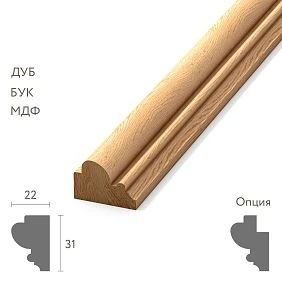
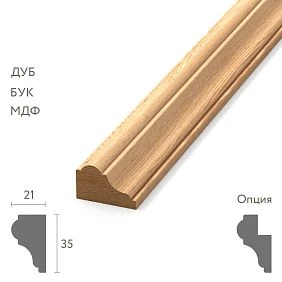
Procurement of construction materials: why an invoice cannot be checked by the total amount alone
Suppose the commercial proposal was 680,000 ₽. The invoice shows 684,500 ₽. The difference seems small, and the purchaser assumes that delivery or rounding has changed.
But an identical or similar total amount does not yet prove an identical composition. Several changes could have occurred within the document at the same time:
- one moulding item has disappeared;
- the quantity of skirting boards increased;
- oak was replaced with a different finish;
- the commercial length was changed;
- packaging was added;
- part of the goods was moved to a separate invoice.
That is why the check starts not from the bottom of the document, but with each line.




Four-Way Match: four documents that must refer to the same order
| Field | DESIGN | APPROVED SPEC | QUOTATION | INVOICE |
|---|---|---|---|---|
| Article number | PLT-A | PLT-A | PLT-A | PLT-A |
| Material | Oak | Oak | Oak | Oak |
| Size | … | … | … | … |
| Length | … | … | … | … |
| Quantity | … | … | … | … |
| Finish | F01 | F01 | F01 | F01 |
| Price | — | — | … | … |
Before payment, the three right-hand columns are checked especially carefully. DESIGN is needed as the original intent, APPROVED SPEC as the approved procurement version, QUOTATION as the agreed commercial basis, INVOICE as the document by which the money will actually be paid.
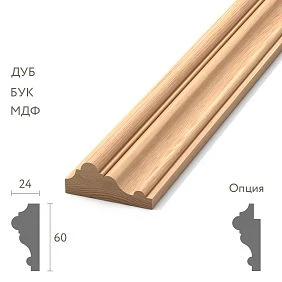
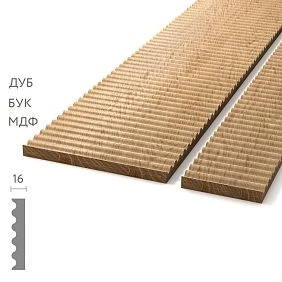
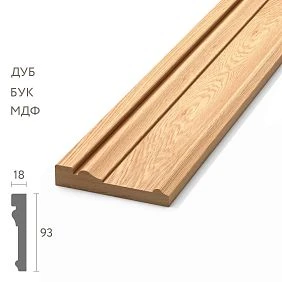
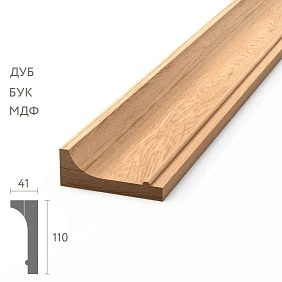
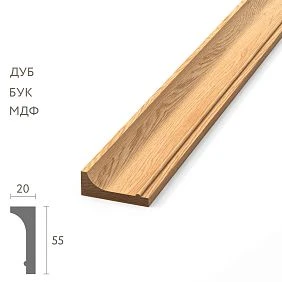
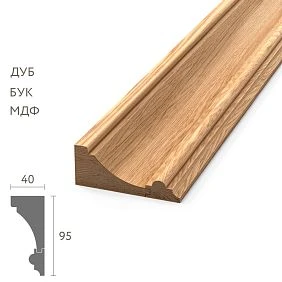
Our factory also produces:
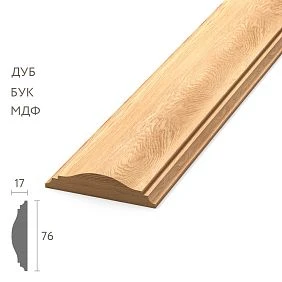
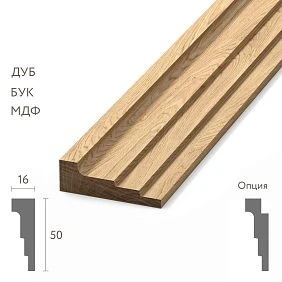
The first check is the specification version number
A project may contain five files with similar names. The buyer must work not with the “latest Excel from the correspondence,” but with a specific approved revision.
For example:
SPEC-PG-REV04 — APPROVED
It is with REV04 that the invoice is compared.
REV02, an old PDF, or a file cannot be used final-final2.xlsx, if they have already been cancelled.
Get Consultation
Why an invoice without a link to the current specification is more dangerous
A month later, the question arises: “Which version was actually paid for?” If the answer is unknown, it becomes difficult to understand who changed the SKU or quantity, and when.
In internal accounting, it is useful to link:
INVOICE ↔ QUOTATION ↔ APPROVED SPEC REVISION.
This way, from the invoice you can always return to the document that authorized this purchase.
Wooden skirting board: six fields that are checked before payment
Minimum set:
- article number;
- the material;
- cross-section / size;
- product length;
- quantity;
- finish or coating, if it is included in the order.
The line “wooden skirting board — 300 m” is too coarse for project procurement.
Level entry required:
P01 / PLT-A / OAK / SIZE … / LENGTH 2400 / 120 PCS / FINISH F01
Why an equal number of meters guarantees nothing
Specification:
PLT-A / oak / 2400 mm
Count:
PLT-A / oak / other length variant
The total meterage may look similar, but the number of items, cutting plan, number of joints, and purchase amount will change.
That is why LENGTH is not an auxiliary field, but part of purchasing identity.
Why a length change must be returned to the cutting plan
If the supplier offered the same model in a different length, you cannot simply replace the line and keep the old quantity.
For example, the original calculation was made for 2.4 m, but the invoice shows a length of 2.6 m. Then you need to recheck:
- how many whole stock pieces are required;
- how the balance changes;
- how many joints there will be;
- whether the billable footage changes;
- whether the logistics changes.
That is, changing LENGTH automatically returns the line from financial review to technical review.
You need to check both the number of lengths and the control footage
A good line allows you to verify the arithmetic:
120 pcs. × 2.4 m = 288 linear m.
If the invoice says 120 pcs., but the total footage is 276 m, the document already requires clarification.
Control formula:
number of items × product length = control purchase footage.
Why meters and pieces cannot be mixed in one column
One table may contain:
PLT-A — 288 m
and another:
PLT-A — 120 pcs.
Both values may be correct. But if the system compares only numbers, it will see 288 versus 120 and show a false discrepancy.
Therefore, the unit of measurement must be a separate field.
Wooden molding: why it is especially important to check the item code
In one project, it is easy to use MLD-A, MLD-B, MLD-C, and MLD-D. Visually, the profiles may be similar, and the price may be almost the same.
If the invoice accidentally lists MLD-B instead of MLD-D, the total amount may change only very slightly.
But architecturally, this is a different profile.
How to detect a missing line
There is no need to manually reread a long document hoping to notice that one item is missing.
Each item is assigned a project code:
P01, P02, M01, M02, M03, K01…
Then the check is simple: whether all APPROVED SPEC codes are present in the quotation and invoice.
SKU quantity control
The specification contains 17 unique items.
Quotation — 17.
Invoice — 16.
Even before viewing the details, it's clear: one line was lost, merged, or replaced.
The number of SKUs is a quick control indicator, but not a substitute for line-by-line verification.
How to quickly verify invoice completeness by codes
If each item has a unique project code, verification can be done by the set of codes rather than by names.
For example, APPROVED SPEC contains:
P01, P02, M01, M02, M03, K01, K02
The invoice contains:
P01, P02, M01, M02, K01, K02
The difference is immediately visible: M03 is missing.
This kind of check is especially useful when the document has 20–30 lines and the profile names are similar. First, code completeness is checked, then the content of each line.
Wooden cornice: why a length error can be more costly than a price error
For a large cornice, the product length affects cutting, the number of joints, logistics, and the physical quantity of items.
If the unit price is correct but the LENGTH has changed, the overall procurement configuration is already different.
The LENGTH field must be verified before the price.
The quotation and the invoice must be compared line by line
| Code | Quotation | Invoice | Difference |
|---|---|---|---|
| P01 | 120 pcs. | 120 pcs. | 0 |
| M01 | 85 pcs. | 80 pcs. | −5 |
| K01 | 32 pcs. | 32 pcs. | 0 |
For each line, check:
- code;
- SKU;
- the material;
- size;
- length;
- quantity;
- unit of measurement;
- price;
- line total.
It is useful to add another column, REASON FOR CHANGE. If a line differs from the quotation, the buyer immediately sees the reason: "quantity increased per REV04," "delivery listed separately," "item split into two batches." A change without a reason automatically remains an OPEN ISSUE.
If the price has changed, it is not necessarily an error
The quantity, agreed discount, configuration, delivery, or number of batches may have changed.
But the change must be explainable.
Bad logic:
The amount increased slightly — probably everything is fine.
Correct:
Line M01 increased by 18,000 ₽ due to a quantity increase from 80 to 85 pcs. per approved REV04.
Construction materials price list: why the price from the price list does not equal the price of the project line
construction materials price list may show the base cost of the item. The project line also depends on the specific configuration.
It can be influenced by:
- the material;
- length;
- finish;
- volume;
- packaging;
- other agreed parameters.
The price list is a reference. The invoice is a document of a specific purchase.
Why the price list should be kept only as a reference source
In a month, the base price may change, while the project discount may stay the same or also change. Therefore, when reviewing an old purchase, one cannot prove an error solely by the fact that “the price on the website is different now.”
In a project, the documents that were in effect at the time of approval matter: the specific quotation, the specific invoice, and the APPROVED SPEC. The price list helps with orientation, but it does not replace the deal history.
Price list for construction materials: we always check the unit of measurement
price list for construction materials may contain the price per piece, per linear meter, or per set.
If the buyer compares different units, a false impression arises that one option is significantly cheaper.
Therefore, next to each price there must be:
UNIT PRICE + UNIT OF MEASURE.
Price per piece and price per meter
A 2.4 m long strip costs 2400 ₽/pc.
Reference cost:
2400 / 2.4 = 1000 ₽/m.
This arithmetic is useful for verification, but only after confirming the actual product length of the specific configuration.
Construction material prices: we compare the final line, not the pretty discount
prices for building materials you cannot evaluate based on the discount percentage alone.
Supplier A writes "−20%", supplier B — "−12%". This says nothing without the base price and product composition.
Compare:
correct SKU × correct configuration × correct quantity × final price.
Why a cheap incorrect item is not a saving
MLD-B is cheaper than MLD-A, but the project specified MLD-A.
If it is replaced without approval, that is not a saving. That is a project change.
Value engineering should happen separately and before the final invoice, not hide inside a payment document.
When a change in the invoice may be acceptable
A change is acceptable if it has already been approved and reflected in a new revision of the specification.
For example:
REV04: MLD-A → MLD-B approved by project team
Then the invoice with MLD-B is correct. The problem is not in the change itself, but in the lack of traceability.
The rule is simple: the APPROVED SPEC changes first, then the invoice, not the other way around.
Cost of construction materials: what is included in the final purchase
cost of construction materials for a project consists not only of line items.
The following are checked separately:
- goods;
- finish;
- packaging;
- delivery;
- unloading, if it is included;
- additional agreed services;
- taxes and other mandatory items of the document, if applicable.
The buyer must understand which costs are included in the invoice now and which will appear later.
Why delivery should be a separate, clearly stated line
Options:
- delivery included;
- delivery not included;
- delivery will be calculated later;
- delivery is split by batches.
None of the options is bad in itself. What is bad is if the buyer finds out about this after paying for the goods.
Paying for goods and confirmed availability are not the same thing
Before paying, you need to understand what is happening with each line:
- in stock;
- partially ready;
- will be produced;
- has a separate lead time;
- requires reordering from the manufacturer.
Money and lead time must be discussed on the same information basis.
What to do if part of the goods is available and part is still being produced
The invoice may be issued for the entire order, even though the readiness of items varies.
The purchaser must understand:
- what is being paid for now;
- which part is ready for shipment;
- which part will be produced later;
- can the payment be split into batches;
- how does this relate to the project schedule.
If the payment scheme is agreed as a single prepayment, that in itself is not a mistake. The mistake is to pay without noticing that half of the order has a different deadline and in fact does not cover the nearest installation queue.
How to add a status to the final reconciliation
| SKU | Quantity | Status | Planned readiness |
|---|---|---|---|
| PLT-A | 120 | STOCK | … |
| MLD-A | 85 | PRODUCTION | … |
| KZ-A | 32 | PARTIAL | … |
This way the invoice stops being just a financial document and becomes linked to the actual delivery schedule.
Why the address and recipient should not be left "for later"
Even if delivery is paid separately, the address and recipient contact are best checked before the final status.
A project may have:
- the main site;
- temporary warehouse;
- showroom;
- another construction phase.
If the invoice is linked to one address, but the logistics request is later sent to another, there is a risk of additional costs or schedule disruption.
The invoice is correct, but the deadline is already different — can it be paid automatically
No. First, you need to check whether the new deadline suits the project.
The final procurement reconciliation includes:
WHAT + HOW MUCH + WHEN + HOW DELIVERED.
WHAT + PRICE alone is not enough.
How to link the deadline to a specific line item
If different SKUs have different deadlines, the phrase "the order will be ready in 20 days" alone is not enough.
| SKU | Quantity | Status | Readiness |
|---|---|---|---|
| PLT-A | 120 pcs. | STOCK | Now |
| MLD-A | 85 pcs. | PRODUCTION | Later |
| KZ-A | 32 pcs. | PARTIAL | Per schedule |
So the buyer sees that a correct total invoice does not yet mean the same readiness for all items.
The item code on the invoice must match the approved sample
If physically approved:
MLD-021 / OAK
but the invoice was issued for:
MLD-012 / OAK
the same species does not fix the situation.
The physical sample, project code, and invoice line must reference the same SKU.
Why the finish must be verified separately from the item code
The same profile can be used in different projects with different finishes.
Therefore:
SKU ≠ FINISH SPECIFICATION.
If F01 is specified in the APPROVED SPEC, but the finish is missing from the invoice or replaced with F02, the line requires clarification even if the article number is correct.
How to check an invoice if the supplier has merged several lines
Sometimes the quotation had three lines, but the invoice had one aggregated line.
For example:
Wooden molding — 240 m.
At the same time, the specification contains M01, M02, and M03.
Such aggregation cannot automatically be considered an error, but the purchaser must receive a breakdown to prove compliance with all three SKUs.
For control purposes, it is convenient to require that project codes be preserved in the invoice or attachment. Then even an aggregated financial document can be linked to the original specification without manual guesswork.
How to check multiple invoices against one specification
A large order may be paid in installments. This creates a risk of duplicate lines.
It is useful to keep track:
| Code | APPROVED TOTAL | INVOICE 01 | INVOICE 02 | Balance due |
|---|---|---|---|---|
| P01 | 120 pcs. | 60 pcs. | 40 pcs. | 20 pcs. |
This way, the same batch is not accidentally paid for twice.
How to verify the advance payment and the final payment
If an order is paid in installments, it is necessary to distinguish between:
- order cost;
- advance payment amount;
- already paid;
- balance due.
For example, the order cost is 900,000 ₽. The advance payment is 450,000 ₽. Before the second payment, you cannot simply pay a new invoice for 450,000 ₽ without checking that there were no adjustments to the order.
If a line item was removed or the quantity was changed after the advance payment, the remaining balance must be recalculated based on the current version of the order, not the original amount.
Why the order number and delivery address also need to be verified
The technical part may be perfect, but the invoice is issued for a different site or contains an old address.
Before payment, check:
- order number;
- project;
- delivery address;
- recipient contact;
- shipping terms;
- splitting into batches, if agreed.
The APPROVED FOR PAYMENT principle
An item may be APPROVED technically, but the document is not yet ready for payment.
A separate APPROVED FOR PAYMENT status is set when the following are closed:
- article numbers;
- materials;
- dimensions;
- lengths;
- quantity;
- finish;
- prices;
- the deadline;
- delivery;
- document version.
Until then, the invoice remains in CHECKING or HOLD.
Who should set APPROVED FOR PAYMENT
On a small project, this can be one procurement person. On a large one, it is useful to separate the roles:
- TECHNICAL CHECK — item codes, material, size, length, finish;
- QUANTITY CHECK — quantity and total length;
- COMMERCIAL CHECK — price, discount, delivery, additional costs;
- FINAL PAYMENT APPROVAL — confirmation that there are no open discrepancies.
This is not bureaucracy for bureaucracy's sake. Separating roles reduces the risk that one person will simultaneously miss a technical substitution and a pricing error.
What to do in case of any discrepancy
Do not correct the invoice manually and do not pay it "with the understanding that we'll fix it later."
- record the discrepancy;
- send the supplier a specific comment;
- receive the corrected document;
- re-verify;
- set APPROVED FOR PAYMENT;
- only then proceed with payment.
What the discrepancy log looks like before payment
| Issue | Code | APPROVED SPEC | INVOICE | Action | Status |
|---|---|---|---|---|---|
| 01 | M01 | 85 pcs. | 80 pcs. | Correct the quantity | OPEN |
| 02 | K01 | Oak | Material not specified | Clarify the finish | OPEN |
After correction, the status becomes CLOSED. Only when there are no open issues does the document move to APPROVED FOR PAYMENT.
Why a corrected invoice must be re-checked in full
If the supplier has corrected M01, you cannot look only at M01.
A new version of the document may differ in other places as well: numbering has changed, the discount has been recalculated, a new delivery line has appeared, quantities have accidentally shifted.
Therefore, after any correction, a short full re-check is performed:
REVISION → SKU COUNT → LINE MATCH → TOTALS → DELIVERY → STATUS.
12 reasons to stop payment and clarify the invoice
- unknown SKU;
- missing line;
- different material;
- unknown product length;
- changed quantity;
- new substitute;
- old version of the specification;
- unclear unit of measurement;
- unconfirmed deadline;
- delivery not determined;
- total does not match the sum of the lines;
- the invoice contains an item that is not in the approved project.
What to do if the sum of the lines does not match the total
Do not automatically assume that this is a discount or rounding.
Check:
- the amount of each line;
- quantity × price;
- discounts;
- packaging;
- delivery;
- taxes and additional lines.
Every discrepancy must have an explanation.
Why the buyer must keep the verified document set
After payment, the following are saved:
- APPROVED SPEC;
- final quotation;
- final invoice;
- log of closed discrepancies;
- APPROVED FOR PAYMENT confirmation.
When the shipment arrives, receiving will be able to compare the actual goods against exactly what was paid for.
Why the invoice version must not be lost after payment
If, after payment, the supplier sends a new PDF "for convenience," it is necessary to determine whether the document itself changed or only its formatting.
The project archive must retain exactly the version on the basis of which APPROVED FOR PAYMENT was issued and the payment was made. Otherwise, a new problem will arise at receiving: the actual goods are compared no longer against the document that was actually paid.
How the Four-Way Match continues after payment
After delivery, a fourth check appears:
GOODS RECEIPT — what actually arrived.
Then the chain becomes complete:
PROJECT → APPROVED SPEC → INVOICE / ORDER → GOODS RECEIPT.
If the SPEC → INVOICE transition was correctly closed before payment, it is much easier for the entity to accept the goods and file a claim in case of an actual discrepancy.
Final invoice verification algorithm
- Open the APPROVED SPEC.
- Check its revision.
- Check the project and order number.
- Count the number of SKUs.
- Verify project codes.
- Verify SKUs.
- Verify materials.
- Verify dimensions and cross-sections.
- Verify product lengths.
- Verify item quantities.
- Recalculate the control footage.
- Verify units of measurement.
- Verify the finish.
- Compare the quotation and invoice line by line.
- Verify the unit price and line total.
- Check the packaging and additional services.
- Check the delivery.
- Check availability and lead time.
- Check the address and delivery terms.
- Close all discrepancies.
- Set to APPROVED FOR PAYMENT.
- Only then proceed with payment.
Before paying for wooden trim, the buyer must not re-select the product. Their task is different: to prove that the invoice matches the already approved decision.
If this check is performed line by line, the total is no longer the only reference point. The buyer sees that the correct skirting board, the correct moulding, the correct cornice are being paid for, in the correct wood, length, quantity, and finish, with a clear price, lead time, and delivery.
Pre-payment checklist
For practical work, you can use a short final control card:
| Check | Status |
|---|---|
| APPROVED SPEC revision is up to date | OK / HOLD |
| All SKUs are present | OK / HOLD |
| Materials and lengths match | OK / HOLD |
| Quantity and linear meters recalculated | OK / HOLD |
| Line price and amount verified | OK / HOLD |
| Lead time and availability confirmed | OK / HOLD |
| Delivery is clear | OK / HOLD |
| No open ISSUEs | OK / HOLD |
The card does not replace the specification and invoice. It serves as the final gateway: if even one line has HOLD, the payment does not go through automatically.
This approach is especially useful on large projects where technical approval, procurement, and accounting are handled by different people. Accounting sees not only the amount but also confirmation that the technical and commercial checks have been completed.
Then payment becomes not an act of trust in the latest document, but a controlled transition from APPROVED SPEC status to APPROVED FOR PAYMENT status.