
































































Article Contents:
- What is Ceiling Skirting and Why is it Needed
- What ceiling skirting boards can be bought: complete typology
- Wooden ceiling skirting
- Polyurethane ceiling skirting
- Polystyrene ceiling skirting
- Smooth and decorative profile: selection by task
- How to choose ceiling skirting by material: detailed comparison
- Wood: when 'natural' is not just a word
- Polyurethane: precision of form and richness of relief
- Polystyrene: practicality without compromising appearance
- Table: comparison of three materials
- How to Choose a Ceiling Skirting by Width, Profile, and Style
- Narrow ceiling skirting (up to 5 cm)
- Medium ceiling skirting (5–8 cm)
- Wide ceiling skirting (from 8 cm)
- Smooth profile
- Profile with ornament
- How to choose a ceiling skirting by room
- Living room: expressiveness and scale
- Bedroom: tranquility and coziness
- Kitchen: moisture resistance first and foremost
- Hallway and corridor: practicality and quick installation
- Wooden House
- Office and Library
- Which ceiling skirting boards are most often chosen in St. Petersburg
- What to combine ceiling skirting with: decorative ceiling system
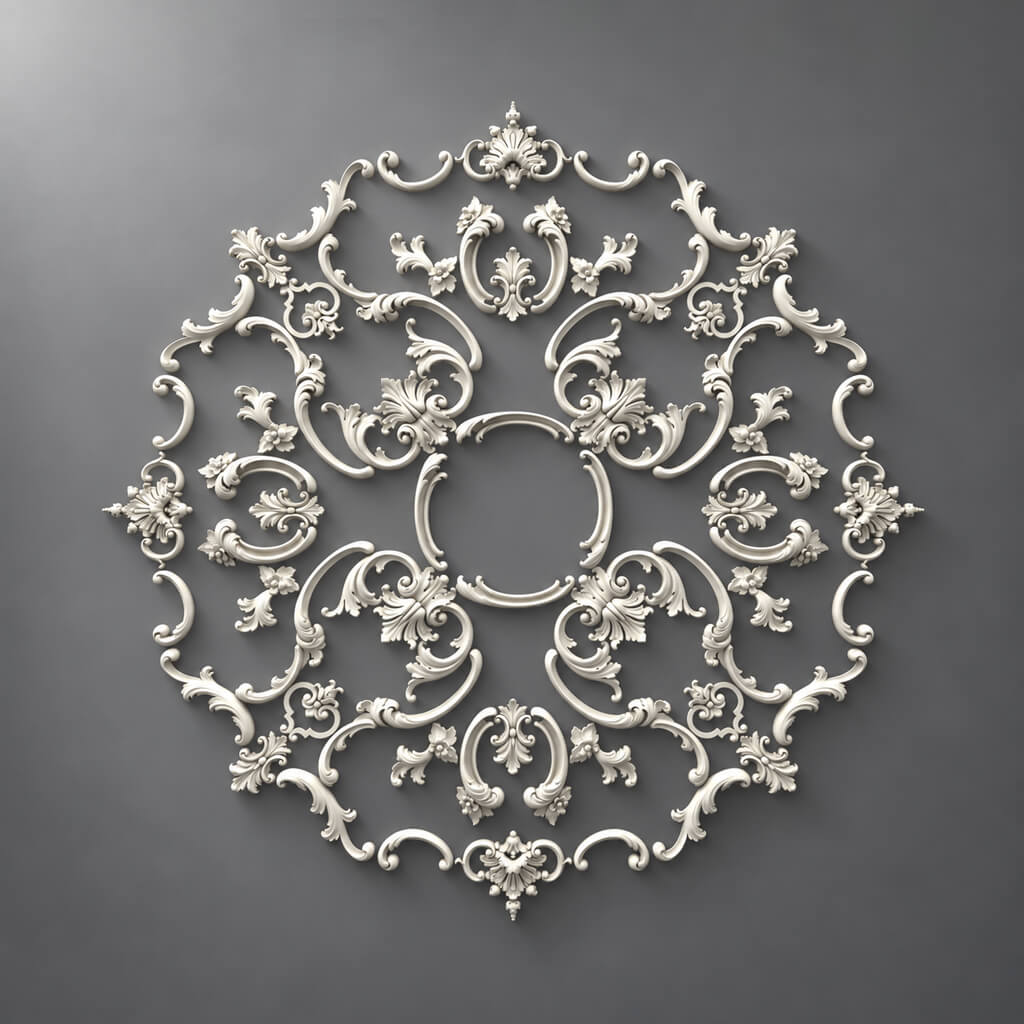
- Ceiling skirting and stucco
- Ceiling skirting and sockets for chandeliers
- Ceiling skirting and coffers
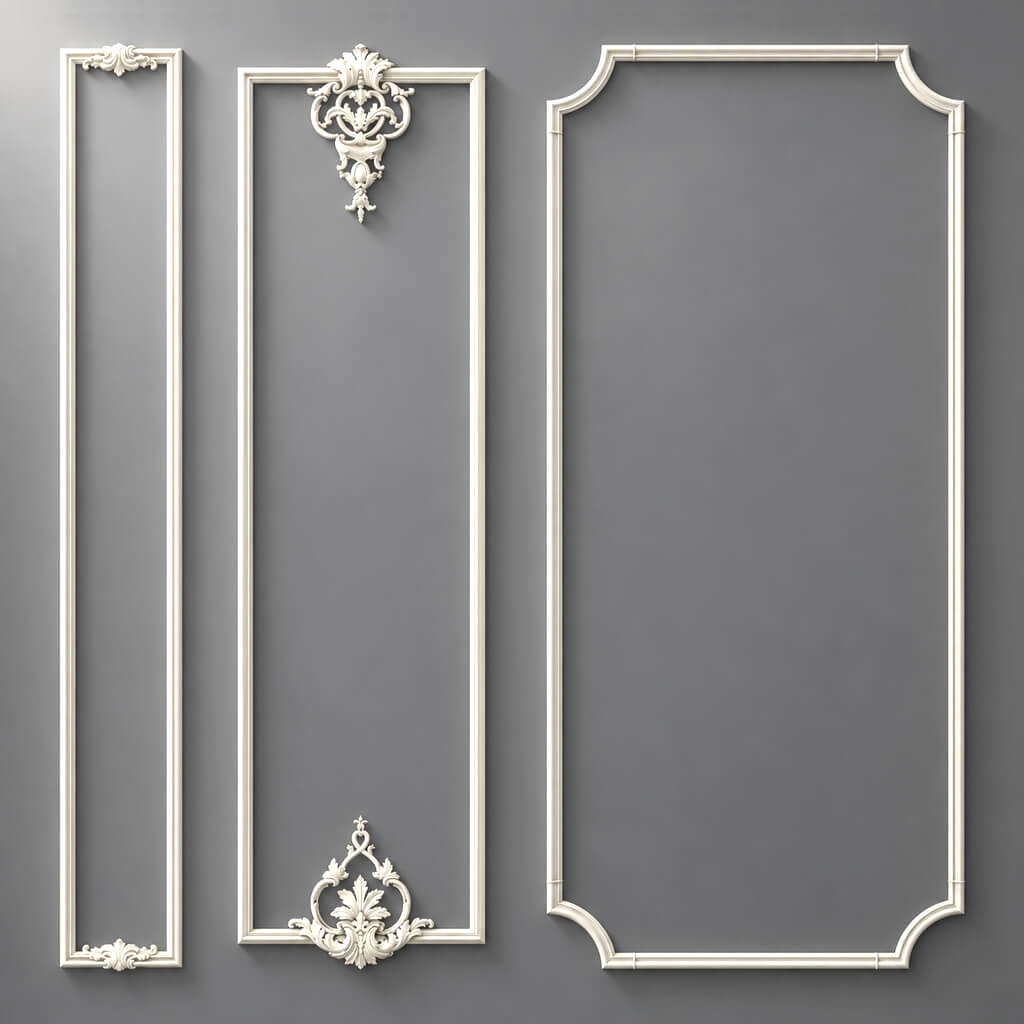
- Ceiling skirting and wall moldings
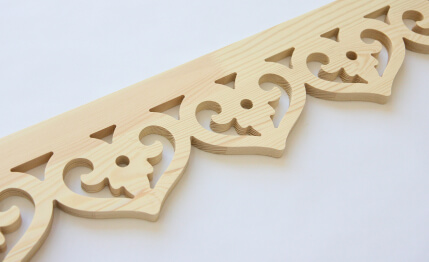
- Ceiling skirting and wooden corner elements
- Ceiling skirting and floor skirting
- What to consider before buying ceiling skirting in St. Petersburg
- Checklist for correct selection
- Where to buy ceiling skirting in Saint Petersburg
- How to navigate the STAVROS catalog
- How to assemble a full decorative set
- FAQ: Answers to the most common questions about ceiling skirting in St. Petersburg
- Which ceiling skirting is best to buy?
- What to choose: wood, polyurethane or polystyrene?
- Which ceiling skirting is best for painting?
- Which ceiling skirting is suitable for high ceilings?
- How to calculate the amount of ceiling skirting?
- How to properly cut ceiling skirting for a corner?
- Can ceiling skirting be installed on a stretch ceiling?
- Where to buy ceiling skirting in St. Petersburg with delivery?
- Conclusion: the boundary that completes everything

There is a place in any room that everyone notices — but no one can immediately explain why exactly it defines the feeling of the interior. It is the boundary between the wall and the ceiling. Where the vertical transitions into the horizontal. Where the ceiling begins and the wall ends. If this boundary is empty — the interior seems unfinished, raw, as if the job wasn't completed. If the right ceiling skirting is there — the space acquires a frame. Like a painting gains meaning in a frame.
Buy Ceiling Skirtingin St. Petersburg — is a task with several dimensions: material, profile width, style, compatibility with other decor, requirements for moisture resistance and painting. The STAVROS catalog contains everything needed to solve this task:Wooden ceiling skirting boardmade from solid oak and beech,Ceiling cornices and skirting boards made of polyurethanewith rich relief andPolystyrene ceiling skirtingfor painting and lighting. With delivery to St. Petersburg and all of Russia.




What is a ceiling skirting board and why is it needed
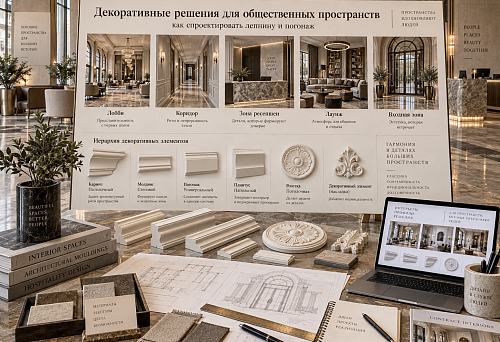
Ceiling skirting is a linear decorative profile mounted at the transition point from wall to ceiling around the entire perimeter of the room. It is called differently: coving, ceiling border, cornice. The essence does not change: it covers the joint and creates a visual frame for the ceiling.
What it is really needed for — is a question worth asking honestly. Technically: ceiling skirting hides irregularities at the joint, masks cracks from building settlement (especially relevant for St. Petersburg houses), covers gaps that are inevitable when installing a stretch or suspended ceiling, conceals cables for spot lighting. Aesthetically: it creates an architectural transition between the vertical and horizontal planes, sets the upper boundary of the interior, 'raises' the ceiling visually — especially with the correct choice of width and profile.
Ceiling skirting boardworks in conjunction with the overall decorative program of the room: it must be coordinated with wall moldings, with floor skirting, with cornices, stucco, and other architectural details. That is why choosing ceiling skirting is not a separate task, but part of a systematic approach to finishing.
Three specific tasks that a ceiling skirting board solves in a St. Petersburg apartment:
-
Masking joints and cracks. St. Petersburg houses 'live': the historical stock is constantly in micro-movement, new buildings settle. A crack at the junction of the wall and ceiling is inevitable. A ceiling skirting board covers it forever.
-
Hiding cables and unevenness. When installing a stretch ceiling, the profile covers the batten. During wallpaper repairs — it hides the edge of the canvas. When laying cables — it conceals them behind the body of the skirting board.
-
Finishing the interior. A ceiling without a skirting board is like a painting without a frame. A horizontal decorative strip along the upper perimeter makes the room complete.




What ceiling skirting boards can you buy: a complete typology
Before comparing materials and profiles, it is important to understand that the market offers four fundamentally different approaches to ceiling skirting boards. This is not just 'three types of material' — these are three different tasks and three different levels of decorativeness.
Our factory also produces:


Wooden ceiling skirting board
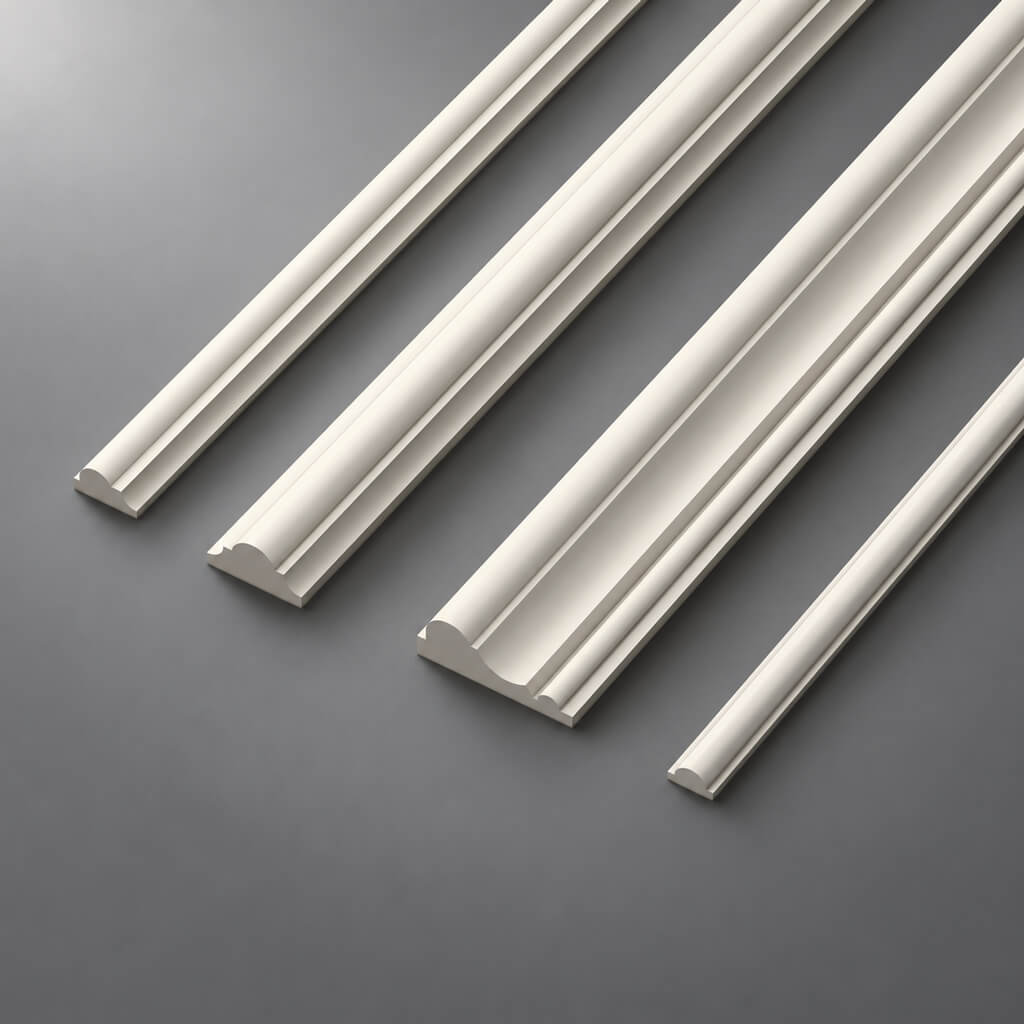
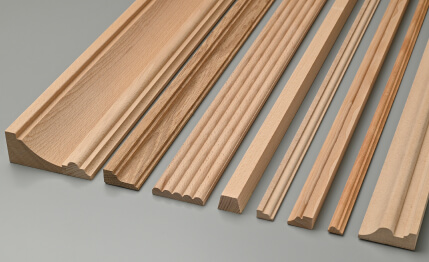
Wooden ceiling skirting boardmade of solid oak or beech — this is the 'forever' category. Natural wood under white enamel or clear varnish — this is a material with history, density, and a living surface that no synthetic analogue can reproduce.
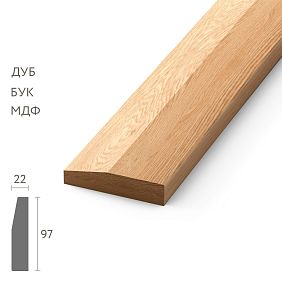
Ceiling skirting board PLT-001 made of solid oak — a profile with clear milling, designed for installation at the junction of the wall and ceiling. The edges remain sharp after painting even after several repaints. The surface does not lose its geometry. The wooden profile allows for sanding and recoating — it can be renewed after 20 years of repairs, when the synthetic analogue would have long been replaced.
A wooden ceiling skirting board is chosen when:
-
The interior is built on natural materials and requires their unity;
-
Nearby — wooden parquet, wooden doors, massive cornices and moldings;
-
The space — a historic St. Petersburg apartment or an expensive country house;
-
The result should serve for decades without replacement.
Get Consultation
Polyurethane ceiling skirting board
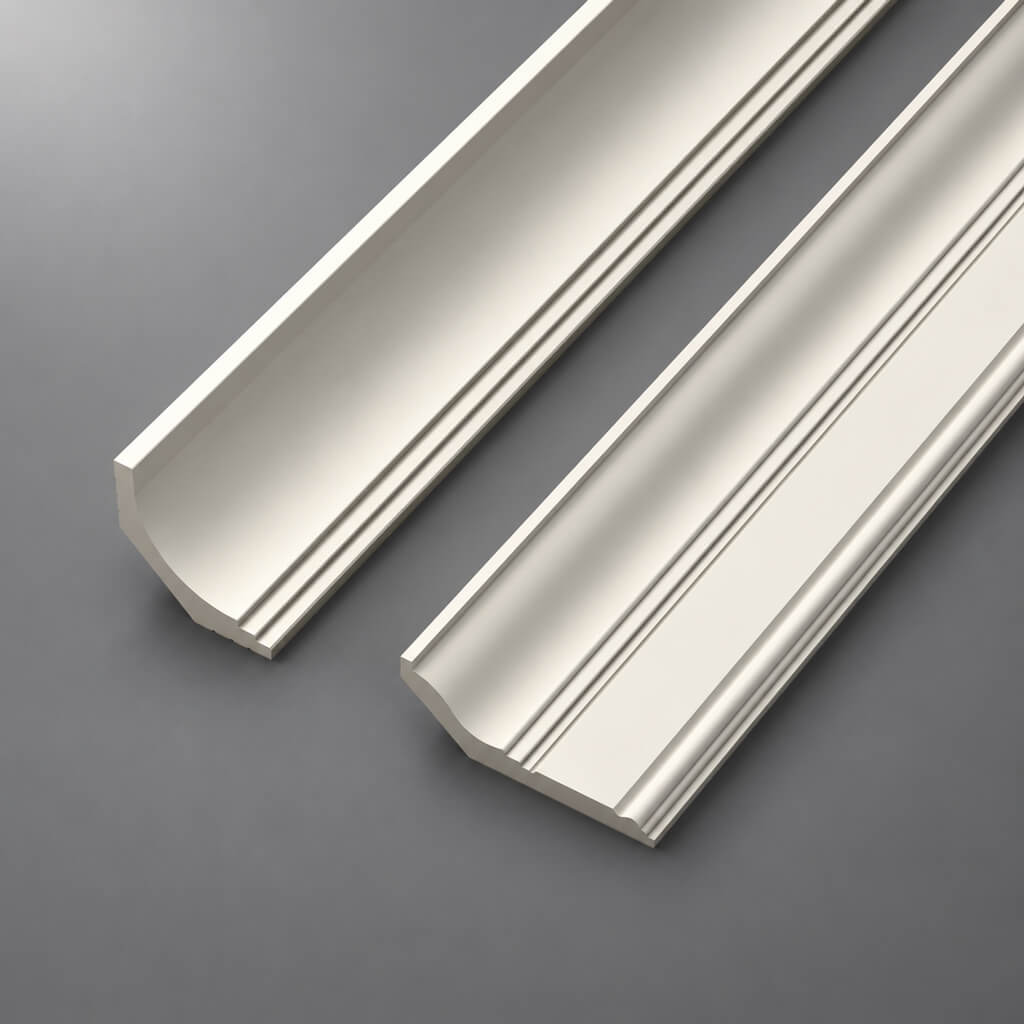
Polyurethane Ceiling Skirting Board— the richest format in decorative possibilities. Polyurethane is produced by casting in a mold, which allows reproducing any relief: classical egg-and-dart, floral ornament, geometric braiding, Baroque scroll. What in solid wood would cost as hand carving is here available in a mass-produced product.
Key characteristics: density 400–500 kg/m³, surface primed with white acrylic primer and ready for final painting without additional preparation. Cut with a hacksaw for metal, glued with liquid nails. Does not deform with changes in temperature and humidity — especially important for the St. Petersburg climate with its high atmospheric humidity.
Decorative polyurethane ceiling skirting board — the right choice for classical, neoclassical, and Baroque interiors, where the richness of the profile is a fundamental requirement.
Polystyrene ceiling skirting board
Polystyrene ceiling skirting— a practical format for wide application. Polystyrene is lighter than polyurethane, more affordable, processed with a sharp knife without special tools, accepts paint without preparation.
The main advantage of polystyrene for St. Petersburg conditions: absolute moisture resistance. The profile does not swell, delaminate, or deform with constant exposure to humid air. This makes it optimal for kitchens, bathrooms, and rooms without permanent heating.
Polystyrene ceiling skirting is available in paintable versions and with lighting—special profiles with a niche for LED strips, creating a floating ceiling effect.
Smooth and decorative profile: choose based on the task
Smooth ceiling skirting—straight or with minimal relief. For modern interiors, minimalism, Scandinavian style. Works through form, not ornament. When painted monochrome to match the ceiling—practically invisible, creates only a shadow at the transition.
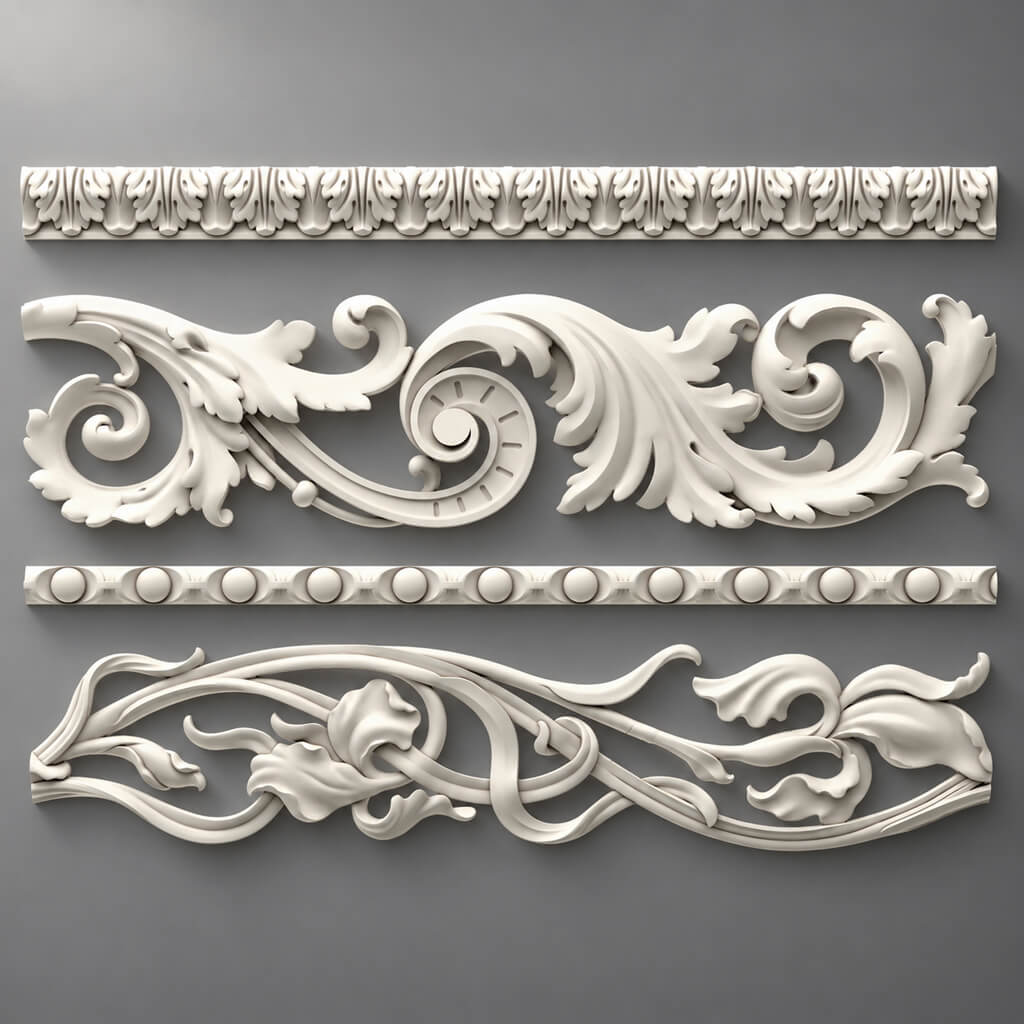
Decorative ceiling skirting with ornament—for classic and neoclassical styles. The relief profile becomes apparent after painting through the play of shadows: light protrusions and shaded recesses of the ornament create visual richness, characteristic of historical St. Petersburg interiors.
How to choose ceiling skirting by material: detailed comparison
Wood: when 'natural' is not just a word
To buy wooden ceiling skirting means to choose authenticity. Wood cannot be fully reproduced by any synthetic material: its density, reaction to light, behavior under tools—all this creates a quality that is perceived even without conscious analysis.
Oak: density 680–750 kg/m³, high hardness, pronounced coarse texture. An oak profile under white enamel looks like a turned architectural detail. Beech: even, almost uniform structure, medium hardness. Takes stains well, accepts colored enamels excellently.
Wide wooden ceiling skirting boardSolid wood—for rooms with ceilings from 3 m. The higher the ceiling, the wider the profile should be: this is the law of proportion. In St. Petersburg apartments of historical stock with ceilings of 3.5–4 m, a wooden ceiling skirting 8–12 cm wide looks organic and convincing.
Polyurethane: precision of form and richness of relief
Decorative polyurethane ceiling skirting board— it is a cast form with any profile pattern. The key advantage: polyurethane reproduces complex ornamentation without increasing cost — the price does not depend on the complexity of the relief to the same extent as it does with wood.
The surface of the polyurethane skirting board is already primed with white acrylic primer — you can apply the finishing paint without putty and additional preparation. This saves 30–40% of time during painting.
What polyurethane is best suited for:
-
classical interior with a rich ceiling profile;
-
neoclassical with moderate relief;
-
transitional styles between classic and contemporary;
-
spaces where richness of decor is required on a reasonable budget.
The only nuance: polyurethane is not repairable like wood. In case of a chip or deep scratch — replacement of the fragment, not sanding and repainting.
Polystyrene: practicality without compromising appearance
Buy ceiling skirting for paintingChoosing polystyrene means getting a lightweight, moisture-resistant, and affordable profile that looks neat and professional after painting.
Polystyrene can be cut with a sharp knife at any angle without dust or burrs. For installation, liquid nails and painter's tape for fixing until set are sufficient. It does not require acclimatization, does not react to humidity, and allows washing and periodic repainting.
Special format: ceiling skirting with lighting. A profile with a niche for an LED strip is mounted at the junction of the wall and ceiling, creating a soft floating lighting effect. This solution is gaining popularity in St. Petersburg apartments: the LED cornice creates cozy diffused lighting without visible light sources.
Table: comparison of three materials
| Parameter | Solid wood | Polyurethane | Polystyrene |
|---|---|---|---|
| Naturalness | Yes | No | No |
| Moisture resistance | Medium (with coating) | High | Very High |
| Complexity of relief | Limited to milling | Any (molding) | Medium |
| Paintability | Good (with preparation) | Excellent (already primed) | Good |
| Installation | Nails + glue | Liquid nails | Liquid nails |
| Repairability | High | Medium | Medium |
| Service life | 50–70 years | 25–35 years | 20–30 years |
| Optimal application | Natural / premium | Classic / neoclassical | Any / for painting |
How to choose a ceiling skirting board by width, profile, and style
Narrow ceiling skirting board (up to 5 cm)
For rooms with ceilings up to 2.6 m. For minimalist and Scandinavian interiors. The purpose of a narrow profile is to subtly mark the transition without overloading the space. A white narrow skirting board matching the ceiling color practically dissolves—working on the level of a sense of completion without drawing attention to itself.
Medium ceiling skirting board (5–8 cm)
Universal range for most rooms with ceilings 2.7–3.2 m. This format is the most in-demand in modern St. Petersburg apartments: expressive enough to be a noticeable decorative element, but not so wide as to 'lower' the ceiling.
Medium width works equally well with a smooth profile (for modern interiors) and with moderate relief (for neoclassical).
Wide ceiling skirting board (from 8 cm)
For rooms with ceilings from 3 m. For classical and Baroque interiors.Buy wide ceiling skirting board— means creating an architectural cornice that is a full-fledged element of room decoration, not just a functional transition between wall and ceiling.
In St. Petersburg houses of the 19th–20th centuries, a wide ceiling skirting board 10–15 cm wide is the norm: it corresponds to the scale of high ceilings and the rich architectural program of these buildings.
Smooth profile
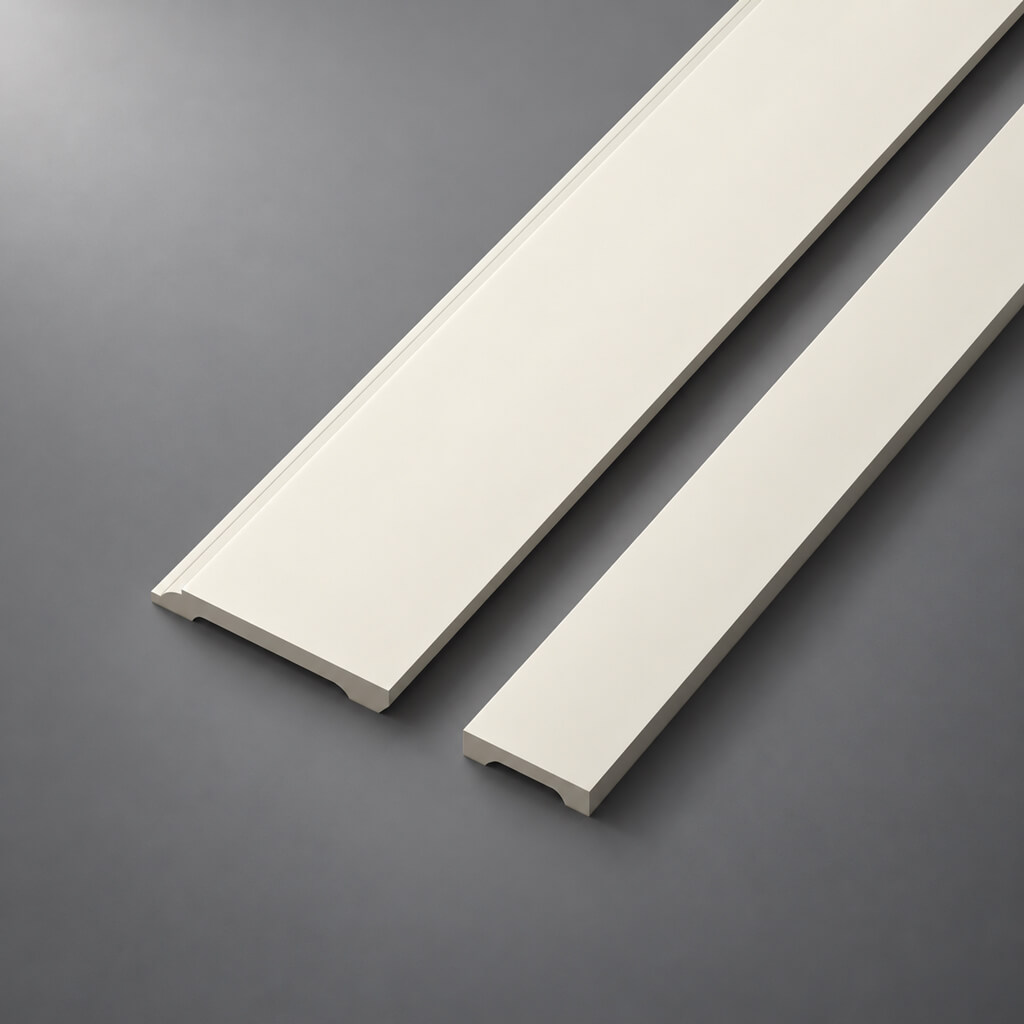
Rectangular or trapezoidal cross-section. No ornamentation—only form. After monochrome painting, the relief of the smooth profile is revealed exclusively through shadow: one edge is illuminated, the other is in shadow. It is this minimalist contrast that creates the effect characteristic of modern and Nordic interiors.
Profile with ornament
Ornamental relief on a ceiling skirting board is a 'living' surface that changes with the angle of lighting. In daylight, it reads as a detail. In the evening—as decoration.Ceiling skirting board with ornamentmade of polyurethane creates a sense of craftsmanship inherent in historical interiors.
How to choose a ceiling skirting board for the room
Living room: expressiveness and scale
The living room is the main public space of the apartment. It is here that the ceiling skirting board should perform with maximum impact.Ceiling skirting board for the interiorfor the living room is chosen considering three factors: ceiling height, furniture style, and overall decorative context.
For a classic living room with a 3 m ceiling — a wide profile with relief, white enamel or ivory. Paired with wall moldings, it creates a complete order system.
For a modern living room with a 2.8 m ceiling — a smooth medium-width profile matching the ceiling color. Simplicity without asceticism.
For a living room with a stretch ceiling — a polystyrene skirting board that covers the baguette profile and creates a finished transition.
Bedroom: calm and coziness
The bedroom requires a delicate solution: the ceiling skirting board should not dominate, it should support the atmosphere. For a bedroom, optimal choices are: narrow or medium profile, white or matching the walls, smooth or with minimal relief.
If the bedroom has hidden lighting —ceiling skirting board with lightingmade of polystyrene with a niche for an LED strip. Soft diffused light along the ceiling perimeter creates atmospheric lighting without accent sources — exactly what a bedroom needs.
Kitchen: moisture resistance above all
In the kitchen, the ceiling skirting board operates under constant fluctuations in humidity, temperature, and grease vapors. Wooden profiles are undesirable here without special coating. The optimal choice is a polystyrene ceiling skirting board for painting with moisture-resistant paint. The profile does not deform, is easy to clean, and can be repainted if necessary.
Hallway and corridor: practicality and quick installation
The hallway is a functional space with a small area. Here, the ceiling skirting primarily serves a technical purpose: to cover joints, conceal unevenness, and finish the trim. A narrow or medium polystyrene profile is optimal. The main criteria are: moisture resistance, ease of installation, affordable price.
Wooden house
In a wooden house with wooden walls and ceiling, the ceiling skirting must be made of wood — fundamentally.wooden cornices and skirting boardsSolid wood skirting boards organically integrate into a natural interior. They can be stained to match wooden surfaces or painted in contrasting white.
Office and library
Study — a space for concentration and status. The ceiling skirting here contributes to forming the serious, representative character of the room. For a study in a classic style — a wide, relief skirting made of polyurethane or solid wood. For a modern study — a smooth profile made of MDF or polystyrene.
Which ceiling skirting boards are most often chosen in St. Petersburg
St. Petersburg sets a special context for choosing ceiling skirting. The city's architecture has instilled in its residents a respect for detail and proportion. What is most often chosen here?
In apartments of historical buildings with high ceilings — white ceiling skirting made of wood or polyurethane, 8–12 cm wide, with moderate classical relief. Nearby — stucco, cornices with profile, wall moldings. The goal: to recreate the historical appearance of the interior using modern materials.
In standard apartments of Soviet-era buildings after renovation — white ceiling skirting made of polystyrene or MDF, 5–7 cm wide, for painting to match the walls or ceiling. Budget-friendly, neat, professional.
In new buildings with ceilings 2.8–3.2 m high — a smooth or lightly relief profile of medium width. Neoclassical — relief polyurethane. Modern style — white polystyrene.
In country houses of the Leningrad region — solid wood ceiling skirting for houses with natural finishing materials. For modern country houses — polystyrene for painting.
In apartments with stretch ceilings — polystyrene ceiling skirting that covers the transition between the stretch fabric and the wall. Sometimes with a niche for LED lighting.
What to combine ceiling skirting with: decorative ceiling system
Ceiling skirting never works alone. It is part of the ceiling decorative program, and the more systematically all elements are selected, the more convincing the result.
Ceiling skirting and stucco
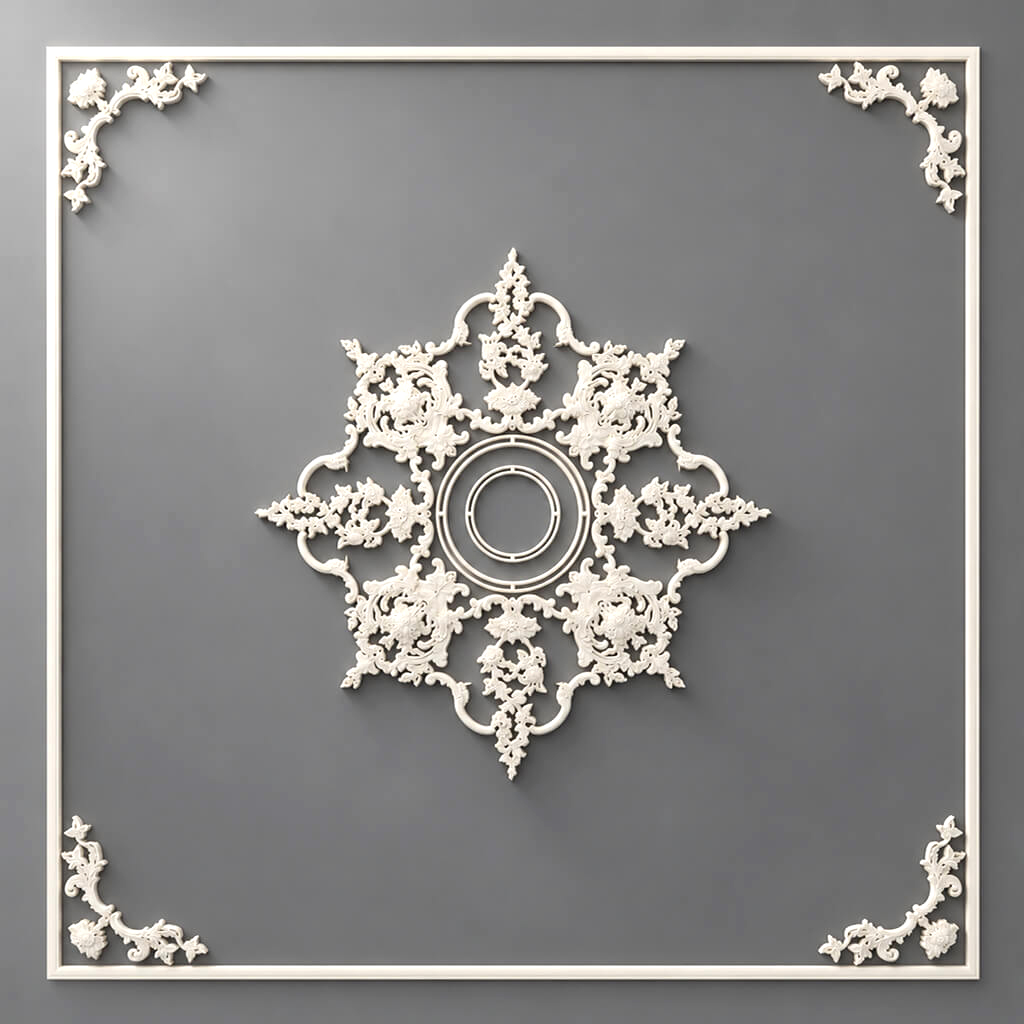
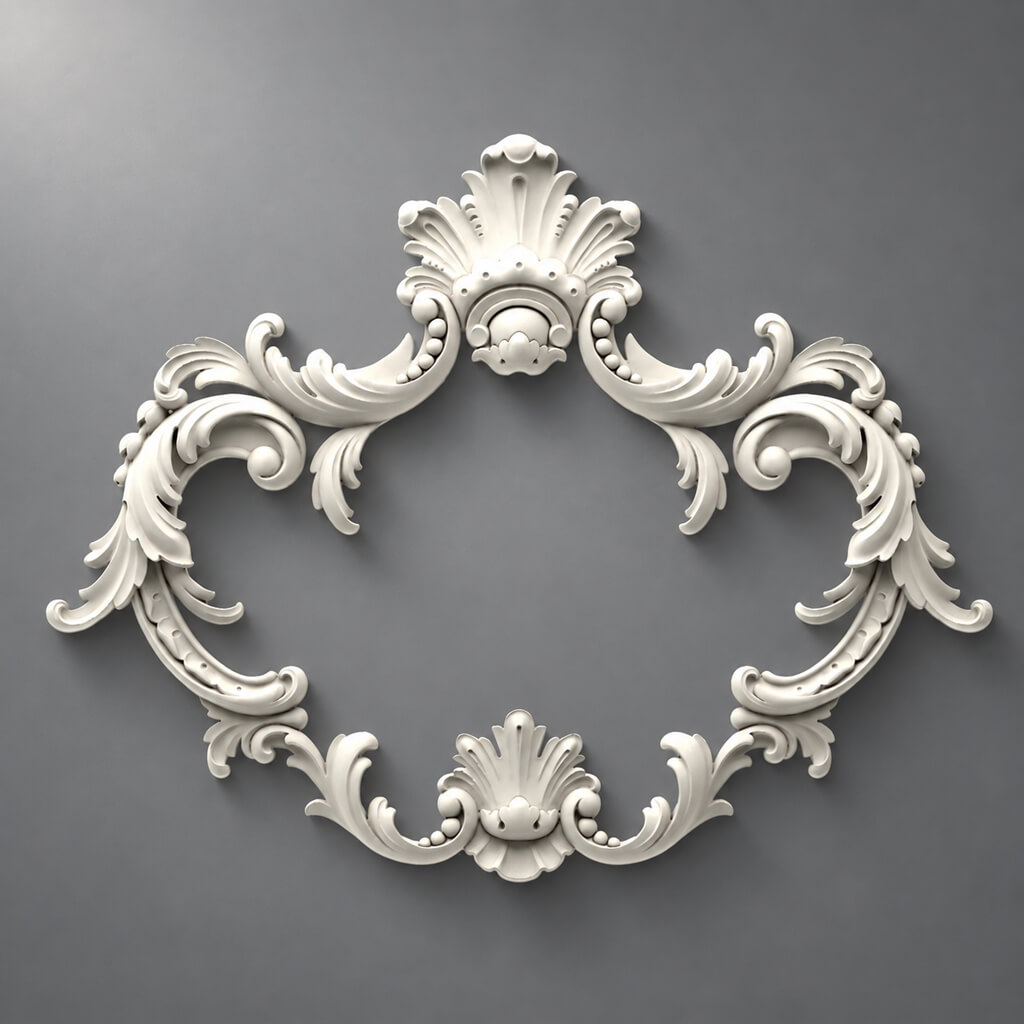
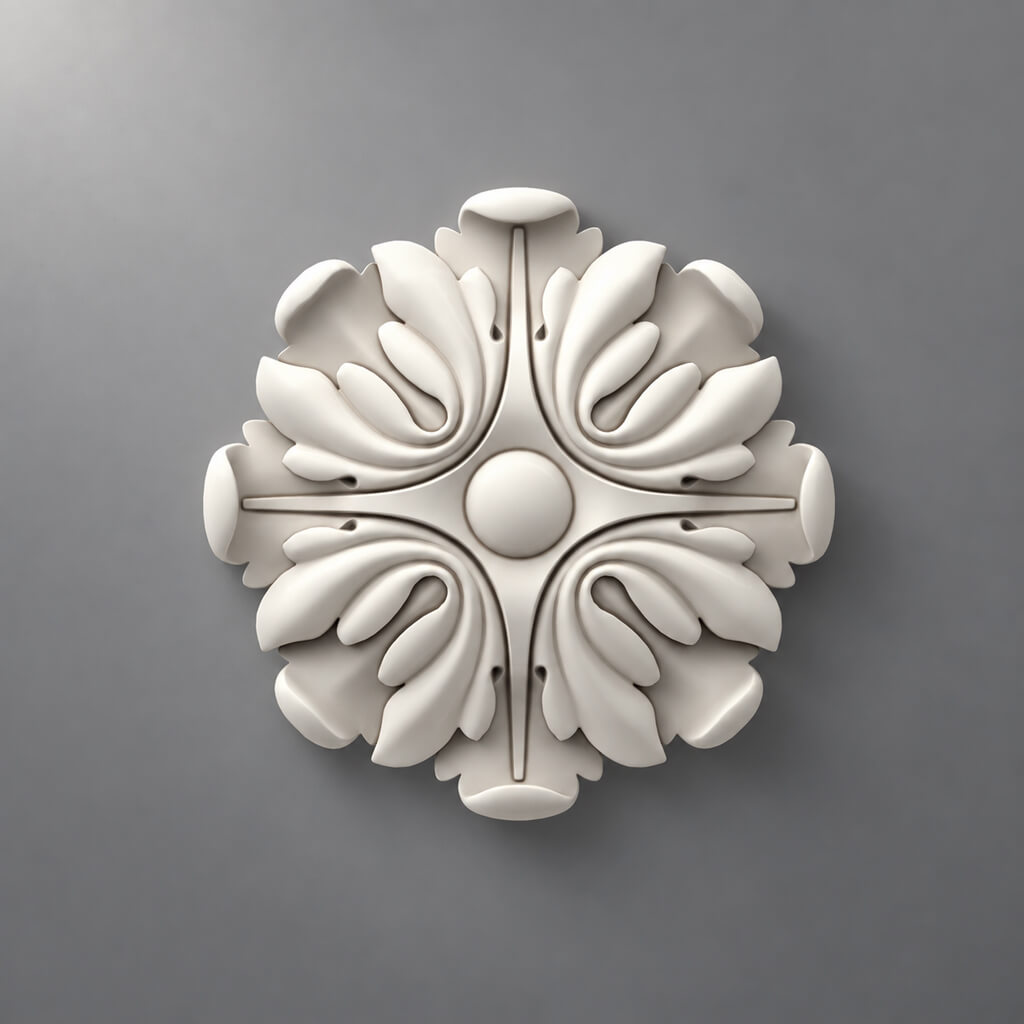
Ceiling skirting and polyurethane molding— the most organic combination for a classic interior. Stucco on the ceiling is architectural decorations: rosettes, medallions, coffers, garlands. Ceiling skirting with relief is the frame for this entire decorative program. For a harmonious result, the relief style of the skirting must match the style of the stucco: Baroque skirting + Baroque rosette, classical ionic + classical meander.
Ceiling skirting and chandelier rosettes
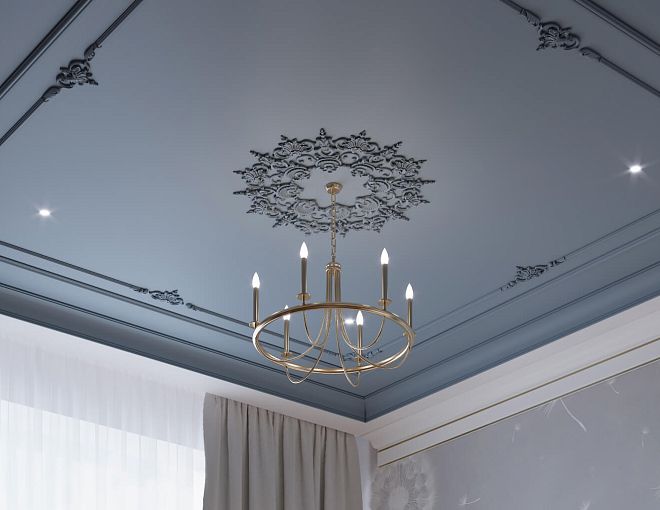
Ceiling rosette in the center of the ceiling and relief ceiling skirting around the perimeter — two accents of the same scale. The rosette frames the center, the skirting — the perimeter. For a unified solution, they must belong to the same decorative program: the same ornament or at least the same relief style.
Ceiling skirting and coffers
Coffered ceiling — a system of rectangular or square recesses creating a rich architectural effect. Ceiling skirting in this case is the framing of the entire coffered system. Wide profile with rich relief + coffers = luxurious ceiling program, completely changing the perception of space.
Ceiling skirting board and wall moldings
Wall moldings and ceiling skirting board should belong to the same proportional system. If there are wide classic moldings on the walls, the ceiling skirting board should be proportionate to them in height and profile complexity. If the moldings are smooth and modern, the skirting board should also be smooth.
Ceiling skirting board and wooden corner elements
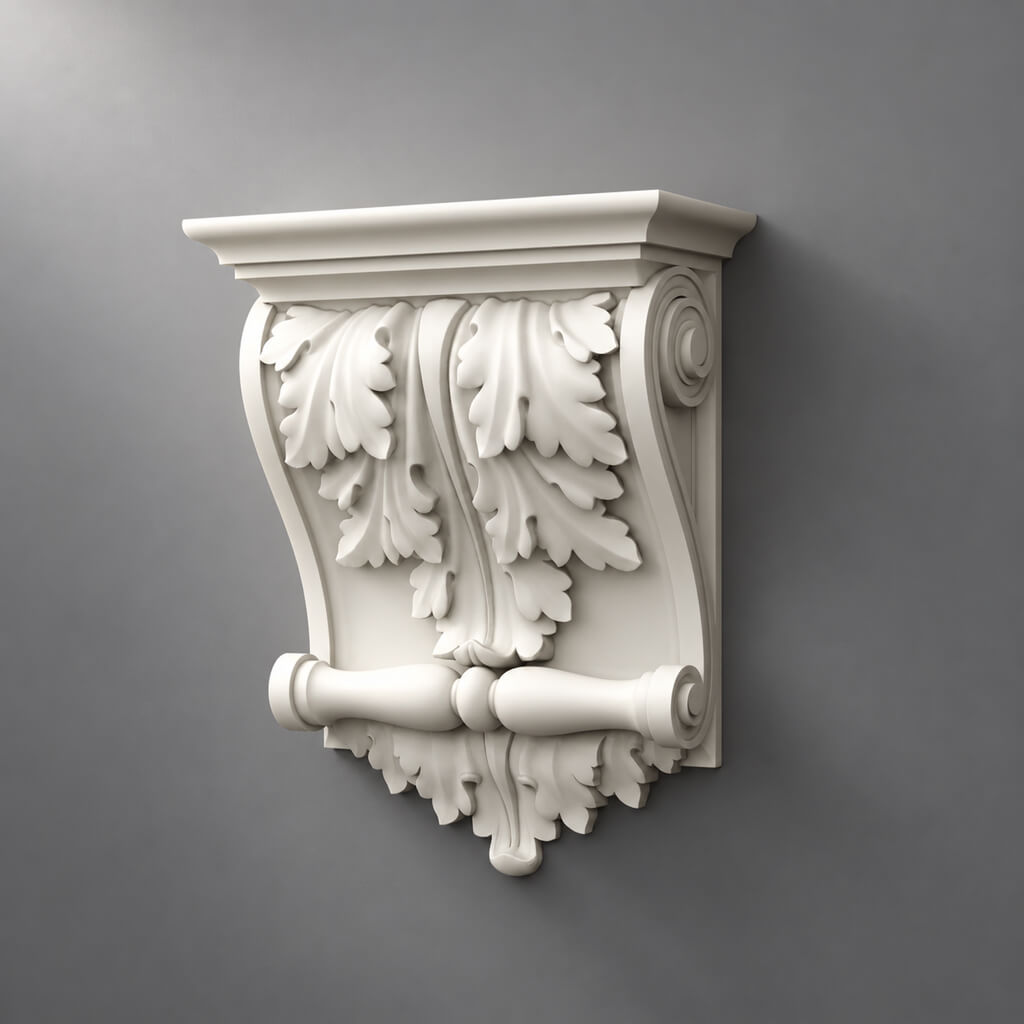
Ceiling skirting board and stucco with wooden corner elements— this is a solution for those who want to combine the decorativeness of polyurethane with the warmth of natural wood. Wooden corner inserts at the joints of the ceiling skirting board give the decorative profile a handmade, boutique character.
Ceiling baseboard and floor baseboard
The rule that is most often violated: ceiling and floor skirting boards should be coordinated in style. If the floor skirting board is straight and minimalist, the ceiling one should also be straight. If the floor skirting has a figured profile, the ceiling one should have a proportionate relief. Violating this correspondence creates a sense of randomness that is difficult to articulate but impossible to ignore.
What to consider before buying a ceiling skirting board in St. Petersburg
Checklist for the correct choice
Material:
-
Natural interior / parquet floor / historical house → solid wood ceiling skirting board.
-
Classical / neoclassical interior with a rich profile → polyurethane decorative skirting board.
-
Kitchen / bathroom / high-humidity area → moisture-resistant polystyrene for painting.
-
Modern interior / new building / standard apartment → polystyrene or MDF.
Ceiling height:
-
Up to 2.6 m → narrow profile 3–5 cm.
-
2.7–3 m → medium profile 5–8 cm.
-
3–3.5 m → wide profile 8–12 cm.
-
From 3.5 m → profile from 12 cm, full cornice possible.
Interior style:
-
Modern / minimalist → smooth profile.
-
Neoclassical → moderate relief.
-
Classic / Baroque → rich ornamental relief.
Painting needed:
-
If everything is painted in a single color → paintable profile, primed.
-
If profile has a finished coating → wood with varnish or enamel.
Backlighting needed:
-
If a hidden cornice with LED is planned → special polystyrene profile with a niche.
Compatibility with other decor:
-
Determine what else is on the ceiling: molding, coffers, rosettes. The skirting style should match them.
Where to buy ceiling skirting in Saint Petersburg
How to navigate the STAVROS catalog
To select ceiling skirting in Saint Petersburg on the STAVROS website, several entry points are prepared depending on the task.
If you need to figure out the choice from scratch —the article "Buying ceiling skirting: which ceiling skirting to choose"provides a detailed guide on materials, profiles, and styles.
If you need a specific wooden profile —PLT-001 wooden ceiling skirtingmade of solid oak or beech.
If the task is a classic or neoclassical interior with decorative relief —Ceiling cornices and skirting boards made of polyurethane.
If you need a moisture-resistant or skirting with lighting —Polystyrene ceiling skirting boards.
If you needceiling skirting for a classic interior— section of wooden cornices and solid wood skirting boards.
How to assemble a full decorative set
Complete ceiling program for a classic St. Petersburg apartment:
-
Wooden ceiling skirting boardorCornice from solid wood— main perimeter profile.
-
Polyurethane moldings— rosettes, medallions, coffers, architectural ornaments.
-
Polyurethane ceiling corniceswith a rich relief profile — for decorative zones.
-
moldings, cornices, and baseboardsmade of solid wood — wall decorative frames in coordination with the ceiling program.
FAQ: Answers to the most common questions about ceiling skirting boards in St. Petersburg
Which ceiling skirting board is best to buy?
Depends on three factors: interior material, ceiling height, style. For parquet and natural interiors — solid wood. For classic and neoclassical with rich relief — polyurethane. For wet rooms and for painting — polystyrene.How to choose a ceiling skirting board for an apartment— detailed guide on the STAVROS website.
What to choose: wood, polyurethane, or polystyrene?
Wood — if naturalness, durability, and a premium result are important. Polyurethane — if you need rich decorative relief at a reasonable price. Polystyrene — if you need moisture resistance, easy installation, and affordable cost.
Which ceiling skirting board is best for painting?
Ceiling skirting board for paintingmade of polystyrene or primed polyurethane — both are ready for final painting without additional preparation. Polyurethane is primed with white acrylic primer at the factory. Polystyrene is smooth and accepts paint from the first coat.
Which ceiling skirting board is suitable for high ceilings?
For ceilings from 3 m — wide ceiling skirting board from 8 cm. For ceilings 3.5 m and above — from 10–12 cm.Ceiling skirting for high ceilingsMade of wood or polyurethane with a figured profile, it creates an architectural cornice proportionate to the scale of the space.
How to calculate the amount of ceiling skirting?
Measure the perimeter of the room. Subtract the width of door and window openings if necessary. Add 10–15% for corner joints and cutting waste. For a 4×5 m room: (4+4+5+5) = 18 lm × 1.12 ≈ 20 lm with waste.
How to correctly cut a ceiling skirting for a corner?
For a 90° internal corner: each plank is cut at 45° in a miter saw. Important nuance: for ceiling skirting, the cut is made in an inverted position — the skirting is placed in the miter box as it will stand at the joint. For non-standard angles (in St. Petersburg apartments with polygonal walls, angles of 85° or 92° are common) — on-site fitting with gaps sealed with acrylic sealant.
Can ceiling skirting be installed on a stretch ceiling?
Yes. Polystyrene ceiling skirting is mounted on the wall — next to the stretch ceiling bead tape — and covers the transition. Fastening: only to the wall, not to the stretch ceiling film. Adhesive: liquid nails or solvent-free mounting adhesive.
Where to buy ceiling skirting in St. Petersburg with delivery?
In the STAVROS catalog: wooden, polyurethane, and polystyrene ceiling skirting with delivery across St. Petersburg and all of Russia.Buy ceiling skirting in St. Petersburg— direct link to selection guide and catalog.
Conclusion: the boundary that completes everything
Ceiling skirting is the final touch. But it's precisely the final touches that determine whether an interior looks like a finished masterpiece or an incomplete sketch. A correctly chosen profile makes the ceiling appear higher, the walls more expressive, and the entire space more cohesive and integral.
In St. Petersburg, with its architectural traditions and high level of interior expectations, ceiling skirting is not an optional detail. It is an integral part of the finish that separates professional results from amateur ones.
STAVROS is a manufacturer and supplier of interior decor made from natural wood and modern materials. In the catalog:wooden ceiling skirting PLT-001made of oak and beech,Solid wood cornices and skirting boards, Ceiling cornices and skirting boards made of polyurethanewith a rich relief profile,Polystyrene ceiling skirting boardsfor painting and with lighting, as well asmoldings, rosettes, coffers and decorative elementsfor the complete ceiling program. Delivery in St. Petersburg and throughout Russia. Here, they don't just assemble ceiling skirting boards—they create an interior that reads as a unified architectural thought.