





























Article Contents:
- Visual magic: how to raise or lower the ceiling without remodeling
- Principle of visually raising the ceiling
- Principle of visually lowering the ceiling
- Role of baseboard in visual correction
- Combined strategies
- Mathematics of harmony: crown height and baseboard width
- Classic 2:3 rule
- 1:30 rule for ceiling crown
- 1:20 rule for maximum width
- Table of recommended sizes
- Correction by room area
- Ratio of profiled to smooth elements
- Profiles and their character: straight versus decorative
- Simple straight profiles
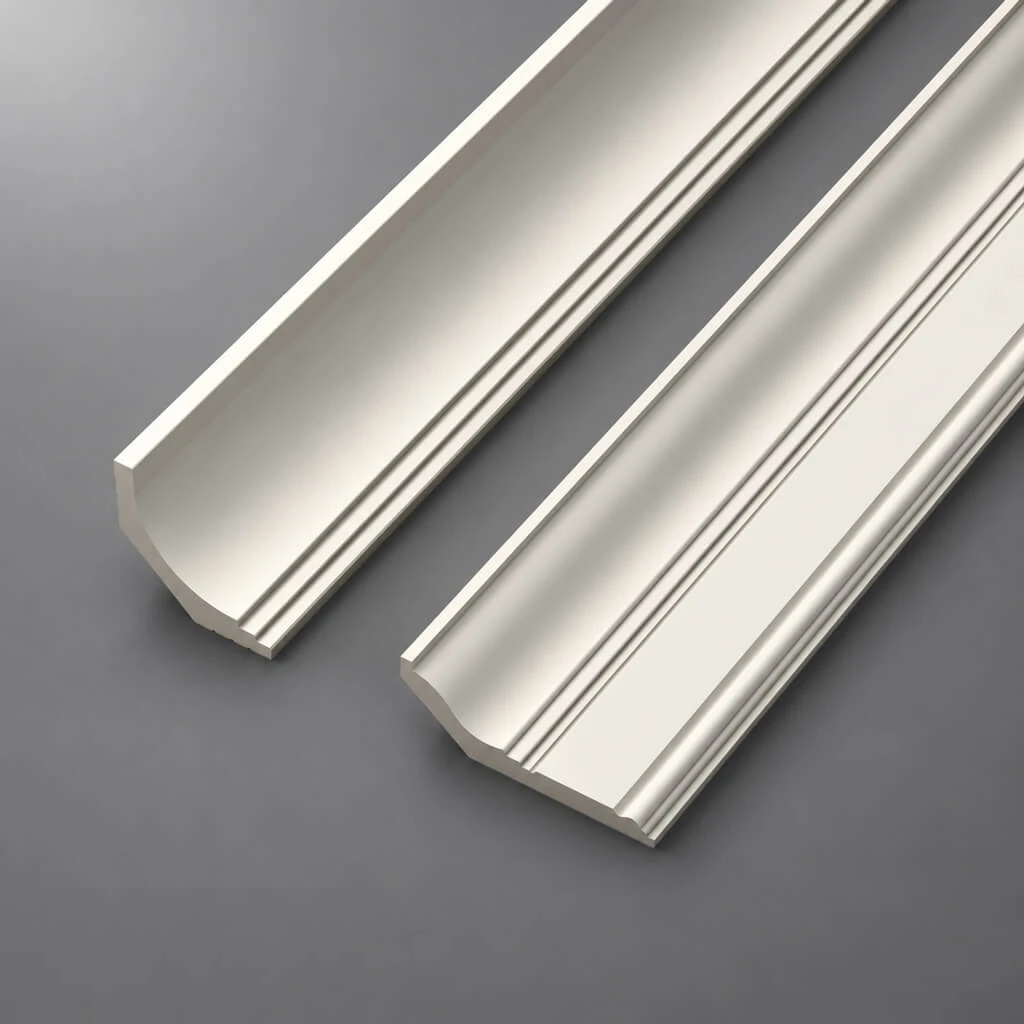
- Classic profiled crown moldings
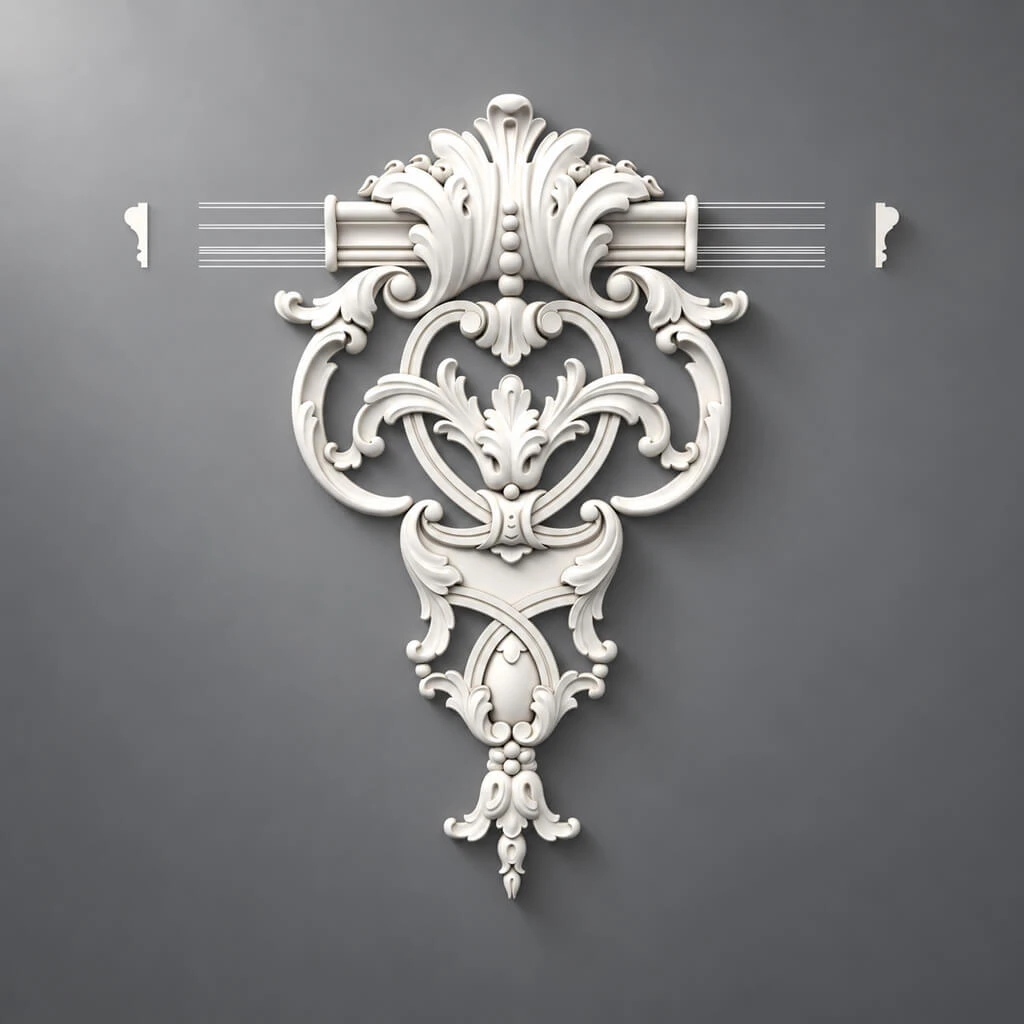
- Decorative elements on crown moldings
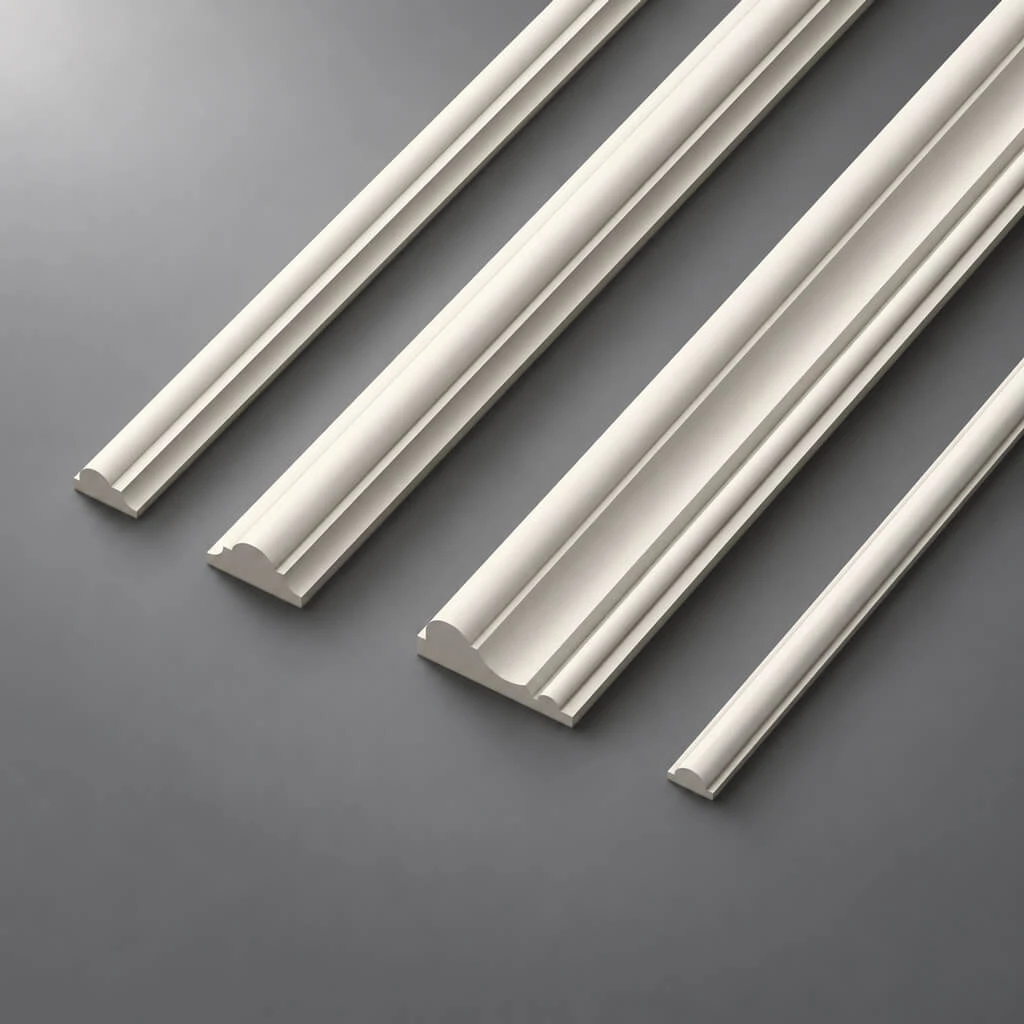
- Baseboards: profiles and styles
- Matching crown and baseboard profiles
- Problem areas: joints at doors and built-in cabinets
- Baseboard at door openings
- Crown molding at door openings
- Built-in cabinets and niches
- Bays and complex geometry
- Hidden doors and concealed cabinets
- Typical proportion errors and their consequences
- Error one: crown molding wider than baseboard by more than twice
- Error two: overly wide crown molding in a low room
- Error three: microscopic baseboard in a spacious room
- Error 4: Inconsistent profiles
- Error 5: Contrasting cornice with low ceiling
- Error 6: Horizontal moldings in a low room
- Error 7: Ignoring room area
- Scenarios for different room types
- Living room with low ceilings 2.4–2.5 meters
- Living room with high ceilings 3.2–3.5 meters
- Bedroom with standard height 2.7 meters
- Kitchen with 2.6-meter ceiling
- Bathroom
- Hallway and corridor
- Children's room
- Materials: polyurethane versus wood
- Polyurethane: lightness and versatility
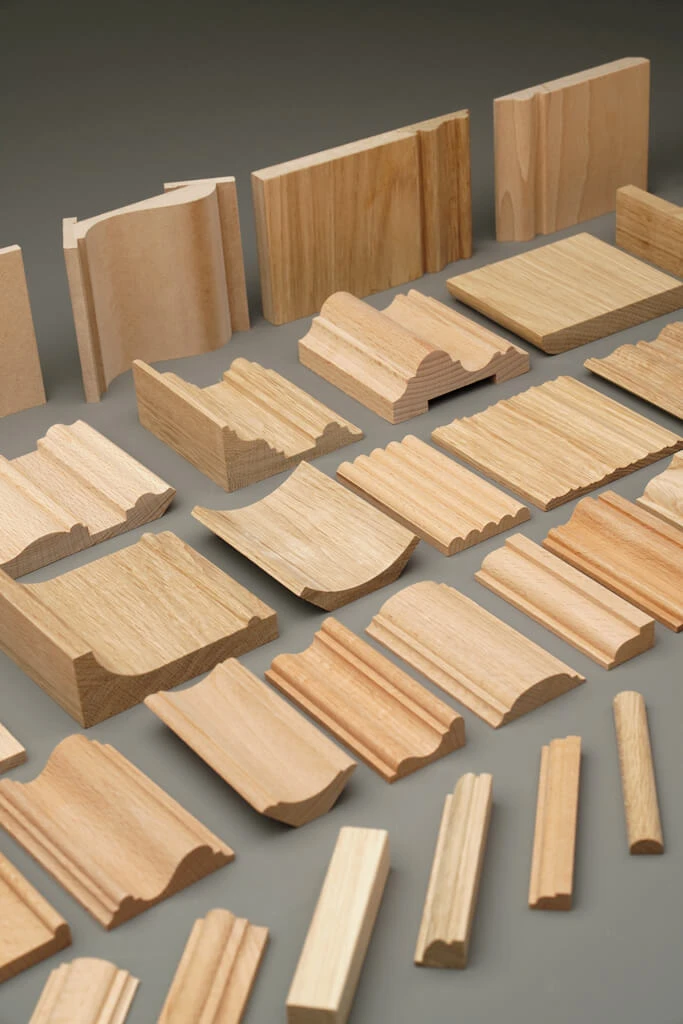
- Wood: elegance and eco-friendliness
- Combined approach
- Installation and fitting: secrets of craftsmanship
- Surface Preparation
- Marking and Fitting
- Corner Trimming
- Adhesive composition and application technique
- Additional fixation
- Final finishing
- FAQ: Frequently Asked Questions
- Hidden lighting: modern solution
- Construction for lighting
- Visual height increase effect
- Technical nuances
- Color solutions for different tasks
- White on white
- Contrasting elements
- Elements in wall color
- Accent colors
- Maintenance and updates
- Regular Cleaning
- Repair of damage
- Recoating
- Conclusion
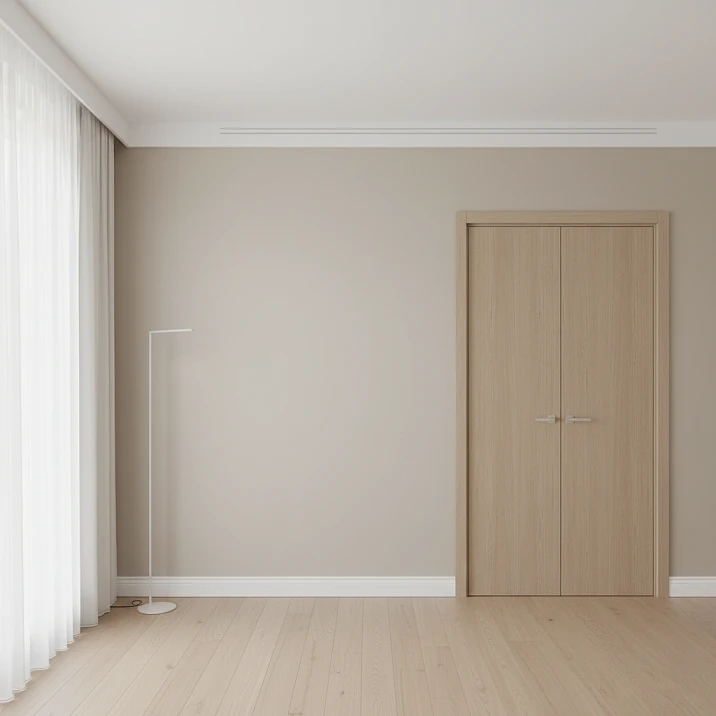
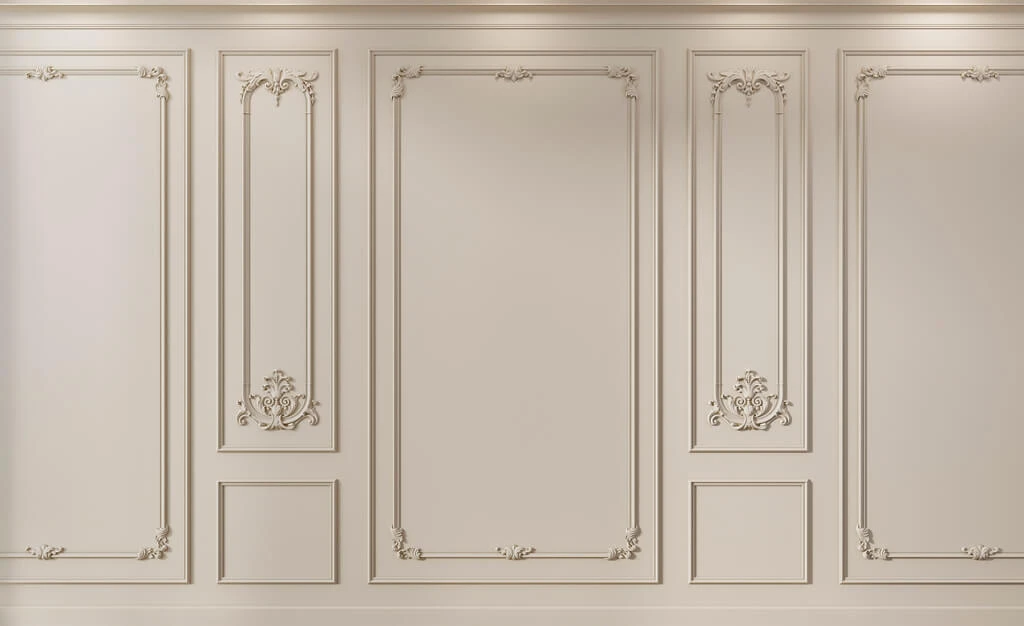
Ceiling height determines the entire atmosphere of the room. Spacious rooms with ceilings under four meters give a sense of freedom and grandeur, but may seem cold and unwelcoming. Intimate spaces with 2.4-meter ceilings create coziness, but risk becoming cramped boxes. And here, ancient architectural knowledge comes to the rescue: correctly chosenCeiling molding made of polyurethaneand baseboard can create real miracles in the visual perception of space.
These elements work like a frame for a painting — they set boundaries, create structure, guide the gaze. A wide cornice "lowers" a too-high ceiling, making the room cozier. A narrow, painted in ceiling color, visually "raises" low ceilings, adding airiness. A massivewooden baseboardadds solidity to the interior, a slender one — lightness and elegance.
But, as is known, the devil is in the details. Incorrectly chosen proportions can ruin even a perfectly planned interior. A too-large cornice in a low room creates a feeling of a pressing ceiling. A microscopic baseboard in a spacious living room will disappear and fail to fulfill its compositional role. In this article, we will thoroughly examine all scenarios — from critically low ceilings of 2.4 meters to luxurious high spaces of 3.5 meters and above. You will learn exact proportions, secrets of visual space correction, and typical mistakes to avoid.
Visual magic: how to raise or lower the ceiling without remodeling
Human perception of space is remarkably plastic. The brain evaluates the height of a room not only by absolute numbers but also by numerous visual cues — color, lines, proportions of elements. By skillfully using these cues, one can make the ceiling appear 20–30 centimeters higher or lower than it actually is.


Principle of visually raising the ceiling
To make the ceiling appear higher, direct the gaze upward and create the impression that the wall continues beyond what is visible. A narrow ceiling cornice, 3–5 cm wide, painted in ceiling color, blurs the boundary between vertical and horizontal. The eye does not fixate on a clear line of demarcation, the ceiling is perceived as a continuation of the wall, and the space appears higher.
A contrasting cornice, on the contrary, creates a clear line of demarcation. If the cornice is dark and the ceiling is light (or vice versa), the boundary is emphasized, and the room’s height is read precisely. This works against us in low rooms, but can be useful in overly high rooms, where visually lowering the ceiling is needed.
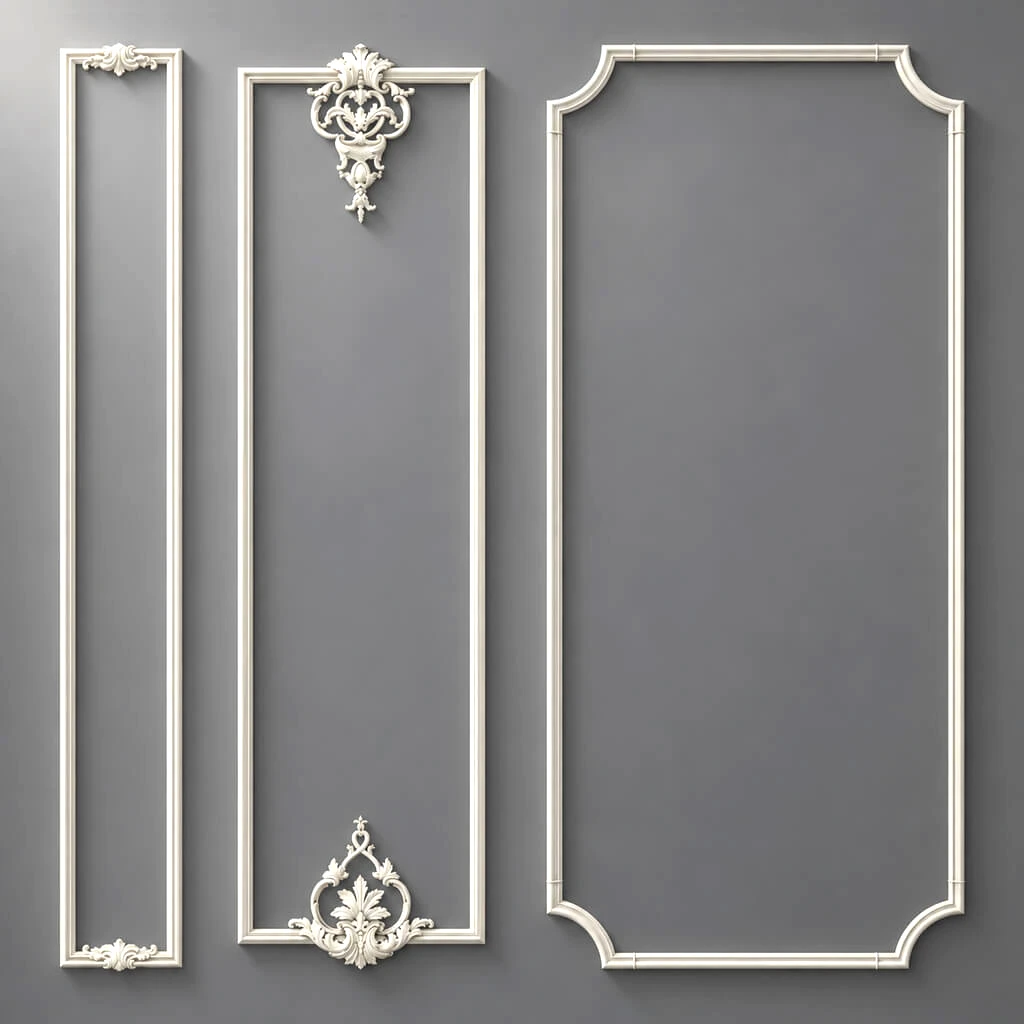
Vertical lines — a powerful tool for visually increasing height. If there are vertical moldings, pilasters, or stripes of wallpaper on the walls, the gaze automatically slides upward along them. This creates an illusion of greater height. Conversely, horizontal divisions — panel moldings in the middle of the wall, wallpaper borders — break up height, making the room visually lower.
The ceiling color plays a critical role. A light ceiling appears higher than a dark one — this is an axiom of interior design. White or very light beige reflects the maximum amount of light, creating a sense of airiness. A dark ceiling visually looms closer. If you need to raise a low ceiling, a light finish is mandatory.
But there's a nuance: a ceiling slightly lighter than the walls is perceived as higher. If the walls are snowy white and the ceiling is also snowy white, the boundary is blurred, but the effect is not maximal. Try painting the walls in a light warm beige and the ceiling in a cool white — the color temperature difference will create a visual distance, making the ceiling 'step back' upward.
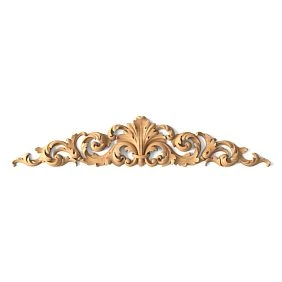
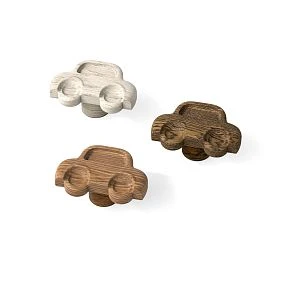
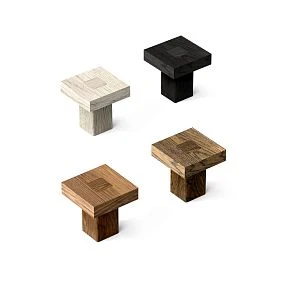
Our factory also produces:

Principle of visually lowering the ceiling
Too high ceilings — a problem rarely encountered, but no less serious. A room with ceilings 3.8–4 meters high may seem uninhabitable, cold, and uncomfortable. Here, reverse techniques are needed.
A wide ceiling cornice of 15–25 cm visually cuts off a significant portion of the wall height, transferring it to the ceiling. Especially effective if the cornice is a contrasting color — for example, white on colored walls. A clear horizontal line stops the gaze, and the ceiling is perceived as beginning from the bottom edge of the cornice.
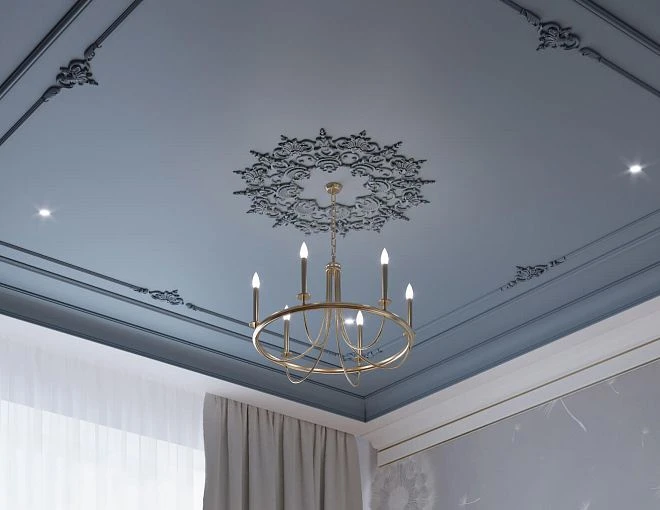
Painting the ceiling in the color of the walls or even darker radically reduces the perceived height. A dark blue, graphite, or chocolate-colored ceiling creates a canopy effect, sheltering and protecting. This can be very cozy, especially in bedrooms and libraries.
Horizontal divisions on walls — frieze and panel moldings — break up vertical lines into segments. Each horizontal line is a visual stop, preventing the eye from freely moving upward. Three to four horizontal moldings on a high wall create the impression of lesser height compared to a smooth wall of the same height.
Large patterns on walls — especially horizontally oriented — also reduce perceived height. Wide stripes and large horizontal patterns cause the eye to move sideways rather than upward.
Get Consultation
Role of baseboard in visual correction
Baseboards work on the perception of height more subtly than ceiling cornices, but their contribution is significant. A high baseboard of 12–15 cm visually 'eats' part of the wall height, transferring it to the floor. In low rooms, this is undesirable. There, modest baseboards of 5–7 cm are needed, which almost do not affect the perception of height.
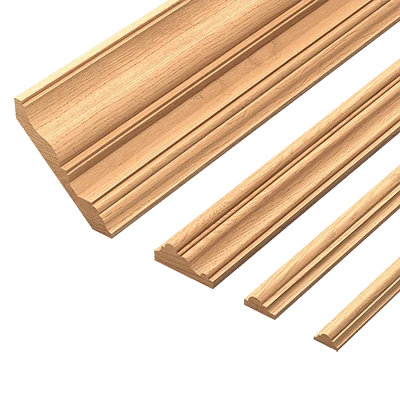
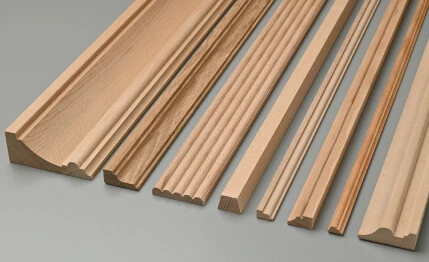
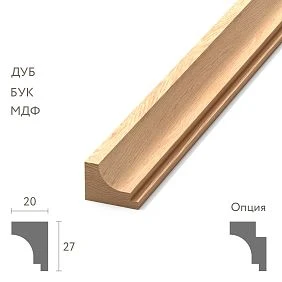
In high rooms, conversely, a massive baseboard helps ground the space, creating a visual foundation.Wooden ceiling baseboardAt 15–20 cm in a room with 3.5-meter ceilings, it looks proportionate and contributes to coziness.
The color of the baseboard also affects perception. A baseboard in the color of the floor visually expands the floor plane, but does not affect height. A baseboard in the color of the wall visually merges with the wall, slightly increasing its height. A contrasting baseboard (dark on light walls and floor) creates a clear boundary, visually separating the floor from the wall.
For low rooms, the optimal baseboard is in the color of the wall or slightly lighter. It does not create a horizontal cutoff line, and the wall appears to start from the floor. For high rooms, a contrasting baseboard can be used to emphasize architectural structure.
Combined strategies
The greatest effect is achieved by combining techniques. For low ceilings: narrow light cornice + modest baseboard in wall color + vertical accents on walls + maximally light ceiling. Such a combination can visually add 15–20 cm to perceived height.
For high ceilings: wide contrasting cornice + massive baseboard + horizontal wall divisions + ceiling in wall color or darker. This will visually lower the ceiling by 20–30 cm, making the room more intimate and cozy.
Mathematics of harmony: height of cornice and width of baseboard
Architectural proportions are not invented arbitrarily. They have been refined over centuries, based on the characteristics of human perception and mathematical laws of harmony. There are proven formulas for the relationship of cornice and baseboard dimensions to room height.
Classic 2:3 rule
Traditional proportion states: the height of the baseboard should be two-thirds of the width of the ceiling cornice. If the cornice is 9 cm wide, the baseboard should be 6 cm high. If the cornice is 12 cm — the baseboard is 8 cm. This ratio creates a visual balance where the crowning element dominates over the base.
The logic is simple: in architecture, the top is always heavier than the bottom. The cornice is the crown, the finishing element, and it should be more expressive than the baseboard. Violating this rule — a baseboard larger than the cornice — creates a sense of inversion, instability, and discomfort.
However, the 2:3 rule is derived for standard rooms with ceilings 2.7–3 meters high. For extremely low or high ceilings, adjustments are required.
1:30 rule for ceiling cornice
The minimum width of the ceiling cornice should be one-thirtieth of the room's height. For a room with a 3-meter ceiling (300 cm), the minimum cornice width is 10 cm. For a 2.7-meter ceiling — 9 cm. For 2.4 meters — 8 cm.
Cornices below this minimum lose their effect, do not fulfill their structuring function, and appear incomplete and disproportionate. Even in the lowest rooms, do not go below 3–4 cm in cornice width.
This rule defines the lower boundary. The upper boundary depends on interior style and desired effect, but there are also limits for it.
1:20 rule for maximum width
The maximum reasonable width of the cornice is one-twentieth of the room's height. For a 3-meter ceiling, this is 15 cm; for 2.7 meters — 13.5 cm; for 2.4 meters — 12 cm. Wider cornices begin to visually press down, especially when combined with low ceilings.
Exception — historical interiors, baroque, empire, where decorative richness is more important than comfort of perception. There, cornices can reach 1:15 and even 1:12 of height. But for modern living spaces, this is excessive.
Recommended Sizes Table
For ceilings 2.4-2.5 meters:
-
Valance width: 3-8 cm (optimal 5-6 cm)
-
Baseboard height: 5-7 cm
-
Area up to 15 sq.m - minimum values
-
Area 15-25 sq.m - average values
-
Area over 25 sq.m - maximum values
For ceilings 2.7-3.0 meters:
-
Valance width: 5-15 cm (optimal 8-10 cm)
-
Baseboard height: 7-12 cm
-
Area up to 15 sq.m - 5-8 cm valance, 7-8 cm baseboard
-
Area 15-25 sq.m - 8-12 cm valance, 8-10 cm baseboard
-
Area over 25 sq.m - 12-15 cm valance, 10-12 cm baseboard
For ceilings 3.0-3.5 meters:
-
Valance width: 10-20 cm (optimal 12-15 cm)
-
Baseboard height: 10-15 cm
-
Area up to 20 sq.m - minimum values
-
Area 20-30 sq.m - average values
-
Area over 30 sq.m - maximum values
For ceilings over 3.5 meters:
-
Valance width: 15-25 cm
-
Baseboard height: 12-20 cm
-
Multi-level valance compositions are possible
Adjustment by room area
Ceiling height is not the only factor. Room area also affects the perception of element sizes. In a small 10 sq.m room, even a proportionally high valance may appear bulky. In a large 50 sq.m living room, the same valance will disappear.
General rule: the larger the area, the larger the elements can be at the same ceiling height. For a room 2.7 meters high but only 8 sq.m (small bedroom, office), a 5-6 cm valance is sufficient. For a room of the same height but 35 sq.m (spacious living room), a 12-15 cm valance is needed; otherwise, it will appear disproportionately small.
Ratio of profiled to smooth elements
A richly profiled valance with complex relief visually appears larger than a smooth one of the same width. The play of light and shadow created by the relief increases the visual mass of the element. Therefore, for low rooms, simple profiles with minimal ornamentation are recommended.
A smooth or slightly profiled valance can be chosen 1-2 cm wider than a heavily profiled one and will be perceived as equivalent. This provides additional flexibility in selecting sizes.
Profiles and their character: straight versus decorative
The shape of the cornice and skirting board determines not only aesthetics but also the visual perception of size, style, and character of the room. The same width with different profiles creates a completely different effect.
Straight profiles
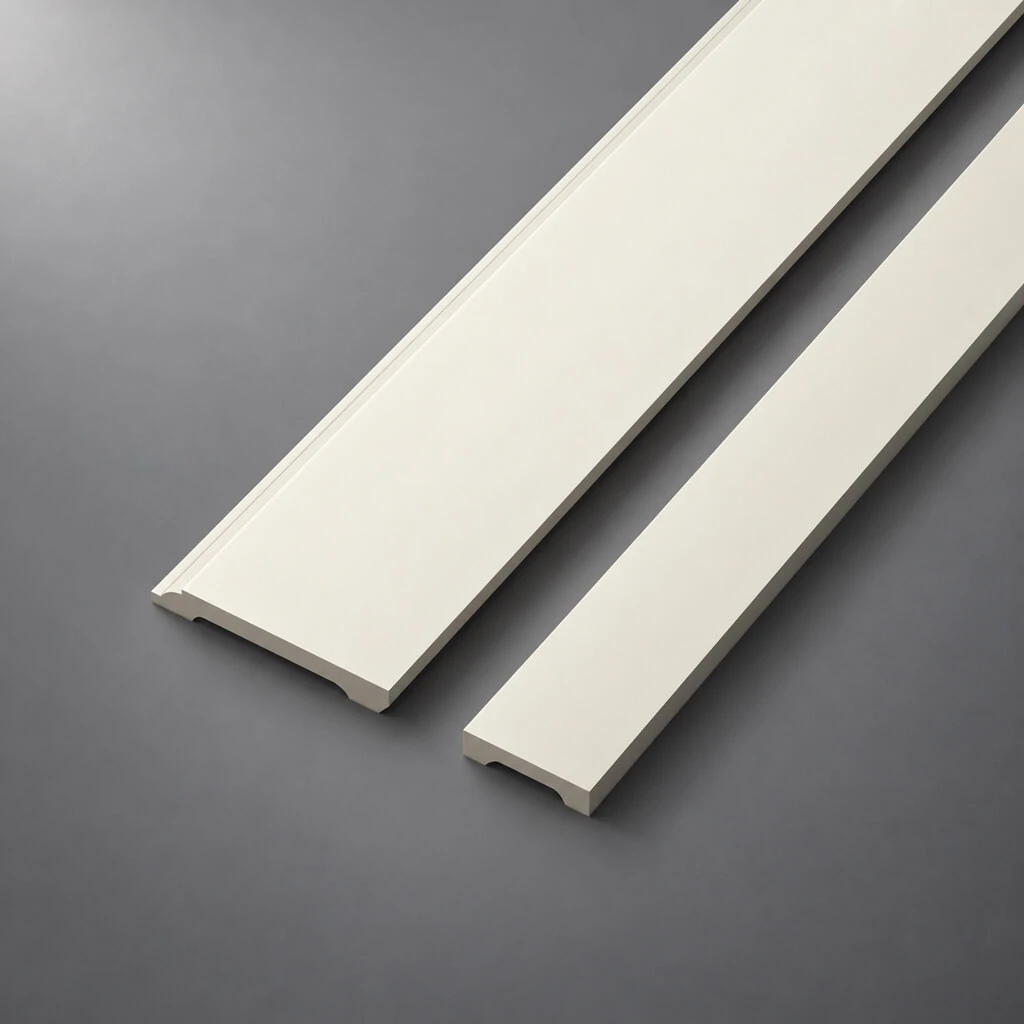
Rectangular profile without curves - the most minimalist option. It is simply a flat strip that covers the junction between the wall and ceiling or floor. Visually, it is the lightest, almost weightless. Suitable for modern minimalist interiors, Scandinavian style, loft.
The advantage of a straight profile is that it does not overload the space. This is critical in low rooms. A flat cornice 8 cm wide will appear less bulky than a decorative one of the same width. For rooms with ceilings 2.4-2.5 meters high, this is the optimal choice.
Beveled profile - a strip with an angled edge. Slightly more complex than rectangular, but still very restrained. The bevel creates a subtle play of light, making the element appear slightly more elegant than a flat strip. Suitable for modern classicism, contemporary style.
Classic profiled cornices
Gusset - S-shaped curve, a classic architectural element. Creates a smooth wavy line, soft and elegant. A cornice with a gusset is suitable for classic interiors, neoclassicism, Provence. Visually heavier than straight, requires higher ceilings - minimum 2.7 meters.
Valley (quarter-round) - convex semicircular profile. Creates a soft rounded shape, very plastic. Often combined with other elements - shelves, gussets. Suitable for rich classic interiors, baroque, modernism.
Grooves - vertical grooves on the cornice surface. Create a rhythmic texture, play of light and shadow. Visually lighten heavy cornices, making them appear less bulky. Suitable for high ceilings in classic style.
Multi-step profiles - a combination of several elements in one cornice. May include gussets, valleys, shelves, and curved elements in various combinations. Create rich plasticity and complex shadow play. Require high ceilings - minimum 3 meters, ideally 3.5 meters and above.
Decorative elements on cornices
Modulons - small consoles or brackets placed at a certain interval under the cornice. Create the impression that the cornice rests on these elements. Very decorative effect, suitable for luxurious interiors. Visually increase the bulkiness of the cornice, require ceiling height of at least 3 meters.
Dentils - small teeth running alongside under the cornice. Create a rhythmic texture, characteristic of Ionic and Corinthian orders. Less bulky than modulons, can be used with ceilings from 2.7 meters.
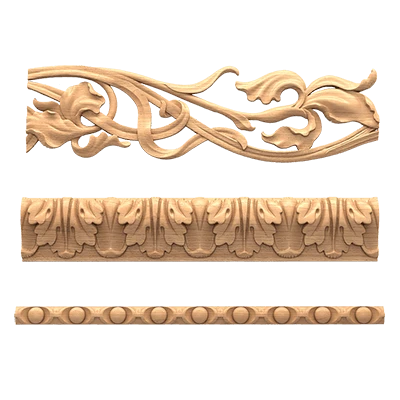
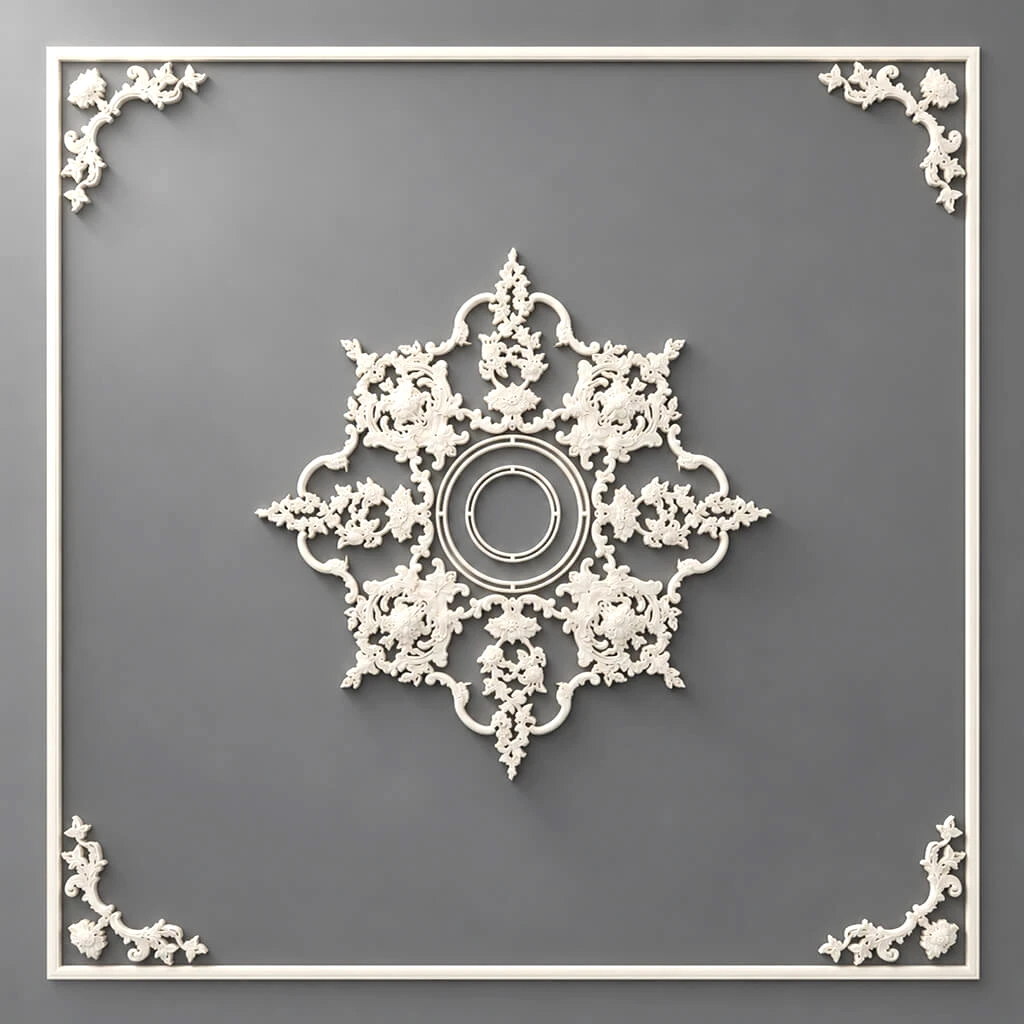
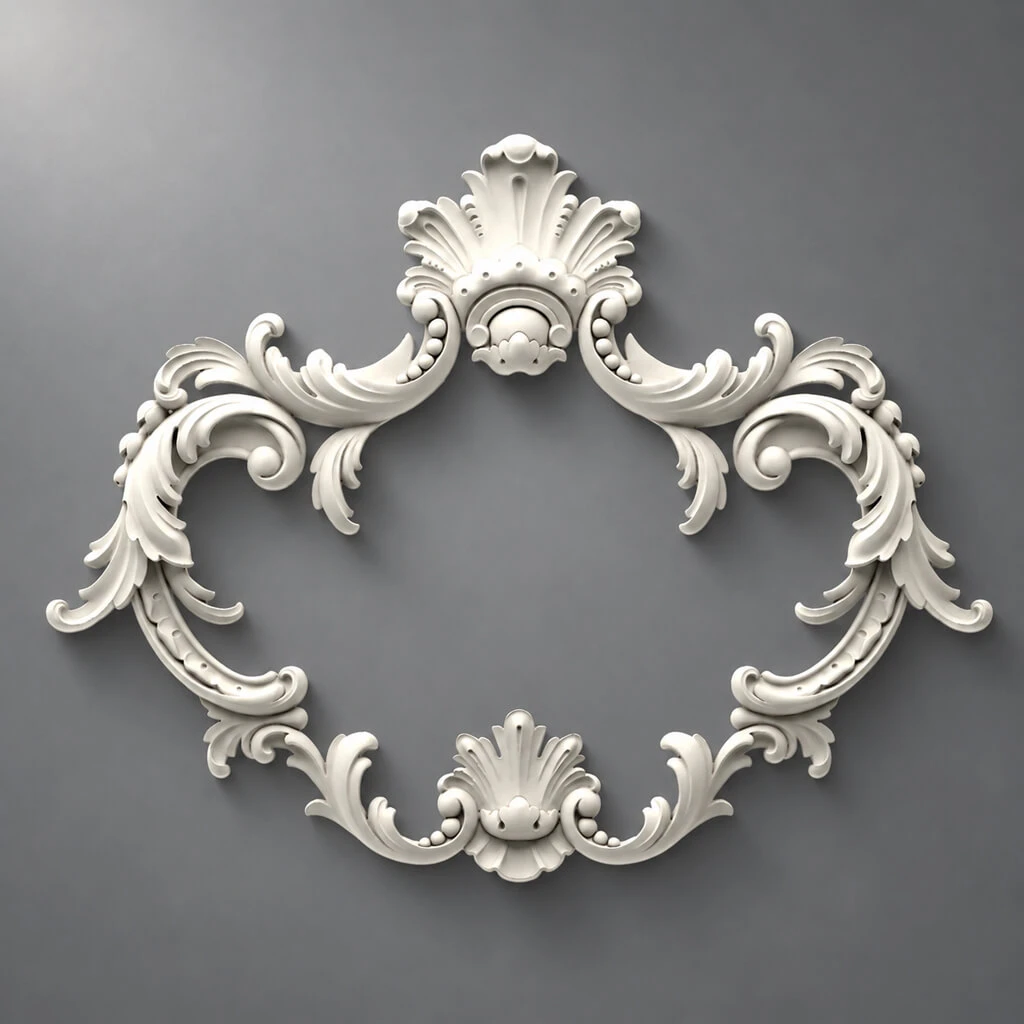
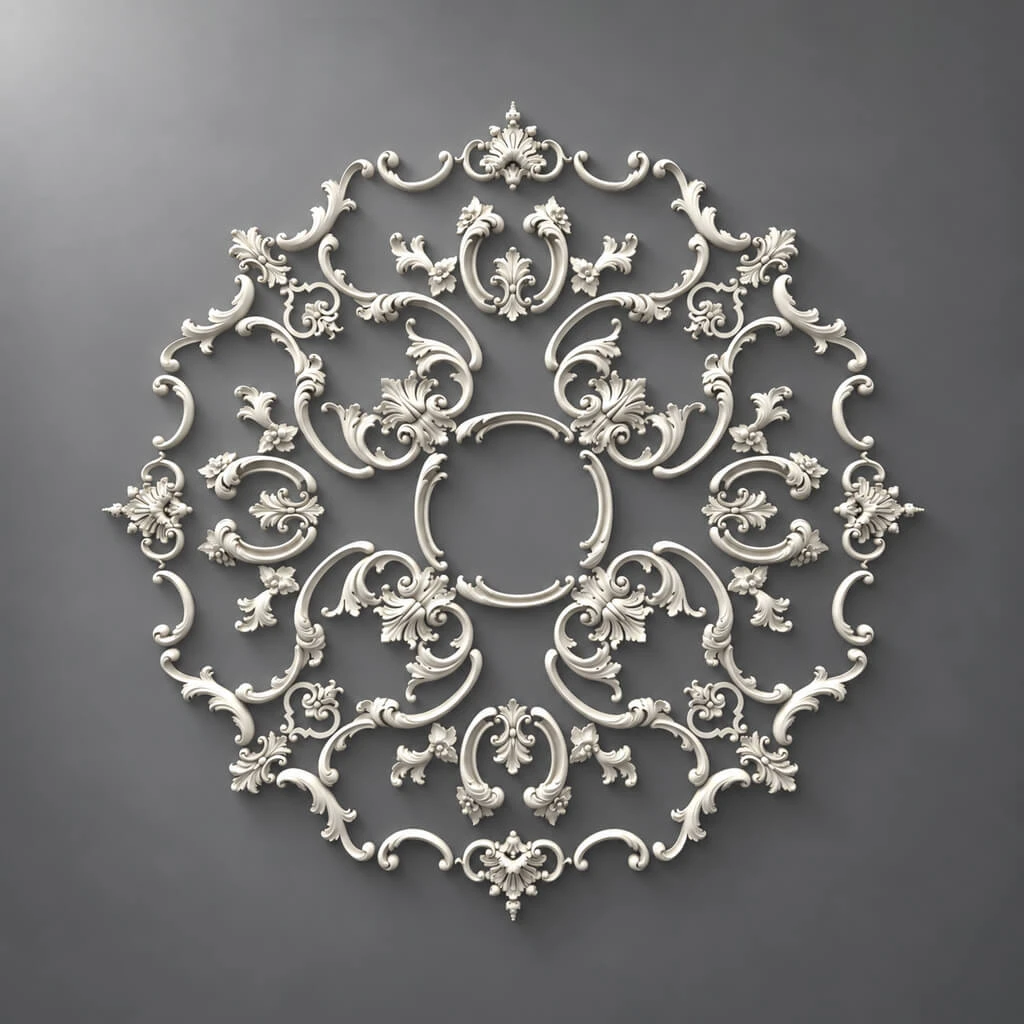
Rosettes, carved inserts, ornaments - decorative elements placed on the cornice surface or in corners. Make the cornice unique, individual. Require appropriate interior style and sufficient height to appreciate details.
Floor skirting boards: profiles and styles
Skirting board with European profile - classic variant with a smooth curve from wall to floor. Creates a soft transition, visually light. Suitable for most interiors. Height is usually 7-10 cm.
Skirting board with flat top - modern variant where the top of the skirting board is a horizontal shelf 1-2 cm wide. This shelf can be used for hidden LED strip lighting. Height 8-12 cm, suitable for modern interiors.
High skirting board 15-20 cm - element for luxurious interiors with high ceilings. May have a complex multi-step profile imitating classical architectural forms. Requires ceilings of at least 3 meters.
Skirting board with cable channel - practical variant for modern interiors. Inside is a hollow strip with a removable front part, behind which wires are hidden. Profile is usually simple, height 6-10 cm. Material - plastic or MDF with finish.
Matching cornice and skirting board profiles
Ideal option - when the skirting board profile repeats the cornice profile at a reduced scale. If the cornice has a gusset, the skirting board should also have a gusset. If the cornice is multi-step, the skirting board should be a simplified version of the same structure. This creates visual rhyme, harmony between the top and bottom of the room.
Modern approach allows contrast: simple smooth cornice and richly profiled wooden skirting board, or vice versa. However, stylistic unity must be maintained. Minimalist flat cornice does not match baroque carved skirting board - this is a stylistic conflict.
Color coordination is equally important. Classic option - cornice and skirting board in the same color (usually white or matching wall color). Modern option - contrasting combinations, but within the overall interior color scheme.
Problem areas: joints at doors and built-in cabinets
Doors, built-in cabinets, niches - all these elements interrupt the continuity of skirting boards and cornices, creating problem areas. Incorrect treatment of these joints may ruin the entire effect of carefully selected elements.
Floor skirting board at door openings
Standard solution - skirting board reaches the door frame and rests against it with its end. The end is covered by a special end cap, which gives the joint a neat appearance. End caps are produced by skirting board manufacturers to match the main product.
Important nuance: the distance from the wall corner to the door should be sufficient for installing the skirting board. Minimum - 5 cm. If the door is installed flush against the corner, there is no place to mount the skirting board, resulting in an unsightly gap. This must be considered during the initial planning of door placement.
Alternative solution - skirting board extends under the door frame. For this, a cutout is made in the lower part of the frame to the thickness of the skirting board. The skirting board is trimmed in height (the part that would touch the wall is removed) and pushed under the frame. This results in a continuous transition without visible joints. This is a more complex option requiring precise fitting, but the aesthetic result is better.
Wide decorative door casings create a special situation. A casing 10-12 cm wide protrudes from the frame and may conflict with the skirting board. Solutions: skirting board rests against the casing (the casing effectively becomes an extension of the wall), or the casing is made at some distance from the floor (5-10 mm), and the skirting board passes under it.
Crown molding around doorways
The situation here is simpler - the crown molding usually runs along the room's perimeter and does not interrupt doors. However, there is a nuance: if the door is tall (for example, 2.4-2.5 meters), the distance from the top of the door to the ceiling is minimal. A wide crown molding may visually "press down" on the doorway, making it appear lower.
Solution - use a narrower crown molding above tall doors or, better yet, omit it entirely in this area. If the crown molding is still installed, it should be of a simple profile, not bulky.
Arched openings require a special approach. A straight crown molding conflicts with the curved line of the arch. Options: use a flexible polyurethane crown molding that follows the arch's curve, or break the crown molding before the arch and treat the opening separately.
Built-in cabinets and niches
A sliding door from floor to ceiling interrupts both skirting board and crown molding. If the cabinet is installed in a niche, the skirting board and crown molding run to the edge of the niche and end there. The ends are covered with plugs or beveled at a 45-degree angle for a more decorative look.
If the cabinet protrudes from the wall plane, the skirting board follows its perimeter. This requires precise beveling of both internal (where the skirting board transitions from the wall to the cabinet side) and external (where the skirting board returns to the wall from the cabinet side) angles. Angles are beveled at 45 degrees using a miter box.
Crown molding above a built-in cabinet can be installed in two ways: either interrupted before the cabinet (the cabinet sits in a niche without crown molding), or runs along the top of the cabinet (if the cabinet top does not reach the ceiling). The second option is possible only if the gap between the cabinet and the ceiling is minimal - 3-5 cm.
Bays and complex geometry
A bay - an extended part of a room with multiple faces - creates many angles where skirting boards and crown moldings must be joined. Internal angles are beveled like regular room angles. External bay angles require special attention - they are prone to mechanical damage, often hit by vacuum cleaners, or brushed by furniture.
For external angles, it is preferable to use pre-made polyurethane corner pieces, which are stronger and more durable than beveled joints. If such pieces are unavailable, the joint should be reinforced - apply reinforcing tape on the back side, then fill and sand after installation.
Polygonal rooms (pentagonal, hexagonal, octagonal) require precise calculation of bevel angles. For a regular hexagon, angles are beveled at 30 degrees, not 45. For irregular polygons, each angle must be measured individually and beveled accordingly.
Hidden doors and concealed cabinets
Modern trend - hidden doors that blend into the wall. The door panel is covered with the same wallpaper or painted to match the wall color, with no door casings. In this case, the skirting board and crown molding must run continuously, including over the door panel.
Technically, this is solved by mounting skirting board and crown molding segments on the door panel that align with the wall's skirting board and crown molding when the door is closed. When the door opens, these elements move with the panel. Precise fitting is required, but the result is impressive - the door is truly invisible.
Typical proportion errors and their consequences
Even experienced designers sometimes make mistakes with proportions, let alone DIY renovations. Let's examine the most common errors and how to avoid or correct them.
Error #1: crown molding wider than skirting board by more than twice
A 15 cm crown molding with a 5 cm skirting board creates imbalance. The ceiling visually presses down, while the lower part appears fragile and unstable. This violates basic architectural logic, where the base should be heavier than the crown.
Why this happens: often, crown molding is chosen based solely on ceiling height, forgetting about the skirting board. Or the skirting board is selected after renovation, to fit an already installed crown molding, without coordination.
How to fix: either replace the skirting board with a taller one (minimum 2/3 the width of the crown molding), or add a second, narrower crown molding row below the main one. The second crown molding visually lightens the upper part, creating a stepped structure that is less imposing.
Error #2: overly wide crown molding in a low room
A 12-15 cm crown molding with a 2.4-meter ceiling - a classic mistake. The room appears even lower, the ceiling seems to hang down, creating a sense of pressure. Especially critical when combined with a dark or contrasting crown molding.
Why this happens: reliance on magazine images showing spacious rooms with high ceilings. The desire to make the space "luxurious" leads to choosing large elements without considering the room's actual proportions.
How to fix: the only option is to dismantle and replace with a narrow crown molding 4-6 cm wide. You can try visually lightening it by painting the crown molding exactly the same color as the ceiling, but the effect will be incomplete. A large crown molding will remain large, even if it matches the ceiling color.
Error #3: microscopic skirting board in a spacious room
A 5 cm skirting board in a 40 sq.m. living room with 3-meter ceilings disappears, appearing unfinished. Walls look incomplete, floating above the floor without visual support.
Why this happens: cost-saving (narrow skirting boards are cheaper), incorrect proportion calculation, fear of "overloading" the interior. It may also result from using a standard skirting board from a hardware store without considering the room's specific characteristics.
How to fix: add a second row of skirting board above the first, or replace it with a tall skirting board 12-15 cm. Replacement is preferable - two rows of narrow skirting boards look illogical, like an attempt to fix an error.
Fourth error: inconsistent profiles
A cornice with a classic profiled goose and a strictly rectangular minimalist skirting board — stylistic mismatch. Each element on its own may be good, but together they conflict.
Why this happens: the cornice and skirting board were purchased at different times, from different manufacturers, without a unified plan. Or they were made by different craftsmen, without coordinating the solutions.
How to fix: bring them to a unified style. Either replace the skirting board with a profiled one matching the cornice, or the cornice with a simple one matching the skirting board. The third option — use a unifying color (for example, paint both elements the same color), but this is a half-measure.
Error #5: Contrasting cornice with low ceiling
A dark cornice on a light ceiling in a room 2.4 meters high — guaranteed way to make the room visually even lower. The contrasting line clearly separates the ceiling, emphasizing its proximity.
Why this happens: following fashion (contrasting elements are currently popular) without considering the specific features of the room. Desire to add graphic elements without understanding the consequences for spatial perception.
How to fix: repaint the cornice to match the ceiling color or as close as possible. Contrast can be left on the skirting board — there it does not affect the perception of height as critically.
Error #6: Horizontal moldings in a low room
Panel molding at 90 cm and frieze molding at 2 meters, with a total ceiling height of 2.4 meters — three horizontal lines (skirting board, two moldings, cornice) break the wall, making the room visually even lower.
Why this happens: copying classic interiors without adapting to real conditions. Classic proportions were developed for rooms with ceilings 3.5–4 meters and higher. In low rooms, they do not work.
How to fix: remove intermediate moldings, leaving only the cornice and skirting board. If a panel is needed functionally (wall protection), the molding should be as narrow and unobtrusive as possible.
Error #7: Ignoring room area
Cornice proportional to ceiling height but not proportional to room area. For example, in a narrow, long hallway 1.5 by 5 meters with a 2.7-meter ceiling, a 12 cm cornice is installed. It matches the height, but visually overloads the narrow space.
Why this happens: calculation based only on one parameter (height) without considering other room dimensions.
How to fix: in narrow rooms, use a cornice 2–3 cm narrower than calculated. In very spacious rooms — 2–3 cm wider. Room area and geometry are no less important than height.
Scenarios for different room types
Each room type has its own specifics that influence the choice of cornices and skirting boards. Let’s consider specific scenarios for different rooms.
Living room with low ceilings (2.4–2.5 meters)
Goal: visually raise the ceiling, create a sense of spaciousness, without overloading the space.
Solution:
-
Ceiling cornice 4–6 cm, simple profile (slope or one bend)
-
Cornice painted to match ceiling color (white or very light)
-
Floor skirting board 5–7 cm, matching wall color
-
No intermediate horizontal moldings
-
Vertical accents (if style allows) — vertical moldings from skirting board to cornice
Materials: polyurethane cornice (lightweight, easy to install), wooden or MDF skirting board (for residential warmth). Alternative — both elements in polyurethane, if budget is limited.
Living room with high ceilings (3.2–3.5 meters)
Goal: structure the high space, create coziness, highlight architectural features.
Solution:
-
Ceiling cornice 15–20 cm, multi-step profile
-
Contrasting cornice color is possible (white on colored walls)
-
Frieze molding at 2.3–2.5 meters height, 5–7 cm wide
-
Baseboard 12-15 cm, solid wood
-
Panel molding at 90-100 cm height (optional, for classic interiors)
Materials: solid wood baseboard (oak, beech) for durability, polyurethane cornices and moldings (easier to install at height, lower cost).
Bedroom with standard ceiling height of 2.7 meters
Task: create a calm, relaxing atmosphere, without over-decorating.
Solution:
-
Ceiling cornice 7-10 cm, medium profile
-
Color pastel, harmonizing with the overall bedroom palette
-
Baseboard 7-9 cm, wooden, matching floor or lighter shade
-
Minimal decorative elements
-
Hidden lighting behind cornice for soft illumination is possible
Materials: polyurethane for cornice (allows LED strip installation), wooden baseboard for warmth and eco-friendliness.
Kitchen with 2.6-meter ceiling
Task: practicality, easy maintenance, visual space expansion.
Solution:
-
Ceiling cornice 5-7 cm, simple profile, easy to clean
-
Color white or matching kitchen cabinetry
-
Baseboard 6-8 cm, moisture-resistant (plastic or MDF with water-resistant coating)
-
No complex profiles where grease and dust will accumulate
Materials: polyurethane for cornice (water-resistant, easy to clean), plastic baseboard with cable channel (practical for outlets and wiring).
Bathroom
Task: moisture resistance, hygiene, visual lightness.
Solution:
-
Ceiling cornice 4-6 cm (if used), polyurethane
-
Moisture-resistant baseboard, 5-7 cm, plastic or special moisture-resistant MDF
-
Seal all joints with silicone to prevent moisture penetration
-
Simple profiles, easily cleanable
Materials: exclusively moisture-resistant — polyurethane, plastic. Wood in the bathroom is not allowed, even with protective coating.
Hallway and corridor
Task: visually expand narrow space, create durability (high traffic tolerance).
Solution:
-
Ceiling cornice 2-3 cm narrower than calculated (for visual expansion)
-
Durable baseboard 7-10 cm high, protects walls from impacts
-
Impact-resistant materials, easily repairable
-
Light tones for visual expansion
Materials: polyurethane cornice (durable), wooden or composite skirting with high impact resistance.
Children's room
Task: safety, brightness, practicality.
Solution:
-
Cornice and skirting with simple shapes and no sharp corners
-
Materials are eco-friendly and do not emit harmful substances
-
Skirting height 8-10 cm (protection of walls from children's play)
-
Bright colors or multi-color finishes are possible
Materials: polyurethane or wood with an eco-safety certificate, water-based paints without odor.
Materials: polyurethane versus wood
Material selection for cornices and skirting is determined not only by aesthetics but also by practical considerations — cost, durability, ease of installation.
Polyurethane: lightness and versatility
Polyurethane elements are products of modern technology. The material is a closed-cell foam polymer, light yet strong. A cornice 2 meters long and 10 cm wide weighs only 300-500 grams.
Polyurethane has many advantages. It is not afraid of moisture, does not deform under temperature and humidity fluctuations. It can be used in any room, including bathrooms, kitchens, unheated verandas. It does not rot, does not suffer from mold or fungi.
Lightness simplifies installation. Elements are glued with special adhesive, no heavy fastening required. One person can install cornices throughout an apartment in a day. Cutting can be done with a regular saw or a stationery knife.
Paintability is another advantage. Polyurethane accepts any paint — acrylic, latex, alkyd — perfectly. Any color and gloss level can be achieved. Decorative techniques such as patina, gilding, or creating wood or stone effects are possible.
The assortment is vast. Manufacturers offer hundreds of profiles — from minimalist to ornate. An element can be found to match any interior style. The price is affordable — 3-5 times lower than comparable wooden alternatives.
Drawbacks also exist. Polyurethane is an artificial material lacking the warmth and nobility of natural wood. It feels synthetic upon touch. Cheap items may have insufficient density and crumble during processing.
Wood: nobility and eco-friendliness
Wooden cornices and skirting are classics, proven over centuries. Natural wood has a unique texture, warmth, and lively energy. Each item is unique due to the distinctive grain pattern.
Wood’s eco-friendliness is undeniable. It is a natural material that does not emit harmful substances. Wood 'breathes' and regulates room humidity. For allergy sufferers and those sensitive to chemicals, this is a crucial factor.
The strength and durability of wooden elements from hardwoods (oak, beech, ash) exceed polyurethane. They withstand significant mechanical loads, do not deform, and last for decades.
Repairability is high. Scratches and dents on wood can be sanded, repainted, and restored. Polyurethane, upon serious damage, can only be replaced.
The prestige of wooden elements is higher. In luxury interiors, wood is preferred as a more prestigious material.
Drawbacks are related to the nature of the material. Wood reacts to humidity — it swells when moisture increases, shrinks when it decreases. This may lead to deformations and gaps at joints. A stable microclimate is required.
The weight of wooden elements is significantly higher than polyurethane. A 2-meter oak cornice weighs 3-5 kg. Installation requires secure fastening, often with anchors and self-tapping screws.
Processing is more complex. Cutting requires good tools and experience. Corner fitting must be precise — wood does not forgive mistakes as polyurethane does, which can be sanded to correct.
Price is several times higher. An oak skirting costs 5-10 times more than a comparable polyurethane profile.
Combined approach
The optimal solution often lies in combining materials. A polyurethane ceiling cornice (light installation at height, affordable price) combined with a wooden floor skirting (nobility, durability) provides a balance of practicality and aesthetics.
In dry rooms (living room, bedroom, office) wood can be used. In humid rooms (kitchen, bathroom, hallway) — polyurethane. This is a rational distribution of materials by functionality.
For budget solutions, polyurethane everywhere — it’s not shameful; high-quality modern items, after painting, are indistinguishable from wood at a distance. For luxury interiors — wood everywhere possible, as it relates to prestige and status.
Installation and fitting: secrets of the trade
Correct installation is no less important than the right choice of elements. Even the highest-quality cornices and skirting boards will look bad if installed crookedly or with gaps.
Surface preparation
Walls and ceilings must be flat, clean, and dry. Polyurethane elements are flexible and can compensate for minor unevenness up to 3-5 mm. However, serious defects—protrusions, dents, waves—must be eliminated with plaster or putty.
Dust and dirt reduce adhesive bond. Before installation, wipe the surface with a damp cloth and let it dry. Grease stains (often found in kitchens) should be cleaned with alcohol or a special solvent.
Primer improves adhesion, especially important on loose, crumbling surfaces. Use a deep-penetration primer and let it dry completely before installation.
Marking and Fitting
Measure the room's perimeter and calculate the number of elements. Standard lengths for polyurethane cornices and skirting boards are 2 or 2.4 meters. Wooden elements come in various lengths—usually from 2 to 3 meters.
Draw a line on the wall at the desired height. For ceiling cornices, this is typically 3-5 cm from the ceiling (depending on the cornice's width). The line must be strictly horizontal—check with a level.
Try the elements before applying adhesive. Place them at the installation site, check how adjacent parts fit together and how corners align. It’s better to detect problems now than after gluing.
Trimming Corners
Internal room corners require cutting elements at 45 degrees. Use a mitre box—a special tool with guides for precise angled cuts. Use a fine-toothed saw for wood, a stationery knife or metal hacksaw for polyurethane.
Important: the first element is cut at 45 degrees with a left bevel, the second with a right bevel. They must fit together in the corner without gaps. Check the fit before gluing.
External corners (wall protrusions, columns) are cut mirror-image—bevels face outward, not inward. External joints are more vulnerable to damage; it’s preferable to use pre-made corner elements if available in the manufacturer’s assortment.
Adhesive composition and application technique
For polyurethane, use a special adhesive—"liquid nails," polymer adhesive like "Moment Montage," or the manufacturer’s own adhesive. Apply adhesive in a zigzag or dot pattern to the back of the element.
Don’t skimp on adhesive in corners and joints—these areas bear the most load. But don’t overdo it—excess will squeeze out and stain the wall. Optimal: a continuous strip 3-5 mm thick.
Press the element against the wall and hold for 30-60 seconds. Modern adhesives set quickly, but full polymerization takes 24 hours. Do not load or paint the element during this time.
Apply adhesive inside the joints between elements. After pressing, immediately wipe away any excess adhesive squeezed out with a damp cloth. Dry adhesive is harder to remove.
Additional fixation
Long and heavy elements (wide cornices, wooden skirting boards) require additional mechanical fastening. Use thin finishing nails or screws.
Fasteners are installed at 40-60 cm intervals. Pre-drill holes with a thin drill bit (1.5-2 mm) to avoid cracking the element. The fastener head should be recessed 1-2 mm into the material.
Acrylic putty fills holes above fastener heads. After drying, sand the area. After painting, the fasteners become invisible.
Final finishing
Joints between elements and gaps along walls (if any) are filled with white acrylic sealant or sealant suitable for painting. Apply sealant from a tube with a fine nozzle and smooth it with a damp finger.
After the sealant dries (usually 2-4 hours), the entire surface is primed. Primer improves paint adhesion and evens out absorption. Acrylic primers are suitable for polyurethane.
Painting is done in 2-3 coats with intermediate drying. The first coat is a base coat, covering the surface. The second is a leveling coat. The third (if needed) is a finish coat, creating an ideal surface.
Can the same profile be used for both cornice and skirting board?
FAQ: Frequently Asked Questions
Can the same profile be used for ceiling molding and baseboard?
Theoretically yes, but the size must differ. By rule, cornices are wider and skirting boards narrower (3:2 ratio). Using identical elements of the same size disrupts proportions and creates an impression of inversion.
Is a ceiling cornice necessary in an apartment with a suspended ceiling?
A suspended ceiling itself creates a clear boundary with walls, so a cornice is not mandatory. However, you can install a special insert (plug) into the suspended ceiling profile or a decorative cover. This adds a finished look.
What is the minimum width a cornice can have?
Technically, 2 cm. But such narrow elements are visually lost and do not serve a decorative function. A reasonable minimum for living spaces is 3-4 cm. Narrower elements are used only in very specific situations.
Are white polyurethane elements necessarily painted?
Not necessarily if white fits the interior. But painting is recommended—it protects the material from yellowing and dirt, and makes the surface appear more uniform and high-quality.
Can polyurethane elements for arches and bay windows be bent?
Standard rigid elements bend poorly and may break. For curved surfaces, special flexible elements with enhanced elasticity are produced. They are more expensive than standard ones but indispensable for arches.
How to care for cornices and skirting boards?
Wipe with a damp soft cloth as needed. Do not use abrasive cleaners or stiff brushes — they will damage the finish. For polyurethane, any mild cleaning agent will do; for wood, use specialized wood care products.
How long do polyurethane elements last?
With proper installation and normal operating conditions — decades. The material does not age, deform, or rot. The limiting factor is the quality of the coating. If the paint remains intact, the elements will last 20–30 years or more.
Which is better for low ceilings — a narrow cornice or no cornice at all?
A narrow cornice 3–5 cm wide in the ceiling color is preferable to complete absence. It creates architectural completeness, hides the junction between wall and ceiling, and adds elegance. Complete absence makes the room feel unfinished, as if the renovation is not yet complete.
Can wooden skirting boards be used on heated floors?
Yes, but with restrictions. A wooden skirting board must not be attached directly to the heated surface — only to the wall. Leave a 2–3 mm gap between the skirting board and the floor for thermal expansion. The wood species should be stable — oak or beech are preferable to pine.
Is it necessary for the cornice and skirting board to match in color?
The classic solution — both elements in the same color (white or matching wall color). A modern approach allows contrast: white cornice and dark skirting board, or vice versa. The key is maintaining overall interior color harmony and stylistic unity of profiles.
How to choose skirting board to match an already installed cornice?
Measure the cornice width and multiply by 2/3 — this gives the optimal skirting board height. The skirting board profile should stylistically match the cornice — classic to classic, modern to modern. Coordinate the color with the overall room palette.
Hidden lighting: modern solution
One of the most effective modern techniques — hidden LED backlighting behindpolyurethane ceiling moldingIt creates soft, diffused lighting, visually raises the ceiling, and adds volume to the room.
Backlighting structure
A special cornice for backlighting is mounted 5–10 cm from the ceiling, not flush. Behind it, an LED strip is placed, whose light reflects off the ceiling and diffuses into the space. This creates a floating ceiling effect.
The cornice width for backlighting should be sufficient to hide the strip from direct view — minimum 5 cm, ideally 8–10 cm. The inner surface of the cornice is painted white to enhance light reflection.
Visual height increase effect
Backlighting behind the cornice — one of the most powerful tools for visually raising the ceiling. Light blurs the boundary between wall and ceiling, creating the impression that the ceiling continues beyond the cornice. The room appears 15–20 cm higher.
Especially effective in rooms with ceilings 2.4–2.7 meters high. Combining a narrow light-colored cornice, hidden backlighting, and a light ceiling yields maximum height increase.
Technical nuances
The LED strip is mounted on the wall 3–5 cm from the edge of the cornice. The light should be directed at the ceiling at an angle, not straight up — this ensures even distribution. Color temperature — 3000–4000K (warm or neutral white) for residential spaces.
The LED strip’s power supply is placed in an accessible location — behind a cabinet, in a niche, or on an attic shelf. Wires are run concealed before cornice installation. After cornice installation, access to the strip becomes difficult, so installation quality is critical.
Color solutions for different purposes
Cornice and skirting board colors — a powerful tool for controlling spatial perception. The right choice enhances architectural features; the wrong choice highlights flaws.
White on white
White elements on white walls and ceilings — classic minimalist and Scandinavian style. Creates a monolithic, bright, airy space. Boundaries are blurred, and height is perceived as maximum. The downside — lack of architectural structure; the room may appear "flat".
To add volume, use different shades of white — cool on the ceiling, warm on walls, neutral elements. Or vary the gloss level — matte walls, semi-gloss cornice and skirting board.
Contrasting elements
A dark cornice and skirting on light walls create a clear graphic structure. Suitable for modern interiors, loft, contemporary. Visually lowers the ceiling height, but adds character and expressiveness to the room.
Reverse option - light elements on dark walls - work as a bright frame. Highlights architectural lines, creates a sense of grandeur. Requires high ceilings, at least 2.8-3 meters, otherwise the contrast will feel oppressive.
Elements in wall color
wooden baseboardand cornice, painted exactly in wall color, visually blend into them. The wall is perceived as a single canvas from floor to ceiling, and the height appears maximal. This is the optimal solution for low rooms.
Elements retain their structuring function due to relief and play of light and shadow. But they do not create a color accent, working delicately.
Accent colors
Bright colored cornices and skirting - a bold design solution. Blue, green, terracotta, graphite - color can become the jewel of the interior. But requires precise color matching and professional color sense.
Safe option - elements in the color of one of the interior accents. For example, skirting in the tone of the sofa, cornice in the color of curtains. This creates visual connections, unifies the space.
Maintenance and Renewal
Proper care extends the life of elements, preserves their decorative quality. Simple procedures take minimal time but provide significant effect.
Regular cleaning
Dust accumulates in the relief of cornices and skirting, especially profiled ones. Wipe elements once a month with a soft dry cloth or a special dust brush. Polyurethane can be wiped with slightly damp cloth, wood - only dry or barely damp.
For deep cleaning 1-2 times a year, use a vacuum cleaner with a soft nozzle. It will remove dust from the recesses of the relief. After vacuuming, wipe with a damp cloth and mild detergent (for polyurethane) or special wood cleaner.
Repair of damage
Minor scratches on polyurethane are covered with matching color paint. Deep dents are filled with acrylic putty, sanded after drying, and painted. On wood, scratches can be masked with wax pencil in tone or lightly sanded with fine sandpaper.
Detached section is re-adhered. Remove remnants of old glue, degrease surface, apply fresh glue, press and fix for a day. After glue polymerization, fill joints with putty and repaint.
Recoating
Full repainting allows changing the color of elements, adapting them to the updated interior. This is much cheaper and easier than replacement.
Ceiling molding and floor skirting - elements that seem secondary, but in reality define the perception of the entire space. Correctly chosen proportions can visually raise a low ceiling by 15-20 cm or make a high room cozy and warm. Incorrect ones will ruin even a perfectly planned interior.
Conclusion
Ceiling molding and baseboard are elements that may seem secondary, but in reality, they define the perception of the entire space. Correctly chosen proportions can visually raise a low ceiling by 15-20 cm or make an uncomfortably high room cozy and warm. Incorrect proportions can ruin even a perfectly planned interior.
Key rules are simple: for low ceilings, narrow elements with simple profiles in light tones are needed, for high ceilings - massive profiled elements, allowing contrasting colors and decorative elements. The ratio of cornice width to skirting height should be approximately 3:2. Element size is determined not only by ceiling height, but also by room area.
Material is chosen based on budget and priorities.Ceiling molding made of polyurethanePractical, affordable, easy to install, resistant to moisture.Wooden ceiling baseboardAnd floor - noble, ecological, prestigious, but more expensive and demanding in care. Optimal solution - combination: polyurethane on ceiling, wood on floor.
Installation requires precision and care. Uneven joints, gaps, crooked angles negate the effect of expensive quality materials. If unsure of your abilities, better to entrust the work to professionals. But basic skills with a level, glue, and caulking allow to install independently.
Modern technologies expand decorative possibilities. Hidden backlighting behind cornice creates a floating ceiling effect, visually adding height. Flexible elements allow decorating arches and bay windows. Special moisture-resistant materials work even in bathrooms and saunas.
STAVROS company offers a full range of solutions for any scenario - from compact apartments with low ceilings to spacious mansions with high vaults. Polyurethane cornices in hundreds of profiles, solid wood skirting in noble species, ready-made corner elements, mounting accessories - all for creating a harmonious interior. Years of production experience, strict quality control, professional consultations will help you choose the ideal solution for your home. Create a space of proper proportions together with STAVROS - and your home will acquire architectural completeness and noble elegance for years to come.