Article Contents:
- After project handover, the logic of working with trim changes
- Why the old acceptance certificate is still important
- Four main categories of causes and one mandatory status
- The first step is to register the request, not to order a replacement
- Why a case code is needed even for a single plank
- Warranty work begins with product identification
- The as-built schedule becomes a working tool after handover
- If there is no executive statement
- Wholesale building materials supplier: reconstructing the history of a disputed item
- A general-view photograph is insufficient for diagnostics
- Wooden skirting board: a mechanical chip and a product issue require different checks
- Molding: a problem with one frame and a problem with a group are not the same thing
- Wooden cornice: we check not only the product but also the assembly
- Wholesale building materials suppliers: the batch helps localize the inspection
- If the batch number is unknown
- We expand the scope of inspection gradually
- Until the cause is confirmed, responsibility remains undetermined
- A registry of causes helps prevent rewriting history after the fact
- The warranty period cannot be tracked only in messengers
- Wholesale building material suppliers: a claim must be based on facts
- Why the state of the reserve helps diagnostics
- A universal warranty period cannot be invented
- Product warranty, installation, and operation are different scopes
- What to do if the supplier and contractor point at each other
- Why the status “cause not established” is more useful than an argument
- Building materials supplier: classification first, then solution
- Operational reserve: use now or wait for a decision
- Service reserve must not be consumed unnoticed
- How to count the replacement quantity
- Material suppliers: a repeat order must reference the original case
- Warranty replacement and commercial reorder are different reasons
- A removed part is not automatically discarded until the case is closed
- When a case is truly considered closed
- Closure codes simplify warranty period analysis
- The "observation" status is a normal decision
- We combine recurring requests into trend analysis
- How to distinguish a recurrence from a coincidence
- A leak after handover is a separate external event
- Why you can't order a new profile right away
- A mark after cleaning: check the product and the nature of the impact
- Mechanical damage from furniture or a trolley
- A change in geometry requires diagnostics, not instant classification
- One outgoing cornice: wood, mounting, or base?
- Do not dismantle the disputed element before initial fixation
- Not every case requires supplier involvement
- Not every case requires a full replacement
- How to decide whether the operational reserve can be used before the investigation is completed
- Replacement calculation must account for cutting
- Why clean square footage may be mathematically sufficient but practically insufficient
- How to proceed if the exact SKU is no longer in the free reserve
- Profile replacement in warranty repair is a separate project decision
- How to allocate repair costs by confirmed cause
- Response time and resolution time are different metrics
- Warranty case priority should account for impact on operations
- How to prepare an on-site inspection so you don't waste time searching for data on site
- What to check on site before dismantling
- When the supplier's presence is not required
- How to conduct spot checks when a similar symptom is found in multiple rooms
- What to do if the defect is not confirmed after inspection
- When "not confirmed" does not mean "never existed"
- Reopening a closed case
- How to accept a replacement batch after a warranty decision
- Why a new batch should not dissolve into the general warehouse stock
- How to verify the result after repair or replacement
- When repair is not needed
- How to handle a remark after the contractual warranty period has ended
- Why an old warranty log is still valuable
- How to maintain the link between replacement and as-built documentation
- The service log should show not only open but also overdue actions
- How to create a monthly review without an overall supplier rating
- How to close the warranty period without losing open cases
- Operations already repaired the element before the case was registered
- The item code cannot be determined even from the as-built documentation
- The problem recurred on an already replaced element
- The operational reserve is depleting faster than expected
- The same symptom appeared on different SKUs
- The supplier sent a replacement, but it does not visually match the existing interior
- The request came in after the warranty period ended, but the symptom may have appeared earlier
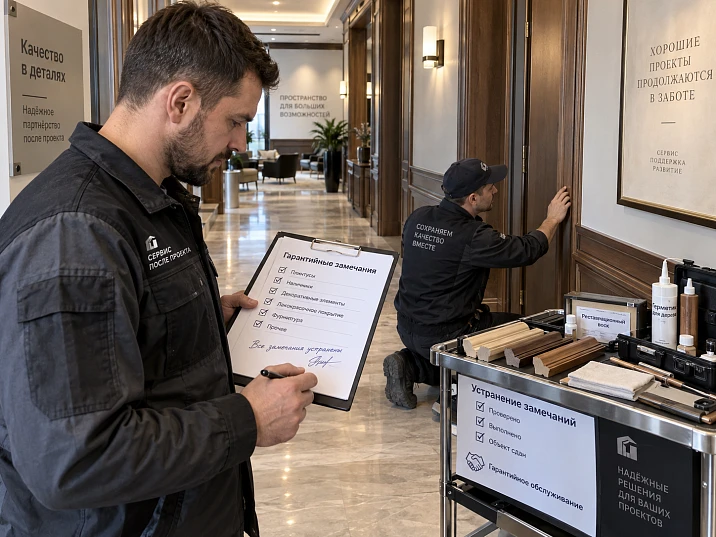
The hotel has been handed over, the rooms are occupied, the corridors are in operation, and the operations service has accepted the facility. Two months later, requests start coming in: a gap has formed at one skirting board, a crack was noticed on a molding, one section of the cornice is coming away from the base, a mechanical chip was found in the corridor, and after a leak on another floor the condition of several profiles changed.
The most expensive mistake at this point is to automatically assign every remark either to the "supplier's warranty" or to "operational damage." The same visual symptom can have different causes: the wrong SKU was installed, the product matches the order but the installation assembly is faulty, the material was hit by a cart, the area experienced a leak, an unsuitable care product was used, or the cause has not yet been established at all.
Therefore, working with Building materials suppliers wholesale after handover of the object, it should begin not with a new order and not with an accusation, but with identification of the specific installed product and recording of the facts.
OBJECT HANDED OVER → REQUEST → CASE CODE → SKU / ZONE / ORDER → PHOTOS AND FACTS → CLASSIFICATION → CAUSE DIAGNOSTICS → REPAIR / REPLACEMENT / MONITORING → RESULT CHECK → RESERVE UPDATE → CLOSURE → RECURRENCE ANALYSIS
Main rules:
a claim ≠ automatically a supplier warranty case;
a claim ≠ automatically the fault of operation;
until the cause is confirmed, responsibility remains undetermined.
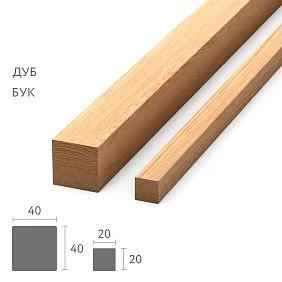
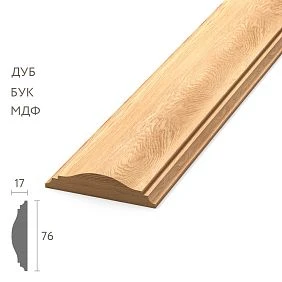
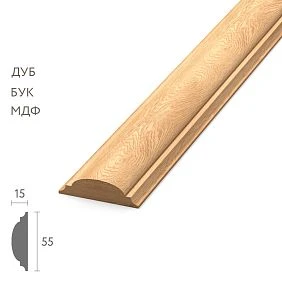
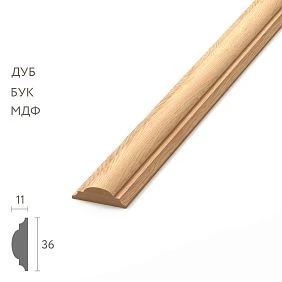
After handover of the object, the logic of working with trim profiles changes
Before handover, the object governs supply, installation, remaining stock and final claims. After transfer to operation, the starting point changes. The material is now built into the interior, the premises are in use, and the condition of the profile may be affected by new factors: cleaning, furniture, carts, humidity events, tenant build-out works, local repairs and normal operation.
Therefore, each new case must be considered through its history:
- what was approved;
- what was actually ordered;
- what was delivered;
- what was installed;
- what was handed over to operation;
- what happened after handover;
- what symptom is detected now.
It is this sequence that separates warranty management from an ordinary claim at acceptance.




Why the old acceptance report is still important
If the assembly was accepted without comments at handover, this does not automatically prove that the supplier or installer could not have allowed a hidden problem. But it is an important fact in the timeline. If damage appeared two months after normal operation, diagnostics must take this period into account.
Our factory also produces:



From inquiry to precise identification of the installed product
Get Consultation
Four main cause categories and one mandatory status
| Category | Meaning | Example |
|---|---|---|
| DELIVERY / PRODUCT | The issue relates to the delivered goods or their compliance with the order | A profile of a different article number is installed |
| Installation | The product matches the order; the issue relates to a component or workmanship | Incorrect joint or fixation |
| EXTERNAL EVENT | The product was affected by an event after installation | Leak, impact, construction work |
| Usage | Damage occurred during use of the premises | Chip from trolley, trace of aggressive cleaning |
| CAUSE NOT ESTABLISHED | Not enough data yet | Change in geometry without a confirmed cause |
The last category is mandatory. It protects against artificial precision. If the cause is unknown, you must not record the case under "supplier" or "installation" just for convenience.
The first step is to register the request, not to order a replacement
Each case is assigned a code, for example:
GZ-001
The card can be short:
| Field | Value |
|---|---|
| Case | WZ-001 |
| Zone | Number 314 |
| Article number | MLD-A |
| Detection date | ___ |
| Symptom | ___ |
| Photo | Present |
| Category | CAUSE NOT ESTABLISHED |
| Status | OPEN |
Before classification, a reorder should not be created automatically. The new item may not be needed at all, and a premature replacement sometimes destroys evidence of the original condition.
Why a case code is needed even for a single plank
In three months, five more requests will appear. Without codes, the correspondence turns into “that molding from number 314” and “that second baseboard near the elevator.” The code links photos, correspondence, the decision, reserve issuance, and final closure.
Warranty work begins with identifying the product
The first technical question: which profile exactly is installed?
Insufficient stock of the "oak skirting board STAVROS". Required, as far as they are available:
- article number;
- the material;
- product length or execution version;
- finish;
- original order number;
- supply or batch, if traceability is preserved;
- room;
- date or installation queue.
If the exact article number is not established, diagnostics and reordering turn into a search for a similar product by photo.
The as-built schedule becomes a working tool after handover
Before handover of the facility, the as-built schedule answers: what was actually installed?
The warranty log answers a different question: what happened to this specific installed product and how was the case closed?
The linkage might look like this:
NUMBER 314 → MLD-A → ORDER 041 → SUPPLY 03 → CASE GZ-003.
Without as-built linkage, the operations service is forced to reconstruct the product by profile shape and old photographs.
If there is no executive report
You must honestly use the available identifiers: order number, delivery date, floor, installation sequence, saved reserve, old packaging, and control samples. You must not invent a batch number or item code just to fill in the card.
Wholesale building materials supplier: reconstructing the history of a disputed item
When it is connected building materials supplier wholesale, it is useful to provide not only a photo of the defect, but the chain:
APPROVED SPECIFICATION → ORDER → DELIVERY → MATERIAL / BATCH → INSTALLATION → HANDOVER OF THE SITE → CURRENT REMARK
This makes it clear at which stage the problem could theoretically have arisen and which documents to pull up next.
A general-view photograph is insufficient for diagnostics
A photo saying “it’s bad here” is useful only for an initial signal. A set of angles is needed for a technical check.
- General view of the area — where the element is located.
- Close-up of the feature.
- Profile or end view, if it shows the geometry.
- Junction with the wall, ceiling, floor, or adjacent element.
- Adjacent intact elements for comparison.
- Marking of the reserve or surviving packaging, if it is related to this article.
If a mechanical impact is suspected, context around the damage is needed. If the problem looks like an installation issue, a view of the assembly is needed. If the question concerns the coating, lighting and the adjacent surface are important.
Diagnostics of wooden trim: from a local feature to the scale of inspection
Wooden skirting board: a mechanical chip and a product issue require different checks
У wooden baseboard damage to the outer corner may occur after an impact from a trolley, furniture, or cleaning equipment. But a local chip cannot automatically be declared operational simply because it is located in a passageway.
First, the facts are checked:
- is there a trace of directed mechanical impact;
- where the chip is located;
- are there similar signs on adjacent elements;
- what is the condition of the material nearby;
- was the issue recorded during handover;
- were there any repair works after handover.
A single local impact and repeated damage on several profiles are different scenarios.
Molding: a problem with one frame and a problem with a group are not the same thing
The site has 120 identical decorative frames installed. The issue appeared on only one.
This is an isolated case.
If a similar sign is detected in 18 rooms, on profiles from the same delivery, or with the same installation pattern, the inspection scope is expanded.
| Level | Meaning |
|---|---|
| Locally | A single case without confirmed recurrence |
| Recurring | There are several similar cases |
| SYSTEMIC INSPECTION | A broader related group needs to be inspected |
You cannot inspect the entire hotel after a single issue without reason. But you also cannot ignore a recurring signal just because the first problem was isolated.
Wooden cornice: we check not only the product, but also the assembly
If it comes away from the wall or ceiling wooden cornice, the issue may relate to the profile itself, the base, the installation, the fastening, or an external event.
Checked:
- whether the product matches the specification;
- whether its geometry has been preserved;
- what the base looks like;
- how the fastening is done;
- whether there are signs of local impact;
- whether anything occurred in the ceiling area after the work was handed over;
- whether there was a leak.
The phrase "the cornice is bad" is not a technical diagnosis.
Wholesale suppliers of building materials: the batch helps localize the inspection
If wholesale building material suppliers traceability was preserved, the delivery or batch number helps identify the inspection scope.
For example:
DELIVERY-03 → FLOOR 2.
If identical remarks appear only there, this is a useful hypothesis. But an identical delivery does not automatically prove the cause: a separate crew could have been working on this floor, or another external event could have occurred.
If the batch number is unknown
Other attributes are used: order number, delivery date, floor, room range, installation queue, saved reserve.
The status BATCH NOT IDENTIFIED is better than false precision.
We expand the inspection scope gradually
Diagnostics starts with the minimum reasonable scope:
one element → room → adjacent rooms → related installation group → related delivery.
Expansion should occur only when a confirmed recurrence appears.
| Observation | Next step |
|---|---|
| A single local chip | Check the context and external impact |
| Three similar cases nearby | Check the adjacent area and installation group |
| Recurrence across multiple rooms of the same delivery | Expand the check to the related batch |
| The sign occurs across different batches | Check the general installation or operational factor |
How to divide responsibility between supply, installation, and operation
Until the cause is confirmed, responsibility remains undetermined
A separate field is useful in the case card:
RESPONSIBILITY: REQUIRES DETERMINATION.
This is better than premature statuses such as “supplier's fault” or “contractor's error.”
After confirmation, the cause and responsibility can be clarified, but the change history must be preserved.
A cause registry helps avoid rewriting history retroactively
| Case | Category | Reason | Confirmation date |
|---|---|---|---|
| WZ-001 | Usage | Mechanical impact on furniture | ___ |
| GZ-002 | Installation | Local mounting assembly | ___ |
| GZ-003 | DELIVERY / PRODUCT | Confirmed after verification | ___ |
| GZ-004 | CAUSE NOT ESTABLISHED | Investigation ongoing | — |
If the cause changes after additional inspection, the old record is not deleted without a trace. Otherwise, a year later it is impossible to understand why the decision was made that way.
The warranty period cannot be tracked only in messengers
After a few months, the messages turn into:
"that molding from number 408,"
"another baseboard near the elevator,"
"I think we already ordered a replacement."
Without a single register:
- the same case is opened twice;
- the same profile is ordered again;
- it is unclear whether the replacement was completed;
- the use of operational reserve is not recorded;
- recurring symptoms appear as independent.
The messenger remains a communication channel, but does not become a log of warranty cases.
Wholesale building material suppliers: a claim must be based on facts
When they get involved in the review Wholesale building material suppliers, the request must be specific. The phrase "the molding cracked" does not allow assessing the scale, the origin, or the connection to the order.
A working file for a disputed case may include:
- article number;
- the material;
- original order number;
- the number of affected items;
- the room and exact location;
- date of detection;
- photos of the general and detailed view;
- a description of the defect;
- the history of the event, if known;
- data on the installed assembly;
- the condition of the saved reserve of the same article.
The exact procedure for handling is determined by the terms of the specific contract and document flow. But the principle is the same: the supplier is given verifiable data, not just an emotional description of the problem.
Why the condition of the reserve helps diagnostics
If unused planks of the same article and the same delivery remain at the site, they can be compared with the installed material. If the reserve is stable and the problem exists only in one zone, this is a useful fact. It does not automatically prove an installation cause, but it helps narrow the area of inspection.
A universal warranty period cannot be invented
For a modern B2B article, it is dangerous to write: “a warranty of X years applies to all wooden trim,” if such a period is not confirmed by the specific product card, contract, and accompanying documents of this particular order.
At the site, it is necessary to check:
- supply contract;
- the specification;
- terms of the specific product card;
- accompanying documentation;
- installation organization documents;
- operating and maintenance conditions, if they were provided.
Different products, deliveries, and contractual arrangements may have different terms. Therefore, the article governs the diagnostic process rather than establishing a universal legal deadline.
Product warranty, installation, and operation are separate scopes
A single interior simultaneously involves several types of liability.
| Contour | What is being checked | Example question |
|---|---|---|
| PRODUCT / DELIVERY | Compliance of the goods with the order and the declared specifications | Was the approved item number supplied? |
| Installation | How the product is installed and whether the defect is related to the assembly | Does the fastening comply with the approved technology? |
| Usage | What happened after handover | Was there an impact, leak, or aggressive maintenance? |
A single case may involve more than one circuit. For example, the installed profile matches the order, but after installation the assembly was exposed to a leak. The decision cannot be reduced solely to the question of "who is the supplier."
What to do if the supplier and contractor blame each other
The dispute "this is your material" — "no, this is your installation" needs to be translated into verifiable questions.
For example:
- does the actual profile match the approved cross-section and material;
- has the geometry of the unused reserve been preserved;
- how the installation assembly is executed;
- does it match the approved scheme;
- what is the condition of the substrate;
- is there any sign of external impact;
- does the sign recur in other rooms;
- is the recurrence associated with a single installation crew or a single delivery.
After verification, each fact either confirms or weakens a specific hypothesis.
Why the status "cause not established" is more useful than an argument
Until verifiable data is collected, responsibility can be left undetermined. This reduces the risk of premature product replacement, conflict, and incorrect repair.
Building materials supplier: classification first, decision second
building materials supplier can participate in diagnostics, but it is useful for the site to first form a minimal classification of the case.
For example:
| Case | Symptom | Preliminary category | What to Check |
|---|---|---|---|
| GZ-011 | Chip on outer corner | EXTERNAL EVENT? | Impact mark, camera, operation |
| GZ-012 | Cornice coming loose | INSTALLATION? | Fastening, base, adjacent areas |
| GZ-013 | Geometry changed | CAUSE NOT ESTABLISHED | Delivery, environment, installation, leaks |
The question mark in the preliminary category matters. This is a hypothesis to verify, not a final conclusion.
Operational reserve, repair, and re-delivery
Operational reserve: use now or wait for a decision
In the operations warehouse there are six intact PLT-A units. One skirting board in a room needs replacement. Physically, the problem can be resolved in a day.
But before issuing the reserve, we need to decide:
- which warranty case the issuance relates to;
- whether a full replacement is confirmed as necessary;
- whether the existing element can be repaired;
- whether the used reserve will be restored;
- who finances the restoration;
- whether the removed element needs to be kept for diagnostics.
The operational reserve is a tool for quick repairs, but its use must not destroy the history of the case.
The service reserve must not be spent unnoticed
Otherwise the log looks like this:
- GZ-001 — 1 slat used;
- GZ-008 — 2 more used;
- GZ-014 — 1 more.
Six months later, of the eight reserve strips, four remain, although the transfer documents still say "reserve — 8".
A separate reserve movement register is needed:
| Date | Article | Case | Issued | Return | Need to restore |
|---|---|---|---|---|---|
| ___ | PLT-A | WZ-001 | 1 | 0 | 1 |
| ___ | MLD-A | GZ-008 | 2 | 0 | 2 |
This way the reserve remains a manageable asset.
How to count the number of replacements
Five remarks do not automatically mean five new strips.
Possible solutions:
- two cases are resolved by repair;
- one — with a whole plank from reserve;
- two — with one new commercial plank after optimal cutting;
- or vice versa: one long visible section requires several whole elements, although the defect is visually single.
Therefore, the replacement quantity is calculated after choosing the method of closing the case and the cutting map.
| Case | Solution | Need for new product |
|---|---|---|
| GZ-021 | local repair | 0 |
| GZ-022 | Replacement of a short segment from reserve | 0 |
| GZ-023 | Replacement of a long section | For the new cutting layout |
This protects against automatic commercial reordering "by number of requests".
Material suppliers: a repeat order must reference the original case
If Material suppliers when arranging a replacement or repeat delivery, the new purchase line must be linked to specific cases.
For example:
REPLACEMENT-052 / GZ-003, GZ-006 / MLD-A / 4 pcs.
A year later, it is clear why an additional batch appeared after the project was completed.
Without a link, a repeat order looks like a normal increase in demand and distorts the project history.
Warranty replacement and commercial reorder are different reasons
The following can physically arrive in one vehicle:
- four warranty replacement strips;
- twenty new panels for the reconstruction of another zone;
- two items for restoring the operational reserve.
Physically, this is one delivery. In accounting, there are three different bases.
| Line | Quantity | Reason |
|---|---|---|
| MLD-A | 4 | Replacement under GZ-003, GZ-006 |
| MLD-A | 20 | New commercial volume |
| MLD-A | 2 | Reserve restoration |
You cannot combine everything into a "reorder of 26 pcs."
The removed part is not automatically discarded until the case is closed
After dismantling, the old element may be needed for:
- inspection;
- comparisons with the reserve;
- photos of the end face or the reverse side;
- checks of the assembly unit;
- confirmation of the material;
- discussions with the supplier or contractor.
The status can be:
REMOVED / GZ-003 / DO NOT DISPOSE UNTIL CLOSURE.
After the case is closed, a decision is made on storage or disposal.
How to close a case and analyze recurrence
When a case is truly considered closed
Not at the moment when the new bar arrived at the site.
Closure means that:
- the item is identified;
- the cause is classified as far as the data allows;
- the decision is agreed upon;
- the required material is received;
- repair or replacement is completed;
- the result is verified;
- the used reserve is recorded;
- the documentation is updated;
- responsibility and cost basis are recorded, if required by the project.
Only after this does the status change to CLOSED.
Closure codes simplify warranty period analysis
Simple result codes are convenient:
| Code | Meaning |
|---|---|
| Repair | Element saved, local restoration completed |
| replaced | Element replaced fully or partially |
| DEFECT NOT CONFIRMED | After inspection, no deviation was found |
| INSTALLATION CORRECTED | The cause was in the installation assembly |
| OPERATIONAL DAMAGE | External impact confirmed |
| Observation | No immediate intervention required, a follow-up inspection has been scheduled |
Based on the warranty period results, you can see not just the number of requests, but the structure of the outcomes.
The "monitoring" status is a normal solution
Not every issue requires immediate dismantling.
If the cause is still unclear, the change is not progressing, and the risk to operation is low, you can assign:
MONITORING UNTIL 15.12 / follow-up inspection.
But the status must have a date for the next inspection and criteria under which the decision is reconsidered.
An endless "we'll see" is not case management.
We combine recurring requests into a trend analysis
Cases GZ-004, GZ-011, and GZ-018 may share the same symptom. If handled separately, the systemic signal will be lost.
We need to check for common attributes:
- same zone;
- one installation crew;
- same shipment;
- same base type;
- same operational load;
- same care system;
- same SKU.
If the connection is confirmed, an extended group analysis is opened instead of three independent local repairs.
How to distinguish a recurring issue from a coincidence
The same verbal description "crack" does not yet mean the same cause.
For comparison, it is useful to compare:
- the exact location of the crack;
- direction;
- the adjacent assembly;
- the time of appearance;
- the material;
- delivery;
- the installation team;
- the room conditions.
Only after this are the cases combined into a single trend.
Typical events after handover of the property
A leak after handover is a separate external event
After a leak, wooden trim may change condition, but the fact of the change itself does not turn the event into a supplier warranty.
It is necessary to restore the context:
- when the leak occurred;
- which area was affected;
- which products were exposed;
- how long the moisture persisted;
- what happened to the base;
- when the change was detected;
- whether there is a similar sign outside the leak area.
If the problem occurs only in the area of the external event, this is a strong argument for a separate classification. If similar symptoms are also present in dry rooms, the inspection area needs to be expanded.
Why you shouldn't order a new profile right away
After a leak, it is sometimes necessary not only to replace the molding itself. First, you need to make sure that the base is stabilized and the cause of the damage has been eliminated. Otherwise, the new element is installed on a problematic wall, after which the incident repeats itself.
A mark after cleaning: checking the product and the nature of its effect
A matte mark appeared on the surface of the molding or baseboard after cleaning. Before drawing a conclusion about the quality of the coating, you need to check:
- which product was used;
- the concentration, if known;
- application method;
- how long the product was in contact with the surface;
- whether there is the same mark on neighboring elements;
- what the care documentation says.
If the mark matches the product's area of application, this is an operational factor for further analysis. If a similar loss of gloss appears in rooms with different maintenance, other causes need to be investigated.
Mechanical damage from furniture or a trolley
A local dent, chip, or scuff in the furniture movement zone often has a characteristic context: an outer corner, the level of a trolley wheel, the line of a doorway, an area near a service zone.
Diagnostics checks:
- localization of the damage;
- direction of the mark;
- condition of adjacent elements;
- presence of furniture or equipment capable of causing an impact;
- cameras or an event log, if the facility uses them.
Even mechanical damage that seems obvious at first glance should be documented before repair, so that it is not later mixed into the statistics of supply-related issues.
A change in geometry requires diagnostics, not instant classification
If the profile has changed geometry, there may be several causes, and a single photo does not allow choosing the right one.
Checked:
- material and exact article number;
- delivery;
- geometry of the unused reserve;
- room conditions;
- condition of the base;
- installation method;
- leaks and moisture events;
- presence of similar cases.
If the change is only in one area, the investigation remains local. If it repeats in a related group, the area expands.
A single protruding cornice: wood, fastening, or base?
The cornice visually separates from the wall. Possible directions for inspection:
| Hypothesis | What to Check |
|---|---|
| Product | Profile geometry and comparison with the reserve |
| Installation | Actual fastening method and its condition |
| Base | Strength, local changes, repair interventions |
| EXTERNAL EVENT | Leak, vibration, work in the ceiling area |
Until such an inspection is performed, it is impossible to correctly choose between repairing the fastening and completely replacing the profile.
Do not dismantle the disputed element before initial documentation
Dismantling may destroy part of the evidence: the position of the profile, the nature of the gap, the condition of the junction, traces of fastening, and the connection to the base.
Before dismantling, it is advisable to:
- take a photo of the general view;
- take a close-up;
- record the gap dimensions if they are important;
- photograph the adjacent elements;
- record the item code and area;
- record the reason for disassembly.
After removal, photograph the back side and the mounting assembly if this is related to the investigation.
Not every case requires supplier involvement
If the maintenance service sees an obvious localized impact and the exact item code is in stock, it can complete the repair within its own procedure if the contracts and site rules allow this.
Involving the supplier is especially useful when:
- there is a question about product conformity;
- technical identification is required;
- a new delivery is required;
- the symptom repeats across a group;
- there are grounds for an official claim;
- the material needs to be compared with the original configuration.
This reduces unnecessary communication and keeps the focus on genuinely disputed cases.
Not every case requires a full replacement
The decision depends on the nature of the damage, the visibility of the area, the condition of the profile, and the requirements of the site.
Options:
| Solution | When it can be applied |
|---|---|
| local repair | If the problem is limited and restoration is acceptable |
| Partial replacement | If one segment can be replaced without compromising the result |
| Full replacement of the section | If the joints or geometry require a longer new element |
| Observation | If immediate intervention is not required |
| No action | If the defect is not confirmed |
A “replace just in case” decision can increase reserve consumption, create new joints, and complicate the interior without technical necessity.
How to decide on repair, replacement, and timing
How to decide whether the operational reserve can be used before the investigation is completed
There are two competing tasks: quickly restore the interior and preserve evidence.
If the problem prevents use, a temporary replacement from the reserve may be justified. But then:
- the original condition is documented;
- the removed part is retained;
- the issuance of the reserve is linked to the case code;
- the reserve is reduced in the records;
- after the cause is determined, a decision is made on replenishing the stock.
If the problem is cosmetic and does not affect use, it is sometimes better to finish the diagnostics first.
The replacement calculation must take cutting into account
Suppose two sections of skirting board of 700 mm each and one section of 1100 mm are damaged. The net total is 2500 mm.
This does not mean that a single plank of any length is sufficient. It is necessary to check:
- the commercial length of the original SKU;
- whether all segments can be obtained from a single plank;
- where the joints are located;
- whether there are suitable usable offcuts;
- whether a reserve is needed for a new installation.
Sometimes three small repairs are covered by a single whole plank. Sometimes, due to geometry and visible joints, two are needed.
Why the net square footage may be sufficient mathematically but insufficient in practice
If the remaining reserve consists of short pieces, the total length may exceed the requirement, but no single piece is suitable for a long visible segment. Therefore, warranty repair counts both meters and actual installation parts.
How to proceed if the exact SKU is no longer available in the free reserve
First, check:
- operational reserve;
- usable remnants;
- other official warehouse zones of the facility;
- availability of the original SKU from the manufacturer;
- possibility of a reproducible reorder.
Only if the original profile is objectively unavailable does a separate approval of an alternative begin. A “similar molding” does not automatically become acceptable.
Profile replacement in warranty repair is a separate project decision
If the original SKU cannot be obtained, the replacement is checked against:
- cross-section;
- material;
- size;
- finish;
- joints with adjacent elements;
- possibility of local application;
- visual noticeability of the difference.
On a feature wall, a single alternative strip may look worse than replacing a longer finished section. Therefore, the decision is made based on the interior, not just on product availability.
How to allocate repair costs by confirmed cause
The article does not establish legal rules for cost allocation: they depend on contracts. However, from a management perspective, it is useful to link cost to a confirmed category.
| Cause category | What to fix |
|---|---|
| DELIVERY / PRODUCT | Basis for claim and agreed solution |
| Installation | Responsible contractor and unit repair |
| EXTERNAL EVENT | Event, area, and source of repair funding |
| Usage | Service request and reserve expenditure |
| Not established | Temporary solution and continued investigation |
This does not allow the financial document to precede diagnostics.
Response time and closure time are different metrics
The service department may log a case in the morning, the supplier may respond the same day, but a replacement may take several weeks due to manufacturing. These intervals need to be kept separate.
Useful to store:
- date of request;
- date of first substantive response;
- date of cause confirmation;
- date of solution approval;
- date of material receipt;
- date of work completion;
- date of verification and closure.
This shows exactly where the case was delayed: diagnostics, production, logistics, or installation.
Priority of warranty cases should take into account the impact on operation
Not all cases are equally urgent.
| Priority | Example | Action |
|---|---|---|
| P1 | The element is unsafe or blocks the use of the area | Immediate localization and resolution |
| P2 | Noticeable defect in a public area | Priority repair after logging |
| P3 | Cosmetic issue without impact on function | Scheduled closure |
| Observation | Stable condition without need for intervention | Re-inspection date |
This is an internal scale of the object, not a universal standard. It helps allocate service resources.
Complete practical example: from request to closure
Two months after hotel handover, the service
What to improve on the next project based on the warranty period results
If most cases are related to a single installation unit, the design or installation instructions are corrected. If the item code is frequently lost, the as-built schedule is strengthened. If the service reserve is constantly spent on one rare profile, its volume may need to be revised.
| Observation | Change to the next project |
|---|---|
| Errors of one corner unit recur | Rework the installation unit and the control part |
| Difficult to identify the profile after handover | Strengthen the as-built passport |
| The reserve ran out quickly | Review the operational stock for this SKU |
| Mechanical chips often occur in one spot | Protect the usage area or change the assembly part |
On-site inspection and case reopening
How to prepare an on-site inspection so you don't waste time searching for data on location
If the cause cannot be determined from the photos, an inspection is scheduled. The most common waste of time is arriving at the room, seeing the profile, and only then starting to find out which SKU it is, when it was installed, and where the reserve is stored.
Before the visit, it's useful to gather a package:
- case code;
- exact room;
- article or best available identifier;
- the original order;
- photographs;
- as-built diagram;
- known events after handover;
- data on adjacent rooms;
- location of the operational reserve;
- contact of the operations employee who will open the area.
If there is a question about the installation, a representative from the installation side is invited or the installation documentation is requested in advance. If there is a question about the delivered product, it is useful to have a control sample or a spare strip of the same article.
What to check on site before dismantling
The inspection should consistently answer the following questions:
- where the symptom is located;
- whether it is local;
- how the adjacent intact profile looks;
- whether there is external impact;
- how the joint and abutment look;
- whether there is a connection to the base;
- whether the problem repeats in adjacent rooms;
- whether additional information can be obtained without dismantling the assembly.
Only after this assessment is it decided whether dismantling is needed.
When the supplier's presence is optional
If the case clearly relates to mechanical damage and the exact product has already been identified, the supplier may only be needed for a new delivery. Not every service case requires a joint visit by all participants.
How to conduct a spot check if a similar symptom is found in multiple rooms
Suppose a similar skirting board gap is found in 4 out of 80 rooms. There are two bad solutions: inspect all 80 immediately or repair only the four without checking for a connection.
Working approach:
- compare the four known cases by item code, installation crew, supply batch, and zone;
- select several neighboring rooms with no requests;
- check them for the same sign;
- if the recurrence is confirmed — expand the sample;
- if not — keep the inspection scope local.
| Sampling result | Action |
|---|---|
| No new cases | Keep the investigation local |
| The sign repeats within one assembly group | Check the entire related group |
| The sign repeats across different groups | Search for the common factor more broadly |
This way, the scope of the check grows based on facts, not on alarm.
What to do if the defect is not confirmed after inspection
Sometimes a user reports a problem, but upon inspection it turns out that the element matches the design and there is no sign of a defect.
Such a case should not be deleted from the log. It receives the closure code DEFECT NOT CONFIRMED.
The card records:
- what exactly was checked;
- what documents were used;
- what condition was found;
- why no repair is required;
- who participated in the inspection.
This protects against the same issue being reopened by a new maintenance employee two months later.
When "not confirmed" does not mean "never happened"
If the symptom was temporary and disappeared before the inspection, that is exactly what should be recorded. For example: "at the time of inspection the sign is not reproducible, observation until the specified date." One should not replace the absence of a symptom during inspection with a categorical conclusion about a past event.
Reopening a closed case
A closed case sometimes comes back. For example, after a local repair, a gap appears again a month later.
Do not create a new independent case without a link.
You can use:
GZ-027 / REOPENED 15.12.
Or:
GZ-027-R1
The main thing is to maintain the connection with the first investigation, the previous decision, and the material used.
A repeat after repair is especially important for analyzing the cause: it is possible that the symptom was eliminated, not the source of the problem.
Acceptance of the replacement and control of the result
How to accept a replacement batch after a warranty decision
A new delivery to close a warranty case must undergo acceptance as carefully as regular goods. It cannot be considered automatically correct just because it is "under warranty."
Checked:
- article number;
- the material;
- execution;
- product length;
- quantity;
- finish;
- connection with the case code;
- condition of the packaging.
If the replacement must adjoin the existing interior, it is useful to compare it with the saved reserve or the installed material before the start of the repair.
Why the new batch should not dissolve into the general warehouse
The four strips that arrived under GZ-003 are intended for a specific solution. If they are placed into the regular free stock right away, they may end up in a different service task. Until the case is closed, it is better to label them separately.
How to verify the result after repair or replacement
The job is not closed by the installer's "done" signature. A brief verification is required.
Checked:
- visual result;
- profile match;
- quality of the joint;
- integrity of the finish;
- elimination of the original symptom;
- absence of new damage around the repair;
- updating the as-built information if the SKU or assembly was changed.
If the solution relates to a cause that may not manifest immediately, instead of closing right away, monitoring and a follow-up date are assigned.
When repair is not needed
An expert warranty process must be able to say "intervention is not advisable right now."
This is possible if:
- the defect is not confirmed;
- the change is in an acceptable condition according to the design documentation;
- dismantling would create a greater risk for the adjacent finish;
- monitoring is safer than immediate replacement;
- the issue is cosmetic and the property owner accepts it without repair;
- reconstruction of this area is planned in the near future.
A “no repair” decision is also recorded with justification. Otherwise, in six months it looks like a forgotten request.
How to handle a remark after the contractual warranty period has ended
Even if the contractual warranty period has already ended, the diagnostic logic remains useful. You still need to identify the item code, restore the history, determine the cause, and choose a solution.
The commercial scope is changing: repair or replacement may become a routine operational procurement.
It is important not to substitute this with the new term “warranty.” If the term and the contract terms do not provide grounds for a warranty claim, the case is handled as a service or repair case, but data from the old history still helps.
Why the old warranty log is still valuable
It shows whether similar cases occurred before, what material was used, which components were repaired, and how successful the previous restoration method turned out to be.
How not to lose the link between replacement and as-built documentation
If MLD-A was replaced with an identical MLD-A, the as-built card may not require a change of item code, but it is useful to note the repair date.
If a different version or a different profile is approved, the as-built documentation must reflect the product actually installed.
Otherwise, the next service request will again start with incorrect initial information.
| Case | Was | Became | What to update |
|---|---|---|---|
| GZ-031 | MLD-A | MLD-A | Repair history |
| GZ-032 | MLD-A | MLD-B by agreed replacement | Service card + repair history |
How to manage the warranty case log until the period ends
The service log should show not only open but also overdue actions
Every open case has a next action and a due date.
| Case | Next action | Responsible | Lead Time | Status |
|---|---|---|---|---|
| GZ-041 | Unit inspection | contractor | 18.09 | ON TIME |
| GZ-042 | Supply response | Supplier | 16.09 | Overdue |
| GZ-043 | Re-inspection | Usage | 30.09 | Observation |
This distinguishes a managed warranty process from a complaint archive.
How to create a monthly review without an overall supplier rating
Once a month, you can review:
- how many cases are open;
- how many are closed;
- how many relate to supply, installation, operation, and external events;
- how many are in the "not established" status;
- which symptoms recur;
- how many reserve units have been used;
- how many replacements are expected;
- which actions are overdue.
This is not a complete supplier evaluation card. This is an operational overview of the warranty period.
How to complete the warranty period without losing open cases
As the contractual boundary approaches, you cannot simply close the log by the calendar. A final reconciliation is needed.
Checked:
- whether all open cases have a resolution;
- whether there are cases under observation;
- whether confirmed replacements have been ordered;
- whether the operational reserve has been restored;
- whether the executive information has been updated;
- which issues transition to normal operation.
If the request is registered within the current terms, its further procedure is determined by the specific contractual documents. The article does not establish a universal legal rule, but helps avoid losing the technical history.
Complex edge cases where a quick conclusion cannot be made
Operations already repaired the element before the case was registered
Sometimes the problem is discovered in the evening, and in the morning the technical service is already replacing the bar from the reserve so that the room does not sit idle. Only after the repair does the information reach procurement and the supplier.
Diagnostics becomes more difficult, but the case can still be reconstructed. It is necessary to collect:
- photos before the repair, if available;
- name of the employee who saw the original condition;
- the removed part, if it has been preserved;
- data on which backup strip was used;
- description of the assembly unit during disassembly;
- time and reason for the emergency intervention.
If there is insufficient evidence, the category may remain “cause not established.” An incomplete history cannot be retroactively turned into a confident conclusion.
After such an incident, it is useful for the maintenance service to establish a simple rule: emergency repair is permitted, but before disassembly at least a general and close-up photo must be taken and a code assigned to the request.
The article number cannot be determined even from the as-built documentation
An old project may have an incomplete as-built schedule. The profile has been installed, the packaging was thrown away long ago, and the documents say only “oak molding.”
Instead of selecting “by eye,” restorative identification is carried out:
- take the main cross-section dimensions;
- make an end template or a precise photograph of the profile;
- compare with the remaining reserve;
- check old invoices and specifications;
- pull up photographs from the installation period;
- match possible item codes against the catalog.
Until the exact product is confirmed, the card records ITEM CODE NOT ESTABLISHED. Such an honest entry is safer than an erroneous code that will later end up in a new order and as-built documentation.
The problem recurred on an already replaced element
The original section was replaced, the case was closed, but two months later a similar symptom appeared on the new part. This is a strong signal that the first hypothesis may have been incomplete.
It is necessary to reopen the original case or create a linked revision and compare:
- original and replacement item;
- installation method;
- base;
- room conditions;
- external events;
- the difference between the first and second replacement.
If two different products produce the same symptom in one unit, the probability of a purely product-related cause decreases, although it does not automatically disappear. If the recurrence appears only in parts from one delivery, on the contrary, the connection with that delivery needs to be investigated.
The main thing is not to repeat the same replacement endlessly without revisiting the cause.
Operational reserve is being depleted faster than expected
The project handed over ten complete PLT-A units to operations. In four months, seven have already been used. Even if each individual repair is closed correctly, this dynamic requires analysis.
There may be various reasons:
- the area really does receive a lot of mechanical damage;
- the reserve is used where local repair would be sufficient;
- the same installation defect is recurring;
- returnable usable remnants are not recorded;
- part of the material is used for work not related to warranty cases.
It is necessary not only to place an additional reserve order, but also to review the structure of its consumption by case codes. If eight planks were used for the same type of damage in the same corridor, it is more useful to protect the corridor from impacts than to constantly replenish the stock.
The same symptom appeared on different SKUs
For example, gaps were found on both PLT-A and PLT-B installed in different rooms. There is no connection by SKU.
Then common higher-level factors are checked:
- one installation crew;
- the same base;
- the same fastening technology;
- the same operating conditions;
- the same external event;
- one period of construction work after handover.
Such a scenario shows why trend analysis cannot be based on SKU alone. Sometimes the common source is not in the product, but in the assembly or operation.
The supplier sent a replacement, but it does not visually match the existing interior
The article number and material may formally match, but natural wood has natural variation, and the finish may be perceived differently next to the old section. This is not a reason to automatically declare the replacement non-compliant, but before installation, visual compatibility in the specific area must be assessed.
Possible solutions:
- select a strip from several received;
- replace a longer completed section so the transition is less noticeable;
- perform agreed final finishing;
- use the replacement in a less visible area, and the reserve in a critical one, if the project allows such redistribution.
The decision is recorded in the case card, because the actual method of restoration may differ from the original plan to “replace one part.”
The request came after the warranty period ended, but the symptom may have appeared earlier
This is already a contractual matter that cannot be resolved by a universal rule of the article. Technically, the facts need to be gathered: when the sign was first noticed, whether there are early photographs, whether there was an entry in the operation log, and when the object reported it to the responsible parties.
Further, the procedure is determined by the specific contractual terms and applicable documents. The article intentionally does not substitute legal assessment with technical diagnostics.
18 warranty period mistakes
- Treat every remark as a supplier issue. The cause may be installation-related or operational.
- Treat every remark as an installation issue. The question regarding the product may remain unchecked.
- Do not assign a case code. Correspondence begins to duplicate.
- Search for the item only by photo. There is a high risk of ordering a similar but different profile.
- Do not bring up the original article number. Diagnostics loses the exact product configuration.
- Do not use the as-built schedule. The link between the installed element and the order is lost.
- Do not save the original order number. Repeat delivery becomes difficult to trace.
- Declare the entire batch problematic after a single incident. Inspection expands without facts.
- Ignore the recurrence of similar cases. A systemic signal is closed with local repairs.
- Dismantle before recording the condition. Some evidence is destroyed.
- Use operational reserve without recording it. The stock disappears unnoticed.
- Do not restore used reserve. In a year the service fund ends up empty.
- Mix warranty replacement and commercial reorder. The history of causes and costs is lost.
- Discard removed parts before closing the case. Diagnostics becomes impossible.
- Assign blame before establishing the cause. Communication turns into an argument.
- Track cases only in a messenger. Status and recurrence cannot be analyzed.
- Consider delivery of a replacement as closing the issue. Repair and verification of the result have not yet been performed.
- Do not carry conclusions over to the next project. The company repeats already known mistakes.
Final algorithm for handling a remark after handover
1. FACILITY HANDED OVER FOR OPERATION
↓
2. REMARK REGISTERED
↓
3. CASE CODE ASSIGNED
↓
4. SKU, ORDER AND ZONE RESTORED
↓
5. PHOTOS AND FACTS COLLECTED
↓
6. PRELIMINARY CATEGORY: DELIVERY / INSTALLATION / EXTERNAL EVENT / OPERATION / UNKNOWN
↓
7. SCOPE OF CHECK DETERMINED
↓
8. CAUSE ESTABLISHED OR CLARIFIED
↓
9. DECISION MADE: REPAIR / RESERVE / REPLACEMENT / MONITORING
↓
10. REPLACEMENT SUPPLY ARRANGED IF NECESSARY
↓
11. WORK COMPLETED
↓
12. RESULT VERIFIED
↓
13. OPERATIONAL RESERVE UPDATED
↓
14. CASE CLOSED
↓
15. RECURRING CASES REFERRED TO TREND ANALYSIS
Check before final closure of the card
Before the "CLOSED" status, it is useful to run one short check, the same for repairs, replacements, and cases without a confirmed defect.
| Control question | What should be clear |
|---|---|
| Is the item identified? | SKU, material, and installation area are established as accurately as the documents allow |
| Is the initial condition recorded? | There are photos and a description before any intervention |
| Is the cause classified? | Either the category is confirmed, or the status "not established" is honestly retained |
| Is the solution completed? | Repair, replacement, monitoring, or no action has confirmation |
| Is the result verified? | The original symptom is resolved or the next observation date is scheduled |
| Has the reserve been updated? | The issued planks have been written off, and the need for restoration has been recorded |
| Is the documentation up to date? | The repeat delivery and the actual replacement are linked to the case code |
If any of these items remains open, the card may have the status "work completed" but not yet "closed." This is especially useful for cases where the new part has already been installed, but the operational reserve has not yet been restored or the cause remains under observation.
Such control does not require separate bureaucracy: it simply prevents treating the delivery of a new plank or the completion of installation work as the end of the entire warranty task.
If a case is closed without a final determination of the cause — for example, after a local repair the symptom does not recur and further investigation is not advisable — this is also recorded directly. The card retains a note: the cause has not been confirmed, the agreed restoration has been performed, the result has been checked, and there are no repeated signs as of the closing date. This option is better than an artificial diagnosis: if a new similar request appears, the team will see that the previous case was closed based on the repair result, and not because the root cause had been proven.
Conclusion: after handover, we first establish the facts, then assign responsibility
After the facility is handed over for operation, any problem with wooden trim becomes more complex than an ordinary claim at the intake stage. The product has already been installed, the premises are in use, and installation, operational, and external events could have occurred between delivery and the current symptom.
Therefore, warranty management begins with identifying the specific profile and registering the case. Then the chain from the approved specification to the actual installation is reconstructed, the condition is recorded, the scope of the inspection is determined, and only after that is the cause clarified.
It is especially important to keep the status "cause not established" when there is insufficient data. It is more honest than prematurely blaming the supplier or contractor. Once the cause is confirmed, you can correctly choose repair, replacement, monitoring, or operational restoration.
An operational reserve helps close local tasks quickly, but every issue must be tied to a specific case. Otherwise the stock disappears unnoticed. Warranty replacement and a new commercial order must also remain separate lines, even if they physically arrive on the same truck.
This way, work after handover becomes a manageable process where supply, installation, and operation do not shift responsibility onto each other but rely on verifiable facts. And an accurate history of each closed case helps improve the next project and avoid repeating weak points that have already been identified.