Article Contents:
- A large order does not necessarily mean a large volume of a single SKU
- Why total linear meters are especially misleading
- Criticality must be tied to the zone
- When "partially" cannot be considered closed
- Which fields are useful to add
- How to assign a date
- Why the open tail must be shown separately
- Why small items are better stored separately from the bulk batch
- Which lines are especially worth adding to the template
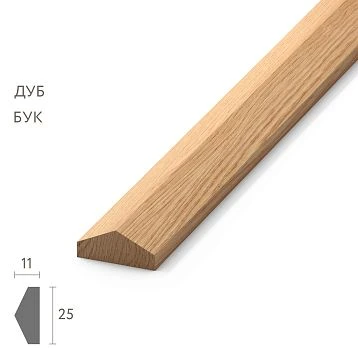
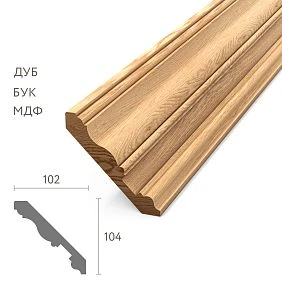
The project has 28 different SKUs of wooden trim. 200 PLT-A skirting boards are needed, 160 of the main MLD-A molding, and 50 of the KZ-A cornice. But there are also small lines: MLD-X — 4 boards, MLD-Y — 3, a special architrave — 6, a decorative profile for the post — 2. By total mass and cost, these items are almost invisible. That is exactly why they are the easiest to lose.
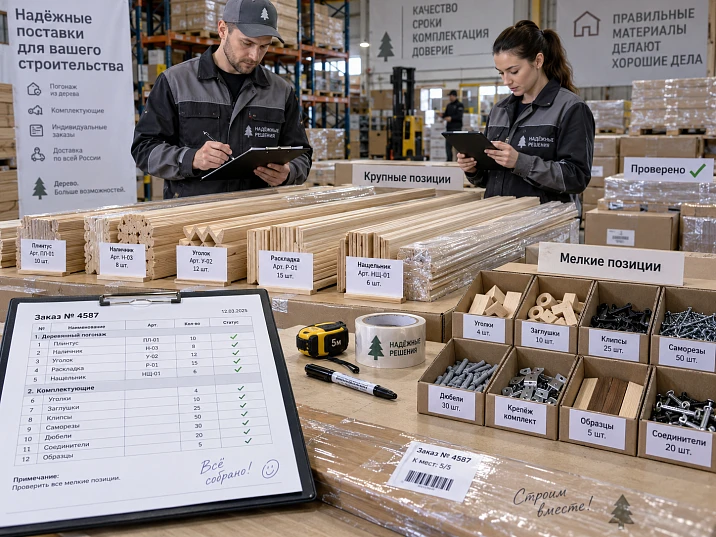
The delivery arrives at the site. Out of 417 items, 410 were received. By quantity, the order is 98.3% complete. At first glance, the result is almost perfect. But MLD-X and MLD-Y are missing — only seven boards. Because of them, two door portals and the decorative composition in the reception area cannot be finished. The foreman sees hundreds of delivered items, but handover is still blocked by two small lines.
Therefore, when working with building material suppliers For a complex interior project, it is not enough to monitor the total square footage, cost, or percentage of goods received. A second level is needed: how many procurement lines are fully closed and which of the unclosed lines are blocking installation.
417 ITEMS NEEDED → 410 RECEIVED = 98.3% BY QUANTITY
5 CRITICAL LINES → 3 CLOSED → 2 MISSING = KEY ASSEMBLY NOT READY
The central document of the article is a unified order line register. In it, no item disappears just because it cannot yet be paid for, delivered, or confirmed. Each line has a quantity, material, length, zone, criticality, required-by control date, and current status.
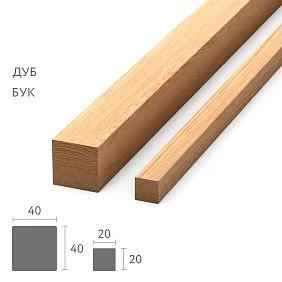
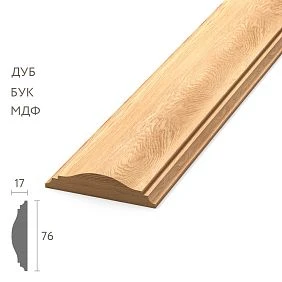
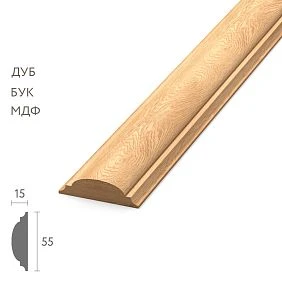
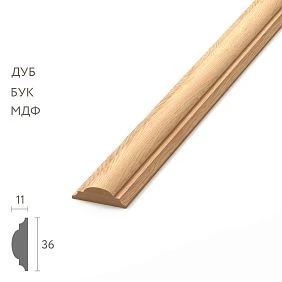
A large order does not necessarily mean a large volume of a single SKU
Procurement complexity comes in two types.
| Complexity type | Example | Main risk |
|---|---|---|
| Volume-based | 800 m of a single skirting board | Calculation of strips, joints, reserve, logistics |
| Assortment-based | 28 different SKUs, some with 2–6 planks each | Loss of small lines, mismatching, unclosed nodes |
In a volumetrically complex order, the main thing is to correctly calculate a large amount of identical material. In an assortment-complex one, do not lose a single independent item.
A multi-item specification often appears in classic interiors, hotels, restaurants, large houses, or public buildings, where the following are used simultaneously:
- several skirting boards;
- several moldings of different widths;
- cornices for different rooms;
- Baseboards;
- slats;
- profiles for door portals;
- small decorative elements for special zones.
If such an order is managed as a single line "wooden trim — 1200 m", the visibility of actual completeness disappears.




Why total linear meters are especially misleading
Three missing pieces of a special molding may account for less than one percent of the linear meters, yet be the only material suitable for completing a specific assembly. Meters do not show the functional uniqueness of an item.
Our factory also produces:
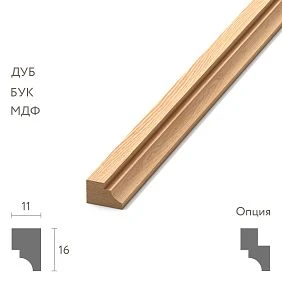
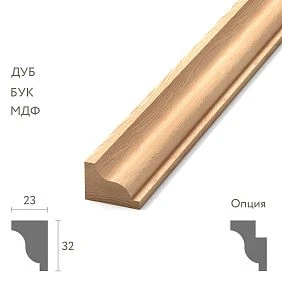
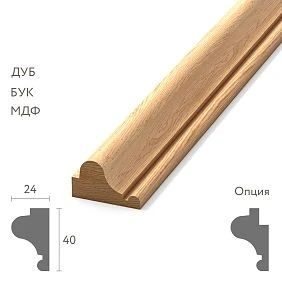
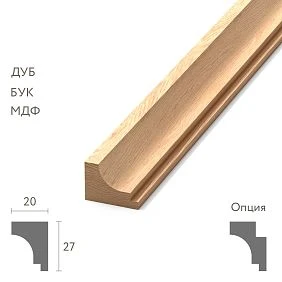
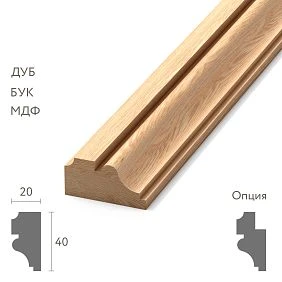
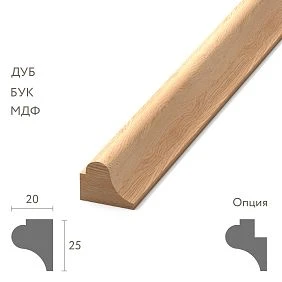
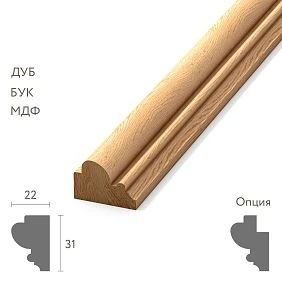
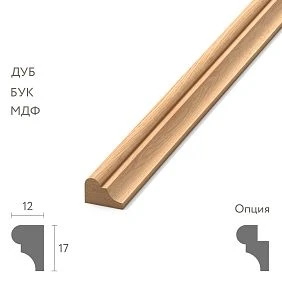
A small item can be more critical than a high-volume one
Quantity and design importance are different characteristics.
For example:
| Article | Required | Where it is used | Consequence of absence |
|---|---|---|---|
| PLT-A | 180 | Several floors | Some work can continue in other zones |
| MLD-X | 4 | Two portals | Both portals cannot be completed |
| KZ-Y | 3 | Final section of the lobby | The lobby is not closed by finishing |
Four strips may cost less than twenty standard skirting boards, but have a greater effect on the schedule.
Therefore, for each line, you need not only the 'how many' metric, but also the answer: what will stop if this item is not available by the required date?
Get Consultation
We introduce three criticality classes
To manage a multi-item order, it is convenient to divide the lines into three classes.
| Class | Meaning | Example |
|---|---|---|
| K1 — BLOCKS | Without the item, it is impossible to complete the assembly, room, or mandatory work sequence | Special door portal profile |
| K2 — IMPORTANT | Some work can continue, but an open line will soon become a problem | Main molding of the next floor |
| K3 — DOES NOT BLOCK | Can be scheduled later without stopping the nearest critical front | Reserve or late-phase profile |
Criticality is not equal to price. A line worth 15,000 rubles can get K1, while a line worth 500,000 can get K2 if the expensive material is needed in a month, while a small item closes handover tomorrow.
Criticality must be linked to the zone
The same SKU can be K1 for the lobby and K2 for late-phase premises. Therefore, in the register, criticality is assigned to a specific procurement line, not to the item forever.
Quantity completeness and line completeness are two different metrics
The first metric answers: how many items out of the total quantity have been received?
The second: how many purchase order lines are fully closed?
Example:
| Indicator | Calculation | Result |
|---|---|---|
| Quantity completeness | 410 / 417 | 98,3% |
| Line completeness | 24 closed lines / 28 | 85,7% |
| K1 completeness | 5 closed critical lines / 7 | 71,4% |
It is the third metric that can be decisive before installers arrive on site.
High quantity completeness is reassuring, but it can hide unclosed unique items.
Building material suppliers: checking the number of closed lines
When working with construction materials suppliers it is useful to regularly see not only the total cost and total square footage, but also the structure of the order status.
For example:
- 28 lines in total;
- 21 fully closed;
- 4 partially confirmed;
- 2 in production;
- 1 suspended.
This picture is more informative than the phrase "the order is almost ready."
For the purchaser, open loose ends immediately become visible. For the foreman, the risk of upcoming areas. For the supplier, the specific items that need a response.
Five working statuses of a procurement line
| Status | What does it mean |
|---|---|
| CLOSED | Full required quantity confirmed or accepted |
| Partially | Only part of the required quantity is confirmed |
| In production | The missing volume is being manufactured, the timeline is being tracked |
| ON HOLD | The line is not technically or commercially ready to launch |
| REPLACEMENT PENDING APPROVAL | An alternative has been proposed, but the original line is not yet closed |
The status must be unambiguous. "Almost ready," "the manager promised," "it should be" are not working states.
When "partially" cannot be considered closed
If four KZ-X are needed but only two are confirmed, the line remains partial, even if work can begin with two. It will become closed only after the required quantity is reached or after an official change in demand.
Why an order cannot be considered ready based on the amount of money
Let's say the total cost is 2 million rubles. Confirmed goods amount to 1.95 million. Financially, that's 97.5%.
But a missing item worth 50 thousand rubles can block the main hall.
Cost does not show:
- the number of open lines;
- the criticality of these lines;
- their actual required date;
- impact on contractors;
- the ability to complete the room.
Therefore, the percentage of the amount is a commercial indicator, not an indicator of installation completeness.
Each SKU must exist as a separate line
construction materials supplier must receive a specification where similar profiles are not merged into a single line.
Bad:
decorative molding — 54 pcs.
Working version:
- MLD-A — 38 pcs.;
- MLD-B — 8 pcs.;
- MLD-C — 5 pcs.;
- MLD-D — 3 pcs.
And for each line, the material, size, commercial length, finish, and zone are recorded.
This is especially important if the profiles are visually similar. It is precisely the small differences that are most easily "collapsed" into a single item during correspondence, and then you end up with an incorrect package.
Why small item codes more often drop out even before reaching the supplier
The problem often appears not in production, but within the project documentation.
Minor items may:
- appear later than the main specification;
- be added as a separate sheet;
- relate to only one room;
- arrive in a separate letter from the designer;
- live in a comment on the drawing;
- be part of the door schedule;
- be part of the furniture assembly;
- arise after the test installation.
If there is no single line-item register, such items remain in correspondence and do not make it into the commercial order.
Unified order line registry
The main object of control is not the invoice or the machine, but the procurement line.
| Line | Article | Zone | Required | Class | Required date | Status |
|---|---|---|---|---|---|---|
| 001 | PLT-A | Floors 1–3 | 180 | K2 | 10.10 | CLOSED |
| 002 | MLD-A | Numbers | 96 | K2 | 17.10 | CLOSED |
| 003 | KZ-X | Lobby | 4 | K1 | 12.10 | In production |
| 004 | MLD-Z | Reception desk | 3 | K1 | 12.10 | ON HOLD |
The registry is maintained throughout the entire path: project → request → invoice → production → packaging → acceptance → installation.
Which fields are useful to add
- the material;
- cross-section;
- commercial length;
- finish;
- specification revision;
- supplier;
- invoice number;
- confirmed quantity;
- received quantity;
- comment on the open line item.
A line item with zero readiness cannot be deleted
A very common mistake: KZ-X has not yet been confirmed, so it is removed from the current invoice to pay for the rest. A month later, they open the paid document and see 27 line items. The twenty-eighth no longer lives anywhere except in an old email thread.
Correct:
KZ-X / need 4 / ordered 0 / status OPEN / required date 05.11
The line item continues to exist in the unified register regardless of whether it made it into the first invoice.
It is deleted only if the technical requirement is canceled by a new revision of the project.
A partial invoice must not become a new specification
The invoice answers the question: what can be commercially processed right now?
The unified registry answers: what does the project actually need?
These are different documents.
If the supplier can issue an invoice for 24 of 28 lines, the buyer can pay for those 24, but the four open positions must remain visible. Otherwise, a commercial document quietly replaces the technical specification.
UNIFIED REGISTRY = THE ENTIRE TECHNICAL REQUIREMENT
INVOICE = THE PART OF THE REQUIREMENT THAT CAN BE PROCESSED NOW
What to do if the supplier closes 27 of 28 lines
There is no need to automatically replace the twenty-eighth position just for a formal “100% order.”
First:
- keep the original line open;
- obtain a confirmed lead time for the original SKU;
- compare the deadline with the required date;
- check the impact on installation;
- if the deadline is unacceptable — consider an alternative separately;
- do not change the other 27 lines without reason.
This way, one problematic item remains a local task and does not disrupt the already approved specification.
Material suppliers: the proposed equivalent does not close the line automatically
If Material suppliers they offer an alternative for the missing profile, the original line does not receive the status "closed" just because a similar product has been found.
Correct status:
REPLACEMENT PENDING APPROVAL.
Then the following are compared:
- cross-section;
- the material;
- product length;
- finish;
- joints;
- compatibility with adjacent elements;
- impact on cutting;
- appearance.
Only after technical approval does the new item become an agreed replacement.
One small item can block several contractors
Let's imagine that four architraves of a special profile are missing. The quantity is small, but the consequences are a chain reaction:
- the door crew does not close the portal;
- the skirting board cannot be brought to its final junction;
- the painter does not perform the final local touch-up;
- cleaning does not accept the premises;
- the technical service does not close the remark;
- the client does not sign off on the zone readiness.
Therefore, for K1 lines it is useful to record not only the quantity but also the dependent works.
The dependency map shows the real cost of a missing line
For critical items, a simple map can be used:
door casing N-A → door portal → baseboard → local painting → cleaning → room handover
Or:
cornice KZ-X → ceiling assembly → curtain system → light check → lobby handover
Such a chain helps the procurement specialist understand why four products require daily monitoring, while 180 baseboards for the next floor can wait calmly.
| Article | Class | Dependent works | Consequence of delay |
|---|---|---|---|
| MLD-X | K1 | Portal → baseboard → painting | 2 rooms are not closing |
| KZ-X | K1 | Cornice → curtains → light | Lobby not being handed over |
| PLT-A | K2 | Skirting for common rooms | You can continue with another queue |
Wooden skirting is usually large in quantity, but not always the most critical
Main Wooden baseboard often takes up the largest order line. This makes it noticeable in the invoice and in the warehouse. But the size of the line does not guarantee the highest criticality.
For example, a site has enough skirting for the next ten rooms, while the rest of the batch is needed later. At the same time, a small profile that finishes four door portals is missing. In the short term, it is the small profile that matters more.
Therefore, procurement priority must take three things into account at the same time:
- how much is needed;
- when it is needed;
- what the absence blocks.
Wooden moulding most often creates assortment complexity
In a Classic Interior wooden molding can be used in several roles: frame, narrow auxiliary, wider accent, portal, furniture or border profile.
Visually, some models may look similar. For purchasing purposes, these are separate SKUs.
Dangerous scenario:
- the specification includes MLD-A, MLD-B, MLD-C and MLD-D;
- in the invoice, two line items are combined as “decorative moulding”;
- the total quantity matches;
- the site lacks the specific relief for one node.
That is why it is especially important to check moldings line by line.
Cornice: small quantity, high cost of error
wooden cornice on a single project it may be represented by the main profile and several small special positions — for example, for a niche, a wardrobe area, or another ceiling node.
Some items require only 2–4 pieces. These are exactly the lines that are easier to lose because:
- they do not noticeably affect the total linear meters;
- their cost is small relative to the order;
- they appear closer to the final stage of the project;
- their absence is discovered already during node assembly.
A small quantity should not mean low control.
Each line must have a required-by control date
A single common deadline "site — November 1" is too coarse for a multi-line order.
More useful:
| Article | Required | Class | Required-by control date |
|---|---|---|---|
| PLT-A | 180 | K2 | 10.10 |
| MLD-A | 96 | K2 | 17.10 |
| KZ-X | 4 | K1 | 05.11 |
| MLD-Z | 3 | K1 | 12.10 |
Now it is clear that the three MLD-Z units are needed earlier than the four KZ-X units and may take priority over a large bulk line.
How to assign the date
The date must reflect the actual installation need, not the desired storage date on site. If the material is needed on October 12, its delivery must account for transport, receiving, and internal distribution.
A critical line must have its own closure plan
For K1, the status "in production" is not enough. An answer is needed:
- who confirms the deadline;
- what quantity is confirmed;
- when it is ready;
- when it is shipped;
- how much lead time there is before the installation date;
- whether there is an approved alternative in case of a failure.
It is not necessary to maintain a separate system. It is enough to extend a row of the single register.
The order release condition must take critical rows into account
A multi-line order does not necessarily have to wait for 100% completion of all 28 rows if some materials are needed in a few months. But the first delivery should not be released just because overall readiness has exceeded 90%.
An internal release condition can be set:
- all K1 rows of the nearest queue are closed;
- for K2 there is a confirmed deadline;
- suspended items do not block the current front;
- residual lines are visible in the register and are not lost.
ARE ALL K1 OF THE NEAREST QUEUE CLOSED? → YES → CHECK K2 → IS THERE A PLAN? → YES → THE FIRST DELIVERY CAN GO OUT
Why 100% completeness by lines is sometimes not needed for the first truck
If KZ-X is needed in two months, and the nearest queue uses only skirting and molding, delaying the first delivery until KZ-X is fully ready may be irrational.
But this must be a conscious decision:
KZ-X / K2 / need date 30.11 / status IN PRODUCTION / does not block the first delivery
The line remains visible and controlled.
Completeness before payment is checked against a single register, not against the invoice
Before payment, the question should not be "are all invoice lines correct?" but "do all project lines have a clear status?"
| Check | Result |
|---|---|
| All 28 SKUs exist in the single register | Yes |
| 24 fully confirmed | Yes |
| 2 partial lines reflected | Yes |
| 1 item in production reflected | Yes |
| 1 suspended line not lost | Yes |
The invoice can be paid partially without losing the open remainder.
Pre-shipment check is performed line by line
Before the vehicle construction materials suppliers must be reconciled with the actual packing list for each line item.
Comparison:
must follow a single register → confirmed for shipment → actually packed.
| Article | Required | For shipment | Difference | Status |
|---|---|---|---|---|
| PLT-A | 180 | 180 | 0 | CLOSED |
| MLD-A | 96 | 96 | 0 | CLOSED |
| KZ-X | 4 | 2 | −2 | Partially |
| MLD-Z | 3 | 0 | −3 | OPEN |
The total number of packages without such reconciliation does not show which line is missing.
The share of closed lines is a useful but not standalone metric
If 25 out of 28 lines are closed:
25 / 28 = 89.3% completeness by lines.
But this percentage must be read together with criticality.
For example:
- overall completeness by lines — 89.3%;
- K1 completeness — 100%;
- K2 completeness — 80%;
- K3 completeness — 70%.
The first delivery can be fully viable if the nearest K1s are closed.
The overall completion percentage without criticality can be misleading
You can have 99% of items by quantity and still have 0% completion of a specific key component.
Therefore, at least two indicators:
- completeness by quantity;
- completeness of critical lines.
For large projects, a third is added — completeness across all lines.
After physical acceptance, completeness is recalculated
The order could have been fully closed commercially. But physically:
- one package did not arrive;
- one item was mixed up;
- one package is damaged and suspended;
- one group has a shortage.
Therefore:
COMMERCIALLY CLOSED ≠ PHYSICALLY CLOSED.
After acceptance, the unified registry needs actual quantities and new statuses.
Four levels of completeness for one order
| Level | What does it mean |
|---|---|
| Specification is complete | All lines required by the project exist |
| Order is formed | All lines have a commercial status |
| Physical delivery is complete | Everything has been received in the required quantity |
| Installation completeness | The material has reached the correct zones and is available for work |
These stages cannot be substituted for one another.
What to do when one small item is under-delivered
It is not always necessary to immediately order a separate urgent vehicle.
First, check:
- the control requirement date;
- actual on-site stock balances;
- available items of the same SKU;
- whether the installation sequence can be changed;
- confirmed date of the missing item;
- whether it will be covered by the next scheduled delivery.
If the timeframe does not block the work, the item remains open and goes with the next batch. Urgency is determined by the impact on the project, not by the fact of the shortage.
Why small items cannot be hidden in "reorder later"
The phrase "we'll reorder three planks later" seems safe while the deadline is far away. The problem is that a small line stops being visible in the main order.
All open items must remain in a single register with a date and an owner. Then "later" becomes a manageable deadline, not an emergency two days before handover.
Open lines must live until the project is fully closed
After the first payment, the first delivery, and the first acceptance, the list of open lines must not disappear. A separate view is useful for it:
| Article | Required | Received | Remainder | Class | Required date | Next action |
|---|---|---|---|---|---|---|
| KZ-X | 4 | 2 | 2 | K1 | 05.11 | Confirm release |
| MLD-Z | 3 | 0 | 3 | K1 | 12.10 | Remove technical hold |
| N-A | 6 | 4 | 2 | K2 | 20.10 | Add to next shipment |
Such a register continues to exist after each partial delivery. It is closed only when the remaining balance becomes zero or when a new revision of the project officially cancels the requirement.
Why the open tail should be shown separately
In a full register of 28–35 lines, three problematic items are easy to lose visually. A separate list of open lines turns them into a daily working object.
An owner is needed not only for the order as a whole, but also for the open line
The phrase "the order is handled by the procurement department" is too general for a critical item. For each open line, it is useful to know who performs the next action.
For example:
- buyer — obtains the lead time from the supplier;
- designer — approves the replacement;
- technical specialist — checks compatibility;
- site foreman — confirms the required date;
- warehouse — checks the remaining stock.
A line should have not just a status, but the next action + the person responsible + the check date.
| Article | Status | Next action | Responsible | Date |
|---|---|---|---|---|
| MLD-Z | ON HOLD | Approve completion | Designer | 14.09 |
| KZ-X | In production | Confirm readiness | Buyer | 16.09 |
How to control lines that appeared after the main order
A multi-item project almost always evolves. After the main invoice, a new niche may appear, the portal may change, a furniture assembly may be refined, or an additional profile may be discovered.
A new item must be entered into the unified register with a new line number and a revision mark.
Bad scenario:
additional molding — 3 pcs. / letter dated 09/12
Stronger:
line 029 / MLD-Z / oak / 2400 / 3 pcs. / reception desk / K1 / required date 10/12 / revision 07
This way, a late line becomes a full-fledged part of the order and does not remain only in correspondence.
How to distinguish a new requirement from an already accounted line
Before adding a new SKU, the purchaser must check whether it is already in the register under a different zone or description.
For example, the designer writes:
add 4 moldings for portals
But line 018 already has 4 MLD-X for the same portals. If you don't reconcile, the order will be doubled.
Before each new line, three questions are asked:
- Is this a new SKU?
- Is this a new quantity of an existing SKU?
- Or is this an already accounted requirement described in other words?
How to work with the same SKU in multiple zones
A single SKU can be used across five rooms and have different required dates.
There are two levels of tracking:
- a consolidated product line for purchasing;
- a breakdown by zones for monitoring installation readiness.
| Article | Zone | Required | Required date | Class |
|---|---|---|---|---|
| PLT-A | Floor 1 | 60 | 10.10 | K1 |
| PLT-A | Floor 2 | 60 | 20.10 | K2 |
| PLT-A | Floor 3 | 60 | 01.11 | K3 |
Commercially, this can be a single line PLT-A = 180. For project management — three zones with different priorities.
Why the same SKU cannot be considered fully closed based only on the total quantity
The supplier confirmed 180 PLT-A. But if 60 planks for the first phase are not yet ready for shipment, and the remaining 120 will come later, the nearest zone remains at risk.
Therefore, for high-volume items, a status by phases may be needed:
- Floor 1 — closed;
- Floor 2 — in production;
- Floor 3 — as per plan.
Such detail is only needed where it affects the actual schedule.
Small line items cannot be rounded up to a "set" without a breakdown
In commercial documents, an entry sometimes appears:
set of decorative profiles — 1 set
This is dangerous for the project if the set contains five different SKUs.
Even if the seller ships them as a set, the unified register must see the composition:
- MLD-X — 4;
- MLD-Y — 3;
- KZ-Z — 2;
- N-A — 4.
Then, if one element is under-delivered, the system does not consider the entire set closed.
How to control substitutions within a multi-line order
In an order of 30 SKUs, a substitution of one small line item may go unnoticed.
Therefore, a separate comparison entry is created for each proposed alternative:
| Parameter | Original SKU | Proposed replacement | Solution |
|---|---|---|---|
| Material | Oak | Oak | Matches |
| Cross-section | By approved profile | Other | Check |
| Length | 2400 | 2000 | recalculate |
| Finish | F01 | F01 | Matches |
The status "replacement approved" appears only after verification. Until then, the original line remains open.
Building materials supplier: one communication should be based on one register
building materials supplier should not receive three unsynchronized files from the designer, the procurement specialist, and the general contractor.
It is better to have one active register with a clear revision, and any clarifications are made through it.
This reduces the risk:
- duplicate order;
- missing minor line;
- different quantities in different documents;
- substitution without recording;
- old revision in production.
How to build a weekly review of a multi-line order
For a large project, a short regular review of open lines only is useful.
There is no need to discuss 25 lines with the status "closed". Focus:
- all K1;
- all partial lines;
- all lines in production;
- all replacements pending approval;
- items whose control date is approaching.
| Article | Class | Status | Required date | Risk | Action |
|---|---|---|---|---|---|
| MLD-Z | K1 | ON HOLD | 12.10 | High | Approve by 14.09 |
| KZ-X | K1 | In production | 05.11 | Medium | Confirm the deadline |
How to determine line risk
Criticality and risk are not the same thing.
K1 indicates a strong impact of absence. But if the item is already ready and sitting in stock, the current risk is low.
Risk increases if at the same time:
- K1 line;
- the requirement date is near;
- quantity not confirmed;
- complex replacement required;
- production not started;
- no stock remaining.
This is how the buyer distinguishes a critical but already closed item from a genuinely risky open line.
The check before the first delivery should account not only for K1, but also for the assembly completeness
Sometimes all critical lines are closed separately, but one assembly is still incomplete due to a missed auxiliary profile K2.
Therefore, before releasing the first delivery, it is useful to go through the key assemblies:
- the door portal;
- frame composition;
- ceiling assembly;
- reception counter;
- standard line item.
For each one, check: are all linked lines either closed or do they have a plan that does not block the nearest installation.
How to link a single register with the packing list
Before dispatch, each SKU from the packing list must correspond to a line number in the single register.
For example:
Line 003 / KZ-X / 2 of 4 / package 17
Line 004 / MLD-Z / 0 of 3 / not shipped
This way, the packaging physically continues the technical history of the order.
Why small lines are better marked especially clearly
A large bundle PLT-A is noticeable on its own. Three small profiles can get lost among dozens of packages.
For K1, small quantities benefit from marking:
- line number;
- article number;
- area;
- class K1;
- quantity.
This simplifies acceptance and internal distribution.
After unloading, we check not only the number of packages, but also the closing of lines
Physical acceptance must update the unified register:
| Article | Shipped | Accepted | Damaged/on hold | Physically available |
|---|---|---|---|---|
| PLT-A | 180 | 180 | 0 | 180 |
| KZ-X | 4 | 4 | 1 | 3 |
| MLD-Z | 3 | 3 | 0 | 3 |
KZ-X arrived commercially and quantitatively in full, but one plank is on hold due to damage. For installation, the line is not yet closed.
Physical completeness must be calculated based on available material
If an item is in quarantine, under a claim, or mixed up, it should not be considered available for installation just because it is present at the site.
Working formula:
available = accepted − suspended − damaged − reserved in another zone.
It is the available quantity that is compared with the nearest requirement.
How to proceed if an open line has become irrelevant
If the project has officially cancelled an item, the line cannot simply be deleted.
It is assigned the status:
CANCELLED BY PROJECT
indicating the revision and date.
This is needed so that a month later no one decides that the item was “forgotten” and orders it again.
How to proceed if the quantity has decreased
For example, MLD-A needed 96, and after the project change — 88.
In the register:
- original quantity — 96;
- new requirement — 88;
- change revision;
- already ordered — for example 96;
- surplus — 8;
- decision on the surplus.
This way, a project adjustment does not turn into an invisible warehouse excess.
How to work if the quantity has increased
The increase is a separate delta, but the original line is preserved.
For example:
MLD-A / was 96 / became 108 / delta +12
The buyer immediately sees that twelve items are a new volume, not a forgotten original line.
Why a single register is useful with multiple suppliers
Sometimes different groups of trim are purchased through different channels. Then the risk of losing lines only increases.
A single register allows you to see:
- who is responsible for each item;
- where it is ordered;
- what deadline is confirmed;
- whether there is an alternative;
- what has already been physically received.
Multiple suppliers should not turn into multiple disconnected specifications.
How to manage a multi-item order by floors and rooms
If the project is large, it is convenient to have two views of the same registry:
- by SKU — for purchasing;
- by zones — for installation.
For example, the line MLD-A may appear in 20 rooms. In the purchasing view, this is one total volume. In the installation view, it is the distribution by rooms and dates.
The main thing is that both views use the same SKU and the same total quantity.
How not to lose a small line item when sorting by cost
Financial reports usually sort large amounts to the top. For completeness control, this is harmful: the most dangerous small lines end up at the bottom.
A separate sorting is more useful:
- K1 open;
- K2 with a near date;
- replacements pending approval;
- partial lines;
- the rest are open.
The cost remains in the table but does not drive priority.
How to review an order in a meeting in five minutes
Instead of rereading 30 lines, you can display a short panel:
| Indicator | Value | ||||||||||||||||||||||||||||||||||||||||||||||||||||||||||||||||||||||||||
|---|---|---|---|---|---|---|---|---|---|---|---|---|---|---|---|---|---|---|---|---|---|---|---|---|---|---|---|---|---|---|---|---|---|---|---|---|---|---|---|---|---|---|---|---|---|---|---|---|---|---|---|---|---|---|---|---|---|---|---|---|---|---|---|---|---|---|---|---|---|---|---|---|---|---|---|
| Total lines | 28 | ||||||||||||||||||||||||||||||||||||||||||||||||||||||||||||||||||||||||||
| CLOSED | 24 | ||||||||||||||||||||||||||||||||||||||||||||||||||||||||||||||||||||||||||
| K1 open |
Physical labeling of K1 items reduces the risk of losing themThree small K1 strips can literally get lost among dozens of packages. That's why a visible physical label is useful for them. On the packaging:
This does not replace the usual supplier label. It is additional project marking after acceptance. Why small items are better stored separately from the bulk batchNot always physically in another room, but at least in a designated cell or shelving section. Then they are not used on a random similar assembly and are not mistaken for a leftover. The assembly kit is another way to check small linesIn addition to the product registry, it is useful to have a view by key architectural assemblies. For example, a door portal:
If all lines of the assembly are closed, the portal can indeed be kitted. If one is missing, this is visible even before the crew goes out. How to handle items that are needed only onceA rare profile used in only one room is especially easy to underestimate. For it, it is useful to:
A one-time item will not repeat on the next floor, so its loss is harder to compensate from another volume. How to handle a small line that is needed in several identical placesAnother scenario: MLD-X needs only 8 planks, but two per each of four identical portals. Here it is useful to bundle by nodes right away:
If 6 actually arrived, the system immediately shows: three portals can be closed, the fourth remains open. The general wording “2 short” is less useful for the foreman. Room-by-room control helps understand installation completenessProcurement completeness and installation completeness are related, but not the same. It is possible to have 90% of order lines closed, but 100% of materials for the first floor. Then installation of the first floor is ready. And vice versa: 98% of lines are closed for the project, but one profile is missing for each unit on the first floor — and the front is effectively blocked. Therefore, for the nearest zones, an additional indicator is useful: completeness of a specific installation phase. How not to confuse reserve with a missing lineThere may be a reserve of a similar profile in stock, but it cannot be used in place of the missing item without verification. Matching length does not mean matching:
A reserve can cover a shortage only if it is the same approved item or a technically agreed replacement. How to close lines after actual installationA procurement line usually receives the status "closed" after full receipt. But for complex K1 positions, it is useful to additionally confirm that the material reached the required zone and was not lost within the site. Final statuses can be:
This is especially useful for small unique items, because after being issued they stop being noticeable in the central warehouse. How to complete a project without "eternal open lines"Before closing procurement, you need to go through all lines with a status other than "closed" or "canceled by project". For each one, decide:
A project should not end with the phrase "it seems everything has arrived." Every line item must have a final status. How to prioritize between multiple open line itemsIf six positions are open at the same time, it is not enough to look only at the K1/K2/K3 class. It is useful to evaluate three factors together:
For example, a K1 line item is needed in a month and is already in production with a confirmed date. Another K2 line item is needed in three days, but it has not been ordered at all. In daily management, the second one may require more urgent action.
This article does not introduce a universal risk score. For different projects, the weight of the date, criticality, and availability will vary. What matters is that the team looks at all three factors, not just cost. A supplier's promise and a confirmed status are two different thingsIn a multi-item order, it's easy to accumulate dozens of phrases like "should be", "we'll probably make it", "we'll check the warehouse". That's not enough to manage a line item. It is useful to distinguish:
A single line can pass through all five stages. This is especially useful for small K1 items, where false confidence in the word "will" is discovered too late. How to handle a small item that physically arrived in shared packagingSometimes three small profiles are packed together with a large batch. They are listed on the packing slip, but on site no one knows which bundle they are in. For such lines, before shipment it is useful to obtain:
At acceptance, the small item is checked immediately, before the packages are distributed across floors. If it really is inside the shared bundle, the outer label must show this. Otherwise the line is commercially closed, but physically it remains undiscovered. Why "we found a similar profile in the warehouse" does not close an open lineProfiles from previous phases may remain on site. When MLD-X is in short supply, there is a temptation to take a visually similar leftover. Before use, the following are checked:
If it is indeed the same approved article and it is available, the warehouse stock can close the line. If it is merely "similar" — the status remains open until technical approval. How to close a multi-line order after the last vehicleThe fact of the last delivery does not mean automatic completion of the purchase. Before closing the project, you need to go through the list of open lines and actual stock. Control:
After this, the register can be moved to the archived final version. It is useful to keep the final register for the next projectAfter the project is completed, the register becomes a source of practical data for the next procurement. It shows:
This does not mean copying the old quantities. A new project is still calculated from scratch. But the registry logic itself and the list of typical small items help avoid repeating old mistakes. Which lines are especially worth adding to the templateThose that appeared late in the past: special trims, narrow moldings, profiles of individual portals, additional cornices, elements of furniture and door junctions. The next project will see them already at the specification stage. When such a system is excessiveFor a small order of three to five simple items with one delivery and one room, a full registry with criticality classes may be excessive. In that case, a regular specification, precise acceptance, and a short list of open lines are sufficient. An extended system is especially justified when several conditions are present at the same time:
The purpose of the system is to reduce risk, not to create bureaucracy. If the table takes more time than the procurement itself, it needs to be simplified. What a short order status panel looks likeThe manager doesn't need to open the entire registry. A short panel is enough:
Such a panel shows order health in a minute, but all decisions still rely on detailed lines. Why a delivery must remain linked to the original specification until installationAfter several weeks, the project passes through various documents: drawings, specifications, invoices, delivery notes, packing lists, and warehouse records. If the item code is rewritten differently at each stage, small items lose their connection to the original design intent. That is why at least the following is preserved everywhere:
This is enough to quickly answer: where line 029 is, how many were needed, how many were ordered, how many were received, and which assembly it closes. The last small line often determines the actual completion date of the projectMost of the budget may have been spent long ago, the bulk skirting board installed, moldings mounted on dozens of walls. But the actual completion date of a specific zone is still determined by the last open dependency. That is exactly why, in a multi-item order, it is important not to strive for a nice overall percentage. You need to strive for controlled closing of lines in the correct sequence. If all K1 items in the nearest queue are closed, the project can move forward even at 85–90% overall completeness. If one K1 is missing, 99% of the goods will not save a specific assembly. This logic makes the system useful not only to the purchaser. The foreman gets a realistic installation forecast, the designer gets a list of open technical decisions, the warehouse gets clear labeling, and the project manager gets a list of risks that is not hidden inside the total order amount. How not to lose a small line between payment and shipmentAfter payment, a dangerous period arises: commercially, the line already exists, but physically the goods have not yet arrived. This is exactly where small items often fall out of attention, because the purchaser switches to major deadlines and the overall shipment. For each open small line, it is useful to go through five checkpoints:
For bulk PLT-A, some of these actions may be performed automatically as part of the overall batch. For MLD-Z in a quantity of three pieces, it is better to make them explicit.
This sequence is especially useful for K1. It does not require a complex system: five marks in a single register are enough. But a small item stops depending on a particular manager's memory and goes through the same controlled path as large order lines. Checkpoint before closing each deliveryBefore considering the next truck fully accepted and distributing material to the site, it is useful to do a quick line-by-line reconciliation specifically for open and critical items. Bulk lines are usually noticeable on their own, while small K1 items require separate confirmation. Five things are checked:
If four units of KZ-X were ordered, four arrived, but one strip is damaged, the line should not automatically move to "closed". In working accounting:
This small difference protects the project from a false sense of complete readiness. After a decision is made on the damaged plank, the line is either closed or a residual requirement is generated. Only after such a check can the cargo be considered not merely unloaded, but correctly reflected in the completeness system. For a multi-item order, this is more important than the general fact that "the whole truck arrived." 18 mistakes in a multi-item order
Final multi-item ordering algorithm1. UNIFIED SPECIFICATION ↓ 2. ALL 20–35 SKUs ON SEPARATE LINES ↓ 3. CRITICALITY CLASS K1 / K2 / K3 ↓ 4. REQUIRED-BY CONTROL DATE ↓ 5. STATUS: CLOSED / PARTIAL / IN PRODUCTION / ON HOLD / REPLACEMENT PENDING APPROVAL ↓ 6. COMPLETENESS BY QUANTITY AND BY LINES ↓ 7. SEPARATE K1 CHECK ↓ 8. FIRST DELIVERY RELEASE CONDITION ↓ 9. LINE-BY-LINE PACKING LIST VERIFICATION ↓ 10. PHYSICAL ACCEPTANCE ↓ 11. RE-COUNT OF COMPLETENESS ↓ 12. OPEN LINES REGISTER ↓ 13. NEXT DELIVERY / CLOSING OUT REMAINING ITEMS ↓ 14. INSTALLATION COMPLETENESS Conclusion: a multi-item order must be controlled by lines, not by weightAn order of thirty SKUs can be almost fully paid, produced, and delivered — and still not allow the site to be closed out. The reason is usually not the bulk skirting, but one of the small lines that got lost between the project, the invoice, production, and the packing list. That is why a strong system starts with a single register. Each SKU exists as a separate line, receives precise parameters, a zone, a criticality class, and a required-by control date. An unconfirmed item is not deleted. A partial invoice does not become a new specification. A proposed substitution does not close the original line until technical approval. Then the project calculates not only the percentage of items received, but also the percentage of fully closed lines, and for the nearest installation — separately, the K1 completeness. Before shipment, the packing list is checked line by line. After unloading, completeness is recalculated based on the physically available material. This way, an order stops looking “98% ready” just because 410 out of 417 items have arrived. The system shows exactly which seven are missing, what they are blocking, when they are needed, and who is responsible for closing them out. That is why, on a large project, the topic of “building material suppliers” should include not only the choice and price of the supplier, but also completeness discipline: from the first technical line to the last small item, without which the interior still cannot be considered complete. |