Article Contents:
- Why delivery does not yet mean wooden trim is ready for installation
- Why wooden trim should not always be installed immediately after delivery
- What happens to wood when air humidity changes
- Why long profiles are especially demanding regarding stable conditions
- Production, transport and the finished room — three different environments
- Winter delivery in Moscow: why rushing is especially risky
- In summer and the off-season, you also cannot rely on temperature alone
- Room readiness is not just clean walls and installation approval
- Which works especially affect the microclimate before installing wood
- Who on site confirms the room is ready for wooden trim
- Where to place the trim after delivery before preparation begins
- Why you should not place wood near a radiator, convector or heat gun
- Why a cold or damp floor is a bad place for temporary storage
- Should wooden trim be fully unpacked immediately
- How to combine packaging protection and material acclimation
- Why a single universal curing time cannot be prescribed
- How to tell that the room is not ready yet
- How to include pre-installation preparation in the project schedule
- How to coordinate the delivery date with the installation crew
- Floor-by-floor delivery avoids dragging the entire project into a single climate situation
- Factory-finished moulding and material for subsequent painting require different handling
- Pre-installation adaptation — not drying of raw or wet material
- What to check on the moulding immediately before installation
- How to distinguish a material problem from an uneven wall
- What to do if the geometry of individual items changed after preparation
- Large winter delivery in Moscow: how to link supply, site and installation
- Practical example: a batch arrived in winter at a heated business centre
- Practical example: the material arrived, but screeding is still ongoing on the floor
- What to do if the room conditions changed sharply again after preparation
- How to include the preparation of wooden moulding in the procurement documentation
- How to connect supply, the site, and the installation crew with one simple scheme
- What to record after delivery without unnecessary bureaucracy
- What can be taken from the current STAVROS memo, and what should not be turned into a universal standard
- Two identical SKUs at two sites may require different preparation
- How to assess the stability of the indoor climate on site without a complex laboratory
- How to determine the moment of readiness for installation without a magic number of hours
- What to do if installation needs to start but the room is not yet ready
- How to organize a Moscow delivery through supply without a double buffer
- Edge case: the material has been on site for a week, but was stored in the wrong place for installation
- Edge case: the material and the room are stable, but the substrate is not yet ready
- Edge case: a profile with factory finish arrived before the rest of another SKU
- What result the customer should get before calling the supplier

A batch of wooden skirting boards, moldings, casings, and cornices has arrived on site. The packaging is intact, the quantity has been accepted, and the installation crew is free and ready to start cutting the same day. At first glance, the logic is simple: the material is already on site, so work can begin.
For wood, this is not enough. The product has traveled from the production facility through the warehouse, transport, unloading, and the construction site into a specific room. Temperature and relative humidity at these stages may differ. Wood is hygroscopic: it exchanges moisture with the surrounding air, and a change in moisture state is associated with changes in dimensions and geometry. Therefore, before installation, it is important to assess not only the profile itself but also the conditions of the room in which it will perform.
If construction materials supplier Moscow has delivered technically correct and high-quality trim, this does not yet cancel out on-site preparation. Before installation, the question should not be "has the goods arrived?" but "are the material and the room already ready for each other?"
DELIVERY → ACCEPTANCE → PREPARED STAGING AREA → MICROCLIMATE CHECK → ACCLIMATIZATION TO CONDITIONS → PRE-INSTALLATION INSPECTION → HANDOVER TO CUTTING → INSTALLATION
The universal rule of "always wait exactly 24, 48, or 72 hours" for any wooden trim is too crude. The duration of preparation depends on the season, the difference in conditions, the material, dimensions, packaging, the actual condition of the room, and the recommendations for the specific product. On one site, production, transport, and installation conditions are similar; on another, a winter batch from cold transport ends up on a recently heated floor after wet work. These scenarios cannot be considered the same.
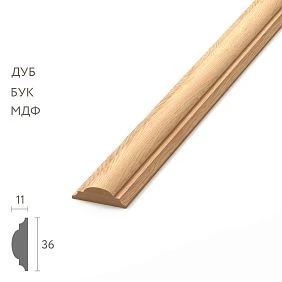
Why delivery does not yet mean wooden trim is ready for installation




Why wooden trim should not always be installed immediately after delivery
Delivery completes logistics, but not necessarily the preparation of the material
Physical delivery answers the question of whether the order arrived in the right quantity and condition. Preparation before installation answers a different question: can the product now be cut and fixed in the environment where it will be used.
There may be differences between these stages:
- the material is colder than the room air;
- the air in the room is significantly drier or more humid than the transport conditions;
- the room has recently had screed or plaster work completed;
- the heating has just been turned on;
- the room heats up during the day and cools down significantly at night;
- heat guns or dehumidifiers are operating nearby;
- exterior doors are constantly being opened;
- the profile has a finished decorative coating and requires particularly careful handling.
If installation begins immediately, the product is fixed to the base in a state that may still differ from its future operating condition. This does not mean that any wood will necessarily deform. The risk arises when the difference in conditions is significant and the material has not been given the required preparation.
Long lengths are more sensitive to small changes than a short sample
On a short fragment, a change in geometry may be almost imperceptible. On a long skirting board, cornice, or moulding, even a slight bow or helical deviation becomes more noticeable when placed against a wall and at a long joint.
During installation, this can manifest as:
- uneven fit;
- stress in the fastening;
- opening of the joint;
- difference in plane between adjacent parts;
- difficulty of making an accurate cut;
- the temptation to “pull” the profile together with fasteners.
Installation readiness is the combined state of the product, the room, and the substrate
Even a perfectly prepared profile cannot be installed with quality on a damp, weak, or geometrically problematic surface. And conversely, a finished wall does not compensate for a material that has just undergone a sharp change in conditions and has not yet undergone the required preparation.
Our factory also produces:








What happens to wood when air humidity changes
Wood exchanges moisture with the surrounding air
This is a normal property of the material, not a defect. The moisture state of wood tends to change in accordance with the surrounding temperature and relative humidity. The process does not happen instantly: the rate depends on thickness, species, coating, packaging, air exchange, and the magnitude of the difference between the previous and new conditions.
Changes in moisture state are related to dimensions
For joinery products, changes across the grain are especially important. Along the length, wood changes much less, but for long-length profiles, the geometry depends not only on linear shrinkage or swelling. Uneven changes in state across the cross-section and length can manifest as warping, bowing, or twisting.
Therefore, the task of preparation is not to "dry the product on site," but to allow a well-made material to remain in suitable stable conditions before fixing.
A protective coating slows the exchange but does not turn wood into inert plastic
Lacquer, paint, or another coating can slow moisture exchange, but they are not a reason to ignore the microclimate. For finished trim, there is another task: protecting the surface from scratches, dirt, and local heating.
Pre-installation acclimation does not fix initially problematic wood
If a product already has a pronounced geometric problem, traces of water, or another questionable condition, a few days in a room cannot be presented as a way to "cure" the material. First, questionable products are separated, the scale is assessed, and the cause is determined.
Get Consultation
Why long profiles are especially demanding regarding stable conditions
The bow becomes noticeable on a long wall
A strip may look straight in the packaging, but when applied to a long base, a small deviation becomes more pronounced. If the installer starts compensating for it with excessive fastening force, the stress is transferred to the joint.
Twisting complicates joints and abutments
For a molding intended for a framed composition, a slight helical distortion can produce a different plane at the joint. For a cornice, the problem is visible at the abutment to the ceiling and wall. For a baseboard, it shows along the top edge and at the connection of adjacent sections.
Forced pulling should not replace diagnostics
Fasteners are intended for the specified installation method, not for masking a clearly unprepared or problematic product. If one profile requires unusually great force, it is first compared with other strips, and the base and room conditions are checked.
Production, transport, season, and the actual environment of the site
Production, transport, and the finished room are three different environments
When Construction material suppliers Moscow When working with large sites, it is useful to separate three stages in advance: where the product was manufactured and stored, under what conditions it was transported, and where it actually ended up after unloading.
Production environment
At the production facility, the wood undergoes technological preparation and is stored under controlled conditions. The official STAVROS memo specifies the use of technologically dried wood and a normalized production environment. At the site, the task is different: to preserve the product and transition it to the actual conditions of the room without abrupt adverse exposure.
Transport
In winter, the vehicle body may be significantly colder than a heated room. In summer, the cargo may travel in a warmer and more humid environment than a conditioned interior. The duration of transportation, packaging, and the temperature of the material itself affect the transition after unloading.
Construction site
Even within a single building, conditions vary. The first floor is enclosed and heated, the second has recently finished screed, the third is open for facade installation, and the fourth is already operating in a stable mode. The site cannot be considered a single climatic zone.
Winter delivery in Moscow: why haste is especially risky
Cold material should not be locally "acceleratedly warmed"
After transportation at low temperature, it is natural to want to place the packs next to a radiator or a heat gun. This is a poor preparation method: the exposure is local and uneven. One area heats up faster than another, the surface faster than the inner part, and the side closest to the heat source faster than the opposite side.
A prepared area without direct exposure to a heating appliance is needed.
Possible condensation requires attention
When cold cargo is moved into warm, humid air, condensation can form on cold surfaces under certain conditions. If droplets are visible or the packaging has become damp, you cannot simply open everything and start cutting. First, you need to ensure safe conditions and assess the actual state.
Heating of the room must also be stable
If heat guns raise the temperature during the day and the floor cools down at night, the material is in a changing environment. One good measurement at the time of arrival does not describe the conditions in which the profile will be installed.
The winter scenario must be planned before shipment
For a large order, the following are determined in advance:
- delivery date;
- receiving person;
- prepared room;
- actual state of the heating;
- planned installation date;
- responsible for verifying the conditions;
- the procedure for handing over the material to the crew.
In summer and during the transitional seasons, you also cannot rely on temperature alone
High outdoor humidity and air conditioning create different environments
In summer, material may arrive at a space with air conditioning running after being stored or transported in more humid air. This again means a transition between environments, even though there is no "cold winter delivery."
Wet processes matter more than the calendar season
In July, a space may be less prepared than in January if screeding, plastering, and painting with water-based products are still ongoing inside. The season itself does not indicate readiness.
The transitional seasons are often unstable in terms of heating
In autumn and spring, continuous heating may not yet be on or may already be turned off. The space warms up during the day but cools down at night, and exterior openings are open. In such an environment, it is especially important to look not at a single number but at the dynamics of the conditions.
Space readiness: microclimate, wet processes, and responsibility
Room readiness is not just about clean walls and permission to install
The main wet processes must be completed to the extent required by the facility's technology
These processes include:
- plastering work;
- puttying;
- screeds;
- painting with water-based compounds;
- tiling work;
- other processes that introduce a significant amount of water into the room.
Wooden trim should not be brought into the room just because it can physically be placed there. First, assess whether this area has become suitable for finished wood.
A visually dry wall does not equal a stable indoor climate
The surface may look dry, while intensive moisture exchange after construction work is still ongoing in the room. That is why a professional site uses objective temperature and relative humidity data, not just the sensations of “seems warm” and “seems dry.”
The substrate must also be ready
Before installation, check:
- geometry;
- strength;
- cleanliness;
- completion of adjacent finishing operations;
- the intended fastening method;
- absence of work that would damage the already installed profile.
Which works especially affect the indoor climate before wood installation
Screed
A large volume of water in floor works does not disappear the moment the surface can already be walked on. The decorative finishing schedule must take into account the actual readiness of the room, not just the completion of the operation according to the calendar.
Plaster and putty
A large area of fresh wet compounds affects the humidity regime of the room. If the molding is delivered in advance, it is better to keep it in a prepared area than to move it into the room immediately after the wet work is completed.
Painting with water-based compounds
After painting, the room also goes through a stabilization period. It is important to assess the overall regime, especially if the windows are closed and forced drying is used at the same time.
Tiling and other wet processes
Even if the wooden skirting board will be installed in another part of the room, the overall environment may still differ from future operation. Therefore, the finishing schedule must be coordinated.
Who on site confirms the room's readiness for wooden trim
Responsibility must not dissolve between the participants
The customer may believe that the condition of the room is controlled by the general contractor. The general contractor may believe that this is the task of the installation organization. The installers may believe that if the material has already been delivered, then the site is ready. As a result, no one records the moment when the wooden trim can actually be moved from the storage area into the installation room.
In practice, the following may participate:
- customer;
- general contractor;
- site foreman;
- supply department;
- installation organization;
- technical supervision.
The composition depends on the site. The key is to assign a role that confirms: wet processes are completed to the required extent, the room conditions are stable, the substrate is ready, and the material can be moved into pre-installation preparation.
Supply is responsible not only for the truck date
If construction materials suppliers moscow they confirm production and shipment, and the supply department must reconcile this with site readiness. A task cannot be considered complete just because the truck arrived on time.
Installers should not make the decision alone when they arrive on site
If the crew arrives and sees an unstable microclimate for the first time, the schedule is already under pressure. It is better for the readiness decision to be made in advance, before mobilizing people and cutting.
Placement after delivery: substrate, heat, and packaging
Where to place the trim after delivery before preparation begins
The area should be close in conditions to the place of future use
If building materials Moscow wholesale are purchased for a large site, there is a strong temptation to stack the entire batch in the first available room at the entrance. For pre-installation preparation, it is better to use a clean, dry area whose conditions are close to the future installation room or at least do not create a sharp unfavorable contrast.
The base must be clean and safe
Do not place packs directly on a wet, cold, or contaminated base. Level supports, pallets, or racks that ensure horizontal placement without sagging are convenient.
Do not place the material in a passageway
Even a corridor with ideal microclimate conditions is a poor preparation area if equipment is constantly carried through it, carts are rolled, and doors are moved. The risk of mechanical damage grows faster than the benefit of being close to the installation site.
Do not move the trim into the room too early
If the room will still be actively painted, sanded, drilled, or furnished for several more days, it is better to leave the material in a protected area and move it later. Pre-installation preparation should not increase the time the finished product spends among dirty processes.
Why you should not place wood near a radiator, convector, or heat gun
Local heating creates uneven exposure
One side of the pack may heat up faster than the other. The end near the heat gun heats up faster than the middle. The top plank heats up faster than the inner part of the stack. This pattern does not resemble a calm adaptation to the room environment.
Heating quickly does not mean preparing correctly
The goal is not to raise the surface temperature as quickly as possible. The goal is to let the material remain in a stable environment without extreme local exposure.
Accelerated heating is especially undesirable for a finished coating
For painted, tinted, or lacquered products, the condition of the decorative surface adds to the risk to the geometry. That is why they are not placed where a hot air stream is directed straight at the profile.
Why a cold or damp floor is a bad place for temporary storage
When building materials wholesale Moscow they are brought to the site in winter, and the packs are sometimes stacked directly on the concrete next to the unloading area. For wooden finished trim, this is a bad temporary habit.
Contact with an unfavorable base creates a local difference in conditions
The lower part of the pack is closer to the cold or potentially damp surface, while the upper part is closer to warmer air. Even if the material lies there only briefly, this is not the condition you should aim for before installation.
On a construction site, there is always a risk of water
A leak, washing, wet cleaning, water after tile work — all of this more easily affects material lying directly on the floor.
The horizontal support must be even
You cannot replace proper stacking with two random bricks under a long bundle. Long-length material is stored and prepared so that it does not create its own sagging.
Should wooden trim be fully unpacked right away
The universal answer "always unpack everything" is too crude
On different products and in different materials, packaging serves a different function. It protects against dust, accidental scratches, construction dirt, and mechanical contact. On an active site, removing all protection at once can be worse than leaving a batch closed until the appropriate stage.
But packaging must not hide a problem
If there are signs of condensation, water, crushing, or damage on the pack, it must be opened according to the agreed procedure and the contents checked. A questionable group must not be kept closed merely for formal compliance with packaging.
The decision depends on the specific product and the manufacturer's recommendations
Different types of trim, materials, and coatings may have different preparation requirements. Therefore, the site checks the current documentation for the specific product rather than applying one internet rule to all wood.
For large sites, we prepare only the current queue
If there are a thousand meters of wood in the warehouse, but installation begins on only one floor, there is no point in opening the entire volume at once. The remaining batches are better kept identified and protected until their turn.
How to combine packaging protection and material adaptation
Separating the tasks
Packaging protects against external mechanical and construction impacts. Preparation for installation ensures the material is kept in suitable conditions. These tasks should not be opposed to each other.
A practical approach for a large batch
- the batch is received and placed in the prepared area;
- the nearest installation queue is determined;
- the condition of the packaging is checked;
- current recommendations for the specific product are reviewed;
- only the required queue is moved to pre-installation preparation;
- the rest of the volume remains protected.
After opening, the marking must not be lost
If several similar moldings are located next to each other, after removing the outer film each group must retain its article number, material, length, and purpose. Otherwise, preparation for installation creates mixing up.
Why there is no single universal holding time
Why a single universal holding time cannot be assigned
The same number does not describe different starting conditions
A batch that arrived in summer from conditions close to the room, and the same item after winter transportation in a cold truck body, have different initial states. Therefore, calendar time by itself is not a complete characteristic of readiness.
The duration depends on a combination of factors
- season;
- temperature of the material upon delivery;
- room temperature;
- relative humidity;
- stability of the conditions;
- length and cross-section of the product;
- wood species;
- presence of coating;
- type of packaging;
- condition of the object itself;
- current manufacturer recommendations.
Why the rigid rule of “48 hours for everything” may be wrong
On one site this may be excessive, on another — insufficient. In addition, different official materials and instructions may refer to different products, packaging, and scenarios. Therefore, it is more correct to use time as part of the procedure, not as the only criterion.
The decision is confirmed by the condition and circumstances, not only by the calendar
If the conventional number of hours has passed, but the room is still unstable, installation does not automatically become correct. Conversely, if the conditions are close and the product has been prepared according to the current instructions, there is no need to artificially keep the crew on site just for someone else’s universal number.
How to monitor temperature and relative humidity without turning the article into a review of instruments
For a critical facility, it is useful to have objective data. It is important to understand not only the current value, but also the conditions in which the space operates.
A single measurement is a photograph, not a film
In the morning, the device shows stable conditions; during the day, exterior doors are opened; in the evening, heat guns are turned on; at night, heating is switched to a different mode. A single morning reading does not describe this cycle.
You need to look at stability
If building materials wholesale Moscow are supplied for a large business center, it is useful to record conditions not just once at the entrance, but in the actual future installation area during the preparation period. It is not necessary to build a complex monitoring system, but it should be clear that the conditions do not fluctuate drastically.
The measurement result must be tied to a specific area
Data from the first floor does not replace data from the twelfth if they have different stages of finishing and heating. On a large site, it is more reasonable to monitor by readiness zones.
How to tell that the space is not ready yet
Clear signals
- the screed has just been completed;
- plastering or finishing works are ongoing;
- condensation appears on glass or metal;
- heating operates only intermittently;
- the room cools down significantly at night;
- external openings are constantly open;
- powerful local heat guns are used;
- dirty and wet processes are ongoing in the room.
A less obvious signal is an upcoming sharp change in conditions
Today the room looks stable, but tomorrow the contractor plans to turn on permanent heating or close the facade. In that case, it makes more sense to wait for the new operating conditions and prepare the material for them.
The schedule does not override the physics of the material
If the schedule requires installation to start on Tuesday, but the room is objectively not ready by Wednesday, an attempt to "keep up" can turn one day of delay into reworking the installed trim.
How to integrate trim preparation into the supply and installation schedule
How to include pre-installation preparation in the site schedule
When building materials wholesale in Moscow for a multi-stage site, procurement should know not just one date, but a chain.
PRODUCTION READINESS → DELIVERY → ACCEPTANCE → PLACEMENT → ZONE CHECK → PRE-INSTALLATION PREPARATION → INSPECTION → CUTTING → INSTALLATION
Delivery date and installation date must be separate fields
If the buyer only knows "deliver by the 15th," they don't understand whether the material will be installed on the 15th, the 18th, or in a month. For wood, this interval affects the storage location and preparation.
Too early delivery is also a risk
The longer the trim stays in a construction environment, the greater the likelihood of:
- damage;
- contamination;
- movement between zones;
- loss of labeling;
- being near unstable wet processes.
Delivery on the installation day — the opposite extreme
The crew has no spare time to check conditions, placement, preparation, and re-inspection. Any problem with the microclimate or packaging turns into idle time for the workers.
The optimal date is tied to the readiness of a specific zone
We need to find a technologically reasonable window: not too early for storage amid the construction site and not too late for preparation before installation.
How to coordinate the delivery date with the installation crew
Before shipment, you need to know who will receive the material and when the work will actually begin
When supply of construction materials for a large project, procurement must receive from the construction team not an abstract “you can bring it,” but a clear production scenario:
- which zone is ready;
- who receives the vehicle;
- where the trim will be moved after unloading;
- when cutting is expected to begin;
- when installation will begin;
- whether wet or dirty work is planned nearby;
- who confirms the room is ready.
If the crew postpones the start date, the delivery should be reconsidered too
The material does not have to arrive on the original date if installation has shifted by several weeks and the site does not yet have a safe storage zone. Sometimes it is wiser to postpone a specific delivery than to extend how long the finished wood stays on the construction site.
If the delivery is already on its way, the preparation zone must be a backup
On a large site, it is useful to have a pre-designated alternative room where material can be safely stored if the installation area suddenly becomes unavailable. This should not be a damp basement or a through corridor "for a couple of days."
Delivering by floor means you don't have to drag the entire project into a single climate situation
Different floors may be ready to varying degrees
In one building:
- floors 1–4 are enclosed, heating is stable, wet work is complete;
- floors 5–8 were recently painted;
- floors 9–12 are still partially open to outside air.
It is not necessary to deliver wooden trim to all zones at once just because the entire order is ready at the manufacturer.
Phased delivery reduces storage risk
If deliveries of construction materials tied to the actual readiness of floors, each batch spends less time in the intermediate construction environment. This is especially useful for large volumes of the same profile.
Example of zone readiness table
| Zone | Wet works | Heating | Material delivered | Ready for preparation | Installation |
|---|---|---|---|---|---|
| 1st floor | Completed | Stable | Yes | Ready | After verification |
| 2nd floor | Recently completed | Working | No | Check mode | Postpone until confirmation |
| 3rd floor | Continuing | Unstable | No | NOT READY | Do not start |
This is an example of control organization, not a universal regulatory table.
The overall status "object ready" is too coarse
For wooden trim, it is more useful to say "floor 1 ready", "floor 2 under inspection", "floor 3 not ready". Then procurement can manage deliveries more precisely.
Trim with factory finish and material for subsequent processing
Trim with factory finish and material for subsequent painting require different handling
A finished surface adds risk of damage
A painted, stained, or lacquered profile is already a finished part of the interior. In addition to the microclimate, it must be protected from:
- scratches;
- construction dust;
- paint drips;
- end chips;
- contact with metal elements;
- local heating.
Material intended for on-site finishing also cannot be considered "invulnerable"
The fact that the trim will still be sanded or painted does not mean that geometry and moisture condition are unimportant. Severe contamination, contact with water, or deformation will cause problems during subsequent finishing as well.
The sequence of finishing operations must be known in advance
For some products, the logic may be:
preparation → cutting → installation → surface preparation → final finishing.
For others, the profile is already supplied with a finished surface, and after installation only careful fitting is required. These scenarios are not combined into a single instruction.
Pre-installation adaptation is not the drying of wet or damp material
These are fundamentally different processes
A high-quality dry profile that has arrived from different temperature and humidity conditions may require preparation for the room environment. A completely different situation is a product with clear signs of wetting, excessive moisture, or an initially unsatisfactory condition.
Normal on-site conditioning should not be used as a way to fix problematic material.
What to do if wetting is suspected
- separate the disputed group;
- record the condition and marking;
- check the scale of the problem;
- check neighboring products;
- assess storage and delivery conditions;
- if necessary, coordinate further actions with the supplier.
Installation should not become a way to "straighten out" a questionable strip
If a profile requires excessive force just to lie against a normal base, that is a reason to stop and investigate. Fastening should not mask a condition that would not have been accepted during a routine inspection.
Final check before installation: material, base, and geometry
What to check on the trim immediately before installation
The final check differs from incoming acceptance
During incoming acceptance, the condition was checked after delivery. Time has passed before installation, the material could have been moved, partially unpacked, and kept near other work. Therefore, the old mark "accepted without comments" does not cancel a repeat inspection.
Minimum pre-installation check
- article number and material;
- geometry;
- ends;
- surface;
- condition of the decorative coating;
- absence of obvious traces of water;
- new mechanical damage;
- belonging to the correct zone;
- conformity to the actual base.
We check more than just one top plank in a large batch
If the volume is significant, the sample is distributed across several packages. Pay especially close attention to groups that have been opened, moved between floors, or placed in another part of the room.
How to distinguish a material problem from wall unevenness
First we check the profile itself on a clear reference surface
The skirting board may appear "crooked" when it is placed against a wall with a local dip. Therefore, before concluding anything about quality, the profile must be compared with a flat reference surface or by another method accepted at the site.
We check the base separately
The wall may have:
- a wave;
- local protrusion;
- incorrect angle;
- unevenness at the floor;
- mortar residue;
- defect of the finishing layer.
If the same profile fits well against the reference surface but poorly against the wall, the issue already relates to the base.
Do not pull the wood against a clearly uneven wall as a way to fix the wall
Excessive fastening force can damage the joint or create stress in the profile. First, the geometry of the base is addressed or the mounting method specified by the technology is selected.
What to do if the geometry of individual products changed after preparation
Separate the problematic planks
There is no need to reject the entire batch right away. First, specific products are identified and it is checked whether the sign repeats.
Assessing the scale
For example, out of 80 moldings, two are problematic. This is a local situation. If a similar bend occurs in every second batch, the inspection area is expanded.
Checking the environment
If the problem appeared only after several days on site, it is important to understand:
- whether the microclimate is stable;
- whether the material was placed near a heat source;
- how it was installed;
- whether there was contact with water;
- whether other products show similar signs.
Only after diagnostics do we choose the next step
The item can be left for additional inspection, replaced from reserve stock, or another solution can be agreed upon. The universal command "pull it tighter to the wall" is not suitable.
The big winter supply in Moscow: how to connect procurement, the site, and installation
When building materials are purchased wholesale in Moscow for a business center or hotel in winter, it is useful to build in advance not a logistics chain, but specifically a pre-installation chain.
Before dispatch
Procurement knows:
- which zone is ready;
- how the heating works there;
- where the wood will be placed after unloading;
- when the installation crew arrives;
- who controls the conditions.
On the day of delivery
The material is accepted, placed in a prepared area, not put next to heat guns, and mass cutting does not begin immediately just because the crew is free.
Before installation
The condition of the material, the room, and the substrate are checked. After that, the batch is released for work.
Why the Moscow cluster of queries here is not just geography
For wholesale building materials in Moscow, winter transportation and the transition from a cold street into a heated facility are a common practical scenario. But in summer and the off-season, control is still needed: what changes is not the principle, but the set of factors.
Practical scenarios on a construction site
Practical example: a batch arrived in winter at a heated business center
Initial situation
Wooden molding arrived after cold transportation. The floor is closed, permanent heating is running, the walls are ready, and installation is scheduled to begin the next day.
Incorrect logic
Immediately after unloading, open the entire batch, lay it out next to a heat gun, and start cutting an hour later.
Working logic
- move the material to the prepared clean area;
- avoid direct hot airflow;
- check the condition of the packaging and the absence of condensation;
- check the actual conditions of the room;
- allow the material to undergo preparation according to the current instructions and actual conditions;
- perform a re-inspection before cutting;
- only then hand it over to the team.
The key point is not to assign the same number of hours to any project by eye.
Practical example: the material has arrived, but screeding is still ongoing on the floor
The problem is not with the product
The moulding was accepted without comments. But the room is still undergoing a process that creates a humid construction environment. This means the area is not yet ready to receive finished wood.
Possible solutions
What to do if, after preparation, the room conditions change sharply again
Approval for installation does not remain valid indefinitely
A batch may pass pre-installation preparation and receive approval for cutting, but then the site changes its mode: heating is turned off for the weekend, a facade opening is opened on the floor, wet works resume, or the material is moved to another room. In such a case, the old decision must be reviewed.
First, we record exactly what has changed
Not every event requires starting the entire procedure from scratch. If the material was moved to an adjacent room with the same stable conditions, a short check may be sufficient. But if the profile spent the night in a cold zone or the room has become humid again due to construction work, a more careful repeat inspection is needed.
We do not leave already unpacked material unprotected amid resumed works
If the installation was postponed and puttying, drilling, and painting have resumed nearby, it is better to move the prepared batch out of the risk zone or restore protection as far as the specific product and preparation stage allow. The fact that “we were already about to install” does not protect the surface from dust and water.
The new installation date must be added back into the overall schedule
Supply, the site, and the crew update not only the calendar but also the material status: where it is, under what conditions, whether additional preparation is required, and who re-authorizes its release. This approach is especially useful on sites where finishing work is regularly delayed by several days.
The practical point is simple: the readiness of wooden trim is a state tied to specific conditions and a near installation date, not a one-time mark that lasts forever. If conditions have changed significantly, the batch undergoes the necessary inspection again before installation.
13 typical mistakes after delivery of wooden trim
- Starting installation immediately after winter unloading. The transition between transport and indoor conditions is ignored.
- Placing packs next to a heat gun. This creates localized uneven heating.
- Bringing wood into a room with active wet work. The finishing material ends up in an unstable environment.
- Treating a visually dry wall as proof that the entire room is ready. The surface and the overall indoor climate are different things.
- Relying on a single random measurement. Daily instability of the conditions is not visible.
- Delivering too early. The time the material spends exposed to construction risks increases.
- Deliver exactly when the crew arrives. There is no time for preparation and inspection.
- Treat the entire site as a single climate zone. Floors may be at different stages of readiness.
- Remove all packaging at once without necessity. Protection from dust and damage is lost.
- Place long-length material directly on an unsuitable floor. Additional risks to moisture and geometry are created.
- Do not re-inspect the material before installation. Damage that occurred on site is missed.
- Pull a problematic profile with fasteners. Installation masks the cause and creates stress.
- Mistake wall unevenness for a defect in the trim. The source of the problem is incorrectly identified.
Checklist before handing over the trim to installers
| Check | What must be confirmed |
|---|---|
| Wet processes | Main work completed in the required scope |
| Heating | Mode is clear and stable |
| Temperature and relative humidity | Objective data available for the specific zone |
| Placement location | Clean, dry, no direct heat |
| Packaging | Condition checked, disputed groups separated |
| SKU and zone | Material belongs to the current queue |
| Geometry | No unexplained deviations |
| Surface | No new damage or contamination |
| Base | Ready for the intended installation method |
| Related works | Do not create an obvious risk after installation |
| Responsible person | It is clear who authorizes the transfer to work |
Procurement documentation and coordination of participants
How to include the preparation of wooden trim in the procurement documentation
No need for a huge separate regulation for each order
It is enough to link several fields in advance:
- planned delivery date;
- site and zone;
- temporary storage location;
- planned installation date;
- person responsible for room readiness;
- method of confirming handover to installation.
It is useful for the supplier to know the context
If building materials supplier understands that a large batch is traveling in winter to a site with installation in two days, they can proactively draw the customer's attention to current recommendations for handling the specific product.
The internal schedule must distinguish between "delivered" and "ready for installation"
These are two different states. If the project system sets a green status immediately after unloading, the crew may start work without checking the room.
How to connect supply, site, and installation crew with one simple scheme
SUPPLY CONFIRMS THE DEADLINE → SITE CONFIRMS READINESS → SUPPLIER SHIPS → MATERIAL IS PLACED → PREPARATION IS CARRIED OUT → RESPONSIBLE PERSON GRANTS ACCESS → CREW RECEIVES THE MATERIAL
If one link drops out, the others start compensating with improvisation
The supply arrived too early — the site is looking for a random warehouse. The site did not confirm the schedule — installers decide "on the spot." Delivery was scheduled for the installation day — the crew is forced to work with just-unloaded material.
Transparent status reduces conflict between parties
If the log shows "delivered, pre-installation preparation in progress," no one perceives the material as an overdue task just because it has not yet been installed.
What to record after delivery without unnecessary bureaucracy
| Field | Why |
|---|---|
| Date of receipt | Understand the actual interval before installation |
| Placement zone | Link material to conditions |
| SKU / batch | Don't lose identity |
| Mounting area | Don't mix up floors |
| Planned installation date | Link preparation to the schedule |
| Packaging condition | Record disputed groups |
| Room conditions | Understand the initial mode |
| Approval for installation | Who authorized the work and when |
For a large site, this can be a regular list without complex automation. The main thing is that it distinguishes physical delivery from actual readiness for installation.
Why proper preparation is more cost-effective than urgent installation
What is saved is not waiting time, but the risk of rework
If materials in bulk purchased for hundreds of meters of interior, one day of properly organized preparation can be economically less significant than re-disassembly, touch-up painting, fixing joints, and downtime of subsequent work.
Preparation helps to detect a problem earlier
Questionable geometry, packaging damage, an unprepared wall, or an unstable regime are identified before cutting and fixing. After installation, correction is more difficult and more expensive.
This also protects against unfounded disputes
If the initial conditions, the condition of the material, and the moment of approval for installation are recorded, it is easier to separate the supply issue from the problem of the substrate or the on-site microclimate.
What can be taken from the current STAVROS memo, and what should not be turned into a universal standard
The official memo confirms the sensitivity of wood to the environment
The current STAVROS memo on storage and operation states that the company uses technologically dried wood with "furniture moisture content" of 8 ± 2%. For a normalized production environment, relative humidity of 40–60% and a temperature of +17…+25 °C are specified. For storage and operation, a recommended temperature of +10…+25 °C is given separately, along with requirements to avoid water, sharp temperature fluctuations, and proximity to heat sources.
These data are useful as a confirmed starting point: wood really does require a controlled environment and should not be in a wet or sharply heated area.
A production environment is not automatically a standard for every site
You cannot take the range for a production facility and declare it the only acceptable criterion for any installation. A specific site has its own design documentation, heating system, finish coating, substrate, and operating conditions.
Therefore, the figures in the article are used as the manufacturer's official information on wood storage and preparation, while the final decision before installation is tied to the current documentation for the specific product and the stability of actual conditions.
That is why no universal acclimation period is specified here
The manufacturer's public materials contain recommendations of varying duration for different installation contexts. This is another argument against turning a single number of hours into a mandatory rule for any skirting board, moulding, casing, or cornice.
The better question is:
- what is the actual condition of the material after delivery;
- how much do the previous and new conditions differ;
- is the indoor climate of the room stable;
- what does the current documentation for this specific product require;
- is the substrate and adjacent work ready.
Two identical SKUs at two sites may require different preparation
Site A: summer delivery into an already operating interior
The molding was delivered in July. The building is enclosed, air conditioning runs continuously, wet processes were completed long ago, and the space is in stable use. The material arrives in a clean, prepared area.
Here the main task is to follow the manufacturer's current recommendations, preserve the packaging and labeling, confirm that conditions are stable, and perform a check before installation. This site does not require a "winter warm-up" scenario.
Site B: January delivery to a floor under construction
The same SKU arrives after cold transport. Permanent heating was turned on only a week ago, painting is still underway on the neighboring floor, and exterior doors are opened regularly. Installation is planned for the next day.
There are more risks here:
- a more significant change in conditions;
- the microclimate may be unstable;
- there is a high probability of localized accelerated heating;
- the construction environment is still active.
An identical product code does not make two scenarios the same. Preparation is determined not by the product name, but by the combination of conditions.
How to assess the stability of the indoor climate on site without a complex laboratory
A sequence of observations is needed
For a construction site, it is most often more important to understand the trend than to get one ultra-precise figure. If temperature and relative humidity are measured in the morning, afternoon, and evening, or automatically recorded by a simple data logger, you can see how much the conditions change.
A large daily fluctuation is a reason not to rush
If the floor is cold at night, local heating is turned on in the morning, exterior doors are opened during the day, and everything is turned off again in the evening, the material is in a transitional environment. Even if the meter shows a comfortable value at 2:00 PM, the conditions cannot be called stable.
Measurements are taken where the material is actually located
Data from the central lobby does not describe a room on the 14th floor. If the batch is stored in a separate preparation area, monitoring applies specifically to that area and to the future installation site.
The sensor must not be placed directly under hot air
A local space heater or radiator distorts the picture. The goal is to understand the room environment, not the temperature near the heat source.
How to determine the moment of approval for installation without a magic number of hours
Four groups of conditions must be closed simultaneously
| Group | What is being checked |
|---|---|
| Room | Stable mode, no active wet processes and no sudden planned changes |
| Material | Identified, without obvious traces of moisture, geometric and surface problems |
| Base | Geometry, strength, cleanliness and readiness for the intended fastening |
| Process | Current requirements for the preparation of a specific product have been met |
If one group is not ready, calendar waiting by itself does not solve the problem.
Example: several days have passed, but the screed and heating are unstable
Formally, the material "sits at the site for a long time," but this does not mean it has adapted to the future operating environment. If the environment itself is constantly changing, the material adapts to a moving target.
Example: less than the usual period has passed, but the conditions are almost identical
The site still must not shorten the manufacturer's prescribed procedure at its own discretion. But this scenario shows why the actual difference in conditions matters more than blindly comparing two sites by the calendar.
What to do if installation needs to begin but the room is not yet ready
Do not issue material to the crew just to keep people occupied
If the conditions are not confirmed, an attempt to keep installers busy at any cost shifts the risk onto the finished product and the substrate.
Option 1. Rearrange the order of work
The crew moves to an area that is already ready. This is especially effective on multi-story sites with the same assortment.
Option 2. Postpone a specific delivery
If the material is still at the manufacturer, it is sometimes better to postpone delivery than to create a temporary warehouse on a floor that is not ready.
Option 3. Use a prepared intermediate zone
The batch has already arrived, but the required room is not ready. The material is placed in a suitable clean zone, identification by floor is preserved, and they wait for readiness.
Option 4. Resolve the site-specific cause
If the problem is a local unsealed opening, unstable heating, or an ongoing wet operation, the site can speed up by eliminating the cause rather than trying to compensate for it through installation.
How to organize a Moscow delivery through procurement without a double buffer
If materials supplier is preparing a large batch for Moscow, procurement often sets aside a large reserve of "let it sit at the site." This seems safe for the schedule, but it can create months of storage in a construction environment.
It is better to have two coordinated buffers
The first is production: when the batch is physically ready or can be manufactured by the required date. The second is site: how much time is actually needed between delivery and installation for a specific product and conditions.
An excess reserve of several weeks or months should not arise automatically just from the fear of being late.
for construction materials wholesale readiness is important not only for the buyer, but also for the zone
The company may be ready to pay for and accept the goods, but an individual floor is not ready to store them. In this case, commercial readiness and installation readiness diverge.
Edge case: the material has been on site for a week, but it was stored in a different place from where it will be installed
The duration of stay on site alone does not yet prove preparation
The skirting board lay for a week in a cold storage room on the first floor, while installation will take place on the warm 12th floor. One cannot assume that “seven days have already passed — everything has adapted.” It adapted to the storage area, but not necessarily to the installation room.
Before moving to the warm zone, a new transition begins
It is necessary to assess the difference in conditions and perform the current preparation procedure for the actual installation location.
Therefore, the temporary warehouse and the preparation zone may be different
The warehouse preserves the goods. The preparation zone brings them closer to the conditions of future operation. On a simple site, this may be one room; on a complex one, different rooms.
Edge case: the material and the room are stable, but the substrate is not yet ready
The molding has undergone preparation, the microclimate is stable, but the walls have geometric defects and still require correction.
Do not keep an unpacked finished batch in the room during wall alterations
If sanding, filling, or painting begins, the material is again exposed to dust and moisture. It is better to return it to a protected storage scheme or separate it from the work area.
Material readiness does not cancel out substrate readiness
These two checks run in parallel and converge only before installation.
Edge case: a profile with factory finish arrived earlier than the set of another SKU
On a large project, logistical mixing may occur: painted moldings have already been delivered, while the skirting board for the same area is delayed.
There is no need to keep opened finished material waiting for full completeness
If installation does not begin, the batch retains protection as far as is compatible with the current preparation procedure. Order completeness and the readiness of an individual item are different matters.
Pre-installation preparation is planned relative to the actual installation date of a specific group
It is not necessary to move all items in an area into open preparation at the same time if their installation takes place on different days.
What result should the customer obtain before calling the supplier
If a company is planning wholesale building materials in Moscow and the Moscow region, before agreeing on a delivery date for wooden trim it is useful to have five answers:
- which area is actually ready;
- where the material will be located after unloading;
- what conditions are maintained there;
- when installation will actually begin;
- who will grant access after preparation.
After this, delivery is linked to the production schedule rather than existing separately from it.
Conclusion: wooden trim becomes ready for installation not at the moment of unloading
When working with wooden skirting boards, mouldings, architraves, cornices and battens, delivery does not end at the side of the truck. Between transport and installation there is a separate technological stage: the material is placed in a suitable area, the conditions of the room are checked, it is given the required preparation, it is inspected again, and only then is it passed to cutting.
Wood is sensitive to the temperature and relative humidity of the ambient air. Therefore, a rigid rule of "always wait the same number of hours" is less reliable than a managed procedure that takes into account the season, the difference in conditions, the dimensions of the product, packaging, finish, stability of the room, and current manufacturer recommendations.
This logic is especially important for winter deliveries in Moscow, after recent wet processes, and at sites where floors are ready unevenly. Too early delivery increases the risk of storage amid construction, while delivery directly at the moment installers arrive leaves no time for preparation and inspection.
The correct sequence looks like this:
delivery → prepared area → microclimate control → pre-installation preparation → re-inspection → substrate check → approval → installation.
It is after this chain that the material actually becomes ready for installation. Therefore, for a large Moscow project construction materials supplier Moscow and the customer must agree not only on the shipment date, but also on the conditions in which the moulding will spend the period before installation.