Article Contents:
- A single site can have multiple buyers — one specification does not show this
- Construction material supplies begin with a scope-of-supply boundary register
- What BY CLIENT, BY CONTRACTOR, BY SPECIALIST, and TBD mean
- BY CLIENT — procured by the client
- BY CONTRACTOR — procured by the contractor
- BY SPECIALIST — included in the specialist contractor's package
- TBD — owner not yet determined
- Don't compare lists by names alone — compare by SKU and specification
- Register of placed orders: a simple table versus the phrase “we thought you'd already bought it”
- Five procurement statuses instead of “well, I think we bought it”
- NOT ASSIGNED
- ASSIGNED
- ORDERED
- PAID / CONFIRMED
- RECEIVED
- A customer's own purchase should be excluded from the contractor's procurement, but not from installation
- How to hand over self-purchased wooden trim to the contractor
- The most dangerous wording — “customer-supplied material”
- Is the door casing included with the door or purchased separately: how to formalize the decision
- Who purchases the decorative cornice above a built-in wardrobe
- What to do if the same material is purchased in parts by different parties
- How to avoid getting two different batches of the same profile with split procurement
- How to automatically find potential duplicates
- The same SKU does not always mean an error
- Check 1. Is the SKU in the current specification?
- Check 2. Who is the Procurement Owner?
- Check 3. Is there already a PO?
- Check 4. Is the item part of another contractor's package?
- Check 5. Does the quantity relate specifically to this phase?
- What to do if a duplicate is discovered after payment
- Scenario A — this is a genuine duplicate
- Scenario B — these are two different phases
- Scenario C — the total volume exceeds the requirement, but the excess part may be a reserve
- Procurement gap register
- How to process a change of procurement owner
- Which documents to check weekly on an active fit-out
- Practical example: the moulding turned out to be unpurchased between two estimates
- A reserve can also create a false duplicate
- How to distinguish a purchasing duplicate from a normal reorder
- If the SKU changes, the remaining stock of the old order cannot automatically be considered new material

For a country house, the customer independently ordered 280 m of wooden skirting board, 190 m of moulding, and 68 m of cornice. A few days later, the general contractor sent an invoice for the next fit-out package for the site. Inside, there was again “wooden skirting board — 300 m.” At first glance, someone had clearly made a mistake. In practice, both parties could have had their own logic: the contractor still had the skirting board in the original estimate, while the customer, after making the purchase independently, had not passed on the final procurement register and had not received confirmation that the corresponding line had been excluded from the contractor’s procurement package.
There is also the opposite problem. The customer is sure that the moulding is included in the finishing company’s contract. The contractor considers it the customer’s material. The item is present in the design specification, and it is mentioned in both budgets, but no one placed the order. A week before installation, it turns out that the required profile is not on site.
Both errors arise for the same reason: the project knows what needs to be purchased, but has not recorded who is specifically responsible for procuring each item. Therefore, for complex fit-out packages, one specification is not enough. A procurement responsibility boundary is needed, or a fit-out scope boundary register.
In this article construction material deliveries are considered not as vehicle logistics, unloading, or storage. The task lies earlier: the design has already specified the wooden skirting board, moulding, cornice, and architraves; the customer and several contractors are involved in the project; before paying for each order, it is necessary to make sure that one SKU is not being purchased by two parties and that no mandatory item has been left without an owner.
The working sequence looks like this:
specification → SKU → zone → quantity → procurement owner → contract check → check of other parties’ packages → order register → order → confirmation → receipt → handover to installation.
Before each new order, it is useful to ask five short questions:
SKU → who buys? → is there a duplicate? → is there a procurement gap? → is the current revision used?
If every question has a verifiable answer, joint procurement remains manageable even with multiple participants.
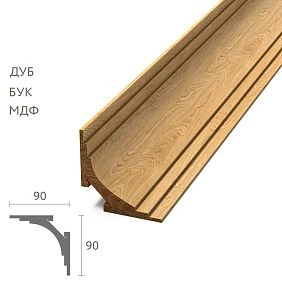
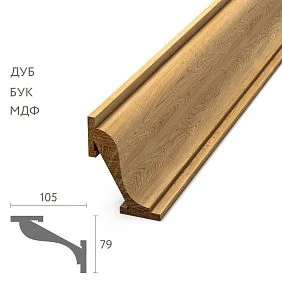
One object can have several buyers — a single specification does not show this
A large interior object is rarely procured by one person. The client may purchase the finish themselves. The general contractor procures general construction items. The finishing company orders some materials for its own work. The door company delivers door units along with some trim. The furniture maker supplies its own cornices, plinths, and decorative profiles. The procurement specialist handles individual design items. Some specialized subcontractors also purchase materials themselves.
Therefore, the rule “one specification = one buyer” can almost never be accepted without verification.
A design specification may contain one line:
PG-01 — wooden skirting board — 280 m.
But one line is not enough for actual procurement. You also need to understand:
- who chooses the final execution;
- who confirms the quantity;
- who requests the commercial proposal;
- who places the order;
- who pays;
- who arranges delivery;
- who receives at the site;
- who hands over the material for installation;
- who is responsible for reordering when the quantity changes.
To prevent double purchasing, one parameter is critical: who has the right to place an order for this specific item in the current project revision. Let's call them the Procurement Owner.
Other participants can check the calculation, approve the material, receive the goods, and install them. But for one procurement line, there must be a clear answer as to who places the order.




Construction material deliveries begin with a scope boundary register
Before the first major order, it is useful to assemble a Procurement Responsibility Matrix — in plain terms, a scope-of-supply boundaries register. It is a simple table that links a specific line item to the responsible parties.
| Code | Position | Who purchases | Who pays | Who accepts | Who installs |
|---|---|---|---|---|---|
| PG-01 | Wooden skirting board | Customer | Customer | contractor | contractor |
| PG-02 | Wooden molding | Customer | Customer | contractor | contractor |
| DR-01 | Door casing | Door company | Customer | Door company | Door company |
| MT-01 | Mounting material | contractor | contractor | contractor | contractor |
This table does not attempt to replace the contract. It serves a practical function: it gives the team a single operational answer as to who must order a specific material.
For example, the client has already purchased wooden skirting, but the contractor's estimate still contains an abstract line item “wooden skirting.” If the scope-of-supply boundaries register is not updated, the contractor may honestly believe it is obligated to fulfill its estimate in full. A double order arises not because someone wanted to buy the material twice, but because the two documents continued to live independently.
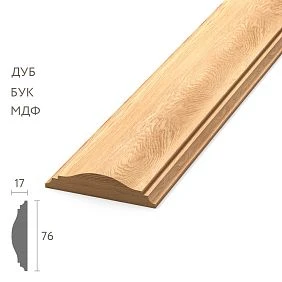
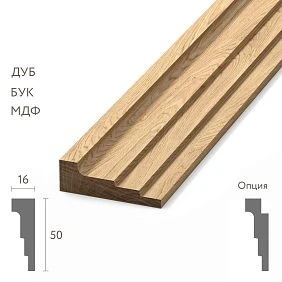
Our factory also produces:
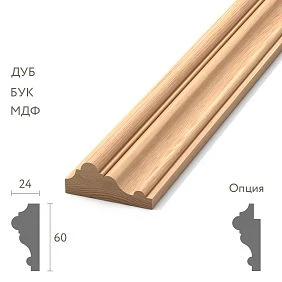
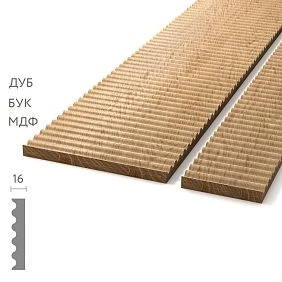
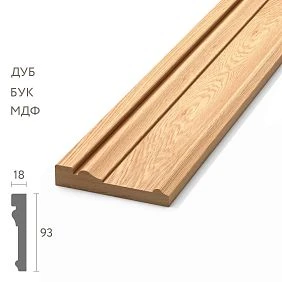
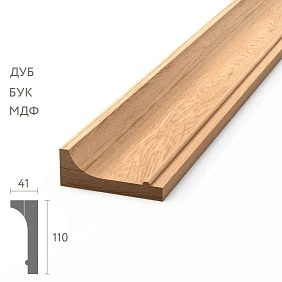
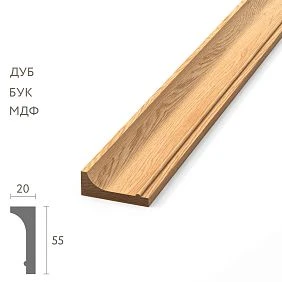
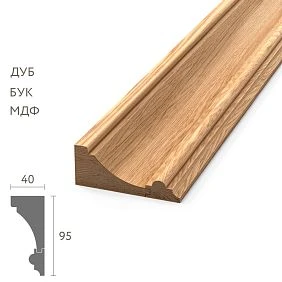
What BY CLIENT, BY CONTRACTOR, BY SPECIALIST, and TBD mean
For a large project, it is convenient to use several short procurement owner statuses.
BY CLIENT — purchased by the client
The customer or their procurement coordinator places the order with the supplier. The contractor may participate in quantity verification, accept the material, and install it, but does not place the purchasing order.
BY CONTRACTOR — procured by the contractor
The item falls under the procurement responsibility of the general or finishing contractor. The customer controls compliance with the specification and budget, but must not place a second order in parallel without changing the boundary.
BY SPECIALIST — included in the specialized contractor's package
This can be used to mark a door, furniture, or other specialized company if a specific element is indeed included in its package.
TBD — owner not yet determined
TBD — a useful status, not a sign of a bad table. It honestly shows an open question. It is far more dangerous to put "contractor" out of habit when the contract has not yet been reviewed, or "customer" just because the designer chose the material.
While a row has TBD status, it cannot be considered ready for procurement. The owner must first be determined and the decision recorded.
Get Consultation
Why the row "skirting — contractor" is not enough
The procurement boundary must be tied not to a general name, but to a specific product and execution. Otherwise, two parties may formally purchase different items that both call "skirting", and two incompatible systems will appear on site.
The working line must contain at minimum:
- article number;
- material or finish;
- cross-section / size;
- commercial length, if it affects the calculation;
- finish or subsequent finishing status;
- project volume;
- area of application;
- purchaser;
- order status;
- specification revision.
For example:
| Parameter | Value |
|---|---|
| Article number | PLT-___ |
| Material | Oak |
| Size | ___ |
| Length | ___ |
| Project volume | ___ |
| Purchased by | CLIENT |
| Pays | CLIENT |
| Accepts | CONTRACTOR |
| Installs | CONTRACTOR |
This level of detail makes it possible to distinguish a genuine duplicate from two different skirting boards for different zones.
Wooden skirting board — one of the first risk zones for double purchasing
Wooden baseboard easily appears simultaneously in several documents. The designer includes it in the finishing schedule. The contractor's estimator accounts for the skirting board as part of the finishing works. The customer's procurement specialist calculates the linear meters according to the plan. The foreman sees that the room cannot be closed out without the skirting board and also adds the item to the request.
If the documents are not linked, the same requirement turns into several parallel "sources of truth."
For skirting boards, it is especially useful to separate three levels:
- Design Requirement — what the project requires.
- Procurement Responsibility — who should purchase it.
- Purchase Order — who actually placed the order and when.
If the first level exists but the second does not, a dispute will arise. If the second exists but the third does not, a procurement gap will arise. If the third exists simultaneously on both sides, a duplicate is possible.
Wooden moulding: a double order is harder to notice because of different names
wooden molding may be named differently in documents: “moulding,” “wall baguette,” “decorative profile,” “frame profile,” “trim for panels.” Because of this, comparing two estimates by text gives a false sense of security.
The customer’s estimate may contain:
“MLD-___, oak, 190 m.”
In the finisher’s estimate:
“decorative wall profile, 196 m.”
The names and quantities differ, but in fact this may be the same requirement.
Therefore, potential duplicates are first searched by SKU and finish, and only then are quantity and purpose reviewed.
Don't compare lists by names alone — compare by SKU and finish
A bad check looks like this:
molding ↔ decorative profile → different names → no duplicate.
A good test:
MLD-___ / oak / finish A ↔ MLD-___ / oak / finish A → check the zone and quantity.
The SKU is the primary identifier, but even it alone is sometimes not enough. If a single SKU is available in different materials, lengths, or finish options, the registry must include the corresponding attribute. Otherwise, the system will flag a duplicate where the customer is buying one variant and the contractor another.
The reverse situation is also possible: the same item is recorded without a SKU in different documents. Then it has to be matched by geometry, material, purpose, and a link to the product page.
Building materials supply: before payment, we cross-check four independent lists
Before a large order supply of building materials must undergo cross-checking against at least four sources:
- the current design specification;
- customer's estimate or procurement list;
- contractor's estimate / procurement list;
- register of already placed orders.
It is convenient to represent the process as a chain:
DESIGN → BUDGET → CONTRACT / RESPONSIBILITY → PURCHASE ORDER.
Each subsequent document should explain the previous one. If the design contains MLD-___, the responsibility register should make it clear who is purchasing it. If the procurement owner is the client, the client's order should appear in the PO register. If a PO already exists, the contractor should not create a second order for the same need.
Verification is especially needed before payment, because it is at that moment that a draft request turns into a financial obligation.
Register of placed orders: a simple table versus the phrase “we thought you had already bought it”
The Purchase Order register does not have to be a complex ERP system. For a project, one up-to-date table is enough, showing who ordered the item, in what quantity, and at what stage it is.
| PO | Article | Execution | Who ordered | Quantity | Zone / queue | Status |
|---|---|---|---|---|---|---|
| PO-001 | PLT-___ | Oak | Customer | 120 pcs. | 1st floor | PAID |
| PO-002 | MLD-___ | Beech | Customer | 88 pcs. | Living room / hallway | CONFIRMED |
| PO-003 | KZ-___ | Oak | contractor | 24 pcs. | 2nd floor | DRAFT |
If the order is still a draft, it must differ from the confirmed one. Otherwise, one participant will see the line and think the material has already been purchased, while another will assume it is only a plan.
Five procurement statuses instead of "well, I think we bought it"
A status system is needed so that the same words do not mean different stages.
NOT ASSIGNED
The procurement owner has not been determined. Ordering is not allowed: a decision must be made first.
ASSIGNED
The responsible person has been determined, but the order has not been placed yet.
ORDERED
The order has been placed with the supplier. This is no longer just an intention.
PAID / CONFIRMED
The commercial part has been confirmed according to the scheme adopted on the project. If the order is paid in installments, the status can be detailed separately.
RECEIVED
The material has actually been received.
Critical differences:
ASSIGNED ≠ ORDERED.
ORDERED ≠ RECEIVED.
It is precisely at these transitions that procurement gaps often appear. The team says "this is on the customer," but the customer perceives the ASSIGNED status as sufficient and does not place a PO. Or the contractor sees ORDERED and plans installation without verifying actual receipt.
The customer's own purchase should be excluded from the contractor's procurement, but not from installation
After the customer has purchased the skirting board independently, the corresponding line in the contractor's procurement package should receive a clear mark:
CLIENT SUPPLY — EXCLUDE FROM CONTRACTOR PURCHASE.
At the same time, the item can and should remain in the installation list if it is installed by the contractor.
These are two different actions:
exclude from procurement ≠ exclude from work.
If the line is deleted entirely, the site foreman may decide that the skirting board is no longer part of their area of responsibility. As a result, the material is available, but no one plans to receive, distribute, and install it.
Construction material deliveries: procurement and installation are different areas of responsibility
When construction material deliveries one party may purchase the goods, while the other is fully responsible for their movement on site after receipt.
For example, the client purchases STAVROS wooden trim, while the contractor:
- receives the delivery;
- verifies the quantity;
- organizes temporary storage;
- issues the material for work;
- performs cutting;
- installs;
- reports remaining stock;
- reports the actual shortage.
The fact that the contractor does not purchase the material does not mean that they are not involved in its turnover. Therefore, the responsibility matrix must separate "who buys" and "who accepts / installs".
How to hand over self-purchased wooden trim to the contractor
A message like "the skirting board has already been bought" is not enough. The contractor needs a set of specific data so that they can exclude the item from their own procurement and prepare for acceptance.
| Field | What to provide |
|---|---|
| Article number | Exact SKU |
| Material | Confirmed execution |
| Size / cross-section | By product page / specification |
| commercial length | If it affects cutting |
| Quantity | Ordered and confirmed |
| Delivery date | Plan / confirmation |
| Address | Delivery point |
| Purpose | Zone / queue / room |
| Who receives | Responsible person |
| PO | Order number |
After handover, the contractor must confirm that the relevant line was excluded specifically from the procurement but retained in the installation scope.
The most dangerous wording is “customer-supplied material”
The phrase “customer-supplied material” seems clear until a specific question needs to be answered.
What exactly does the customer do?
- only selects the product;
- calculates the quantity;
- places the order;
- pays;
- organizes delivery;
- unloads;
- stores;
- hands over for installation;
- orders the missing items;
- assumes the risk of excess stock?
It cannot be defined in a single phrase. Therefore, it needs to be expanded into a responsibility matrix. Otherwise, the client may assume that their task ends with payment, while the contractor may assume that all logistics on site transferred to the client along with the procurement.
Doors and wooden trim: where overlap most often occurs
Door package is one of the most common boundaries where duplicates arise. A door company may supply the door leaf, frame, extensions, and casings. At the same time, the interior specification separately contains wooden casing STAVROS, selected by the designer to coordinate with the skirting and moldings.
If the door contract simply states "door set", that is not enough. The composition must be clarified before ordering.
Useful statuses:
DOOR PACKAGE — ARCHITRAVE INCLUDED.
or
DOOR PACKAGE — WITHOUT DECORATIVE ARCHITRAVE.
After that, the status is checked against the interior schedule. If the decorative casing is already included in the door package, the separate purchase must be checked for duplication. If the door company supplies only the frame and extension, a separate STAVROS line may be fully justified.
The main principle: check not the name "casing", but the specific composition of the door package and the specific SKU of the interior finish.
Casing included in the door or purchased separately: how to formalize the decision
It is better to record the decision in the same responsibility matrix rather than leaving it in correspondence.
| Element | Included in the door package | Separate SKU | Procurement Owner | Comment |
|---|---|---|---|---|
| Frame | Yes | — | DOOR CONTRACTOR | By door order |
| Extension | Yes | — | DOOR CONTRACTOR | By door order |
| Decorative casing | No | TRIM-___ | CLIENT | By interior specification |
This way the door company does not get an extra line item, and the customer does not buy a second set that will later turn out to be unneeded.
Built-in furniture — another procurement boundary
The furniture company may include its own base, cornice, or decorative trim. The interior project simultaneously provides for the continuation of the common wooden skirting along the wardrobe or wooden cornice above the built-in furniture.
On the drawing, both solutions may look logical, but physically they sometimes occupy the same place.
A typical conflict:
STAVROS skirting + furniture plinth → during installation it turns out that both elements are not needed at the same time.
Before ordering, you need to answer:
- is the wall skirting interrupted at the furniture;
- does it run in front of the furniture carcass;
- does the furniture plinth replace the overall skirting line;
- which element remains visible after the fronts are installed;
- who is responsible for the transition between the systems.
If the decision changes, the procurement list changes too. You cannot keep the previous quantity of skirting "just in case", because the furniture maker has also already bought their own plinth.
Who buys the decorative cornice above a built-in wardrobe
There is no universal answer. The cornice may be purchased by the interior fit-out coordinator, the furniture maker, or the finishing contractor. The only correct option is the one recorded for the specific project and agreed with the scope of work.
If the cornice is part of the overall architectural line of the room and continues beyond the cabinet, it is often more convenient to handle it as part of the interior mouldings. If it is a component of a specific furniture item, it may be included in the furniture package. But the decision must be reflected in the register, otherwise two participants may simultaneously consider the element "theirs."
Wholesale supplies of building materials: one SKU must have one procurement owner
for wholesale supplies of building materials it is useful to establish the main rule:
in one active revision of the specification, one procurement position must have one Procurement Owner.
This does not mean that only one person has the right to see or control the position. The client may approve the material, the designer may verify compliance, the contractor may calculate the installation volume, and accounting may process the payment. But the order must be placed by the participant appointed as the procurement owner.
If there are two owners, there is a risk of duplication. If there is no owner, there is a risk of a GAP.
What to do if the same material is purchased in parts by different parties
Sometimes a purchase is deliberately split. For example, a project needs 500 m of the same skirting board. The first phase of 300 m is purchased by the client, and the second phase of 200 m by the contractor.
Such a scenario is possible, but it cannot be handled in a single line.
| Position | Volume | Buyer | Queue | Status |
|---|---|---|---|---|
| PLT-___ | 300 м | CLIENT | 1 | ORDERED |
| PLT-___ | 200 м | CONTRACTOR | 2 | ASSIGNED |
Responsibility is divided by batches or zones. Then the system understands that two owners do not exist simultaneously for the same requirement, but for different parts of the project.
If this is not done, the automatic duplicate check will constantly raise false alarms.
How to avoid getting two different batches of the same profile with split purchasing
If one SKU is purchased in different batches, sufficient data must be passed between participants:
- exact article number;
- the material;
- cross-section;
- commercial length;
- finish;
- reference sample;
- previous invoice or order;
- previous PO number;
- photos of the received batch, if this helps identification.
For natural wood, it is additionally impossible to promise absolute visual identity across different batches without verification. Even when the article number and material match, the shade and texture may differ. Therefore, it is advisable to plan large continuous visual lines so that the separation of batches does not create a noticeable boundary.
A double purchase does not necessarily mean the same quantity
The customer ordered 270 m of skirting board. The contractor shows 310 m. If you look for duplicates only by matching numbers, the system will say there is no duplicate. In reality, this may be the same requirement, just calculated in different ways.
Reasons for the discrepancy:
- different reserve;
- different versions of the plan;
- different commercial length in the calculation;
- one party deducted door openings, the other did not;
- one party calculated pure geometry, the other calculated purchasing strips;
- one party included an operational reserve;
- one party counts only the first phase, the other counts the entire project.
Therefore, a potential duplicate is identified by matching SKU, variant, and responsibility zone, while quantity is used as an additional diagnostic parameter.
How to automatically find potential duplicates
Even a simple table can provide a basic control signal. For each SKU, the customer's and contractor's quantities are compared.
| Article | Customer | Contractor | Zone | Result |
|---|---|---|---|---|
| PLT-001 | 120 | 0 | Case A | OK |
| MLD-043 | 70 | 72 | Case A | CHECK DUPLICATE |
| KZ-010 | 0 | 22 | Case B | OK |
If a single SKU has a positive quantity in two independent procurement packages at the same time and belongs to the same zone, the row receives the status CHECK DUPLICATE.
This is not an automatic decision to cancel one procurement. It is a signal to open the source documents and understand why the item appears in two places.
The same SKU does not always mean an error
One batch may belong to building A, another to building B. Or the customer buys the first phase, and the contractor the second. Therefore, a matching SKU is only the beginning of the check.
After a match is found, they check:
- zone;
- queue;
- purpose;
- the project revision;
- the material;
- execution;
- the actual volume of demand.
Only if two lines cover the same demand can we speak of an actual duplicate.
Wholesale supplies of building materials: control before each new order
Before sending a new order to the supplier for wholesale supplies of building materials, it is useful to run a quick check.
Check 1. Is the SKU in the current specification?
You cannot place an order using an old line item if the project has already replaced it with a new SKU.
Check 2. Who is the Procurement Owner?
The status must be ASSIGNED to a specific party, not TBD.
Check 3. Is there already a PO?
The order registry of all participants is checked, not just your own accounting department.
Check 4. Is the line item part of another contractor's package?
Especially for doors, furniture, and decorative sets.
Check 5. Does the quantity refer specifically to this phase?
You cannot compare 300 m of the first phase with 500 m of the entire project as if they were the same values.
Only after these five checks does the order become safer.
What to do if a duplicate is discovered after payment
The most dangerous reaction is to automatically cancel one order without understanding the composition. First, you need to prove that it really is a duplicate.
They verify:
- article number;
- the material;
- cross-section;
- commercial length;
- finish;
- purpose;
- zone;
- queue;
- total project requirement;
- the volume already received.
Three outcomes are possible.
Scenario A — this is a genuine duplicate
Both parties purchased the same requirement. The next step depends on the order stage and the terms of the specific deal; the article should not promise a universal possibility of cancellation.
Scenario B — these are two different queues
The item is the same, but the purpose is different. Nothing needs to be cancelled; the lines need to be correctly allocated to zones.
Scenario C — the total volume exceeds the requirement, but the excess part may be a reserve
A separate decision is needed on whether such a reserve is justified. A random duplicate must not be automatically renamed as an “operational stock” in order to hide an error.
The opposite problem: no one ordered the item
A double purchase is noticeable by the extra item and two invoices. A procurement gap is more dangerous because it remains invisible for a long time.
A typical situation:
CLIENT: NOT ORDERED
CONTRACTOR: EXCLUDED
The design requires molding, but the client is sure it was included in the contractor's estimate. The contractor received the mark "client-supplied material" and excluded it. The installation plan still contains the item, but there is no Purchase Order.
This state can be designated as PROCUREMENT GAP.
Procurement gap register
| SKU | Required for the project | Buyer | Order placed | Status |
|---|---|---|---|---|
| PLT-___ | Yes | CLIENT | Yes | OK |
| MLD-___ | Yes | — | No | GAP — OWNER REQUIRED |
| KZ-___ | Yes | CONTRACTOR | Yes | OK |
A red status is needed not when the deadline has already been missed, but immediately after discovering a missing owner. If an item is mandatory for the project and has the status NOT ASSIGNED, it must be resolved before the installation queue begins.
The contractor has changed — the procurement boundary needs to be reviewed
Changing the contractor is one of the riskiest moments. The old contractor was supposed to purchase the molding, but the contract was terminated before the order was placed. The new contractor reads the new scope of work differently and considers this molding to be a client-supplied item.
The item disappears between two contracts.
Therefore, when changing the contractor, a Procurement Handover is needed — a transfer of procurement status.
Minimum list:
- what has already been ordered;
- what is paid;
- what has been received;
- what has only been assigned to the old contractor but not ordered;
- which items transfer to the new contractor;
- which items are now taken over by the client;
- which lines remain TBD.
Transferring drawings without this table does not protect against a procurement gap.
The specification has changed — the old procurement status cannot be transferred automatically
Was:
MLD-A / CLIENT / ORDERED.
After the project revision, it became:
MLD-B / ???.
A new item code does not automatically become "already purchased" just because it replaces the old one. You need to decide:
- whether the already ordered MLD-A can be used;
- whether it has been cancelled by the project;
- who is procuring MLD-B;
- what volume is needed;
- what to do with material that has already been ordered.
It is especially dangerous to copy the ORDERED status from the old line to the new one without a new PO.
How to process a change of procurement owner
When responsibility changes, the record must retain history.
| Field | Value |
|---|---|
| Revision | REV04 |
| SKU | KZ-___ |
| Previous Procurement Owner | CONTRACTOR |
| New Procurement Owner | CLIENT |
| Previous status | NOT ORDERED |
| New status | ASSIGNED TO CLIENT |
| Reason | Change of contract scope |
History is needed so that a month later no one restores the old line from the previous file and places the order again.
Which documents to reconcile once a week on an active build
There is no need to turn control into bureaucracy with dozens of files. For an active project, it is enough to regularly synchronize five data sets:
- the current specification;
- procurement responsibility register;
- Purchase Order register;
- actually received items;
- approved project changes.
Weekly control should answer not the question "what materials exist at all," but changes: what was added, what was replaced, whose owner changed, where a new PO appeared, and which items remain unordered.
Practical example: the customer and the contractor both calculated the skirting board
The project requires 280 m of skirting board. The customer's procurement specialist calculates based on the current plan and adds a procurement reserve, getting 300 m. The contractor uses the previous revision, where the net meterage is 270 m, and after applying their own coefficient gets 310 m.
If you compare only the quantity, the lines are different. If you compare the SKU, zone, and purpose, it becomes clear that both cover the same first floor.
After verification, it turns out:
- current specification — REV05;
- Procurement Owner — CLIENT;
- Customer PO is already CONFIRMED;
- contractor line refers to old REV03;
- contractor must keep the installation item but exclude procurement.
This is a true duplicate, although the numbers 300 and 310 do not match.
Practical example: molding turned out to be unpurchased between two estimates
In the design schedule there is 190 m of molding MLD-___. In the client estimate next to it there is a note "contractor". In the contractor estimate the item is present only in the installation works section, and the material is marked as Client Supply.
Both parties believe that the other party is purchasing the material.
A check against the register shows:
| Parameter | Status |
|---|---|
| SKU in specification | Present |
| Procurement Owner | NOT ASSIGNED |
| Client PO | No |
| Contractor PO | No |
| Result | PROCUREMENT GAP |
The problem was detected before installation — which means it can still be resolved without disrupting the work.
Partial duplicate: when not the entire order is repeated, but only part of the volume
Duplication doesn't always look like two identical lines. For example, the total project volume of skirting boards is 500 m. The customer placed a PO for 300 m of the first phase. The contractor later receives a bill of quantities for 500 m for the entire facility and creates an order for 500 m without subtracting the customer's batch.
The register will show:
| Source | SKU | Volume | Queue | Comment |
|---|---|---|---|---|
| CLIENT PO | PLT-___ | 300 м | 1 | Already ordered |
| CONTRACTOR DRAFT | PLT-___ | 500 м | Entire object | Includes phase 1 |
Here, the duplicate is not automatically equal to 500 or 300. It is necessary to determine which part of the contractor's quantity relates to the already purchased phase. After allocating by zones, the contractor can keep 200 m for their phase and exclude 300 m.
Therefore, for large projects it is useful to check not only for a complete match of lines, but also for overlapping volumes by zone.
Reserve can also create a false duplicate
The customer may order 280 m of the base requirement plus 20 m of operational reserve. The contractor sees a design volume of 280 m and concludes that the extra 20 m must be a mistake. Or the opposite: the contractor adds their own installation allowance, while the customer has already included the allowance in their own PO.
To avoid arguing about numbers, the reserve should be a separate field:
| SKU | Base requirement | Installation reserve | Operational reserve | Total to order |
|---|---|---|---|---|
| PLT-___ | 280 м | 12 м | 8 м | 300 м |
Then it is clear why the order exceeds the pure geometry and who is responsible for the additional volume.
How to distinguish a purchasing duplicate from a normal follow-up order
If there are two POs for one SKU, the second is not necessarily an error. It may be a follow-up order after the quantity was clarified. It can be identified by the links between the documents.
A normal follow-up order should explain:
- which original PO was the first one;
- what volume has already been ordered;
- why the additional requirement arose;
- which project revision is in effect;
- which zone requires reordering;
- whether the deficit is covered by the existing reserve.
If the second PO is not linked to the first and simply repeats the original position, it should be checked as a potential duplicate.
How to handle quantity changes after final measurements
The preliminary specification might have contained 190 m of molding. After final measurements, it became 208 m. If the client has already ordered 190 m, the contractor should not create a new order for the full 208 m.
Correct logic:
current requirement 208 m − already confirmed volume 190 m = 18 m of additional requirement, and then these 18 m are converted into purchasing units taking into account product length and cutting.
That is, a quantity change should generate a DELTA, not a new full order.
It is useful to have in the table:
- Budget / Design Qty;
- Current Qty;
- Already Ordered;
- Remaining To Order.
Such a model sharply reduces the risk of re-purchasing after each revision.
If the SKU changes, the remainder of the old order cannot automatically be considered new material
Another type of error occurs when replacing an SKU. The project changes MLD-A to MLD-B. There are already 60 m of MLD-A in stock. You cannot simply subtract these 60 m from the MLD-B requirement unless the project has confirmed that the old material can be used.
First, a decision is made regarding MLD-A:
- use in another zone;
- save as reserve;
- exclude from the project;
- return or otherwise settle under the terms of the specific transaction;
- officially approve as an alternative to MLD-B.
Only after this is the new requirement calculated