






































Article Contents:
- Why visually similar moldings behave differently
- Polystyrene and polyurethane: what is the difference between the materials
- Lightweight expanded polystyrene
- Dense extruded polystyrene
- Rigid molded polyurethane
- Wall in the hallway and a narrow passage
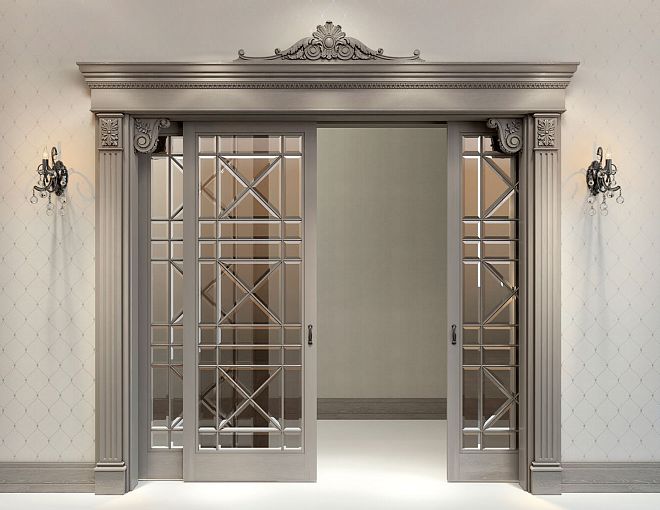
- Decor next to the door
- Molding on a furniture facade
- Simple framing on a limited budget
- Expressive wall frames for painting
- Complex composition with decorative inserts
- A specific pair: MLDPU-002 and NPU-400.1
- A separate overlay for the facade: NPU-498
- Why the type of polystyrene changes the result
- How to avoid visible seams
- Texture and paint thickness
- What to cut different profiles with
- How to choose glue
- Example of a rectangular frame 800 × 1200 mm
- Which is stronger: polystyrene or polyurethane?
- Which moldings are best for painting?
- Is it true that polyurethane moldings never crack?
- Can polyurethane moldings and decorative overlays be combined?
- Can polystyrene moldings be installed in a hallway?
- Is polyurethane molding suitable for the kitchen?
- What should you choose for decorating a wardrobe or chest of drawers?
- Is it worth buying polyurethane if polystyrene is noticeably cheaper?
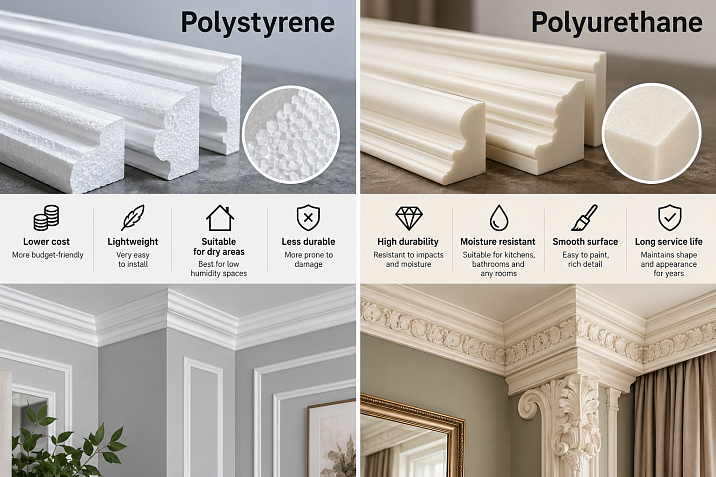
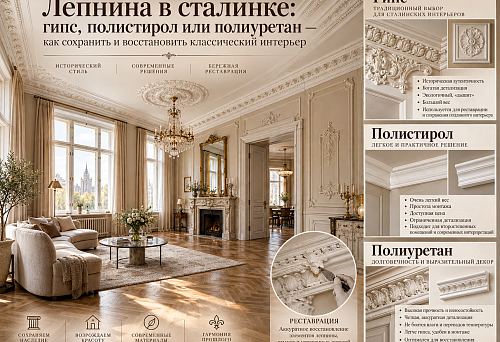
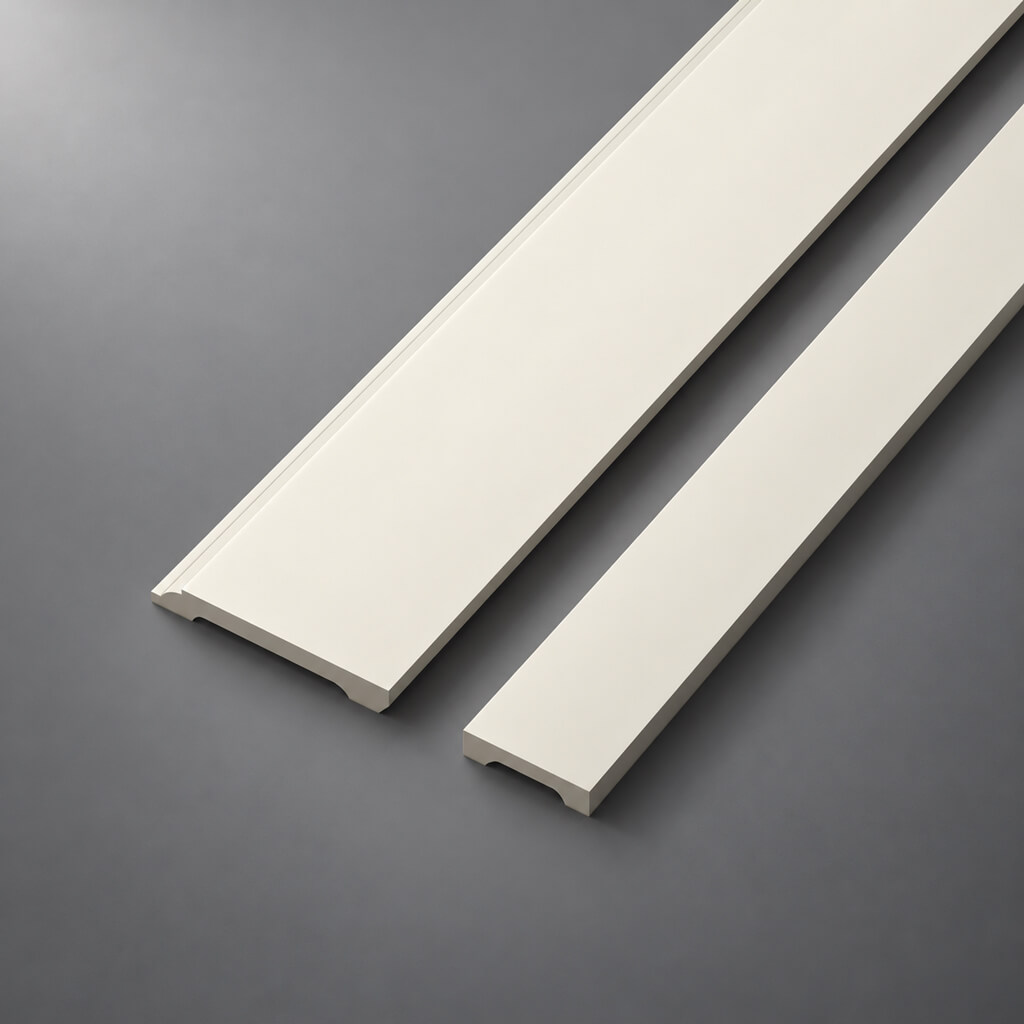
Two white moldings can look identical in a photograph: similar width, a smooth front surface, the same color. The difference shows up later. One strip is easy to cut and glue, but its edge dents from an accidental impact. The other costs more, but it lets you assemble a wall frame with an expressive profile and match a relief overlay to it. The opposite situation is also possible: an expensive material was bought for a simple ceiling strip, where its special features are not used at all.
That is why the question "polystyrene or polyurethane — which is better?" only makes sense together with a clarification: for which part, on which surface, and under which conditions. For calm ceiling trim, lightweight polystyrene is often sufficient. For complex wall stucco, decorative overlays on furniture, and compositions with coordinated elements, it is advisable to consider molded polyurethane. But even here, the specific product, material density, production quality, and installation matter.


Why moldings that look alike behave differently
A decorative profile has several performance characteristics that are almost impossible to assess from its general appearance in a catalog. The first is the integrity of the edges. They are what form the lines of light and shadow, emphasize the pattern of the frame, and meet at the corners. The second is the accuracy of the cross-section repetition along the length and from strip to strip. The third is how the front surface behaves after priming, painting, and routine cleaning.
Imagine a wall on which three identical rectangles need to be placed. If one of the profiles differs noticeably in shape, or the ends came out crushed after sawing, the eye will see not the material but uneven lines. On a simple horizontal strip, such a flaw might go unnoticed. On a frame with four corner joints, it will be repeated several times.
At the same time, "more expensive" does not mean "always more suitable." If the strip is located under the ceiling, is not subject to impacts, has a simple cross-section, and is intended for painting, a quality polystyrene molding can solve the task without unjustified expense. For an honest comparison, the types of polystyrene decor themselves need to be separated.


Polystyrene and polyurethane: what is the difference between the materials
Our factory also produces:



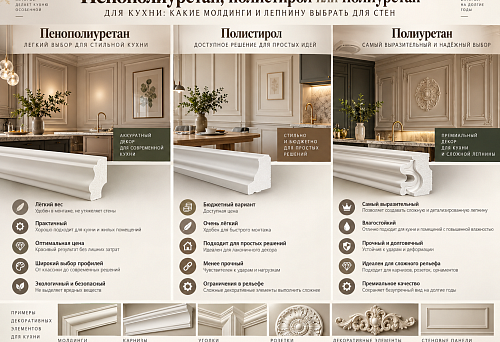
Lightweight expanded polystyrene
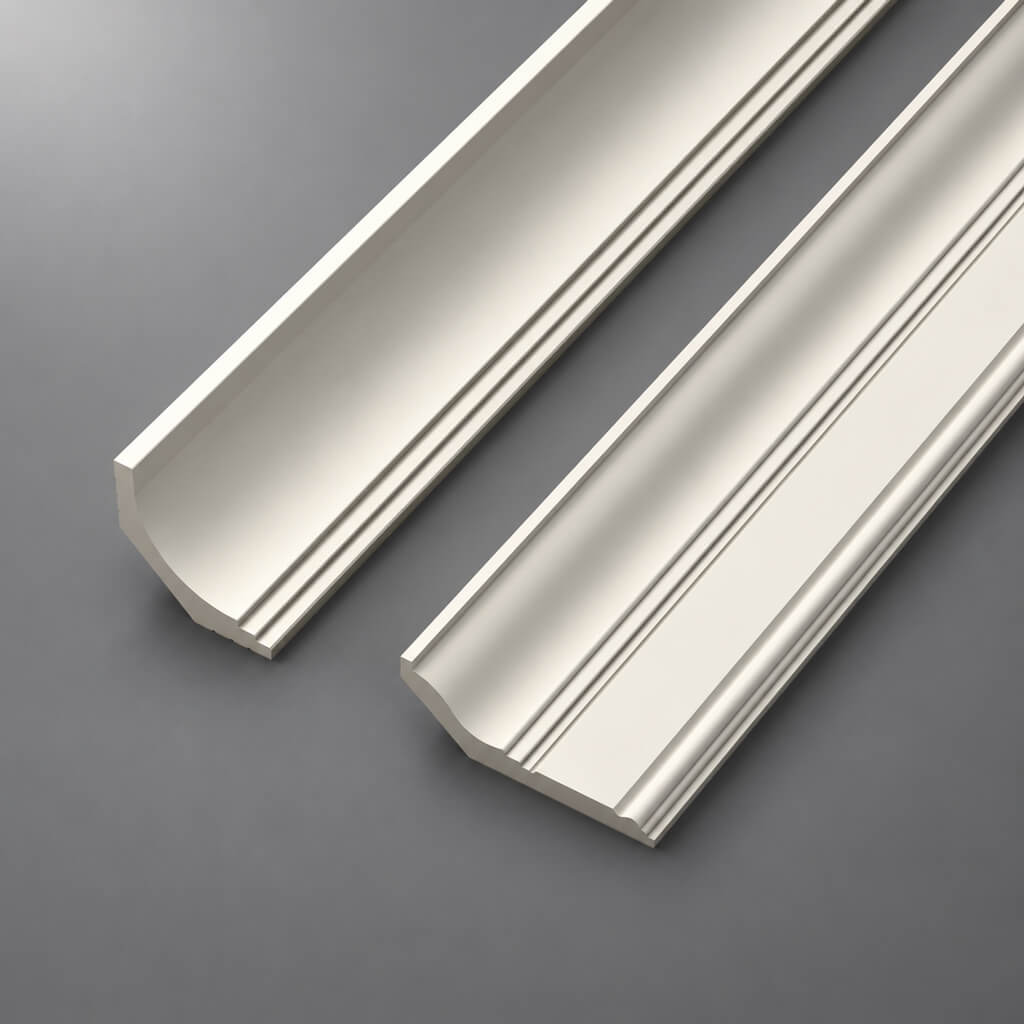
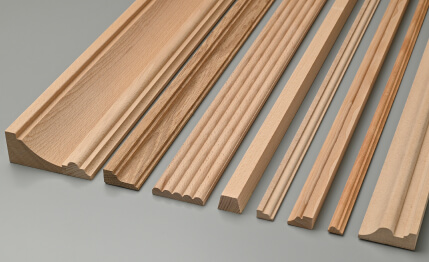
Lightweight cornices, ceiling skirting boards, and simple decorative strips are made from expanded polystyrene. They are convenient to carry, and the load on the base is relatively small. The main limitations show up when finishing the edge and surface: some products have a noticeable graininess, a thin edge can be crushed, and with a poor cut it can crumble.
This does not make the material unsuitable. For a simple ceiling junction located outside the area of contact with people and furniture, such a profile may be sufficient. Problems begin when a light expanded product is expected to behave like a dense finishing piece: with crisp sharp edges, a complex pattern, and resistance to impacts in a hallway.
Get Consultation
Dense extruded polystyrene
Polystyrene decor has another category as well: dense profiles made by extrusion. In surface and mechanical properties, they can differ substantially from the familiar loose "foam plastic." Certain systems are specifically developed as impact-resistant skirting boards and wall moldings.
Therefore, the phrase "all polystyrene moldings are fragile" is incorrect. When comparing, you need to find out the specific brand and density, examine the cross-section, and check the manufacturer's recommendations. Dense polystyrene can be a practical solution for smooth, comparatively simple profiles, especially if mechanical durability and savings on long runs of lines matter.
Rigid molded polyurethane
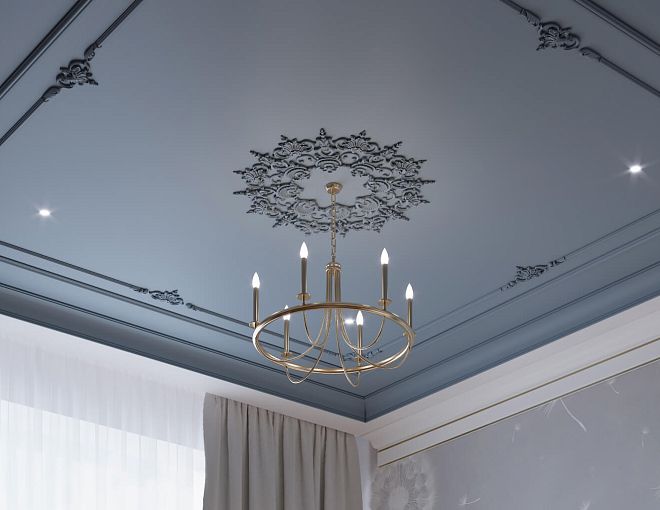
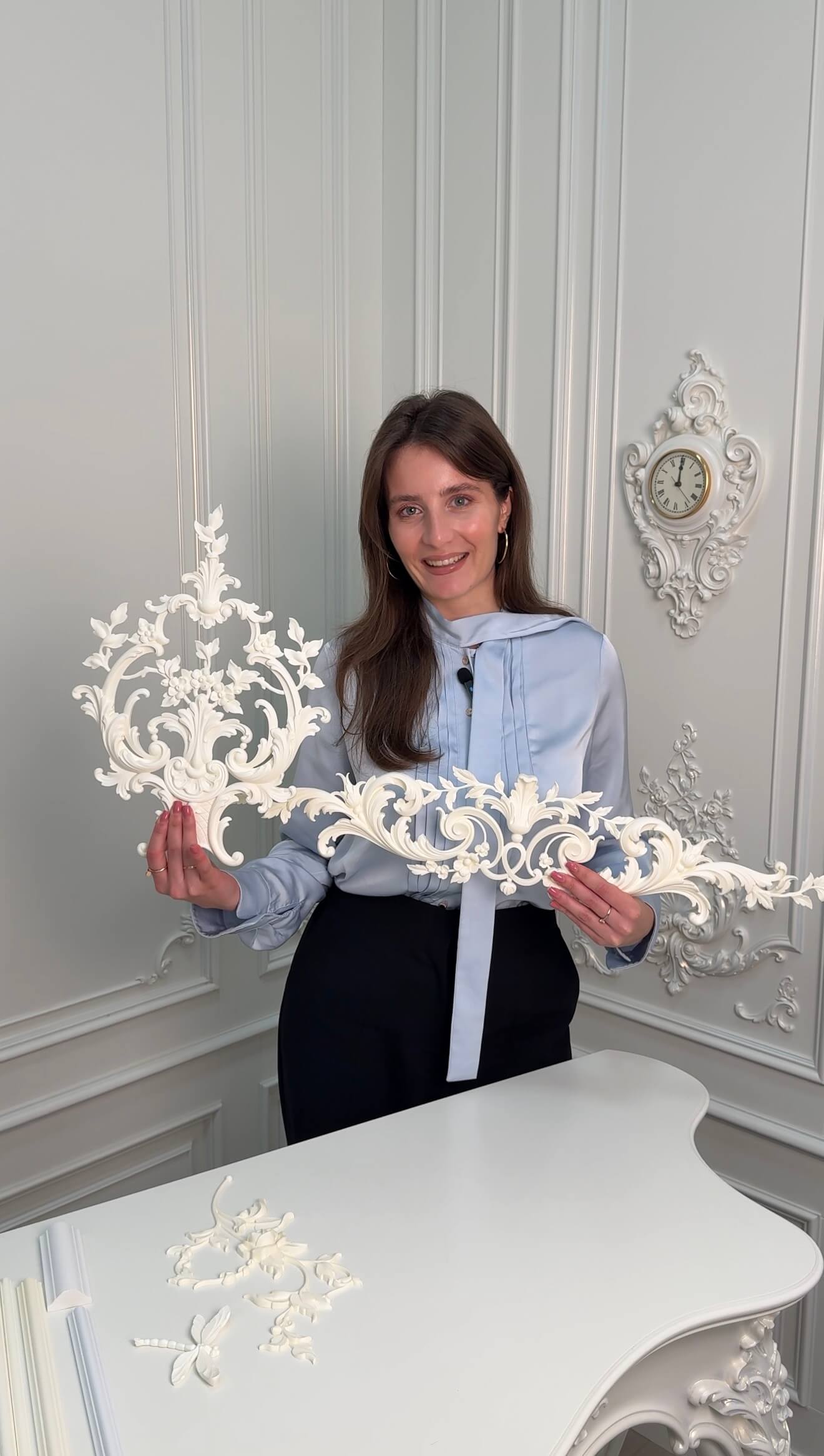
Polyurethane mouldings are produced using a different technology. For many interior elements, a polyurethane composition is moulded, which makes it possible to reproduce small protrusions, scrolls and recesses. This is how not only straight strips are made, but also standalone relief overlays, rosettes, and corner and central decorative elements.
The key practical advantage of moulded polyurethane is the potential for complex geometry, not an abstract superiority over all other polymers. In the finished product, the result depends on the composition and the quality of moulding. Polyurethane can also be chipped, dented or damaged by unsuitable tools.
| Criterion | Lightweight expanded polystyrene | Dense polystyrene profile | Moulded polyurethane |
|---|---|---|---|
| Simple smooth moulding | Suitable in many cases | Suitable | Suitable |
| Thin complex relief | Capabilities depend on the technology; often limited | Depends on the design | One of the typical use scenarios |
| Resistance to household impacts | Thin edges are often vulnerable | Can be high | Depends on the density and construction of the product |
| Painting | Possible with compatible formulations | Possible with suitable preparation | Possible with suitable preparation |
| Load on the base | Usually small | Depends on the cross-section and density | Depends on the size of the product |
| Range of ornamental overlays | More often limited to simple shapes | Depends on the manufacturer | Usually wider for detailed decor |
| Cost | Often low-profile | Depends on the system | Often higher for complex products |
Such a table helps narrow down the choice, but it does not replace comparing two specific product pages. Even within the same material, products of different cross-sections behave differently.
Durability of moldings: what happens in a real interior
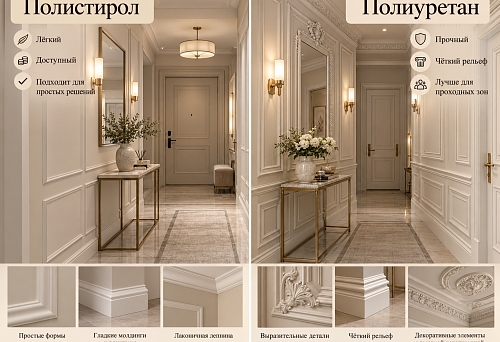
A hallway wall and a narrow passage
In a hallway, bags are leaned against the wall, shoe boxes are moved along it, and sometimes the finish is bumped by furniture. The lower part of a wall frame and the protruding corners of the ornament are especially vulnerable. What is needed here is not just a beautiful strip, but a product with mechanical resistance suitable for this location.
A lightweight expanded polystyrene profile with a thin edge may dent sooner than a dense polystyrene or a suitable polyurethane one. But you cannot automatically declare the latter the winner. If a polyurethane overlay has a long thin leaf, while a polystyrene strip has a massive cross-section, the specific vulnerability may turn out to be the opposite. Evaluate the projection, shape, and location of the part, not just the name of the polymer.
Décor next to the door
Near the door leaf, it is especially important to check the actual gaps. A relief applique with a protrusion height of two centimeters will be more noticeable and potentially more vulnerable than a flat strip. If the door, handle, or furniture regularly touches the molding, changing the material will not fix a placement error. Sometimes it is better to reduce the protrusion or move the décor.
The finish also affects the result. On a matte painted surface, a small dent may be barely noticeable, while on a metallized protrusion any damage changes the reflection of light. When choosing, one should picture not only the day of installation but also the path people take through the room.
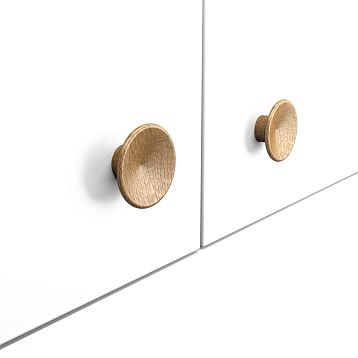
Molding on a furniture facade
Cabinet doors experience repeated impacts: they are handled, wiped, and other objects are moved nearby. For a simple geometric layout, a suitable profile without pronounced protrusions can be used. If a decorative applique with leaves and scrolls is needed, reproducibility of the relief, the quality of the adhesive bond with the specific facade finish, and the absence of interference with opening become more important. Here, molded polyurethane décor is of practical interest, but it does not replace checking the adhesive's compatibility with the furniture coating.
Precision of relief: when the material is especially noticeable
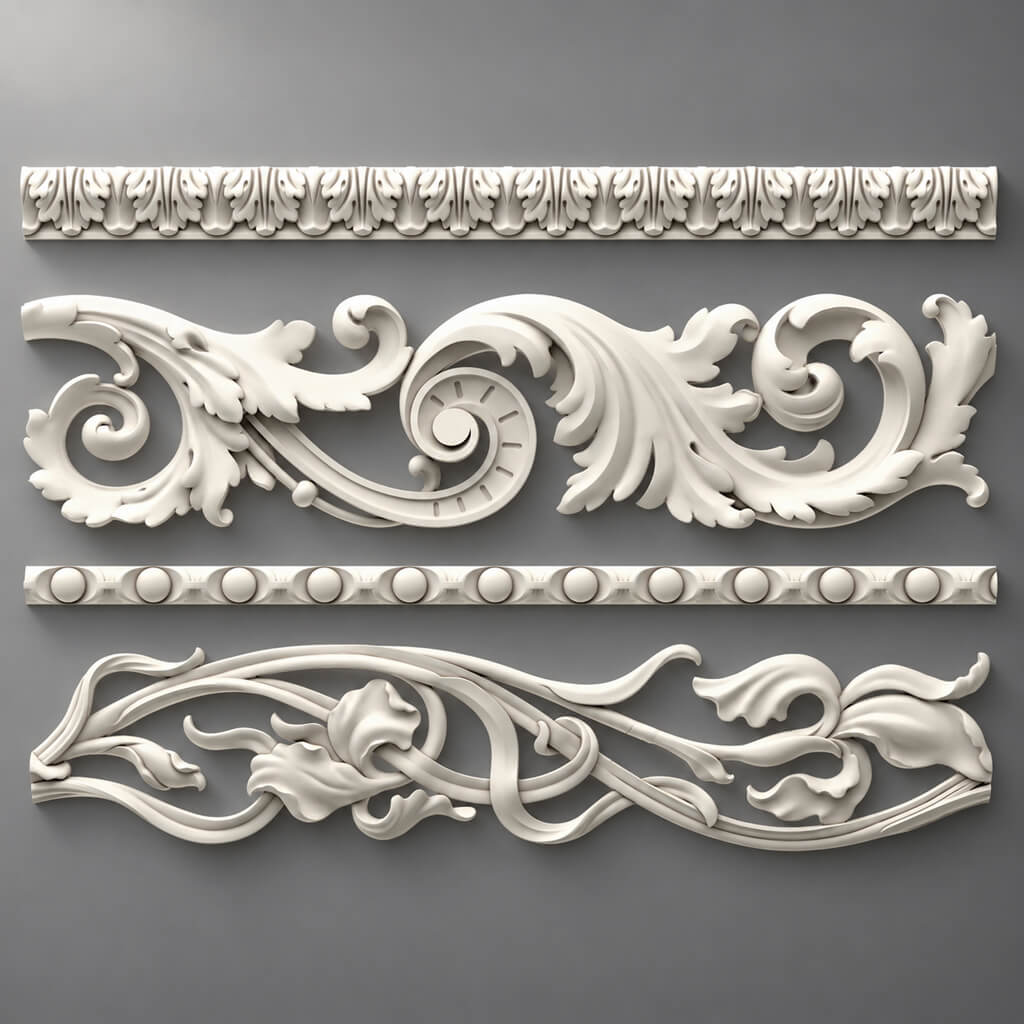
The difference between a flat strip and ornamental molding becomes obvious in side lighting. With a smooth molding, the task is relatively simple: create one or several even lines. A decorative element with a floral pattern has many transitions between high and low points. If they are blurred, a thick layer of paint will not help — it will only smooth out the remnants of detail.
Molded polyurethane is convenient where a complex repeating pattern is required. This does not mean that all polyurethane molding is equally finely worked. Evaluate close-up photographs, the drawing, the dimensions of the protrusions, and the quality of the specific mold. A good finish cannot correct poorly executed base geometry.
Differences are especially noticeable in three cases. First, on a tall wall frame illuminated by a window from the side. Second, on a furniture facade with identical ornaments on both sides: asymmetry is immediately apparent here. Third, in the joining of several parts: the corner element, molding, and central applique should form a single composition rather than look like a random set.
When choosing polyurethane stucco décor, one should check not the number of scrolls but the legibility of their shape. A good part retains the character of the pattern after painting and does not require thick layers of coating to hide manufacturing irregularities.
Polystyrene or polyurethane wall mouldings: three scenarios
Simple framing on a limited budget
Suppose you need to divide a large, light-colored wall into rectangular panels, and the decor is positioned above the level where it is often bumped. If the profile has a simple cross-section, does not require complex corner inserts, and is compatible with the chosen paint, a dense polystyrene moulding can be a sensible purchase. There is no need to choose polyurethane solely out of a desire to buy a "better material."
But before deciding, count the actual number of corners. Five frames already means twenty corner joints. If the chosen product is difficult to cut or its profile is hard to hold steady when marking, a small saving on the strip can turn into extra time for the installer.
Expressive wall frames for painting
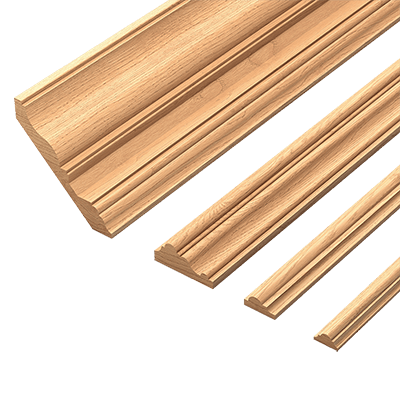
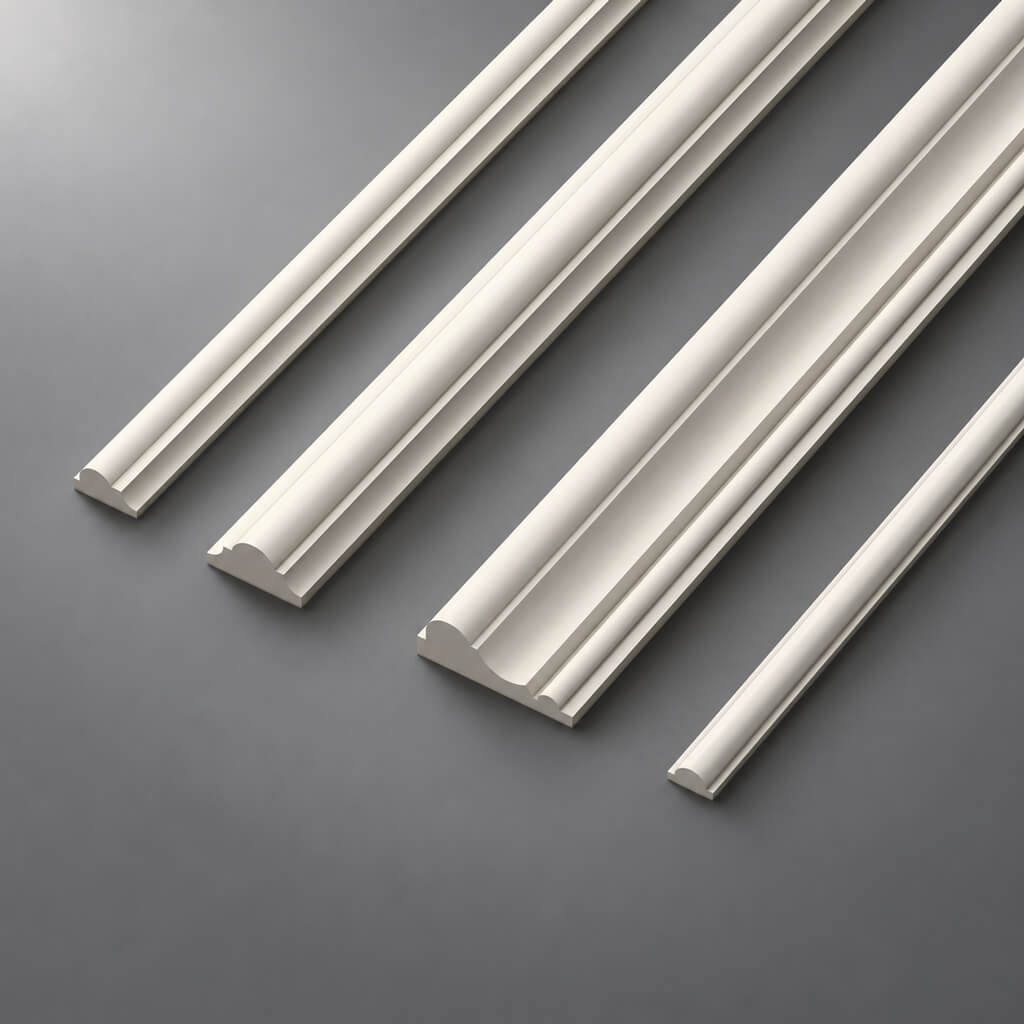
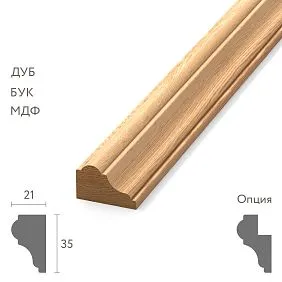
In a neoclassical interior, a frame often needs to be noticeable even when its color matches the wall. The difference is created not by the shade but by the alternation of shadows on the profile. For this task, consider polyurethane molding MLDPU-002 with a cross-section of 22 × 11 mm and a length of 2600 mm.
This size is convenient for moderate framing: the line is already noticeable but does not necessarily draw attention to itself. It is important to draw the composition to scale in advance, taking into account doors, switches, and furniture height. If you need a more pronounced shadow and a wider architectural line, you can consider molding MLDPU-003 a size of 35 × 12 × 2600 mm. A wider profile will change the proportions of the frame itself: the same outer size does not mean the same inner area.
Complex composition with decorative inserts
Here the material and the assortment should be evaluated together. A simple frame needs only four strips. A decorative panel may include a central overlay, corner elements, paired details and repeating ornaments. Compatibility is best checked before purchase, otherwise a difference in thickness or pattern will be discovered during installation.
For such a project, ready-made coordinated elements are important. A manufacturer that offers profiles and matching overlays makes selection easier — although specific item codes still need to be verified. Décor that rests on one properly built system looks more cohesive than a random set of products in a similar color.
Polyurethane overlays for walls and furniture: what a coordinated composition delivers
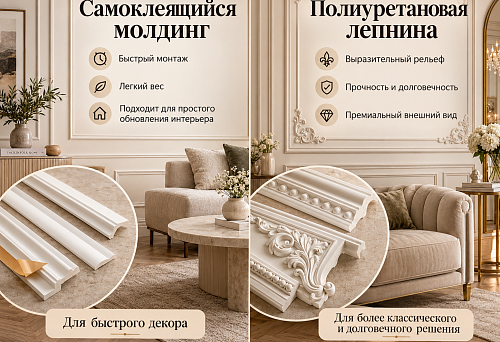
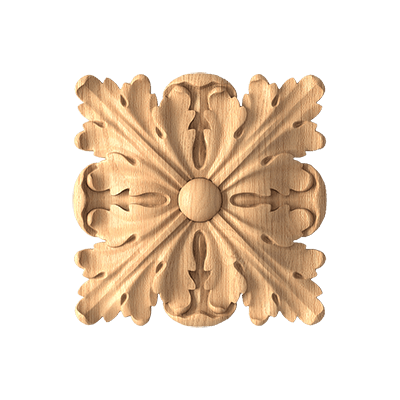
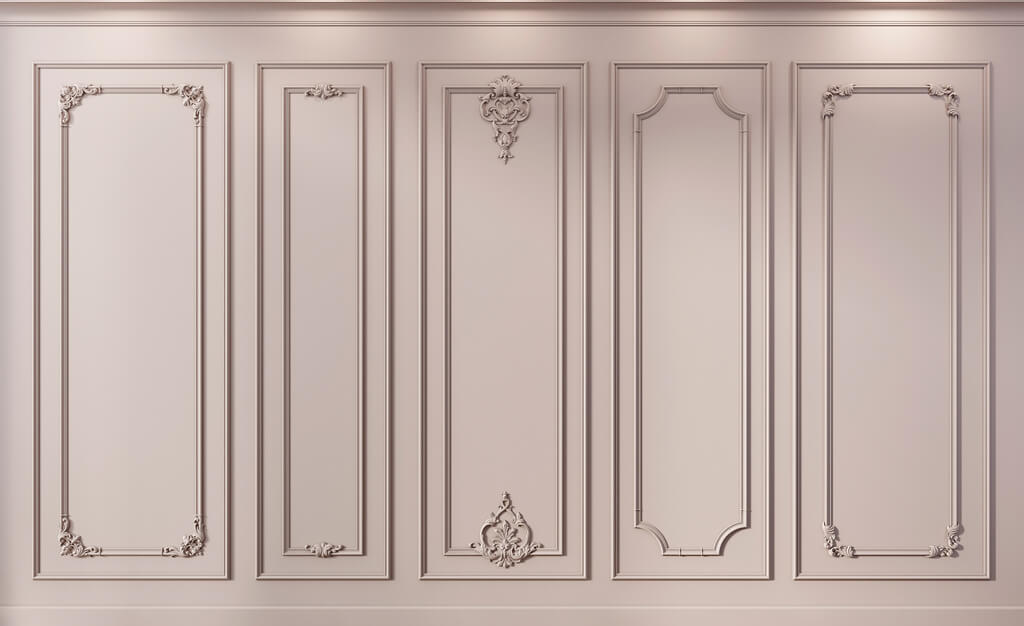
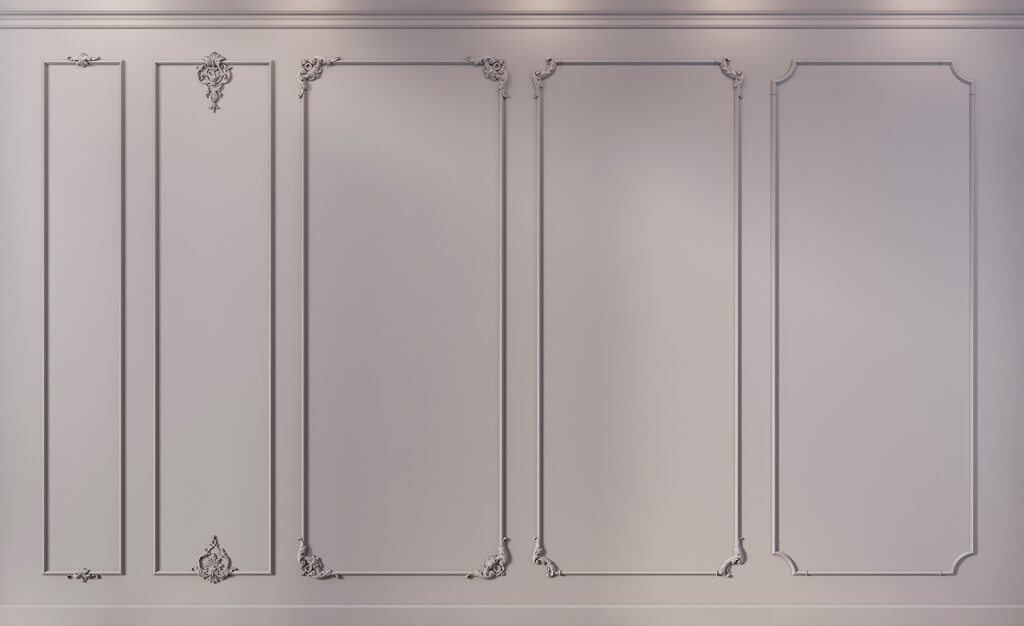
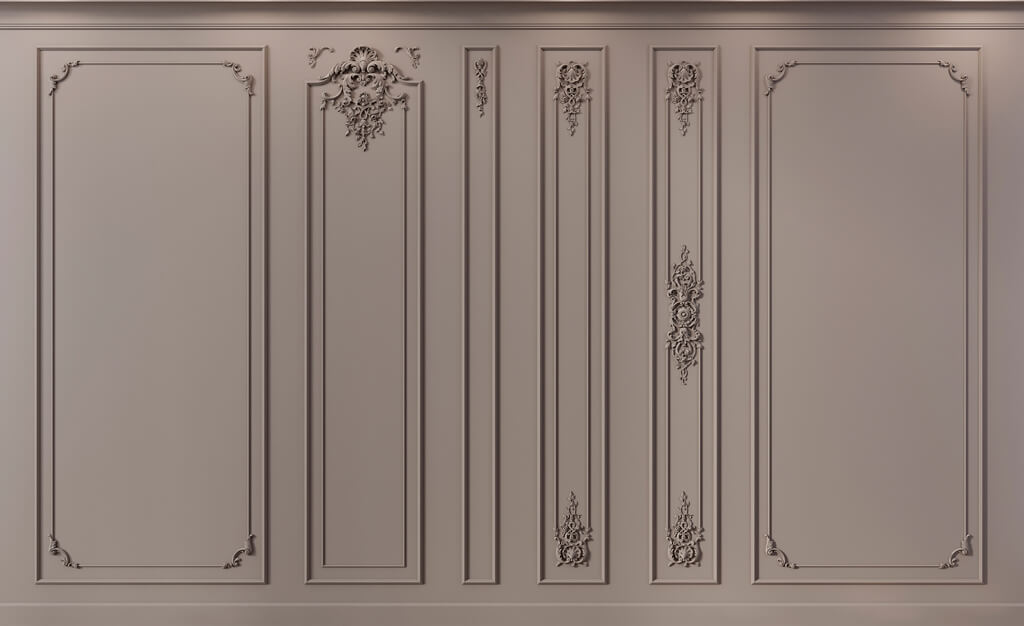
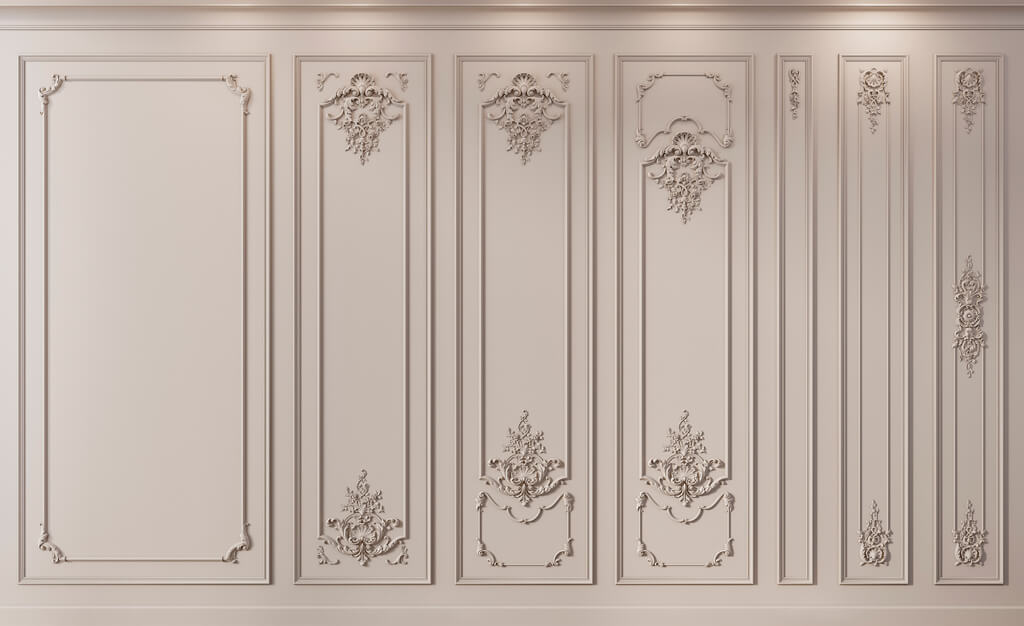
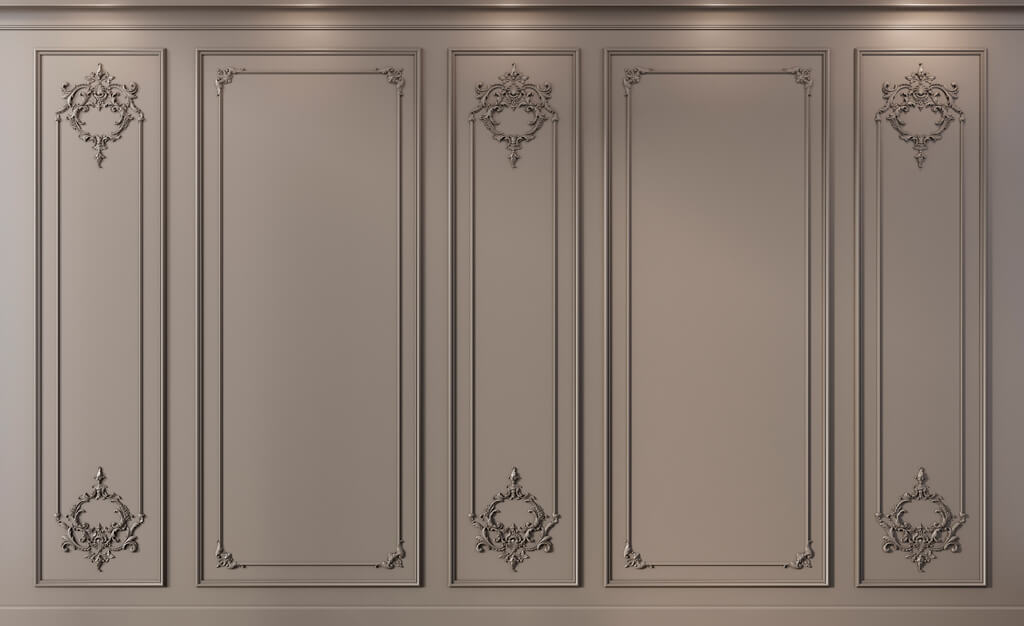
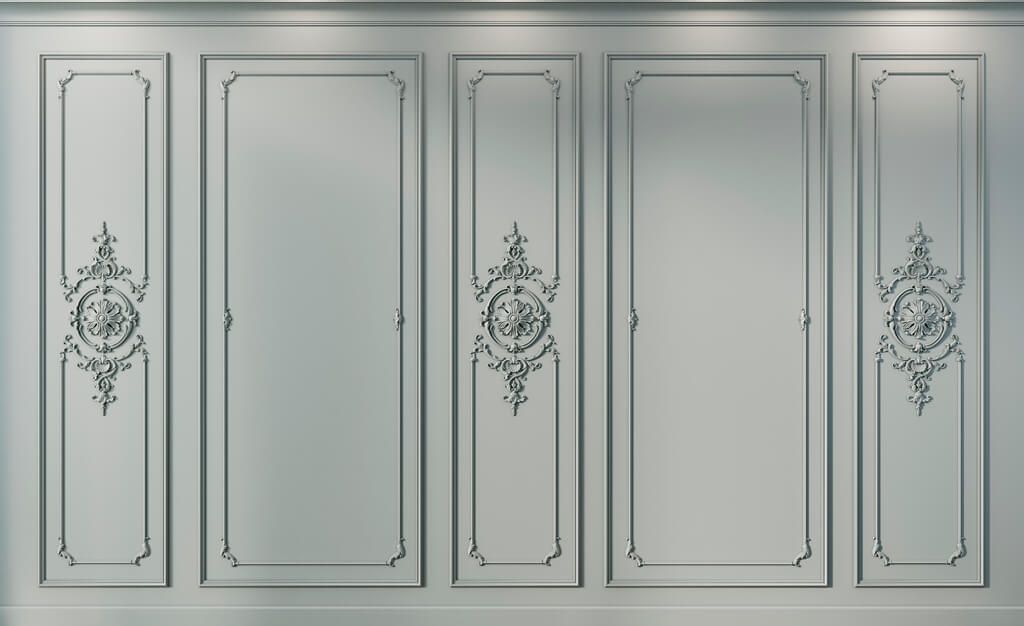
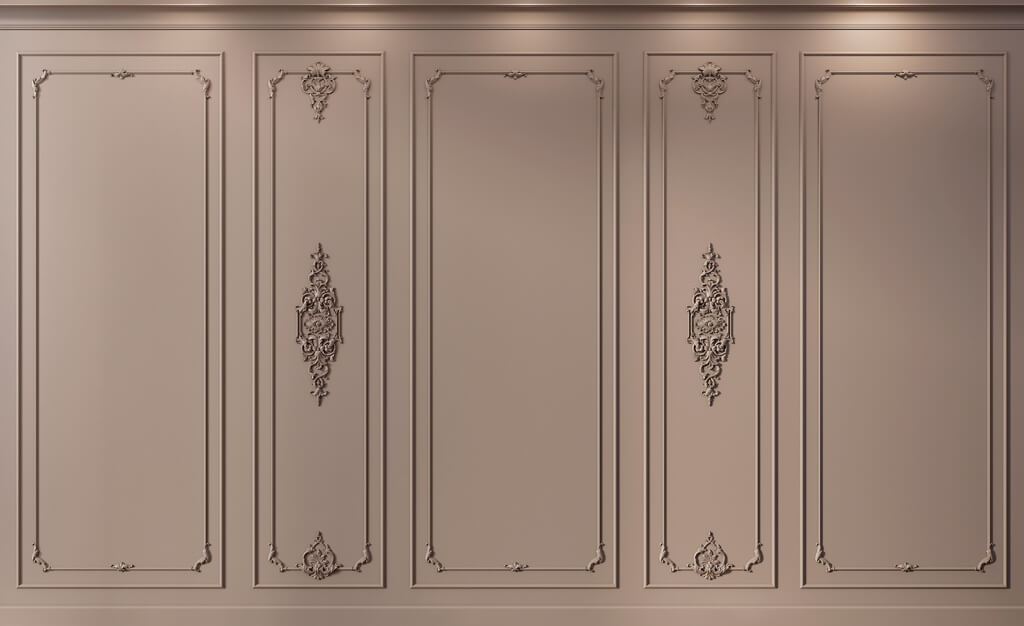
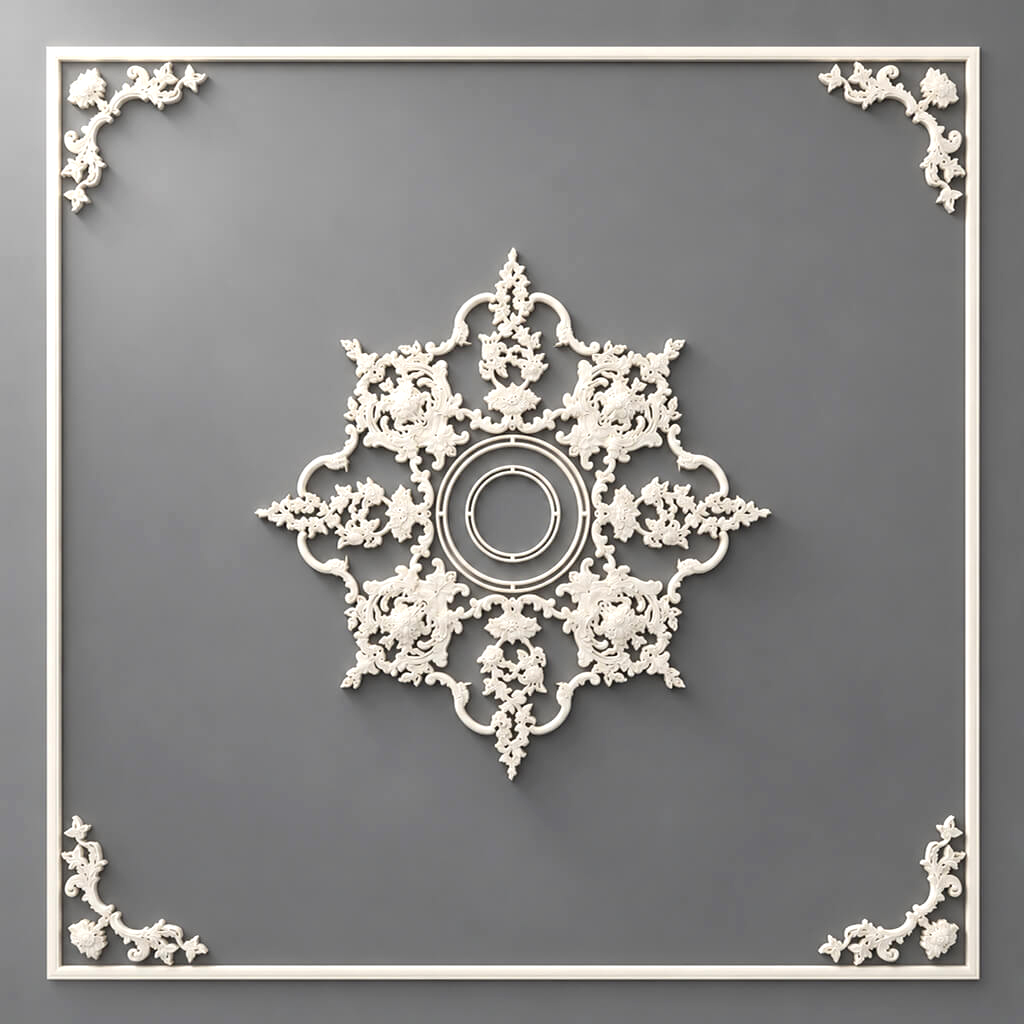
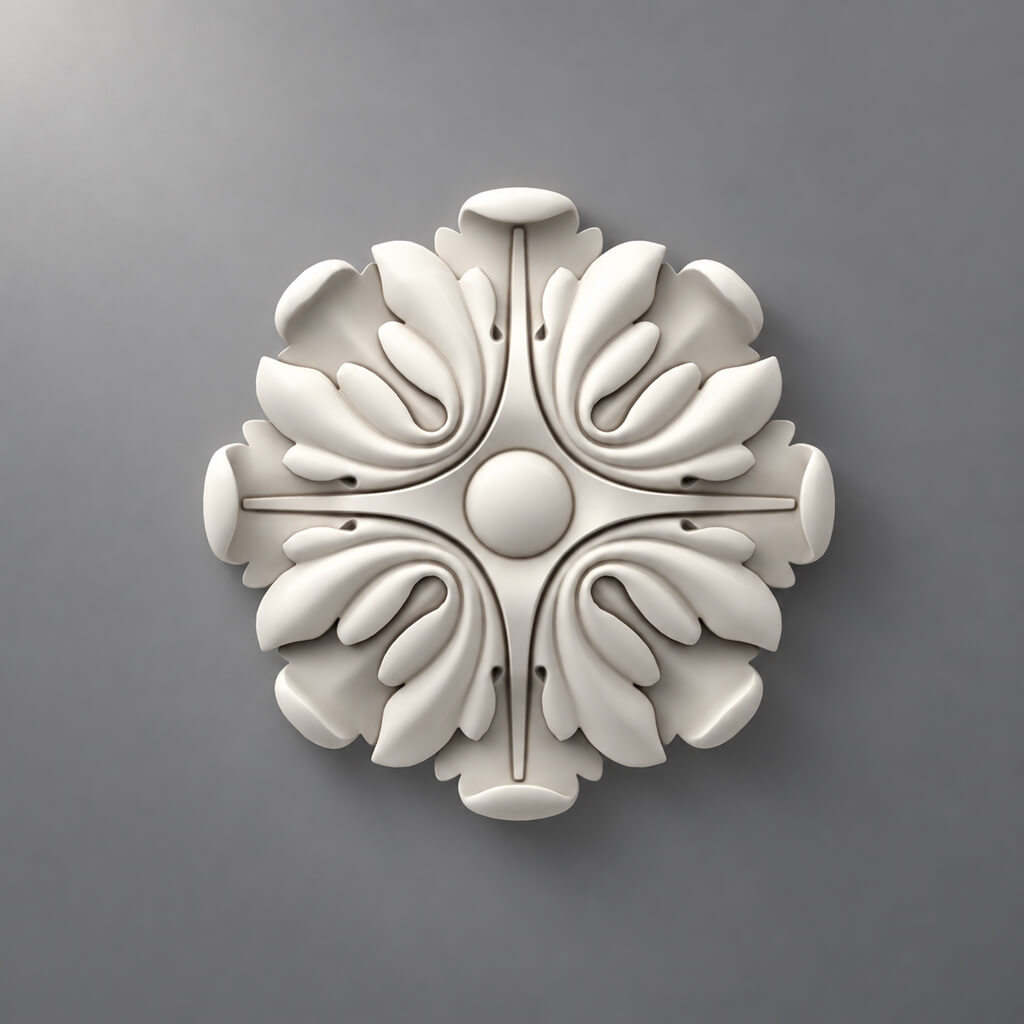
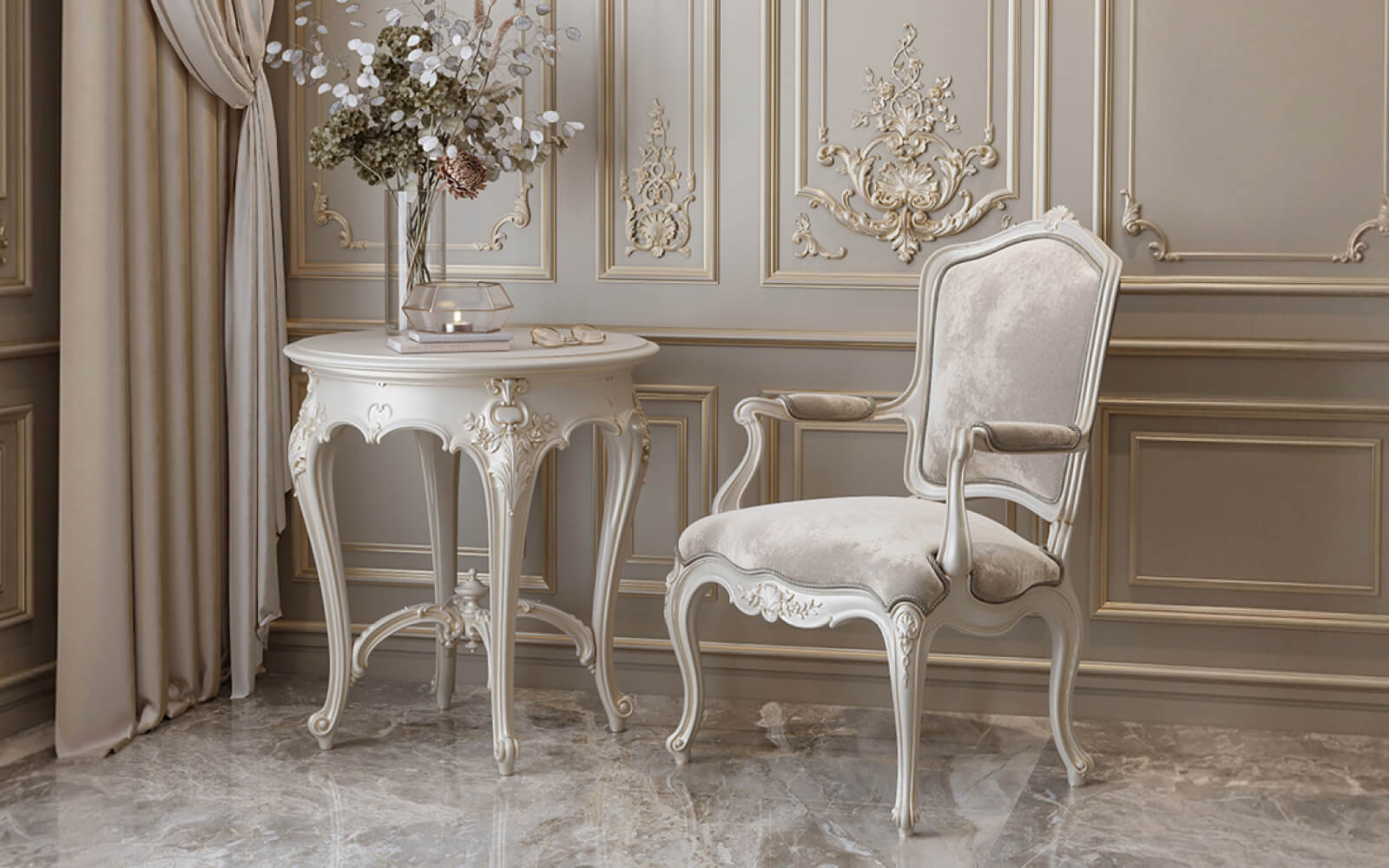
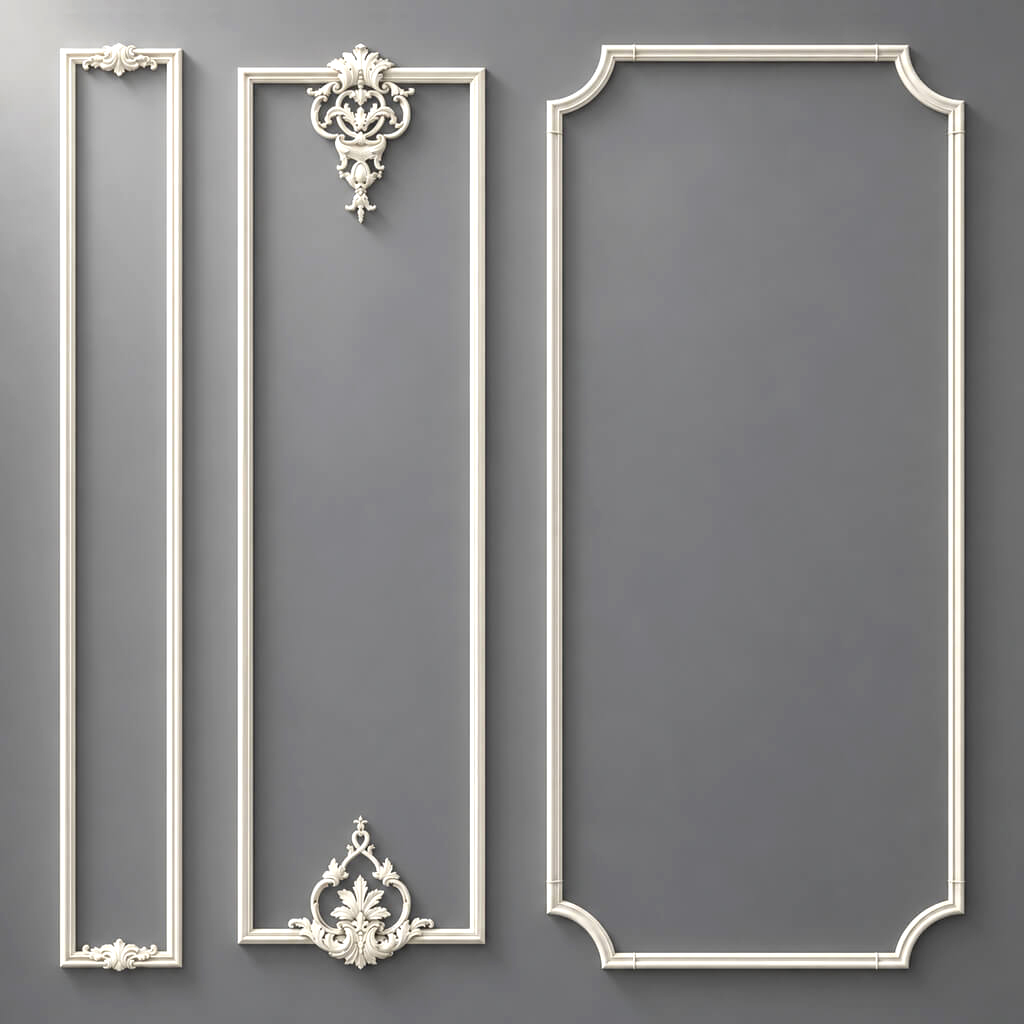
Molding creates a border, while an overlay sets the accents. For example, an ordinary rectangular frame turns into a decorative panel if a symmetrical botanical element is added at the center of the top side. On a cabinet the same principle works differently: the profile divides the plane of the façade, and a small vertical overlay emphasizes its axis.
In the STAVROS catalog there is polyurethane overlays for furniture and walls, but they need to be selected according to the dimensions of the working surface. An overlay occupying a third of the width of a narrow door will be perceived much more actively than the same detail on a wide cabinet. One should not increase the amount of molding just because it is sold as a set.
A specific pair: MLDPU-002 and NPU-400.1
For the 002 series, STAVROS provides decorative overlay NPU-400.1 measuring 69 × 178 × 21 mm. The manufacturer specifies its use with MLDPU-002, as well as with the MLD-002-MG profile made of a different material. This is an example of a confirmed combination, not an assumption of compatibility based on a photograph.
The practical selection procedure is as follows: first determine the frame dimensions and check the profile depth, then place the overlay on the drawing at its actual scale. Finally, check the mounting plane and the position of the joints. A matching pattern alone does not mean that any overlay can be installed without adjustment at any point on the profile.
Separate overlay for the facade: NPU-498
If the decor is needed not for the frame but for the cabinet facade, a standalone vertical accent can be more interesting. Molded decor NPU-498 measures 41 × 307 × 11 mm and features a botanical ornament. This format can be considered for narrow furniture areas where a wide central motif would take up too much space.
On the facade, measure especially carefully the distance to handles, the door edge and adjacent opening leaves. The overlay is positioned so that its relief does not interfere with using the furniture. Before mounting on a lacquered, laminated or painted base, test the adhesive system rather than assuming that any "universal" compound bonds all surfaces equally firmly.
Section polyurethane molding decor is useful because it allows additional elements to be searched by purpose and profile. This kind of selection brings a different approach to purchasing: first the composition is designed, then it is assembled with parts.
Polystyrene and polyurethane for painting: how to achieve a smooth surface
A white factory surface is not yet the final result. After installation on the wall, corners, end joints, small traces of adhesive and local areas of repair compound appear. On a painted wall, all of this can become visible under side lighting. Therefore, you need to compare not only the original color of the strip, but also how neatly it can be prepared.
Why the type of polystyrene changes the result
Some lightweight expanded polystyrene products have a noticeable texture. Painting may reduce it visually, but will not necessarily hide it completely. A dense extruded profile usually gives a surface of a different character, and high-quality painting is quite achievable for it. The mistake is to assume that polystyrene always looks rough after finishing.
Polyurethane elements should also not be painted without checking: the factory primer, the smoothness, the absorbency of the filler at the joint, and the chosen paint must be compatible. If the compound does not adhere well to the old coating, it will begin to peel regardless of the moulding material.
How to avoid visible seams
Joints are first assembled precisely. Then a compound recommended for this system for connections, or a repair mix, is applied, without trying to compensate for major sawing errors with it. After drying, the plane is checked. If a step has appeared at the joint, subsequent painting will emphasize it.
For abutments to a painted wall, a separate elastic compound compatible with the paint and the substrate is sometimes needed. It is chosen not by the word “acrylic” but by purpose and technical instructions. Filling any large gap with a thick layer of sealant is a poor alternative to precise cutting.
Relief and paint thickness
On a smooth profile, a thick layer primarily degrades the edge. On an ornamental overlay, it can fill small recesses, causing leaves and scrolls to lose definition. It is better to apply compatible paint carefully, controlling the amount of material, rather than covering substrate defects with numerous layers.
Metallic accents require even greater care: gold paint on the protrusions can emphasize the pattern, but it will not fix dented parts. For all materials, a high-quality initial relief is a necessary condition for an expressive finish.
Moisture, temperature and service life: what really matters
Polystyrene and polyurethane do not behave like unprotected wood, but this does not mean that any decorative profile is suitable for a permanently wet area. Moisture affects primarily the entire structure: the substrate, primer, adhesive, joints and paint coating. If the filler is peeling off the wall, the decorative strip may come off with it, even though the polymer itself remains intact.
For a dry bedroom or living room, the choice is usually determined by geometry and finish. In a hallway, the risk of impacts and frequent cleaning is added. In the kitchen, you need to check the paint's washability, the proximity of heat sources and the compatibility of the chosen adhesive with the operating conditions. Directly near hot surfaces, restrictions are determined by the product's technical documentation and safety requirements. Polymer decor should not be placed in a way that exposes it to overheating.
In a bathroom, it is necessary to distinguish between normal air humidity and direct constant exposure to water. A suitable decorative system can be used outside the wet zone if this is permitted by the manufacturers of all its components. But molding does not replace waterproofing, and a sealed decorative joint is not equivalent to a waterproof building assembly.
Fire safety is a separate issue. Both families of materials under consideration are organic polymers. Polyurethane or polystyrene cannot be called non-combustible based on the material name alone. If a project has special requirements for the fire classification of finishes, the documents for the specific product and local application rules are checked.
The durability of a finish depends on the operating conditions. Even a well-made molding will look untidy if the surface is improperly primed, the joints have cracked, or the paint was chosen without taking wet cleaning into account.
Installing moldings: cutting, corners, adhesive and joints
How to cut different profiles
Lightweight polystyrene and dense extruded profiles may require different tools. A thin strip is sometimes conveniently cut with a hand tool, but for precise angles on a bulky cross-section, a miter saw setup may be needed. With an unsuitable blade, the edge of loose material crumbles, and with excessive force the profile gets crushed.
Molded polyurethane molding can usually be trimmed with a suitable fine-toothed tool and a miter box, or by another method recommended by the manufacturer. For long elements, support along the entire length and maintaining the same orientation when working on paired parts are especially important. Corners are first dry-fitted; gluing them with the idea of "we'll fill it later" is not advisable.
How to choose an adhesive
The name "liquid nails" does not indicate compatibility with a specific plastic and substrate. Some formulations contain solvents that can damage certain polystyrene products. Polyurethane also requires confirmed compatibility. Check the adhesive's purpose, the strength and absorbency of the wall, the presence of old paint, the application conditions and the required fixing time.
On loose filler, a strong adhesive bond with the filler itself is useless: the weak layer will tear away from the wall. Therefore, the quality of the substrate is more important than the promise of a "super-strong" formulation on the packaging.
Example of a rectangular frame 800 × 1200 mm
Assume the dimensions refer to the outer contour at the long points of the miters, and the moulding is laid along four sides. The geometric perimeter is 2 × (800 + 1200) = 4000 mm. With a length of 2600 mm for the MLDPU-002 strip, the minimum order by linear meterage is two strips: 5200 mm in total.
For practical cutting, this means four pieces: two at 1200 mm and two at 800 mm, with miters on both ends. One long and one short piece can be placed on each strip, since their combined length is 2000 mm. The remaining approximately 600 mm provide room for kerfs, test cuts, and some adjustments. Actual waste depends on kerf thickness, end quality, and marking. If the strip is already damaged, the linear meterage alone does not guarantee sufficiency.
| Detail | Quantity | Dimension at the outer long points | Total |
|---|---|---|---|
| Top and bottom | 2 | 1200 мм | 2400 мм |
| Side sides | 2 | 800 мм | 1600 мм |
| Geometric contour | 4 | — | 4000 мм |
| Two source strips | 2 | 2600 мм | 5200 мм |
| Theoretical remainder before accounting for kerfs | — | — | 1200 мм |
First, one pair of joints is marked and checked. If the product requires corner overlays, the position of their seating areas is taken into account before cutting: they may change the visible length of the segments and the nature of the joint. With a different corner design, the calculation will need to be adjusted.
Why a cheap trim strip doesn't always make a renovation cheaper
A purchase has a price, but a finished trim has a full cost of work. It includes the number of whole strips, consumption for corners and cutting, additional parts, adhesive, preparation, painting, and possible rework. The difference is most noticeable where a complex profile has to be repeated many times.
For clarity, let's take just one verifiable line item from the estimate. In the STAVROS card for MLDPU-002, size 22 × 11 × 2600 mm, the price at the time of checking was 5,460 rubles per strip. Then two strips for the frame from the example come to 10,920 rubles, excluding adhesive, paint, overlays, delivery, and labor. This is an illustration of the arithmetic based on the published price, not a fixed offer: before ordering, the price and availability should be confirmed.
Now let's imagine a polystyrene profile of the same length at a conditional price of P rubles. We are not assigning any real cost to a competing product. The materials for the frame would cost 2P if two strips are indeed enough. But if one corner is defective, an additional whole strip may be needed. Then the formula changes to 3P plus rework time.
| Expense item | Option A: two MLDPU-002 strips | Option B: polystyrene |
|---|---|---|
| The profiles themselves | 10,920 ₽ at the price indicated at the time of checking | 2P for the same strip length |
| An extra strip due to a cutting error | Not included | +P, if it was actually needed |
| Adhesive, preparation and painting | Calculated separately | Calculated separately |
| Decorative overlays | By selected item codes | By available compatible system |
| Installation and defect correction | By actual estimate | By actual estimate |
This calculation does not prove that polyurethane is always more cost-effective: an expensive part can also be ruined, while high-quality polystyrene can be installed without losses. But it does show why comparing only two price tags is wrong. The more complex the joints and the more expensive it is to redo an already painted wall, the more important the precision of the original parts and the predictability of installation.
There is also the opposite case. If you need ten meters of a simple strip under the ceiling, and a suitable polystyrene profile is easy to cut and suits the surface, there is no point in paying extra for the complex capabilities of molded stucco. Savings should be assessed in the context of the task.
When polystyrene is justified and when to choose polyurethane
| Task | What to consider first | Why |
|---|---|---|
| Simple ceiling cornice outside the contact area | Lightweight polystyrene if it is compatible with the finish | Low weight and relatively simple geometry |
| Smooth, even line on the wall | Dense polystyrene or polyurethane | The final choice depends on the profile, price and surface |
| Wall frame with a three-dimensional profile | Molded polyurethane; compare with dense alternatives | Consistency of the profile and quality of the corners matter |
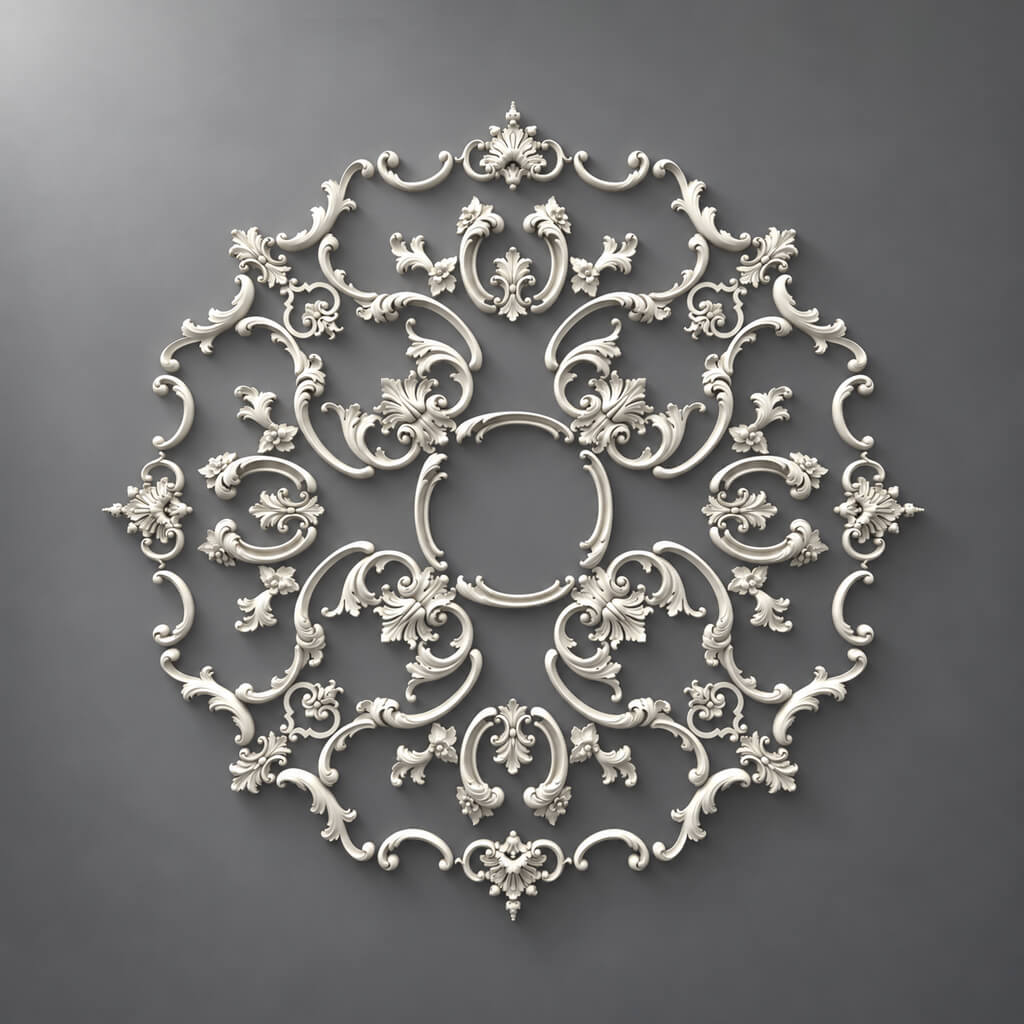
| Ornamental classic stucco | Polyurethane molded elements | Convenient for creating complex relief and composite compositions |
| Decorative overlays for furniture | Suitable polyurethane products | Choice of shapes and options for matching the pattern |
| Impact-prone lower part of the wall | Comparison of specific impact-resistant systems | A material name alone is not enough without testing |
| Room with high humidity | System with confirmed suitability | Glue, coating, joints and substrate are taken into account |
| Limited budget and simple pattern | Quality polystyrene can be the more rational choice | The capabilities of complex moulding are not needed |
Note: the table does not suggest choosing one polymer once and for all. From one manufacturer, a dense polystyrene skirting board may be designed for impacts, while a detailed polyurethane cornice is designed for the beauty of complex relief. These are different tasks. Hence the different optimal choice.
How to choose STAVROS polyurethane mouldings and overlays
If, after comparison, you need a complex decorative composition, do not start with the most highly reliefed overlay. First determine the geometry of the main lines. For a small frame, check its external dimensions, the distance to the architraves and the height of the lower border relative to the furniture. Then choose the profile width and only after that the accent details.
To compare two sections, you can draw side by side frames with the same external size, using widths of 22 mm and 35 mm. A difference of 13 mm seems small on a sample, but in total it reduces the inner field of the rectangle by 26 mm along each coordinate, if measured by the width of the occupied strip and assuming the profile faces inward. On a narrow panel, such a change is noticeable.
Practical selection sequence:
- Measure the working surface and mark doors, sockets, handles and furniture.
- Decide whether you need a smooth contour or a pronounced relief. For a calm design, you don't necessarily have to choose the widest profile.
- Compare the cross-sections of the selected moldings using drawings, not just photos of finished rooms.
- If overlays are planned, check that the item code matches the main molding and verify the actual projection depth.
- Create a cutting plan based on factory lengths; check how many full strips are needed for the chosen angles.
- Determine the adhesive system, preparation, and painting method for the specific substrate.
- Before full installation, assemble one test joint from offcuts if the geometry or finish raises doubts.
В STAVROS polyurethane stucco catalog you can start by choosing the product type, then move on to polyurethane moldings and the corresponding decorative details. The general category may include products made of different materials, so the composition of the selected item must be confirmed in its specific product page.
For a small project, four molding segments and paint in the wall color are sometimes enough. For a complex project, consistency across the entire system matters: the straight profile, corners, ornament, fastening, and finish coating. Polyurethane deserves attention precisely where these requirements determine the quality of the finished interior.
Frequently asked questions
Which is stronger: polystyrene or polyurethane?
There is no single answer for all moldings. Lightweight expanded polystyrene with a thin edge is often easier to damage than a dense decorative piece. But impact-resistant profiles made of dense extruded polystyrene do exist; they can withstand individual impacts better than the thin protrusion of a molded polyurethane overlay. Compare actual samples, cross-sections, intended use, and manufacturer data. For a hallway, one kind of mechanical durability matters, while for a ceiling cornice it is something entirely different.
Which moldings are best for painting?
High-quality products made of both materials are suitable if the manufacturer permits the chosen paint. For lightweight expanded polystyrene, check the surface texture; for dense polystyrene, check the compatibility of the composition with the substrate; for polyurethane, check whether factory primer is present and what its properties are. On relief decor, it is especially important not to build up a thick layer in the recesses. The result depends on the condition of the joints and surface preparation no less than on the polymer.
Is it true that polyurethane moldings never crack?
No. A polyurethane product can be damaged by impact, improper transportation, or excessive force during installation. On a decorative wall, sometimes it is not the strip itself that cracks, but the seam or the paint coating, due to movement of the substrate and unsuitable joining materials. It is more accurate to speak about the properties of a specific product and a correctly executed installation system, rather than promising a complete absence of damage for the entire service life.
Can polyurethane moldings and decorative overlays be combined?
Yes, if the elements match in pattern, cross-section, and intended use. For example, STAVROS indicates that NPU-400.1 is compatible with MLDPU-002. But this is not a universal rule for any overlay and any profile. Before ordering, check the drawing, the actual relief height, and the location point of the decorative element. For a furniture facade, you will additionally need to assess how the door operates, the position of the handle, and the properties of the coating to which the decor is glued.
Can polystyrene moldings be installed in a hallway?
Yes, but the type matters. A simple strip located above the impact zone places comparatively low demands on the material. For the lower parts of walls and places where furniture is carried, you should look primarily at dense impact-resistant systems and the protection of protruding edges. Do not transfer conclusions about lightweight ceiling expanded polystyrene to the entire range of polystyrene products.
Is polyurethane molding suitable for the kitchen?
Many interior products can be used in the kitchen if permitted by their manufacturer and installation conditions are met. Pay special attention to the distance to heat sources, wet cleaning, and the compatibility of adhesive and washable paint. Areas with constant heating and direct water exposure require separate technical solutions. Polyurethane molding itself is neither fire protection nor waterproofing; the absence of these functions cannot be compensated for by painting.
What should you choose for decorative finishing of a wardrobe or chest of drawers?
Start with the dimensions of the facade and the pattern. For geometric division into rectangles, a simple molding may be enough; if you need leaves, scrolls, central and paired accents, it is more convenient to look for a system of polyurethane overlays. Protruding elements must not interfere with opening and gripping handles. For lacquered, painted, or laminated surfaces, separately check the permitted bonding method and the strength of the existing coating.
Should you buy polyurethane if polystyrene is noticeably cheaper?
Only if there is a clear reason. For a simple ceiling profile, saving on polystyrene can be entirely reasonable. However, if the project consists of repeated frames with relief elements and requires neat corners, evaluate the price of the finished trim: planks, overlays, cutting, installation, painting, and the risk of rework. Choose polyurethane for the desired geometry, the quality of specific parts, and a coordinated assortment, not for the name of the material alone.
What to choose in the end
If you need a light decorative strip of simple shape and it will not be subjected to frequent impacts, a quality polystyrene profile can fully solve the task. For a more complex interior, the requirements change: you need to coordinate the molding cross-section, corners, relief of overlays, paint thickness, and the appearance of repeated parts. Here, molded polyurethane becomes especially interesting.
But the material itself does not guarantee a good renovation. Precise marking, a prepared base, suitable adhesive, and neat joints are necessary in both cases. When choosing STAVROS polyurethane moldings and stucco decor, it makes sense to first draw up not a list of beautiful individual products, but a clear scheme of the future composition. Then the purchase will be tied to a real result — straight lines, readable relief, and details that fit together.