Article Contents:
- What is a table base for a tabletop and why it is more important than it seems
- Quick specification table: what to check before buying
- Which table bases are suitable for a wooden tabletop
- How to choose a table base for a round tabletop
- How to choose a table base for a rectangular tabletop
- Metal or wooden table base: which to choose
- How to choose a table base according to the size of the tabletop
- Table base for a heavy, stone, and marble tabletop
- Underframe for kitchen, bar, and bathroom countertop
- How the base shape affects seating comfort
- What to buy together with the countertop and underframe
- How not to confuse the underframe with similar products
- Practical selection for different situations
- There is a solid wood countertop
- Need to assemble a round dining table
- Need a rectangular table for six or eight people
- Need a base for a kitchen countertop
- A bar countertop is planned
- The table is needed for a cafe, salon, or showroom
- How to choose a table base for a tabletop?
- What table base is needed for a wooden tabletop?
- How to match a table base to the size of the tabletop?
- Which table base to choose for a round tabletop?
- Will a metal table base work for a wooden tabletop?
- Which table base to choose for a stone tabletop?
- Can you make a table from a separate tabletop and base?
- What is more important when choosing: the material or the shape of the table base?
- Do I need to consider the thickness of the tabletop?
- What to buy together with the table base?
- Can One Support Be Used for Different Countertops?
- How to know if the table base won't get in the way of legs?
- Where to buy a base for a tabletop?
When the tabletop is already chosen or almost chosen, the next question naturally arises: which table base to buy for the tabletop so that the table is stable, comfortable, and beautiful not only in photos but also in daily use. The tabletop sets the shape, texture, and character of the future table, but it is the base that determines the fit, balance, load, durability, and overall feel of the furniture.
A common mistake many buyers make is perceiving the underframe as a secondary detail. It seems enough to find a beautiful support, screw it to the tabletop, and get a finished table. In practice, it's more complicated: a round tabletop requires one logic of support, a rectangular one another, and a heavy wooden or stone surface a third. If the base is too narrow, the table may wobble. If the fastening is chosen without considering the weight, the tabletop will eventually start behaving unpredictably. If the height is chosen randomly, sitting at the table will be uncomfortable.
The underframe should be chosen not separately from the tabletop, but together with it: by size, shape, thickness, material, purpose, and room style. For a dining table, seating space and leg comfort are important; for a work table, stability and correct height; for a bar countertop, balance of height and load; for a massive wooden surface, reliable support and proper weight distribution.
If you need a ready-made selection route, you can immediately look at which options suit the task, and buy an underframe for a tabletop in the STAVROS furniture frames section. Then it's worth figuring out how not to make a mistake with the shape, material, size, and kit.




What is an underframe for a tabletop and why it is more important than it seems
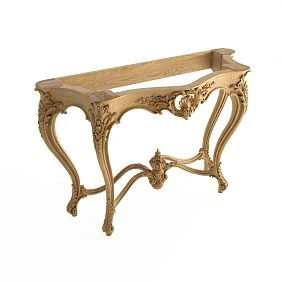
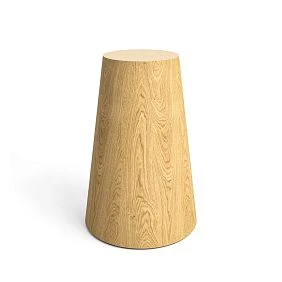
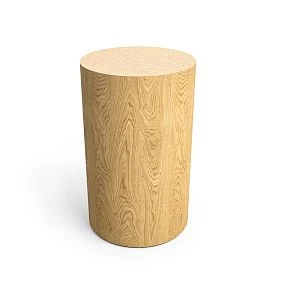
An underframe is the load-bearing base of a table. It takes on the weight of the tabletop, helps distribute the load, keeps the structure stable, and sets the external character of the furniture. Unlike individual legs, the underframe is often perceived as a more integral structure: a frame, a base, a central support, a pair of supports, or a combined system to which the tabletop is attached.
The difference between regular legs and an underframe is clearly noticeable on large tables. Four separate legs may work for a light, small tabletop, but with a long length, heavy solid wood, or active use, a more rigid base is often required. The underframe helps connect the support points, reduce the risk of wobbling, and make the table visually cohesive.
For the buyer, this means a simple thing: the base cannot be chosen solely by appearance. A beautiful underframe must match the load, tabletop size, and usage scenario. A dining table in the living room, a daily kitchen table, a conference table, a desk in an office, and a decorative console structure all require different approaches.
Particular attention should be paid to tabletops made of solid wood, slab, stone, porcelain stoneware, glass, and marble. The heavier and longer the surface, the greater the demands on the support. If the base is not designed for the actual load, the problem will not appear immediately but later: the table will start to wobble, the fastening will loosen, the edges will seem overloaded, and the seating will become uncomfortable.
The underframe also affects the style. A metal structure creates a modern, loft, or minimalist look. A wooden base blends more softly into a classic, neoclassical, natural, or warm interior. Combined solutions help tie a wooden tabletop to modern furniture, lighting, hardware, and room finishes.




Quick specification table: what to check before buying
Before choosing a specific model, it is useful to break down the purchase into parameters. Even if the product looks appealing, the product card should be checked not by a single photo but by a set of characteristics.
| Parameter | What it means for the buyer | What to check before ordering |
|---|---|---|
| Product type | Base, frame, or support for the tabletop | Whether the structure is suitable specifically for the tabletop, and not just for a ready-made table |
| Main purpose | Assembling a table from a separate tabletop and base | What type of table the purchase is intended for: dining, kitchen, work, bar, coffee |
| Tabletop shape | Round, rectangular, square, oval, or custom | Does the base logic match the tabletop shape |
| Tabletop size | Affects stability, edge overhang, and seating comfort | Length, width, diameter, thickness, and expected overhang beyond the base |
| Tabletop weight | Determines base strength requirements | Especially important for solid wood, stone, marble, porcelain tile, and glass |
| Undertable material | Affects appearance, strength, weight, and style | The relevant material needs to be checked in the product card or clarified with a STAVROS manager. |
| Base height | Determines the seating position at the table | The final height including the tabletop |
| Mounting | Ensures the reliability of the connection between the tabletop and the base | Compatibility of the mounting with the material and thickness of the tabletop |
| Style | Helps to fit the table into the interior | Classic, modern interior, loft, natural finish, minimalism |
| Category for selection | Section where you can choose a suitable base | furniture frames on the STAVROS website |
| Related products | Parts that may be needed for a furniture project | wooden elements for furniture and other solid wood products |
This table helps avoid the main mistake: buying "by eye." The underframe must match not only in style but also in practical parameters. If you have doubts about the material, load, fastening, or compatibility with a specific tabletop, it is better to clarify the parameters in advance on the product page or with a STAVROS manager.
Our factory also produces:
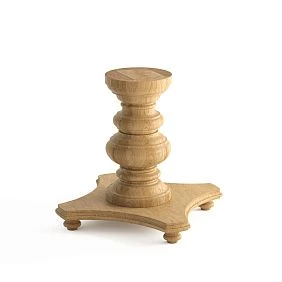
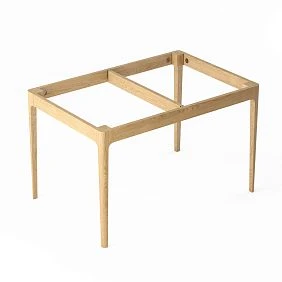
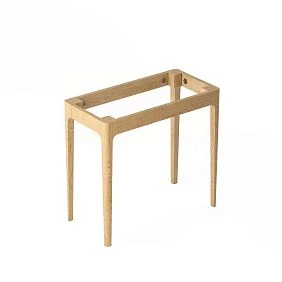
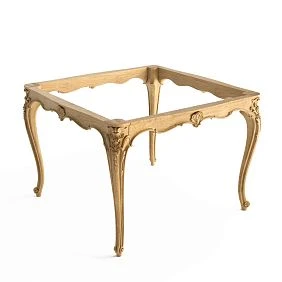

Which underframes are suitable for a wooden tabletop
A wooden tabletop seems simple and familiar, but it is very diverse. A thin furniture board, a massive tabletop, a slab, a glued surface, a product under varnish, oil, stain, or paint — all require different supports. The thicker and heavier the wood, the more serious the requirements for the underframe.
For a small wooden tabletop, a stable base with the correct support area is usually sufficient. For a long table, longitudinal rigidity is more important: the surface should not play, sag, or feel "floating" when seated at the edges. For a massive slab, not only strength but also the location of attachment points are especially important, because the wood has weight, texture, and its own behavior.
When choosing an underframe for a wooden tabletop, several things need to be considered. First is length. The longer the surface, the greater the risk of sagging and wobbling. Second is thickness. A thick tabletop looks solid but adds weight. Third is width. A wide tabletop requires stability not only lengthwise but also crosswise. Fourth is the installation location. A table against the wall and a table in the center of the room are loaded differently.
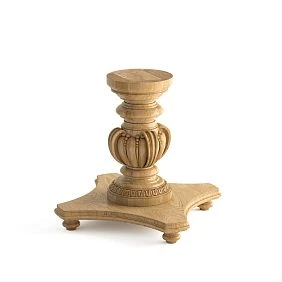
A wooden underframe for a tabletop looks good where warm texture, natural character, and a calm interior line are important. It is appropriate in classic, neoclassical, country house, dining room, study, interiors with wooden facades, architraves, panels, and other solid wood decor. Such a base visually supports the tabletop and does not conflict with it.
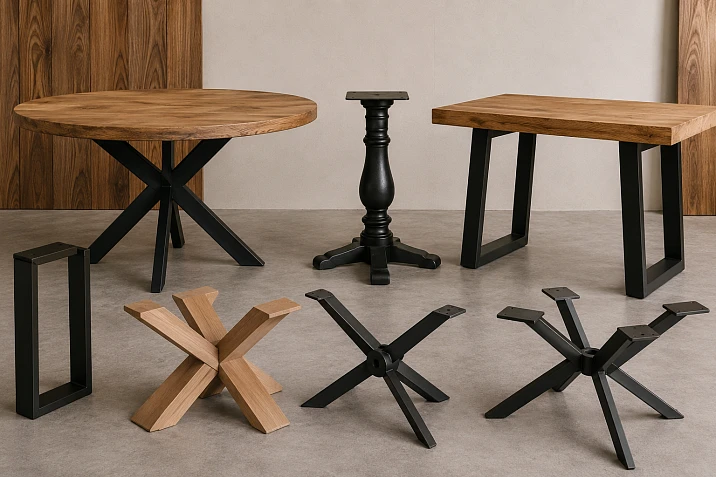
A metal base is often chosen for a heavy wooden tabletop, especially when a modern or loft style is desired. Metal provides a sense of rigidity, pairs well with solid wood, emphasizes the thickness of the wood, and helps create contrast between the natural surface and the graphic support. But here too, you can't choose based solely on a picture: it's important to check the dimensions, height, attachment method, and purpose.
If you need a table with a wooden surface, it's worth looking in advance base for a wooden table and evaluate not only the shape of the base, but also how it will work with the specific tabletop. A good result is achieved when the tabletop and base are perceived as a single furniture structure.
Get Consultation
How to choose a base for a round tabletop
A round tabletop requires special attention to balance. In a rectangular table, supports can be spaced along the length, hidden closer to the edges, or connected by a frame. With a round table, the load is perceived differently: a person can lean on the edge from any side, and the base must hold the table without feeling risky.
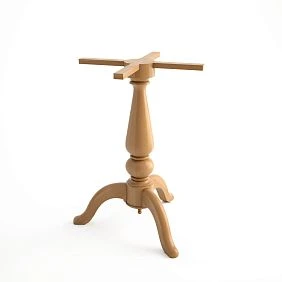
For a round tabletop, a central support or symmetrical base is often chosen. A central support is convenient because it doesn't interfere with legs and preserves the clean geometry of the circle. It's easier to seat several people at such a table because there are no corners and no legs that hinder seating. But the central support must be stable enough: a small base under a large diameter can make the table uncomfortable and dangerous when weight is applied to the edge.
A symmetrical base with multiple supports is suitable for larger round tabletops. It can look lighter than a massive central base while providing good stability. Here, it's important to check whether the supports will interfere with seated people. A beautiful base loses its purpose if a chair can't be easily pushed in and legs constantly bump into the structure.
Diameter is the main parameter for a round tabletop. The larger the circle, the wider the support area should be. A small table for a kitchen or coffee area and a large dining table in a dining room are different tasks. In the first case, the buyer is often looking for compactness; in the second, stability and comfortable seating for several people.
A glass round tabletop adds another nuance: the base is more visible. The base becomes part of the composition, not just a technical support. For glass, it's especially important that the base looks neat, doesn't seem random, and matches the level of the tabletop itself.
If the task is to assemble a round dining, coffee, or kitchen table, it's better to choose in advance a base for a round tabletop taking into account the diameter, height, weight, and seating. The approach 'I'll buy a beautiful support first, then think about it' often leads to mistakes here: the round shape does not forgive weak balance.
How to choose a base for a rectangular tabletop
A rectangular tabletop seems simpler than a round one, but it's often where problems arise due to length. The buyer chooses a beautiful surface, calculates seating, thinks about style, but forgets that a long table must be rigid along its entire length. If the supports are placed too close to the center, the edges may appear overloaded. If they are too close to the edges, seating at the ends becomes uncomfortable.
For a rectangular tabletop, it's important to determine how many people will sit at the table. A table for four, a long dining table for six or eight people, a work surface for an office, and a conference table — different schemes. The base should not just hold the tabletop, but allow people to sit comfortably, push in chairs, and not hit the structure with their legs.
Length affects the placement of supports. For a short rectangular tabletop, the base can be more compact. For a long one, it's better when the structure distributes the load over a larger area. Sometimes two supports are needed, sometimes a frame, sometimes a frame structure that ties the base together and reduces wobbling. The specific option depends on the size, weight, and purpose of the table.
Width is also important. A narrow tabletop on a too massive base will look heavy. A wide tabletop on a narrow support may lose stability. A good choice is a balance between visual lightness and real reliability. The base should not argue with the tabletop, but it should not be so weak that the entire structure looks temporary.
For the kitchen, you need to consider active daily load: people eat at the table, place dishes, move chairs, and sometimes use the surface as an additional work area. For an office, stability when writing, working with a laptop, documents, and equipment is important. For a dining room, seating comfort and appearance are key, because the table often becomes the central piece of the room.
When you need to buy a base for a rectangular tabletop, you should not focus only on the length of the base. You need to consider the overhang of the tabletop beyond the support, thickness, material, total weight, and height of the finished table. If the tabletop has already been purchased, it's useful to measure it in advance and compare the parameters with the card of the chosen base.
Metal or wooden base: which to choose
The base material affects three things at once: durability, style, and the feel of the table. The same wooden top will look different on a metal base versus a wooden one. In the first case, the table can become more graphic and modern; in the second, warm, cohesive, and classic.
| Criterion | Metal table base | Wooden table base |
|---|---|---|
| Visual character | Loft, minimalism, modern interior, contrast with wood | Classic, neoclassical, natural interior, soft furniture line |
| Perception of durability | Suitable for strict and heavy solutions, especially with proper construction | Depends on cross-section, shape, fastening, and overall frame |
| Combination with wooden tabletop | Creates a contrast of texture and emphasizes massiveness | Creates a cohesive wooden look |
| Combination with stone and porcelain stoneware | Often looks appropriate due to its graphic nature and rigidity | Requires particularly careful load calculation |
| Seating comfort | Depends on the shape of the support and the arrangement of elements | Depends on the geometry, height, and thickness of parts |
| Interior application | Kitchen, living room, study, cafe, showroom, meeting room | Dining room, country house, classic study, living room, interior with wood trim |
| What to check | Size, height, mounting, stability, compatibility with the tabletop | Material, cross-section, fastening, finish, compatibility with other wooden furniture |
A metal table base for a tabletop works well where visual cohesion and modern geometry are needed. It can support a wooden, glass, stone, or porcelain stoneware tabletop if its parameters are designed for such a task. But the word "metal" itself does not guarantee the right choice. It is important to look at the structure, support width, height, attachment points, and how the base distributes the load.
A wooden base is closer to furniture tradition. It works well where the table should be not just functional but warm in character. Such a base is appropriate next to wooden facades, carved decor, baseboards, architraves, wall elements, and other solid wood finishes. If there is already wood in the interior, the base helps support this material and does not introduce unnecessary contrast.
For loft and modern interiors, buyers often look for a loft table base for a tabletop. Here, not only the shape but also the proportion is important: the base should look confident but not turn the table into a heavy industrial structure. The thicker and more textured the tabletop, the more expressive the support can be. The lighter the top, the more careful the base should be.
If you specifically need a metal table base for a tabletop, before purchasing, it is worth checking the material and parameters in the product card. If a warmer furniture character is needed, you can consider wooden solutions and adjacent Solid Wood Items for overall interior cohesion.
How to choose a table base according to tabletop size
Size is the main selection filter. Even a beautiful base won't save the situation if it doesn't fit the scale. A table base for an 80 cm, 90 cm, 1 m, or 2 meter tabletop is not just different numbers, but different usage scenarios. A small tabletop requires a compact and stable support, a large one requires a more substantial structure.
You need to start by measuring the tabletop. For a rectangular surface, length, width, and thickness are important. For a round one, diameter and thickness. For a non-standard one, maximum dimensions, weight, and possible attachment points. If the tabletop is heavy, you need to understand in advance how the load will be distributed and how suitable the base is for this weight.
The overhang of the tabletop beyond the support should be convenient and safe. A small overhang helps the chair approach the table freely and makes seating comfortable. Too large an overhang creates a risk of tipping, especially if a person leans on the edge. This is especially noticeable for round tabletops: the load can come from any side.
The height is calculated together with the tabletop. The buyer sometimes only looks at the height of the underframe and forgets to add the thickness of the tabletop. As a result, the finished table ends up higher or lower than expected. For a dining table, this is critical: incorrect height affects seating, hand position, and chair comfort. For a bar tabletop, the error is even more noticeable because the height is tied to bar stools and the counter.
If the table is planned for a kitchen, you need to consider not only the room size but also the walkways. The table may look great in a diagram but obstruct movement if the underframe is too wide or does not allow chairs to be pushed in. For a living room and dining room, the visual center is more important: the base should look proportionate to the tabletop and the rest of the furniture.
For a desk, it is worth checking whether the frame will interfere with legs, a cabinet, a chair, or cables. If a computer, monitor, documents, desk lamp, and other equipment are planned, the load will not only be decorative. The underframe must hold the surface without vibration or wobbling.
A good rule: the larger the tabletop, the less room for chance. A large table immediately becomes a noticeable interior item. It must be stable, comfortable, proportional, and well-assembled. Therefore, before purchasing, it is better not to limit yourself to a photo, but to check all dimensions and, if necessary, clarify compatibility with a manager.
Underframe for heavy, stone, and marble tabletops
A stone, marble, or porcelain stoneware tabletop looks impressive but places increased demands on the base. The weight of such materials is significantly higher than that of many lightweight furniture surfaces, so the underframe for a stone tabletop must be chosen especially carefully.
Here you cannot rely on visual massiveness. The base may look sturdy but be unsuitable in terms of design, support area, or attachment. Before ordering, you need to know the weight of the tabletop, its dimensions, thickness, and installation method. If the surface is large, the load must be distributed evenly, otherwise the table may be unstable or uncomfortable.
Marble adds another nuance: the material is perceived as expensive and expressive, so a weak or random base immediately cheapens the entire table. You should buy an underframe for a marble tabletop only after checking compatibility. The base must not only support the weight but also match the level of the material: in proportion, style, and precision of execution.
Porcelain stoneware is often used in modern interiors. It can imitate stone, concrete, marble, have a strict graphic or calm texture. For such a countertop, lightness and clean geometry are usually desired, but the structure must still be reliable. The thinner the countertop appears visually, the more carefully you need to choose the base so that it does not look heavy or random.
A glass countertop requires not so much massiveness as precision. The base is visible through the surface, so the shape, color, symmetry, and quality of the structure become part of the design. The underframe for a glass countertop should look complete from all sides, not just from one angle.
For heavy surfaces, it is especially important not to skimp on consultation. If in doubt, it is better to clarify the load, fastening, and compatibility in advance. In the STAVROS section, you can select an underframe for a heavy countertop and check the parameters before ordering, so as not to buy a base blindly.
Underframe for kitchen, bar, and bathroom countertop
Not every countertop is needed for a regular dining table. Buyers often look for an underframe for a kitchen countertop, bar counter, bathroom countertop, or base for a sink. In each case, the operating conditions and requirements for the structure change.
A kitchen countertop lives in an active environment. Dishes, food, household appliances, hot items on stands are placed on it, and it is sometimes used as an additional work surface. If the countertop turns into a separate table or island zone, the base must withstand not only weight but also daily dynamic load. It is important that the table does not wobble, does not interfere with passage, and does not conflict with kitchen facades.
A bar countertop requires a specific height. Here, an error of a few centimeters is more noticeable than with a regular dining table. You need to understand in advance what stools will be used, how comfortable it will be to sit, where the legs will go, and whether the base will interfere with seating. The underframe for a bar countertop must be stable because a tall structure reacts more strongly to lateral load.
A bathroom countertop is a separate story. Here, humidity, fastening, material, compatibility with the sink, and the overall installation scheme are important. If a buyer is looking for an underframe for a bathroom countertop, you need not only to choose a beautiful support but also to consider utilities, the weight of the sink, wall or floor mounting, material protection, and maintenance. Without confirmed data on a specific product, it cannot be assumed that any underframe will be suitable for a wet area.
A sink countertop requires particularly careful calculation. The load comes not only from the surface itself, but also from plumbing, water, accessories, and fasteners. It's best to check all parameters against the product card in advance and consult a specialist to see if the chosen base is suitable for this scenario.
In commercial interiors — cafes, bars, salons, showrooms — the table base experiences more load than at home. People sit down more often, move chairs, lean on the edge, and shift their seating. For such projects, you should choose a base not only by style, but also by practicality. A beautiful table in a public space must be stable, repairable, and easy to maintain.
How the shape of the base affects seating comfort
A buyer often looks at the table from above: the shape of the tabletop, color, texture, size. But when sitting at the table, a person interacts not with the top view, but with the seating. They sit down, push in a chair, place their feet, lean on their hands, and move. The table base can make the table comfortable or, on the contrary, annoying.
A central support is good because it frees up the corners and allows flexible chair arrangement. It is often suitable for round and small dining tables. However, the central support must be wide enough and heavy in construction so that the table does not lose stability when load is applied to the edge.
Two side supports work well with rectangular tabletops. They allow you to keep the center space free, create an expressive silhouette, and hold a long surface. But if the supports are placed too close to the ends, it may be uncomfortable for those sitting at the edges. If too close to the center, the edges may feel overloaded.
A frame base gives a feeling of solidity. It is good for work, dining, and long tables where rigidity is important. But the frame can interfere with knees if the height and placement are not thought out. Therefore, before buying, it is worth imagining not just the table without people, but the actual seating.
Cross-shaped and decorative structures look impressive but require a comfort check. Sometimes a beautiful diagonal or complex support gets in the way of legs, especially if the table is small. For a coffee table, this is not critical; for a dining table, it can become a daily problem.
The table base should work quietly: not attract attention with flaws, not interfere with sitting, not force you to walk around the table, not raise doubts about stability. The best choice is one that you don't think about every day because the table is simply comfortable.
What to buy together with the tabletop and table base
Purchasing a base rarely exists on its own. Usually, a person assembles a table or an entire furniture zone. Therefore, along with the underframe, you need to consider the tabletop, fastening, finishing, adjacent wooden parts, decorative elements, and the overall style of the room.
If there are already wooden elements in the interior, it is worth selecting the base in advance so that it does not conflict with the rest of the finish. For example, a table next to wooden facades, panels, frames, carved decor, or moldings should look like part of a unified project, not a random purchase. In such cases, it is useful to look wooden elements for furniture and evaluate which details can support the future table.
For a furniture project, not only large elements are important, but also the little things: edge shape, coating color, part thickness, character of carving or smooth surface, combination with handles, legs, decorative overlays. Even if the underframe itself is laconic, adjacent details can make the furniture more cohesive.
If the table is being assembled for a classic interior, decorative solid wood elements may be needed nearby to connect the table with the portal, facades, wall finish, or furniture. If the interior is modern, clean geometry and the absence of unnecessary visual fragmentation are more important. In both cases, the buyer benefits when looking at the project as a whole.
| What to add to the purchase | Why this is needed | Which scenario it suits | What to Check |
|---|---|---|---|
| Tabletop of the right shape | Without it, it is impossible to correctly assess the load and overhang | New dining, kitchen, work, or coffee table | Length, width, diameter, thickness, weight |
| furniture frames | Help select the base for the tabletop | Assembling a table from individual elements | Size, height, material, mounting |
| Solid Wood Items | Help connect the table with other wooden finishes | Interior with furniture, decor, facades, frames | Wood species, finish, style compatibility |
| Fasteners and consumables | Needed for connecting the base and tabletop | Self-assembly or installation by a professional | Compatibility with tabletop and under-table material |
| Finishing products | Help protect and finish the wood | Countertop or wooden parts for painting, varnish, oil, stain | Does the selected coating match the material |
| Chairs of the required height | Check seating comfort | Dining, kitchen, bar table | Height of the finished table including the countertop |
| Adjacent furniture decor | Makes the project cohesive | Classic, neoclassical, natural interior | Scale, pattern, color, texture |
The main idea is simple: it's better to buy a table base not as a separate beautiful support, but as part of a set. This reduces the risk of the tabletop being too heavy, the height being uncomfortable, and the base style being random.
How not to confuse an underframe with similar products
A table base can easily be confused with legs, a furniture frame, a decorative support, a console, or a random blank. In photos, all these products may look similar, but their purposes are different.
Individual legs often work as four separate support points. They can be suitable for a small table, cabinet, chest of drawers, or a lightweight tabletop if the design is calculated correctly. But for a large surface, individual legs do not always provide the necessary rigidity. If the tabletop is long, heavy, or non-standard, it is better to consider a more solid base.
A furniture frame is a broader concept. It can include a support structure, a frame, a base for a table, or other furniture assembly. In the section furniture frames you need to look not only at the name but also at the purpose of the specific product. It is important for the buyer to ensure that the chosen option is suitable specifically for the tabletop.
A decorative support can be beautiful, but it is not always designed to serve as a full-fledged base. It can be used as part of furniture, facade decoration, support for a decorative element, or a visual accent. If a load-bearing table base is needed, it cannot be replaced with a part that has a different purpose.
A random blank is the riskiest option. Sometimes a buyer tries to save money and assemble a base from parts that are not intended for such a load. As a result, they have to adjust the fastening, reinforce the structure, fix the height, and the appearance still remains a compromise. A ready-made table base is more convenient because the buyer chooses a product for a clear furniture task.
To avoid mistakes, you need to look at the purpose, dimensions, material, fastening, and recommendations in the product card. If the product looks beautiful but the description does not confirm that it is suitable for the required type of tabletop, it is better not to take the risk. This is especially true for heavy surfaces, bar structures, and tables for active use.
Practical selection for different situations
There is a wooden tabletop made of solid wood
Here, weight, thickness, and length are important. If the tabletop is small, a compact base can be considered. If the surface is long, heavy, or made of a slab, a more stable structure is needed. A mistake is to choose a table base only by style and forget about deflection, overhang, and fastening.
For such a scenario, you should look not just at a beautiful support, but at a base with a suitable support area and rigidity. If the interior is wooden or classic, you can additionally evaluate adjacent solid wood items so that the table does not look like a foreign object.
Need to assemble a round dining table
The main task is stability under edge load and seating comfort from all sides. A central support can be convenient, but only if it is proportionate to the diameter. Multiple supports can provide stability, but they need to be positioned so that they do not interfere with chairs.
Before ordering, you need to know the diameter, thickness, and weight of the tabletop. If the table will be placed in the center of the room, the base should look neat from all sides.
Need a rectangular table for six or eight people
Here, the length, edge overhang, and support placement are key. The more seats, the more attention needs to be paid to legroom. The underframe should not interfere with those sitting along the long sides and at the ends.
For a long tabletop, it is better to check in advance whether the surface will feel weak at the edges. Sometimes a buyer chooses a too compact base because it looks lighter, but then ends up with wobbling and uncomfortable seating.
Need a base for a kitchen countertop
The kitchen requires practicality. The table may be used daily, so the base must be stable and convenient for passage. If the tabletop is placed next to the kitchen set, it is important not to disrupt movement in the kitchen and not to create conflicts with doors, drawers, and chairs.
Here, it is especially useful to imagine the real scenario in advance: who sits at the table, how much space remains around, how often the surface is used, whether the table will be moved or stay in place permanently.
A bar countertop is planned
Bar height requires precise calculation. You need to consider not only the underframe, but also the thickness of the tabletop, the height of the stools, legroom, and the stability of the tall structure. The higher the table, the more lateral load is felt, so the base should not be too light or narrow.
Before ordering, it's worth checking the final height and understanding whether it will be comfortable to sit for a long time, not just look good in a photo.
The table is needed for a cafe, salon, or showroom
In a commercial space, a table receives more load than at home. People move around more often, change their seating position, lean on the edges, and rearrange chairs. Here, stability, ease of maintenance, a neat appearance from all sides, and consistency with the room's style are important.
If the table will be part of the brand's interior, the underframe should support the overall atmosphere. In a cafe, it could be a warm wooden character; in a showroom, a strict graphic base; in a salon, a softer and more decorative line.
Selection based on material, load, and installation location
The tabletop material sets the requirements for the base. Wood requires attention to weight and fastening. Stone and marble require load-bearing capacity. Glass requires attention to the base's appearance. Porcelain stoneware requires a combination of strength and neat geometry. Light furniture surfaces give more freedom, but still require proper height and stability.
Load can be static and everyday. Static load is the weight of the tabletop itself. Everyday load is everything that happens during use: a person leans on the edge, places dishes, moves objects, works at the table, sits nearby. The underframe must withstand not only a beautiful static picture, but also real life.
The installation location also changes a lot. A table against a wall may have fewer open sides, so seating is simpler. A table in the center of the room is fully visible and accessible from all sides. A kitchen table requires walkways. A desk should be comfortable for a chair. A bar structure requires height and stability. A table in a commercial space should be designed for frequent use.
If the base is chosen for an already finished tabletop, it's better to start from the facts: size, weight, material, thickness, shape. If the tabletop hasn't been purchased yet, you can choose the set more flexibly: first determine the table's purpose, then the tabletop shape, then a suitable base, and only after that the finish.
Table base in different interiors
In the living room, the table often becomes the central piece. It could be a large dining table, a coffee table, or a workspace integrated into the interior. Proportions are important here: the base should be expressive but not overwhelm the room. If there's a lot of wooden furniture around, the table base can support the overall material. If the interior is modern, a more graphic base can be chosen.
In the kitchen, convenience is more important. The table should withstand daily use, not obstruct passage, match the facades, and not complicate cleaning. For a small kitchen, it's better to avoid overly massive bases that visually eat up space. For a spacious kitchen or island area, a more noticeable structure can be allowed.
В
In a cafe, restaurant, bar, or showroom, the table base becomes part of the atmosphere. The guest rarely thinks about the table's construction but immediately feels whether it's comfortable to sit at. If the table wobbles, gets in the way of legs, or looks unstable, the impression of the interior suffers. Therefore, a commercial project requires a stricter choice.
Materials and finish: what to clarify in advance
The material of the table base cannot be perceived as just a decorative signature. It affects strength, weight, appearance, maintenance, and compatibility. If the base is wooden, you need to look at the wood species, treatment, finishing options, and how it combines with the tabletop. If it's metal, check the construction, coating, shape, and compatibility with the interior.
Wood works well in interiors where texture is important. It can be expressive or calm, massive or neat, classic or modern. But a wooden table base requires the right choice for the load. You cannot assume that any wooden base is suitable for any tabletop.
Metal provides a stricter line and is often perceived as a practical choice for heavy surfaces. But here too, it's important to look not at the word 'metal' but at the construction. A thin decorative support and a serious frame are different things.
The finish should match the task. If the buyer plans to paint the tabletop or base, they need to understand in advance whether the material is suitable for the chosen coating. If the table must match existing furniture, color and texture require special attention. Even a slight discrepancy in wood shades can be noticeable, especially next to facades and baseboards.
It's best to check the current options for material, finish, sizes, and configuration in the product card. If the project is complex, it's worth clarifying the parameters with a STAVROS manager before ordering, not after purchase.
Installation and preparation: what to consider before assembly
Assembling a table from a tabletop and base starts not with screws, but with checking compatibility. You need to understand in advance where the attachment points will be, whether the tabletop thickness allows for secure base fastening, whether the fasteners fall into weak areas, and whether the frame will be in the way.
Before installation, it's better to place the tabletop on a flat surface and mark the location of the base. This helps to see the overhang, symmetry, and seating comfort. For a round tabletop, marking is especially important: a slight shift of the central support can disrupt balance and visual symmetry.
For a rectangular tabletop, you need to check the distance from the edges to the supports. If the overhang is too large, the edges may seem unstable. If the supports are too close to the edges, the end seats will become uncomfortable. Here it's important to find a compromise between stability and seating.
Fasteners depend on the material of the tabletop and base. You cannot use random fasteners without understanding the load. You need to be especially careful with heavy tabletops, glass, stone, marble, and porcelain stoneware. In such cases, self-assembly requires experience, and if in doubt, it's better to involve a specialist.
After assembly, the table needs to be checked not only visually. You need to lightly load the edges, place chairs, sit on different sides, make sure the base doesn't interfere with your legs and the table doesn't wobble. It's better to identify a mistake immediately than to get used to uncomfortable furniture.
Common mistakes when choosing a table base
The first mistake is choosing only by photo. In the image, the base may look perfect, but the photo doesn't show the weight of the tabletop, the actual height, seating comfort, and fastening. A beautiful silhouette doesn't replace checking dimensions.
The second mistake is not considering the weight of the tabletop. This often happens with solid wood, slab, stone, marble, and porcelain stoneware. The buyer sees a beautiful surface and picks a lightweight base for it, then encounters wobbling or a feeling of unreliability.
The third mistake is using too narrow a base for a large tabletop. This is dangerous for round and long rectangular tables. A large overhang may look impressive, but when weight is placed on the edge, the table becomes unstable.
The fourth mistake is forgetting about height. The final height is the sum of the base and the tabletop thickness. If you don't calculate it in advance, a dining table may end up uncomfortable, and a bar counter may not match the stools.
The fifth mistake is not thinking about legs. The base can interfere with seating, especially if it has a complex geometry, wide crossbars, or poorly placed supports. A table should be comfortable not only in an empty room but also with people around it.
The sixth mistake is mixing styles without a unifying idea. A wooden tabletop, a random metal base, classic chairs, and a modern kitchen may not form a cohesive composition. Contrast is good when it's intentional. Random mismatches are immediately noticeable.
The seventh mistake is not checking the product card. Dimensions, material, finish, configuration, and purpose must be confirmed. If data is missing, it's better to clarify before ordering.
The eighth mistake is buying one part instead of a set. Sometimes the underframe is chosen correctly, but the fasteners, chairs, finish, adjacent elements, and overall interior are not considered. As a result, the table stands apart from the rest of the room. A set-based approach helps avoid such mismatches.
Who this solution suits and who should choose a different option
An underframe for a tabletop suits those who want to assemble a table for a specific task rather than buying a ready-made standard model. It's a good path if you already have a tabletop of the desired shape, want to use solid wood, a slab, stone, glass, or a non-standard size. This approach offers more freedom: you can choose the shape, height, style, and material of the base for the project.
This solution is especially useful for buyers who are making a dining table, kitchen area, desk, bar counter, conference table, or furniture for a commercial interior. A separate base allows for a more precise fit in size and style than a ready-made table from a mass-produced line.
A table base is also worth considering for those who want to update their interior without completely replacing all furniture. A new tabletop and a properly chosen base can completely change the impression of a kitchen, dining room, or study.
But there are situations where it's better to choose a different path. If the buyer needs the simplest possible ready-made table without selection, measurements, or installation issues, a ready-made model may be more convenient. If the tabletop is very heavy or non-standard, and there is no precise load data, you cannot buy a base without consultation. If the room is small and every centimeter matters, you need to check the dimensions and fit especially carefully.
The underframe may also be unnecessary if the task is not load-bearing but purely decorative. For decorating a facade, wall, or furniture element, other products are needed. It's important not to use a table base where a decorative detail is required, and vice versa.
How to buy a table base on STAVROS and what to check in the product card
It's best to start the purchase with the task. First, you need to understand what kind of table is being assembled: round, rectangular, kitchen, dining, work, bar, coffee, or commercial. Then determine the size and material of the tabletop. After that, you can move on to choosing the base.
On the STAVROS website, the main route for this task is the section where you can buy an underframe for a tabletop and compare suitable furniture frames. In the product card, you need to check the dimensions, material, height, purpose, mounting features, configuration, and current parameters.
If the tabletop has already been purchased, it's useful to prepare its dimensions in advance: length, width, thickness, diameter for a round shape, approximate weight, and material. This will simplify the selection and help avoid mistakes with overhang, height, and stability.
If the interior is complex, it's worth looking not only at the base but also at adjacent categories. For example, Solid Wood Items help to select wooden parts for furniture and finishing, so that the table does not look out of place against the rest of the space.
Before ordering, it's worth asking yourself a few questions: will the base support the weight of the tabletop, will it be comfortable to sit, will the support get in the way, does the height match, is the style suitable, is there an understanding of the mounting, are additional elements needed. If at least one question remains open, it's better to clarify it before purchasing.
FAQ: answers to common questions about choosing a table base
How to choose a table base for a tabletop?
Start with the shape, size, weight, and purpose of the tabletop. For a round surface, stability under edge load is important; for a rectangular one, length, overhang, and seating comfort; for a heavy one, load-bearing capacity and fastening. After that, you can choose the style and material of the base.
What table base is needed for a wooden tabletop?
For a wooden tabletop, it is important to consider thickness, length, and weight. A small surface may require a compact base, while a massive or long tabletop may need a more rigid structure. If the wood is heavy, do not choose a base solely based on appearance.
How to choose a table base according to the size of the tabletop?
You need to measure the length, width, thickness, or diameter, determine the approximate weight, and understand how the table will be used. Then check the base height, edge overhang, leg placement, and seating comfort.
What base to choose for a round tabletop?
For a round tabletop, central or symmetrical bases are often suitable. The main thing is that the support is proportionate to the diameter, does not interfere with chairs, and prevents the table from tipping over under edge load.
Will a metal table base work for a wooden tabletop?
Yes, a metal base can pair well with a wooden tabletop, especially in modern, loft, or minimalist interiors. But you need to check not just the material, but the entire structure: dimensions, height, fastening, and stability.
Which table base should I choose for a stone tabletop?
For a stone, marble, or porcelain stoneware tabletop, a strong and stable base is needed. Before purchasing, you need to know the weight, dimensions, and method of attaching the surface. If in doubt, it's best to check compatibility with a STAVROS manager.
Can I make a table from a separate tabletop and base?
Yes, this is a common way to assemble a table to your size and style. The main thing is to choose the base correctly in terms of shape, height, load, and fastening. This option is especially convenient when you need a non-standard tabletop or a specific interior look.
What is more important when choosing: the material or the shape of the table base?
Both parameters are important. The material affects strength, style, and maintenance, while the shape affects stability and seating comfort. You cannot choose a good option based on just one criterion. The base must suit the tabletop as a whole.
Do I need to consider the thickness of the tabletop?
Absolutely. Thickness affects weight, attachment, and the final height of the table. If you add a thick countertop to a tall base, the table may become uncomfortable for standard chairs.
What should I buy together with the base?
You need to plan in advance the countertop, fasteners, finishing, chairs of suitable height, and adjacent wooden parts if the interior requires a unified style. For furniture projects, it's useful to look not only at the base but also at compatible solid wood products.
Can one base be used for different tabletops?
Sometimes yes, but only if the size, weight, shape, and fastening match. A base suitable for a light wooden tabletop may not necessarily work for stone or large glass. Each replacement needs to be checked separately.
How to know if the underframe will interfere with legs?
You need to imagine the actual seating: where the chairs are, where the knees go, whether there are crossbars, how close the supports are to the edges. This is especially important for a dining table because an uncomfortable seating position will be annoying every day.
Where to buy a base for a tabletop?
Suitable options can be viewed in the section buy an underframe for a tabletop on the STAVROS website. Before ordering, you should check the dimensions, material, height, purpose, and compatibility with your tabletop.
Conclusion: a good underframe makes a table not just beautiful, but comfortable
A table made from a separate tabletop and base can turn out much more expressive than a ready-made standard model. But the result depends on how thoughtfully the base is chosen. It must match in shape, size, height, load, material, and style. Then the table will not be a shaky assembly of random parts, but a full-fledged piece of furniture for the kitchen, dining room, living room, study, or commercial space.
For a wooden tabletop, it is important to consider weight and length. For a round one, balance and stability. For a rectangular one, overhang, seating positions, and longitudinal rigidity. For a stone, marble, glass, or porcelain stoneware surface, load-bearing capacity, mounting, and neat appearance of the base.
On STAVROS, you can select a base in the furniture frames section, check the parameters in the product card, and, if necessary, clarify compatibility before ordering. This approach helps you buy a table base not at random, but for a specific tabletop, interior, and usage scenario.