Article Contents:
- Why you shouldn't buy furniture legs without mounting hardware
- The leg determines the look, the hardware determines the stability
- What happens if you don't install a furniture foot
- Why weak fasteners loosen furniture
- Mounting plate: straight and at a 10° angle
- Furniture foot: floor protection and stability adjustment
- Structural screw: fastening to wood and MDF
- TORX T-25 key: tool for limited access
- FUR-020 — basic mounting bracket
- FUR-017 — 10° angle mounting bracket
- When a plate is mandatory
- When an alternative mounting scheme can be used
- D25 or D32: selection logic
- Adjustable foot for uneven floors
- Felt and self-adhesive furniture glides: when protection is enough
- Self-tapping screw 5×70 FUR-037
- Self-tapping screw 5×90 FUR-038
- Why a T-25 key is needed for TORX
- When pre-drilling is needed
- Table of 'what to buy together'
- Need to install wooden legs on a cabinet
- Need to install legs on a dresser
- Need to install supports at an angle
- Need to level furniture on an old floor
- Need to protect parquet or laminate
- Need to assemble an order for the workshop
- Mistake 1. Buying legs without fittings
- Mistake 2. Choosing a plate without considering the angle
- Mistake 3. Not installing support pads
- Mistake 4. Confusing D25 and D32
- Mistake 5. Using a regular screw instead of a structural one
- Mistake 6. Not buying a TORX key
- Error 7. Not doing pre-drilling
- Error 8. Not checking the furniture base
- What to buy together with wooden furniture legs?
- Why is a support foot needed?
- When is a mounting plate needed?
- What is the difference between FUR-017 and FUR-020?
- Why do you need a TORX T-25 key?
- Can regular screws be used?
- How to choose between D25 and D32?
- Is a support foot needed if the floor is level?
- Can furniture legs be installed without a plate?
- When is pre-drilling necessary?
- What to do if furniture wobbles after installation?
- What to buy for the workshop as a spare?
- Is the kit suitable for installing legs on a dresser?
- Where to look for furniture leg fittings?
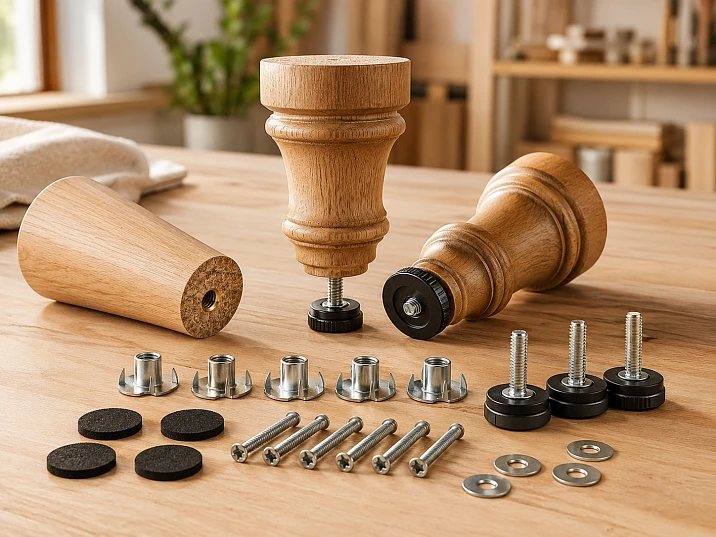
A furniture glider is most often remembered after choosing wooden legs, when it becomes clear: one beautiful support is not enough for stable furniture. The leg is responsible for the appearance, height, style, and silhouette of the item, but the mounting assembly solves a different task — how this leg will hold, whether it will loosen over time, whether it will damage the floor, and whether the furniture can be leveled after installation.
Wooden furniture legs are rarely bought 'alone'. They almost always require a set of accompanying parts: a mounting plate, an adjustable or protective glider, a structural screw, and sometimes a TORX T-25 key. Without this, the buyer risks getting a beautiful support but facing inconvenient installation, misalignment, weak fastening, or scratches on the floor.
The correct mounting kit is especially important for cabinets, dressers, tables, consoles, small case goods, and furniture that should not just stand but calmly withstand daily use. If legs are installed on an old base, a new wooden frame, a tabletop, or a case part, it is better to select the fittings immediately rather than search after the furniture is already assembled.
On STAVROS, it's convenient to start such a route from the section Buy hardware for furniture legs. In it, you can assemble a basket for installation: choose a mounting plate, a leveling foot for adjustment and floor protection, structural wood screws, and TORX fastening tools. If the supports themselves haven't been chosen yet, you should also open the section Wooden legs and supports for furniture to immediately check the leg, mounting, and lower assembly.
Why furniture legs shouldn't be bought without mounting hardware
A wooden leg can be beautiful, carved, modern, classic, massive, or thin, but by itself it doesn't solve the attachment issue. It needs to be securely connected to the furniture base. If the assembly is chosen incorrectly, the problem doesn't appear immediately in photos, but during use: the furniture starts to wobble, the leg goes at the wrong angle, the screw damages the mounting hole, and the floor gets scratched.
The buyer often looks at the shape of the leg and forgets about what will be between the leg, the body, and the floor. That's where the mounting kit comes in. The plate connects the support to the base. The leveling foot protects the lower contact point and helps compensate for uneven floors. The screw secures the fastening assembly. The TORX key is needed when using the corresponding fastener and a regular bit or Phillips screwdriver is inconvenient to work with.




The leg is responsible for appearance, the hardware for stability
The leg makes furniture taller, lighter, more expressive, and stylistically more precise. But stability comes not only from the shape of the leg. It depends on the attachment, support area, installation angle, base quality, screws, leveling feet, and how the load is distributed.
For example, the same wooden support can work well on a cabinet and poorly on a heavier item if the fastening is weak or chosen without considering the design. The plate helps distribute the fastening assembly. The leveling foot helps level the furniture. The screws must match the material and load. If even one element is chosen randomly, the entire structure can become weaker.
Our factory also produces:
What happens if you don't install a leveling foot
A foot pad is a small part, but its absence is often noticeable in everyday life. A wooden leg directly contacts the floor. On hard surfaces, it can leave marks; on soft surfaces, it can dent; on uneven surfaces, it can cause wobbling. If furniture stands on tiles, parquet, engineered wood, laminate, or other finished flooring, it's better to consider the bottom contact point in advance.
An adjustable foot pad helps not only protect the surface but also level the furniture. This is especially useful on floors with slight unevenness. Even if the unevenness is barely visible, it's felt: the cabinet wobbles, the table shakes, the chest of drawers stands unsteadily. The foot pad allows compensating for such minor irregularities without cardboard, felt, or random wedge shims.
Get Consultation
Why weak fasteners loosen furniture
Weak fastening rarely breaks immediately. More often, it gradually loosens. First, the leg moves slightly, then a small play appears, then the furniture starts to wobble, and the holes in the base enlarge. This happens especially quickly where furniture is moved, drawers are opened, heavy objects are placed, or the edge is regularly leaned on.
A structural wood screw is not for aesthetics. It works in a load-bearing joint where length, fit, base material, and proper driving are important. If you use unsuitable fasteners, you can damage the wood, fail to achieve the required fixation, or strip the drive. Therefore, along with the screws, it's important to have the right tool, including a TORX T-25 key if the fastener is designed for such a drive.
What is included in the mounting kit for wooden legs
The mounting kit is not always the same. For some furniture, a plate and screws are enough. For others, adjustable foot pads are needed. For a third type, an angled plate, foot pads, structural screws, and a TORX key are required. But the basic logic remains the same: fastening on top, support on the bottom, correct fasteners, and tools.
Mounting plate: straight and at a 10° angle
A mounting plate helps secure a wooden leg to the furniture base. It is needed when the leg should not just be screwed into the body but installed through a prepared fastening element. At STAVROS, there are several options for this task, including mounting plate 10° FUR-017 for furniture legs и mounting plate FUR-020 for wooden legs.
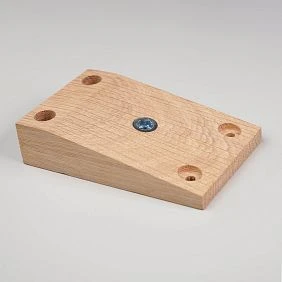
An angled plate is needed when the leg must be installed at an incline. This is not just a decorative technique. The tilt changes the silhouette of the furniture, makes the supports visually spread apart, and can support the style of the item. But such installation requires precision: the angle must be the same on all legs, the fastening must be reliable, and the base must be prepared.
A straight mounting plate is needed for a more stable fastening, when the supports should work without a pronounced tilt or when the structure requires an extended plate for two legs. It is important to remember: the plate itself does not replace the fasteners. Screws and other elements are selected separately.
Glide: floor protection and stability adjustment
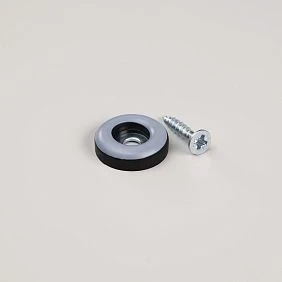
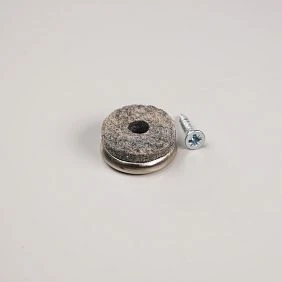
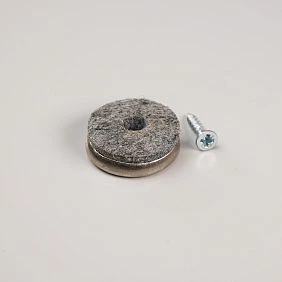
The glide is located at the lowest point of the support. Its task is to contact the floor. For a simple protective scenario, felt or self-adhesive glides can be used, which reduce the risk of scratches. For a more serious task, adjustable glides are needed.
If the furniture needs to be leveled, you should look at adjustable glide D32 FUR-030 or Adjustable support foot D25 FUR-029. The difference between D25 and D32 is not just in the number. The diameter of the glide must match the scale of the leg, the load, the visual appearance of the lower part, and the mounting point.
Construction screw: fastening to wood and MDF
A construction screw is needed where the fastening must bear the load. The mounting kit diagram specifies FUR-037 5×70 and FUR-038 5×90. They must be selected based on the base material, part thickness, insertion depth, and the actual task. A screw that is too short will not provide the necessary fixation. A screw that is too long may go through, damage the surface, or end up in the wrong place.
It is important to understand in advance exactly where the fastener is being screwed: into solid wood, MDF, plywood, a frame part, a side rail, a bottom panel, or another base. Each base requires its own logic. In some cases, pre-drilling is useful to reduce the risk of cracking and make careful screwing easier.
TORX T-25 key: tool for limited access
TORX fasteners are convenient because the slot transmits force better and is less prone to stripping when using the right tool. However, a suitable key is required. If an inappropriate bit is used, the slot can be damaged and installation made more difficult. For such tasks, a TORX T-25 key for furniture fittings.
An L-shaped extended key is especially useful where using a screwdriver is inconvenient: near a side rail, inside a cabinet, at the edge of a base, in a tight mounting spot. For a workshop, this is not a trifle but a standard working tool that reduces the risk of damaging the fastener and speeds up assembly.
Specifications table of the main elements of the mounting kit
| Element | Article | What is confirmed | What it is for | What to check before purchasing |
|---|---|---|---|---|
| Mounting plate 10° | FUR-017 | Wooden plate with metal M8 threaded insert, angle 10°, size 112×70×26 mm, beech/oak, "Prestige" sanding | Installing furniture support at an angle | Compatibility with leg, M8 stud, base, and fasteners |
| Mounting plate | FUR-020 | Wooden plate for attaching two legs, several lengths available, beech/oak, M8 threaded inserts | Mounting two furniture legs to the base | Plate length, distance between supports, material, and installation diagram |
| Foot cap D25 | FUR-029 | Adjustable foot cap D25 with ball joint, chrome color, M6 threaded insert | Adjustment and support for smaller legs | Diameter, thread, mounting seat, and leg scale |
| Foot cap D32 | FUR-030 | Adjustable foot cap D32 with ball joint, chrome color, M8 threaded insert | Adjustment and support for larger assembly | Diameter, thread, mounting seat, and load |
| Structural screw | FUR-037 | Size 5×70 | Power fastening to wooden base | Base thickness, insertion depth, risk of going through |
| Structural screw | FUR-038 | Size 5×90 | Longer power fastening | Base thickness, load, pre-drilling |
| TORX T-25 key | FUR-039 | L-shaped extended TORX T-25 key | Working with TORX fasteners | Availability of TORX fasteners and access to installation site |
This table helps quickly assemble not a random set, but a proper mounting kit. The buyer doesn't need to remember all the part numbers separately. It's enough to understand the role of each element: the plate fastens, the foot pad adjusts and protects, the screw secures, and the wrench helps tighten correctly.
How to choose a mounting plate
A mounting plate is not always needed, but if the leg must be attached via a stud, threaded insert, or prepared joint, the installation becomes weaker and less predictable without it. The choice of plate depends on how the leg should be positioned: straight, at an angle, individually, or paired with another support.
FUR-020 — basic mounting
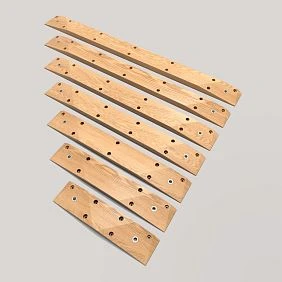
FUR-020 is suitable for tasks where you need to secure two furniture legs through a wooden mounting plate. It comes in several lengths, so it is chosen not "in general" but for a specific structure. This plate is useful when you need to connect supports to the base and create a clearer mounting joint.
Before purchasing, it is important to check the plate length, distance between legs, base thickness, and installation location. If the plate is too short or too long, it may not align with the furniture structure. If the base is weak, even a good plate won't save the joint without reinforcement.
FUR-017 — mounting at a 10° angle
FUR-017 is needed when the leg must be positioned at an angle. This option is often chosen for furniture with a lighter, spread-out silhouette. Angled legs make a cabinet, table, or dresser look visually more stable and modern, but only with proper installation.
The 10° angle must be the same on all supports. If one leg goes differently, the furniture will look skewed. Therefore, when using mounting plate 10° FUR-017 for furniture legs it is necessary to mark all mounting points in advance and check the direction of the tilt.
When a plate is mandatory
A plate is needed when the leg is designed for fastening via a stud and threaded bushing, when the base requires load distribution, when the support must be installed at a given angle, or when the installation needs to be neat and repeatable. For a workshop, the plate is especially convenient: it reduces the number of random decisions and helps replicate the assembly on multiple products.
The plate is also useful if furniture is assembled not just once but in a series: several cabinets, tables, consoles, benches, or other items. A repeatable fastening assembly reduces the risk of errors.
When a different fastening scheme can be used
Sometimes the leg has its own fastening assembly, a standard mounting plate, or a different installation scheme. In that case, a mounting plate may not be needed. But this must be checked for the specific leg and base. You cannot automatically buy a plate for any support, just as you cannot refuse it without checking.
The main principle is simple: if you are unsure how the leg attaches to the furniture, first study the leg's product card, then the hardware, and then choose the installation scheme. Random fastening is almost always worse than a well-thought-out set.
How to choose a glider
The glider is chosen after the leg, base, and floor are understood. It is not just a "small cap at the bottom." The glider can protect the surface, adjust height, compensate for uneven floors, improve contact, and reduce the risk of wobbling.
D25 or D32: the logic of choice
D25 and D32 are chosen not only based on availability. The diameter must match the scale of the leg and the mounting location. For thinner, compact supports, D25 may be appropriate. For a larger assembly, D32. But the final decision depends on the specific leg and its lower part.
If the glider is too small, it may look weak and provide less contact area. If too large, it will visually stand out from the bottom. Therefore, before ordering, you need to look not only at the article number but also at how the glider will look from below.
Adjustable glider for uneven floors
An adjustable glider is especially useful in old buildings, on tiles, on wooden floors, on screeds with unevenness, in commercial spaces, and on furniture with four or more supports. Even a small floor unevenness can cause one leg not to touch the surface properly.
If adjustment is needed, it's better to choose in advance Adjustable support foot D25 FUR-029 or adjustable glide D32 FUR-030. Such an element helps to adjust the furniture after installation, rather than looking for shims under the legs.
Felt and self-adhesive glider: when protection is enough
Sometimes adjustment is not needed. For example, the furniture is light, the floor is level, the legs are already installed correctly, and the only task is to protect the covering from scratches. In that case, you can use felt or self-adhesive gliders from the hardware section. They do not replace an adjustable unit, but help reduce the risk of floor damage.
It is important not to confuse protection and adjustment. Felt will not level furniture on a serious unevenness. A self-adhesive glider will not replace a hinged adjustable element. If leveling is needed, choose an adjustable glider. If soft floor protection is needed, a protective option is sufficient.
Self-tapping screws and TORX: what is needed for installation
Even the correct plate and glider do not solve the problem if the fasteners are chosen randomly. Self-tapping screws must match the material, base thickness, load, and access to the installation site. And the key must fit the slot.
Self-tapping screw 5×70 FUR-037
Self-tapping screw 5×70 is suitable for tasks requiring structural fixation, but a length of 90 mm is already excessive. It cannot be selected automatically. You need to check the base thickness, seating depth, and risk of going through. If the furniture base is thin, a long self-tapping screw can damage the front side.
Self-tapping screw 5×70 is often perceived as a "medium" option, but there is no universal length in installation. There is a specific joint: material, thickness, angle, load, attachment point. The more accurately this is checked, the lower the risk of damaging the base.
Self-tapping screw 5×90 FUR-038
Self-tapping screw 5×90 is used where greater fixation depth is needed. But the length requires caution. If the base is not thick enough, such a screw can go through or hit an undesirable area. It can be useful for massive joints, but dangerous for thin parts.
Before ordering, you need to match the screw length with the thickness of the parts. This is done especially carefully in cabinets, dressers, countertops, and drawer fronts, where the front surface must remain clean.
Why a T-25 key is needed for TORX
TORX requires the right tool. If the fastener is designed for T-25, you cannot use a Phillips bit, hex key, or an unsuitable TORX. A stripped spline turns simple installation into a problem: the fastener is hard to tighten, hard to unscrew, and sometimes the part has to be replaced.
Therefore, it is worth adding to the kit for a workshop or self-assembly TORX T-25 key for furniture fittings. It is especially useful in tight spots where a screwdriver does not fit.
When pre-drilling is needed
Pre-drilling is needed when there is a risk of splitting the wood, when fastening close to the edge, when the material is dense, when the screw is long, or when particularly careful installation is required. This is not a weakness of the fastening, but a way to make it more precise.
Drilling helps the screw follow the intended axis, reduces stress on the material, and lowers the chance of cracks. This is especially important when working with solid wood, dense wooden parts, and visible furniture joints.
Commercial choice: what to buy for the task
| Buyer's task | What to buy | Why this is needed |
|---|---|---|
| Attach wooden legs to a cabinet or dresser | Mounting plates + screws | The leg must be securely connected to the base |
| Level furniture on uneven floors | Adjustable leveling feet D25/D32 | Help compensate for minor unevenness |
| Protect the floor from scratches | Felt or self-adhesive furniture glides | Reduce the risk of damaging the floor covering |
| Tighten fasteners in tight spaces | TORX T-25 key FUR-039 | Allows working with TORX fasteners where a screwdriver is inconvenient |
| Assemble an order for the workshop | Plates + glides + screws + key | Forms a complete mounting kit |
| Place legs at an angle | FUR-017 + suitable glide and fasteners | Angle 10° requires precise repeatable installation |
| Secure two legs on one bar | FUR-020 + self-tapping screws | The plate helps assemble the assembly for a pair of supports |
This table helps assemble a basket not based on the principle of "what you liked", but based on the task. If a buyer takes legs without glides, they risk later looking for floor protection. If they take a plate without screws, installation will stop. If they take TORX screws without a key, assembly may become inconvenient.
What to buy together with wooden furniture legs
Wooden legs are the main visual element, but the kit should cover the entire installation path. The minimum logic is: legs, plate, fasteners, glides. For a workshop, also tools and spare parts.
If the buyer has already selected Wooden legs and supports for furniture, the next step is to open Buy hardware for furniture legs and check which components are needed specifically for the selected installation method. If the furniture will be painted, oiled, varnished, or finished after assembly, additional materials for installation and finishing will be useful.
Table "What to buy together"
| Main product | What to add to the order | What for |
|---|---|---|
| Wooden furniture legs | mounting plate 10° FUR-017 for furniture legs | For installing supports at an angle |
| Wooden furniture legs | mounting plate FUR-020 for wooden legs | For attaching two legs through a wooden plate |
| Mounting plates | Construction screws FUR-037 / FUR-038 | For fixing the plate to the base |
| Legs for uneven floors | Adjustable support foot D25 FUR-029 | For adjusting the smaller assembly |
| Legs with a larger lower part | adjustable glide D32 FUR-030 | For adjusting the larger assembly |
| TORX fastener | TORX T-25 key for furniture fittings | To carefully tighten the fastener |
| Furniture for finishing | Materials for installation and finishing | For preparing, protecting, and finishing the node |
How not to confuse similar products
| Product | What it is for | Do not confuse with |
|---|---|---|
| Mounting plate | Attaching the leg to the base | With a foot |
| Thrust bearing | Support, adjustment, floor protection | With a mounting plate |
| Structural screw | Strong attachment to wood | With a regular decorative screw |
| TORX T-25 key | Tightening TORX fastener | With a hex or cross bit |
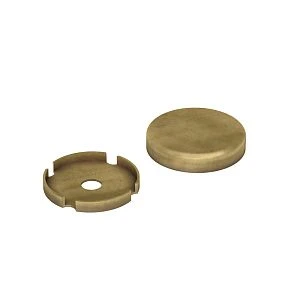
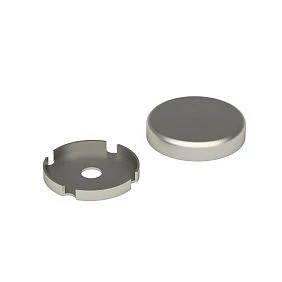
| Decorative cap | Closing of the technical node | Load-bearing fastener |
| Furniture leg | Visible furniture support | Mounting hardware |
Confusion most often arises between the foot cap and the plate. The plate is on top, in the area where the leg attaches to the furniture. The foot cap is on the bottom, in the area of contact with the floor. The screw secures but does not adjust. The key helps work with the fastener but does not replace the fastener itself. The cap covers the technical area but does not bear the load.
Practical selection for different situations
Need to install wooden legs on the cabinet
For a cabinet, stability and a neat lower node are important. Start by choosing the legs, then select the plate, screws, and foot caps. If the cabinet is light, you can get by with a simpler protective foot cap. If the floor is uneven, it is better to take adjustable ones.
Need to install legs on the dresser
A dresser is heavier than a cabinet, especially if things are stored in it. Here the fasteners must be more reliable, and the base must be prepared. You need to check exactly where the plate is attached: to the bottom, the crossbar, the reinforcement, or another part. If the base is weak, it needs to be reinforced, not just screw in long screws.
Supports need to be installed at an angle
If the legs should slope outward, an angled plate is needed. The direction of all supports must be the same. When marking, it's important not to mix up the sides: one incorrectly oriented plate will ruin the geometry of the entire item.
Need to level furniture on an old floor
For an old floor, it's better to immediately add adjustable glides. They allow each support to be adjusted individually. This is more convenient and neater than placing pieces of material under the leg.
Need to protect parquet or laminate
If the only goal is protection, felt or self-adhesive glides are considered. But if the furniture is heavy or the floor is uneven, it's better to consider an adjustable option. Protection and adjustment are different tasks and should not be mixed.
Need to assemble an order for a workshop
It's convenient for a workshop to buy not individual parts, but a mounting kit: plates, glides, screws, a TORX key, additional protective elements. This way, assembly doesn't stop due to missing small hardware.
Installation: what to check before setting up
Before installing the legs, you need to check the base. It must be sturdy, level, and suitable for fastening. If the furniture is old, the lower part may be weakened. If the furniture is new, you need to understand where the stretchers, reinforcements, bottom, decorative elements are located, and whether the screw will come out on the front side.
Marking should be done before drilling. Indentations from the edges must be the same. If the legs are angled, it is important to mark the direction of the tilt. If the FUR-020 plate for two legs is used, you need to check the distance and symmetry. If an adjustable foot is used, the mounting seat must fit the selected diameter and thread.
After installation, the furniture should be placed on the floor and checked for stability. Do not immediately load the item until you understand how the assembly works. If there are adjustable feet, they are adjusted after installation. If the furniture wobbles, you need to find the cause: the floor, the foot, the fastener, a skewed base, or incorrect marking.
Mistakes when buying and installing
Mistake 1. Buying legs without hardware
The buyer receives beautiful supports but cannot install them properly. It is better to assemble a mounting kit right away: plate, foot, screws, wrench.
Mistake 2. Choosing a plate without considering the angle
If an angled leg is needed, the basic scheme may not work. If a straight mount is needed, an angled plate may be unnecessary. The installation angle must be determined before ordering.
Mistake 3. Not installing adjustable feet
Without adjustable feet, furniture can scratch the floor, wobble, and loosen faster. This is especially noticeable on uneven floors and hard surfaces.
Mistake 4. Confusing D25 and D32
The diameter of the thrust bearing must match the leg and the mounting unit. You cannot choose only by price or availability. A small thrust bearing may not provide the necessary support, while a large one may look rough.
Mistake 5. Using a regular self-tapping screw instead of a structural one
A decorative or random self-tapping screw may not withstand the load. For a power unit, it is better to select structural fasteners by length and task.
Mistake 6. Not buying a TORX key
If the fastener is TORX, installation becomes inconvenient without a suitable key. An unsuitable tool damages the slot and prevents tightening the fastener.
Mistake 7. Not pre-drilling
When working close to the edge, with dense wood or a long self-tapping screw, pre-drilling reduces the risk of cracks and misalignment.
Mistake 8. Not checking the furniture base
If the base is weak, even good hardware will not provide reliability. First, check the body, then choose the fastener.
Who is this mounting kit suitable for
The mounting kit is suitable for furniture workshops, designers, assemblers, and private customers who buy wooden legs and want to get everything for installation at once. It is especially useful if the furniture is made to order, restored, modified, or installed on an uneven floor.
This kit is suitable for those who want to avoid random purchases. Instead of separately looking for a plate, then a foot, then a screw, and then a tool, it is better to immediately assemble a set for a specific leg and base.
This topic is not suitable for those who are looking only for decorative overlays, handles for facades, or fully finished furniture without self-installation. If a person does not plan to change legs or install supports, they do not need a mounting kit.
| Suitable | Not suitable |
|---|---|
| For furniture workshops | If only handles or facade decor are needed |
| For furniture assemblers | If the furniture is already fully finished and does not require leg installation |
| For designers and planners | If fastener selection is not planned |
| For private customers who install wooden legs | If only a decorative element is needed without installation |
| For those who want to level furniture | If the floor is level and there is already a suitable foot |
How to buy a mounting kit for STAVROS
Start with the legs. If the supports have not been selected yet, open Wooden legs and supports for furniture. Then go to the section Buy hardware for furniture legs and assemble a kit for a specific task.
For inclined installation, see mounting plate 10° FUR-017 for furniture legs. For attaching two legs through a long wooden plate — mounting plate FUR-020 for wooden legs. For adjustment, choose D25 or D32. For TORX fasteners, add a T-25 key.
Before ordering, check:
| What to Check | Why |
|---|---|
| Leg type | The fastening depends on it |
| Installation angle | For inclined supports, a corresponding plate is needed |
| Base material | Wood, MDF, and other materials require different approaches |
| Screw length | So that the fastener is not weak and does not go through |
| Base plate diameter | So that it fits the leg and the load |
| Floor evenness | To understand if an adjustable foot is needed |
| Tool | For TORX, a T-25 key is needed |
| Furniture finish | Installation should not spoil the appearance |
FAQ
What to buy together with wooden furniture legs?
Mounting plates, feet, structural screws, and a TORX T-25 key are usually added to the legs, if TORX fasteners are used. The specific set depends on the leg, base, and floor.
Why is a foot needed?
The foot protects the floor, helps level furniture, and reduces the risk of the support loosening. An adjustable foot is especially useful on uneven floors.
When is a mounting plate needed?
A mounting plate is needed when the leg needs to be securely attached to the furniture base, apron, tabletop, or cabinet part through a prepared fastening assembly.
What is the difference between FUR-017 and FUR-020?
FUR-017 — wooden mounting plate with a 10° angle and M8 insert nut. FUR-020 — wooden mounting plate for attaching two furniture legs, available in several lengths.
Why is the TORX T-25 key needed?
It is needed for working with TORX T-25 fasteners, especially in places where it is inconvenient to use a screwdriver or a short bit.
Can I use regular screws?
For loaded joints, it is better to use structural wood screws selected by length and task. A regular random screw may not provide the necessary fixation.
How to choose between D25 and D32?
Look at the leg size, mounting seat, load, and visual scale. D25 is suitable for smaller assemblies, D32 for larger contact and a different thread logic.
Is a floor protector needed if the floor is level?
If the floor is level, adjustment may not be needed, but floor protection is still useful. For protection, you can use felt or self-adhesive floor protectors.
Can furniture legs be installed without a plate?
Sometimes it is possible if the leg has a different standard mounting scheme. But this needs to be checked for the specific support and base. The plate often makes installation clearer and more reliable.
When is pre-drilling necessary?
It is useful for long screws, dense wood, installation close to the edge, and where cracks or misalignment of fasteners need to be avoided.
What to do if furniture wobbles after installation?
First, check the floor, then the glides, leg attachment, markings, and base. If there are adjustable glides, adjust each support separately.
What to buy for the workshop as a spare?
Plates, adjustable glides D25/D32, structural screws 5×70 and 5×90, TORX T-25 key, and protective glides. Such a stock helps avoid stopping assembly due to one small part.
Is the kit suitable for installing legs on a dresser?
Yes, if the fasteners are selected for the weight, base, and dresser design. For heavy furniture, it is especially important to check the strength of the lower assembly.
Where to look for furniture leg fittings?
It is best to start with the section Buy hardware for furniture legswhere thrust bearings, mounting plates, self-tapping screws, a TORX key, and other installation elements are collected.
Bottom line: furniture legs should be purchased not as individual items, but as a mounting kit.
Wooden furniture legs create the appearance, but reliable installation depends on the hardware. The mounting plate connects the support to the base, the thrust bearing protects the floor and helps level the furniture, the structural self-tapping screw holds the load-bearing unit, and the TORX T-25 key helps to carefully tighten the fastener.
If you buy only the legs, installation may stall at the most critical stage. If you assemble the kit right away, the furniture will be easier to install, simpler to level, and safer to use. Therefore, before ordering, you should open the legs section, then the hardware for furniture legs, select the FUR-017 or FUR-020 plate, add D25/D32 thrust bearings, choose FUR-037/FUR-038 self-tapping screws, and take a TORX T-25 key if it is needed for the chosen fastener.
STAVROS is convenient precisely because the buyer can assemble not one scattered item, but a clear mounting kit for wooden legs. This approach reduces the risk of error, saves time during assembly, and helps to obtain furniture that not only looks beautiful but also stands stably.