




























































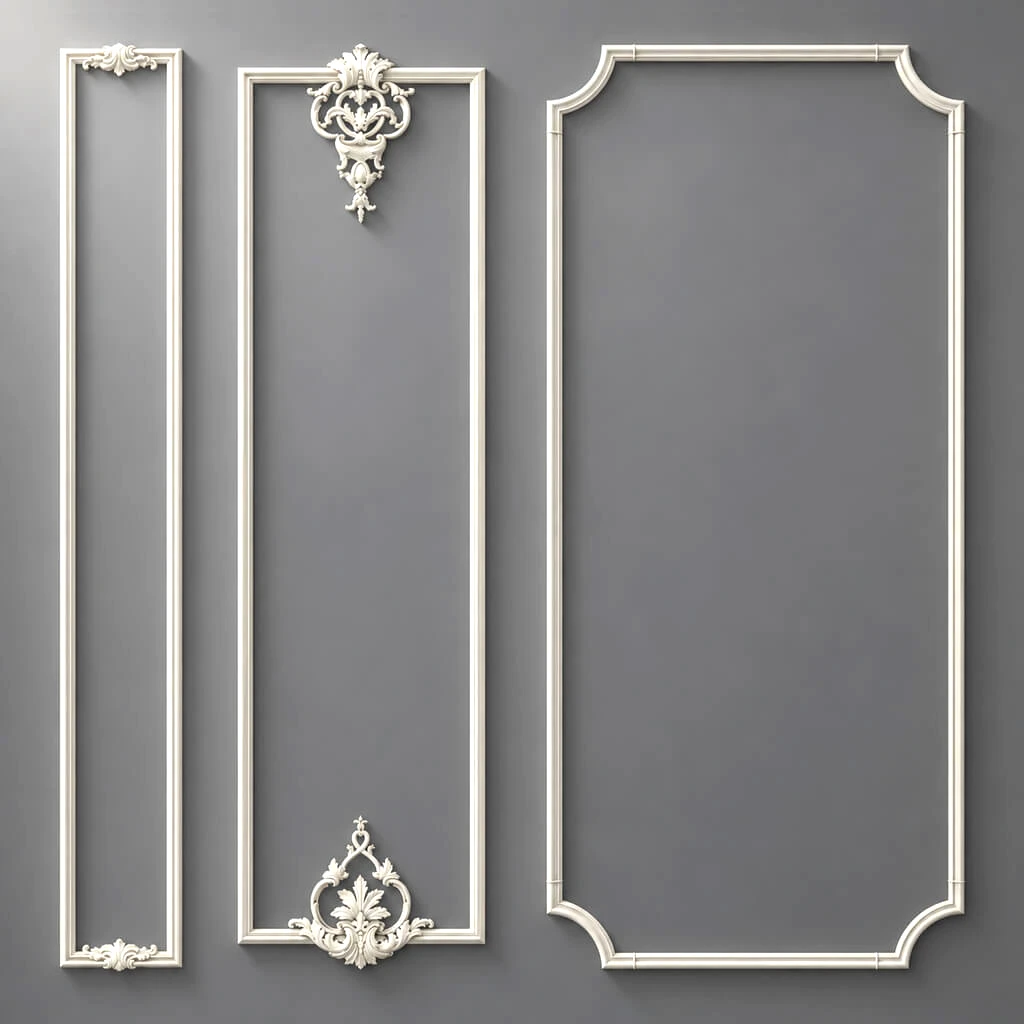

Article Contents:
- What are floor skirting boards and why are they needed
- Closing the technological gap
- Protecting the lower part of the wall
- Neat junction design
- Visual completion of the interior
- Working with room proportions
- What types of floor skirting boards exist: complete overview of types
- Wooden skirting boards
- MDF skirting boards
- Skirting boards for painting
- White floor skirting boards
- Wide skirting boards
- High Baseboards
- Straight and shaped profiles
- What is better: wooden skirting board or MDF
- Appearance
- Geometric Stability
- Coating options
- Combination with flooring
- When solid wood is better
- When MDF is better
- How to choose floor skirting boards by type of coating
- For laminate
- For parquet
- For engineered board
- For quartz vinyl
- For tiles
- For combined coverings
- How to choose a skirting board by height and profile
- Low skirting board (up to 50 mm)
- Medium height (55–75 mm)
- High skirting board (80–120 mm)
- Wide skirting board (100 mm and more)
- Straight Profile
- Classic Profile
- When an accent skirting board is needed
- How to choose the color of a floor skirting board
- Matching the floor color
- Matching the wall color
- Matching the door color
- White floor skirting
- Dark skirting board
- Gray skirting board
- Contrasting skirting board
- Floor skirting boards for different rooms
- For Apartments
- For Home
- For Kitchen
- for the bedroom
- living room
- For the hallway
- For classic interiors
- For Modern Interiors
- How to choose skirting board by material and room style
- Classic
- Neoclassicism
- Modern Interior
- Minimalism
- Interior with slatted panels
- Interior with moldings
- Installation and practical questions
- How to attach skirting board
- Can it be painted
- How to join corners
- What to do with uneven walls
- How to match skirting boards with architraves and doors
- When to choose for painting
- Common mistakes when choosing floor skirting boards
- How to buy floor skirting boards without mistakes: a step-by-step checklist
- Determine material
- Choose height
- Choose profile
- Match color
- Calculate length and footage in advance
- Immediately select adjacent trim
- Comparison: wooden skirting board vs MDF — what to choose for the task
- Frequently Asked Questions about Floor Skirting Boards (FAQ)
- Summary: How to buy skirting boards correctly and what's important to remember

Floor skirting boards are a detail that only gets noticed when chosen incorrectly. A crooked joint, a color mismatch, a profile that's too thin for a tall room, or conversely, a massive skirting board in a small hallway—all of this is instantly picked up by the eye, even if a person can't explain exactly what is 'off.' Conversely, correctly chosen floor skirting boards make the interior neat, finished, and professionally composed—without a single extra word.
Behind this small profile at the base of the wall lies an entire system of decisions: material, height, width, profile, color, coordination with doors and flooring. It's precisely at these crossroads that most buyers get lost. Some grab the first thing they see. Others get stuck comparing MDF and wood and end up postponing the choice until the last minute.
This article is a complete practical breakdown. Here you'll find everything: from material comparisons to specific application scenarios, from installation nuances to color strategies. And most importantly—specific links to what you can buy right now.
Choose STAVROS floor skirting boards:
-
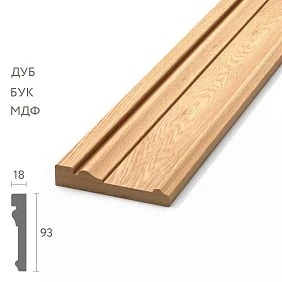
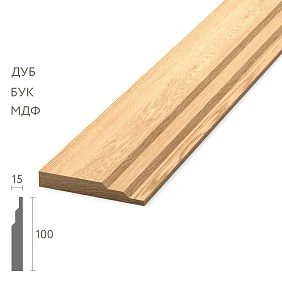
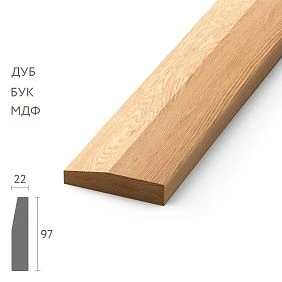
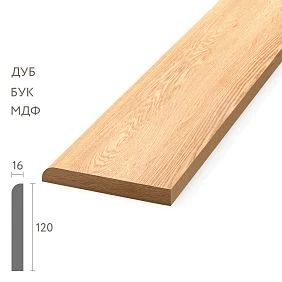
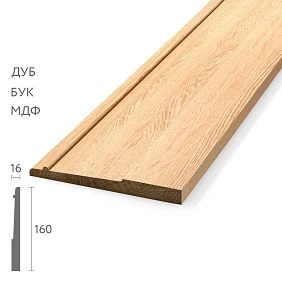
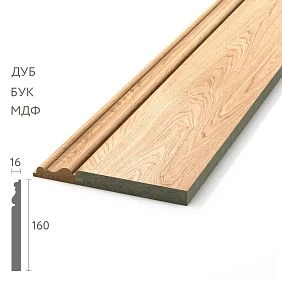
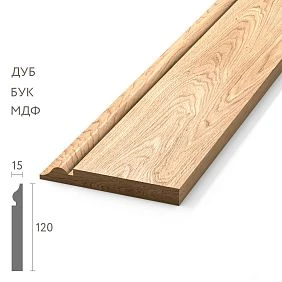
Wooden baseboard— made from solid oak and beech
-
buy MDF skirting board— MDF skirting boards for painting and white ones
-
moldings, cornices, skirting boards— all millwork in a unified style
-
Pogonazh iz massiva— wooden mouldings for comprehensive interiors
-
Solid Wood Items — full catalog
What are floor skirting boards and why are they needed
There is an opinion that a skirting board is just to 'close the gap'. This view is understandable but fundamentally incorrect. Yes, the technological gap between the floor covering and the wall needs to be closed—that is one function. But the role of the skirting board does not end there; it only begins.


Closing the technological gap
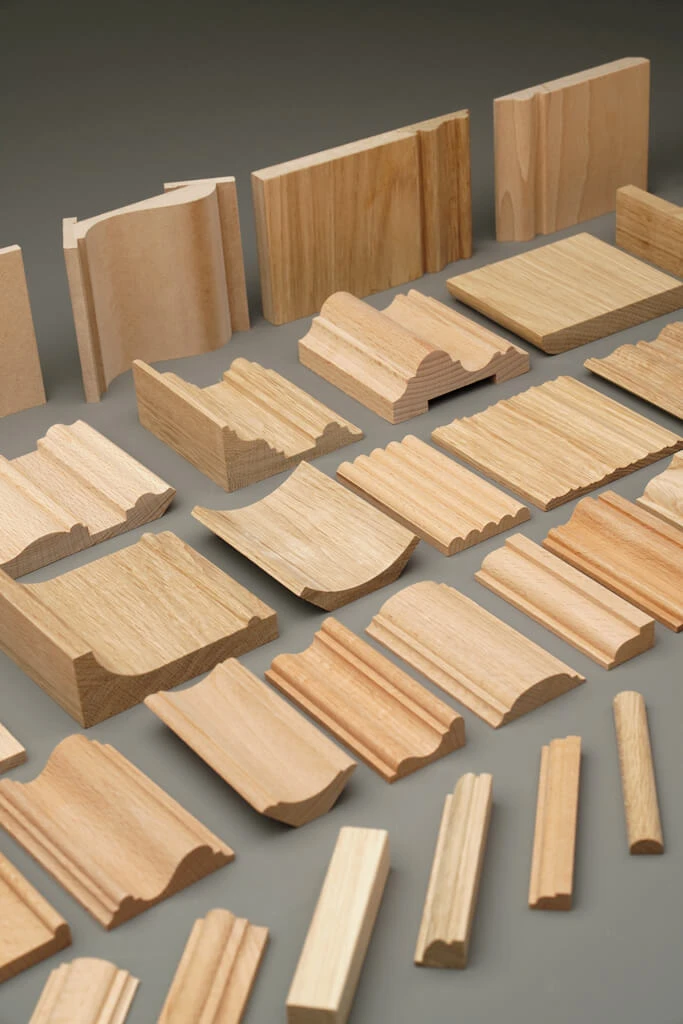
When laying any floor covering—be it laminate, parquet, engineered wood, quartz vinyl, or tile—a compensation gap of 8–15 mm is left between the covering and the wall. This is a mandatory requirement: wood and tile react to humidity and temperature, and without a gap, the covering will start to buckle. The skirting board closes this gap while preserving the material's ability to move.
Our factory also produces:



Protection of the lower part of the wall
The base of the wall is the most vulnerable spot. Dust accumulates here, chair legs and caster wheels hit it, and water gets here during wet cleaning. A floor skirting board provides mechanical protection for the lower part of the finish: this is especially important for plaster, wallpaper, and decorative paint.
Get Consultation
Neat finishing of the joint
Even a perfectly laid covering at the wall looks visually 'unfinished' without a skirting board. The profile creates a clear horizontal joint line that completes the floor and begins the wall. This is not decoration for decoration's sake—it is the architectural finishing of the transition between two planes.
Visual completion of the interior
Well-chosen floor skirting boards make the interior cohesive. Without them, the space looks unfinished, 'bare'. It is the skirting board that creates the lower frame, which visually anchors the walls.
Working with room proportions
A high skirting board visually raises the walls, making the room appear taller. A low one brings the floor closer to the wall, creating a more 'grounded', cozy effect. This is a real tool for spatial correction that skilled designers use consciously.
What types of floor skirting boards exist: a complete overview of varieties
The choice begins with understanding what is available on the market. Let's break it down by categories.
Wooden baseboards
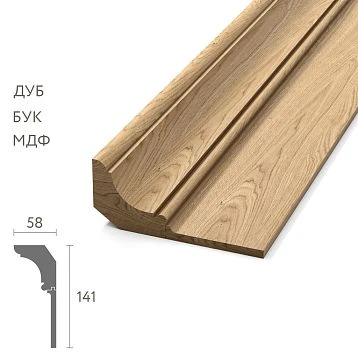
Wooden baseboard— is a product made from solid natural oak, beech, pine, or other wood species. It is a classic option with a live texture, natural tactile feel, and high finishing potential: varnish, oil, wax, enamel, tinting.
with a classic profile creates a sense of solidity, reliability.— can be:
-
smooth — straight or with a soft curve, for modern interiors
-
profiled — with a classic relief profile
-
wide — from 80 to 150 mm in height, for high ceilings and classic interiors
-
carved — for Baroque and palace-style interiors
-
for painting — primed, without a final finish
Pros: natural material, durability, restorability, rich appearance.
Cons: slightly higher price compared to MDF, requires professional installation on non-standard walls.
MDF skirting boards
MDF Skirting Board— is a profile made of medium-density fiberboard. In appearance — indistinguishable from wood, in price — more affordable. MDF holds its shape well, does not crack, does not dry out, and is easy to paint.
Baseboard MDF— is especially popular in two formats:
-
white — with a finish coating, ready for installation
-
paintable — primed, for self-painting in any color
For details on how to choose, install, and maintain MDF skirting boards, see the articleBaseboard MDF— is a separate in-depth material on the topic.
Skirting boards for painting
A separate category that is often underestimated.— is a horizontal element that frames the room at the bottom of the walls where the wall meets the floor. Skirting boards perform several functions: they hide the technological gap between the wall and floor covering (necessary for thermal expansion), protect the lower part of the wall from mechanical damage, create visual completion, and may conceal wiring.— a primed profile without a finish color. You paint it yourself in any RAL or NCS shade to match your project. This offers maximum color flexibility without extra charges for factory painting.
How to properly paint a wooden baseboard, which paint to choose, and how to prepare the surface — in a separate articlePainting wooden skirting boards.
White floor baseboards
White MDF Skirting Board— one of the most requested options. A white baseboard works with any wall color and most floor coverings. It is not tied to a specific palette and is therefore a universal choice for modern apartments.
A detailed breakdown of sizes, painting, and installation — in the articleWhite MDF Skirting Board.
Wide baseboards
Wide Wooden Skirting Board— with a height of 80 mm and above. This is a visually active element that forms the lower belt of the interior. Such a baseboard works well in classic spaces, interiors with high ceilings, and with comprehensive wall molding.
A wide baseboard is not just 'more,' it's a different visual statement. It makes the lower part of the wall substantial and architecturally significant.
High skirting boards
Baseboard height from 100 to 150 mm — for interiors with ceilings from 3 meters. Proportion is important here: with a 2.7 m ceiling, a 140 mm high baseboard will look absurd. With a 3.5 m ceiling — it's normal and elegant.
Straight and shaped profiles
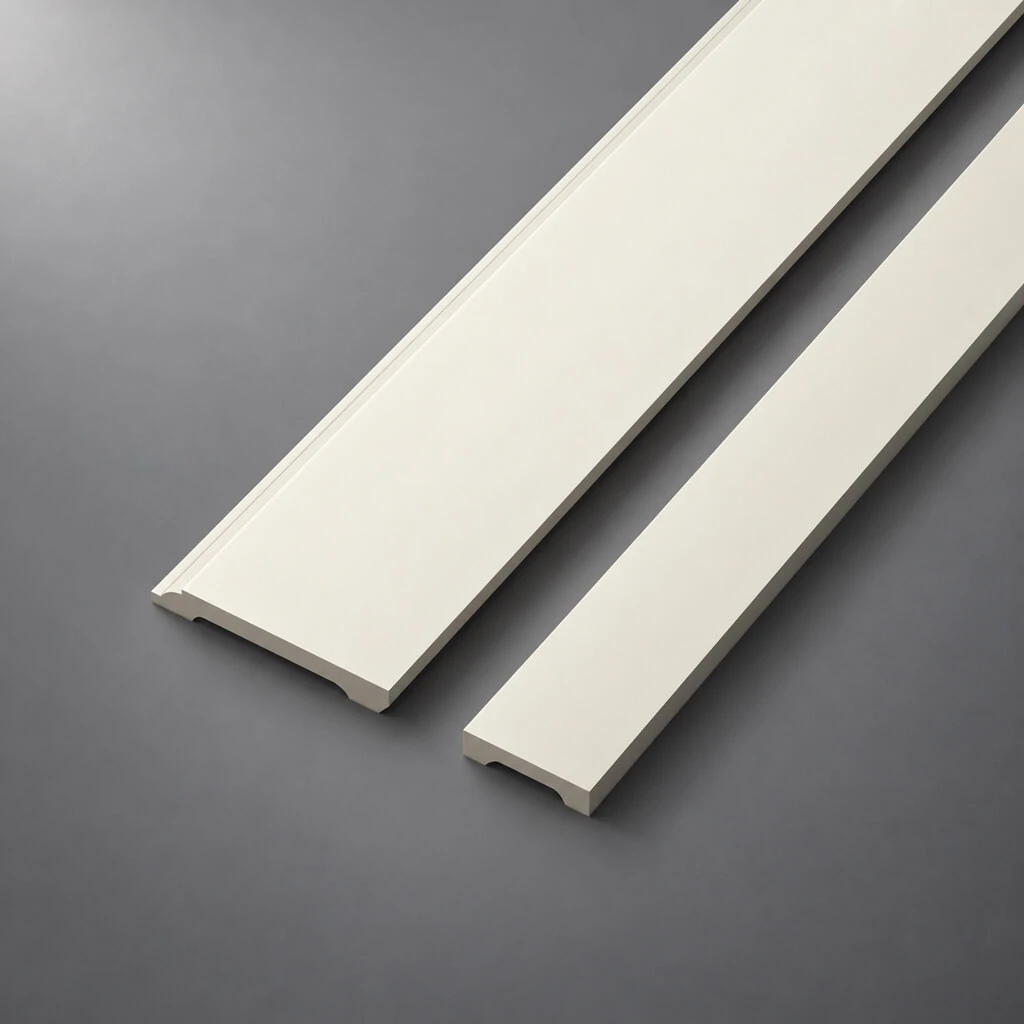
Straight skirting board (rectangular profile with or without a chamfer) — for minimalist interiors, loft, modern apartments. Shaped profile with a round, shelf, or bead — for classical, neoclassical spaces. Choosing a profile is choosing the stylistic language of the entire interior.
What's better: wooden skirting board or MDF
This is the most frequently asked question. I'll answer honestly — both options have their own logic of application.
Appearance
Naturalwooden baseboardhas the living texture of wood, which cannot be fully reproduced in MDF. If the wood is covered with a transparent varnish — the texture is visible and creates warmth, naturalness, depth. MDF under opaque paint — visually identical to wood and practically indistinguishable at a distance.
Geometric Stability
MDF is more stable with humidity fluctuations.MDF Skirting Boardreacts less to microclimate changes: does not dry out, does not crack at joints, does not 'warp' when installed on uneven walls. This is a plus in rooms with unstable humidity: kitchen, bathroom (although tile and PVC skirting are better there), hallway.
Wooden skirting board with professional installation and proper acclimatization — is also stable. But requires conditions: the material must lie in the room for 48–72 hours before installation.
Coating options
to buy wooden baseboardmeans getting a product that accepts any finish coating: transparent varnish, matte oil, colored enamel, tinting, wax. MDF — only opaque coatings. This is the fundamental difference: if you want to show the wood texture — only solid wood is needed.
Combination with floor
with a classic profile creates a sense of solidity, reliability.organically pairs with parquet, engineered wood, solid wood: the same material creates integrity.MDF skirting for floorin white or neutral color works with any flooring: laminate, quartz vinyl, tile, parquet.
When solid wood is better
-
parquet, engineered wood, oak floors
-
classic interior, neoclassical
-
comprehensive decor with moldings from the same wood
-
transparent finish (varnish, oil, tinting)
-
high-end housing, homes with wooden finishes
When MDF is better
-
white interior, Scandinavian style, minimalism
-
kitchen, hallway, rooms with unstable humidity
-
for painting in a specific RAL shade
-
laminate and quartz vinyl — without emphasis on the skirting material
-
projects with a limited budget
Detailed comparison of polystyrene, duropolymer, and MDF — in a separate articlepolystyrene or MDF.
Not sure what to choose — solid wood or MDF?
-
Wooden baseboard— natural solid oak and beech
-
Baseboard MDF— stable profile for painting and white
-
Article:Wooden baseboard— complete guide
-
Article:MDF skirting board types, sizes, installation— complete guide
How to choose floor skirting boards based on flooring type
The flooring dictates not only the skirting board material but also its mounting method, permissible gap, and optimal profile.
For laminate
Laminate is the most common flooring. Any skirting board is suitable here:MDF Skirting Boardin white or a neutral color,Wooden baseboardmatching the flooring or wall color. Important rule: the skirting board is attached to the wall, not to the laminate—the flooring must remain free to expand.
Read about which skirting board is best for laminate in the articleSkirting board for MDF.
For parquet
Parquet is natural wood, and the baseboard should maintain this status. The best choice: Wooden skirting from the same wood species or a similar tone. Oak parquet — oak baseboard. This creates material unity and eliminates texture conflict.
A wide profile with a cove — a classic choice for parquet flooring in a classic or neoclassical interior.
For engineered wood
Engineered wood is a natural wood veneer on a multi-layer backing. In appearance — almost indistinguishable from parquet. The approach to the baseboard is similar: Wooden baseboard in natural varnish or tint, matching the floor covering.
For quartz vinyl
Quartz vinyl is a practical covering for the kitchen, hallway, bathroom, children's room. Here, White MDF Skirting Board or a neutral one works well — it doesn't draw attention to itself. If the quartz vinyl imitates wood — a paintable baseboard in a warm shade, close to the imitation.
For tile
White MDF skirting is often used with tiles in living spaces, creating a neat transition between the tile and the wall. This is especially relevant for hallways and kitchen areas.buy MDF skirting boardin white finish is an optimal solution for tiled floors in living spaces.
For combined floor coverings
In modern apartments, floor coverings are often combined: parquet in the living room, tiles in the hallway, laminate in the bedroom. Here, it's important to make a systematic decision regarding skirting: either a uniform white MDF throughout the apartment, or coordinated profiles from the same series in a material suitable for each room.
How to choose skirting by height and profile
Low skirting (up to 50 mm)
For small rooms with ceilings 2.4–2.6 m. Here, high skirting would occupy too large a portion of the wall and create visual heaviness. A thin, low profile is the correct solution.
Medium height (55–75 mm)
A universal range that works with most standard apartments.wooden baseboardwith a height of 60–70 mm is the most popular format for residential spaces.
High skirting board (80–120 mm)
For ceilings 3 m and higher.high wooden baseboardcreates an architectural lower belt that is proportional to the high space. In a standard apartment, such a skirting board looks out of place.
Wide skirting board (100 mm and more)
wide floor skirting board— this is about classic, neoclassical, interiors with molding panels on the walls. Such a skirting board forms a pronounced lower belt, which is an architectural element of the interior, not just a covering profile.
Straight profile
Rectangular skirting board with or without a chamfer — for minimalism, Scandinavian style, loft, modern interiors. Clear geometry, no unnecessary details.
Classic profile
Profile with a round, shelf, or bead — for classic and neoclassical styles. Such a skirting board is part of the architectural order and should coordinate with moldings, cornices, and architraves.
When an accent skirting board is needed
Accent skirting board — this is a situation where the skirting board intentionally draws attention: dark on a light floor, carved in a modern space, wide and expressive. This is a designer move, not an accident. Such a skirting board becomes a graphic element of the interior.
How to choose the color of a floor skirting board
Skirting board color is one of those questions that has no single correct answer. There are three basic strategies.
Matching the floor color
A skirting board in the same shade as the floor covering visually 'dissolves' into the floor and makes it continuous. The room feels more spacious, with no accents. This is a neutral, safe solution.
Matching the wall color
A skirting board in the color of the wall 'extends' the wall down to the very floor. The room looks taller, the space more cohesive. A popular technique in modern design.
In the color of the doors
Coordinating the skirting board with door frames and architraves creates a unified wooden system. This is a classic approach: skirting board, architraves, doors — in the same material and color.
White floor skirting board
White floor skirting board— a universal strategy. White works with any wall color and most floor coverings. Especially organic in light interiors, Scandinavian style, neoclassicism.
A separate detailed article:White MDF Skirting Board— selection, sizes, painting, and installation.
Dark skirting board
A dark skirting board on a light floor creates a strong graphic contrast. This is a design solution that requires confidence: it either works precisely and effectively or looks like a mistake. It works well in interiors with dark furniture and doors of the same shade.
Gray skirting board
Gray is neutral, modern, and works in minimalist and Scandinavian interiors. It's a compromise between white and dark: it doesn't shout, but it doesn't fade away either.
Contrasting baseboard
Intentional contrast is a design move. A black skirting board on a white floor, copper on gray, dark blue on light wood—this is about character and point of view. Such a choice requires boldness, but when executed correctly, it becomes a memorable accent.
Floor skirting boards for different rooms
For apartments
In a standard city apartment, the optimal choices are:White MDF Skirting BoardorWooden baseboardwith a height of 60–75 mm. A uniform profile throughout the apartment creates integrity. Different skirting boards in different rooms create chaos that is visible when doors are open.
A separate material for those who chooseWooden skirting in Moscow.
For home
In a private house with wooden floors, definitelywooden skirting boardsfrom the array. A natural wood baseboard in a house with a wooden structure is organic and durable. For high ceilings in a country house — a wide or tall profile, 80–120 mm.
For Kitchen
The kitchen is a zone of high humidity and active use. Here, aMDF skirting for floorwith a good paint coating works better. White or neutral color, stable geometry, resistance to cleaning — priorities for the kitchen.
For the bedroom
In the bedroom, atmosphere and a sense of warmth are important.Wooden baseboardmade of oak with natural varnish or tinting is the perfect choice. It creates a sense of naturalness, warmth, and living coziness.
For the living room
The living room is the main space for display. Here, the baseboard works as part of the formal interior. For a classic or neoclassical living room — a wide wooden oak baseboard with a shaped profile. For a modern one — a thin straight profile for painting.
For the hallway
The hallway is a zone of maximum use. Here, the baseboard must be resistant to impacts, moisture, dirt.buy MDF skirting boardwith a dense coating is the optimal choice for the hallway.
For a classic interior
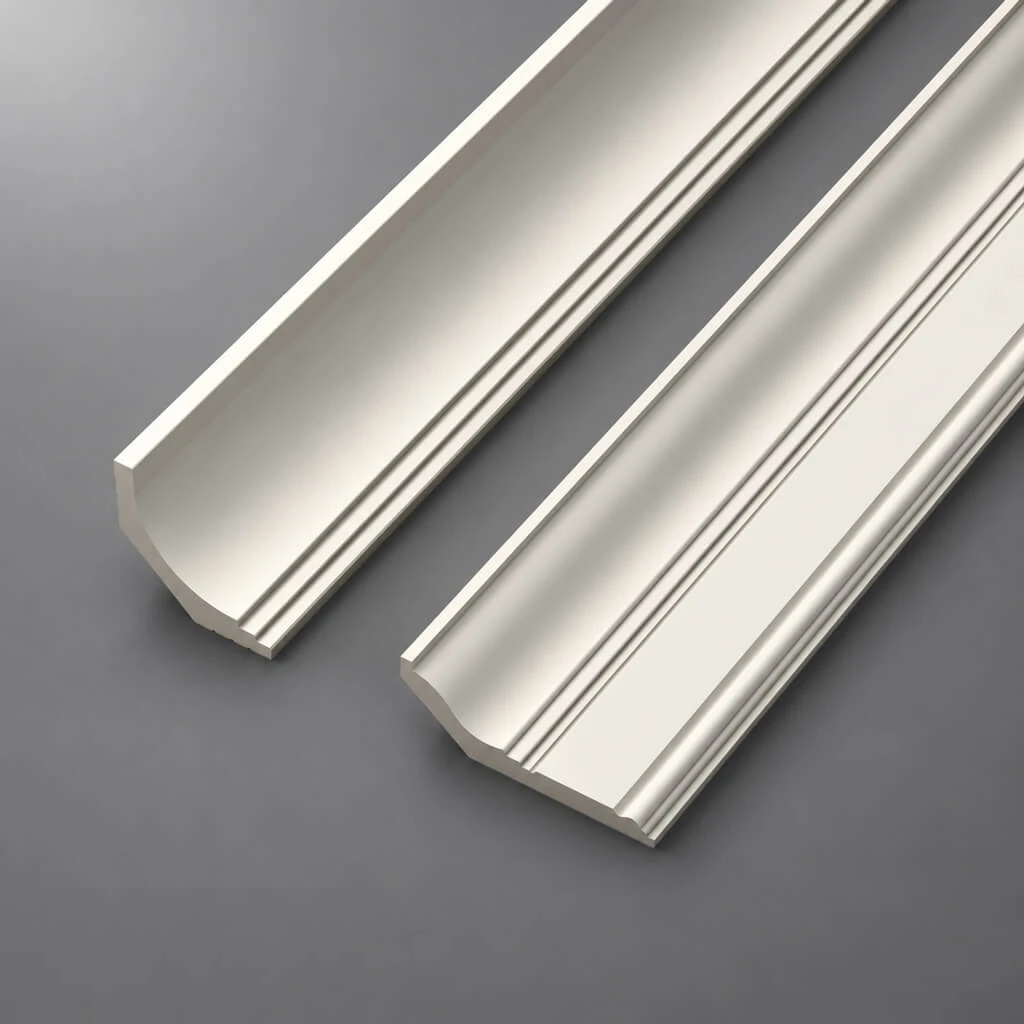
Baseboard for classic interior— this is necessarily a profiled shaped baseboard made of natural wood. It should coordinate with moldings, cornices, and trims. A unified trim system creates architectural coherence in the space.
About moldings, cornices, and a systematic approach to wall decor — in the sectionmoldings, cornices, skirting boards.
For a modern interior
In a modern interior — straight profile, low height, white or neutral color. Here the skirting board's task is not to accentuate, but to neatly finish the junction. Laconic— is a horizontal element that frames the room at the bottom of the walls where the wall meets the floor. Skirting boards perform several functions: they hide the technological gap between the wall and floor covering (necessary for thermal expansion), protect the lower part of the wall from mechanical damage, create visual completion, and may conceal wiring.in the color of the wall — the perfect option for minimalism.
How to choose a skirting board based on material and room style
Classic
Classicism requires a system: skirting board, molding, cornice — from the same material and the same stylistic logic.Wooden baseboardwith a roundover and a shelf +Wooden moldingson the walls + wooden cornices — that's a full-fledged classical system. There should be no plastic or polyurethane inserts in classicism.
Neoclassicism
Neoclassicism — a lighter classicism. The skirting board profile is a bit more modest: without heavy cornice projections, without ornamentation, but with a delicate roundover. Color — white enamel or light tint. Material — solid wood or high-quality MDF.
Modern interior
Straight profile, white or gray color, minimal height.— is a horizontal element that frames the room at the bottom of the walls where the wall meets the floor. Skirting boards perform several functions: they hide the technological gap between the wall and floor covering (necessary for thermal expansion), protect the lower part of the wall from mechanical damage, create visual completion, and may conceal wiring.in the color of the wall — the most 'invisible' and elegant option for modern housing.
Minimalism
Ultra-thin profile, possibly concealed mounting. Skirting board in the color of the wall, without relief. The task is to minimize the visual presence of a structural element.
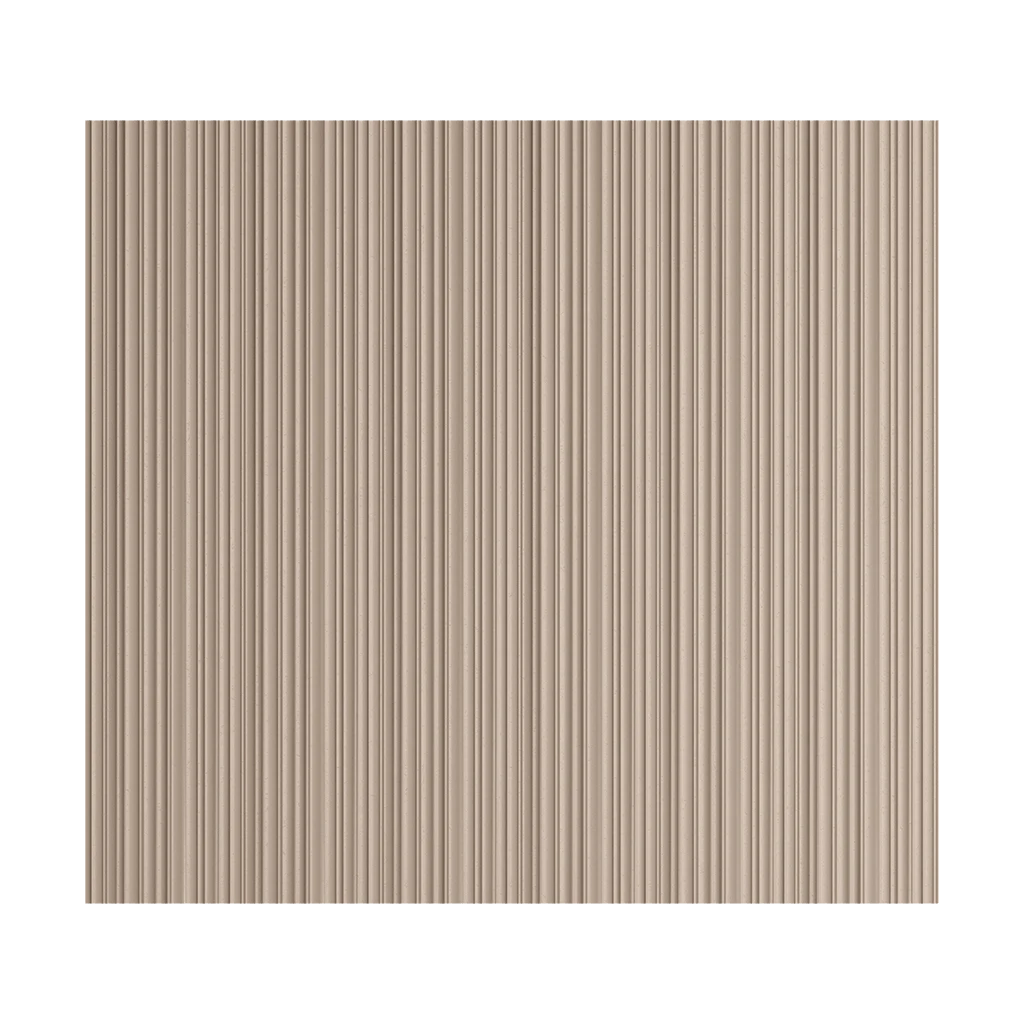
Interior with slatted panels
slatted panels for wallscreate a vertical rhythm on the wall. In such an interior, the baseboard should either match the slat color or be deliberately neutral. A prominent baseboard profile competes with the vertical slats here—this is a mistake.
Read about how slats, moldings, and baseboards work together in the article decorative wall panels.
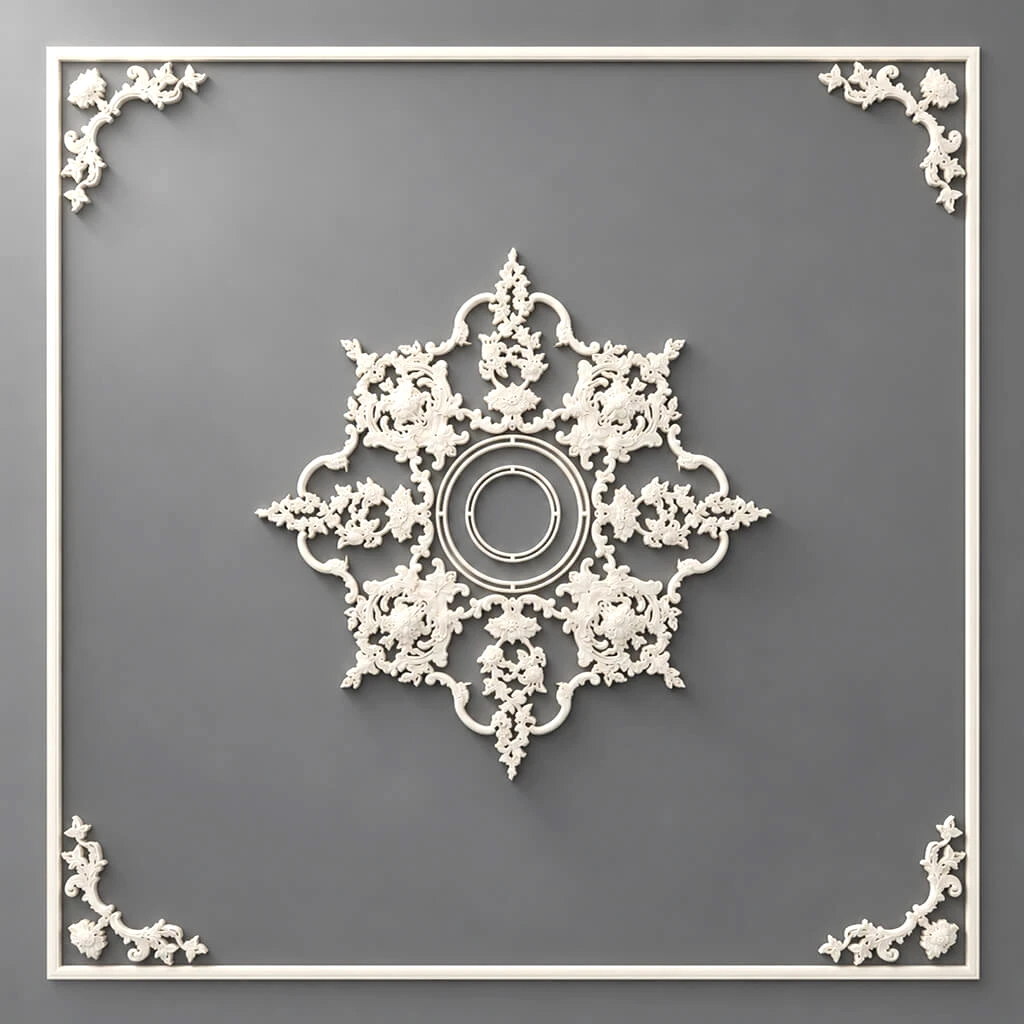
Interior with moldings
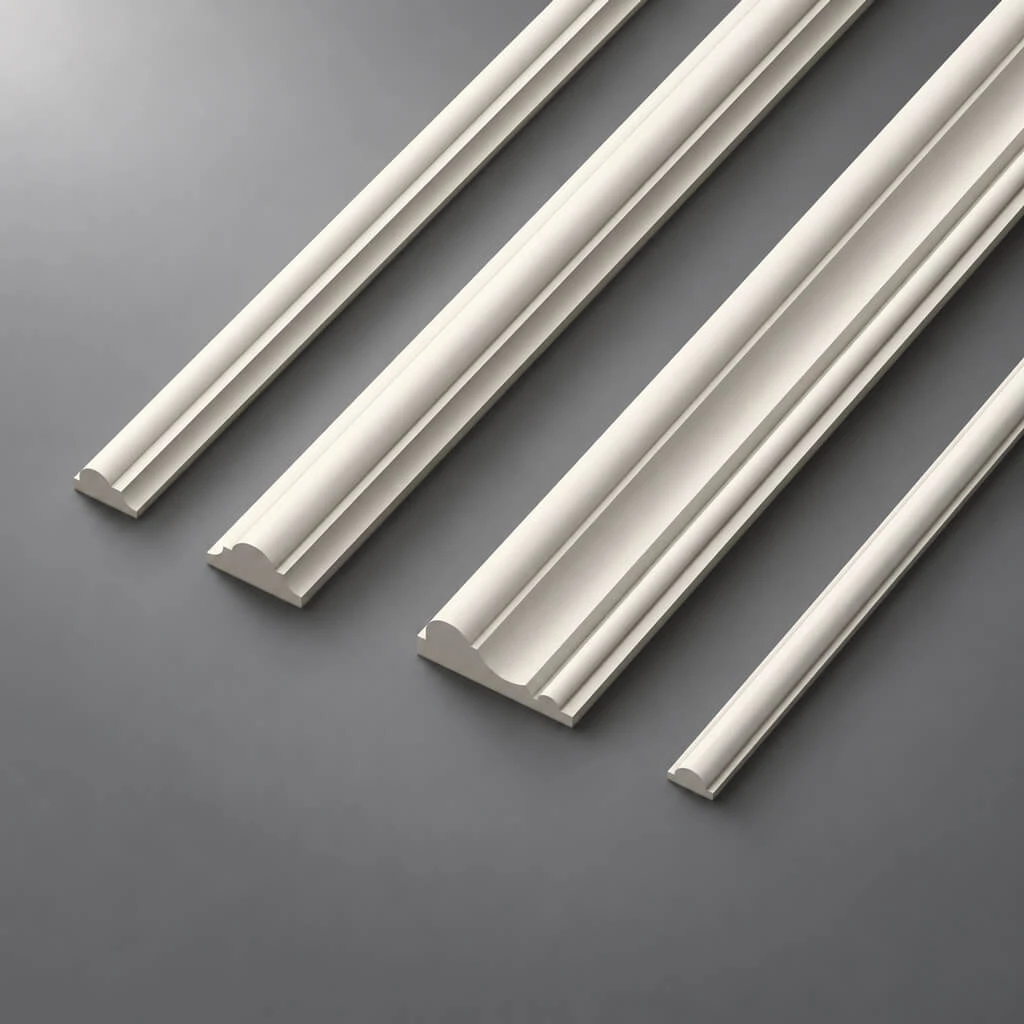
When walls feature Moldings for wallsin the form of framed panels—the baseboard should be from the same system. A unified line of profiles from one material and manufacturer is the key to decorative consistency in the interior.
Installation and practical questions
How to install baseboard
Wooden baseboard is attached to the wall—using liquid nails or finish nails. Not to the floor, not to the flooring. This is crucial: laminate and parquet expand, and the baseboard must compensate for this movement.
MDF baseboard is installed similarly—using liquid nails or special clips. With uneven walls, MDF is easier to press evenly against the wall: it yields better.
Can it be painted
Wooden skirting boards can and should be painted if you purchase a profile designed for painting. How to do it correctly is explained in the article.Painting wooden skirting boards.
How to join corners
Internal and external corners are cut at a 45-degree angle using a miter saw. This requires precision: even a 1–2 degree deviation creates a noticeable gap at the corner. An alternative is corner caps and connecting elements that do not require cutting.
What to do with uneven walls
Uneven walls are a common issue in Russian housing. There are several strategies here:
-
MDF skirting boards are pressed against the wall with silicone or liquid nails, with fixation during the setting time.
-
Wooden skirting boards need to be fitted to specific sections of the wall if there are significant irregularities.
-
Gaps between the skirting board and the wall are sealed with paintable acrylic sealant.
How to match skirting boards with door frames and doors
Baseboards, door casings, and door frames are a unified decorative system. It's ideal when they are made from the same material and belong to the same product line.to buy wooden baseboardcombined with wooden casings from the same solid wood — a professional interior solution.
When to choose paintable
Paintable floor baseboard— if you want an absolutely precise color according to RAL or NCS, if you want to match the baseboard to the wall color, if you plan to repaint the baseboard when changing the decor.
Common mistakes when choosing floor baseboards
Let's break it down honestly — without leniency.
Choosing based solely on price. A cheap baseboard made of porous MDF with an uneven profile will look cheap on any floor. A baseboard is a permanent element; it will be with you for years. Saving on it is as strange as saving on door handles.
Not considering ceiling height. A tall 120 mm baseboard in an apartment with a 2.5 m ceiling occupies almost 5% of the wall height — and this is visible to the naked eye. The proportions are disrupted.
Not considering doors and casings. A white baseboard with dark doors and casings is not a mistake, but only if it's a conscious choice. Uncoordinated details create a visual conflict.
They choose a profile that is too thin. A 30 mm high skirting board gets lost on a high ceiling. It doesn't create a lower border; it's simply unnoticeable—and at the same time, it only partially covers the expansion gap.
They mix different profile styles. A straight skirting board in the living room and a decorative one in the bedroom—with open doors, this is noticeable and looks like a lack of system.
They choose material without considering operating conditions. A wooden skirting board in an area with constant high humidity without protective coating is a risk of warping. MDF without moisture-resistant coating in the hallway is the same.
They buy skirting board separately from the rest of the trim. If the interior hasMoldings for wallsand ceiling cornices—the skirting board should be from the same system.
How to buy floor skirting boards and not make a mistake: a step-by-step checklist
Determine the material
Wood or MDF? This question is resolved based on the type of interior, flooring, and financial possibilities. The commercial decision node is the table above.
Choose the height
Ceiling up to 2.7 m—skirting board 60–75 mm. Ceiling 3 m and above—80–120 mm. Not higher.
Choose the profile
Modern interiors feature a straight profile with or without a bevel. Classic and neoclassical styles use shaped profiles with a curve, bead, or shelf. Baroque and Empire styles feature rich relief, possibly with carved ornamentation. The rule is simple: the skirting board profile should belong to the same stylistic system as all other interior details.
If the room hasMoldings for wallssoft-profile cornices, choose a skirting board from the same line. If the cornices are straight, the skirting board should also be straight. This is not a strict rule, but sound logic.
Choose the color
The three basic strategies have already been discussed above. The main rule: do not choose the skirting board color in isolation. Look at it in the context of the floor, walls, and doors simultaneously. If all three elements are light,White floor skirting boardwill be an ideal solution. If the floor is dark and the walls are light, the skirting board either matches the floor tone or becomes a transitional neutral.
Calculate the length and footage in advance
Measure the perimeter of each room and add 10–15% for cutting and fitting. Separately account for internal and external corners—more material is always used there.Pogonazh iz massivais sold by the meter, so accurate calculation will save both money and time on reordering.
Practical formula: room perimeter (in meters) minus the width of door openings, plus 12% for waste. For multiple rooms, calculate each separately and sum them up.
Select matching trim immediately
If the interior is complex — choose the entire system at once: baseboard, moldings, cornices. This ensures matching profiles and materials.moldings, cornices, skirting boardsin a single catalog — specifically for this: you assemble the entire system in one place, from one material.
Assemble the interior in a unified style:
-
Wooden baseboard— lower belt made of solid wood
-
Baseboard MDF— stable option for painting
-
Wooden moldings— wall profiles in a unified system
-
slatted panels for walls— decorative wall layer
-
Pogonazh iz massiva— all wooden trim in one section
Comparison: wooden baseboard vs. MDF — what to choose for the task
| Parameter | Wooden skirting board | MDF skirting board |
|---|---|---|
| Material | Oak, beech, pine array | Fiberboard |
| Texture | Live, natural | Paint only |
| Finish coating | Varnish, oil, wax, enamel, tinting | Opaque paint only |
| Stability | High with proper acclimatization | Very High |
| Moisture | Requires protective coating | Better withstands fluctuations |
| Installation on curved walls | Requires fitting | Easier to press down |
| Suitable for | Parquet, engineered board, classic | Laminate, quartz vinyl, modern style |
| Durability | Decades, can be restored | Up to 15–20 years with good care |
| Price | Higher | More affordable |
Frequently asked questions about floor skirting boards (FAQ)
Which skirting board is best for laminate flooring?
For laminate, works well asWhite MDF Skirting Board, as well asWooden baseboardin a neutral color. Key condition: attach only to the wall, not to the flooring.
Can wooden skirting be installed in the kitchen?
Yes, if it's coated with high-quality varnish or moisture-resistant enamel. In areas with constant water contact — MDF with dense coating or special moisture-resistant options are better.
What height of skirting board should I choose for an apartment with 2.7 m ceilings?
The optimal height is 60–75 mm. This is proportional to the standard ceiling height and does not overload the lower part of the wall.
Should a paintable skirting board be painted before or after installation?
Professional answer: primer and the first coat of paint are applied before installation, the final coat — after. This allows painting the ends and the back side, and the final coat hides installation marks and acrylic sealant at the joints.
What is the best way to glue MDF skirting board?
Polymer- or acrylic-based liquid nails are the optimal choice. Avoid solvent-containing adhesives: they may deform the MDF surface.
How to join skirting board in corners without mitering?
Use corner connecting elements (caps) from the same series. This is a less precise but significantly simpler solution — suitable for DIY installation.
Skirting board matching wall color or floor color — which is better?
It depends on the goal. Matching the wall color — the space is perceived as taller. Matching the floor color — the space is wider and the floor appears more monolithic. Neither option is universally 'correct' — it is a design decision, not a technical necessity.
Can a wide skirting board be installed by oneself?
Yes, if the walls are relatively even.wide floor skirting boardwith a height of 100 mm or more requires more careful fitting in length and corners — a miter saw with precise angle setting is mandatory.
What to choose — wooden skirting board or polystyrene?
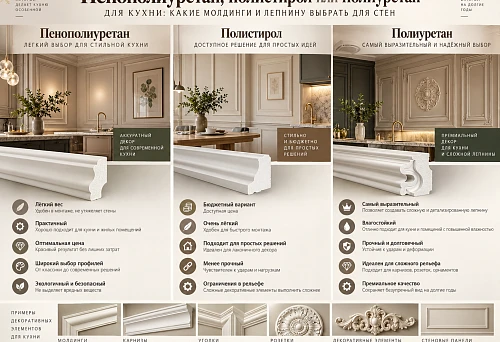
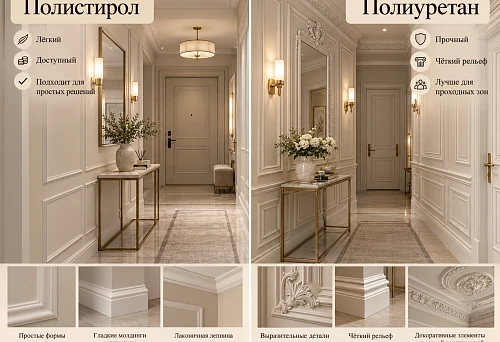
For a quality long-term interior — only wood or MDF. Polystyrene is a cheap and short-lived option that does not hold paint and deforms under mechanical loads. Detailed analysis — in the articlepolystyrene or MDF.
How to choose a skirting board for an interior with slatted panels?
In an interior withslatted wall panelschoose a skirting board that is neutral: either matching the slat tone or white. An active profile competes with the vertical rhythm of the slats — it's better to avoid this.
Conclusion: how to buy a skirting board correctly and what's important to remember
A floor skirting board is not a final detail added 'for completion'. It is an element that sets the lower belt of the entire interior and works in conjunction with the floor, walls, doors, and wall decor. A correctly chosen skirting board is unnoticeable in a good way: it is present and completes, without drawing attention. An incorrect one — catches the eye immediately.
The algorithm is simple: first determine the interior style, then the ceiling height, then the type of flooring. These three parameters already almost completely determine the choice of material, height, and profile. Next — color, coordination with doors and trims, calculation of linear footage. And purchase of all linear elements — skirting boards, moldings, cornices — in one place, from one system.
That's exactly how it works. That's exactly what an interior where everything is in place looks like.
STAVROS company manufactures wooden moldings and solid oak and beech decor:wooden skirting boardsandBaseboard MDFin a wide range of profiles and heights,Wooden moldingsfor walls and ceilings,Rafter panelsfor wall finishing,Pogonazh iz massivafor comprehensive interior projects. All products are made of natural wood with professional surface preparation. Shipping from one piece, two quality levels: Standard and Prestige. The entire catalog is in the sectionSolid Wood Items.