Article Contents:
- A single MDF skirting board SKU can turn into several purchasing lines
- What exactly should be understood by readiness level
- A proper purchasing line should describe more than just the profile
- Readiness level should be determined by zones, not for the entire building at once
- Apartments or flats
- Corridors
- Lobby
- Restaurant or public area
- Utility rooms
- Rooms
- Corridors
- Lobby
- Restaurant
- First phase
- Second phase
- Third phase
- Fourth batch
- Separate batch
- 10. Not assigning a person responsible for painting
- 11. Not including painting work in the cost
- 12. Ordering the entire project before color approval
- 13. Using an outdated version of the reference sample
- 14. Placing reorders using only the product code
- 15. Sending finished profiles for further painting
- 16. Not checking execution during acceptance
- Coordinate 1. Condition
- Coordinate 2. Finish
- Batch 1
- Batch 2
- Batch 3
- Batch 4
- Step 1. Is the color finally approved?
- Step 2. Should the skirting match the wall after its final painting?
- Step 3. Is there a painting contractor and are the works included in the estimate?
- Step 4. Is there a repeatable finish for a large series?
- Step 5. How will the repeat order be handled?
- Step 6. Where is the risk of damage higher?
- Body A
- Body B
- Case B
- Common lobbies

A large order of MDF skirting cannot be treated as a single product line just because one profile is used in the project. For purchasing, not only the geometry matters, but also the degree of readiness of a specific part of the batch.
At one site, the following may be required simultaneously:
-
a profile that will still be painted together with the walls;
-
prepared finish for further coating;
-
finished painted batch;
-
separate color for the lobby;
-
different color for corridors;
-
reserve for each of these groups.
If written all on one line:
PLT-X / MDF — 2200 m,
the buyer loses information that determines the actual purpose of the material. In the warehouse, similar bundles begin to be perceived as interchangeable, painters receive the wrong volume, installers take the finished profile to the subsequent painting area, and a repeat order a month later is formulated as “another 200 meters of white MDF.”
The correct logic is different:
SKU → material → readiness state → finish → color code → zone → contractor → volume → cutting → reserve → batch → revision.
Therefore, the task of buying MDF skirting boards wholesale from the manufacturer does not begin with choosing the cheapest meter. First, the future batch needs to be divided into unambiguous purchasing executions.
The main principle of the article:
identical profile geometry does not mean a single purchasing line item if the finishing stage or the approved finish differs.
The specific options available for the selected article are always confirmed by the current product card or commercial offer. The project's internal system must not invent an execution that the supplier does not actually offer.
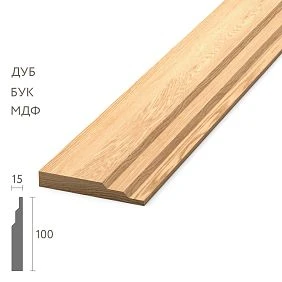
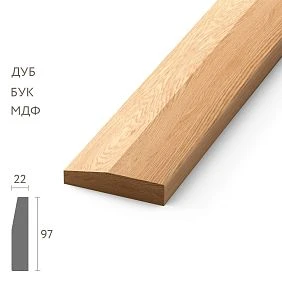
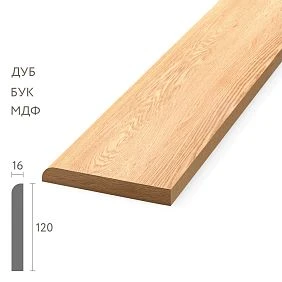
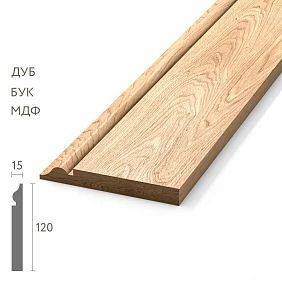
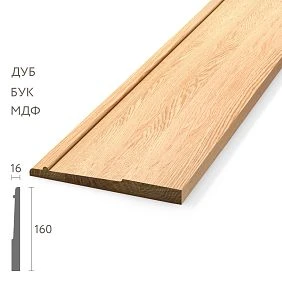
One MDF skirting board article can turn into several purchasing lines
Let's imagine an apart-hotel.
The architect uses one visual profile for the lower line of the wall. In apartments, it must match the wall color. In corridors, a ready-made light execution is required. In the lobby, a separate shade has been chosen. In the service area, the finish is simplified.
On the drawing, this is one architectural profile.
For procurement, there are at least several different groups.
For example:
| Article | Material | Condition | Finish | Zone |
|---|---|---|---|---|
| PLT-X | MDF | for further painting | O-01 | apartments |
| PLT-X | MDF | Ready finish | white as per project | Corridors |
| PLT-X | MDF | Ready finish | O-03 | Lobby |
| PLT-X | MDF | by separate decision | O-04 | utility rooms |
The table is illustrative. It shows not the assortment of one specific product, but the structure of a project specification. Before ordering, each variant is verified with the supplier.
Why can't a single line be left?
Because after finishing, materials cease to be interchangeable. Even if the cross-section matches, a finished profile of a different color does not cover a shortage of a batch intended for subsequent painting without additional processing, and a profile intended for further finishing cannot be considered a finished decorative part just because it looks light-colored.
For a large order, the article number answers the question:
What kind of profile is this?
The readiness state answers:
At what stage of the finishing process is a specific batch?
Both fields are required.




What exactly should be understood by the degree of readiness
The most dangerous wording in a wholesale request:
skirting board for painting.
Different project participants may attach different meanings to it.
The customer envisions a product that just needs to be delivered and coated with the chosen enamel.
The painter assumes intermediate preparation.
The warehouse just sees a light-colored profile.
The order picker considers it the same group as a primed product.
This is how mistakes appear even before installation.
Therefore, in the working documentation it is better to use specific states.
For example:
for further preparation and painting on site;
for final painting according to the approved technology;
finished painted version;
finished version in color O-03;
the version requires sample approval.
Names can be adapted to a specific project. What matters is not the word itself, but unambiguity.
If the supplier uses its own official name for the version, it is better to keep it without arbitrarily replacing terms.
For example, you cannot write “finished primer” in the project if the manufacturer's actual product item is called differently and has a different technological meaning.
Our factory also produces:




A proper procurement line should describe not only the profile
For a large project, a table is useful, where one row unambiguously defines the state of the material.
Minimum set of fields:
| Field | What is recorded |
|---|---|
| Article number | specific profile |
| Material | MDF and precise execution, if there are options |
| Readiness | finishing stage |
| Finish code | internal project code |
| Color | approved identifier |
| Gloss | if specified by the project |
| Zone | Where it is used |
| contractor | who receives or refines |
| Quantity | by cutting/specification |
| Revision | solution version |
Instead of:
MDF skirting — 2200 m,
the project receives:
PLT-X / MDF / for subsequent painting / O-01 / apartments / contractor A / volume per schedule.
And separately:
PLT-X / MDF / finished finish / O-02 / corridors / contractor B / volume per schedule.
This structure allows you to verify the order before payment, separate the warehouse, issue the material to the right crew, and correctly process a repeat delivery.
When wholesale procurement of construction materials it is precisely the detailed configuration that protects the project from a situation where the total quantity formally matches, but the required part of the batch is still missing.
Get Consultation
Readiness level should be determined by zones, not for the entire building at once
Phrase:
The site uses MDF skirting for painting,
often too rough.
In a real building, different zones are in different finishing scenarios.
Apartments or flats
The skirting board can be painted to match the wall color if this is provided for by the design and the technology.
Corridors
A ready-made repeatable specification may be more convenient here if the color has already been approved and the project needs to close out floors quickly.
Lobby
The reception area may have a separate shade, gloss level, and its own control sample.
Restaurant or public area
The skirting board may belong to a different interior package even if the profile geometry is the same.
Utility rooms
Sometimes a separate, economically justified solution is used here.
Therefore, the working map looks like this:
zone → profile → condition → finish → color → contractor.
First, the object is divided into zones, then the wholesale batch is calculated.
If done the other way around, thousands of meters of similar material begin to live separately from the architecture.
Who is responsible for the final finishing must be determined before purchasing
If part of the profile is supplied not in its final decorative state, someone must bring it to the finished result.
The project must determine in advance:
-
who performs the preparation;
-
who applies the primer, if required by the adopted technology;
-
who paints;
-
who is responsible for intercoat treatment;
-
who performs local touch-up after installation;
-
who repairs damage;
-
who accepts the color;
-
who provides consumables.
This cannot be left as the wording:
paint on site.
Behind it lies a separate set of works, materials, timelines, and responsibilities.
Let's imagine that the purchaser chose the option with the lower material price.
After delivery, it turns out that the painting contractor's estimate does not include:
-
surface preparation;
-
painting;
-
floor protection;
-
local repair after cutting;
-
work on joints.
The material is formally purchased more profitably. The total cost of the solution becomes higher or the schedule stops.
Therefore, the choice of skirting board condition should be tied to a responsible contractor even before commercial comparison.
You need to compare the final cost of a finished meter, not just the price of the profile
A profile for subsequent painting may cost less than a ready-painted option. But this does not mean that it is cheaper for the project in the end.
For a correct comparison, the entire chain is considered.
Conditional structure:
| Cost item | Option for subsequent painting | Ready finish |
|---|---|---|
| Profile | include | include |
| Additional preparation | According to project technology | check necessity |
| Primer/materials | According to technology | usually included in another cost component |
| Paint | take into account | take into account as part of the finished execution |
| painting works | take into account | less or absent for this operation |
| Protection of adjacent surfaces | If necessary | usually not related to factory painting |
| Touch-up after installation | Depending on the situation | Depending on the situation |
| Damage/repair | separate risk | separate risk |
The table intentionally omits rubles. The cost depends on the commercial proposal, technology, and contractor.
Comparison formula:
final cost of a finished meter = cost of the profile + cost of all mandatory operations up to the result accepted by the project.
This is especially important when comparing building materials at wholesale prices. The same price per linear meter means nothing if one line describes a semi-finished product for further work, while the other describes a finished decorative result.
When a ready-made finish may be more rational
A ready-made painted finish is especially convenient when the project is already stable.
For example:
-
the final color is approved;
-
the gloss level is determined;
-
the batch is large;
-
the rooms are repeated;
-
the project wants to reduce the amount of on-site painting;
-
consistency within a single batch is important;
-
the installation area must quickly reach a finished state.
But this is not a universal rule.
Even with a large volume, a pre-finished solution is not advisable if the project is still changing color or involves painting the baseboard together with the wall after installation.
The main question:
Where is it cheaper and more reliable to achieve the required final result specifically for this project?
Not:
Which option looks more "premium" from a technological standpoint?
When a profile for subsequent painting makes more sense
— is a horizontal element that frames the room at the bottom of the walls where the wall meets the floor. Skirting boards perform several functions: they hide the technological gap between the wall and floor covering (necessary for thermal expansion), protect the lower part of the wall from mechanical damage, create visual completion, and may conceal wiring. it makes sense when the finish really must be determined on site.
For example:
-
an exact wall color is needed;
-
the designer is still finalizing the exact shade;
-
the baseboard is part of a single paintable architectural system;
-
the project provides for finishing after fitting and installation;
-
several elements must receive one coat of finish at the same time.
This scenario offers flexibility.
But flexibility creates responsibility.
You need to know in advance:
-
who paints;
-
which material is used;
-
where the painting is done;
-
when the profile reaches the painters;
-
how the finished surface is protected after finishing;
-
how a repeat order is handled.
If these answers are missing, the phrase "ready for painting" turns into passing the problem on to the next contractor.
Why you shouldn't mix different finishing methods in one continuous line
Let's imagine a long corridor.
The first 30 meters of skirting board arrived ready-made.
The next batch of the same color was painted using a different method on site.
The color code may match.
Visual perception can differ due to:
-
the degree of gloss;
-
coating texture;
-
the base;
-
layer thickness;
-
the method of application;
-
lighting;
-
age of the first batch.
It does not follow from this that different finishing methods will always produce a noticeable color mismatch.
But the risk needs to be verified on a real sample.
For a single continuous line, it is wiser to aim for the most uniform execution system possible.
If mixing is unavoidable, it is better to tie the boundary to a natural architectural break rather than making a transition in the middle of a long wall without verification.
Color code — a separate specification field
Label:
White
is insufficient for a large project.
There are many shades of white.
Even if the project uses a specific color system, a colloquial name alone is not enough for reordering.
If RAL or NCS is used, the specific code is recorded in the documentation.
For example:
O-01 / RAL ____ / gloss level ____ / reference no. ____.
The code itself does not solve everything either.
The same color at different gloss levels is perceived differently.
The same paint on different substrates can look different.
Therefore, for a large batch, it is advisable to link the color identifier to a physical control sample.
A physical sample is stronger than a photograph
A photograph depends on:
-
lighting;
-
cameras;
-
the screen;
-
treatment;
-
white balance.
It is useful for discussion, but weak as the sole reference for a large batch.
For an individual finish, it is better to have a physical sample.
It should be linked to the code.
For example:
O-03 / sample 2 / lobby / revision 1.
If the customer changes the decision, the following appears:
O-03 / sample 3 / revision 2.
The old sample should not continue to be used "out of habit."
Such control is especially important if the batch is split over time and a repeat order will be placed several months later.
"Ready white" and a light prepared surface are not the same thing
In the warehouse, light-colored profiles may look similar.
That is precisely why visual identification is dangerous.
One profile may be a finished decorative product.
Another may be an intermediate stage before subsequent finishing.
If both packs are labeled:
white PLT-X,
mix-ups are almost inevitable.
Labeling must explain the function.
For example:
PLT-X / MDF / finished surface / О-02 / hallway.
And separately:
PLT-X / MDF / for subsequent painting / О-01 / apartments.
A warehouse employee does not need to understand the coating technology. They need an unambiguous code that cannot be interpreted in two ways.
Packaging labeling must be clear without opening
Minimum labeling for a large batch:
-
article number;
-
material;
-
readiness state;
-
finish code;
-
zone;
-
if necessary, building/floor;
-
revision.
Bad option:
PLT-006 white.
Normal project format:
PLT-006 / MDF / for subsequent painting / О-01 / building A / apartments.
Or:
PLT-006 / MDF / finished finish / О-02 / building A / corridor.
A specific label may be shorter if a barcode, QR code, or warehouse system is used. But human-readable information must still allow the group to be identified without guesswork.
Different stages of readiness must be separated physically in the warehouse
If three batches of the same profile are stored in one zone, one marking may not be enough.
Especially when:
-
packaging looks similar;
-
similar color;
-
the profile is the same;
-
large object;
-
material is collected by several contractors.
Convenient to physically separate:
area for further painting;
finished painted items;
special colors.
Inside — a breakdown by SKU and object zone.
This way, mix-ups are identified before handover to the installer.
If the warehouse does not allow for separate rooms, you can use different racks, sectors, floor markings, or other internal methods. The separation itself matters, not the specific format.
The level of completion may differ even within a single building
One building does not necessarily mean one finish model.
For example:
-
floors 2–5 are delivered with finished turnkey finishing;
-
floors 6–8 are handed over for individual customization;
-
the lobby has a separate designer package;
-
the service area is equipped according to a different scheme.
A single MDF profile can be present in several states at once.
Therefore, the field "Building A" is not sufficient.
You need to:
building → floor/zone → profile → readiness → finishing.
This structure allows the material to be shipped in stages and avoids mixing it up on site.
The entire volume does not have to be launched in a single state at the same time
A large order can be calculated in full, but the production or procurement queue can be split.
For example:
the apartment portion has already been approved.
The lobby color is still under discussion.
There is no point in automatically including the finalized lobby color in the same production queue just because the overall item code is already known.
Much safer:
the master specification shows the full requirement;
the status of each line shows readiness to order.
For example:
| Position | Status |
|---|---|
| Apartments / O-01 | Ready for order |
| Corridors / O-02 | Sample approved |
| Lobby / O-03 | Color not approved |
| Restaurant / O-04 | sample required |
This way, procurement does not lose the overall balance and at the same time does not trigger unconfirmed executions.
A single master specification should show the entire demand and all statuses
Splitting into batches does not mean that the project needs four independent lists that are in no way connected to each other.
On the contrary, a strong system uses a single master specification.
It shows the entire demand of the project:
-
apartments;
-
corridors;
-
lobby;
-
restaurant;
-
service areas;
-
reserve;
-
additional orders.
And each line has its own current status.
For example:
-
approved;
-
sample approved;
-
color not approved;
-
sample required;
-
ready to order;
-
ordered;
-
delivered;
-
transferred to painters;
-
transferred to installation;
-
closed.
It is best to write all statuses in Russian and use them consistently across all documents.
Bad:
PLT-X / appears to be approved.
Good:
PLT-X / O-03 / sample approved / ready to order.
This is how procurement understands which lines can be started now and which cannot yet.
A trial batch is especially useful for a new custom color
If the project uses a standard repeatable color, verification is simpler.
If a custom finish is being developed for the project, it is reasonable not to consider a large batch automatically approved based on the digital code alone.
First, it is useful to obtain a control batch or sample.
On it, they check:
-
compliance with the approved reference;
-
coating uniformity;
-
appearance of the texture;
-
combination with the wall color;
-
combination with doors and trim;
-
gloss level;
-
perception under the actual lighting of the site.
It is especially important to view the sample where the baseboard runs in a long continuous line.
A slight difference, almost imperceptible on a 300 mm sample, may be more noticeable in a ten-meter corridor.
After approval, the control version becomes the reference for the main batch.
Changing the sample requires a new revision
After the trial zone, the client may say:
Let's make it a bit warmer.
Or:
We need a more matte option.
This is no longer the same reference standard.
You cannot keep the previous code O-03 and simply report by phone that the color was “slightly adjusted.”
A new version must be created:
O-03 / revision 1 — previous solution;
O-03 / revision 2 — new.
The specification records which revision is currently in effect.
If part of the first version has already been ordered, it is necessary to determine separately:
-
where it will be used;
-
whether it can be accepted;
-
whether it can be moved to another area;
-
whether a repeat order is required;
-
whether a surplus will be generated.
This is how color control becomes a managed process rather than a chain of verbal corrections.
A repeat order must reference the exact specification
A few months after the main delivery, a follow-up order often arises.
Bad request:
another 200 meters of white MDF skirting.
Such a text does not answer several questions:
-
which article number;
-
what readiness stage;
-
what color;
-
what gloss level;
-
what revision;
-
what zone;
-
which reference standard.
Correct reorder structure:
PLT-X / MDF / finished finish / О-02 / revision 1 / corridor / additional quantity per schedule.
For a profile intended for subsequent painting:
PLT-X / MDF / for subsequent painting / О-01 / apartments / reorder.
If a specific repeat order must reproduce an already delivered finished finish, a link to the previous order or approved reference standard is especially useful.
A reorder after the painting work is completed requires a separate scenario
Let's imagine a different situation.
The main batch of the profile was delivered for painting.
The entire volume was painted on site using a single paint system.
A month after the work was completed, several areas were damaged and additional material needs to be ordered.
The baseboard itself can be reordered.
But the color result no longer depends only on the profile.
It is necessary to understand:
-
whether the same paint is still available;
-
whether the exact code is known;
-
whether the material batch is known;
-
who will paint the reorder;
-
whether the existing finish can be visually replicated;
-
whether a control color sample will be required.
This is an important difference from a ready-made factory finish.
Therefore, even in the initial project, it is useful to consider not only the first delivery, but also the repair life cycle.
One profile in three states — these are three separate lines
Let's look at a conditional example.
One architectural profile PLT-X is used throughout the entire facility.
Requirement:
-
900 m — for subsequent painting;
-
250 m — ready-made light finish;
-
120 m — special color O-03.
Total net footage:
900 + 250 + 120 = 1270 m.
But to record:
PLT-X / MDF — 1270 m
Impossible.
These are three managed lines:
| Article | Condition | Finish | Net volume |
|---|---|---|---|
| PLT-X | for further painting | O-01 | 900 м |
| PLT-X | Ready finish | O-02 | 250 м |
| PLT-X | Ready finish | O-03 | 120 м |
Then each line gets:
-
its own cutting plan;
-
its own purchase quantity;
-
reserve;
-
marking;
-
storage zone;
-
contractor;
-
status.
1270 meters remain a useful overall project metric, but not a product line.
Cutting plans for different states cannot be merged automatically
If the profile is geometrically identical, there is a natural desire to combine all parts and optimize the overall cutting plan.
This is acceptable only up to the point where the material is truly interchangeable.
If the finish already differs, the remainder of one group cannot automatically cover another.
For example:
after cutting the finished white profile, 600 mm remains.
In the area for subsequent painting, a 580 mm part is needed.
Physically, it fits.
But if the finished white profile already has a different finish, using it as part of a line for painting may be impractical or contrary to the accepted technology.
Therefore, maps are first built separately:
PLT-X / О-01;
PLT-X / О-02;
PLT-X / O-03.
Only then do they check whether there are permitted cases of mutual use.
The decision must be deliberate, not random in the warehouse.
The reserve is calculated separately for each state
One common reserve:
MDF skirting board — 80 m
does not show what shortage it can cover.
It is more useful:
-
O-01 / for further painting — reserve;
-
O-02 / finished light — reserve;
-
O-03 / custom color — reserve.
The stock size should not be assigned as a single universal number without analysis.
It depends on:
-
cutting plans;
-
number of identical rooms;
-
reorder possibilities;
-
risk of damage;
-
batch length;
-
difficulty of reproducing the finish;
-
project timelines.
For a custom color, a small additional reserve may have a different value than for a profile that will be painted along with the wall on site anyway.
Damage to the finished finish and damage to the profile to be painted are different risks
If the profile is still to be finish-painted, minor surface damage can be assessed as part of subsequent preparation.
If the profile arrives with a finished decorative surface, a scratch or chip already affects the final appearance.
This means a different handling logic.
There is no need to invent universal packaging standards on behalf of the manufacturer.
But the project must understand the difference:
the finished decorative layer must be protected as a final finish;
a profile intended for subsequent finishing is assessed taking into account future technological processing.
In the warehouse and at issuance, these two groups must not be perceived in the same way.
Batch acceptance checks not only the profile and quantity
When receiving MDF skirting, it is necessary to verify not only:
-
article number;
-
quantity;
-
visible profile.
For an article on different degrees of readiness, the following are also required:
-
material;
-
readiness state;
-
finish code;
-
color;
-
revision;
-
zone;
-
marking.
For example, the correct quantity of PLT-X arrived.
But part of the batch is finished, while the order was supposed to be for further painting.
The total quantity of the delivery matched.
By purpose — it did not.
Therefore, the acceptance report repeats the structure of the procurement specification.
The batch for painting must be transferred separately to the painters
If the profile must undergo finishing on site, the painting team receives not “skirting board in general,” but its own report.
It is useful to see in it:
-
article number;
-
quantity;
-
the zone;
-
the code of the future color;
-
the adopted technology;
-
completion time;
-
to whom the painted material is returned;
-
how the marking is preserved after painting.
The last point is especially important.
If the bundles were disassembled, painted, and reassembled without project codes, after painting the material can be mixed up between buildings or color zones.
Therefore, the route must preserve identity:
warehouse → painting zone → inspection → installation zone.
Finished profiles must not be accidentally sent into the further painting flow
The reverse error is no less real.
There is a finished profile O-02 at the site.
Next to it lies light-colored material O-01, which is to be painted.
If both groups look similar, the finished part may be mistakenly sent to the painters.
Consequences:
-
extra operation;
-
loss of the finished finish;
-
color change;
-
risk of damage;
-
additional cost.
Therefore, the 'ready finish' marking must be clearly visible.
Especially if the materials are temporarily located in a single shared receiving area.
The sequence 'paint before installation or after' must not be turned into a universal rule
Different technological schemes are used at different sites.
In one project, the profile is painted in advance.
In another, part of the finish is applied after installation.
In a third, pre-painting and local finishing of joints are combined.
The new article must not declare one order mandatory for everyone.
The main point is different:
the sequence must be determined in advance and reflected in the responsibility specification.
The purchaser must understand:
-
in what condition to accept the profile;
-
to whom to hand it over;
-
when it is considered ready;
-
in what condition to send it to the installer;
-
who performs the final finishing.
When you don't need to buy finished painted MDF
A ready-made factory color can be an unnecessary step if the project still involves subsequent uniform painting.
For example:
-
the skirting board is painted together with the wall;
-
the color is selected directly on site;
-
after installation, a general finishing system is applied;
-
the project requires complex local color matching.
In such a scenario, a ready-made decorative surface may not provide advantages.
Moreover, it will have to be protected, and then possibly processed again.
Therefore, one should not buy a ready-made finish just because it seems like a more complete product.
One needs to look at the entire technological route.
When a profile for painting is also not needed
The opposite situation.
The site wants to minimize painting processes.
The color has already been approved.
The rooms are repeated.
Installation proceeds quickly across floors.
Additional on-site painting creates:
-
a new work operation;
-
additional timelines;
-
protection of adjacent surfaces;
-
painting quality control;
-
dependence on a separate contractor.
If a suitable ready-made option is available, it may be more rational.
That is, expert procurement should not automatically prefer "ready for painting" solely because of color flexibility.
Flexibility is needed where it is actually used.
Practical example: an apart-hotel with four finishing scenarios
Let's consider a hypothetical property:
-
100 rooms;
-
8 floor corridors;
-
lobby;
-
restaurant.
Architecturally, a similar skirting geometry is used.
Rooms
The skirting should visually blend with the wall.
The project provides for painting within the adopted finishing system.
Purchasing line:
PLT-X / MDF / for further painting / O-01 / numbers.
Corridors
The color has already been approved; a ready, repeatable finish is needed.
Line:
PLT-X / MDF / ready finish / O-02 / corridors.
Lobby
Custom shade.
A control sample is needed before the mass order.
Line:
PLT-X / MDF / ready finish / O-03 / lobby / sample approved.
Restaurant
Another finish package.
The profile may be geometrically the same, but it receives a separate code.
Line:
PLT-X / MDF / project status / O-04 / restaurant.
Ultimately, one architectural profile turns into four manageable procurement items.
This allows you to separately:
-
calculate the volume;
-
build a cutting plan;
-
assign a reserve;
-
release batches;
-
mark;
-
accept;
-
transfer to contractors.
How to split such a facility into delivery phases
Suppose the rooms are ready earlier than the common areas.
Then delivery can proceed:
First phase
Rooms 1–50.
Only O-01.
Second phase
Rooms 51–100 + part of the corridors.
O-01 + O-02.
Third phase
The remaining corridors.
O-02.
Fourth phase
Lobby after final approval of O-03.
Separate phase
Restaurant O-04.
At the same time, the master specification remains single.
This is how the object sees it:
needed → approved → ordered → delivered → handed over to work → remaining.
What to do if the lobby color changed after ordering
This is a good edge case.
Suppose O-03 / revision 1 has already been ordered.
The architect issues O-03 / revision 2.
You cannot simply fix the color in the table and forget about the old batch.
You need to determine:
-
how many of revision 1 have been manufactured;
-
how many have already been shipped;
-
How to prevent: separate cards with subsequent verification of permissible merging.
10. Not assigning responsibility for painting
Why it happens: it is assumed that "painting will be done on site."
Consequence: the work is not included in the contract or schedule.
How to prevent: appoint a contractor and define the scope of operations in advance.
11. Not accounting for painting work in the cost
Why it happens: only the price per linear meter is compared.
Consequence: cheap material turns out to be more expensive in its finished form.
How to prevent: calculate the final cost of the finished meter.
12. Ordering the entire project before colors are approved
Why it happens: they want to launch a large batch in a single queue.
Consequence: color changes create surplus and reordering.
How to prevent: readiness statuses and phased launch.
13. Using an old version of the reference sample
Why it happens: the new sample did not receive a new code.
Consequence: different batches correspond to different solutions.
How to prevent: revisions О-03/1, О-03/2 and a single current reference sample.
14. Reordering by SKU only
Why it happens: it seems that the SKU fully identifies the product.
Consequence: the wrong condition or color arrives.
How to prevent: repeat the full purchasing line.
15. Send finished profiles for further painting
Why it occurs: the bundles look similar.
Consequence: extra work and loss of the finished finish.
How to prevent: mark as “finished finish” and separate the flows.
16. Do not check execution upon acceptance
Why it occurs: they count only planks and meters.
Consequence: the error is discovered after release to work.
How to prevent: the acceptance sheet must repeat the order fields.
Pre-wholesale order checklist
Before starting the batch, the following must be determined:
-
exact article number;
-
material;
-
the actual execution available for it;
-
application area;
-
readiness state;
-
need for further painting;
-
responsible contractor;
-
process route;
-
finish code;
-
color code;
-
gloss level, if specified;
-
approved sample;
-
sample revision;
-
net volume of each group;
-
product length;
-
cutting map;
-
purchase quantity;
-
reserve of each group;
-
marking;
-
warehouse zone;
-
installation queue;
-
required date;
-
handover order to painters;
-
the procedure for handing over to installers;
-
acceptance method;
-
reorder procedure;
-
procedure for additional ordering after project completion.
If some parameters have not yet been approved, this is not always a reason to halt the entire project. But the corresponding line should remain in a pending status rather than being included in the finalized wholesale order.
Final ordering logic
For a large project, the sequence is as follows:
ARCHITECTURAL PROFILE
→ SPECIFIC ITEM
→ material
→ ZONE
→ READINESS LEVEL
→ FINISH
→ COLOR CODE
→ SAMPLE
→ REVISION
→ FINISH RESPONSIBLE
→ NET AREA
→ CUTTING MAP
→ PURCHASE QUANTITY
→ RESERVE
→ ORDER READINESS STATUS
→ BATCH
→ MARKING
→ WAREHOUSE
→ PAINTING AREA OR IMMEDIATE ASSEMBLY
→ ACCEPTANCE OF THE FINISHED RESULT
→ REORDER BY FULL CODE
This approach allows you to buy MDF skirting in large batches without turning identical geometry into a dangerous illusion of complete interchangeability.
For a large project, the main question is not:
How many meters of PLT-X are needed?
But:
How many meters of PLT-X are required in each specific state, for which zone, in which color, according to which revision, and who is responsible for bringing this part of the batch to a finished interior?
If this question is answered by the master specification, construction materials wholesale you can purchase in large volumes without losing controllability. The warehouse knows what is in each pack, painters receive only their own items, installers do not take material from another stage, and a repeat order reproduces the approved execution instead of an abstract “same white skirting board.”
Readiness level and color are two different coordinates
One of the causes of mis-sorting is trying to describe everything with a single code.
For example:
O-01 — white.
But from this it is unclear what O-01 means:
-
color;
-
profile condition;
-
finished batch;
-
object zone.
It is better to separate at least two coordinates.
Coordinate 1. Condition
For example:
-
G-01 — for further painting;
-
G-02 — ready finish;
-
G-03 — requires confirmation of completion.
Coordinate 2. Finish
For example:
-
O-01 — main light;
-
O-02 — corridor;
-
O-03 — lobby.
Then the line looks like:
PLT-X / MDF / G-01 / O-01 / apartments.
Or:
PLT-X / MDF / G-02 / O-03 / lobby.
This system allows changing the color without changing the name of the readiness stage, and vice versa.
If the customer decided to keep the same O-03 but move the batch from a finished version to further on-site painting, the changes will be visible.
One cannot automatically assume that a profile in one state can be converted into another
Logical error:
if it is all MDF, any finish can be repainted or modified if necessary.
In practice, the possibility of such an operation depends on the specific coating, the condition of the surface, and the adopted technology.
Therefore, the procurement system should not be built on the assumption of full reversibility.
If a project wants to change an already ordered batch, the following is checked first:
-
what exactly has been supplied;
-
what coating has been applied;
-
whether further processing is permissible;
-
who is responsible for the result;
-
how economically reasonable the change is.
Only after this is the material transferred to another project group.
This is especially important for finished painted items: attempting to use them as a regular blank for a new finish may add extra operations and fail to deliver the expected result.
How to calculate the final cost without invented prices
It is convenient to use the formula.
For a batch for on-site painting:
C₁ = profile + delivery + preparation + primer/consumables + paint + painting works + protection + inspection + post-installation repair.
For a finished product:
C₂ = finished profile + delivery + protection of the finished surface + installation + local touch-up, if provided.
This does not mean that the second scheme is always cheaper.
Each has its own risks.
In the first:
-
more operations;
-
greater dependence on the painting team;
-
it is easier to change the color until the final stage.
In the second:
-
fewer finishing operations on site;
-
higher sensitivity of the finished surface to damage;
-
the color must be approved earlier.
You need to compare not two prices from a commercial proposal, but two complete technological chains.
How to account for labor costs on site
Sometimes the estimate includes a line item:
painting of the baseboard.
But in reality, the work includes several different operations.
For example:
-
accept the material;
-
unpack;
-
prepare the work area;
-
lay out the profile;
-
perform the preparation;
-
apply the coating;
-
allow to dry;
-
move the material;
-
preserve the marking;
-
perform the installation;
-
locally finish the joints.
Even without calculating a specific cost, this list is important.
It shows that the option “profile is cheaper by X rubles per meter” may require additional space, time, and coordination.
For a serial project, the logistics of painting work is sometimes more important than a small difference in purchase price.
Color should be checked in a real environment
It is useful to view the control sample next to the materials with which the skirting board will work.
For example:
-
wall;
-
the floor;
-
door casing;
-
a furniture facade;
-
wall panel.
The same light shade on a desk in an office and in a long corridor under artificial lighting can be perceived differently.
This does not mean that a new color needs to be released for every lamp.
The point is to make the final decision in conditions close to a real interior.
This is especially important for:
-
lobby;
-
long corridors;
-
rooms with saturated wall color;
-
areas where the skirting board should visually blend with the wall.
The degree of gloss cannot be stored only in the designer's memory.
Two identical color codes with different degrees of gloss can look like two different solutions.
Therefore, if gloss is critical, it becomes part of the specification.
Bad entry:
RAL ____.
Better:
O-03 / RAL ____ / matte or degree of gloss according to the approved sample.
There is no need to invent a digital value if the project has not established one.
But the parameter itself must not be forgotten.
When reordering several months later, it is precisely such details that are most often lost.
How to maintain a sample register
On a large project, there may be several samples.
Convenient table:
Code Article Condition Color Zone Revision Status O-01 PLT-X For Painting Wall color apartments 1 Approved O-02 PLT-X ready-made Light Corridors 1 Approved O-03 PLT-X ready-made Individual Lobby 2 Approved The physical sample is stored separately, while the table shows its place in the project.
If a sample is replaced, the old version is moved to archived status.
It is not destroyed immediately because an already delivered batch may match it exactly.
What to do if two batches of the same color look visually different
First, you should not automatically blame the profile or the supplier.
Need to check:
-
whether the code matches;
-
whether the revision matches;
-
whether the substrate was prepared the same way;
-
whether the coating was applied the same way;
-
whether the gloss is the same;
-
whether the lighting is the same;
-
whether one batch belongs to a different state;
-
whether the labeling is mixed up.
If one batch was painted on site and another arrived ready-made, the difference in finishing methods also becomes a verifiable factor.
First, the source is diagnosed, then it is decided whether rework is needed.
Warehouse accounting must preserve not only the meters, but also the identity of the batch
Entry:
PLT-X — balance 180 m
insufficient.
It is more useful:
PLT-X / Г-01 / О-01 — balance 90 m;
PLT-X / Г-02 / О-02 — balance 60 m;
PLT-X / Г-02 / О-03 — balance 30 m.
The total balance is still 180 m.
But now it is clear what is actually available.
This is especially important before reordering.
If the shortage of O-03 is 20 m, having 90 m of O-01 does not mean that no more needs to be purchased.
Moving the remainder between zones must be a separate decision
Sometimes the remainder can be used in another part of the site.
For example, a finished light-colored corridor profile is suitable for the service area.
But such a move must be recorded.
Causes:
-
the balance of the two zones changes;
-
the reserve of the first decreases;
-
the second contractor receives material from a different batch;
-
The future reorder must account for the transfer.
Useful entry:
Transfer of 24 m of O-02: building A, corridors → service area; remaining corridor reserve after the transfer — ___.
This way the project does not lose material in accounting.
Several contractors require separate issuance
Let's imagine:
-
Contractor A paints apartment skirting;
-
Contractor B installs the ready-made corridor one;
-
Contractor C works in the lobby.
If the warehouse issues simply:
PLT-X — 300 m,
the risks of mixing up increase.
More correctly:
contractor A / PLT-X / Г-01 / О-01 / building A / quantity;
contractor B / PLT-X / Г-02 / О-02 / floors 2–5 / quantity;
contractor C / PLT-X / Г-02 / О-03 / lobby / quantity.
This way, the batch identity is preserved even after leaving the warehouse.
How to organize a multi-stage delivery
A large project may receive a single profile in several deliveries.
For example:
Batch 1
Apartments in building A.
Batch 2
Apartments in building B.
Batch 3
Corridors of both buildings.
Batch 4
Lobby after approval of the custom color.
Each delivery reduces the overall master specification balance.
You cannot create four independent files where no one sees the total requirement.
Useful to store:
needed → ordered → received → handed over for work → installed → reserve.
For each line separately.
Why you cannot duplicate the reserve in each delivery
If the overall reserve is defined for the entire project, it is dangerous to automatically add the same percentage to each phase.
For example, the project needs reserve O-01 for the entire apartment stock.
Batch 1 received its own stock.
Batch 2 again received the same percentage.
Batch 3 — once again.
As a result, the total stock may become noticeably larger than the original decision.
Therefore, the reserve must be part of the master specification.
Individual deliveries specify which part of the reserve has already been ordered.
How to proceed when the color has not yet been approved but the production schedule is already pressing
This is a common situation.
There is a large volume, but the final color for one zone has not yet been chosen.
The most dangerous decision:
we start with the most probable shade, then we'll sort it out.
More manageable options:
-
order only the already approved zones;
-
separately agree on the technical possibility of reserving production volume without fixing the final color;
-
prepare a test sample;
-
leave the line in the status “color not approved”.
Specific commercial options must be agreed with the supplier.
The article must not promise a production scheme that has not been confirmed.
How to account for changes after production has started
If a change occurred after order confirmation, the master specification must show three values:
old approved quantity;
actually produced/delivered;
new requirement after the change.
For example:
O-03, revision 1 — 120 m ordered, 80 m produced.
O-03, revision 2 — new requirement 120 m.
Then the project decides the fate of the 80 m from the first revision.
Without such separation, a dangerous entry arises:
O-03 — 120 m,
which hides the already existing material.
Post-installation control should return to the procurement system
After the first completed rooms, it is useful to check:
-
whether the color matches;
-
whether the gloss is preserved;
-
whether there is a systemic problem at the joints;
-
whether it is convenient to work with the chosen readiness stage;
-
how much material is actually used for adjustments;
-
what reserve is used.
If it turns out that one scheme is inconvenient, the next queue can be adjusted.
For example, the site found that painting small additional orders on site is more difficult than expected.
This is not a reason to change the part that has already been completed.
But for the next building, the technological model can be revised in advance after coordination with the project.
After the facility is handed over, it is useful to keep the finish passport
For future repairs, not only the article number and color are important.
It is worth keeping:
-
profile;
-
material;
-
condition of the original delivery;
-
color;
-
shine;
-
revision;
-
method of obtaining the final finish;
-
control sample or data about it;
-
remaining reserve.
This simplifies operational reordering.
Especially if in two years several meters in the hallway need to be replaced.
Phrase:
there was a white MDF skirting board,
is almost useless.
Data sheet:
PLT-X / ready finish / O-02 / revision 1
provides a real restore point.
Decision before ordering: ready-made finish or for further painting
Before each large area, you can run a quick check.
Step 1. Is the color finally approved?
If not, a ready-made large batch creates a risk.
Step 2. Should the skirting board match the wall after its final painting?
If yes, on-site finishing may be more logical.
Step 3. Is there a painting contractor and are the works included in the estimate?
If not, "for painting" may end up being an unfinished operation.
Step 4. Is there a repeatable finish for a large series?
If so, a ready-made finish can simplify the process.
Step 5. How will reordering be handled?
If the final color is difficult to reproduce later, a reserve must be planned in advance.
Step 6. Where is the risk of damage higher?
A ready-made finish requires especially careful handling.
This way, the decision is made not out of habit, but based on a specific technological route.
Final example: three cabinets, three states of one profile
Let's imagine a residential project consisting of three cabinets.
PLT-X is used architecturally.
Building A
The apartments are painted together with the walls.
Requirement:
PLT-X / G-01 / O-01 — 1800 m of net volume.
Building B
The apartments also use O-01, but installation takes place in two months.
In the master specification, this is a separate batch, not a new product type.
Building C
Some floors are delivered with a ready-made light-colored skirting board.
Requirement:
PLT-X / G-02 / O-02 — 620 m.
Shared lobbies
Individual color.
PLT-X / G-02 / O-03 / revision 2 — 180 m.
Total net volume by geometry:
1800 + body volume B + 620 + 180.
But there are at least three purchasing lines, and even more delivery batches.
It is precisely this structure that allows a single architectural profile to exist in a large project without mixing up by condition.
Why this system is especially important when ordering from a manufacturer
When the volume is large, you want to simplify the request as much as possible.
But it is precisely a large volume that amplifies the consequences of an error.
If 20 m are mixed up in a single apartment, the problem is local.
If 1500 m of one readiness stage are ordered instead of another, the correction affects the schedule, warehouse, painters, and budget.
Therefore building materials wholesale from the manufacturer require a no less precise, but a more precise specification.
The manufacturer must receive a locked configuration for each batch.
And the project must be able to verify that what was actually ordered is exactly the state intended by the architecture.
Final working algorithm for the purchaser
Before submitting the request:
-
Get the list of profiles.
-
Divide them by zones.
-
For each zone, determine the readiness state.
-
Check the actual available variants of the selected SKU.
-
Assign a finish code.
-
Lock in the color and sheen.
-
Approve a physical sample where one is needed.
-
Assign an owner for the remaining finishing.
-
Calculate the net square footage.
-
Build a separate cutting plan for each purchasing line.
-
Determine the reserve.
-
Check the ready-to-order status.
-
Generate delivery queues.
-
Prepare labeling.
-
Assign a warehouse zone.
-
Prepare a receiving report.
-
Establish rules for issuing to contractors.
-
Save revisions and reference samples.
-
Plan for reordering.
-
After the first phase, verify the actual result.
If you follow this sequence, a wholesale batch stops being a set of similar white profiles.
It becomes a system where each line has a precise purpose and can be traced from order to finished interior.
Final check before sending the order to the supplier
Even a good master specification can lose its meaning when transferred into a commercial request.
Before sending, it is useful to check not only the final meters but also the structure of the rows.
For each item, five questions are asked:
-
Is the profile clearly specified?
-
Is the readiness status clear?
-
Is the finish recorded?
-
Is the quantity of this specific configuration clear?
-
Can the purpose of the row be reconstructed from it after several months?
If the answer to even one question is "no," the row is still weak.
For example:
PLT-X / MDF / 420 m
does not pass the check.
Entry:
PLT-X / MDF / ready finish / O-02 / revision 1 / corridors / 420 m
is already reproducible.
Additionally, the sum of the lines is compared against the project's total requirement. This helps detect an accidentally lost area or double inclusion of the same volume.
The supplier's invoice must reflect the meaning of the request
The next risk appears after the specification is sent.
The project sent a detailed table, but the invoice contained a consolidated line:
MDF skirting — 1500 m.
For an accounting document, this format may be acceptable under the rules of a specific transaction, but for the technical verification of the project it is too coarse.
Before confirming the order, there must be a document or attachment that preserves the correspondence:
what was requested → what the supplier confirmed.
Otherwise, after payment it becomes difficult to prove which exact version was intended.
They check especially carefully:
-
article number;
-
material;
-
readiness;
-
color;
-
quantity;
-
breakdown of batches.
If the commercial proposal uses different terminology, the project must establish an unambiguous correspondence to its internal codes.
After delivery, the cycle must be closed with actual data
The final stage is to compare not only the order and the delivery note, but also the actual distribution of material.
Useful table:
Position Required Ordered Received Transferred to work Remainder PLT-X / Г-01 / О-01 ... ... ... ... ... PLT-X / Г-02 / О-02 ... ... ... ... ... PLT-X / G-02 / O-03 ... ... ... ... ... This is how the project sees what happened with each readiness stage.
If the total balance is large but O-03 has run out, it is immediately visible.
If O-01 is barely being consumed, you can check whether the initial requirement was overstated.
This kind of feedback is especially useful for the next building or the next phase: a new order is now based not only on the design model, but also on the actual consumption of the first part of the project.
-