Article Contents:
- When to choose MDF skirting board: real situations and tasks
- Need a skirting board for painting
- Need a white skirting board
- Need a tall skirting board
- Important to hide the floor and wall joint
- When MDF is better than plastic
- When to choose a wooden skirting board
- MDF skirting board or wooden skirting board: honest comparison
- Appearance
- Strength
- Painting
- Price
- Combination with wooden decor
- Application in different conditions
- How to choose the height of MDF baseboard
- Principle of ceiling and baseboard proportion
- Low skirting board (40–60 mm)
- Medium baseboard (70–100 mm)
- High baseboard (120–200 mm and above)
- Baseboard for hallway and entryway
- Baseboard for the bedroom
- Baseboard for kitchen-living room
- How to Choose an MDF Skirting Board Profile
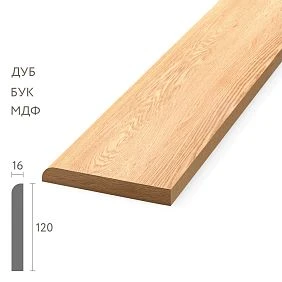
- Straight (smooth) profile
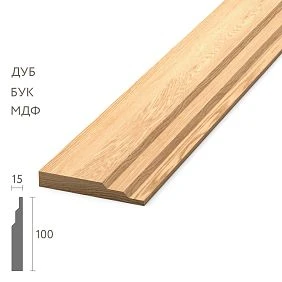
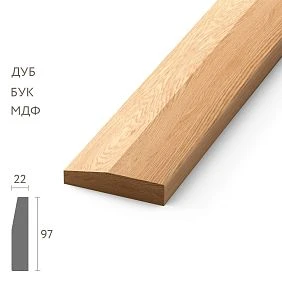
- Profile with chamfer or bevel
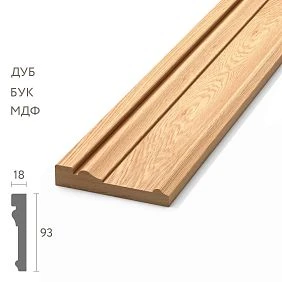
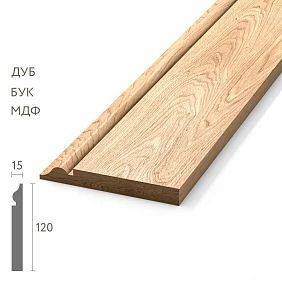
- Classic figured profile
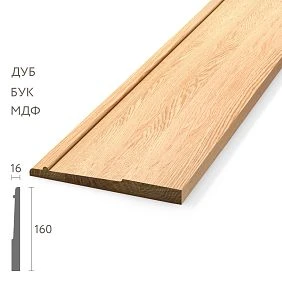
- Profile with Cable Channel
- Baseboard for stucco and moldings
- What color to paint MDF baseboard: the logic of choice
- White baseboard — a universal classic
- Baseboard in wall color
- Baseboard matching door and trim color
- Contrasting skirting board
- Skirting board matching floor color
- How to combine MDF baseboard with doors, architraves and wooden decor
- Baseboard and wooden architraves
- Baseboard and wooden moldings
- Baseboard and ceiling decor
- Baseboard and carved decor
- Baseboard and classic furniture
- Baseboard and furniture handles
- MDF baseboard in different rooms: nuances by zones
- Living Room
- Bedroom
- Hallway and entrance hall
- Office
- Children's room
- Country house
- Commercial interior
- How to paint MDF baseboard: technology, paints, sequence
- Surface Preparation
- What to paint with
- Application sequence
- Paint before or after installation?
- Mistakes when choosing and installing MDF baseboard
- Too low a baseboard for high walls
- Door color not considered
- Inconsistent profile
- Painting without preparation
- No allowance for trimming and joints
- Internal and external corners not planned
- Mixing MDF, wood, and plastic in one room
- FAQ: Answers to Popular Questions About MDF Skirting Boards
- What is an MDF baseboard for painting?
- Which MDF baseboard is better: tall or short?
- How is an MDF baseboard different from a wooden one?
- What color should I paint an MDF baseboard?
- Can you combine an MDF baseboard with wooden architraves?
- How to choose an MDF baseboard for painting: where to start?
- Where to buy MDF baseboards and related wooden decor?
- About the Company STAVROS
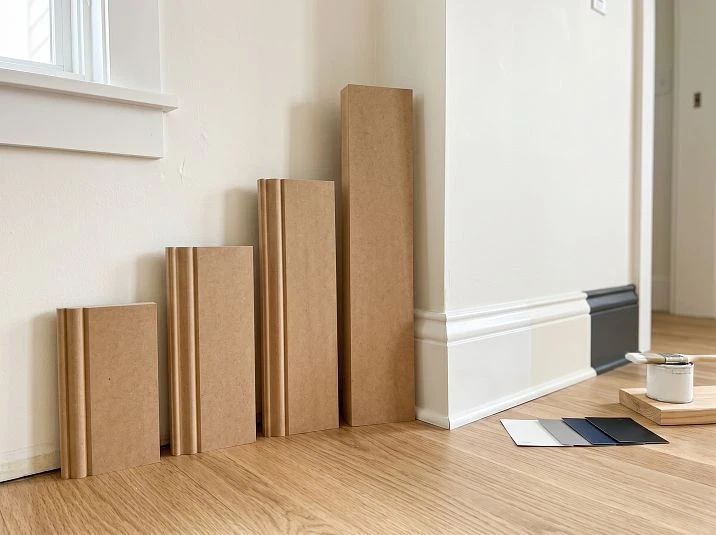
The baseboard is the last line of the interior. That horizontal line that separates the wall from the floor, completes the finish, and brings the entire room space together into a cohesive look. And when this line is chosen precisely, it goes unnoticed. When it's not, it catches the eye every day, even if it's hard to explain why.
Floor MDF baseboard for painting is one of the most popular options in modern construction and renovation. The frequency of the query "MDF baseboard" exceeds 26,000 per month, and this is no coincidence: the material combines an affordable price, good workability, and the widest possibilities for color and finish. But for it to work correctly, you need to know how to choose it — by height, profile, color, and consistency with the rest of the finish.
This is exactly what this article will discuss — in detail, precisely, and with specific guidelines.
When choosing MDF baseboard: real situations and tasks
Before moving on to selection parameters, let's figure out: in which cases is an MDF baseboard the right solution?




Need a baseboard for painting
This is the main reason for choosing MDF. A baseboard made of this material has a uniform, dense surface that perfectly accepts paint: acrylic, alkyd, enamel. With proper preparation, the coating lays without pores or unevenness, giving a perfectly smooth finish — exactly what is needed for a white baseboard in a modern apartment or for a colored baseboard to match a specific interior.
MDF for painting is produced either in white primer (ready for painting) or already painted in standard white. In both cases, the coating is easy to repaint if a non-standard shade is needed.
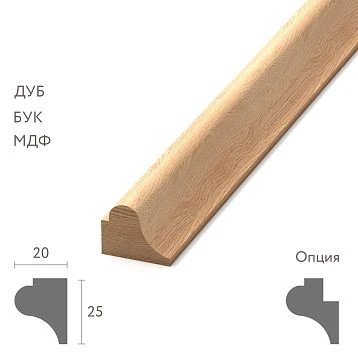
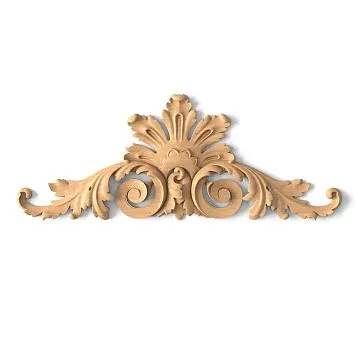
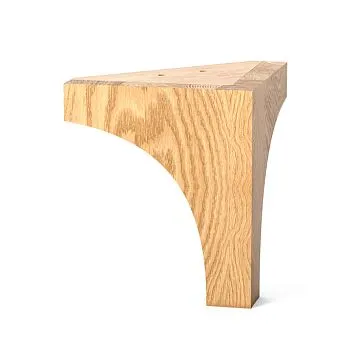
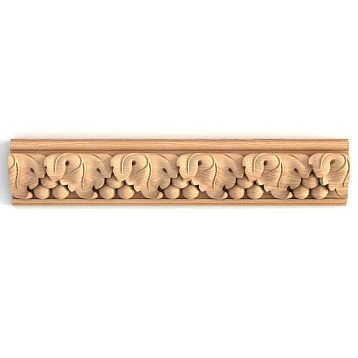
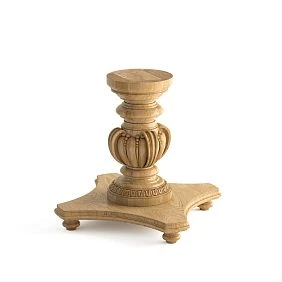
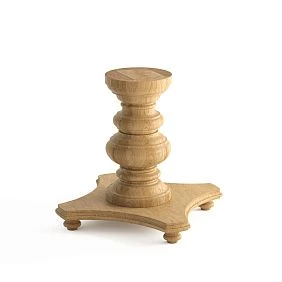
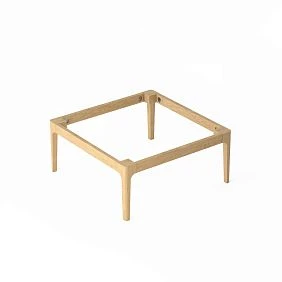
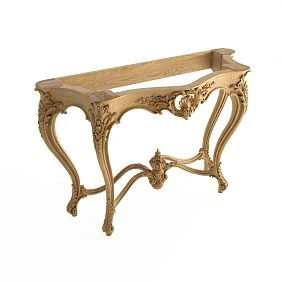
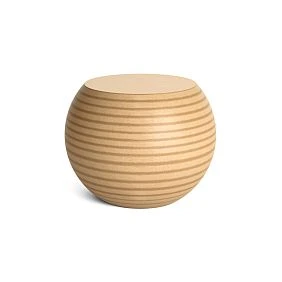
Our factory also produces:


Need a white baseboard
A white baseboard is the most universal solution for apartments with neutral walls. It creates a clear horizontal line, separates the floor from the wall, and suits any flooring — from light laminate to dark parquet. MDF in this case is a logical choice: wood requires careful preparation for white paint, while MDF accepts white enamel more easily and cleanly.
Get Consultation
Need a tall baseboard
Tall baseboards — from 100 to 200 mm — have become actively fashionable in recent years. They create an architectural accent, visually raise the ceiling, and give the interior a sense of weight. MDF allows the production of baseboards of any height with a precise profile, which is significantly more difficult and expensive in wood.
Important to hide the joint between the floor and wall
Technically, this is the main function of any baseboard: to cover the expansion gap between the flooring and the wall, hide wires (if there is a cable channel in the profile), and protect the lower part of the wall from accidental impacts from a vacuum cleaner or furniture.
When MDF is better than plastic
Plastic (PVC) baseboard is the cheapest and most moisture-resistant, but it has a significant drawback: it looks like plastic. Gloss, characteristic shine, simplified profile — this is not an interior solution, but a budget compromise. MDF is much closer in visual qualities to wood: it accepts paint without the characteristic plastic shine, the profile can be of any complexity, and the overall appearance is incomparably more expensive.
When to choose a wooden skirting board
Honest answer: solid wood baseboard — this is a higher class of solution. It is stronger, more durable, not as afraid of point impacts as MDF, and looks significantly better in interiors with wooden doors, plinth, solid wood furniture. If the budget allows — especially in a classic or neoclassical interior — the choice in favor of wood is always justified.
MDF baseboard or wooden baseboard: an honest comparison
This question is one of the most common when choosing finishing materials. We will give a direct and objective answer based on key parameters.
Appearance
MDF for painting, with proper application of enamel, looks almost identical to a wooden baseboard for painting — especially from a distance. However, with direct interaction, the difference is felt: wood has a tactile liveliness, a slight surface unevenness that makes it "warm." MDF is uniform — which is good for painting, but feels more neutral to the touch.
For interiors with an open wood texture (oil, tinting, varnish without opacity) — MDF is not suitable at all. It does not have a natural texture. Here the choice is unequivocally in favor of wooden baseboard.
Strength
| Parameter | MDF skirting board | Solid wood skirting board |
|---|---|---|
| Impact resistance | Medium (chipping on point impact) | High (dents but does not chip) |
| Moisture resistance | Limited (swells with constant contact) | Higher with proper coating |
| Deformation with humidity changes | Possible | Minimal with quality drying |
| Restoration | Difficult (chip hard to repair) | Possible by sanding and repainting |
| Service life | 10–20 years | 30–50 years |
The conclusion is obvious: in terms of strength and durability, solid wood wins unequivocally.
Painting
Here MDF wins. The uniform structure without pores, knots, and grain ensures perfectly smooth paint application. Wooden baseboard for painting requires more thorough preparation: filling knots, priming, sanding — otherwise the wood grain texture shows through the paint.
For white MDF baseboard intended for painting, it is technically simpler and yields a cleaner result.
Price
MDF baseboard is cheaper than a wooden counterpart of a similar profile and height. This is a significant factor for large areas. The price difference can be 30–70% depending on the wood species and profile complexity.
Combination with wooden decor
Wooden moldings, Wooden casings and solid wood furniture create a unified wooden system in the interior — and in this system, MDF baseboard looks like a 'gap': a material of a different level. If the room has wooden doors, solid wood architraves, or Classic Furniture — a wooden baseboard is more logical.
But if all wooden elements are painted in one color (e.g., white classic), an MDF baseboard in the same white tone will look organic.
Application in different conditions
MDF baseboard is not recommended for bathrooms, toilets, kitchen areas with constant water splashes, and rooms with high humidity. In hallways — with caution: areas with constant water contact (near the entrance door in rainy weather) are better equipped with wooden or moisture-resistant baseboard.
How to choose the height of MDF baseboard
Height is the main visual parameter of a baseboard. It determines whether the lower part of the wall will look 'heavy' or 'light', and whether the room appears tall or squat.
The principle of ceiling and baseboard proportion
Designers use a simple proportion: the height of the baseboard is about 3–5% of the ceiling height. With a standard ceiling of 2.7 m, this is 80–135 mm. With a high ceiling of 3.0 m, it is 90–150 mm.
But this is only a guideline. The final choice depends on the style, the desired effect, and how noticeable the baseboard should be.
Low baseboard (40–60 mm)
A low baseboard is for those who want it to be inconspicuous. It is a technical element that hides the gap and recedes into the background. It works well in minimalist interiors where any accent is unnecessary.
For small rooms with low ceilings (2.4–2.5 m), a low baseboard does not break up the space.
Medium baseboard (70–100 mm)
The most common range. The baseboard is noticeable, performs a decorative function, but does not dominate. It is the "workhorse" for most apartments with ceilings of 2.6–3.0 m.
A width of 80 mm can be considered a universal standard for typical city apartments.
High baseboard (120–200 mm and above)
A high MDF baseboard is a solution for spacious rooms with ceilings from 3.0 m, for classic and neoclassical interiors, for living rooms with a pronounced architectural concept.
A skirting board with a height of 150–200 mm creates a noticeable architectural effect: it visually "holds" the lower part of the wall, creating a sense of solidity. This is an element that in itself is a decorative statement.
Important: a tall MDF skirting board requires perfectly flat walls. Any deviations of the wall from vertical become obvious when installing a wide skirting board — a gap of 3–4 mm at a height of 180 mm is noticeable to the naked eye.
Skirting board for hallway and entrance
In a narrow hallway, a tall skirting board visually narrows an already limited space. Recommended height is 60–80 mm. The profile should be strict, without excessive relief.
Baseboard for the bedroom
In a bedroom, especially with upholstered furniture and textiles, a medium-height skirting board (80–100 mm) works best. A too tall skirting board in a bedroom creates excessive "architecturality" where softness is needed.
Skirting board for kitchen-living room
In a combined space, uniformity is important: one skirting board around the entire perimeter, the same profile and color. Height is determined by the overall logic of the room (ceiling, style, size).
How to Choose an MDF Baseboard Profile
A profile is the cross-sectional shape of a skirting board: how it looks "from the side." It is the profile that determines the skirting board's stylistic affiliation.
Straight (smooth) profile
A rectangular skirting board without relief and without chamfers is maximum minimalism. This is a flat plank with right angles. Visually strict, graphic. It works well in modern minimalism, loft, and Scandinavian style.
Installation of a straight profile requires perfectly even corners: any joint deviation of more than 90° on a straight baseboard is noticeable.
Profile with a chamfer or bevel
A slight cut angle on the top edge creates a softer transition from the baseboard to the wall. This is a more popular option than a completely straight one: it forgives minor wall irregularities and looks slightly more elegant.
Classical shaped profile
The classic profile has a pronounced relief: steps, curves, indentations. This is the language of classical architecture, which is immediately recognizable. Such an MDF baseboard works well with wooden moldings on walls, with a wooden ceiling baseboard and with with wooden cornices — when the entire perimeter of the room is united by a single system of profiles.
For classic and neoclassical interiors, a figured profile with relief is mandatory. A simple rectangle here will look poor against the backdrop of rich decor.
Profile with cable channel
Technical option: behind the front part of the baseboard, there is a channel for cable routing. This is convenient when installing a new apartment where wires need to be hidden without wall chipping. Externally, it is a regular baseboard; functionally, it solves two tasks at once.
Baseboard for stucco molding and moldings
If the interior plans Wooden moldings on the walls — the baseboard should "talk" to them. This doesn't mean the profiles must be identical. But the general character of the relief — the degree of classicism, the scale of details, the "language" of lines — should belong to the same direction.
Vertical wooden moldings between panels, horizontal wooden cornice at a height of 80–90 cm and an MDF baseboard with a pronounced classic profile at the bottom — this is a complete wall finishing system in the spirit of modern classicism.
What color to paint MDF baseboard: the logic of choice
The color of the baseboard is not just a matter of aesthetics. It is a decision that affects the perception of room proportions, the feeling of ceiling height, and the visual integrity of the interior.
White baseboard — universal classic
White MDF baseboard is the most common choice. It is neutral, pairs well with most walls, and creates a clear horizontal line without color conflict.
White baseboard works with white walls (blends in, recedes into the background), with medium-toned walls (creates a clear contrast), and with dark walls (looks like an architectural accent). It is a universal solution for apartments without a specific color concept.
Skirting Board in Wall Color
Baseboard in the color of the wall — a technique that visually raises the ceiling. The eye does not "stumble" over the horizontal line; the wall flows smoothly from ceiling to floor. This is a minimalist, modern approach.
Works well in small rooms where visual fragmentation needs to be avoided. It is also popular in the "total look" style, where walls, ceiling, and baseboard are all the same shade.
Baseboard matching the color of doors and trim
This is the most "professional" approach: the baseboard, Wooden casings and doors form a unified system. In white classic style — everything is white. In dark neoclassical style — everything is in a single dark tone.
This logic creates a sense of a unified design solution. When all "wooden" elements are the same color — the room looks designed, not assembled by chance.
Contrasting baseboard
A dark baseboard on light walls is a bold solution that requires a confident designer's hand. In certain interiors, this is a powerful technique: a dark "signature" at the bottom of the wall creates a feeling of groundedness, weight, and style.
But: a contrasting baseboard highlights all wall and floor imperfections. If the floor is uneven, a gap of varying width is visible in the dark color. This is critical.
Baseboard matching the floor color
A baseboard matching the flooring is an atypical but workable solution. The wall seems to "hover" in the air, while the floor continues upward through the baseboard. This technique works well with dark wooden parquet: the dark baseboard extends the floor line, creating contrast with light walls.
How to combine MDF baseboards with doors, architraves, and wooden decor
This section is key for those who want not just to install a baseboard, but to create a cohesive interior solution.
Baseboard and wooden architraves
Wooden casings — vertical profiles around the door opening are directly connected to the baseboard. They meet at the bottom point: the casing rests on the baseboard or joins it.
Coordination rules:
-
The height of the baseboard should be visually proportionate to the width of the casing
-
The profile character (degree of relief) should match: shaped casing + shaped baseboard, straight casing + straight or minimalist baseboard
-
Color — in one system: both white, both in wood tone, or both in a neutral tone
Baseboard and wooden moldings
If the walls are decorated with horizontal or vertical wooden moldings — the MDF baseboard should belong to the same system. In a classic interior, moldings organize the wall into "panels," and the baseboard is the bottom frame of this system. The height and profile of the baseboard are determined by the scale of the entire structure.
Baseboard and ceiling decor
Wooden ceiling skirting board at the top and the MDF floor baseboard at the bottom are the horizontal "frames" of the room. Between them is the wall. The more expressive both baseboards are, the more they shape the architectural character of the space.
Balance principle: if the ceiling plinth is tall and complex, the floor plinth should be comparable in weight. A thin floor plinth under a rich ceiling cornice is a disproportion that is immediately visible.
Plinth and carved decor
Carved wooden decoration — rosettes, cartouches, corner elements on walls — require a plinth of a corresponding level. If the wall decor is rich, the plinth should be tall with an expressive profile. A modest plinth in such a context looks like saving in the wrong place.
Plinth and classic furniture
Classic Furniture with wooden details creates certain expectations for the plinth. Here, not only the shape but also the tone is important: the plinth should belong to the same "color family" as the wooden details of the furniture. Ideally, when furniture, doors, and plinth are coordinated in a unified finishing system.
Plinth and furniture handles
A small but telling detail: if the furniture in the room has Wooden handles in a certain tone — this same tone should also be present in the plinth. Not identical, but coordinated.
MDF plinth in different rooms: nuances by zones
Living Room
Living room — the main space of the apartment, and the plinth here performs a decorative function on par with a protective one. For a spacious living room with ceilings of 2.8–3.2 m — plinth height from 100 mm, shaped profile, coordinated with doors and architraves.
In a living room with moldings and classic furniture, the MDF baseboard should be "in sync" with all wooden decor: the same color as the trim, architraves, and cornice.
Bedroom
In a bedroom, the baseboard is more of a background element. The height is medium (80–100 mm), the profile is calm. The accent in the bedroom is the headboard, textiles, and lighting. The baseboard should not "stand out" separately.
Exception: a bedroom in a classic style with rich finishes — here a high baseboard with a figured profile is justified.
Corridor and hallway
The hallway is an area with high mechanical load. Suitcases, shoes, strollers — all of these come into contact with the baseboard. MDF baseboards in the hallway are vulnerable to impacts, so it's worth considering a more durable solid wood baseboard.
If MDF — then a minimum height (60–80 mm), a straight or simple profile, and the most durable coating (alkyd enamel or varnish over paint).
Office
In a workspace, the baseboard is a background element. A strict profile, neutral color. No decorative accents that would distract from the working atmosphere.
Children's room
In a children's room, the baseboard should be durable: children are active, toys fly around. For a children's room with high load, a wooden baseboard is preferable. If MDF — then with the most durable coating.
Height: medium. Not a high baseboard: a children's room is a small space, and a heavy lower accent would make it seem even smaller.
Country house
In a country house with wooden details — beams, plank floors, timber walls — an MDF baseboard for painting can look like a neutral compromise. But for the integrity of the interior, it's better to consider solid wood baseboard in a natural tone or in a tint coordinated with the floor and doors.
Commercial interior
In offices, showrooms, and stores, MDF baseboards for painting are a common solution: budget-friendly, quick, and easily painted in corporate colors. Height is determined by architectural design. The profile is typically simple or moderately complex.
How to paint MDF baseboards: technology, paints, sequence
Painting MDF baseboards is a procedure that is not complicated but requires precision.
Surface preparation
If the baseboard is primed: lightly sand the surface with fine sandpaper (grit 220), remove dust, and apply the first coat of paint.
If the baseboard is already white (factory painted): it can be installed as is or repainted. For repainting, light sanding and applying a new coat are needed.
What to paint with
-
Water-based acrylic paint is the most common choice. It is eco-friendly, dries quickly, applies easily, and is available in a vast color palette (RAL, NCS systems). Use matte or semi-matte for walls, and satin or semi-gloss for baseboards.
-
Alkyd enamel provides a more durable coating, resistant to wear and moisture. It dries slower and requires a solvent. It is good for hallways and kitchens.
-
Acrylic-urethane enamels are a professional choice: the durability of alkyd combined with the workability of acrylic. Ideal for high-traffic areas.
Application sequence
-
Installation of the baseboard (or painting before installation — recommended)
-
Filling joints and gaps with acrylic sealant
-
Sanding after drying
-
First coat of paint (diluted with 10% water for acrylic)
-
Sanding after drying (grit 320)
-
Second finishing coat
For white baseboard, two coats are usually sufficient. For bright or dark colors over white, three coats.
Paint before or after installation?
Professional tip: paint before installation. This covers all edges, including the bottom part that touches the floor. After installation, only touch up joints and seams.
Mistakes when choosing and installing MDF baseboard
Let's go over typical mistakes — so you don't step on others' rakes.
Too low a skirting board for high walls
A 40 mm baseboard with a 3.2 m ceiling looks like a thin strip that's barely visible. It gets lost, doesn't serve a decorative function, and looks out of place. Follow the proportion: 3–5% of the ceiling height.
Door color not taken into account
Doors are the dominant wooden element of any room. If the baseboard color clashes with the doors, it's immediately noticeable and constantly irritating. Always match the baseboard color to the door color and casings BEFORE purchase.
Mismatched profile
A straight minimalist baseboard in a classic interior with moldings and carved decor violates the internal logic of the style. The baseboard profile should "speak" the same language as the rest of the trim.
Painting without preparation
MDF primed does not mean "ready to paint without sanding." A light sanding before the first coat yields an incomparably better result.
No allowance left for cutting and joints
Order baseboard with a 10–15% allowance over the calculated length. Cutting corners, compensating for defects, re-cutting failed joints — all of this "eats up" material.
Internal and external corners not thought out
Internal corners are cut at 45° or filled with a tongue-and-groove joint. External (protruding) corners must be cut at 45°. Without a precise angle (miter box or miter saw), joints will be gappy and unsightly.
Mixing MDF, wood, and plastic in one room
This is unacceptable from the perspective of interior integrity. If one room has an MDF baseboard, wooden trim, and a plastic threshold — three different materials create a feeling of "assembled from leftovers." Choose a single material and system for the entire finish.
FAQ: Answers to popular questions about MDF baseboards
What is an MDF baseboard for painting?
This is a floor baseboard made of MDF (medium-density fiberboard) with a primed or painted surface, ready for final paint application. It allows you to paint the baseboard any color — to match walls, doors, trim, or furniture.
Which MDF baseboard is better: tall or short?
For high ceilings (from 2.8 m) and classic interiors — a tall baseboard (120–200 mm). For standard apartments with ceilings of 2.6–2.7 m — a medium baseboard of 70–100 mm. For small rooms and minimalism — a short one (40–60 mm).
How is an MDF baseboard different from a wooden one?
MDF takes paint better, is cheaper, and has stable geometry. A wooden baseboard is stronger, more durable, has a natural texture, and pairs better with wooden furniture, doors, and solid wood finishes. For purchasing a wooden floor baseboard, see catalog of solid wood baseboards.
What color should I paint an MDF baseboard?
The most common options: white (universal), matching the wall color (for visual ceiling lift), matching the doors and architraves (for a unified trim system). A contrasting baseboard is a bold technique for well-thought-out interiors.
Can you combine MDF baseboards with wooden architraves?
Yes. With a unified color scheme (e.g., all white), MDF baseboards and wooden architraves look organic. It is important to coordinate the profile: the relief character of the baseboard and architrave should belong to the same style.
How to choose an MDF baseboard for painting: where to start?
With three parameters: ceiling height (determines the baseboard height), interior style (determines the profile), and door and architrave color (determines the final color). The rest is details.
Where to buy MDF baseboards and related wooden decor?
In the Stavros catalog — solid wood skirting boards, Wooden moldings, Wooden casings, Wooden cornices и Solid Wood Items to create a unified trim system.
About the company STAVROS
The baseboard is the line by which the quality of the renovation is judged. Not by what is visible at eye level, but by what is done near the floor — where details can no longer be hidden.
STAVROS manufactures Solid wood floor skirting board, ceiling trim, Moldings, Casings и Crown Molding made of natural wood — for those who choose material, not compromise. Next to it — Carved Decor, Classic Furniture и wooden furniture handles — to make the interior cohesive from baseboard to ceiling.
Choose the right line. View the STAVROS catalog.