Article Contents:
- What is a furniture plinth: function and decor combined
- Functional role of furniture plinth
- Decorative role: plinth as a style detail
- How furniture plinth differs from floor plinth
- Where furniture plinth is used: full list of scenarios
- Wardrobe: first and main scenario
- Kitchen set: plinth as a mandatory element
- Chest of drawers: bottom finish in classic style
- Buffet and display case
- Built-in furniture: wardrobe and library
- Restoration of old furniture
- Baseboard for cabinet: how to choose and install correctly
- Freestanding cabinet
- Built-in sliding wardrobe
- Decorative bottom of a classic-style cabinet
- Baseboard for kitchen and built-in furniture
- Kitchen plinth: wooden vs. plastic
- Kitchen plinth for painting
- Kitchen plinth in natural wood
- Built-in kitchen: linear footage calculation
- Baseboard for dresser, chest, and sideboard: details that create style
- Dresser in a classic interior
- Connection with legs and handles
- Sideboard and display cabinet: scale matters
- How to choose the height and profile of furniture baseboard
- Low furniture baseboard: 40–80 mm
- Medium furniture plinth: 80–120 mm
- High furniture plinth: 120–200 mm and more
- Straight profile: function without decoration
- Figurative classic profile
- Furniture baseboard for painting or varnishing
- Wooden baseboard or MDF for furniture: an honest comparison
- Appearance
- Strength and repairability
- Painting
- Combination with solid wood furniture
- Application in classic furniture
- Application in built-in furniture
- What to pair with furniture baseboard: a decor system
- Furniture handles: a unified style
- Furniture legs: connection through space
- Decorative overlays: horizontal and vertical system
- Furniture moldings: horizontal belts
- Wooden moldings: a unified system of interior decor
- Floor baseboards and the overall tone of the interior
- Mistakes when choosing a baseboard for furniture
- Mistake 1: Floor baseboard instead of furniture baseboard
- Mistake 2: Not accounting for the body height
- Mistake 3: Not matching the color with the facades
- Mistake 4: Forgetting about handles and legs
- Mistake 5: Too massive profile for small furniture
- Mistake 6: Not calculating linear meters
- Mistake 7: Not planning the painting
- Error 8: Using plastic in expensive wooden furniture
- FAQ: answers to main questions about furniture baseboard
- What is a furniture baseboard?
- How is furniture baseboard different from floor baseboard?
- Where is furniture plinth used?
- Can wooden furniture baseboard be painted?
- Which furniture baseboard profile to choose for a classic style?
- How to calculate the amount of furniture baseboard?
- Where to buy furniture baseboard?
- About the Company STAVROS
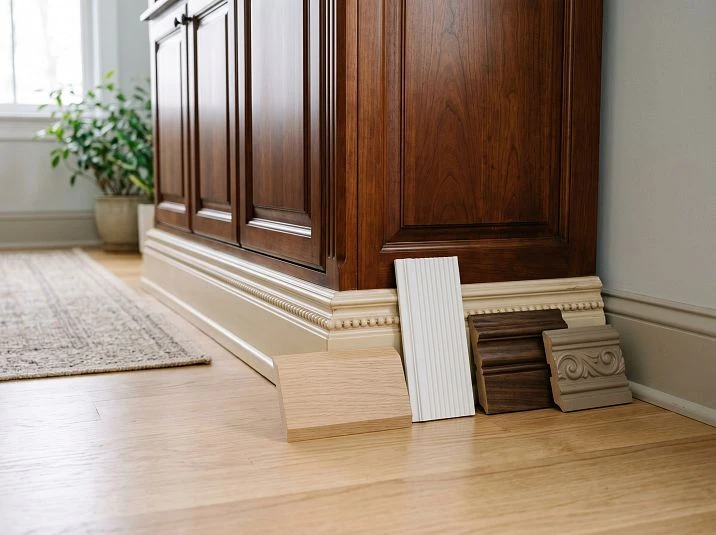
Furniture skirting — this is not the same as a floor plinth against a wall. It is a separate category of furniture decor: profiled wooden molding that decorates the lower part of a cabinet, kitchen, chest of drawers, sideboard, or built-in structure. And if you want your furniture to look more expensive, thoughtful, and complete — you need to start with this element.
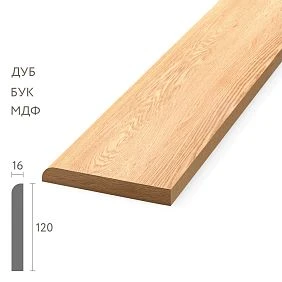
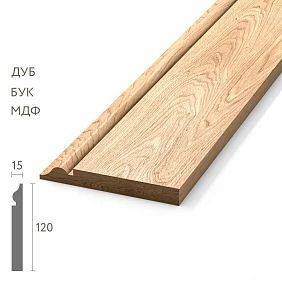
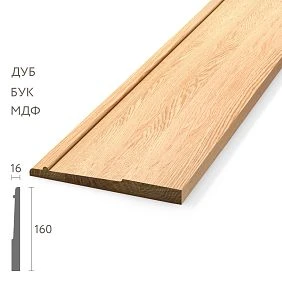
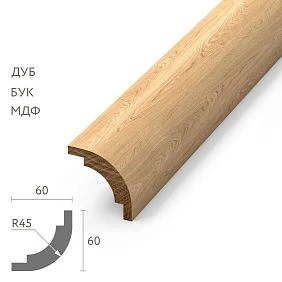
What is a furniture plinth: function and decor at the same time
At first glance — just a strip at the lower edge of a cabinet. In reality — a structural and decorative element that performs several tasks at once, none of which are secondary.




Functional role of the furniture plinth
The furniture plinth covers the gap between the lower edge of the body and the floor. This gap always exists: case furniture does not sit directly on the floor — it has adjustable legs or a removable base. An open gap means dust, debris, an untidy appearance from below, and visual "instability" of the entire structure.
The furniture base covers this space and creates the impression that the furniture stands on a solid foundation — like on a monolithic base.
Our factory also produces:

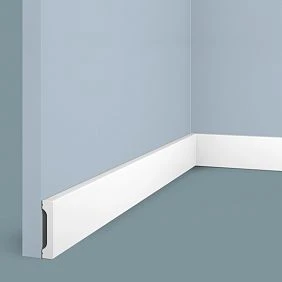
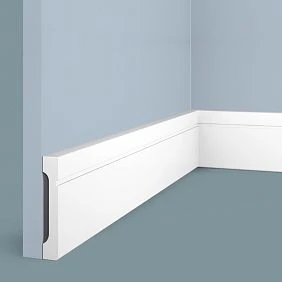
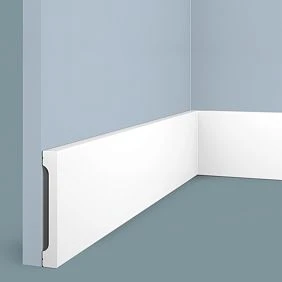
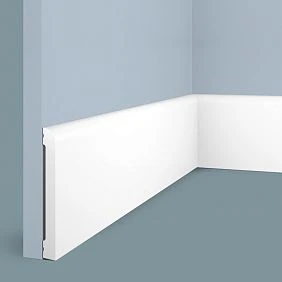
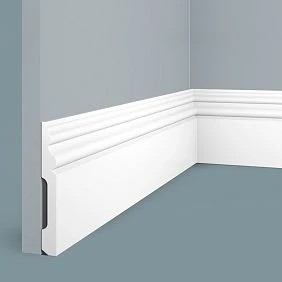
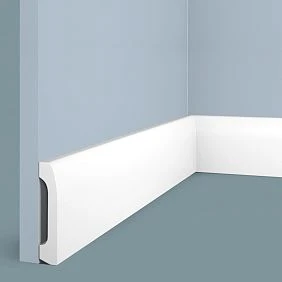

Decorative role: the plinth as a style detail
But this is only the technical side. In classic furniture, solid wood furniture, and high-end kitchen sets — the furniture plinth also carries a decorative load. Its profile, height, ornamentation or lack thereof — all of this sets the "tone" for the lower part of the furniture.
for classic furniture with carved overlays, molding frames, and profiled cornices — the lower furniture plinth completes the vertical architecture of the facade. Without it, the upper cornice and side moldings are "not closed from below," and the entire decorative system remains unfinished.
Get Consultation
How a furniture plinth differs from a floor plinth
These are fundamentally different products — and they should not be confused.
| Parameter | Floor baseboard | Furniture plinth |
|---|---|---|
| Installation location | Wall at the floor | Lower part of the furniture body |
| Task | Close the joint between wall and floor | Close the gap under furniture, design the base |
| Mounting | To the wall | To the furniture body, to adjustable legs |
| Height | 60–120 mm (standard options) | 80–150 mm (depends on base height) |
| Profile | Flat or with a slight protrusion | Can be more expressive, shaped |
| Decorative function | Secondary | Primary in classic furniture |
Wooden Skirting Boards for the floor is a separate category. Furniture molding is completely different. They are not interchangeable.
Where to use furniture baseboard: a complete list of scenarios
Cabinet: the first and main scenario
A cabinet with a furniture baseboard and a cabinet without it are two different items in terms of visual impression. The baseboard for the cabinet creates a "base" that makes the body complete from below.
For a built-in cabinet spanning the entire wall, a baseboard along the entire perimeter of the bottom edge creates a single line that connects the furniture to the floor. For a freestanding cabinet, a baseboard along the front and side walls creates a "pedestal."
In a classic interior with tall cabinets, the furniture plinth is chosen with an expressive profile matching the cornice ornament above: symmetry of top and bottom is a principle of the classic decorative system.
Kitchen set: plinth as a mandatory element
Kitchen plinth is one of the most common applications of furniture base. In a modern kitchen, the plinth is usually made of plastic or aluminum. But for kitchens made of natural wood, for kitchen sets in classic and Provence style, a wooden furniture plinth is organic and the only correct choice.
Wooden trim For kitchen plinth: solid oak, ash, or alder, profile matched to the kitchen style, coating — enamel or oil in the tone of the facades.
For a wooden kitchen to be painted: plinth under white or gray enamel, restrained profile with a slight forward projection — just enough to create a "base," not a "ledge."
Chest of drawers: lower finish in classic style
A chest of drawers with a profiled lower plinth is a completely different level. In a classic and neoclassical chest of drawers, the lower profile is a continuation of the decorative system of the facades: the same proportions, the same style of ornament (or its absence), the same tone of coating.
For a chest of drawers with legs: a plinth is not needed — the legs themselves form the "base." But for a chest of drawers without legs, standing on the body directly above the floor, a furniture plinth is mandatory.
Sideboard and display cabinet
A sideboard is a large vertical piece of furniture with two tiers. The lower body of the sideboard always has a plinth. For a sideboard made of solid wood with carved elements, a wooden profiled plinth is part of the architectural "reading" of the piece.
Showcase with a wooden base: the lower edge of the showcase frame is profiled, the plinth creates a "pedestal" for the entire structure.
Built-in furniture: wardrobe and library
A built-in wardrobe — a wall of cabinets — requires a single lower plinth line. Furniture plinth here serves as a "skirt": it covers the adjustable legs of all cabinets and creates the impression of a single built-in system, rather than a set of separate boxes.
Built-in library with pilasters and cornice: the lower plinth is a mandatory element of the architectural wall. It is symmetrical to the cornice above and "closes" the vertical axis of each section.
Restoration of old furniture
A separate and very practical topic. An old Soviet-era wardrobe or chest of drawers with a broken lower edge — after installing a new wooden furniture plinth, it looks completely different. Wooden trim during restoration, it covers defects in the lower edge of the body and sets a new decorative tone for the entire piece.
This is one of the most economical ways to "refresh" furniture without a full replacement: new plinth + new Furniture Handles + painting — and the old chest of drawers looks like new.
Baseboard for a wardrobe: how to choose and install correctly
A wardrobe is the most common scenario for furniture baseboards. Let's examine it in detail.
Freestanding wardrobe
For a freestanding wardrobe, the baseboard is installed on three sides: the front and two sides. The back side, as a rule, rests against the wall and does not require finishing.
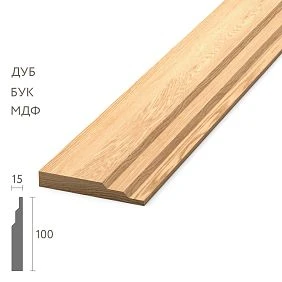
Baseboard height: usually equal to the height of the cabinet's "leg" — 80–100–120 mm. Profile: can be straight (a smooth plank with a small bevel at the top) or shaped (with protrusions, fillets, ornamental bands — for a classic wardrobe).
Overhang: the baseboard is usually installed flush with the facades or with a slight overhang of 5–10 mm. A larger overhang gives a sense of a "pedestal" — suitable for large wardrobes in a classic interior.
Built-in sliding wardrobe
For a built-in wardrobe, the baseboard runs along the entire length of the bottom edge — this is a horizontal continuous line. The profile here is usually restrained: a straight plank or a plank with a small protrusion at the top.
Important: if the floor is not perfectly level — the baseboard needs a groove for trimming along the bottom edge, so it can be adjusted to the floor line without visible gaps.
Decorative bottom of a wardrobe in a classic style
For a classic-style cabinet with molding frames on the facades, the lower plinth becomes part of the decorative system. It should match the style of the cornice at the top: that is, be profiled, with several layers of profile — base, shaft, and upper fillet.
furniture moldings and the lower plinth work as a single system: the molding organizes the facade plane along the perimeter, the lower plinth "closes" the system from below, the upper cornice from above. This is a classic "three-part" vertical of a furniture facade.
Plinth for kitchen and built-in furniture
Kitchen baseboard: wooden vs. plastic
Plastic baseboard is the standard for budget kitchens. Wooden furniture baseboard is the standard for solid wood kitchens, classic or Provence-style kitchens, kitchens with a pronounced natural material.
Why is wooden better for a "wooden" kitchen? Because plastic in the surroundings of natural wood creates a material dissonance — different light reflection, different tactility, different "class" of surface. A wooden baseboard belongs to the same world as the facades: alive, warm, natural.
Kitchen plinth for painting
For a kitchen with white or colored enamel — a plinth made of alder or ash for painting. Before painting — sanding, priming, two coats of enamel. Result: a perfectly smooth painted surface that does not differ in color from the facades.
Kitchen plinth for natural wood
For a wooden kitchen with facades under varnish or oil — a plinth from the same species: oak to oak, walnut to walnut. Coating: the same oil or the same varnish as on the facades. Only then is material unity achieved.
Built-in kitchen: linear footage calculation
Kitchen — perimeter structure. To calculate the plinth: sum the length of all lower cabinets + add 10–15% for trimming corners and joints. Corners can be straight (90°) or obtuse — each case requires the correct joining method: either at 45° (miter box) or using a corner element.
Plinth for a chest of drawers, cabinet, and sideboard: details that create style
Chest of drawers in a classic interior
A classic chest of drawers on a "base" (without legs, on an extended plinth) is one of the most demanding furniture items for a plinth. Here, the lower profile must be multi-layered: it forms a "pedestal" on which the body stands. A wide, protruding base is an architectural technique that visually "weighs down" the lower part and gives the piece solidity.
Profile for a classic chest of drawers: height 100–150 mm, several layers — straight base + "heel" + upper cove. This profile creates the "furniture pedestal."
Connection with legs and handles
In furniture with legs — a plinth is not needed. But if a chest of drawers or nightstand stands on decorative furniture legs, then the space between the legs is closed with a "skirt" — a horizontal strip around the perimeter that attaches to the legs. This is a unique version of a furniture plinth — not a solid base, but a decorative "connector."
Important principle: Furniture Handles and the furniture plinth must belong to the same decorative language. Carved wooden handles with rich ornamentation + a smooth straight plinth is inconsistency. A profiled plinth with an expressive cross-section + carved handles is a unified system.
Sideboard and display cabinet: scale matters
For a large sideboard — a tall, expressive bottom plinth of 120–150 mm. For a small bedside table — a thin, delicate plinth of 40–60 mm. The scale of the furniture plinth is always proportionate to the scale of the item itself.
How to choose the height and profile of a furniture plinth
This is the most practical section — and the most important for making a purchase decision.
Low furniture plinth: 40–80 mm
A low plinth is for small furniture, for furniture with legs (as a "filler" between legs), for modern classics where the decor is restrained.
Profile: straight with a chamfer, or with a small cove at the top. Creates a neat, unobtrusive "base."
Medium furniture base: 80–120 mm
The most versatile range. Suitable for cabinets, kitchen sets, built-in structures, standard dressers.
Profile: can be either straight or shaped. For classic styles — shaped with several profile belts.
High furniture baseboard: 120–200 mm and more
For large furniture items, for libraries and wall units, for classic cabinets with high ceilings. A high baseboard creates an "architectural base" — a powerful pedestal on which the body stands.
Profile: multi-component, with pronounced transitions. This is no longer a strip — it is an architectural detail.
Straight profile: function without decoration
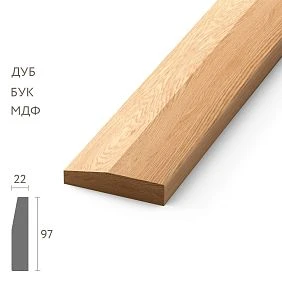
A smooth straight strip with light chamfers along the edges. Maximally neutral — suitable for modern kitchens, built-in systems, any context where a decorative accent is not needed.
Figurative classic profile
Multi-component profile with fillets, shelves, heels — a classic architectural profile that gives the baseboard decorative depth. This is the main option for classic furniture.
Furniture baseboard for painting or varnishing
For painting — any wood species. The evenness of the surface after sanding and proper priming are important. For varnish or stain — a species with expressive texture: oak, ash, walnut, cherry.
Wooden baseboard or MDF for furniture: an honest comparison
The question of material arises for everyone. MDF is cheaper. Wood is better. Let's break down why.
Appearance
MDF for painting has a smooth, uniform surface. It takes paint very well, with no shrinkage or cracking. For furniture under white enamel, MDF is a perfectly decent option.
Wooden baseboard under varnish has a living texture, natural grain, and warm depth of material. MDF never provides this: under varnish, MDF looks flat and lifeless.
Strength and repairability
Hardwood (oak, ash) is a very durable material that withstands mechanical impacts and will last for decades. Scratches on a wooden baseboard can be sanded and repainted. MDF chips or crumbles upon impact and is difficult to restore.
Painting
Both materials paint well. But wood is more alive: it breathes, absorbs and releases moisture. When humidity in the room changes, a wooden baseboard may slightly change linear dimensions — this must be considered during installation by leaving small technical gaps.
Combination with solid wood furniture
Solid wood furniture + MDF baseboard creates a material dissonance. Wood with wood is the rule of a natural interior. Wooden trim for solid wood furniture — the only correct choice.
Application in classic furniture
In classic furniture with carved wooden overlays and moldings, an MDF baseboard is inappropriate. It's like a gold ring with a plastic stone. Wooden furniture baseboard — the only organic choice for classics.
Application in built-in furniture
In built-in furniture made of laminated chipboard bodies with white facades, an MDF baseboard is quite logical. But if you want to elevate the class of the built-in, wooden moldings immediately move it to another category.
What to pair with furniture baseboard: decor system
Furniture handles: unified style
wooden furniture handles — a direct 'partner' of the wooden furniture baseboard. If the handles are turned from oak, the baseboard should also be oak. If the handles have carved ornamentation, the baseboard profile should be proportionally decorative. If the handles are smooth and modern, the baseboard should be straight, without extra details.
Consistency of handles and baseboard in tone, material, and degree of decorativeness is one of the main signs of well-thought-out furniture.
Furniture legs: connection through space
Furniture legs and furniture baseboard work together in one scenario: furniture on legs with decorative 'filling' between them. The profile of the lower horizontal strip should match the profile of the legs themselves: turned legs with rounded elements — a strip with fillets. Straight rectangular legs — a straight strip.
Decorative overlays: horizontal and vertical system
Furniture Decoration from Wood — applied carved elements on facades — work in a system with a baseboard. If the facade has decorative overlays with a floral pattern, the lower baseboard with a profiled belt completes this system from below. A separate overlay on a smooth facade without a furniture baseboard is an unfinished decorative solution.
Furniture moldings: horizontal belts
Wooden moldings create horizontal frames on the plane of a furniture facade. The baseboard is the lower horizontal element that "closes" the frame from below. The molding profile and the baseboard profile must be coordinated: similar style, similar proportions.
Classic system: furniture molding along the perimeter of the facade + lower baseboard + upper cornice. This is an "architectural" three-part scheme that turns the facade of a cabinet or library into a decoratively finished structure.
Wooden millwork: a unified system of interior decor
Wooden trim — this is the entire line of profiled products made from solid wood: baseboards, moldings, cornices, fillets, cover strips. In a proper interior, the furniture baseboard "rhymes" with the floor baseboard at the walls: similar profile, same wood species, same finish. This creates the feeling that the furniture "grew" out of this space, rather than being placed into it.
Floor baseboards and the overall tone of the interior
Wooden Skirting Boards at the walls and the furniture baseboard on cabinets should belong to the same color system. White floor baseboard + white furniture plinth — a unified ensemble. Oak floor baseboard + furniture plinth made of oak in the same tone — natural harmony.
Contrast between floor plinth and furniture baseboard is only acceptable as a deliberate design choice — for example, dark floor plinth + white furniture. Accidental contrast looks like a mistake.
Mistakes when choosing a plinth for furniture
Mistake 1: Floor plinth instead of furniture plinth
This is a common and obvious mistake. Floor plinths are wide, flat, with a wall-oriented profile. When placed on a furniture body, they look alien: proportions are disrupted, and the profile doesn't work in the furniture context.
Mistake 2: Not accounting for body height
A tall furniture baseboard on a small body eats up space. A low plinth on a tall cabinet is barely noticeable. Plinth height: 1/8–1/10 of the total furniture body height.
Mistake 3: Not coordinating color with facades
A furniture plinth of a different tone or wood species without deliberate contrast creates accidental dissonance. Always specify: for which wood species, for which coating tone.
Mistake 4: Forgetting about handles and legs
The furniture system is holistic: handles + legs + plinth + moldings + overlays. You cannot choose a plinth in isolation from other facade details.
Error 5: Too massive profile for small furniture
A tall, expressive plinth for a small bedside table creates disproportion. The scale of decor is always proportional to the scale of the item.
Error 6: Not calculating linear meters
"Ordering by eye" is a mistake. Trim before purchase: measure the perimeter of the bottom of all cabinets + add 10–15% for joints, corners, and spare.
Error 7: Not planning the painting
You ordered a wooden plinth, installed it, then painted the furniture — and it turned out that painting the mounted plinth is inconvenient, and the joints are poorly painted. Correct sequence: painting before installation, final painting of joints after installation.
Error 8: Using plastic in expensive wooden furniture
This is not a mistake — it's a fundamental mismatch of levels. Natural wood in the main product and plastic in the base — lowering the class of the entire item. Wooden furniture plinth is not a luxury, but a mandatory element of solid wood furniture.
FAQ: answers to main questions about furniture plinth
What is a furniture plinth?
This is a profile element made of wood or other material that decorates the lower part of a furniture body. It covers the gap under the furniture, creates a "base" for the body, and serves a decorative function in classic furniture systems. See the section of baseboards and moldings.
How is furniture baseboard different from floor baseboard?
Floor baseboard is attached to the wall and covers the joint between the wall and the floor. Furniture baseboard is attached to the furniture body and covers the lower part of the body. These are different products with different functions and different profiles.
Where is furniture baseboard used?
In cabinets, built-in wardrobes, kitchen sets, libraries, chests of drawers, sideboards, display cases. Everywhere where cabinet furniture has a bottom edge that requires decorative and functional finishing.
Can a wooden furniture baseboard be painted?
Yes. For enamel — any wood species (better alder, ash, linden). For varnish or stain — oak, ash, walnut. Technology: sanding → priming → painting in 2 coats. See Wooden trim.
Which furniture baseboard profile to choose for a classic style?
A multi-component profile with fillets, shelves, and a pronounced base. Height 100–150 mm. The style is coordinated with the profile of the cornice at the top and the molding frames of the facades.
How to calculate the amount of furniture baseboard?
Measure the perimeter of the bottom of all furniture bodies. Add 10–15% for trimming and joints. The result is the required linear footage in meters.
Where to buy furniture baseboard?
At Stavros: Wooden trim, Solid wood skirting boards, furniture moldings, decor for furniture, Handles и Legs made of solid wood for complete furniture styling in a unified design.
About the company STAVROS
Furniture baseboard is a small detail behind which lies a big principle: in quality furniture, there are no trifles. Every element — from the handle to the bottom plinth — must belong to a unified system of style and material.
STAVROS offers a full range of wooden furniture decor: Pogonazh iz massiva, Baseboards, Moldings, furniture moldings, Decorative Inserts, Furniture Handles, Furniture legs и classic furniture.
Choose a system. Order as a set. Trust STAVROS.