



































































Article Contents:
- Skirting Board for Quartz Vinyl in Moscow: Which Option to Choose for Your Interior
- What Skirting Boards for Quartz Vinyl Can Be Bought in Moscow
- Wooden skirting boards made of oak and beech
- Paintable MDF skirting boards
- Moisture-Resistant Skirting Boards Made of Polystyrene and Duropolymer
- Modern Straight Profiles and Hidden Solutions
- How to Choose a Skirting Board for Quartz Vinyl by Material
- When wood is better
- When MDF is better
- When moisture-resistant material is needed
- How to Choose a Skirting Board to Match the Color of Quartz Vinyl and Doors
- Matching floor color
- White Skirting Board for Quartz Vinyl
- Matching the door color
- Contrasting skirting board
- How to Choose a Skirting Board for Quartz Vinyl by Height and Profile
- Narrow skirting board for compact spaces
- Medium Height as a Universal Option
- High skirting board for a status interior
- Straight Profile
- Shaped Profile
- Baseboard with cable channel
- What is important specifically for quartz vinyl: gap, abutment, wall irregularities
- Baseboard with floating installation
- Baseboard with adhesive installation
- How to close the expansion gap
- Which profile better conceals irregularities
- Which baseboard to choose for apartments, houses, and different rooms
- living room
- for the bedroom
- For the hallway
- For Kitchen
- For commercial premises
- What to combine baseboard with for quartz vinyl
- With doors and architraves
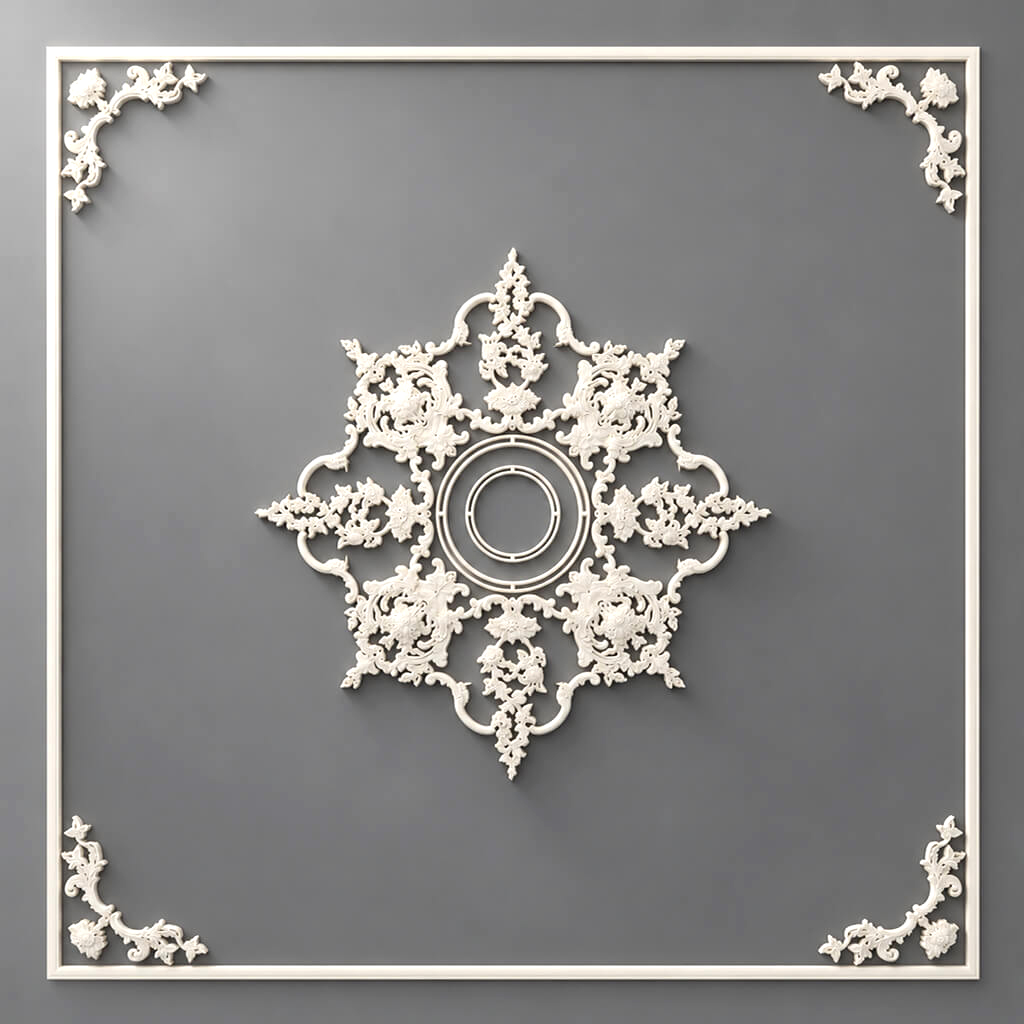
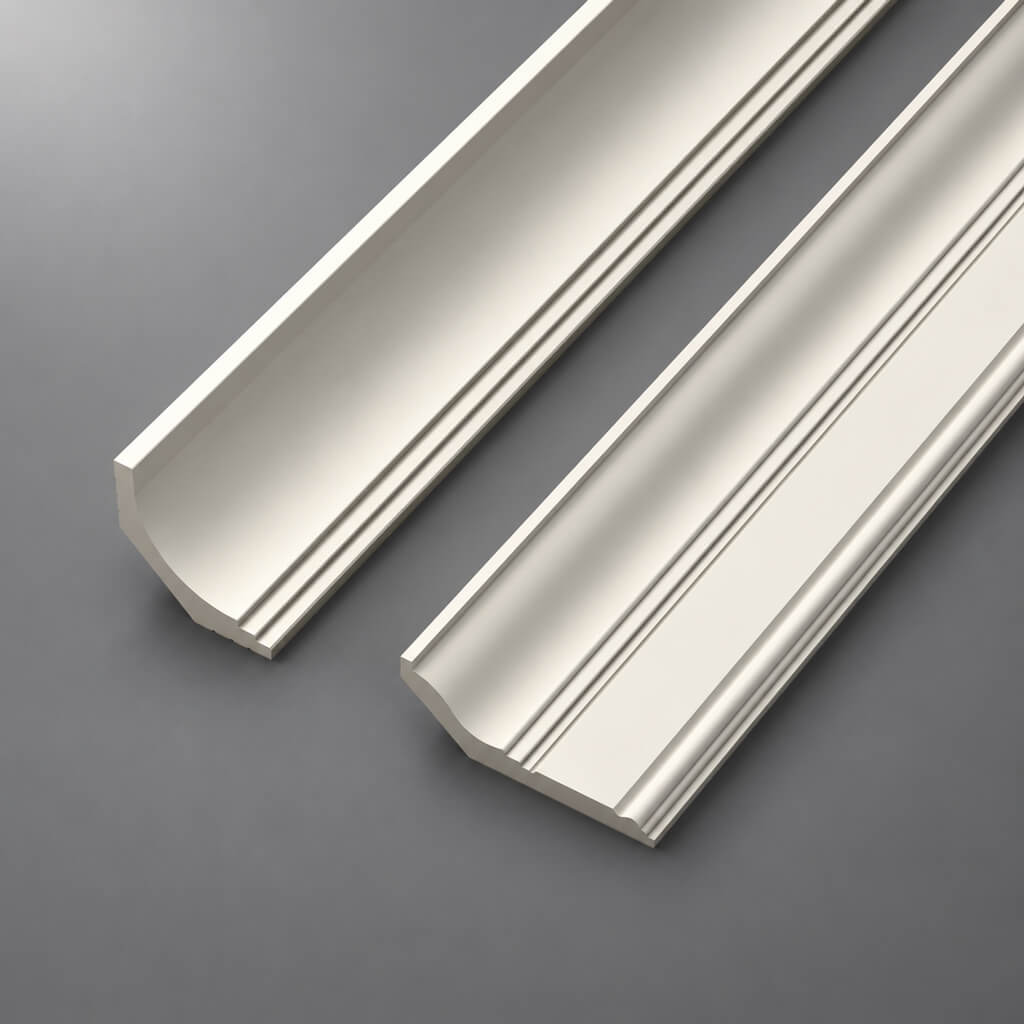
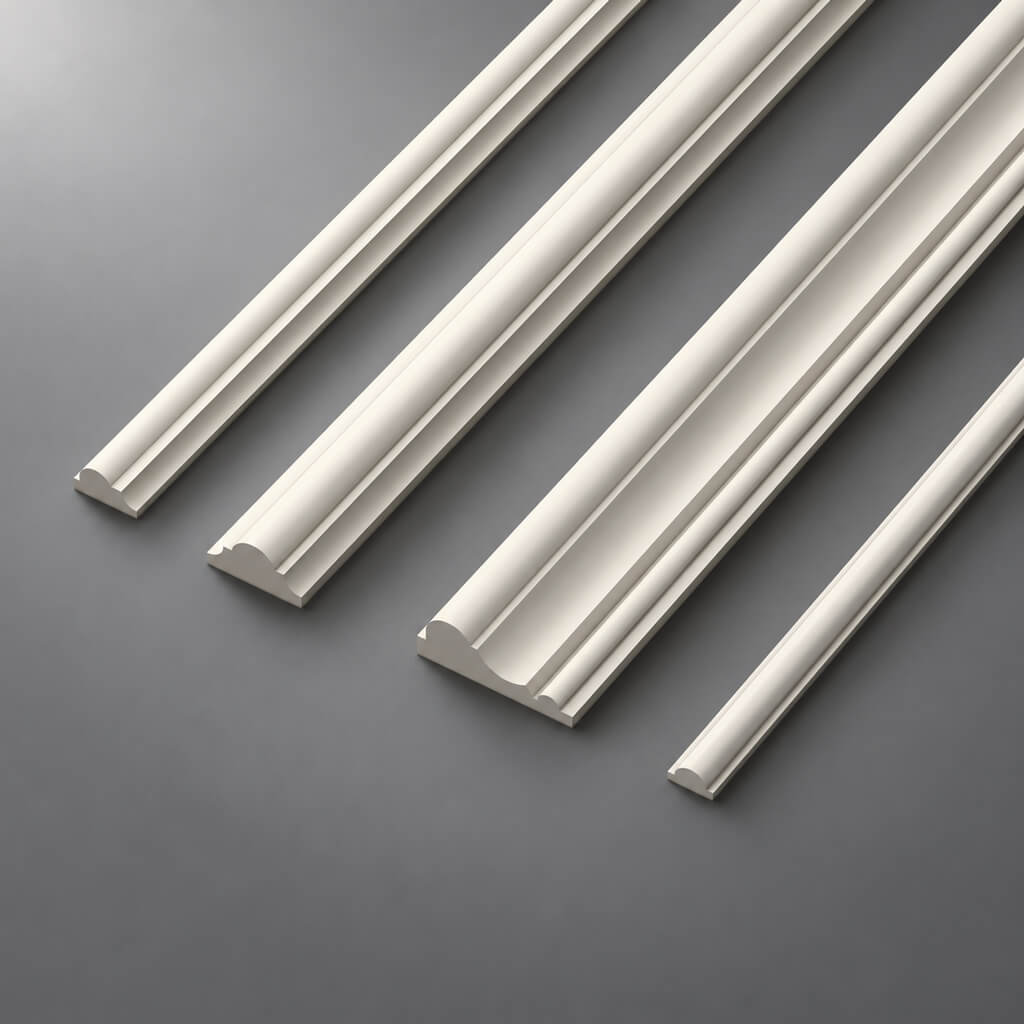
- With moldings and cornices
- With slatted panels
- With the general system of wooden decor
- Where to buy baseboard for quartz vinyl in Moscow
- Comparative table of baseboard materials for quartz vinyl
- Common mistakes when choosing
- Profile too small
- Wrong color
- Ignoring the gap
- Unsuitable material for operating conditions
- Conclusion
- About the Company STAVROS
- Frequently Asked Questions

Quartz vinyl has rapidly and deservedly conquered the Moscow market. Moisture resistance, ease of installation, a rich selection of decors, the ability to imitate oak, stone, concrete, and any other surface with enviable accuracy. Today, this flooring is installed in living rooms and bedrooms, hallways and kitchens, bathrooms, and commercial spaces. The Moscow market for finishing materials is literally saturated with quartz vinyl from all price segments.
But here's what's telling: despite all the attention to choosing the flooring itself, the baseboard often remains an afterthought. It's chosen in a hurry, they take 'something suitable,' or they focus solely on price. And then they discover that expensive gray quartz vinyl with a metallic sheen is undermined by a plastic baseboard in the 'light oak' color from 2008. Or that a wooden baseboard at the base of the wall in the kitchen area starts to darken and swell from moisture within a year.
Baseboard for quartz vinyl— is a separate story of choice. Not because quartz vinyl fundamentally differs from laminate or parquet in terms of installation technology. But because this flooring is most often used precisely where increased demands are placed on the baseboard: in wet areas, in rooms with intensive use, in modern interiors with neutral surfaces where any inaccuracy immediately catches the eye.
If you are now looking for how to correctlybuy floor baseboards in Moscowfor a specific quartz vinyl — this material will give you complete guidance. On material, on height, on color, on operating conditions. On the usage scenario in different rooms. And on which mistakes most often cost time and money.




Baseboard for quartz vinyl in Moscow: which option to choose for your interior
Let's start with how quartz vinyl differs from other floorings specifically from the point of view of choosing a baseboard. Three key points.
First. Quartz vinyl is a floating floor (with click-lock installation) or glue-down (with monolithic fixation). This changes the requirements for the expansion gap, and consequently, for the minimum width of the baseboard.
Second. Quartz vinyl is often installed in wet areas: kitchen, hallway, bathroom, balcony. This means the skirting board must withstand regular contact with water, steam, and wet cleaning—wood or MDF without protective coating won't last long under such conditions.
Third. Quartz vinyl has a characteristic visual neutrality: gray, beige, milky, anthracite decors. Next to such a surface, the skirting board is 'in plain sight'—any mismatch in color or style is immediately noticeable.
Three pillars of a competent skirting board choice for quartz vinyl in Moscow: material, color and coating, height and profile. We'll analyze each in order—without lyrical digressions, only specifics.




What skirting boards for quartz vinyl can be bought in Moscow
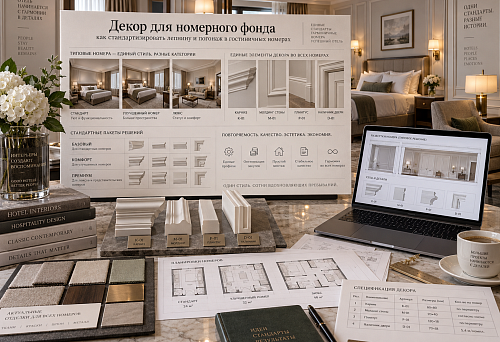
Moscow stores and manufacturers today offer four real categories of skirting boards worth considering for quartz vinyl. Each with its own advantages and a clear niche application.
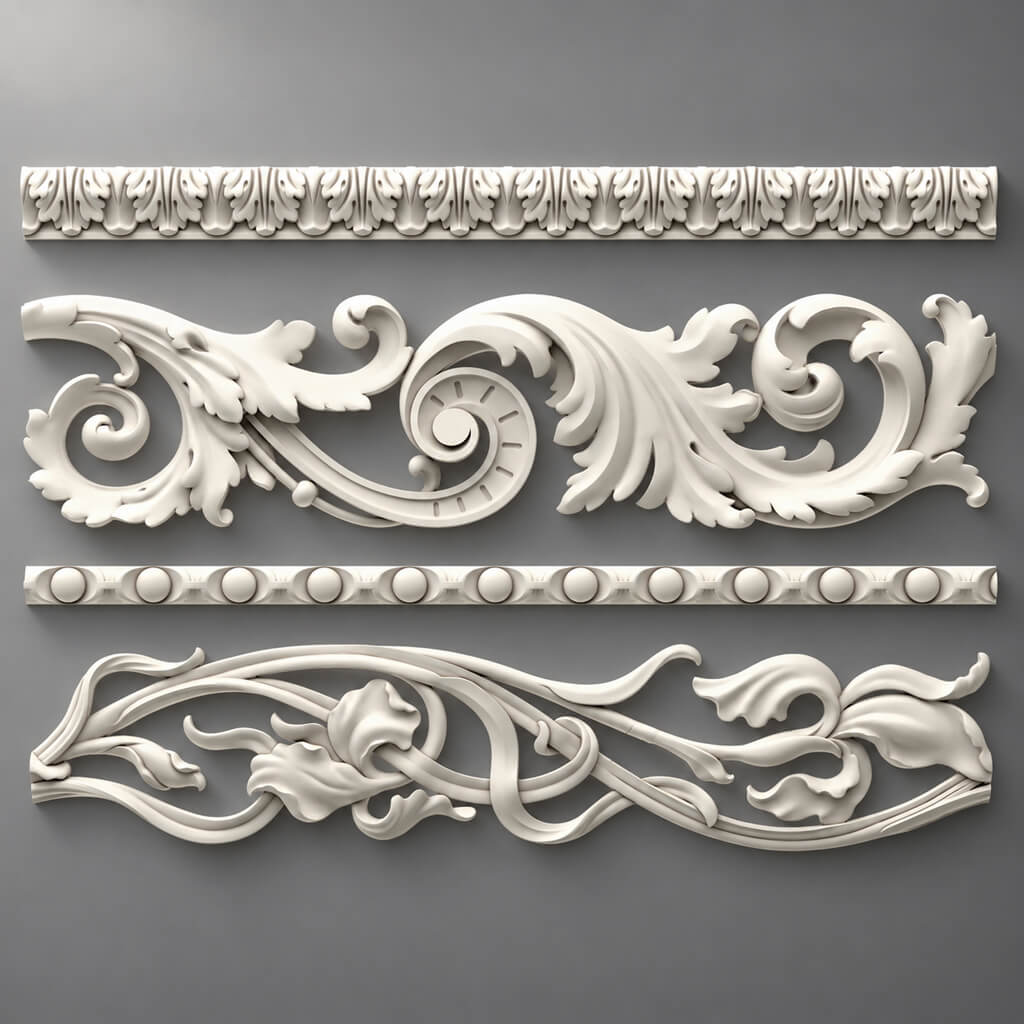
Our factory also produces:


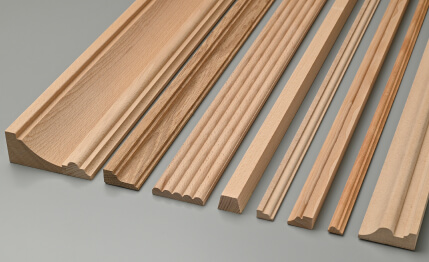
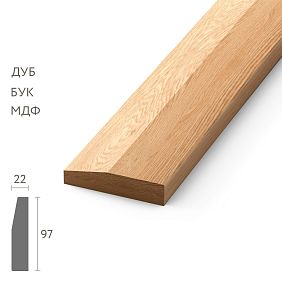
Wooden skirting boards made of oak and beech
Wooden skirting board next to quartz vinyl is a conscious designer choice. Natural wood in an interior where everything else is imitation creates an interesting contrast: honest next to convincing. This technique is actively used in Moscow design projects where 'live' texture is important.
solid wood baseboardOak—the most in-demand option. Dense structure, expressive grain pattern, resistance to mechanical impacts. Beech skirting board—lighter, with a more uniform texture—works well next to quartz vinyl in light and Scandinavian shades.
An important limitation to understand clearly: wooden skirting board is not intended for systematically wet areas. In a living room with quartz vinyl—excellent. By the kitchen sink, in a hallway with wet cleaning, or in a bathroom—no. Wood absorbs moisture, darkens, warps. No varnish coating will save it with constant contact with water.
Oak skirting board for quartz vinyl is worth buying if you have a dry room, an interior with an emphasis on natural materials, and you want to make the skirting board a decorative element, not just a technical addition.
Get Consultation
Baseboard — it is a modest detail, often unnoticed, but plays a critical role in creating the completeness of the interior.
MDF skirting board—the workhorse of the Moscow market. Stable geometry, even surface, precise cross-section without deviations. It is chosen for quartz vinyl in most residential areas: living rooms, bedrooms, studies, children's rooms. Here MDF performs flawlessly.
MDF skirting for quartz vinyl in white, ready for painting — the most common solution in Moscow apartments. This is no surprise: white skirting works with any quartz vinyl decor — gray, beige, light oak, concrete. It creates a clear horizontal line at the base of the walls, which looks fresh and modern.
Buying MDF skirting for quartz vinyl ready for painting is especially wise when you haven't decided on the final wall color or plan to paint after installing the skirting. You simply paint it in the shade that suits the finished interior.
Full rangewooden and MDF skirting boards— from 60 to 120 mm, several profile types, white and ready for painting — available in the catalog. It's convenient to select and compare items there without getting confused about sizes.
Moisture-resistant skirting made of polystyrene and duropolymer
This is a category that has fundamentally changed the approach to choosing skirting for wet areas in recent years.Moisture-resistant skirting board HI WOOD— a product based on a high-density polymer that is visually indistinguishable from a wooden profile but reacts fundamentally differently to water: it doesn't react at all.
Doesn't get wet. Doesn't swell. Doesn't darken. Doesn't warp. Doesn't crack with temperature fluctuations. At the same time, it cuts and installs exactly like a wooden or MDF profile, and the surface imitates the texture of natural wood with a high level of detail.
Technical specifications are especially important when used with quartz vinyl: moisture-resistant skirting covers an expansion gap of up to 10–15 mm and hides wall-to-floor junction irregularities up to 5 mm. For Moscow apartments in older housing stock, this is critically important: walls at the base are rarely perfectly even, and gaps after laying quartz vinyl are often wider than standard.
HI WOOD size range: from 58 to 140 mm. This is the widest range among all presented categories. Buying moisture-resistant skirting for quartz vinyl is a mandatory solution for kitchens, bathrooms, toilets, and any areas with regular wet cleaning.
Modern straight profiles and hidden solutions
The hidden skirting board — a profile that creates a shadow gap between the floor covering and the wall — is increasingly occupying a niche in Moscow design projects. The visual effect: the wall seems to 'detach' from the floor, giving the space a sense of lightness.
For quartz vinyl, a hidden profile is especially appropriate when the flooring itself is neutral — gray concrete, light stone — and the interior is built on space and light, without decorative details. Buying a hidden skirting board for quartz vinyl is a solution for those creating a minimalist or ultra-modern interior.
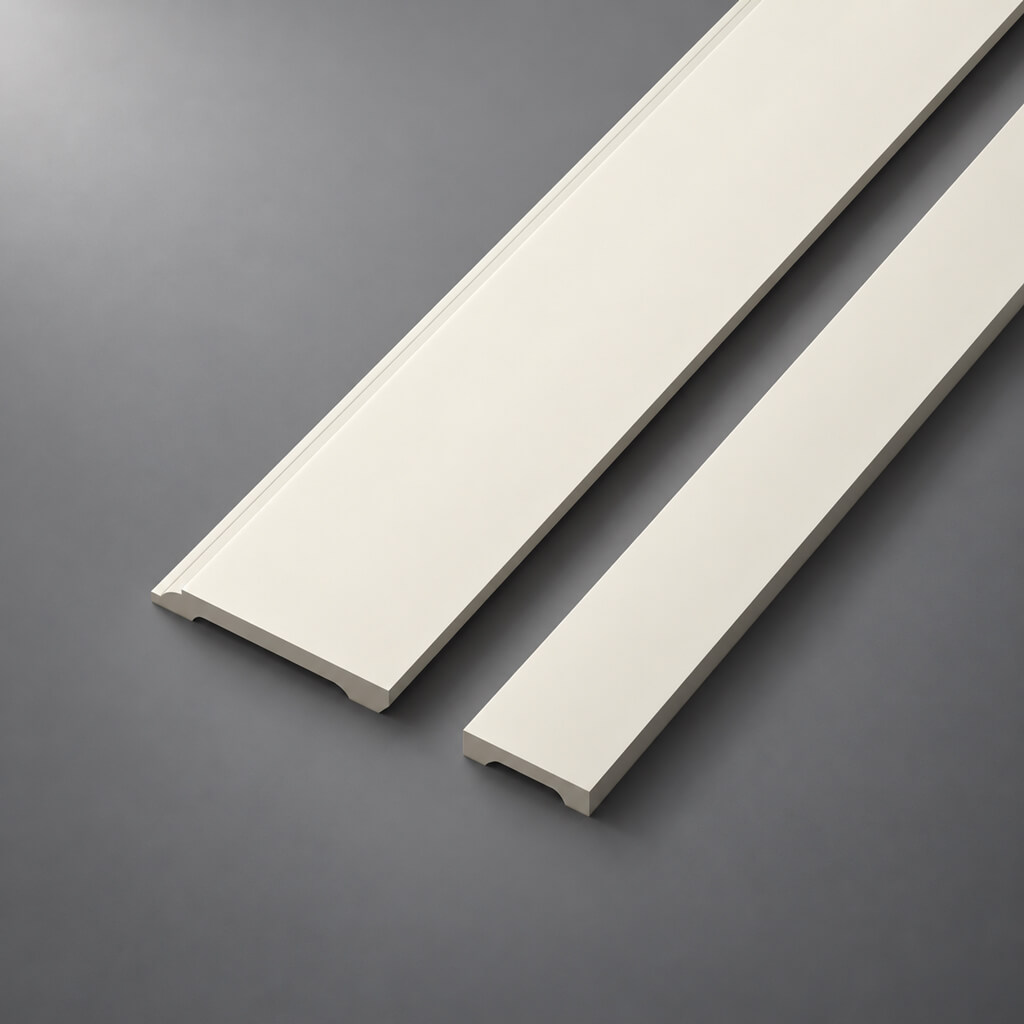
A straight, open profile without relief is an equally laconic solution. A smooth 80–100 mm strip in white at the base of a neutral wall next to gray quartz vinyl looks like pure architectural punctuation.
How to choose a skirting board for quartz vinyl based on material
The most common question: which skirting board material is best for quartz vinyl? The honest answer — it depends on the room and the specific operating conditions.
When wood is better
Wood — where naturalness is important, there is no systematic humidity, and the interior is built around natural materials. If quartz vinyl is installed in a living room or bedroom, with solid wood or veneer doors, and furniture made of natural wood — a wooden skirting board continues this theme. This is an interior with character and materiality.
It's worth buying a solid wood skirting board for quartz vinyl when you want the skirting board to be not just a functional addition, but an independent decorative element. An expressive oak grain pattern at the base of the wall is not an 'addition for laminate,' it's a detail that catches the eye.
Usage condition: dry residential spaces with normal humidity. Occasional wet wiping of the floor is acceptable. Systematic contact with water is not.
When MDF is better
MDF wins where perfect geometry and a predictable result are needed. Long straight sections in a living room, a hallway without niches, a large open-plan layout — an MDF profile will not deviate from the line, will not 'wander' due to local material peculiarities.
Buying a white MDF skirting board for quartz vinyl is the optimal choice for most modern Moscow apartments. It is compatible with any quartz vinyl decor, installs well, is easy to cut, and can be painted any color.
MDF skirting for quartz vinyl is also worth buying when you plan to repaint the walls or update the interior later: MDF skirting can be repainted without removal.
When a moisture-resistant material is needed
The direct answer: always when quartz vinyl is installed in a damp room. Bathroom, toilet, kitchen in the sink area, hallway with entrance zone, balcony with open ventilation — these are all situations where wooden or MDF skirting will eventually fail.
Buying moisture-resistant skirting for quartz vinyl is the only correct solution in such conditions. Not because wood is 'bad,' but because it is designed for other tasks. HI WOOD polystyrene is specifically made for damp areas: it does not absorb water under any circumstances.
How to choose skirting to match the color of quartz vinyl and doors
The color strategy when choosing skirting for quartz vinyl is not intuition but a system. Let's examine four working models.
Matching the floor color
Skirting in the tone of quartz vinyl — the 'visual dissolution' strategy. The skirting is almost unnoticeable against the floor, the space is perceived as continuous, without horizontal breaks. This is especially effective in small rooms: corridors, hallways, small bedrooms.
To select the exact tone, take a sample of the quartz vinyl with you when choosing skirting. In the showroom, compare under daylight — the monitor and reality always differ in this case.
It's worth buying skirting for quartz vinyl in the floor color when you want to visually enlarge the space and remove horizontal 'fragmentation' of the interior into stripes.
White skirting for quartz vinyl
White is a universal choice that works with the vast majority of quartz vinyl decors. Light gray quartz vinyl under concrete, beige under travertine, dark wenge — white skirting next to any of them creates a clear neutral border that does not compete with the flooring but simply neatly 'frames' it.
Buying white skirting boards for quartz vinyl is the most common request in Moscow stores. And this is no coincidence: white is both modern and safe in terms of color scheme.
A nuance that cannot be ignored: shades of white vary. Warm milky, cold snowy, with a slight creamy or grayish undertone — all of this is 'white,' but they look different next to each other. Compare the skirting board with door frames and trims in daylight.
In the color of the doors
Skirting boards matching the door color is an architectural system. When doors, trims, and skirting boards are the same shade, the interior gains internal logic: all wooden elements form a unified outline. Especially effective in apartments where several rooms are visible through open doorways — a unified color code works like rhythm.
Buying skirting boards for quartz vinyl matching the door color is a design decision that requires some courage but delivers impressive results. Gray doors plus gray skirting boards plus neutral quartz vinyl — this is an interior with a cohesive architectural idea.
Contrasting baseboard
Contrast works where there is a concept. Black skirting boards in a space with white walls and light quartz vinyl resembling marble — that's a graphic statement. Dark brown skirting boards next to light gray quartz vinyl — that's a thermal accent.
Contrasting skirting boards for quartz vinyl are chosen for loft interiors, apartments with industrial details, and modern projects with a clear concept. If there is no concept — contrast turns into a mistake. Make sure the contrast is justified by the overall interior idea before making a choice.
How to choose skirting boards for quartz vinyl by height and profile
Skirting board height is one of the key decisions when purchasing. A mistake here is immediately visible and can only be corrected by complete replacement.
Narrow skirting board for compact spaces
Skirting boards 60–70 mm — for rooms with ceilings up to 2.6–2.7 meters, for small rooms, hallways, bathrooms. A narrow profile doesn't overwhelm the space, allows walls to 'breathe,' and creates a light finishing line.
It's worth buying narrow skirting boards for quartz vinyl even if the main task is simply to neatly close the gap without drawing attention to itself. 60 mm covers the standard gap for floating quartz vinyl installation (8–10 mm) with a margin.
In bathrooms and toilets, the narrow moisture-resistant skirting board 60–70 mm HI WOOD is a classic solution: it takes up minimal space, neatly covers the gap, and holds up without issues with daily water contact.
Medium height as a universal option
80 mm is the balance point, the gold standard for most Moscow apartments. It is noticeable enough to become a full-fledged architectural accent, yet does not overwhelm the space.
Buying a wide 80 mm skirting board for quartz vinyl is a sensible choice for living rooms, bedrooms, open-plan layouts with ceilings 2.6–2.9 meters. This size works equally well with a straight profile in a modern interior and with a light bevel in a neoclassical one.
Tall skirting board for a status interior
100–120 mm — for rooms with ceilings from 2.9–3.0 meters and above, for formal living rooms, classic and neoclassical interiors. A tall skirting board adds weight, solemnity, and scale to the space.
Buying a tall 100 mm skirting board for quartz vinyl means betting on the architectural significance of the horizontal line at the floor. This is a solution for those building an interior as a cohesive work, where every element contributes to the overall image.
Caution: a tall skirting board in a room with ceilings below 2.7 meters visually 'squeezes' the space. Rule: skirting board height is about 1/30–1/35 of the room height.
Straight profile
Straight profile — rectangular cross-section without relief. This is the language of minimalism and modernity. Next to neutral quartz vinyl — gray concrete, warm sandstone, light oak — a straight skirting board looks exactly as a well-chosen element should: noticeable but not intrusive.
Buying a straight skirting board for quartz vinyl is the right decision for Scandinavian, Japanese, minimalist, contemporary, and loft interiors. Where lines are clean, surfaces are smooth, and decor is restrained — a straight skirting board is organic.
Shaped profile
Figurative profile carries a classical load. Bevels, relief transitions, a 'step' along the top edge — these are elements that work in tandem with figurative architraves, moldings, and stucco cornices. Next to quartz vinyl, a figurative skirting board is appropriate in neoclassical and traditional interiors: where decor is justified by an architectural idea.
Buy a classic skirting board for quartz vinyl with a figurative profile — where doors have hand-carved details or pronounced relief, and the interior is built on architectural details.
Baseboard with cable channel
A modern apartment has at least four to five cable points: TV, audio system, chargers, internet. Buying a skirting board with a cable channel for quartz vinyl is a practical solution that hides all wires out of sight in one go.
Especially relevant in living rooms with wall-mounted TVs, offices with computer equipment, and commercial spaces. The cable channel is hidden inside the profile and covered with a removable lid—wiring is accessible when needed but invisible in normal conditions.
What matters specifically for quartz vinyl: gap, adjacency, wall irregularities
Technical requirements for the skirting board depend on the quartz vinyl installation method. Let's examine both options.
Skirting board for floating installation
With floating installation, quartz vinyl is not fixed to the subfloor—planks connect via a click-lock system, and the entire covering 'breathes' as a single layer. It expands and contracts with temperature and humidity changes. Therefore, a technical gap of 8–10 mm is left along all walls.
The skirting board for floating installation is attached only to the wall. No contact with the quartz vinyl—otherwise, you'll block the covering's movement, causing it to deform. The bottom edge of the skirting board should cover the gap but not touch or press on the quartz vinyl.
Profile width: minimum 14–16 mm for a standard 10 mm gap. For non-standard gaps up to 15 mm—a wider profile is needed.
Skirting board for glue-down installation
With glue-down installation, quartz vinyl is fixed to the subfloor with special adhesive and does not 'shift' under changing conditions. The technical gap along walls in this case is either minimal (3–5 mm) or absent.
With adhesive installation, the skirting board can be attached to the wall, and — if desired — additional fixation to the floor can be used. Although most specialists recommend attaching it only to the wall — in case the flooring ever needs replacement.
How to cover the expansion gap
The standard gap for floating quartz vinyl installation is 8–10 mm. Most skirting boards with a width of 14–18 mm cover it with a margin. The problem arises where the installer left a non-standard gap — 12–15 mm. In this case, a skirting board with extra width is needed.
The moisture-resistant HI WOOD skirting board covers expansion gaps up to 15 mm — this is an important technical parameter worth clarifying when choosing in Moscow.
Which profile better conceals unevenness
In Moscow's Soviet-era buildings and panel new constructions, walls at the base often have deviations from verticality or unevenness in the horizontal plane. The skirting board must fit tightly against the wall along its entire length — otherwise, gaps will appear.
For uneven walls: choose a profile with a wider bearing surface and use installation with liquid nails — they allow for compensating local deviations. The HI WOOD skirting board conceals joint unevenness up to 5 mm without additional wall preparation.
Which skirting board to choose for an apartment, house, and different rooms
Different rooms — different requirements. Here is a specific picture for each scenario.
For the living room
Living room — the main space. Here, the skirting board is always visible, examined up close, and must be impeccable in quality and execution. Buying an MDF skirting board for quartz vinyl for the living room is a reasonable choice: precise geometry, even coating, neat miter cuts in corners.
Height — 80–100 mm. Color — white or paintable (to match walls or doors). Profile — straight or with a slight bevel, depending on style. If the living room is large, with high ceilings and trims — a figured profile will add architectural expressiveness.
For the bedroom
In the bedroom, the baseboard should be a calm background, not distracting from rest. Buying a baseboard for quartz vinyl for the bedroom is a choice in favor of restraint. White or matching the walls, height 60–80 mm, straight or with a soft relief.
If the quartz vinyl in the bedroom is a warm tone — like light oak or wheat beige — a baseboard matching the walls will create a sense of uniformity and comfort, which is especially important in the bedroom.
For the hallway
The hallway is the most heavily used room in the apartment. Daily impacts from shoes, bags, furniture. Regular wet cleaning. Here, an oak baseboard with a lacquer finish or moisture-resistant HI WOOD are two correct choices.
Buying a wooden oak baseboard for quartz vinyl for the hallway is worth it if the hallway is spacious, the quartz vinyl is high-class, and a 'luxurious' texture is needed. Moisture-resistant HI WOOD — if the hallway is small, cleaning is regular and wet, and the budget requires a balance between quality and price.
Height for the hallway: 70–80 mm. A narrow baseboard in a small hallway preserves the sense of space.
For Kitchen
The kitchen is a high-responsibility zone. Water from the sink, steam from the stove, regular floor washing. Wooden and MDF baseboards will eventually fail here. The conclusion is clear: buying a moisture-resistant baseboard for quartz vinyl for the kitchen is the only correct solution.
HI WOOD baseboard in the kitchen: absolutely not afraid of water, easily cleaned with a regular damp cloth, does not darken or deform. Height — 60–80 mm. Color — white or neutral to match the cabinetry.
For commercial premises
Offices, showrooms, stores, restaurants — in commercial spaces, quartz vinyl is laid for its wear resistance. The baseboard must match: be durable, stable, and easy to maintain.
Buying a baseboard for quartz vinyl for a commercial space is better made from a moisture-resistant polymer material — cleaning there is often industrial, with detergents. Height — 80–100 mm for commercial spaces with high ceilings. Profile — straight, to match the corporate style.
What to match skirting boards with for quartz vinyl
Skirting board in isolation is an incomplete story. It works correctly only as part of a system.
With doors and architraves
The first principle of the systems approach: architraves and skirting boards are a unified architectural pair. They meet at every door opening, and if they are from different collections, it is immediately noticeable. The same color, similar profile, unified style—this is what creates a sense of a cohesive interior.
To buy skirting boards for doors for quartz vinyl means first defining the system: what doors, what architraves, what profile and color. Then choose the skirting board within the same logic.
With moldings and cornices
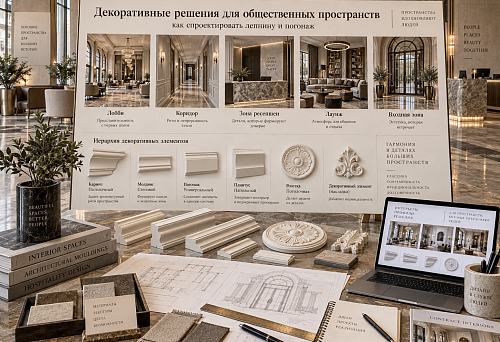
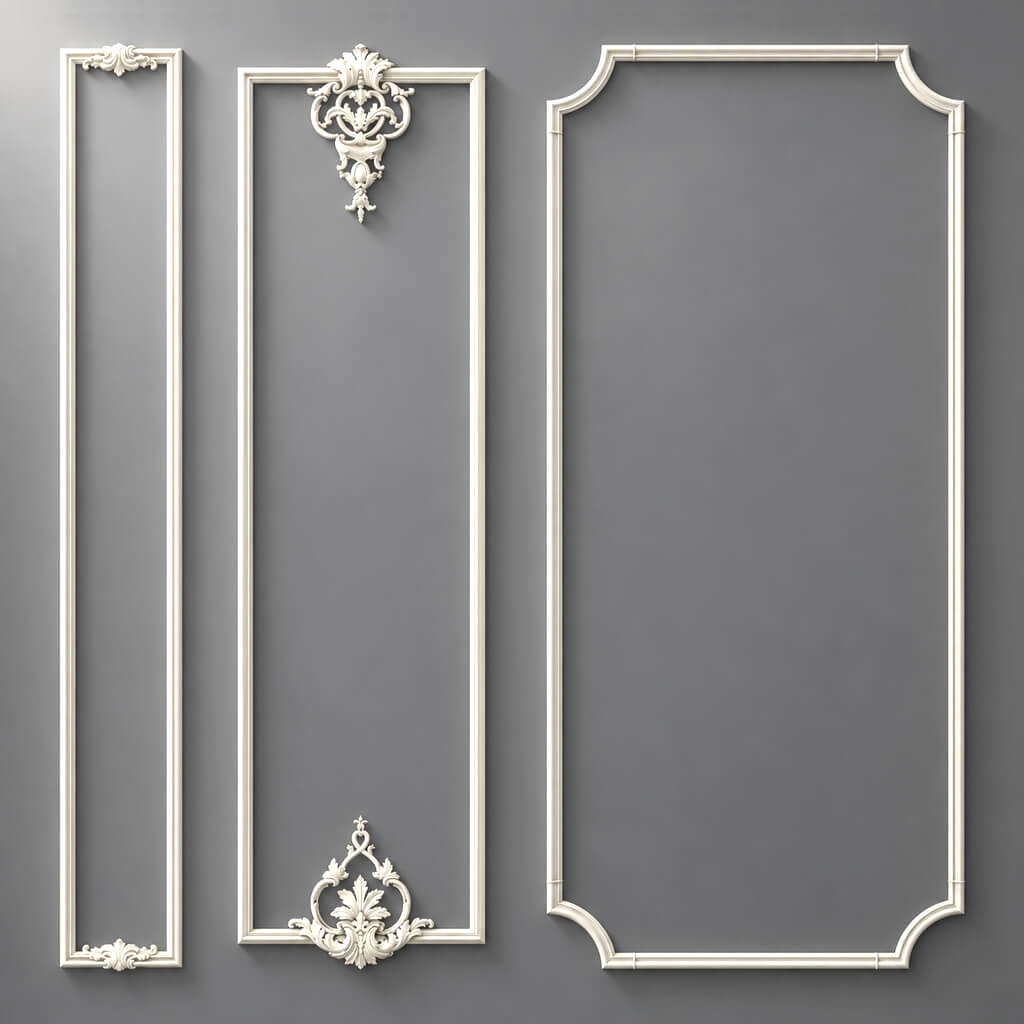
Wall moldings and ceiling cornices are a vertical architectural system. The skirting board closes it from below. When all three elements are from the same collection or the same system, the interior gains architectural completeness.
In the sectionMoldings and cornicesProfiles that were developed in conjunction with skirting boards—in shape, proportion, and color palette—are collected here. By choosing from there, you get a guaranteed coordinated system.
With slatted panels
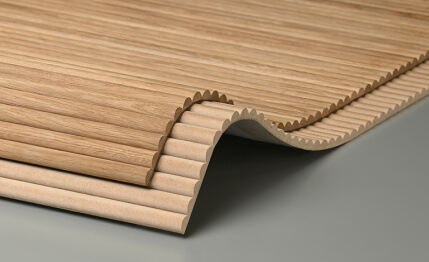
Slatted wall panels are a decorative trend that has firmly established itself in Moscow interiors. Vertical wooden slats create depth and a living texture that no plaster can achieve. The skirting board in this system is the lower reference point: it is from it that the slats 'grow'.
Rafter panelsSTAVROS are developed in a unified stylistic logic with skirting boards: similar texture, coordinated shades, close proportions. The combination of a slatted panel and a correctly selected skirting board is not just 'slats on the wall,' but a cohesive interior story from floor to ceiling.
With a unified wooden decor system
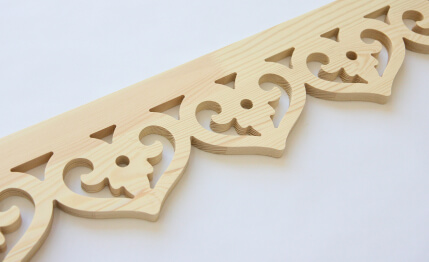
Wooden interior decor includes skirting boards, moldings, cornices, architraves, and slats. When all these elements are from the same system, the space acquires an organic quality that cannot be achieved with separate successful purchases. STAVROS builds its product line exactly this way: each element is developed with consideration for its neighbors in the system.
Where to buy skirting boards for quartz vinyl in Moscow
A practical—and important—question. Let's break down what distinguishes a reliable supplier from an unsuccessful one.
Availability in stock. In Moscow, repairs don't wait for a three-week delivery. A reliable supplier keeps the entire range in a Moscow warehouse—wooden, MDF, and moisture-resistant skirting boards in full size lines. Same-day pickup or next-day delivery is the standard, not an option.
Choice by material. Wooden, MDF, HI WOOD—all three categories should be fully represented. Otherwise, you won't be able to compare real samples and choose correctly.
Color matching. The color of a skirting board is a live experience. You need to hold a sample in your hand next to the door frame, the architrave, a piece of quartz vinyl. This is possible in a showroom. On a screen—it's not. A supplier without a physical location is always a risk for color.
Delivery. Planks 2400–2800 mm long are inconvenient to transport. Professional delivery in Moscow with careful packaging is a mandatory standard. Clarify the terms and conditions in advance.
Go to catalog. The entire range is available online—convenient to start exploring before your trip to the showroom.Buy floor skirting boardtaking into account all parameters—material, height, profile, and finish—can be done in the online catalog, where all current items are presented.
Comparative table of skirting board materials for quartz vinyl
| Parameter | Wood (oak/beech) | MDF | HI WOOD (polystyrene) |
|---|---|---|---|
| Moisture resistance | Low | Medium | High |
| Geometry stability | Medium | High | High |
| Paintability | Yes | Yes | No |
| Natural texture | Yes | No | Imitation |
| Gap compensation | Up to 10 mm | Up to 10 mm | Up to 15 mm |
| Compensation for unevenness | — | — | Up to 5 mm |
| Application | Dry rooms | Dry rooms | Any |
| Height range | 60–120 mm | 60–120 mm | 58–140 mm |
Common mistakes when choosing
Experience with tens of thousands of projects reveals the same recurring mistakes. Here are four that occur most often.
Too small profile
They take a narrow skirting board 'so it won't be noticeable' — and end up with a situation where 60 mm doesn't cover the actual gap of the quartz vinyl. Or a narrow skirting board in a large living room with high ceilings gets lost and looks random.
Solution: before purchasing, measure the actual gap at the wall (lift the edge plank of the quartz vinyl and measure the distance to the wall). The skirting board should cover the gap with a margin of at least 5–6 mm in width.
Wrong color
They buy a 'white' skirting board from a photo — get a shade that conflicts with door frames or trims. Or they take 'oak-like' — and realize the tone doesn't match the quartz vinyl.
Solution: always look at samples 'in person'. Order a trial plank or come to the showroom with a sample of quartz vinyl, a door trim, and a fragment of wallpaper. Comparing in real lighting saves time and money.
Ignoring the gap
They install the skirting board without considering the expansion gap — press the lower edge of the skirting board against the surface of the quartz vinyl. The flooring loses its ability to move with changes in microclimate — bulges and seam ruptures appear.
Solution: the skirting board is attached exclusively to the wall. The gap between the lower edge of the skirting board and the quartz vinyl surface is 1–2 mm. This is not an installer's mistake, but a mandatory technical requirement.
Unsuitable material for operating conditions
They install MDF skirting board in the kitchen by the sink — within a year it darkens and swells along the lower edge. Or they take a wooden skirting board for a bathroom with constant steam — the result is predictable.
Solution: before purchasing, honestly answer the question — will this skirting board have regular contact with water? If yes — only HI WOOD. No exceptions.
Conclusion
Choosing a skirting board for quartz vinyl is not a 'final touch' that can be done hastily. It is a conscious decision that affects the durability of the finish, the aesthetics of the interior, and the convenience of use for years to come.
The algorithm is simple: determine the room conditions (humidity, load), choose the material (wood, MDF, or HI WOOD), select the height for the ceilings and style, coordinate the color with the floor and doors.
Want wooden — look at solid wood baseboardoak and beech. Need precise and practical MDF — full selection incatalogue of wooden and MDF skirting boards. Wet area or uneven walls — onlyMoisture-resistant skirting board HI WOOD.
About the company STAVROS
STAVROS is a Russian manufacturer of architectural decor for interiors. Specialization: floor and wall profiles made of natural wood, MDF, and high-density polymer material HI WOOD. The range includes skirting boards with heights from 58 to 140 mm, moldings, cornices, architraves, paneling, and decorative elements.
The entire STAVROS line is developed as a unified architectural system: skirting boards, moldings, cornices, and paneling are created with coordinated profiles, proportions, and shades. When you purchase one element, you gain confidence that the next element from the same system will fit seamlessly without any matching required.
STAVROS operates in Moscow and all regions of Russia, delivering from a Moscow warehouse. They work with private clients, designers, architects, construction, and development companies.
Frequently asked questions
Which skirting board is best suited for quartz vinyl in a bathroom?
Only moisture-resistant ones—made of polystyrene or duropolymer. Wooden and MDF skirting boards swell and darken with constant steam and humidity. The moisture-resistant HI WOOD skirting board is completely insensitive to water, easy to clean, and maintains its shape and color throughout its service life.
Is it necessary to leave a gap between the skirting board and quartz vinyl during floating installation?
Absolutely. The skirting board is attached to the wall and does not touch the quartz vinyl. A 1–2 mm gap is left between the lower edge of the skirting board and the surface of the flooring. This allows the quartz vinyl to expand freely with changes in temperature and humidity. The skirting board merely covers the expansion gap at the wall.
Can the same skirting board be used throughout the entire apartment—in the living room, kitchen, and bathroom?
The same profile and color—yes, this creates visual unity. However, the material must suit the conditions of each room. In dry living rooms—wood or MDF. In the kitchen and bathroom—moisture-resistant polymer skirting board. The profile and color can be kept the same by selecting from different material lines of the same manufacturer.
What height of skirting board should be chosen for quartz vinyl in an apartment with 2.7-meter ceilings?
The optimum is 80 mm. This is the most popular size for standard Moscow apartments with ceilings of 2.6–2.9 meters. It is proportional, covers the standard gap with a margin, and is equally suitable for both modern and classic interiors.
How to correctly calculate the amount of skirting board for an apartment with quartz vinyl?
Measure the perimeter of each room. Subtract the width of doorways (0.9–1.0 m each). Sum the results for all rooms. Add 10–15% for cutting at corners and possible defects. Divide by the length of a standard plank (2400 mm). Round up.
Can you paint HI WOOD moisture-resistant skirting board?
No, the surface of a moisture-resistant polymer skirting board is not designed for painting with standard interior paints. It comes in ready-made colors — predominantly white and wood-like. If you need a skirting board for painting — choose MDF.
How to choose a skirting board for dark quartz vinyl in a modern interior?
Two strong options: white straight skirting board — for contrast and freshness; skirting board matching the walls (if the walls are light) — for a neutral background. Contrasting dark skirting board matching the floor is also possible, but requires a confident concept — black skirting board plus dark quartz vinyl creates a sense of heaviness if the interior is not thoughtfully designed.