































































Article Contents:
- Why Baseboards Should Be Specifically Matched to Flooring
- Different Thickness and Behavior of Flooring
- Visual Compatibility
- Moisture Resistance
- Compatibility with Doors, Trims, and Furniture
- Which Baseboards Are Suitable for Different Flooring Types
- Skirting board for laminate
- Skirting board for quartz vinyl
- Skirting board for parquet
- Skirting board for engineered board
- Baseboard for Tile and Porcelain Tile
- Baseboard for Linoleum
- Which Material to Choose: MDF, Wood, Polystyrene, or Polyurethane
- MDF Skirting Board
- Wooden baseboard
- Polystyrene and polyurethane skirting board
- How to choose the height and profile of a skirting board for flooring
- Low skirting board (40–60 mm)
- Medium height (60–80 mm)
- High skirting board (80–150 mm)
- Straight Profile
- Flat profile
- Classical profile with relief
- How to choose the color of a skirting board to match the floor
- Matching the floor color
- Matching the wall color
- White baseboard
- Wood-look
- Contrasting skirting board
- Which skirting board to choose for popular scenarios
- For Apartments
- For private house
- For Kitchen
- For the hallway
- for the bedroom
- living room
- For commercial premises
- What is important to check before purchase
- STAVROS Solutions Catalog
- FAQ: answers to real questions about skirting boards for flooring

Functionally, it closes the expansion gap between the flooring and the wall, protects the lower part of the wall from mechanical damage and cleaning moisture. Visually, it forms the lower horizontal line of the room, sets the rhythm of the space, and connects the floor and walls into a single whole. Materially, it either continues the theme of the flooring or consciously contrasts with it.
That's why the correct choice of skirting board starts with understanding what's on your floor. Laminate and quartz vinyl are one story. Parquet and engineered board are another. Tile and porcelain stoneware are a third. In each case, there are specific requirements for material, height, profile, and color. This article is a complete practical breakdown for each scenario.
Find a skirting board for your flooring in the STAVROS catalog:
-
MDF Skirting Board— universal for laminate, quartz vinyl, engineered board
-
Wooden baseboard— for parquet, solid and engineered board
-
floor skirting boards— full assortment for any flooring


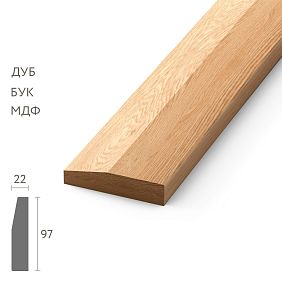


Why you need to choose a skirting board specifically for your flooring
It might seem—what's the difference? The skirting board is against the wall, the flooring is on the floor. They are next to each other, but each is on its own. In reality, that's not the case. There is a direct technical and visual dependency between them.




Different thickness and behavior of floorings
Laminate 8–12 mm, when installed as a floating floor, requires an expansion gap at the wall of 8–15 mm. Solid wood parquet—up to 20 mm. Quartz vinyl—5–8 mm. Tile—practically zero, the gap is filled with grout right up to the wall. The different gap sizes dictate the minimum required height of the skirting board's base: the profile must reliably cover the gap in any position of the flooring—both in summer heat and winter dryness.
Our factory also produces:


Visual compatibility
Oak parquet and a plastic skirting board around the corner is like an expensive suit with second-hand sneakers. There is an effect, but not the right one. Visual compatibility is the unity of material, color, and surface character. A natural floor covering requires a natural skirting board or professionally painted MDF. A synthetic covering requires neutral MDF or a lightweight synthetic profile.
Get Consultation
Moisture Resistance
Bathroom, kitchen, hallway — areas with variable humidity. Here, a wooden skirting board without proper varnish coating quickly absorbs moisture and swells at the joints. In these areasskirting board for wet roomsbased on polyurethane or high-quality MDF with a closed finish is not just a preference but a technical requirement.
Compatibility with doors, architraves, and furniture
The skirting board exists within a system: it meets door architraves, corners, and furniture sides. Therefore, the color and material of the skirting board must be considered in conjunction with all elements of the lower zone of the interior.— is a horizontal element that frames the room at the bottom of the walls where the wall meets the floor. Skirting boards perform several functions: they hide the technological gap between the wall and floor covering (necessary for thermal expansion), protect the lower part of the wall from mechanical damage, create visual completion, and may conceal wiring.offers maximum flexibility here: a unified color for skirting boards, architraves, and door frames is a professional designer's move.
Which skirting boards are suitable for different floor coverings
This is the key section. Save or remember: here is the specifics for each type of floor.
Baseboard for laminate
Laminate is the most common flooring in Russian apartments. It is installed using the floating method: the flooring is not glued to the base and 'breathes' with changes in temperature and humidity. Hence, a mandatory expansion gap of 8 to 15 mm at the walls is required. The skirting board for laminate flooring must cover this gap with a margin.
The optimal choice isBaseboard MDFwith a height of 60–80 mm. It ensures a neat joint, maintains geometry during humidity fluctuations, paints well, or comes in factory-applied white enamel. Installation is only to the wall, not to the laminate: the flooring must move freely.
The second option ispolystyrene skirting board for floor. Lightweight, cheap, quick to install. Suitable for budget renovations or temporary housing. Drawback: loses geometry over time, yellows in white color, and does not allow restoration.
Wooden skirting board for laminate is possible, but only if the goal is to create a 'wooden' atmosphere in the interior. For light laminate under birch or beech —Wooden baseboardin white or beige enamel. For dark laminate under wenge or oak — tinted solid wood or MDF to match the flooring.
Recommendation:buy MDF skirting boardfor laminate flooring is a rational choice with predictable quality results.
Skirting board for quartz vinyl
Quartz vinyl (LVT) is a modern flooring that has rapidly conquered the market. It is valued for its stability: thermal expansion is minimal, the expansion gap is small — 5–8 mm. This opens up the possibility of using a thinner profile with a lower base height.
Quartz vinyl often imitates wood or stone with a high degree of realism. For such flooring,Straight MDF skirting board— clean, modern, without relief. In the color of wood-look quartz vinyl or neutral white. A straight 60–70 mm profile does not compete with the rich texture of the flooring but neatly finishes the bottom line.
A very popular solution:MDF floor skirting board, white+ quartz vinyl in warm wood. A white bottom line adds lightness, does not weigh down the space.
For quartz vinyl 'under stone' or 'under concrete' —— is a horizontal element that frames the room at the bottom of the walls where the wall meets the floor. Skirting boards perform several functions: they hide the technological gap between the wall and floor covering (necessary for thermal expansion), protect the lower part of the wall from mechanical damage, create visual completion, and may conceal wiring.in gray or graphite tone creates a unified minimalist environment.
Baseboard for parquet
Parquet is a premium class of flooring. A different logic applies here: the covering is chosen consciously, with attention to species, texture, and tint. The skirting board must match this level.
The best choice for a parquet floor —buy wooden baseboard for floorfrom the same wood species as the parquet, in the same tint. Oak under oak. Beech under beech. This is a unity of the material environment that cannot be imitated in any other way. The open wood texture, reflecting light just like the parquet — this is what is called 'an interior with character'.
The expansion gap for solid wood parquet is up to 20 mm. The base of the skirting board must reliably cover it. Optimal height: 75–100 mm.Wooden baseboard80 mm for oak parquet is a classic that never ages.
If the parquet is light and the interior is white — white enamel on a wooden baseboard orWhite MDF Skirting Boardin high-quality painting.
Baseboard for engineered wood flooring
Engineered board is a hybrid material: a multi-layer birch base with a top layer of valuable wood. Externally — parquet. In behavior — closer to laminate: expands less, allows installation in rooms with underfloor heating.
Both options work for engineered board: andWooden baseboardmade from the same wood as the board's top layer, andBaseboard MDFin a matched tint.
Key point: engineered board often comes with a pre-made veneer baseboard strip. If you want a higher profile or a different color solution — tinted MDF or wooden baseboard in enamel offer more possibilities.
Baseboard for tile and porcelain stoneware
Tile is the most specific case. There is no expansion gap here: with proper installation, the grout joint fits flush against the wall. The baseboard's role here is not functional, but decorative: to create a transition between the cold tile surface and the wall.
For the bathroom and toilet —Polystyrene floor baseboardor moisture-resistant MDF with a closed coating. A wooden skirting board in the bathroom without a vapor barrier and quality varnish is a risk.
For the kitchen with tiles or porcelain stoneware in the work area —MDF Skirting Boardin white or matching the walls, with quality enamel. Easy to clean, retains color for years.
In the living room or hallway with porcelain stoneware under stone — straight— is a horizontal element that frames the room at the bottom of the walls where the wall meets the floor. Skirting boards perform several functions: they hide the technological gap between the wall and floor covering (necessary for thermal expansion), protect the lower part of the wall from mechanical damage, create visual completion, and may conceal wiring.in dark gray or anthracite tone. Bold, modern, stylish.
Skirting board for linoleum
Linoleum is a practical budget flooring for utility rooms, kitchens, hallways, rental housing. There's no point in installing expensive oak wooden skirting here: it's financially impractical and visually incompatible.
The optimal choice isBaseboard MDFin white orpolystyrene skirting board for floor. Height 60–70 mm, simple installation, smooth joint. For commercial spaces with linoleum — white MDF: more durable and neater than synthetic.
Which material to choose: MDF, wood, polystyrene, or polyurethane
Each material has its own logic of application. There is no 'best' skirting board in general. There is the best one for a specific task.
MDF skirting board
MDF Skirting Board— an absolute all-rounder. It is chosen most often, and not without reason.
First, geometric stability. MDF does not warp with humidity fluctuations. In a room with air conditioning in summer and radiators in winter —Baseboard MDFit maintains a straight line without gaps at the joints.
Second, painting. The surface of MDF has no pores or fibers — paint applies evenly, without stains or drips.— is a horizontal element that frames the room at the bottom of the walls where the wall meets the floor. Skirting boards perform several functions: they hide the technological gap between the wall and floor covering (necessary for thermal expansion), protect the lower part of the wall from mechanical damage, create visual completion, and may conceal wiring.can be painted in any color according to RAL or NCS: an exact match to white walls, contrasting graphite, dusty pink — without limitations.
Third, practicality.buy MDF skirting boardmount it on liquid nails, paint it — and you have a perfect floor joint in one working day.
Suitable for: laminate, quartz vinyl, linoleum, engineered wood, porcelain stoneware in dry rooms.
Wooden skirting board
Wooden baseboard— it's a different class. Not better or worse than MDF — just a different story.
The living texture of wood, the organic warmth of the surface, the possibility of transparent varnishing or tinting with an open texture — all this is unattainable for MDF.to buy wooden baseboard— made of oak and placed under parquet made of the same oak — it's a unified material environment that defines the character of the entire interior.
Important: wooden skirting requires acclimatization for 2–3 days before installation. With a quality coating (varnish, oil, enamel) — it lasts 20–30 years, allows for complete restoration by sanding and repainting.
Suitable for: parquet, solid wood flooring, engineered wood flooring, in interiors with an open wood texture.
Whenwooden skirting board purchase— the right solution: a private house with oak parquet, a classic interior, a high price segment.
Polystyrene and polyurethane baseboard
skirting board for wet rooms— based on polyurethane — a specialized solution. Not afraid of water. Lightweight. Installs on any adhesive. Holds white color well in factory enamel.
Area of application: bathroom, toilet, balcony, technical rooms. For living rooms — a compromise: over time it loses its geometry, does not allow restoration.
| Material | Pros | Cons | Best scenario |
|---|---|---|---|
| MDF | Stability, painting, price | No living texture | Laminate, quartz vinyl |
| Wood | Texture, durability, restoration | Price, acclimatization | Parquet, solid wood |
| Polyurethane | Moisture resistance, weight | No restoration | Bathroom, toilet |
| Polystyrene | Price, ease of installation | Short lifespan | Temporary housing, warehouse |
How to choose the height and profile of a baseboard for flooring
Baseboard height is not just a measurement. It's a design tool that changes the visual proportions of a space.
Low baseboard (40–60 mm)
For apartments with low ceilings (up to 2.6 m) and for minimalist modern interiors. For quartz vinyl with a small gap —Baseboard MDF55–60 mm in the color of the wall. Visually 'raises' the ceiling.
Medium height (60–80 mm)
Universal format for most apartments with ceilings 2.6–3 m.MDF Skirting Board70 mm — the most popular size in modern interiors. For laminate, quartz vinyl, engineered wood — works perfectly everywhere.
High baseboard (80–150 mm)
For rooms with ceilings 3 m and higher.with a classic profile creates a sense of solidity, reliability.100 mm for parquet in a classic interior — an architectural lower belt that sets the scale for the entire space.
Straight profile
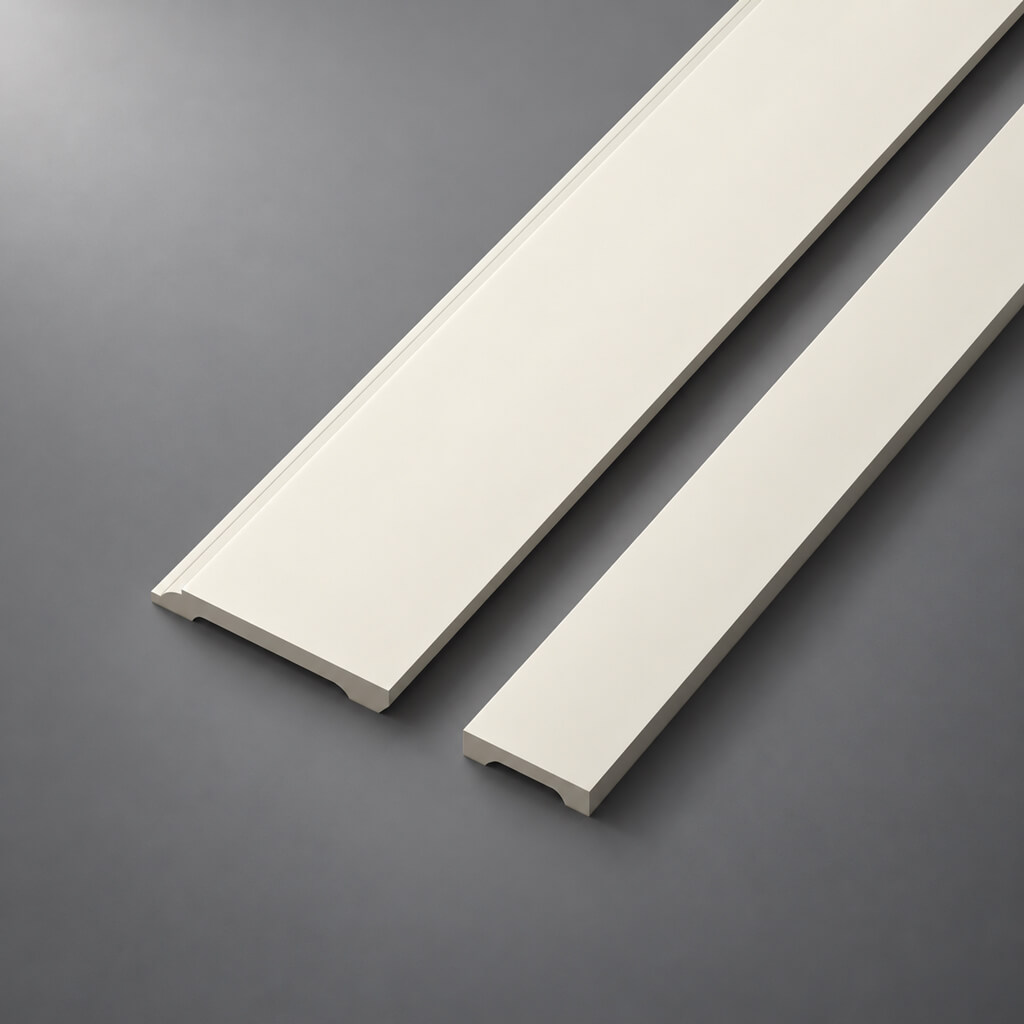
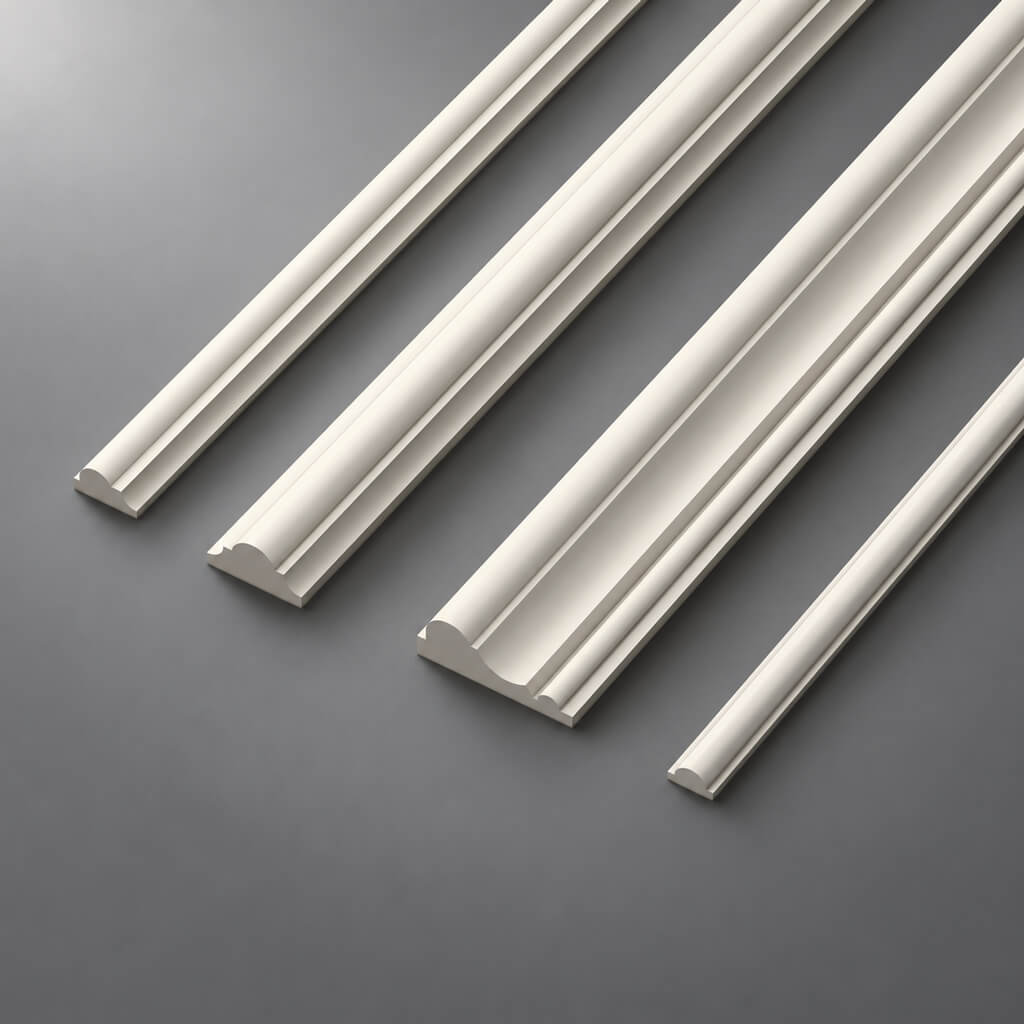
A strict rectangle without relief. The language of minimalism, modern interior, Scandinavian style.Straight MDF skirting board— the main tool for modern coverings: quartz vinyl, laminate, engineered board for contemporary style.
Flat profile
Minimum body thickness. Fits as snugly as possible, does not create a shadow overhang.Flat MDF skirting board— for rooms where furniture is placed flush against the wall.
Classical profile with relief
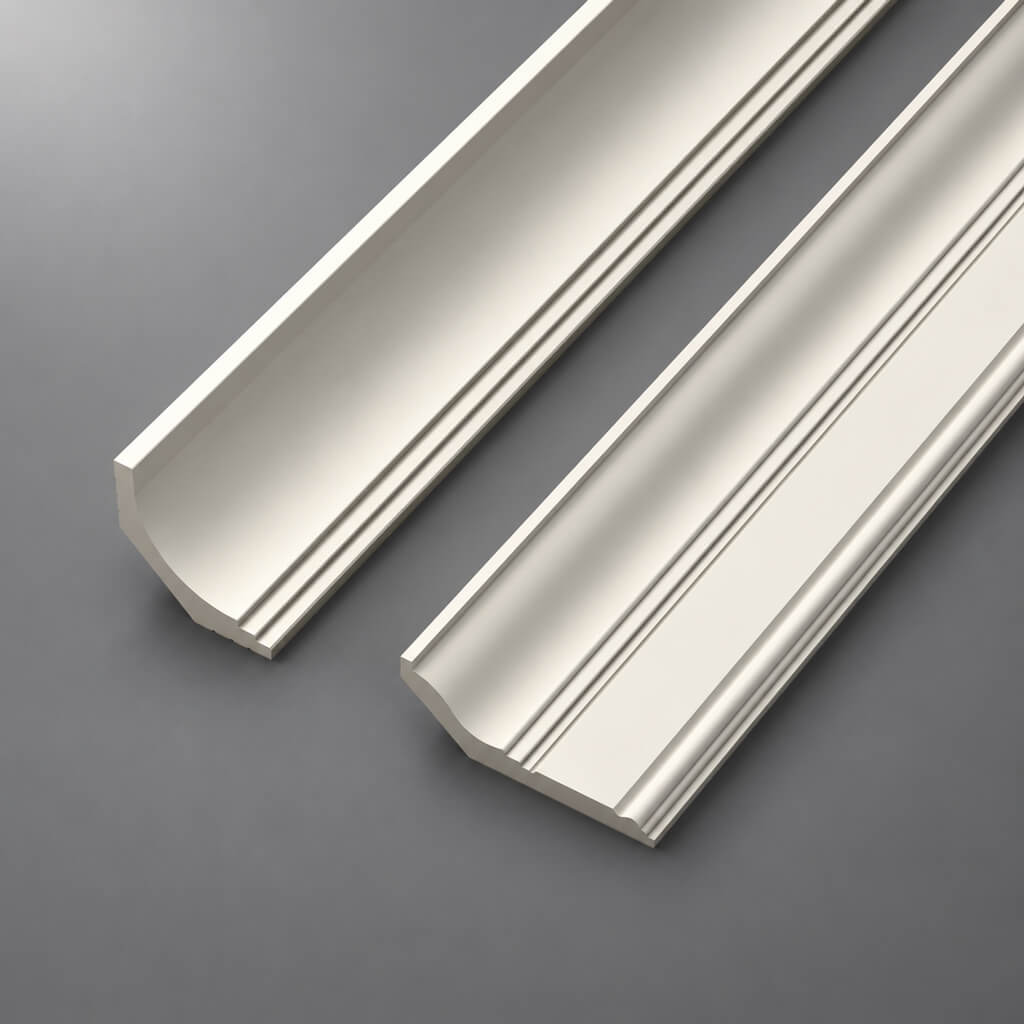
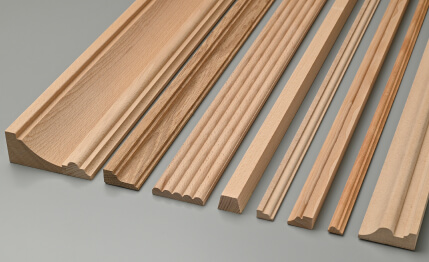
Ogee, cavetto, shaped cross-section. For classic interiors with parquet, moldings, wooden doors.Floor wooden skirtingwith soft relief for oak parquet — this is architectural completeness of the lower zone.
How to choose the color of the skirting board to match the floor
The color of the skirting board is not a matter of taste, it is a matter of strategy. There are several working schemes.
Matching the floor color
A skirting board matching the floor covering makes the floor visually 'expand'. The bottom line disappears, the space becomes unified. Works well in small rooms.— is a horizontal element that frames the room at the bottom of the walls where the wall meets the floor. Skirting boards perform several functions: they hide the technological gap between the wall and floor covering (necessary for thermal expansion), protect the lower part of the wall from mechanical damage, create visual completion, and may conceal wiring.Matching the exact tone of quartz vinyl — technically feasible without limitations.
Matching the wall color
A skirting board matching the wall — it 'disappears' from view. The space between floor and wall becomes continuous. A popular design technique in Scandinavia and Japan: a 'vanishing' white skirting board in a white interior.buy MDF skirting boardIn white and painted to match the exact white of the wall — and the skirting board will dissolve.
White baseboard
White floor skirting board— an absolute classic. Works with any wall color and any floor covering. In a dark interior, it creates a light accent at the floor. In a light interior — part of a unified white perimeter. This scheme never ages and always looks professional.
Wood-look
Wooden baseboardMatching the parquet or engineered board — a unified wooden environment. The open wood grain of the skirting board and parquet under the same lighting angle creates a material unity that is felt physically.
Contrasting baseboard
A dark skirting board on a light floor — a lower graphic stroke. Bold, modern, requires confidence in the design decision. Graphite, dark walnut, anthracite —— is a horizontal element that frames the room at the bottom of the walls where the wall meets the floor. Skirting boards perform several functions: they hide the technological gap between the wall and floor covering (necessary for thermal expansion), protect the lower part of the wall from mechanical damage, create visual completion, and may conceal wiring.Paint in any dark shade without limitations.
Which skirting board to choose for popular scenarios
Moving on to practice. Seven specific situations — seven clear recommendations.
For apartments
An apartment is a multifunctional space with different floor coverings in different rooms. A unified system:MDF Skirting Board70–80 mm in white throughout the apartment creates spatial cohesion when moving from room to room. Alternative: in rooms with parquet — a wooden skirting board to match; in the hallway and kitchen — white MDF.
Mixing skirting board styles throughout the apartment is a mistake. Even if the flooring is different, the skirting board should be visually unified: one color, one profile character.
For a private house
In a country house, natural materials are more common: solid wood parquet, wooden stairs, logs or timber. Herebuy wooden baseboard for floor— is an organic solution. Solid oak or pine with varnish or oil — a unified natural language for the entire interior.
For wet areas in the house (entryway from the street, veranda) —skirting board for wet rooms from polyurethane.
For Kitchen
The kitchen is an area with variable humidity, grease vapors, and frequent cleaning. The skirting board here should be easy to clean and not swell.Baseboard MDFin white factory enamel is a practical choice. Height 60–70 mm for tile or quartz vinyl.
An additional requirement for the kitchen: the joint between the skirting board and the floor covering and the wall must be sealed with silicone to prevent water ingress.
For the hallway
The hallway is the most heavily used area. Impacts from feet and furniture, cleaning moisture, street dirt. A material with high mechanical resistance is needed.MDF Skirting Boardin quality enamel — a good choice. Height 70–80 mm will ensure reliable coverage of the gap with any flooring.
For an entrance hall with tile or porcelain stoneware and wallsslatted panels for walls— a thin straight skirting board matching the planks creates a finished modern look.
For the bedroom
Bedroom — an intimate space. Here the logic is reversed: the skirting board should not dominate.with a classic profile creates a sense of solidity, reliability.70 mm under parquet or engineered board — a warm wooden background that creates a cozy feeling. In a white bedroom — whiteWhite MDF Skirting Boardas a neutral lower boundary.
For the living room
Living room — the main space where design should work at full capacity. HighWooden baseboard80–100 mm under oak parquet + wall moldings + ceiling cornice — a classic profile system that turns an ordinary living room into an architecturally finished space. In a modern living room — straightMDF Skirting Board70–80 mm in white or dark tone.
For commercial premises
Office, showroom, restaurant — here there is high traffic and increased durability requirements.to buy MDF skirting boardin white enamel for the office — a reasonable solution. For reception areas —Floor wooden skirtingmade of oak with lacquer finish. For production and technical premises — polyurethanePolystyrene floor baseboard.
What to check before purchase
Checklist — specific points to go through before placing an order.
-
Type of coating and size of expansion gap — determines the minimum height of the skirting board base
-
Profile height — correlate with ceiling height and interior style
-
Profile body thickness — important if furniture is placed against walls
-
Material — MDF, wood, or polyurethane depending on the zone and task
-
Finish coating — factory enamel, paintable, lacquered (for wood)
-
Color — matching walls, matching floor, white, or paintable in RAL
-
Length of the skirting board — 2.5 m or 3 m; for long runs, 3 m is preferable (fewer joints)
-
Reserve — perimeter + 15% for trimming and defects
-
Availability of accessories — external and internal corners, end caps, connectors
-
Compatibility with door trims — skirting boards and trims should preferably be made of the same material and in the same color
-
Resistance to cleaning — for kitchens and hallways, a closed lacquer or enamel finish is mandatory
-
Possibility of repainting — MDF can be repainted without problems; wood — after sanding
STAVROS Solutions Catalog
STAVROS offers a full range ofof floor skirting boardsfor any type of flooring and any interior.
MDF Skirting Board— a wide selection of heights and profiles. For white enamel, for painting in RAL. Straight and shaped profiles for modern and classic interiors.
Wooden Skirting Boards— made from oak, beech, pine. For varnish, oil, enamel. For parquet, solid and engineered boards. Toning — to match the finish or in a contrasting color.
Polyurethane / polystyrene skirting board— for wet rooms, bathrooms, balconies. Easy installation, moisture-resistant coating.
— is a horizontal element that frames the room at the bottom of the walls where the wall meets the floor. Skirting boards perform several functions: they hide the technological gap between the wall and floor covering (necessary for thermal expansion), protect the lower part of the wall from mechanical damage, create visual completion, and may conceal wiring.— profiles with perfectly prepared surfaces for on-site final painting in any color.
Additionally —slatted panels for wallsas a companion to skirting in modern interiors: a unified system from floor to mid-wall.
FAQ: answers to real questions about skirting for flooring
Which skirting board is best for laminate flooring?
Baseboard MDF60–80 mm. Stable, neat, paints well. Installation only to the wall — laminate must move freely.
Which skirting is best for quartz vinyl?
Straight MDF skirting board60–70 mm in white or to match the finish. Quartz vinyl is stable, the gap is small — a thin flat profile will work perfectly.
MDF or wood — what to choose?
MDF — for laminate, quartz vinyl, painting. Wood — for parquet, natural finishes, high-end segment. Detailed comparison above in the materials section.
Which skirting board to choose for parquet?
Wooden baseboardfrom the same wood species to match the parquet tone — the perfect option. Height 75–100 mm for a parquet gap up to 20 mm.
Which skirting board is better for tiles?
For the bathroom —Polyurethane skirting board. For the kitchen and dry rooms with tiles —MDF Skirting Boardin white enamel.
Can you use a white skirting board with a dark floor?
Yes, and it's one of the classic techniques. Whitebaseboard for flooron dark parquet or quartz vinyl creates a clear light accent — the lower boundary of the space becomes more expressive.
What height should the skirting board be?
Up to 2.6 m ceilings — 55–65 mm. 2.6–3 m — 70–80 mm. Above 3 m — 80–120 mm. The higher the ceiling, the more proportional a taller skirting board looks.
Which baseboard is easier to maintain?
White MDF Skirting BoardFactory-enameled ones can be washed with a damp sponge without restrictions. Lacquered wood — similarly. Wood with oil impregnation — requires gentle care: no aggressive chemicals.
What is better for painting?
— is a horizontal element that frames the room at the bottom of the walls where the wall meets the floor. Skirting boards perform several functions: they hide the technological gap between the wall and floor covering (necessary for thermal expansion), protect the lower part of the wall from mechanical damage, create visual completion, and may conceal wiring.— is optimal. The surface is pore-free, paint applies evenly, with precise matching to any RAL color.
Which baseboard looks more expensive?
Wooden baseboardwith open texture under clear lacquer. Natural wood is always perceived as a premium material — regardless of style.
What to choose for an apartment with different floor coverings in different rooms?
A unified system:MDF Skirting Board70 mm in white throughout the apartment — ensures visual cohesion with any floor coverings in different rooms.
How much does floor baseboard cost?
Current prices — in the catalogof floor skirting boards. Price depends on material, height, and finish coating.
Can wooden skirting be installed on underfloor heating?
Yes, provided it is acclimatized and has proper varnish or oil coating. In rooms with underfloor heating, wooden skirting must not have direct contact with the heating element — a gap at the wall is mandatory.
How to choose skirting for a light-colored floor?
Three options: matching the light floor (floor 'expands'); white (neutral accent); contrasting dark (lower graphic stroke). The optimal choice depends on wall color and interior style.
Buying floor skirting online — is it reliable?
Yes, when ordering from a manufacturer with actual production and a catalog.Buy floor skirting in a verified catalog with accurate dimensions and photos — the right choice.
A floor skirting board is not something to 'buy last minute'. It's the final touch that either brings the interior together into a complete picture or exposes all the flaws. The right choice—for a specific floor covering, in a specific material, in an exact color—is precisely the difference between 'done' and 'done well'.
STAVROS company manufactures a full range of MDF and natural wood floor skirting boards for any type of floor covering and any interior.buy MDF skirting board, to buy wooden baseboardorchoose floor skirting boardsfor the entire apartment — in the STAVROS catalog. Made in Russia, wide range of profiles, real samples for precise selection.