Article Contents:
- The delay begins before the official overdue date
- Three statuses that are actually useful to the project
- ON TRACK
- AT RISK
- DELAYED
- READY DATE
- SHIP DATE
- ON-SITE DATE
- NEED-BY DATE
- A. Wait for all 500 m
- B. Take 280 m
- C. Change the order of rooms
- Material buffer
- Time buffer
- When should an item be moved to AT RISK?
- Which is more important: readiness percentage or date?
- Should you take half of the batch?
- Can a delayed moulding be replaced right away?
- What to do if a cornice is delayed?
- Do you need a second supplier?
- Which reserve is more important — material or time?
- What should be preserved after delivery is completed?

Baseboard installation is scheduled for October 20. Moldings are needed two days earlier, and the cornice — even before the final painting of the upper zone begins. Two weeks before the work, it turns out: the baseboard is fully ready, only 320 of 560 m of molding have been produced, and the cornice will not be ready by the original date.
A bad strategy is to wait until the last moment and hope that everything will speed up. The second bad strategy is to immediately look for a “similar” profile and change the approved SKU for the sake of a few days.
for wholesale building material supplies a different order is more useful:
identify the risk → determine the criticality of the SKU → obtain a new forecast date → check partial readiness → assess the impact on specific zones → restructure the sequence of work → and only then consider a replacement if the schedule truly cannot be saved otherwise.
This is supply risk management. The problem begins not on the day of the official delay, but at the moment when the actual status of the item ceases to correspond to the plan.
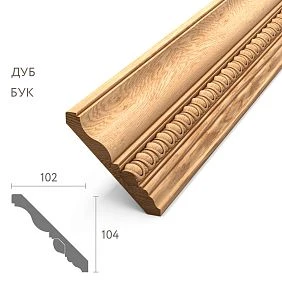
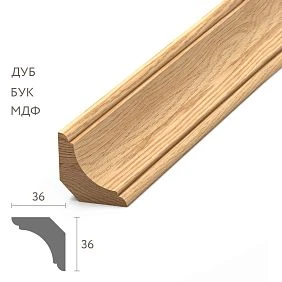
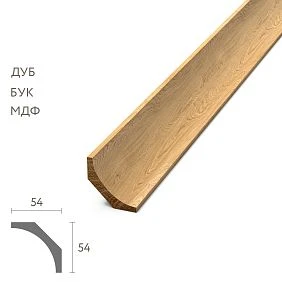
In the STAVROS catalog, wooden trim is divided into baseboards, moldings, cornices, and other profiles; therefore, the project should control not “trim in general,” but the specific article numbers and quantities of each item. To check the nomenclature, you can use the section wooden trim.
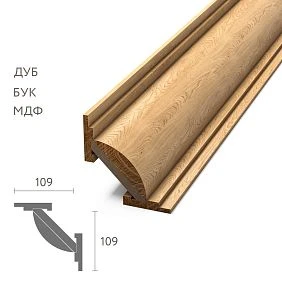
The delay begins earlier than the official overdue date
Plan:
MLD-A readiness — October 10.
But on October 3, it turns out that the production or assembly stage, which should have already been closed, is not yet complete.
Formally, October 10 has not arrived.
From a management perspective, the position should already move from its usual status to:
AT RISK.
If the buyer continues to show only the following in the report:
ordered
then the project will see the problem too late.
The status is needed not for the accounting fact of the order, but for the forecast: whether a specific SKU will arrive by the time installation actually requires it.




Three statuses that are actually useful to the project
For critical trim, a simple scale is sufficient.
Our factory also produces:




ON TRACK
The confirmed forecast matches the schedule.
Get Consultation
AT RISK
The planned date is still achievable, but risk factors have emerged: an unclosed stage, unconfirmed balance, forecast change, partial readiness, or too little time buffer.
DELAYED
The planned date is no longer achievable or has been officially postponed.
This classification is far more useful than a general status marker ORDERED.
An order may be paid for, but that does not mean the item is ready, packed, or able to arrive before NEED-BY.
Why the "ordered" status says almost nothing about readiness
A single procurement line goes through several physical stages:
approved → order placed → launched → partially ready → fully ready → assembled → ready for shipment → shipped → delivered.
For a construction schedule, these states are not equivalent.
If 85% of the order is ready, you need to know what makes up the remaining 15%.
Minor items that do not affect the current queue may be missing.
Or it could be specifically KZ-A that is missing, without which the upper decorative assembly of the room cannot be completed.
Therefore, the project manager needs:
SKU / finished volume / remaining stock / date forecast / criticality.
Not a single percentage across the entire order.
How to determine which SKU can halt installation
Not every delay is equally dangerous.
For each item, the following questions are asked:
- where it is used;
- when installation actually begins;
- which works depend on it;
- can you temporarily move to another zone;
- can you finish part of the room without it;
- is there another ready-made front;
- is the position needed before or after painting;
- is there a related set of other profiles.
The price of the item is secondary here.
An inexpensive molding can block the painting of a large wall composition.
An expensive decorative element may be needed much later and not affect the nearest critical path.
SKU Criticality Matrix
The worksheet might look like this:
| SKU | NEED-BY | Delay risk | Can continue without it | Criticality | | --- | --- | --- | --- | --- | | PLT-A | 20.10 | no | yes | LOW | | MLD-A | 18.10 | yes | partially | HIGH | | KZ-A | 16.10 | yes | no in this zone | CRITICAL |
Criticality is not a permanent property of a product.
Today, KZ-A may be CRITICAL for the lobby.
For another area, the same item will be needed in a month and will have a large time buffer.
Therefore, the assessment is always tied to a specific schedule.
Wooden skirting board is delayed: is the project really at a standstill
Not always.
If the skirting board has not arrived, the following may still be available:
- work in other rooms;
- installation of moldings;
- work on another floor;
- preparation of areas where skirting will be needed later;
- other finishing operations that are technologically independent of this item.
The first question when there is a delay:
What exactly becomes impossible without PLT-A?
If the answer is “only three rooms on the first floor,” there is no need to automatically declare a stoppage of the entire site.
It is necessary to check whether the crew can be temporarily moved to where the workfront is actually ready.
RESEQUENCING: rearranging work instead of downtime
Rearranging the sequence of work makes sense if another area:
- is actually ready;
- is provided with material;
- does not disrupt the technological sequence;
- allows using the same crew;
- does not create a more expensive conflict further down the schedule.
For example, floor 1 is blocked by a missing cornice, but floor 2 is already prepared and fully supplied with trim.
Moving the crew to floor 2 may be cheaper than downtime.
But the reassignment should not be mechanical. If floor 2 is not yet ready in terms of the base or other work is underway there, the move will only create a new conflict.
Wooden molding: complete-set criticality
A decorative system may consist of several items.
For example, one zone needs:
- 100 m MLD-A;
- 20 additional elements B;
- 8 elements C.
B and C are fully ready.
MLD-A is missing.
Stock availability of individual items is high, but installation readiness of the area:
NOT READY.
That is why it is useful to track linear trim not only by SKU, but also by installation systems.
Individual frame elements do not solve the task on their own.
Partial molding readiness: you need to count completed areas
560 m of MLD-A is required.
320 m completed.
Readiness percentage:
320 / 560 × 100% = 57,14%.
This percentage alone does not decide much.
If floor 1 requires 250 m, then the ready 320 m allow:
- fully covering floor 1;
- leaving a free remainder of 70 m.
This is a useful first batch.
If, however, a single zone requires 350 m and cannot be properly divided technologically, 320 m do not launch the full front.
Then an early partial delivery may add:
- separate unloading;
- additional storage;
- movements;
- new acceptance inspection;
but not solve the critical problem.
Wooden cornice is delayed: we check dependent work
For the cornice, there is no universal answer of "installation can continue" or "everything must stop."
It is necessary to check the specific assembly:
- whether the painting can be completed without the cornice;
- whether it is connected to the ceiling junction;
- whether it intersects with built-in furniture;
- whether it must be installed before adjacent decor;
- whether it is possible to safely return to it later without rework.
The buyer should not decide this alone.
When AT RISK information about the new date is passed to the foreman and, if required, to the fitter or designer, so that the schedule is assessed together with the technological sequence.
READY DATE, SHIP DATE, ON-SITE DATE and NEED-BY are different dates
One of the main causes of delays is using the word "deadline" for different events.
READY DATE
When the goods are actually ready.
SHIP DATE
When the batch is shipped.
ON-SITE DATE
When it must physically arrive at the site or the site warehouse.
NEED-BY DATE
When the material is already needed for installation.
The last date is critical.
If the crew needs the curtain track on October 20, being ready on October 20 may already be too late.
Between readiness and installation, there are still logistics and on-site operations.
Why READY DATE cannot be set equal to NEED-BY DATE
Between them there may be:
picking → packing → loading → transportation → acceptance → internal movement → issue to installers.
If READY DATE = NEED-BYthe project has virtually no time buffer for any deviation in any of these stages.
But the universal rule of "always seven days" or "always two weeks" is also wrong.
The buffer depends on:
- geography;
- volume;
- method of procurement;
- uniqueness of the item;
- readiness of the site;
- need for additional verification;
- criticality of the SKU.
How to calculate the required readiness date
Logic:
REQUIRED READY DATE = NEED-BY − transport − receiving − internal movement − time buffer.
Conditional example:
NEED-BY— October 20;- transport — 2 days;
- receiving and distribution — 1 day;
- internal project buffer — 3 days.
Required readiness:
October 20 − 2 − 1 − 3 = October 14.
This is not a recommendation to always use six days.
The example shows the direction of the calculation: the ready date is derived from the construction need, not chosen on its own.
Wholesale deliveries of construction materials: what to monitor more often
When wholesale supplies of building materials the frequency of monitoring should depend on risk, rather than being the same for all SKUs.
The higher:
- manufacturing lead time;
- uniqueness of the item;
- dependency of subsequent work;
- volume;
- difficulty of replacement;
- proximity
NEED-BY; - forecast uncertainty,
the more frequently the item should appear in the monitoring report.
There is no need to call daily about a baseboard that is already fully ready and not needed for another month.
It is far more important today to clarify the cornice with an unconfirmed date, which is needed in four days.
Serial and custom profiles carry different risk
For a serial item, there are sometimes more options:
- current stock balance;
- next batch;
- transfer between available warehouses;
- reorder of the same item.
A custom profile is more closely tied to a specific geometry, production cycle, and already approved version.
Therefore, it has less room for instant replacement.
If a custom molding becomes AT RISKplan B needs to be discussed earlier than for a regular mass SKU.
What to do if only part of the batch is ready
Let's imagine:
500 m of MLD-A is needed;
280 m is ready.
There are three basic scenarios.
A. Wait for all 500 m
Suitable if the partial volume does not start a useful front or a separate delivery creates more costs than benefits.
B. Take 280 m
Makes sense if this quantity can fully complete a standalone zone.
C. Change the order of rooms
Suitable if the ready part covers another front and the rearrangement does not disrupt the process.
You shouldn't choose a scenario solely on the principle of "better to take something than nothing."
Construction material deliveries need to be planned by zone
When deliveries of construction materials a single table of percentages by SKU doesn't show construction readiness.
The second breakdown — by zone — is more useful:
| Zone | PLT | MLD | KZ | Installation | | --- | --- | --- | --- | --- | | Floor 1 | READY | READY | READY | possible | | Floor 2 | READY | READY | DELAYED | check the sequence | | Floor 3 | READY | AT RISK | DELAYED | cannot start the current plan |
This is how a procurement report turns into information for the work schedule.
The foreman sees not "the cornice is 60% ready" but "floor 3 is currently blocked."
The first step when there's a risk is to get a new forecast date
Don't look for an alternative.
Don't shift the entire schedule.
First, establish the facts.
Need to request:
- what is fully complete;
- what is not yet complete;
- what volume is partially complete;
- forecast for the remainder;
- what exactly is causing the risk;
- whether a standalone first batch can be formed.
Without a new forecast date, the remaining decisions are based on assumption.
The phrase "we'll try to make it" is not a new date.
The second step is to assess the real impact
The purchaser passes it to the foreman or project manager:
MLD-A: 320 of 560 m completed; the remainder is forecast for ___; NEED-BY ___; the first independent zone requires ___ m.
Now the construction team can assess:
- what is blocked;
- what can be postponed;
- whether a partial volume is sufficient;
- whether there is an alternative front.
This is how procurement and production are linked to actual work.
The third step is to restructure the sequence
Possible actions:
- another floor;
- another room;
- another queue;
- preparatory work;
- profiles that are already ready;
- zone independent of the delayed SKU.
The goal is not to create an appearance of activity, but to preserve a useful front.
If the rearrangement forces the same crew to return twice later, its cost must also be taken into account.
The fourth step is only then to discuss the alternative
Sequence:
delay → forecast → impact → partial readiness → resequencing → replacement.
Not:
delay → closest equivalent.
The reason is simple: an alternative SKU may solve the deadline issue but create a permanent interior problem.
When an equivalent is worse than a delay
Replacement is especially risky if the following changes:
- full cross-section;
- radius;
- width;
- depth of relief;
- the material;
- visible texture;
- joint with the old profile;
- architectural line of adjacent rooms.
A project may gain three days and then for years have a noticeable difference between floors.
Therefore, an equivalent is assessed as a project change, not as a simple logistics operation.
How to compare waiting, replacement, and postponing work
| Option | Timeline | Project change | Additional actions | Main risk | | --- | --- | --- | --- | --- | | Wait | conditionally +5 days | no | schedule restructuring | timeline | | Alternative | potentially faster | possibly | sample, verification, approval | design and joints | | Another zone | without waiting for the current position | no | reassigning crews | organization |
The table does not choose a solution automatically.
It forces you to compare not only the date, but also the consequences.
If the alternative is approved, the specification must change
Was:
MLD-A
Now:
MLD-B
You cannot leave MLD-A in the documents and actually install MLD-B.
The new position must receive:
- current article number;
- the material;
- size;
- change date;
- area of application;
- approval.
Otherwise, in a year the reorder will start with incorrect source information.
Construction material supplies: a backup source is not always needed
When construction material deliveries the idea of a second supplier seems like universal insurance.
For a standard product, this sometimes works.
For a complex wooden profile, a new source may provide:
- a different cross-section;
- different material;
- different processing;
- a different surface;
- an incompatible joint.
Therefore, a backup supplier is realistic only when it can provide a truly equivalent execution acceptable to the project.
For a unique profile, it is often safer to create a time buffer in advance and control the main supply.
Material and time buffers are two different tools
Material reserve
Additional planks for cutting, damage, and local reorder.
Time reserve
Days between the required readiness and the actual start of installation.
They address different risks.
You can have 20 additional planks that arrive a week later than the required date — that does not save the schedule.
You can have a large time buffer but too little material — that does not save the installation.
A reliable scheme accounts for both types of reserve.
Which report the purchaser should update before installation
Simple format:
| SKU | Quantity | READY DATE | NEED-BY | Status | Criticality | | --- | ---: | --- | --- | --- | --- | | PLT-A | 420 m | 10.10 | 20.10 | ON TRACK | LOW | | MLD-A | 560 m | 18.10? | 19.10 | AT RISK | HIGH | | KZ-A | 180 m | 25.10 | 20.10 | DELAYED | CRITICAL |
A single table immediately shows:
- the problem;
- the size of the time buffer;
- the priority for attention.
Questions for the supplier become specific.
Why the completion percentage is worse than the date forecast
Phrase:
85% complete
does not answer the project's question.
If the remaining 15% are non-critical spare items, installation can start.
If this is specifically KZ-A for the only completed zone, the item is still blocked.
A structure is needed:
which SKU → which volume → what is ready → what is left → when the remainder is expected.
The percentage can be kept as a supplementary metric, but not as the main one.
Key contact: what questions to ask
Instead of:
So how is our order?
it is better to get answers:
- What is fully ready?
- What is not ready?
- How much is partially ready?
- What is the current forecast stock date?
- Are there factors that could shift it?
- Can an independent first batch be formed?
- When can the status be confirmed again?
The last question is important: AT RISK must have the following control point.
When AT RISK turns into a management decision
There is no need to wait for the official DELAYED, if it is already clear that the risk could affect:
- start of the installation crew;
- the next type of work;
- handover of the area;
- another team's move;
- the opening date of the premises.
Then the risk must be included in the overall project schedule.
Otherwise, the purchaser knows about the problem, but the project continues to run on the old calendar.
Supply Risk Log
It can be kept brief:
| Risk | SKU | Probability | Impact | Action | Owner | | --- | --- | --- | --- | --- | --- | | delay | MLD-A | medium | high | check partial readiness | purchaser | | delay | KZ-A | high | critical | reschedule the queue | PM / site foreman |
There is no need to create a pseudo-precise model with a 63.7% probability if such data is not available.
Categories low / medium / high are often sufficient for practical management.
After a single disruption, the following queues need to be rechecked
If a batch is delayed, the remaining dates cannot be considered automatically valid.
The reason for the delay may be:
- one-time;
- related to a specific SKU;
- related to the entire production workload;
- logistical;
- related to raw materials;
- related to a project change.
A new forecast is needed for the following critical items.
Especially if the project runs in several phases.
The monitoring frequency is increased only for risky items
There is no need to check the entire order every day.
The following SKUs are monitored more frequently:
- with a small time buffer;
- high criticality;
- unconfirmed date;
- partial readiness;
- complex replacement;
- custom execution.
Items ON TRACK with a large buffer can be checked less frequently.
This way, the buyer does not turn risk management into endless calls without priority.
What to save after project completion
It is useful to record for critical supplies:
- planned
READY DATE; - actual date;
NEED-BY;- how many days of stock there were;
- whether downtime occurred;
- did partial delivery help;
- did rescheduling the work help;
- which SKUs turned out to be critical;
- which risk causes recurred.
This is how the company builds its own delivery history.
On the next project, the time buffer can be estimated no longer just intuitively.
When you don't need to complicate delivery management
Not every order requires a full risk log.
A simplified scheme is sufficient if:
- Few SKUs;
- all items are already physically ready;
- installation is far off;
- there is a large time buffer;
- the items are standard;
- the object is small;
- replacement, if necessary, is simple and agreed in advance.
But if a single profile can halt an expensive crew or the handover of a zone, the status ordered is no longer sufficient.
Mistakes in managing delays of wooden moldings
Mistake: waiting for an official delay.
The reason — the deadline is formally not yet breached. The consequence — the project loses time on schedule restructuring. The solution — introduce AT RISK in advance.
Error: looking at the overall readiness percentage.
Cause — one convenient number. Consequence — a critical missing SKU is hidden. Solution — control by positions and zones.
Error: accepting any partial batch.
Cause — it seems that part is better than nothing. Consequence — extra logistics without a useful front. Solution — check which standalone zone the volume covers.
Error: immediately looking for an alternative.
Cause — the desire to save the deadline. Consequence — the interior changes. Solution — forecast and resequencing first.
Error: treating READY DATE as the installation date.
Cause — logistics is not included in the plan. Consequence — the material physically does not arrive in time for the crew. Solution — count backward from NEED-BY.
Error: after one delay, not checking the following batches.
Cause — the old schedule is considered unchanged. Consequence — the risk repeats unexpectedly. Solution — a new forecast.
Final algorithm for delay risk
- Lock in
NEED-BYfor each critical SKU. - Calculate the required
READY DATE. - Separate the material reserve from the temporary one.
- Assign SKU criticality.
- Maintain statuses
ON TRACK / AT RISK / DELAYED. - If at risk, get a new forecast date.
- Clarify the completed and remaining volume.
- Check whether a partial batch covers a standalone zone.
- Transfer the procurement status to the zone readiness map.
- Check the resequencing of the work sequence.
- Only then consider an alternative SKU.
- Add any approved replacement to the specification.
- After the delay, recheck the following queues.
- Keep the actual timeline history for future projects.
This is how a delay turns from an unexpected event into a manageable risk that the project sees before the installation crew stops.
Questions for delay risk
When should an item be moved to AT RISK?
When real signs appear that the planned date is at risk, even if the official deadline has not yet been missed.
What matters more: the completion percentage or the date?
For the schedule, the date forecast for a specific SKU and volume matters more.
Should we take half of the batch?
Only if this half allows a useful standalone zone to be fully launched or produces another clear effect.
Can the delayed molding be replaced right away?
It should not be. First, the new date, the impact on installation, and the possibility of rescheduling the work need to be assessed. Replacement is a separate design decision.
What should be done if the cornice is delayed?
Check which works of the specific unit depend on it and whether the sequence can be safely changed.
Is a second supplier needed?
Not always. For a complex profile, the equivalence of another source must be technically confirmed.
Which buffer is more important — material or time?
They cover different risks. A critical item may require both for the project.
What should be retained after delivery is completed?
Planned and actual dates, critical SKUs, impact of the delay, and effectiveness of the measures taken.