Article Contents:
- "In stock" should be checked by the full quantity, not by the SKU
- AVAILABLE and RESERVED are different order states
- Why you shouldn't always immediately ship everything that's already ready
- Three strategies for a mixed order
- Ship what's ready now
- Reserve and wait for full completion
- Split the order into several batches right away
- B01 — FIRST FLOOR
- B02 — HALL
- B01 — ground floor
- B02 — lobby
- Mistake: treating an SKU as "in stock" without checking the quantity
- Mistake: confusing available stock with reserved stock
- Mistake: shipping everything ready without a batch plan
- Mistake: assessing readiness only in percentages
- Error: mistaking the production lead time for the delivery date
- Error: not updating batches after changing the project
- Should you always wait until all items in the order are ready?
- What to do if only half of the required quantity is in stock?
- Which is more important — the order readiness percentage or the number of ready items?
- Should items be reserved if the remaining items are still in production?
- Can items for different zones of the site be added to the same vehicle?
- When is a mixed order better left undivided?

One item is fully in stock. For the second, only part of the required quantity is confirmed. The third is made to order. The fourth is formally ready, but the site cannot accept it yet.
In such a situation, the question is no longer simply whether the goods are available or not. You need to decide what to reserve, what to wait for, what to release for shipment, and what to combine into a single installation-ready batch.
That is why, when purchasing for a project through wholesale building materials stores it is useful to consider not individual cart lines, but the entire order as a system:
project requirement → availability → reservation → production → completeness → batch → shipment → acceptance at the site.
If this chain is defined before the first truck, a mixed order of stock and made-to-order items becomes manageable. If not, several ordinary partial shipments easily turn into a warehouse of boxes, long-length profiles and parts, where it is already difficult to understand what is sufficient, what is missing, and which zone the delivered material belongs to.
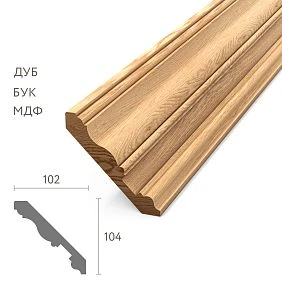
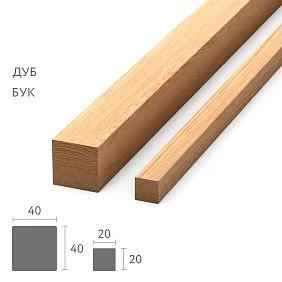

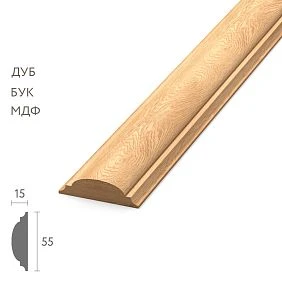
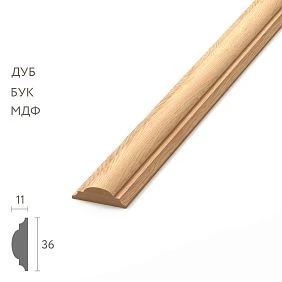
"In stock" should be checked not by the product code, but by the full quantity
The most common mistake occurs even before the order is placed.
Suppose a project requires 80 identical moldings. The manager sees that this SKU is in stock and marks the status as "in stock."
But for the project, this is not enough.
If the available balance is 40 units, the actual situation looks like this:
| Indicator | Quantity |
|---|---|
| Required for the project | 80 pcs. |
| Available now | 40 pcs. |
| Shortfall | 40 pcs. |
| Project status | Partial availability |
For an online store product page, the availability of an SKU is useful information. For project procurement, a different question matters:
has the entire required quantity been confirmed in the correct product version?
Moreover, it is advisable to check not only the number of units. A single profile may have different materials, lengths, processing options, or finishes. They cannot be combined into a single stock balance just because the base name matches.
If a project specifies 80 oak moldings of a certain length, the availability of a different length or an MDF version does not by itself fulfill the requirement.
Therefore, for a project order it is more practical to use four statuses.
IN STOCK — the entire required quantity of a specific item is confirmed.
PARTIAL STOCK — only part of the required quantity is available in stock.
MADE TO ORDER — production is required to fulfill the requirement.
UNCONFIRMED — the quantity or timeline has not yet been confirmed.
This approach immediately shows which order lines are actually ready and which still affect the assembly date.




AVAILABLE and RESERVED — different order states
Another fundamental difference: an item that exists in stock today is not necessarily already allocated to your project.
Suppose an object requires 120 units of skirting board. At the time of approval, 150 are available in stock.
This only means:
AVAILABLE = 150.
If the decision is made to wait for the remaining items and send everything in two weeks, it is necessary to separately understand what will happen to the required 120 units.
When they are allocated to a specific project according to the procedure accepted by the supplier, a different status appears:
RESERVED FOR PROJECT = 120.
This is an important distinction. Free stock can be used in other orders. A reservation is already part of a specific project.
Therefore, the phrase "we will pick it up in two weeks anyway" does not replace confirmation of the reservation.
In the working table, it is useful to distinguish at least four concepts:
| Status | What does it mean |
|---|---|
| Available | the item is present in free stock |
| Reserved | the agreed volume is allocated to the project |
| Ordered | the order for the item has been placed |
| Ready to ship | the item has entered the batch prepared for release |
It is precisely this separation that helps avoid an unpleasant situation where the customer deliberately waited for the production of several parts, and by the time they were ready, it turned out that the warehouse stock of the first item had already changed.
Our factory also produces:








Why it is not always worth immediately shipping everything that is already ready
Product availability is not an automatic reason for its delivery.
Let's imagine a project where the installation of skirting boards and moldings is scheduled simultaneously in two weeks. The skirting board is fully ready today, while the required molding will be ready later.
The skirting board could be sent right away. But such a decision comes at a cost, even if the item itself has already been paid for.
A separate delivery will be required. Space for storage will be needed at the site. The first batch will have to be received and checked separately. An additional accounting unit is created. With long-length trim, it is especially important where it will be kept before installation and whether it will have to be moved around the site several times.
If no work with this skirting board begins before the molding arrives, the first truck may not speed anything up.
In such a situation, it is wiser to consider consolidation:
ready warehouse stock is reserved, production items are completed, and then the set is shipped as one coordinated batch.
But the reverse scenario also exists.
If the first floor is already prepared for installation and skirting is needed in three days, while decorative elements for the hall will be required in two weeks, waiting for the entire order to be ready may delay actual work.
Therefore, the right question is not:
What do we already have?
But:
What does the site need by the nearest installation date?
Get Consultation
Three strategies for a mixed order
In practice, such an order can be managed using one of three models.
Ship what is ready now
Suitable when the ready item is genuinely needed earlier than the rest and the site is ready to receive it.
For example, finishing on the first floor starts on Monday, while the elements for the stair hall will only be installed in two weeks.
In this case, early delivery of the first group helps the schedule.
Reserve and wait for full completion
Suitable if all items are used at approximately the same time, the difference in timing is small, and separate deliveries would only increase logistics and storage volume.
Here it is important not just to wait, but to confirm the reservation of those lines that are already ready.
Immediately split the order into several batches
For large projects, this is often the most manageable scheme.
Not "we ship everything that has accumulated in the warehouse," but rather we determine in advance:
B01 — first zone;
B02 — second zone;
B03 — reserve or final completion.
Each batch has its own composition and required date.
It is the word "in advance" that separates a planned partial shipment from a chaotic one.
Divide the delivery by installation logic, not by what appeared in the warehouse first
Suppose one project includes several rooms.
For the first floor, you need:
-
baseboard;
-
molding;
-
Installation materials.
For the hall:
-
a different molding profile;
-
cornice;
-
Decorative elements.
If the first-floor baseboard and the hall cornice are ready today, and both moldings will arrive later, you don't necessarily have to form a truck from two randomly ready items.
Such a batch makes sense from a warehouse perspective, but is almost useless for installation.
It is much better to create:
B01 — FIRST FLOOR
skirting board + moulding + necessary consumables.
B02 — HALL
moulding + cornice + decorative elements + corresponding consumables.
The result is not "machine No. 1" and "machine No. 2", but complete kits for specific jobs.
This approach is especially convenient when Trimming Items purchases are made for several rooms or stages of a project at once.
The most expensive item in an order is not necessarily the critical one
The lead time is sometimes determined by a completely different product from the one that accounts for the main share of the budget.
Suppose the skirting boards, cornices and almost all the moulding are ready, but a small decorative element is missing, without which it is impossible to complete the framed wall design.
In terms of cost, this line item may be insignificant. In terms of schedule, it is critical.
Therefore, it is useful to evaluate two characteristics independently:
the cost of the item and the item's impact on the ability to complete installation.
The second characteristic is its conditional schedule criticality.
If a specific area cannot be completed without one item, that item may determine the actual batch assembly date.
This gives rise to the concept of a critical SKU — an item that limits the readiness of the set.
The buyer needs a complete set, not an impressive readiness percentage
The phrase “the order is 92% ready” sounds convincing, but for a construction site it may mean almost nothing.
Let's look at an order:
-
the main trim is ready;
-
cornices are ready;
-
skirting boards are ready;
-
most of the decor is ready;
-
connecting or finishing elements specified in the project are missing.
In terms of cost, more than 90% of the order may indeed be ready.
But if the missing items prevent completion of installation, the project has not achieved 92% of the useful result.
Therefore, in project procurement, one should evaluate not only the percentage of readiness by cost or number of lines, but also the completeness of the installation kit — KIT COMPLETENESS.
A batch is considered complete when it contains everything planned for the corresponding stage:
| Batch check | Result |
|---|---|
| All required SKUs are included | Yes / no |
| The required quantity is confirmed | Yes / no |
| Material and finish match the order | Yes / no |
| Items are distributed to the correct zone | Yes / no |
| Required consumables are accounted for | Yes / no |
| Labeling allows the kit to be identified | Yes / no |
| The batch is cleared for delivery | Yes / no |
The last line is crucial: the kit may be physically ready, but the site is not yet ready to receive it.
Consumables also affect completeness
Skirting boards, moldings, and cornices are remembered first because they are the ones visible in the finishing specification.
But a construction crew works not with a list of SKUs, but with a set sufficient to perform the operation.
If all decorative profiles have arrived, but the consumable material required by the installation system is missing, the actual readiness of the work is lower than the goods invoice shows.
Therefore, it makes sense to include consumables in the same installation kit.
At the same time, the two tasks should not be mixed. An article about order fulfillment should not turn into a guide on choosing adhesive. Here it is enough to verify that the required installation material is available and in the right quantity.
The installation technology itself, the choice of compound, and surface preparation are a separate task.
The production lead time and the date the item appears on site are not the same thing
One of the common planning mistakes is to take the stated manufacturing lead time and automatically turn it into a delivery date.
If an item is manufactured over several days, that does not yet mean that after that same number of days it will already be with the installers.
Between the decision to purchase and the actual delivery, there are separate events:
order confirmation → production start → item readiness → fulfillment → packaging → shipping authorization → transportation → acceptance.
Therefore, it is advisable to separate the two dates.
Production Ready Date — when a specific item should be ready for further fulfillment.
Required on Site Date — when this item is actually needed on site.
If the item is ready on the 10th but installation is scheduled for the 20th, it doesn't always need to be shipped on the 10th.
If installation starts on the 12th, on the contrary, a single production deadline is not enough: time must be left for picking and delivery.
Mixed Availability Register: one table instead of dozens of messages
When an order has five lines, the status can be kept in mind. When there are several dozen, confusion begins.
A working mixed availability table might look like this:
| SKU | Required | In stock | In production | Reserve | Batch | Status |
|---|---|---|---|---|---|---|
| PLT-A | 120 | 120 | 0 | 120 | B01 | READY |
| MLD-B | 80 | 40 | 40 | 40 | B02 | PARTIAL |
| KZ-C | 24 | 0 | 24 | 0 | B02 | PRODUCTION |
| DEC-D | 16 | 0 | 16 | 0 | B02 | PRODUCTION |
| GLUE-E | 12 | 12 | 0 | 12 | B01 | READY |
The SKUs here are conditional — the logic itself is what matters.
A single line shows not only “available or not,” but also:
-
how much is required;
-
how much is confirmed;
-
how much still needs to be received;
-
what is already reserved;
-
which shipment batch the item belongs to;
-
what is blocking the release of this batch.
For a large order, such a table is more useful than back-and-forth messages like “the curtain rod is already here, we’re still waiting on the molding.”
What to do with PARTIAL STOCK
A partial stock requires a separate decision.
Suppose a project needs 80 moldings, but only 40 are confirmed.
There are several working scenarios.
The first option is to ship 40 now. This makes sense if they can be used to complete a standalone area at the site and the remaining half will not be needed for the same operation.
The second option is to allocate the available 40 to the project and wait for the remaining 40. This option is logical if all 80 belong to one area or must be used in a single installation phase.
The third option is to change the order breakdown. For example, set aside a volume for the first floor from the total quantity and leave the second part for the next batch.
The main mistake is to assume that having half automatically means it must be shipped.
PARTIAL STOCK reports the stock status but does not make the decision for the project.
A Release List is required before each shipment
When an order is split into batches, each actual shipment needs a fixed composition.
For example:
ORDER 147
RELEASE B01
| Position | Quantity |
|---|---|
| PLT-A | 120 |
| MLD-A | 64 |
| consumable material | 8 |
Once the release is generated, it becomes clear exactly what is allowed to be assembled and loaded.
This is better than the team:
"Send everything that's ready."
This phrase works only until the first mistake. If several groups from different project stages are ready in the warehouse at the same time, goods that don't yet belong on site may end up in the truck, while the needed small item stays out of the shipment.
Release fixes the boundary of the batch.
Packing List must match the Release List
The next check is performed after physical picking.
Available:
RELEASED — what should be shipped.
And there is:
PACKED — what was actually picked and packed.
If the release specifies 120 units but 118 were packed, the batch does not yet match the task.
If there should be three SKUs but four were loaded, that is also a reason to stop and check the composition.
For long-length items, such verification is especially useful, since visually similar profiles or packaging may be located next to each other.
Before shipping, you need to compare not only the total number of packages, but also the SKU, material, size or finish, and quantity for each line.
READY does not always mean "ship"
There is another status that is useful on construction sites:
READY / SITE HOLD.
The item is fully assembled and can be shipped, but the customer temporarily does not allow delivery.
The reasons are often entirely practical:
-
the premises are still occupied by previous work;
-
there is no safe storage area;
-
painting is not finished;
-
there is no person responsible for acceptance at the site;
-
installation date has been postponed;
-
unloading of long-length elements is not possible on this day.
In this case, do not confuse two things:
the goods are ready and the site is ready to receive the goods.
If the contractor purchases materials through building materials wholesale stores, controlling this boundary helps avoid a situation where the supplier has completed their part of the work, but the delivery itself has created a problem for the construction site.
A project change should also change both the reserve and the batches
A mixed order is especially sensitive to changes, because some of its lines may already be in production, another is in reserve, and a third is still awaiting release.
Suppose that while a decorative element is being produced, the designer removed one molding from the project and replaced it with another.
It is not enough to simply correct the original specification.
It is necessary to check the related entities:
specification → reserve → production → batch plan → release list.
If you remove an item only from the latest version of the project but do not remove it from an already prepared batch, the cancelled item may still arrive at the site.
There is also the opposite risk. A new item was added to the specification but not included in B02. According to the documents, the project has been updated, but in reality the batch remains incomplete.
Therefore, after a significant change to the order, it is useful to issue a new version of the configuration and consider the old one no longer valid.
Practical example: one order, two rational shipments
Suppose a project requires five groups of goods.
The skirting board for the first floor is fully confirmed. The molding for the first floor is also ready. Consumables are available.
For the hall, the situation is different: half of the required molding is available, the cornice is being prepared, and the decorative elements have not yet been assembled into a complete set.
Installation of the first floor begins in four days. The hall will be ready for finishing in two weeks.
If we wait for the entire order, the first-floor crew will lose time.
If we send everything that currently exists in the warehouse, then along with the first-floor kit, half of the material for the hall will arrive, which is not needed there yet.
It is more correct to form:
B01 — first floor
baseboard + molding + consumables.
Status:
KIT COMPLETE → RELEASED → PACKED → SHIP.
B02 — hall
partial molding is reserved, the missing quantity is covered by production, the cornice and decorative elements are expected by the agreed date.
Status:
PARTIAL / PRODUCTION → HOLD.
After all critical lines of B02 are ready, a completeness check is performed, and only then is the second release formed.
As a result, two vehicles are used, but these are not two random partial deliveries. Each vehicle corresponds to a specific stage of work.
When consolidated delivery is better than several batches
Splitting an order should not become an end in itself.
If all items are needed around the same date, production timelines differ only slightly, the site has no convenient place for interim storage, and there is no urgent installation area, one consolidated delivery may be simpler.
The advantages are obvious:
one acceptance, one unloading, fewer material movements, easier control of the complete set.
In that case, already finished goods can be held in a confirmed reserve until the production part of the order is completed.
But the decision depends on the specific logistics. If storage at the supplier is limited by the order terms or part of the goods is needed earlier, the scheme changes.
When partial shipment is truly justified
It is worth splitting an order when at least one batch has standalone value for the site.
For example, you can fully complete the first floor without waiting for the finishing of the second.
Or one group of items affects the nearest critical operation, while the rest will be needed substantially later.
Another scenario is a significant delay in timelines. If one item is delayed for a long time, it makes no sense to hold up the entire order because of it, when the remaining materials can already be used to complete an independent scope of work.
But each partial shipment must answer the question:
What exactly will the site be able to complete after receiving this batch?
If there is no answer, perhaps the batch was formed according to warehouse logic rather than construction logic.
Main mistakes in mixed configuration
Mistake: considering an SKU "in stock" without checking the quantity
Why it happens: the item is present in the catalog.
Consequence: the project counts on 80 units, although only 40 are actually available.
What to do: check the remaining stock against the Required Quantity.
Mistake: confusing available stock with reserved stock
Why it happens: it seems that if the item is available today, it will also be available later.
Consequence: by the time of general assembly, the required quantity has to be confirmed again.
What to do: separately record the RESERVED status where a reservation is actually made.
Mistake: shipping everything ready without a batch plan
Why it happens: there is a desire to free up finished goods faster.
Consequence: elements from different stages arrive at the site, but there is no complete set for any single stage.
What to do: form batches by zones or installation tasks.
Mistake: assessing readiness only in percentages
Why it happens: it is convenient to say that the order is 90–95% ready.
Consequence: the missing few percent can block the entire installation.
What to do: additionally verify kit completeness and critical SKU.
Error: treating the production lead time as the delivery date
Why it happens: between the readiness of the item and its arrival on site, kitting and transportation are not taken into account.
Consequence: installation is scheduled too early.
What to do: keep Production Ready Date and Required on Site Date separate.
Error: not updating batches after a project change
Why it happens: the new specification is considered sufficient.
Consequence: cancelled items remain in the delivery or new ones are missing.
What to do: after a change, update the reserve, batch plan, and release.
What to check before confirming a project order
Before placing a mixed order, it is useful to run a quick check.
-
Lock in the current version of the specification.
-
Verify the exact SKU of each line item.
-
Check the material and finish.
-
Specify the full required quantity.
-
Match the requirement against confirmed availability.
-
Flag PARTIAL STOCK separately.
-
Identify the items that are made to order.
-
Lock in the confirmed reservation.
-
Specify the date each group is needed on site.
-
Find the critical SKU for each batch.
-
Split the order into assembly-meaningful batches if required.
-
Check the availability of consumables.
-
Before dispatch, generate a Release List.
-
Verify it against the Packing List.
-
Confirm that the site is ready to receive the specific batch.
This check takes less time than subsequently searching for a missing part among several completed shipments.
How to use the STAVROS catalog for such an order
For a comprehensive purchase, it is convenient to first compile a list of specific products for the project, and only then distribute the items by timeline and batches.
In the catalog, you can separately select wooden and MDF mouldings, including mouldings, skirting boards and cornices, and for a project with stucco elements — go to the section stucco decoration.
When placing a large order, you should not transfer the product status from the product card to the project table once and treat it as permanent. Availability changes, so before final order confirmation and before the actual release of the batch, current quantities should be checked again.
If a specific item is insufficient, a substitution of material, size or article number should not happen automatically on its own. Such changes are first agreed with the project, since a visually similar profile is not necessarily interchangeable.
A single project order should not turn into a dozen unrelated deliveries
The main idea of mixed configuration is simple.
A product can be:
available, reserved, ordered, in production, ready, packed and cleared for delivery.
These are different states.
Therefore, an order consisting of items "in stock" and "made to order" is better managed not as a regular online store shopping cart, but as a sequence of controlled sets.
If the first zone can be completed earlier — form a full-fledged B01.
If the finished items are needed only together with the production ones — confirm the reservation and consolidate the delivery.
If one small element blocks the entire set — track it as a critical SKU, and do not be reassured by a high order readiness percentage.
If the site is not ready to receive the material — use the SITE HOLD status, and do not send the truck just because the warehouse has already finished picking.
As a result, the task comes down to a clear chain:
STOCK + PARTIAL STOCK + PRODUCTION → RESERVE → CONSOLIDATION → KIT COMPLETE → RELEASE → DELIVERY.
It is this scheme that allows ordering skirting boards, moldings, cornices, and decorative elements as a single project, without mixing up the concepts of "the item is in stock," "the item is ours," "the item is ready," and "the item can already be shipped."
FAQ
Should you always wait until all items in the order are ready?
No. If part of the order forms a standalone installation set and is needed by the site earlier, it can be separated into a separate agreed batch. Waiting for full completion makes sense when all goods are used at approximately the same time and early delivery does not speed anything up.
What should you do if only half of the required quantity is in stock?
First, determine whether this half can be used as a complete set for a specific zone. If not, it makes sense to consider reserving the available quantity and covering the remainder with production. The mere fact of partial availability does not yet determine the shipping method.
What matters more — the order completion percentage or the number of completed items?
For installation, the completeness of a specific batch matters more. Nine completed lines out of ten may be insufficient if the tenth is needed to complete the entire system.
Should goods be reserved if the remaining items are still in production?
If the completed goods are planned to be picked up later along with the rest of the order, it is advisable to clarify in advance the conditions for allocating them to the project. Being in stock and being actually confirmed as reserved are two different things.
Can goods for different zones of a site be added to the same vehicle?
Yes, if it is logistically convenient and does not create problems during acceptance and storage. However, in the documents and labeling it is advisable to keep the separation by batches or zones so that on site it is clear which stage each item belongs to.
When is it better not to split a mixed order?
When the difference in timelines is small, all items are needed at approximately the same time, the site has limited storage space, and none of the completed groups allows an independent stage of work to begin. In that case, a single consolidated delivery is usually easier to control.