Article Contents:
- Wholesale building material companies: why three final totals are not yet a tender
- What should be included in an RFQ for wooden trim
- Wooden skirting board: why suppliers should calculate the same geometry
- Why an alternative offer should be listed as a separate line
- Wooden moulding: comparing only the price per metre can be misleading
- How to bring offers with different lengths to a single unit
- Wooden cornice: why a large profile also affects logistics
- Product price and delivery price are two different figures
- What a tender comparison table looks like
- Company building materials: which deviations the supplier must highlight
- Why you shouldn't hide a profile substitution inside a commercial proposal
- Building material supplier companies: why deadlines should be compared by a single date
- Production lead time and on-site lead time are not the same thing
- How to account for phased delivery
- Why the lowest price can come with the worst schedule
- How to compare payment terms
- Why a discount can't be compared without a base price
- Building materials: list of companies — how to build a short tender list
- Why five quality proposals are more useful than twenty incomparable ones
- How to assign statuses to proposals
- How to evaluate not only price but also compliance
- Why specification compliance should carry significant weight
- How to compare a value engineering option separately
- Why BASE and VE must not be mixed in a single final price
- How to conduct technical clarification after the first round
- Why rebidding must follow the same final specification
- How to preserve tender history
- What to send to the supplier after selecting the winner
- A practical algorithm for tendering wooden mouldings

Tendering wooden mouldings is easy to do formally and hard to do correctly. A developer, general contractor, procurement specialist or design studio sends a request to several companies and receives three final totals. Company A offers ₽1,150,000, company B — ₽1,080,000, company C — ₽980,000. At first glance, the winner is obvious.
But after breaking it down, it turns out that A priced oak strictly according to the original SKUs, B replaced some items with beech, C proposed two “equivalents,” A’s delivery is already included, B’s is calculated separately, and C gives a different lead time. In addition, the plank lengths and billable quantities in the proposals do not match.
In such a situation, the three totals cannot be compared directly. In order for wholesale building materials companies to participate in a single tender, their responses must first be brought to a unified technical and commercial basis.
The working scheme looks like this:
single RFQ → identical initial specification → compliance check → Deviation List → quantity normalization → landed cost → on-site lead time → BASE BID and VE OPTION → technical round → commercial round → final version of the order.
The main task of a tender is not to find the lowest number. It is to establish which proposal truly corresponds to the project and how much it will cost under comparable conditions.
Wholesale building materials companies: why three final totals are not yet a tender
If each participant received different source data, there is no comparable tender.
One company received an Excel file with SKUs and materials. The second was sent a PDF without current quantities. The third was told in an email: "We need approximately 600 meters of molding, suggest options." All three companies are answering different questions.
A proper RFQ — Request for Quotation, that is, a single request for a commercial proposal — must have a version number and be transmitted identically to all participants.
For example:
RFQ-PG-REV01 / Wooden mouldings package / issued 10.09.2026
If one SKU or volume changes after sending, a new revision is issued. You cannot quietly replace the file for two participants and leave the third on the old version.
It is also useful to define units of measurement in the RFQ. A designer may calculate linear footage in linear meters, a supplier in whole strips, and a logistics specialist in cargo units. These data relate to different stages. In a tender, it is better not to mix them: the pure requirement remains in meters, the procurement one in pieces and billable meterage, and the transport one in packages and dimensions.
If one participant submits a price "for 620 m" and the second "for 259 strips," the tender team must bring both responses to the same form. Otherwise, the difference in packaging multiples and product length will remain hidden inside the final total.




What should be included in an RFQ for wooden trim
For each item, enough data must be fixed so that the supplier can calculate the actual project requirement, not their own interpretation.
| Code | Product | Article | Material | Section / size | Length | Volume | Lead Time | Alternative |
|---|---|---|---|---|---|---|---|---|
| P01 | Baseboard | PLT-… | Oak | Per approved position | Per execution | 450 м | Per schedule | No |
| M01 | Molding | MLD-… | Oak | Per approved position | Per execution | 620 м | Per schedule | By agreement |
| K01 | Cornice | KZ-… | Oak | Per approved position | Per execution | 180 м | Per schedule | No |
It is useful to attach section drawings or links to approved cards to the RFQ if the geometry is critical. For a complex cornice, one photograph is not enough.
The procedure for handling discrepancies is documented separately. If a participant cannot confirm the declared item code, they must not silently substitute it. In the BASE BID column, "not confirmed" is entered, and the alternative position is moved to VE OPTION. It is better to write this rule directly in the RFQ so that all companies respond in the same way.
Our factory also produces:






Wooden skirting board: why suppliers should calculate the same geometry
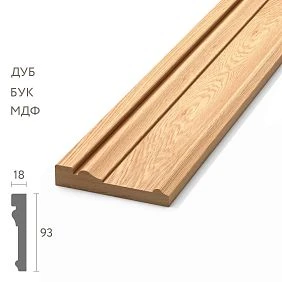
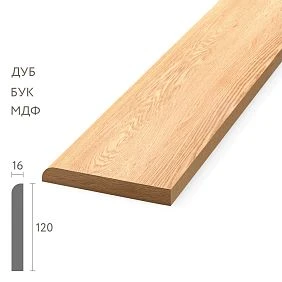
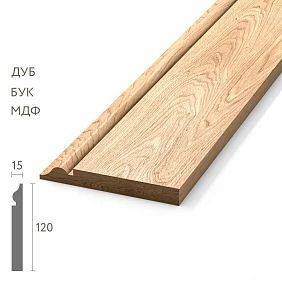
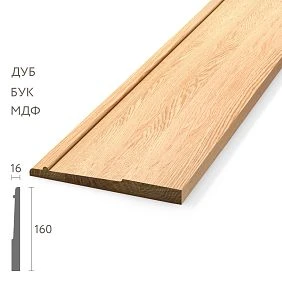
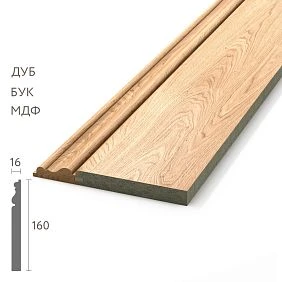
A 120 mm skirting board, a 100 mm skirting board, and a "similar profile" of 110 mm are three different offers, even if all three lines are called "wooden skirting board."
A difference in height or thickness can change:
- the joint with the architrave;
- the level of the wall decor;
- alignment with furniture;
- the architectural line of the room.
Therefore, the BASE BID must account for exactly the profile specified in the RFQ. If the company wants to propose a cheaper alternative, it is listed separately.
For skirting, it is especially useful to add a "cross-section match" column to the comparison table. Sometimes two profiles have the same height but different thickness or top geometry. By name and a single number they look comparable, but at the junction with the architrave they no longer are.
Get Consultation
Why an alternative offer should be listed as a separate line
Correct response structure:
Main offer:
PLT-A — strictly per RFQ.
For small deviations (88-92°), you can correct the standard cut with sandpaper, slightly adjusting the angle.
PLT-B — cheaper, different cross-section, approval required.
Then the customer immediately sees what belongs to the base tender and what is value engineering.
A bad answer looks like this:
Wooden skirting board, equivalent — 450 m.
Such a line erases the distinction between a match and an intentional substitution.
Wooden moulding: comparing only the price per metre can be misleading
Two offers may have almost the same price per linear metre, but the total billable volume is different.
The result is influenced by:
- standard plank length;
- cutting plan;
- number of joints;
- waste volume;
- the material;
- cross-section.
If a project requires 620 m of clean molding, this does not mean that both proposals are paid for exactly 620 m.
How to bring proposals with different lengths to a single unit
Suppose one participant offers strips 2.4 m long, another — 2.6 m. The project requirement is 100 m.
Simple division gives:
100 / 2.4 = 41.67 → minimum 42 strips → 100.8 m of paid material.
100 / 2.6 = 38.46 → minimum 39 strips → 101.4 m of paid material.
But even this calculation is insufficient if there are many short sections. The actual cutting layout needs to be checked.
Therefore, it is useful to have three fields in the tender table:
clean requirement → number of whole items → paid linear meters.
It is precisely the last value that must be compared together with the item price.
Even more precisely — calculate the cost after cutting. Suppose a wall frame contains many short sides of 1.05 m each. A 2.4 m strip theoretically yields two 1.05 m segments and a 0.30 m remainder. A 2.6 m strip yields the same two segments, but the remainder is already 0.50 m. A longer strip in such a specific cutting plan is not necessarily more efficient. Therefore, the tender team should not automatically assume that a lower price per linear meter or a greater length always wins.
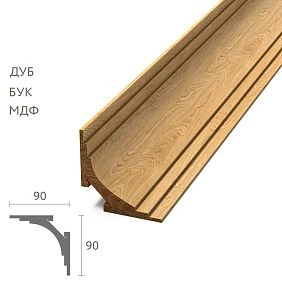
Wooden cornice: why a large profile also affects logistics
A cornice may cost less from one supplier but have different packaging dimensions or a different strip length. For a large profile, this affects transport.
Therefore, the position “the cornice is 5% cheaper” guarantees nothing until delivery is calculated.
The tender commission must have an answer:
- how many cargo units there will be;
- what the maximum length is;
- what packaging is included;
- where the supplier’s responsibility ends;
- whether the price is calculated to the terminal or to the site.
The price of the goods and the delivery price are two different figures
For each participant, it is useful to calculate separately:
- goods;
- packaging;
- delivery;
- additional loading operations;
- additional batches;
- paid samples, if needed;
- other agreed expenses.
After this, you get the landed cost — the cost to the required delivery point.
This is exactly what should be compared, not just the cost of the goods at the seller's warehouse.
For a phased project, it is advisable to calculate the landed cost for each batch, not as a single total. The first batch may go directly to the site, the second through an intermediate warehouse, and the third to another city. If all logistics expenses are hidden in one general line, it is impossible to understand which schedule is actually more advantageous.
In the comparison table, you can use the formula:
Landed cost of the line item = goods + mandatory packaging + transport + additional operations related to this line item or batch.
If part of the costs is common to the entire order, they are allocated according to a pre-selected rule and applied equally to all participants.
What a tender comparison table looks like
| Indicator | Company A | Company B | Company C |
|---|---|---|---|
| Material | Oak | Oak / deviations | Beech / equivalents |
| Compliance with SKUs | 100% | 100% / comments | 80% |
| Product | … | … | … |
| Packaging | … | … | … |
| Delivery | … | … | … |
| Landed cost | … | … | … |
| Readiness | … | … | … |
| On site | … | … | … |
After such normalization, the initially "cheapest" participant may no longer be the most advantageous.
Company building materials: which deviations the supplier must highlight
When comparing by request company building materials it is especially important not to hide deviations inside the general table.
The supplier must separately note:
- a different SKU;
- a different wood type;
- different length;
- incomplete volume;
- different deadline;
- different version;
- separate packaging;
- modified delivery terms.
For this, it is convenient to use a Deviation List — a table of deviations.
| Code | RFQ requirement | Proposed | Reason | Influence | Status |
|---|---|---|---|---|---|
| M01 | MLD-A / oak | MLD-B / oak | Original SKU unavailable | Cross-section changes | Pending approval |
| P02 | Full volume | Partial batch | Availability constraint | New schedule needed | Comment |
This way, the deviation becomes a standalone decision object. It can be accepted, rejected, or sent for technical clarification without rewriting the original tender.
Why profile substitution must not be hidden inside a commercial proposal
The RFQ specifies MLD-024. The response comes back similar molding — 620 m.
Such a line cannot be considered equivalent.
Correctly:
MLD-024 — we cannot confirm.
And separately:
VE OPTION: MLD-X — we propose as an alternative.
Then the base tender remains clean, and the optimization is considered deliberately.
Building materials supplier companies: why the timeline should be compared by a single date
When building materials supplier companies respond with different wordings — “20 business days,” “about a month,” “3–4 weeks” — making timeline comparison inconvenient.
It is better to align the answers to a single calendar point:
the planned batch readiness date.
For example:
READY DATE: 15.10.2026
Then it is clear who is actually ready earlier.
Production lead time and on-site lead time are not the same thing
The production readiness date is not the same as the date the item is available to installers.
After manufacturing, the following remain:
- packing;
- packaging;
- handover to the carrier;
- transportation;
- acceptance at the site.
Therefore, in a tender it is useful to compare two dates:
READY DATE — when the batch is ready for shipment.
REQUIRED-ON-SITE DATE — when it must be on site and available for the next stage.
If the supplier manages to manufacture the goods, but logistics push it beyond the required-on-site date, the offer no longer meets the schedule.
How to account for phased delivery
A large project does not always need the entire linear footage at once.
For example:
- batch 1 — October;
- batch 2 — December;
- batch 3 — February.
The RFQ must contain a batch schedule, not just the total volume.
Then the bidder confirms the ability to deliver not abstract 1,400 m, but specific volumes on specific dates.
For each batch, it is useful to specify an acceptable window. For example, "needed on site December 10–15." This gives the supplier the opportunity to propose a realistic production schedule, and the customer — to compare responses under the same condition.
If a bidder proposes to shift one phase, this should be visible as a deviation, not hidden in a footnote of the commercial proposal.
Why the lowest price may come with the worst schedule
Company A is 4% more expensive, but fits the installation schedule. Company B is cheaper, but the first batch will be ready after work begins.
If this causes the crew to stand idle or changes the finishing sequence, the procurement savings lose their point.
Therefore, the deadline is not a decorative column in the tender. For critical material, it is an economic parameter.
When comparing, the cost of delay can be assessed separately. For example, if postponing delivery by five days forces the installation crew to be delayed or kept on site without work, these are potential project expenses. They do not necessarily have to be included in the accounting cost of the proposal, but they must be visible in the management decision.
How to compare payment terms
One bidder may have 100% prepayment, another — 50/50, and a third — payment by batch.
It cannot be said that one scheme is always better. But the tender table must show the terms in the same way.
Minimum fields:
- advance payment;
- timing of the second payment;
- payment for delivery;
- payment by batches;
- price fixation terms.
Why a discount cannot be compared without a base price
Company A writes “20% discount,” company B — “10% discount.”
If the base price lists are different, the percentage shows nothing.
You need to compare:
the final price of a specific line × billable quantity.
The stated discount amount can remain reference information.
For a tender, it is more useful to see four columns: price before discount, stated discount, final unit price, and total line cost. Then a marketing-attractive percentage does not distract from the actual result.
Building materials: list of companies — how to create a short tender list
When the search starts with a query building materials list of companies, it is not necessary to send an RFQ to twenty organizations.
Before the tender, a short pre-qualification is needed.
Check:
- whether the company works with the required category of trim;
- whether it can offer the specified materials;
- is the required volume realistic;
- is the geography suitable;
- can documents and technical data be obtained;
- is the supplier ready to respond within the RFQ structure.
After that, 3–5 companies are selected for a full calculation.
It is useful to form a short list not only based on the company's reputation. More important is the ability to respond to a specific RFQ: provide exact part numbers, confirm materials, highlight deviations, and calculate the schedule and logistics. A company that quickly sends a nice general price list but cannot break down the specification line by line will create more work at the next stage.
Why five quality proposals are more useful than twenty incomparable ones
Each new proposal requires verification of part numbers, materials, volumes, timelines, deviations, and logistics.
If half of the participants send incomplete responses, the tender team spends time not on comparison but on endless clarifications.
Therefore, the quality of the short list is more important than the number of recipients.
In practice, the first round can be limited to technical completeness. A participant who has not filled in the critical fields and does not respond to clarifications is not obligated to move to the commercial round just because their initial amount was low.
How to assign statuses to proposals
| Status | Value |
|---|---|
| COMPLIANT | Fully compliant with the RFQ |
| COMPLIANT WITH COMMENTS | Generally compliant, with clarifications but no critical substitutions |
| ALTERNATIVE | An alternative technical solution is proposed |
| NON-COMPLIANT | Does not meet key requirements |
The status makes it possible not to place a proposal strictly according to the project and a proposal with significant substitutions on the same level.
How to evaluate not only price but also compliance
For a complex procurement, a weighted model can be used. For example:
| Criterion | Example weight |
|---|---|
| Specification compliance | 35% |
| Landed cost | 30% |
| Lead time | 20% |
| Delivery terms | 10% |
| Documentation | 5% |
This is only an example of the methodology. For another project, the weights may be different. If the profile is critical for a historical interior, technical compliance can be given greater weight. If the material is standard and all proposals are identical, price may have a higher priority.
Why specification compliance should have a large weight
If the cheapest bidder offers a different profile, the first question should not be "how much cheaper?", but:
is this even the product the project asked to purchase?
As long as the answer is "no", the proposal cannot compete with a compliant bid as an equal.
This does not mean that the alternative should be rejected. It may turn out to be better than the original solution. But then it is evaluated as a separate scenario and, if necessary, the project specification is changed. Only after approval does the new item become the basis for the next round.
How to separately compare a value engineering option
The supplier may offer:
- a different wood type;
- a simpler profile;
- a different length;
- unification of several SKUs;
- a different packaging or logistics scheme.
This can be useful. But a separate scenario is created:
BASE BID — strictly according to the project.
VE OPTION — a proposed optimization.
This way the client sees the real price of the original solution and the potential savings from the changes.
For VE OPTION, it is useful to calculate not only the savings on the product, but also the costs of the change: new samples, recalculating the cutting layout, adjusting the drawings, and a possible change in quantity and installation. If the savings on the product amount to 80,000 ₽, while changing the project and implementation adds 55,000 ₽, the real effect is 25,000 ₽.
Why BASE and VE cannot be mixed in a single final price
If company A is calculated strictly according to the project, B — with a material replacement, and C — with a simplification of two profiles, the lowest total no longer answers the question “who is cheaper for the same specification.”
First, the BASE BID of all participants is compared. Then the VE OPTIONS are compared separately.
How to conduct technical clarification after the first round
After receiving proposals, there is no need to immediately start price negotiations.
First, technical discrepancies are closed:
- article numbers;
- materials;
- sections;
- lengths;
- quantity;
- schedule;
- deviations;
- packaging and delivery scope.
Only when the proposals have become technically comparable does it make sense to move to the commercial round.
Technical clarification is best concluded with a protocol. For each disputed line, the outcome is recorded: "confirmed", "alternative accepted", "alternative rejected", "scope clarified". This reduces the risk that the participant will return to the old option again during the rebidding.
Why rebidding must be conducted based on the same final specification
After the technical round, for example, the following is issued:
RFQ-PG-REV02 — FINAL FOR COMMERCIAL ROUND
All participants receive the same document.
If one continues to count REV01, the second is already on REV02, and the third had the change explained only by phone, the final re-bidding becomes incorrect again.
In the commercial round, it is better to prohibit new technical substitutions without separate approval. Otherwise, a supplier may lower the price not through a discount, but through an unnoticed change in the composition of the offer. Re-bidding should answer the question “who will offer the best terms on the already agreed base.”
How to preserve the tender history
For the project, it is worth preserving:
- the original RFQ;
- all official revisions;
- the received commercial proposals;
- the Deviation List of each participant;
- technical clarifications;
- final comparison table;
- BASE and VE scenarios;
- the selected final specification.
A year from now, it should be clear from these documents why a specific option was chosen.
The history is especially useful for reorders. If part of the trim was needed a few months later, the team can see which alternatives were discussed, which were rejected, and which execution actually became contractual. This prevents re-selecting "from memory."
What to hand over to the supplier after selecting the winner
The final order should not consist of an email saying "You won, go ahead."
An execution package needs to be issued:
- the approved specification;
- final quantities;
- confirmed materials and finishes;
- list of accepted substitutions;
- batch schedule;
- delivery address or addresses;
- packaging and delivery terms;
- final version number.
From this point, the tender ends and order execution control begins.
Practical algorithm for tendering wooden mouldings
- Lock the project specification.
- Assign an RFQ revision number.
- Create a short list of 3–5 suitable companies.
- Send the same package to everyone.
- Require BASE BID strictly per the specification.
- Move any equivalents to VE OPTION.
- Compile a Deviation List.
- Check the material, cross-sections, and lengths.
- Recalculate the actual number of items and the billable linear meters.
- Add packaging and delivery to the landed cost.
- Align the timelines with the READY DATE and REQUIRED-ON-SITE DATE.
- Check the phased delivery schedule.
- Assign status COMPLIANT / ALTERNATIVE / NON-COMPLIANT.
- Complete the technical round.
- Issue a single RFQ REV02 for the commercial round.
- Conduct a reverse auction on the same basis.
- Compare final amounts and terms, not discounts.
- Select the supplier and issue the final order.
This way, the tender stops being a comparison of three incomparable prices. Each proposal is brought to a single technical basis, deviations become visible, and the commercial result takes into account not only the product but also packaging, transport, lead times, and the actual number of items.
For wooden moulding, this is especially important: different lengths, materials, profiles, and packaging requirements can change the economics of an order even when the price per linear meter is similar.
A strong tender solution can be summed up in one phrase: first make the proposals equal in meaning, then compare them by money