Article Contents:
- Short answer: NPU-412 is designed for a wall, not confirmed as a working handrail part
- What is under the article number NPU-412
- Table of confirmed characteristics of NPU-412
- In the living room
- In the hall
- In the Hallway
- In the bedroom
- In the study
- In a restaurant, salon, or hotel
- Comparison of two scenarios
- How to calculate molding for a rectangular frame
- What to check with the template
- Wall width and side margins
- Examples
- Can it be glued over wallpaper
- Can a crack be covered with a trim plate
- Dry layout
- Painting to match the wall
- Contrast painting
- Partial metallization or patina
- Not to be confused with a ready-made panel
- Not to be confused with CPU-14-1
- Not to be confused with NPU-413
- Not to be confused with molding
- Not to be confused with a furniture overlay without checking
- Not to be confused with stair decor
- Need one ornament in the center of the wall
- Need a vertical panel, but the height differs from 2300 mm
- Need a ready-made system without self-selection
- Need to repeat the decor on both sides of the fireplace
- Need to decorate a long corridor
- Need a handrail cover
- Need to decorate the stair hall wall
- Need to decorate a furniture facade
- Option 3. Ready-made CPU-14-1
- What is most often forgotten in the estimate
- Wall with wallpaper
- Wall after fresh painting
- Old wall with multiple layers of finish
- Mistake 1. Ordering NPU-412 as a part of a working handrail
- Mistake 2. Treating a photo as the composition of a single item
- Error 3. Expecting a panel height of 2300 mm
- Error 4. Forgetting the top overlay
- Error 5. Not counting the molding
- Error 6. Calculating molding by wall area
- Error 7. Choosing size based on a photo
- Error 8. Not accounting for the 18 mm thickness
- Error 9. Centering on the wall edge, not on the furniture
- Error 10. Placing near a light switch
- Error 11. Gluing onto loose putty
- Error 12. Masking an active crack
- Error 13. Mounting without dry layout
- Error 14. Adjusting the molding after gluing the overlay
- Error 15. Painting elements from different batches
- Error 16. Using random glue
- Error 17. Not accounting for MLD-002-MG joints
- Error 18. Joining verticals at eye level
- Error 19. Ordering quantity based on room area
- Error 20. Not accounting for baseboard and cornice
- Error 21. Expecting glue and paint to be included in NPU-412
- Error 22. Ordering a kit without checking outlets
- Error 23. Using NPU-412 on a small facade
- Error 24. Trying to resize by trimming the relief
- Error 25. Ordering a complex wall without a specification
- Determine the scenario
- Take measurements
- Make a template
- Calculate the quantity
- Add installation and finishing
- Check the delivery
- Lock in with article numbers
- Is NPU-412 really a railing overlay?
- Why is the card shown for the query "polyurethane railing overlay"?
- Can NPU-412 be glued to the handrail just for looks?
- Can NPU-412 be installed on the wall near the stairs?
- What is included in one product item NPU-412?
- Is NPU-413 included in the price of NPU-412?
- Is MLD-002-MG included?
- Is NPU-412 a ready-made panel?
- What is the size of NPU-412?
- How to check if the overlay will fit on the wall?
- Do I need to leave free space around the overlay?
- How to calculate the number of NPU-412?
- How to calculate MLD-002-MG?
- Can NPU-412 be trimmed if it doesn't fit?
- Can one NPU-412 be used without NPU-413?
- When is it more profitable to buy CPU-14-1?
- Is glue needed separately?
- Can the overlay be glued onto wallpaper?
- Does NPU-412 need to be painted?
- Can NPU-412 and MLD-002-MG be painted with the same paint?
- Why may the shade differ on the overlay and molding?
- Can NPU-412 be installed on furniture?
- Is NPU-412 suitable for a narrow hallway?
- How many NPU-412 units are needed for two symmetrical panels?
- Do I need to buy a spare NPU-412?
- Can I order just one piece?
- How do I find out the price of NPU-412?
- Where can I see other decorative overlays?
- What should I tell the designer or manager?
- Can I order delivery to another region?
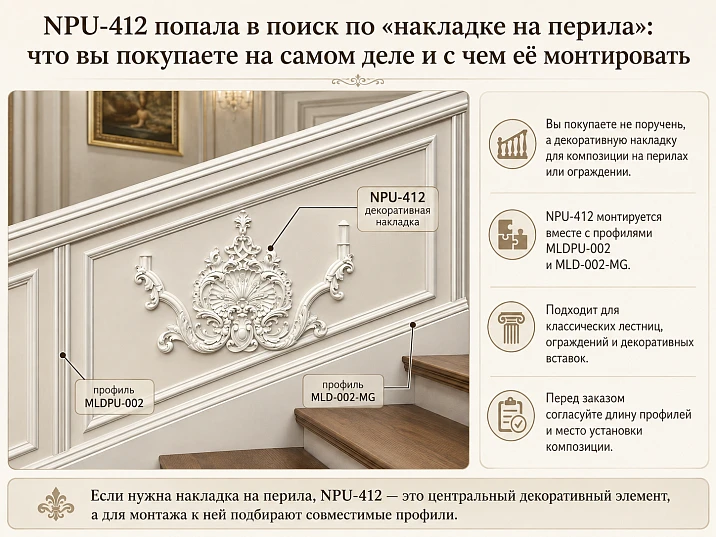
The search query sounds quite specific: the person needs a polyurethane railing overlay. They open the NPU-412 card, see an expressive symmetrical ornament, and may decide they've found a decorative piece for a stair handrail. The mistake occurs even before adding the item to the cart: the word "overlay" matched, but the product's purpose turned out to be different.
NPU-412, measuring 530 × 295 × 18 mm, is a separate polyurethane decorative overlay from the molding decor section. It is used in interior compositions, wall panels, and molding frames. The card does not confirm that the product is designed for working load, touch, or the structural function of a stair railing. Therefore, installing it on a handrail as a functional part is not allowed without a separate technical project.
When ordering one item, the customer receives one NPU-412. The long molding, top overlay NPU-413, mounting adhesive, and a ready-made vertical composition are not automatically included in the price of the individual product. If you need not a single ornament but a tall panel measuring 530 × 2300 × 18 mm, you should compare self-assembly with the ready-made CPU-14-1.
The first step before purchasing is simple: determine exactly what you want to get. For a single accent, you can buy the decorative overlay NPU-412. For a tall, finished composition, you need to calculate the entire set. For a real stair railing, a different product group is required, where parts are designed with the support function in mind.
This article does not cover the history of stucco molding or the entire range of wall decor. The task is more specific: to understand what is in the box with NPU-412, where the product is truly appropriate, how it differs from the ready-made CPU-14-1, how many parts to order, and which items are needed for installation and painting.
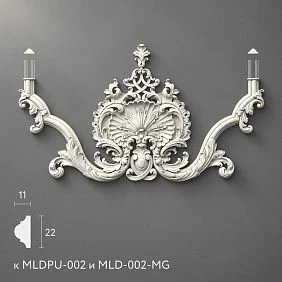
The short answer: NPU-412 is intended for the wall, not confirmed as a part of a working handrail
The form of the search query does not change the product's properties. The NPU-412 card is in the "Decor for moldings" catalog, the product material is polyurethane, and the overlay itself is included in the wall set CPU-14-1. These features link the article to interior wall finishing.
A handrail solves a different task. You hold onto it with your hand, lean on it, and it is part of the stair railing system. Any part installed on a working surface must maintain a comfortable grip, not create dangerous protrusions, and not weaken the structure. The NPU-412 card does not specify a load-bearing function, permissible load, attachment scheme to the handrail, or confirmation of use on stairs.
Therefore, the correct conclusion is this: NPU-412 can be considered a decorative polyurethane overlay for a wall composition, but it cannot automatically be considered an overlay for working railings.
If the task truly relates to stairs, you should choose wooden handrails and stair railing elements and coordinate the design with the designer. Wall decor and a support stair system can be made in a related style, but they are not interchangeable in function.




What is under the article NPU-412
The buyer needs to separate the photo of the finished interior from the composition of a single product item. The image of NPU-412 may show it inside a tall frame, next to other ornament, molding, and a painted wall. The card of an individual article does not turn the entire photo into a delivery set.
When ordering NPU-412, you choose one decorative overlay:
-
measuring 530 × 295 × 18 mm;
-
made of polyurethane;
-
intended for decorative use;
-
sold individually;
-
used separately or as part of a more complex wall system.
The following should not be automatically included in an NPU-412 order:
-
NPU-413;
-
molding MLD-002-MG;
-
a ready-made frame 2300 mm high;
-
mounting adhesive;
-
materials for joints;
-
primer and finish paint;
-
work on marking, installation, and painting.
These items may be needed for the project, but each is counted separately or is included in a standalone ready-made kit with its own card.
Our factory also produces:
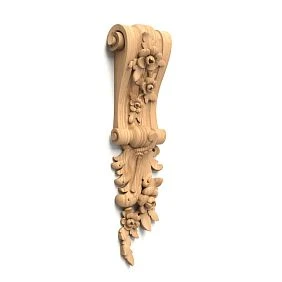
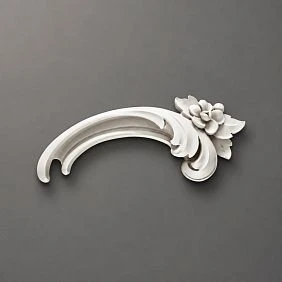
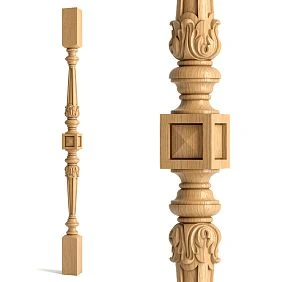


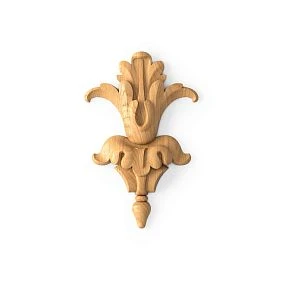
Table of confirmed characteristics for NPU-412
| Parameter | Confirmed value | What this means for the order |
|---|---|---|
| Article number | NPU-412 | The specification must indicate the exact designation |
| Product type | Decorative overlay | 530 × 295 × 18 mm |
| Size | 530 × 295 × 18 mm | A full-size template is needed before purchase |
| Material | Polyurethane | Compatible compounds are selected for installation and finishing |
| Unit of sale | One separate overlay | Quantity is calculated by the number of decorative spots |
| Category | Decor for moldings | Main scenario — wall frames and compositions |
| Related set | CPU-14-1 | In the ready solution, NPU-412 works together with other elements |
| Attached top decor | NPU-413 | Ordered separately when self-assembling |
| Related profile | MLD-002-MG | The long frame contour is not included in the separate NPU-412 |
| Installation materials | Separate purchase | Adhesive, joint, and finishing compounds need to be included in the estimate |
| Staircase purpose | Not confirmed | Installation on a working handrail cannot be promised without a project |
The size 530 × 295 × 18 mm should be read as the full external dimension of a separate decorative element. It does not mean that the product forms a panel 530 mm high or covers a wall 530 mm wide without additional fields. In the finished composition, moldings, indentations, and a free wall plane remain around the overlay.
Get Consultation
Why the card may appear in a search for handrails
The search engine matches words, card texts, user behavior, and many other signals. The term "overlay" is used too broadly: overlays refer to furniture decor, door elements, wall ornaments, decorative handrail parts, and even technical plates. A match of one noun does not guarantee a match of purpose.
The user sees an attractive card in the search results and completes the meaning on their own. If the ornament is stretched horizontally, it may seem suitable for a long stair element. If the image has no scale, 530 mm is perceived differently. If the word "polyurethane" matches the query, a false sense of full compatibility arises.
In practice, four signs need to be checked:
-
Product category. NPU-412 is placed in molding decor.
-
Role in finished systems. The item is part of the wall CPU-14-1.
-
Technical data. The card has no stair assembly or load-bearing function.
-
Order composition. The item is sold as a separate decorative overlay.
Such a check is more important than the title of the search result. Search helps find the card, but the purchase decision is made based on purpose, drawing, and completeness.
A decorative overlay and a structural stair part are not the same thing
The difference between two product tasks is not limited to material. Even a durable decorative element does not become part of a safe railing just because it can be glued to a surface.
| Criterion | NPU-412 as wall decor | Handrail detail |
| Main function | Creates ornament and relief | Provides comfortable and secure grip |
| Place of application | Wall, panel, molding frame | Stair railing |
| Load | Self-weight and installation loads | Constant contact and support force |
| Surface requirement | Prepared decorative base | Hand-friendly geometry |
| Mounting | Compatible mounting composition per project | Structural unit designed for operation |
| Completeness | Can be combined with NPU-413 and MLD-002-MG | Connects with posts, balusters, rails, and fasteners |
| Risk of error | Incomplete composition or incorrect scale | Violation of staircase safety and convenience |
The NPU-412 ornament has a developed relief. On a wall, this is an advantage: light creates shadows, and the pattern becomes expressive. On a working handrail, protruding decor can interfere with the hand, catch clothing, and constantly experience tangential loads. Without special confirmation, wall molding cannot be turned into a grip element.
There is another nuance. Even if the buyer wants to decorate not the handrail itself, but the fixed wall along the stair flight, this is a different scenario. In this case, NPU-412 can participate in a wall composition near the stairs, but it does not become part of the railing. It is necessary to check the location relative to people's movement, height, 18 mm protrusion, and the possibility of accidental impacts.
Where NPU-412 truly reveals its purpose
The main scenario is an interior wall where the ornament works together with the geometry of moldings. The overlay can become a lower or central accent of a vertical panel, fill the wide part of a decorative frame, or support a composition above a console.
A buyer who is still comparing shapes may buying polyurethane molding decor after checking the dimensions of adjacent articles. The category helps to understand that NPU-412 belongs to the wall profiling system, not to stair fittings.
In the living room
NPU-412 can be placed in a vertical frame behind the console, between two sconces, or in the lower part of a tall panel. The 530 mm size sets a noticeable horizontal span, so the overlay needs sufficient wall width. On a narrow wall section, the relief may be squeezed by trims or furniture.
In a hallway
The entrance area often has elongated walls and tall doorways. A vertical composition helps organize an empty plane. At the same time, it is necessary to check that the overlay does not intersect with switches, intercom, wall lights, and the opening door.
In the hallway
The hallway seems like a suitable place for relief decor, but the width of the passage is limited. The 18 mm protrusion must be taken into account, especially near turns, cabinets, and furniture moving areas. It is better to place the overlay where it will not be constantly brushed by a shoulder or bag.
In the bedroom
The composition can work on the sides of the bed or opposite it. Symmetry is especially important here: a single NPU-412 can be used as an independent accent, while a paired installation requires a precise common axis and the same height.
In a study
Relief decor supports classic furniture, library cabinets, and panels. The size of the overlay should be matched with the width of the table, console, or fireplace portal so that the ornament does not look like a randomly attached element.
In a restaurant, salon, or hotel
Repeating panels create rhythm on a long wall. Here, the number of NPU-412 is calculated by the number of sections, not by the total area of the room. Before ordering a batch, a layout plan with doors, columns, furniture, and lights is needed.
For projects that need not just one overlay, but a system of several frames, it is useful to select and buy wall molding in a unified collection logic. This makes it easier to compare finished compositions, scales, and repeatability on the wall.
One NPU-412 or a ready-made CPU-14-1: first define the order boundaries
The most common commercial mistake is comparing the price of a single overlay with a photo of a finished tall panel. NPU-412 and CPU-14-1 are different product items.
NPU-412 is a separate ornament measuring 530 × 295 × 18 mm.
CPU-14-1 is a ready-made vertical composition measuring 530 × 2300 × 18 mm, which uses:
-
NPU-412;
-
NPU-413;
-
primed molding MLD-002-MG.
CPU-14-1 has its own product card and its own price. You cannot order NPU-412 and expect the box to contain the entire system 2300 mm high.
Comparison of two scenarios
| Purchasing task | What to order | What will need to be calculated |
| Need one separate ornament | NPU-412 | Only location, quantity, glue, and finish |
| Have own frame drawing | NPU-412, NPU-413, and MLD-002-MG separately | Profile length, joints, offsets, and quantity of each item |
| Need a ready-made tall composition | CPU-14-1 | Number of sets, installation, and painting |
| Need to repeat the composition on several walls | Several CPU-14-1 or a separate specification | Symmetry, rhythm, layout, and the overall estimate |
| Decor is required near the staircase | Wall kit, if it is mounted on the wall | Safe clearance from the walkway and stair elements |
| A functional railing detail is required | Handrails and stair components | Structural railing design |
A ready-made kit is convenient because the composition is already defined as one vertical system. Self-assembly gives more freedom: you can change the frame height, the position of the overlays, and the width of the margins. But freedom requires a drawing. Without it, it is easy to buy one NPU-412, forget the top element, or make a mistake in the molding footage.
It is easier for a buyer who needs a finished module 2300 mm high to purchase a ready-made set of stucco decor CPU-14-1 and then calculate the mounting materials. If the wall dimensions require a custom frame, the composition should be assembled element by element.
After comparison, the price of an individual item becomes clearer: find out the current price of NPU-412 it should be understood as the price of one overlay, not as the cost of the entire interior photo.
NPU-413: why a second overlay is needed
In CPU-14-1, NPU-412 does not work alone. The upper part of the composition is formed by a separate NPU-413. The two elements have different item numbers and separate cards, so the quantity must be calculated separately.
The buyer can choose one of three paths:
-
use only NPU-412 as an independent accent;
-
combine NPU-412 with NPU-413 in its own frame;
-
buy CPU-14-1, where the system is already set.
If the project repeats the logic of a ready-made composition, you need to buy the top overlay NPU-413 as a separate line. You cannot assume that it is included in the NPU-412 packaging due to the joint image.
The top and bottom parts must be aligned along the axis. Even a slight horizontal offset is noticeable on a tall vertical panel. Before installation on the wall, a common center line is marked, rather than aligning each element to the nearest corner of the room.
MLD-002-MG: a long profile that connects the ornaments
The overlays create rich relief points, but the straight contour of the composition is formed by the molding. In the finished CPU-14-1, a primed MLD-002-MG measuring 22 × 11 × 2600 mm is used.
This profile performs a different function than NPU-412:
-
the overlay is sold individually;
-
molding is sold in strips of fixed length;
-
the number of overlays is counted by decorative sections;
-
the amount of molding is calculated by linear length and cutting map.
These methods cannot be mixed. The phrase "I need two sets of decor" does not answer how many individual strips are required for a homemade composition.
For your own frame you need buy primed molding MLD-002-MG after constructing an exact layout. The size of 2600 mm helps minimize joints on verticals of standard height, but leftovers and corner cuts must still be accounted for.
How to calculate molding for a rectangular frame
For a simple frame without complex decorative inserts, the base perimeter is:
2 × frame height + 2 × frame width.
But this result is not yet the number of planks. You need to add:
-
allowance for cuts;
-
losses during end trimming;
-
possible defects;
-
additional internal crosspieces;
-
areas covered by overlays;
-
decision on joints.
If the frame height is close to 2300 mm, one 2600 mm plank can cover one vertical with a margin, but the short leftover is not always suitable for the horizontal. First, a cutting map is made, then the number of planks is rounded up.
Paper template 530 × 295 mm: the cheapest way to avoid mistakes with scale
The dimensions in the card are accurate, but the numbers on the screen poorly convey the real scale. The width of 530 mm is more than half a meter. On a blank sheet, it may seem moderate, but on a narrow wall section, it will take up almost the entire surface.
Before ordering, make a template from paper or cardboard measuring 530 × 295 mm. The thickness can be simulated with a strip of foam board about 18 mm or a temporary spacer. Secure the mockup with masking tape and evaluate the wall from different angles.
What to check with the template
-
Are there free margins left and right;
-
Does the pattern come too close to the trim;
-
Does it cover the switch;
-
Does it conflict with the wall lamp;
-
Does part of the relief end up behind tall furniture;
-
Does the protrusion create an obstruction in a narrow passage;
-
Does the center align with furniture or an architectural axis;
-
Is there enough space for a molding frame;
-
how the design looks in daylight and evening light.
The template should be viewed not only from the front. From a hallway or doorway, the composition is perceived at an angle. The 18 mm thick relief creates a noticeable shadow, and the side view may be more expressive than the front view.
Wall width and side margins
If the wall section is 600 mm wide, after installing the overlay, only 70 mm of total free space remains, that is, about 35 mm on each side with precise centering. This is not enough for a standalone composition if molding and visual breathing space are needed around it.
On a wall 900 mm wide, after subtracting 530 mm, 370 mm remains — 185 mm on each side. This margin already allows creating a frame and preserving the readability of the ornament.
These calculations are not a universal design standard. They show why the wall width should be measured before purchase.
Composition height: a separate overlay does not have to reach the ceiling
NPU-412, 295 mm high, can be used as part of a tall panel, but it does not require a full vertical set in every project. On a low wall, a separate ornament can work above a console, inside a low frame, or in the center of a decorative panel.
Before ordering, you need to choose one of the options:
-
a single overlay without molding;
-
overlay inside a compact frame;
-
pair of NPU-412 and NPU-413;
-
high composition according to own drawing;
-
finished CPU-14-1 with a height of 2300 mm.
The last option needs to be matched with the ceiling height, baseboard, and ceiling cornice. With a ceiling of 2500 mm, a 2300 mm panel almost fills the entire height. 200 mm remains, which is distributed between the lower and upper gaps. If the room has a 100 mm high baseboard and a cornice, the actual zone becomes even tighter.
With a ceiling of 3000 mm, there is more free space, and the panel can be raised or lowered relative to the furniture. The decision is made based on the elevation, not just the height of the set.
NPU-412 above the console: the center is determined by the furniture, not by a random edge of the wall
One of the most understandable scenarios is a vertical frame above the console. Here there are two competing axes: the center of the wall and the center of the furniture. If the console is placed asymmetrically due to a door or passage, the overlay should be tied to the chosen composition, not mechanically placed in the geometric center of the entire plane.
Checking procedure:
-
mark the actual center of the console;
-
apply the width of NPU-412 — 530 mm;
-
check the edge of the countertop and the light fixtures;
-
determine the width of the outer frame;
-
coordinate the top element;
-
check that the furniture does not cover the lower part of the decor.
If the console is 1000 mm wide, the overlay takes up just over half of its width. If the furniture is 600 mm wide, the NPU-412 is almost equal to it and may visually press on the item. The scale needs to be assessed with a template.
Panel between doors: trim becomes part of the calculation
A narrow wall section between doorways often begs to be decorated with vertical molding. But you need to measure not the distance between the frames, but the clean width after the trim is installed.
Suppose the distance between the openings is 900 mm, and two trims take up 100 mm each. The clean surface remains 700 mm. After subtracting the NPU-412, 170 mm remains, that is, 85 mm on each side. This may be too little for the MLD-002-MG and the free field.
If the trims are not yet installed, their dimensions need to be accounted for in advance. Otherwise, the decorative frame will end up squeezed after the doors are completed.
Composition near the stairs: wall decor is acceptable, but the traffic route is more important than the photo
A search phrase about railings may indicate a real design task: a person wants to decorate the wall of a stairwell. In this case, NPU-412 is not installed on the handrail, but may be used on a stationary wall nearby.
Need to check:
-
distance from the edge of the steps;
-
hand movement along the handrail;
-
moving large furniture up the stairs;
-
height of gaze on the landing;
-
possible impacts from bags and boxes;
-
lighting direction;
-
alignment with the rhythm of balusters and posts.
On a turning landing, the overlay is perceived from a close distance. The 18 mm protrusion becomes noticeable and tactically accessible. Therefore, the mounting area must be protected from constant contact.
How many NPU-412 to order
The overlay is counted by decorative locations. One frame with one NPU-412 is one piece. Two symmetrical panels are two pieces. Ten repeating sections in a restaurant are ten pieces, if each uses one overlay.
Formula:
The quantity of NPU-412 equals the number of positions on the layout where the NPU-412 article is specified.
It cannot be calculated by wall area, and the wall length cannot be divided by 530 mm without accounting for margins. The pattern should not form a continuous strip just because its width is known.
Examples
| Scenario | Quantity of NPU-412 | Additional items |
| Single accent above the console | 1 | Adhesive, finishing, and frame if necessary |
| Two symmetrical panels | 2 | Two sets of moldings per cutting layout |
| One composition following the CPU-14-1 logic | 1 | NPU-413 and MLD-002-MG or ready-made CPU-14-1 |
| Three identical piers | 3 | Three top elements in a paired scheme, molding according to the common map |
| Ten panels in the hotel corridor | 10 | Common batch of accompanying parts, glue and paint |
| Real railings | 0 | Need a staircase project and another product category |
For a large batch, it is advisable to first check one complete module. A mockup or test panel shows the real scale, shadows, and complexity of joints. After approving the sample, you can order the entire run.
How many MLD-002-MG to order
Molding is calculated separately from overlays. For each frame, determine the length of all straight sections, add a technical allowance, and create a cutting plan for strips of 2600 mm.
Example of a conditional frame with a width of 800 mm and a height of 2100 mm:
Perimeter = 2 × 800 + 2 × 2100 = 5800 mm.
If only the outer rectangle is used, theoretically 5.8 m of profile is required. Two strips of 2600 mm give 5.2 m — not enough. Three strips give 7.8 m. But the remnants need to be distributed so that the verticals and horizontals are made without unfortunate short joints.
With several identical frames, the remnants of one strip can be used in the next one. Therefore, the overall cutting of a batch is sometimes more economical than multiplying the consumption of one panel by the quantity. For a complex composition, it is better to prepare a parts table:
| Part | Length | Quantity | Total length |
| Left vertical | ___ mm | ___ | ___ |
| Right vertical | ___ mm | ___ | ___ |
| Top horizontal | ___ mm | ___ | ___ |
| Bottom horizontal | ___ mm | ___ | ___ |
| Internal crossbars | ___ mm | ___ | ___ |
After that, the parts are distributed along 2600 mm strips. This calculation is more accurate than the general phrase "let's take a few moldings with a margin."
Individual elements or a ready-made set: comparison of total cost
The price of a single NPU-412 does not show the wall budget. For a custom composition, the estimate might look like this:
Quantity of NPU-412 × current price
+ quantity of NPU-413 × current price
+ quantity of MLD-002-MG × current price
+ adhesive
+ materials for joints
+ primer and paint
+ labor
+ delivery
= cost of self-assembled composition.
For a ready-made solution:
Number of CPU-14-1 × current price of the set
+ adhesive
+ materials for joints and painting
+ labor
+ delivery
= cost of ready-made modules.
It cannot be stated in advance that one path is cheaper. Self-assembly can be advantageous if some moldings are already available or dimensions differ significantly from the ready-made solution. CPU-14-1 is more convenient when a confirmed tall composition is needed without selecting three items independently.
What to buy together with NPU-412
A complete order depends on the chosen scenario. One overlay can be used independently, but a tall frame composition requires additional elements.
| What to add | Why | For which scenario | What to check |
| NPU-413 | Forms the top ornament | Own tall composition | Quantity and common axis with NPU-412 |
| MLD-002-MG | Creates a direct frame contour | Panel according to individual drawing | Footage, cutting, and joints |
| CPU-14-1 | Replaces element-by-element selection with a ready-made system | Composition 530 × 2300 × 18 mm | Wall size and number of sets |
| Construction adhesive | Fixes decor on a prepared base | Any adhesive installation | Compatibility with wall and material |
| Composition for joints | Helps prepare joints for painting | Frames made of multiple parts | Compatibility with topcoat |
| Primer and paint | Unify polyurethane, MDF, and wall by color | Paintable composition | Test patch and technology |
| Design project | Determines axes, size, and specification | Complex wall or repeating panels | Accurate dimensions and room photos |
| Delivery | Transports individual elements and long molding | Any removed order | Dimensions, packaging, and address |
You can buy all items not as a random set, but according to a project. The section is convenient buy materials for installing moldings after the base, contact area, and finish system composition are determined.
For fixing decorative elements, you can consider white glue for polyurethane decor. Consumption and suitability for a specific wall should be checked according to the composition instructions and the actual mounting surface.
Wall preparation: decorative relief does not fix a weak base
A large overlay can cover part of the surface, but will not strengthen peeling plaster. Before installation, the surface must be stable, dry, and suitable for the chosen adhesive.
Need to check:
-
whether there are any detachments;
-
Is the putty not being mixed;
-
Are there no damp areas;
-
Does the template fit evenly;
-
Does the overlay not create a bump when rocking;
-
Are the wall primer and the mounting compound compatible;
-
Are the old wallpaper not interfering;
-
How the joints of the moldings will be prepared.
If the wall has pronounced curvature, the rigid geometry of the frame will emphasize it. The molding may visually "go wavy," and the overlay may fit unevenly at the edges. In such a case, first level the base or adjust the project.
Can it be glued onto wallpaper
A universal answer is impossible. The strength of the connection will depend on how well the wallpaper adheres to the wall, what the top layer is made of, and whether the adhesive is suitable. Heavy relief should not be trusted to a weak decorative coating without testing. It is more reliable to design the installation on a prepared mineral or other confirmed base.
Can a crack be covered with a trim plate?
The crack is first inspected and repaired. The decor should not mask ongoing movement of the base. Otherwise, the defect will show in joints, paint, or the fit of the product.
Installation sequence without turning the article into a universal instruction
The specific technique depends on the base, adhesive, and finish. But the project logic remains the same.
First, axes are laid out on the wall and templates are checked. Then a dry layout of all elements is performed. After that, the surface is prepared, the molding is cut, joints are checked, and only then does fixation begin. Painting may be done before or after installation depending on the chosen system, but joints and transitions usually require a common final finish.
A critical mistake is to glue NPU-412 first and then try to "fit" the frame around it without a drawing. If the axis is shifted even by a few millimeters, long verticals amplify the misalignment.
Dry layout
Before applying adhesive, all elements are temporarily placed on the wall. Check:
-
center of NPU-412;
-
position of NPU-413;
-
distance between the overlays;
-
corners of the frame;
-
field symmetry;
-
indents from floor and ceiling;
-
match with furniture.
Only after this can the elements be fixed.
Polyurethane and primed MDF in one composition
CPU-14-1 combines polyurethane overlays and a primed MDF molding. The materials have different properties and surfaces, so the overall color should be checked with a test patch.
Polyurethane forms a complex ornament. MDF is convenient for long straight profiles. After painting, the elements should be perceived as a single architectural system. For this, it is important:
-
use a compatible primer;
-
prepare the joints equally;
-
choose one finish paint;
-
check the color on both materials;
-
do not leave a difference in gloss;
-
paint the entire module in a consistent cycle.
If NPU-412 is painted in advance separately, and the molding later with a different batch of paint, a shade difference may appear on the wall. It is especially noticeable under side lighting.
One color with the wall or contrasting decor
Two main scenarios give different perceptions.
Painting in wall color
The relief is read through light and shadow. The composition looks architectural, not applied. This path is convenient when you want to add depth without a separate color spot.
Contrast painting
NPU-412 and the molding stand out against the wall. Contrast enhances every joint and marking error, so the quality of installation must be especially high. It is necessary to check whether the large 530 mm ornament will become too active.
Partial metallization or patina
Such effects are only possible within the chosen technology. A specific result cannot be promised without a sample. A complex relief is easy to overload if every protrusion is highlighted.
How not to confuse NPU-412 with similar product solutions
Not to be confused with a ready-made panel
NPU-412 is one overlay, not a full 2300 mm panel.
Not to be confused with CPU-14-1
CPU-14-1 includes several elements and has a separate price.
Not to be confused with NPU-413
NPU-413 is a standalone related article for the upper part of the composition.
Not to be confused with molding
MLD-002-MG is a long profile 22 × 11 × 2600 mm. It forms frame lines but does not replace the ornament.
Do not confuse with a furniture overlay without verification.
The NPU-412 card may describe decorative use on various interior surfaces, but the specific facade needs to be checked for size, geometry, and opening method. The large piece 530 × 295 mm is not suitable for every door.
Do not confuse with stair decor.
A wall polyurethane overlay does not become a structural part of a handrail due to a search phrase.
Practical Selection Scenarios
Need one ornament in the center of the wall.
Order one NPU-412, make a template, and decide whether a molding frame is required. Add glue and finishing to the estimate.
Need a vertical panel, but the height differs from 2300 mm.
Assemble the composition from individual items: NPU-412, if necessary NPU-413 and MLD-002-MG according to cutting. A drawing is needed before purchase.
Need a ready-made system without self-selection.
Compare the wall with the size of CPU-14-1 and order a ready-made set.
Need to repeat the decor on both sides of the fireplace
The number of main and top overlays is doubled. Calculate the molding according to the overall cutting map of the two panels, because leftovers can be used between them.
Need to design a long corridor
First, determine the panel spacing. Do not divide the wall length by the width of NPU-412. Fields are needed between compositions, and doorways disrupt the rhythm.
Need an overlay for the handrail
NPU-412 should not be ordered for this task without technical confirmation. Proceed to handrails and stair components.
Need to design the stair hall wall
NPU-412 can be used as wall decor if it does not interfere with movement and carrying items. The location is chosen according to the stair layout.
You need to decorate a furniture facade
First, compare 530 × 295 mm with the clean plane of the facade, handle, panel, and opening trajectory. Cannot
Option 3. Ready-made CPU-14-1
The ready-made set fits a wall with a confirmed size of 530 × 2300 × 18 mm. The buyer does not assemble three items from memory but chooses one ready-made composition and separately adds mounting and finishing materials.
This approach reduces the risk of forgetting a related overlay or making a mistake in the composition. However, it does not eliminate the need for measurement. CPU-14-1 may not fit between the baseboard and the cornice, may cross a socket, or may be too high above furniture.
Formula for the total cost of NPU-412 without fixing an outdated price
The price in the card refers to one product item. The budget for a ready-made wall depends on the composition. For a single accent, the formula is used:
Quantity of NPU-412 × current price of one overlay
+ mounting materials
+ preparation and painting
+ delivery
= total cost of single accents.
For a custom composition:
N412 × P412 + N413 × P413 + NM × PM + K + S + F + D = total.
Where:
-
N412 — quantity of NPU-412;
-
P412 — current price of NPU-412;
-
N413 — quantity of NPU-413;
-
P413 — current price of NPU-413;
-
NM — quantity of MLD-002-MG strips;
-
PM — price of one strip;
-
K — glue;
-
S — materials for joints;
-
F — finishing;
-
D — delivery.
For the finished CPU-14-1:
Number of kits × current price of CPU-14-1 + installation + finishing + delivery.
These formulas allow an honest comparison of two routes. Comparing only the price of NPU-412 with the price of CPU-14-1 is meaningless: in the first case, one overlay is considered, in the second — a finished tall composition.
What is most often forgotten in the estimate
The first forgotten line is paint. The polyurethane overlay, primed MDF, and the wall must receive a coordinated finish. The second is trimming and joint treatment. The third is delivery of a long profile: MLD-002-MG has a length of 2600 mm and may form a separate cargo space. The fourth is marking work. The taller the composition, the more noticeable even a slight misalignment.
It is impossible to announce a fixed installation cost or material consumption in advance without the area, base, and number of modules. The article is sufficient to show the estimate structure, and exact amounts are obtained after specification.
Order acceptance: how to check that everything necessary has arrived
A configuration error is not always detected at payment. Sometimes it becomes noticeable on site when the installer opens boxes and sees one NPU-412 instead of a finished panel. To prevent this, before starting work, the delivery is checked against the list.
For a self-assembled composition, the act or work list must have separate lines:
| Article number | What we check | Quantity per project | Actually received |
| NPU-412 | Size, relief integrity, number of parts | ___ | ___ |
| NPU-413 | Compliance of the upper part of the composition | ___ | ___ |
| MLD-002-MG | Number of slats and length | ___ | ___ |
| Construction adhesive | Volume and storage period | ___ | ___ |
| Finishing materials | Color, type, and compatibility | ___ | ___ |
For NPU-412, check the corners, protruding parts of the ornament, and the flatness of the back side. Do not start painting the entire batch without laying out the elements and ensuring the quantity matches the layout.
The long molding is inspected before cutting. If damage is found after the slat has been cut, it is harder to determine when the defect occurred. For the finished CPU-14-1, check the entire declared composition, not just the presence of the main lower overlay.
Lighting changes the perception of the relief and should be considered before ordering
NPU-412 is 18 mm thick, so its pattern creates its own chiaroscuro. On a wall with uniform frontal lighting, the ornament looks calmer. With side lighting, the protrusions and recesses become more contrasting, and any defect in the joint or paint becomes more noticeable.
Before making a final choice, it is useful to leave a paper template on the wall for a day and look at it in the morning, in the evening, and with the lights on. The flat template itself will not show depth, but it will help understand the placement of shadows relative to sconces and windows. For an accurate assessment, you can make a relief mock-up from foam board or look at samples in person.
If sconces are located on the sides of the panel, their height should be coordinated with the top and bottom overlays. The light fixture should not overlap the ornament, and the shadow from NPU-413 should not conflict with NPU-412. In a long corridor, identical panels should receive similar lighting, otherwise one will look saturated and the other almost flat.
How to use NPU-412 in paired and rhythmic composition
A single overlay works as an accent. A pair creates symmetry. Three or more elements form a rhythm, where not only the dimensions of one product matter, but also the distances between repetitions.
For two panels on the sides of the fireplace, first determine the central axis of the fireplace, then the identical centers of the side walls. Do not mark the left panel from the left wall and the right panel from the right wall if the walls themselves have different widths. The composition must be subordinate to the main object.
In a corridor with several doors, the rhythm is built according to architectural sections. Sometimes it is better to use three wide panels than five narrow ones, in which the NPU-412 will be cramped. The number of overlays is determined after dividing the wall, not before.
For a commercial space, a separate reserve calculation is needed. If one panel is damaged during use, replacing only the overlay is easier when the article number, color, and installation scheme are preserved. However, a mandatory percentage of reserve is not established: it is chosen based on the scale of the object and the possibility of reordering.
Base made of plaster, drywall, or painted wall: why the same adhesive works differently
The NPU-412 is made of polyurethane, but the quality of installation depends not only on the overlay itself. The second half of the connection is the wall. The name of the room says nothing about its actual structure: behind a smooth painted surface there may be cement plaster, gypsum putty, drywall, old paint, or several layers of wallpaper.
On a mineral plastered wall, check the strength of the top layer. If the putty is chalky, the adhesive will only hold the separated film of material. On drywall, it is important that the finishing putty and paint do not peel off from the cardboard. On a previously painted surface, assess the compatibility of the old coating with the mounting compound. A glossy layer may require different preparation than a matte mineral paint.
Do not transfer successful experience from one wall to another without checking. Even two rooms in the same apartment may have different bases after previous renovations. Before installing a large overlay, it is useful to perform a test on an inconspicuous area or use the recommendations of the adhesive and finishing material manufacturer.
Wall with wallpaper
If the composition is designed during a new renovation, it is wiser to determine the installation zone in advance and not place a weak decorative coating under it. When the wallpaper is already pasted, it is necessary to find out how reliably it holds, whether its surface allows the chosen adhesive, and whether the sheet will peel off together with the NPU-412.
Areas near wallpaper seams are especially risky. A large overlap can visually cover the seam, but it does not turn it into a solid base. The decision is made after inspection, not on the principle of "polyurethane is light, so it can be glued anywhere."
Wall after fresh painting
The finish coating needs to gain the strength specified by the technology. Installation on an undried layer can damage the paint or worsen adhesion. The waiting period cannot be set universally: it depends on the composition, temperature, humidity, and manufacturer's recommendations.
Old wall with several layers of finish
If it is unknown what is under the top paint, the most beautiful decor does not cancel diagnostics. A weak old layer is removed or reinforced. Otherwise, NPU-412 may remain intact but separate along with a fragment of the base.
Checklist before payment: twelve answers without which the order remains a guess
Before adding items to the cart, it is useful to go through one short but substantive check. It does not replace a design project, but it identifies the main gaps in the configuration.
-
Where will the NPU-412 be installed? On a wall, panel, furniture, or near a staircase. The wording should describe the actual surface, not just the room.
-
Is a functional handrail part required? If yes, NPU-412 is not a confirmed answer.
-
Does the 530 × 295 mm template fit? You need to check not only the wall but also the free margins.
-
Is a 18 mm protrusion safe? Especially in the corridor, on the landing, and near the door.
-
Do you need one overlay or a tall composition? This determines the choice between NPU-412, a set of elements, and CPU-14-1.
-
Is NPU-413 needed? The top overlay is not included in the separate item NPU-412.
-
What length of MLD-002-MG is required? The answer should be based on the cutting map.
-
What is the wall made of? The base affects the mounting compound and preparation.
-
What finish is planned? In the color of the wall, contrasting, or a special decorative scheme.
-
Is there a test paint-out? It is especially important when combining polyurethane and primed MDF.
-
How many identical panels are repeated? The number of overlays and sets is calculated according to the layouts.
-
How will the long molding be delivered? The 2600 mm strip requires special attention to packaging and transportation.
If there is no answer to any question, the purchase should not be considered fully formed. It is not necessary to postpone the entire project: it is enough to clarify the missing parameter and update the specification.
How to write a clear request to a manager or designer
The phrase "we need molding like in the photo" does not allow for an accurate calculation of the order. In the request, it is better to specify facts:
-
article NPU-412;
-
number of expected panels;
-
dimensions of each wall;
-
ceiling height;
-
baseboard and cornice dimensions;
-
position of sockets, switches, doors, and furniture;
-
desire to use NPU-413;
-
need for MLD-002-MG;
-
preference between own composition and CPU-14-1;
-
city and delivery conditions;
-
photos of walls strictly frontal;
-
sketch of the desired result.
For a complex wall, a scaled drawing is useful. Even a simple sheet with dimensions is more reliable than a verbal description. On it, you can mark the locations of NPU-412, see conflicts, and calculate the molding before issuing an invoice.
If the project includes multiple rooms, it is better to separate them by names: "hall — 2 panels", "living room — 2 panels", "staircase landing — 1 panel". Then identical articles do not mix, and during installation it is clear which set belongs to which location.
Order errors that turn a beautiful idea into an incomplete set
Error 1. Ordering NPU-412 as a part of a working handrail
The card does not confirm such a function.
Solution: use stair components according to the project.
Error 2. Considering a photo as the composition of one item
The image may include NPU-413 and molding.
Solution: read the name and configuration of each item.
Error 3. Expect a panel height of 2300 mm
NPU-412 has dimensions 530 × 295 × 18 mm.
Solution: choose CPU-14-1 or assemble the frame separately.
Error 4. Forget the top cover
The independent composition remains unfinished.
Solution: include NPU-413 according to the drawing.
Error 5. Not counting the molding
The ornament is purchased, but there is no straight contour.
Solution: create a cutting map for MLD-002-MG.
Error 6. Calculating molding by wall area
The area does not show the length of lines.
Solution: sum all straight sections.
Error 7. Choosing size from a photo
The overlay turns out to be too large for the wall segment.
Solution: template 530 × 295 mm.
Error 8. Not accounting for the 18 mm thickness
The relief is touched in a narrow passage.
Solution: check the side dimension.
Error 9. Centering by the wall edge, not by the furniture
The composition diverges from the console or fireplace.
Solution: determine the main axis of the project.
Error 10. Placing next to a switch
Electrical fittings fall into the relief or frame.
Solution: mark all points on the layout.
Error 11. Gluing onto loose putty
The bond holds not to the wall, but to a weak surface layer.
Solution: strengthen the base.
Error 12. Masking an active crack
The defect reappears.
Solution: first eliminate the cause of the crack.
Mistake 13. Installing without a dry layout
The axis error is noticed after fixing.
Solution: assemble the module temporarily.
Mistake 14. Fitting the molding after gluing the overlay
The frame gets different margins.
Solution: common marking before glue.
Mistake 15. Painting elements in different batches
A difference in shade and gloss appears.
Solution: a single test coat and cycle.
Error 16. Use random glue
The composition may not suit the base or material.
Solution: choose mounting materials according to the instructions.
Error 17. Do not account for MLD-002-MG joints
Short pieces are joined in a visible place.
Solution: plan cutting of 2600 mm planks.
Error 18. Join vertical at eye level
The connection becomes noticeable.
Solution: use a solid plank whenever possible.
Error 19. Order quantity by room area
There are fewer or more decorative places than calculated.
Solution: calculate based on the wall layout.
Error 20. Not accounting for baseboard and cornice
The finished composition does not fit in height.
Solution: measure the clean area between profiles.
Error 21. Expecting glue and paint to be included in NPU-412
The estimate turns out to be incomplete.
Solution: a separate table of components.
Error 22. Ordering a kit without checking sockets
After installation, the electrical fittings end up inside the ornament.
Solution: precise wall plan.
Error 23. Using NPU-412 on a small facade
The detail interferes with the handle and opening.
Solution: template on specific furniture.
Error 24. Trying to resize by trimming the relief
The ornament loses symmetry.
Solution: choose a different article or rework the frame.
Error 25. Ordering a complex wall without a specification
Different elements arrive at the site, but not a finished system.
Solution: order a design project for a wall composition with exact dimensions and article numbers.
Who is NPU-412 suitable for?
NPU-412 is worth considering if:
-
you need a large symmetrical ornament for a wall;
-
the size 530 × 295 mm is confirmed by the template;
-
the 18 mm protrusion does not obstruct passage;
-
the composition is built with moldings;
-
the buyer understands piece-by-piece supply;
-
the finishing will be done with compatible materials;
-
a custom frame or part of CPU-14-1 is required;
-
The product is used as decor, not as a load-bearing part.
When it's better to choose another solution
NPU-412 is not suitable if:
-
a functional overlay for a working handrail is needed;
-
the wall segment is already 530 mm;
-
there is no space for side panels;
-
the protruding relief will be constantly bumped into;
-
a ready-made panel is required, and the buyer does not want to calculate the molding;
-
the design requires a small and almost unnoticeable ornament;
-
the wall surface is damp or unstable;
-
precise marking and overall finishing cannot be performed.
Instead of a random purchase, you can You can buy ready-made stucco matching the Baroque style. Calculate the quantity: linear meters of cornices and moldings, number of rosettes, pilasters, consoles, corner elements. Add a ten to fifteen percent allowance for trimming. of a different shape and scale. The full catalog helps you choose a compact overlay, molding, rosette, or a ready-made wall kit for a specific task.
How to place an order for STAVROS
Define the scenario
Write it in one sentence: "need one NPU-412", "need a custom tall frame", or "need a CPU-14-1".
Take measurements
You need the wall width, the height of the clean zone, and the position of the baseboard, cornice, outlets, switches, furniture, and lighting.
Make a template
Check the dimension 530 × 295 mm and the protrusion of 18 mm.
Calculate the quantity
NPU-412 and NPU-413 — sold individually. MLD-002-MG — according to the cutting map of 2600 mm planks.
Add installation and finishing
Include adhesive, joint materials, primer, and paint as separate line items.
Check delivery
Long moldings and relief overlays require appropriate packaging. Conditions can be clarified on the page order delivery of polyurethane stucco molding.
Specify by article numbers
Do not write only "panel as in the photo" in the order. Specify NPU-412, NPU-413, MLD-002-MG or CPU-14-1 and the quantity of each item.
After such a check, you can order NPU-412 for a wall composition without expecting that one overlay will turn out to be a stair detail or a full tall panel.
Frequently asked questions about NPU-412
Is NPU-412 really a railing overlay?
No, the card does not confirm the use of NPU-412 as a structural part of a working handrail. According to the catalog, it is polyurethane decor for moldings and wall compositions.
Why does the card show up for the query "polyurethane railing overlay"?
The search engine matches the word "overlay" and other page attributes. A query match does not change the actual purpose of the product.
Can NPU-412 be glued to a handrail just for aesthetics?
Without a separate project, this should not be done. The relief may interfere with the grip, experience constant tangential loads, and affect safety.
Can NPU-412 be installed on a wall near a staircase?
Yes, as wall decor after checking the passage, height, possible impacts, and distance to the handrail.
What is included in one product item NPU-412?
One polyurethane decorative overlay measuring 530 × 295 × 18 mm.
Is NPU-413 included in the price of NPU-412?
No. NPU-413 is a separate item and is ordered separately if needed in the composition.
Is MLD-002-MG included?
No. The primed molding MLD-002-MG is a separate product item.
Is NPU-412 a ready-made panel?
No. It is one ornamental element. The finished vertical composition CPU-14-1 has a separate product card.
What is the size of NPU-412?
530 × 295 × 18 mm.
How can I check if the overlay will fit on the wall?
Make a paper template of 530 × 295 mm and place it in the actual installation location.
Do I need to leave free space around the overlay?
Yes. Margins are needed for visual readability, molding, and separation from trims, outlets, and furniture. The specific width is determined by the project.
How do I calculate the quantity of NPU-412?
By the number of places on the layout where this article is used. One panel with one overlay is one piece.
How to calculate MLD-002-MG?
Add up the lengths of all straight sections, add a technical allowance, and distribute the parts across strips 2600 mm long.
Can NPU-412 be trimmed if it does not fit?
Trimming may disrupt symmetry and the pattern. It is better to choose another element or change the frame size.
Can one NPU-412 be used without NPU-413?
Yes, if the project involves a standalone single accent.
When is it more advantageous to buy CPU-14-1?
When a ready-made vertical composition measuring 530 × 2300 × 18 mm is needed and there is no task to change its structure.
Is glue needed separately?
Yes, the mounting compound should not be considered automatically included in NPU-412.
Can the overlay be glued onto wallpaper?
The possibility depends on the strength of the wallpaper, the base, and the adhesive. For large relief, it is better to have a confirmed sturdy mounting surface.
Does NPU-412 need to be painted?
The finish depends on the project. If the overlay is combined with the molding and the wall, a coordinated system of primer and paint is usually required.
Can NPU-412 and MLD-002-MG be painted with the same paint?
Only after checking the compatibility of the paint with polyurethane, primed MDF, and the base. A test paint-out is useful.
Why may the shade differ on the overlay and the molding?
The materials and surface have different structures. A unified primer and finishing cycle help even out the perception.
Can NPU-412 be installed on furniture?
Only after checking the size of the facade, flatness, handles, and opening trajectory. The dimension 530 × 295 mm is not suitable for every piece of furniture.
Is NPU-412 suitable for a narrow hallway?
Not always. You need to account for the 18 mm protrusion and the likelihood of constant impacts.
How many NPU-412 units are needed for two symmetrical panels?
Two units, if each panel contains one overlay.
Do I need to buy a spare NPU-412?
There is no mandatory universal spare. For a large batch, the decision is made considering the risk of damage and the possibility of reordering.
Can I order just one piece?
The product card allows for selecting the quantity per piece. Current ordering conditions should be checked at checkout.
How to find out the price of NPU-412?
Open the product card: the price refers to one selected product item, not to CPU-14-1 or the entire wall.
Where can I see other decorative overlays?
In the decor section for moldings and the general catalog of polyurethane stucco decoration.
What should be passed on to the designer or manager?
A photo of the wall, exact dimensions, furniture and electrical layout, desired composition, article numbers, and number of repeats.
Can I order delivery to another region?
Delivery terms are calculated based on the address, order composition, and dimensions. The long MLD-002-MG needs to be considered separately from compact overlays.
NPU-412 should be purchased as a specific wall decor item, not as a guess from a search bar.
A correct order starts with a simple clarification: is what you have in front of you a separate decorative overlay, a ready-made set, or a structural component? In the case of NPU-412, the answer is clear based on catalog logic: it is a polyurethane element measuring 530 × 295 × 18 mm from the decor section for moldings.
If you need one ornament, order one NPU-412 and calculate installation and finishing separately. If you are building your own tall frame, add NPU-413 and MLD-002-MG according to the drawing. If a ready-made composition of 530 × 2300 × 18 mm is required, compare the order with CPU-14-1. If it is about a working handrail, move on to stair components and do not substitute a structural task with wall stucco.
Before payment, check five points: the actual size with a template, the number of decorative spots, the length of the molding, the composition of the mounting system, and the final color. This order eliminates two opposite mistakes—buying one part instead of a whole panel and ordering an extra set when only a separate accent is needed.
STAVROS company allows you to assemble a composition on one site: choose NPU-412, a connected top element, a primed molding, a ready-made CPU-14-1, and mounting materials. The final step is— buy NPU-412 specifically for a confirmed wall task, and not because search results randomly linked it to railings.