Article Contents:
- Short answer: which legs to choose for a kitchen table
- How kitchen table legs differ from regular furniture supports
- How to choose the height of legs for a kitchen table
- How to choose the shape of wooden legs
- Straight Legs
- Turned legs
- Shaped legs
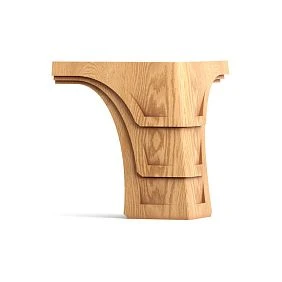
- Massive supports
- Round furniture supports
- Load and fastening: what to check before buying
- Wooden legs for a kitchen table in different styles
- How to match table legs with chairs
- Legs for kitchen table restoration
- Material and coating of wooden legs: what's important to know
- Mistakes when choosing legs for a kitchen table
- What to buy together with legs for a kitchen table
- Installation nuances: how to properly install wooden legs on a table
- FAQ: questions asked when choosing legs for a kitchen table
- About the Company STAVROS
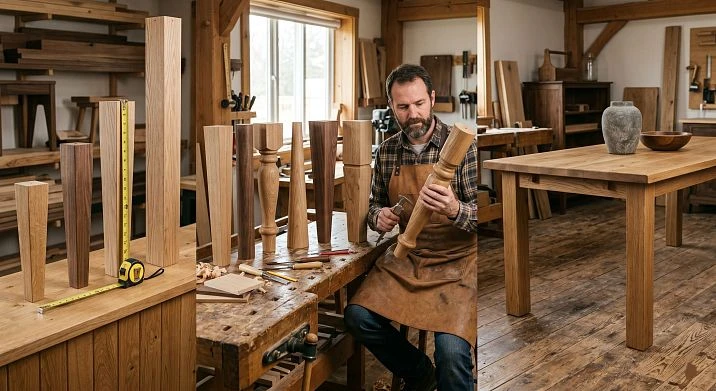
A kitchen table is not just furniture. It's where the morning begins, the family gathers, conversations are held, and decisions are made. This is where the load on the table legs is not abstract, but daily and real. People sit down, stand up, accidentally push the table with their knee, place a heavy pot, lean on it. And the legs must withstand all this — not just beautifully, but reliably, without play or creaking.
Choosing legs for a kitchen table — a task where aesthetics and engineering are inseparable. Wooden table legs must be simultaneously strong, stable, of the right height, suitable for the kitchen style, and compatible with chairs. It's not as simple as it seems. But figuring it out is quite possible if you approach the issue consistently.
This article is a detailed practical guide. No fluff, no extra words. Only what you really need to know before buying.
Short answer: which legs to choose for a kitchen table
For those who want a reference right now:
-
For daily use — stable Wooden legs made of solid wood with a reliable mounting base and anti-slip pads on the bottom.
-
For a heavy wooden or stone tabletop — massive supports with a cross-section of at least 60×60 mm or Furniture support with a wide mounting plate.
-
For a classic and neoclassical kitchen — turned legs with an expressive profile, for painting or with tinting.
-
For a modern kitchen — straight, minimalist supports without a complex profile.
-
For restoration — legs that match the height, attachment method, and style of the existing tabletop and chairs.
-
For painting — models with high-quality surface sanding for enamel, varnish, or stain.
This is a quick navigator. Next — a detailed breakdown of each criterion.




How kitchen table legs differ from regular furniture supports
Many think: a leg is just a leg. But a kitchen table is a specific item, and the requirements for its supports are fundamentally different from those for a cabinet, chest of drawers, or coffee table legs.
A kitchen table is used every day — without days off. A hallway cabinet just stands there. A kitchen table works: morning breakfasts, lunches, dinners, snacks, a cup of coffee at seven in the morning. It's not decorative furniture — it's a work zone. So, the legs must withstand the load in constant use mode without loosening over time.
The load comes not only from the weight above. When a person gets up from the table, they often push off the tabletop or edge. When sitting down, they lean back on the chair, which hits the leg. This is lateral and impact load, which Furniture legs for a kitchen table must withstand without deformation.
The legs should not interfere with chairs. If the supports are positioned incorrectly or too far apart, chairs won't slide in, sitting at the end is uncomfortable, and the space under the table feels cramped. This is a design issue that needs to be thought through before purchase.
Decorativeness is secondary to strength. A beautiful but flimsy leg is an unsuitable choice for the kitchen. This doesn't mean legs should be ugly — just that strength comes first, and form comes second.
The kitchen is an area of humidity and temperature fluctuations. Steam from cooking, floor washing, summer heat, and winter overheating from radiators — all of this affects the wood. Properly dried wood and the right coating are mandatory conditions for durable wooden table legs.
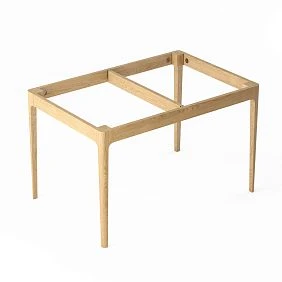
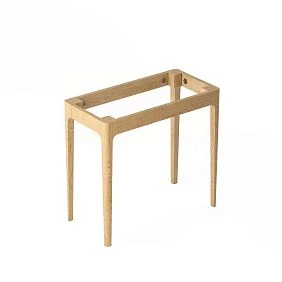
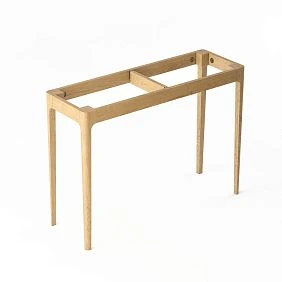
Our factory also produces:
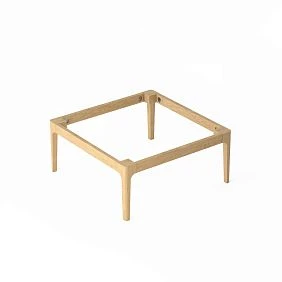
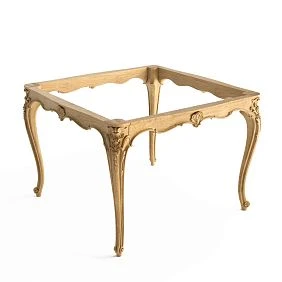
How to choose the height of legs for a kitchen table
Height is the first and most important parameter. A mistake here cannot be corrected by rearranging furniture — you need to change the supports.
The standard height of a kitchen table is 74–76 cm. This is not an arbitrary number, but an ergonomic standard derived for the average height of an adult. At a table of this height, a person sits upright, elbows are slightly below the tabletop level, legs are not tucked in or stretched out.
How to calculate the required leg height:
Leg height = final table height − tabletop thickness − mounting plate thickness (if present).
For example: final table height 75 cm, tabletop 4 cm, mounting plate 1 cm → leg height = 75 − 4 − 1 = 70 cm.
If the tabletop is massive, oak, 6–8 cm thick — the calculation changes. Under the same conditions, the leg needs to be 65–67 cm high.
Chair height. The standard seat height of a chair is 44–46 cm. There should be at least 28–30 cm between the chair seat and the lower surface of the tabletop — this is legroom. If the table is too low, knees hit. If too high, it's uncomfortable to keep hands on the tabletop.
When replacing old legs — measure the original height of the existing supports with a tape measure. Don't guess. An extra 2–3 cm is critical for comfort.
For children's and low tables. If the table is used as a children's table or for non-standard seating, the height can be reduced to 65–68 cm. In this case, select wooden furniture legs of the appropriate height — they cannot simply be cut down without losing structural strength.
Get Consultation
How to choose the shape of wooden legs
Shape is both aesthetics and structure. Different profiles give a different feel to the table and suit different styles.
Straight legs
A straight support with a rectangular or square cross-section is the most versatile and modern option. A cross-section of 60×60 mm or 70×70 mm provides good stability with minimal visual weight.
Straight wooden furniture legs suitable for a modern kitchen, Scandinavian style, minimalism, loft with wooden accents. They look good both in natural form and painted. Under white enamel — clean and calm. Under walnut stain — warm and businesslike.
An important advantage of straight supports: they do not interfere with chairs when pushed in. Seating at the end of the table is comfortable, legs under the table do not hit the legs.
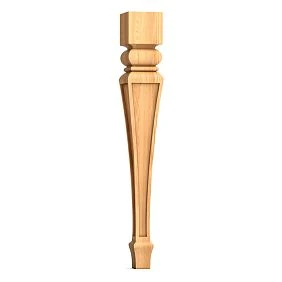
Turned legs
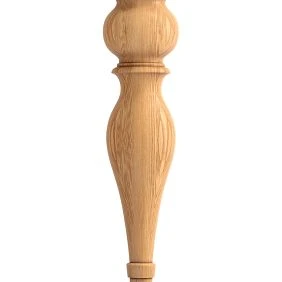
Precision legs for a table — a classic of woodworking that never goes out of style. A round cross-section, narrowed in one or more places, expansions and grips — all this creates an expressive profile that visually 'lightens' the table.
For a classic kitchen, neoclassicism, a kitchen in a country house, a dining room in a historic interior — turned supports remain the best choice. They are easy to paint, hold their shape well, and have standard mounting bases.
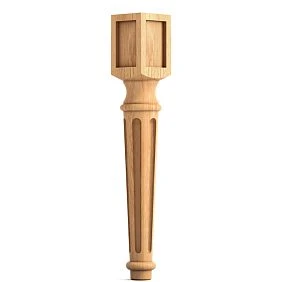
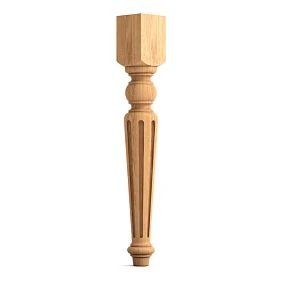
Turned furniture leg MN-220 — an example of a classic round support with a soft silhouette. Suitable for dining and kitchen tables in a calm classic style.
Turned legs create a slightly larger visual volume under the table compared to straight ones. When arranging, you need to ensure that the chairs slide in comfortably.
Shaped legs
Figurative supports are turned legs with a more expressive, complex profile: several grips, decorative balls, pronounced expansions. They create a rich decorative silhouette and are suitable for furniture in historical styles — Baroque, Rococo, Empire, or for restoring antique tables.
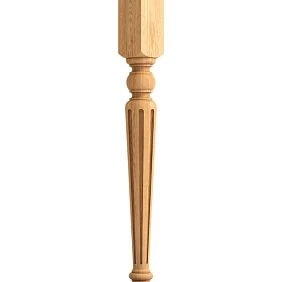
Decorative furniture support MN-233 — an example of an expressive support with a classic relief. For a classic-style kitchen or a country dining room with a rich interior.
For a modern apartment kitchen, figurative legs are a bold choice that requires confidence in style. If the rest of the kitchen furniture is calm, one pair of expressive legs can look like an accent. But in a cluttered interior, it can seem like an extra detail.
Massive supports
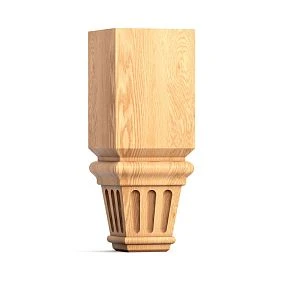
When the tabletop is made of oak, slab, natural stone, or thick solid wood weighing 30–60 kg, appropriate supports are needed. Massive square legs 80×80 mm or 100×100 mm made of birch or oak provide the necessary load-bearing capacity.
Such furniture legs often chosen for dining tables in farmhouse style, loft, or natural interiors. They are expressive on their own — without a complex profile. Massiveness is their style.
Mounting for heavy supports — must be done through a mounting plate with four fixation points. Two screws in the center are not enough.
Round furniture supports
Small-diameter turned round legs (35–50 mm) create a soft, neat silhouette. They work well in classic and neoclassical kitchens, look great under white enamel, and do not interfere with seating or pushing chairs in.
Round furniture leg — a good choice for small kitchen tables, coffee areas, and kitchens with a soft classic character.
Load and fastening: what to check before buying
This is the most technical section. But it is what separates the right choice from the wrong one.
Tabletop weight. The first question to ask yourself: how much does the tabletop weigh? An MDF tabletop 3 cm thick and 90×150 cm in size weighs about 10–12 kg. A solid wood tabletop of the same size weighs 20–30 kg. A marble or engineered stone tabletop weighs 40–60 kg. Each option requires wooden furniture supports corresponding load-bearing capacity.
Leg cross-section under load:
-
Tabletop up to 15 kg — legs with a cross-section of 40×40 mm or a diameter of 45–50 mm;
-
Tabletop 15–30 kg — legs 50×50 mm or diameter 55–65 mm;
-
Tabletop 30–60 kg — legs 60×60–80×80 mm made of dense wood species.
Number of legs. A standard dining table has 4 legs at the corners. If the table is long (over 160 cm) or the tabletop is heavy, a version with 6 legs or a central cross support is possible.
Mounting area. The leg is attached to the tabletop via a mounting plate or platform. The larger the contact area, the more reliable the connection. A small mounting plate under lateral load can lead to fastener pullout.
Tabletop base thickness. If the tabletop is made of MDF with a thickness of 16–18 mm, long screws are not suitable; a special furniture tie is needed. If it is made of solid wood 40–60 mm, standard 5×50 mm screws into the mounting plate will provide a secure fastening.
Stability under lateral load. It is easy to check: try to rock the installed leg sideways with your hands. A good support with proper fastening should not have noticeable play. If it wobbles, either strengthen the fastening or add cross ties between the legs.
Do the legs interfere with chairs. Measure the distance between the table legs and compare it with the width of the chair. For a chair 45–50 cm wide, you need to indent at least 20–25 cm from the edge of the tabletop. Otherwise, the chair will not slide in completely, and it will be uncomfortable to sit at the ends of the table.
Seating at the end of the table. This is a separate problem with corner legs. If buy legs for a table and they are placed strictly at the corners, the outermost sitters will touch the corner supports with their feet. The correct solution: the legs are shifted inward from the edges by 5–8 cm.
Wooden legs for a kitchen table in different styles
The kitchen is not an abstract space. It has a style, materials, color, and character. And the legs should fit into this context, not stick out of it like a random detail.
Classic kitchen. A wooden kitchen in a classic or historical style requires supports with an expressive turned profile. Beautiful decorative furniture support enamel to match the facades or stain in walnut, cherry, mahogany — this is part of a cohesive interior solution. Table legs should echo wooden furniture handles on kitchen facades — by wood species, tone, or profile style.
Neoclassical kitchen. Restraint is key here. Calm turned supports without complex relief, under white enamel or delicate tinting. Shape — conical or with one soft waist. Nothing extra. Classic Furniture in a neoclassical interior is built precisely on this principle: expressiveness through detail, not overload.
Modern kitchen. Straight square or round supports without profiling. Natural wood with oil or varnish — for a warm modern interior. White enamel — for a cool modern style. No carving, no decorative waists. The shape itself is the decor.
Country style (country, farmhouse, rustic). The most massive supports are possible here. Natural wood texture, possible irregularities and live edges — this is an advantage, not a defect. Oak or larch legs with clear varnish create a sense of a lived-in, warm space.
Kitchen-living room. Open spaces where the kitchen smoothly flows into the living room — a special case. Kitchen table legs here should match not only the kitchen facades but also the sofa, coffee table, and other furniture in the relaxation area. wooden furniture legs for such a space should be stylistically neutral or deliberately bridging the two zones.
How to combine table legs with chairs
A table and chairs are a pair. They stand next to each other, are visible simultaneously, and if there is no stylistic unity between them, it is immediately noticeable.
By height. This is the main technical compatibility parameter. The standard seat height of a chair is 44–46 cm. The distance between the seat and the lower surface of the tabletop is 28–30 cm. If the table is already purchased, choose chairs to match its height. If you are making a table with new legs, set the height to match the existing chairs.
By shape and profile. Turned table legs pair well with turned chair legs. Straight square table legs pair well with chairs on straight supports. This is not a strict rule, but it works in most cases.
By color and material. The legs of the table and chairs do not have to be identical, but they should be in the same tonal range. Light oak on the table and dark walnut on the chairs can work as an intentional contrast. But a random mismatch is perceived as a mistake.
By style. Turned legs classic furniture and straight legs of a minimalist chair are a style conflict. If the chairs are already purchased, the table legs should be chosen to match their silhouette, not the other way around.
Practical test. Place the chair close to the table and look from a distance of two meters. If your gaze 'stumbles' on a mismatch, that is a signal. A well-chosen set is perceived as a single whole.
Legs for restoring a kitchen table
This is a separate story — lively, practical, and increasingly popular. People move, inherit old furniture, find good tabletops at flea markets. And instead of buying a new table, they update the existing one.
Why replace the legs? There are several reasons. The old supports are loose and creaky. You want to change the table's height. You need to change the style — for example, from Soviet functionalism to neoclassicism. The chairs have been replaced, and the old legs no longer match them. Or simply because you want to update the kitchen without completely replacing the furniture.
What needs to be measured before buying new legs:
-
The height of the existing legs (from the floor to the bottom surface of the tabletop);
-
The thickness of the tabletop;
-
The distance between the leg attachment points;
-
Attachment method: threaded screw, mounting plate, bolt with nut.
Leg height during restoration. If the old table was too low or too high — this is a chance to fix it. buy legs for a table Achieving the desired height is much easier than reworking the tabletop.
Style of the new legs. This is a key decision during restoration. If you need a classic table from an ordinary one — choose Precision legs for a table with an expressive profile. If you need a modern table — straight square supports.
Combination with painting. During restoration, the tabletop and legs are often painted together — in a single color. White enamel + white turned legs is the simplest way to get a "Provencal style kitchen" from an old table. For this, it is important that table legs for painting had a high-quality finish sanding — then the enamel will lay evenly.
Matching new chairs and kitchen set. This is the most common scenario. Bought a new kitchen, new chairs — but the old table "doesn't fit." We change the legs, paint the tabletop to match the facades, replace wooden handle bracket on kitchen cabinets to a similar style — and the interior becomes cohesive.
Material and coating of wooden legs: what is important to know
We have already talked about shape and height. Now — about the material. Because two externally identical products from different wood species will behave differently under load and when painting.
Birch is the most common material for wooden furniture legs in the mid-price range. Dense, uniform, without a pronounced pattern. Accepts enamel and stain well. Strength — sufficient for most household loads.
Pine is lightweight, affordable, with a pronounced texture. Good under varnish or natural oil. Less hard than birch — with active use in the kitchen, dents may appear on the lower ends. This is solved by installing protective tips.
Oak is hard, dense, durable. Beautiful texture with a pronounced pattern. Holds load well. legs from solid wood Oak is the best choice for heavy tabletops and for those who want natural wood without painting.
Leg coating.
-
No coating — for self-painting or varnishing. Sanding should be up to 180–220 grit.
-
Under enamel — matte or glossy white enamel. Requires preliminary priming.
-
Under stain — color change while preserving texture. Result depends on the wood species.
-
Under varnish — transparent protective coating preserving natural color.
If the kitchen will be under enamel — choose birch without knots. If under natural wood — oak or pine with beautiful texture.
Mistakes when choosing legs for a kitchen table
An honest list — not for criticism, but so you don't make them.
Choosing legs only by appearance. A beautiful turned leg without checking load capacity is a beautiful but risky bet. Especially if the tabletop is heavy.
Not considering the weight of the tabletop. A light leg under a heavy tabletop will develop play after a few months of use. Calculate the load in advance.
Taking supports that are too thin. A leg with a diameter of 30 mm for a table with a heavy tabletop is decor, not a structure. The minimum diameter for a kitchen table is 45 mm.
Forgetting about chair height. This is a mistake that costs a repeat purchase to fix. Always check height compatibility before buying.
Not checking the attachment method. Different legs attach differently. Make sure the chosen method is compatible with the material and thickness of your tabletop.
Placing legs so they interfere with seating. Corner legs strictly at the tabletop corners is a typical mistake. Shift the legs inward by 5–8 cm from the edge.
Not considering the kitchen style. Turned classic legs in a high-tech kitchen are as much a style conflict as straight minimalist supports on a table in a historic dining room.
Not planning the coating before installation. It's more convenient to paint legs before mounting them on the table. After installation, reaching hard-to-access attachment points is much more difficult.
Buying supports without a strength margin. It's better to take legs with a load capacity margin of 20–30% above the calculated load. The kitchen is a high-load area.
What to buy together with legs for a kitchen table
The table is part of the kitchen. And everything you buy for the table should be coordinated with the rest of the furniture and decor.
chair legs — if you are also updating the chairs. From the same series, in the same style and tone.
wooden furniture handles — for kitchen fronts. If the table legs are made of wood in a certain tone, the handles should be in the same system.
wooden hook handle — for cabinet and drawer doors. A classic-style bracket pairs well with turned table legs.
decor for furniture — overlays for kitchen cabinet fronts. If the table is in a classic style with turned legs, the fronts can be complemented with decorative elements.
Wooden decoration — point wooden overlays for furniture, shelves, range hood.
Decorative Bracket — for open shelves above or next to the kitchen table. From the same wood species and in the same tone as the table legs.
Classic Furniture — if you are updating the kitchen comprehensively and looking for furniture in a unified style with wooden legs.
furniture legs for other items — cabinets, coffee table, console in the kitchen-living room. A unified leg style across all items creates a sense of a well-thought-out interior.
Installation nuances: how to properly attach wooden legs to a table
Buying legs is half the task. Installation is the other half. Mistakes during installation negate the right choice.
Marking. Before installation, apply markings to the underside of the tabletop: mark the leg indentation from the edge (5–8 cm) and the distance between them along the length and width. Use a tape measure and a square — 'by eye' doesn't work.
Mounting plates. If the legs come with mounting plates, use all attachment points, don't skimp on screws. For MDF tabletops, use 4×30 mm screws with a wide head. For solid wood, use 5×50 mm.
Adjustable feet. Many wooden legs have built-in or removable adjustable feet on the lower end. They compensate for floor unevenness up to 10–15 mm. Don't neglect them — even a slight floor slope without adjustment causes table wobble.
Tightening fasteners. After installing the legs, place the table on the floor and gently load the tabletop. Check each leg for wobble. Tighten loose connections. After a week of use, recheck: wood 'settles,' fasteners may loosen.
Floor protection. It is recommended to glue felt or silicone protective pads to the lower ends of wooden legs. They prevent scratches on the floor covering and reduce noise when moving the table.
FAQ: questions asked when choosing legs for a kitchen table
Which legs are best for a kitchen table?
For a kitchen table, it is better to choose stable ones Wooden legs for table from an array with a reliable mounting base. It is important to consider the weight of the tabletop, the kitchen style, and the height of the chairs. For a classic kitchen — turned supports. For a modern one — straight ones.
How to choose the height of legs for a kitchen table?
Subtract the thickness of the tabletop from the standard table height (74–76 cm). The result is the required leg height. Also consider the height of the mounting platform. buy legs for a table the required height is important before final assembly.
Are turned legs suitable for a kitchen?
Yes. furniture leg turned shape — a classic choice for a kitchen in historical, classic, or neoclassical style. Under white enamel or tinting, they create an expressive and cohesive look.
Can the legs of an old kitchen table be replaced?
Yes. You need to measure the height of the old legs, the thickness of the tabletop, determine the method of attachment, and choose Furniture legs with similar parameters or suitable for the required changes.
Can wooden legs be painted?
Yes. table legs made of solid wood they accept enamel, varnish, and stain well. The key condition is sanding with 180–220 grit and priming before painting.
How many legs are needed for a kitchen table?
Standard — 4 legs at the corners. For long tables (160 cm or more) or heavy tabletops, 6 legs or additional cross supports are recommended.
How to choose legs so they don't interfere with chairs?
Place the legs 5–8 cm from the edge of the tabletop. Check that the distance between the legs across the table width is sufficient for sliding chairs in.
About the company STAVROS
A kitchen table with the right legs is not just about aesthetics. It's daily comfort and durability. STAVROS produces wooden furniture legs — turned and straight, from birch and oak, in various heights and profiles. In the STAVROS catalog: furniture legs for tables, chairs, cabinets, chests of drawers, and consoles, wooden furniture handles, Decorative Inserts, Brackets and a full range of wooden moldings.
STAVROS is a manufacturer with a systematic approach to wooden decor. Legs, handles, overlays, moldings — everything is designed in a unified style logic, so you can assemble a cohesive interior from parts of one manufacturer. Without mismatches in tone, style, and processing quality.