Article Contents:
- Short answer: what exactly STL-019 "for enamel" means
- What the buyer actually chooses in the STL-019 listing
- Why an interior photo does not equal the order configuration
- The photo shows the result, the listing shows the delivery condition
- The more detailed the photo, the more carefully you need to read the parameters
- Why "for enamel" does not mean "for any color without preparation"
- A white console is a separate solution, not a synonym for the finish
- Tinting requires coordination of the entire visible group
- "Prestige" reduces preparation but does not cancel acceptance
- "Standard" requires finding a contractor in advance
- What to recalculate
- What to inspect
- What cannot be done before acceptance is completed
- Why the word "fastener" is too general
- How to check fasteners after delivery
- What a dry assembly checks
- How to avoid damaging the surface during a trial assembly
- Geometry matters more than speed
- Why you cannot paint an unaccepted kit
- Why you cannot assemble "permanently" before the painter's decision
- White has dozens of different characters
- Dark color enhances the relief
- Beech and opaque enamel
- Oak and visible texture
- Can you paint oak with opaque enamel
- Can beech be tinted
- Passage
- Skirting
- Sockets and Switches
- Mirror and wall decor
- Door
- Choose STL-019 to match the decor if
- Consider a ready-made console if
- Do not throw away the packaging immediately
- Keep the order of parts
- Mistake 1. "Under enamel" was read as "painted with enamel"
- Mistake 2. An interior photo was taken as the exact configuration
- Mistake 3. Did not notice the disassembled format
- Mistake 4. Chose "Standard" without a master
- Mistake 5. "Prestige" was taken as ready-made painting
- Mistake 6. Fasteners were considered included automatically
- Mistake 7. Bought both sets just in case
- Mistake 8. Started painting before dry assembly
- Mistake 9. Assembled finally before painter's approval
- Mistake 10. Chose color by screen
- Mistake 11. White color written as one word
- Mistake 12. Chose oak, but covered texture without reason
- Mistake 13. Decided to tint beech without a sample
- Mistake 14. Size estimated only along the wall
- Mistake 15. Didn't account for baseboard
- Error 16. The socket ended up behind the console
- Error 17. The mirror was ordered before the furniture
- Error 18. The acceptance inspection was carried out after the primer
- Error 19. The marking was thrown away during unpacking
- Error 20. Different deliveries were not synchronized
- Error 21. Material consumption was estimated "by eye"
- Error 22. The thread was not protected during assembly
- Error 23. The misalignment was attempted to be fixed by tightening
- Error 24. The finished console and STL-019 were compared only by the price of the card
- Error 25. The production time was taken as the time for the interior to be ready
- Scenario 1. Self-painting at home or in your own workshop
- Scenario 2. Finishing is done by a furniture or painting workshop
- Scenario 3. The buyer needs an item without further work
- Does STL-019 arrive already painted?
- What does "under enamel" mean?
- Can STL-019 be considered a white console?
- In what form is STL-019 supplied?
- What is the size of STL-019?
- What materials is the console made from?
- What to choose for white enamel — beech or oak?
- What to choose for visible texture?
- Does "for tinting" mean a ready color?
- What is the difference between "Standard" and "Prestige"?
- How many allowable roughnesses does "Standard" have?
- And "Prestige"?
- Does "Prestige" mean it can be painted immediately?
- Is additional sanding of "Standard" required?
- Does the order include primer?
- Does it include enamel?
- Do I need to do a test paint?
- Where can I order a sample?
- Which fasteners are shown in the card?
- Is FUR-001 included automatically?
- Can I select FUR-012 without checking?
- Do I need to buy both sets?
- What should I check upon receipt?
- When should I do a dry assembly?
- Why assemble the cabinet before painting?
- Do I need to disassemble STL-019 again after dry assembly?
- Should I paint the parts separately or assembled?
- Can I assemble STL-019 myself?
- Is wall mounting required?
- Will STL-019 fit in a narrow hallway?
- Will it fit under a mirror?
- Can I place it next to the door?
- Do I need to account for the baseboard?
- Is STL-019 suitable for a bedroom?
- Can I use it as a vanity table?
- Where can I see similar models?
- How to find out the current price?
- What does "made to order" mean?
- When should I order finishing materials?
- Can I order the console and materials in one shipment?
- How do I calculate the time until final installation?
- What should I do if the console has already arrived without enamel?
- Can I immediately give the parts to the painter?
- Where can I see ideas for decorating the area?
- Do I need a designer?
- What is the main question to ask the manager?

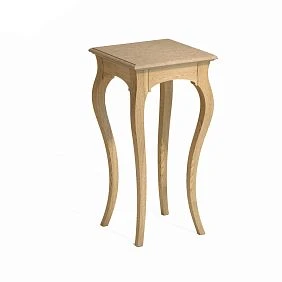
In the photo, STL-019 looks like a finished interior piece: a sleek classic console stands against the wall, carved details are assembled into a cohesive composition, the surface has an even color, and a mirror, lamp, or decorative items are placed on top. The buyer opens the product page, selects beech, "Standard" sanding, and the "under enamel" finish, then mentally transfers the exact image they saw in the photo to their order. It seems that after delivery, all that remains is to place the furniture in position.
But the STL-019 "under enamel" specification does not mean a ready-painted console. It does not confirm white, black, gray, or any other color, nor does it define the primer, enamel brand, gloss level, or painter's work. Moreover, STL-019 is delivered disassembled. This means the buyer needs to decide in advance who will receive the kit, check the parts and fasteners, perform a dry assembly, prepare the surface, approve a test paint sample, apply the coating, and assemble the product without warping.
This is a fundamental difference between an interior photo and a product specification. The photo shows a possible final scenario. The order line describes the selected wooden base: dimensions 470 × 470 × 930 mm, wood species, sanding quality, type of lamination, and quantity. If the invoice does not separately specify color, finishing, assembly, and fasteners, these works or items cannot be considered automatically included.
A buyer who plans buy console STL-019, it is useful to first determine the desired result. Do you need a wooden console for self-painting? Do you require a blank that a finisher will bring to the desired shade? Or do you need a fully finished piece that can be unpacked and immediately placed against the wall? These three tasks lead to different order compositions.
STL-019 is suitable for those who want to control the material and future finish, matching the color to wall panels, doors, baseboards, mirror frames, or other furniture. But the freedom of choice entails responsibility for the following stages. The earlier they are included in the plan, the lower the risk that the disassembled console will sit in packaging for weeks waiting for primer, fasteners, or a contractor.
Short answer: what exactly STL-019 "under enamel" means
The "under enamel" finish means that the wooden slats are selected with the expectation of further opaque coating. Their color and texture do not need to form the pattern required for transparent or semi-transparent finishes: the future enamel will cover the surface.
This specification does not mean that:
-
the enamel has already been applied;
-
a specific color has been selected;
-
the surface is primed according to your system;
-
a matte, semi-matte, or glossy finish has been agreed upon;
-
a test paint-out has been performed;
-
the product is assembled;
-
fasteners are automatically included in the delivery;
-
after unpacking, the console is ready for installation.
Therefore, the entry "console STL-019, beech, "Standard", for enamel, 1 pc." describes a wooden product for further opaque finishing, not a finished white console. If you need a finished item, you must either separately agree on the entire scope of work or consider a category where you can buy a ready-made classic console with corresponding confirmed characteristics.




What the buyer actually chooses in the STL-019 card
Closer to the order, the conversation should shift from impression to parameters. Each characteristic is responsible for its part of the result; none of them replaces the others.
| Order field | Confirmed variant | What this determines | What this does not determine |
|---|---|---|---|
| Article number | STL-019 | Specific console model | Color and readiness for use |
| Size | 470 × 470 × 930 mm | Product dimensions | Free space around the furniture |
| Material | Beech or oak | Wood species | Automatic coating selection |
| Sanding | "Standard" or "Prestige" | Surface preparation degree | Applied primer and finish |
| Re-gluing | For enamel or tinting | Principle of selecting lamellas for future finishing | The painting or tinting itself |
| Delivery format | Disassembled | Need for inspection and assembly | Included assembly service |
| Execution status | Custom Order | Need to clarify the current timeframe in advance | Custom color painting |
| Fastening options in the product card | FUR-001 and FUR-012 | Possible positions for checking | Automatic inclusion and universal compatibility |
The size 470 × 470 × 930 mm should be perceived as three independent constraints. The console takes up about 470 mm along the wall and approximately the same amount protrudes into the room, with a height of 930 mm. Before ordering, check not only the wall section but also the passage, door opening, position of outlets, switches, baseboards, mirrors, and wall-mounted lights.
The material affects the approach to finishing. Beech is often chosen for opaque enamel when the texture will be covered. Oak is considered for tinting or semi-transparent coating if the wood grain should remain visible. This is not a strict rule for any project, but a clear connection that needs to be confirmed with a sample.
Sanding determines the initial surface condition but does not replace the painting cycle. "Standard" and "Prestige" are not names of finished coatings. After selection, you still need to understand who is responsible for inspection, possible re-sanding, dust removal, priming, interlayer treatment, and application of the finish according to the chosen system.
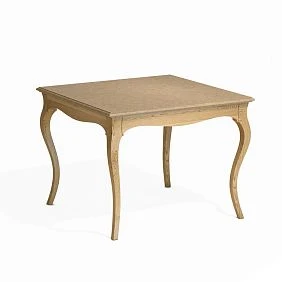
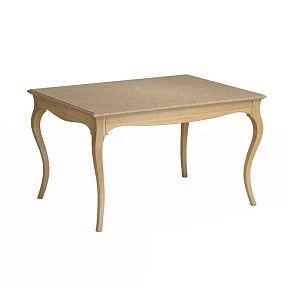
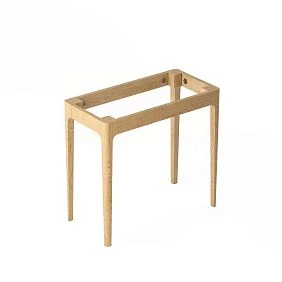
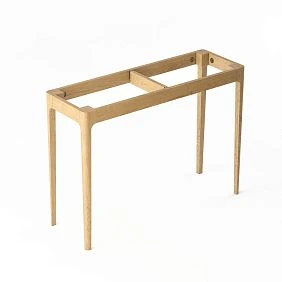
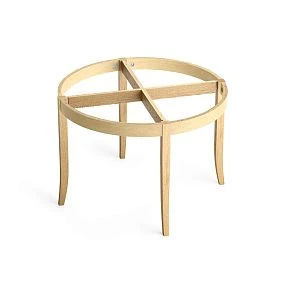
Our factory also produces:


Why interior photography does not equal order configuration
The interior image answers the question: how STL-019 might look in a finished setting. It helps assess proportions, carving character, connection with the mirror, and scale relative to the wall. But the photograph is not a specification.
It is impossible to reliably determine from the image:
-
whether beech or oak was chosen;
-
which sanding option was used;
-
whether the color belongs to factory finishing, the work of an external painter, or visualization;
-
what primer was applied;
-
what the degree of gloss is;
-
how hidden surfaces were treated;
-
what fasteners were used;
-
in what sequence assembly and painting were performed;
-
whether the tabletop, mirror, and decor are included in the specific product;
-
What work is included in the stated price.
The screen color also cannot be transferred to the order. The same shade looks different in daylight and artificial lighting, on matte and semi-matte surfaces, on a flat part and in deep carving. Even the exact color name does not replace a test paint-out on a material and relief close to the future console.
A photograph is useful as a talking point. It can be shown to a designer or painter and say: "We need a similar finish character." Then the sample is translated into technical solutions: wood species, re-gluing, sanding quality, primer, color, gloss, number of coats per the coating manufacturer's instructions, assembly order, and protection of carved parts during work.
Get Consultation
The photo shows the result, the card shows the delivery condition
These two images of the same product do not contradict each other. They answer different questions. The finished interior scene sells the idea: where to place the console, which mirror to pair it with, how the classic form works. The product configuration determines the form in which the wooden parts will arrive.
If the buyer separates these levels in advance, they will not be disappointed after unpacking. On the contrary, they get the opportunity to independently choose the color, material, and surface quality. If the photograph is perceived as a promise of exact configuration, the inevitable question arises: "Why is the console not white and why is it disassembled?"
The more detailed the photo, the more carefully you need to read the parameters
High-quality interior photography enhances the sense of completeness. Even color, a neat shadow, objects on the surface, and wall composition are visible. But it is at this moment that it is useful to stop and read the card literally. The words "under enamel," "under tinting," "Standard," "Prestige," "disassembled" have specific meanings. They are more important than the visual impression when determining the actual order.
"Under enamel" is a characteristic of re-gluing, not a promise of white color
The most common mistake arises from the everyday meaning of words. The buyer hears "under enamel" and understands: "the product has already been prepared and painted with enamel." In the product characteristic, the meaning is different. It refers to the quality of re-gluing the wooden blank for an opaque coating.
For enamel, it is not necessary to demonstrate a matched lamella pattern as with a transparent finish. After applying an opaque layer, differences in wood color are covered. Therefore, an enamel finish is rational for a project where the chosen color and relief will be the main focus, rather than the natural texture.
What remains to be decided separately:
-
who performs the final preparation;
-
whether additional hand sanding is needed;
-
which primer is compatible with the enamel;
-
which color is approved;
-
what degree of gloss is needed;
-
what the test patch looks like;
-
which surfaces are to be painted;
-
in what sequence to assemble and finish the console;
-
how to protect threads and edges;
-
how much time is required for technological stages.
It cannot be assumed that the word "enamel" in the name of the finish automatically includes all these solutions. To learn more about what "under enamel" means, it is useful to compare the requirements for re-gluing and sanding with your own finishing plan.
Why "under enamel" does not mean "in any color without preparation"
An opaque coating does indeed hide the texture and differences in the shade of the lamellas. But it does not eliminate the requirements for the surface. Relief, ends, corners, and joints must be prepared according to the selected paint system. If fuzz remains on the wood, it will show through after priming. If parts are assembled with misalignment, color will not fix the geometry. If the gloss level is not agreed upon, the visual result may differ from the photo even with a matching shade.
A white console is a separate solution, not a synonym for the finish
White is often associated with classic furniture, so the buyer automatically links it to the "under enamel" label. However, white enamel is just one of the possible options for an opaque coating. You can choose a complex gray, deep blue, black, a wall shade, or the color of a door leaf. Until a specific option is included in a separate approval, the console remains a wooden blank for future painting.
"Under tinting" also does not mean a ready tinted surface
The reverse error is less common, but it works the same way. The buyer chooses oak "for tinting" and expects the surface to already have the selected brown, honey, or gray shade. In reality, this characteristic sets the direction for future finishing and requirements for wood selection, but the specific color and application of the compound must be confirmed separately.
When tinting, the texture remains significant. Therefore, you need to evaluate:
-
a real oak sample;
-
the character of the pattern;
-
the reaction of the relief to the selected compound;
-
darkening in recesses;
-
combination with the floor, doors, and other furniture;
-
final protection;
-
gloss level;
-
uniformity of all visible parts.
A large flat swatch does not show how the compound will behave on carving. In recesses, the tone may look richer, and protruding parts lighter. Therefore, for oak STL-019, it is useful to approve the oak tinting On the sample before starting the full cycle.
Tinting requires coordination of the entire visible group
If a mirror in a wooden frame, wall panels, moldings, or other furniture is planned near the console, one sample should be evaluated together with them. Oak under the same finish may be perceived differently on parts with different grain patterns and fiber directions. The project benefits when the color is chosen not in isolation for STL-019, but for the entire composition.
STL-019 "Standard" or "Prestige": what work you are buying along with sanding
The card allows you to choose two surface qualities. The difference between them affects not only the price, but also the amount of work after delivery.
| Parameter | "Standard" | «Prestige» |
| Machine sanding | In progress | In progress |
| Detailed hand sanding | Limited | Extended |
| Allowable roughness and nap | Up to 15% of the surface | Up to 3% of the surface |
| Condition before painting | Additional preparation may be required | The surface is prepared for coating application |
| The buyer's main question | Who will perform the finishing | Who will perform the painting |
| Commercial logic | Lower initial price, more control for the workshop | Higher degree of preparation, less manual finishing work |
"Standard" is reasonable when the buyer has a furniture or painting workshop that performs its own preparation cycle anyway. The specialist accepts the product, checks the surface, removes raised grain, treats hard-to-reach areas, and is responsible for the result.
"Prestige" is more convenient when you want to reduce the amount of manual finishing and get a more finely sanded surface. But even this option does not mean ready-to-paint. Before applying materials, the product is inspected, cleaned of dust, and the technology of the chosen coating is followed.
It cannot be claimed that "Prestige" is always more advantageous. For a professional workshop that prefers to shape the surface independently for its own system, "Standard" may be rational. For a private buyer without experience in manual processing of complex carvings, saving on the initial price can turn into searching for a craftsman and additional expenses.
Before ordering compare sanding "Standard" and "Prestige" need not abstractly, but through a specific question: who and where will bring STL-019 to the state required for primer, enamel, or tinting.
"Prestige" reduces preparation, but does not cancel acceptance
Even a finely sanded console is checked after transportation. Packaging may preserve the product, but the buyer must still inspect corners, edges, threads, and connection points. You cannot proceed to painting based solely on the name of the surface quality.
"Standard" requires finding a contractor in advance
The most unpleasant situation arises when STL-019 has already been delivered, and the buyer first learns about the need for additional finishing. The craftsman may be busy, the room may not be prepared, and the interior deadlines may already depend on the console installation. Therefore, choosing the "Standard" must be accompanied by an assigned responsible person: who accepts the surface and what work is performed before the primer.
What arrives after delivery: not finished furniture, but a kit for further work
The delivery format of STL-019 is disassembled. For logistics, this is a clear solution: individual parts are easier to pack and protect. For the buyer, it means that the acceptance stage cannot be reduced to inspecting a single assembled console.
Before opening the packaging, it is useful to prepare a clean dry place, a soft mat, a list of ordered items, and a drawing. Parts cannot be placed directly on a dirty floor or leaned with carved sections against a wall. The packaging is opened sequentially, preserving the marking until the inspection is complete.
What to recount
The number of wooden parts is checked against documents and the diagram. If the order includes fastener kits, they are checked as separate line items. You cannot conclude that the set is complete just because the main packaging looks intact.
What to inspect
Special attention is paid to:
-
carved sections;
-
corners;
-
edges;
-
mounting surfaces;
-
holes;
-
future joint locations;
-
surfaces after sanding;
-
marking;
-
compliance of beech or oak;
-
transport damage.
It is better to direct light from the side. This makes the pile, roughness, dents, and relief transitions more noticeable. Inspection under a single overhead light can hide defects that will appear after enameling.
What not to do before completing acceptance
Do not start sanding, painting, drilling, or final assembly of the product until all items have been checked. After irreversible processing, it is harder to separate a production problem from the consequences of your own work.
Drawing STL-019 is needed even before unpacking
The buyer often remembers the diagram when the parts are already laid out and it is unclear which one goes where. It is much more reliable to download drawing STL-019 and print it for acceptance.
The drawing helps:
-
check the size 470 × 470 × 930 mm;
-
match the parts;
-
understand the orientation;
-
find the connection zones;
-
verify the holes;
-
determine which surfaces will be hidden;
-
prepare for a dry assembly;
-
discuss the work with the painter and assembler.
The diagram does not replace the instructions for specific fasteners, if such instructions are required. It serves as a general map of the product. Any non-obvious joints should be clarified before the craftsman applies force or begins modifying parts.
FUR-001 or FUR-012: the card shows options, but the order must be unambiguous
In the STL-019 card, FUR-001 and FUR-012 are shown as mounting options. This does not give grounds to claim that both kits are included in the price, that the buyer automatically receives one of them, or that any option is equally suitable for any assembly scheme.
Before payment, five points must be confirmed:
-
which kit is selected;
-
whether it is included in the invoice;
-
how many kits are required;
-
whether it matches the specific STL-019 configuration;
-
whether additional mounting items are needed.
If FUR-001 is agreed upon, it is better to add it as a separate line and buy the FUR-001 mounting kit only after confirming the scheme. The same applies to the decision buy FUR-012 kitthe product name does not replace checking compatibility and quantity.
Why the word "fastener" is too general
It can refer to different items: a connecting kit, a mounting plate, a stud, self-tapping screws, or other parts. The article should not invent the composition. The invoice requires an exact name and quantity. The entry "fastener included" without an article number and list is inconvenient for acceptance.
How to check fasteners after delivery
Each package is left with labeling. The parts are recounted on a clean surface and compared with the diagram. If one element seems extra or missing, assembly is stopped and the set is clarified. You cannot replace a missing item with a random analog just because it seems to fit by diameter or length.
Dry assembly of STL-019: check before primer and enamel
Dry assembly is a preliminary connection of parts without final finishing and without actions that cannot be undone. Its purpose is not to immediately get finished furniture. It shows whether all elements are in place and whether the geometry aligns.
What dry assembly checks
-
completeness;
-
orientation of parts;
-
alignment of holes;
-
access to fastening points;
-
absence of obvious skew;
-
position of carved parts;
-
actual overall dimension;
-
stability of the structure in assembled state;
-
surfaces that will become inaccessible after joining;
-
need to protect certain areas during painting.
The final sequence of actions must be coordinated with the contractor. Sometimes it is advisable to completely disassemble the product after inspection and paint parts separately. In another project, some assemblies are put together before finishing. There is no universal rule for any coating system.
How to avoid damaging the surface during trial assembly
Work on a soft, clean surface. Do not force connections. Do not place an unsecured structure in a walkway. Protect carved parts from tool impacts. If a joint does not come together without excessive force, the cause requires inspection, not stronger tightening.
Geometry is more important than speed
The customer wants to see the entire console faster, especially after a long wait. But dry assembly should not turn into hasty installation. Check the diagonals and the position of parts according to the drawing. If the structure is assembled with a skew, the subsequent enamel will visually fix the unsuccessful result, but will not correct it.
Paint before or after assembly: the answer depends on the components and technology
This question cannot be resolved in one phrase. Painting individual parts facilitates access to threads, internal corners, and hidden areas. Assembly before finishing allows you to see the joints and, if necessary, prepare them as a single unit. Each approach has limitations.
| Sequence | Possible advantage | What to check |
| Painting parts before final assembly | Convenient access to relief and internal surfaces | Will the coating interfere with fit and fasteners |
| Assembly before painting | Real joints and overall geometry are visible | Is it possible to process hard-to-reach areas with quality |
| Combined scheme | Some parts are painted separately, some as an assembly | A precise sequence map is needed |
The decision is made by the master responsible for coating and assembly. They receive the drawing, selected fasteners, a color sample, and information about surface quality.
Why you cannot paint an unaccepted set
After primer, markings may become less visible, and returning or replacing a damaged part is harder. First acceptance and dry assembly, then finishing technology.
Why you cannot assemble "permanently" before the painter's decision
Part of the thread or internal edges may become inaccessible. The master will have to paint at an awkward angle, increasing the risk of missed spots or runs. The sequence is approved before final fixation.
Test patch: a small sample that prevents a big rework
Color from a catalog, photo, or screen does not give a full picture of the finished STL-019. Perception is affected by wood species, primer, number of coats, texture, lighting, and degree of gloss.
A test patch is needed to check:
-
the shade in daylight;
-
the shade in the evening;
-
the depth of shadows on the carving;
-
coverage;
-
matteness or gloss;
-
combination with the mirror, wall, and floor;
-
the appearance of the edges;
-
coating behavior on the prepared surface.
Better check the enamel color on the sample, rather than choosing it only by a photo of the finished furniture. After approval, the sample is signed: color, material, coating system, gloss level, and date. This becomes a reference for the painter and the client.
White has dozens of different characters
Cool white next to a warm wall may appear bluish. Warm white next to a pure white baseboard looks creamy. Matte enamel softens the carving, while glossier enamel emphasizes transitions and reflects light. Therefore, the phrase "paint it white" is insufficient for a specification.
Dark color enhances the relief
Black, graphite, or deep colored enamel makes shadows denser. On complex carving, this can look expressive, but dust and imperfections become more noticeable. The decision is evaluated on a sample, not by a general idea of the color.
Beech under enamel or oak under tinting: you choose not just the wood species separately, but the whole combination
The material cannot be taken out of the chain of decisions. The correct sequence is as follows:
wood species → quality of gluing → sanding → type of coating → sample → order of assembly and finishing.
If at least one link remains undefined, the order looks complete only on paper.
Beech and opaque enamel
Beech is logical for a project where the natural wood grain should not play a leading role. The opaque color connects the console with the wall, doors, baseboard, or other painted furniture. At the same time, beech does not exempt from preparation: relief, corners, joints, and ends must be accepted and processed.
For light enamel, shadows in the carving are especially noticeable. Even with a uniform color, the depth of the form is read through lighting. The buyer gets a classic silhouette without the need to coordinate the direction of the texture as the main decorative motif.
Oak and visible texture
Oak is usually chosen when the character of the wood needs to be preserved. Tinting can change the shade, but the grain pattern remains part of the appearance. Such an STL-019 depends more on the selection of visible details and the coating sample.
On an oak console, color cannot be assessed only on a flat plate. The carving has recesses in which the compound can accumulate and look darker. Protrusions, on the contrary, receive more light. Therefore, a buyer who wants to buy an oak STL-019 for tinting, needs to include a test sample in the plan, rather than leaving it to the discretion of the contractor.
Can oak be painted with opaque enamel
The technical solution depends on the project and the coating system. But what matters commercially is different: if the texture will be completely covered anyway, you need to understand why a more expensive or different material was chosen. Sometimes oak is needed for consistency with other details; sometimes beech is more rational. The answer should come from the entire composition, not from the idea that one species is "better" than another.
Can beech be tinted?
You should not automatically transfer the logic of oak to beech. The card offers material and re-gluing options, but the specific combination and visual result need to be confirmed with the manufacturer and on a sample. If the main goal is expressive visible texture, oak is usually more understandable for such a scenario.
Size 470 × 470 × 930 mm: the console is narrow only in the photo
The word "console" often creates the feeling of almost flat furniture. The STL-019 has a depth of 470 mm. This is not a decorative shelf a few centimeters thick, but an object that noticeably extends into the room.
Passage
Measure the distance from the wall to the movement path. Subtract 470 mm from the free width and evaluate the remainder. Do not rely on an empty room: add door swing, carpet edge, adjacent furniture, and the usual path of a person.
Baseboard
The baseboard may push the console away from the wall. Then the actual protrusion will increase relative to the measurement from the wall plane. You need to understand whether the design allows it to fit flush, whether it requires going around the baseboard, or whether the furniture will remain at a distance.
Sockets and switches
The height of 930 mm means the console can cover lower outlets or end up near a switch. Mark them on the elevation with frames and plugs, not just with the centers of the mechanisms.
Mirror and wall decor
A tall console raises the lower edge of the mirror. Compositional space is left between the tabletop and the frame, but there is no universal value. It depends on the height of the mirror, lighting, and items on the surface.
Door
If STL-019 is placed next to the door, check the door leaf in the open position, the handle, and the casing. Furniture should not interfere with the swing path.
For a complex area, you can order placement of the console under the mirror and see the size 470 × 470 × 930 mm on the elevation before purchase.
STL-019 in the hallway: a beautiful shot must withstand everyday life
The hallway is a natural place for a console, but depth is especially important here. People pass by the furniture in outerwear, carry bags, and open the front door. The 470 mm protrusion needs to be checked in the actual walking route.
Keys, gloves, and a small bag may be placed on the surface. The article does not confirm the allowable load and the composition of the tabletop, so the functional scenario must be agreed upon separately. One cannot draw conclusions about durability from an interior photo alone.
The finish in the hallway should account for touch and regular cleaning. The specific coating is chosen by a specialist. The buyer is only obliged to raise this question before painting, not after the first signs of wear appear.
STL-019 in the living room: a standalone accent or part of a wall composition
In the living room, the console can stand under a mirror, a painting, or between molding frames. Here, the 930 mm height ties the furniture to the vertical composition of the wall. The color can be made close to the panels or contrasting.
If the console is part of a complex classic group, it is useful to look at consoles and carved furniture in the interior and then translate the liked image into your own specification. The idea does not replace measurements and materials.
Dark oak tinting emphasizes the furniture as a separate item. Enamel in the wall color visually connects it with the architecture. Both paths are possible, but require different samples.
STL-019 in the bedroom: do not confuse the console with a dressing table automatically
In terms of height and depth, STL-019 may interest the buyer as a base for a mirror area. However, seating comfort, legroom, chair, and functional load must be checked separately. The product card confirms a console, not a universal dressing table.
In the bedroom, the degree of gloss is especially noticeable. Soft light makes a matte surface calmer, while semi-matte can emphasize relief. The choice is evaluated next to textiles, wardrobe fronts, and the mirror frame.
STL-019 in the hallway: scale works if space remains around it
A height of 930 mm and classic carving require visual air. In a tight niche, the console may seem cramped. In a wide hallway, it forms a center, especially if a mirror or wall decor is above it.
At the same time, "spacious" does not mean "no need to measure." Check the axis relative to doors, stairs, lights, and the floor pattern. A large symmetrical composition makes any shift noticeable.
What to order with STL-019
The full order differs from a single line in the card. It should reflect what will happen after delivery.
| Item or work | Why it's needed | What to confirm |
| STL-019 | Wooden console base | Beech or oak, sanding, re-gluing |
| FUR-001 or FUR-012 | Possible mounting kit | Specific article number, quantity, compatibility |
| Primer | Preparation for finish | Compatibility with wood and enamel |
| Enamel | Opaque finish | Color, shine, technology |
| Tinting composition | Preserving oak texture | Shade and sample |
| Final protection | Completion of selected system | Purpose and compatibility |
| Abrasives and consumables | Surface finishing | Required volume per "Standard" or "Prestige" |
| Sample | Color approval | Material, relief, gloss level |
| Assembly | Obtaining a geometrically correct object | Executor and sequence |
| Protective materials | Work without damaging the floor and threads | Location and format of work |
| Delivery | Obtaining a complete set | Number of locations and acceptance procedure |
After system approval, you can buy materials for painting a wooden console and include them in one shipment. But the material category does not exempt from checking the specific product and its applicability.
Ready-made console or DIY assembly: an honest fork before purchase
STL-019 is not suitable for every buyer. Its value lies in the ability to choose the wood species, preparation, and your own finish. For those who want an exact color to match the interior, this is an advantage. For those who are not ready to organize assembly and painting, the same feature turns into extra complexity.
Choose STL-019 for finishing if
-
you need a custom color;
-
you have a painter or workshop;
-
you need to match the console with other wood trim;
-
you are ready to accept a disassembled kit;
-
fasteners and assembly will be checked in advance;
-
project timelines account for bringing it to readiness;
-
A test paint application is included in the plan.
Consider a ready-made console if
-
you need the item immediately after delivery;
-
there is no space for dry assembly and painting;
-
you do not want to choose primer and enamel;
-
the color can be selected from ready-made options;
-
self-finishing is not in the budget;
-
minimizing subsequent work is more important.
It is useful to compare a ready-made console or self-assembly even before choosing a category. Then expectations will match the product format.
Frame, underframe, and finished furniture: how not to mix different levels of readiness
The catalog may contain furniture frames, underframes, and finished consoles. The words are similar, but the buyer's journey differs.
A frame or base requires checking the tabletop, fasteners, assembly, and finishing. STL-019 already has its own console shape, but delivery in disassembled form and execution for further coating retain the stages of refinement.
Finished furniture must have confirmed complete configuration. It cannot be assumed only by the category name. Each card is read separately.
To compare models, you can open frames and underframes — catalog and prices or frames of the "Classic" collection — prices. The commercial point of comparison is to choose not the most beautiful image, but the appropriate readiness format.
What makes up the real budget of STL-019
Correct specification: one line should exclude different interpretations
The phrase "STL-019 white, 1 pc." is incorrect if the final paint color is not confirmed. It does not specify the material, sanding quality, re-gluing, delivery format, and fasteners.
A working formulation might look like this:
Console STL-019, size 470 × 470 × 930 mm, beech, sanding quality "Prestige", re-gluing quality "under enamel", 1 pc. Delivered disassembled. Fasteners — per agreed scheme as a separate line. Enamel color, primer, gloss level, test paint-out, assembly, and final painting — by separate agreement.
For oak:
Console STL-019, size 470 × 470 × 930 mm, oak, sanding quality "Prestige", re-gluing for tinting, 1 pc. Delivered disassembled. Shade, protective coating, test sample, fasteners, and assembly — as separate items.
Such an entry is longer, but it protects against the main misunderstanding: the buyer and seller understand equally in what form the product is delivered.
What to check in the invoice before payment
The invoice is checked not only by the amount. Verify:
-
recommended product URL;
-
article STL-019;
-
size 470 × 470 × 930 mm;
-
beech or oak;
-
"Standard" or "Prestige";
-
for enamel or for tinting;
-
disassembled format;
-
quantity;
-
selected fasteners;
-
availability of fasteners as a separate line;
-
sample;
-
finishing materials;
-
delivery;
-
current production time;
-
absence of the unconfirmed word "painted".
If the commercial proposal states "under enamel" but the buyer expects a finished color, the issue must be resolved before payment. After production, the dispute will be about differing interpretations of the term, not the quality of the product.
Delivery of a disassembled console: packaging convenience does not negate control
The disassembled format reduces the dimensions of the assembled item but increases the number of individual parts. Before shipping, it is useful to clarify:
-
number of package units;
-
marking;
-
where the fasteners are located;
-
how the thread is protected;
-
can materials be combined;
-
who receives the cargo;
-
where unpacking will take place;
-
how to act in case of damage.
In the payment and delivery section, you can calculate delivery of the disassembled console and prepare the room in advance.
Do not discard the packaging immediately
Until acceptance is complete, the packaging helps confirm the labeling and condition of the delivery. If damage is found, follow the established procedure. Do not attempt to sand or repair the area yourself right away.
Keep parts in order
If each part has a designation, do not mix sets. This is especially important when ordering multiple STL-019 units for one object.
Storage before assembly and painting
If work does not begin on the day of delivery, storage conditions must be coordinated with the manufacturer's and materials' recommendations. A general sensible principle is to keep parts in a clean, protected place, not exposing them to accidental moisture, impacts, or loads.
Do not place heavy objects on the threads. Do not lean long parts so they could fall. Do not unpack everything in the passageway. Labeling must remain legible.
The most dangerous situation is storing the accepted console near painting work without protection. Construction dust penetrates the relief and complicates final preparation.
Mistakes due to which STL-019 does not become ready after delivery
Mistake 1. "Under enamel" was read as "painted with enamel"
After unpacking, the buyer sees wood instead of a white surface.
Fix: separately agree on the color and coating application.
Mistake 2. An interior photo was taken as the exact configuration.
Mirror, decor, or finish were mentally included in the order.
Fix: rely on the product card and the invoice.
Mistake 3. Did not notice the disassembled format.
There is no space for assembly in the room.
Fix: assign the site and the contractor in advance.
Mistake 4. Chose "Standard" without a technician.
Additional finishing came as a surprise.
Fix: agree on the scope of preparation before purchase.
Mistake 5. "Prestige" was mistaken for a ready-made finish.
Primer and enamel are missing.
Fix: separate sanding and finishing.
Mistake 6. Fasteners were considered automatically included.
Assembly has stopped.
Fix: add FUR-001 or FUR-012 as a separate line after confirmation.
Mistake 7. Bought both sets "just in case".
Extra costs appeared, and the scheme remained unclear.
Fix: choose one confirmed option.
Error 8. Started painting before dry assembly
After finishing, parts were found to be mismatched.
Fix: first check the geometry.
Error 9. Assembled finally before the painter's approval
Part of the relief became hard to reach.
Fix: approve the sequence of work.
Error 10. Color chosen by screen
In the room, the shade turned out different.
Fix: make a test paint out.
Error 11. White color written as one word
The degree of gloss and undertone are not defined.
Fix: sign the sample.
Error 12. Oak was chosen, but the texture was covered without reason
The material budget is not linked to the task.
Fix: choose the wood species together with the finish.
Error 13. Beech was decided to be tinted without a sample
The result did not match expectations.
Fix: check the combination of material and coating.
Error 14. The size was estimated only along the wall
A depth of 470 mm narrowed the passage.
Fix: build a room plan.
Error 15. Didn't account for the baseboard
The console extended further.
Fix: check the junction with the wall.
Error 16. The outlet ended up behind the console
The functional point became inaccessible.
Fix: apply electrical layout to the elevation.
Error 17. The mirror was ordered before the furniture
The lower edge didn't align with the 930 mm height.
Fix: design the entire zone.
Error 18. Acceptance was carried out after the primer.
The damages mixed with traces of work.
Fix: inspect before treatment.
Error 19. The marking was thrown away during unpacking.
It became difficult to cross-check parts.
Fix: keep the packaging until the end of acceptance.
Error 20. Different deliveries were not synchronized.
The console arrived, but the materials came later.
Fix: create a calendar for the full cycle.
Error 21. Material consumption was taken "by eye".
The coating was not enough for the entire relief.
Fix: the calculation is performed by the contractor according to the selected system.
Error 22. The thread was not protected during assembly
The tool left damage.
Fix: work on a soft backing.
Error 23. The misalignment was attempted to be corrected by tightening
The connection received extra load.
Fix: stop the assembly and check the diagram.
Error 24. The finished console and STL-019 were compared only by the card price
Work and materials were not taken into account.
Fix: consider the final budget.
Error 25. The production time was mistaken for the interior readiness time.
After delivery, painting and assembly still remained.
Fix: add subsequent stages to the schedule.
Work calendar: why the delivery time is not equal to the date of the finished interior
Even if the actual production time for STL-019 is known, it only describes the manufacturing of the selected configuration. After shipment, logistics, acceptance, dry assembly, possible surface finishing, color sample, priming, painting, and final assembly remain. Each stage has its place in the calendar.
For the project, it is convenient to create a simple list:
| Stage | Responsible person | What should be ready |
| Order STL-019 | Buyer and manager | Full specification |
| Fastener selection | Assembler | Confirmed FUR-001 or FUR-012 |
| Coating selection | Designer or painter | Signed sample |
| Delivery | Carrier and recipient | Acceptance location |
| Acceptance | Buyer or craftsman | Parts list |
| Dry assembly | Assembler | Verified geometry |
| Preparation | Painter | Accepted surface |
| Painting | Painter | Approved system |
| Final assembly | Assembler | Fully dried parts |
| Placement | Installer or owner | Prepared area |
Such a calendar does not set a universal duration for the work. It shows dependencies. You cannot start finishing before acceptance, order color without a sample, or schedule final assembly before the coating is complete. If these links are taken into account, the completion date becomes realistic, rather than automatically coinciding with the day the boxes are delivered.
Three purchase scenarios for STL-019: same card, different order composition
The same product suits customers with different capabilities. An error occurs when the order composition does not match the real scenario.
Scenario 1. Self-painting of a house or in your own workshop
The buyer chooses STL-019 made of beech, enamel finish, and understands in advance that the console will arrive disassembled. They have a clean workspace, sanding experience, a chosen coating system, and tools. In this case, "Standard" can be a conscious choice: the owner will still check and refine the surface using their own technology.
Before ordering, they need:
-
a drawing;
-
confirmed fasteners;
-
list of parts;
-
preparation materials;
-
primer;
-
enamel;
-
color sample;
-
protective backing;
-
a dry assembly plan.
The main risk of this scenario is overestimating one's own skills on carved areas. Painting a flat board is easier than a deep ornament, inner corners, and joints. If experience is limited, it is wiser to first test on a sample rather than start with a visible part of the console.
Scenario 2. Finishing is done by a furniture or painting workshop
The buyer transfers STL-019 to specialists. Then the order composition must be coordinated not only with the designer, but also with the executor. The workshop may prefer "Prestige" to reduce manual finishing, or, conversely, choose "Standard" because it uses its own preparation system.
Before payment, the master must receive:
-
a link to the card;
-
size;
-
material;
-
type of re-gluing;
-
photos of the thread;
-
a drawing;
-
information about the disassembled delivery;
-
fastener options;
-
desired color;
-
operating conditions.
The advantage of the professional scenario is one person responsible for the surface and coating. But this advantage disappears if the master only gets acquainted with the product after delivery. Preliminary coordination helps avoid a situation where the selected primer is not purchased, the color cannot be replicated, and assembly obstructs access to the relief.
Scenario 3. The buyer needs an item without subsequent work
In this case, STL-019 under enamel may not meet expectations. If there is no workshop, no assembly space, no desire to choose materials, and no time for the technological cycle, it is better to immediately look at finished furniture.
Such a buyer values not color freedom, but predictability:
-
clear appearance;
-
confirmed finish;
-
minimal number of operations;
-
no self-assembly;
-
quick transition to placement.
Comparison with ready-made consoles does not make STL-019 worse. It separates two different tasks. STL-019 is strong as a basis for a custom solution. A ready-made console is convenient as a finished item. The right choice is determined not by a photo, but by what work the buyer is ready to organize after delivery.
How to make a decision five minutes before placing an order
Put "yes" or "no" next to each question:
-
I have a place for receiving and dry assembly.
-
I understand who will assemble the console.
-
I chose beech or oak deliberately.
-
I distinguish between "for enamel" and finished painting.
-
I chose "Standard" or "Prestige" considering further work.
-
Fasteners are confirmed as a separate line item.
-
Color is not determined by photo alone.
-
A test paint sample is planned.
-
Materials are included in the budget.
-
The project timeline includes finishing after delivery.
If most answers are negative, the order is not ready yet. You need to either supplement the specification or move to the finished furniture category. If the answers are positive, STL-019 becomes a manageable project rather than a set of surprises after unpacking.
A ready-made STL-019 purchase route without surprises
Before placing an order, go through a sequence where each step addresses a separate risk.
-
Measure the installation location, accounting for 470 × 470 × 930 mm.
-
Decide whether you need a blank for finishing or finished furniture.
-
Choose beech or oak.
-
Determine: for enamel or for tinting.
-
Compare "Standard" and "Prestige".
-
Assign a contractor for finishing and painting.
-
Select possible fasteners and confirm completeness.
-
Obtain the drawing.
-
Coordinate the color and gloss level.
-
Make a test paintout.
-
Compile a list of materials.
-
Plan a dry assembly.
-
Include all items in the invoice.
-
Clarify the current production time.
-
Coordinate delivery.
-
Prepare the acceptance area.
-
Check the set before irreversible work.
-
Only after that proceed to the finish.
A buyer who wants order STL-019 from beech under enamel, should see not just one product line, but the entire route from the wooden blank to the finished item. Then individual finishing becomes an advantage, not an unexpected obligation.
Frequently asked questions about STL-019 "under enamel", assembly, and finishing
Does STL-019 arrive already painted?
No. The "under enamel" execution does not confirm an applied coating. The specific color and painting work are agreed upon separately.
What does "under enamel" mean?
This is a characteristic of gluing the wooden blank for subsequent opaque coating. The lamellas may not be matched by color and texture, since the surface will be covered.
Can STL-019 be considered a white console?
Only if the white finish painting is directly confirmed by a separate line. The execution under enamel itself does not specify a color.
In what form is STL-019 delivered?
Disassembled. After delivery, acceptance, kit inspection, and assembly are required.
What is the size of STL-019?
470 × 470 × 930 mm.
What materials is the console made of?
in beech or oak.
What should I choose for white enamel — beech or oak?
Beech is often logical for opaque painting when the texture will be covered. The final choice depends on the entire project and must be confirmed by a specialist.
What should I choose for visible texture?
Oak is usually considered for tinting or semi-transparent finishing. A sample is mandatory.
Does "for tinting" mean a ready color?
No. This characteristic does not confirm the applied tinting or a specific shade.
What is the difference between "Standard" and "Prestige"?
Both options have machine sanding. "Prestige" implies extended manual processing and a smaller share of allowable roughness and lint.
How much allowable roughness does "Standard" have?
The scheme specifies up to 15% of the surface.
And what about "Prestige"?
Up to 3% of the surface.
Does "Prestige" mean it can be painted immediately?
The surface is prepared for applying paint materials, but after delivery it is still accepted, inspected, and prepared according to the technology of the chosen coating.
Is additional sanding needed for "Standard"?
It may be required. The scope is determined by the contractor after inspection.
Is primer included in the order?
This is not automatically confirmed. The primer needs to be checked as a separate item.
Is enamel included?
The execution "under enamel" itself does not imply included enamel or application service.
Do I need to do a test coat?
Yes, especially for the exact color, gloss level, and oak tinting.
Where can I order a sample?
You can order a wood finish sample and approve it before the main work.
What fasteners are shown in the card?
FUR-001 and FUR-012 are presented as fastening options.
Is FUR-001 included automatically?
This needs to be confirmed in the invoice. The presence of a fastening card next to the product does not mean automatic inclusion.
Can FUR-012 be selected without verification?
No. Compatibility and quantity are confirmed according to the specific scheme.
Do I need to buy both sets?
This should not be done without a reason. First, the appropriate option is determined.
What should be checked upon receipt?
Number of parts, material, sanding, marking, thread, angles, edges, holes, fasteners, and transport damage.
When should a dry assembly be performed?
After acceptance, but before primer and final painting.
Why assemble the console before painting?
To check completeness, holes, geometry, and absence of misalignment.
Is it necessary to disassemble STL-019 again after dry assembly?
This depends on the chosen technology. The decision is made by the assembly and finishing master.
Should parts be painted separately or assembled?
There is no universal answer. Separate painting facilitates access, assembly before finishing shows joints. The order is coordinated with the contractor.
Can STL-019 be assembled independently?
The possibility depends on skills, the diagram, and the chosen fasteners. If in doubt, it is better to entrust the work to a specialist.
Is wall fixation required?
The article does not confirm a universal scheme. Placement safety and mounting are determined by the project and room conditions.
Will the STL-019 fit in a narrow hallway?
Need to check the 470 mm depth and remaining passage. The word "console" does not mean minimal protrusion.
Will it fit under a mirror?
Yes, such a scenario is possible, but the 930 mm height and mirror size need to be linked in the layout.
Can it be placed next to a door?
Only after checking the door leaf trajectory, handle, and trim.
Do I need to account for the baseboard?
Yes. It may prevent placing the console flush against the wall and increase the actual protrusion.
Is the STL-019 suitable for a bedroom?
It can be used as console furniture, but the convenience of a specific scenario needs to be checked by height, depth, and placement.
Can it be used as a vanity table?
The card confirms the console. Seating, legroom, and functional load need to be assessed separately.
Where can I see similar models?
You can compare STAVROS consoles and under-tables or open the classic collection.
How can I find out the current price?
In the card of the specific STL-019 configuration. The price depends on the selected parameters.
What does "made to order" mean?
For the selected finishes, the current production time needs to be confirmed. This does not mean automatic painting according to individual specifications.
When should finishing materials be ordered?
After selecting the wood species, type of lamination, sanding, and coating system, but before work begins.
Can I order the console and materials in one shipment?
This option should be clarified when placing the order. The link to the materials category helps to gather items, but each one is checked separately.
How to calculate the time until the finished installation?
The production and delivery time is extended by acceptance, dry assembly, preparation, test painting, painting, technological pauses, and final assembly.
What to do if the console has already arrived without enamel?
First, check whether the finished painting was actually confirmed in the order. If only "under enamel" is specified, a finishing cycle needs to be organized.
Can I immediately give the parts to the painter?
First, complete the acceptance and dry assembly to avoid discovering a problem after the coating is applied.
Where can I see design ideas for the area?
You can explore ideas for designing a console area, and then adapt them to your dimensions and finish.
Do you need a designer?
For a complex wall, mirror, moldings, and multiple colors, it is useful to order a console area project.
What is the main question to ask the manager?
"In what exact form will STL-019 be delivered to me after delivery, and which items are not included in this configuration?"
"Under enamel" is the beginning of the finishing route, not its end
STL-019, measuring 470 × 470 × 930 mm, can be ordered in beech or oak, with "Standard" or "Prestige" sanding, under enamel or under tinting. These options provide freedom: the console can be tied to the wall color, doors, mirror frame, boiserie, or other furniture. But freedom only works when the buyer understands the delivery condition.
Before payment, fix five things: material, sanding quality, re-gluing, fasteners, and disassembled format. Then separately determine the test paint-out, primer, finish, assembly, and delivery. Do not let an interior photo quietly add to the specification what is not in it.
STAVROS company provides the opportunity to go through this path sequentially: choose STL-019, compare frames and ready-made classic consoles, check FUR-001 and FUR-012, study surface quality requirements, get a drawing, order a sample, select materials, and agree on delivery. As a result, the buyer receives not randomly painted furniture, but a console whose wood species, preparation, color, and assembly are pre-linked to a specific interior.