Article Contents:
- What is a console table and how it differs from a regular one
- Where a console table is used
- In the entryway
- In the living room
- In a hallway or corridor
- In the bedroom
- Tabletop depth
- Console height
- Support area
- Mounting the tabletop
- Do not overload the front edge
- Choose a frame with sufficient support
- If necessary, fix the console to the wall
- Check lateral stability
- Choosing a base that is too narrow and light
- Not considering the risk of tipping over
- Take a regular underframe for a dining table
- Do not check the height of the console
- Make the tabletop too heavy
- Forget about the style of the hallway or living room
- Who is suitable
- Who should choose another option
- Which underframe to choose for a console table?
- How is a console different from a regular table?
- How to choose a base for a narrow tabletop?
- How to make a narrow table stable against the wall?
- What base is suitable for a hallway?
- Is a carved base suitable for a console table?
- Can a solid wood base be used for a console?
- Does the console need to be attached to the wall?
- Can you make a console table yourself?
- How is a console different from a side table?
- What is more important for a console: the tabletop or the base?
- Where to choose a base and frame for a console table?
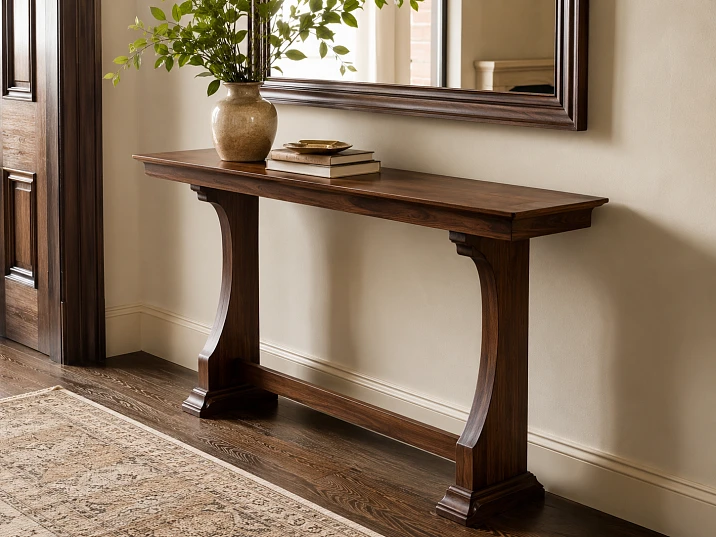
The base for a console table is chosen differently than the base for a regular dining table. A console almost always stands against a wall, has a shallow depth, and often works under a mirror, at the entrance, in a hallway, foyer, or living room. It can hold keys, decor, a vase, a lamp, a small tabletop, but must remain stable, neat, and expressive.
The main mistake is treating a console as a scaled-down copy of a regular table. A console table has a different logic: it is narrower, visually lighter, more often seen from the front, and depends more on the shape of the base. If the base is too thin, the narrow tabletop can look accidental. If the base is too light relative to the top, there is a risk of tipping over. If you choose ordinary legs without a decorative connection to the interior, the console will lose its main purpose — to be a beautiful wall accent.
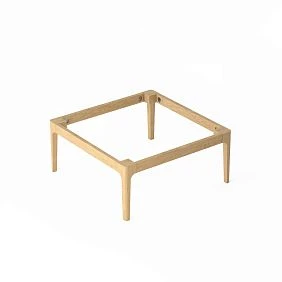
In the STAVROS catalog you can choose a base and frame for a console table, focusing on the installation location, tabletop depth, hallway or living room style, material, and decorative nature of the frame. For a console scenario, carved furniture frames, solid wood bases, and ready-made solutions that do not look like a set of random parts are especially important.
A console against the wall is not just a "just in case" table. In the hallway, it greets guests and collects daily small items. In the living room, it supports a decorative composition. In the foyer, it sets the status of the entrance area. In the bedroom, it can replace a light vanity table. Therefore, the base should be chosen as part of the interior, not as a technical support for a board.
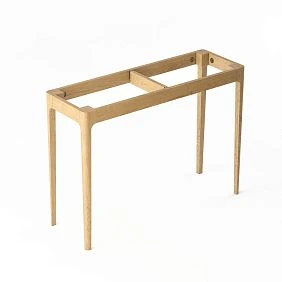




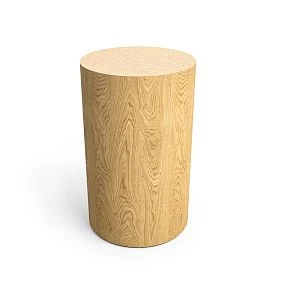
What is a console table and how is it different from a regular one
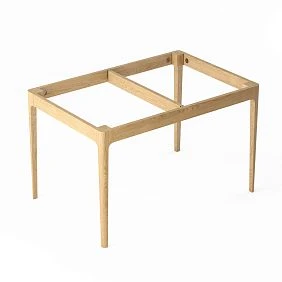
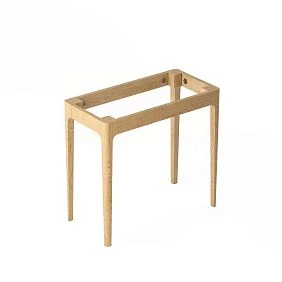
A console table is a narrow wall-mounted piece of furniture. It is placed along a wall, under a mirror, behind a sofa, in a walk-through area, by the stairs, in a foyer or hallway. Unlike a dining table, a console is not designed for seating on all sides. Its main task is to provide a small horizontal surface and create an expressive interior accent.
A regular table works around itself. People approach it from all sides, sit at it, and place dishes, laptops, books, and household items on it. A console works differently. It is more often perceived frontally: a person sees the facade, legs, carving, apron shape, proportions, and connection with the wall decor. Therefore, the base for a console table should be not only durable but also beautiful.
A console has less depth, but a higher risk of stability errors. A wide dining table distributes the load over a large area. A narrow table against the wall has a different center of gravity. If the tabletop is heavy and the base is too light, the item may seem unstable. If the console stands in a walkway, it can be easily bumped by a shoulder, bag, or hand. Therefore, you need to consider not only the appearance but also the geometry of the support.
The second feature is decorativeness. A console often stands where an empty wall needs completion: under a mirror, between doorways, at the end of a corridor, next to the stairs. Simple legs in such a place can look poor. And Carved apron helps make furniture part of the overall interior system.




Where is a console table used
Our factory also produces:


In the hallway
The hallway is the most obvious place for a console. Here, a narrow table helps organize the entry area: place keys, gloves, glasses, a small bag, set a vase, aroma diffuser, decorative bowl, or table lamp. If a mirror hangs above the console, the area immediately feels complete.
For the hallway, it is especially important that the underframe is stable. The space near the entrance is often narrow: people walk in shoes, carry bags, open doors, take off outerwear. The console may be accidentally bumped, so a too-light base under a narrow tabletop is not the best choice here. It is better to look towards a wooden frame with a clear support area.
If the hallway is decorated in classic, neoclassical, or calm modern style with natural materials, it works well made in the same manner. For protection and maintenance, use natural oils and waxes.. It does not look temporary, supports wooden doors, baseboards, architraves, mirror frames, and decorative elements.
Get Consultation
In the living room
In the living room, a console table is often placed against a free wall, behind the sofa, or next to an armchair. Here it works as a decorative surface: a lamp, books, vase, sculpture, candles, frames, interior compositions are placed on it. Unlike a coffee table, the console does not occupy the center of the room and does not obstruct passage.
For the living room, proportion is important. A too-small console table will get lost on a large wall. A too-heavy one will look like a chest of drawers without drawers. The underframe should support the tabletop in scale and not conflict with the sofa, armchairs, rug, wall panels, or TV area.
If the interior is built on wooden details, it is worth considering carved furniture frames. They help connect the console with other decor and do not leave the wall area empty. For this, you can go to the section carved furniture frames and choose a base to match the living room style.
In the hall or corridor
In the hall, a console is often placed at the end of the axis of movement: opposite the entrance, by the stairs, between openings, near a decorative wall. In such a place, it becomes not only furniture but also a focal point. Therefore, a simple technical support looks weaker than an expressive frame.
In the corridor, depth is important. A narrow tabletop should not obstruct the passage, but a console that is too shallow may look like a shelf on legs. The base must be proportionate: if the tabletop is long, the underframe should provide sufficient support; if the console is short, the frame should not appear overly massive.
In the bedroom
In the bedroom, a console can replace a light vanity table. It is placed against the wall, next to a mirror, in the dressing area, or near a window. Unlike a full vanity table, a console takes up less space and looks lighter.
Here, queries like underframe for a vanity table, underframe for a small table, or underframe for a side table are appropriate. But it is important to understand the difference: if you need a decorative narrow table against the wall, it is better to choose a console format rather than a random small underframe. The underframe must match the height, depth, and intended use scenario.
How to choose a base for a narrow tabletop
The base for a narrow tabletop must solve three tasks at once: support weight, maintain stability, and look beautiful from the front. In a regular table, attention often goes to the tabletop. In a console, the eye falls on the underframe because the piece stands against the wall and is perceived as a decorative item.
Tabletop depth
The smaller the tabletop depth, the more carefully you need to consider stability. A narrow console saves space, but it has a smaller support area and higher sensitivity to load shifts. If you place a heavy vase on the front edge or accidentally lean on the tabletop, a lightweight base may behave unpredictably.
Before ordering, you need to assess what exactly will be placed on the console. For keys, decor, and a small lamp, one format will suffice. For a large mirror above the table, a heavy stone tabletop, or massive decor, a more substantial support is required. If the tabletop is planned to be heavy, it is useful to additionally study the material about Underframe for a heavy tabletop, to better understand the load logic.
Console height
Height depends on the scenario. In the hallway, the console should be convenient for everyday items. In the living room, it should look good with the sofa, mirror, sconce, or decorative wall. In the bedroom, it can function as a light vanity table if there is a mirror and seating nearby.
If you choose a base that is too low, the console will look like a coffee table against the wall. If it is too high, it will be inconvenient to use. Therefore, the underframe for a narrow tabletop should be selected together with the future installation location, not separately.
Support area
A narrow tabletop requires a well-thought-out support area. The underframe should not be too light relative to the top. Legs, aprons, side elements, and the frame shape should help keep the table stable.
For a console table, lateral stability is especially important. It may be bumped from the side in a hallway or entryway. If the frame is designed only for vertical load but poorly handles lateral impact, the console will feel unreliable. In such cases, you should look not at individual legs but at a ready-made frame.
Tabletop attachment
The tabletop must be secured so that it does not shift or loosen the base. The attachment method depends on the design, top material, and chosen frame. If the console will be placed in a high-traffic area, it is better to discuss the attachment issue in advance.
Don't assume that any narrow board will automatically become a console table. Proper proportions, a secure fit to the base, and an understanding of the future load are necessary. If you have doubts about terms and differences, it's useful to read the material. table frame or underframe.
How to make a narrow table against the wall stable
The stability of a console depends not on one parameter, but on several: tabletop depth, top weight, support width, height, leg shape, frame quality, and the possibility of additional fixation. The narrower the table, the less room for error.
Do not overload the front edge
The console has a weak point — the front edge of the tabletop. If heavy objects are placed too far from the wall, the center of gravity shifts. This is especially dangerous for narrow models that do not have great depth.
For daily use, it's better to place heavy decor closer to the wall, leaving the front edge for light items. If the console is in the hallway, do not use it as a place for heavy bags, boxes, or large items unless the frame and fastening are designed for it.
Choose a frame with sufficient support
The most common mistake is placing a long narrow tabletop on too thin a base. Visually, such furniture may seem light, but in practice it quickly raises questions: it wobbles, looks unstable, and requires careful handling.
A ready-made frame is better than separate random legs because it creates a connection between the supports. Aprons and side elements help distribute the load and make the furniture solid. This is especially important for a console table: the piece should look neat and stable even with a small depth.
If necessary, secure the console to the wall
If the console is placed in a walkway, near a door, in a narrow corridor, or under a heavy countertop, additional wall fixation may be required. This is especially relevant for families with children, commercial halls, salons, hotel corridors, and active entryways.
The mounting method depends on the wall, structure, and countertop material. It cannot be chosen by eye. It is better to discuss installation with a specialist in advance and check how the frame will work in the specific room.
Check lateral stability
The console may hold vertical load well but respond poorly to lateral movement. This is noticeable when the table is slightly pushed from the side: a poor-quality base starts to wobble. For wall-mounted furniture, this problem is especially unpleasant because the console often stands in a walkway.
If the task is specifically about stability, it is useful to additionally review the material table base support. It helps to understand why the shape of the base is no less important than the appearance.
Solid wood base for a console table
A solid wood base is well suited for a console table when a full-fledged interior furniture piece is needed, not a temporary support. Wood provides a sense of stability, warmth, and integrity. It does not clash with mirrors, wooden doors, baseboards, carved decor, wall panels, and classic finishes.
Solid wood is especially appropriate in hallways, living rooms, foyers, country houses, studies, and bedrooms. A narrow wooden console can be light in form without appearing fragile. This is an important balance: the console should not overwhelm the wall, but it should not look like a random stand either.
When a buyer searches for a solid wood table base to purchase, it's important not just to find the material, but to understand how it will behave in the interior. A wooden base looks best with a wooden, veneered, or decoratively finished tabletop. It supports the overall furniture line and allows you to choose a finish tailored to the project.
If the console stands against a wall under a mirror, solid wood works particularly well. It creates a visual anchor for the entire composition: the mirror above, the tabletop in the middle, and the carved or wooden frame below. Without an expressive base, such an area can look unfinished.
Carved table base: when it's better than a regular one
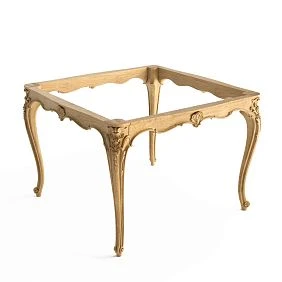
A carved table base is chosen where the console needs to be not only functional but also decorative. A wall table is rarely tucked away in a corner. More often, it's on display: by the entrance, under a mirror, in the living room, in the foyer, in the hallway. Therefore, the shape of the frame becomes part of the interior.
Regular straight legs may suit a minimalist space, but in classic, neoclassical, and country interiors, they often look too simple. Carving adds depth, makes the front part expressive, and helps connect the console with other wooden details.
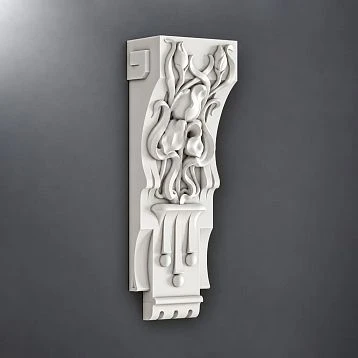
If the room already has carved decor, wooden trim, decorative elements, classic furniture, or expressive frames, Carved apron it will support this line. It doesn't just hold the tabletop, but helps assemble the composition.
For a console scenario, models STL-018 and STL-019 can be considered as format references: they are associated with wall furniture, decorative presentation, and the task of a "console against the wall." Before ordering, you need to check the current parameters in the product card or section, because the exact choice depends on the tabletop size, installation location, and future finish.
Which STAVROS frames to consider for a console table
For a console table, you should look not at any base, but at frames that are suitable for a wall-mounted decorative scenario. In the STAVROS section, you can select the "Console Table" application and consider options for a narrow tabletop, hallway, living room, or foyer.
| Buyer's task | What to choose | Why this is suitable |
|---|---|---|
| Need a console for the hallway | Carved frame or console STL-018 | Suitable for a wall-mounted decorative scenario and a mirror area. |
| Need a more expressive console | Console STL-019 | Works as an interior accent in a foyer, living room, or hallway. |
| Need a base for a narrow tabletop | Solid wood underframe or frame | Provides stability and visual integrity without a random set of legs. |
| Need classic wall furniture | Carved underframe | Supports classic style, carved decor, and expressive front part. |
| Need a decorative table, not a dining one | Console frame | Better suited to the format of narrow wall furniture. |
This choice is convenient because the buyer immediately looks not at universal legs, but at the console scenario. You can choose a base and frame for a console table, compare decorativeness, proportions, and future connection with the interior.
How a console differs from a side table, coffee table, and vanity table
A console is often confused with a small side table, sofa table, coffee table, or vanity table. In everyday life, these names may overlap, but when buying an underframe, the difference is important. Different types of furniture require different heights, depths, stability, and base shapes.
| Furniture type | Where it is located | Main difference |
|---|---|---|
| Console table | By the wall, in the hallway, living room, hall | Narrow depth, decorative front, wall-mounted placement. |
| Side table | Next to the sofa, armchair, bed | Compactness, mobility, side access. |
| Coffee table | In the center of the sofa area | Low height and access from all sides. |
| Vanity table | In the bedroom or dressing room | Work area with mirror, cosmetics, and sometimes storage. |
| Dining table | In the kitchen or dining room | High load, seating, and access from all sides. |
If you need a small table next to the sofa, you can check out a separate article about table base. If the task is specifically narrow furniture against the wall, it's better to stick with the console scenario: the underframe should be stable, decorative, and designed for wall placement.
What to buy together with the underframe for a console table
A console is rarely bought as a single element. Even if the underframe is chosen, you need to consider the tabletop, mounting, finish, adjacent decor, and the overall area. In the hallway, it could be a mirror; in the living room, a table lamp and decorative items; in the foyer, carved elements and an expressive wall composition.
The main thing is not to assemble a console from parts that don't communicate with each other. If the underframe is carved and the tabletop is too simple or rough, the furniture may look unfinished. If the tabletop is massive and the base is too thin, an imbalance will appear. If a mirror in a different style stands nearby, the entire area will lose its integrity.
| What to add to the purchase | Why this is needed | What to pay attention to |
|---|---|---|
| Tabletop of suitable depth | Form the work surface of the console. | Weight, depth, mounting, and ratio with the support. |
| carved furniture frames | Choose a base for a console scenario. | Check the application, proportions, and decorative appeal. |
| Carved Decor | Connect the console with the interior finish. | Do not overload a small hallway with unnecessary details. |
| Wall mounting if necessary | Increase the safety of a narrow console. | Wall type, tabletop weight, and installation location. |
| Mirror or wall decor | Create a complete wall zone. | The mirror size should match the width of the console. |
Mistakes when choosing a console table base
Choosing a base that is too narrow and light
A narrow tabletop itself requires attention to stability. If you place a too light base under it, the console will look fragile and may wobble. This is especially noticeable in the hallway and corridor, where furniture is constantly near movement.
Not considering the risk of tipping over
The console stands against the wall, but that doesn't mean it's automatically safe. If you place a heavy object on the edge of the tabletop or accidentally lean on it, a weak base may not handle it. You need to consider the center of gravity and, if necessary, provide for wall mounting.
Using a regular dining table base
A dining table is designed for a different load and geometry. Its base may be too wide, too massive, or simply not fit in proportions. A console requires a narrow, wall-mounted, and decorative solution.
Not checking the console height
If the height is chosen incorrectly, the console will be uncomfortable. In the hallway, it should be convenient for keys and small items. In the bedroom, it should suit the mirror and seating if used as a vanity table. In the living room, it should match the sofa, lighting, and wall decor.
Making the tabletop too heavy
A heavy tabletop may look beautiful, but for a console it requires a particularly reliable base. If you want to use a massive top, you need to check in advance the compatibility with the frame, the support area, and the need for fixation.
Forgetting about the style of the hallway or living room
The console is in plain sight. If its underframe does not match the interior in character, it is immediately noticeable. Simple legs can look too poor in a classic hall, while an overly carved frame can be excessive in a minimalist corridor. You need to choose not a separate beautiful detail, but a base for a specific wall, mirror, light, and furniture.
Who is and who is not suitable for a console underframe
Who is suitable
A console underframe is suitable for those who want to design a narrow wall area in the hallway, living room, hall, or bedroom. It works well under a mirror, decorative composition, table lamp, vase, key holder, or small tabletop.
This solution is suitable for interior designers, furniture workshops, and private clients who need not a standard ready-made console, but a base for a specific size, material, and style. It works especially well in classic, neoclassical, country house, and interiors with wooden decor.
A solid wood underframe and carved frame should be considered if the console should be a visible part of the interior, not an inconspicuous technical shelf. In this case, the base affects the entire impression of the area.
Who should choose another option
If you need a full-fledged work desk, the console format may be inconvenient. The narrow depth is not designed for long work, a large number of items, and seating from all sides.
If you need low furniture in the center of the sofa area, it's better to consider a coffee table. If you need a compact table next to an armchair or bed, a side table will do. If you need space for cosmetics, storage, and daily care, you might need a full dressing table.
A console underframe should also not be chosen if the buyer is not ready to think through the tabletop, mounting, installation location, and wall style. This furniture only wins when it is assembled deliberately.
Where to choose an underframe and frame for a console table
To avoid assembling a console from random legs, it's better to start with the STAVROS carved furniture frames section. There you can look at solutions for wall-mounted furniture, select the "Console table" application, compare decorativeness, shape, and future connection with the interior.
For the hallway and living room, stability and facade expressiveness are especially important. Therefore, first you should determine the installation location, tabletop depth, and overall style, and then go to the section where you can choose a base and frame for a console table. If the task is decorative, you should look at carved options. If solidity and wood character are important, a solid wood underframe is appropriate.
Before ordering, you need to check the dimensions, material, construction, compatibility with the tabletop, mounting capability, and future finishing. If the console is placed in a narrow corridor, near a door, in a walk-through area, or under a heavy tabletop, the stability issue should be discussed in advance.
FAQ
Which underframe to choose for a console table?
For a console table, you need to choose a stable base for a narrow tabletop. It's better to consider a frame or underframe designed for wall placement, rather than random legs for a regular table.
How is a console different from a regular table?
The console is narrower, often placed against the wall and serves a decorative-functional role. A regular table is designed for access from all sides, seating, and higher household load.
How to choose a base for a narrow tabletop?
You need to consider the depth of the tabletop, height, weight, support area, center of gravity, and the possibility of wall mounting. The narrower the tabletop, the more attention must be paid to stability.
How to make a narrow table against the wall stable?
You need to choose a base with sufficient support area, avoid overloading the front edge of the tabletop, and if necessary, secure the console to the wall. This is especially important in the hallway, corridor, and foyer.
Which base is suitable for the hallway?
A decorative wooden or carved base is well suited for the hallway. It works not only as a support but also as an interior accent under a mirror, keys, lamp, or decor.
Is a carved base suitable for a console table?
Yes, the console often stands in a prominent place, so a carved base is well suited for classic, neoclassical, and country interiors. It makes the wall area more expressive.
Can a solid wood base be used for a console?
Yes, a solid wood underframe is suitable for a console table if you need a stable, visually warm, and solid base. It looks especially good with a wooden or decorative tabletop.
Do I need to attach the console to the wall?
Sometimes yes. If the console is narrow, located in a walkway, has a heavy tabletop, or could be accidentally bumped, additional fastening increases safety. The attachment method depends on the wall and the design.
Can I make a console table myself?
You can, but the hardest part is correctly choosing a stable base and decorative shape. The ready-made STAVROS frame helps avoid creating a carved support from scratch and allows you to focus on the tabletop, finishing, and installation.
How is a console different from a side table?
A side table is more often placed next to a sofa, armchair, or bed and can be more mobile. A console usually stands against a wall, has a narrow depth, and a more expressive front part.
What is more important for a console: the tabletop or the underframe?
Both elements are important, but the underframe has a greater impact on stability and appearance. The base of a console is clearly visible, so it should be not only durable but also decoratively connected to the interior.
Where can I choose an underframe and frame for a console table?
You can choose a base in the STAVROS carved furniture frames section. There, you should look at options for a console table, hallway, living room, narrow tabletop, and wall-mounted placement.
Result: a console against the wall requires not a random support, but a well-thought-out frame.
The underframe for a console table should be stable, proportionate to the tabletop, and expressive from the front side. The console stands against the wall, often becomes the center of attention, and works not only as a small surface but also as a decorative part of the hallway, living room, foyer, or bedroom.
If you need a narrow tabletop against the wall, you should not choose a base based only on photos. You need to check the depth, height, weight, support area, lateral stability, material, and connection with the interior. For classic, neoclassical, and country projects, carved frames and solid wood underframes are especially appropriate.
At STAVROS you can choose a base and frame for a console table, consider options for wall-mounted furniture, choose decorativeness for the hallway or living room, and plan the tabletop, fastening, and finish in advance. This approach helps to assemble a console that will not just be a narrow table against the wall, but a full-fledged part of the interior.