Article Contents:
- Can you combine moldings and wallpaper
- What design options are available
- Wallpaper inside a molding frame
- Moldings on a painted wall next to wallpaper
- Accent wall with wallpaper and stucco
- Lower part of the wall with moldings, upper part with wallpaper
- Decorative overlays on a plain finish
- What to choose for a wall with wallpaper
- Thin moldings
- Frame profiles
- Corner decor for moldings
- Accent overlays
- Ready-made sets
- How to choose a style to match wallpaper
- Neoclassicism
- Modern classicism
- Jatoba
- Versailles Light
- Mistakes when combining wallpaper and moldings
- Too busy wallpaper and complex stucco
- Uneven frame layout
- Profile doesn't match the scale
- No connection with baseboard and cornice
- Moldings conflict with wallpaper pattern
- What to buy for a wall with wallpaper and moldings
- Frequently asked questions
The question "can they be combined?" regarding moldings and wallpaper comes up in about every second renovation. And the answer is always the same: not only can they — it's one of the most striking techniques in modern interiors. But, like any powerful tool, the combinationof moldings and wallpaper on a wallrequires an understanding of logic, not just enthusiasm.
When moldings and wallpaper work together correctly, you get a wall that is called "expensive," "architectural," "like in a magazine." When done incorrectly, the moldings look like randomly nailed strips on a colorful surface. The difference between the first and second case is knowledge of a few principles, which we will discuss now.
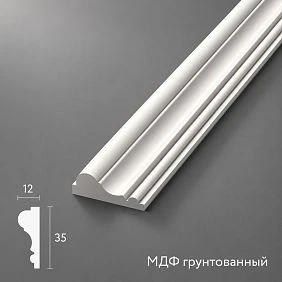
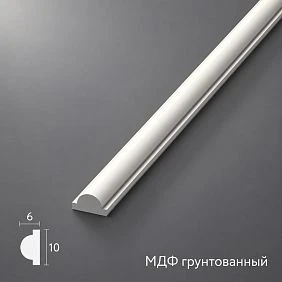
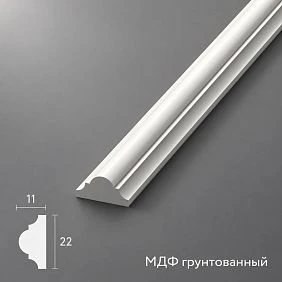
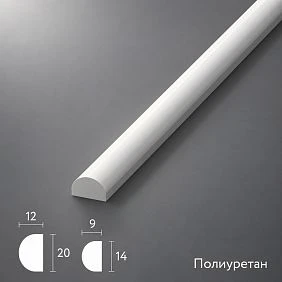
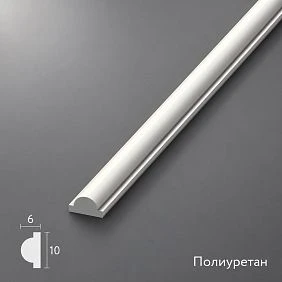
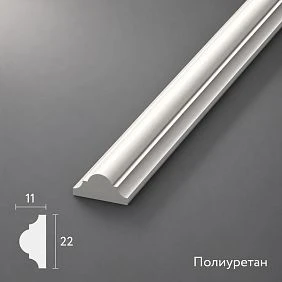
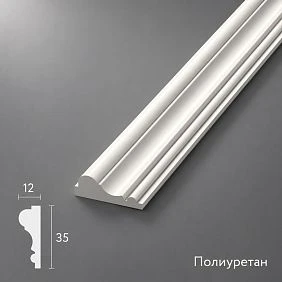
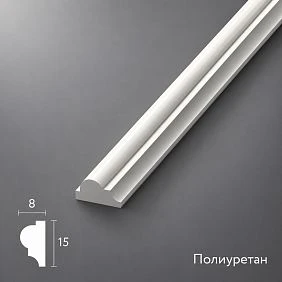
Can you combine moldings and wallpaper
Yes, and it's a long-proven practice. But before you grab the glue and cut the profiles, you need to answer one fundamental question: how exactly will the moldings relate to the wallpaper?
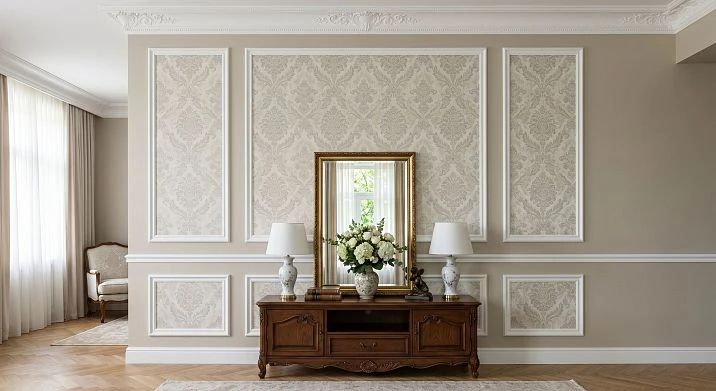
There are three fundamentally different approaches here. First: wallpaper inside a frame of moldings — the molding creates an architectural outline, the wallpaper fills the inner space of the frame. Second: moldings on a painted part of the wall next to the wallpaper — the moldings are placed on a smooth surface, and the wallpaper acts as an accent zone. Third: wallpaper as an entire accent wall, moldings as a decorative border around the perimeter of that wall.
Each of these approaches has its own installation technology and its own aesthetics.Frames of moldings with wallpaper— the most popular and versatile option.




What design options are there
Our factory also produces:
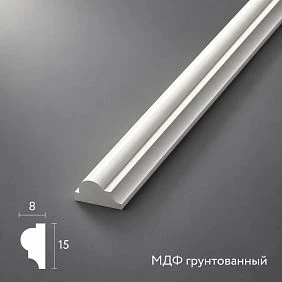


Wallpaper inside molding frames
Classic technique: first, moldings are installed to form rectangular frames on the wall. Then, wallpaper is glued inside each frame — typically accent wallpaper with a pattern or texture that would be undesirable to place across the entire wall.
This option is especially good in bedrooms and living rooms. Wallpaper in a frame is perceived as a work of art — the molding sets boundaries, and the wallpaper pattern works like a painting. Meanwhile, the main part of the wall can be painted in a neutral tone, creating a balance between decorativeness and calmness.
Technically: first, the entire wall is painted in a base color. Then, moldings are installed. Then, wallpaper is glued inside the frames. The joints between the wallpaper and moldings are treated with acrylic sealant and painted.
Get Consultation
Moldings on a painted wall next to wallpaper
The second popular option is when one or more walls are covered with wallpaper, while the rest are painted, and molding frame compositions are placed on the painted surfaces. This technique is used in modern interiors with an "accent wall": one wall with wallpaper, the other three with decorative moldings in matching color.
Stucco decor with wallpaperin such a solution creates a visual dialogue between two surfaces. The wallpaper carries a pattern or color, the moldings — an architectural line. They do not compete but complement each other if properly matched in style.
Accent wall with wallpaper and molding
Here, wallpaper covers the entire accent wall, with moldings placed on top. This is a bold and very expressive solution. An important condition: the wallpaper must be paintable, solid-colored, or with a very subtle pattern. Bright wallpaper with a large pattern plus molding creates competition between two strong elements, from which no one emerges victorious.
For an accent wall using the "wallpaper plus moldings" technique, solid-colored non-woven wallpaper with texture is ideal: linen, fabric, or plaster texture. On such a surface, moldings look particularly clean and architectural.
Lower part of the wall with moldings, upper part with wallpaper
Another option is horizontal division of the wall: the lower panel, ninety to one hundred twenty centimeters high, is decorated with moldings and painted, while the upper part is covered with wallpaper. A horizontal molding along the boundary of the two zones serves as both a dividing strip and a decorative accent.
This technique comes from the English tradition of "dado rail" — a horizontal molding dividing the wall into two zones. In a modern interpretation, it works perfectly in dining rooms, bedrooms, hallways — anywhere a clear vertical structure is needed without fully covering with wallpaper.
Decorative overlays on solid-colored finish
Finally, the most minimalist option: solid-colored wallpaper plus onedecorative overlay on the wall with wallpaperin the center of the accent area. No frames, just one decorative detail — a medallion, ornamental panel, vertical relief. This is a solution for minimalists who want decoration but fear overload.
What to choose for a wall with wallpaper
Thin moldings
For walls with wallpaper — especially if the wallpaper is textured or patterned — thin moldings with a profile of twenty to forty millimeters are suitable. They create a clear line without visual heaviness. A wide profile against patterned wallpaper will overload the surface.
Buy moldings for wallpaperoptimally from the Neoclassic Light or Japandi collections — they feature profiles for delicate surfaces.
Frame profiles
A frame molding is a profile with a flat back side and a profiled front edge, specifically designed for creating frames. It is glued directly to the wall or onto wallpaper, creating a rectangular frame of any size. For walls with wallpaper, a frame profile is the most practical solution.
Corner decor for moldings
Decor for moldings with wallpaper— corner elements for places where profiles intersect. On a wall with wallpaper, it is especially important that the corners of the frames are neat: any inaccuracy in the joint against a textured surface will be doubly noticeable. Corner blocks completely solve this problem.
Overlays for accent
If the frame is created, the next step isa decorative insert inside the frame. On plain wallpaper, a small medallion in the center of the frame creates a complete, "jewel-like" composition. The insert is chosen proportionally to the frame: no more than thirty percent of the frame's interior space.
Ready-made kits
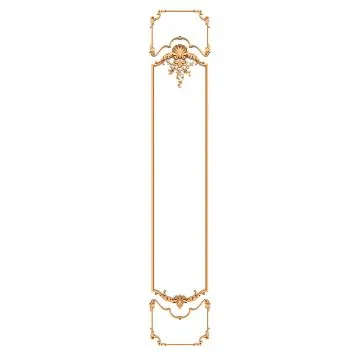
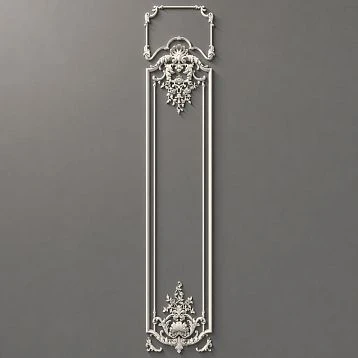
For those who want to avoid selecting elements independently,Ready-made molding frames for the wall — the optimal solution. The kit contains all necessary parts in the right proportion.
How to choose a style for wallpaper
Neoclassicism
Structured wallpaper with a geometric or small ornamental pattern plus "Neoclassic" moldings with a moderate profile — this is a model neoclassical wall. The color of the moldings: white, cream, ivory — in contrast with colored wallpaper or in unison with the main tone of the wallpaper if it is plain.
polyurethane wall moldings in the neoclassical version give the wall structure, which is often lacking in modern interiors.
Modern classic
Velvet, fabric, non-woven wallpaper with a fine texture plus moldings with a soft profile. Color — uniform or close in tone. Effect: a wall that looks sewn from a single material, but upon closer inspection reveals a fine architectural structure.
Japandi
Plain wallpaper in natural tones — taupe, gray-beige, warm gray, dark green — plus minimalist moldings without ornament. No corner inserts, no central medallions. Only a clean rectangular frame painted in the wall's tone. This is Japandi in its pure form.
Versailles Light
Classic wallpaper with a soft floral or geometric pattern plus Versailles Light moldings with profiled relief and corner blocks featuring a floral motif. This is a solution for those who want a classic atmosphere without heavy pomp.
Mistakes when combining wallpaper and moldings
Too busy wallpaper and complex stucco
If the wallpaper already has a bright pattern — large floral, geometric, tropical — moldings with profiled relief and corner overlays will create visual chaos. Rule: the more active the wallpaper, the simpler the moldings. And vice versa: the richer the stucco, the calmer the wallpaper should be.
Uneven frame marking
Moldings glued by eye, without precise marking, result in uneven gaps and skewed corners. Against a background of wallpaper with a repeating pattern, this inaccuracy is especially noticeable: the wallpaper pattern becomes an involuntary coordinate system that reveals every deviation.
Profile does not match the scale
A wide molding of seventy to eighty millimeters on a wall covered with small-pattern wallpaper in a small room is visual overload. The profile scale is chosen according to the surface area and room height. For a standard apartment with wallpaper, twenty to forty millimeters.
No connection with baseboard and cornice
Moldings on the wall that are not connected to the baseboard and ceiling cornice are a decorative fragment, not a system. The baseboard, horizontal molding, vertical frames, and ceiling cornice should be from the same collection or at least stylistically coordinated. More on this in the topicStucco decor for walls for painting.
Moldings conflict with the wallpaper pattern
If a molding frame cuts off the wallpaper pattern in the middle of a flower or geometric motif, it creates visual discomfort. When planning frames, you need to consider the wallpaper repeat and position the moldings so that the pattern inside the frame is complete and symmetrical.
What to buy for a wall with wallpaper and moldings
To create a full combined wall of "wallpaper plus moldings," you need:
Frame-type moldings with a profile of twenty to fifty millimeters.Buy moldings for frames with wallpaperavailable in several style collections.
Corner blocks at intersections.Decor for moldings with wallpaper— an essential part of a neat frame composition.
Decorative overlays for the center of the frame (optional).Decorative wall overlays with wallpaperare selected proportionally to the frame.
Ready-made set if you don't want to select manually.Wall decor with wallpaperin ready-made sets contains all necessary elements.
Horizontal molding for dividing zones "wallpaper/paint" — if the technique of dividing the wall by height is used.
Frequently Asked Questions
Technically possible, but not recommended. The molding will adhere to the wallpaper, not the wall. If the wallpaper peels off, the molding will come off with it. Moreover, on textured wallpaper, the molding will not fit tightly, creating gaps. It’s better to install the molding on a prepared painted wall, and then apply wallpaper, or use wallpaper only within decorative panels.
Yes, if the wallpaper is well glued to the wall, has no bubbles and does not peel off. The molding is glued with polyurethane mounting adhesive. If necessary, it is additionally fixed with masking tape until completely dry.
What to glue first — wallpaper or moldings?
Depends on the option. If the moldings go on a painted surface — first painting, then moldings, then wallpaper in special zones. If the moldings are on top of the wallpaper — first wallpaper, then moldings.
How to choose moldings for wallpaper?
Choose your style: classic — "Versailles Light" or "Neoclassic", minimalism — "Japandi" or "Neoclassic Light". Profile width — no more than fifty millimeters for standard rooms with wallpaper.
How to make a wall with wallpaper in a frame of moldings?
First, paint the wall with a base color. Mark the position of the frames. Glue the moldings. After drying (24 hours), stick wallpaper inside each frame. Treat the joints with acrylic sealant and touch up.
Can you combine moldings and wallpaper in a small room?
Yes, but choose thin profiles and small frames. In a small space, moldings work to increase height — vertical frames visually raise the ceiling.