Article Contents:
- Legs and furniture supports: what's the difference and when to use which
- When high legs are needed
- When low supports are better
- When a carved shape is needed
- What furniture uses wooden legs
- Cabinets
- Chests of drawers
- Chests of drawers
- Sofas and armchairs
- Consoles and tables
- Sideboards and display cabinets
- Bathroom furniture
- How to Choose the Height of Furniture Legs: A Complete Guide
- Low Legs: 40–80 mm
- Medium Legs: 80–120 mm
- High Legs: 120–200 mm and More
- How Leg Height Affects Furniture Height
- Cleaning Convenience: A Practical Aspect
- How to Choose the Shape of Furniture Legs: From Straight to Carved
- Straight Legs
- Turned legs
- Carved legs
- Curved Decorative Supports
- Massive Pedestal Supports
- Material and Wood Species: What to Choose for Legs
- Spruce
- Beech and birch
- Oak
- Ash
- Wooden legs with or without coating: which is more convenient
- Legs without coating
- Legs for painting
- Legs for varnish or stain
- Legs for oil or wax
- Key rule: legs and handles in the same color
- How to choose legs for furniture style: style scenarios
- Classic Furniture
- Neoclassicism
- Baroque and Empire
- Modern classicism
- Country and Russian style
- Restoration of old furniture
- How to combine furniture legs with handles, overlays, and decor
- Legs and handles: rules of unity
- Legs and decorative overlays on the facade
- Legs and moldings
- Legs and classic furniture in the interior
- Legs and baseboard
- Technical parameters of legs: what to consider when choosing
- Cross-section and load-bearing capacity
- Method of mounting
- Adjustable Supports
- Mistakes when choosing furniture legs: don't repeat others' blunders
- Choosing legs without considering the weight of the furniture
- Installing too thin supports on an unstable tall cabinet
- Not checking the mounting method
- Choosing legs that are too high for unstable furniture
- Not considering the color of handles and facades
- Mixing different styles
- Buying legs without a load capacity margin
- Not considering the coating and future painting
- Wooden furniture legs: how the final impression depends on details
- Frequently Asked Questions
- Which legs to choose for furniture?
- What is better: furniture legs or supports?
- What height of furniture legs is more convenient?
- Can you paint wooden furniture legs?
- How to choose legs for furniture restoration?
- Do I need to coordinate legs with handles?
- Where to buy wooden furniture legs with delivery?
- STAVROS: wooden legs, supports and a complete system of furniture decor
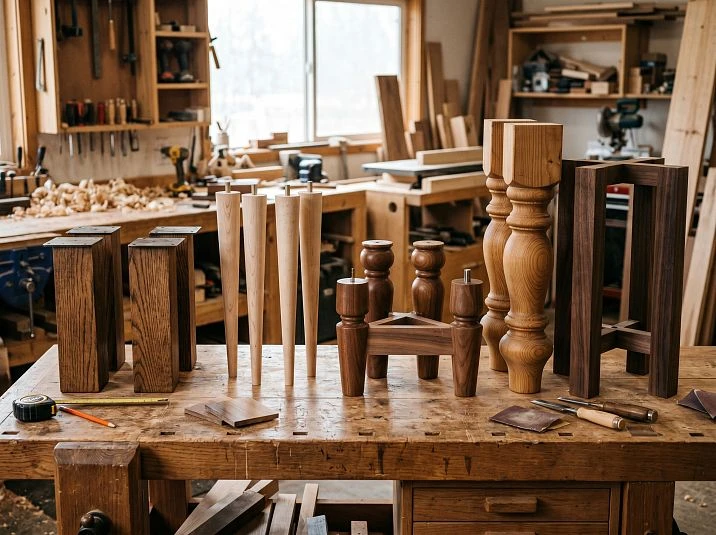
Furniture legs made of wood — a detail that is chosen both when producing new furniture and when restoring old furniture, and when assembling a body from ready-made elements. Properly selected wooden supports turn an ordinary body into furniture with character. Wrong ones destroy the entire image, no matter how beautiful the facade panel is.
This article is written for those who want to understand: which legs to choose, by what parameters to make a decision, how to take into account load and style, how to coordinate legs with handles, decor and interior. There is no fluff here — only what really works.
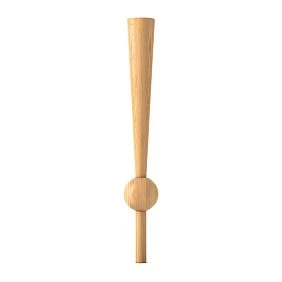
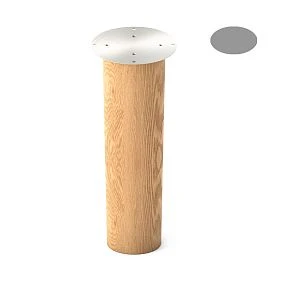
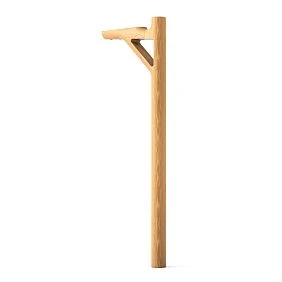
Legs and furniture supports: what is the difference and when what is needed
First of all — about terminology. In everyday speech, the words "leg" and "support" are often used as synonyms. But there is a functional difference between them that affects the choice.
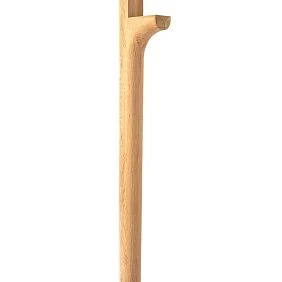
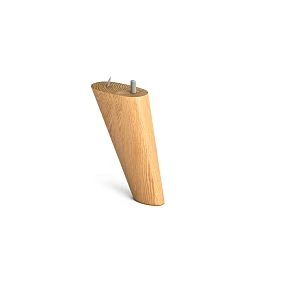
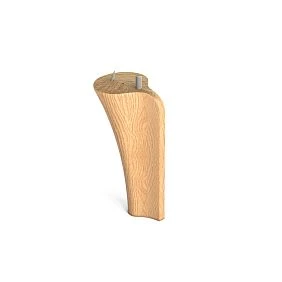
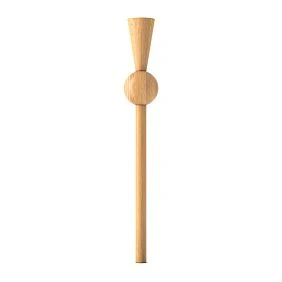
A furniture leg is an element with a pronounced decorative character. It is visible, it shapes the visual image of the furniture, and it carries stylistic weight. The leg can be turned, carved, shaped, straight, or curved. It is noticed. Attention is drawn to it.
A furniture support is a functional element that bears the load. The support can be more massive, simpler in shape, oriented primarily towards stability rather than decorativeness. But in wooden furniture, decorative and load-bearing functions are almost always combined.
For understanding: when they say "legs for a cabinet" — they mean support elements that lift the body off the floor and simultaneously decorate the lower part. When they say "supports for a sofa" — they mean wooden points of support that bear the weight of the frame and are visible from underneath it.




When high legs are needed
High wooden furniture legs (from 120 mm and above) are appropriate when:
-
you need to visually lighten a heavy body;
-
the furniture is in a spacious room with high ceilings;
-
ease of cleaning under the furniture is required;
-
the interior style suggests "airiness" — neoclassicism, modern classic, Scandinavian influence;
-
a sofa or armchair should look elegant, not squat.
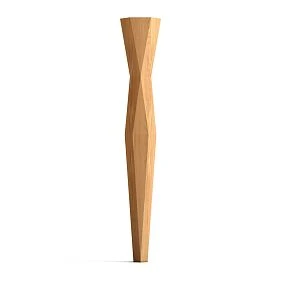
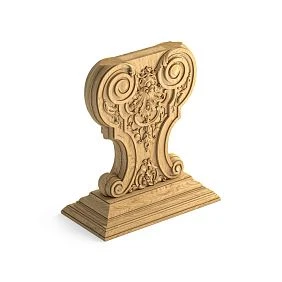
Our factory also produces:
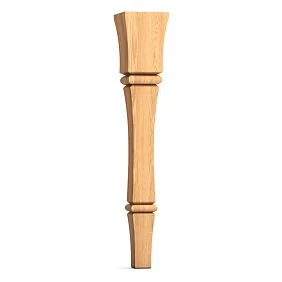
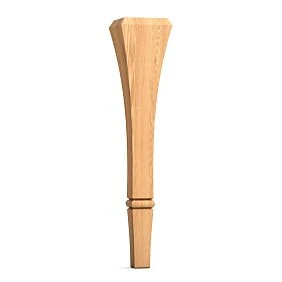
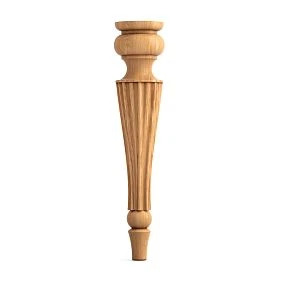
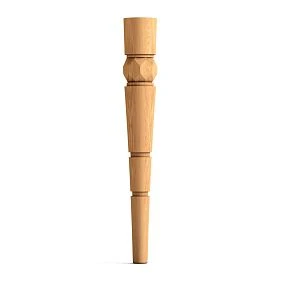
When low supports are better
Low wooden supports (40–80 mm) are suitable when:
-
the furniture is massive and the load is high — a heavy wardrobe, sideboard, large sofa;
-
the interior style is "heavy", monumental — Baroque, classic in dark tones;
-
the body is tall and there is no need to raise it further — the center of gravity is already high;
-
stability is more important than decorativeness.
Get Consultation
When a carved shape is needed
Carved legs for furniture — for classic, Baroque, historical interiors. A carved leg is not just a support, it is a sculptural element. Paw, heel, curl, leaf decor — each of these motifs carries architectural meaning.
A carved leg requires consistency: if the furniture has carved legs, the facades, handles, and other decorative elements should be at the same level of expressiveness.
What furniture are wooden legs used for
Wooden furniture legs are used for almost all types of cabinet and upholstered furniture. Let's consider the main scenarios.
Cabinets
Legs for a wardrobe primarily serve a functional role: they lift the body off the floor, creating a gap for cleaning and ventilation. For a wardrobe in a classic interior — wooden supports with a simple profile or shaped form. Height — 60–100 mm. The load capacity of each leg must be sufficient for even weight distribution of the wardrobe.
For wardrobes with books or heavy items — choose supports with a larger cross-section (from 60×60 mm and above). For lightweight clothes wardrobes, thinner, decorative shapes are acceptable.
Nightstands
Legs for a cabinet are one of the most sought-after categories. A bedside cabinet in the bedroom is a small item raised on legs, gaining airiness and elegance. A TV cabinet on wooden legs is a visually light piece in the living room.
For a TV cabinet, legs 100–150 mm high create an optimal visual balance — the body 'floats' above the floor. For a bedside table — legs 60–100 mm, the shape is coordinated with the style of the bed.
Chests of Drawers
Legs for a dresser — this is a separate story. A dresser is an item that stores significant weight but simultaneously aims for decorativeness. Therefore, dresser legs must combine a load-bearing function with expressiveness of form.
For a classic dresser in the bedroom — turned or carved legs with a moderate profile, height 80–120 mm. For a modern dresser — straighter, more laconic supports. Key condition: dresser legs must be designed for the load from the body itself plus the contents of the drawers.
Sofas and armchairs
Wooden legs for a sofa are a detail that is always visible: the sofa stands in an open space, and the legs are in view from any point in the room. That is why they have special requirements.
For a classic sofa — turned legs with a 'baluster' profile or shaped legs with a slight curve. For a modern sofa — straight conical or cylindrical legs. Height for sofas — 100–160 mm. Load capacity — from 100 kg per leg for large models.
Chair legs — the same principles, but on a smaller scale. For a chair in a classic interior — elegant turned legs, possibly with a small carved detail. For a barrel chair or lounge chair — more massive cone-shaped legs.
Consoles and tables
Legs for a console table bear less load than legs for a dining table. For a console — thinner, elongated shapes are possible, creating a sense of airiness and lightness. For a dining table — more powerful supports with sufficient cross-section to handle the load from the tabletop, dishes, and people leaning on their hands.
Sideboards and display cabinets
A sideboard and display cabinet are large, heavy furniture. The legs here must primarily be load-bearing. But since a sideboard is a decorative piece, the legs cannot simply be blocks. For a classic sideboard — supports with an expressive profile, height 80–120 mm, sufficient support area.
Bathroom furniture
Wooden legs for bathroom furniture are a special case. Thorough finishing treatment is required here to protect the wood from moisture. Supports made of hardwoods (oak, beech) with a multi-layer moisture-resistant coating. Height — typically 100–150 mm to create a ventilation gap under the cabinet.
How to choose the height of furniture legs: a complete breakdown
Leg height is the first and main selection parameter. It affects stability, ease of use, and the visual appearance of the furniture.
Low legs: 40–80 mm
Range for heavy or monumental furniture. Cabinets, sideboards, large sofas. A low leg provides stability but does not allow cleaning under the furniture without special tools. Visually — solidity, weight, respectability.
Medium legs: 80–120 mm
Universal range for most types of furniture. Nightstands, dressers, armchairs, sofas. The sweet spot between stability and airiness. A standard mop or vacuum attachment fits under the furniture without issues.
High legs: 120–200 mm and more
For lightweight furniture with an airy silhouette. Bedside tables, consoles, light sofas. Visually — elegance, weightlessness, space under the furniture. Requires good load-bearing capacity with a smaller cross-section.
How leg height affects furniture height
When choosing legs, you need to consider the final height of the furniture item.
For example, a TV stand: cabinet height 400 mm + legs 120 mm = total 520 mm from floor to tabletop. This is a comfortable height for watching TV from a sofa with a seat height of 450 mm.
Or a bedside table: cabinet 500 mm + legs 100 mm = 600 mm from floor. Standard mattress height is 550–650 mm. The tabletop surface will be slightly below or level with the mattress — a convenient arrangement.
Calculate the final height before purchasing legs.
Cleaning convenience: a practical aspect
The minimum clearance for convenient passage of a vacuum cleaner attachment or mop under furniture is 80 mm. Legs with a height of less than 80 mm make cleaning under furniture inconvenient. This is especially important for sofas, cabinets, and wardrobes that stand against the wall in hard-to-reach places.
How to choose the shape of furniture legs: from straight to carved
The shape of the leg determines its stylistic affiliation and decorative character. Let's consider the main types.
Straight legs
A straight rectangular or square cross-section leg without profile. Minimalism, Scandinavian style, modern classic. It goes well with clean facades without decorations and wooden handles simple shapes.
Advantages of straight legs: ease of manufacture, reliability, versatility. Disadvantage: lack of decorative expressiveness.
Turned legs
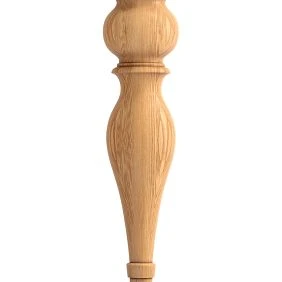
A turned leg is created on a lathe and has an expressive profile: cylinders, cones, necks, knobs. It is turned legs that are the "classic" image of wooden furniture — from simple to complex shapes.
A turned leg in the shape of a "baluster" is a classic for sofas, armchairs, and chests of drawers. A thin tapered turned leg is characteristic of Scandinavian furniture from the 1950s and its modern interpretations.
furniture legs from the STAVROS catalog are mostly turned, with a clear profile, ready for any coating.
Carved Legs
Carved leg — the highest level of decorativeness. It carries an ornamental image: leaves, curls, grapevines, geometric motifs. Characteristic of classic furniture, Baroque, Empire style.
A carved leg is created by hand or on a CNC machine. Hand carving is more individual but more expensive. CNC carving is precise, repeatable, and more affordable.
Curved supports with a bend
A leg with a bend — "cabriole", S-shaped, with a pronounced "knee" — is characteristic of Rococo, Baroque, and English classic furniture. This is a complex shape to produce, creating a very expressive look.
A curved leg requires careful consideration of load: the bend creates a stress concentration point. For heavy items — only from hardwoods.
Massive pedestal supports
For monumental furniture — massive rectangular pedestal supports, sometimes with a slight profile along the edges. Characteristic of antique sideboards, large dining tables, cabinets in the Russian style.
Material and wood species: what to choose for legs
Not all species are equally suitable for furniture legs. Strength, stability, and beauty of texture are important here.
Spruce
An affordable and lightweight material. It is easy to work with and paint. For legs with medium load — quite acceptable. For heavy furniture (sideboards, large cabinets) — risk of deformation under high load. Best suited for painting: the texture of pine is neutral.
Beech and birch
Hardwoods, well suited for turned legs. The dense fine-grained structure allows for thin profiles without the risk of chipping. They hold loads well. Birch is lighter and more neutral; beech has a slightly more expressive texture.
Oak
A hard, durable species with an expressive texture. Oak legs are for solid oak furniture or interiors with an emphasis on natural wood texture. Under a clear varnish, an oak leg becomes a decorative element in its own right.
Ash
A durable species with a light, fine texture. Ash legs are good in light interiors, under natural oil or whitewashed varnish. They work well for Scandinavian aesthetics.
Wooden legs with or without coating: which is more convenient
One of the practical questions: should you take legs with a ready-made coating or without?
Legs without coating
Furniture legs without coating — the most flexible option. You choose the color and type of finish yourself, precisely matching it to the fronts, handles, and other furniture elements. This is fundamentally important when restoring or creating furniture from ready-made components.
Legs without coating are easily sanded and accept any finish: enamel, varnish, stain, oil, wax.
Legs for painting
Legs for painting are legs whose surface is specially prepared for applying a finishing enamel: sanded and primed. They are supplied white (under primer) or primed. This is convenient if the door and legs are painted in the same white or cream color.
Legs for varnish or stain
If the goal is to preserve or emphasize the wood texture, choose uncoated legs with subsequent application of stain and varnish. This allows you to achieve any shade: from light natural to dark walnut-chocolate.
Legs for oil or wax
For furniture in an eco-conscious interior, for the bedroom and children's room, legs are treated with natural oil or oil-wax. This is not only eco-friendly but also creates an expressive matte or semi-matte look that emphasizes the texture.
Key rule: legs and handles should be the same color
wooden furniture handles and the legs should be painted in the same color or at least in close shades. This creates visual coherence: the eye, gliding over the furniture, encounters the same color note at different points — at the top (handles) and at the bottom (legs). White furniture with white handles and white legs is an example of a harmonious solution.
How to choose legs for furniture style: style scenarios
Classical furniture
Classic Furniture — sideboards, chests of drawers, tables in a classic style require legs with a pronounced profile. A turned "baluster" or a shaped leg with a carved element. Height — medium. Wood species — oak or beech. Coating — varnish to match the body or stain to match the key color of the interior.
For classic furniture, straight legs without a profile are unacceptable — this is a stylistic contradiction.
Neoclassicism
Neoclassicism implies a more restrained version of the classics. Legs are turned, with a clear but not overloaded profile. Without excessive carving. Height is medium or above average. Color is white, cream, gold-ivory.
Baroque and Empire
For Baroque interiors — carved legs with ornamental motifs, a massive profile. Gilding of individual details is possible. Cabriole legs with an expressive curve. The load-bearing capacity here must be impeccable — a massive Baroque sideboard weighs significantly.
Modern classic
Straight or slightly tapered legs without an excessive profile. White or natural color. Height is above average for visual lightness. This is a solution for interiors where classic structure combines with modern purity.
Country and Russian style
For a country interior, dacha, Russian style — legs made of pine or birch with a moderate turned profile. Natural finish: oil, wax, varnish in warm tones. A combination with carved decorative appliqués for furniture on the facades.
Restoration of old furniture
Restoration is one of the most common tasks for wooden legs. An old chest of drawers, sideboard, or chair with damaged legs can get a new life with replaced supports.
During restoration, it is important to select legs that are as close as possible in profile to the originals — so that the replacement does not stand out. If the original legs are lost — choose a profile consistent with the style of the body and facade.
How to combine furniture legs with handles, overlays, and decor
This is a systemic view of furniture. Legs are not an isolated element. They are part of an ensemble that includes handles, overlays, moldings, and other decorative details.
Legs and handles: rules of unity
Wooden handles with coating and legs must be coordinated in two parameters: color and style. White handles — white legs. Classic baluster-shaped handles — classic turned legs. This is a simple rule, but it is its violation that most often creates the feeling of "something is off" when looking at furniture.
The handle and the leg are the top and bottom points of one vertical axis. The gaze travels along this axis from bottom to top, and the consistency of the two points creates a sense of wholeness.
Legs and decorative overlays on the facade
If the furniture facades have Decorative Inserts — carved ornaments, corner rosettes, central medallions — the legs should be at the same level of decorativeness. A carved leg next to a carved overlay is logical and organic. A simple straight leg next to a richly carved overlay is a stylistic break.
Legs and moldings
If the furniture body is decorated wooden moldings — with horizontal slats creating geometric frames on the facade — the leg profile should be coordinated with the molding profile. This does not mean "identical" — it means "from the same style family."
Legs and classic furniture in the interior
In an interior where there is Classic Furniture — cabinets with figured facades, chairs with carved backs — all furniture elements on legs must be in a single decorative register. This is the law of a classic interior: variety is acceptable in modern styles, but not in classics.
Legs and baseboard
Wooden baseboard in the room is located in close proximity to the legs — it runs along the perimeter of the floor at the very base of the furniture. Color coordination of the legs and baseboard creates a sense of spatial integrity: the same "wooden" color at floor level unites furniture and architectural trim.
Technical parameters of legs: what to consider when choosing
In addition to appearance, furniture legs have technical characteristics that determine their reliability in use.
Cross-section and load-bearing capacity
The cross-section of the leg — diameter for round or size for square ones. The larger the cross-section, the higher the load-bearing capacity. Approximate values:
| Furniture type | Minimum leg cross-section | Recommended leg load |
|---|---|---|
| Bedside table | 30×30 mm | up to 20 kg |
| Light sofa | 40×40 mm | up to 40 kg |
| Commode | 50×50 mm | up to 60 kg |
| Heavy sofa | 60×60 mm | up to 80 kg |
| Sideboard, wardrobe | 70×70 mm and more | up to 100 kg and more |
The load is distributed across all legs. For an item weighing 120 kg with four legs, the load on each is 30 kg. But a margin is needed: with uneven load distribution (e.g., when one corner is more loaded), a single leg can bear up to 50–60% of the total weight.
Fastening method
Wooden furniture legs are attached to the body in several ways:
Confirmat screw or screw-in bolt. A mounting hole is drilled in the lower part of the leg, into which the bolt is screwed. The bolt is screwed into a barrel nut pre-installed in the body. A reliable and detachable method.
Metric bolt through a dowel. The leg is drilled through, the bolt passes through the body and is secured with a nut on the outside. Maximally reliable for heavy structures.
Furniture plate. A metal plate with a socket is screwed to the body, into which the leg with a pin is screwed. Convenient for replacement and adjustment.
Direct gluing. For lightweight decorative legs on monolithic bodies — gluing with wood glue. Non-detachable but reliable method for permanently installed furniture.
When choosing the attachment method, consider whether replacement or adjustment of the legs may be needed in the future.
Adjustable Supports
For furniture on uneven floors — especially relevant in old houses — adjustable supports are provided: a threaded insert with a bolt is installed in the end of the leg, allowing height adjustment. A wooden leg with an adjustable metal support at the bottom is a universal solution, hiding the functional element behind a decorative form.
Mistakes when choosing furniture legs: don't repeat others' blunders
Choosing legs without considering furniture weight
Beautiful thin legs with a diameter of 25 mm under a heavy sideboard — a disaster that will happen sooner or later. First — creaks. Then — a crack at the attachment point. Load capacity is calculated before purchase.
Installing too thin supports on an unstable tall cabinet
A tall narrow cabinet on thin legs is a pendulum. When opening doors or under lateral load, the furniture will sway. For tall and narrow cabinets — wider leg cross-section or wide placement of support points.
Not checking the attachment method
Buying legs with an M8 bolt, but the cabinet has a socket for M6. Incompatible fastening standards are a common problem when ordering legs online. Before ordering, clarify the attachment method and thread standard.
Choosing too high legs for unstable furniture
A high leg raises the center of gravity of the furniture. If the cabinet is initially unstable (narrow, tall, poorly assembled) — high legs worsen the problem. Stability is checked before installation: the cabinet should not wobble on the support plane.
Not considering the color of handles and facades
Dark brown legs under white furniture with white handles — a mistake. Mismatched color of legs and handles ruins the unified look of the furniture. Plan the color scheme in advance.
Mixing different styles
Carved legs from a classic sideboard paired with modern furniture. Or vice versa — straight, technological supports under a classic chest of drawers. The mismatch between the style of the legs and the style of the body creates visual dissonance.
Buying legs without a load margin
The stated load of 30 kg is under ideal conditions. In reality: load from contents, lateral loads when opening drawers, dynamic loads when rearranging. Choose legs with a 30–50% margin over the calculated load.
Not accounting for coating and future painting
Buying legs with a finish coating — white for enamel — and then finding out the needed color is 'warm walnut'. Repainting over enamel is possible but requires thorough degreasing and a special primer. Uncoated legs offer more flexibility.
Wooden furniture legs: how the final impression depends on details
There is a story worth telling. A workshop that produces furniture once received an order for a bedroom chest of drawers — classic, white, with moldings. The chest was assembled. The fronts were flawless. The moldings were perfect. The handles matched. They placed it on standard metal supports from a hardware store.
The client looked at the result, and something was off. What exactly — he couldn't articulate. 'Not it,' he said.
The craftsmen changed the supports. They installed turned wooden legs with a light profile, painted in the same white. The client looked again. 'Now that's it,' he said.
Metal on the bottom of a white classic dresser is not it. Wood is it. That's why choosing legs is not a technical decision. It's the final touch, without which the look is incomplete.
Frequently asked questions
Which legs to choose for furniture?
Legs are chosen based on four parameters: furniture weight (determines load-bearing capacity), body height (determines required leg height), facade style (determines shape and profile), handle and finish color (determines coating). For classic style — turned or carved. For modern style — straight or tapered.
What is better: furniture legs or supports?
In wooden furniture, these concepts are often combined. For decorative furniture with an emphasis on appearance — legs with a profile. For heavy load-bearing furniture — massive supports with sufficient cross-section. In most cases, products that combine both functions are chosen.
What height of furniture legs is more convenient?
80–120 mm is a universal range for most types of furniture. It provides ease of cleaning under furniture and good visual balance. For light decorative furniture — higher. For heavy load-bearing — lower.
Can wooden furniture legs be painted?
Yes. Uncoated legs can be painted with any finishing enamel, varnish, or treated with stain and oil. Legs with a ready-made coating can be repainted after preliminary degreasing and priming.
How to choose legs for furniture restoration?
Measure the size and profile of the original legs. Select the closest profile from the catalog. Ensure compatibility of the attachment method. Paint to match the body tone after installation.
Do the legs need to be coordinated with the handles?
Mandatory — by color. Desirable — by style. Handles and legs are in different areas of the furniture but are perceived as a single system. Inconsistency creates the feeling of a "assembled" item rather than a solid product.
Where to buy wooden furniture legs with delivery?
In the STAVROS catalog — wooden furniture legs and supports of several shapes and sizes with Contact us to confirm shipping to your destination. Also there — handles, overlays, moldings for a complete purchase.
STAVROS: wooden legs, supports, and a complete system of furniture decor
STAVROS company produces wooden decor for furniture and interiors. The catalog includes wooden furniture legs of several shapes and heights, Furniture legs without coating for painting and tinting, wooden furniture handles, Handles with Finish, Decorative Inserts, Wooden moldings и Classic Furniture.
All products are made from glued pine, beech, or birch panels using CNC with manual finishing. The surface is ready for any final coating without additional sanding. Turned profiles are reproduced with high precision — meaning all four legs from one order will be identical.
The main advantage of STAVROS for furniture decor: the ability to select legs, handles, overlays, and moldings in one catalog — in a consistent style, from the same material, with the same surface quality. You don't search for "suitable" items across the entire internet — you take a ready-made system solution.
Full range wooden products for furniture, ordering and delivery in Russia — on the STAVROS website.