


























Article Contents:
- What is wooden molding
- Definition without unnecessary words
- What are moldings made of
- Where are wooden moldings used
- Walls: molding as a tool for architectural space marking
- Furniture: molding as an image transformer
- Other applications
- How molding differs from batten, trim, and baguette
- Terminology without confusion
- Table: how they differ
- Wooden Wall Molding
- Decorative frames on the wall: how it works
- Vertical wall paneling with moldings
- Moldings at the wall-ceiling junction
- Wooden molding for niches and piers
- Wooden moldings for furniture
- Why molding on furniture facades
- Cabinets: molding in classical furniture architecture
- Chests and nightstands: molding as a quick solution
- Kitchen facades with wooden moldings
- How to choose molding width and profile
- Width: proportion and purpose
- Profile: cross-sectional shape defines style
- Molding joints: at 45° or 90°
- Material and finish of wooden moldings
- Wood species
- Finishing options
- Moldings for painting: practical tips
- What to pair with wooden moldings
- Moldings and slats: different roles in one interior
- Moldings and baseboards
- Moldings and wooden corner pieces
- Moldings and applied decor
- Moldings, handles, and legs: a unified furniture system
- Wooden moldings in a classic interior
- Classics is the architecture of small forms
- Modern classics and moldings
- Neoclassicism: molding as geometry
- Installation of wooden moldings: basic rules
- Tools
- Installation Sequence
- Installing molding on furniture
- Common mistakes when choosing moldings
- Mistake 1: Too thin profile on a large wall
- Mistake 2: Too wide molding on a small facade
- Mistake 3: Different profiles in one space
- Mistake 4: Random color of molding
- Error 5: Moldings without a system
- Error 6: Uneven marking
- Error 7: Installation without primer
- Wooden moldings for furniture restoration
- When molding is a way to bring furniture back to life
- Kitchen renovation with moldings
- Comparative table of molding applications
- FAQ: Popular questions about wooden moldings
- Where to buy wooden moldings
- STAVROS: Wooden moldings and a complete system of decorative millwork from solid wood

It happens like this: a room is done right — good furniture, neutral walls, neat flooring. But something is missing. Some completeness, depth, a "layer." That's when architects and designers turn to wooden molding.
One thin profile strip along the perimeter of the wall — and the wall ceases to be just a plane. Several moldings forming rectangular frames — and an ordinary room acquires the character of a classic interior. Molding on a dresser door — and a cabinet from "just a store" furniture turns into an object with history.
Wooden moldings for walls and furniture — this is a topic that simultaneously touches on wall decor, furniture facades, trim, and classic interiors. It's a tool used by both professionals and home craftsmen. But they often choose incorrectly.
Let's break it all down in order.




What is wooden molding




Definition without unnecessary words
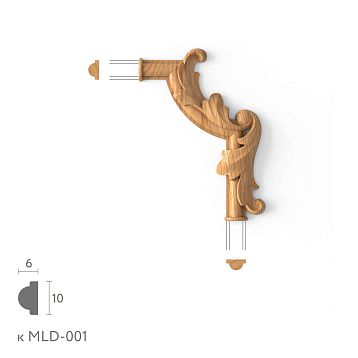
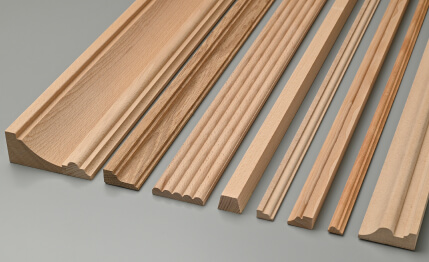
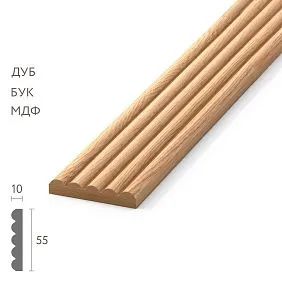
Moldings — these are decorative profile strips with a characteristic cross-section. They are nailed, glued, or attached with hidden fasteners to walls, furniture facades, doors, panels, and any other flat surfaces.
The word "molding" comes from architecture — there it referred to profiled architectural elements: cornices, rods, friezes. In modern interior use, molding is any profiled long piece with a decorative cross-section.
The key word is "profiled." Molding is not flat or simply rectangular. It has a distinct cross-sectional shape: convexities, concavities, bevels, fillets, beads. It is this shape that creates shadows, relief, depth — the very reason moldings exist.
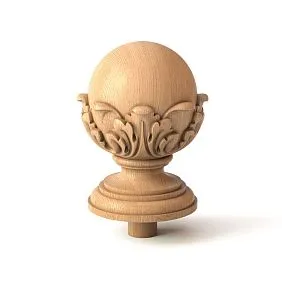
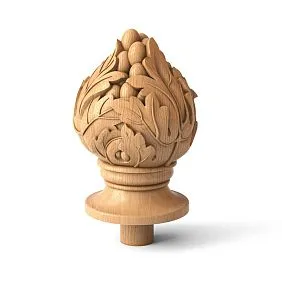
Our factory also produces:






What are moldings made of
Moldings are made from different materials — plaster, polyurethane, PVC, MDF. But a wooden molding made of solid wood is a special case. Wood:
-
Warm to the touch and visually.
-
Can be painted, tinted, and varnished.
-
Can be cut, sawed, and adjusted without special equipment.
-
Durable with proper care.
-
Blends organically with wooden floors, furniture, doors, and other wooden decor.
A wooden molding made of solid wood is not only beautiful but also a material that is pleasant to work with and will last for decades.
Get Consultation
Where wooden moldings are used
Walls: molding as a tool for architectural space marking
The wall is the largest surface in the room. And it is the walls that suffer from "emptiness" in interiors with neutral colors and minimal decor.
Moldings on walls solve several tasks simultaneously:
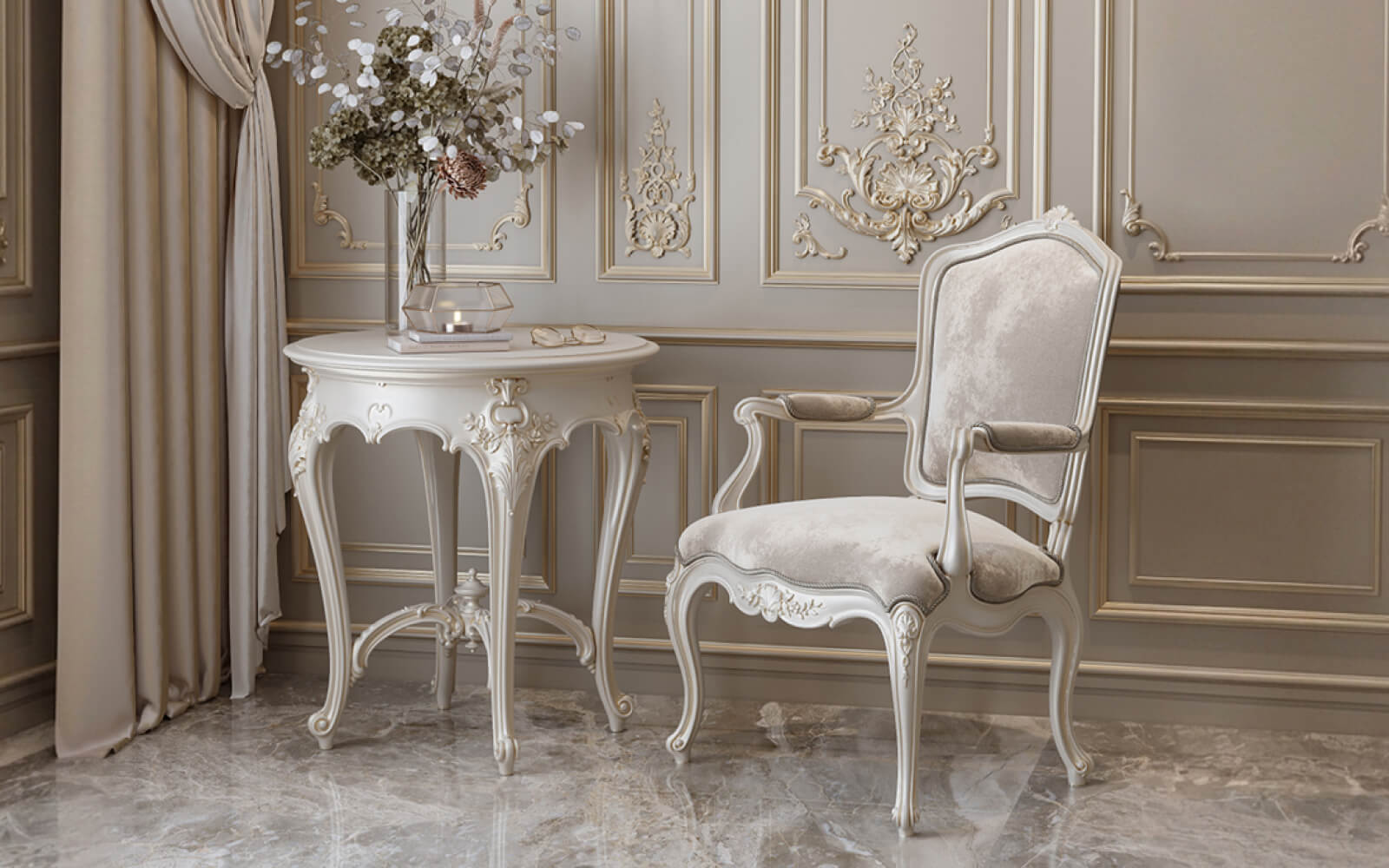
Decorative frames. Rectangular or square contours made of moldings, creating a panel division of the wall. A classic technique used as early as the 18th century — and one that is experiencing a renaissance today in neoclassical and modern classic interiors.
Accent wall. Vertical or horizontal strips of moldings structure the wall, creating rhythm. Behind the sofa, behind the bed, behind the dining table — an accent wall with moldings makes the area feel "complete."
Design of piers and niches. A molding around the perimeter of a niche turns an ordinary recess into an architectural element. A molding along the pier between doors creates a frame for a painting or mirror without drilling.
Zoning by height. A molding at a height of 90–100 cm divides the wall into a "base" and an "upper" part. The lower part can be finished with wooden panels, painted a different color, or upholstered with fabric. The molding is the boundary of this division.
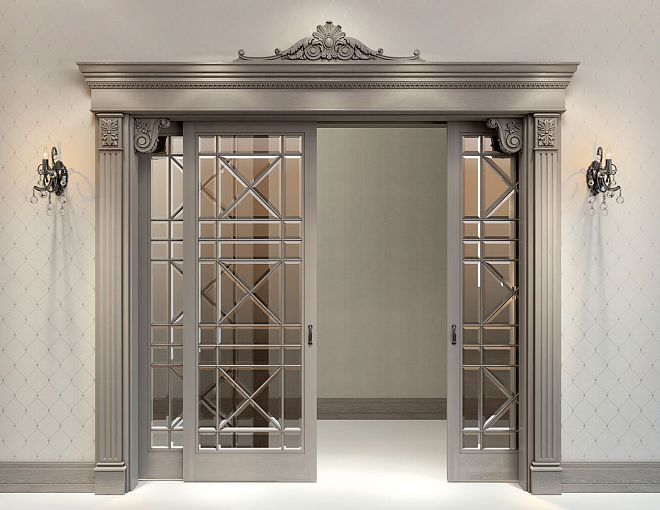
Framing of doors and windows. An additional molding around the perimeter of a doorway or window frame creates a "second contour" — decorative, more expressive than the standard trim.
Furniture: molding as an image transformer
Furniture Wooden moldings — one of the most underestimated tools in working with furniture. Molding on a furniture facade:
-
Transforms a flat facade into a framed one — without completely replacing the facade.
-
Adds a classic character to a neutral object.
-
Zones the surface of a cabinet or chest of drawers.
-
Covers joints and transitions on composite facades.
-
Creates a decorative belt along the top edge of the body (cornice) or along the bottom (baseboard).
Cabinets. Molding around the perimeter of doors — turns a flat door into a paneled one. Molding along the top edge of the cabinet — imitates a cornice. Molding along the bottom edge — baseboard.
Chests of drawers. Molding around the perimeter of drawers — a relief facade without complex milling. Molding along the top edge — a crowning profile.
Kitchen facades. Molding as a layout around the perimeter of kitchen doors — quickly and inexpensively creates a classic kitchen look.
Doors. Molding layout around the perimeter of the door insert — adds a classic panel without making a new door.
Other applications
-
Decorative frames for paintings, mirrors, panels.
-
Design of a ceiling transition (wooden cornice).
-
Decorating stair steps.
-
Restoration of old furniture — replacement of worn-out profile.
-
Custom interior panels made of slats and moldings.
How molding differs from slat, trim, and baguette
Terminology without confusion
In the market of wooden moldings, it's easy to get confused with terms. "Molding", "slat", "trim", "baguette" — what are they and how do they differ? Let's break it down honestly.
Molding is a decorative profile with a pronounced shaped cross-section. Purpose: to create relief, shadows, architectural expressiveness. Used on walls and furniture as a decorative framing or dividing element.
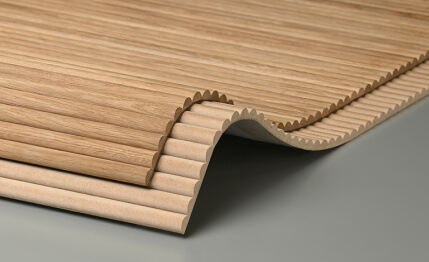
Wooden plank — more often rectangular or square cross-section, minimal profile. Used to create linear decorative solutions: vertical stripes on walls, slatted panels, lathing. A slat is a line; a molding is a shape.
Wooden molding — a flat or slightly profiled strip for closing joints, framing inserts, designing transitions. The function of a trim is to close a technological or decorative joint. For more on flat trim, see the article on flat wooden layout.
Wooden Picture Frame — a profile with a more pronounced and, as a rule, more complex cross-section. Used for picture frames, mirrors, decorative panels. The shape of the baguette is often with an asymmetrical profile: bevel plus convexity plus reverse bevel. The difference from molding is in application: baguette is more often used as a frame profile, molding as a built-in architectural element.
Picture frame strip — a simplified version of a baguette, with a thinner profile. For lightweight frame solutions, decorative inserts.
Table: how they differ
| Element | Cross-section shape | Main application | Style |
|---|---|---|---|
| Molding | Complex profile | Walls, furniture facades | Classic, neoclassic |
| Rail | Rectangular / simple | Panels, lines, lathing | Scandinavian, loft, classic |
| Layout | Flat / simple bevel | Joints, trims, inserts | Universal |
| Molding | Asymmetric shaped | Frames, mirrors, panels | Classic, Baroque |
| Corner piece | Corner L-profile | Corners, transitions, joints | Universal |
Wooden wall moldings
Decorative frames on the wall: how it works
Imagine a white wall. No decor, just a flat surface. Now imagine the same wall with three rectangular frames outlined with moldings — identical, aligned horizontally, with indents from the floor and ceiling.
The wall has become classic. That is the main magic of molding.
Decorative frames made of moldings on walls are one of the most common techniques in classic and neoclassical interiors. The principle:
-
Mark the wall into rectangular sections.
-
Cut the molding at a right angle or at 45° (corner joints).
-
Glue with liquid nails or attach using hidden fasteners.
-
Putty the joints.
-
Paint together with the wall or in a contrasting color.
Important point: molding for painting is the most popular option for walls. It is painted together with the wall in one color — creating relief without color contrast. Or the molding is white on a colored wall. Both options work.
Vertical paneling of walls with moldings
Vertical strips of moldings along the entire height of the wall — a technique used in English classical interiors and actively applied today in neoclassicism.
For vertical lines, a wooden molding with a narrow profile (10–20 mm) is installed at equal intervals. The rhythm of verticals adds height to the room, visually 'stretching' the space.
Moldings in the wall-ceiling joint area
Wooden molding as a cornice — the transition from wall to ceiling. This is not just a top baseboard: a profiled cornice-molding creates a full-fledged architectural element characteristic of classical interiors.
For the wall-ceiling joint, a molding with a more expressive and complex profile: several transitions, fillets, projections. Width — from 30 to 80 mm depending on ceiling height.
Wooden molding for decorating niches and piers
A niche in the wall with molding around the perimeter — a ready-made "frame" for a shelf, decorative object, or backlighting. A pier with molding — a place for a large painting, mirror, panel. The molding sets boundaries and turns a random architectural feature into a thoughtful interior element.
Wooden moldings for furniture
Why molding on furniture facades
Furniture Wooden moldings work differently than wall moldings. Here the scale is different — details are smaller, distances are shorter, loads are specific.
Molding on furniture performs several functions:
Creating a framed facade. A flat cabinet or dresser facade with applied molding around the perimeter is visually perceived as framed. This is a quick and cheap way to turn a neutral piece into a classic one.
Zoning. Molding divides a large facade into parts — with a horizontal or vertical strip. For tall cabinets, this is especially important: without horizontal division, a tall facade appears monolithic and boring.
Decorative cornice. Molding along the top edge of the cabinet — an imitation of an architectural cornice. It is the cornice that "closes" the cabinet from above, completing its silhouette. Without a cornice, the cabinet looks unfinished.
Baseboard strip. Molding along the bottom edge of the body — a base. Adds solidity and completeness.
Restoration. A worn, broken, or outdated molding on old furniture is replaced with a new one — and the furniture is transformed.
Cabinets: molding in the system of classical furniture architecture
In a cabinet, wooden molding appears in several places:
-
Along the perimeter of the door — creates a framed facade.
-
Along the top edge of the body — cornice.
-
Along the bottom edge — base.
-
On the sides — vertical profile lines.
-
On horizontal partitions — division of the body into sections.
Each of these elements can be made with a separate molding — or one type of profile is used in several positions for unity.
Chests of drawers and nightstands: molding as a quick solution
A chest of drawers with simple flat drawers is a neutral piece. The same chest of drawers with applied moldings around the perimeter of each drawer is a classic piece.
Molding on a dresser drawer: a rectangular frame made of profile around the perimeter of the drawer front. Installed with glue or fasteners. Tinted or painted together with the body.
This technique is so simple and effective that it is actively used not only in furniture production but also in restoring purchased 'wrong' furniture.
Kitchen fronts with wooden moldings
A classic-style kitchen features framed fronts. If the fronts are initially flat, molding strips around the perimeter create a framed effect. For the kitchen, moisture-resistant glue and molding coating are important: several layers of varnish or enamel with good moisture resistance.
Wooden moldings for kitchen fronts are combined with wooden furniture handles the same wood species and in the same tint — a unified wooden ensemble.
How to choose the width and profile of molding
Width: proportion and purpose
This is the most common question when buying molding. Too narrow — it will get lost. Too wide — it will overwhelm. How to guess?
For wall frames:
-
Room height 2.5–2.7 m → molding width 20–35 mm.
-
Height 3.0–3.5 m → 35–50 mm.
-
Height over 3.5 m → 50–70 mm and more.
Rule: the higher the ceiling and the larger the frame, the wider the molding.
For furniture fronts:
-
Dresser drawer width 350–500 mm → molding 10–18 mm.
-
Cabinet door width 400–600 mm → 15–25 mm.
-
Large door 600–900 mm → 25–35 mm.
For cornices:
-
Low cabinet body → cornice molding 30–50 mm.
-
Cabinet to ceiling → cornice profile 50–80 mm.
Profile: cross-section shape defines the style
Simple oval or semi-oval profile. Classic in its pure form: soft convexity, smooth transitions. For facades, frames, simple decorative lines. Combines with Scandinavian style, modern classic, Provence.
Reverse curve profile (ogee). S-shaped cross-section: concavity plus convexity. More complex and expressive. For architectural cornices and rich classical interiors.
Quarter-round profile (cove). Concave cross-section — quarter of a circle. Used in cornices, baseboards, transitions. Unobtrusive, neat.
Straight profile with chamfer. Almost flat, with beveled corners. For modern classic, neoclassicism with a minimalist slant.
Complex composite profile. Several fillets, protrusions, bevels in one cross-section. For formal interiors, rich classic style. Wide — from 40 mm and more.
Molding joints: at 45° or 90°
Corner joints of molding on the wall — cut at 45° (so-called miter joints). This is the standard: both elements are cut at the same angle and joined at the corner. Requires precise cutting — miter box or miter saw.
For furniture applications, overlap joints — perpendicular joints — are sometimes used. This is easier to install but less neat on large parts.
Material and finish of wooden moldings
Tree species
Beech. Dense, uniform, without pronounced pores. Ideal for moldings for painting: the surface is smooth, accepts paint without priming. For moldings for tinting — a beautiful cream tone.
Pine. More affordable, softer. Small resin pockets — requires thorough priming before painting. For moldings with natural finish — expressive texture with a characteristic pattern.
Oak. The most expressive of the available species in terms of texture. Oak molding under clear oil or varnish — a very expensive visual result. For interiors with exposed wood.
Aspen. Light, uniform, odorless. For moldings in damp rooms and for children's rooms.
Finishing options
For painting. The most common scenario: the molding without coating is primed and painted together with the wall or in a separate color. All moldings on the wall are one color, the wall surface is another. Or everything in one tone — white or cream.
Tinting + varnish. For moldings on furniture and wooden surfaces: tinting is matched to the tone of the furniture or floor, then a layer of clear varnish for protection.
Natural oil or wax. For moldings with a natural finish without a covering coating. Preserves the texture, gives tactile softness. Requires periodic renewal.
White enamel. For classic white molding on a wall or furniture. Several layers of enamel with interlayer sanding — a smooth, glossy or matte surface.
Moldings for painting: practical tips
If you plan to paint the moldings together with the wall, choose beech or well-puttied pine moldings. Primer is mandatory: it closes the pores and creates an even base. Final painting — in 2–3 coats with light sanding between coats.
What to combine wooden moldings with
Moldings and battens: different roles in one interior
In a modern classic interior, moldings and battens work together but solve different tasks.
Wooden plank — is line and rhythm. Vertical battens on the wall create a slatted panel; horizontal ones create a dividing belt. A batten is a more modern, laconic element. A molding is more classic and decorative.
In one interior: molding frames on the upper part of the wall + a slatted panel on the lower part — classic arrangement "above the molding / below the molding". The transition between parts is a horizontal molding or wooden trim.
Moldings and baseboard
with a classic profile creates a sense of solidity, reliability. — is the lower element of the system. The molding on the wall is the middle one. The wooden cornice-molding near the ceiling is the upper one.
All three elements must be from the same wood species and in a single tone. This is the classic vertical room finishing system: floor → baseboard → wall with moldings → molding-cornice → ceiling.
Moldings and wooden corner
Wooden angle — for closing internal and external corners, joints of slatted panels, material transitions. In a system with moldings, a corner piece appears where the molding cannot handle the corner joint — or as an additional decorative accent.
Moldings and overlay decor
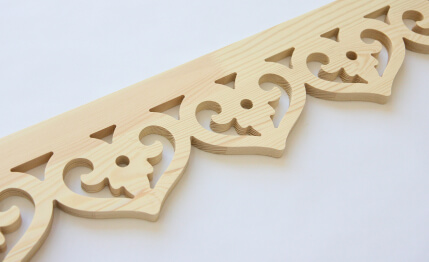
decor for furniture — overlay rosettes, cartouches, carved elements — work in ensemble with moldings. The molding frames — the decorative element accents. On a cabinet: molding along the perimeter of the door creates a frame, and an overlay rosette in the center creates a focal accent.
decorative elements for furniture from the same wood species and in the same tone as the moldings — a seamless visual system.
Moldings, handles, and legs: a unified furniture system
A professional approach to furniture design is a system where all wooden details are interconnected.
On one item:
-
Moldings on the facades.
-
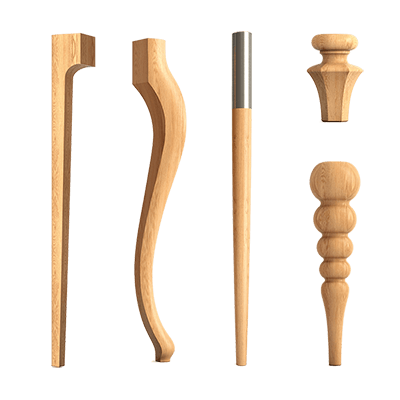
Wooden legs — turned, matching the tone of the moldings.
-
wooden hook handle or a button — in the same wood species and tone.
All three elements are made of beech, in a "dark walnut" tint. Or all three are white under enamel. Unity of wood species and tone is a rule, violation of which is immediately visible.
Wooden moldings in a classic interior
Classics is the architecture of small forms
A classic interior differs from other styles not only in furniture and color. It is distinguished by the presence of architectural details — moldings, cornices, baseboards, pilasters, decorative niches. This is a "dressed" space where every surface has structure and relief.
Wooden moldings are an affordable and natural way to add that very depth to a classic interior. They work:
-
On walls — creating panel divisions.
-
On furniture facades — adding a frame profile.
-
In transitions — between wall and ceiling, between materials.
-
On doors — as a decorative layout around the perimeter of the insert.
Modern classics and moldings
In modern classics, moldings are more restrained. Narrow profile, moderate relief, monochrome painting. Frames on walls — without excess, 2–3 frames per wall. Moldings on furniture — along the perimeter of facades, without additional decor.
Furniture and decor from solid wood in modern classics — natural wood with laconic finishing and wooden molding in the same tone.
Neoclassicism: molding as geometry
In neoclassicism, moldings are often used strictly geometrically — only straight lines, only right angles, only a minimalist profile. A wall with vertical and horizontal moldings creates a "grid" — a modern interpretation of classic paneling.
Installation of wooden moldings: basic rules
Tools
For working with wooden moldings, you need:
-
Miter saw (or miter box + fine-tooth hacksaw) for precise angle cuts.
-
Level and tape measure for marking.
-
Liquid nails or wood glue for attachment.
-
Finish nails (50–60 mm) or brads for additional fixation.
-
Wood putty for filling joints and nail heads.
-
Primer and paint / varnish for final finishing.
Installation order
-
Marking. Use a pencil or painter's tape to mark the location of the moldings. For frames, mark all four corners.
-
Cutting. Measure the length of each element considering corner joints. Corner cuts at 45°.
-
Dry fit. Before applying glue, dry fit all pieces on the wall. Ensure joint accuracy.
-
Installation. Apply liquid nails to the back of the molding, press against the wall, hold for a few seconds. Additionally secure with finishing nails.
-
Joint filling. Fill corners and nail attachment points with putty, sand after drying.
-
Painting. Primer → paint in 2–3 coats.
Installing molding on furniture
On furniture fronts, molding is glued with woodworking PVA glue or contact adhesive. Press and secure with clamps or painter's tape until dry. Corner joints at 45° or with an overlapping square corner piece.
Common mistakes when choosing moldings
Mistake 1: Too thin profile on a large wall
An 8 mm molding on a wall 2.7 m high is almost invisible. The frame gets lost, doesn't create the desired relief or shadow. For a wall — minimum 20–25 mm. Better — 30–40 mm.
Mistake 2: Too wide molding on a small facade
A 40 mm molding on a dresser drawer 350 mm wide takes up almost the entire width. The frame looks grotesque, compressing the inner space to nothing. For furniture — strictly proportional.
Mistake 3: Different profiles in the same space
One molding profile on the walls, another on the furniture, a third on the cornice. This is chaos. In one interior solution — one type of profile or profiles from the same family.
Mistake 4: Random molding color
Molding white — furniture dark — walls gray. No connection between elements. Moldings should either match the wall color (relief without color contrast), match the furniture color (wooden ensemble), or have a well-thought-out contrast.
Mistake 5: Moldings without a system
Three frames on one wall, one frame on another, nothing on the third. Moldings should either cover all walls or work only on an accent wall — completely and consistently.
Mistake 6: Uneven marking
Molding frames glued "by eye" without a level — will never be straight. A deviation of 3–5 mm on a long horizontal line is immediately visible. A level, tape measure, and painter's tape for marking are mandatory.
Mistake 7: Installation without primer
Molding without coating, glued to the wall and painted without primer — the paint lays unevenly, pores remain open, the surface loses its appearance within a year. Primer is a mandatory step.
Wooden moldings for furniture restoration
When molding is a way to bring furniture back to life
Furniture restoration is one of the most common reasons for ordering wooden moldings. An old cabinet with a lost profile along the door perimeter, a chest of drawers with a torn cornice molding, a kitchen with faded and warped trims — all these problems are solved by replacing the molding.
What is needed for restoration:
-
Carefully remove the old molding.
-
Clean the surface.
-
Select a molding of a similar profile or a more modern one.
-
Install the new molding.
-
Tint or paint to match the furniture tone.
Key point: molding without coating is optimal for restoration. It allows precise matching of the tone to the existing finish.
Kitchen renovation with moldings
Kitchen with outdated facades — moldings are removed, facades are repainted, new moldings of a different profile are installed. The cost of transformation is minimal; the result is a new look for the kitchen.
Comparative table of molding applications
| Application | Recommended width | Profile | Finish |
|---|---|---|---|
| Frames on the wall | 20–40 mm | Oval, wrap-around | Painting |
| Cabinet cornice | 40–70 mm | Composite | Tinting / enamel |
| Frame on dresser drawer | 10–18 mm | Simple oval | Tinting / enamel |
| Frame on kitchen facade | 15–25 mm | Oval / bevel | Enamel |
| Cornice on wall at ceiling | 40–80 mm | Complex | Painting |
| Decorative panel | 20–30 mm | Any | Painting / Tinting |
| Furniture Restoration | By Analogy | By Analogy | To Match Furniture Tone |
FAQ: Popular Questions About Wooden Moldings
Why is wooden molding better than polyurethane?
Wood is repairable, tactilely warm, and eco-friendly. It can be sanded, repainted, and restored. Polyurethane is cheaper and easier to install, but if damaged, requires full replacement.
What to Use to Glue Molding to a Wall?
Liquid nails are standard. For porous walls (concrete, aerated concrete) — additionally finishing nails. For furniture — woodworking PVA glue with clamp fixation.
How to Cut Corner Joints Without Special Tools?
Miter box + fine-tooth hacksaw. The miter box holds the molding at the required angle (45°) during sawing. For curved corners — behavior is more complex, requiring a miter saw.
Can you paint wall moldings together with the wall?
Yes, this is the most common option. Moldings are painted in the wall color — creating relief without color contrast. Or moldings are white on a colored wall.
Which molding to choose for a classic dresser?
A profile 12–18 mm wide with an oval or semi-oval cross-section. Tone — matching the body color or slightly darker. Wood species — same as the furniture body.
How to choose a molding for a wooden floor?
Guideline — the tone and wood species of the floor. Wall moldings — matching the baseboard or furniture tone. Exact match is not required — a permissible tone range of 1–2 shades.
Is it necessary to prime beech molding before painting?
Yes. Beech is a dense wood species, but priming ensures better paint adhesion and a more even result. Prime in 1–2 coats with drying between coats.
Where to buy wooden moldings
Full range of wooden trim and related products:
-
Moldings — catalog of solid wood moldings.
-
Wooden trim — complete catalog of linear molding products.
-
Wooden plank — solid wood slats.
-
Buy wooden trim — trims and picture rails.
-
with a classic profile creates a sense of solidity, reliability. — solid wood floor baseboards.
-
Wooden angle — corner profiles.
-
decor for furniture — solid wood applied decorative elements.
-
decorative elements for furniture — rosettes, friezes, appliqués.
-
Wooden legs — furniture supports.
-
Furniture and decor from solid wood — complete catalog of STAVROS products.
STAVROS: solid wood moldings and a complete system of decorative linear molding from solid wood
Wooden moldings for walls and furniture — it is a tool that transforms a space from neutral to distinctive. One correctly chosen profile detail changes the perception of an entire room or piece of furniture. This is not an exaggeration — it is the nature of architectural relief.
STAVROS produces wooden Wooden moldings from solid beech and pine: for painting, tinting, varnishing. Wide selection of profiles — from thin and neat to expressive composite. Unified system: moldings, strips, trims, baseboards, corners, applied decor, legs, handles — all from one catalog, one wood species, one production.
STAVROS works with furniture manufacturers, designers, restorers, construction companies and private clients across Russia. Consistent quality, precise dimensions, fast shipping.