




























Article Contents:
- Why baseboard height matters
- Which MDF baseboard sizes are most commonly used
- 80 mm MDF baseboard: a universal choice for most interiors
- Why 80 mm is the best starting point
- Where 80 mm MDF baseboard works
- Profiles and decors for 80 mm MDF baseboard
- 100 mm MDF baseboard: expressiveness without overload
- When to choose 100 mm
- How 100 mm changes the perception of the interior
- Combination with doors at a baseboard height of 100 mm
- Installation requirements for 100 mm baseboard
- 120 mm MDF baseboard: monumentality and classic style
- For which rooms is the 120 mm baseboard designed
- 120 mm baseboard in classic and neoclassical interiors
- Mistakes when choosing a 120 mm baseboard
- How to choose baseboard height for ceilings
- How to match baseboard with doors and architraves
- Skirting board matching door color
- Baseboard matching the color of architraves
- Straight MDF baseboard for concealed doors
- Tall baseboard for classic doors
- How to choose a skirting board for the floor
- Main combination options
- White MDF skirting board or paintable: which to choose
- White MDF skirting board: advantages of a ready-made solution
- MDF skirting board for painting: freedom of choice
- When white can be unnecessary
- Straight or shaped profile: how not to make a mistake
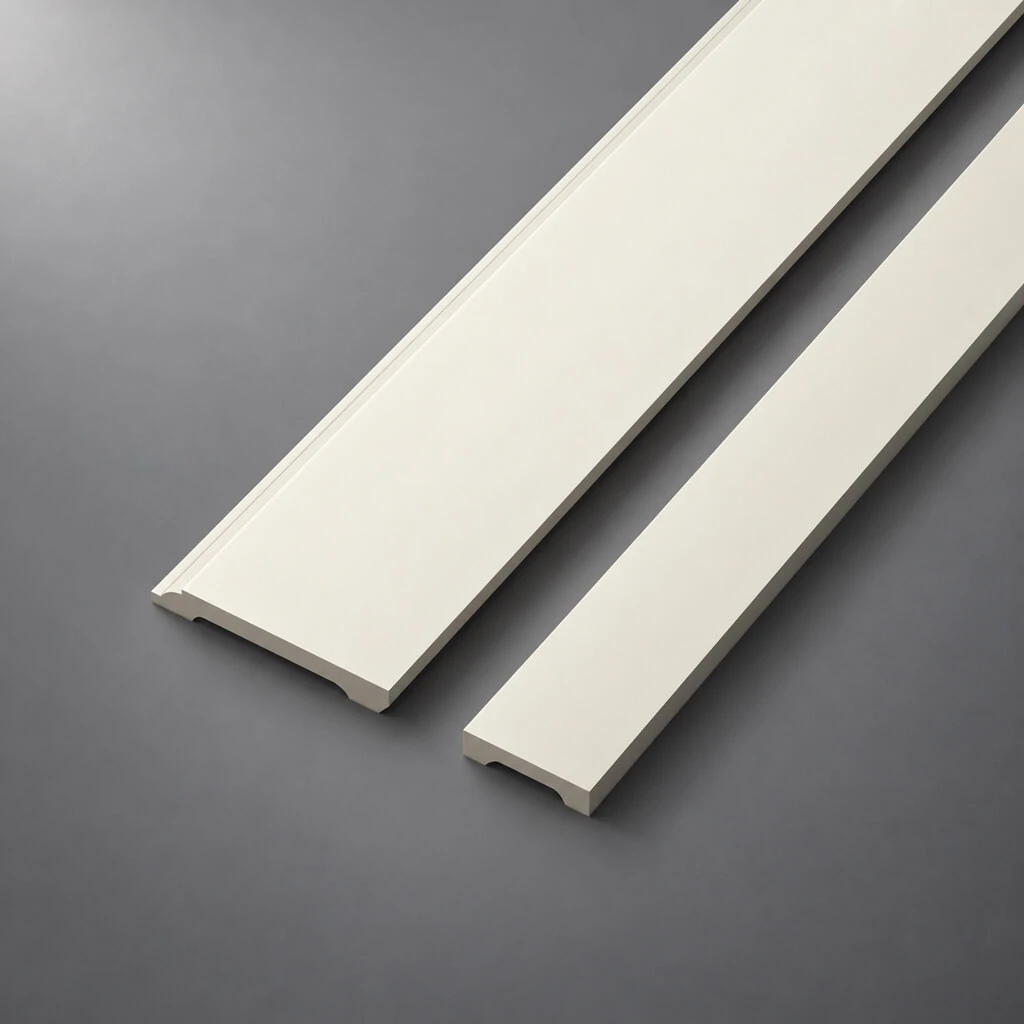
- Straight MDF skirting board: purity and modernity
- Shaped profile: classic and decorative
- Profile with a chamfer: a compromise for transitional styles
- Corners, joints and installation of high MDF baseboard
- Internal corners
- External corners
- Lengthwise joint
- End at the doorway
- Why high baseboard requires more careful installation
- Typical mistakes when choosing the height of MDF baseboard
- What to buy for a finished lower contour
- Which MDF baseboard to choose: final decision-making system
- FAQ: Answers to Popular Questions
- About the Company STAVROS
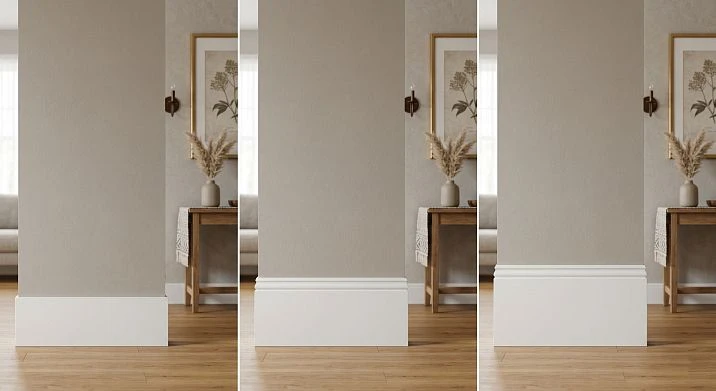
When the renovation is almost complete — the floor is laid, the walls are plastered, the doors are installed — the moment comes to choose a baseboard. And here many stop in bewilderment: 80 mm or 100 mm? Or maybe immediately 120 mm? White or for painting? Straight or with a profile? Questions pile up, and the cost of a mistake is unexpectedly high: an incorrectly chosen height MDF Skirting Boards can unbalance even the most well-thought-out interior.
This article is a practical guide written for those who want to understand once and for all. No fluff, no general phrases, with specific guidelines for each type of room.
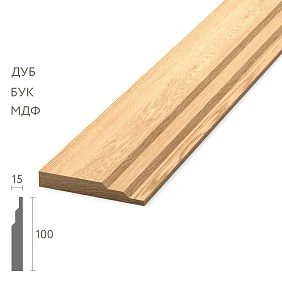
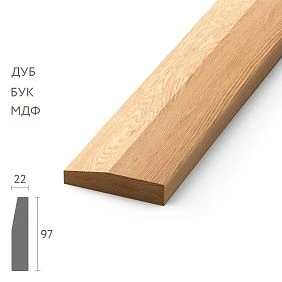
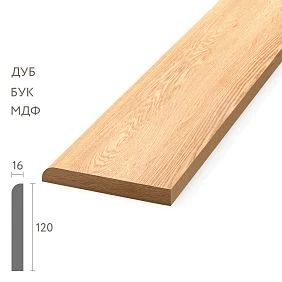
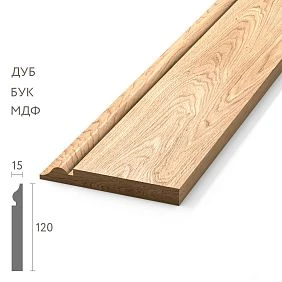
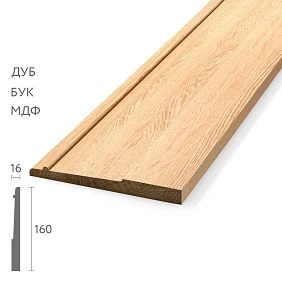
Why baseboard height matters
A baseboard is not just a narrow strip that hides the gap between the floor and the wall. It is the lower contour of the entire interior. It visually "completes" the wall from below, sets the scale of the room, and ties together the floor, walls, doors, and furniture into a single system.
Imagine a painting without a frame. Technically, it exists — but something is missing. The frame gathers the image, holds the gaze inside. A baseboard does the same in an interior: it holds the lower visual horizon, giving the space a finished look.
A baseboard that is too low — 40–50 mm — feels accidental. The gaze "doesn't notice" it, and the floor line seems undefined. One that is too high in a small room, on the other hand, feels oppressive, overloads the wall, and visually lowers the ceiling. Balance is the main goal.
Why MDF? Because it Baseboard MDF combines capabilities that neither plastic nor solid wood can offer simultaneously: a geometrically precise profile, a perfect surface for painting, a wide range of heights from 60 to 150 mm, and an affordable price. This is why MDF has become the material of choice for most modern finishes.
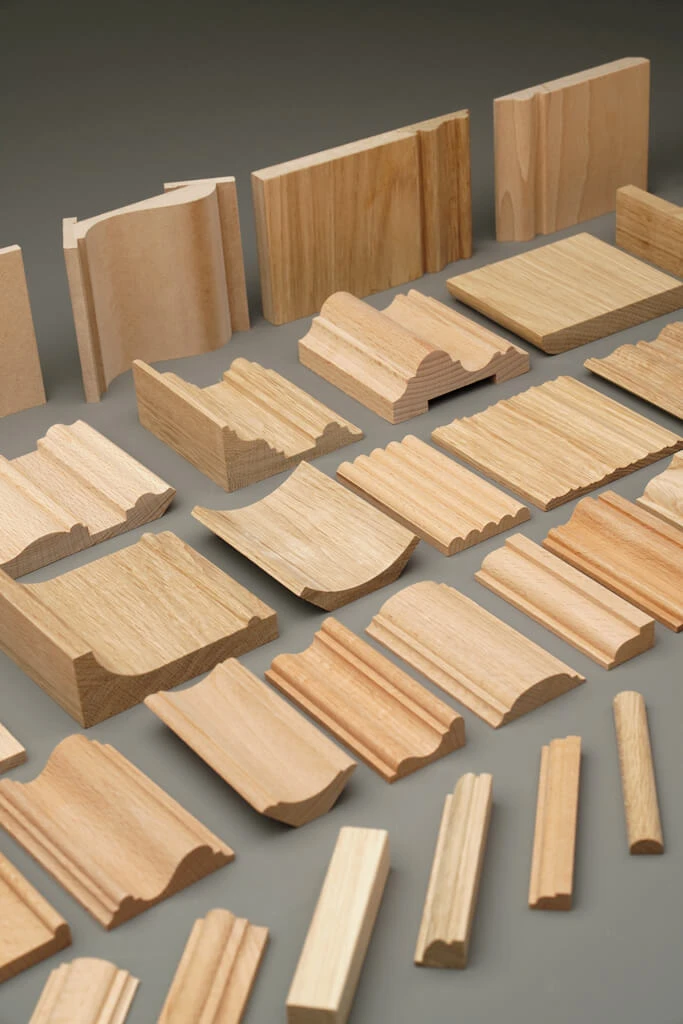
Which MDF baseboard sizes are most commonly used
Before diving into specific sizes, it's worth understanding the general logic. Height of MDF skirting board is chosen based on several factors: ceiling height, room size, interior style, and the character of doors and furniture.
There is a professional rule: the baseboard height should be 2.5–4% of the ceiling height. For a ceiling of 2,500 mm, this is 63–100 mm. For 3,000 mm — 75–120 mm. For 3,500 mm and above — 88–140 mm. The rule works as a starting point, but not as an absolute law.
Quick reference of popular sizes:
-
60–70 mm — calm minimalism. The baseboard "disappears," not claiming to be decor. Suitable for bathrooms, small hallways, utility rooms. Sometimes — a deliberate design choice in interiors with very low ceilings.
-
80 mm — universal standard. Suitable for most apartments, any style, any room. Neither overloads nor gets lost. It's the sweet spot that's a safe choice.
-
100 mm — expressive height. Gives the interior a tangible "weight." Pairs well with modern doors of standard and increased height. Makes the space look more expensive with comparable investment.
-
120 mm — architectural statement. Suitable for spacious living rooms, studies, grand halls. Requires high ceilings and thoughtful coordination with doors, moldings, and furniture.
It's important to understand: choosing height is not about "bigger is better." It's about proportion. A 120 mm MDF baseboard in a room with a 2,400 mm ceiling will create discomfort, while an 80 mm MDF baseboard in the same room will look perfectly organic.
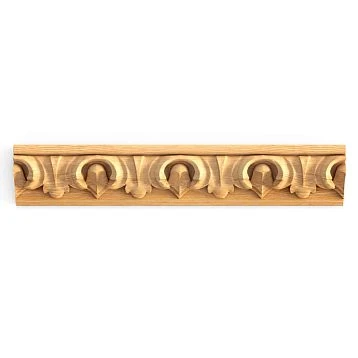
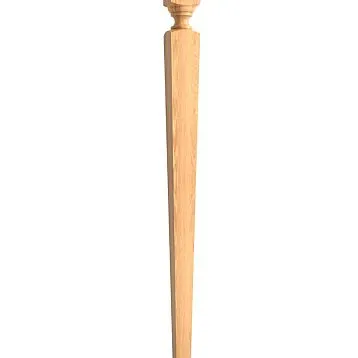
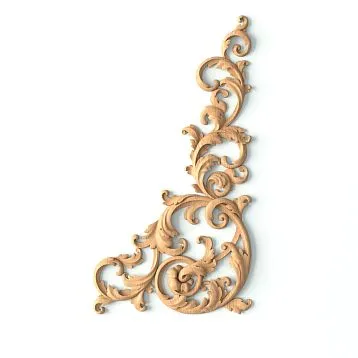
Our factory also produces:
80 mm MDF baseboard: a universal choice for most interiors
Get Consultation
Why 80 mm is the best starting point
80 mm MDF baseboard is the most common size in Russian apartments and houses. And this is not a market coincidence, but the result of practical selection. With a standard ceiling height of 2,500–2,700 mm, 80 mm provides the right proportion: the baseboard is noticeable, holds the lower horizon of the wall, but does not take up visual space "with pretension."
Buying an 80 mm MDF baseboard is also advantageous because manufacturers produce the widest range of profiles, decors, and accessories for this height. Internal corners, external corners, end caps, connectors — all are easy to find in the right color and quantity.
Where is the MDF baseboard 80 mm used?
Bedroom. 80 mm is a delicate height that doesn't "shout" in an intimate space. A white baseboard on white walls creates an "invisible" line effect; a wood-look baseboard matching the laminate creates a warm connection between floor and walls.
Living room with ceiling up to 2,700 mm. With a standard room height, 80 mm is the ideal compromise. Modern doors 2,000–2,100 mm high harmonize perfectly with this baseboard height.
Hallway and corridor. Practicality is key here: the baseboard withstands impacts from vacuum cleaners, furniture, and shoes. 80 mm provides sufficient protection without making the corridor feel "heavy."
Children's room. 80 mm is a height that a sliding wardrobe won't step over, yet it doesn't cover the lower part of wall decor.
Profiles and decors for MDF baseboard 80 mm
The MDF baseboard 80 mm is available in three main finishes. White — for painting or with factory white enamel — is the most popular. Wood-look (oak, walnut, wenge, pine) — for interiors with wooden elements. Solid color matching the wall — for a "unified surface" effect.
Straight profile 80 mm — for minimalism and modern style. Profile with a bevel or slight cove — for soft classic and transitional styles.
MDF baseboard 100 mm: expressiveness without overload
When to choose 100 mm
MDF skirting board 100 mm is the next step towards decorativeness. The 20 mm difference compared to 80 mm seems insignificant on paper, but in a real interior it is clearly noticeable: the skirting line becomes a prominent design element, not just a "covering strip."
With ceilings of 2,700–2,900 mm, the MDF skirting board 100 mm occupies exactly the visual niche it should: it neither overwhelms nor gets lost. This height is most common in modern new buildings with improved ceilings.
How 100 mm changes the perception of the interior
The first thing guests notice is that the space looks more expensive. A wide white skirting board along the entire perimeter of the living room creates a visual "base" that adds architecturality to the interior. Designers actively use this technique when working with mid-range apartments: small investments in skirting board height yield disproportionately large effects.
MDF skirting board 100 mm for painting is a particularly popular solution. The wide surface is perfect for a brush or spray gun. Two coats of acrylic enamel — and you get an element indistinguishable from the professional finish of an expensive project. At the same time, the cost of the skirting board itself MDF skirting boards for painting is several times lower than that of ready-made decorative analogs made of solid wood.
Combination with doors at a skirting board height of 100 mm
With a door leaf height of 2,000–2,100 mm, the MDF skirting board 100 mm looks harmonious: it occupies exactly 5% of the door height, which is visually correct. With increased door heights of 2,300–2,400 mm — 100 mm also works perfectly, creating an expressive horizontal line.
White MDF skirting board 100 mm + white doors + white architraves — a classic "clean architecture" system that works in any modern interior without exception. White MDF Skirting Board paired with white door architraves creates a unified system of lower and side framing, making the interior cohesive.
Requirements for installing 100 mm baseboard
The higher the baseboard, the more noticeable installation errors. At 100 mm, corner joints must be precise: a 45° cut with a deviation of no more than 0.5°. A visible gap in the corner at a height of 100 mm is a 100 mm defect, not 80 mm. This must be considered when choosing a contractor or when installing yourself.
Clip mounting at 100 mm is the optimal choice: clips ensure a snug fit against the wall, compensating for minor surface irregularities.
120 mm MDF baseboard: monumentality and classic style
For which rooms is the 120 mm baseboard designed
A 120 mm MDF baseboard is already an architectural element, not just a finishing detail. With ceiling heights of 3 meters and above, 120 mm starts to look natural and proportional. In such a room, 80 mm seems too modest — like a thin frame on a huge canvas.
A living room with a 3,200 mm ceiling, a spacious study, a grand hall of a country house — these are the spaces where the 120 mm MDF baseboard realizes its full potential. Combined with high doors of 2,300–2,400 mm, wooden cornices, and moldings, it creates a sense of a true architectural interior.
120 mm baseboard in classic and neoclassical interiors
Neoclassicism is a style where all details must be 'weighty'. A light 80 mm baseboard would be lost here against the backdrop of massive door casings, stucco cornices, and profiled moldings. The 120 mm MDF baseboard holds this scale. It becomes the lower tier of the wall's decorative system.
A shaped 120 mm profile with fillets and 'steps' is the perfect continuation of door casing decor. Buying a 120 mm MDF baseboard with a profile that echoes the casing profile means creating a system of horizontal and vertical frames in the interior, linked by a common theme.
paired with wooden molding A 120 mm baseboard along the perimeter of the walls forms a lower "belt" — a classic technique that divides the wall into zones and visually adds height.
Mistakes when choosing a 120 mm baseboard
The main mistake is installing a 120 mm baseboard in a small room without a conscious design intent. In a room of 10–12 sq. m with a ceiling height of 2,500 mm, a wide baseboard literally "cuts off" the room from below, creating a feeling of crampedness and low ceiling. The rule is simple: the smaller the room, the more modest the baseboard should be.
The second mistake is choosing a 120 mm baseboard without combining it with other architectural details. A tall baseboard requires "company": matching doors, architraves, and preferably a ceiling wooden cornice or molding. On its own, without this system, a 120 mm baseboard looks heavy and excessive.
How to choose the height of the baseboard for your ceilings
The rule of proportions is a universal tool that works in any room:
-
Ceilings up to 2,600 mm — optimal baseboard height is 60–80 mm. Don't "occupy" the lower part of the wall with a wide strip where every centimeter of height counts visually.
-
Ceilings 2,700–2,900 mm — range 80–100 mm. This is the majority of modern new builds. Here, an 80 mm or 100 mm MDF baseboard looks most organic.
-
Ceilings from 3,000 mm — 100–120 mm and above. At this height, 80 mm baseboards start to visually "disappear".
-
Ceilings 3,500 mm and above — baseboards 140–150 mm and above are possible, as well as systems with a double lower cornice.
A special case is tall doors. If the room has doors 2,300–2,500 mm high, it is visually "correct" to use a taller baseboard. The proportion "door height — baseboard height" should be readable.
For minimalism and high-tech, you can use a straight profile without decoration even at large heights. For classic and neoclassical styles, the profile should be shaped and coordinated with other decorative elements.
How to choose a baseboard for doors and architraves
This is one of the key questions that determines more than half of the success of the entire finish. Doors and baseboards are details that either work together or ruin the interior.
Skirting in the color of the doors
The most classic and win-win system: White MDF Skirting Board + white doors + white architraves. Everything is white — and that is why it is visually "correct". The lower horizontal (baseboard) and vertical elements (doors with architraves) form a single framing system.
For "oak" doors — MDF baseboard in wood in the same shade. For wenge doors — baseboard in dark decor. The system works when the material or color matches.
Baseboard matching the architraves
If the architrave and door leaf are different colors (which is popular in modern interiors — white architraves on dark doors), it is logical to choose a baseboard in the color of the architraves. White architrave + white MDF baseboard = a single line of "architectural framing" around the entire perimeter of the doors and at the floor.
Straight MDF baseboard for hidden doors
Hidden doors without casings require a special approach. Here, the baseboard "bypasses" the doorway flush, without moldings on the sides. A straight, flat profile is the only logical choice. No shaped coves near a hidden door — only pure geometry.
Tall baseboard for classic doors
Doors with profiled casings, paneled, with capitals — classic. For them, an MDF baseboard 100–120 mm with a shaped profile echoing the casing decor. The connection between the door vertical and the baseboard horizontal creates architectural integrity.
How to choose a baseboard for the floor
The relationship of the baseboard to the floor is the second most important pair after baseboard-door. There is no strict rule "the baseboard must match the floor color" — it's more accurate to talk about the system into which both elements are integrated.
Main combination options
Matching the floor color. The baseboard continues the floor — visually "raises" it up the wall. Effect: the space appears wider, the floor more monolithic. Works well with dark coverings.
Matching the wall color. The baseboard "disappears" into the wall, the boundary between floor and wall becomes a clear geometric line. This is the "disappearing" baseboard technique — especially expressive with white walls and paintable baseboard.
Matching the door color. Already mentioned: a unified framing system combines doors and baseboard.
Contrast white. Dark floor + white MDF baseboard is one of the most popular modern techniques. A white strip at the base of the wall creates a clear "break" horizon, emphasizing the width of the room.
Wood-look with wooden or laminate flooring. MDF baseboard in oak or walnut decor to match the laminate is a classic. An exact shade match is not necessary: it's enough for the "tone" to be similar.
For painting with painted walls. If the walls are painted in a non-standard color, — is a horizontal element that frames the room at the bottom of the walls where the wall meets the floor. Skirting boards perform several functions: they hide the technological gap between the wall and floor covering (necessary for thermal expansion), protect the lower part of the wall from mechanical damage, create visual completion, and may conceal wiring. is the only way to get an exact match. Ready-made laminated baseboards will never match an individual wall color as precisely as a baseboard painted with the same paint.
The main rule: the baseboard does not live separately. It is part of the system. That's why it is chosen last — when the floor, doors, and walls are already known.
White MDF baseboard or paintable: which to choose
White MDF baseboard: advantages of a ready-made solution
White MDF baseboard with factory coating is the fastest solution. Unpack, install, done. No paints, primers, drying times. The color is stable, uniform, and the acrylic factory coating is resistant to everyday wear.
White baseboard is universal: it works with any wall color (except when an exact match is needed). White + parquet is a classic. White + gray walls is modern. White + dark laminate is a clear accent.
With white doors and white trim, a white MDF baseboard is the only logical choice. All three elements form a single system.
MDF skirting board for painting: freedom of choice
A skirting board for painting is a pure MDF surface with factory primer. You apply the paint of the desired color yourself and get exactly the shade you need.
When is this important? When the walls are painted in a non-standard color and the skirting board should "disappear" into the wall. Or when the project requires an anthracite, dark green, ochre skirting board — a color that is not available in the factory line of laminated skirting boards.
Painting technology: acrylic insulating primer (1 coat) → first coat of acrylic paint → light sanding with P400 → second finishing coat. It is more convenient to paint before installation — the skirting board lies horizontally, providing access to all edges.
When white can be unnecessary
In dark interiors — with dark walls, dark floors, deep accent colors — a white skirting board creates excessive contrast. It "cuts" the space with a light strip where a unified depth is needed. In such cases, an MDF skirting board for painting in the wall color is the right solution.
Straight or shaped profile: how not to make a mistake
The profile of a skirting board is the shape of its cross-section. What you see in the interior. And it is the profile that determines whether the skirting board "fits" organically into the style or creates dissonance.
Straight MDF skirting board: purity and modernity
A straight profile is a geometrically correct rectangle with minimal rounding or a chamfer on the top edge. No coves, protrusions, or steps. The eye glides past — and that is correct.
Straight MDF baseboard is an ideal choice for minimalism, Scandinavian style, loft, and hi-tech. It does not compete with interior details but creates a clean baseline.
Flat MDF baseboard 100 mm high + white paint + matching white ceiling moldings — an "architectural framing" system without a single extra detail. This is a style that never goes out of fashion.
Shaped profile: classic and decorative
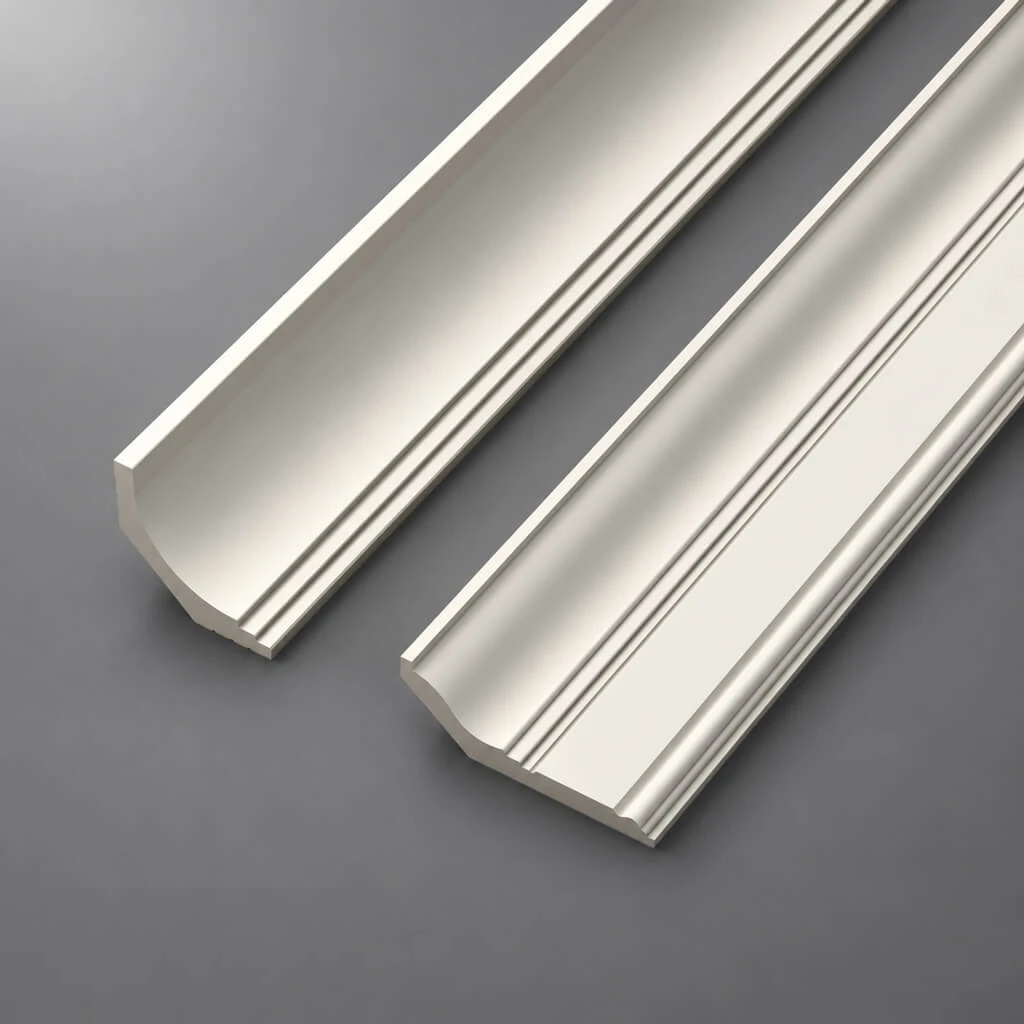
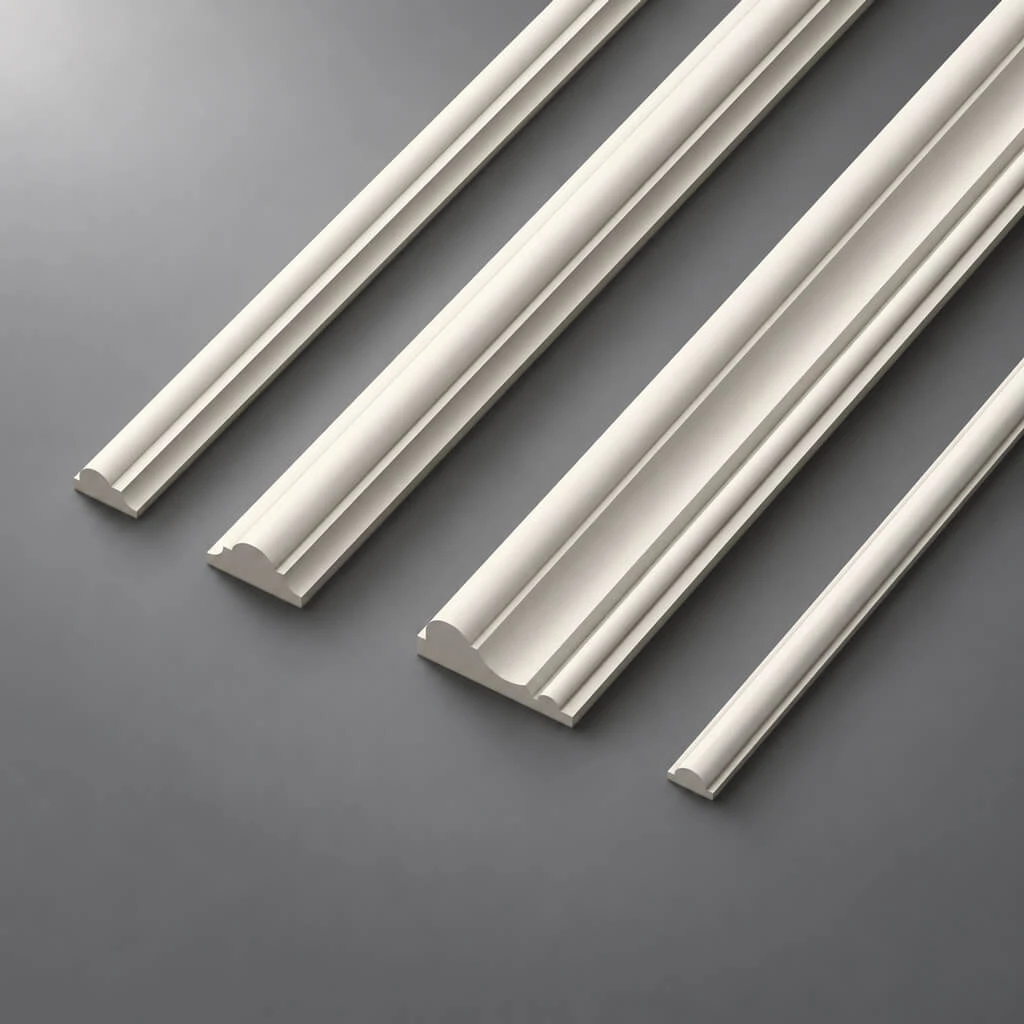
Shaped profile with fillets, "steps", and coves — the language of classical architecture. This is not "decoration for decoration's sake" but a functional form: each curve creates a shadow, the shadow creates volume, and volume creates a sense of interior richness.
Shaped MDF baseboard 120 mm in a neoclassical interior is the right choice. Paired with matching profiled door casings and decorative cornices, it creates a unified architectural decor system.
MDF allows milling almost any profile without the limitations of natural wood (risk of fiber splitting on complex curves). That is why decorative shaped MDF baseboards often look more precise and cleaner than their wood counterparts in the same price range.
Profile with a bevel: a compromise for transitional styles
The top edge is cut at a 30–45° angle — a "bevel". It creates a thin shadow line between the baseboard and the wall. Visually, it gives a slight "lift" of the baseboard from the wall. A modern effect while maintaining decorativeness.
This profile is convenient in modern-classic interiors: it does not "read" as a boring rectangle but does not overload the space either.
Corners, joints, and installation of tall MDF baseboards
Internal angles
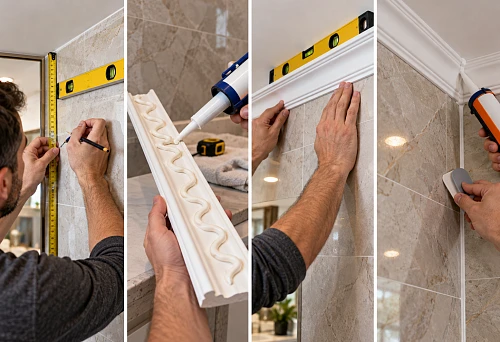
Standard internal 90° corner — cutting two planks at 45°, miter joint. Saw — miter saw with fine-toothed blade. Precision is critical: with a baseboard height of 100 mm, a deviation of 1° creates a gap of 1–2 mm, which is clearly visible.
If the corner is non-standard (and most corners in real apartments are 89° or 91°), measure it with a protractor, divide by 2, set the required angle on the saw.
A small gap in the corner is sealed with acrylic sealant matching the baseboard color (white for white, matched by color for decorative). After drying — light sanding. An experienced installer does this automatically.
External corners
External corner — the most vulnerable spot. The miter cut at 45° is made in the opposite direction. The end is exposed, MDF is visible — so it is extremely important to paint or coat the ends before installation.
Alternative — factory corner connectors: plastic or wooden overlay corners. They completely hide the joint and do not require precise cutting. At a height of 100–120 mm, factory corners often look better than miter joints — less risk of error.
Professional tool for working with corners of wooden baseboard and MDF baseboard — miter saw with precise angle adjustment. A hand saw and miter box will give worse results, especially with wide profiles.
Lengthwise joint
When the wall length exceeds the standard plank length (2,400–3,000 mm), splicing is necessary. Two options: a butt joint at 90° (simple but noticeable) or a 45° miter cut "lock" joint (less noticeable, recommended).
The joint must align with the attachment point of the clip or dowel. For adhesive installation, the joint area is additionally coated with glue.
End at the doorway
At the doorway, the baseboard goes under the trim or is cut flush with it. The end must be neatly trimmed, and if necessary, painted or covered with a decorative cap.
A tall MDF baseboard 100–120 mm requires more careful finishing of the end at the door: at this height, the end of the plank is clearly visible. The right solution is to select Wooden angle or a cap that organically "covers" the end area.
Why a tall baseboard requires more careful installation
Simple geometry: the higher the plank, the longer the visible surface. Any deviation from vertical, any gap between the baseboard and the wall, any unevenness of the joint — all of this is multiplied by the height of the profile. Where at 60 mm the error would be "lost," at 120 mm it will be noticeable.
That is why a tall baseboard is installed more slowly, more carefully, and with greater wall preparation. Uneven walls are pre-leveled. Corners are measured with a protractor. Joints are puttied.
Typical mistakes when choosing the height of an MDF baseboard
Let's list the mistakes that are repeatedly made when choosing and installing a baseboard. Knowing this list will save time, money, and nerves.
1. Taking 120 mm for a small room without a plan. A high baseboard in a small space only works with a deliberate design decision. Without that, it just feels heavy and cramped.
2. Choosing baseboards separately from doors. Baseboards and doors are a system. Selecting them at different times, in different stores, without comparing them means ending up with an interior that's 'from different operas.'
3. Not considering the height of the architraves. The architrave and baseboard should be coordinated in profile and color. If the architrave is wide and ornate, a thin, straight baseboard will look illogical.
4. Not considering the floor color. The baseboard is chosen after the floor is selected. Never the other way around.
5. Choosing too thin a profile for uneven walls. A thin baseboard (12 mm thick) does not cover wall unevenness — a gap remains between it and the wall. For uneven walls, a profile with a larger 'body' or preliminary leveling is needed.
6. Forgetting about furniture that stands flush. Sliding wardrobes, built-in furniture, a sofa against the wall — all of these interact with the baseboard. A high baseboard can hinder the installation of furniture flush against the wall.
7. Not planning the ends at doorways. The end of the baseboard at a doorway is a detail you see every day. A carelessly cut MDF without a decorative cap or corner reveals an 'unfinished' renovation.
8. Mixing different styles of baseboards, moldings, and cornices. A straight baseboard + a classic cornice + ornate architraves is chaos, not design. All elements of the lower and upper wall contour should speak the same language.
What to buy for a finished lower contour
A professional approach to lower finishing is not just a baseboard. It is a system of elements, each of which complements the others.
MDF Skirting Board — the base. It is selected by height, profile, and decor for a specific interior.
MDF skirting board for painting — for non-standard color solutions, for 'skirting board in wall tone' systems.
White MDF skirting board with factory enamel — a quick and universal solution for most apartments.
solid wood baseboard — when maximum durability, the possibility of restoration, and the authentic texture of wood are needed. Used in conjunction with MDF skirting board in areas with high requirements.
Wide Wooden Skirting Board — for classic and neoclassical interiors where maximum decorative effect is needed.
Wooden corner bracket — decorative finishing of external corners and ends of doorways. A neat solution where a miter cut is difficult or impossible.
wooden molding — a horizontal 'belt' on the wall that continues the theme of the skirting board above. A classic technique: lower cornice (skirting board) + middle belt (molding) + upper cornice.
wooden cornice — a ceiling element, the upper contour of the wall. Together with the skirting board, it forms the 'framing' system of the interior.
Trimming Items — a full range of moldings for a comprehensive solution to all decorative tasks: additional elements, joining profiles, decorative strips.
When all these elements are selected in a unified style, from one manufacturer — the interior acquires that very completeness that is difficult to describe in words, but which is instantly perceived upon entering the room.
MDF skirting board which to choose: final decision-making system
How to choose correctly? The answer to this question consists of several steps that can be followed sequentially.
Step 1 — Determine the ceiling height. Up to 2600 mm → 60–80 mm. 2700–2900 mm → 80–100 mm. From 3000 mm → 100–120 mm.
Step 2 — Look at the doors. What is their color and profile? The skirting board should support them — in color, style, and 'weight'.
Step 3 — Look at the floor. Dark floor → a contrasting white skirting board is possible. Light floor → skirting board in tone, matching the doors, or 'disappearing' into the wall.
Step 4 — Determine the style. Minimalism/Scandinavian → straight profile. Classic/Neoclassical → shaped profile. Modern/Transitional → profile with a chamfer.
Step 5 — Choose the coating. Need a specific color → for painting. Need speed and standard → white with enamel or decorative laminated.
More details about which MDF skirting board to choose for a specific interior can be found in a separate article — it covers all selection scenarios in detail.
FAQ: Answers to popular questions
What height of MDF skirting board should I choose?
Consider the ceiling height: up to 2600 mm — 60–80 mm, 2700–2900 mm — 80–100 mm, from 3000 mm — 100–120 mm. Also take into account the interior style and door height.
Which is better: MDF skirting board 80 or 100 mm?
80 mm is a universal choice for standard apartments. 100 mm — if you want a more expressive, "expensive" look for the interior with ceilings from 2700 mm. Both options are good; 100 mm just requires slightly more careful installation.
When is an MDF skirting board of 120 mm needed?
With high ceilings from 3000 mm, in spacious rooms, in classic and neoclassical interiors, and when there are decorative moldings and cornices. In small rooms — not recommended.
Is a high skirting board suitable for a small room?
No, in most cases. A wide skirting board visually lowers the ceiling and "compresses" the walls. For rooms up to 12 sq. m with ceilings of 2400–2600 mm, a skirting board of 60–80 mm is optimal.
How to choose a skirting board to match the doors?
White doors → white MDF skirting board. Wood-effect doors → skirting board in the same finish. Hidden doors without architraves → straight skirting board, minimal profile. Classic doors with architraves → shaped skirting board matching the architrave color.
How to choose a baseboard for the floor?
Dark floor + white baseboard = contrasting accent. Wood-look floor + matching baseboard = unified warm system. White walls + any floor → white baseboard as a universal solution. Colored walls → baseboard for painting to match.
What is better: white baseboard or one for painting?
Ready white is faster and easier. For painting is more flexible: you can match any color. If walls are white — take ready white. If walls are a non-standard color and you want a 'disappearing' baseboard — only for painting.
How to finish corners of a tall MDF baseboard?
Inner corner — 45° miter cut with a miter saw, fill gap with acrylic sealant. Outer corner — miter cut or factory corner piece (recommended for heights of 100–120 mm). End at the door — decorative cap or wooden corner.
Can you combine MDF baseboard and wooden baseboard in one interior?
Yes, with a thoughtful approach. For example: MDF in living rooms, solid wood in a study or library. The main thing is matching profile and color.
Should you paint an MDF baseboard for painting before or after installation?
Before installation — a professional approach. The baseboard lies horizontally, paint applies evenly, ends are easy to process. After installation — only touch up joints and cuts.
About the company STAVROS
The right MDF baseboard is not something you choose by chance. It is a detail that works for many years, and that is why it is important to trust a manufacturer with a reputation and experience.
STAVROS is a Russian manufacturer of decorative products made from natural solid wood and high-quality MDF. The range includes MDF baseboards in all popular heights: from 60 to 150 mm, in white, paintable, wood-look, in straight and shaped profiles. Each baseboard is made from E1-class board, coated with high-quality PVC film using the "rolling" method: the ends are protected, moisture does not penetrate the base.
In addition to MDF baseboards, the STAVROS catalog includes wooden baseboards made from solid oak and beech, moldings, cornices, decorative corners, and linear products. A complete system for the lower and upper wall contour from one manufacturer: a single profile, a single standard, a single interior without coincidences.
STAVROS works with retail customers and professional designers throughout Russia. Delivery to Moscow, St. Petersburg, and other regions. Consultation on choosing height, profile, and decor is available in the catalog on the website.