Article Contents:
- What is the difference between a pull handle and a knob
- Form defines function
- When you have no doubts — pull handle or knob?
- When to choose a wooden pull handle
- Pull handle — for a secure grip
- Pull handle size: from delicate to monumental
- When to choose a wooden knob
- Knob — for lightweight fronts and elegant interiors
- Knob shape: round, mushroom, cylindrical
- How to choose the handle size
- Proportions are the key to the right choice
- For a staple: center distance and facade width
- For a button: diameter and height
- Height of handle placement on the facade
- Wooden handles for classic furniture
- Classic: the handle as part of a decorative system
- What makes a handle 'classic'
- Combining handles with facades and decor
- Handles for cabinets, dressers, and kitchens
- Cabinet: convenience first
- Chest of drawers: a balance of convenience and aesthetics
- Kitchen: practicality without losing character
- Cabinets: the knob as a rule
- How to combine handles with furniture legs and decor
- A unified language of details
- Tone and wood species
- Facade decor and the handle
- Material and finish: natural wood, enamel, tinting
- What wood are furniture handles made from
- Finishing options for wooden handles
- Handles for restoration: why wood is the best choice
- Comparison table: staple vs button
- Special scenarios: when the usual choice doesn't work
- Handleless facades: an alternative
- Handles for glass doors
- Handles for classic furniture in a children's room
- Common mistakes when choosing furniture handles
- Mistake 1: Handle too small for a heavy drawer
- Mistake 2: Uncomfortable grip shape
- Mistake 3: Random hardware color
- Mistake 4: Mismatched handle and leg styles
- Error 5: Choosing only by appearance in the photo
- Error 6: Different handle mounting heights on dresser drawers
- Error 7: Ignoring wood species when combining parts
- Wooden handles in the furniture decor system
- Unified ensemble: handles, legs, overlays, moldings
- FAQ: Popular questions about wooden furniture handles
- Where to buy wooden furniture handles
- STAVROS: Wooden handles and a complete system of solid wood furniture fittings
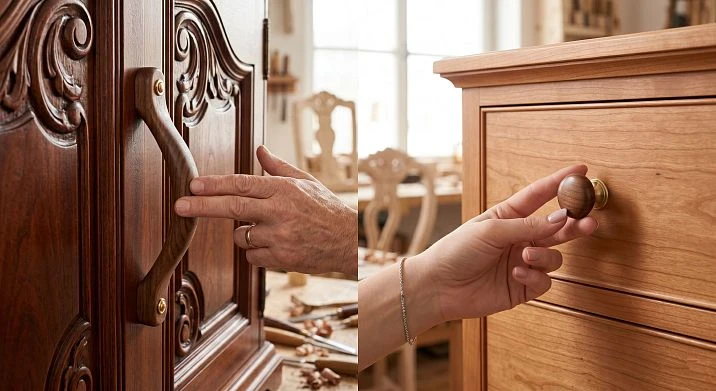
You are standing in front of a dresser in a store. It is good — correct proportions, pleasant wood tone, neat facade profile. But the handles... They are either too small, or too heavy, or just "not right." And the whole image falls apart.
The handle is the first thing a person touches on furniture. Every day, several times. It works tactilely, visually, and structurally — all at once. That is why a bracket handle or a knob handle made of wood — a choice no less important than the type of wood or finish tone.
The two main types of wooden handles — wooden hook handle и wooden button handle — are not just different shapes. They are different concepts of human interaction with furniture. Different ergonomics. Different aesthetics. Different character.
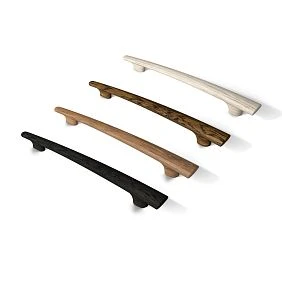
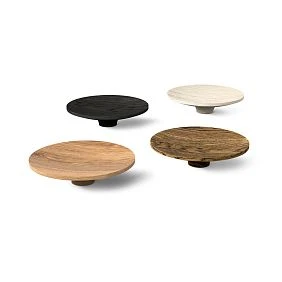
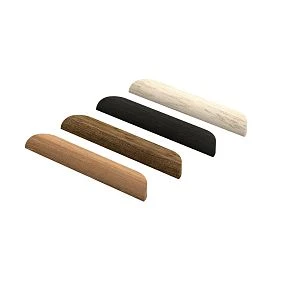
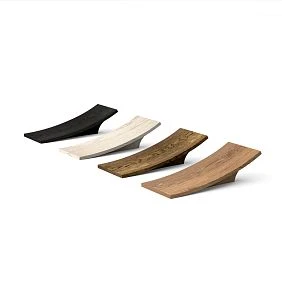
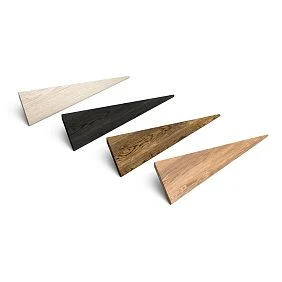
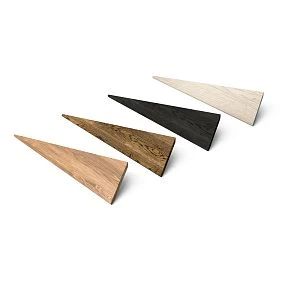
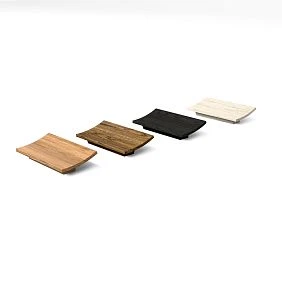
What is the difference between a bracket handle and a knob handle




Form defines function
First of all — understand the fundamental difference. Not 'what is more beautiful,' but 'how it is designed.'
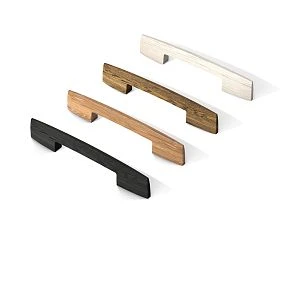
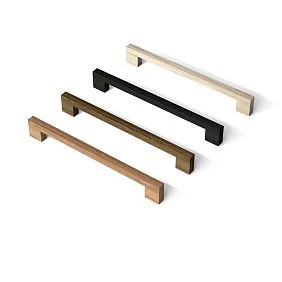
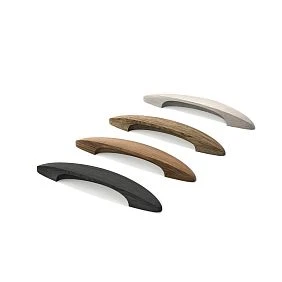
A bracket handle is an arc fixed at two attachment points. Fingers are placed under the arc, wrap around it, and pull. A classic solution for everything that requires a secure grip: heavy drawers, large cabinet doors, kitchen fronts with regular use.
The bracket creates a horizontal accent on the front — a line, rhythm, movement. On a long row of drawers, aligned bracket handles form a decorative rhythm, almost ornamental.
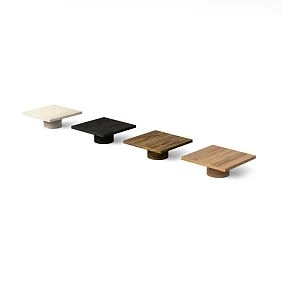
A button handle is a single attachment point, one element centered on the facade. Grip is with fingers, like a small protrusion or mushroom head. It is convenient for lightweight facades — small doors, cabinets, decorative drawers. Minimalistic, almost invisible — yet can be very refined.
The button creates a point accent. One item — one point of attention. On a large facade, the button looks lonely; on a small one, it's perfect.
Our factory also produces:
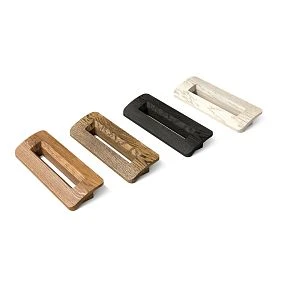
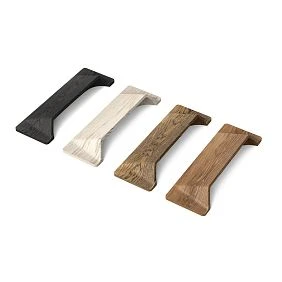
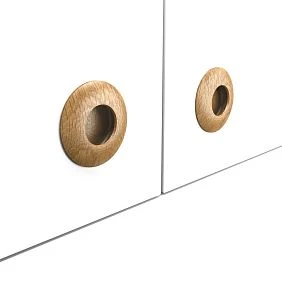
When you have no doubts — bracket or button?
A simple test: take the facade and imagine how you open it.
-
Need to pull a drawer with heavy contents? A firm grip with two or three fingers under the arch → bracket.
-
Need to slightly open a light door or pull out a small drawer? A light touch with a finger and a pull → button.
Get Consultation
When to choose a wooden bracket handle
Bracket — for a firm grip
wooden hook handle — functional and expressive at the same time. It is designed for regular and confident use where the load is real.
Cabinets with heavy doors. A full-size wardrobe, a classic bookcase with massive doors, a walk-in closet — all require a handle that is comfortable to grab and pull. A bracket handles this better than a button: two attachment points give it stability, and the arch provides a comfortable grip.
Kitchen facades. The kitchen is the most heavily used place in the house. Handles are opened and closed dozens of times a day — often with wet hands, under load. A bracket with two attachment points is more reliable. A wooden bracket for a classic kitchen with wooden facades is the right choice in terms of style and function.
Large dresser drawers. A drawer with clothes is heavy. Pulling it by the button, holding only at one point, is inconvenient, especially if the drawer is tight or requires force. The bracket provides a full grip.
Wardrobe systems and built-in furniture. Facades of built-in wardrobes are large, heavy, and opened frequently. The bracket is the optimal choice.
Furniture in high-traffic areas. Hallway (shoe cabinets), children's room (cabinets and dressers opened by a child), home office (cabinets with documents and books) — everywhere furniture is used intensively.
Bracket size: from delicate to monumental
Brackets come in different sizes — the distance between mounting points (center-to-center distance) varies from 32 to 192 mm and more.
-
32–64 mm: a small bracket for cabinets, small drawers, neat facades.
-
64–96 mm: a universal size for most dressers, kitchen facades, and cabinets.
-
128–160 mm: a large bracket for tall and wide facades, wardrobe doors.
-
160–192 mm and more: a monumental handle for formal pieces, display cabinets, large wardrobes.
Rule: the size of the bracket matches the scale of the facade. A small bracket on a large door gets lost. A large bracket on a small drawer overwhelms.
When is it better to choose a wooden knob handle
A knob is for lightweight facades and elegant interiors
wooden button handle — it is concentration. The entire handle is in a single point. No horizontal line, no 'movement' across the facade. Only a quiet accent in the center.
Bedside tables. Small tables with one or two drawers — an ideal object for a knob. Light, delicate, almost invisible. The facade of the table is small — and the knob is proportional to it.
Small decorative boxes. Secretaries, jewelry chests, filing cabinets — items with miniature drawers where the grip has minimal load.
Classic chests of drawers. In classic furniture, a knob handle is one of the most organic options. It does not overload the facade, leaves room for the decorative profile of the facade, and does not create unnecessary horizontal lines.
Furniture with expressive facade decor. If the facade is already rich — carved overlay, profiled layout, bright wood texture — the handle should be delicate. The knob does not compete with the facade decor, but only marks the point of interaction.
Dressing tables and consoles. Light furniture in the bedroom or bathroom — a wooden knob is appropriate here as a natural, warm accent without unnecessary 'hardware feel'.
Knob shape: round, mushroom-shaped, cylindrical
Knob handles come in different shapes:
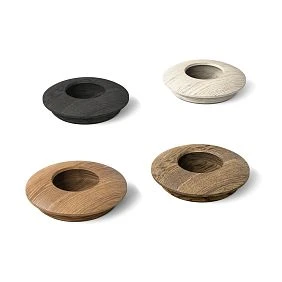
Round — a classic, reminiscent of a mushroom cap. A warm, soft shape. Good for Provence, classic, Scandinavian style.
Cylindrical — more modern and strict. For neoclassicism and minimalism with wooden accents.
Dome-shaped / hemispherical — a decorative option with pronounced volume. For formal chests of drawers and classic furniture.
Figurative carved — for classic style with rich decor. The knob is like a small decorative element, proportionate to the applied details.
How to choose the size of the handle
Proportions are the key to the right choice
Wooden handle of any type — bracket or knob — should be proportional to the facade on which it is installed.
For the bracket: center distance and facade width
Practical rule: center distance of the bracket = approximately 1/5–1/4 of the facade width.
Examples:
-
Facade width 300 mm → bracket with center distance 64–96 mm.
-
Facade width 500–600 mm → bracket with center distance 96–128 mm.
-
Facade-door width 400 mm → bracket 96 mm or slightly larger.
Bracket too small on a wide facade — visually 'lost'. Bracket too large — stands out and looks like a mistake.
For a knob: diameter and height
Knob — this is the 'head' diameter and the protrusion height above the facade.
-
Small knobs (diameter 20–30 mm): for small drawers, cabinets, decorative facades.
-
Medium (30–40 mm): a universal option for most dressers.
-
Large (40–55 mm): for expressive formal pieces where the knob is a full-fledged decorative element.
Handle placement height on the facade
For drawers — the handle is typically centered horizontally on the facade and slightly above center vertically. This is an ergonomically justified position: convenient to grip when opening.
For cabinet door fronts, the handle is installed at a comfortable gripping height: approximately at elbow level or slightly higher (120–130 cm from the floor).
Wooden handles for classic furniture
Classic: the handle as part of a decorative system
Classic furniture is a system. And wooden furniture handles in this system, handles occupy a strictly defined place. They do not exist on their own — they work together with carved facades, profiled cornices, decorative overlays, and turned legs.
What makes a handle "classic"
Shape. For classics — only organic shapes. A bracket with a smooth curve of the arch and decorative bases. A knob with a dome-shaped or figured head. No sharp corners, no "industrial" look.
Material. Wood is the ideal classic material. Warm, natural, repairable. In classics, wood is organic at all levels: body, legs, handles, overlay decor for furniture — all from the same "world."
Finish. In classics, a wooden handle can be:
-
matching the body color (unity);
-
slightly darker or lighter (delicate accent);
-
to match gold or bronze (formal classic look);
-
white or cream enamel (for light classic and Provence style).
Scale. A classic handle should be "readable" — not too small to get lost against the decor, but not too large to overpower it.
Combining handles with facades and decor
On a facade with a frame profile and inset panel — the knob is installed strictly in the center. The pull — horizontally centered in the lower third of the facade. Both options work; the choice is determined by the facade size and usage intensity.
On a facade with an applied rosette or cartouche — the knob handle is installed below the decorative element, without competing with it. The pull — can be installed parallel to the lower edge of the applied decor, creating a horizontal rhythm.
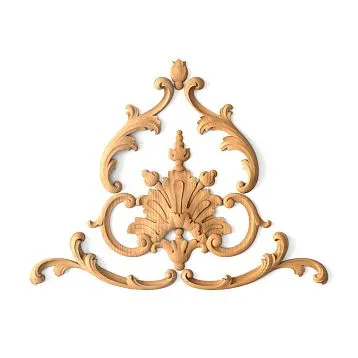
decorative elements for furniture — applied rosettes, corner appliqués, carved friezes — should be made of the same wood species and in the same tone as the handles. This creates unity in the language of details.
Handles for cabinet, chest of drawers, and kitchen
Wardrobe: convenience first
A wardrobe is furniture that is opened and closed regularly, sometimes without much care. The cabinet door is heavy, the hinges require effort. The handle for the wardrobe should be:
-
Large enough to be comfortable to grip.
-
With reliable two-point fastening (bracket).
-
At a height convenient for an adult.
wooden hook handle for a wardrobe — with a center distance from 96 to 160 mm depending on the door size. Below — it gets lost; above — it breaks the proportion.
Chest of drawers: a balance of convenience and aesthetics
A chest of drawers is an item where all handles are visible at once. Three or four drawers, each with a handle — and they form a vertical row that is part of the item's decorative appearance.
Here, rhythm is important: all handles of the same size, same type, located at the same height on each drawer. A deviation of 5 mm is already noticeable.
For a chest of drawers, a bracket with a center distance of 64–96 mm is a classic solution. A knob — for a chest of drawers with small and light drawers or for a chest of drawers in a classic style, where the front is richly decorated and a knob is needed to avoid overloading the look.
Kitchen: practicality without losing character
Wooden kitchen handles are a special matter. Here, furniture works most intensively. A wooden handle in the kitchen must withstand:
-
Regular opening with force.
-
Contact with wet hands.
-
Accidental impacts and scuffs.
buy wooden handles for the kitchen means choosing a hard wood (beech or oak) with a quality moisture-resistant coating: several layers of varnish or oil-wax. A handle is preferable to a knob for lower kitchen drawers (they are pulled with force). A knob is for upper wall cabinets, opened with a light movement.
Cabinets: a knob as a rule
Bedside table, TV cabinet, shoe cabinet — furniture with small and light facades. A knob here is the rule almost without exceptions. Light, delicate, not overloading a small item.
Exception: a cabinet with a heavy pull-out drawer (e.g., a drawer with heavy books in a bedside table) — here a handle is more convenient.
How to combine handles with furniture legs and decor
Unified language of details
There is a rule in interior design that professionals know and amateurs break: all wooden parts of one item must come from the same system. Legs, handles, applied decor, moldings — they should speak the same decorative language.
What does this mean in practice?
Round turned leg → round wooden knob. Both parts are rounded, soft, and concise. Unified look: no extra horizontal lines, no sharp corners, only smooth shapes.
Turned leg with profile → bracket with an arch. Both elements have decorative transitions and relief. Visually harmonious.
Straight tapered leg → bracket with straight lines. Modern classic: both the leg and the handle are strict, without extra decor.
Tone and wood species
All wooden parts of one item should be in a unified tone or a well-thought-out combination:
-
Handle and leg — same wood species, same stain. Or both white (for Provence and classic with enamel). Or both in natural wood tone.
-
Wooden legs Beech legs and oak handles together — a texture conflict. You need to choose one wood species.
Facade decor and handle
If an overlay is installed on the facade overlay part — rosette, cartouche — the handle is installed considering this decor. The decorative element and the handle should not compete for attention. Either the decor is rich — the handle is delicate (a knob). Or the handle is expressive (a large bracket) — the facade decor is minimal.
About the rules for selecting legs to match handles and the overall system of furniture decor — more details in the article about round wooden furniture supports.
Material and finish: natural wood, enamel, tinting
What wood are furniture handles made from
furniture handle made of wood — this is a product that experiences daily mechanical loads. The material must be sufficiently hard and dense.
Beech. The standard for wooden furniture fittings. Dense, uniform, well-suited for turning and milling. In its natural state — a warm cream-yellow tone. Accepts any tinting. Resistant to abrasion.
Oak. More expressive in texture, slightly heavier than beech. For handles with a natural finish — oak under oil or varnish looks very natural and expensive. Suitable for interiors with an emphasis on natural wood texture.
Pine. Softer, more affordable. Paints well. For handles to be painted with enamel — an optimal budget choice.
Wooden handle finishing options
Natural wood under varnish. Preserves texture, protects against moisture and abrasion. For interiors with an emphasis on natural wood.
Tinting + varnish. The handle is tinted to the desired shade, then coated with clear varnish. Allows you to match the handle to the tone of the furniture body.
White or cream enamel. For light classic, Provence, Scandinavian style. The handle is painted together with the body — a unified white ensemble.
Colored enamel. An accent solution — handles in a color contrasting with the body. For children's furniture, bright interiors.
No coating (for self-finishing). Uncoated handles — for manufacturers and restoration craftsmen. Tinted to the desired tone, painted for a specific interior.
Handles for restoration: why wood is the best choice
When restoring an old chest of drawers or cabinet — it is often the handles that need replacing first: broken, dried out, not fitting into the updated interior. An uncoated wooden handle is an ideal choice for restoration: it is tinted to the exact tone of the old furniture, fits without material conflict.
More about wooden handles for children's furniture — in a special article about wooden handles for children's furniturewhere safety, form, and requirements for children's fittings are analyzed.
Comparison table: bracket vs button
| Parameter | Bracket handle | Button handle |
|---|---|---|
| Attachment points | 2 | 1 |
| Ease of grip | High | Average |
| Load on the drawer | Heavy | Lightweight |
| Visual accent | Horizontal line | Point |
| Style | Classic, Provence, country, neoclassical | Classic, minimalism, Scandinavian |
| Where appropriate | Cabinets, kitchen, large drawers | Cabinets, small drawers, decorative furniture |
| Decorativeness | Medium — high | Medium — high |
| Suitable for restoration | Yes | Yes |
Special scenarios: when the usual choice doesn't work
Handleless fronts: an alternative
In modern classic and neoclassical styles, handleless fronts are sometimes used — with a milled groove along the lower edge (profile for a milled groove or edge pull). This is a minimalist solution — but it requires precise design and is not always convenient for heavy doors.
For classic furniture with wooden handles — a pull or knob is always preferable to a handleless solution. They give the furniture liveliness and completeness.
Handles for glass doors
In classic display cabinets with glazed doors — handles are installed on the wooden frame of the door. A pull is preferable here: a glass door requires gentle but confident opening. A pull provides this better than a knob.
Handles for classic furniture in a children's room
For classic-style children's furniture — a button without sharp corners, small diameter, made of solid wood with a safe coating. More details in the article about wooden handles for children's furniture.
Common mistakes when choosing cabinet handles
Mistake 1: Handle too small for a heavy drawer
A 25 mm diameter button on a chest drawer with winter sweaters is a functional disaster. It's uncomfortable to hold, and the load on a single attachment point is high. For heavy drawers — only a bracket with reliable two-point attachment.
Mistake 2: Uncomfortable grip shape
The handle should be tactilely comfortable. A sharp lower edge of the bracket is unpleasant. Too narrow an arc is inconvenient to grasp. Too flat a button slips. Testing the handle in hand before purchase is not a luxury, but a necessity.
Mistake 3: Random hardware color
A white button on a dark walnut chest without intention to create contrast is a mistake. Choosing a handle color without considering the body tone and overall color concept of the interior disrupts the unity of the image.
Mistake 4: Different styles of handles and legs
Round wooden buttons and square metal legs on the same piece create a conflict of forms. Handles and Buy furniture legs for a 200-room hotel project — this is not an ordinary deal, but a partnership requiring a special approach. should be from the same system, considering mutual correspondence of forms.
Error 5: Choosing only by appearance in the photo
The handle in the photo looks one way — in your hands it may differ in size, weight, and tactile feel. Dimensions — center distance, button diameter, bracket height — must be studied before ordering.
Error 6: Different mounting heights of handles on dresser drawers
All handles on dresser drawers are at the same height relative to the top edge of each drawer. Different heights create chaos in the item's rhythm, visible at first glance.
Error 7: Ignoring the wood species when combining parts
A beech handle next to a pine leg with the same stain — a noticeable texture mismatch. All wooden parts in a unified system should be from the same species.
Wooden handles in the furniture decor system
Unified ensemble: handles, legs, overlays, moldings
A professional approach to furniture fittings is not "choosing a beautiful handle," but building a unified system of parts. This system includes:
-
Wooden legs — the support and silhouette of the item.
-
Wooden handles — the point of interaction and a decorative accent of the facade.
-
decorative elements for furniture — overlays, friezes, corner details — the decorative language of the surface.
-
Molding — trims, profiles, moldings — lines and transitions.
All these details are ordered within a single system — from the same wood species, in the same tint, from the same manufacturer. Only then do you get furniture that is seen as a whole.
Furniture and decor from solid wood — this is exactly such a system: from leg to handle, from overlay to baseboard.
FAQ: popular questions about wooden handles for furniture
Which is better — a pull or a knob for a dresser?
It depends on the weight of the drawers and the size of the facades. For heavy drawers — a pull. For light and decorative ones — a knob. For a classic dresser with moderate facade decoration — a knob is more organic.
Can different handles be used on the same piece?
No — if it is one piece of furniture. Different handles on different drawers of the same dresser is a mistake. Different handles on different pieces in the same room is acceptable if the style is unified.
How to paint a wooden handle to match the body color?
Sand with sandpaper, prime, paint with the same paint as the body. Uncoated handles are specifically designed for this task.
What center-to-center distance for a bracket should I choose for a standard kitchen cabinet door?
For a door 450–500 mm wide, choose a bracket with a center-to-center distance of 96–128 mm. For a door 300–400 mm wide, choose 64–96 mm.
How long do wooden handles last?
With high-quality wood (beech, oak) and proper coating, 15–20 years without replacement. Key condition: the wood must not be in constant contact with moisture. In the kitchen, a moisture-resistant coating is mandatory.
Can I replace only one broken handle?
Only if you can find an exact match. One handle of a different tone or shape among five identical ones is immediately noticeable.
Which handles should I choose for a white dresser in a classic style?
A white wooden knob under enamel for a unified look. Or a wooden knob in a natural wood tone for a warm contrast on a white background. Metal handles with gold plating for a more formal look.
Where to buy wooden furniture handles
Full range of wooden handles and related products:
-
wooden hook handle — coated staples for classic and modern furniture.
-
wooden button handle — uncoated buttons for self-finishing.
-
buy wooden handles — complete catalog with coating.
-
furniture handle — all types of solid wood furniture handles.
-
Wooden legs — coordinated furniture supports.
-
Buy furniture legs for a 200-room hotel project — this is not an ordinary deal, but a partnership requiring a special approach. — uncoated legs.
-
decor for furniture — applied decorative elements from solid wood.
-
decorative elements for furniture — sockets, overlays, friezes.
-
Furniture and decor from solid wood — complete catalog of STAVROS products.
-
Buy Classic Furniture — ready-made classic wooden furniture.
STAVROS: wooden handles and a complete system of solid wood furniture fittings
a bracket handle or a knob handle made of wood — it's not just fittings. It's the point of contact through which furniture communicates with people every day. A properly chosen handle makes interaction with furniture natural, comfortable, and pleasant — and the piece itself complete.
STAVROS produces wooden Furniture Handles made of solid beech and oak — coated staples, uncoated buttons, in various sizes and shapes. All fittings are from the same system as legs, applied decor, and moldings: a single wood species, a single processing quality, a single source.
STAVROS works with furniture manufacturers, designers, restorers, and private clients. One catalog — everything for classic solid wood furniture: from legs to handles, from cornices to baseboards.