Article Contents:
- Before looking at the product: the task is more important than the choice
- Polyurethane moldings: when wall architecture is needed
- What a molding gives on a wall
- Where moldings work best
- Smooth or relief molding: how to choose a profile
- How much molding is needed and what to order with it
- Decorative overlays: when a point accent is needed
- Where decorative overlays work best
- Types of Decorative Overlays: What to Choose
- When the Overlay Works Without Moldings and When It Doesn't
- Stucco Decor: When Frames Are Not Enough and Individuality Is Needed
- Where Stucco Decor Works at Its Full Potential
- How to Properly Place Stucco Decor
- Decor for Moldings: A Special Category Often Unknown
- Ceiling Stucco: Don't Forget About the Ceiling
- Ready-Made Stucco Kit: When You Don't Want to Make Mistakes
- Who Needs a Ready-Made Kit
- What Is Usually Included in a Wall Stucco Kit
- The main value of the ready-made set: reducing the fear of making a mistake
- How to choose: a simple decision matrix
- Specific scenarios: what to buy for each room
- Living room: the main wall should speak
- Bedroom: one precise accent or a system of frames
- Hallway: quick effect with minimal decor
- Home office: status without excess
- Commercial space: restaurant, hotel, showroom
- The most common mistakes when choosing between moldings, overlays, and a set
- What to buy together: a universal checklist
- FAQ: самые частые вопросы перед покупкой
- About the Company STAVROS
Открываете каталог лепнины — и сразу теряетесь. Молдинги, накладки, лепной декор, декор для молдингов, потолочная лепнина, розетки, карнизы, угловые элементы... Красиво всё. Но что именно класть в корзину — непонятно. Зачем нужны молдинги, если есть декоративные накладки? Чем лепной декор отличается от декоративной лепнины? Когда нужен готовый комплект, а когда лучше собрать самому?
Это не вопрос «что красивее». Это вопрос «что решает мою задачу». Потому что молдинги, накладки и лепной декор — три совершенно разных инструмента, каждый из которых создаёт свой результат. Смешать их без понимания логики — значит получить хаос вместо декора. Выбрать правильно — значит превратить стену в завершённое высказывание.
Эта статья написана для тех, кто стоит перед выбором и хочет не вдохновения, а конкретного ответа: что купить, для какой задачи и что добавить в комплект.
Прежде чем смотреть на товар: задача важнее выбора
Главная ошибка при покупке лепнины — начинать с товара. Человек видит молдинг, который понравился на фото. Добавляет в корзину. Потом смотрит на накладку — тоже хороша. Добавляет. Потом — розетку, декор для молдингов, карниз. Заказывает. И получает набор красивых элементов, которые не образуют системы.
Правильный порядок противоположный: сначала — задача, потом — товар.
Задача — это конкретный вопрос о стене. Не «хочу красиво», а «хочу сделать рамки на стене за диваном», «хочу один акцент над зеркалом», «хочу оформить всю комнату в одном стиле». Разные задачи — разные товары. Одна и та же стена требует разных решений в зависимости от того, что человек хочет получить.
Вот базовые задачи, с которыми to buy molding приходит большинство покупателей:
-
Making a blank wall expressive — lacks an accent, the wall is bare and boring
-
Decorating the wall behind a sofa or bed — creating an accent zone
-
Adding decor above a mirror, console, sconce — a focal element
-
Making frames — an architectural system on the wall
-
Designing the entire interior — linking walls, ceiling, furniture into a cohesive style
-
Quickly updating an apartment without major renovation — minimal effort, maximum effect
-
Decorating a wall without a designer — independently and without mistakes
Each of these tasks has its optimal solution. Let's break down each one.




Polyurethane moldings: when wall architecture is needed
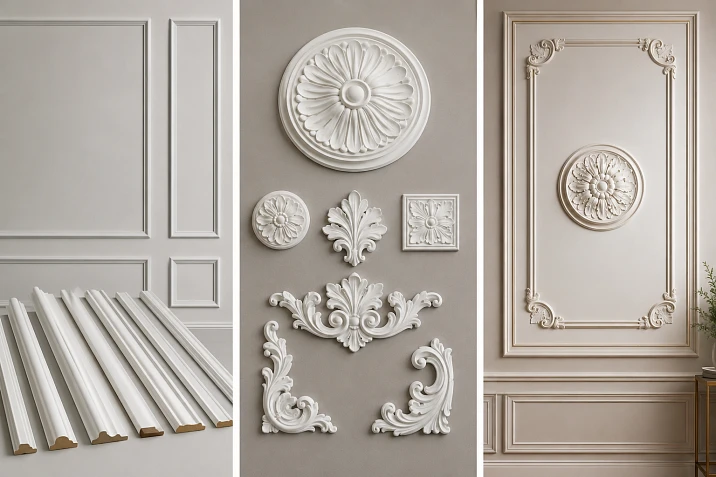
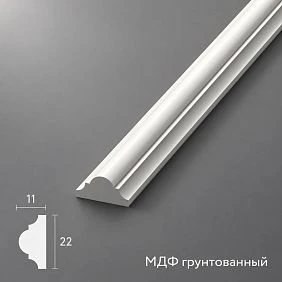
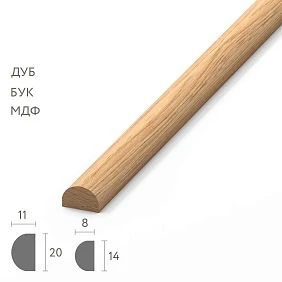
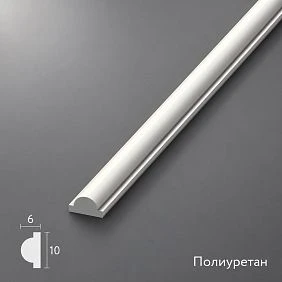
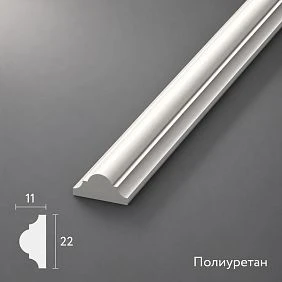
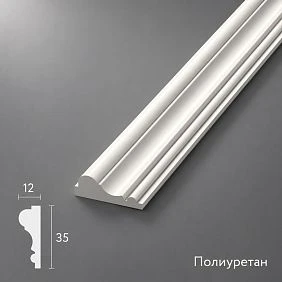
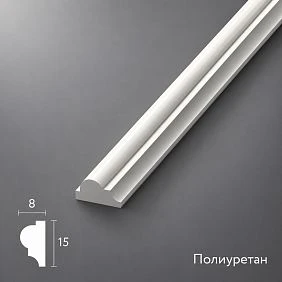
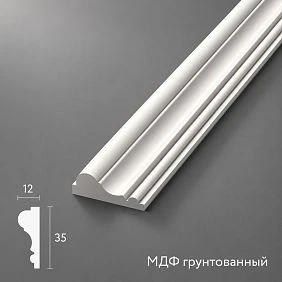
Moldings made of polyurethane — these are linear decorative profiles. Sold by linear meter. They are mounted on the wall as frames, lines, bands, cornices. A molding is not a piece of decor, it's a structural element of decorative wall architecture.
If you want frames on the wall, you need moldings. If you want a line around the perimeter of the room, moldings. If you want an accent wall with symmetrical rectangles that looks like classic paneling, again moldings.
Our factory also produces:


What a molding on the wall provides
Molding organizes the vertical plane. An empty wall is just a surface. A wall with frames made of moldings is an architectural object. Each frame creates a "frame" within which a specific field lives. Several frames create rhythm, symmetry, order. The eye receives structure and perceives the wall as complete, thoughtful, and expensive.
That's why frames made of moldings are one of the most effective ways to turn an ordinary apartment into an interior. You don't need expensive furniture. You don't need a designer. You need moldings, paint, glue, and careful marking.
Get Consultation
Where moldings work best
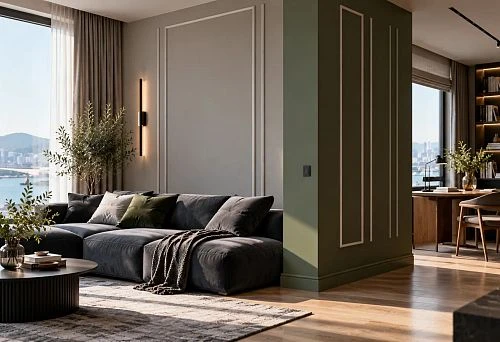
The wall behind the sofa in the living room. Three to four frames on the main wall of the living room is a classic solution that works flawlessly in classic, neoclassical, and modern interiors. The width of the frames is proportional to the width of the wall. The height takes into account the ceiling height.
The wall behind the bed in the bedroom. A central frame or a group of frames behind the headboard creates a relaxation area with a sense of framing. The bedroom immediately acquires a hotel-like or palatial character.
Entryway. Frames in the entryway on the main wall are a quick way to turn a transit space into a welcoming entrance. It works especially well in combination with a mirror and a console table.
Home office. Frames on the wall behind the workspace or on walls with bookshelves add solidity to the office. This works both in residential spaces and in commercial ones: office, meeting room, conference hall.
Hallway. A long hallway with frames made of moldings along the entire length of the wall is a transformation of a faceless passage into a gallery.
Smooth or embossed molding: how to choose a profile
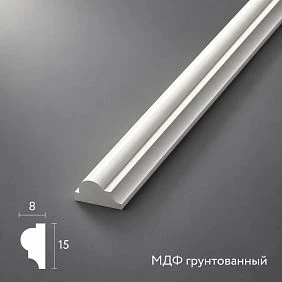
buy polyurethane moldings available in different profiles: smooth, with an Ionic band, with a meander, with a pearl string, with an acanthus ornament, with a stepped profile.
Smooth molding is universal. It works in any style from minimalism to neoclassicism. It is especially good with ceilings up to 2.7 m — it does not overload the space.
Embossed ornamented molding — for classic, baroque, neoclassical, empire styles. It requires a corresponding interior style and preferably ceilings from 2.7 m.
Stepped profile (several horizontal levels) — for modern neoclassicism and art deco. It creates a play of light and shadow, visually weighs down the frame — giving it monumentality.
How much molding is needed and what to order with it
The calculation is simple: the total perimeter of all frames plus 15–20% for reserve (corners, trimming, joints). Be sure to purchase with the moldings: mounting glue, acrylic sealant, painter's tape, paint. Optionally — decorative corner overlays for frame corners and Decor for Molding — small ornamental elements that are attached to the molding itself to enhance the decorative effect.
Decorative overlays: when a point accent is needed
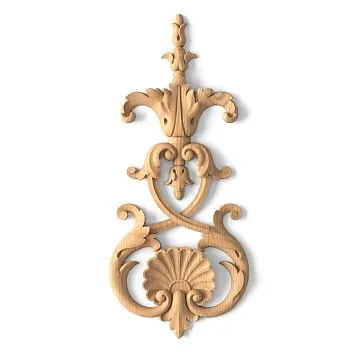
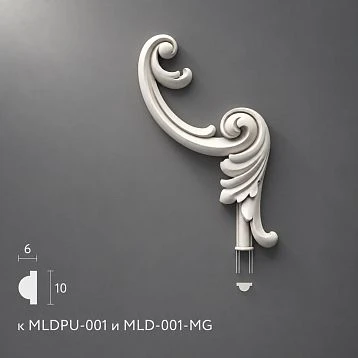
Decorative stucco in the form of overlays — these are individual stucco elements: medallions, cartouches, corner overlays, rosettes, figured reliefs, ornamental panels. They do not create a system — they create an accent. One place on the wall, one expressive element, one point on which the gaze concentrates.
Overlays are a precision tool. If molding is an orchestra, then an overlay is a soloist. One well-chosen element in the right place speaks louder than ten random details across the entire wall.
Where decorative overlays work best
Above the mirror. The empty space above the mirror is an ideal place for an overlay. A horizontal medallion or cartouche above the mirror turns it from a utilitarian item into a decorative object. Overlay width — 60–80% of the mirror width. Distance from the mirror to the overlay — 5–10 cm.
Above a console or cabinet. The wall above a console table is a mini-stage. An overlay along the central axis of the console completes this area, giving it a finished look.
Inside a molding frame. An overlay inside a molding frame is a combined solution. The frame creates a frame, the overlay is the central element inside it. It looks especially impressive in the upper part of the frame, centered.
Next to sconces. Paired L/R overlays above two sconces on either side of the headboard create a symmetrical decorative system that gives the feeling of a designed relaxation area.
On furniture facades. Small overlays on the facades of a dresser, wardrobe, or cabinet. The furniture surface must be prepared: clean, degreased, with the right glue. The result is furniture that looks custom-made.
In the hallway. One element on the main wall of the hallway — above the coat rack, above the console, above the mirror. Compact, expressive, neat.
Types of decorative overlays: what to choose
Medallion — a rounded ornamental element. Often horizontally elongated. Works well as a central accent above a mirror, above a console, in the upper part of a frame.
Cartouche — a shaped overlay with a frame border. Stretched horizontally or vertically. Used as an accent above a door, above a relaxation area, in the upper part of an accent wall.
Corner overlay — installed in the corners of a molding frame. Covers joints and adds an ornamental element in each corner. Transforms a geometric frame into a classic decorative panel.
Paired elements L/R — mirror-symmetrical overlays. Left and right elements. For symmetrical areas: two sconces, two windows, two cabinet doors, both sides of a mirror.
Ornamental panels — complex multi-element overlays. An independent decorative object on the wall. Installed as a panel — without a molding frame, on a neutral wall.
When an overlay works without moldings and when it does not
An overlay is self-sufficient when it is tied to a specific object: a mirror, door, sconce, console. The object creates context — the overlay completes it.
An overlay gets lost when it is alone on a large empty wall without context. In this case, it needs a frame of moldings — then it gets a "frame" and starts working as an accent within it.
buy decorative moldings — means understanding in advance the place where it will work. This is the main condition for the successful use of overlays.
Stucco decor: when there are few frames, but individuality is needed
The term "stucco decor" is often used as a synonym for decorative overlays — and in essence, it is one category of products. But there is a semantic nuance that is important when choosing.
If a decorative overlay is primarily an accent element (single, point), then Relief Decoration often implies a richer, more complex application. These are ornamental elements with extensive relief, large cartouches, complex medallions with multi-level ornamentation, figured overlays with leaves, scrolls, and heraldic motifs.
Buy Moldings is appropriate when the task is to create not just a beautiful wall, but a characterful wall. A wall with personality.
Where stucco decoration works at full strength
In a classic interior. A rich cartouche on an accent wall of the living room, a large medallion in the center of a frame, corner acanthus elements — this is a full-fledged classical finish that was previously only available during palace construction. Today, it's polyurethane, glue, and a few hours of work.
In a neoclassical interior. More restrained ornament, clear lines, geometric basis. Stucco decoration here works as a restrained accent — not opulence, but elegance.
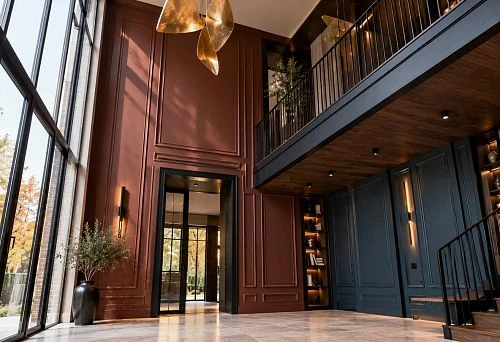
In the hall, formal area, restaurant, hotel. It is in formal spaces that stucco decoration fully unfolds. High ceilings, large surfaces, monumental scale — all this allows the use of decoration with maximum expressiveness.
In the study. Stucco decoration in the study is a language of status. A cartouche above the fireplace portal, an ornamental medallion behind the workplace, corner overlays in the bookcase system — this is not just decoration, it's a declaration.
In a restaurant, showroom, studio. Commercial spaces that work with the image of classicism, luxury, or historical style use stucco decoration as a brand element.
How to properly place stucco decoration
Stucco decoration is not about scattering it randomly across the wall. It's about choosing one or two places with maximum visual attention and placing a precise, expressive element there.
The principle of "less, but more precise" works especially vividly here. One large ornamental medallion in the center of an accent wall is stronger than five different overlays in different places. One pair of cartouches on the sides of the fireplace is more convincing than overlays on all four walls.
Buy Molded Decoration for a specific place — means first choosing the place, then selecting the size for it, then finding an ornament that matches the interior style.
Decor for moldings: a special category that is often unknown
There is another category of products that is often overlooked: Decor for Molding. These are small ornamental elements that are attached directly to the molding — at specific points or with a rhythmic repetition.
Why? A smooth molding is beautiful on its own, but sometimes you want to add a detail to it — a rosette, a floral element, a geometric accent in a rhythmic repetition along the profile. Decor for moldings does exactly that: it turns a simple linear profile into an ornamental system.
This is especially relevant for long horizontal cornices and extended frames. Rhythmic elements at equal intervals create a pattern that is perceived as expensive, complex finishing.
Decor for Molding — is an addition to the main order, not a standalone purchase. It is chosen together with moldings, checking compatibility in terms of profile width and stylistic direction.
Ceiling stucco: don't forget about the ceiling
A discussion about walls would be incomplete without mentioning the ceiling. Ceiling molding — these are cornices around the perimeter and decorative elements for ceiling zones. It does not directly decorate the walls, but it affects the perception of the entire room.
When walls are decorated with moldings and the ceiling remains empty, a visual "discontinuity" occurs: the vertical does not transition into the horizontal. A cornice made of ceiling stucco around the perimeter solves this problem: it stitches the walls and ceiling into a single system.
That is why experienced decorators always recommend: if you are adding moldings to the walls, add a ceiling cornice. This is a small additional expense that greatly enhances the final result.
Buy ceiling molding as a set with moldings — a logical solution that immediately elevates the quality of interior perception.
Ready-made stucco set: when you don't want to make a mistake
Now about ready-made sets. This is a solution for those who want to decorate a wall or room but are not ready to independently select compatible moldings, overlays, decor, and cornices.
What is a ready-made set? It is a pre-selected set of elements that are guaranteed to match each other: of the same style direction, with a coordinated ornament, in the correct proportions. A person does not need to think about whether this medallion will suit this molding — everything in the set is already coordinated.
Who needs a ready-made set
For those who are decorating a wall with stucco for the first time. The first order is the riskiest. It is difficult to intuitively understand how the elements will look together. A ready-made set protects against stylistic dissonance.
For those who want a turnkey wall design. Without a designer, without lengthy consultations. Open the catalog — choose a set for the desired room — order. It's fast and reliable.
For those working on commercial projects with deadlines. Hotel, restaurant, office — there's no time for lengthy selection. The set speeds up decision-making and minimizes errors.
For those who want a consistent style throughout the apartment. If you plan to decorate several rooms in a unified style — ready-made sets in one direction ensure visual consistency.
What is usually included in a wall molding set
The composition of the set depends on the task, but the standard option for decorating an accent wall includes:
-
Moldings made of polyurethane for frames — a specific profile, a specific width
-
Corner pieces for frame corners — of a consistent style
-
Central decorative element for one or more frames
-
Glue and sealant
The extended set for full room decoration adds:
-
ceiling molding for the cornice
-
Ceiling rosette
-
Decor for Molding if necessary
-
Consumables
The main value of a ready-made kit: reducing the fear of making a mistake
Psychologically, buying stucco molding is a risk. A person fears: "What if it doesn't look like in the photo?", "What if the molding doesn't match the overlay?", "What if it all looks cheap together?"
A ready-made kit removes this fear. You see a ready-made solution — and you buy exactly that, knowing it will work as shown.
How to choose: a simple decision matrix
Here is a table that helps quickly determine what exactly to buy for a specific task.
| Task | What to buy |
|---|---|
| Frames on the wall — architecture, symmetry | Moldings made of polyurethane |
| One accent above the mirror, console, sconce | Decorative stucco — single overlay |
| Frames + expressive decor inside | Moldings + Relief Decoration |
| Classic interior with rich ornament | Moldings + stucco decor + Ceiling molding |
| Design the ceiling | Cornice + socket |
| Don't make a mistake — no designer | Ready-made stucco kit |
| Add a detail to the molding | Decor for Molding |
| Finish a furniture front | Small decorative overlays |
Specific scenarios: what to buy for each room
Living room: the main wall should speak
The living room is the central space of the apartment. The wall behind the sofa is its main surface, which is the first to catch the eye. A full system works here: moldings, decorative elements, ceiling cornice.
Optimal set for a living room with a 2.7 m ceiling:
-
Moldings 30–40 mm for three to four frames on the accent wall
-
Corner overlays for frames
-
Central medallion or cartouche in the main frame
-
Cornice around the ceiling perimeter
-
Ceiling rosette for the chandelier
This is a complete system that turns a standard living room into a well-thought-out space.
Bedroom: one precise accent or a system of frames
In the bedroom, there are two scenarios. The first is minimal: one decorative element above the headboard (medallion, cartouche) plus, perhaps, a small cornice around the perimeter. Clean, elegant, without overload.
The second is a system of frames behind the bed: moldings create a decorative "frame" behind the headboard, inside which is a central element. Paired sconces on the sides, paired L/R overlays above them. This looks like a designed zone — expensive and organic.
You can buy ready-made stucco matching the Baroque style. Calculate the quantity: linear meters of cornices and moldings, number of rosettes, pilasters, consoles, corner elements. Add a ten to fifteen percent allowance for trimming. for the bedroom means deciding which of these two scenarios is closer. The first requires less material and installation time. The second requires more, but the result is more impressive.
Hallway: quick effect with minimal decor
The hallway is a small space with high visual load. Here, one or two correct details give a disproportionately large effect.
The optimal solution: one molding around the perimeter of the mirror or one decorative overlay above the mirror plus, possibly, frames on the side walls. A cornice around the perimeter of the hallway — if ceiling height allows. These three elements radically change the perception of the entry area.
Study: status without excess
The study requires restraint. Lush ornaments are not needed here — architectural clarity is needed. Frames made of moldings on the walls, possibly one large element above the workspace, a neat cornice. Everything in one style — strict classic or modern neoclassical.
Buy polyurethane moldings for the study, a smooth or minimally relief profile is better. An ornamented molding in the study should be restrained: an Ionic profile, a pearl string, a simple meander.
Commercial space: restaurant, hotel, showroom
In commercial spaces, stucco molding works as a tool for shaping the image. A restaurant with classic decor, a hotel with stucco in the lobby, a showroom with decorative overlays — this is not just beautiful. It is communication with the client through the language of aesthetics and status.
For commercial spaces, ready-made kits or system solutions developed for a specific project are relevant. Here, consistency of all elements is important: moldings, cornice, rosettes, decorative stucco decor — of the same style, the same ornamental direction, in the correct scale for the room height.
The most common mistakes when choosing between moldings, overlays, and a kit
Having analyzed all three types of products, we can formulate typical mistakes that occur when choosing.
Mistake one: buying overlays instead of moldings if you need frames. Overlays do not create frames. They work pointwise. If you need an architectural system on the wall, you need moldings.
Mistake two: buying moldings without a frame plan. Moldings without marking and a clear plan for the arrangement of frames often result in either uneven lines or asymmetrical frames. Marking is the first thing to do before installation.
Mistake three: taking an overlay without reference to the location. An overlay without context is a beautiful object without meaning. First the location, then the overlay.
Mistake four: mixing styles from different series. A classic ornamental molding and a geometric minimalist overlay is a style conflict. Everything should be in the same 'language'.
Mistake five: not buying a ceiling cornice for wall moldings. Walls and ceiling are one system. The cornice completes it.
Mistake six: not adding consumables to the first order. Glue, sealant, paint — all of this is needed right away. A second order of consumables means lost time and installation delays.
What to buy together: a universal checklist
Regardless of what exactly you chose — moldings, overlays, or a set — here is the final checklist for any stucco order:
-
Main elements (moldings, overlays, cornice, rosette) — according to the task
-
Molding reserve — 15–20% of the calculated footage
-
Acrylic mounting glue — with a reserve
-
Acrylic sealant — for joints and edges
-
Painter's tape — for fixing and when painting separately
-
White acrylic paint — for the finish coat
-
Thin brush — for painting the relief ornament
-
Miter box or corner template — for cutting moldings at 45°
-
Level and tape measure — for marking
This list ensures that installation starts without delays and finishes without a trip to the hardware store in the middle of the job.
FAQ: most common questions before purchase
What is better to choose: moldings or decorative overlays?
Depends on the task. Moldings — for frames and wall architecture. Decorative overlays — for a point accent above a mirror, console, sconce, or inside a frame.
Can I buy only the overlay, without moldings?
Yes. If you need a single accent above a specific item — the overlay works on its own. On a large empty wall without context, the overlay looks better together with a molding frame.
What is molding decor and when is it needed?
Decor for Molding — small ornamental elements that are attached to the molding in a rhythmic repeat or at specific points. It is needed when you want to enhance the decorative quality of a smooth molding, adding a lively ornamental rhythm.
Do you need a ready-made stucco kit or is it better to assemble it yourself?
A ready-made kit is for those who are working with stucco for the first time or are unsure about the compatibility of elements. Self-assembly is for those who understand exactly what they need and want to select each element precisely.
What should I buy for a living room to decorate one wall?
Moldings 30–40 mm for frames, corner rosettes, a central stucco element, glue, sealant, paint. Optionally, a cornice along the ceiling perimeter.
Can I combine moldings and decorative rosettes from different series?
Yes, provided they are stylistically compatible. A smooth molding and a smooth rosette with a laconic ornament. A relief classic molding and a rosette with a matching classic ornament. Mixing styles (classic + minimalism) creates dissonance.
Is ceiling stucco necessary if moldings are already on the walls?
It is advisable. A cornice along the ceiling perimeter 'stitches' the walls and ceiling together, making the decor systematic rather than fragmentary. This is a small additional expense with a noticeable result.
How to choose the molding style for the interior?
A smooth or minimally relief molding is for modern interiors, neoclassicism, and transitional style. An ornamented profile (meander, ionic, acanthus) is for classic and baroque. A geometric stepped profile is for art deco.
About the company STAVROS
Choosing between moldings, overlays, and a ready-made kit is only half the battle. The other half is finding a reliable manufacturer and supplier where you can buy everything in one place, with a guarantee of compatibility and delivery without delays.
STAVROS is a Russian company specializing in the production of decorative polyurethane products for residential and commercial interiors. The STAVROS catalog includes — Moldings made of polyurethane a wide range of profiles and widths, Decorative stucco and stucco decor in the form of overlay elements, Ceiling molding for cornices and decorative ceiling design, Decor for Molding and a full range moldings from polyurethane for any tasks.
All products are made from high-quality polyurethane with a clear relief and stable geometric parameters, ready for installation and final painting. Delivery — throughout Russia. If you are not sure what exactly to buy for your task — STAVROS specialists will help you choose the right kit, calculate the footage, and assemble the order without errors. Because properly chosen stucco is not a wall decoration. It is its architecture.