








































































Article Contents:
- Why the meeting room requires a separate approach to finishing
- Where to use wooden slats in the meeting room: six zones
- Wall behind the negotiation table: a background that works
- Area behind the screen or projector: architectural frame
- Accent wall opposite the entrance: first impression
- Side walls: acoustics and volume
- Area behind the chair of the manager or meeting leader
- Area with the company logo and brand
- Stucco decor and moldings for the conference room: five principles
- Principle of "clean lines"
- Principle of "molding as an architectural frame"
- Principle of "molding around the screen"
- Principle of "stucco belt as a semantic boundary"
- Principle of "decor in wall color"
- Ceiling cornice in the meeting room: completing the vertical
- Business interior: thin profile
- Executive office: wooden cornice
- Premium meeting room: cornice with profile depth
- Cornice with hidden lighting
- Cornice or molding depending on ceiling height
- Baseboard for the meeting room: the bottom line of the business space
- MDF baseboard for a modern office
- Wooden baseboard for a meeting room with wooden slats
- Wide wooden baseboard for premium spaces
- Baseboard for commercial interiors: practical requirements
- Moldings, corners, and strips: precision of commercial installation
- Wooden corner for covering external corners
- Wooden strip as a frame bar for a slatted panel
- Molding products for junctions and joints
- Wooden elements for the meeting room interior
- Four types of meeting rooms: specific solutions for each
- Modern tech office
- Executive office / board of directors
- Law firm / consulting / bank
- Coworking and flexible office
- Seven mistakes in meeting room design
- Too active wall behind the speaker
- Slats with fine pitch — moiré effect on video
- Heavy curtain rod with a 2.5 m ceiling
- Baseboard not connected to wooden slats
- Open ends of slats
- Several shades of wood in one space
- Decor interfering with screen, projector, or lighting
- About the Company STAVROS
- FAQ: answers to questions about meeting rooms
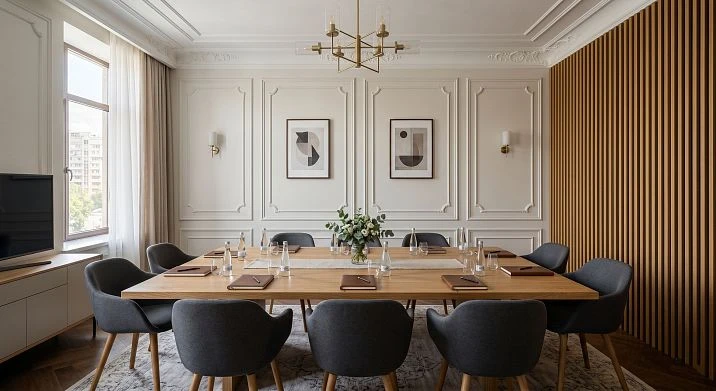
A meeting room is not just a room with a large table. It is a place where decisions are made, where first impressions are formed in thirty seconds, and the interior works either for you or against you. Too "noisy" decor distracts, too bare walls signal poverty of thought. Balance is what every manager, designer, architect who has to turn a meeting room into a tool for business communication seeks.
Exactly thereforewooden slats for meeting roomCreate interiors that are not just functional, but beautiful. Where furniture legs are not just a technical necessity, but an element of visual composition. Where a wooden cornice is not just a strip under the ceiling, but an architectural finish, a frame that brings the space together as a whole. Where height is not a given, but a tool you can manage. With STAVROS, this is not just possible — it is natural, logical, beautiful.Sculptural wall decoration and properly selected MDF Skirting Boardor wooden — not a designer's whim, but a professional toolkit. This is a system that creates an atmosphere without words: serious, collected, prestigious — and at the same time lively, not coldly corporate.
Let's break down exactly how this works. No fluff. With specific schemes and solutions.

Why a meeting room requires a separate approach to finishing
Ask yourself: how many times have you entered a meeting room and felt that something was wrong? White walls, cheap suspended ceiling, thin PVC laminate baseboard peeling off in the corner. Or, on the contrary, walls so saturated with decor that you wanted to leave quickly.
A meeting room is a special space with special requirements.
First — focus. Everything in this room should support concentration, not distract from it. Decor is present but not loud. It is a quiet argument in favor of the company.
Second — status. When a partner, client, or investor enters the meeting room, they evaluate the space. Neat wooden slats for a business interior, delicate moldings, high-quality Wooden baseboard — these are details that are read subconsciously. They say: "Serious people work here."
Third — acoustics. Wooden slats in a meeting room are not just decor. Perforated and textured surfaces absorb some sound, reducing the room's "ringiness." This is especially important for spaces with hard surfaces — concrete, glass, stone.
Fourth — video environment. A modern meeting room is a space for video calls. The wall behind the speaker is visible on the screen to dozens of people. A slatted panel made of natural oak as a video background is a neutral, prestigious, professional visual signal.




Where to use wooden slats in a meeting room: six zones
Our factory also produces:

Wall behind the conference table: a background that works
The main wall is the one that all meeting participants see. It is what those sitting opposite look at, and it is what the video camera captures.Decorative louvered panels on the wallhere is a professional background choice.
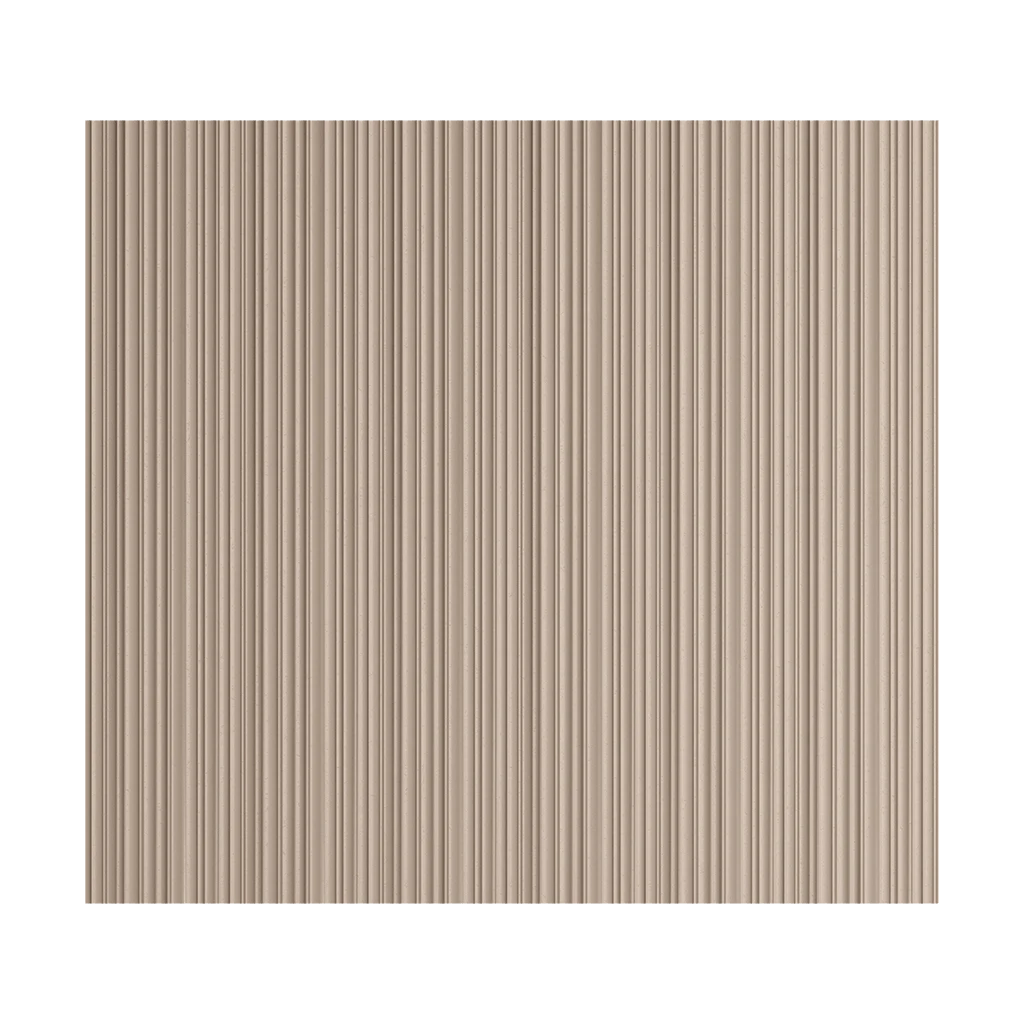
The optimal scheme: slats 25–35 mm wide, spacing 35–50 mm, height from floor to ceiling or to the cornice level. Natural oak without aggressive tinting — a calm, medium shade. A slatted wall on the main plane of the meeting room speaks of taste without distracting from the content of the conversation.
An important nuance for video calls: slats with a very fine and frequent rhythm — for example, 15 mm with a 15 mm spacing — can create a moiré effect on video. This is an optical vibration that occurs when a rhythmic pattern interacts with camera pixels. The recommended spacing for video backgrounds is from 40 mm.
Get Consultation
Area behind the screen or projector: architectural frame
A screen or TV in a meeting room is a functional object that needs a visual foundation.Slatted panels for the meeting roomon the wall behind the screen create an architectural frame for it: dark slats on a dark background — the screen is recessed into the wall, disappearing when not needed. Light slats with a molding frame — the screen stands out as an inset element in the architectural system.
Error-free solutions: a slatted panel 15–20 cm wider than the screen on each side. A molding frame made ofof polyurethane moldingsorwooden decorative moldingsaround the perimeter — a neat finish for the screen area.
Accent wall opposite the entrance: first impression
Upon entering the meeting room, a person first looks forward. If opposite the entrance there is a slatted wall with the company logo against a background of natural wood, this is a strong, memorable solution. The slats create a textured backdrop against which a three-dimensional logo made of metal or wood reads especially expressively.
Wooden planks for decorationdark oak + brass logo — this is the quintessence of a business interior with character.
Side walls: acoustics and volume
The side walls of the meeting room are an ideal place for wooden slats from an acoustic perspective. Vertical slats with a gap of 15–20 mm between them and the main wall create a diffusing surface: sound hits the slats, scatters between them, and is partially absorbed. Echo is reduced, speech becomes clearer.
At the same time, the side slats do not dominate the space — they work as a second-plan 'noise', creating a feeling of interior richness without overload.
Area behind the chair of the manager or meeting leader
A special case. The manager's chair at the end of the table is the 'stage'. The wall behind it is the 'backdrop'.vertical wooden slatson this wall create a status background without pompous decorativeness. In combination withmolding framearound the rack area is a professional business backdrop.
Zone with company logo and brand
Meeting room — the place of the first meeting. Wall with corporate branding:Wooden slats for the officecreate a natural background against which a logo made of acrylic, metal, or wood looks voluminous and significant.Polyurethane wall decorwith a molding frame around the logo further emphasizes its importance.
Stucco decor and moldings for the conference room: five principles
The "clean lines" principle
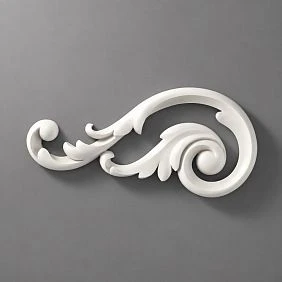
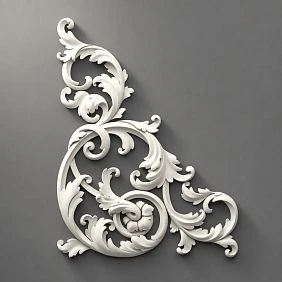
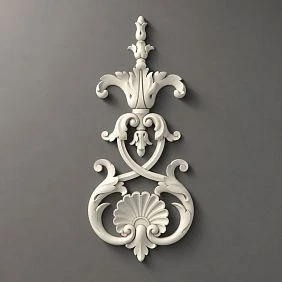
A meeting room is not a living room or a dining room. Herestucco decor for the meeting roomworks not through ornamentation, but through geometry. Straight frame moldings, without vignettes and plant decor — this is the rule of a business space. Frame layout on the wall: clear rectangles, vertical stripes, horizontal belts. No curls, no rocaille.
The principle of "molding as an architectural frame"
Moldings for the meeting roomare most effective as a frame layout on the side walls. Rectangular frames with a spacing of 60–90 cm create the feeling of architectural paneling: the wall looks like a well-thought-out system, not just "painted concrete." Moldings in the color of the wall are a delicate, professional technique.
The principle of "molding around the screen"
A frame molding around a TV or projector turns a technical object into an architectural element. A screen in a molding frame is not a "TV hung on the wall," but an integrated functional panel.Decorative wooden moldingsfor framing the screen in the meeting room with wooden slats — a unified material ensemble.
The principle of "stucco belt as a semantic boundary"
A horizontal molding belt at a height of 90–110 cm from the floor (the level of the meeting table top) divides the wall into two zones. Below the belt is the lower panel zone, above is the main decorative field. This is a classic paneling technique in a business interior, adapted for modern materials:Polyurethane wall decorallows you to create such a system quickly and without complex construction intervention.
The principle of "decoration in the color of the wall"
The meeting room follows a rule: decor is visible but not intrusive. The molding relief is read through the shadow of the profile, not through color contrast. Moldings in the exact wall color create "invisible architecture": the space feels architecturally complex but not overloaded. Ideal for corporate spaces where concentration is important.
Ceiling cornice in the meeting room: completing the vertical
The cornice in the meeting room solves one key task: it covers the transition from wall to ceiling, creating a horizontal line that "holds" the space. Without a cornice, the meeting room looks unfinished — even with perfect walls.
Business interior: thin profile
For a modern office, business center, or startup with an open space — a thin straight molding 25–40 mm in white ceiling color or wall color. A delicate perimeter marking without stucco decorativeness.polyurethane ceiling decorin a simple rectangular profile — concise and professional.
Executive office: wooden cornice
wooden cornicemade of oak or beech with a moderate architectural profile — for meeting rooms and offices with wooden slats on the walls. A unified wooden contour: slats on the wall — cornice around the perimeter — baseboard at the bottom. This is a material system that speaks of consistency and taste.
Wooden beamsfor business spaces are chosen with a profile without excessive ornamentation: a straight shelf, a simple ogee, or an ovolo — enough for architectural expressiveness.
Premium meeting room: cornice with profile depth
In the meeting rooms of banks, law firms, investment companies, and consulting structures —Wooden ceiling cornicewith a more pronounced profile: 80–100 mm. A wide cornice creates "depth" in the upper part of the wall, adding scale to the space. Especially effective with ceilings from 2.8 m.
Cornice with hidden lighting
In meeting rooms with perimeter lighting — a cornice with an LED niche.wooden cornicewith an internal shelf for an LED strip creates soft diffused lighting around the perimeter of the ceiling. This is an additional lighting scenario for presentations, video calls, and evening meetings.
Cornice or molding depending on ceiling height
| Ceiling Height | Recommended option |
|---|---|
| up to 2.6 m | Molding 25–35 mm, white or wall-colored |
| 2.6–2.8 m | Thin cornice 40–60 mm |
| 2.8–3.0 m | Wooden cornice 60–90 mm |
| from 3.0 m | Wooden cornice 90–120 mm with profile |
Baseboard for the meeting room: the lower line of the business space
In the meeting room, people sit close to the walls around the table. This means the baseboard is visible. Clearly visible. And it is here that a cheap PVC baseboard or a carelessly installed MDF one sends a silent signal that corners were cut on details.
MDF baseboard for a modern office
MDF Skirting Board — the optimal solution for most corporate meeting rooms. Precise geometry, smooth surface, compatibility with any paint. Height 60–80 mm for standard ceilings — enough for visual solidity without excessive bulkiness.
White MDF Skirting Board — for meeting rooms with light neutral walls. The white lower contour does not attract attention, creating a clean, even bottom border around the entire perimeter.
— is a horizontal element that frames the room at the bottom of the walls where the wall meets the floor. Skirting boards perform several functions: they hide the technological gap between the wall and floor covering (necessary for thermal expansion), protect the lower part of the wall from mechanical damage, create visual completion, and may conceal wiring. — for meeting rooms with accent colored walls: dark green, anthracite, dark blue. A baseboard matching the wall color creates a monolithic lower contour — maximally calm, not distracting from the meeting process.
Wooden baseboard for a meeting room with wooden slats
Wooden baseboard — when the meeting room has wooden slats on the walls, a wooden meeting table, or wooden doors, a wooden baseboard of the same species creates a material rhyme. Wood on the wall — wood at the floor. This is a unified natural language of the entire space.
with a classic profile creates a sense of solidity, reliability. in a meeting room with parquet or engineered wood flooring: matching the species of the baseboard and the flooring is a professional finishing standard. Oak on the floor — oak in the baseboard.
Wide wooden baseboard for premium spaces
Wide Wooden Skirting Board — 80–120 mm — for meeting rooms in banks, law firms, executive offices. The wide plane of the baseboard gives the lower part of the wall weight and solidity. Combined with wooden slats and a wooden cornice, this creates a complete architectural system for a business space.
Baseboard for commercial interiors: practical requirements
In a meeting room, functional requirements are added to the baseboard: resistance to contact with chair and stool legs, the ability to route cables in the groove, compatibility with flooring (carpet, parquet, tiles).MDF Skirting Boardwith a cable channel — a practical choice for meeting rooms with a lot of equipment: concealed routing of power and network cables.
Molding, corners, and strips: precision of commercial installation
In a meeting room where partners and clients are received, installation details are especially visible. There is no room for open ends, sloppy joints, or visible gaps.wood trim itemssolve exactly these tasks.
Wooden corner for covering external corners
Wooden angleon the external corners of a slatted panel — this is not an optional element, but a mandatory one. In a meeting room where walls are approached closely (doors, passages, transitions between zones), an unformed corner with open ends of the slats looks like unfinished work. A corner piece matching the slats creates a monolithic wooden transition across the corner.
Wooden strip as a frame plank for a slatted panel
Wooden blockhorizontally at the top and bottom of the slatted area — limiting strips that cover the ends of all vertical slats. This is also a load-bearing element: the slats are attached to the strips, ensuring a level and rigid structure. In a meeting room where slats may be installed behind the conference table along the entire wall, a proper load-bearing system made of strips is the key to long-term preservation of the decor.
Linear products for junctions and joints
Trimming Items cover all junctions of the slatted panel: to the door, to the window opening, to the side wall, to the intercom unit post. In a commercial interior, there are usually several such junctions — each requires a neat finish. Linear products in the same tone as the slats create a sealed, professionally installed system.
Wooden elements for the meeting room interior
Wooden elements — slats, bars, corner pieces, baseboards, cornices — must be from the same wood species, with the same tint or oil shade. In a meeting room, material consistency reads as a professional standard. A mismatch in wood shades sends the opposite signal.
Four types of meeting rooms: specific solutions for each
Modern tech office
Space character: glass, metal, concrete, light neutral tones.
Slats:Wooden slats for the office — bleached oak or ash, width 25 mm, spacing 40–45 mm, full wall height. On the main wall behind the screen.
Moldings:Moldings made of polyurethane — thin straight profile 30 mm in white, frame layout on the side walls.
Cornice: thin molding 30 mm in ceiling color around the perimeter.
Skirting board:White MDF Skirting Board— 70 mm.
Result: a modern, clean, airy meeting room. Wood as a natural accent in a technological environment.
Executive office / board of directors
Character of the space: warm dark tones, wood, leather, status.
Slats:wooden slats for a business interior— dark oak, width 30–35 mm, pitch 40 mm. On the main wall and the wall behind the executive chair.
Moldings:Decorative wooden moldingswith a frame layout on the side walls — dark oak matching the color of the slats.
Crown molding:wooden cornice 80 mm, dark oak.
Skirting board:Wooden baseboard 80 mm, dark oak.
Result: a meeting room with character. Dark wood across the entire vertical — from baseboard to cornice. Entering such a space immediately conveys the level.
Law firm / consulting / bank
Character of the space: classic, neutral, convincing.
Slats:Decorative wooden strip— natural oak of medium tint. Slatted panel on the main wall with a molding frame around the perimeter.
Moldings:Polyurethane wall decorframe layout in wall color on the side walls.stucco decor for walls and ceiling— only straight profiles, without ornamentation.
Crown molding:wooden corniceor polyurethane, 60–80 mm.
Skirting board:Wide Wooden Skirting Board90 mm.
Result: a meeting room that convinces before the conversation begins. The client sees architectural completeness — and trust forms faster.
Coworking and flexible office
Character of the space: democratic but stylish. No excessive corporateness.
Slats:Slatted panels for offices— ready-made panels of light oak or ash. Quick installation. On one wall.
Moldings: none — walls are calm, monochrome.
Cornice: straight molding 25–30 mm in ceiling color.
Skirting board:MDF Skirting Board60 mm, white or for painting.
Result: a stylish meeting room without extra costs. The wooden slat wall is the only design accent. Clean, modern, attractive.
Seven mistakes when designing a meeting room
Too active wall behind the speaker
Bright contrasting slats, large stucco, many decorative elements on the wall visible on camera — this is a disaster for video calls. The background 'swallows' the person on screen. Rule: the wall behind the speaker should be calm and moderate. Wood in natural or neutral tones, without sharp contrasts.
Slats with small spacing — moiré effect on video
Slats 15 mm with spacing of 15–20 mm create optical flickering on screen. Video call participants see a 'shimmering' wall, not neat wooden decor. The minimum recommended spacing for video calls is 40 mm.
Heavy cornice with a 2.5 m ceiling
wooden cornice120 mm at standard height creates a feeling of pressure. The ceiling visually lowers. Choose the cornice profile proportionally to the room height.
Baseboard not connected to wooden slats
Oak slats on the wall — and a random white PVC baseboard. This violates material logic. In a meeting room, every detail is on display.Wooden baseboardorMDF for Paintingpainting it a neutral color is the right choice.
Open ends of slats
On each meeting participant, the open ends of the slats — at the top, bottom, and sides — create a feeling of "unfinished renovation."Wooden blockandWooden angleat every joint — without exception.
Several shades of wood in one space
Light ash on the slats, dark walnut on the baseboard, medium oak on the cornice — three different stories about the same thing. In a well-lit meeting room, this destroys the integrity of the interior.
Decor that interferes with the screen, projector, or lighting
Moldings directly above the screen, slats blocking the projector beam, a cornice with backlighting directed straight at the screen wall — these are technical errors that only become visible when the room is in use. Consider the placement of equipment when designing the decor.
About the company STAVROS
For those creating business interiors — meeting rooms, executive offices, conference halls, coworking spaces, and representative offices — STAVROS offers a professional range of finishing elements proven in commercial projects.
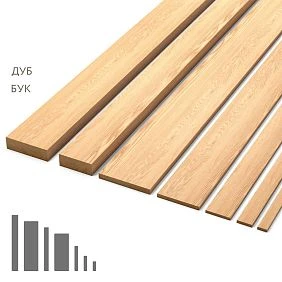
In the STAVROS catalog:Wooden planksmade of oak and beech with precise parameters for decorative panels,Rafter panelsfor quick installation in commercial spaces,wooden corniceandWooden beamsin the profile range from 40 to 120 mm.
For the lower contour:MDF Skirting BoardandWooden baseboardfor any business interior concept. For decorative systems —Decorative wooden moldings, Moldings made of polyurethane, Polyurethane wall decorandpolyurethane ceiling decor. For precise installation —Wooden block, Wooden angleandwood trim items.
The entire assortmentpolyurethane productsfor architectural molded decor — in the STAVROS catalog. For those who want not just a meeting room, but a space that convinces.
FAQ: answers to questions about meeting rooms
Which wooden slats to choose for a meeting room?
Width 25–35 mm, spacing 40–50 mm — optimal for most business spaces. Natural or lightly tinted oak is a universal choice. For video calls, spacing — at least 40 mm to avoid moiré effect.
Is molded decor needed in a meeting room?
Depends on the company's positioning. For classic industries (banks, lawyers, consulting) — a frame layout of moldings is appropriate and works for status. For IT, startups, media — wooden slats and clean planes are sufficient.
Which baseboard to choose for an office meeting room?
For a modern office: white MDF baseboard 60–70 mm. For an executive office with wooden slats: a wooden baseboard of the same species. For accent color walls: MDF for painting in the same color.
Can wooden slats be used as an acoustic solution?
Partially — yes. Wooden slats with a gap of 15–20 mm between the slat and the wall partially diffuse sound. For a full acoustic solution, acoustic material (porous absorber) is additionally placed behind the slats. This is a combined solution: decor + acoustics.
How to combine a screen in a meeting room with wooden slats?
A slatted panel on the wall with the screen, 30–40 cm wider than the screen on each side. A frame molding around the perimeter of the screen. Slats behind the screen in the same shade. The result — the screen is integrated into a wooden architectural panel, not "hanging" on the wall.
How to design the transition from wall to ceiling in a meeting room without complex installation?
A thin polyurethane molding 30–40 mm on glue — installs in 2–3 hours for a standard meeting room. This is the fastest way to create a neat upper perimeter without chiseling or fasteners.
Are linear products needed when installing a slatted wall in a meeting room?
Definitely. Open ends of slats, uncovered junctions with doors and openings — that's the first thing an experienced client notices.Wooden blockon the top and bottom of the panel,Wooden angleat the corners,Trimming Itemsat the junctions — the standard of professional installation in a commercial interior.