










































































Article Contents:
- What is door opening stucco
- What tasks does opening decoration with stucco solve
- Which STAVROS elements to use for door opening decoration
- Polyurethane moldings and trims
- PU overlays for portal accent
- Wall decor as part of door composition
- Decor for moldings: corner blocks and inserts
- General catalog of polyurethane products
- Portal solutions
- Doorway design options with stucco molding
- Simple frame made of moldings
- Portal with upper decorative accent
- Doorless opening between rooms
- Door as part of a wall composition
- Arched opening
- How to choose stucco molding for a doorway: step-by-step guide
- Step 1. Measure the opening
- Step 2. Determine the design format
- Step 3. Choose a style
- Step 4. Select the molding width
- Step 5. Choose the upper accent
- Step 6. Check symmetry
- Step 7. Connect the opening with the baseboard and wall decor
- Step 8. Go to the catalog and place an order
- How to calculate elements for a door opening
- For a straight opening with a simple frame
- For a portal with a decorative accent
- For framing on both sides of the opening
- For a composition with an outer and inner contour
- Molding for doors: style and character
- Classicism and Baroque
- Neoclassicism
- Modern classicism
- Molding for white doors and for painting
- How to connect door decor with wall molding
- Mistakes when choosing molding for a door and opening
- Too wide molding for a narrow opening
- Did not account for ceiling height
- Heavy classic decor in a small hallway
- Buying elements without a diagram
- Did not connect the opening with the baseboard
- Did not include a reserve for trimming
- Mixed different molding styles
- Designed the door separately from the interior
- Carved doors and decor: when molding becomes part of the door leaf
- Installation of molding for a door opening
- Where to buy STAVROS door opening stucco
- FAQ: answers to popular questions about door opening stucco
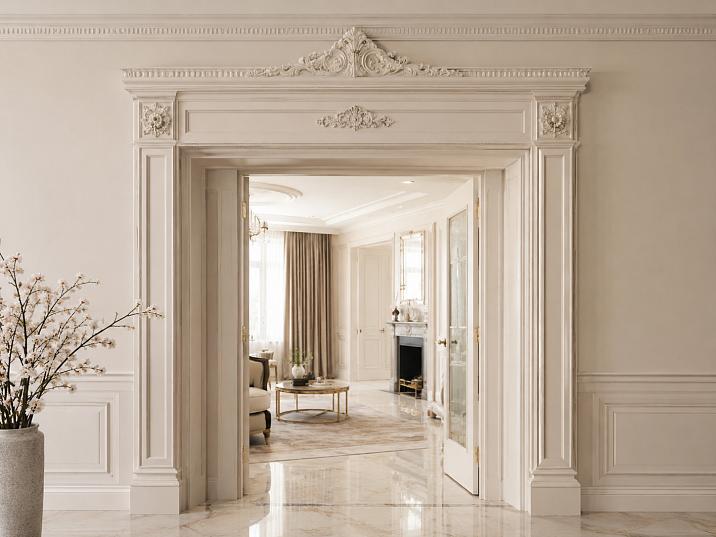
A door opening is not just a hole in the wall. It is a boundary between spaces, a transition point that either works for the interior or quietly ruins it. Stucco for a door opening turns an ordinary rectangle into an architectural statement: a portal, a frame, an accent that holds the entire look of the room. And this can be done without major renovations — using polyurethane stucco from the STAVROS catalog.
This article is not about stucco in general. It is about a specific scenario: you want to decorate a door, opening, or passage between rooms. You want it to look expensive, thoughtful, and stylish. And you want to understand where to start, which elements to buy, and how not to make a mistake in selection. We will break everything down in order — from the meaning to specific items in the catalog.


What is door opening stucco
In short, it is a set of decorative polyurethane elements that are mounted around the door, along the contour of the opening, or above the entrance to the room. Technically, these are the same moldings, overlays, corner blocks, and decorative compositions used on walls and ceilings — but applied to a specific area: a door opening, portal, arch, or passage between rooms.
Why polyurethane? Because it is a material that is simultaneously lightweight, moisture-resistant, flexible during installation, and absolutely precise in relief details. Polyurethane stucco for a door opening does not crack during shrinkage, is not afraid of temperature changes in the hallway, is easily cut to the desired size, and accepts any paint. For decorating the door area, this is an ideal choice.
It is important to understand the difference between three concepts that are often confused:
A door opening is the entire area around the door leaf, including the side jambs and the top lintel. Stucco here works as a casing or frame system.
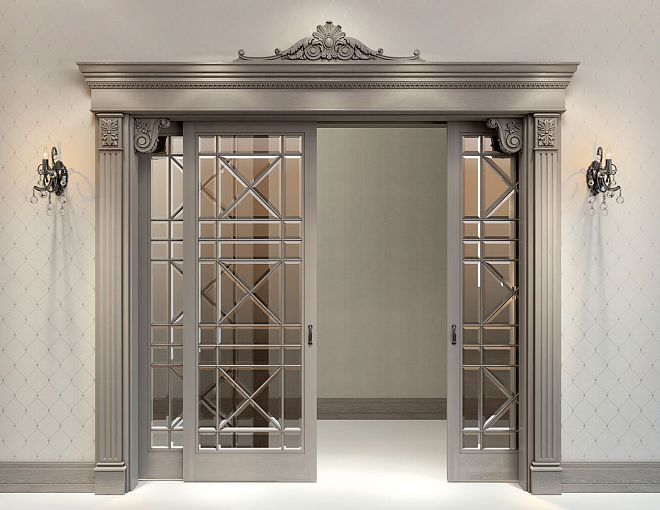
A portal is a more architectural concept. It is a framed entrance, typically with a pronounced upper decorative accent: a keystone, cartouche, or decorative overlay. A portal does not just frame a door — it turns it into an event.
An opening without a door — a passage between rooms (living room–hall, kitchen–dining room). Here, stucco molding works as an architectural frame that structures the space without a door leaf.
All three scenarios are solved using the same set of tools: Polyurethane moldings and trim, PU decorative overlays и Wall Decor. The difference lies in the assembly logic and accents.




What tasks does framing an opening with stucco molding solve?
Before moving on to selecting elements, it is worth honestly answering the question: why do you need stucco molding for a door opening? Not as a declaration of beauty, but as a specific task. Because the entire selection depends on the answer.
Highlight the entrance to a key room. Living room, study, master bedroom — these are areas that deserve a special entrance. A portal with a decorative accent at the top gives a sense of significance and architectural thoughtfulness. A person hasn't entered yet — but already understands that something special lies behind this door.
Frame an opening without changing the door. A very common scenario: the door is good, there is no point in replacing it, but the opening looks bare. Molding around the door opening solves this in one day of installation without dust or dirt.
Assemble a classic or neoclassical decorative portal. This is about style. Classics require framing: without moldings and an upper accent, it is not readable. Solutions for STAVROS door portals provide visual navigation through ready-made scenarios.
Connect the door to the wall decor. If the living room walls have frame panels made of moldings, the doorway should be organically integrated into this system. Otherwise, the wall looks well-thought-out, but the door looks alien. Polyurethane wall decor and the moldings around the door should be from the same collection or at least from the same style register.
Visually increase the height of the door. This is an architectural technique that works flawlessly: vertical moldings on the sides of the opening plus a decorative element above the door 'lift' the gaze and create a sense of more space. In apartments with ceilings of 2.6–2.7 m, this is especially relevant.
Hide defects in the opening area. Uneven plaster, traces from an old trim, a visible seam between the wall and the frame — all of this is covered by molding without leveling or re-pasting wallpaper.
Add a style accent to a neutral interior. Sometimes the interior is good, but it lacks an 'anchor'. One designed portal — and the space gains character.
Our factory also produces:


Which STAVROS elements to use for designing a doorway
Here it is important not to fantasize, but to work with the actual assortment. Everything needed for designing a doorway with stucco is available at STAVROS — and is divided into logical categories.
Get Consultation
Polyurethane moldings and linear elements
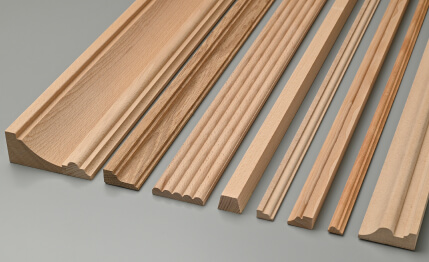
Polyurethane moldings for a doorway — this is the base. A linear profile with relief is mounted around the perimeter of the opening: two vertical posts and a top horizontal lintel. This is the frame. Simple, strict, but already fundamentally different compared to a bare opening.
Molding for door framing is chosen based on several parameters. Profile width — from 20 to 100 mm and wider, depending on the style and size of the opening. Relief height — how much it "protrudes" from the wall. Ornament character — smooth, geometric, classic with acanthus and beads. Plank length — typically 2 meters, quantity needs to be calculated considering the opening height and trimming.
Molding for a door opening is not just about aesthetics. It is a tool that sets proportions and connects the door with the wall.
PU overlays for portal accent
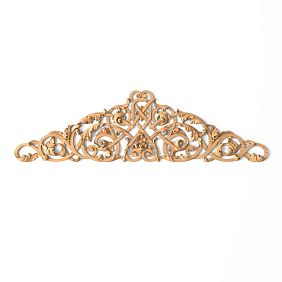
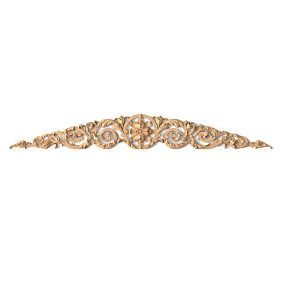
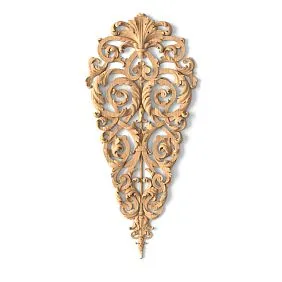
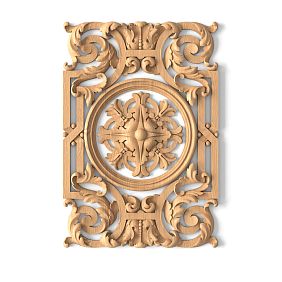
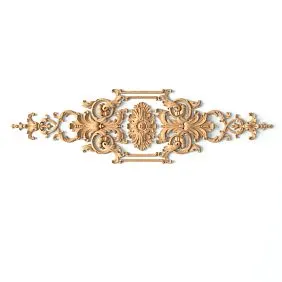
PU overlays — these are individual decorative elements with relief. For a door portal, they are used primarily in the upper part: a central overlay above the door (keystone, cartouche, medallion), symmetrical side accents, corner blocks at the junction of vertical and horizontal moldings.
It is the overlay that turns a simple frame of moldings into a full-fledged door portal. Without it — a contour. With it — architecture.
Overlays for a door opening are chosen by size (must match the molding width and opening proportions), by style (classic, baroque, neoclassical, geometric), and by relief height. One well-chosen overlay above the door can change the perception of the entire hallway.
Wall decor as part of the door composition
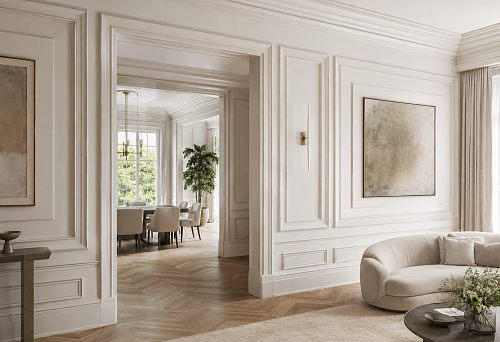
If the interior involves framed panels on the walls — the door opening must be integrated into this system. Polyurethane wall decor provides ready-made solutions for creating a consistent rhythm: molding frames on the wall smoothly transition into the door framing, and the entire volume reads as a single whole.
This approach is one of the most striking in a neoclassical interior. The wall becomes not just a backdrop, but a thoughtfully designed architectural surface into which the doorway is seamlessly integrated.
Decor for moldings: corner blocks and inserts
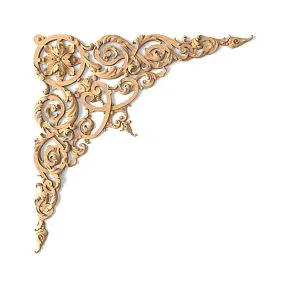
The catalog has a separate category — Decor for Molding: corner blocks, decorative inserts at joints. For a doorway, these are critical elements: the corner block covers the joint of the vertical and horizontal molding at the top corners of the frame. Without it, the corner is either cut at 45° (requiring precision) or looks unfinished.
General catalog of polyurethane products
If you haven't decided on the type of element yet and want to see all the variety — start with the section Polyurethane moldings. Here you can get a general overview of the assortment and form an initial list of items for the doorway.
Solutions for portals
For visual inspiration and understanding what finished solutions look like — the section Solutions for STAVROS door portals. Here are collected examples of designs: from minimalist modern portals to lavish classical arched solutions. This is a good start if you haven't decided on a style yet.
Options for decorating a doorway with stucco molding
Now let's move on to specific scenarios. What exactly can a doorway decorated with polyurethane trim look like — and what set of elements is needed in each case?
Simple frame made of moldings
Minimalism is also a style. A simple frame of moldings around the opening without heavy decor works in modern interiors, neoclassicism, and Scandinavian design. Three elements: two vertical moldings on the sides and one horizontal at the top. Corner blocks or 45° miter cuts — your choice.
This option is the most economical and quickest to install. But with the right profile selection, it looks no less expressive than a complex classical composition. The secret lies in the proportion of the molding width to the opening width and in the cleanliness of the corner joints.
Moldings for this option are in the section Polyurethane moldings and trim. For a modern interior, choose profiles with minimal relief and a clear geometric cross-section. Width — from 30 to 60 mm depending on the height and width of the opening.
Portal with upper decorative accent
This is a classic scenario for a living room, study, or formal bedroom entrance. The molding frame is complemented by a central overlay above the door: a keystone, cartouche, decorative medallion, or heraldic overlay. Sometimes symmetrical elements are added on the sides at the top corners.
Such a portal creates a sense of architectural significance for the entrance. The door ceases to be just a functional opening — it becomes a focal point of the space.
Assembly scheme: vertical moldings on the sides + horizontal crossbar + central overlay + corner blocks. All elements are from the sections molding и PU overlays. Important: the overlay above the door should be proportional to the width of the horizontal molding and visually neither "sink" nor "overwhelm" the frame.
For a classic style, choose moldings with rich ornamentation: acanthus, bead, and egg-and-dart. For neoclassical, opt for restrained ones with a geometric band or smooth with a bevel.
Opening between rooms without a door
The transition from living room to hall, from kitchen to dining room, from study to library — these are areas where a door leaf is often absent. Stucco for the doorway here works as an architectural frame: it structures the transition, making it meaningful and complete.
Decorating an opening between rooms with stucco is one of the most effective techniques in working with open floor plans. An opening with moldings is perceived as an architectural portal, not a hole in the wall. This works especially expressively in combination with different finishes of the two zones on either side of the passage.
For this scenario, it is relevant to use moldings on both sides of the opening: external and internal framing. In this case, the profile can be chosen differently for different zones — stricter on the hall side, softer on the living room side.
All necessary elements are in the section stucco and decor made of polyurethane.
Door as part of a wall composition
This is the most complex and most beautiful scenario. The doorway does not exist separately from the wall — it is integrated into the system of molding frames on the entire surface. Panels to the left and right of the door continue the rhythm of the opening's framing, and everything together reads as a single architectural plane.
In this case, it is important to first work out the entire wall as a whole — determine the rhythm of the frames, their size and placement — and only then choose the molding for the door frame. The molding should be the same as that used in the wall panels, or stylistically consistent with it.
Polyurethane wall decor — это раздел, который даёт готовые решения именно для таких задач. А solutions for portals покажут, как дверной портал может быть органично вписан в стеновой декор.
Arched Opening
Арка — особый случай. Здесь стандартный прямоугольный молдинг не подойдёт без адаптации. Для оформления арочного проёма лепниной нужно учитывать радиус и форму свода: полукруглый, сегментный, стрельчатый.
Прямые полиуретановые профили для оформления арки применяются в прямолинейных участках — боковых стойках и, в ряде случаев, в нижней части свода. Декоративные накладки могут усилить замковую часть арки (верхняя точка свода) и пяты (места перехода дуги в вертикаль).
Важный момент: при выборе лепнины для арки в квартире нужно точно знать радиус свода и только после этого подбирать элементы. Готовых гибких арочных профилей в категории полиуретановой лепнины нет — речь идёт о подборе штучных декоративных элементов и прямых молдингов под конкретную геометрию. Для такого подбора используйте каталог PU overlays и схему портала из раздела решений для порталов.
Лепнина для арки из полиуретана — это всегда индивидуальное решение, которое требует точных замеров и продуманного подхода к расстановке элементов. Не покупайте «на глаз» — считайте по схеме.
Как подобрать лепнину для дверного проёма: пошаговая инструкция
Покупка декора для дверного проёма без алгоритма — почти всегда ошибка. Вот рабочая схема, которая избавит вас от лишних затрат и переделок.
Step 1. Measure the opening
Record: the height of the opening (from floor to top lintel), the width of the opening, the presence and size of the door frame. If there is a frame, the molding is mounted either on it or next to the wall, depending on the scheme. This data is needed to calculate the molding footage and the size of the overlays.
Step 2. Determine the design format
Do you need just a contour — a frame? Or a full portal with a top accent? Or decoration on both sides of the opening at once? The answer to this question determines the set of items in the order.
Step 3. Choose a style
Classic with rich ornament, neoclassical with a geometric belt, modern classic with a smooth profile — these are the three main registers. The style of stucco for a door opening should match the overall interior concept and be consistent with the rest of the decor.
If the room already has a cornice, rosette, or wall moldings, the stucco around the door should be in the same stylistic and ornamental context. Mixing styles here is one of the most common and noticeable mistakes.
Step 4. Choose the molding width
The profile width is a matter of proportion. For a standard door opening 800–900 mm wide, the optimal molding width is 40–70 mm. For a wide opening (1200–1400 mm and wider) — 70–100 mm or more. A too narrow molding on a wide opening looks timid. A too wide one on a narrow opening feels oppressive.
Step 5. Choose the top accent
Is a central decorative element above the door needed? If yes — select it from the section PU overlays. Focus on the width of the upper horizontal molding crossbar: the overlay should be slightly wider or equal to it in width, but not wider than the opening itself. The height of the overlay — proportionally to the height of the space above the door.
Step 6. Check symmetry
Any frame around the door must be symmetrical. This means: identical molding width on the left and right, identical offsets from the frame, a centrally placed upper overlay. An asymmetrical frame, even with expensive elements, looks sloppy.
Step 7. Connect the opening with the baseboard and wall decor
The lower part of the door casing should join with the baseboard. This is either a direct joint (the molding is cut at the baseboard) or a decorative console-stand — a special element that provides a beautiful transition. If there are molding frames on the wall — ensure their horizontal lines do not conflict with the horizontal of the door portal crossbar.
To coordinate wall decor with door framing, use the section Polyurethane wall decor.
Step 8. Go to the catalog and place an order
When the list of items is compiled — go to the relevant sections of the STAVROS catalog, study product cards with photos and sizes, check availability, and place an order. Current prices for door moldings — in product cards: they are updated in real time, and that's where you need to look for the final figures for your selection.
How to calculate elements for a door opening
Calculation is not complex math, but a simple scheme. The main thing is not to forget any item.
For a straight opening with a simple frame
Molding calculation formula: (opening height × 2) + opening width + 15% allowance for trimming. For example, for an opening 2100 mm high and 900 mm wide: 2.1 × 2 + 0.9 = 5.1 m of molding plus allowance ≈ 5.9 m. Planks 2 meters long — 3 pieces needed. Corner blocks: 2 pieces (at the top corners). Total — three molding planks and two corner elements.
For a portal with a decorative accent
To the basic set add: central overlay — 1 piece (size selected to match the width of the horizontal molding and the space above the door). If necessary — symmetrical side overlays. Corner blocks — 2 pieces or replaced with decorative corner overlays from the section Decor for Molding.
For framing on both sides of the opening
Double the basic molding calculation. If the profile is different on both sides — calculate each side separately. Corner elements — 2 pieces per side.
For a composition with an outer and inner contour
Outer contour: molding along the perimeter + corners. Inner contour: narrower molding along the same perimeter (considering the offset) + corners. Decorative inserts between contours — as needed.
All calculations are easier to do in a table: list each item, its size, quantity, and the corresponding article from the catalog. This takes 20 minutes but eliminates errors.
To purchase door frame moldings, door frame overlays, and door stucco decorations, it is convenient to buy them directly through the relevant sections: moldings and trim и PU overlays.
Door stucco decorations: style and character
Choosing a style for stucco around the door is not just a matter of taste. It is a matter of consistency. A door portal that "argues" with the interior looks worse than no decoration at all. Let's break down the main directions.
Classical and Baroque
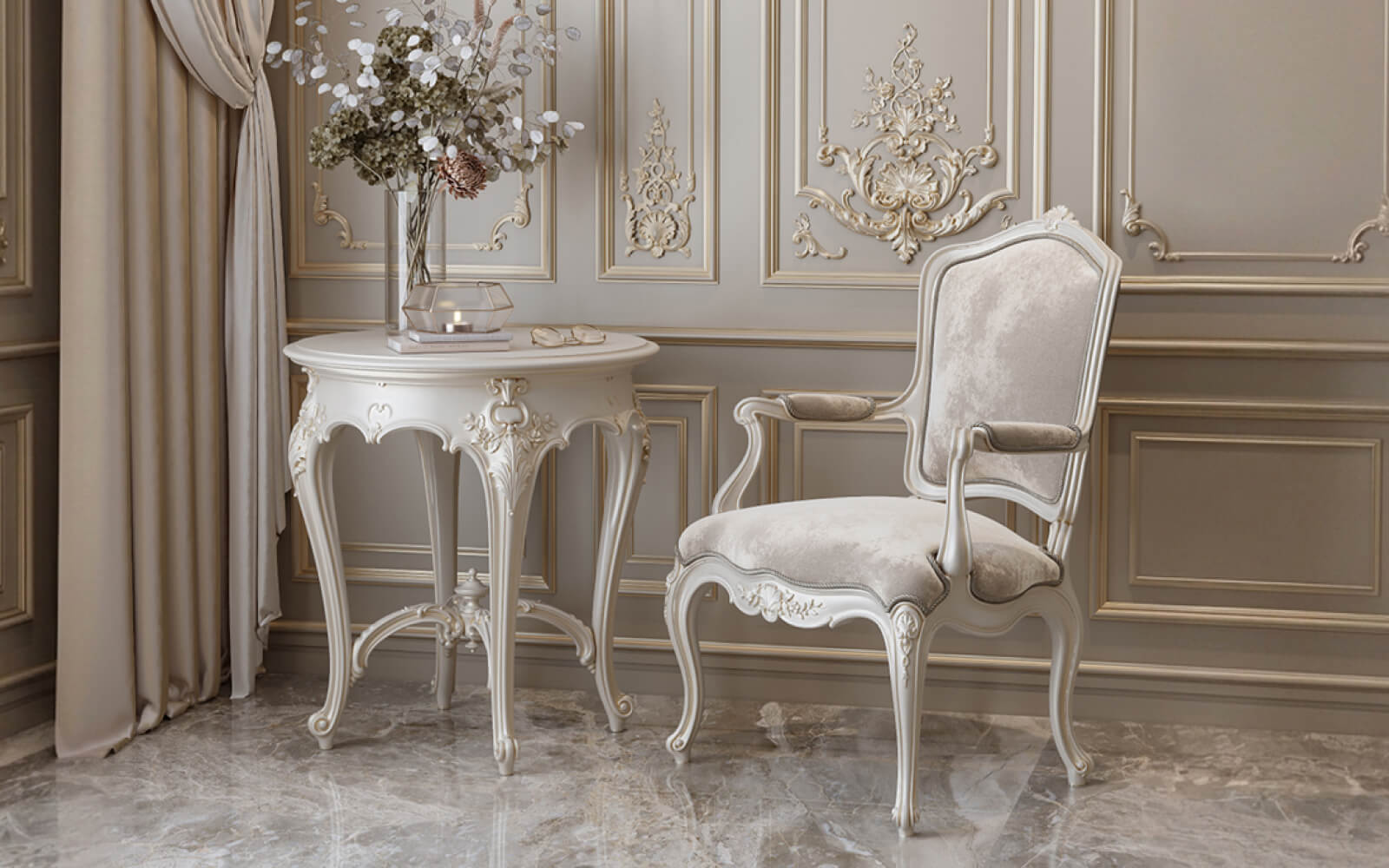
For a classic interior, a door portal is a must-have element. Moldings with rich profiles are appropriate here: acanthus, beads, dentils, ovolo. The top overlay is large, with pronounced relief: cartouche, keystone with mascaron, shell. Corner blocks are decorative, with floral or plant motifs.
A classic-style portal does not just frame the door — it transforms it into a ceremonial entrance. In a living room, study, or dining room with high ceilings, this scenario works flawlessly.
Neoclassicism
Neoclassicism is restraint of form with high quality of details. Moldings are medium width, with a geometric band or a smooth profile with a clear chamfer. The top accent is laconic but expressive: a geometric medallion, a horizontal overlay with fine relief. Corner blocks are square or rectangular, with simple ornament or a rosette.
A neoclassical door portal is an ideal solution for modern apartments with designer renovations: it adds depth without overload.
Modern classic
Thin molding as a clean line, minimal relief, no ornament. Here, stucco for the door opening is more of an architectural stroke than a decorative accent. But even such minimalism fundamentally changes the perception of space: a door with molding looks like part of a well-thought-out interior, not like a standard box from a hardware store.
For this option, smooth profiles from the section are suitable moldings and trim.
Stucco for white doors and for painting
Polyurethane is the best choice for painting. It does not absorb paint unevenly, does not cause shrinkage cracks, and sands well. Door molding for painting is installed in a basic white color (all STAVROS products are supplied white) and after installation is painted in any color together with the wall or door. This allows creating a monochrome effect: the door and portal are one color, maximum elegance.
To imitate gilding or patina, waxes and special patinating compounds are used. This technique is especially effective on classic portals with rich relief.
How to connect door decor with wall molding
A good interior is a system. A door portal does not exist in a vacuum: it is surrounded by walls, floor, and ceiling. And the more skillfully these elements are connected, the stronger the overall effect.
Here are a few principles that work flawlessly.
Unified profile. The molding for the door opening is the same as that used in wall frames. This creates a visual rhythm and a sense of a well-thought-out system.
Horizontal alignment. The horizontal lintel of the door portal is aligned in height with the horizontals of the wall frames. This rule is especially important when the door is on a wall with frame decor.
Consistency of accents. If there are decorative overlays on the walls, the decor above the door should be in the same stylistic register as them. Exact identity is not needed—consistency of spirit is needed.
Baseboard as the lower point. The moldings of the door portal end at the baseboard. This is a clean and proper joint. If the baseboard and portal molding are from the same catalog section, compatibility is guaranteed.
Cornice as the upper context. If there is a ceiling cornice in the room, the door portal should be on the same scale: a massive cornice with rich ornament requires an equally expressive portal, while a light modern cornice requires a modest but clear door frame.
To work with the full interior context, use the sections wall decor и polyurethane products — there you can select elements for all room zones in a unified style.
Mistakes when choosing molding for a door and opening
These mistakes are repeated over and over. Knowing them means not making them.
Molding that is too wide for a narrow opening
A molding 100 mm wide on a standard door opening of 800 mm looks bulky and eats up useful width. Rule: the width of the molding should not exceed 8–10% of the opening width.
Didn't account for ceiling height
A high portal with massive decor in a room with a 2.5 m ceiling will feel oppressive. The scale of the decor should match the scale of the space. In low rooms, choose laconic, vertically elongated profiles—they visually lift the gaze rather than lowering the ceiling.
Heavy classic decor in a small hallway
A luxurious baroque portal in a hallway 1.2 m wide is not majestic, but theatrical and claustrophobic. In corridors and small entryways, strict, vertical, not too wide moldings with minimal relief work best.
Buying elements without a diagram
"I'll take the molding, and then add something else" is a classic mistake. As a result, the door is framed with one molding, the corners are handled with rough cuts, and no top accent is provided. Always compile a full list of elements before your first purchase.
The opening is not connected to the baseboard
The molding ends 5 centimeters from the baseboard — and this five-centimeter incompleteness ruins the entire work. The joint between the molding and the baseboard must be clean: either the molding sits directly on the baseboard, or a console — a special connecting element — is used.
Did not account for cutting waste
10–15% extra molding is not the seller's greed, it's installation reality. When cutting corners, adjusting lengths, and making inevitable joints, some material goes to waste. It's better to have extra left in storage than to run out at the final seam.
Mixed different styles of stucco
A baroque overlay above the door plus a minimalist frame molding is a conflict that catches the eye. Even if each element is good on its own, their combination destroys integrity. The rule: one style — one ensemble.
Designed the door separately from the interior
A door portal that is not connected to the rest of the room's decor looks like a random object. It should be part of a system — connected to the moldings on the wall, the cornice on the ceiling, and the baseboard on the floor.
Carved doors and decor: when stucco becomes part of the door leaf
A separate conversation — carved doorsIf you are working with decorative carved doors, the design of the portal around them should be especially thorough: the relief motifs on the molding and overlays must be coordinated with the character of the carving on the panel. This is no longer just architecture — it is fine work with details.
For such projects, we recommend looking at wooden moldings, cornices, and baseboards as a possible alternative or addition to polyurethane elements. Combining wood and polyurethane in an interior requires a special approach, but in the hands of a designer, it is a powerful tool.
Installation of stucco for a doorway
For detailed and practical advice on how to properly install polyurethane decor, read the article installation of polyurethane molding. Here are the key principles as applied to a doorway.
Prepare the surface in advance: clean it from dust, check for evenness. On loose and porous surfaces, apply a primer. Moldings are cut with a hand or electric hacksaw with a fine tooth — without jerking, according to the markings. Use a miter box for cutting at 45°.
The adhesive is acrylic construction adhesive or specialized for decor. For details on choosing the adhesive and application technology, see the material How to glue polyurethane molding.
After installation, joints and cuts are puttied, sanded, and painted. For a doorway, the quality of corner joints is especially important — they are the first to catch the eye.
Where to buy stucco for a doorway STAVROS
All elements for designing a doorway, portal, and door area are in the STAVROS catalog. Go to the desired section and select items with current prices, photos, and sizes.
Navigation through sections for designing a doorway with stucco molding:
-
Go to the general catalog moldings from polyurethane — to start and get an overview
-
Choose Polyurethane moldings for a doorway — linear elements for the frame and trim
-
View PU overlays for doorway design — decorative elements for the portal and accents
-
Select Polyurethane wall decor — to connect the doorway with wall decor
-
View ideas and diagrams in the section solutions for door portals
-
Add Decor for Molding — corner blocks and connecting elements
-
Explore the option carved doors for a comprehensive solution
Delivery — throughout Russia. Prices for door moldings are current, in product cards, without outdated data.
FAQ: answers to popular questions about moldings for doorways
Can moldings be used to decorate a doorway?
Yes. Polyurethane moldings for doorways are one of the most practical and affordable solutions. Polyurethane moldings, overlays, and decorative elements are installed quickly, hold securely, and look like professional architectural trim.
Which moldings are suitable for interior doors?
For interior doors, it is better to choose medium-width moldings (40–70 mm) with moderate relief — they do not overload the door area and fit organically into the living space. For formal areas, wider profiles and decorative overlays can be used.
What is the difference between door, opening, and portal design?
Door design is the decoration directly on the door leaf or trim. Opening design is a frame of moldings around the door opening. A portal is a more complex architectural structure with a decorative top accent, corner elements, and, as a rule, symmetrical details.
What to choose for a portal around a door: molding or overlay?
Both. Moldings form the contour. The overlay is the top accent. Together they create a complete portal. Without an overlay, it's just a frame; without moldings, the overlay will hang without context.
Can an opening be designed without a door?
Yes, and this is one of the most effective techniques in working with open-plan layouts. Moldings around the perimeter of the opening turn it into an architectural portal without a door leaf.
What stucco to choose for an arch in an apartment?
For an arched opening, select decorative overlays for the keystone and spring points, and straight moldings for the side jambs. Precisely measure the radius of the arch beforehand — this is the basis for correct selection.
How to calculate molding for a door opening?
Formula: (opening height × 2) + opening width + 15% allowance. For a standard opening of 2100 × 900 mm, this is about 5.9 linear meters. With a plank length of 2 m — 3 planks.
Where to see current prices for door moldings?
Only in product cards on the STAVROS website — prices are updated in real time. Specific sections: Moldings, PU overlays, Wall Decor.