Article Contents:
- What is laconic stucco decor: not less, but more precise
- What is ceremonial stucco decor: scale and status
- Table: laconic or ceremonial decor
- When to choose a laconic set: five scenarios
- Scenario 1: Bedroom
- Scenario 2: TV area
- Scenario 3: Hallway and corridor
- Scenario 4: Wall with furniture, mirrors, paintings
- Scenario 5: Small room and low ceilings
- When to choose a formal set: five scenarios
- Scenario 1: Wide accent wall in the living room
- Scenario 2: Spacious hall with high ceilings
- Scenario 3: Dining room and dining area
- Scenario 4: Fireplace wall
- Scenario 5: Country house with high ceilings
- Room-based selection: practical matrix
- Bedroom
- Living Room
- Entrance Hall and Foyer
- Office
- Selection by wall width: from partition to accent zone
- Narrow wall or partition (up to 80 cm)
- Medium wall (100–260 cm)
- Wide accent wall (from 300 cm)
- Selection by ceiling height
- STAVROS Calm Collections: Comparison
- "Peterburg" vs "Pavlovsk"
- "Neoclassic" vs "Neoclassic Light"
- STAVROS Grand Collections: Comparison
- "Peterhof" vs "Tsarskoye Selo"
- "Ekaterinhof": Between Minimalist and Grand
- Color and Perception: Three Strategies for Minimalist and Grand Decor
- Decor in Wall Color
- Contrast painting
- Shade Contrast
- Gold, patina, relief highlighting
- Ready-made set or assembly from moldings: what to choose for each approach
- For minimalist decor
- For formal decor
- Mistakes when choosing: what goes wrong
- Quick choice: minimalist or formal
- Choose a set of stucco decor to match the character of your wall
- About the company
- FAQ: Answers to Popular Questions
The question asked in about half of cases before purchase: "Won't this set be too heavy for my room?" — or, conversely: "Will this option even be noticeable on a large wall?" Both situations are the same problem: the person doesn't understand what level of decorativeness a particular wall needs. They choose based on a photo — and either overload the bedroom or are disappointed with the result in a spacious living room.
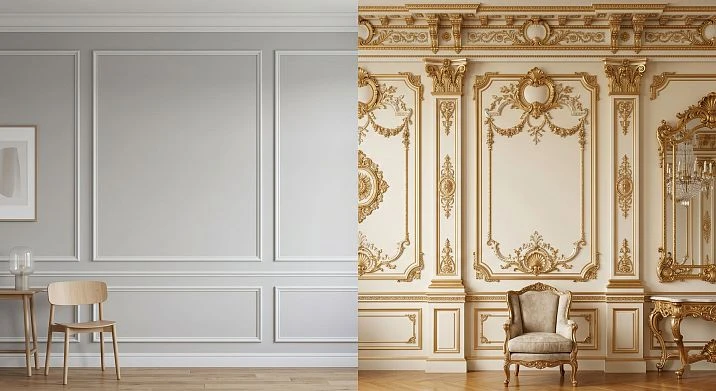
Minimalist stucco decor — this is not a simplified or budget option. This is a deliberate architectural solution.formal stucco decor— not an excess, but a scaling tool. The right choice between them changes everything: an interior that could have been uncomfortable becomes elegant; a wall that risked looking bare turns into decorative architecture.
This article is a direct practical breakdown: what to consider concise, what ceremonial, how to chooseset of stucco decorfor a specific room, wall, and style. With a table, examples, and a clear algorithm.
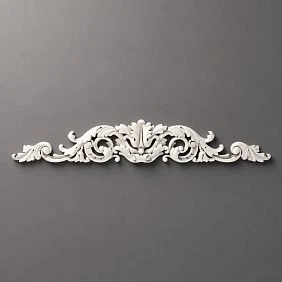
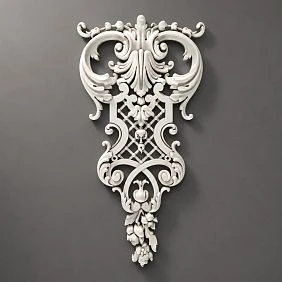
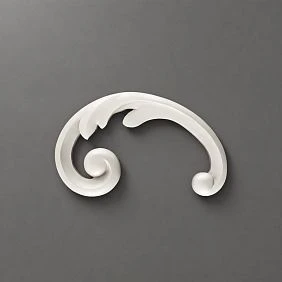
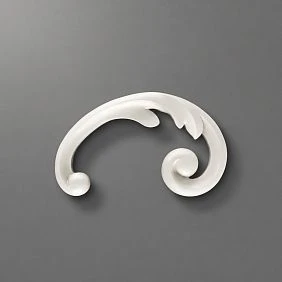
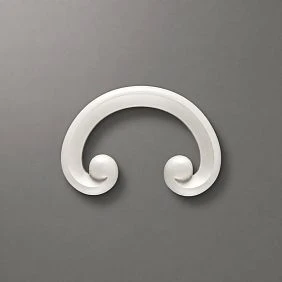
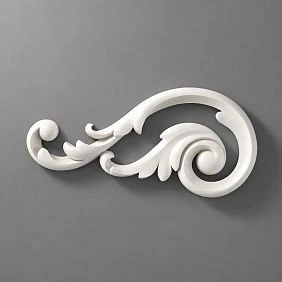
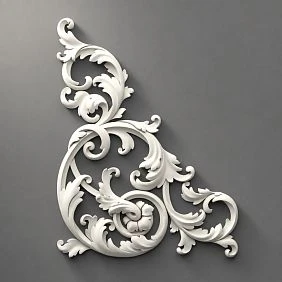
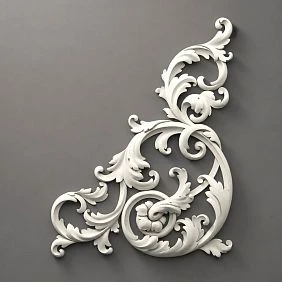
What is concise stucco decor: not less, but more precise
The word "concise" is sometimes understood as "almost no decor." In reality, it is precise, measured decor without ornamental excess. It does not shout, does not steal attention, does not require space to "breathe." But it is definitely present — as an architectural structure, as relief geometry, as a system of frames that organizes the wall.
Signs of a concise set:
-
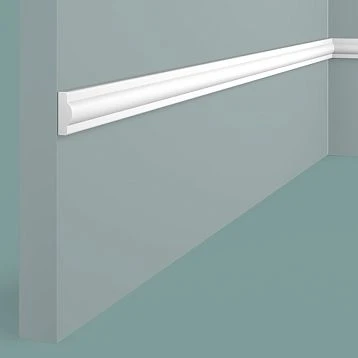
Moldings with a moderate or minimal profile — without complex ornamental relief
-
frames from moldingsas a base — without overload of overlays
-
Decorative elements are present, but they do not dominate
-
Calm symmetry without palace grandeur
-
Works well for painting in the color of the wall — the relief is only visible in the play of light
How the result is perceived:
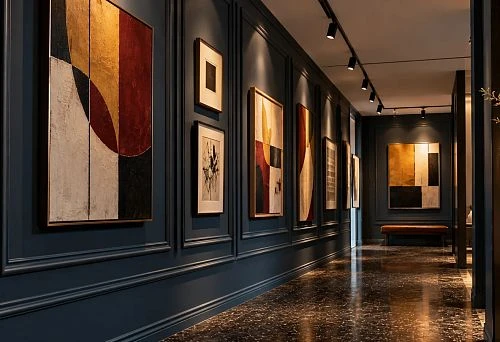
A wall with laconic decor looks architecturally ordered. This is "expensive minimalism" — when everything is in place, everything is precise, nothing extra. Mirrors, paintings, sconces, furniture work well next to such a wall — they do not compete with the decor but exist in the same field.
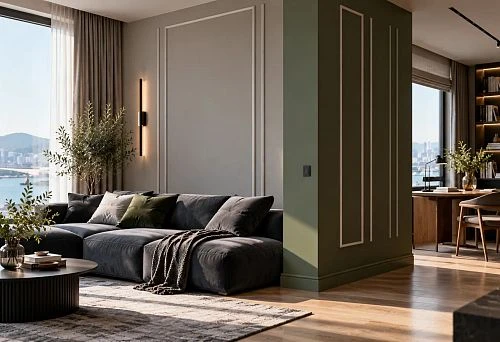
Neoclassical wall decor — this is exactly that approach: frames, geometry, balanced proportion, without ornamental excess. It works in apartments, new buildings, urban interiors with modern classic furniture.
Also, laconic solutions include Neoclassic Light collection — this is already almost "pure architecture," where the decor is only readable under certain lighting. Delicate, restrained, impeccable.
More details about types of ornament — in the article how to choose an ornament for stucco wall decor.




What is formal stucco decor: scale and status
Formal means main. A set that, after installation, becomes the dominant visual object of the wall. Nothing else is needed: no paintings, no mirrors, no active textiles. The wall itself is a decorative statement.
Signs of a formal set:
-
Rich relief — leaves, scrolls, cartouches, medallions, ornamental bands
-
Large central decorative wall overlays
-
Multi-layered molding profiles — wide, voluminous
-
Expressive symmetry, visible from a distance of 3–5 meters
-
A set 'with character' — it creates a mood and sets the tone for the entire interior
How the result is perceived:
A wall with formal decor is solemnity. It is a statement. It is what a guest notices first upon entering a room. Such a wall needs no additions — it is self-sufficient.
That is why formal classic wall decor requires space: both physical (a wide wall, high ceilings) and 'decorative' (absence of competing elements nearby).
the "Peterhof" collectionandCollection «Tsarskoye Selo»— these are the standards of formal approach. Where they are appropriate, the result is flawless. Where there is no space and context, they overwhelm.
Our factory also produces:
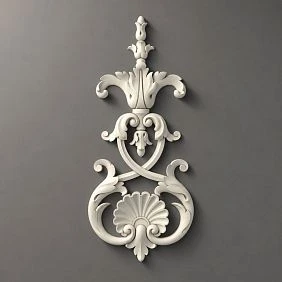
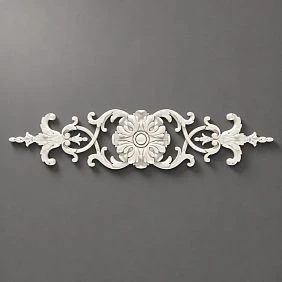
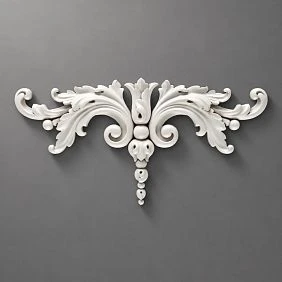
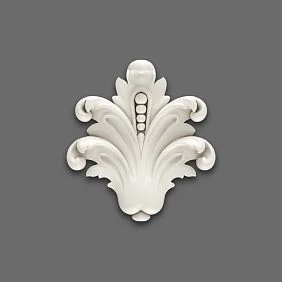
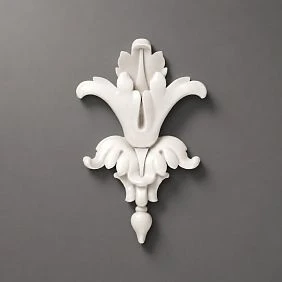
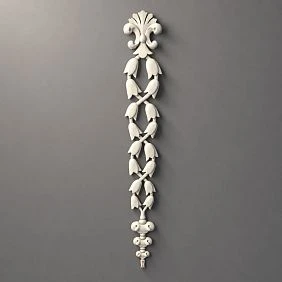
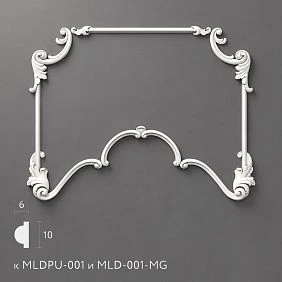
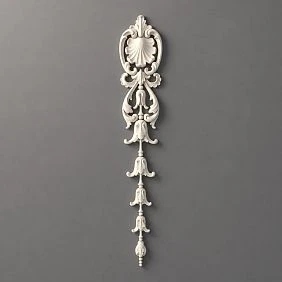
Table: concise or formal decor
| Criterion | Concise stucco decor | Formal stucco decor |
|---|---|---|
| Visual effect | Calm wall architecture | Main decorative accent |
| Where it works best | Bedroom, TV area, hallway, study | Living room, hall, dining room, country house |
| For which wall | Narrow, medium, occupied with furniture | Wide and free accent wall |
| Interior style | Neoclassicism, modern classic | Classic, formal neoclassical, baroque |
| Ceiling height | Any, including 2.5 m | From 2.7–2.8 m and above |
| Paint color | Usually matching the wall | Matching, contrasting, or highlighting the relief |
| Risk of error | May not be enough for a large wall | May overwhelm a small room |
| Best Collection | St. Petersburg, Pavlovsk, Neoclassic, Neoclassic Light | Peterhof, Tsarskoye Selo, Ekaterinhof |
Get Consultation
When to Choose a Minimalist Set: Five Scenarios
Scenario 1: Bedroom
The bedroom is a space of rest. It doesn't need decorative wall 'speech.' It needs a calm, orderly background that helps you relax rather than stimulating perception.
Minimalist Wall Decorbehind the bed — a molding frame with a moderate profile, without heavy overlays, painted in the wall color — this is something that doesn't interfere but adds nobility to the space. This is decor-background, not decor-accent.
Pavlovsk collection— this is exactly the choice for the bedroom: a soft, enveloping character, warm classic without formality."Petersburg" collection— for those who want even calmer urban architecture.
More details in the articleStucco molding set for the bedroom.
Scenario 2: TV Zone
The TV is already the main visual center of the wall. Adding expressive, formal decor next to it means creating competition between two "loud" accents.
MinimalistMoldings for wallsand calm frames in the TV zone: they provide context, structure, and architectural quality — without competing with the screen. The result looks professional and restrained.
It is especially important: all sockets, cables, and the bracket must be accounted for in the layout. Moldings should not intersect technical zones. More details in the articlePolyurethane TV zone decorandmolded decor for a wall with sockets and switches.
Scenario 3: Hallway and Corridor
The hallway is the first space a guest sees. Here, neatness and dignity are important, not pompousness. The narrow walls of the hallway won't allow formal decor to "unfold" — it simply won't fit visually.
Vertical frames made ofof polyurethane moldings, a calm profile, painted the same color as the wall. For a spacious hall with high ceilings, you can already considerthe "Ekateringof" collection or even "Peterhof".
About decor for high walls — in the articlestucco decor for high walls and stairwell halls.
Scenario 4: Wall with furniture, mirrors, paintings
If there are already active objects on the wall — a cabinet, TV, paintings, sconces, mirror — a laconic decor creates an orderly architectural context for them. A formal decor in this case will start competing with the objects and turn the wall into visual chaos.
Rule: the more objects on the wall, the calmer the decor should be.
Scenario 5: Small room and low ceilings
With ceiling heights of 2.5–2.6 m, a rich relief of a formal set can visually "lower" the ceiling. Laconic vertical frames, on the contrary, stretch the space upward. A properly selectedneoclassical set of stucco decorin a small room adds dignity without a feeling of tightness.
About height and proportions — in the articlesets of stucco decor 2300 mm.
When to choose a formal set: five scenarios
Scenario 1: Wide accent wall in the living room
A wall from 3.5 m wide without doors and windows in the work area is an ideal object forformal stucco wall decor. Laconic frames risk getting lost here — the space is too large for quiet decor.
A formal set with an expressive central accent, wide molding, and decorative overlays creates a wall that holds the gaze. This is a full architectural composition.
About wall compositions from several sets — in the articlewall composition from ready-made sets of stucco decor.
Scenario 2: Spacious hall with high ceilings
High ceilings and a spacious hall — exactly the space for which formal collections were created. Here, the scale of the set matches the scale of the room. A rhythmic series of vertical elements fromexpressive classical wall decor creates a formal character for the entrance area — without excess, with dignity.
Scenario 3: Dining Room and Dining Area
The dining wall is the focal point for everyone seated at the table. It should be expressive, interesting, and somewhat formal.formal stucco decor in the dining room creates the right atmosphere — if there are no overly busy wallpapers or cluttered furniture nearby.
Scenario 4: Fireplace Wall
The fireplace itself is a decorative center. An expressive set around the fireplace area enhances this center, making it even more significant and architectural.Collection «Tsarskoye Selo» — with a strong decorative center and neat side frames — works perfectly in a fireplace context.
Scenario 5: Country House with High Ceilings
In a country house with ceilings of 3+ m and spacious rooms, minimalist frames look too modest for the scale. Here, both formal decor and multi-componentwall layout of stucco, and wide horizontal moldings under the ceiling and above the baseboard are appropriate.
Room Selection: Practical Matrix
Bedroom
-
Small (up to 20 m²) — a laconic set, frames in the color of the wall, maximum moderate classic decor
-
Large bedroom (from 22–25 m²) — you can considersoft classic wall decorwith moderate relief
-
Spacious bedroom with a wide wall at the headboard — a formal set is appropriate, but with mandatory consideration of sconces, nightstands, and bed width
Living Room
-
Typical urban living room 18–25 m² — classic moderate decor or laconic with accent details
-
Spacious living room from 30 m² — a formal set or multi-component scheme
-
Living room with TV and furniture on the accent wall — laconic or moderateNeoclassical decoration
About wall decor behind the sofa — in the articlepolyurethane wall decor behind the sofa.
Hallway and hall
-
Standard hallway — only laconic decor: vertical frames, calm molding
-
Spacious hall with a ceiling from 2.8 m —classic decor for a pieror even a formal vertical rhythm
Office
-
Home office in an apartment — a classic but restrained set
-
Executive office in a house —expressive stucco decorwith formal overlays is appropriate
Selection by wall width: from a pier to an accent zone
Narrow wall or pier (up to 80 cm)
OnlyMinimalist Wall Decor. A vertical molding with a thin profile, a small frame, at most one delicate overlay in the center. Formal decor on a pier — there is physically no space and visually no logic.
More details in the articlea narrow or wide set of stucco decor.
Medium wall (100–260 cm)
This is a working area for most ready-made kits. Suitable here:
-
Laconic neoclassical kit
-
Moderate classic decor with corner inserts
-
Molding frames with central overlay
Formal decor on a medium wall: possible, but requires good width (from 200 cm) and sufficient ceiling height.
More details on width selection — in the article How to choose a set of stucco decor according to wall width.
Wide accent wall (from 300 cm)
On a wide wall, a laconic single kit may look like a small spot without logic. A wide wall requires either a multi-component scheme with laconic elements or a full formal kit.
The right approach: either a formal central kit + calm side molding frames, or several laconic kits in a rhythmic scheme. Neither is worse — it depends on the role the wall should play.
Selection by ceiling height
Ceilings up to 2.6 m:
Laconic frames, vertical lines, decor in the color of the wall. No wide horizontal moldings under the ceiling — they will "lower" it even more. No rich formal decor with large upper elements.
Standard ceilings 2.6–2.8 m:
Optimal zone for most ready-made sets. Neoclassical, classical, moderate formal decor with sufficient wall width.
Ceilings from 2.8 m and higher:
Here the full potential of formal sets is revealed. High ceilings allow the use of sets 2300 mm high with full upper elements, cornices, horizontal moldings. The wall acquires true architectural height.
Calm collections STAVROS: comparison
When the wall asks for a laconic or soft classical solution, the buyer faces a second question: "Petersburg" or "Pavlovsk"? "Neoclassic" or "Neoclassic Light"?
"Petersburg" vs "Pavlovsk"
"Petersburg" collection— isCalm stucco decor for wallswith an urban, architectural character. Strictness without coldness. Suitable for apartment interiors, neoclassicism, for walls that should be orderly and neutral.
Pavlovsk collection — soft classic wall decorwith a slightly warmer and cozier character. Less strict than "Petersburg" — with a light ornamental nuance that adds decorativeness without formality. Good for bedrooms, cozy living rooms, studies with warm light.
How to choose:
-
If you need maximum architectural neutrality — "Petersburg"
-
If you need a bit of warmth and decorativeness — "Pavlovsk"
-
Both collections work well with the wall color
"Neoclassic" vs "Neoclassic Light"
Collection "Neo-classic" — geometry and frames, moderate relief, clean profiles. Suitable for apartments where you want structured decor without ornamental complexity. This is "neoclassicism with character."
"Neoclassic Light"— islight neoclassical decor with an almost airy profile. Its presence is felt but not imposed. The best choice for TV zones, small bedrooms, hallways where structure is needed but not an accent.
How to choose:
-
If the wall is medium and readable geometry is needed — "Neoclassic"
-
If minimal delicate architecture is needed — "Neoclassic Light"
STAVROS premium collections: comparison
"Peterhof" vs "Tsarskoye Selo"
the "Peterhof" collection — Formal stucco decor for wallsin its maximal expression. Rich relief, architectural weight, ceremonial character. For spacious living rooms, halls, country houses, formal areas. This is decor that itself becomes the interior.
Collection «Tsarskoye Selo» — expressive classical wall decorwith a strong decorative center and neat perimeter frames. Slightly less rich than "Peterhof", but still requiring scale. Works well on an accent wall in a living room, study, or dining room.
How to choose:
-
A wide formal wall in a large room, high ceilings — "Peterhof"
-
Accent wall in a spacious living room or study — "Tsarskoye Selo"
-
An intermediate classical option with a good vertical solution — "Ekaterinhof"
"Ekaterinhof": between laconic and formal
Collection «Ekaterinhof»occupies its own niche —classic decor for a pierand vertical elements. This is not minimalist neoclassicism nor formal "Peterhof". It is classicism in a neat vertical format — for piers, side areas, studies, halls with moderate space.
"Ekaterinhof" is a good choice when you need decor with character but without overload. And when formal collections seem too loud, and "Petersburg" is too quiet.
About choosing a collection — in the articleHow to choose the STAVROS stucco decor collection for walls.
Color and perception: three strategies for concise and formal decor
The same set can be perceived completely differently depending on the color scheme. This is especially important when choosing between a concise and formal approach.
Decor in the color of the wall
The relief is only visible in the play of light and shadow. This is the best option for:
-
Concise frames in small rooms — they don't overwhelm but structure
-
Formal sets in spaces with complex lighting — color "calms" the rich relief
Result: an intelligent, restrained solution. Looks expensive with good side lighting.
Contrast painting
Decor highlighted against the background — white on a dark wall, milky on a saturated color, cream on dark blue. Contrast makes each molding line clear, the frame graphic, and the overlay voluminous.
Suitable for:
-
For laconic frames on a dark wall — even a thin profile will be very noticeable
-
For formal decor in spacious classic interiors
Not recommended: contrasting painting of a rich formal set in a small room — the pressure will double.
Shade contrast
"Milky on beige." "Warm white on light gray." "Ivory on cool gray." The decor is noticeable but not sharply highlighted. This is a professional solution that works in 90% of interiors.
More details in the articlestucco decor in the color of the wall or contrasting.
Gold, patina, relief highlighting
This is a technique characteristic of formal and classic high-end interiors. DecorativeMolding corner piecesor central overlays, highlighted with fine gilding or patina, create the feel of an antique interior.
Important limitation: this technique only works when the rest of the interior supports such a level of decorativeness. Gold accents on moldings next to IKEA furniture — do not work.
Ready-made kit or assembly from moldings: which to choose for each approach
For minimalist decor
IndividualMoldings made of polyurethaneoffer maximum flexibility: you can assemble a frame exactly to the required size, bypass sockets and switches, and create several zones with different proportions. This is the best choice for non-standard walls and minimalist schemes.
Ready-made kits from "Neoclassic" or "Neoclassic Light" are convenient when the wall is standard and you want a predictable result without lengthy calculations.
About comparing approaches — in the articlea ready-made set of stucco decor or individual moldings.
For formal decor
Here, ready-made kits from "Peterhof" or "Tsarskoye Selo" are almost always preferable. The collection already considers the combination of moldings, overlays, corner elements, and a central accent. Trying to assemble "formality" from individual moldings without experience is a risky path.
Aboutdecor for moldings— corner inserts, ornamental elements, decorative details for frames — should be thought of as an addition to a ready-made kit, not as a foundation.
About ready-made frames — in the articleReady-made molding frames for the wall.
Selection mistakes: what goes wrong
The list is based on the most common situations where a buyer is disappointed with the result.
-
Choosing a formal set only because it looks better in photos. In the interior of a photo blog — a spacious living room of 50 m² with 3.2 m ceilings. You have 18 m² and 2.6 m. The difference is fundamental.
-
Taking a minimalist set for a 4-meter wall without additional elements. One small set on a large wall looks random — like a decorative sticker, not like architecture.
-
Not considering furniture. A large sofa will cover the lower part of the decor. A wardrobe will cover the side area. This must be taken into account when choosing a set by size.
-
Making contrasting coloring of formal decor in a small room. Double effect: the decor feels oppressive, and the contrast enhances its aggression.
-
Mixing minimalist and formal elements without a common collection. Moldings from "Neoclassic" and overlays from "Peterhof" are a stylistic conflict.
-
Not marking with painter's tape before purchase. The real scale on the wall always differs from the catalog impression.
-
Buying individual elements without an overall scheme. Three beautiful elements bought at different times do not form a system by themselves.
-
Not considering lighting. Minimalist decor without side lighting may be unnoticeable. Formal decor under too bright spot lighting may appear heavy. More details in the articleStucco wall decor with backlighting.
Quick choice: minimalist or formal
If you don't have time for a long analysis, here's a short matrix:
Choose a minimalist set if:
-
Room up to 20–22 m²
-
Ceilings up to 2.7 m
-
There is a TV, mirrors, paintings, sconces, or active furniture on the wall
-
Need a bedroom, hallway, or TV area
-
Interior is modern or neoclassical
-
Want decor in the wall color
-
Important to avoid visual overload
Choose a formal set if:
-
Room from 28–30 m² and larger
-
Ceilings from 2.8 m
-
Wall is wide and free (no TV, no overloaded furniture)
-
Need a living room, hall, dining room, or country house
-
Interior is classic or formal
-
The wall should be the main decorative center
-
No active wallpaper, paintings, or rich decor nearby
Choose a set of stucco decor to match your wall's character
The STAVROS catalog features bothConcise polyurethane moldingsand neoclassical sets for calm walls, as well asexpressive classical wall decorandceremonial stucco decor for wide accent zones. Allpolyurethane wall moldingis mounted with glue, cut to any size, painted in any color, and requires no complex surface preparation.
Useful articles on the topic:
About the Company
STAVROS is a manufacturerpolyurethane interior decorfor residential and representative spaces. STAVROS produces a full range of concise and ceremonial stucco decor sets, moldings, cornices, baseboards, decorative overlays, and frame elements made of polyurethane. All products are paintable, installed without special equipment, and shipped throughout Russia.
FAQ: Answers to popular questions
What is better to choose: concise or ceremonial stucco decor?
It depends on the room and the wall's role. Concise — if the wall should be a background and not overload the space. Ceremonial — if the wall should become the main decorative accent.
Where is concise stucco decor appropriate?
Bedroom, TV area, hallway, study, small living rooms, walls with active furniture, mirrors, sconces. Everywhere where architectural structure is needed without visual overload.
Where is it best to use formal stucco decor?
A wide accent wall in a spacious living room, hall, dining room, classic-style study, country house with high ceilings. Where there is space for scale and no competing objects.
Which decor should I choose for neoclassicism?
The "Neoclassic", "Neoclassic Light", "Petersburg" or "Pavlovsk" collections — depending on whether you need geometric strictness or soft classicism.
Is formal decor suitable for a bedroom?
Only with a large area and a wide wall at the headboard. In a standard bedroom of 15–18 m², it is better to choose a laconic or soft classic set.
Which decor is best for a TV zone?
Laconic moldings and calm frames. Grand decor competes with the screen and overloads the functional area.
Which STAVROS collections are more grand?
"Peterhof" and "Tsarskoye Selo". For an intermediate option — "Yekaterinhof".
Which STAVROS collections are better for a calm interior?
"Petersburg", "Pavlovsk", "Neoclassic", "Neoclassic Light". All work well when painted in the wall color.
Do I need to mark up before purchasing?
Definitely. Masking tape on the wall will show the real scale of the set — both laconic and grand. That's how it becomes clear whether you need one set or a scheme of several elements.