






























































Article Contents:
- Mirror as a designer object, not just a functional item
- Why a mirror changes the perception of space
- How the frame sets the style of the interior
- Where the mirror works best
- Natural solid wood, beech and oak
- Carved profile and depth of the object
- Mirror mounting and readiness for project work
- Carved frame RM-016 for an expressive vertical object
- Carved wooden frame RM-020 for flexible size selection
- Sun frame RM-026 as a central art object
- Carved frame RM-015-1 for historical and status interiors
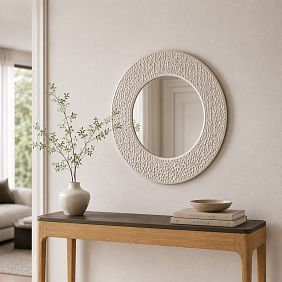
- Round mirror
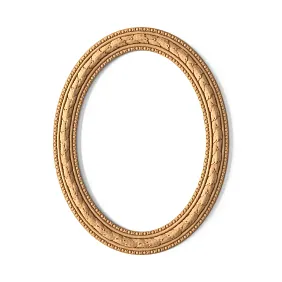
- Oval mirror
- Rectangular mirror
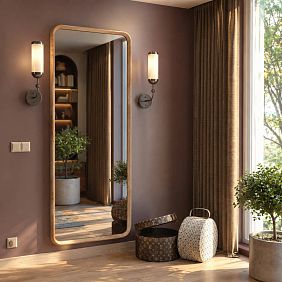
- Floor mirror
- Classic
- Neoclassicism
- Baroque
- Art Deco
- Modern interior with one carved accent
- Support the frame with wooden furniture
- Use sockets selectively
- For the hallway
- for the bedroom
- For a walk-in closet
- For a beauty salon, boutique, or showroom
- For a restaurant, hotel, or lounge area
- Size
- Material
- Installation location
- Purpose
- Table: what to buy together
- Need to decorate an empty wall in the hallway
- Need to make a mirror for the dressing room
- Need to create a photo zone in a salon or boutique
- Need to support classic furniture
- Need to add one accent to a modern interior
- Choosing only based on a beautiful photo
- Ignoring the frame size
- Misunderstanding the material
- Too much decor around
- Purchase without considering the mount
- Waiting for a finished mirror where the frame is purchased
- Incorrect style
- Lack of a complete set
- Can you make a designer mirror based on a STAVROS frame?
- What is better to choose: a round, oval, or rectangular frame?
- Can a carved frame be used in a modern interior?
- Where is it best to use a mirror in a wooden frame?
- What to pair with a mirror in a wooden frame?
- How to know if the frame size will fit?
- Is a mirror frame the same as a picture frame?
- What to choose for a hallway?
- What to choose for a beauty salon or boutique?
- Can the “Sun” frame be used as a standalone accent?
- What to check before ordering a frame?
- Can I choose a frame that can be painted?
- Is a wooden frame suitable for a commercial interior?
- When is it better to choose a simpler frame?
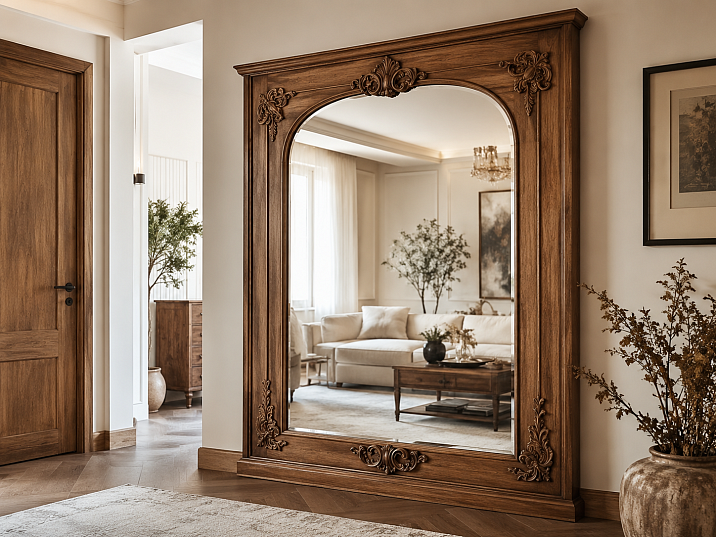
Buying a mirror in a wooden frame means choosing not just a reflective surface for the hallway, bedroom, or dressing room. In a good interior, the mirror works as an object with character: it anchors the wall, supports the furniture, enhances light, helps visually expand the space, and immediately shows the project's level. This is especially noticeable when the main role is taken not by the mirror glass itself, but by the wooden frame.
An ordinary mirror has a clear task: to look at yourself before leaving, add light, cover an empty wall area. A designer mirror has a broader task. It can become the center of the entry area, part of the bedroom, an accent in the dressing room, a photo zone in a beauty salon, an expressive detail of a boutique, restaurant, showroom, or hotel. In such projects, a random thin border often looks poor: the mirror is there, but the image is not cohesive. A wooden frame changes this feeling. It provides volume, texture, depth, ornament, and that very objectness that makes an interior look not like a set of things, but a finished composition.
STAVROS is suitable for such tasks because the catalog includes not only calm wooden frames but also expressive carved models, solid wood frames, round, oval, rectangular, and large formats. You can choose a framing for a wall mirror, consider a large frame for a floor solution, select a model for classic, neoclassical, baroque, art deco, or a modern interior with one strong decorative accent. If you need a starting section for selection, it's more convenient to start with the category Buy a mirror in a wooden frame and from there move on to specific models.
The main idea of this article is simple: a mirror in a wooden frame should not be chosen only by a beautiful photo. It is important to understand the size, shape, style, material, mirror fit, future finish, installation location, and neighboring elements. Then the frame will not be a random purchase, but will become the basis of an interior object.



Mirror as a designer object, not just a functional item
A mirror is often bought too late: when the renovation is almost finished, furniture is arranged, lighting is installed, and an empty spot remains on the wall. At this moment, the buyer starts looking for "something suitable" and quickly faces a problem: most ready-made mirrors look either too simple or too universal. They cover the wall but do not give the interior character.
Designers solve this task differently. They look at the mirror as a project object. First, they assess the wall, furniture, ceiling height, wall width, light, finish, doors, console, bench, wardrobe, dressing area. Then they choose the shape and scale. And only after that do they select the frame. This approach is especially important if the mirror should become not a background, but the main element.
A wooden frame helps make the mirror a "thing," not just glass on the wall. It has thickness, relief, profile, carving, material, and finishing options. It can support wooden furniture, echo a door portal, assemble the entry area together with a console, repeat motifs in decorative rosettes or molding elements. Therefore, the query "buy a mirror in a wooden frame" in practice is almost always broader than buying a ready-made mirror. The buyer needs a finished interior result.




Why a mirror changes the perception of space
A mirror works in several directions at once. It reflects light, adds depth, makes a room visually more spacious, and helps conceal the heaviness of a blank wall. In a narrow hallway, a large mirror removes the corridor feeling. In a bedroom, it adds airiness next to a dresser, console, or vanity table. In a walk-in closet, it turns a functional area into a more prestigious one. In a beauty salon or boutique, a mirror becomes part of the client experience: a person sees themselves not just in a reflection, but in a beautiful scene.
But a mirror alone rarely solves the problem completely. If it has a weak frame, it can look technical. This is especially noticeable in interiors with good furniture, natural fabrics, expensive wall finishes, and thoughtful lighting. A simple thin border gets lost next to such materials. A wooden frame, on the other hand, gives the mirror architectural quality. It shows the object's boundary, makes the reflection framed, and helps the wall look finished.
The size of the frame also affects perception. A narrow smooth border barely changes the interior. A wide carved frame can become the center of the room. A round shape softens the straight lines of furniture and walls. An oval adds a classic, softer silhouette. A rectangular shape emphasizes verticality or horizontality, making it suitable for hallways, bedrooms, and walk-in closets where you need to work with height, wall height, or zone width.
Our factory also produces:


How the frame sets the interior style
The frame is the language of the mirror. The same mirror panel in different frames will be perceived completely differently. A smooth wooden frame creates a calm image. A carved frame adds grandeur, depth, and a handcrafted character. A round frame makes the object softer and friendlier. A sunburst frame is perceived almost as an art object. A baroque model requires space and a calm environment because it carries a lot of decorative energy.
For a designer, this is a convenient tool. There's no need to overload the wall with a dozen small items if you can place one strong object. A large mirror in a wooden frame can replace a complex decorative composition. It provides both utility and image. This is also beneficial for the buyer: instead of random decor, they get an item that works every day and simultaneously decorates the room.
If the project is built around natural materials, it's worth looking towards frames made of solid wood. When the task is not just to frame the mirror, but to emphasize the wood, texture, and status of the object, a solid wood frame for a mirroris appropriate. It suits interiors where there is wooden furniture, panels, doors, consoles, benches, or decorative elements in a similar finish nearby.
Get Consultation
Where does a mirror work best
In the hallway, a mirror is not just about convenience. It is the first thing that greets a person. Large wall-mounted or floor-standing formats work particularly well here. If there is a console, ottoman, chest of drawers, or wardrobe nearby, the frame should connect these pieces. The entry area does not forgive randomness: a person sees it immediately, and the entire interior is read from it.
In the bedroom, a mirror can be softer. It doesn't have to be the loudest item. Sometimes an oval or rectangular wooden frame that complements the bed, nightstands, textiles, and lighting is enough. In the bedroom, it is especially important not to overload the wall with carvings if the room already has an active headboard, heavy curtains, a striking rug, or furniture with decorative facades.
In a dressing room, a mirror should be practical, but that doesn't mean it has to look utilitarian. A floor mirror or a large wall-mounted frame turns the dressing room into a full-fledged fitting room. For a boutique, showroom, or beauty salon, this effect is even more important: the mirror becomes part of the client's impression. The more expressive the frame, the stronger the feeling of a well-thought-out space.
In a restaurant, hotel, or lounge area, a mirror can work as a decorative pause between furniture, lighting, and wall finishes. The frame helps add depth but does not require complex installation of many elements. Therefore, a designer mirror is convenient to use where you need to quickly create a prestigious zone without visual chaos.
Why the STAVROS wooden frame is suitable for a custom project
A wooden frame is interesting not only for its appearance. For a custom project, the construction, material, fit, shape, and the ability to choose a model for a specific task are important. The STAVROS catalog includes Wooden frames for mirrors and paintings, which can be viewed not as random framing, but as the basis for an interior object.
The main advantage of a wooden frame is that it gives a feeling of real material. Wood is perceived differently than plastic or thin metal edging. It has texture, density, finishing options, and visual depth. In a carved frame, this is especially noticeable: light hits the relief, a play of shadows appears, and the mirror ceases to be flat.
For the buyer, this means a practical thing: the frame can support existing furniture or become a starting point for a new composition. For example, if an ottoman, console, or wooden panels are already planned in the hallway, the mirror can be selected not separately, but together with them. Then all elements will speak the same language.
Natural array, beech and oak
In STAVROS frame cards, there are options made of beech and oak. This is not just a formal characteristic. Beech is often chosen for enamel and painting, when a neat base for the finish coating is important. Oak is valued for its expressive texture and character, especially if tinting is intended. The specific material, quality of sanding and gluing should be checked in the card of the selected model before ordering, because different frames have their own options.
Wood is convenient because it can be integrated into different styles. In classic style, it supports a traditional image. In neoclassicism, it makes the object soft but not heavy. In a modern interior, a carved wooden frame can become the only accent against a background of calm walls, laconic furniture, and clean lines. In a commercial space, wood adds a sense of solidity that is difficult to achieve with thin serial edging.
Carved profile and depth of the object
Carving is not needed to "make it look rich." A good carved frame solves a more subtle task: it adds depth and makes the mirror noticeable even without a bright color. When light falls on the relief, volume appears. The wall ceases to be flat. This works especially well in areas where there are sconces, side lighting, a table lamp, or natural light from a window nearby.
But carving requires discipline. If the interior already has many ornaments, active fabrics, patterned floors, complex facades, and bright light fixtures, the frame should be calmer. If the room is minimalist, one carved frame can provide that very accent that is missing. Therefore, choosing a frame is not a question of "the richer, the better." It is a question of balance.
Mirror seating and readiness for project work
For a mirror, not only the front side is important. You need to understand how the frame works with the mirror sheet, backing, and mounting. In the standard configuration of a STAVROS mirror frame, seating for a 5 mm thick mirror, a 6 mm thick MDF backing, screwed hinges for hanging, and an electronic file with a template for cutting the mirror are provided. This is important for craftsmen, designers, and private buyers who want to understand the assembly route of the object in advance.
Such information helps to avoid a common mistake: buying a beautiful frame and then finding out that the mirror, backing, mounting, or installation location are not thought out. Before ordering, you need to check the product card, dimensions, material, thickness, delivery format, and features of the selected model. If the product is large or is being selected for a complex project, it is better to discuss the parameters with a STAVROS manager in advance.
Main characteristics of frames for mirrors
Below is a guide based on the data that helps quickly compare product groups and individual models. This does not replace the product card: before ordering, you need to open the specific item and check the current dimensions, material, finish, availability, and production conditions.
| Parameter | What the buyer needs to know | Practical benefits |
|---|---|---|
| Product type | Wooden frame for a mirror or painting | Can be used as a base for an interior object, not just as a border |
| Main section | Frames for mirrors and paintings | Convenient to start selection with a category Buy a mirror in a wooden frame |
| Shapes | Round, oval, rectangular, polygonal, vertical options in the catalog | Allows you to choose a frame for a wall, a full-length mirror, an accent area, or a decorative center |
| Materials | Carved frames are available in beech and oak | You can select an option for enamel, tinting, and the overall character of the interior |
| Mirror mounting | Standard frames come with mounting for a 5 mm thick mirror | Helps to order a mirror sheet of the appropriate thickness in advance |
| Underlay | MDF backing 6 mm thick | Provides a base for assembling the mirror object |
| Mounting | Screwed-in hanging hinges in standard configuration | The buyer understands in advance what needs to be checked at the installation site |
| Template | DWG electronic file for mirror cutting | Useful for workshop and precise panel manufacturing |
| Large products | Frames over 2 meters high can be supplied in a disassembled form | Important to consider during transportation, assembly, and installation |
| Finishing | Cards include options for enamel and tinting | You can match the appearance to walls, furniture, and lighting |
| Order | Specific deadlines, availability, and parameters depend on the product card | Before purchasing, you need to check the current information on the website |
This table shows the main point: a mirror frame is not just a decorative strip. It has a structure, fit, back part, material, delivery format, and design logic. The larger the mirror and the more noticeable the installation location, the more important it is to think through these parameters in advance.
Examples of STAVROS frames for various interior tasks
Within one theme, there can be completely different solutions. A buyer searches for 'buy wooden mirror frame', but behind this query there may be different tasks: a small mirror for the hallway, a large frame for the bedroom, a baroque accent for the living room, a round frame for a soft modern interior, an expressive object for a salon or hotel. Therefore, it is useful to look not only at the category but also at specific models.
Carved frame RM-016 for an expressive vertical object
Carved frame RM-016 for a mirror it is suitable when a noticeable vertical accent is needed. The product card specifies dimensions 1113 × 655 × 61 mm, materials beech and oak, options for sanding and gluing quality. This frame works well in the hallway, bedroom, study, dressing room, or area near a console.
It should not be perceived as a small decorative detail. This is an item that will be immediately visible. Therefore, it is better not to place too much competing decor nearby. If the walls are calm, the furniture is wooden or has a neutral finish, RM-016 can become the element that gathers the vertical. It will help design the mirror not as a utilitarian object, but as part of an interior composition.
Carved wooden frame RM-020 for flexible size selection
Carved wooden frame RM-020 is interesting because the product card presents different sizes: from compact to large formats. Among them are 630 × 800 × 21 × 100 × 21 mm, 780 × 1245 × 21 × 170 × 21 mm, 1400 × 1010 × 21 × 130 × 21 mm, 1400 × 2450 × 21 × 130 × 21 mm, 1800 × 1060 × 21 × 130 × 21 mm, 2000 × 2000 × 27 × 150 × 27 mm, 2200 × 1700 × 19 × 120 × 19 mm. This is convenient when the project requires not one universal frame, but a selection for a specific wall.
RM-020 can be considered for a wall mirror, a large interior object, a commercial space, or a project where size plays a major role. If the mirror should be full-length, it is important to evaluate in advance not only the height of the frame, but also the width of the passage, distance to furniture, hanging method, weight of the finished object, and strength of the base. The larger the format, the less room for error in measurements.
Frame “Sun” RM-026 as a central art object
Frame “Sun” RM-026 — a variant for cases when the mirror should be the main decorative center. The card specifies dimensions 900 × 900 × 215 × 36 mm, materials beech and oak, options for enamel and tinting. By nature, this is not just a round frame, but an expressive multi-layered product with a strong silhouette.
This model is best placed where there is enough air around. It can work above a console, in a living room, bedroom, hall, salon, boutique, restaurant, or hotel. It is better to use calm walls, laconic furniture, and thoughtful lighting around it. If too many active elements are added, the frame will lose its strength because it will start to compete with the surroundings.
Carved frame RM-015-1 for historical and prestigious interiors
carved frame RM-015-1 belongs to those solutions that work well in classic, baroque, and historically inspired interiors. The card specifies dimensions 2130 × 1050 × 33 × 154 mm, 1527 × 1602 × 33 × 154 mm, 2030 × 3098 × 33 × 154 mm, materials beech and oak. This is already a large-scale item that requires a precise location.
Such a frame will be appropriate in a hall, bedroom, study, spacious hallway, showroom, boutique, or hotel lobby. It is not suitable for a small, cluttered wall where there is already a lot of carving, paintings, lamps, and active furniture. It needs space so that the pattern is readable and the mirror looks prestigious rather than heavy.
Comparison of options: which frame to choose for the task
| Buyer's task | Suitable format | What it gives to the interior | What to check before ordering |
|---|---|---|---|
| Need a soft accent above the console | Round or oval frame | Softens the straight lines of furniture and walls | Diameter, frame width, placement height |
| Need a full-length mirror | Large vertical or rectangular frame | Helps create a full-fledged entry or wardrobe area | Height, width, weight of the finished object, mounting |
| Need an expressive photo zone | Carved frame or sunburst frame | Makes the mirror a memorable object | Free space around, light, wall background |
| Classic interior | Oval, rectangular, carved frame | Supports furniture, fabrics, and traditional finishes | Ornament, material, color of future finish |
| Modern interior | One strong frame on a calm background | Provides an accent without extra decor | Is the room not overloaded with other details |
| Project for a salon or boutique | Large wall or floor frame | Creates a prestigious fitting area | Base durability, mounting safety, ease of use |
| Needs a calm design | Baguette or less active wooden frame | Frames the mirror without decorative pressure | Compatibility with furniture and walls |
| Needs an art solution | Carved round or shaped model | Works as a standalone item | Wall scale and viewing distance |
Comparison helps avoid the trap of 'liked it in the photo — I'll take it'. The frame can be beautiful on its own but not suit a specific wall, room scale, or furniture. So first you need to understand the task, and only then choose the model.
How to choose the shape of a mirror in a wooden frame
Shape is the first thing a person perceives. Material and carving come into play a bit later, but the silhouette is visible immediately. Therefore, choosing the shape cannot be left for the final stage.
Round mirror
A round mirror in a wooden frame works well where you need to soften rigid geometry. In the hallway, it balances rectangular doors, cabinets, and consoles. In the bedroom, it makes the wall calmer. In a salon or boutique, it creates a friendly, photogenic look. If a user is searching for 'buy round mirror in wooden frame', most often they need not just a circle, but a decorative centerpiece for the wall.
A round frame is especially demanding regarding placement. It should not hang too high or too low. Above a console, it is usually centered on the furniture. On an empty wall, it is guided by eye level and the overall proportion of the room. If the frame is wide and carved, it needs space around it.
Oval mirror
An oval is a good choice for classic and neoclassical styles. It is softer than a rectangle but calmer than an eye-catching circle with a bold silhouette. An oval mirror looks good in the bedroom, bathroom area, hallway, dressing room, and study. It elongates the vertical line but does not make the interior too strict.
An oval wooden frame suits those who want decorativeness without heaviness. If the furniture already has smooth lines, the oval will support that theme. If the furniture is straight-lined, the oval will add a soft contrast.
Rectangular mirror
A rectangular frame is versatile. It suits full-length mirrors, hallways, dressing rooms, bedrooms, commercial fitting rooms, and hotel rooms. A vertical rectangle helps elongate the wall. A horizontal one expands the area above a dresser, console, or mantelpiece.
The main risk of a rectangular mirror is incorrect scale. A frame that is too narrow on a large wall looks accidental. One that is too wide and active feels oppressive. Therefore, you need to consider not only the size of the mirror surface but also the width of the decorative part.
Floor mirror
A floor mirror in a wooden frame is not just a convenient item. It creates the feeling of an interior 'like in a showroom.' Especially if the frame is massive, carved, or expressive. In a bedroom, dressing room, or boutique, this format works better than a regular wall mirror because a person sees themselves full-length and simultaneously perceives the item as part of the setting.
But the floor format requires checking stability, base, safety, tilt angle, and installation location. If the frame is meant for hanging rather than free-standing, this needs to be considered in advance. You should not assume that any large frame can simply be placed on the floor. First, study the product card, then decide how exactly the mirror will be used.
How to choose a frame style for your interior
The frame style should match not the abstract name of the interior, but the actual details of the room. Sometimes a project is called neoclassical, but the furniture in it is almost modern. Sometimes the interior is 'modern,' but it has classic doors, high baseboards, fabric panels, brass fixtures. Therefore, choosing a frame only by the word 'classic' or 'art deco' is not enough.
Classic
A classic interior loves symmetry, natural materials, a calm palette, and clear proportions. Here, a wooden frame for a mirror looks especially natural. It can complement a dresser, console, desk, armchair, doors, parquet, or molding elements. In classic style, oval and rectangular frames, carved profiles, moderate width, and finishes that do not clash with the furniture work well.
If the interior is rich, it's better not to choose the most active frame. An expressive profile that adds depth without turning the wall into an overloaded decoration is sufficient.
Neoclassicism
Neoclassicism requires balance. It allows carved decor but dislikes visual heaviness. Frames with a clear shape, neat relief, and calm finish are suitable for this task. Round and oval models work well above a console or vanity table. Rectangular ones work in hallways, bedrooms, and dressing rooms.
In neoclassicism, it's important to consider the color of the walls and furniture. White, milky, beige, gray, or pastel frame finishes can make the mirror part of the wall's architecture. Tinted wood adds warmth and connects the piece with the furniture.
Baroque
A baroque frame needs space. It cannot be placed where there are already many active details. It looks good in spacious living rooms, halls, studies, salons, boutiques, restaurants, and hotels. If strong decorativeness is needed, consider large carved models like RM-015-1, but only after checking the dimensions and surrounding items.
Baroque has a risk: it quickly becomes theatrical if there is too much gold, ornament, complex fabrics, and heavy furniture nearby. A good technique is to leave the frame as the main decorative object and make the other details calmer.
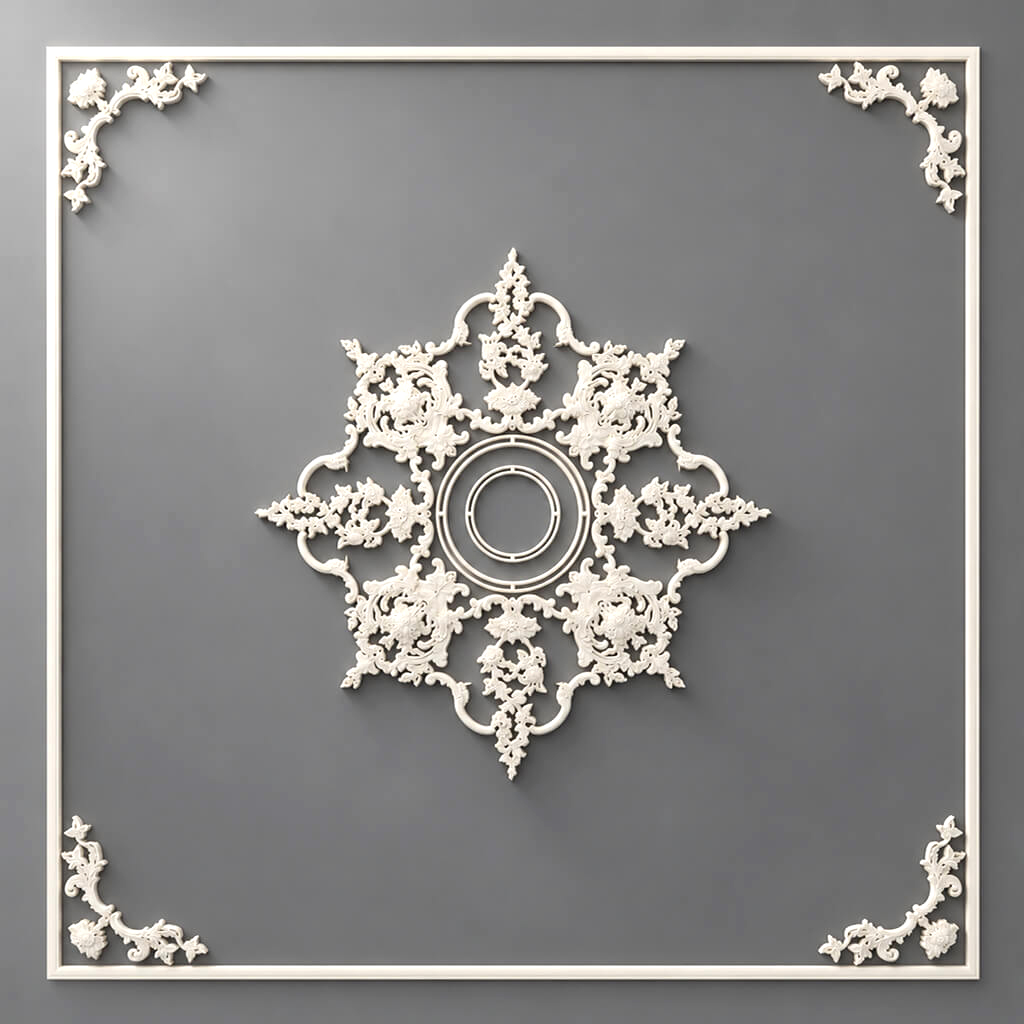
Art Deco style is renowned for its love of ornamentation, symmetry, and refined details. The molded decoration NPU-422 can become an excellent complement to geometric motifs and contrasting color combinations characteristic of this style. Try highlighting it with metallic paint or patina — and you’ll get an eye-catching detail that’s hard to look away from.
Art Deco loves geometry, rhythm, material contrast, and expressive silhouette. Here, the mirror can become the central piece. A wooden frame works especially interestingly if there is stone, metal, deep shades, minimalist furniture, and soft light nearby.
For Art Deco, the most complex carving is not always needed. Sometimes form, scale, and finish work more strongly. The main thing is that the frame does not look random. It should be part of the overall scenario: light, console, chair, walls, textiles, flooring.
Modern interior with one carved accent
A modern interior is often built on clean walls, simple volumes, and calm materials. In such an environment, a carved wooden frame can look especially expressive. But it should be the only one. If you add active panels, several complex light fixtures, colorful fabrics, and lots of small decor, the effect will be lost.
The best scenario is a calm wall, quality furniture, one strong frame, and careful lighting. Then the mirror becomes an object that is immediately remembered but does not break the interior.
How to make a mirror expressive without overloading
The most common mistake when choosing a decorative frame is the desire to enhance everything at once: a large shape, active carving, bright finish, complex background, a sconce with decor, a console with figured supports, a patterned floor, and several more items nearby. As a result, each element is beautiful on its own, but together they clash.
To make a mirror look expensive rather than noisy, you need to choose one dominant feature. It can be the shape, carving, or color.
If the dominant feature is the shape, you can choose a round or figured frame, while keeping the finish calm. If the dominant feature is the carving, it's better to keep the wall neutral and not add too much ornament nearby. If the dominant feature is the color, the profile can be more restrained. This principle helps avoid overloading the interior and makes purchasing easier: the buyer understands what exactly the frame is responsible for.
Support the frame with wooden furniture
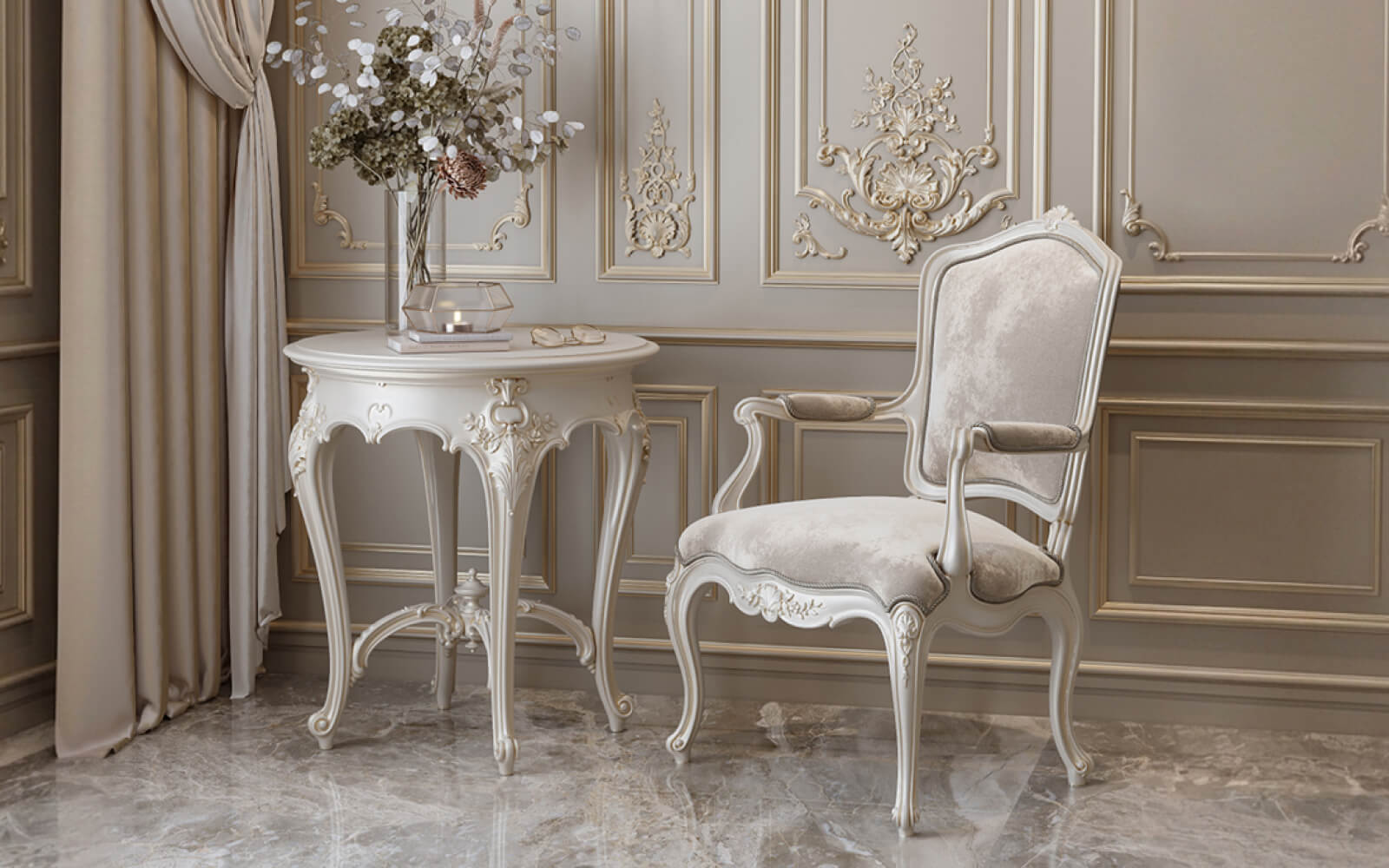
A wooden frame looks especially good when there is another wooden item in the interior: a console, chest, bench, wardrobe, table, wall panel, door, shelf. It is not necessary to match everything in one shade. It is important that the materials do not clash. If the frame is warm and expressive, cold mass-produced furniture nearby may look out of place. If the furniture is light and calm, a carved frame can become an accent.
In the hallway, a good combination is a mirror, console, and bench. In the bedroom, a mirror, chest of drawers, and lamps. In the dressing room, a mirror, cabinets, and a soft seat. In a beauty salon, a mirror, the master's work area, and the client's chair. In a boutique, a mirror, fitting room, and decorative lighting.
Use rosettes sparingly
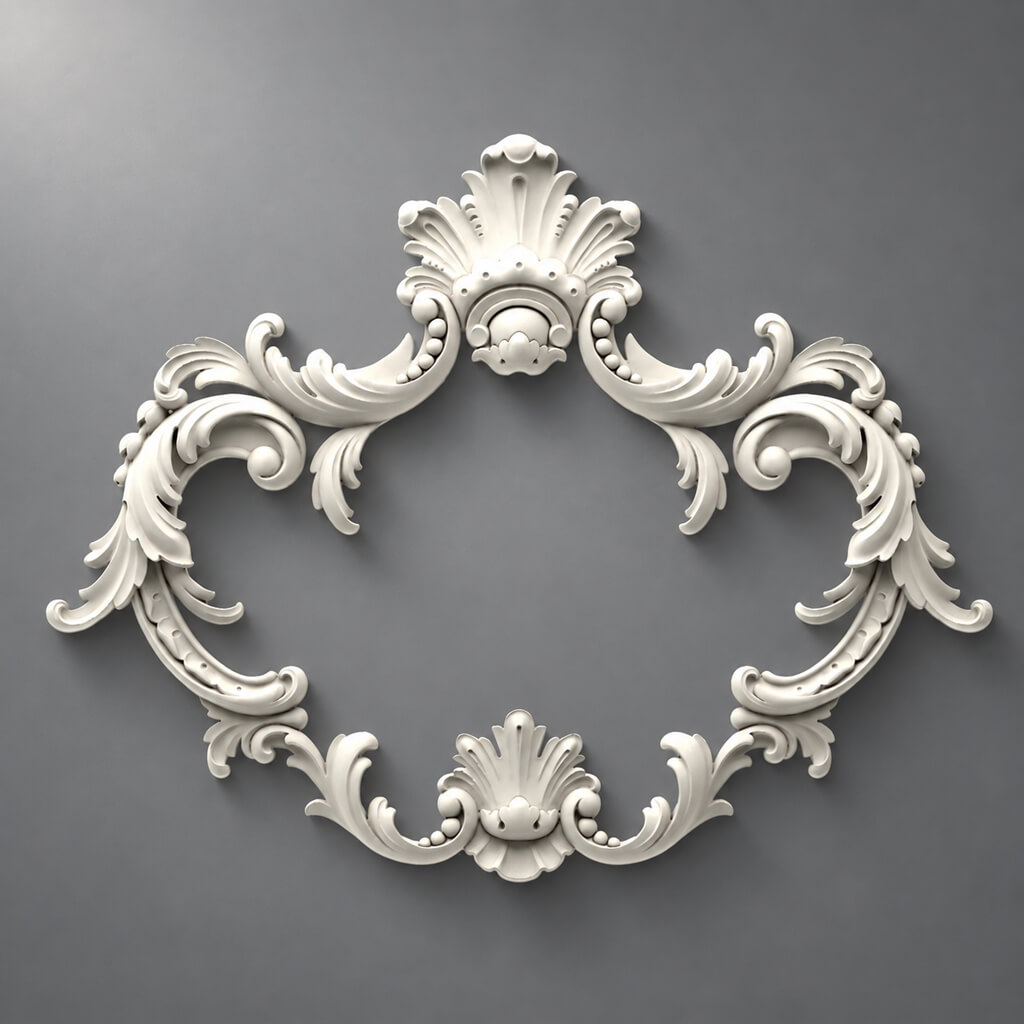
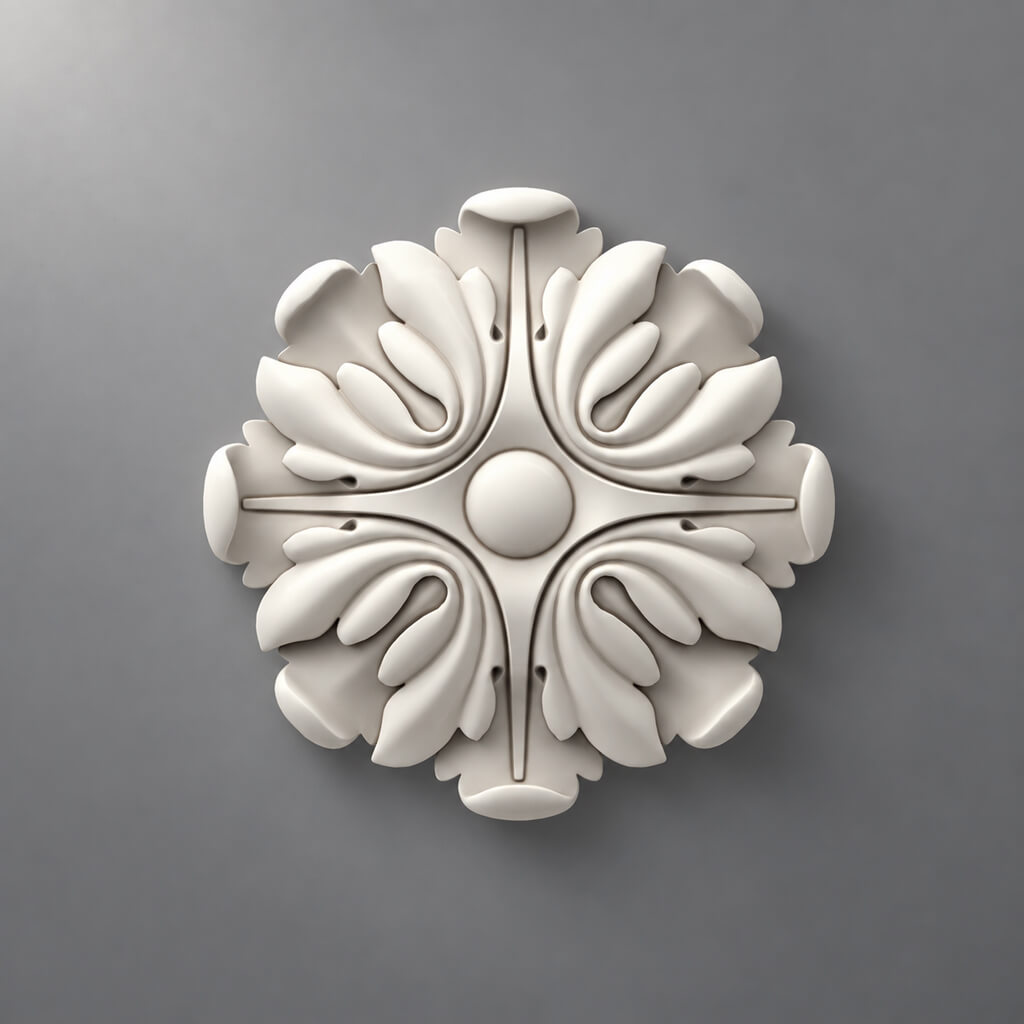
Sometimes you want to complement the mirror with decor on the wall. For this, you can use wooden rosettes for an interior accent, but it is important not to turn the wall into a collection of random details. Rosettes work best when used sparingly: above the frame, on the sides, as part of a symmetrical composition, or to support an ornament already present in the frame.
A rosette does not replace a frame. It does not hold the mirror and does not solve the framing task. Its role is to add an accent, repeat a motif, fill an empty area, or connect the mirror with other decorative elements. Therefore, first choose the frame, then evaluate the wall, and only then decide if additional decor is needed.
Selection for different customer scenarios
For the hallway
In the hallway, the mirror should be convenient and noticeable. If space allows, it's better to consider a large wall or full-length mirror. The frame should be expressive enough because the entry area is often small, and the mirror becomes the main item. But it's important not to forget about passages, door openings, cabinets, switches, and light fixtures.
If the hallway is narrow, an overly wide carved frame can visually weigh down the wall. In this case, it's better to choose a vertical model with moderate relief. If the hallway is spacious, you can consider a large rectangular or oval frame. A good technique is to connect the mirror with a console or bench. Then the entry area looks cohesive, not like a set of separate purchases.
For the bedroom
In the bedroom, the mirror should not conflict with the bed. If the headboard is active, the frame can be calmer. If the walls and furniture are minimalist, the mirror can become the main decorative item. Oval and rectangular shapes work well for the area near a dresser, vanity table, or a free wall next to the wardrobe.
In the bedroom, the finish is especially important. A frame with too cold a shade can clash with warm textiles. A frame that is too dark on a small wall can look heavy. Therefore, before ordering, you need to look not only at the product photo but also at the room's color palette.
For the dressing room
A dressing room requires practicality. Here, the mirror's height, viewing convenience, distance to the person, lighting, mounting, and safety are important. But practicality does not negate beauty. A large wooden frame makes the dressing room resemble a well-thought-out fitting room rather than a utility space.
If the dressing room is small, it's better not to overload the frame with carvings. If the space is spacious, you can choose a more expressive format. In commercial dressing rooms, showrooms, and boutiques, a large frame helps create a memorable fitting area.
For a beauty salon, boutique, or showroom
In a commercial interior, a mirror works to impress the client. A person takes photos, tries on clothes, looks at the result of a service, evaluates themselves, and simultaneously perceives the space. The frame influences this impression more than it seems. A weak border makes the area ordinary. An expressive wooden frame turns it into part of the brand.
For a salon or boutique, it is important to choose a frame considering durability, mounting safety, ease of maintenance, and lighting. If the mirror is in a high-traffic area, you need to check the installation location in advance and avoid choosing a profile that protrudes too much where it might be bumped.
For a restaurant, hotel, or lounge area
In a restaurant or hotel, a mirror is often used for atmosphere. It adds depth to the hall, reflects light, makes the wall more interesting, and helps create a more intimate or prestigious mood. A wooden frame is especially appropriate here if the interior is associated with classics, art deco, historical motifs, natural materials, or designer furniture.
In a public space, not only the impression but also reliability is important. Large frames require thoughtful mounting and checking of the base. If the product is more than 2 meters high, you need to consider the delivery format, assembly, and installation. Before ordering, it is better to agree on all technical parameters in advance.
Selection by size, material, installation location, and purpose
Size
The size of the frame affects not only whether the mirror will fit on the wall. It changes the perception of the space. A small frame on a large wall looks lost. A huge frame in a narrow alcove feels oppressive. A full-length mirror requires distance so that a person can see themselves entirely. A round frame requires a free background for the shape to be readable.
Before purchasing, you need to measure the width and height of the wall, the distance to furniture, ceiling height, the position of switches, sconces, doors, architraves, baseboards, and outlets. If the mirror is placed above a console, it is important to match the frame width with the furniture width. Usually, the mirror should not appear accidentally smaller than the item below it. But a frame that is too wide can also disrupt the balance.
Material
Beech and oak behave differently visually. Beech is often perceived as a calmer base for painting. Oak provides a pronounced wood texture and works well where it is important to showcase natural material. But the specific choice depends on the model, finish, and project requirements. If the frame is to be painted with enamel, the quality of gluing and sanding must be checked. If tinting is planned, the wood grain and future shade need to be evaluated.
You should not choose a material just out of habit. It is better to ask: what should the frame do? Support the furniture? Blend into the wall? Create contrast? Showcase the wood texture? Provide a base for color? The answer will immediately narrow down the choice.
Installation location
The installation location determines almost everything. In the hallway, passages and convenience are important. In the bedroom, softness and calmness. In the dressing room, a full-length view. In a salon, photogenicity and durability. In a restaurant, atmosphere and safety. In a hotel, longevity and alignment with the overall style.
If the mirror will hang on the wall, the base and mounting need to be checked. If the object is large, you cannot rely solely on hinges or the appearance of the frame. You need to understand the weight of the finished mirror, including the glass, backing, and mounting system. In complex cases, it is better to discuss installation with specialists.
Purpose
One mirror can be decorative, another functional, and a third a status piece. A decorative mirror can be bolder. A functional mirror should be convenient in terms of height and lighting. A status mirror in a commercial interior should be noticeable but not obstruct people's movement.
Before ordering, it is useful to formulate the purpose in one sentence: "I need a full-length mirror for the dressing room," "I need an accent mirror above the console," "I need a photo-zone mirror for the salon," "I need a frame for a classic bedroom." This approach leads to the right model faster than searching through beautiful pictures.
What to buy together with a wooden mirror frame
A mirror rarely lives alone in an interior. Even if a customer orders only the frame, surrounding elements appear around it: a mirror to size, a backing, mounting, lighting, a console, a bench, sockets, picture frames, baguette elements. The sooner this set is assembled, the lower the risk that the finished object will look separate from the room.
If a wall composition is planned, you can consider molding and wooden frames for pictures. They help support the mirror with adjacent items: a painting, graphic art, a decorative panel, a family photo, an icon, or a wall composition. It's only important not to overload the wall with identical frames if the mirror itself is already active.
For the hallway area, a good combination works: frame, mirror to size, console, bench, lights. For the bedroom: frame, chest of drawers, sconces, textiles, calm wall finish. For a salon or boutique: frame, light, comfortable spot for the client, background that looks good in photos. For a hotel: frame, furniture, wall materials, and secure mounting.
Table: what to buy together
| Main purchase | What to add | Why this is needed | For which scenario |
|---|---|---|---|
| Wooden frame for mirror | Mirror panel to size | To complete the item and hit the fit exactly | Any mirror in a wooden frame |
| Carved frame | wooden rosettes for an interior accent | To support the ornament and decorate the wall around the mirror | Classic, neoclassic, salon, hall |
Round frame
How not to confuse a mirror frame with similar productsSimilar names often confuse buyers. A customer sees a frame, baguette, rosette, overlay, or decorative element and thinks they can all replace each other. In practice, each product has its own role. A mirror frame is needed to frame the mirror surface. It must have a clear fit, construction, and usage format. A picture frame may look similar, but its purpose is different: paintings, graphics, posters, decorative panels. Some models are suitable for both mirrors and pictures, but this needs to be checked in the product card, not assumed from the photo. A carved frame differs from a smooth one in that it itself becomes a decorative object. It has a stronger impact on the interior, requires more free space, and pays more attention to neighboring details. A baguette frame is calmer. It is better suited for serial compositions where you need to frame several paintings or panels without a strong accent. Wooden rosettes do not replace a frame. They help decorate the wall, support the ornament, add a point accent, but do not solve the task of framing the mirror surface. Decorative overlays should also not be perceived as a load-bearing element for a mirror. They can be used nearby, but not instead of a frame. The main rule is simple: if the task is to make a mirror, first choose a frame that fits the mirror. If the task is to decorate the wall around the mirror, then add rosettes, baguette elements, or adjacent frames. Not the other way around. Practical selection for specific situationsNeed to decorate an empty wall in the hallwayHere it's important not just to fill the emptiness. You need to create a zone that will greet a person. If the wall is narrow, take a vertical frame. If there is a console nearby, match the width of the mirror to the furniture. If the hallway is dark, consider lights nearby. If the interior is calm, you can choose a more expressive carving. A mistake is to buy a small mirror just because it's cheaper or simpler. On a large wall, it will look random. It's better to measure the wall space in advance and consider a larger frame. Need to make a mirror for the dressing roomHere, the first thing they check is the height and convenience of the view. A person should see themselves at full height. If space is limited, it's better to choose an elongated vertical shape. If the dressing room is spacious, you can consider a large format with a more expressive frame. A mistake is to focus only on decorativeness. In the dressing room, the mirror should be convenient every day. Beauty is important, but height, light, and distance to the person are more important. You need to create a photo zone in a salon or boutiqueFor a photo zone, the frame should be noticeable in the shot. Expressive round, oval, carved, or large rectangular models will work. But the background should be calm. If there are bright wallpaper, active lights, and many products nearby, even a beautiful frame will get lost. A mistake is to make the entire zone too active. A strong frame loves a clean environment. Then the client will remember exactly the mirror and the space around it. Need to support classic furnitureIf there is a wooden chest of drawers, console, armchair or cabinet nearby, the frame should be chosen by style and finish. You can choose a carved profile that echoes the furniture but does not copy it literally. Too precise repetition sometimes looks artificial. It is better when details are close in mood but do not argue. A mistake is to take a frame in a different visual language: for example, a too modern thin border for classic furniture. As a result, the mirror looks alien. You need to add one accent to a modern interiorA modern room can be too flat: smooth walls, simple furniture, minimal details. In such a situation, a carved wooden frame works as a precise accent. It adds handmade character and depth. But it is better not to add several more strong items nearby. It is a mistake to try to "support" a frame with excessive decor. Sometimes a single item works more powerfully than an entire group. Preparation for ordering, mirror, finishing, and installationBefore ordering a frame, you need to think not only about the appearance but also about the path to the finished result. The frame itself is not yet a mirror. You need a mirror sheet of the required thickness, backing, mounting, installation location, sometimes help from a workshop or installers. First, measure the space. Not approximately, but precisely: height, width, distance to furniture, switches, doors, sconces, ceiling, and floor. Then choose the format: wall-mounted, full-length, above a console, above a dresser, for a dressing room, for a commercial space. After that, look at the frame's card: dimensions, fit, material, finish, availability, and order status. If the frame is to be painted, you need to understand in advance what finish is needed: enamel, tinting, varnish, or another option available for the specific model. It is not worth buying the frame first and then looking for a color 'somehow on site'. It is better to immediately link the finish with furniture, walls, doors and light. Installation depends on the wall and the final weight of the object. Even if the frame has hinges, the base must support the mirror. For large items, it is better not to decide on the mounting by eye. In commercial spaces, this is especially important: there is higher load, more people, and more safety requirements. If the frame is large and comes disassembled, you need to plan in advance who will assemble and install the object. This is not a drawback, but normal logic for large items. The main thing is to include this in the project, not to remember it on installation day. Mistakes when choosing a mirror in a wooden frameChoosing only by a beautiful photoA photo shows the style, but it does not show the scale of your wall. A frame that looks beautiful in a spacious hall may turn out to be too heavy for a small hallway. And vice versa: a neat frame that looks good in a close-up may get lost on a large wall. Before purchasing, you need to compare the dimensions with the actual room. Ignoring the frame sizeBuyers often only look at the size of the mirror surface. But the decorative part also takes up space. A wide frame can significantly increase the overall dimensions of the object. This is especially important for narrow walls, walls between doors, and areas above furniture. Misunderstanding of the materialBeech and oak are perceived differently in finishing. If you need an option for enamel, one approach is needed. If you need to show the wood texture, another. You shouldn't choose a material only by price or habit. It's better to look at the future result. Too much decor aroundA carved frame is already a focal point. If you add busy wallpaper, elaborate sconces, multiple frames, a bright console, and excessive decorative rosettes nearby, the interior will become cluttered. It's better to give the frame some space. Purchase without considering mountingA mirror with a frame can be heavy. Especially if the format is large. You need to understand in advance how it will be mounted and whether the wall can support it. For a commercial space, this is not just a matter of convenience, but a matter of safety. Expecting a finished mirror where the frame is purchasedThe buyer must understand that they are choosing the frame as the basis for a mirror object. The mirror panel, its cutting, installation, and mounting require separate attention. In the product card, you need to check the configuration and fitting parameters. Wrong styleSometimes a beautiful frame is chosen, but it's alien to the interior. For example, an ornate Baroque frame in a small modern room without other classical details. Or a frame that is too simple in a rich classical hall. The right frame should not only be appealing on its own but also work with its surroundings. Lack of a complete setA mirror looks better when there is logical support nearby: furniture, lighting, picture frames, rosettes, similar wood finishes. Without this, even a beautiful frame can look lonely. So it's worth thinking in advance about what will be nearby. Who is a mirror in a wooden frame suitable for, and who should choose a different optionA wooden frame is suitable for interior designers who want to create a focal object and not be limited to a standard store-bought mirror. It is convenient for furniture and joinery workshops because it allows assembling an object for a project, working with dimensions, finishes, and adjacent elements. Decorators can use the frame as part of a wall, photo zone, salon, boutique, hotel, or restaurant. This solution is suitable for private buyers if they want to make the interior more expressive and thoughtful. Especially if the home already has wooden furniture, classic doors, a console, a bench, a chest of drawers, or decorative elements. A mirror in a wooden frame helps connect these items and create a complete zone. For owners of salons, showrooms, restaurants, and hotels, the frame is useful as an impression tool. The client remembers not just the service or the space, but the image. A good mirror often appears in photos, reviews, social media, and interior shoots. Therefore, the frame becomes part of the visual language of the space. But this solution is not always suitable. If the simplest technical mirror without a decorative task is needed, a carved wooden frame may be unnecessary. If the interior is already overloaded with ornaments, it is better to choose a calmer framing. If there is no exact size for the mirror sheet and installation location, do not rush to buy. If the wall is weak or the installation is not thought out, first solve the technical part. How to buy from STAVROS and not make a mistake with the choiceIt's best to start with the category Buy a mirror in a wooden frame. In it, you can view shapes, sizes, materials, styles, and specific cards. If you need an array, it's worth separately studying a solid wood frame for the mirror. If you need a specific model, go to the cards RM-016, RM-020, RM-026, or RM-015-1 and check the parameters. Before ordering, you need to check:
If the mirror is selected for a complex project, salon, boutique, restaurant, hotel, or large entrance area, it is better to discuss the task with a STAVROS manager in advance. This helps avoid mistakes regarding size, material, mounting, and compatibility with other parts. Buying a frame through the catalog is convenient because you see not an abstract idea, but a specific model with parameters. You can compare several options, choose a shape, evaluate the style, check the dimensions, and immediately understand which accompanying elements will be needed. FAQCan a designer mirror be made based on a STAVROS frame?Yes. The frame sets the shape, style, scale, and character of the future mirror. After selecting the frame, you need to order a mirror panel of the appropriate size, consider the fit, backing, mounting, and installation location. This turns an ordinary mirror into a full-fledged interior object. Which is better to choose: a round, oval, or rectangular frame?A round frame is suitable for a soft accent and looks good above a console, in a bedroom, salon, or boutique. An oval one is closer to classic and neoclassical styles. A rectangular one is universal for a hallway, dressing room, full-length mirror, and commercial spaces. Can a carved frame be used in a modern interior?Yes, if the frame becomes the main decorative accent. Then the walls, furniture, and lighting should be kept calmer. In a modern interior, one expressive carved frame often works stronger than several small decorative items. Where is it best to use a mirror in a wooden frame?The most successful areas are the hallway, bedroom, dressing room, foyer, study, beauty salon, boutique, restaurant, hotel, and showroom. It is important that the installation location matches the size and character of the frame. What to pair with a mirror in a wooden frame?The mirror can be complemented with a console, bench, sconce, picture frames, wooden rosettes, or wooden furniture in a similar finish. The main thing is not to overload the wall and leave visual space for the frame. How to know if the frame size will fit?You need to measure the wall, the furniture under the mirror, the distance to doors, switches, lights, and the floor. If the mirror is meant to be full-length, check the height and the distance from which a person will look at themselves. For large frames, it's worth assessing the mounting and base in advance. Is a mirror frame and a picture frame the same thing?Not always. Some frames can be used for mirrors and paintings, but the purpose should be checked in the product card. For a mirror, the fit for the mirror panel, backing, and mounting are especially important. What to choose for a hallway?For a hallway, large wall-mounted or vertical frames are most often suitable. If there is a console or bench nearby, it is better to choose the frame together with them. In a narrow hallway, avoid overly heavy decor. What to choose for a beauty salon or boutique?For a salon or boutique, expressive frames that look great in person and in photos work well. Large wall-mounted, round, oval, or carved models are suitable. It's important to plan the lighting, background, and mounting safety in advance. Can the “Sun” frame be used as an independent accent?Yes. The “Sun” frame RM-026 is suitable for the role of a central art object. It is best placed on a calm wall with enough free space around it. Then the shape and carving will be read expressively. What to check before ordering a frame?Check the dimensions, material, finish, mirror fit, completeness, availability, production status, delivery format, and installation. If in doubt, it is better to clarify the parameters with a STAVROS manager before placing an order. Can I choose a frame for painting?Yes, but you need to look at the specific product card. Frame cards have options for enamel and tinting. Before ordering, it's important to understand what finish is needed and how it will combine with furniture, walls, and light. Is a wooden frame suitable for a commercial interior?Yes, especially for salons, boutiques, showrooms, restaurants, hotels, and halls. Such a frame helps make the mirror part of the space's image. But for a commercial project, it is especially important to think through the mounting, stability, ease of use, and safety in advance. When is it better to choose a simpler frame?A simpler option is better if the interior is already saturated with carvings, patterns, active furniture, and bright textures. Also, a calm frame is suitable if the mirror should be a background rather than the main item on the wall. Result: the frame makes the mirror an interior objectA designer mirror in a wooden frame is not a small purchase at the end of a renovation. It is an item that can set the mood for a hallway, bedroom, dressing room, salon, boutique, restaurant, or hotel. The frame determines the scale, style, depth, and character of the mirror. Therefore, you should choose it not randomly, but based on the task: where the mirror will be placed, what role it should play, what it will be combined with, and what parameters need to be checked before ordering. STAVROS allows you to approach such a choice objectively: look at the category of frames, compare shapes, study solid wood models, choose a carved or more restrained option, check dimensions, material, finish, and configuration. If you need an expressive object for the interior, start with the section Buy a mirror in a wooden frame, select a suitable model and think in advance about the mirror, lighting, furniture, and installation. Then the frame will become not just a framing, but the main interior accent. |