

























Article Contents:
- Eclipse HL-072 furniture handle: what the buyer gets for 6,790 RUB
- Beech and blank for enamel coating
- What "Prestige" means
- Made to order — not custom design
- What the product card does not confirm
- When a long handle really worsens the rhythm
- When the "striped" effect is created not by the hardware
- When verticals are useful
- Contrast of form
- Connection through color
- Connection through scale
- What can be stated without guessing
- Working table for decoding A–E
- How to check the dimension on the facade
- Why the 45 mm protrusion is checked separately
- Soft depth mockup
- One product item does not automatically equal one ring
- Paired fronts
- One wide leaf
- Four facades
- Number of mounting points
- Door Panel Thickness and Screw Length
- Front material
- Drilling from the front or back side
- Old holes from previous handles
- Grip zone
- Installation height
- Heavy and tall doors
- Clothes, bags, and narrow passage
- Handle in the color of the facade
- Handle matching the slat wall color
- Contrast handle
- Where to choose unpainted models
- Finishing sequence
- What should be included in the layout
- Checking the rhythm at three distances
- Align with the seam or offset from it
- When a calm gap is needed between the wall and the cabinet
- Keep the handles and change the color
- Shorten the length of the fittings
- Use a recessed handle
- Push-to-open
- Choose a different wooden model
- What to add to the price of products
- Three estimate scenarios
- Order sequence
- Example 1. Two wide doors and a central ring composition
- Example 2. Narrow facade and sufficient arithmetic without visual field
- Example 3. Finished cabinet with 160 mm holes
- Example 4. Cabinet in a passage 800 mm wide
- Example 5. Four doors and a desire to install four rings
- Checking five dimensions
- Trial assembly without final tightening
- Storage before painting
- Taking a photo for an installation drawing
- Counting one image as one product item
- Calling 154 mm center-to-center without confirmation
- Ignore the 45 mm protrusion
- Place the ring exactly in the center without checking the lever
- Choose a clear finish for the enamel-ready workpiece
- Paint by code without a color sample
- Repeat the ring on each door leaf
- Drill until the handle is obtained
- Use the handle as a bridge between the doors
- Count the 5–10 day period as the ready cabinet date
- Can the HL‑072 be installed on a single cabinet door?
- Is the HL‑072.1 included in the price of 6,790 ₽?
- What is the center-to-center distance of the Eclipse HL‑072?
- Does the handle protrude 45 mm?
- Will the handle fit a facade with a thickness of 16, 18, or 22 mm?
- Can the HL‑072 be installed on a mirrored door?
- Can I use the old holes from a pull handle?
- Is the handle supplied painted?
- Can the natural color of beech be left under varnish?
- How many handles are needed for a cabinet with two doors?
- Will Eclipse fit a sliding wardrobe?
- Can the handle be rotated 90 degrees?
- How to know if the ring won't be too large?
- Does the handle need to be painted to match the slats?
- How long does an order with painting and delivery take?
- What to do if the cabinet still looks striped after the mockup?

If a tall cabinet stands next to a slatted wall, a long vertical handle can indeed enhance the feeling of "stripedness": the slats, facade joints, and hardware begin to repeat the same motif. Eclipse HL‑072 offers the opposite approach — a large rounded composition. It doesn't continue the wall's lines but creates a visual pause and marks the place where the cabinet is opened.
But you can't buy a model based only on a photo. The card confirms five dimensions — 182 × 92 × 45 × 154 × 64 mm — and provides a separate drawing file, but the text description doesn't explain the mounting scheme, the number of attachment points, or the composition of one product item. Nearby, in the related products block, there is a separate model Eclipse HL‑072.1. The very fact of its existence doesn't prove that both items are necessarily needed for the ring, but it makes checking the completeness necessary.
The practical answer is this: the Eclipse HL-072 is worth considering if the rounded shape truly lightens the composition, the dimensions fit on the facade, the 45 mm protrusion does not interfere with the adjacent door or passage, and the manager has confirmed in writing the composition of the item, the fasteners, and the role of the HL-072.1. If these conditions are not met, the striking handle remains just a picture, not a ready-made solution for the cabinet.

Furniture handle Eclipse HL-072: what the buyer gets for 6,790 RUB
As of August 23, 2026, the product card buy the furniture handle Eclipse HL-072 shows one catalog model with the following specifications:
| Parameter | Confirmed data |
|---|---|
| Name | Furniture handle Eclipse HL-072 |
| Article number | HL‑072 |
| Dimensions A × B × C × D × E | 182 × 92 × 45 × 154 × 64 mm |
| Material | Beech |
| Sanding quality | «Prestige» |
| Regluing quality | For enamel |
| Price at time of check | 6 790 ₽ |
| Status | Custom Order |
| Average production time | 5–10 days |
| Delivery | Across Russia via the CDEK transport company |
| Technical material | The product card includes a drawing of the item |
The price refers to the selected product item as of the date of verification. It may change, so it is re-checked before payment. It cannot be automatically assumed that 6,790 RUB includes the two halves of the ring, the set of screws, the paint, the drilling of the facade, and the installation. The product card does not confirm this in its open text block.

Beech and blank for enamel
Material HL‑072 is beech. It allows for a wooden handle with a machined relief, but the selected category is marked "for enamel." The manufacturer explains that for such a lamination, lamellas are not matched by color and texture: contrast between sections is acceptable because it should be covered by an opaque finish.
Therefore, transparent oil or colorless varnish cannot be recommended as an equivalent alternative. They may reveal the heterogeneity of the blank. If the project requires visible beech texture, another category or another model should be requested, rather than assuming that the word "beech" by itself promises a decorative wood grain.
Our factory also produces:


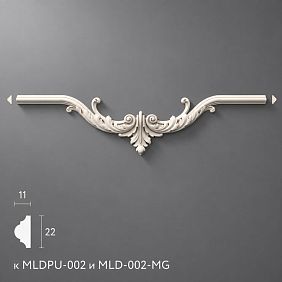
What "Prestige" means
According to the page about "Prestige" sanding quality, after milling and machine processing, the product undergoes detailed manual sanding. This is a surface preparation characteristic, not a finished paint coating. The handle is still inspected, dusted, and finished according to the selected system.
"Prestige" does not mean that the craftsman can ignore end grains, holes, and areas touched during trial installation. After drilling or local fitting, new surfaces appear. They are primed and painted in accordance with the overall technology.
Get Consultation
Made to order — not custom design
The "made to order" status means that the catalog Eclipse HL‑072 is produced on average in 5–10 days. It does not grant the right to change the radius, thickness, center distance, material, or mirror the part without approval. Custom manufacturing and catalog production are different services.
The phrases "custom furniture handles" and "made-to-order furniture handles" in this case describe the production time of the selected model. They do not promise the creation of a unique shape based on a sketch of a single cabinet. Any deviation from the product card is recorded in a separate technical specification and commercial proposal.
What the product card does not confirm
Until a manager's response is received, it cannot be stated:
-
how many physical parts are included in one HL‑072 item;
-
how many mounting points the handle has;
-
whether fasteners are included and what their size is;
-
for what facade thickness the standard screws are designed;
-
whether the size of 154 or 64 mm is the center-to-center distance;
-
whether the model can be rotated 90 or 180 degrees;
-
whether HL‑072.1 is needed for a paired facade;
-
which model is installed on the left and which on the right;
-
does the handle fit for one facade without the second part of the composition.
This information should not be inferred from the photo. The photo shows the external appearance, not the hidden mounting points.
Cabinet next to a slatted wall: when there are too many verticals
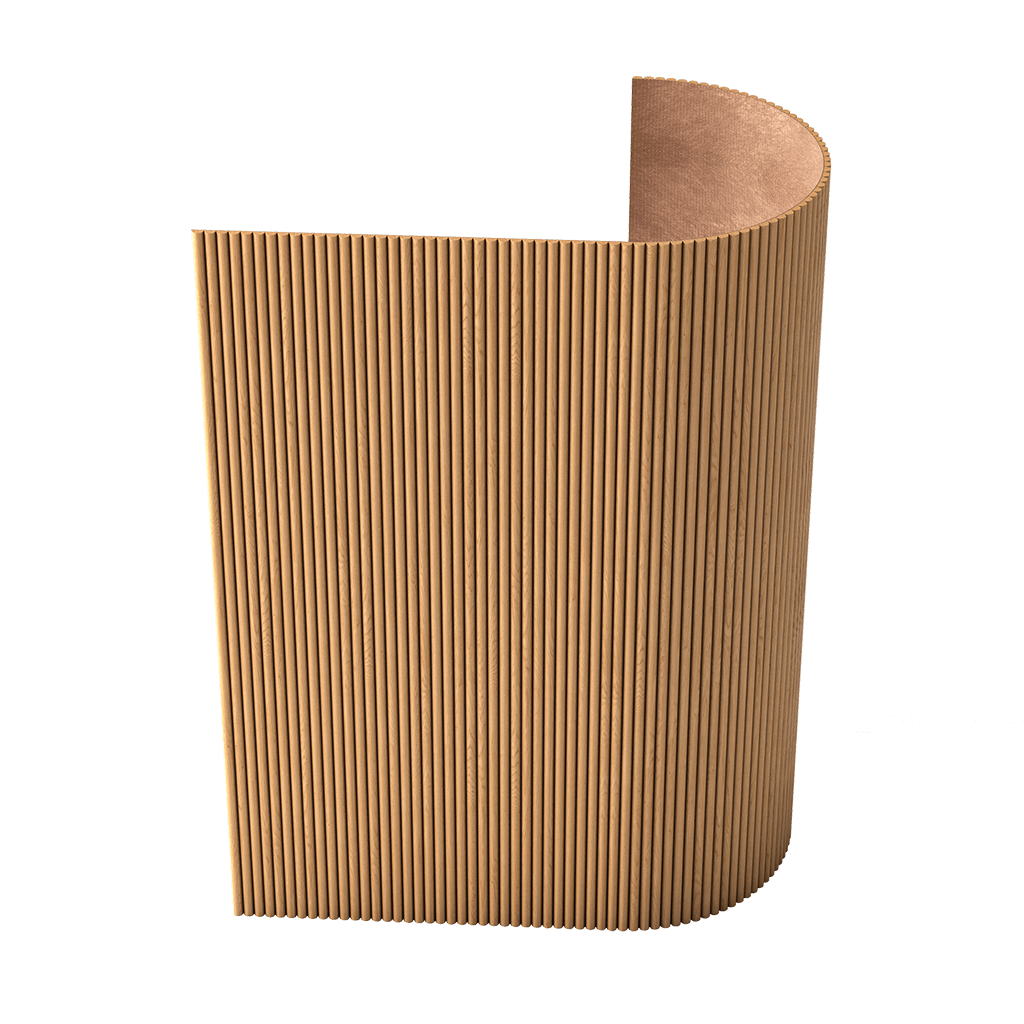
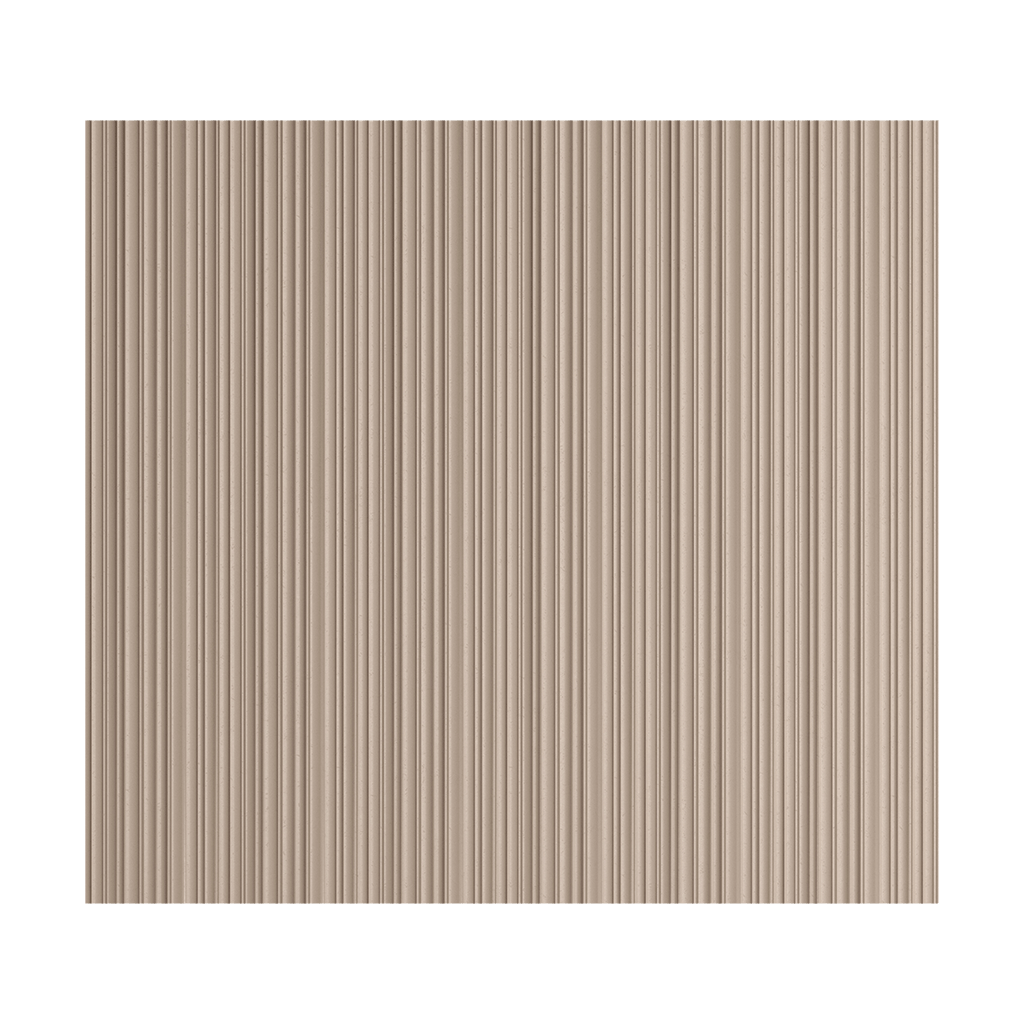
Slatted finishing already sets a strong repetition: light or dark lamellas alternate with gaps, and the eye reads a series of parallel lines. A tall cabinet adds the verticals of the body, door joints, side edges, and sometimes long pull handles. If all elements are similar in thickness and contrast, the furniture ceases to be a calm volume and turns into an extension of the grid.
"Too striped" is not a style or a measurable defect. It needs to be broken down into observable signs:
-
the joints of the facades coincide in frequency with the pitch of the slats;
-
the handles have the same elongated proportion as the lamellas;
-
contrasting lines run almost from the floor to the top of the cabinet;
-
side light creates an additional shadow from each vertical;
-
There is no smooth transition zone between the wall and the cabinet;
-
The color of the hardware enhances the pattern rather than linking the facades into a unified field.
If the problem arises in at least a few points, a rounded handle can change the hierarchy. It creates a local focal point, after which the slats remain as background, the cabinet as a solid plane, and the opening area as a separate sign.
When a long handle truly exacerbates the rhythm
Suppose a four-door cabinet is installed next to a wall 2400 mm wide. The wall shows frequent vertical slats, and the cabinet has three inter-facade seams and four handles 600 mm long. Several dozen parallel lines appear in the field of view. Even if each detail is neat individually, together they compete.
Replacing long brackets with a single rounded composition in the central zone can reduce the number of dominant verticals. But the effect depends on the actual opening scheme. If the cabinet has four independent doors, one central handle will not provide access to all panels. You cannot solve the composition at the expense of losing function.
When the "striped effect" is not created by the hardware
Sometimes the handle gets blamed for a problem it does not create. The cause could be:
-
too small a gap between the cabinet and the slatted wall;
-
identical contrast of the slats and the facade seams;
-
incorrect lighting directed along all edges;
-
splitting the facade with panels;
-
open end rail flush against the cabinet side;
-
many vertical display sections.
In this case, Eclipse HL‑072 will change one detail, but the overall rhythm will remain. Before ordering, it is useful to cover existing handles with sheets of paper in the facade color and look at the cabinet without them. If the "striped" effect disappears, the hardware is indeed a significant cause. If not, first fix the spacing, light, or panel edge.
When verticals are useful
Repeating lines is not always bad. In a narrow room, vertical elements can gather the wall and cabinet into a single system. If the handles already support the architecture, a rounded accent can look random. A new model is needed not because the circle is "more fashionable," but because it solves a specific visual conflict.
Ring-shaped wooden handle Eclipse HL‑072 as a contrast to slatted panels
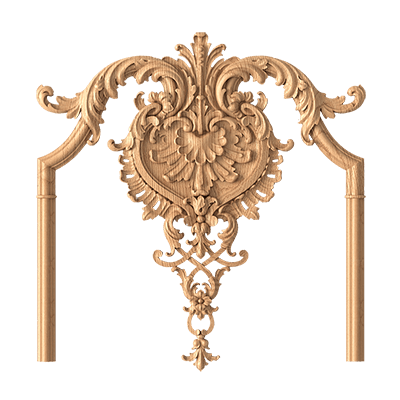
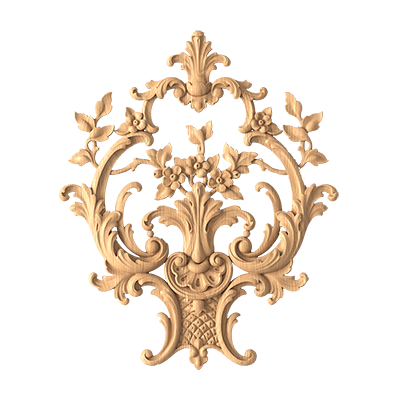
The photo of Eclipse HL‑072 shows a large rounded composition. In the context of a slatted wall, it works through geometric difference: straight verticals are opposed by an arc. The connection can be maintained through material, color, scale, or position, without copying the shape of the slat.
Contrast of shape
Contrast is useful when the composition already has a dominant motif. The slat wall is responsible for the vertical; the handle gets the right to be rounded. If the hardware also repeats the slats, the interior does not get a second level. If the circle is added without support — for example, when there are already many arches, a round mirror, and spherical lamps nearby — it can become another competing symbol.
The handle should be evaluated not in close-up, but from the point of entry into the room. Make a paper or cardboard silhouette according to the current drawing, attach it with masking tape, and step back 2–4 meters. From this distance, you can see whether the wardrobe door has become calmer and whether a center has appeared.
Connection through color
A rounded shape does not obligate making the handle contrasting. There are several working schemes:
| Color scheme | What happens to the composition | Main risk |
| Handle in the color of the facade | The relief is preserved, but the graphic quality is reduced | In weak side lighting, the shape may be lost |
| Handle in the color of the slats | The wall material and furniture are visually connected | An inaccurate tone results in a cheap imitation of wood |
| Dark handle on a light facade | The ring becomes the main accent | The 'striped' effect is replaced by an overly strong target |
| Light handle on a dark facade | The rounded contour reads as softer | Dirt and signs of wear are more visible |
| Handle in the color of the wall between the slats | A transition occurs between the cabinet and the cladding | Color on the beech and wall may look different |
For enamel application, monochrome schemes and deliberate contrast are usually safe. Exact matching to the wood grain of the slat without a sample is risky: opaque paint does not reproduce the structure of oak or veneer.
Connection through scale
A large handle should match the facade. On a wide smooth door, it can become the only expressive element. On a narrow facade next to several seams, the same shape will feel cramped. Scale is checked by the outer contour, not by the size of the comfortable grip area.
If after applying the outline there are random strips of 10–20 mm to the edge, the handle looks too large and creates a risk of damage. If a significant calm field remains around it, the rounded composition is perceived as intentional.
Designer handle for a cabinet: how to check dimensions 182 × 92 × 45 × 154 × 64 mm
The card lists dimensions A–E in the order 182, 92, 45, 154, and 64 mm. The letters are references to dimension lines in the official drawing. They are not a universal standard for furniture hardware: in another model, A may denote a different dimension. Therefore, the interpretation is taken only from file HL‑072.
What can be stated without guesswork
It is reliably known:
-
the drawing uses five parameters A, B, C, D, and E;
-
their values are 182, 92, 45, 154, and 64 mm respectively;
-
the 45 mm dimension is specified in the scenario as a protrusion that needs to be checked;
-
for installation, not only external dimensions matter, but also hidden mounting points;
-
a separate drawing file is available on the page.
You cannot automatically call 154 mm the center-to-center distance, and 64 mm the hole diameter or internal clearance. First, you need to see which arrows they are attached to. An error in one designation will lead to drilling the facade in the wrong place.
Working decoding table A–E
Before payment, the customer fills out the table based on the downloaded drawing or receives it from the manager:
| Designation | Value | What to copy from the drawing | What question it solves |
| A | 182 мм | Direction and extreme points of the dimension | Overall dimension along the corresponding axis |
| B | 92 мм | Direction and extreme points of the dimension | Free field on the facade |
| C | 45 мм | Confirm protrusion from the facade plane | Passage, adjacent leaf, grip convenience |
| D | 154 мм | Do not assign by function without a drawing | Possible seating or internal geometry |
| E | 64 мм | Do not assign by function without a drawing | Possible seating or internal geometry |
This table is intentionally not a substitute for a drawing. Its purpose is to prevent the installer from mistaking the sequence of numbers for the usual "length × width × center distance."
How to check the dimension on the facade
After decoding, the actual width is determined Gx and height Gy of the outer contour in the selected orientation. For a facade with a width of W and height H when centering, the free margins are:
Side margin = (W − Gx) / 2.
Top and bottom margin = (H − Gy) / 2.
For example, if the drawing confirms an external horizontal dimension of 92 mm, on a sash 450 mm wide with centering, 179 mm will remain on each side:
(450 − 92) / 2 = 179 mm.
If the handle is not placed in the center of the sash, the formula is not applied directly. Measure the distance from the outer contour to the nearest edge, joint, panel, and adjacent handle.
Why the 45 mm protrusion is checked separately
A flat layout does not show depth. The handle protrudes into the room, and an open sash changes the position of this protrusion. Four modes need to be checked:
-
Cabinet closed: does the handle narrow the passage between the furniture and the bed, table, or door.
-
The adjacent door opens: check whether the two handles meet.
-
The door itself opens: check whether the Eclipse touches the side panel of the cabinet or the wall.
-
A person walks past: check whether the ring part falls at the level of clothing, a bag, or a hand.
If the facade is located in a narrow corridor, add 45 mm of protrusion and the necessary free passage to the cabinet depth. Checking by the cabinet width alone will be incomplete.
Soft depth mock-up
For a safe check, make a mock-up from foam material or thick cardboard. Cut the outline according to the drawing, and bring the thickness up to 45 mm. Attach the mock-up with painter's tape and use the cabinet for several days. It should not have sharp edges or strong attachment: the task is to detect collisions, not to simulate load.
Such a test shows what is not visible in the visualization: a bag catches on the protrusion, the adjacent door opens only 80 degrees, a child touches the handle with their shoulder, the ring is inconvenient to grip from a specific side.
One door or paired facades: what to clarify before ordering Eclipse HL‑072
The ring composition is especially expressive at the junction of two facades, but the junction is a technically complex area. Doors have their own gaps, are adjusted by hinges, and can move independently. The decorative shape should not physically connect the doors if the cabinet is not designed for simultaneous opening.
One product item does not automatically equal one ring
The HL-072 card shows the price of a specific item, while related products include a separate Eclipse HL-072.1. Both models have their own pages. This confirms that the SKUs differ. However, without a drawing and the manufacturer's response, it cannot be determined whether they are left and right elements, a base and an overlay part, alternatives, or parts for different schemes.
Before ordering, ask the manager precise questions:
-
how many physical wooden parts are included in HL-072;
-
whether the main photo shows one item or a composition of several;
-
whether HL-072.1 is needed for the option chosen by the customer;
-
which model is installed on the left and right leaf;
-
whether they are sold individually or as a set;
-
whether HL-072 can be installed on one door without HL-072.1;
-
what fasteners are used to secure each part;
-
whether a drilling template is supplied.
It is better to receive answers in a letter or a commercial offer with item numbers and quantities. The verbal phrase "yes, it is a pair" does not help if the invoice turns out to have one line with one physical part.
Paired facades
For two leaves, each part of the composition is attached to its own door. The layout indicates:
-
the central gap between the facades;
-
the distance from the gap to each mounting point;
-
the outer contour of both parts in the closed position;
-
the gap between them;
-
the trajectory when opening each leaf;
-
the permissible difference after adjusting the hinges.
A ring that matches beautifully only with a perfect 2 mm gap may come apart after seasonal adjustment. The layout must account for the working range, not a single photograph.
One wide door
On a single door, it is easier to maintain the shape: both mounting zones remain on a common base. But first, it must be confirmed that HL‑072 is indeed a standalone one-piece or complete handle for a single facade. The scheme from two doors cannot be transferred to one without a drawing.
Additionally, they check whether the main grip falls on the center of the large facade, where opening a heavy door is inconvenient due to the hinge shoulder. The handle position is chosen considering the door mechanics, not just symmetry.
Four facades
On a four-door wardrobe, identical large rings can bring back overload, but in a circular rhythm. Other schemes are possible: one composition on the central pair and calmer handles on the side doors, or two identical pairs with a large distance. Any mixed hardware requires a single color, thickness, and clear opening logic.
Eclipse HL‑072 mounting: what to check in the facade before the first hole
The cost of a mistake during installation is higher than the price of a drill bit. If a hole is made along the wrong dimension line, it cannot simply be shifted a few millimeters: the old channel will remain under the handle or extend beyond the outer contour. On a painted facade, repair may require puttying and completely repainting the door.
The first rule is not to drill based on a photo, a page printout, or an assumed center-to-center dimension. You need an up-to-date mounting drawing for the specific article, a confirmed installation side, and a template at 1:1 scale.
Number of mounting points
A large wooden handle may have one, two, or several mounting zones. Their number affects the layout, resistance to turning, and facade requirements. The HL‑072 card in the open description does not state the number of holes. Therefore, the installer should not choose the scheme by analogy with a regular bracket.
In the written confirmation, the following is recorded:
-
the number of holes in the handle itself;
-
the diameter and depth of threaded or mounting elements;
-
distance between their axes;
-
position relative to the outer contour;
-
permissible load direction;
-
type of fastener and its completeness;
-
recommended facade thickness.
If the handle consists of several physical parts, the table is filled in for each. The general view of the ring does not replace two separate diagrams.
Facade thickness and screw length
The screw must pass through the facade and enter the handle to a sufficient working depth, but must not hit the bottom of the hole or damage the front part. The nominal length depends on the door thickness, washer, head countersinking, and the design of the mounting seat.
Instead of a universal recommendation, a calculated notation is used:
Screw length = facade thickness + required engagement in the handle + additional layers − head countersinking depth.
All variables are confirmed by the manufacturer or furniture technologist. If a facade 18 mm thick is faced with an additional 4 mm panel, the fastener passes through more than one layer. If a recess is made on the back side, the effective thickness decreases. Buying screws before cutting the assembly is premature.
Facade material
MDF, solid wood, laminated chipboard, framed facade, veneer, and glass hold fasteners differently. A large external dimension does not mean excessive mass, but with daily opening, the load repeats at the same points. A thin frame may not leave a solid base for both seats.
Check:
-
whether the hole falls into the edge of the panel or a technological void;
-
whether there is enough material around the seat;
-
whether the drilling intersects with the hinge cup, tie, or profile;
-
whether an insert or reinforcing plate is needed;
-
whether installation on a mirror or glass facade is permissible;
-
whether the cabinet manufacturer's warranty is violated.
Eclipse HL‑072 cannot be declared universal for any doors. Compatibility with a specific facade is determined by its construction.
Drilling from the front or back side
The drilling direction, backing, and tool type depend on the material. On painted MDF, the drill exit may chip the enamel; on veneer, it may raise the grain. The template is secured so it does not shift between holes, and a rigid sacrificial board is placed under the part if the technologist confirms this method.
First, a test is performed on a sample of the same thickness and structure. The trial installation answers several questions at once: whether the screw fits, whether its head protrudes, whether the handle sits without wobbling, and whether the fastener presses through the coating.
Old holes from previous handles
If the cabinet is already assembled, the new points must either exactly match the old ones or completely cover them with the outer contour after quality repair. The dimensions 154 and 64 mm cannot be taken as center-to-center distances without a drawing. Even matching one number with the previous bracket does not prove compatibility.
Replacement algorithm:
-
Remove the old handle and measure the holes from one base.
-
Place the transparent HL-072 template at a 1:1 scale.
-
Check not only the axes but also the diameter of the old channels.
-
Model the outer contour and shadows.
-
Coordinate the repair of old holes with the painter.
-
Only after that order and drill.
If old holes are visible inside the open part of the ring, even overlapping with the outer dimension does not help. They will have to be restored to face-front quality.
Ergonomics of the ring handle: is it convenient to open the cabinet every day
Visual balance does not compensate for an uncomfortable grip. Eclipse HL-072 must work as a furniture handle, not just as a decorative sign. The check is carried out by hands of users of different heights and with a habitual movement trajectory.
Grip zone
The dimension of the ring composition and the area that is actually pulled may differ. Based on the drawing and sample, you need to understand:
-
where fingers pass;
-
whether there is enough clearance between the wood and the facade;
-
whether knuckles hit the door;
-
whether the handle can be grasped from the right and left;
-
is there a sharp internal transition;
-
is it equally convenient to open both leaves.
Size 45 mm helps assess depth, but does not automatically provide useful clearance. Part of the protrusion may fall on the thickness of the handle body. Therefore, for ergonomics, a side view of the drawing or a physical sample is needed.
Installation height
There is no universal height. On a hinged cabinet, the handle is often placed in a zone convenient for a standing person, but the ring composition may be tied to the center of the pair of doors. If the decorative center turns out to be too low or too high, the user will have to change posture every time.
On the mockup, at least three points are marked:
-
geometric center of the facade;
-
convenient grip height;
-
center of the composition relative to the adjacent slatted wall.
If they do not coincide, function takes priority. The visual connection is adjusted by color and distance, rather than forcing the user to stretch.
Heavy and tall doors
The wider and heavier the door leaf, the more important the lever arm relative to the hinges. A handle placed too close to the axis of rotation for the sake of a central ring will require more effort. On a pair of doors, a beautiful circle at the joint may turn out to be technically inconvenient if each grip zone is shifted toward the hinges.
Before ordering, a technologist checks the weight of the facade, the type of hinges, dampers, and handle position. The HL-072 card does not publish the permissible operational load, so compatibility with a heavy door cannot be promised based solely on the material "beech."
Clothing, bags, and a narrow passage
The ring shape may have open zones that a belt or loose sleeve can catch on. The risk depends on the geometry, the direction of the open part, and the width of the passage. A soft mock-up 45 mm deep is left on the facade for several days, and you walk past it in regular clothing.
If the handle is located in a niche or between a cabinet and a wall, check the movement of the palm. A person must have enough room to bring their fingers in without touching slats, the side panel, or an adjacent handle.
Unpainted beech handle for enamel: which color to choose
For HL-072, color is part of the form. Light glides over rounded surfaces, so the same enamel on a flat facade and a three-dimensional handle looks slightly different. The decision is made based on a full-size painted sample, not an electronic code.
Handle in the color of the facade
A monochrome scheme is suitable when you need to remove "striping" but not create a new sharp symbol. The ring is read through shadow and relief. On a matte surface, the effect is soft; on a glossier one, reflections may enhance the contour.
Check the match:
-
colors in daylight and artificial light;
-
the degree of gloss;
-
spray textures;
-
transition radii;
-
coating thickness on the inner arc.
The same code does not guarantee the same perception on beech and MDF. A unified full cycle or an approved reference is needed.
Handle in the color of the slat wall
If the slats are painted with an opaque enamel, repeating the color can tie the furniture to the wall. If the panels retain a wood texture, imitating them on a handle under enamel is more difficult. A solid brown does not become oak just because of a close shade.
Instead of a literal match, you can take one of the background tones: the color of the gaps between the slats, the baseboard, or the wall. This way the shape connects the zones without faking the natural texture.
Contrast handle
Contrast is appropriate on a large, calm facade where the ring should become the main accent. Its strength is tested in a black-and-white photograph: if the handle turns into the only dark spot, it will dominate more strongly than it seems from the color fan.
On paired doors, contrast will reveal even a slight mismatch between the halves. Adjusting the hinges and precision of marking become part of the design.
Where to choose unpainted models
If you need a different shape to match your own enamel, you can order unpainted furniture handles in the profile section. The word "unpainted" does not mean identical preparation: each card checks the material, sanding quality, and type of re-gluing.
Sequence of finishing
The practical cycle is coordinated with the selected enamel:
-
Inspect the handle and compare it with the template.
-
Perform a trial assembly without damaging the surface.
-
Dust off and apply a compatible primer.
-
After drying, perform the specified matting.
-
Apply final coats with interlayer drying.
-
Do not clog mounting holes and internal gaps with paint.
-
Hold the coating until mounting strength is achieved.
-
Install through a clean soft tool pad.
Painting an already fixed handle is only possible with a technology that protects the facade and maintains access to internal surfaces. More often, it is better to finish the part separately and perform local touch-up after installation.
Slat panels and Eclipse HL‑072: how to create a full-size layout
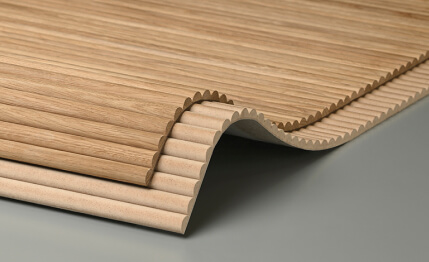
If the finish is still being chosen, it is reasonable buy slat panels for walls for interior finishing after the general wall and cabinet layout. If the panels are already installed, place the handle mock-up in actual lighting and compare it with the real slat pitch.
What should be included in the layout
On one sheet or in one digital model, show:
-
the edge of the slat cladding;
-
the width of the transition smooth strip;
-
the side panel and all cabinet fronts;
-
inter-facade gaps;
-
the HL-072 contour and, if necessary, HL-072.1;
-
opening direction;
-
adjacent sockets, switches, and light fixtures;
-
eye level from the main viewpoint.
A separate picture of the handle won't show whether the wall has become calmer. The whole combination is needed.
Checking rhythm at three distances
Close up, 0.5–1 m. The quality of the paint, gaps, mounting, and grip comfort are visible.
Medium distance, 2–4 m. The ring, doors, and slat pitch are readable. This is the main point for assessing "stripiness."
Distant view from the adjacent zone. It checks whether the handle has become a focal point that draws attention away from the entire interior.
The same layout can look good up close and too contrasty from the corridor. The color is adjusted after all three checks.
Align with the seam or offset from it
If the circular composition is designed for two doors, its center is logically tied to the joint. On a single wide panel, alignment to the nearest inter-facade seam is not mandatory. Sometimes a slight shift toward the free edge improves the opening leverage and gives the form more breathing room.
Do not align the ring's center with the nearest slat just for geometric coincidence. The cabinet and wall have different grids; forcing one line to match often creates random misalignment relative to the facade.
When a calm gap is needed between the wall and the cabinet
If the first slat almost touches the side panel, the round handle fails to visually separate from the background. A smooth strip between the systems can solve the problem better than replacing the hardware. Its width is chosen based on the layout and the actual edge profile of the panels.
Eclipse HL‑072 is not an element for closing the end of a slatted panel. It is installed on a furniture facade and should not be used as a transition strip between the wall and the cabinet.
When you need to buy handles for the cabinet, and when it's enough to change the layout
Purchase is justified if the existing hardware truly creates an extra vertical line, the facade is technically compatible, and the ring shape improves the composition on a full-size mockup. But sometimes the effect is achieved without replacing the model.
Keep the handles and change the color
A long bracket in the color of the facade may cease to be perceived as a separate strip. If the shape is convenient, the holes are already made, and the budget is limited, repainting or replacing with the same size in a less contrasting color reduces visual noise.
Reduce the length of the hardware
A short horizontal or compact knob handle does not repeat the height of the rail. This solution is cheaper and simpler for narrow facades. It is suitable if Eclipse is too large or conflicts with the paneling.
Use a recessed handle
A recessed model reduces the protrusion into the passage. But it requires processing of the facade and is not a direct replacement for a surface-mounted handle. For a finished painted door, milling may be riskier than new holes.
Push-to-open
A handleless facade removes the graphics completely, but the mechanism must match the door's weight, hinges, and daily use. It cannot be recommended as a purely decorative replacement without checking the cabinet's construction.
Choose a different wooden model
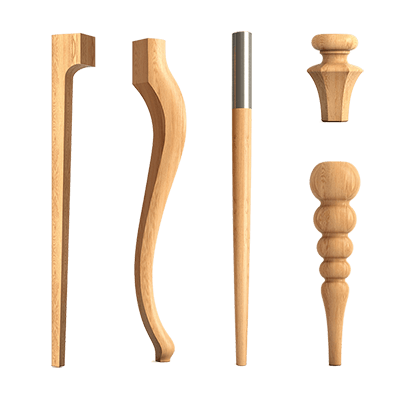
In the general section, you can Buy wooden furniture handles of a different shape and scale. Alternatives are compared by external dimensions, protrusion, mounting scheme, material, and finish, not just by price.
How much does it cost to order Eclipse HL‑072 furniture handles for a cabinet
As of the check date, the price of HL‑072 is 6,790 ₽ per catalog item. Preliminary arithmetic is simple only after confirming that one item corresponds to one required handle.
| Number of HL‑072 items | Cost at price as of 23.08.2026 | For which scheme can it be considered |
| 1 | 6 790 ₽ | One confirmed handle or part of a composition |
| 2 | 13 580 ₽ | Two facades, if two identical positions are needed |
| 3 | 20 370 ₽ | Three independent facades with a confirmed scheme |
| 4 | 27 160 ₽ | Four positions without considering other SKUs |
Calculations:
2 × 6 790 = 13 580 ₽.
3 × 6 790 = 20 370 ₽.
4 × 6 790 = 27 160 ₽.
The table does not show the budget for a paired ring if different models HL‑072 and HL‑072.1 are needed for it. In this case, the estimate should include each position at its current price. Multiplying 6,790 ₽ by two may be incorrect.
What to add to the price of products
The full budget includes:
-
possible second model Eclipse HL-072.1;
-
fasteners and washers, if they are not included in the kit;
-
making a drilling template;
-
test coating;
-
primer, enamel, and painting work;
-
CDEK delivery;
-
drilling or restoring old holes;
-
installation and adjustment of facades;
-
a spare part, if its necessity is confirmed by project risk.
Finishing may cost disproportionately to the quantity: a painter needs to prepare materials and equipment even for a single handle. Therefore, "one item is twice cheaper than two" is true only for the price of the goods, but not always for the overall project.
Three estimate scenarios
One wide door. The invoice includes one HL-072, if the manager confirmed self-assembly completeness. Finishing, fasteners, and delivery are added.
Two leaves with a composition. The invoice may include HL-072 and HL-072.1 or another confirmed combination. The total is calculated by two SKUs, not by the number of facades.
Four doors. First, decide whether two compositions are needed or one central and two alternative handles. Otherwise, the buyer may order four expensive parts and get an excessive circular rhythm.
How to order Eclipse HL-072: technical specification before payment
A good request should combine the interior goal and installation data. The phrase "I want a ring r
order sequence
-
Diagnose whether the current handle creates an extra vertical line.
-
Download the HL-072 drawing and decipher A-E.
-
Request the completeness and role of HL-072.1.
-
Create flat and 3D mockups.
-
Check ergonomics, passage, and door leaf trajectory.
-
Check the facade, hinges, and old holes.
-
Choose the color based on the sample swatch.
-
Calculate the number of SKUs, not abstract "rings."
-
Get an invoice with separate line items for the product, finish, hardware, and delivery.
-
Verify the current price and lead time before payment.
Five scenarios: where the same Eclipse HL‑072 gives different results
Before listing errors, it is useful to review several situations where the same card leads to different decisions. They show why Eclipse cannot be recommended based solely on interior style.
Example 1. Two wide door leaves and a central ring composition
The cabinet has two smooth doors, each 450 mm wide. A calm strip is left between the cabinet and the slatted wall, and there are no old holes. At first glance, this is a convenient case for Eclipse: the large shape gets a free field, and the center can be tied to the joint.
But before the estimate, there are four checks. First, the manager confirms which physical parts form the selected type and whether HL‑072.1 is needed. Then the technologist places mounting points on each door: no part should connect the doors. After that, the handle is checked — whether it is convenient to pull the zones near the central joint. Finally, the two doors are opened simultaneously and separately with volumetric mockups 45 mm deep.
If the set really consists of different SKUs, the project price is not equal to 2 × 6,790 ₽. The invoice must include HL‑072 and the confirmed second item at their current prices. This example solves not the question of "how many doors," but the question of "which SKUs make up one composition."
Example 2. Narrow facade and sufficient arithmetic without a visual field
The cabinet has a side door 240 mm wide. After reading the dimensions, the buyer sees 92 mm and thinks the handle fits with plenty of margin. But they do not yet know whether 92 mm is the external dimension in the horizontal direction specifically for the selected orientation.
After receiving the drawing, the outer contour is marked as Gx. Even if Gx = 92 mm, with geometric centering, 74 mm will remain on each side:
(240 − 92) / 2 = 74 mm.
This may be technically sufficient, but on a facade with a frame, the useful smooth field is narrower. If the inner panel starts 55 mm from the edge, the handle will cross the relief border. The catalog dimension fits within the overall width, but not within the installation zone. For such a door, a compact model is better.
Example 3. Ready-made cabinet with 160 mm holes
The facade had a vertical bracket with a center distance of 160 mm. The Eclipse table has a size of 154 mm, and there is a temptation to "slightly widen" the holes. This is dangerous logic. First, 154 mm is not called center distance in the text card. Second, an elongated hole weakens the fit and may extend beyond the outer contour of the mounting plate.
The correct sequence: remove the old bracket, restore the hole coordinates, print the confirmed HL‑072 diagram, overlay it on the facade, and decide whether the old channels can be fully repaired. If not, Eclipse is not a simple replacement. Preserving the facade is more important than the similarity of two numbers.
Example 4. Cabinet in a passage 800 mm wide
The cabinet does not narrow the passage while a flat handle is installed. After installing a part with a 45 mm protrusion, the free width will decrease to 755 mm in the handle area:
800 − 45 = 755 mm.
The number itself does not declare the passage convenient or inconvenient: it depends on the room, project requirements, and users. But it shows that hardware changes the actual geometry. Additionally, consider clothing, the open door leaf, and the handle on opposite furniture. If the layout is regularly bumped, choose a less protruding model.
Example 5. Four doors and a desire to install four rings
The client wants identical hardware on each door for symmetry. At the price of four HL‑072 units, the product part amounts to 27,160 ₽ as of the check date. However, a row of four large rounded accents appears on the elevation. The original "striped" look disappears, but a new repetition emerges that conflicts with the slatted wall.
Options are tested with mockups: two ring compositions on pairs of doors; one on the central pair and calm side handles; four monochrome parts with low contrast; complete abandonment of Eclipse. The winner is not the most expensive or the most symmetrical scheme, but the one where each door opens comfortably and the cabinet reads as a whole.
How to accept Eclipse HL-072 after delivery
Acceptance is needed before painting and drilling the facade. After changing the coating or installation, it is harder to prove at which stage the defect appeared and whether the received part matches the order.
First, check the documents:
-
article HL-072 and all additional SKUs;
-
actual quantity of physical parts;
-
material and finish for enamel;
-
agreed fasteners;
-
template or drawing of the required version;
-
absence of unconfirmed replacement of HL-072 with HL-072.1 and vice versa.
Then inspect the product under side light. Check geometry, relief, edges, inner arc, mounting areas, and holes. Place the handle on a flat, protected surface without pressure on protruding elements. Any rocking does not yet prove a defect—the shape of the back side may be non-flat by design—so the result is compared with the drawing.
Checking five dimensions
Dimensions A–E are measured only between the points indicated by arrows. You cannot place a ruler against the most prominent edges and declare a mismatch. For the protrusion, use a depth gauge or another suitable tool that does not scratch the wood.
If the actual part does not match the printed template, work is stopped. Possible causes include incorrect print scale, a different version of the drawing, a different article number, or a real deviation. First, rule out a printing error using a control square or the specified baseline.
Trial assembly without final tightening
The handle is applied to a test panel of the same thickness. Fasteners are tightened only until stable contact is achieved: excessive force may press into the wood or finish. Check that the part does not rotate, there is no gap, and the screw has sufficient working length.
For a paired composition, both parts are installed on two test panels with the same gap as the cabinet. The panels are moved relative to each other within the hinge adjustment range. The ring must maintain a meaningful appearance and not collide when opening.
Storage before painting
The unpainted beech part is protected from construction dust, moisture, radiators, and direct sunlight. Handles of one composition are stored together with markings "left," "right," "top," and the order number. They must not be stacked so that weight rests on the thin arc.
Conditioning conditions before finishing are agreed with the manufacturer and painter. A sharp transfer from cold delivery to a hot dry chamber may affect the wood and finish. The project schedule must allow time not only for production but also for proper preparation.
Mistakes when purchasing the designer furniture handle Eclipse
Taking a photo for an installation drawing
The photo does not show the hole axes and the reverse side. Consequence — drilling based on an incorrect reference. Prevention — use only the current technical file and a 1:1 template.
Count one image as one product item
The ring assembly may include several parts, and HL‑072.1 is located nearby. Consequence — an incomplete set arrives. Prevention — obtain the list of physical parts and article numbers in the invoice.
Call 154 mm the center distance without confirmation
The number looks like a typical mounting parameter, but the card does not state this. Consequence — irreversible holes. Prevention — link D and E to the drawing arrows.
Ignore the 45 mm protrusion
The handle fits on the front, but obstructs the passage or the adjacent door. Prevention — a full-scale soft mockup and checking all opening modes.
Place the ring exactly in the center without checking the lever
On a heavy door, the grip ends up close to the hinges. Consequence — inconvenient daily effort. Prevention — coordinate the position with the furniture technologist.
Choose a clear finish for a blank intended for enamel
Slats without selection show through under varnish or oil. Prevention — opaque enamel or an agreed different category.
Paint by code without a test sample
One color looks different on flat MDF and three-dimensional beech. Prevention — a full trial cycle with the required gloss.
Repeat the ring on each door
Instead of extra verticals, a row of large circles appears. Prevention — evaluate the entire cabinet from a distance, not just one door.
Drill until the handle is obtained
Even a correct file can be read incorrectly, and the configuration may change. Prevention — check the template against the actual part before work.
Use the handle as a bridge between doors
Physical connection of independent doors disrupts opening and adjustment. Prevention — each part is attached to the intended facade according to the project.
Count the 5–10 day period as the date of the finished cabinet
After manufacturing, delivery, painting, drying, and installation remain. Prevention — create a reverse calendar with all stages.
Who suits the Eclipse HL‑072, and who should choose a different handle
The model is suitable when the facade is sufficiently free, the rounded shape noticeably balances the slat wall, the protrusion does not interfere with passage, the mounting area is confirmed, and the opaque enamel matches the project. The purchase is especially logical for a calm, solid-colored cabinet that needs one strong accent instead of a series of vertical brackets.
Choose a different model if:
-
the facade is too narrow for the outer contour;
-
the ring crosses a panel, mirror, or frame profile;
-
old holes remain exposed;
-
the passage does not allow a 45 mm protrusion;
-
the user cannot comfortably grip the shape;
-
a heavy door requires a different grip position;
-
a transparent wood finish is needed, but only a blank for enamel is available;
-
the paired composition requires an unconfirmed second piece;
-
the cabinet already has many rounded elements, and the new accent overloads the interior;
-
the task is solved by changing the color of the existing handles.
Abandoning Eclipse in an incompatible node is not a loss of design. It is protection for the facade and budget.
Where to buy the Eclipse HL‑072 furniture handle and slat panels
After a technical check, the specific model is ordered in the HL‑072 card. Alternative wooden products are compared in the general handles section, and blanks for custom painting are in the catalog of unpainted models. The slat cladding is selected according to a separate wall layout.
A commercial set does not have to consist only of products from one wood species. HL‑072 made of beech under enamel can be combined with oak, veneered, or painted panels through color and scale. The wall material does not automatically change the handle material.
Before payment, check the current price, delivery time, completeness, fasteners, and all invoice items. The documents must specify the exact article Eclipse HL‑072 and the actual quantity of parts, not just the general name of the ring handle.
Result: the ring accent works only after checking the set
The Eclipse HL-072 can solve exactly the problem for which it was chosen: removing another dominant vertical line next to the slat wall. The rounded shape creates a pause, and the beech under enamel allows the handle to be linked to the facade or to create a controlled contrast.
But the visual effect does not answer installation questions. Before ordering, you need to decipher A–E from the drawing, confirm the 45 mm protrusion, check the facade and old holes, obtain the composition of one item, and establish the role of HL-072.1. Only after this do they calculate the quantity and budget.
The price of 6,790 RUB as of August 23, 2026, refers to one HL-072 card. It does not prove the cost of a finished paired ring. A correct invoice contains real SKUs, finish, fasteners, and delivery — without assumptions based on a photo.
Frequently asked questions about the Eclipse HL-072 furniture handle
Can the HL-072 be installed on a single cabinet door?
Only after confirming that one product item forms a functional handle for one door. The presence of a separate HL-072.1 requires clarifying whether it refers to the other side or a different scheme.
Is HL-072.1 included in the price of 6,790 RUB?
The open card does not confirm this. HL-072.1 has a separate product page, so it cannot be considered included without a written response from the seller and an explicit line in the invoice.
What is the center-to-center distance of the Eclipse HL-072?
The card lists A–E, but the text does not name a specific value as the center-to-center distance. It is determined from the current drawing and confirmed with the manager. You cannot automatically take 154 or 64 mm.
Does the handle protrude by 45 mm?
The 45 mm parameter needs to be checked against the side view of the drawing; in the design scenario, it is considered a protrusion. For installation, the actual distance from the facade to the extreme point of the handle is measured.
Will the handle fit a facade with a thickness of 16, 18, or 22 mm?
Thickness affects the fastening. The card does not publish a universal range, so for each facade, the screw length, engagement depth, and the need for a washer or reinforcement are specified.
Can HL-072 be installed on a mirrored door?
Not without a technical project. Glass or mirror requires special holes, gaskets, and a base; a finished facade cannot be drilled like MDF. Compatibility is confirmed by the door manufacturer.
Can old holes from a pull handle be used?
Only if their coordinates and diameter match the confirmed seating of HL-072 or are fully and properly restored. A similar number in the size table is not proof.
Is the handle supplied painted?
No, the selected configuration is specified for enamel. Color and finish coating are arranged separately if the commercial offer does not include a separate finishing service.
Can the natural color of beech be left under varnish?
The category for enamel allows lamellas without matching color and texture. For a transparent finish, a suitable blank needs to be agreed upon; otherwise, the result may be uneven.
How many handles are needed for a cabinet with two doors?
The quantity depends not only on the doors but also on the HL‑072 composition. For a pair, two identical items, a combination of HL‑072 and HL‑072.1, or another confirmed scheme may be required. The number is not fixed until the seller responds.
Will Eclipse suit a sliding-door wardrobe?
Not automatically. A protruding surface-mounted handle may interfere with the overlap of sliding panels. A cutout of the guides and the trajectory of each door are needed; often, recessed hardware is chosen for sliding wardrobes.
Can the handle be rotated 90 degrees?
The permissible orientation is determined by the drawing, mounting, and grip shape. The ring type in the photo does not prove the possibility of arbitrary rotation.
How to understand if the ring will be too large?
Print the outer contour at 1:1 scale, place it on the facade, and evaluate from three distances. Then make a soft mockup 45 mm deep and check opening and passage.
Should the handle be painted to match the color of the slats?
No. The connection can be made through the color of the facade, wall, or baseboard. If the slats retain their natural texture, a solid wood-effect enamel often looks less convincing than an honest monochrome or contrasting color.
How long does an order with painting and delivery take?
The card indicates 5–10 days of average production time. Delivery, approval, finishing work, drying, and installation are added to this. The total timeline is set in the project calendar, not derived solely from the card.
What to do if the cabinet still looks striped after the mockup?
Check the edge of the slat wall, lighting, contrast of facade seams, and the smooth transition strip. The cause may not be the handle, and purchasing the Eclipse may not eliminate it.