Article Contents:
- What to buy for classic kitchen fronts: a complete set from the first try
- Why the kitchen requires a separate approach to decor
- Wooden handles for the kitchen: selection, parameters, logic
- Shape and profile
- Wood species and coating
- Placement of handles on a facade with moldings
- Moldings for kitchen fronts: wood and polyurethane
- Wooden moldings for fronts
- Polyurethane moldings for fronts for painting
- How to calculate moldings for kitchen fronts
- Polyurethane decor for kitchen fronts: application areas
- Upper cornice of a kitchen set
- Side panels and end facades
- Area above the hood
- Kitchen island with decorative panels
- Tall cabinets and pantry units
- False panels and wall near the dining area
- Ready-made kits for different classic kitchen scenarios
- Classic kitchen set in white
- Kitchen to be painted in a dark color
- Kitchen island with wooden supports
- Kitchen with glass-front upper cabinets
- Kitchen-living room with wall moldings
- Table: wood or polyurethane in the kitchen — by zones
- Mistakes when decorating classic kitchen fronts
- Placing polyurethane decor in the constant grip zone
- Buying handles after marking moldings
- Choosing too large a relief for small fronts
- Not considering kitchen humidity
- Forgetting about the top line of cabinets
- Not making a facade diagram before purchase
- Not connecting the kitchen with the dining area
- FAQ: answers to the main questions about the decor of classic kitchen facades
- About the Company STAVROS
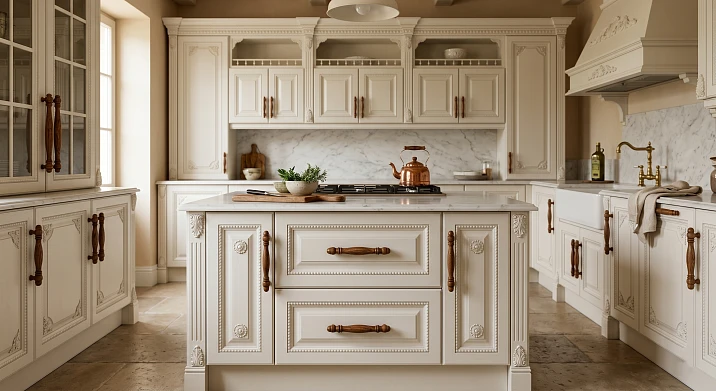
The kitchen is not just a place where you cook. It is the center of the home. Especially when the kitchen is combined with a dining room or living room, when it is open, when it is in sight. And that is why classic-style kitchen facades are not just cabinet doors, but an architectural surface that works for the image of the entire space.
Look at a kitchen that makes an impression. What is there? Moldings on the facades — thin frames that turn a flat panel into a furniture detail. Wooden handles for the kitchen — warm, dense, with character. The upper cornice above the cabinets — a horizontal line that completes the set as an architectural volume. Decorative overlays on the island. Polyurethane elements on tall cabinets and side panels.
All this is not luxury or excess. It is a system. And this article will help you assemble it correctly: understand where wood is needed, where — polyurethane decor, what to buy, how not to make a mistake, and how to make a classic kitchen truly complete.
What to buy for classic kitchen facades: a complete set on the first try
First of all — a list. Not an abstract one, but a working one. This is the exact set needed for designing a kitchen in a classic style:
Wooden elements:
-
wooden furniture handles — for all facades, display cabinets, drawers;
-
Wooden handles with coating — for high-traffic areas;
-
Wood moldings for furniture — frame decor of solid wood facades;
-
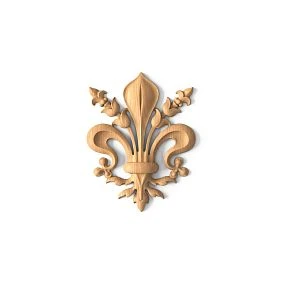
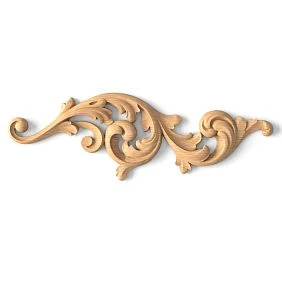
decor for furniture — overlays, inserts, end elements;
-
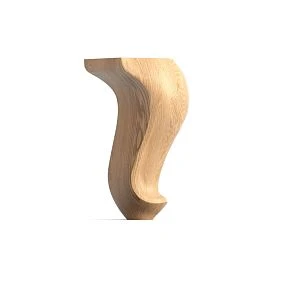
furniture legs — for the island, dining table, open sections.
Polyurethane elements:
-
Moldings made of polyurethane — facade frames for painting, upper cornice of the set;
-
Polyurethane appliqués — decorative elements on side panels, tall cabinets, island;
-
Decorative stucco — accent inserts on the area above the hood or false panels;
-
Decor for Molding — point inserts along the cornice or molding of the top line.
Mounting materials:
-
mounting adhesive (for polyurethane — see recommendations in the article) what to glue polyurethane molding with);
-
fasteners for wooden handles (self-tapping screws, screws, dowels of appropriate diameter);
-
acrylic sealant — for molding joints on facades;
-
adhesion primer — for polyurethane elements before painting;
-
paint or enamel — for facades to be painted;
-
10–15% spare moldings and decor.




Why the kitchen requires a separate approach to decor
The kitchen is the most heavily used surface in the home. Doors are opened dozens of times a day. Grease splatters, moisture settles, steam works. It is washed, scrubbed, bumped into with elbows.
That is why the approach to kitchen facade decor must be pragmatic — beauty, but without naivety. Every material must be in its proper place.
Wood — where there is constant hand contact: handles, end elements, visible island parts, legs. Wood is durable, warm, and easily restored with varnish or oil. Furniture wooden handles withstand thousands of presses without losing shape or appearance.
Polyurethane is used where the decorative function prevails over the mechanical one: molding frames on the facade plane, top cornice, side panels, false facades, the area above the hood. There is no constant grip here, but there is a task to create a classic relief and shape the architectural line of the kitchen.
Mixing two materials is not only acceptable but also correct. Wood provides tactility and naturalness. Polyurethane provides lightness, clarity of relief, and the ability to be painted in the color of the facade. Together, they create a kitchen that feels made from two registers: natural and architectural.
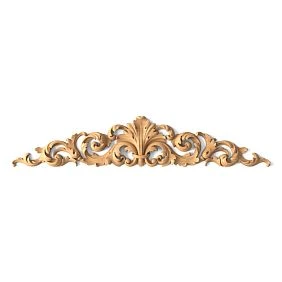
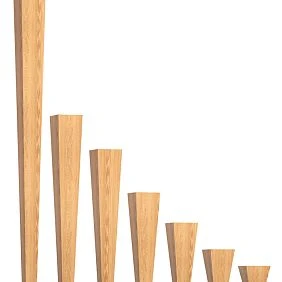
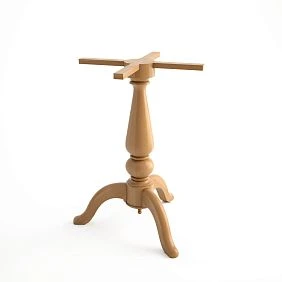
Our factory also produces:
Wooden kitchen handles: selection, parameters, logic
A handle is not just a hook to pull. For a classic kitchen, a handle is an accent. It is noticeable, tactile, and forms the first impression of the cabinet set even before you open a single door.
Get Consultation
Shape and profile
Wooden handles for facades come in several basic shapes:
Bracket. A classic arc on two mounting points. Center distance: 64, 96, 128, 160 mm — standard sizes for furniture fasteners. For tall facades (height 900–1200 mm) — a bracket with a center distance of 128–160 mm.
Shell. A flat surface-mounted handle without through fasteners. Mounted from below. Suitable for lower drawers — especially where a protruding profile is not needed.
Profile handle. A long horizontal or vertical rail. For tall cabinets and facades with a height of 900 mm or more, a vertical handle 150–200 mm long looks much better than a small bracket in the middle.
Knob. A small round or polygonal surface-mounted handle. For small doors, drawers, display cabinets.
Wood species and coating
For kitchens, hardwoods are optimal: oak, beech, ash. They do not deform with temperature changes and hold the coating well. Wooden handles with coating — products ready for use: varnish, stain, wax, or patina protect the surface from moisture and grease.
If the kitchen is to be painted, the handles can also be painted in the color of the facade. However, in this case, it is important to choose a wooden handle with a smooth surface without complex relief, otherwise the paint will get into the recesses.
Placement of handles on a facade with moldings
This is one of the most subtle issues when designing a classic kitchen. If the facade has a molding frame, the handle should be positioned so that:
-
it does not cross the molding frame (the fastening should not fall on the molding itself);
-
it harmonizes with the proportion of the frame (the handle should not be smaller than the width of the molding);
-
logically coincide with the symmetry axis of the facade or with the area under the frame (for lower cabinets).
The standard handle position for upper cabinets is in the lower third of the facade, near the lower edge of the frame. For lower cabinets, it is in the upper third. This ensures a comfortable grip and maintains the symmetry of the set.
Moldings for kitchen facades: wood and polyurethane
Moldings turn a flat facade into a furniture piece with character. It is the frame decor that first distinguishes a classic kitchen from a modern one.
Wooden moldings for facades
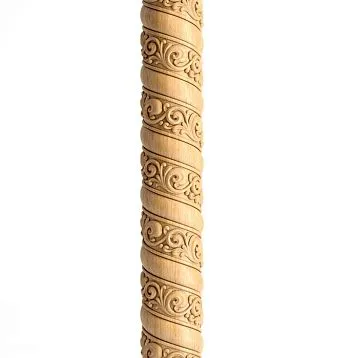
Wood moldings for furniture are profiled wooden strips that are glued or mounted onto the facade plane, creating a rectangular frame. This is a solution for MDF facades for painting or solid wood facades.
Selection parameters:
The width of the molding is proportional to the size of the facade. For a standard facade 400 × 720 mm — molding 15–25 mm. For a large facade 600 × 900 mm — 25–40 mm. A too narrow molding gets lost; a too wide one overloads.
The profile determines the character of the style. A straight molding (rectangular cross-section) is for strict classic and neoclassical styles. A molding with a fillet or ogee is for a softer classic style. Shelf width at the wall: 8–15 mm for a clear shadow without overload.
Corner cutting — all four corners of the frame are cut at 45°. This is the main technical task when installing moldings on a facade. Precise cutting is a sign of craftsmanship; crushed or open corners ruin the entire effect.
Polyurethane moldings for facades for painting
Moldings made of polyurethane — the optimal choice for kitchen sets to be painted in one color. Polyurethane is easy to cut, accepts acrylic paint well, and requires no complicated maintenance.
For kitchen fronts, it is recommended to use moldings with a profile that creates an expressive shadow under side lighting. It is the shadow from the relief that is the main decorative effect of the molding. The deeper the groove or shelf, the clearer the shadow, the more voluminous the frame looks.
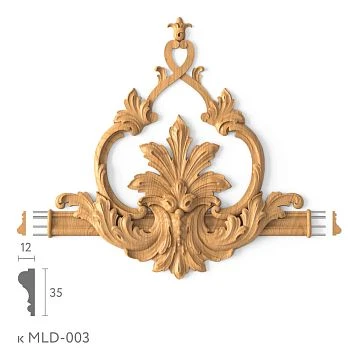
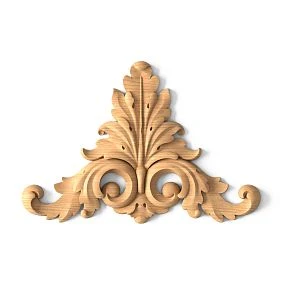
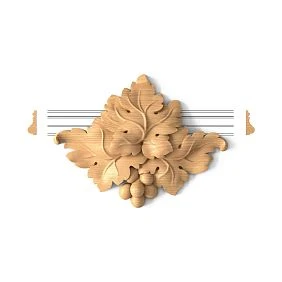
Decor for polyurethane moldings — point decorative inserts at the corners of the frame or along the length of the upper cornice molding. At the corners of the frame, such inserts look like rosettes or acanthus leaves — a classic motif that immediately elevates the kitchen to the category of "expensive classics."
How to calculate moldings for kitchen fronts
Let's take a standard lower cabinet with two fronts measuring 400 × 720 mm.
Perimeter of one front: (400 + 720) × 2 = 2240 mm.
Considering an indent from the edge of the front of 30–40 mm on each side:
-
Inner width of the frame: 400 − 60 = 340 mm (2 horizontal segments of 340 mm each);
-
Inner height of the frame: 720 − 60 = 660 mm (2 vertical segments of 660 mm each);
-
Perimeter of the frame: (340 + 660) × 2 = 2000 mm of molding per front.
For 10 facades: 20,000 mm = 20 linear m + 15% reserve = 23 linear m.
Polyurethane decor for kitchen facades: application areas
Where exactly polyurethane furniture decor works in the kitchen — and where is it better not to install it?
Upper cornice of the kitchen set
The top line of cabinets is the most noticeable horizontal line of the set. If the cabinets reach the ceiling, the cornice hides the technical gap. If they don't, the cornice creates a finish, a "lid" for the entire composition.
Polyurethane molding for the upper kitchen cornice: height 60–100 mm for a standard ceiling of 2.7 m. Profile — with a shelf and a fillet, creating a shadow. Color — matching the facades.
If the cornice has bottom lighting, it is mounted with a slight overhang from the cabinet plane, creating a niche light. This is a popular technique for kitchens with warm lighting.
Side panels and end facades
The side of the cabinet is an open surface visible from the entrance or dining area. A bare side ruins the impression of a classic kitchen. Polyurethane appliqués or molding frames on the side panels create a sense of completeness.
Area above the hood
The hood is a technical element that often stands out from the classic kitchen look. A decorative "arch" or molding portal around the hood moldings from polyurethane integrates it into the overall architecture of the cabinet set. A horizontal molding above the hood at the level of the upper cabinets is the simplest way to "align" the hood with the cabinet set.
Kitchen island with decorative panels
The island is a freestanding kitchen element visible from all sides. Its sides and end surfaces require special attention. Decorative stucco on the island's sides — frames, small overlays, a horizontal belt — turns the island from a "table" into an architectural element.
Island legs — wooden decorative supports made of solid wood. Furniture legs for the island: height 80–150 mm, profiled turned shape, oak or beech. They create "legs" under the island's countertop — like a real classic table.
Tall cabinets and pantry units
A tall pencil case is the most difficult kitchen surface to decorate. An empty rectangular slab 2100–2400 mm high and 600 mm wide looks monotonous even with molding frames. The solution is to divide the pencil case into visual zones:
-
Lower zone: a molding frame from the floor to the middle;
-
Upper zone: a glass or wooden display facade with a frame;
-
Divider: a horizontal molding belt at mid-height.
Such a pencil case ceases to be a "column" and becomes part of a classic furniture wall.
False panels and the wall next to the dining area
If the kitchen is combined with a living room or dining room, the wall next to the dining table often remains unnoticed. Molding frames on this wall polyurethane decor create a visual transition from the kitchen area to the dining area, connecting them architecturally. This is one of the best techniques for open spaces in a classic style.
Ready-made kits for different classic kitchen scenarios
Classic kitchen set in white
Task: white kitchen with molding frames on the facades, wooden handles, and a top cornice.
Set:
-
Wooden handles — bracket, center distance 96 mm, beech for white painting or varnish;
-
Moldings made of polyurethane — frames on all facades, width 20–25 mm;
-
Top cornice made of polyurethane — height 80 mm, along the length of the upper cabinets;
-
Polyurethane appliqués — decorative elements on the side panels;
-
Primer, acrylic enamel, sealant;
-
Construction adhesive — according to instructions.
Kitchen for painting in a dark color
Task: kitchen in "wet asphalt" color or dark blue classic with gold handles.
Set:
-
Wooden handles with coating — with gold or brass finish, bracket 128 mm;
-
Moldings made of polyurethane — frames on facades for unified painting in dark color;
-
Decor for Molding — corner inserts into frames;
-
Upper polyurethane cornice — height 80–100 mm;
-
Primer, alkyd or polyurethane enamel;
-
Construction adhesive, acrylic sealant.
Kitchen island with wooden supports
Task: island on legs with decorative side panels.
Set:
-
Furniture legs from solid wood — 4 pcs., height 120–150 mm, oak;
-
Wooden handles — for island drawers, bracket 96 mm;
-
Polyurethane appliqués — on the sides of the island;
-
Moldings for furniture or polyurethane — a horizontal belt around the perimeter of the island;
-
glue, primer, paint.
Kitchen with display upper cabinets
Task: upper cabinets with glass, wooden handles, frame decor.
Set:
-
Wooden handles — buttons or small brackets for display fronts;
-
Wood moldings for furniture — frame profile for glazed fronts;
-
decor for furniture — applied decorative elements on upper cabinets;
-
Upper polyurethane cornice — matching the color of the set;
-
Carpenter's glue, varnish or enamel.
Kitchen-living room with moldings on the walls
Task: the kitchen is open to the living room, and the molding decor should transition from the kitchen area walls to the living room walls.
Set:
-
Moldings made of polyurethane — frame panels on walls, 25–35 mm;
-
Upper polyurethane cornice above the kitchen set;
-
Wooden handles on kitchen fronts;
-
Polyurethane appliqués in the area above the dining table;
-
Unified color scheme for moldings, walls, and fronts;
-
glue, sealant, primer, paint.
Table: wood or polyurethane in the kitchen — by zones
| Kitchen zone | Wood | Polyurethane |
|---|---|---|
| Front handles | Main material | No |
| Front frames | For solid wood fronts | Main material |
| Top cornice | No | Main material |
| Island legs | Main material | No |
| Side panels | No | Main material |
| Area above the hood | No | Main material |
| Showcase facades (frame) | For solid wood fronts | For painting |
| Cabinet decor | No | Main material |
| Wall moldings | No | Main material |
| Island horizontal belt | optional | Main material |
Mistakes in decorating classic kitchen facades
Placing polyurethane decor in a constant grip zone
Polyurethane is an excellent material for decorative surfaces. But if the overlay is glued in an area where it is constantly touched by hand, it will peel off. Not because of poor glue or cheap material — it's just a law of physics. Grip zones and constant contact areas — only wood.
Buy handles after marking moldings
The correct order: first choose handles, determine mounting points, and only then mark molding frames on the facade. If done the other way around — mounting holes may end up directly on the molding.
Choosing too large a relief for small facades
A 40 mm wide molding on a 300 × 500 mm facade is overload. The frame will take up almost the entire facade area, leaving only 20–30 mm between the frame and the edge. The proportion is broken. Rule: molding width should be no more than 8% of the smaller side of the facade.
Not accounting for kitchen humidity
Wooden moldings on facades without a lacquer coating in kitchen humidity conditions swell and deform. All wooden kitchen elements must be coated with a moisture-resistant varnish or enamel in 2–3 layers.
Forgetting about the top line of cabinets
A kitchen set without a cornice looks unfinished — even if all facades are perfectly decorated with moldings and handles. The top line is the "lid" of the entire furniture wall. Without it, a classic kitchen remains under-styled.
Not making a facade layout before purchasing
Moldings are bought, glued on — and then it's discovered that the handle lands right on the frame, or that the frame doesn't fit the required facade. Draw a diagram of each facade with frame dimensions and handle attachment point — before ordering.
Not connecting the kitchen with the dining area
A classic kitchen in an open space is part of a large room. Molding decor on the walls of the kitchen area should either continue into the dining area or logically end at an architectural boundary. A break in the decor in the middle of the wall is a common mistake.
FAQ: answers to the main questions about the decor of classic kitchen fronts
Can polyurethane decor be used on kitchen fronts?
Yes. polyurethane decor works great on frame moldings, top cornice, side panels, false fronts, and island decor. In the constant grip area — only wooden handles.
What to buy for a classic-style kitchen?
Wooden handles, Moldings for furniture or Moldings made of polyurethane, Polyurethane appliqués, top cornice, glue, primer, paint, sealant, and a 10–15% reserve.
Which handles are suitable for fronts with moldings?
The best choice is a bracket with a center distance of 96–128 mm. The attachment points should be in the clean front area, not crossing the molding frame. Check the front diagram before drilling.
Can moldings and fronts be painted the same color?
Yes, this is the optimal solution for a kitchen to be painted. A single color unites the frame, front, and cornice into a monolithic furniture surface. Moldings made of polyurethane are painted with acrylic or alkyd enamel after preliminary priming.
How not to overload a classic kitchen with decor?
Choose one main accent: either expressive molding frames on all facades, or a large decorative cornice, or a striking island — but not all at once. Relief on every centimeter is not luxury, but overload.
Is it needed Decor for Molding in the kitchen?
Optional. Corner inserts in facade frames add a classic touch. Inserts along the cornice length create a rhythmic pattern. But if the kitchen is small or the decor is already elaborate, it's better to stick with clean frames.
About the company STAVROS
Full range for designing kitchen facades in classic style — Wooden handles for the kitchen, Wooden handles with coating, Moldings for furniture, decor for furniture, Furniture legs, Moldings made of polyurethane, Polyurethane appliqués, Decor for Molding и Polyurethane moldings — in the STAVROS company catalog.
STAVROS is a Russian manufacturer of architectural decor and furniture fittings from natural wood and polyurethane, founded in St. Petersburg in 2002. Each product is designed with an understanding of classical architecture, furniture scale, and requirements for durability in real-world conditions. Among the completed projects are the Hermitage, Konstantinovsky and Alexander Palaces. Orders from one unit, Contact us to confirm shipping to your destination., full technical specifications in each product card.