Article Contents:
- Short answer: when round furniture supports are needed
- What is a round furniture support
- Which furniture are round wooden supports suitable for
- For a side table
- For a Dresser
- For a Wardrobe
- For table
- For a sofa, armchair, or ottoman
- Round or square supports: what to choose
- How to choose the height of a round furniture support
- How to choose the diameter and shape
- Load and fastening: what to check before buying
- Round wooden supports for furniture restoration
- How to combine round supports with furniture handles and decor
- Errors when choosing round furniture supports
- What to buy together with round furniture supports
- FAQ: Answers to Popular Questions
- About the Company STAVROS
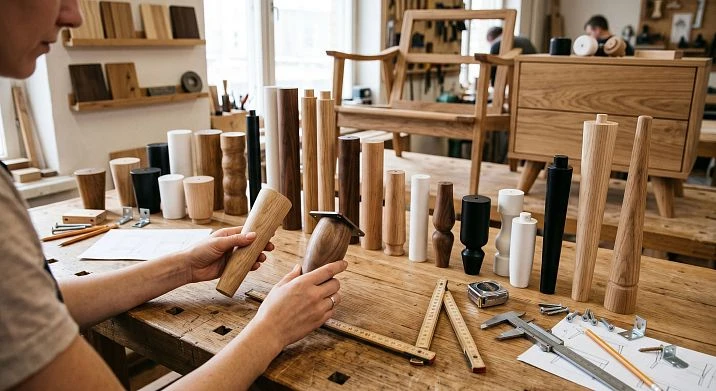
There are details that don't catch the eye immediately — but they determine the overall impression of an item. Furniture legs fall into this category. When they are right — no one pays attention to them: the chest of drawers stands beautifully, the cabinet looks expensive, the sofa seems custom-made. When the legs are wrong — something bothers you, although it's hard to explain why. Round wooden furniture supports are one of the most versatile and sought-after solutions: a soft silhouette, no sharp corners, organic in any interior — from classic to modern neoclassical.
This article is a detailed practical analysis: what furniture round wooden supports are suitable for, how to choose height and diameter, what to consider during restoration, and how to connect the legs with the rest of the room's decor.
Short answer: when round furniture supports are needed
If you don't have time to read everything — here's the gist.
Round furniture leg needed when:
-
furniture is being updated or restored, and old legs need to be replaced with more expressive ones;
-
you want to remove the angularity of an item and give it a calm, soft silhouette;
-
painting of furniture under enamel, varnish, or stain is planned, and the legs must accept the coating perfectly;
-
I want to replace plastic or metal supports with natural wood;
-
I need to visually lighten a cabinet, chest of drawers, or wardrobe — lift the body off the floor;
-
the interior is designed in a classic, neoclassical, or natural style, where a round shape is organic.
The main thing to understand from the very beginning: a round Wooden leg for furniture is not just a support. It is a decorative element that works in conjunction with facades, handles, and the overall style of the piece.




What is a round furniture support
Before choosing, it is important to clearly understand what we are talking about — because a "round support" in furniture making can mean several fundamentally different things.
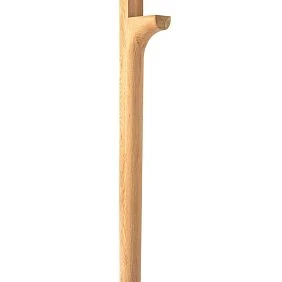
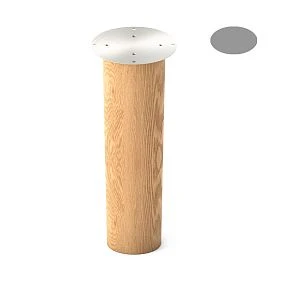
A simple cylindrical leg is a smooth round rod made of solid wood with the same diameter along its entire height. Simple, neat, versatile. Good for modern furniture, for Scandinavian style, for pieces where the form is deliberately concise.
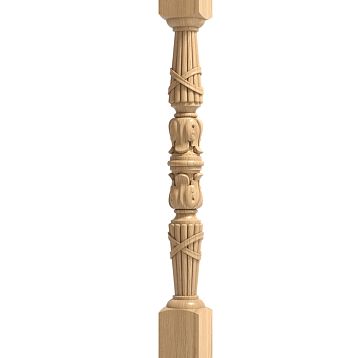
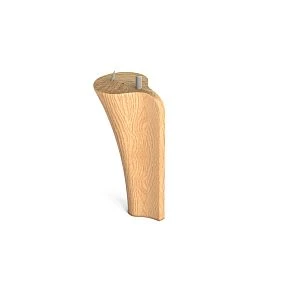
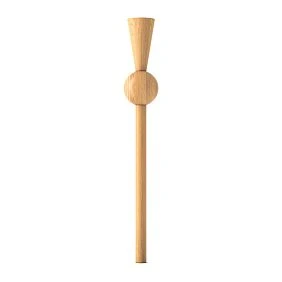
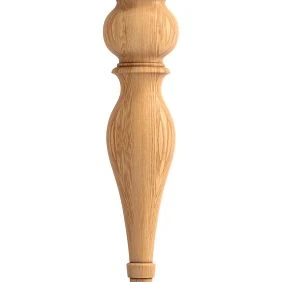
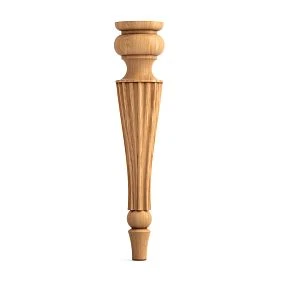
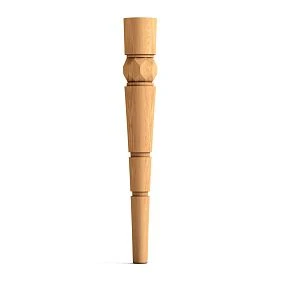
A turned round leg — processed on a lathe, has a variable profile: thickenings, waists, vase-shaped elements. It is this type that Decorative furniture leg support creates the feeling of a classic, bespoke piece. A turned leg adds "weight" to the furniture — not physical, but decorative, meaningful.
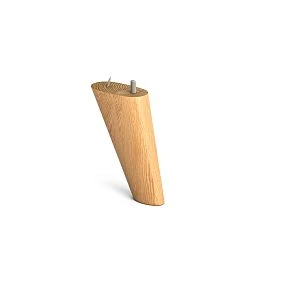
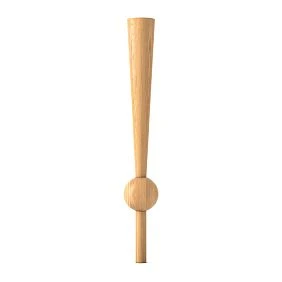
A conical round leg — a cylinder that smoothly tapers towards the bottom. Popular in mid-century modern furniture and Scandinavian classics. Creates a light, airy silhouette.
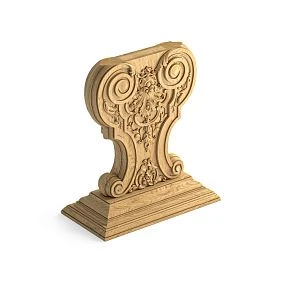
Decorative round support with relief — a turned leg with applied ornament, slots or additional profiling. For classic and baroque furniture pieces.
All these options share one thing: a round cross-section, which creates a fundamentally different visual effect compared to square or rectangular supports. The round shape is softer, calmer, more organic. It does not "cut" the space, does not create angular shadows, and is well perceived from any viewpoint.
furniture leg made of wood differs from a technical plastic or metal support in that it works simultaneously as a structural and decorative element. Wood is a living material with texture, warmth, and character that is fully transferred to the furniture piece.
Our factory also produces:
What furniture are round wooden supports suitable for
This is a key practical question. The answer depends on the size of the furniture, its weight, style, and how it should look in the room.
Get Consultation
For a side table
A cabinet — bedside, TV cabinet, or vanity table — is one of the most rewarding items for installing round wooden supports. The cabinet body is usually small and light, which gives freedom in choosing more elegant legs.
Round Legs for chests 8–15 cm high visually "lift" the body off the floor, creating an effect of lightness. The cabinet no longer looks like a heavy block lying on the floor — it "stands" on supports, breathes. This is especially important in small bedrooms where every detail affects the perception of space.
For a bedside cabinet, the optimal leg height is 8–12 cm: the cabinet top should be approximately at the level of the mattress or slightly lower. For a TV cabinet, the leg height can be greater — 12–20 cm — depending on the desired screen placement level.
A turned round leg for a bedside cabinet in a classic bedroom is an impeccable solution. A simple tapered leg for a TV cabinet in a modern-style living room is equally appropriate.
For a chest of drawers
The chest of drawers is a heavier item. Here, round wooden furniture legs bear the actual load: the weight of the body plus the contents of the drawers.
First rule: the diameter of the leg should match the load. For a chest of drawers weighing 30–50 kg with contents, legs with a diameter of less than 40 mm look unreliable and may be so. A diameter of 45–60 mm and good fastening is the correct proportion.
Second: the height of the legs for the chest of drawers. Optimal is 10–16 cm — this is enough to lift the body off the floor and simplify cleaning. Very low legs (up to 5 cm) do not provide space under the chest and make cleaning inconvenient. Very high legs (from 25 cm) can disrupt proportions: the body of the chest 'hovers' over thin legs.
Turned wooden furniture legs for a chest of drawers in a classic interior — this is a decorative argument. They turn a 'boxy item' into furniture with character. Especially in pair with wooden furniture handles in the same style.
For a cabinet
A wardrobe is the heaviest item among those that are placed on wooden supports. A full-height sliding wardrobe on wooden legs is an atypical solution. But a small cabinet, display case, sideboard, half-sideboard, or decorative tall cabinet — quite suitable.
For a small cabinet weighing up to 40 kg, round legs 8–12 cm high handle the load. It is important that the legs are installed as close to the corners as possible, not shifted toward the center — this ensures stability when opening doors.
furniture legs for a cabinet are especially expressive if the cabinet is in plain sight — in the living room, hall, library. Here, the decorative role of the supports is no less important than the functional one.
For table
For a table, round Wooden legs most often chosen when a soft, calm silhouette is needed — without the architectural rigidity of square supports. Round table legs look good with a round or oval tabletop: the shape of the base echoes the shape of the tabletop.
For a coffee table — tapered or turned legs 35–45 cm high. For a low coffee table — supports 10–20 cm. For a kitchen or dining table — standard height 68–72 cm, legs with a wide base.
For a sofa, armchair, or bench
Upholstered furniture on wooden legs is a special story. A sofa or armchair on round legs looks more expensive, lighter, and "airier" than on hidden or technical supports. It is the legs that turn a standard sofa from a furniture store into an object that resembles a designer piece.
For a sofa wooden furniture legs 10–20 cm high — standard range. The height of the leg affects the seating height: the higher the legs, the higher the sofa seat. For people taller than average, higher legs are more comfortable. For children's areas — lower.
For a bench and ottoman, round turned legs are practically standard in a classic interior. A small bench on four turned beech legs looks like an independent decorative object, not just a seating item.
Round or square supports: what to choose
This is a question that arises with every choice of legs. There is no definitive answer — there is logic.
| Task and context | Recommendation |
|---|---|
| Soft, calm silhouette | Round supports |
| Strict architectural geometry | Square or straight legs |
| Classic or neoclassical furniture | Round turned supports |
| Modern minimalist interior | Simple round or straight |
| Restoration of a classic-style chest of drawers | Decorative round supports |
| Scandinavian style | Tapered round legs made of light wood |
| Heavy furniture with high load | Round with sufficient diameter and mounting plate |
| Furniture with sharp corners and straight lines | Square legs enhance character |
Round supports win in versatility: they "work" with most body shapes and styles. Square legs are more categorical — they either fit perfectly or clearly don't fit.
If in doubt — choose round ones. This is a safe choice that rarely disappoints.
How to choose the height of a round furniture leg
Height is the first and most important parameter from which any choice begins. Not shape, not color, not decor — it is height that determines how the furniture will stand and how convenient it will be to use.
For a bedside table. The optimal final height of the table is 5–10 cm above the mattress level. A standard height mattress is 45–55 cm from the floor. A table with a body of 40 cm + legs of 10 cm = final height of 50 cm. This is a working standard.
For a TV stand. Here, the height of the legs affects the screen level. With a stand height of 40–50 cm and legs of 10–15 cm, the TV screen is at an optimal height for viewing from the sofa — the center of the screen at the eye level of a seated person.
For a chest of drawers. Comfortable working surface height is 90–100 cm (like a kitchen countertop). For a chest of drawers 80 cm high, legs should be 10–20 cm. For a low chest of drawers 60 cm — legs 25–30 cm, if you need to maintain a standard working height.
For a sofa. Seat height from the floor — 42–48 cm is considered comfortable for most adults. If the sofa stands on legs 15 cm high, the seat height should be maintained considering cushions and padding.
High legs — from 20 cm and above — make furniture visually lighter, "airier", create a sense of space underneath. They work well in small rooms where visual openness is important.
Low legs — up to 10 cm — make the furniture body more grounded, stable, "substantial". This is good for heavy, massive furniture where confidence and stability are needed.
One important nuance that is often overlooked: when replacing legs, you need to consider the thickness of the mounting plate. If the leg has a metal plate for attachment — add 1–2 mm to its height. This affects the final level.
How to choose diameter and shape
The diameter of a round furniture support is simultaneously a matter of strength and proportions.
Proportion. A simple rule: the diameter of the support should not be less than 3–4% of the width of the furniture body. A cabinet 50 cm wide — leg at least 40 mm in diameter. A chest of drawers 100 cm wide — leg 50–60 mm. This is a conditional formula, but it helps not to make a mistake with the scale.
Load. The diameter of the leg should correspond to the weight of the furniture. For a light bedside table weighing 10–15 kg, a leg of 35–40 mm is quite sufficient. For a heavy chest of drawers 50–70 kg with contents — at least 50 mm, preferably 60 mm.
Shape and style. Here the choice is between smooth and turned.
Smooth round furniture support with a straight or tapered profile — for modern, Scandinavian, minimalist furniture. Maximum function, minimum decoration. The surface accepts any finish, including dark and rich colors.
Turned decorative furniture support with a profiled design — for classic, baroque, Provencal, or neoclassical furniture. The turned relief creates a play of light and shadow, adding a "handcrafted" value to the piece.
A decorative support should match the facade. If the leg is turned with ornamentation and the facade is a smooth MDF panel without decoration, this mismatch will be obvious. A decorative leg requires a corresponding environment: wooden furniture handles, decor for furniture, moldings on the facade.
A tapered leg is a compromise between simplicity and ornamentation. It is slightly more complex than a plain cylinder but not overloaded with details. The tapered shape also visually "lightens" the support — the furniture appears to stand on thin legs, although they are quite sturdy at the base.
Load and fastening: what to check before buying
This section is especially important during restoration and when installing legs on existing furniture. An error in load calculation or incompatible mounting means rework and additional costs.
Furniture weight. Weigh the body or estimate approximately. Light MDF furniture weighs 10–20 kg. A massive chipboard chest weighs 40–60 kg. A tall cabinet weighs 50–100 kg. Load per leg = total weight / number of legs. With four legs and a total weight of 60 kg, the load on each is 15 kg.
Number of legs. The standard for most items is four legs at the corners. For long items (cabinets longer than 100 cm, sofas, chests), additional central supports are needed — otherwise, the base may sag under load.
Mounting area. The leg's mounting plate must have sufficient contact surface with the base. A narrow plate under heavy load creates point stress — the base material deteriorates faster.
Base material. Solid wood, plywood, and MDF from 18 mm thick are good bases for bolt or tenon fastening. Particleboard is less reliable: a bolt holds worse in particleboard, especially under lateral loads. For particleboard, it is better to use legs with a mounting plate and multiple fixation points.
Stability when opening. Drawers and doors create lateral load — the furniture pulls slightly forward when opened. Legs installed only at the two front corners are less resistant to this load. Four corner legs + central ones if necessary = a stable system.
Height uniformity. All four legs must have the same height — otherwise the furniture will stand tilted. When purchasing a batch of legs, check the height of each. A good manufacturer maintains a tolerance of ±0.5 mm. Low-quality legs can differ by 2–3 mm — and the furniture will sit crooked.
Central additional support. For long cabinets, sofas, and beds — especially with a solid wooden base — a central support prevents sagging. It can be the same round leg of reduced size or a special support spacer.
Round wooden supports for furniture restoration
Furniture restoration with leg replacement is one of the most effective and economical ways to update an interior. An old chest of drawers on new turned beech legs is a completely different item: it looks more expensive, more thoughtful, more stylish.
Replacing damaged legs. One or several legs broke — a classic situation. Finding exactly the same ones is difficult. It is better to replace all four at once — this guarantees uniformity and visual integrity.
Changing furniture height. Is the chest of drawers inconvenient — too low or too high for a specific spot? Replacing the legs solves the problem without replacing the entire item. Install legs 5 cm higher — and the chest's work surface is exactly at the right level.
Updating the look. Old plastic "buttons" as sofa legs are replaced with wooden furniture supports — and the sofa transforms from budget to a piece with character. This is not an exaggeration: it is the details that define perception.
Painting furniture and legs in a single tone. If a full repaint is planned, the legs are painted together with the body. White furniture on white legs with a thin gold accent — neoclassical. Gray furniture on gray legs — modern classic. A single color creates solidity.
Replacing technical legs with decorative ones. Standard technical legs that come with furniture from most stores are functional but faceless. Replacing them with turned or tapered wooden supports makes the item visually more expensive. Paired with new wooden knob handles и furniture decor this is a full update without buying new furniture.
Matching to existing furniture. During restoration, you need to look not only at the item itself but also at the entire room. If the bedroom already has a bed with turned legs, the nightstand legs should be in the same style family. If the living room has a sofa on tapered supports, a coffee table on the same type of legs will create a system.
How to combine round supports with furniture handles and decor
Supports do not exist in isolation. They are part of a whole — a piece of furniture that itself is part of a room. It is the compatibility of details that turns a set of elements into a well-thought-out interior.
Round supports and knob handles. Wooden knob handle — round in shape, like the support itself. This is the principle of shape repetition: the same geometric motif on different furniture elements creates a sense of intentional design. A dresser with round legs and round knob handles is a system, not a random set of parts.
Turned supports and decorative overlays. Wooden decoration On the facades — overlays, rosettes, ornamental elements — they well support the expressiveness of turned legs. If the leg has a turned relief, the decor on the facade should match the same "richness". A simple overlay under a classic turned leg is normal. A baroque ornament on the facade with a minimalist conical leg is a conflict.
Wooden pull handles. Wooden bracket handle works well with rounded, smooth furniture shapes. For a chest of drawers with round legs and smooth facades — pull handles made of the same wood create a complete look.
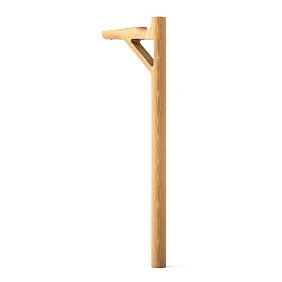
Brackets and shelves. Decorative Bracket made of solid wood in the same wood species as the legs — for shelves next to furniture. This is a detail that connects the furniture with the walls of the room, making the area unified.
Moldings and baseboard. Wooden moldings and solid wood baseboard create horizontal decorative lines that echo the vertical decor of the legs. In a classic interior — oak baseboard, oak furniture legs, oak moldings — everything in a single material and tone.
Color. It is not necessary for the legs and handles to be the same color. But they should be in harmony. White legs and white handles — a monochrome look. Dark legs and gold handles — a classic contrast. Natural wood in the legs and natural wood in the handles — an organic unity.
Mistakes when choosing round furniture supports
Experience is a good teacher, but an expensive one. It is better to learn from others' mistakes in advance.
Choose only by appearance. A beautiful photo in the catalog is not a guarantee of the right size and load. Always study the specifications: diameter, height, permissible load, type of fastening.
Not considering the weight of the furniture. Light, elegant legs under a heavy chest of drawers risk breaking the fastening and deforming the legs. You need to know the weight of the body before purchasing.
Choosing legs that are too thin for heavy furniture. A leg with a diameter of 30 mm under a chest of drawers weighing 60 kg is an incorrect load-to-cross-section ratio. The minimum diameter for heavy furniture is 50 mm.
Not checking the final height of the furniture. You bought the legs, installed them, and the furniture turned out to be too high or too low. Always calculate: body height + leg height = final item height. And compare it with the required value.
Forgetting about the fastening method. A leg with a tenon for a socket will not fit a base prepared for bolt fastening. Find out the type of mounting seat in advance.
Not matching the supports with handles and facades. This is a perception error: it seems that legs are a small detail. But a mismatch in the decorative language of the legs and furniture facades is immediately visible—although it's hard to explain why "something is off."
Choosing a random wood shade. Light beech legs with a dark furniture body and dark parquet create an unintentional conflict. If you want contrast, it should be deliberate and supported by other interior details.
Not planning the coating before installation. Painting the legs after installation is inconvenient and risks drips in hard-to-reach places. It's better to coat the ends and top part of the leg before installation.
What to buy together with round furniture supports
Legs are the first step. Here's what is often bought together with them for a complete furniture update.
wooden furniture handles — staples, buttons, rails — in the same wood species and tone as the supports. Without them, furniture renovation remains unfinished.
Wooden knob handle — for cabinets and chests of drawers in classic and neoclassical style. It repeats the round shape of the legs — creating a unified decorative program.
Wooden bracket handle — for drawers and doors. A horizontal accent on the facade paired with vertical legs — a classic combination.
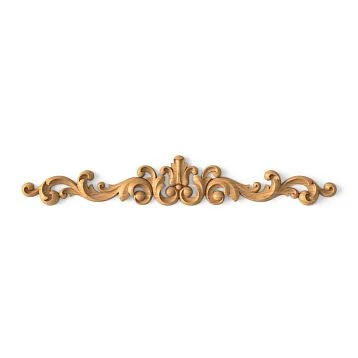
decor for furniture — overlays, rosettes, ornamental elements on facades. For classic and neoclassical furniture, they are mandatory.
Wooden decoration — a wider range of overlays for decorating cases and facades.
Decorative Bracket — for shelves and consoles next to furniture. Made from the same wood — connects the furniture to the wall.
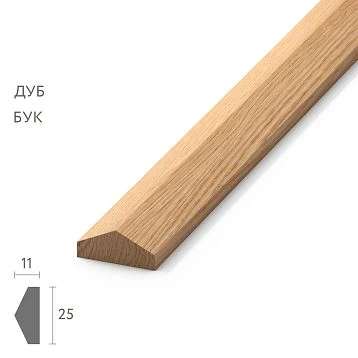
Moldings from solid wood — for wall decor and designing the area around furniture.
Classic Furniture — if furniture renovation is planned comprehensively, it is worth considering ready-made items in a unified style with the supports.
FAQ: Answers to popular questions
Where are round furniture supports used?
Round furniture supports used for cabinets, chests of drawers, wardrobes, tables, sofas, armchairs, poufs, and benches. They are universal in shape and blend organically with most styles — from classic to Scandinavian modern.
How is a round furniture support different from a regular leg?
Round furniture leg — is a type of furniture leg with a round cross-section. It can be smooth, tapered, turned, or decorative. The main difference from a "regular leg" is the cross-sectional shape and, as a rule, more thorough decorative surface treatment.
How to choose the diameter of a round furniture support?
The diameter is selected based on the weight of the furniture and its proportions. For a lightweight cabinet weighing up to 20 kg — 35–40 mm. For a chest of drawers weighing 40–60 kg — 50–60 mm. For heavy furniture — 60 mm or more. Additionally, the leg diameter should visually match the body: not too thin and not too massive.
Can round wooden supports be painted?
Yes. Unpainted Wooden legs made of beech or oak accept any coating: enamel, varnish, stain, oil-wax, antique. Before application, sanding to P180 is required, possibly priming. It is better to paint before installation — more evenly and conveniently.
What is better for classic furniture: simple or turned round supports?
For classic furniture, the right choice is Turned furniture legs with an expressive profile. They create a decorative accent and match the style. For modern furniture, Scandinavian style, or minimalism — smooth tapered or cylindrical supports without relief.
How to buy furniture supports wholesale for multiple items?
When purchasing multiple batches of legs, it's important to ensure they are all from the same series and manufacturer — a guarantee of identical height, diameter, and sanding quality. Buy legs for furniture in the required quantity with a 5–10% reserve — good practice.
Are central supports needed when restoring a long cabinet?
If the cabinet length exceeds 100–120 cm, a central support is advisable — especially for chipboard bases that sag under load. An additional Furniture support support in the center prevents deformation and ensures the durability of the structure.
About the company STAVROS
Behind every good interior is quality hardware — the kind that isn't seen but defines everything. STAVROS is a Russian manufacturer of solid wood products, offering a full range wooden furniture legs: simple and turned, round and conical, decorative and minimalist — for any piece of furniture and any style.
All STAVROS products are made from select beech and oak with multi-stage sanding and geometry control. This ensures uniform height within a batch, precise diameter, and a surface ready for painting without additional preparation. The range includes buy furniture leg available in a wide range of heights and diameters: from elegant legs for a bedside table to massive supports for a heavy chest of drawers. STAVROS produces not only legs but also a full set of wooden hardware: handles, overlays, brackets, moldings — all in a unified style, all from the same material, all as a system.