Article Contents:
- What upholstered furniture is actually made of
- Frame
- Filling and cushioning system
- Upholstery
- External components
- Which fields to record for a leg
- Height
- Cross-section and scale
- Shape
- Fastening
- Material
- Finish
- What to record after height verification
- What to check in the fastening assembly
- Ready-made leg
- Uncoated leg
- When solid wood is not the answer
- 1. Stable SKU
- 2. Clear geometry
- 3. Material
- 4. Coating
- 5. Compatibility with the mounting
- 6. Ability to get a sample
- 7. Repeat purchase
- 8. Commercial work with the manufacturer
- Final height
- Stability
- Visual scale
- Installation
- Interaction with upholstery
- Contact with the floor
- Why you can't just add a random 5%
- Why the procurement department speaks a different language than the designer
- The existing support is fully compatible
- Only the internal name differs
- The difference can be handled as a finish of one base part
- The part is not visible and does not affect function
- The collection has already been discontinued
- Mistake 1. Choosing only based on a photo
- Error 2. Approve the leg but not the mounting
- Error 3. Use a single SKU for the left and right part without marking
- Error 4. Change the height without re-checking the product
- Error 5. Keep reserve stock without linking it to the finish
- Error 6. Place a large order before the pilot batch
- Error 7. Do not record BOM changes
- Component statuses
- 1. Divide the furniture program into models
- 2. Identify installation zones
- 3. Shortlist candidates
- 4. Check technical compatibility
- 5. Obtain a sample
- 6. Assemble a prototype
- 7. Lock in the approved sample and BOM
- 8. Run a pilot batch
- 9. Issue an RFQ for the main production run
- 10. Perform incoming inspection and keep a reserve
- What components are needed for upholstered furniture production?
- What materials are used for upholstered furniture production?
- Which legs to choose for a production sofa?
- How do armchair legs differ from sofa legs?
- How to choose the height of a furniture support?
- How are wooden legs attached to a sofa?
- Do I need to order the mounting plate together with the leg?
- How do I calculate the number of legs for a furniture series?
- What spare parts reserve does a furniture factory need?
- How do I control a repeat batch of furniture legs?
- Where can an upholstered furniture manufacturer order wooden components?
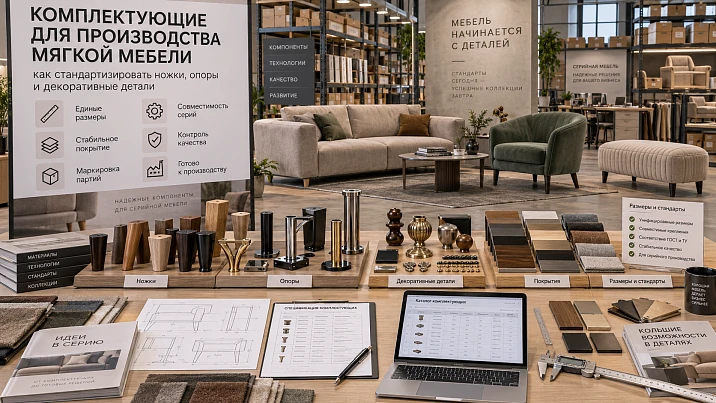
For a single sofa, you can pick out the legs you like at the assembly stage. For a series of dozens or hundreds of items, this approach stops working. The manufacturer needs to determine in advance which support belongs to a specific model, what its height and geometry are, what material it is made of, how it is attached to the frame, what finish is used, and under which SKU the part is included in the specification. Otherwise, the first batch of upholstered furniture and a repeat order a few months later may differ in fit, color, attachment, or appearance.
Therefore, components for upholstered furniture production should be viewed not as a set of individual parts, but as a managed system: furniture model → base construction → leg or support → attachment method → material → finish → SKU → approved sample → batch → incoming inspection → repeat purchase.
For a manufacturer of sofas and armchairs, it is especially important to separate what is part of the upholstered furniture construction from what relates to external components. Upholstery fabric, PU foam, the spring unit, and the transformation mechanism are purchased from specialized suppliers. In this chain, it makes sense to use STAVROS as a supplier for the groups that are actually represented in its assortment: furniture legs and wooden supports, hardware for legs and handles, individual wooden furniture components, samples and related decorative items.
The purpose of this article is to show how to turn a visible leg, support, fastener and decorative part from a "position we'll pick later" into a proper serial component with a clear specification, control and repeatable purchasing.
What upholstered furniture is actually made of
For the procurement department, the concept of "materials for upholstered furniture" is too broad. A single sofa combines several independent purchasing circuits, and each of them follows its own rules. If they are mixed in one line item called "components", it is impossible to control lead times, quality and cost.
It is convenient to divide the product into at least four groups.




Frame
This is the load-bearing part of the product: the frame, rails, crossbars, side elements, bases. Depending on the design, the manufacturer may use solid wood, plywood, panel materials, metal or combinations. The frame defines the geometry of the furniture and determines exactly where the supports will be installed.
For the topic of this article, what matters is not a full overview of frame materials, but the interface between the frame and the external leg: the mounting pad, hole, threaded insert, plate, embedded part, installation angle. If this area is not agreed in advance, even a correctly selected leg may turn out to be incompatible with the product.
A detailed overview of frames, fillers and upholstery materials has already been moved to a separate STAVROS material — furniture materials for upholstered furniture. Here these groups are needed only to understand the production structure.
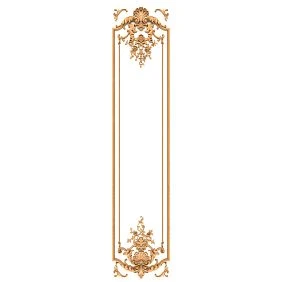
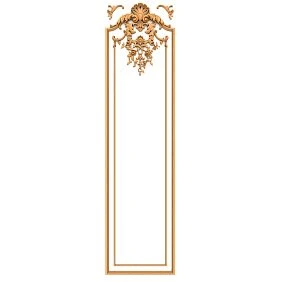
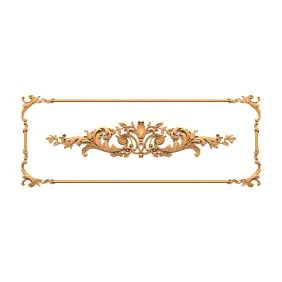
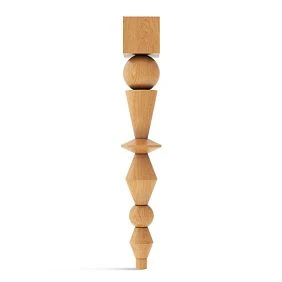
Our factory also produces:
Filling and cushioning system
PU foam, springs, elastic webbing, upholstery padding materials and other elements determine the softness, resilience and behavior of the seating area. They affect the final seat height, and therefore are indirectly related to the leg height. But this is a separate procurement stream.
The error appears when the height of the soft layers is changed after the leg has already been approved. For example, the designer increased the filling package, but the height of the support remained the same. As a result, the entire seating geometry of the product changed, even though formally "the leg is the same."
Get Consultation
Upholstery
Fabric, leather, faux leather and other upholstery materials are another independent circuit. It depends on the collection, color, cutting, fabric batch, wear-resistance requirements and sewing technology.
The query "buy material for sofa furniture upholstery" refers specifically to this area. It cannot be artificially redirected to the sale of wooden components. For the manufacturer, the correct logic is different: upholstery is purchased from a specialized supplier, while external wooden supports and decorative elements are purchased according to a separate specification.
External components
This is the group that is directly related to the topic of the article:
-
furniture legs;
-
decorative supports;
-
floor protectors;
-
mounting plates;
-
studs and fastening elements;
-
visible wooden parts;
-
individual decorative components;
-
in some models — ready-made wooden frames or their elements.
This is where standardization is especially important. Fabric may vary from color to color, but the approved leg of a single furniture series must remain identical in geometry, fit, material, and finish until a new revision of the design is released.
Materials for upholstered furniture and components are not the same thing
The queries "material for upholstered furniture" and "materials for upholstered furniture" often conflate everything a sofa is made of. For a household buyer, that is enough. For a factory — it is not.
A material is a raw material or semi-finished product from which a part is made: wood, plywood, MDF, PU foam, fabric, metal.
A component is already a specific production unit: the leg of a particular model, a mounting plate, a stud, a glide, a decorative element.
The difference is fundamental for BOM. In a specification, you cannot write "wood — 4 pcs." You need to write a specific part with a specific code and finish.
For example:
| Item code | Detail | SKU | Material | Quantity per item |
|---|---|---|---|---|
| LEG-FL | Front left leg | MN-___ | Beech | 1 |
| LEG-FR | Front right leg | MN-___ | Beech | 1 |
| LEG-R | Rear leg | MN-___ | Beech | 2 |
| PLATE | Mounting plate | FUR-___ | Metal | 4 |
| FOOT | Thrust bearing | FUR-___ | by SKU | 4 |
Even if two lines actually use the same leg model, the structure already shows the purpose of the part. If the front and rear supports are different, this is immediately reflected in the BOM.
For the buyer, this provides three advantages. First, it becomes clear how many units are actually required for the production program. Second, it is possible to check whether the correct batch has arrived. Third, six months later, there is no need to reconstruct the configuration from photos of an old sofa.
Sofa BOM: the outer leg must have its own SKU
In serial production, the wording "four wooden legs" is not a specification. It does not answer the questions that arise during ordering and incoming inspection.
Which model exactly? Which material? Which size? Which finish? Coated or uncoated leg? Is there a left and right version? Which thread? Which mounting plate? Which glide?
A good BOM links the part to a specific product model and structural function. For example, one collection may use several variants of upholstered furniture:
| Model | Front support | Rear support | Fasteners | Note |
|---|---|---|---|---|
| SOFA-3 | LEG-A | LEG-B | KIT-01 | 3-seater sofa |
| SOFA-2 | LEG-A | LEG-B | KIT-01 | 2-seater sofa |
| ARMCHAIR | LEG-C | LEG-C | KIT-02 | Chair |
| BENCH | LEG-D | LEG-D | KIT-03 | Ottoman |
This shows which items are unified and which are not. If a designer wants to maintain the overall style of a collection, this does not mean that all products must have the same leg SKU. It is more correct to create a family of supports that preserves the visual language, while the dimensions and construction match the specific product.
Which fields to record for a leg
The minimum production record must include:
-
internal item code;
-
supplier article number or SKU;
-
name;
-
material;
-
overall dimensions;
-
height;
-
seating geometry;
-
mounting type;
-
finishing;
-
color or finish code;
-
orientation, if any;
-
quantity per item;
-
specification revision;
-
link to the approved sample or reference photo.
If the supplier has technical materials, it is better to store them next to the BOM. For this, STAVROS has a section of catalogs and drawings, which can be used during technical approval of specific items.
A sofa and an armchair cannot be automatically fitted with the same support
One of the typical mistakes when launching an upholstered furniture collection is choosing a beautiful leg for the sofa and then automatically putting it on the armchair and bench. Visually, this seems logical: the items belong to the same series. Structurally, the solution may be incorrect.
A sofa, an armchair, and a bench differ at least in:
-
in mass;
-
the width and depth of the body;
-
the seat height;
-
the size of the lower frame;
-
the number of support points;
-
the location of the center of gravity;
-
the load dynamics when seated;
-
the visual scale.
Therefore, the same support is acceptable only after verification. Sometimes this is genuinely convenient: a single SKU reduces the range and simplifies purchasing. But unification should be a consequence of compatibility, not a goal in itself.
Let's imagine a collection of three items. The sofa has a massive lower frame and a large visual mass. The armchair is significantly narrower. If you put the same large leg on it, the design may look disproportionate. If you simply reduce the leg height without reworking the shape, the stylistic rhythm will also change. In this case, it is better to use two models from the same design family.
And conversely, if the sofa and armchair share the same requirements for height, mounting platform, and attachment, and the leg geometry visually works on both products, the shared SKU becomes a strong production solution.
Sofa legs as a serial component
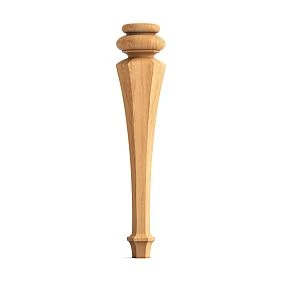
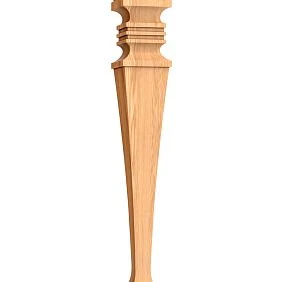
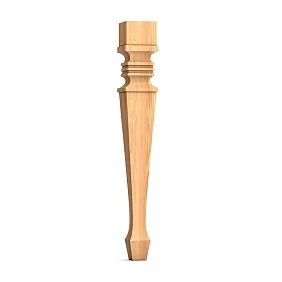
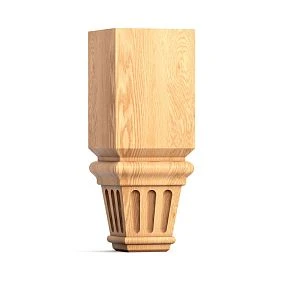
The STAVROS catalog features dedicated Sofa legs. For a furniture factory, it is useful to view such a section not as a showcase for a one-off purchase, but as a pool of candidates for a future serial component.
When choosing a leg for a series, six parameters must be checked consistently.
Height
The leg height affects the overall height of the product, the clearance under the body, and the mounting geometry. It cannot be changed without re-checking the finished sofa.
If the designer has defined the body and the soft package such that, before the supports are installed, the product has a nominal height of 330 mm, and the target seat height is 440 mm, one cannot automatically conclude that a 110 mm leg is needed. There may be a structural difference between the leg height and the seat height due to the position of the frame, the recessing of the support, the deformation of the soft layer, and the specific architecture of the product. The formula is used as a preliminary one, and the final height is confirmed by a prototype.
Cross-section and scale
The size of the support must match not only the load but also the visual scale of the furniture. A thin leg may be appropriate on a light armchair and look random on a massive sofa. An overly large support, on the contrary, will visually weigh down a small ottoman.
Handle shape affects not only style but also usability. The website offers a variety of shapes, from traditional brackets to modern minimalist button-style handles. The choice of a specific shape depends on personal preferences and the interior style in which they will be used.
A turned, geometric, carved, rectangular, or other shape must be coordinated with the design of the series. At the same time, the complexity of the geometry increases the requirements for surface and finish control: on an elaborate profile, differences in shade and treatment can be more noticeable than on a simple shape.
Mounting
The leg does not exist separately from the mounting assembly. Before ordering, you need to know how it connects to the frame and what hardware is used.
Material
For a visible wooden support, the material determines not only the mechanics but also the appearance after finishing. If the series is produced in several colors, you need to decide in advance whether one material will be used across all finishes or whether some versions require a separate specification.
Finish
The manufacturer has two basic scenarios: order a ready-made finish, or receive the leg unfinished and integrate painting/tinting into your own production process. Neither option is universally better — the decision depends on the production chain.
The commercial query "wooden legs for sofas wholesale" is revealed here through its production meaning: the factory is buying not just four legs, but a stable series of identical parts that must repeat in the next batch of furniture without any change in geometry or finish.
Chair legs: a separate check even within a single collection
STAVROS has a separate selection chair legsThis is a useful signal for the designer: the use of a support is tied to the furniture type, not just to the visual style.
A chair usually has a more compact body than a sofa, but that does not make the task easier. On the contrary, a deviation of a few centimeters in height or an oversized support changes the proportions of a small item more noticeably.
When prototyping a chair, you need to check:
-
final seat height;
-
stability on four points;
-
actual position of the supports relative to the body edge;
-
no conflicts with the lower frame and upholstery;
-
ease of installation;
-
external scale of the part;
-
identical front and rear supports, or a justified distinction.
If the armchair and sofa use the same leg, this decision is recorded in the BOM as deliberate unification. If the models are different but belong to the same stylistic family, this is also recorded: for example, LEG-SOFA-A and LEG-CHAIR-A.
This way, the manufacturer gets a system rather than a chaotic list of parts.
Benches and poufs: a small body does not mean simple configuration
For benches, poufs, and soft stools, manufacturers sometimes simplify their approach: the item is smaller than a sofa, so the requirements for the support are supposedly lower. This is dangerous logic. People sit on such furniture dynamically, shift their weight to one edge, and sometimes move the item by its body. The load is distributed differently than with a stationary object.
STAVROS specifically highlights Legs for stools and benches. For a serial model, it is necessary to check not only strength but also proportion: a short bench with an excessively massive support will look heavy, while a long one may require a different base scheme or additional support points.
Particular attention should be paid to long benches. The formula "four legs per item" is only suitable when this is provided for by the design. If the length and frame require an intermediate support, it must exist as a separate BOM item. One cannot hope that the assembler will "add something from stock if necessary."
For a pouf, another scenario is important. The body may be visually almost cubic, and the legs barely noticeable. But if one batch gets a support 50 mm high and the next 70 mm, the entire seat height and the perception of the item will change. The fact that a part is almost hidden does not make it insignificant for standardization.
One upholstered furniture collection — one support system
A good collection does not have to use the same leg on all models. It is far more useful to design a support system where the overall character and logic are preserved, but the size and construction are adapted to the specific item.
For example:
| Product | Support family | SKU | Reason |
|---|---|---|---|
| 3-seater sofa | LEG-A | MN-___ | large body |
| 2-seater sofa | LEG-A | MN-___ | unification |
| Chair | LEG-A-C | MN-___ | smaller scale |
| Ottoman | LEG-A-B | MN-___ | different height and seating position |
This way the designer gets a cohesive collection, and production gets a controlled product range.
There is a temptation to reduce SKUs at any cost. If one leg fits a sofa, an armchair, and a bench, purchasing does become simpler. But artificial unification can worsen ergonomics or appearance. The goal of a production standard is not the minimum number of SKUs in itself, but the minimum sufficient number of SKUs without compromising product quality.
The practical criterion is simple: a new SKU makes sense if it solves a problem that cannot be properly addressed by an existing item. For example, a different height, a different cross-section, mirrored orientation, a different type of attachment, or a finish. If the difference exists only "just in case," the specification should be reviewed.
The height of the leg affects the finished geometry of the furniture
In upholstered furniture, the height of the support is linked to several parameters at once: the position of the lower frame, the thickness of the soft padding, the clearance from the floor, and the final seat height. Therefore, replacing a leg is a change in construction, not a cosmetic rearrangement.
The simplified logic looks like this:
frame geometry + soft layers + support position = final seat height.
However, this formula cannot be used as an exact calculation. A soft pack compresses under load, the leg may not enter the mounting unit at its full height, and the frame is sometimes positioned above the lowest point of the body.
Therefore, the production process must proceed in two stages.
First, the designer performs a calculation based on the model and drawing. Then the finished geometry is checked on a prototype. If the actual fit differs from the calculated one, it is corrected not "by eye," but through a revision of the specific part.
What to record after checking the height
After the prototype is approved, the documentation must retain:
-
leg height;
-
position of the mounting plane;
-
height of the lowest point of the body;
-
final product height without load;
-
control seat height;
-
soft package version;
-
BOM revision.
The last point is especially important. If the technologist later changes the PU foam or the base structure, the system must show that the support was approved under the previous revision. Then the change will not go unnoticed.
The front and rear legs may be different parts
In classic and neoclassic upholstered furniture, the front support is often more decorative than the rear one. There are also designs where the legs differ in tilt, mounting part, or orientation relative to the body.
If the parts are different, the line “legs — 4 pcs.” creates a risk of error. It is more correct to separate them:
-
LEG-FL— front left; -
LEG-FR— front right; -
LEG-RL— rear left; -
LEG-RR— rear right.
If the two rear ones are identical, you can use one SKU with a quantity of 2. If the front ones are a mirrored pair, this must be explicitly reflected.
This level of detail seems excessive only until the first error on the line. Imagine a box of 400 legs of two mirrored types arriving at the site without internal marking. The assembler has to determine orientation visually. The risk of mixing up parts grows, and correcting a finished product turns out to be more expensive than simple marking at the procurement stage.
Left and right parts: when a separate SKU is needed
Asymmetry is not limited to legs. It can be a carved decorative element, a frame fragment, an overlay, or a bracket. If the geometry is mirrored, technically these are two different parts.
There are two correct approaches.
The first is separate SKUs:
DECOR-L
DECOR-R
The second is one main supplier article number, but two internal production codes indicating orientation.
Which method to choose depends on the factory's accounting system. The main thing is that the warehouse and assembly do not work with an undefined line item like “decor — 2 pcs.”
On the packaging, it is useful to duplicate the orientation with a letter designation, a pictogram, or a photograph. This is especially important for a complex carved profile, where mirroring is not always obvious without comparison.
Fastening is part of the component, not a question for the installer
A leg that cannot be attached to the frame in a standard and repeatable way is not yet a finished serial component. The fastening system must be developed simultaneously with the support itself.
The assembly includes:
leg → thread or mounting hole → stud/fastener → mounting plate or insert → furniture frame.
Each transition must be compatible in geometry and purpose.
STAVROS has a separate category hardware for legs and handles, which features, in particular, mounting plates, studs, and glides. For production, this is convenient because the leg can be considered together with the mounting interface, rather than as an isolated wooden part.
What to check in the mounting assembly
Before launching a production run, the process engineer needs to answer specific questions:
-
Where is the mounting plane located?
-
Which element connects the leg to the frame?
-
What type and size of thread is used?
-
What is the connection depth?
-
Is there a risk of the part rotating?
-
Is a mounting plate required?
-
How is the part oriented during assembly?
-
Is the fastener accessible after upholstery?
-
Can the leg be removed during service repair?
-
Does the fastener conflict with frame elements?
These are the very questions that move a “sofa leg” from the decorative category into an engineering-validated component.
The mounting plate must be coordinated together with the leg
A poor sequence looks like this: the factory approves the appearance of the leg, orders a batch, and only after delivery begins looking for a suitable plate. This creates an additional selection cycle and sometimes requires reworking the frame.
The correct sequence is reversed: the assembly unit is treated as a single system already at the prototype stage.
If the leg is installed via a plate, both items must be present in the BOM. For example:
| Position | SKU | Per product | Link |
|---|---|---|---|
| LEG-A | MN-___ | 4 | Main support |
| PLATE-A | FUR-___ | 4 | compatible with LEG-A |
| FASTENER-A | FUR-___ | 4 | assembly fasteners |
| FOOT-A | FUR-___ | 4 | floor glide, if provided |
When LEG-A is changed, the engineer immediately sees that three related items need to be rechecked. This is better than discovering an incompatibility during assembly.
The floor glide and floor protection must be included in the specification if the design requires them
The floor glide is often perceived as a small consumable part that can be added at the assembly area. For serial furniture production, this approach creates unpredictability.
If the floor glide is provided by the design, it must have an SKU and quantity. Otherwise, one batch may receive a felt element, another a plastic one, and a third may go without it. The buyer will see three different versions of the same product.
It is especially important to consider the effect of the glide on the actual height and behavior of the furniture on the floor. Even a small component changes contact with the surface, and in an item with four supports, the difference between the elements can affect stability.
The glide should be checked together with the leg: diameter or contact area, method of attachment, protrusion relative to the base, appearance. If it is self-adhesive, production must understand at which stage it is installed and how its presence is controlled.
Uncoated legs: when it is convenient for a furniture factory
For a soft furniture manufacturer, an unpainted leg may not be a semi-finished product "without readiness," but on the contrary, a more manageable component. The STAVROS catalog includes unpainted furniture legs and supports.
This option is convenient if the factory wants to include wooden supports in its own finishing system. For example:
-
tint the legs in the same color as the exposed parts of the frame;
-
use a branded palette;
-
apply enamel or patination together with other wooden parts;
-
control gloss and shade on your own line;
-
produce one leg geometry in several color versions.
Then in the BOM, the part and the finish need to be separated. For example:
MN-___ / BEECH / RAW
after its own process turns into:
LEG-A / FINISH-03.
This makes it easier to manage the colors of the series. One unpainted base can be used for several finishes, but each finished version in the production documentation must have a clear designation.
Finished coating or finish at the factory
It cannot be claimed that one option is always better. The decision depends on the production model.
Finished leg
Advantages:
-
fewer operations inside the factory;
-
simpler part routing;
-
no separate loading of the painting area is required;
-
it is faster to install the component during assembly.
Limitation: the shade must be agreed in advance with the other visible wooden elements. If the upholstery color changes, this is not a problem in itself, but the collection logic must remain controlled.
Uncoated leg
Advantages:
-
the factory controls the color itself;
-
a unified finishing system with the frame can be used;
-
it is easier to produce several finishes of the same geometry;
-
it is easier to adapt the part to a designer collection.
Limitation: an additional technological operation is introduced, along with dedicated surface control and responsibility for the final finish.
For the buyer, the selection criterion is formulated not as “which is cheaper per piece,” but as which scheme delivers a more stable final result considering all operations.
Material for upholstered furniture: where solid wood is truly needed
The query "which material is best for upholstered furniture" is too broad, because within a single sofa materials perform completely different functions.
For the frame, some parameters matter. For the upholstery, others. For the filling, still others. For the visible leg, yet others.
Solid wood is especially logical where a part simultaneously:
-
bears the load;
-
remains visible;
-
shapes the style;
-
receives a turned or carved profile;
-
must be repaired or replaced as a separate component.
That is precisely why wooden legs and supports are a separate product group, and not just "a piece of wood." The factory buys a ready-made geometry that needs to be matched to its own product.
In the of wood and MDF products not only supports can be considered, but also other elements, if they are actually provided for by the design of a specific series.
When solid wood is not the answer
When it comes to upholstery, filling, or the spring system, solid wood does not factor into the choice at all. Therefore, articles and commercial pages about upholstered furniture should avoid the false conclusion that "wood is the best material." The right question is always: the best material for which component and which function?
This same rule is useful for the procurement department. Instead of a single line item "materials for upholstered furniture production," the procurement map is broken down by functional groups and suppliers.
Upholstery material for a sofa is a separate procurement track
In search semantics, there are queries related to purchasing upholstery materials. They are useful for understanding search demand, but they should not change the subject of the article. An upholstered furniture manufacturer does indeed purchase fabric, leather, faux leather, and other coverings, but this is a separate market and a separate group of suppliers.
For a factory, it is more appropriate to structure the procurement architecture as follows:
| Contour | What is purchased | What is controlled |
|---|---|---|
| Frame | plywood, wood, metal, boards | geometry, strength, cutting |
| Filling | PU foam, springs, decking | density, elasticity, dimensions |
| Upholstery | fabric, leather and analogues | color, batch, texture, cutting |
| External components | legs, supports, fasteners, decor | SKU, size, finish, mounting |
In this scheme, STAVROS is logically associated specifically with the last contour and with those wooden components that are presented in the catalog. This approach is more honest both for the reader and for search intent.
If the factory changes the fabric within the same model, this does not necessarily require changing the leg. But if the designer changes the stylistic concept of the series and introduces a different color of visible wood, then a decision is needed: whether the previous finish remains, whether a new version is launched, or whether an unpainted part with its own finish is used.
In other words, upholstery and support live in different BOM contours, but meet in one final product. That is precisely why they cannot be purchased chaotically.
Furniture hardware manufacturer: what really matters to an upholstered furniture factory
The query "furniture hardware manufacturer" can refer to dozens of product groups. For upholstered furniture, the scope must be narrowed immediately: this article covers visible supports, legs, mounting hardware, and certain decorative wooden components.
What matters to a factory is not a beautiful catalog in itself, but the supplier's ability to support a serial specification.
1. Stable SKU
The item code must unambiguously designate a specific part. If, over time, a different geometry or a different version starts arriving under the same code without an agreed replacement, the BOM loses its meaning.
2. Clear geometry
For the designer, dimensions, the mounting part, the attachment position, and the shape are important. The more precisely this data is fixed before purchasing, the lower the likelihood of fitting adjustments in production.
3. Material
The material affects processing, finishing, and appearance. It must be part of the specification, not a verbal addition to the order.
4. Finish
It is necessary to understand whether a finished part, an unpainted blank, or a specific finish is supplied. For serial furniture, these are different items.
5. Compatibility with fastening
The leg and the mounting hardware must form a coordinated assembly.
6. Availability of a sample
Before the main production run, the factory must check the actual part. For part of the STAVROS decorative range, there is a separate section product samples. If a production sample is required for a specific leg, its availability and format must be agreed separately with the manager rather than assumed automatically.
7. Repeat purchase
The buyer must understand in advance how a repeat order is placed: by SKU, finish, material, and surface treatment.
8. Commercial work with the manufacturer
STAVROS provides a separate page of terms for furniture manufacturersFor a B2B customer, this is a logical entry point once the internal BOM has already been formed and the batch volume is clear.
“Quality hardware” needs to be translated into measurable parameters
The phrase “quality furniture hardware” by itself gives the technologist nothing. For production, quality must be broken down into attributes that can be checked.
For a wooden leg, this could be:
-
matching the SKU;
-
matching the approved geometry;
-
correct height;
-
correct mounting part;
-
no mixed-up orientation;
-
compliance of the material;
-
matching the approved finish;
-
suitability of the fastening;
-
uniformity of parts within the batch;
-
absence of visible surface damage;
-
compliance with the approved sample.
The last point is especially useful. If the factory has an approved sample, the dispute "is this shade close enough or not" is replaced by a comparison with a specific reference.
It is important to understand the boundary. An approved sample does not override technical documentation. It does not replace dimensions, tolerances, and finish description. It supplements them where visual parameters are difficult to describe with a single number.
Upholstered furniture prototype before serial launch
Before launching a large production run, you need to assemble a real product with real external components. Ideally, at least one sofa and one armchair, if both models are part of the collection.
The prototype is not needed for a beautiful photograph. It verifies what is not always visible in a CAD model.
Final height
Even a correctly calculated support can produce unexpected seating geometry after the upholstered assembly is put together.
Stability
The product must stand firmly on all intended points. If one support ends up "in the air," you need to determine the cause: frame, fasteners, leg geometry, assembly, or surface.
Visual scale
On screen, the designer sees the model up close. In a real room, the leg is perceived in the scale of the entire sofa. It is the prototype that shows whether it is too thin, too massive, too tall, or too decorative.
Installation
The assembler must physically install the support using standard tools. If access to the fasteners is inconvenient, this is discovered before mass production.
Interaction with upholstery
The fabric edge, decorative piping, or lower upholstery panel must not conflict with the mounting area.
Contact with the floor
The glide, the actual support area, the presence of wobbling, and the appearance of the lowest point are checked.
After the prototype, you cannot simply say “everything works.” You need to update the BOM and record exactly which revision is considered approved.
Golden sample — the reference standard for a furniture series
After a successful prototype, it is useful for the factory to keep a reference standard. In manufacturing practice, it is often called an approved sample or golden sample.
This could be:
-
fully approved product;
-
separate set of external parts;
-
one reference leg;
-
set of photographs with a control scale;
-
finish card;
-
coating sample;
-
signed set with revision number.
For the leg, the following must be linked in the reference:
SKU → material → size → finish → fastening → BOM revision.
Then the next batch is compared not with the designer's memory or a photo from a messenger, but with a fixed reference.
A golden sample is especially useful for seasonal or irregular purchases. If the factory returns to m
Why you can't just add a random 5%
A percentage buffer seems convenient, but sometimes it creates the wrong reserve. If one collection uses four leg SKUs, a general buffer of "5% of all legs" guarantees nothing. You can end up with extra simple rear supports and not a single spare decorative front leg.
The reserve is calculated per specific SKU.
For example:
| SKU | Base requirement | Production reserve | Service reserve | Total |
|---|---|---|---|---|
| LEG-A | 1200 | 24 | 12 | 1236 |
| LEG-B | 600 | 12 | 8 | 620 |
| LEG-C-L | 160 | 4 | 2 | 166 |
| LEG-C-R | 160 | 4 | 2 | 166 |
The numbers here are an example of the methodology, not a universal standard. Each factory sets its own values after assessing risks.
The reserve must be stored per specific variant
An entry like "20 spare wooden legs" is useless if there are five similar models in stock.
A working label might look like this:
MN-XXX / BEECH / FINISH-03 / LOT-02 / 20 PCS
or in the internal system:
COLLECTION-A / LEG-F / FINISH-03 / REV-B.
The main thing is that a service employee a year later can unambiguously match the part to a specific sofa.
This is especially important for the finish. A geometrically identical leg in a natural color and a dark finish are two different service items. They cannot be mixed into a common reserve.
Batch marking links purchasing to the finished product
For upholstered furniture, a convenient scheme is:
COLLECTION / MODEL / LEG-SKU / FINISH / LOT
For example:
NORD / SOFA-3 / LEG-A / WALNUT-02 / LOT-07.
Such marking is useful not only in the warehouse. If a complaint arises later, the factory can determine which batch of external components was used to assemble the product.
If the problem is isolated, that is one scenario. If several complaints relate to the same LOT, that is already a signal for batch analysis.
Ideally, the supplier's batch number or an internal acceptance number is linked to the production order. Then traceability runs from the incoming box to the finished sofa.
Incoming batch inspection before assembly
New boxes of legs should not automatically be sent to the assembly line. First, the batch undergoes incoming inspection.
Minimum checklist:
-
whether the SKU matches;
-
does the quantity match;
-
whether the material matches the order;
-
whether the height matches;
-
is the mounting part correct;
-
is the orientation correct;
-
does the finish match;
-
is the required hardware present;
-
does the batch match the approved sample;
-
are there any obvious damages.
For large batches, sampling inspection according to the factory's internal regulations may be used. But the regulations themselves must exist before the goods are received. You cannot invent criteria after a dispute has already arisen.
Mixed boxes are checked separately. If a single shipment contains front and rear legs, the labeling must prevent them from being accidentally combined.
Repeat order a few months later: you need to buy not "the same ones," but the same specification
One of the most common weak points of small-scale production is repeat purchasing based on a photo or verbal description. The first order was placed by one manager, the second by another. The email to the supplier contains the wording "we need the same legs as last time." For serial furniture, this is not enough.
A repeat order must contain at minimum:
-
supplier SKU;
-
the factory's internal code;
-
material;
-
execution;
-
finish;
-
quantity;
-
the previous order number or LOT, if one is used;
-
the current BOM revision;
-
required date;
-
a reference to the approved sample if a visual parameter is critical.
If the furniture model has not changed, the buyer must be able to reproduce the order without the designer's involvement. This is a good test of documentation quality.
Let's imagine another situation. Six months later, the supplier reports that the previous item has been replaced with a new one. You cannot automatically accept the replacement just because "it looks similar." The new part goes through an abbreviated qualification cycle: drawing verification, material and finish check, fitting to the assembly unit, and a prototype if necessary. After approval, a new BOM revision is issued.
This is how traceability is maintained: old items were assembled with LEG-A REV-A, new ones with LEG-A REV-B.
What the procurement department must send in an RFQ
An RFQ — a request for quotation — must be understandable to the supplier without additional guesswork.
A minimal table might look like this:
| Field | Example |
|---|---|
| Collection | SOFA-LINE-A |
| Model | SOFA-3 |
| SKU | MN-___ |
| Name | Wooden furniture leg |
| Material | Beech |
| Finish | FINISH-03 / to be agreed |
| Quantity per product | 4 |
| Planned quantity | 300 units |
| Calculated quantity | 1200 pcs. |
| Reserve | as a separate line |
| Required date | ..____ |
| Sample | required / approved |
| BOM revision | REV-B |
If the program includes an armchair and a bench, separate rows are added for each SKU. There is no need to collapse everything into "leg set — 2000 pcs." if the set contains several types of parts.
A good RFQ saves time for both parties. The supplier's manager does not need to figure out exactly what is required, and the buyer receives an offer that can be compared with the BOM.
Why the procurement department speaks a different language than the designer
A designer thinks in form, proportion, color, and style. A buyer thinks in quantity, lead time, SKU, batch, and repeatability. Both languages are needed, but at different moments.
Before prototype, the design language dominates: form and appearance are chosen.
After design freeze, the priority changes. The procurement document must be extremely unambiguous. The wording "dark classic leg" is no longer acceptable. A code, material, and specific finish are required.
It is at this stage that the commercial request "supplier of components for upholstered furniture" takes on practical meaning: the factory is not looking for a store with beautiful products, but for a supplier with whom the same specification can be repeated.
Frames and individual wooden components: do not artificially expand the supplier's role
In the STAVROS catalog there is Furniture Frames and Pedestals. This is a separate product group that can be considered if a specific project actually uses a ready-made or specialized wooden frame.
But the existence of such a category does not mean that STAVROS should be positioned as a supplier of the entire structural framework of any sofa. For upholstered furniture, the factory can manufacture the main frame itself and purchase only the external supports. In another collection, it may use a separate ready-made wooden component.
The article must remain accurate: the supplier's assortment is included where it corresponds to the actual construction.
When there is no need to buy a new leg or create a new SKU
Standardization does not mean constantly expanding the components catalog. There are situations where a new SKU will only complicate production.
The existing support is fully compatible
If the current model fits in height, mounting, material, finish, and visual scale, a new similar item creates excess inventory without any production benefit.
Only the internal name differs
Sometimes two departments create different codes for the same physical part. Before adding a SKU, it is worth checking the master reference and eliminating the duplicate.
The difference can be handled as a finish of one base part
If the geometry is the same and only the finish changes, it is sometimes more convenient to manage one base part and separate finish codes. This depends on the ERP and the painting process.
The part is not visible and does not affect function
A decorative replacement for a hidden part is pointless if it does not improve the mechanics, assembly, or service.
The collection has already been discontinued
Creating a new long-term specification for a one-off service repair may be impractical. For such a case, a separate service order is better.
The "when not needed" block protects production from the opposite extreme: excessive standardization, where a new code is created for every small change.
Common mistakes in standardizing legs and supports
Mistake 1. Choosing only by photo
Why it happens: the design is approved from a catalog without a real sample.
Consequence: the actual scale, color, or geometry does not match expectations.
How to prevent it: obtain the real part, verify it on a prototype, and keep an approved sample.
Mistake 2. Approving the leg but not the fastening
Why it happens: fastening is considered a task for the assembly area.
Consequence: after the batch arrives, it turns out that a different plate, thread, or insert is needed.
How to prevent it: qualify the entire assembly — leg, fastening, plate, frame.
Error 3. Using a single SKU for the left and right part without marking
Why it happens: the parts look visually similar.
Consequence: mis-sorting in the warehouse and assembly errors.
How to prevent: separate internal codes or clear orientation in the packaging.
Error 4. Changing the height without re-checking the product
Why it happens: an alternative leg is available faster.
Consequence: the seating height and the furniture proportions change.
How to prevent: route any geometry change through a revision and prototype.
Error 5. Storing reserve stock without linking it to a finish
Why it happens: all legs of the same shape are considered interchangeable.
Consequence: the service part fits geometrically but differs in color.
How to prevent: mark the reserve stock by SKU and finish.
Mistake 6. Placing a large order before a pilot batch
Why it happens: the desire to get a price for a large volume right away.
Consequence: an error in fastening or marking scales to the entire production run.
How to prevent: first run a new component through a sample, prototype, and small batch.
Mistake 7. Not recording BOM changes
Why it happens: minor adjustments are communicated verbally.
Consequence: warehouse, purchasing, and assembly work from different versions.
How to prevent: any approved replacement gets a new revision.
How a factory can organize a master specification of external components
If there are many models, separate tables for each sofa quickly fall out of sync. It is more practical to create a master reference of external components.
For example:
| Internal SKU | Supplier SKU | Category | Material | Finish | Application | Status |
|---|---|---|---|---|---|---|
| LEG-001 | MN-___ | Leg | Beech | RAW | Chair | approved |
| LEG-002 | MN-___ | Leg | Oak | F03 | Sofa | approved |
| PLT-001 | FUR-___ | Plate | Metal | — | LEG-002 | approved |
| FOOT-001 | FUR-___ | Thrust bearing | — | — | LEG-002 | approved |
The BOM of a specific model already references these internal SKUs.
The advantage of this architecture is that one part can be used in several products without copying the description. If a parameter changes, the system shows which models are affected.
Component statuses
It is useful to use simple statuses:
-
CANDIDATE— candidate; -
SAMPLED— sample received; -
PROTOTYPE OK— tested on prototype; -
APPROVED— approved for serial order; -
HOLD— temporarily blocked; -
OBSOLETE— withdrawn from use.
Then the buyer will not accidentally order a part that the designer liked but the engineer has not yet approved.
How to conduct a design freeze for external parts
Design freeze is the point after which the production configuration ceases to be a subject of free design exploration.
Before the freeze, shapes, shades, and options can be compared.
After the freeze, any change goes through as a controlled revision.
For upholstered furniture supports, the freeze package should include:
-
list of approved SKUs;
-
drawings or dimensions;
-
material;
-
finish;
-
mounting unit;
-
photographs;
-
approved sample;
-
BOM for each model;
-
packaging standard within the factory;
-
reserve;
-
the person responsible for the change.
This is not bureaucracy for the sake of documentation. A freeze is needed so that the procurement department can work independently and not return to design choices with every new order.
What role STAVROS can play in a furniture factory's chain
For accurate positioning, it is important not to promise what is not in the product model.
STAVROS should not be presented as a universal supplier of upholstery fabrics, PU foam, spring systems, or transformation mechanisms. In the context of upholstered furniture, its role is clearer and stronger if limited to its actual areas:
-
wooden furniture legs and supports;
-
mounting hardware for legs;
-
individual wooden furniture components;
-
furniture frames in those projects where they are applicable;
-
decorative items;
-
samples for the presented categories;
-
B2B work with furniture manufacturers.
On the page for furniture manufacturers you can move from technical selection to a commercial request: pass to the manager the SKU, quantity, required finish, and purchasing schedule.
This is stronger than a generic call to “buy hardware,” because the manufacturer arrives with a prepared specification.
Sequence of work for an upholstered furniture manufacturer with external components
The practical process can be reduced to ten stages.
1. Divide the furniture program into models
A sofa, armchair, bench, and pouf each receive their own codes.
2. Identify mounting zones
The designer determines where the supports are located and what interface the frame has.
3. Select candidates
Leg and support catalogs are used, and suitable items are selected by geometry and style.
4. Check technical compatibility
Height, fit, material, fastening, and orientation are checked.
5. Obtain a sample
The actual part is tested before mass production.
6. Assemble a prototype
The support is installed on a real sofa or armchair.
7. Record the approved sample and BOM
After successful verification, a revision is issued.
8. Run a pilot batch
It is no longer a single part that is being checked, but the repeatability of a small production volume.
9. Issue an RFQ for the main production run
The buyer provides the supplier with exact SKUs and quantities.
10. Perform incoming inspection and keep a reserve
The batch is compared against the reference sample, and the service stock is labeled by finish.
This scheme turns external components from a source of random problems into a manageable part of production.
How to reduce the range without risking the production run
The larger the upholstered furniture collection, the stronger the temptation to create a separate leg for almost every model. After a few seasons, the warehouse ends up with dozens of similar SKUs, the buyer orders small batches, and the service team finds it difficult to determine which part belongs to a specific item. That is why, after the prototype, it is useful to carry out a separate unification procedure.
First, an applicability matrix is compiled:
| SKU | 3-seater sofa | 2-seater sofa | Armchair | Bench | Status |
|---|---|---|---|---|---|
| LEG-A | Yes | Yes | No | No | approved |
| LEG-B | No | No | Yes | Yes | approved |
| LEG-C | No | No | No | Yes | candidate |
Then each new item is checked with the question: what specific problem does it solve that cannot be addressed by an already approved part?
If the answer is a different height, an incompatible mounting, a required mirrored orientation, or a noticeably different scale, a new SKU is justified. If the only difference is that the designer liked another similar shape, that is a weak basis for serial production.
This approach is especially useful when legs for upholstered furniture manufacturers are purchased for several models at once. It is easier for the supplier to form a clear large batch, for the factory to receive and distribute it, and for the planning department to forecast demand.
Unification also helps if supports are required for upholstered furniture manufacturers with the same mounting interface. Even when the external geometry differs, a single mounting principle can reduce the number of mounting plates and fastener sets.
At the same time, unification must not become an end in itself. Serial legs for sofas and serial legs for armchairs may belong to the same design family but use different sizes. This is a normal situation if the difference is confirmed by the design and prototype.
What to do when replacing a supplier, material, or finish
In the life cycle of a collection, the specification almost inevitably changes. A supplier may discontinue an item, the factory may change the color program, a designer may introduce a new finish. The most dangerous mistake at this moment is to treat the replacement as an administrative edit.
If the supplier changes, even a visually similar leg is considered a new production part until compatibility is proven.
The check proceeds along the chain:
geometry → mounting interface → fastening → material → surface → finish → prototype → new revision.
If only the material changes, an assessment is also needed. Two parts of the same shape made of different materials may be processed differently and look different after coating.
If only the finish changes, the mechanical prototype sometimes does not need to be fully repeated, but a visual sample and color approval are needed. The decision depends on whether the change affects the construction.
For the factory, it is useful to separate the reason for the revision:
-
REV-M— material change; -
REV-F— finish change; -
REV-G— geometry change; -
REV-H— change of fastening; -
REV-S— change of supplier.
This is an internal coding example, not a mandatory standard. Its purpose is to make the change history readable.
Such control is especially important when materials for upholstered furniture production are purchased through different supply chains. A change in upholstery fabric may not affect the support, while a change in the lower frame may directly require rechecking the leg. Similarly, materials for manufacturing upholstered furniture cannot be changed in isolation if they affect the fit geometry or the mounting interface.
How to compare commercial offers for wooden supports
Price per piece is only one parameter. For a serial program, offers must be compared in the same configuration.
If a factory requests wooden legs for sofas wholesale, two offers may have different terms: one refers to an unfinished part, the other to a finished surface; one includes the required fasteners, the other does not; lead times and minimum order quantity may also differ.
Therefore, the comparison table should contain:
| Parameter | Supplier A | Supplier B |
|---|---|---|
| SKU / model | ___ | ___ |
| Material | ___ | ___ |
| Finish | ___ | ___ |
| Quantity | ___ | ___ |
| Fastening | included / separate | included / separate |
| Sample | ___ | ___ |
| Lead time | ___ | ___ |
| Repeat order | ___ | ___ |
| Batch cost | ___ | ___ |
Only after the specification is aligned can commercial terms be compared correctly.
For components used in upholstered furniture production, the cost of ownership of a part within the process is especially important. A slightly cheaper leg can turn out to be more expensive if it requires additional processing, a separate plate, manual fitting, or creates a high defect rate. Conversely, a higher price for a finished component is sometimes offset by a reduction in internal operations.
Therefore, a buyer must consider not only the purchase price but also the part's impact on production: processing, storage, assembly, inspection, and service.
FAQ
What components are needed for upholstered furniture production?
The composition depends on the design. In addition to the frame, filling, upholstery, and mechanisms, the product has external components: legs or supports, fasteners, mounting plates, glides, and decorative elements. For serial production, each such part must have its own SKU and a place in the BOM.
What materials are used for upholstered furniture production?
Different materials are used for different assemblies: wood, plywood, panel materials, and metal in the frame; PU foam and other fillers in the soft pack; fabrics and leather in the upholstery; solid wood may be used in visible legs and decorative elements. No single material can be called "the best for all upholstered furniture" without specifying the part.
Which legs should be chosen for a serial sofa?
First, the required height, mounting geometry, and attachment are determined, then the material, shape, and finish are chosen. After that, the leg is tested on a prototype. For a serial model, not only appearance matters but also the ability to repeatedly obtain the same SKU in the agreed specification.
How do chair legs differ from sofa legs?
The differences are determined not by the name of the furniture, but by the design: the scale of the frame, the seat height, the mounting area, and the load pattern. A single leg can be used on both a sofa and a chair if compatibility is confirmed. You should not automatically transfer a support from one model to another.
How to choose the height of a furniture support?
The height is calculated together with the geometry of the frame and the upholstered package, and then verified on an assembled prototype. You cannot replace an approved leg with a taller or shorter one just because it is in stock: this will change the geometry of the finished product.
How are wooden legs attached to a sofa?
The specific method depends on the design of the leg and the frame. The assembly may use studs, mounting plates, threaded elements, and other fasteners. The key for a series is to approve the entire assembly in advance, rather than selecting fasteners after receiving the legs.
Should a mounting plate be ordered together with the leg?
If a specific design uses a mounting plate, it is better to qualify it together with the leg and include it as a separate line in the BOM. This reduces the risk of incompatibility during assembly.
How to calculate the number of legs for a furniture series?
First, the number of supports per item is multiplied by the planned production volume of each model. Then the production and service reserve is calculated separately for each SKU. An overall reserve percentage without a breakdown by article numbers may prove useless.
What spare parts reserve does a furniture factory need?
There is no universal percentage. The reserve depends on lead times, finish complexity, risk of damage, and service policy. The main rule is to keep stock for a specific SKU, material, and finish, not for a general category like "legs."
How to control a repeat batch of furniture legs?
They verify the SKU, geometry, material, finish, mounting, and marking against the approved specification and approved sample. If any critical characteristic changes, a new BOM revision is issued.
Where to order wooden components for a soft furniture manufacturer?
For selection, you can use catalog of STAVROS furniture legs and supports, and for a B2B request — the page for working with manufacturersBefore reaching out, it is helpful to prepare the SKU, quantity, required material, finish, and timelines — then the commercial quote will be tied to the actual production schedule.
Bottom line: it is not the "leg" that needs to be standardized, but the entire production assembly
For a furniture factory, components for upholstered furniture production begin not with choosing a beautiful part from a catalog, but with the architecture of the product. The leg is connected to the sofa height, the bottom frame, the fastening, the finish, the packaging, the warehouse, and the service reserve. If even one of these connections remains informal, the repeat batch becomes dependent on employees' memory.
A working system looks different:
model → mounting zone → support → fastener → material → finish → SKU → sample → prototype → approved sample → pilot batch → main production run → incoming inspection → reserve → repeat order.
This approach is equally useful for manufacturers of sofas, armchairs, benches, and poufs. It helps reduce mismatches, control changes, and preserve the appearance of the collection from the first batch to the subsequent purchase.
After the design is approved, the manufacturer can select the required Furniture Legs and Supports, check the available hardware for their installation, use Catalogs and drawings and transfer the finished specification via STAVROS terms of cooperation with manufacturers.
In a B2B order, the most valuable thing is not the one-time opportunity to buy a part, but the ability several months later to order the same production item by a clear code, verify it upon receipt, and install it into the same furniture model without additional guesswork. This is exactly what turns legs, supports, and decorative components into true serial components.