Article Contents:
- After a project, facts are more valuable than a presentation
- Why it is better to conduct the evaluation soon after project closure
- What data to include in the evaluation header
- Why this does not duplicate operational order control
- What should be considered the actual date
- Why the cause matters more than the number
- Why speed without answer quality means little
- How to assess traceability in practice
- When it makes sense to calculate the money more precisely
- Why this matters for the next project
- How to set priorities
- Why a single timeline is needed
- When an absolute number is still more important than a relative one
- Why it's worth starting with strengths
- How to record the confidence level
- How to compare more accurately

Before the project began, the supplier promised to meet deadlines, preserve the approved SKUs, supply the required material and product lengths, avoid mixed deliveries, pack long-length items correctly, repeat the first batch on subsequent phases, and assist with follow-up orders. Before the project started, all these points existed as promises, samples, a commercial proposal, and preliminary qualification.
Now the project is complete. Instead of promises, there are facts: seven deliveries, eighteen SKUs, one delay relative to the confirmed date, one case of mixed delivery, two urgent additional shipments, several document corrections, one claim, and three repeat batches. It is precisely now that the company receives the most valuable information for the next project.
If building materials supplier companies are evaluated only before the tender; the procurement team starts almost from scratch on every new project. Post-project evaluation makes it possible to use actual history: whether the supplier truly completed the task, completed it with reservations, or showed problems that require requalification.
QUALIFICATION → TENDER → ORDER → DELIVERIES → INSTALLATION → PROJECT CLOSURE → EVALUATION OF ACTUAL PERFORMANCE → DECISION FOR THE NEXT PROJECT
The main principle: a supplier should be evaluated not by the number of “red flags,” but by the causes, the impact on the project, the ability not to repeat mistakes, and the overall manageability of the supply channel.

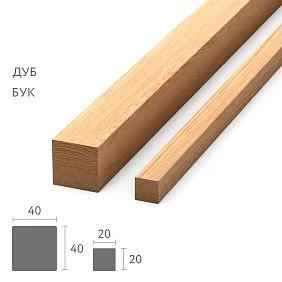
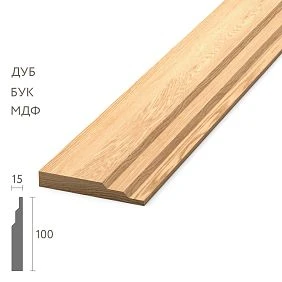
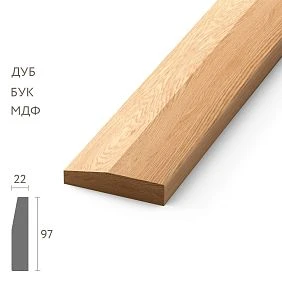

After a project, facts are more valuable than a presentation
Before the contract, the buyer evaluates the catalog, samples, prices, lead times, technical documentation, production capabilities, and the claims procedure. This is necessary work, but it answers only one question: based on the available information, can the supplier complete the task?
A completed project answers a stronger question: how did it actually perform it?
After the project, it is possible to check:
- how many deliveries arrived by the confirmed deadline;
- whether the actual configuration matched the approved specification;
- how complete the batches were;
- whether there were unapproved substitutions;
- whether errors recurred;
- how quickly the supplier resolved disputed situations;
- how well labeling and traceability were maintained;
- how much additional manual work the buyer had to do;
- what additional logistics operations arose;
- whether the first batch could be repeated without issues a few months later.
Post-project evaluation does not replace a new tender and does not mean automatic extension of the relationship. It turns the past project into an evidence base for the next decision.




Why it is better to conduct the evaluation soon after project closure
Six months later, participants remember major conflicts but forget small recurring operations: how many times an invoice had to be redone, how many emails were needed to confirm a batch, where confusion with labeling arose, and which delays formally looked minor but forced changes to the installation schedule. If the evaluation is conducted using fresh data, it is more accurate.
Our factory also produces:







Pre-qualification is a hypothesis, a completed project is verification
Before ordering, a supplier can show a good sample and a convincing process. This increases the likelihood of successful work, but does not prove reliability at real volume.
After the project, it becomes possible to compare "promised" and "delivered."
| Before the project | After the project |
|---|---|
| Promised deadline | Actual dates of each delivery |
| Sample | Repeatability across multiple batches |
| Packaging description | Actual damage and acceptance convenience |
| Promise to help with the claim | Actual speed and quality of problem resolution |
| Technical specification | Actual number of deviations from it |
A good result on a past project is a strong argument for the next procurement. But it does not remove the need to check the current price, schedule, availability, and configuration of the new project.
Get Consultation
First, we separate the supplier's error from a project change
This is the main condition for a fair assessment.
Originally ordered:
MLD-A — 140 pcs.
After the design change, the customer increased the volume by another 18. An urgent reorder of these 18 items is not a supplier defect if the original 140 were fulfilled correctly.
Another situation:
MLD-A — 140 pcs. confirmed, 128 actually delivered.
Here there is already a question about order fulfillment.
Before lowering the rating, each serious event is assigned a reason:
| Reason | Example | Count as a supplier problem? |
|---|---|---|
| Supplier | Shortfall relative to the confirmed quantity | Yes |
| Project | Quantity change after a new layout | No |
| Object | Material damaged by the installation crew | No |
| Logistics | A separate carrier missed the agreed time window | Depends on the delivery model |
| JOINTLY / UNCLEAR | The cause cannot be determined conclusively | Do not automatically record as a violation |
If a company mixes its own design changes with supplier errors, the final scorecard becomes a tool for blame rather than analysis.
Supplier scorecard: one document instead of "things went fine"
A post-project review is best collected in a single document.
| Indicator | Plan/expectation | Actual | Assessment |
|---|---|---|---|
| Deliveries by confirmed date | 6 of 6 | 5 of 6 | REQUIRES REVIEW |
| Fully complete batches | 6 of 6 | 6 of 6 | Good |
| SKU mismatches | 0 | 1 | REQUIRES REVIEW |
| Unauthorized substitutions | 0 | 0 | Good |
| Repeatability of the second and third batches | Per specification | Per specification | Good |
| Recurrence of a serious error | 0 | 0 | Good |
But the table is only for navigation. It should not turn into a mechanical sum of red and green cells. One serious discrepancy can carry more weight than five minor remarks.
What data to include in the evaluation header
- project;
- supplier;
- period;
- number of SKUs;
- number of deliveries;
- total volume;
- key materials;
- person responsible for the evaluation;
- review completion date.
Indicator No. 1: compliance with the technical specification
For wooden moulding, technical compliance is one of the strongest criteria.
Check:
- article number;
- the material;
- cross-section;
- commercial length;
- approved finish or preparation;
- quantity;
- specification version.
Price and lead time are of little help if a different configuration arrives at the site.
For the final assessment, it is useful to distinguish:
| Type of deviation | Example | Influence |
|---|---|---|
| Article number | MLD-B was supplied instead of MLD-A | May block the entire assembly |
| Material | Beech was supplied instead of oak | Technical configuration does not match the order |
| Length | Different commercial length | Changes the cutting plan and the number of joints |
| Quantity | Part of the confirmed volume is missing | Depends on line criticality |
| Version | Position from the old revision | Risk of systemic mis-sorting |
Building material suppliers: we count deviations, but we always assess the impact
If construction materials suppliers they are compared after several projects; a simple count of issues is misleading.
For example, over the project there were:
- five packages with external dents, the product is not damaged;
- one delivery of molding of a different SKU, because of which twenty rooms could not be finished.
By number of events, the first case is worse: five versus one. By impact on the project, the second is far more serious.
Therefore, it is useful to assign an impact level to each significant event:
| Level | Description |
|---|---|
| L1 — LOW | Does not affect the installation schedule and does not require significant additional actions |
| L2 — MEDIUM | Requires separate handling, re-inspection, or local correction |
| L3 — HIGH | Blocks a section, requires replacement or a new delivery |
| L4 — CRITICAL | A systemic deviation with a significant impact on the project |
This is an internal management scale, not an industry standard. A company may use other levels if they better suit its projects.
Metric No. 2: Completeness of deliveries
A delivery cannot be assessed solely by the total number of items. On a multi-line project, line-by-line completeness is especially important.
A batch may be 99% complete by quantity, yet be missing two small but critical SKUs. In that case, installation readiness is lower than the overall percentage suggests.
For post-project evaluation, it is useful to retain at least three metrics:
- overall completeness by quantity;
- completeness by line;
- completeness of critical lines.
This makes it possible to understand whether the supply channel was suitable specifically for complex product ranges, and not only for large mass-volume orders.
Why this does not duplicate operational order control
During the project, completeness is used to manage the current delivery. After the project, the same data becomes a measure of the supplier's performance quality across the entire cycle.
Metric #3: adherence to confirmed deadlines
For a fair assessment, the comparison uses not the customer's first desired date, but the last officially agreed delivery date.
| Delivery | Confirmed date | Actual date | Difference | Reason |
|---|---|---|---|---|
| Batch 1 | 10.05 | 10.05 | 0 | — |
| Batch 2 | 22.05 | 24.05 | +2 days | Check |
| Batch 3 | 15.06 | 15.06 | 0 | — |
If the customer officially moved May 10 to May 15, and the supplier delivered on the 15th, that is not a delay.
Therefore, assessing deadlines requires a change history. Without it, the supplier may receive a penalty point for the customer's own decision.
What counts as the actual date
For one project, this is the date of readiness at the supplier's warehouse; for another, it is arrival at the site. The rule must be defined before comparison. For construction procurement, the more useful date is often the one by which the supplier undertook to actually hand over the goods at the agreed point.
Indicator No. 4: repeatability of batches
The first batch may be perfect. For a multi-stage project, a stronger test is to repeat the same technical configuration on subsequent phases.
Compared:
- first delivery;
- second phase;
- reorder;
- next floor;
- repeat after several months.
Repeatability means maintaining the agreed configuration: item code, material, geometry, commercial length, agreed processing. For natural wood, one cannot require an absolutely identical natural pattern for every plank.
It is precisely the ability to correctly repeat the first batch that shows the stability of the channel.
Wooden skirting board: compare the specification, not the wood grain
for wooden baseboard the post-project evaluation of the repeat batch must be technically fair.
Checked:
- the same SKU;
- the same material;
- the same cross-section;
- the same commercial length as ordered;
- the same agreed level of preparation or finish;
- correct labeling.
Natural variations in oak or beech texture should not be considered a defect if they are within the nature of the material and the agreed finishing system.
Wooden moulding: repeatability is especially noticeable in frame compositions
For moulding, a slight geometric difference may show up in corner joints, the rhythm of frames, or the continuation of an existing composition.
Therefore, for a repeat batch it is useful to compare:
- profile;
- main cross-section dimensions;
- behavior in a typical corner;
- matching with the first batch, if they meet on the same wall;
- finish.
If a new batch seamlessly continues a previously installed assembly, that is a strong plus in the supplier's scorecard.
Indicator No. 5: emergency reorders and their causes
The number of additional orders alone cannot be counted against the supplier. First, each reorder is classified by cause.
| Reason | Example | Is it related to the supplier's work? |
|---|---|---|
| Project change | After the re-planning, 18 MLD-A were added | No |
| CALCULATION ERROR | Procurement team missed one floor | No |
| DAMAGE AT THE SITE | Profiles damaged after acceptance | No |
| UNDERSUPPLY | Supplier delivered less than the confirmed quantity | Yes |
| NON-CONFORMITY | Part of the batch had to be replaced due to incorrect configuration | Yes |
This is how the evaluation card does not turn any additional invoice into a negative indicator.
Useful to count separately:
- additional orders initiated by the project;
- reorders due to underdelivery;
- reorders due to non-compliance;
- urgent logistics operations that could have been avoided with correct execution of the original order.
Why the reason matters more than the number
Two suppliers may each have three additional orders. For the first, all three arose after project expansion; for the second, after underdeliveries. The quantity result is the same, but the quality of work is the opposite.
Large building material suppliers: the ability to fix a problem matters more than a complete absence of issues
Even large building material suppliers may encounter a single error, damage, or a disputed situation. Post-project evaluation should take into account not only the fact of the problem itself, but also how the supplier handled it.
For each serious case, it is useful to record:
- when the supplier received the message;
- how quickly they confirmed receipt;
- how accurately the disputed batch was identified;
- what data was requested;
- whether a clear action plan was proposed;
- how quickly a replacement or corrective action was agreed;
- whether communication about the original order was maintained;
- whether the problem recurred later.
A supplier who made a mistake once, quickly pinpointed the cause, and never repeated it may be more reliable than a supplier with a "clean" first month but recurring identical failures afterward.
Metric #6: response time
There is no universal rule that "a good supplier responds within 15 minutes." For each project, a company can establish its own categories of requests.
| Question type | Example | What to measure |
|---|---|---|
| standard | Document clarification | Time to substantive response |
| Urgent | Risk of installation stoppage | Time to action plan |
| Claim | Batch mismatch | Time to confirmation and decision |
It is better to measure not the moment of the first formal "received", but the time to a useful response: what happened, what to do next, what the deadlines are, and who is responsible.
Why speed without response quality means little
A response five minutes later saying "we're looking into it" is worse than a substantive response an hour later with batch identification and a concrete plan. Therefore, it is useful to track both speed and quality of resolution in the assessment.
Indicator No. 7: traceability and labeling
After the project, you can verify not the promise "we label batches well," but the actual usefulness of the system.
Good traceability means that:
- item codes were easily identified;
- material and length were not lost in the packaging;
- the batch number was retained where it was used;
- disputed material could be found quickly;
- a repeat delivery was linked to the original order;
- documents and physical labeling did not contradict each other.
For long-length wooden decor, this is especially important because similar profiles are easy to mix up after unloading or removing part of the packaging.
How to assess traceability in practice
Ask a simple question: if three months later a question arises about a single plank, can its article number, material, batch, supply, and original order be restored without hours of investigation?
Indicator #8: packaging quality
Packaging is assessed not by external neatness, but by its ability to preserve the product and identification.
Useful indicators:
- how many packaging units arrived damaged;
- how many external damages reached the product itself;
- whether the marking was preserved;
- whether it was convenient to receive similar article numbers;
- whether the material had to be repackaged immediately after unloading;
- whether the packaging created additional risks during long-length item storage.
| Event | Quantity | Influence |
|---|---|---|
| External crushing, product intact | 5 units | Low |
| Product end damaged | 2 units | Medium/High |
| Marking lost | Group 1 | Depends on the number of similar SKUs |
Thus, five cosmetic remarks do not receive greater weight than one case of actual product damage.
Indicator No. 9: document accuracy
The post-project evaluation should compare four levels:
SINGLE SPECIFICATION → INVOICE → PACKING LIST → ACTUAL DELIVERY
If the site regularly corrected SKUs on the invoice, clarified the material, restored batch numbers, or manually reconciled mismatched names, the product could ultimately be good, but the administrative cost of working with the channel was high.
It is useful to fix:
- number of invoice corrections;
- number of packing list corrections;
- number of manual SKU clarifications;
- discrepancies between documents and actuals;
- instances of using an outdated revision;
- team time to restore correct information.
Administrative rework is a real part of the cost
The invoice had to be redone six times for the project, item codes clarified four times, and missing labeling requested three times. Formally, none of these operations increased the price per linear meter. In practice, the procurement specialist, accounting, site manager, and supplier spent additional time.
Therefore, it is useful to track the administrative rework metric:
| Type of manual work | Events |
|---|---|
| Document correction | 6 |
| Additional SKU clarification | 4 |
| Labeling restoration | 3 |
| Additional approval after an error | 2 |
It is not necessary to convert every touchpoint into rubles. The event count alone allows comparing two supply channels.
Building materials suppliers: comparing more than just the product price
If construction materials suppliers are compared only by purchase price, part of the actual costs remains invisible.
The full operational picture may include:
- product price;
- additional logistics;
- urgent individual machines;
- repeated acceptance;
- handling of mixed-up deliveries;
- rework of documents;
- processing of claims;
- downtime or rescheduling of the installation schedule.
Not everything can be fairly calculated to the ruble, but events are worth recording. A supplier that was 4% cheaper in the commercial proposal may not end up cheaper after several urgent deliveries and manual rework.
Total cost of working with a supplier
For internal analysis, the following structure can be used:
purchase price
+ expediting and individual deliveries
+ re-processing of documents
+ additional acceptance operations
+ handling replacements/non-conformities
+ impact of delays on the project.
This is not an accounting standard and not a universal STAVROS formula. It is a management approach to seeing that a cheap commercial offer does not always mean a cheap execution channel.
When it makes sense to calculate money more precisely
If a company regularly purchases similar items and chooses between several suppliers. Then additional transportation costs, crew downtime, and the labor costs of the procurement team can be assessed in more detail.
Metric No. 10: how much additional manual control was required
Two suppliers may be identical in price and actual quality of the moulding, but differ greatly in operational workload.
Supplier A requires:
- constant reminders;
- repeated status requests;
- manual document corrections;
- additional reconciliations.
Supplier B keeps the status up to date, sends correct documents, and gives notice of a rejection before the site discovers it on the morning of unloading.
For recurring projects, you can track the number of additional manual touches beyond the standard process.
| Touch type | Example |
|---|---|
| Reminder | Repeated request for the promised status |
| Correction | Adjustment of the invoice or list |
| Clarification | Additional request for data that should have been in the document |
| Escalation | Involving a manager to resolve a routine work task |
The metric is not needed for bureaucracy. It helps to understand why two suppliers with the same price feel completely different to the procurement team.
What should not be counted against a supplier
A fair assessment must exclude events that the supplier did not control.
We do not count the following as a violation on their part:
- design changes made by the customer;
- late final measurement of the site;
- an internal quantity calculation error;
- loss or damage after acceptance;
- rescheduling of the construction timeline at the customer's initiative;
- a new finish approved after the batch was launched;
- incorrect material dispensing at the site;
- unauthorized substitution by the installation crew.
If external logistics were arranged by the customer themselves, it is necessary to separately determine which transportation events are covered by the supplier's responsibility at all.
Before lowering the rating, we establish the root cause
Each U3–U4 level event is useful to analyze by cause.
| Cause category | Example |
|---|---|
| Supplier | Incorrect SKU in the confirmed batch |
| Project | Late specification change |
| Logistics | Damage by a third-party carrier |
| Object | Material lost after acceptance |
| Jointly | The error occurred due to multiple parties involved |
| Unclear | Insufficient evidence to draw a conclusion |
If the cause has not been established, the supplier's rating cannot be automatically reduced as the sole culprit.
Why this matters for the next project
The corrective action depends on the cause. If the problem is with the supplier's labeling, the labeling is changed. If the site lost identification after unloading, changing the supplier is pointless; the internal warehouse process needs to be fixed.
Building material suppliers: we evaluate not only the error but also the improvement
When comparing building material suppliers it is useful to consider the dynamics.
For example:
| Batch | Issue | Corrective action | Did it recur? |
|---|---|---|---|
| 1 | Incomplete labeling | Label changed | — |
| 2 | No | System saved | No |
| 3 | No | System saved | No |
Such a result is better than three repetitions of the same problem without improvement.
A separate metric is the share of recurring problems: how many serious deviations occurred again after an agreed correction.
A repeated error is more serious than a single one
A single deviation may be an accident, human error, or a rare failure. Repetition of the same nonconformity after discussion and corrective action shows that the cause has not been eliminated.
For the next project, repetitions are especially important:
- of an uncoordinated replacement;
- mixing up similar SKUs;
- length errors;
- old revision in documents;
- identical packaging damage;
- incomplete labeling.
If the same failure repeats, the status "approved with conditions" may be more reasonable than automatically continuing work.
Final supplier map
At the end of the project, the data is consolidated by semantic blocks.
| Evaluation block | Priority for the project | Result | Comment |
|---|---|---|---|
| Technical compliance | High | Good | One local error, did not recur |
| Completeness | High | Good | Critical lines were fully closed |
| Timelines | High | REQUIRES CONDITIONS | One delay +2 days |
| Repeatability | High | Good | Three batches of one configuration |
| Documents | Medium | Good | Minor clarifications |
| Packaging | Medium | Good | No product damage |
| Handling issues | High | Good | Fast corrective action |
| Administrative burden | Medium | REQUIRES CONDITIONS | Many manual clarifications |
There is no need to introduce universal weights that are the same for all companies. For a hotel, deadlines and repeatability may be more critical than price. For a small one-off interior, the administrative burden may have less weight.
How to set priorities
For the next project, the team determines what truly matters to it: technical compliance, deadlines, repeatability, handling small critical items, documentation, packaging, or speed of problem resolution. After that, the supplier is evaluated.
Three final supplier statuses
Instead of a complex scale of ten categories, three management decisions are enough.
| Status | What does it mean | What to do on the next project |
|---|---|---|
| Approved | The supplier has confirmed the ability to complete the task | Can be included in the next procurement without full qualification from scratch |
| APPROVED WITH CONDITIONS | The work is acceptable, but there are specific areas for improvement | Lock in the terms: labeling, batch inspection, deadlines, etc. |
| RE-QUALIFICATION | Actual work revealed significant risks | Before a new large order, conduct a re-inspection |
The company may use a stricter status of "not admitted" if this is provided for by its policy. The article does not impose a universal supplier exclusion procedure.
A large supplier of building materials does not receive an automatic advantage solely due to scale
large supplier of building materials may have strong production, a wide catalog, and extensive experience, but the final assessment must still be based on the specific project.
Scale is useful if it has actually proven itself in the work:
- batches were consistently repeatable;
- deadlines were confirmed;
- deviations were resolved quickly;
- technical identity was maintained;
- documents were manageable;
- critical follow-up orders were handled without chaos.
Brand, company size, and presentation do not replace an actual track record of execution.
"Approved" status does not mean an automatic win in the next tender
"Approved" means: the previous project provided sufficient evidence of the supplier's ability to handle the technical task.
On a new project, the same things are still compared:
- current price;
- the current production schedule;
- availability of the required SKUs;
- specific materials and finishes;
- logistics;
- payment terms;
- the requirements of the new project.
This separates two different tasks: qualification answers “can the technical execution be trusted,” while the tender answers “which offer is more advantageous and better suited right now.”
How to transfer experience from project A to project B
The phrase “we’ve already worked with them, everything’s fine” is too thin.
Before the next purchase, it’s useful to hand over a short document with conclusions:
- which SKUs were difficult;
- which deadlines were confirmed in practice;
- which labeling format turned out to be convenient;
- which errors arose and were corrected;
- what must be checked before the first batch;
- which terms need to be added to the new order;
- what the supplier improved over the course of the project.
Thus a new project gains the experience of the old one, but does not copy its quantities, prices, and schedule.
A corporate supplier database should store not only contacts
For repeatable B2B procurement, a card for each channel is useful:
| Field | What to store |
|---|---|
| Category | Wooden trim and related items |
| Projects | Where they have worked before |
| Last delivery date | When the history was confirmed |
| Final rating | Approved / with conditions / requalification |
| Key remarks | What to remember |
| Corrective actions | What was changed |
| Recurring issues | Did they arise again |
Such a base evaluates the supply channel. It does not duplicate the corporate product library, where approved SKUs and profiles are stored.
When a full post-project evaluation is excessive
For a one-time purchase of a few planks, a complex map may be unnecessary. It is enough to record that the order matched the specification, arrived on time, and did not create problems.
An extended evaluation is especially useful when:
- the site is large;
- there are multiple deliveries;
- there are many SKUs;
- there are repeatable projects;
- the supplier is being considered for a network of sites;
- there is a high cost of error;
- there were claims or repeat batches.
The system must be proportionate to the scale and risk.
Where to get actual data for evaluation
A supplier map should not be built solely on the buyer's recollections. After the project, the data already exists in working documents, and it is better to collect it before discussing the final evaluation.
Main sources:
- current final specification;
- revision history;
- invoices and order confirmations;
- packing lists;
- acceptance certificates;
- supply logs;
- complaints register;
- photos of damage;
- correspondence on corrective actions;
- urgent reorder log;
- warehouse discrepancies;
- as-built schedule of actually installed SKUs.
Not all documents are equally reliable. For example, the foreman's chat is useful as context, but for the delivery date it is better to use a confirmed document or the acceptance log. For quantity, use the specification and actual acceptance, not the crew's memory.
Why a unified timeline is needed
If the events are in different files, it is easy to confuse cause and effect. It helps to put together a short timeline: order confirmed → date agreed → project changed → date re-agreed → delivery arrived → deviation detected → claim closed.
Then it is clear where the supplier was actually late and where the original deadline no longer applied due to the new version of the project.
How to normalize the assessment for projects of different scales
Comparing a supplier across two projects only by the absolute number of issues is incorrect.
Project A:
- 3 SKUs;
- 2 deliveries;
- 200 items;
- 1 error.
Project B:
- 28 SKUs;
- 12 deliveries;
- 3000 items;
- 2 errors.
By the absolute number of errors, project B looks worse. Given the scale and complexity, the supplier could have performed more consistently.
Therefore, when comparing several projects, you can look at:
- deviations per delivery;
- deviations per procurement line;
- the number of serious events relative to the number of batches;
- the share of recurring issues;
- the number of urgent corrective actions relative to the total number of deliveries.
But the article does not introduce universal thresholds like “less than 2% is good.” A company should compare suppliers within its own comparable history.
When the absolute number is still more important than the relative one
If a single U4-level event occurred that blocked a critical zone, it may be more important than ten minor events at a large site. Normalization should not dilute the severity of a critical case.
One critical error can outweigh a good average result
Imagine a supplier who completed 99 out of 100 lines without issues. But the hundredth line was the main cornice of the lobby in a different article, which caused the site to stop and required an urgent new delivery.
Formally, technical accuracy is 99%. For a management decision, this is not enough.
Therefore, it is useful to have a rule in the evaluation card:
a critical event is considered separately from the average score.
After such a case, it is necessary to answer:
- why the error became possible;
- was it systemic;
- could it recur on other lines;
- how quickly the supplier localized the problem;
- what was changed;
- whether the effectiveness of the fix was confirmed on subsequent batches.
If the cause has been eliminated and subsequent batches are error-free, the status "approved with conditions" may be sufficient. If the cause remains unclear or the error recurred, re-qualification is needed even with a good average percentage.
How to evaluate partial delays
How to evaluate a supplier's ability to work with changes
The supplier is not responsible for the fact that the project changes, but their handling of an official change is also important.
For example, the customer issued a new revision:
- added MLD-C;
- reduced PLT-A;
- replaced finish KZ-A;
- moved the second batch date.
A good supply channel should:
- confirm receipt of the new revision;
- clearly show what has changed;
- separate the already produced volume from the new one;
- not continue work on the old version without approval;
- update documents and labeling.
This is not an assessment of 'the supplier is to blame for the change.' This is an assessment of the ability to correctly manage changed technical information.
How to account for order status transparency
For a project, not only actual execution matters, but also predictability.
Two suppliers can deliver an order on the same day. The first warned in advance: the batch is 60% ready, the remaining part will be ready on Friday, and there is risk on two SKUs. The second kept saying “everything is on plan” until the last moment, and on the morning of unloading reported a missing line item.
The actual date may coincide, but the project’s controllability is different.
It is useful to assess:
- whether the statuses were timely;
- whether the supplier reported the risk before the failure;
- whether the figures were specific;
- whether the declared status matched the actual situation;
- whether installation could have been rescheduled in advance.
Status transparency reduces the cost of surprises even when delays cannot be fully avoided.
How to evaluate small critical items
After a multi-item project, it is useful to look separately at lines with small quantities.
Questions:
- whether items of 2–6 planks were lost;
- whether they were correctly reflected in the documents;
- whether the labeling was preserved;
- whether they fell out of the main batch packaging;
- whether urgent separate reorders had to be placed.
A supplier may work excellently with mass-produced skirting and poorly with small unique lines. For a classic interior, this is a significant characteristic of the channel.
How to evaluate the first and last delivery
Sometimes the first batch receives maximum attention, but process quality declines toward the end of the project.
Compare:
| Parameter | First batch | Last batch |
|---|---|---|
| Documents | Correct | Correct / worsened |
| Labeling | Complete | Full / partial |
| Completeness | 100% | 100% / with leftovers |
| Packaging | Stable | Stable / worsened |
A reliable supplier maintains discipline not only on the demonstration first delivery, but also on the final small reorders.
How to evaluate the final reorder after the main delivery
The last 2–10 planks are often more difficult than the main batch: the volume is small, the deadlines are tight, and production is already occupied with the next project.
It is precisely this stage that clearly demonstrates a supplier's maturity.
The following are assessed:
- whether the original product code was preserved;
- whether a "nearly identical" profile was offered without approval;
- whether the material and length were preserved;
- whether the reorder can be linked to the original project;
- how realistically the deadline was confirmed;
- how packaging for a small volume is organized.
A well-executed small final order can be more telling than a large first batch.
Joint final review with the supplier
An evaluation map is more useful if the supplier sees the key findings and can provide factual comments.
The debrief should not turn into a negotiation about "who is to blame." The goal is to agree on the sequence of events and decide what to improve.
Meeting structure:
- brief project statistics;
- what was done well;
- serious deviations;
- root causes;
- effectiveness of corrective actions;
- what to change on the next project;
- what conditions should be included in the new order.
Why you should start with strengths
Post-project evaluation is needed not only to find mistakes. If a supplier consistently maintained article numbers, labeled batches well, and resolved issues quickly, these practices should be carried over to the next project.
When the status "approved with conditions" is more useful than a simple "yes/no"
Binary logic is often too crude.
A supplier may be technically strong but have weak documentation. Or handle bulk orders well but drop small items. Or consistently produce the profile but give poor lead-time warnings.
In such cases, it is more useful not to exclude the supplier but to set the conditions for the next engagement:
- mandatory pre-shipment reconciliation of small article numbers;
- a unified labeling format;
- weekly status on critical lines;
- confirmation of repeat batches against the control specification;
- separate inspection of the packaging for a long curtain rod;
- prohibition of substitutions without written approval.
Then past experience turns into specific terms for the next order.
When requalification is needed
Requalification is reasonable if the previous project revealed a risk that cannot be closed with a simple condition.
Typical grounds:
- recurring technical nonconformity;
- unapproved substitutions;
- systemic loss of traceability;
- several serious breaches of confirmed deadlines;
- corrective actions did not produce results;
- the supplier is unable to confirm the repeatability of the key item;
- the supplier's production scheme has changed significantly.
Requalification does not necessarily mean rejection. It means: past evidence is insufficient for a new major risk.
When an old assessment cannot be carried over automatically
Even a supplier with 'approved' status must be re-verified if the conditions have changed significantly.
For example:
- new product type;
- different species;
- a non-standard profile;
- much larger volume;
- different delivery region;
- new finish;
- several years passed without deliveries.
History remains useful, but the confidence level decreases if the new project differs greatly from the proven one.
How to compare two approved suppliers after projects
If both channels already have a positive history, the next tender can be made stronger.
| Criterion | Supplier A | Supplier B |
|---|---|---|
| Technical accuracy | High | High |
| Completeness of small lines | Medium | High |
| Timelines | High stability | One delay |
| Documents | Many manual clarifications | Stable |
| Price of the new offer | Compare in current tender | Compare in current tender |
The previous work becomes an additional tender column, but does not replace the current commercial comparison.
How to keep the evaluation card neutral
A supplier is often evaluated by someone who argued with them throughout the entire project or, conversely, has known them for a long time. To reduce subjectivity, it helps to:
- rely on events and documents;
- separate fact from opinion;
- state the reason;
- state the impact;
- give the supplier an opportunity to confirm or dispute the fact;
- do not turn a single conflict into a general label.
For example, the entry "supplier unreliable" is useless. The entry "batch 4: confirmed 10.07, arrived 13.07, reason — production delay, zone blocked — 1 day" is already suitable for decision-making.
How to link supplier evaluation with the corporate product standard
For recurring items, the company can maintain two separate databases:
product library — which profiles are approved;
supplier database — who has proven the ability to consistently supply these profiles.
They are linked but do not replace each other.
Product PLT-A can remain a corporate standard even if one supply channel has lost its status. Conversely, a good supplier does not gain the right to replace the approved PLT-A with another profile without a separate project decision.
Practical template for the final decision
After the review, a short card can be created:
| Field | Example |
|---|---|
| Supplier | Company ___ |
| Project | Site A |
| Status | APPROVED WITH CONDITIONS |
| Strengths | Technical precision, batch repeatability |
| Weaknesses | Labeling of small items, manual document clarifications |
| Condition for the next order | Pre-shipment reconciliation of small lines + unified labeling format |
| Re-inspection | After the first batch of a new project |
This is how status becomes a working decision, not an archival assessment for its own sake.
How much can an assessment be trusted after one small project
Not every post-project card has the same evidentiary weight. If a supplier delivered one small order of three items with no repeat batches, the company knows that a specific delivery went successfully. But it still knows almost nothing about repeatability stability, behavior during claims, or the ability to handle ten consecutive waves.
Therefore, it is useful to store not only the status but also the level of confidence in it.
| Volume of actual history | What can already be assessed | What cannot yet be confidently asserted |
|---|---|---|
| 1 small delivery | Basic technical compliance, documents, packaging | Repeatability, performance at large volume |
| Several deliveries of one project | Timelines, completeness, repeatability, response to changes | Work in a different project configuration |
| Multiple objects | Process stability under different conditions | Completely new product types without additional verification |
This protects against two extremes. The first is considering a supplier unreliable because of a single small incident without sufficient history. The second is assigning a "verified for everything" status after one successful delivery.
How to record the confidence level
For example:
STATUS: APPROVED
CONFIDENCE: MEDIUM — 1 project / 4 deliveries / 12 SKUs
Or:
STATUS: APPROVED WITH CONDITIONS
CONFIDENCE: HIGH — 3 projects / 18 deliveries / repeatable nomenclature
Such a record helps the next team understand how broad a conclusion is actually supported by facts.
Suppliers with different project complexity cannot be compared using a single number
One supplier worked on a small office with five SKUs and one delivery. Another worked on a hotel with twenty-eight SKUs, seven phases, three reorders, and two finishes. Final scores cannot be mechanically placed side by side without context.
Before comparing, consider:
- number of SKUs;
- number of deliveries;
- volume;
- the number of materials and finishes;
- the number of design changes;
- the presence of repeat batches;
- the number of critical small line items;
- the delivery geography;
- the rigidity of the construction schedule.
A supplier who successfully completed a complex multi-phase project has provided more evidence of their manageability. This does not guarantee that their new commercial proposal will be the best, but it increases trust in the operational side.
How to compare more accurately
First compare the technical and organizational complexity of the projects, then look at the metrics. If the projects are too different, it is better not to build a common rating, but to store the proven capabilities of each supplier.
When it is better to leave the assessment as “insufficient data”
Sometimes the honest result is neither a green nor a red status.
For example, a supplier completed one small delivery without problems, but the company is going to give them the next project ten times larger with several phases. The previous project confirms basic technical capability, but does not confirm scaling.
In such a situation, you can write:
INSUFFICIENT DATA FOR A FULL ASSESSMENT OF SCALE.
Then the new project can begin with:
- a control batch;
- enhanced inspection of the first delivery;
- confirmation of the production schedule;
- additional verification of critical SKUs;
- phased expansion of scope.
This way, the company does not invent confidence where it does not yet exist.
How to turn the weak points of a past project into the terms of a new order
A final assessment is useful only when it changes future work.
Example 1: on the previous project, small items were lost twice.
Term of the new order:
a separate control line for small critical SKUs + pre-shipment completeness verification.
Example 2: documents regularly arrived with an outdated revision.
Condition:
each invoice and packing list contains the number of the current revision.
Example 3: cornices were damaged at the ends several times.
Condition:
new end protection scheme + first batch inspection.
Example 4: the supplier reported the deadline risk late.
Condition:
regular status on critical lines before the risk date.
This is the value of history: the next project does not just “know that there was a problem” but receives a changed process.
How to set checkpoints for the next project
If the supplier remains in the work, the past result helps determine where to check them again.
| Past risk | Next project control |
|---|---|
| Labeling | First packaging group inspection |
| Repeatability | Comparison of the second batch with the first |
| Timelines | Interim confirmation of readiness before shipment |
| Documents | Verification of the first commercial version against the master specification |
| Minor items | Line-by-line pre-shipment inspection of critical lines |
If the first checkpoints pass successfully, the enhanced regime can be relaxed. If the problem recurs, the supplier's status is reviewed.
The post-project evaluation must end with an owner for each action
It is not enough to write "improve labeling" or "monitor deadlines." For the next project, each condition must have an owner.
| Action | Owner | When to check |
|---|---|---|
| New labeling format | Supplier | Before first shipment |
| Critical line check | Buyer | Before batch confirmation |
| Current revision | Project team | Before order release |
| First delivery control | Object | At receiving |
This matters because some of the problems from the previous project may have originated on the customer's side. The post-project review should improve the entire chain, not just make demands on the supplier.
When the supplier can regain a higher status
The supplier has received the status of "requalification" or "approved with conditions." This is not necessarily a lifelong label.
The status can be improved if:
- the root cause of the problem has been identified;
- a corrective action has been implemented;
- the control delivery was successful;
- the next batch confirmed stability;
- there are no repeated serious deviations.
This is how the system encourages real improvement. If the supplier has fixed the process, the procurement base should reflect this.
When the status needs to be downgraded already during the next project
The final scorecard from the previous project should not prevent responding to new facts.
If a new project immediately shows:
- repetition of a previous critical error;
- an uncoordinated substitution;
- systematic mis-sorting;
- loss of traceability;
- a serious discrepancy in confirmed deadlines;
the team is not obliged to wait until the project is completed to reconsider the level of trust. A post-project evaluation is the basis for the next start, but not a guarantee for the entire future cycle.
Final data package for the next buyer
To ensure that experience is not lost when the team changes, a compact set is sufficient:
- final evaluation map;
- status and confidence level;
- list of strengths;
- list of serious issues;
- root causes;
- what was fixed;
- terms of the next order;
- checkpoints;
- link to key incident documents.
The next buyer does not need to read the entire project correspondence. They receive a concise factual history and understand what to pay attention to.
How to use the final evaluation in the next tender and not turn it into a formal rating
A supplier scorecard is useful only when it influences a real decision. If, after the project, the team assigned scores, put the file in the archive, and in the next tender again compares only price, the work has lost its meaning.
Before a new request, the final score can be used in four places.
First — the composition of the tender list. Suppliers with the status "approved" are included as verified candidates. Suppliers "with conditions" can also participate, but the request immediately contains the necessary additional requirements. For those assigned requalification, technical issues are resolved first, then they are admitted to the large order.
Second — the content of the request. If the previous project revealed a risk of small SKUs, the new request must separately control these lines. If there were issues with labeling, the labeling requirement appears immediately, not after the first mistake.
Third — comparison of proposals. Past history should not give a supplier an automatic price privilege. But the buyer understands the operational risk: a price a few percent lower may not be more advantageous if the channel requires a lot of manual control and urgent corrections.
Fourth — the first delivery plan. Even a good supplier gets checkpoints for the areas where risks existed before. After successful confirmation, control can be simplified.
| Status of the previous project | How to use it on a new one |
|---|---|
| Approved | Include in the tender as a verified candidate, check current terms |
| APPROVED WITH CONDITIONS | Add specific conditions and first-batch control |
| RE-QUALIFICATION | First confirm that critical risks have been eliminated |
The key is not to build an "eternal ranking" of suppliers from first to last place. Different projects require different materials, timelines, and logistics. Post-project evaluation should preserve proven strengths and weaknesses, while a new tender decides who is the best fit for the current task.
18 mistakes in post-project supplier evaluation
- Evaluating only price. Additional costs and execution risks remain invisible.
- Evaluating from memory six months later. Real events and causes are lost.
- Mixing up the project's and the supplier's mistakes. The outcome becomes unfair.
- Treating every additional order as a supplier problem. Project changes are ignored.
- Not accounting for the severity of a deviation. Five minor remarks look worse than one critical failure.
- Not accounting for the recurrence of a problem. A systemic defect is masked by statistics.
- Looking only at the total volume. Critical small items are lost.
- Ignoring the quality of repeat batches. Only a successful first delivery is evaluated.
- Fail to account for administrative workload. The manual work of procurement remains invisible.
- Fail to record additional logistics operations. The actual cost of the channel is understated.
- Ignore document quality. Errors repeat on the next project.
- Treat a good first batch as proof of stability. Repeatability is not verified.
- Ignore the response to a problem. Suppliers with different maturity levels receive the same rating.
- Penalize a supplier for an officially changed customer schedule. The lead time metric is distorted.
- Fail to record corrective action. It is impossible to tell whether the process has improved.
- Fully requalify a good supplier again without reason. The value of accumulated history is lost.
- Automatically award a new project to an old supplier. Qualification replaces tender.
- Fail to pass conclusions to the next project team. The company repeats already known mistakes.
Final post-project evaluation algorithm
1. OBJECT COMPLETED
↓
2. ACTUAL DELIVERY DATA COLLECTED
↓
3. DEVIATIONS AND ADDITIONAL OPERATIONS IDENTIFIED
↓
4. ROOT CAUSES ESTABLISHED
↓
5. TECHNICAL COMPLIANCE ASSESSED
↓
6. COMPLETENESS AND TIMELINES ASSESSED
↓
7. BATCH REPEATABILITY VERIFIED
↓
8. DOCUMENTS, PACKAGING AND TRACEABILITY ASSESSED
↓
9. PROBLEM HANDLING EVALUATED
↓
10. ADMINISTRATIVE BURDEN AND ADDITIONAL LOGISTICS TAKEN INTO ACCOUNT
↓
11. SUPPLIER EVALUATION MAP COMPILED
↓
12. DECISION MADE: APPROVED / APPROVED WITH CONDITIONS / RE-QUALIFICATION
↓
13. CONCLUSIONS PASSED TO THE NEXT PROJECT
Supplier evaluation also has a validity period
Even a strong result from a past project should not be considered permanent proof. If several years have passed, the product range, production site, logistics, or supplier team has changed, some past conclusions require confirmation. Therefore, it is useful to store the date of the last actual work and the date of the last status check in the card. The longer the gap and the more the new order differs, the more important it is to reconfirm key capabilities.
Conclusion: after a project, the supplier should be evaluated based on actual performance
Before the contract, the supplier sells the future ability to fulfill the order. After the project is completed, the procurement team already has actual evidence. That is exactly what should be used before the next tender.
A strong post-project evaluation does not boil down to the question of whether the goods were delivered on time or not. For wooden mouldings, technical compliance, completeness of line items, batch repeatability, preservation of article numbers and material, marking quality, packaging, document accuracy, the ability to resolve a claim, and the operational burden on the customer's team are important.
At the same time, the assessment must be fair. A design change, an internal miscalculation, damage at the site, and a schedule shift by the customer cannot automatically be recorded as a violation by the supplier. First the cause is established, then the impact, and only then the assessment.
It is especially useful to look at the dynamics. A single error, after which the supplier changed the process and the next two batches arrived correctly, indicates a capacity for improvement. A repeat of the same problem after an agreed correction is already a systemic risk.
The outcome is not an emotional “they worked fine,” but a management decision: the supplier is confirmed, confirmed with specific conditions, or must undergo requalification. At the same time, even an approved supplier does not automatically receive a new project: price, deadline, availability, and the specific specification are compared again in the current tender.
This is how the past project becomes an asset of the procurement system. It helps not only to assess how supplier companies of construction materials performed, but also to set the terms of the next order more precisely, strengthen weak points in advance, and avoid repeating mistakes that have already been studied.