








































































Article Contents:
- What is classic wall decor
- Why polyurethane is suitable for classic decor
- Versailles Light collection: ready-made kits for classic walls
- Where to use classic wall decor
- In the living room
- In the hall and entryway
- In the bedroom
- In the study
- What to choose: molding frames or a ready-made kit
- Additional elements: how to enhance the system
- Mistakes when choosing classic wall decor
- Classic decor in different types of spaces: practical scenarios
- Color in classic decor: how to work with shades
- Installation of classic decor: what is important to know
- Where to buy classic wall decor made of polyurethane
- FAQ: answers to popular questions about classic wall decor
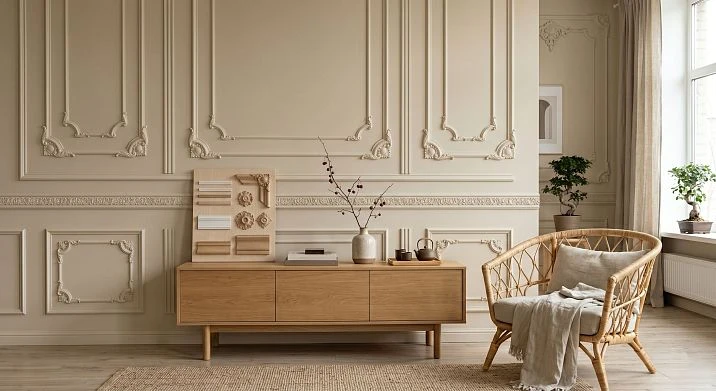
There are things in an interior that are difficult to explain in words, but impossible not to feel. When you enter a room where the walls are structured with correct frames, where the molding holds the space in proportion, where the stucco relief catches the light exactly as it should — a special feeling arises. Not of pomposity. Not of palace overload. But of architectural completeness. This is exactly what givesClassic polyurethane wall decor — especially when it is realized through a ready-made, professionally calculated set.
Today, classic stucco on the wall has ceased to be a privilege of owners of mansions with five-meter ceilings. Modern polyurethane allows you to assemble a grand interior in a standard apartment, in a townhouse, in a representative office — without complex construction and without a restoration budget. The main thing is to choose the right system. And in this article, we will analyze everything: from the nature of classic wall decor to specific sets of the "Versailles Light" collection, which solve the problem immediately, comprehensively, and predictably.
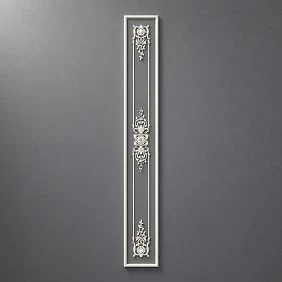
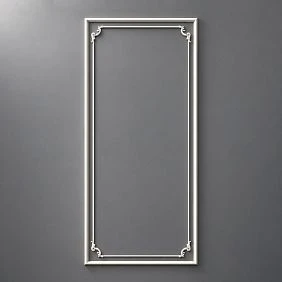
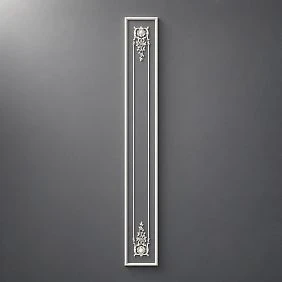
What is classic wall decor
Classic wall decor is an architectural system, not a set of decorations. This is what distinguishes it from "just stucco" or "just a frame on the wall." The basis of classic design lies in several principles, each of which works for the integrity of the space.
Symmetry is a fundamental law of classicism. Two sets on either side of the fireplace, paired panels on the long wall, mirrored verticals in the hall — all of this expresses one principle: balance as the foundation of order. A symmetrically designed wall is perceived as meaningful, intentional, and complete.
Molding frames are a historically established method of dividing the wall plane. In a classic interior, the wall is never uniform. It is divided into tiers, sections, panels — and each of these divisions is marked by a profiled molding. Classic wall decor uses precisely this logic: the frame fixes a zone, the molding gives it a boundary, and the ornament provides an accent.
Decorative panels are large vertical or horizontal systems that occupy a significant part of the wall. In historical interiors, these were boiseries — wooden panels with profiled frames. In modern execution, their function is performed by polyurethane kits with molding framing and ornamental overlays.
Stucco ornament is the heart of classic decor. Floral motifs, acanthus leaves, scrolls, cartouches — this entire visual language has developed over centuries and carries semantic weight. Ornament in classicism is not random: it is placed at the system's nodal points, emphasizes symmetry, and creates chiaroscuro that makes the wall come alive under any lighting.
Vertical elements organize the rhythm of the wall and stretch the space vertically. Classic stucco on the wall works in both horizontal and vertical dimensions — and it is this unity of two axes that creates a sense of architectural depth that cannot be achieved with horizontal frames alone.
Calm expressiveness is perhaps the main requirement for classic decor in a modern interior. The wall should be beautiful but not loud. Rich but not overloaded. This is a fine line, and it is here that most people make mistakes when selecting elements on their own.




Why polyurethane is suitable for classic decor
Before moving forward, we need to understand the material. Because it is the material that determines how realistic it is to implement classic wall decor from polyurethane without professional builders, without special tools, and without five-figure sums in the estimate.
Gypsum — the traditional material of classic stucco — is heavy, fragile, requires special surface preparation and experienced craftsmen. PolyurethaneDecorative elements for the wall made of polyurethaneare in no way inferior to gypsum in plasticity, but weigh many times less, do not require base reinforcement, and are mounted with special glue — without anchors, without screws, without complex operations.
What exactly does polyurethane bring to a classic interior?
-
Precise relief. Injection molding ensures sub-millimeter accuracy. Floral ornament, acanthus scroll, leaf motif — everything is reproduced identically in each piece, without loss of detail in mass production.
-
Painting in wall color. This is key for classics. Moldings can be painted in the same shade as the wall, creating a monochrome system with soft shadows, or taken two tones lighter for delicate contrast. In both cases, polyurethane holds acrylic and alkyd paints well without additional priming.
-
Lightness. Polyurethane decorative elements do not physically overload the wall. This is important when working with drywall structures, hollow partitions, old walls with unreliable plaster.
-
The effect of an expensive wall panel. A properly installed set of molding and ornamental overlays creates a visual effect identical to joinery boiserie — without complex carpentry and without its cost.
-
Moisture resistance. Polyurethane does not absorb moisture, does not crumble, does not crack with temperature changes. This makes itPolyurethane wall decorsuitable for use in country houses with periodic heating, in hallways with high humidity, in commercial spaces with high traffic.
-
Readiness for project application. The manufacturer provides DWG drawings and 3D models — these are tools that allow designers and architects to integrate decorative elements into project documentation before installation.
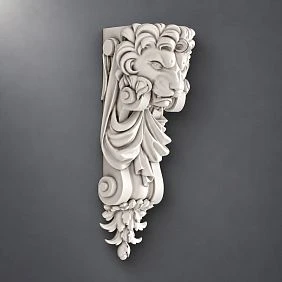
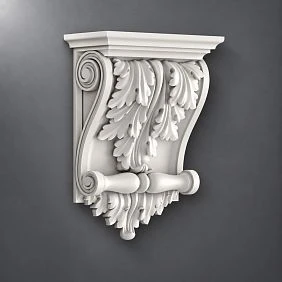
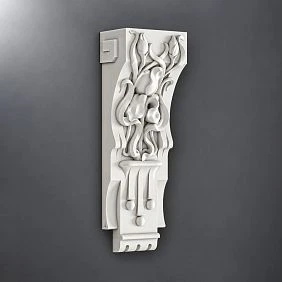
Our factory also produces:
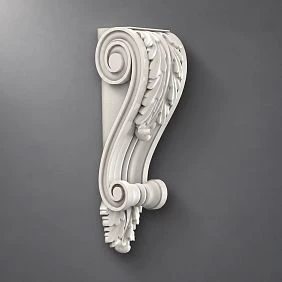
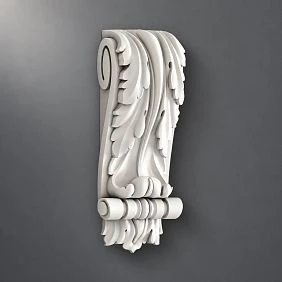
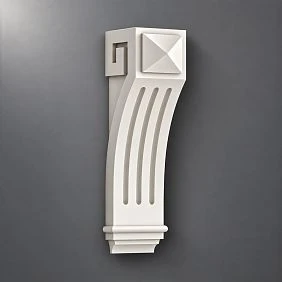
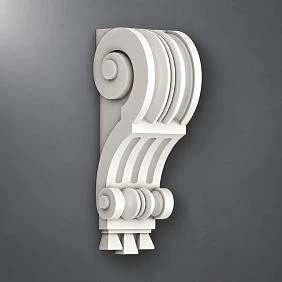
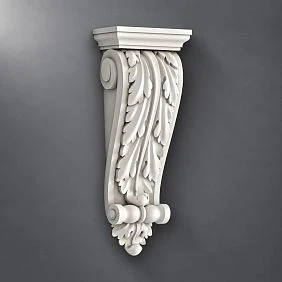
Versailles Light Collection: ready-made sets for classic walls
Here we get to the essence. The Versailles Light collection is not just a set of beautiful elements. It is an architectural system developed as a line of ready-made solutions for classic wall decoration in real residential and commercial spaces.
The name "Light" here does not imply simplification or compromise. It indicates a large-scale register: the collection is adapted to modern layouts with ceilings of 2.5–3.5 meters. Where the "full" version of Versailles is designed for grand halls with ceiling heights from 3.5 m, "Versailles Light" is for city apartments, country houses, and representative commercial spaces where the same aristocratic aesthetic is needed without palace scale.
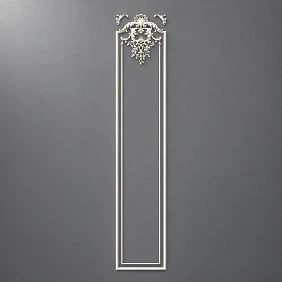
"Versailles Light" stucco decor setconsists of two types of elements: a molding frame made of primed MDF of the "Prestige" category and polyurethane ornamental overlays with floral relief in the Versailles style. The molding creates impeccable contour geometry — clear, even, professional. The overlays fill this contour with ornamental meaning: curls, acanthus leaf, floral motifs with a relief depth of 9–22 mm. In any lighting, this relief creates a living chiaroscuro that makes the wall voluminous and expressive.
The collection includes five kit formats — each for a specific task.
CPU-4-1 — basic symmetrical system. Vertical panel with double molding frame and central decorative element. The most versatile format of the collection: works in any interior, suitable for first acquaintance with the system and for rooms with limited wall zone width.
CPU-4-2 — formal system with upper accent. Size 441 × 2300 × 22 mm, seven positions in the set, including a large horizontal upper accent — a "crown" that no other kit in the collection has. This is a solution for formal walls, high rooms, spaces where decor serves a representative function. Two CPU-4-2 symmetrically on either side of the fireplace — a classic scheme for decorating a grand hall.
CPU-4-3 — compact accent format. Laconic, restrained panel: one decorative accent in a frame, without excess. Ideal for small piers, decorative niches, accent inserts.
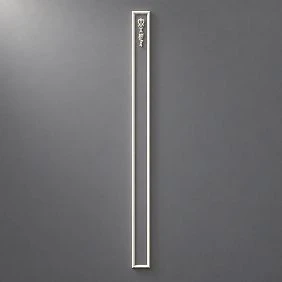
CPU-4-4 — vertical accent for narrow zones. System with central decor measuring 150 × 321 mm and a symmetrical pair of small accents. Created for narrow piers 30–50 centimeters wide, side panels of built-in furniture, vertical inserts in a boiserie system. Visually stretches the space in height.
CPU-4-5 — three-part vertical with maximum decorativeness. Six positions in the set, including a large vertical element 139 × 596 mm and a central overlay. Lower tier, middle accent, small nodal points — the most saturated and expressive system in the collection for spaces where maximum decorativeness is important without going into a "heavy" historical style.
All five formats are united by a single ornamental base. This means thatwall decor in the Versailles stylecan be implemented in different zones of one apartment — with different formats of sets in each room, but in a single stylistic key.
Get Consultation
Where to use classic wall decor
In the living room
The living room is the main space of the house, and its wall should speak. Not shout — speak calmly and confidently. Classic wall decor in the living room is built around an accent plane: the wall behind the sofa, the fireplace area, or the TV wall.
Wall decor behind the sofa in a classic style is a symmetrical system of two vertical panels with equal spacing from the edges of the sofa. CPU-4-2 or CPU-4-5 will create an architectural frame that turns the functional relaxation area into a ceremonial center of the room. A fireplace area with two symmetrical CPU-4-2 on each side is a direct quote from French palace architecture, adapted for a modern interior.
Decorative panels for the living roommade of polyurethane also work in a more restrained version. Two or three CPU-4-1 with equal spacing along the long wall create rhythm without overload — a calm but expressive classic ornament that holds the space in architectural order.
In the hall and entryway
First impressions are the strongest. The hall and entryway set the tone for the entire house, and it is here that classic entryway decor works with maximum impact.
A formal hall with symmetrical decorative panels on both sides of the front door is an architectural technique with centuries of history. CPU-4-2 in this case creates a ceremonial entrance where ornament and proportion speak of culture, taste, and attention to detail.Decorative panels in the hallfrom the "Versailles Light" collection allow you to implement this technique without expensive joinery — in exact accordance with the historical model, but using modern technologies.
In a narrow hallway with limited wall space, CPU-4-4 solves the problem of vertical accent: the system stretches the space upward and structures it without horizontal divisions that could compress the narrow corridor even further. Vertical wall decor in the hallway is always the right choice with standard ceiling heights.
In the bedroom
A classic-style bedroom is built around an accent wall at the headboard. Classic stucco molding in the bedroom is not decor for decor's sake, but a thoughtful architectural frame that turns the bed headboard into a grand portal.
Two symmetrical CPU-4-4 or CPU-4-5 units on either side of the bed create a ceremonial framing — exactly the combination of structure and ornament that makes the bedroom representative without overloading it with details.Stucco molding set for the bedroomin this case ensures complete symmetry without the need to manually adjust elements.
The wall decor at the headboard can be complemented with molding cornices along the ceiling perimeter — the horizontal perimeter system plus vertical panels on the accent wall will create that same "ceremonial space" typically found only in high-class hotels.
In the study
A study is a place where the interior works for reputation. Classic study decor speaks without words: about status, about culture, about seriousness of intentions. CPU-4-2 behind the desk is a classic scheme for a representative background, proven in thousands of projects.
Moldings in a classic interiorof the study can be complemented with Versailles Light panels: a cornice along the ceiling perimeter from a single profile with a molding included in the kit creates a unified system from floor to ceiling. This is a professional solution that turns the workspace into a study with character. Decorative wall panels in a classic style in the study can also be combined with bookshelves and built-in cabinets — if the profile matches, the furniture and architectural decor read as a single whole.
What to choose: frames from moldings or a ready-made kit
The question is fundamental. And the honest answer here depends on the task, experience, and resources.
Classic molding frames involve independently selecting profiles, calculating proportions, and finding suitable corner elements and ornamental overlays. For someone with a design education and a clear plan, this is a working approach. For someone tackling the decoration of a classic wall for the first time, it is a source of errors, rework, and unnecessary expenses.
Ready-made sets of stucco decor solve this problem systematically. Several compelling arguments in their favor:
Proportions are already calculated. The size ratios between moldings, central overlays, and small accents in each set are determined by the developer. It is physically impossible to make a mistake in scale.
Stylistic integrity. The ornament of the central overlay echoes the ornament of the small accents. When selecting independently from different sections of the catalog, achieving such consistency is significantly more difficult.
One line in the estimate. Instead of seven or eight items, there is one. For coordination with the client, for the purchaser, for independent ordering, this is a fundamental convenience.
Assembly diagram included. A ready-made set is a ready-made assembly scheme with a sequence of operations. No interpretation of multiple technical specifications.
Repeatability for bulk orders. Ten panels for hotel rooms, forty for a residential complex—each identical to the previous one.
Individualpolyurethane wall moldingsare justified when you have a clear author's vision and an understanding of proportions. For example, if a non-standard frame width is needed for a specific wall size, or if you want to create a multi-tiered boiserie system with its own logic of division. In such a case, individual profiles provide maximum flexibility.
But for most tasks of classic wall decor—bedroom, living room, hall, study—set of stucco decorwill be more accurate, faster, and more reliable.
Additional elements: how to enhance the system
A ready-made kit is a great start. But a professional classic interior is built as a system, and it's important to understand which additional elements enhance it.
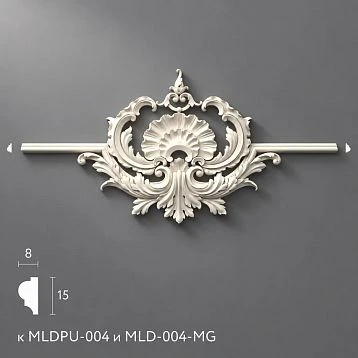
Decor for moldings — corner ornamental overlays and accent elements at profile joints.Decor for Moldingcreates additional accents at the nodal points of the frame system: where moldings intersect or meet at a corner, the ornamental overlay puts the finishing touch. Without them, the system looks complete. With them, it looks grand.
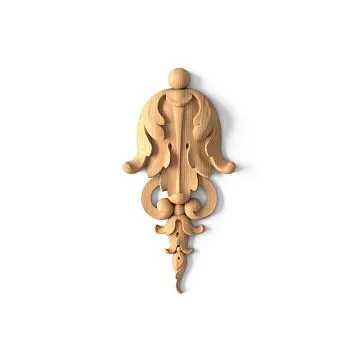
Polyurethane stucco decor — individual ornamental overlays from the VRS series: floral motifs, curls, acanthus leaves, cartouches.molded decoration made of polyurethanein the NPU.VRS series includes elements of various sizes and complexity levels — from compact overlays NPU.VRS-012 to large panels NPU.VRS-006. These elements can be used as standalone accents on the wall or as an addition to ready-made kits to increase ornamental richness.
Cornices and moldings along the ceiling perimeter — a horizontal system that closes the architectural structure of the room. When the ceiling cornice is made from a profile of the same series as the molding in the kit, the space is perceived as a single architectural whole. A mix of profiles, on the contrary, destroys this feeling, no matter how beautiful the individual elements are.
Mistakes when choosing classic wall decor
Classic decor is a system where every mistake is noticeable. Not because the style is strict and intolerant, but because symmetry and proportion immediately signal a violation. Here are the most common mistakes when selecting and installing on your own.
Too much ornament. This is perhaps the most common mistake. Several large overlays + a molding with a rich profile + a ceiling rosette + a cornice with ornament — and the wall turns into a museum exhibit rather than a living space. Classics require hierarchy: one main accent, a few secondary ones, clean gaps between them.
Small decor on a large wall. A small frame made of thin molding gets lost on a wall of 12 square meters. The scale of elements must match the scale of the surface. For a large wall, a large format is needed — CPU-4-2, CPU-4-5 — not CPU-4-3, which will look like a random detail there.
Violation of symmetry. In a classic interior, asymmetry is not a technique, it is a mistake. If there is a panel on one side of the fireplace, then there should be a mirror pair on the other side. A single panel without a pair disrupts the balance and creates a feeling of incompleteness.
Mixing styles. Classic moldings combined with Japandi-style decor, Scandinavian frames, or minimalist geometric overlays create a stylistic conflict that destroys both styles simultaneously. In a classic interior, all elements must speak the same language.
Incorrect indents from the floor, ceiling, and doors. Classic design requires precise proportions. The indent of the frame from the cornice should be approximately 1/6–1/8 of the frame height. The indent from the baseboard should be at least 10–15 centimeters. Arbitrary indents destroy the classic logic of wall division.
Purchasing individual elements without a layout plan. This is a "see where to put it" approach. In classic design, it does not work. Without a clear layout plan indicating all indents, symmetry axes, and placement of accent elements, installation becomes an unsolvable problem. That is why the ready-madeVersailles Light stucco decor set is first and foremost a ready-made scheme, and only then a set of elements.
Too heavy decor in a small room. A large CPU-4-2 in a room of 10 square meters will overload the space. For small spaces — hallways, guest rooms, studies — the right choice would be CPU-4-3 or CPU-4-4 in a lightweight layout.
Classic decor in different types of spaces: practical scenarios
Let's look at specific scenarios where the "Versailles Light" collection solves the problem most effectively. These are not abstractions — they are real interior situations that most apartment and house owners face.
Formal living room 20–30 sq m. Long wall behind the sofa — three CPU-4-1 panels with equal spacing, or two CPU-4-2 symmetrically. Fireplace wall — two CPU-4-2 on each side of the fireplace, possibly with additionsdecoration for moldings at corner points. Result: an architecturally complete space where each wall has a meaningful structure.
Hall in a country house. Three to four walls with different kit formats. The formal wall opposite the entrance — CPU-4-2 or CPU-4-5. Side walls — CPU-4-1 or CPU-4-4. Narrow piers — CPU-4-3. All in a unified style, each in the correct scale for its zone.
Bedroom 15–18 sq m. Accent wall at the headboard — two CPU-4-4 symmetrically on each side of the bed. Opposite wall — either plain or with one CPU-4-1 centered. Perimeter cornice made of molding of the same profile. Result: a formal bedroom in a high-class spirit.
Study 12–14 sq m. Wall behind the desk — one CPU-4-2 centered or two CPU-4-1 symmetrically. Side walls — without additional decor or with a thin perimeter cornice. This is a restrained yet representative solution that works as a background for video calls and meetings.
Restaurant hall or hotel lobby. Here the scale requires more kits. CPU-4-5 with equal spacing along the long wall creates an architectural enfilade characteristic of historic formal halls. With proper lighting, the relief of the overlays creates a light pattern that changes throughout the day.
Color in classical decor: how to work with shades
Color in a classical interior is not an experiment but a well-thought-out system. A few basic principles to help avoid common mistakes.
Monochrome scheme "molding in the tone of the wall" — the safest and most elegant. The wall and molding are painted in the same shade. The decor is present as relief but not as a color accent. This technique is characteristic of 18th-century French classicism — and it works flawlessly in any modern interior.
Contrast scheme "molding lighter than the wall" — for spaces where more expressiveness is desired. Molding 2–3 tones lighter than the wall background. Important: the contrast should be soft, within the same tonal group. White molding on a gray-blue wall — contrast within a cool palette. Works. White molding on a terracotta wall — color conflict. Does not work.
Accent painting of the inner field of the frame is a technique that adds depth without extra details. The inner field of the frame is painted 2–3 tones darker than the main background. The molding and outer wall are in the same tone. Result: the frame has visible depth, as if there were a niche behind it.
Gold accents are a characteristic technique of classic style, which in a modern execution requires restraint. Gilding of central ornamental overlays with white moldings and a light wall is a historically correct and visually beautiful solution. But only for spaces where this level of decorativeness is justified: a formal living room, hall, study.
Installation of classic decor: what is important to know
Proper installation is not just "put it straight." In a classic interior, the joints of moldings, precision of layout, and quality of final painting determine the final impression by 50%.
A few practical recommendations:
Marking with a laser level is mandatory. Classic requires perfect horizontals and verticals. Any deviation on a long molding will be noticeable under side lighting.
Acclimatization of elements — 24–48 hours in the room before installation. Polyurethane slightly changes geometry with temperature changes, and acclimatization eliminates subsequent deformations after installation.
Special glue for polyurethane elements — without it, adhesion will be unreliable. Standard synthetic-based mounting adhesives work worse than a specialized compound.
Joints at 45 degrees — in classic frames this is mandatory. Cutting with a miter saw with an accuracy of ±0.5 degrees. Gaps at joints are unacceptable — they will be visible after painting.
Painting after installation — in a single layer with the wall. This gives the effect of a "built-in" architectural element, rather than glued-on decor. If the wall is already painted — two thin layers with a brush, without drips.
Detailed guide on profile installation — in the article atinstalling polyurethane molding.
Where to buy classic polyurethane wall decor
At STAVROS, you can chooseClassic polyurethane wall decorfor any task:Ready-made molded decor kitsVersailles Light series, individualpolyurethane wall moldings, ornamental overlays made ofpolyurethane molding decorationandDecor for Moldingfor finishing corner points. This entire system is designed and manufactured within a single platform, ensuring stylistic compatibility of each element with every other.
STAVROS provides DWG drawings and 3D models for each item in the collection — a professional tool for designers and architects that allows integrating decor into project documentation before installation begins. This is a level that most decor manufacturers in the domestic market do not have.
If you wantbuy classic wall decororbuying a set of stucco decorVersailles Light for living room, hall, bedroom, or study — STAVROS provides a full cycle: format selection for the space, quantity calculation, installation consultation, and Contact us to confirm shipping to your destination. within 3–10 business days. Classics that work today — right here.
FAQ: answers to popular questions about classic wall decor
How is "Versailles Light" different from the "Versailles" collection?
"Versailles" is designed for formal spaces with ceiling heights from 3.5 m — larger elements, more complex systems, higher relief. "Versailles Light" is adapted for standard residential and commercial spaces with ceilings of 2.5–3.5 m: the same ornamentation, the same style, but on a scale that matches actual layouts.
Can different sets from the collection be combined in one apartment?
Yes, and that is the right strategy. All five formats are developed within a single ornamental system. CPU-4-2 in the living room, CPU-4-4 in the hallway, CPU-4-3 in the study — a unified style throughout the apartment, different scales in different zones.
How many sets are needed for one room?
It depends on the layout. For an accent wall — 1–2 sets. For systematic decoration of the entire room — 4–8. STAVROS specialists will help calculate the quantity based on a drawing or photo.
Can I order sets already painted?
Yes, for orders totaling 150,000 rubles or more. The color is coordinated according to RAL or NCS catalogs.
Are the sets suitable for drywall walls?
Yes. Polyurethane elements are lightweight and are mounted with glue without anchor fastening, making them compatible with drywall structures.
Do I need to additionally prime the elements before painting?
No. MDF moldings in the sets are supplied already primed and ready for the final coat of paint.
Can Versailles Light decor be used in the bathroom?
Polyurethane elements are moisture resistant. With good ventilation and proper painting with moisture-resistant paint, it is possible, although the collection is primarily intended for residential and formal areas.
How to download DWG and 3D models for the project?
Files are available directly on the collection page on the STAVROS website — for all users without registration.