Article Contents:
- Short answer: which classic furniture to choose for the living room
- How the living room differs from the bedroom and study
- What furniture items are needed for a classic living room
- TV cabinet
- Display cabinet or wardrobe
- Chest of drawers or console table
- Coffee Table
- Shelves and decorative elements
- Light or dark classic furniture for the living room
- Classic or modern classic: which is better for an apartment
- How not to overload a living room with classic furniture
- How to choose decor for classic furniture
- Classic furniture and TV area
- Classic furniture and stucco molding in the living room
- How to choose furniture based on wall and floor color
- Mistakes when choosing furniture for the living room
- What to buy for a classic living room
- FAQ: questions asked when choosing furniture for the living room
- About the Company STAVROS
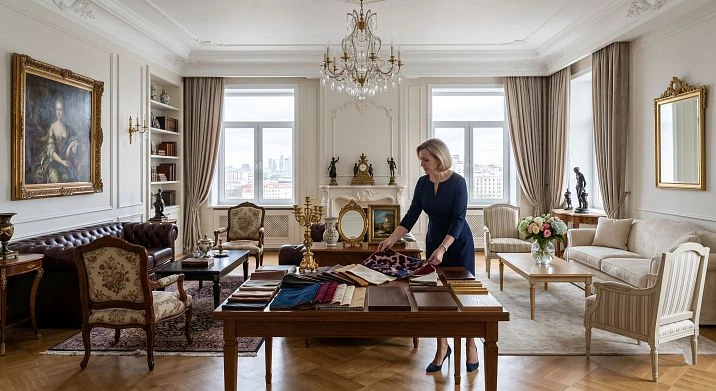
Classic Furniture for the Living Room in an Apartment This is a special challenge. On one hand, classics imply a certain richness of decor, expressive forms, and natural wood. On the other hand, an apartment living room is not a palace enfilade, and the furniture must fit into the actual square meters, actual ceiling height, and actual budget. How to find this balance? How to choose color, decor, handles, legs, and at the same time not turn the living room into an overloaded antique warehouse?
Let's break it all down in order — from a quick navigator to the subtleties of decor and typical mistakes.
Short answer: which classic furniture to choose for the living room
If you're short on time, here's a guide by situation.
-
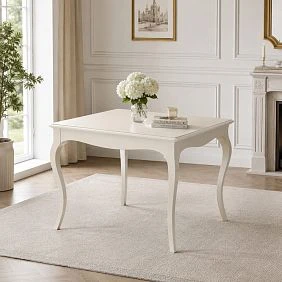
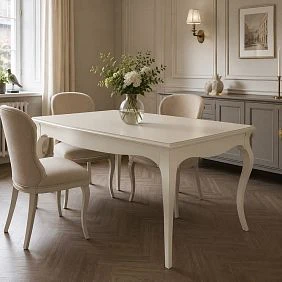
For a small apartment — light Classical Furniture for the Apartment in a neoclassical or modern-classical style: without heavy carving, with neat legs, calm facades.
-
For a spacious living room — you can afford dark wood, more expressive facades, classic wooden furniture with relief and ornament.
-
For modern classics — clean lines, moderate wooden furniture handlesneat legs, minimal decorative carving.
-
For the TV area — a cabinet or low chest without an overload of ornament. The wall behind the TV is decorated polyurethane moldings, not with complex furniture.
-
For a cohesive interior — furniture must be linked with floor baseboard, solid wood moldings, doors, and wall decor.
The main rule for a living room in an apartment: classic should be light. Not devoid of character — but proportionate to the space.




How the living room differs from the bedroom and study
This is not an obvious question, but a very practical one. Understanding the function of the room determines the logic of furniture selection.
The living room is a multifunctional space. Here, a relaxation area, TV area, guest reception area, and often a work area or mini-library coexist. This means furniture should be not just beautiful but also practical: provide storage, not obstruct movement, and not visually overload the space.
Furniture should be beautiful but light. In the bedroom, you can afford a heavier headboard or a massive chest — there it doesn't interfere. In the living room, the same mass of furniture creates a feeling of pressure. That's why Classic interior style furniture for a living room in an apartment, it should have legs that lift the body off the floor, neat proportions, and not too dark a color — unless the space dictates otherwise.
It is important to leave air and passageways. The living room is not a storage room. There should be free zones at least 80–90 cm wide between furniture for passage. Classic living room furniture in an apartment loses when there is too much of it. One sofa, one cabinet, one table, one chest of drawers — and that is already a good foundation.
The decor of the furniture is linked to the decor of the interior. If there are Molding on the Wall or moldings on the walls — the furniture should be in the same style. If the walls are calm and neutral — the furniture can be a bit more expressive. This is a system, not a set of random items.
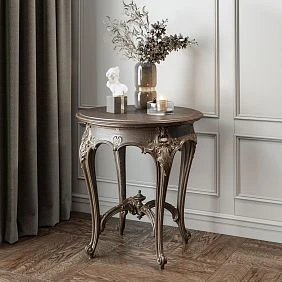
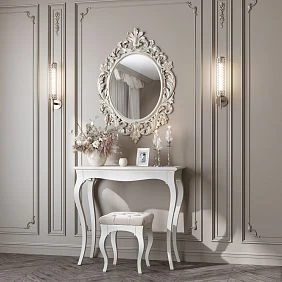
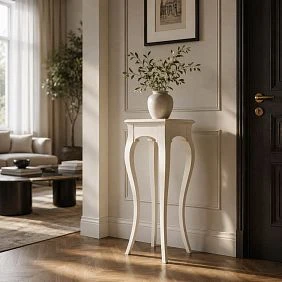
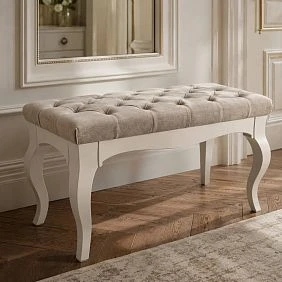
Our factory also produces:
What furniture items are needed for a classic living room
Get Consultation
TV cabinet
The TV cabinet is the semantic center of a modern living room. In of classic living room furniture it should combine functionality and style. A good cabinet for a classic living room: low (40–55 cm), on wooden legs — they visually lighten the body, with facades in a classic spirit — frame profile or delicate milling, with wooden furniture handles matching or with a slight contrast.
Important condition: the cabinet should not be higher than the eye level of a seated person. The TV is positioned at eye level — and the cabinet functions as a pedestal, not as a wardrobe. The wall behind the TV can be decorated. polyurethane moldings — this creates an architectural frame for the screen.
Display cabinet or wardrobe
A display cabinet in a classic hall is not just for storage. It is an opportunity to showcase beautiful dishes, bound books, collectibles. Glass fronts with classic profiles, Wooden handles in the form of brackets or knob handles — all this makes the display cabinet part of the interior, not just a functional item.
For an apartment, it is better to choose a display cabinet not at full wall height, but a more compact one — 140–180 cm. It will not overwhelm the space and will still create the desired accent. modern classic furniture often offers display cabinets in this exact format — decorative but not bulky.
Chest of drawers or console
A chest of drawers is one of the most versatile items in a classic hall. It works as a storage area, as a pedestal for decor and a mirror, as a horizontal line that structures the wall.
decor for furniture — overlays on the chest of drawers' fronts — turns an ordinary body into a classic accent. decorative elements for furniture in the form of ornamental overlays on drawers, the frame profile of facades, wooden hook handle matching the body color — and a budget chest of drawers turns into an item with character.
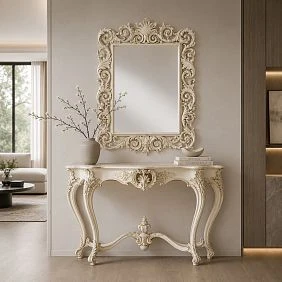
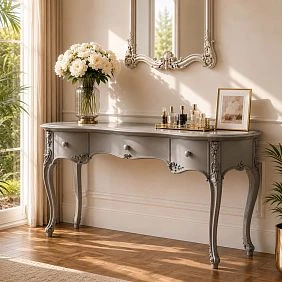
A console is a lighter option. It has no drawers, stands against the wall, and serves as a pedestal for a mirror, vases, books. In a small hall, a console is an ideal alternative to a massive chest of drawers.
Coffee table
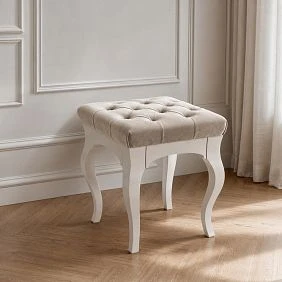
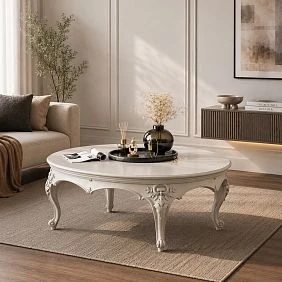
A coffee table in a classic hall is a detail often underestimated. It is what ties the sofa area into a single composition. Selection rules: table height — at the level of the sofa seat or slightly lower; shape — rectangle or circle (classic does not like sharp angles); Legs for coffee table — turned, tapered, or curved in a classic spirit.
A table with wooden legs and a glass or wooden top is a universal choice for any classic hall variant. It is visually light but maintains the style.
Shelves and decorative elements
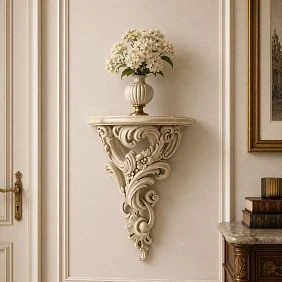
Open shelves in a classic hall are used cautiously. Too many open shelves with books and items create visual noise. Optimal — two or three shelves on an accent wall, mounted on decorative brackets made of solid wood. This creates the effect of a "cabinet wall" without overloading the space.
Wooden decoration for the shelves themselves — carved supports, decorative overlays on the ends, a cornice along the top edge — all these details make the shelf a part of a classic interior.
Light or dark classic furniture for the living room
This is one of the key questions when choosing — and one of the most common. Let's break it down honestly.
Light classic furniture — milky white, ivory, cream, light gray, powder. This is furniture for apartments, for small living rooms, for spaces with limited natural light. Light facades do not weigh down, do not visually reduce the space, and pair well with solid wood moldings and stucco on the walls. colors of classic furniture in a light palette — a classic choice for modern classic and neoclassical styles.
Dark classic furniture — walnut, wenge, dark oak, cherry, mahogany. This is status furniture that requires space and light. In a spacious living room with high ceilings and good lighting, dark wood creates a sense of depth, significance, and solidity. But in a small room without sufficient lighting — it weighs down and compresses the space.
Natural wood is a special case. Furniture made of solid wood with a natural texture, coated with varnish or oil, creates a warm, lively feel. This is neither dark nor light furniture — it is a natural color story that depends on the specific species and treatment.
Enamel is the right choice for modern classic and neoclassical styles. White or milky enamel on the body, wooden details — legs, handles, overlays — made of solid wood in a natural color or tinted. This combination is the essence of the modern classic style.
Practical rule: dark furniture requires good lighting — at least 300 lux in the work area. Light furniture forgives a lack of light but requires more careful maintenance.
Classic or modern classic: which is better for an apartment
| Option | When to choose |
|---|---|
| Classic with carving | Spacious hall, high ceilings, expressive interior |
| Neoclassical | Apartment, light walls, calm moldings |
| modern classic furniture | Minimum carving, clean lines, moderate decor |
| Dark Classic | Study or status hall with good lighting |
| Light classic | Small living room, studio apartment, small hall |
For most apartments, the optimal choice is modern classic or neoclassical. Why? Because in an apartment, classic furniture exists in a real space with real limitations: ceilings 2.5–2.7 m, hall area 18–30 m², modern windows and doors that do not always match the historical style. Modern classic can fit into these conditions without looking out of place.
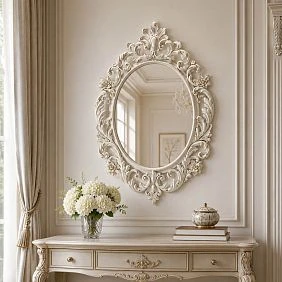
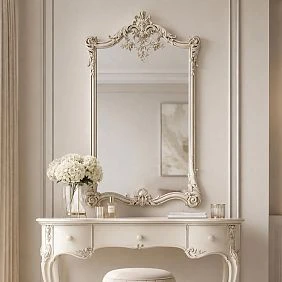
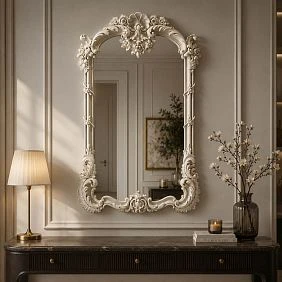
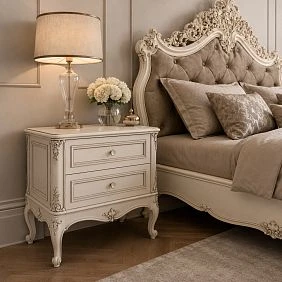
Photos of classic furniture The interiors show how expressive even restrained classics can look with the right selection of decor — handles, legs, overlays, and textiles.
How not to overload a living room with classic furniture
Overload is the main danger of the classic style in an apartment. It arises not from the amount of furniture, but from the mismatch between the scale of the decor and the size of the space.
-
Do not place a massive wall unit across the entire wall if the room is smaller than 25 m². The wall unit "eats up" space and visually presses down. Better to use individual pieces: a cabinet, a display case, a chest of drawers.
-
Choose one main accent. Either a sofa area with a rich wall behind it, or a display case and a chest of drawers — but not everything at once. One focal element — the rest supports it without competing.
-
Do not mix too much carved decor. Carving on the cabinet, carving on the legs, carving on the handles, overlays on every drawer — that's overkill. A detail should stand out, not drown in the overall ornament.
-
Light facades in a small space are not a compromise, but a strategy. They create a feeling of air.
-
Leave free walls and passages. Not every wall should be occupied by furniture. An empty wall with a single mirror in a classic frame works better than the same wall cluttered with cabinets.
-
Choose handles, legs, and overlays in the same style. wooden button handle a metal bracket on one item and a different style on another — that's a stylistic conflict that is immediately visible.
-
Don't let furniture argue with molding. If the walls are decorated polyurethane moldings with expressive relief, the furniture should be calmer. And vice versa.
How to choose decor for classic furniture
Decor is what turns case furniture into classics. Without the right details, even an expensive case looks faceless.
Wooden handles are the first and most affordable way to give furniture a classic character. wooden furniture handles come in several types: bracket handles, knob handles, rail handles. For classics, curved brackets and dome-shaped knobs are best. The color should match the case or have a slight contrast (a dark handle on a light case creates an accent).
Furniture legs are an element that makes furniture light and "alive." A cabinet or chest without legs looks like a box on the floor. The same items on wooden legs — on turned cones or with a curved profile — immediately acquire a classic character. A leg height of 5–12 cm is the optimal range for a living room piece of furniture.
Decorative overlays are relief ornamental elements that are attached to the facades. decorative elements for furniture made of solid wood: cartouches, medallions, corner overlays, frieze strips. One overlay in the center of a drawer facade is enough to create a classic character.
Brackets — for shelves and curtain rods. Decorative Bracket made of wood supports the shelf and is simultaneously a decorative element. In a classic hall, console brackets with ornament create a library or study effect.
A wooden cornice is the finishing element of the top of a cabinet or display case. The cornice hides the technical gap between the furniture and the ceiling and creates a horizontal line that connects the furniture to the ceiling. Moldings from solid wood for the cornice — a standard solution.
Baseboard and moldings — the connection of furniture with the interior. Furniture installed flush against a wooden skirting board made of the same material looks like part of the architecture — not like a brought-in item.
Classic furniture and TV zone
The TV zone in a classic hall is a delicate task. The TV itself is a modern object, alien to historical styles. But it is present in almost every hall. How to "integrate" it into the classic style?
The console is the main tool. A good TV console on wooden legs with classic fronts and neat handles turns the TV zone into an interior composition. The TV on such a console ceases to be a "screen on the wall" — it becomes part of the setting.
The wall behind the TV. This is the most important decision. Active carving around the screen competes with the screen itself. The correct approach: calm Moldings made of polyurethane in the form of a neat frame or several vertical panels — this creates an architectural background that does not compete with the image.
Furniture and wall color. A dark cabinet on a dark wall — the TV "floats" in space. A light cabinet on a light wall — the TV reads clearly. The most advantageous option: the cabinet is slightly darker than the wall — this creates a slight contrast that makes the area expressive.
Baseboard and floor. with a classic profile creates a sense of solidity, reliability. in the TV zone connects the cabinet with the flooring. If the baseboard matches the cabinet tone — the area looks like a single composition.
Classic furniture and molding in the living room
This combination is the highest level of interior work. When furniture and wall decor speak the same language — the living room turns into a real environment, not a set of purchases.
Moldings help to design the wall behind the sofa. Frames made of of polyurethane moldings create an architectural background for the sofa. This is better than patterned wallpaper: moldings do not age or become boring.
A ceiling cornice completes the classic interior. A polyurethane cornice around the perimeter of the living room and Moldings from solid wood for walls — this is a system that frames the furniture from above and on the sides.
A wooden baseboard connects furniture to the floor. A baseboard made of the same material and in the same color scheme as furniture legs or handles creates continuity of decor from floor to ceiling.
Bagets and mirrors enhance the style. Wooden Picture Frame for decorating a mirror above a dresser — an elegant and inexpensive way to add classic style to the living room. A mirror in a classic frame above a console is both decor and function.
Important balance. You cannot simultaneously make furniture, walls, and ceiling expressive — not in an apartment living room. Choose one dominant element. If the walls are rich, the furniture is calmer. If the furniture is expressive, the walls are more neutral.
How to choose furniture based on wall and floor color
colors of classic furniture — this is not an isolated story. Furniture always exists in context: walls, floor, textiles, lighting.
Light walls + light furniture. Calm neoclassicism. Everything in the same tone creates a soft, airy space. Details — legs, handles, baseboard — can be slightly darker, creating rhythm without contrast.
Light walls + dark furniture. Contrast and status. A dark cabinet or dresser on a light wall becomes an accent. This is an energetic solution that works well in spacious living rooms.
Warm wooden floor + wooden furniture elements. A natural wood or parquet floor with a warm tone is best supported wooden legs и wooden furniture handles in a close tone. This creates a connection between the floor and furniture.
White furniture + stucco and moldings. A classic combination for neoclassicism. White enamel on the body, white Moldings made of polyurethane on the walls — a single tone where details create relief without color noise.
Dark furniture + lighting. This is a condition that cannot be ignored. Dark walnut or wenge without sufficient light — an interior that looks heavy and gloomy. With good lighting — luxurious and prestigious. If you are planning dark classics, think through the lighting in advance: general, accent, and backlighting inside the display case.
Mistakes when choosing furniture for the living room
This is an honest list — not for criticism, but so that you don't repeat them.
Buying furniture only from photos. Photos don't convey the real scale. A cabinet that looks elegant in an interior shot in a spacious house can take up half of your room. Always check the dimensions — and apply them to the plan of your living room.
Choosing too massive cabinets for a small apartment. A wall unit covering the entire wall in an 18 m² living room — that's not classic, that's cramped. For small living rooms — individual pieces with legs.
Not considering the TV zone. The TV zone should be planned in advance — where the media console is placed, how the TV is positioned, what is behind the screen and on its sides. A chaotically added shelf or cabinet next to the TV ruins the style.
Mixing different wood shades. A media console in light walnut, a table in dark oak, and shelves in natural pine — three different 'woods' in one space. This is only acceptable with a professional approach. In most cases — a conflict.
Not matching handles, legs, and overlays. A chaotic set of hardware is the best way to make expensive furniture look cheap. All details should be in the same style system.
Forgetting about baseboards and doors. Furniture in the living room exists in context. White furniture with a massive dark baseboard is a contradiction. Classic furniture next to cheap plastic doors is the same.
Overloading the living room with both furniture and molding. This is the most costly mistake. Rich furniture + rich walls + complex ceiling — in an apartment living room, this is chaos, not luxury. Choose one dominant level of decor.
Choosing dark furniture without considering lighting. More on this is said above. Plan lighting before buying furniture — not after.
What to buy for a classic living room
Full list — for those ready for the final choice.
Classic Furniture — cabinet, display case, chest of drawers, console, coffee table. The foundation of everything.
wooden furniture handles — brackets, knobs, rails. Selected in a unified style system.
Wooden legs — for cabinets, chests of drawers, coffee tables. Visually lighten the furniture, add classic character.
decorative elements for furniture — overlays, cartouches, corner elements. A point accent that creates the character of the facade.
Decorative brackets — for shelves, cornices, decorative compositions.
with a classic profile creates a sense of solidity, reliability. — connects furniture with flooring into a single system.
Moldings from solid wood — for wall frames, furniture top cornices, horizontal decorative lines.
Wooden Picture Frame — for decorating mirrors, paintings, panels in the same style.
Moldings made of polyurethane — for walls and ceiling. They connect furniture decor with the hall's architecture.
Molding on the Wall — for accent areas: wall behind the sofa, TV zone, hallway.
FAQ: questions asked when choosing furniture for the living room
Which classic furniture is best for a living room in an apartment?
For an apartment, it's better to choose modern classic furniture or neoclassical: light facades, moderate decor, solid wood legs, neat handles. Heavy classic with rich carving is only suitable for spacious living rooms with high ceilings.
Can you place dark classic furniture in a small living room?
You can, but selectively. A dark cabinet or chest as an accent piece, not a massive wall unit. With dark furniture, good lighting is essential: general plus accent lighting.
What to choose for a TV area in a classic style?
A cabinet classic furniture on legs with neat fronts. Decorate the wall behind the TV polyurethane moldings in the form of a calm frame.
How to combine classic furniture with moldings?
Furniture and moldings should be close in style and decorative intensity. If the walls are active, the furniture is calmer. If the furniture is expressive, the walls are more neutral. colors of classic furniture should match the color of the moldings.
How to update furniture in the living room without buying new?
Replace furniture handles with wooden ones in a classic style. Install Wooden legs instead of built-in supports. Add Decorative Inserts on the facades. Install Wooden baseboard in the color of the furniture. Add moldings to the walls.
How to choose handles for classic furniture?
Handles should match the body in color and style. wooden hook handle in the color of the body — for a restrained classic look. wooden button handle — for an accent on the drawer front. Main thing: all handles in one room — from the same series.
Does furniture in a classic hall need legs?
Yes, for most items — they are necessary. Legs for coffee table and pedestals visually lighten the furniture, add air under the body, and give the product a classic character. Furniture without legs looks heavier and more "grounded."
About the company STAVROS
A classic living room in an apartment is not a declaration of luxury, but a well-thought-out system of details. STAVROS produces and offers a full range of elements for such an interior: classic furniture in modern and historical execution, wooden furniture handles, Decorative legs, planks from solid wood, Brackets, Baseboards, Moldings и molding.
In the STAVROS catalog, everything is selected in a unified stylistic logic: furniture matches wooden decor, decor matches stucco, stucco matches moldings. This is not a store of individual items — it is a system for creating a cohesive classic interior where every detail knows its place.