Article Contents:
- Why furniture and stucco should be chosen together: the logic of a cohesive interior
- Three mistakes of those who buy separately
- What to buy for a classic-style living room: a complete set
- Which areas to decorate with stucco in a classic living room
- Wall behind the sofa
- TV Area
- Cabinet or display case area
- Wall with mirror
- Ceiling around the chandelier
- Doorway
- Bottom line with baseboard
- Dresser or console area
- What to choose from polyurethane: a detailed breakdown of each element
- Wall moldings
- Polyurethane cornice
- Polyurethane baseboard
- Ceiling rosette
- Decorative overlays and decor for moldings
- How to choose stucco molding for furniture type: four scenarios
- Light classic furniture
- Dark classic furniture
- Carved furniture with rich decor
- Simple classic furniture without carving
- Ready-made sets for different living room options
- Living room with a sofa and sofa group
- Living room with an accent TV area
- Hall with a display cabinet in classic style
- Bright living room in neoclassical style
- Small hall in classic style
- How to calculate the number of moldings for a hall
- Installation technology: from wall to final color
- Purchasing mistakes: costly blunders
- Color solutions: how to properly paint stucco and walls
- FAQ: questions about classic living room and stucco
- About the Company STAVROS
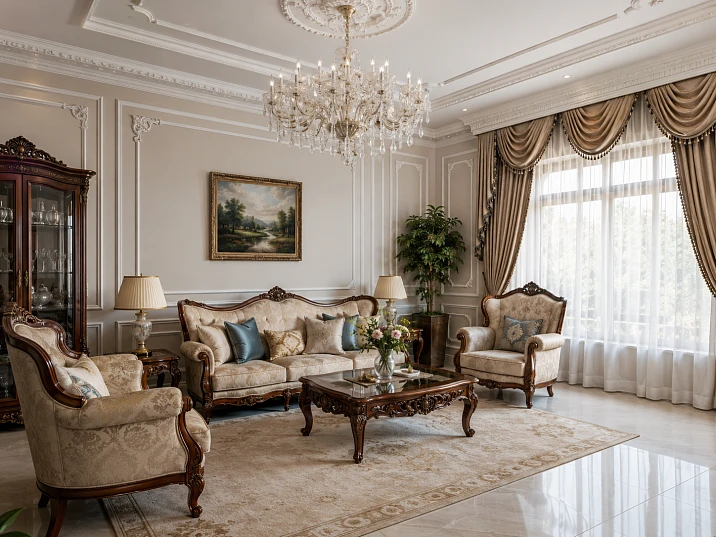
A living room is not just a room with a sofa and a TV. It is a space that reads as a single statement: here either everything works together, or each element exists on its own, creating a sense of fragmentation. Classic Furniture for the Living Room in an Apartment — is only half the task. The other half is the walls, ceiling, baseboard, cornice, ceiling rosette, and decorative elements that turn a set of objects into an architectural environment. And it is here Polyurethane moldings becomes the connecting link that makes the room whole, deep, and stylish.
This article is not written for those who just want "something on the wall." It is for those who consciously assemble a set: furniture, decor, architectural lines — in one coordinate system.


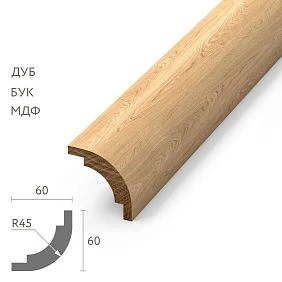
Why furniture and stucco should be chosen together: the logic of a cohesive interior
Imagine this: you bought a beautiful classic-style sofa, placed a display cabinet with carved facades, hung a chandelier with crystal pendants. Everything is beautiful individually. But the walls are bare. The ceiling has a single Soviet-era rosette. The baseboard is white plastic. And suddenly all the luxury of the furniture starts to look like a set of items that accidentally ended up in the same room.
The room is perceived as an interior when there are vertical and horizontal lines that connect the furniture with the room's architecture. Molding on the walls creates framed planes that visually echo the framed facades of the furniture. The cornice repeats the profile of the top molding of a cabinet or display case. The baseboard picks up the bottom line of a chest or console. The ceiling rosette focuses the eye on the chandelier and sets the center of the composition.
These are not random details — it is a system. And it is precisely this that a properly selected polyurethane decor paired with classic furniture.




Three mistakes of those who buy separately
The first mistake is to buy furniture and then look for stucco "to match it." This is a path to compromises: molding of the wrong scale, cornice with a different profile, rosette too large or too small. You need to start with a room map and choose everything together.
The second mistake is to buy decor without a placement scheme. How many linear meters of molding are needed for the wall? Where will the corner joints be? Are corner decorative inserts needed? Without a scheme, it's a lottery.
The third mistake is mixing different styles of furniture and stucco. Classic Furniture Baroque details and molding in the strict Empire style create a conflict. All elements should come from the same stylistic vocabulary.
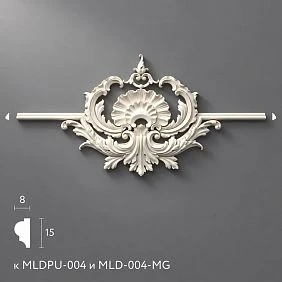
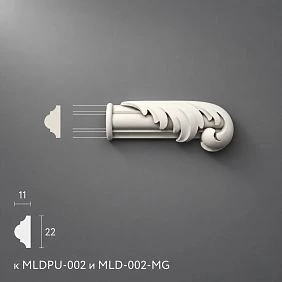
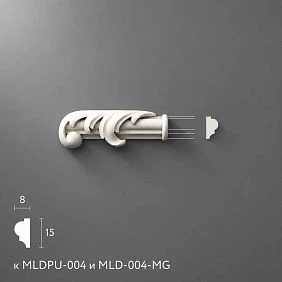
Our factory also produces:


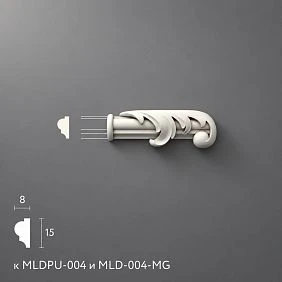
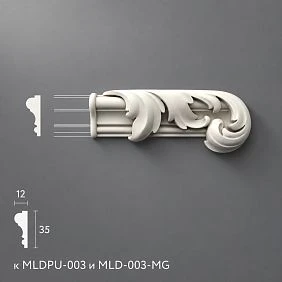
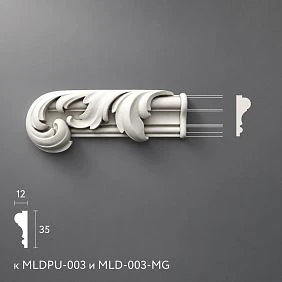
What to buy for a classic-style living room: a complete set
Before moving to specific zones and selections, here is a comprehensive list. This is not just a list — it's a working checklist for those furnishing a living room systematically.
Furniture:
-
a sofa or sofa group in a classic style;
-
a display cabinet, wardrobe, or wall unit in classic style;
-
a chest of drawers or console;
-
a coffee table.
Polyurethane molding and architectural decor:
-
Moldings made of polyurethane — for frame panels on walls;
-
polyurethane cornice — for the transition from wall to ceiling;
-
polyurethane baseboard — for the bottom horizontal line;
-
ceiling rose made of polyurethane — under the chandelier;
-
decorative polyurethane elements — overlays, accents, rosettes;
-
Decor for polyurethane moldings — corner inserts and key elements.
Furniture decor:
-
decor for furniture — if the furniture requires additional decor on the facades;
-
Wooden handles — if the furniture is supplied separately.
Consumables:
-
mounting adhesive for polyurethane;
-
acrylic sealant;
-
adhesive primer;
-
paint;
-
Spare decor 10–15%.
This is the set that turns a collection of purchases into an interior.
Get Consultation
Which areas to decorate with stucco molding in a classic living room
The living room in an apartment consists of several independent zones, each requiring its own solution. Let's go through them in order.
Wall behind the sofa
The wall behind the sofa is the main decorative plane of the living room. It is viewed from the entrance, from the opposite armchair, and from the coffee table. It is the showcase of the interior. And it is here that molding frames work most expressively.
Panel division with moldings — rectangular frames symmetrically arranged horizontally — creates an architectural wall without a single centimeter of additional construction. One molding, one layer of paint, one puttying of joints — and the wall lives like in a European classic home.
The scale of the frames should be proportionate to the sofa. Three frames across the width of the sofa is a standard solution. The height of the frames is from 60 to 80% of the wall height. This gives a sense of spaciousness while maintaining decorative saturation.
Choosing Moldings made of polyurethane For this wall, pay attention to the profile. For classic style, profiles with a heel, scotia, quarter round, or complex multi-step shape are most appropriate. Narrow moldings 20–30 mm wide provide elegance. Wide profiles 40–60 mm provide richness and weight.
TV area
The TV zone is a place of increased attention and at the same time the most "technological" part of the hall. Here there is a TV, a cabinet, cables, sometimes a decorative niche or a built-in box. How to design this zone so that the technology does not conflict with the classic style?
The answer is a frame composition around the TV. Polyurethane wall decor It allows you to create a symmetrical architectural frame into which the TV panel fits organically. Moldings around the perimeter of the zone, simple overlays at the corners — and the technical rectangle of the screen becomes part of the interior composition.
An important principle of the TV zone: minimum relief. Lush baroque overlays and complex cartouches are not needed here. A calm molding profile, clean corners with corner inserts — this is enough. The cabinet under the TV with wooden handles and molding facades in a classic style completes the zone.
Wardrobe or display case zone
If there is a display case or a bookcase in a classic style in the room, the wall behind and next to it should support the character of the furniture. Moldings on the wall in the area of the cabinet create an effect of built-in: it seems that the furniture is integrated into the architecture, not just placed against the wall.
It is advisable to choose the molding profile based on the furniture's cornice profile. If the display case has a cornice with a scotia, a molding on the wall with a similar element will create a visual dialogue. If the furniture is strict, with straight stepped profiles, choose a molding of the same character.
On the side walls in this area, vertical pilasters made of polyurethane trim are appropriate — they enhance the architectural quality of the space and create the feeling of a portal framing the furniture group.
Wall with mirror
A mirror in a classic hall is an architectural element, not just a household item. It must be framed. A frame made of moldings around the mirror is one of the most elegant classic techniques. A horizontal shelf made of profiled trim under the mirror, a decorative overlay above it — and the mirror becomes a portal that is architecturally significant.
For this task, the following work especially well decorative polyurethane elements: key keystones above the mirror, corner acanthus inserts, central accent rosettes. They turn a household item into an architectural detail.
Ceiling around the chandelier
A ceiling rosette under the chandelier is a small detail with a big effect. In apartments with classic furniture, the chandelier is almost always central, and installing it without a rosette looks unfinished: the wire enters the ceiling, with nothing around it. The ceiling rosette covers this point and simultaneously becomes an accent that draws the eye upward.
ceiling rose made of polyurethane is produced in diameters from 20 to 120 cm and more. For a standard apartment living room of 18–25 sq. m, a rosette with a diameter of 40–60 cm is the optimal scale. For large halls with high ceilings — 70–90 cm. A rosette that is too small gets lost, one that is too large feels oppressive.
The style of the rosette should match the style of the furniture: for classic and neoclassical — acanthus leaves, volute spirals, geometric petals; for Provence — a light floral pattern; for Art Deco — geometry and rays.
Doorway
A doorway is a boundary between zones that is often ignored. And in vain. In a classic hall, a door with a molding frame looks like an architectural detail, not just a passage. Platbands with polyurethane molding profiles, a decorative insert in the arch lock or above the opening — these are a few hours of work that radically change the perception of space.
Bottom line with baseboard
A baseboard is a horizontal line that runs around the entire perimeter of the room and visually connects furniture with the floor and walls. A white plastic baseboard in a classic interior is a discount signal: it destroys the sense of style, no matter how expensive the furniture next to it is.
A profiled polyurethane baseboard with an expressive profile — 80–120 mm high — creates a substantial bottom line. It is painted to match the walls or white, creating a clean architectural transition. This is one of the cheapest and most effective investments in a classic interior.
Dresser or console area
A dresser or console in a classic style is an accent object around which a small independent composition is formed. A mirror, painting, or panel above it, symmetrical sconces on the sides. The wall in this area can be decorated with a separate panel frame made of moldings — slightly larger than the furniture item itself, to create the effect of a niche or portal.
What to choose from polyurethane: a detailed breakdown of each element
Wall moldings
Moldings made of polyurethane — the basis of the decorative system of a classic hall. They create frame panels, frame zones, set the rhythm and scale of wall planes. They are sold by linear meters and allow you to calculate the purchase exactly according to the scheme.
When choosing a profile, the height (width of the visible part) and depth of the relief are important. For apartment halls, the optimal height is 25–50 mm. The depth of the relief is 8–15 mm for walls, up to 20 mm for cornice moldings. Too deep a relief in a narrow room creates a feeling of heaviness.
Polyurethane cornice
A cornice is the transition from wall to ceiling. In a classic interior, it is a mandatory element: without a cornice, the walls and ceiling meet at a right angle, which looks unfinished. The cornice softens this transition and simultaneously adds height — even in a room with a 2.7 m ceiling, a cornice creates the illusion of more space.
The height of the cornice is selected depending on the ceiling height. Up to 2.7 m — cornice 50–80 mm. From 2.7 to 3.0 m — 80–120 mm. Above 3.0 m — you can install a complex multi-level cornice of 150 mm or more. Polyurethane moldings The cornice assortment is presented in a wide range of profiles — from strict stepped forms to lush acanthus cornices with a developed projection.
Polyurethane skirting board
The baseboard covers the lower perimeter of the room and is the lower horizontal frame of the entire interior. A profiled polyurethane baseboard does not deform with humidity (unlike MDF), does not dry out, paints well, and lasts for many years without losing its appearance.
In a classic hall, the height of the baseboard should be sufficient to create a substantial lower line. Minimum — 80 mm. Ideal — 100–120 mm. The profile of the baseboard should preferably echo the profile of the cornice: if the cornice has a cyma, let it also be in the baseboard. This creates visual symmetry of the upper and lower lines of the room.
Ceiling rosette
ceiling rose made of polyurethane — the final accent that punctuates the architecture of the ceiling. Choose a model that matches the scale of the chandelier: the diameter of the rosette should be 1.5–2 times larger than the diameter of the chandelier's ceiling cup. Then the rosette looks like a frame, not just a "circle under the lamp."
For installing a ceiling rosette, glue is used — details on choosing glue and application technology are described in the material what to glue polyurethane molding with. Installation is simple: glue on the back side, press and hold, putty the perimeter, prime, paint.
Decorative overlays and decor for moldings
decorative polyurethane elements — these are accent details that enhance decorativeness at key points. Corner rosettes at molding intersections, keystones above openings and mirrors, central overlays on large planes — all these are secondary details that reveal the richness of relief up close.
Decor for polyurethane moldings — these are specialized corner and central elements designed to join with specific profiles. They solve a problem that, with ordinary molding cutting at 45°, requires high precision: the ready-made corner element is simply glued at the joint point, and the seam disappears.
How to choose stucco molding for furniture type: four scenarios
Light classic furniture
light classic style living room furniture — the most popular choice for apartments. White, ivory, powder, champagne, light gray. This furniture brightens the interior, making it airy. White or wall-toned stucco molding works well with it — moldings and cornices dissolve into the space, creating a subtle architectural shadow.
For a light interior, it is recommended to use a molding profile no wider than 40 mm with a relief depth of no more than 12–15 mm. The ceiling rosette should be neat, with floral or geometric motifs. No baroque with lush curls — only subtle classics.
Dark classic furniture
If the furniture is dark — wenge, walnut, dark oak, ebony — the walls should be light. And stucco molding here works as a structuring element of the light surface. White moldings on a light gray wall, white cornice, white rosette on the ceiling — contrast with dark furniture creates an expressive interplay.
For dark furniture, it is better to choose moderate relief. The scale of the hall is already filled with dark volumes — adding lush stucco compositions will overload perception. Strict profile, clean lines, emphasis on the cornice and baseboard — this is enough.
Carved furniture with rich decor
Carved classic furniture — with turned legs, relief facades, carved cornices — is already very decorative in itself. If you supplement it with equally lush stucco molding, the hall will turn into an overloaded space where no element is readable.
Here the principle of contrast works: calm walls with minimal molding frames and a simple cornice highlight the furniture without competing with it. The ceiling rosette is neat, without lush ornament. Furniture is in the main role, stucco molding is in the role of background and framing.
Simple classic furniture without carving
If Classic Furniture chosen without carving — smooth facades with molding frames, straight legs, simple handles — the interior can be enriched precisely through stucco. Here the walls can take on more relief: wider moldings, a developed cornice, an expressive rosette, Polyurethane wall decor in the form of accent panels.
This is a budget-friendly and very effective way to visually increase the cost of the interior: simple furniture + rich stucco on the walls = an interior with character.
Ready-made sets for different living room options
Living room with a sofa and sofa group
The basic scenario of a classic living room — a sofa group in the center, a wall with moldings behind the sofa, a ceiling chandelier in the center.
Decor set:
-
moldings on the wall behind the sofa — three frames horizontally;
-
cornice around the perimeter of the room;
-
baseboard with profile for cornice;
-
a ceiling rosette for the chandelier;
-
Decor for polyurethane moldings — corner elements for frames.
Living room with accent TV zone
The TV zone requires calm, structured design.
Set:
-
molding frame around the TV;
-
molding frames on the side planes of the TV zone;
-
baseboard along the bottom line of the cabinet;
-
cornice along the perimeter;
-
ceiling rosette.
Living room with a classic display cabinet
If a cabinet or display case occupies an entire wall or most of it.
Set:
-
moldings on the side walls in the same profile theme as the furniture cornice;
-
ceiling cornice around the perimeter — unites the furniture cornice and the ceiling;
-
baseboard under the furniture legs;
-
decorative overlays on the side walls as an accent.
Light living room in neoclassical style
Light walls, Light classic furniture, white stucco molding.
Set:
-
thin moldings 25–30 mm — frame division of walls;
-
medium-height cornice — 80–100 mm;
-
baseboard 100–120 mm;
-
ceiling rosette with floral ornament;
-
decorative polyurethane elements in the mirror and console area.
Small classic hall
When space is limited — 14–18 sq m — every centimeter works for the space.
Set:
-
narrow moldings 15–25 mm — no more than one or two rows of frames;
-
simple cornice without projection — 50–70 mm high;
-
baseboard 80 mm — no higher;
-
small ceiling rosette 30–40 cm;
-
no large overlays.
In a small hall, the right scale is more important than the richness of decor.
How to calculate the number of moldings for a hall
This is a practical question that many put off 'for later' — and as a result, either there isn't enough or there's leftover. The calculation algorithm is simple.
-
Make a wall diagram with frame dimensions.
-
For each frame, calculate the perimeter (2 × width + 2 × height).
-
Sum the perimeters of all frames.
-
Add 15% margin for trimming and defects.
Example: three frames 80×120 cm on the wall behind the sofa. Perimeter of one frame: 2×80 + 2×120 = 400 cm = 4 m. Three frames: 12 m. 15% margin: +1.8 m. Total: about 14 linear meters of molding.
Don't forget: if decorative Polyurethane corner moldings — decorative inserts at intersections — they need to be counted separately: 4 pieces per frame.
Installation technology: from wall to final color
Full technology of installing polyurethane molding is described in detail in a special article. Here are the key principles for those who want to understand the process.
Base preparation. The wall must be level, clean, free of grease and dust. Polyurethane does not level the wall — it adheres to it. Unevenness under the molding will create a gap that will be visible after painting.
Marking. First with a pencil — a diagram of frames, center lines, checking horizontals and verticals with a level. Only after full marking — installation.
Glue. The right choice of glue is the key to reliable installation. Some glues are aggressive towards polyurethane. Details on choosing glue are in the article what to glue polyurethane molding with.
Joints. Corner joints are filled with acrylic sealant and sanded with fine abrasive paper until the seam completely disappears. The quality of the joints determines the final appearance.
Priming and painting. Polyurethane is primed with an adhesion primer — without this, the paint does not hold. Painting — in two coats with intermediate drying. The entire room is painted in a single tone.
Mistakes when purchasing: costly blunders
Buying furniture without considering walls and ceiling. The most basic mistake, which has already been discussed. Buying a sofa is just the beginning. The living room is a system.
Choosing too large molding for a small living room. A cornice 200 mm high in a room with a 2.5 m ceiling will "eat up" 8% of the ceiling height. The scale of the decor should match the scale of the room.
Overloading the TV zone. The TV zone requires a calm background, not a decorative explosion. Large overlays, lush cartouches, deep relief next to the screen are visual noise.
Not matching the baseboard and cornice. The baseboard and cornice should be from the same line or at least from the same style family. Different styles of the upper and lower horizontal lines destroy the integrity of the interior.
Forgetting the ceiling rosette. A chandelier without a rosette is a good chandelier in an unfinished space. The rosette is inexpensive, installs in an hour, and gives a 100% effect.
Mixing different styles of furniture and molding. Baroque furniture and strict Empire molding are a style conflict. All elements should be from one vocabulary: classic, neoclassical, Provence, Art Deco — each style has its own molding.
Not calculating the number of moldings. Buying "by eye" ends up either with extra meters that have nowhere to go, or a shortage in the middle of the work when the required item is no longer in stock.
Buying decor without a placement scheme. No "buy and figure it out" overlays. Before purchasing — a wall diagram with the exact location of all elements, dimensions, and article numbers.
Color solutions: how to properly paint molding and walls
A classic living room works in a limited palette — and that's correct. The fewer colors, the more depth.
White stucco on a white wall. Moldings and cornice the same color as the wall. The only difference is the shadow from the relief. This is the most elegant and "expensive" looking solution. Works with any furniture.
White stucco on a painted wall. Walls in color — powder, sage, gray-blue, warm gray — white moldings come to the forefront as a graphic element. This is a more decorative option, working well with simple classic furniture.
Stucco in the color of the walls. Moldings and cornice are painted the same shade as the walls. The shadow from the relief creates volume without contrast. This is an architectural, restrained option — for those who value subtlety over obviousness.
Patination of stucco. Dark patina on the corners and relief of the moldings, light base tone — creates a sense of age and handcraft. Suitable for warm classic interiors, for Provence and Mediterranean classics.
FAQ: questions about the classic living room and stucco
What to buy for a classic hall in an apartment?
The set looks like this: Classic Furniture, Moldings made of polyurethane for walls, cornice, baseboard, ceiling rose made of polyurethane, decorative polyurethane elements, glue, sealant, primer and paint. It is the comprehensive approach that creates a cohesive interior.
What stucco is suitable for a living room with classic furniture?
Polyurethane moldings with profiles of classic geometry — ogee, scotia, quarter round, stepped profiles. The style of the stucco should match the style of the furniture. For neoclassicism — strict profiles. For classic with carving — more developed profiles with floral ornament. Scale — proportionate to the room.
Can stucco molding be used in a small hall?
Yes. But with limitations: narrow moldings 15–25 mm, a simple cornice without projection, a small rosette up to 40 cm, minimal overlays. In a small hall, stucco molding works to create an architectural structure, not for decorative saturation.
What is better for light classic furniture?
Thin moldings with a soft profile, a white cornice or one painted to match the walls, a neat ceiling rosette with floral or geometric motifs. Polyurethane wall decor in the form of frame molding panels on the wall behind the sofa and behind the console.
Is a ceiling rosette needed in a classic living room?
It is needed — if there is a central chandelier. The rosette completes the ceiling point, hides the mounting assembly, creates an architectural accent. It is inexpensive, quick to install, and definitely gives a feeling of completeness to the interior.
How to calculate the amount of moldings for a hall?
Wall layout with frame dimensions → perimeter of each frame → sum of all perimeters → + 15% reserve. Additionally, corner decorative inserts are counted: 4 pieces per frame. It is better to do a detailed calculation before purchasing, not during installation.
How not to overload a hall with stucco molding?
Rule three: the scale of the decor matches the scale of the room; the stucco complements the furniture, not competes with it; one style for all elements. If in doubt about the quantity — choose less: you can always add, but removing means redoing.
How to choose decor for moldings?
Decor for polyurethane moldings — corner rosettes and key inserts — are selected for a specific molding profile. Check compatibility with the supplier: the corner element must have the same profile height as the main molding.
About the company STAVROS
Everything you need to design a classic hall — from furniture to the last ceiling rosette — is available in the STAVROS company catalog. This is a Russian manufacturer and supplier of products made from natural wood and polyurethane for interior decor, furniture industry, and architectural finishing.
STAVROS produces a full range for classic interiors: polyurethane molding — moldings, cornices, baseboards, ceiling rosettes, overlays, and decor for moldings; decor for furniture from solid wood; Wooden handles for cabinets and chests of drawers; furniture legs and supports. A separate area is consultations on selecting sets and decor placement schemes.
The history of STAVROS began in St. Petersburg, where in 2002 a workshop for carved wood products was founded. Among the completed projects are the Hermitage, the Konstantinovsky Palace, the Alexander Palace, and the Trinity-Izmailovsky Cathedral. This experience with historical spaces sets the standard of precision and quality for everything the company produces today.
If you are assembling a classic-style hall and want every element to contribute to the overall picture — start with the catalog polyurethane decor и classic furniture On the STAVROS website. There you will find the entire set — from molding to handle — in one place.