Article Contents:
- What is artistic stucco and how it differs from regular molding
- Where to use artistic stucco: zones and scenarios
- On walls: frames, accents, panels
- On the ceiling: rosettes, cornices, transitions
- In openings and portals
- On furniture and in niches
- What elements make up artistic stucco decor
- Artistic stucco made of polyurethane: why it is practical
- Weight
- Precision
- Painting
- System Assembly
- Installation
- Artistic Stucco to Match Interior Style
- Classic
- Neoclassicism
- Art Deco
- Modern Interior
- Country House and Interior with 'Character'
- How Not to Overload an Interior with Stucco: Rules That Work
- One main accent
- Scale According to Ceiling Height
- Unified profile
- Symmetry is a Must
- Coordination with Baseboards and Doors
- Plan the Color Before Installation
- Best scenarios for artistic stucco on walls
- Wall Behind Sofa in Living Room
- Bed headboard in the bedroom
- TV Area
- Hallway and corridor
- Office
- Commercial spaces: beauty salons, showrooms, hotels, restaurants
- Artistic stucco for ceilings: detailed analysis
- Cornice: the first and essential element
- Ceiling rosette: assembly point
- Ceiling frame as a coffered ceiling
- Stucco and lighting
- Mistakes when choosing artistic stucco
- What to buy for artistic stucco: complete list
- How to buy artistic stucco without mistakes: final algorithm
- About the Company STAVROS
- FAQ: Answers to Popular Questions
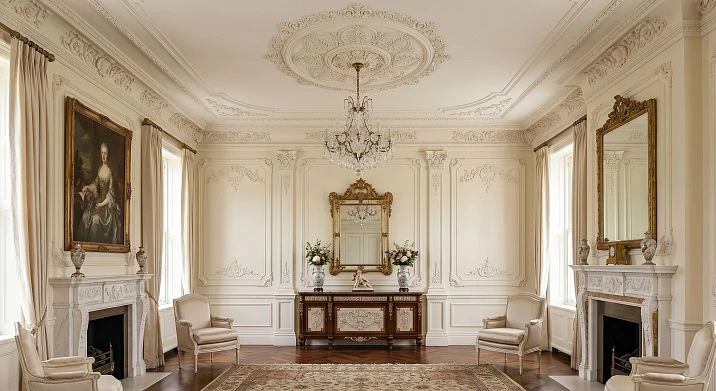
Artistic stucco in an interior is a broader concept than just "stripes on walls." It is a system of decorative elements: moldings, cornices, rosettes, overlays, pilasters, capitals, corner elements, and ornamental details that together create the visual structure of a room. When chosen correctly, it unifies the disparate elements of the space into a single architectural idea. When chosen incorrectly, it overwhelms and irritates.
Let's break down how to do it right.
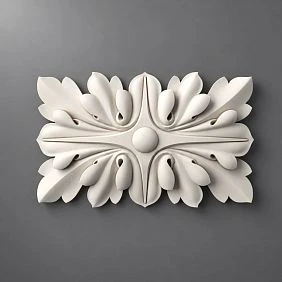
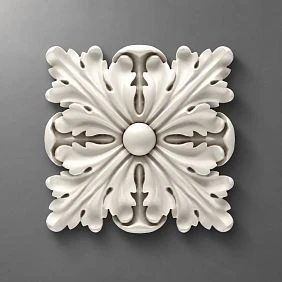
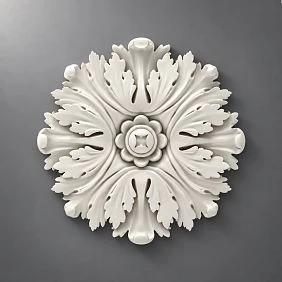
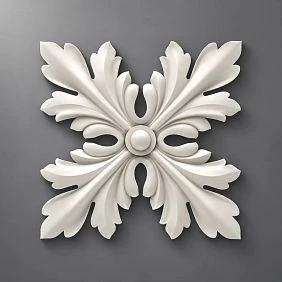
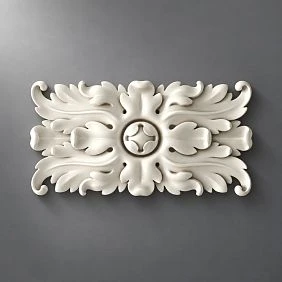
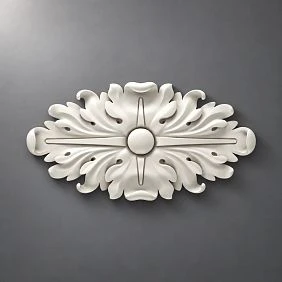
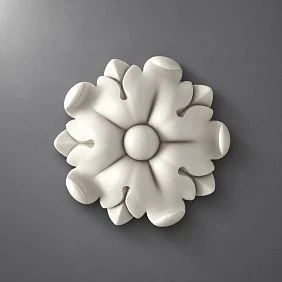
What is artistic stucco and how is it different from regular molding
Regular molding sets a line. One horizontal strip on the wall. That's good — but it's not yet artistic stucco. Decorative stucco creates a composition. The difference is simple to explain: molding is like a single note. Stucco decor is like a melody.
What makes stucco "artistic":
-
A system of elements, not a collection. Moldings, corner rosettes, cornices, and overlays chosen in a unified profile and style — that's a system. A random set of different elements is not.
-
Proportionality. Decorative elements must be proportionate to the wall, ceiling height, and furniture size. Otherwise, the stucco "doesn't work."
-
Rhythm and symmetry. Artistic stucco is built according to the laws of architectural geometry: symmetrical frames, repeating profiles, coordinated corner transitions.
-
Connection with the interior. molding in interior should match the style of furniture, doors, baseboards, and architraves. It is not a separate decor, but the language of the entire space.
Decorative polyurethane molding allows assembling such systems from ready-made elements — without complex craft production. That is why it has become the main material for modern interior solutions.




Where to use decorative stucco: zones and scenarios
Our factory also produces:
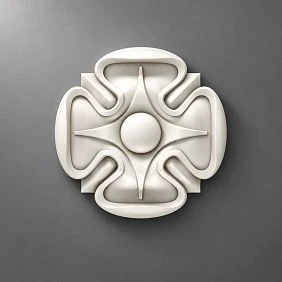
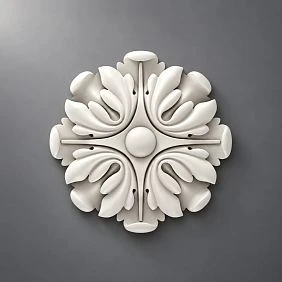
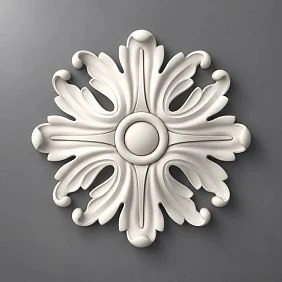
On walls: frames, accents, panels
The wall is the main field for stucco decor. Here, decorative stucco works in several scenarios.
Frames from moldings. Rectangular or square frames made of profiled molding on the wall plane are one of the most versatile and elegant techniques. They divide a large wall into proportionate 'pictures,' creating rhythm and visual depth. For classic style — frames with corner rosettes. For neoclassical — a neat contour without ornament.
Accent wall. The wall behind the sofa, the wall at the head of the bed, the wall with a fireplace — places where a visual accent is desired. decorative polyurethane elements on the accent wall create depth and expressiveness without painting in a contrasting color.
TV zone. The niche for the TV or the wall behind it is a place that often looks like a 'hole' in the interior. A molding frame around the screen or a decorative panel made of stucco elements turns it into a meaningful architectural zone.
Wall with a mirror or painting. Framing a mirror or painting with a stucco molding is a classic technique. This transforms the mirror from a utilitarian object into a decorative accent.
Dining area. A decorative frame on the wall above a sideboard or serving table is a characteristic technique for classic dining rooms.
Get Consultation
On the ceiling: rosettes, cornices, transitions
The ceiling is the most "undecorated" place in most modern apartments. And it is here that artistic stucco gives the greatest effect with a minimal number of elements.
Ceiling cornice. a polyurethane cornice at the junction of the wall and ceiling — it is not just a "strip under the ceiling." It creates a visual frame for the entire room. Without a cornice, the ceiling "sits" directly on the wall. With a cornice, the space acquires completeness.
Chandelier rosette. A decorative rosette in the center of the ceiling is a point that gathers the entire space. A chandelier hanging without a rosette looks like a bolt in plaster. With a rosette, it looks like an element of thoughtful architecture.
Decorative frame around the perimeter of the ceiling. A molding frame, set back 20–40 cm from the cornice, creates a "ceiling coffer" — a recessed zone in the center of the ceiling. This is an architectural technique that works even in standard apartments with ceilings of 2.7–3 m.
Combination with lighting. A cornice with a niche for a light strip is a popular solution for indirect lighting. Decorative stucco and light work together: the cornice hides the lighting and creates a soft glowing halo around the perimeter of the ceiling.
In openings and portals
A doorway without decoration is just a rectangular hole in the wall. A doorway with pilasters on the sides and a decorative portal on top is an architectural element. This is especially important for interiors in the classic style, where every opening is part of the overall rhythm of the space.
Decor for Molding — corner elements, sockets, overlays — allows you to decorate the portal without complex construction work.
On furniture and in niches
This is a less obvious but effective scenario. Polyurethane decorative appliques can be used on furniture facades, on the side surfaces of dressers, on the front of consoles. This turns ordinary furniture into an “object with a history” — visually complex, with architectural detailing.
What elements make up artistic stucco decor
Let's break down the full composition of the system — from basic profiles to accent details.
Moldings made of polyurethane. Profiled slats are the base of any stucco system. Used as horizontal belts on walls, frames, trims for openings and mirrors, transitions between zones.
Cornices. Horizontal profile in the wall-to-ceiling transition area. Creates a visual “lid” for the room. The size of the cornice ranges from an elegant thin profile to a wide classic cornice with several ledges.
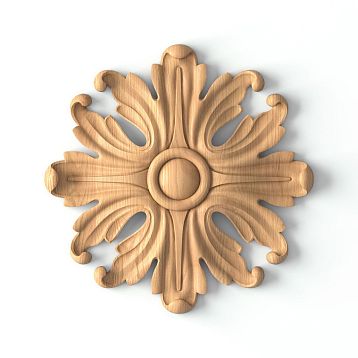
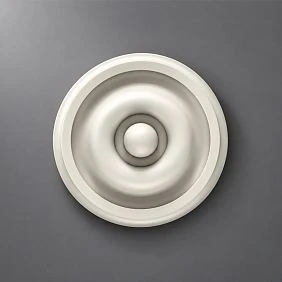
Rosettes. Round or square decorative elements for the center of the ceiling, corner areas, framing chandeliers. The main accent element of ceiling stucco.
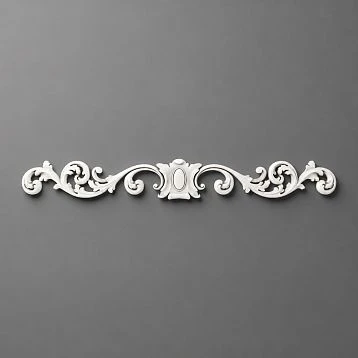
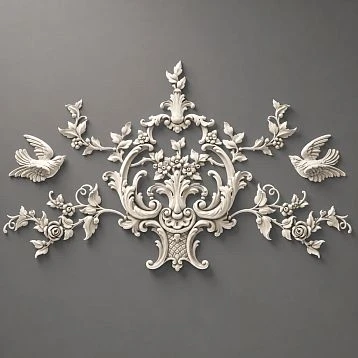
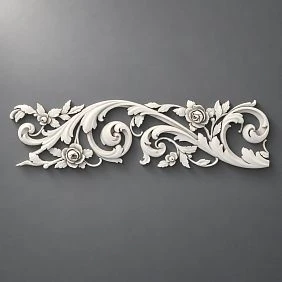
Decorative Inserts. Flat or relief ornamental elements for walls, furniture, panels, facades. Create a point decorative accent.
Decor for MoldingCorner elements, diamond and floral inserts, brackets — details that enhance the molding system. Without them, molding is just a strip. With them, it's a complete decorative program.
Pilasters. Vertical flat "columns" on walls — for classical and neoclassical interiors. They divide the wall into vertical sections, creating rhythm.
CapitalsThe crowning element of a pilaster. Ionic, Doric, Corinthian order — in polyurethane execution.
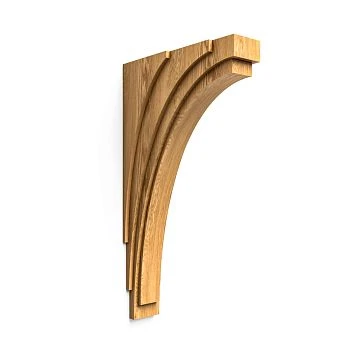
Brackets. Decorative consoles under the cornice — create a sense of support, add depth to the horizontal profile.
Ornamental elements. Flat or relief ornamental overlays for filling spandrels and friezes. They can be floral, geometric, or combined.
Artistic polyurethane stucco: why it's practical
This question arises for everyone who starts to understand the topic: why polyurethane and not plaster? The answer is not that polyurethane is "better" as a material in an abstract sense. It is more practical for specific modern application conditions.
Weight
Polyurethane moldings several times lighter than plaster counterparts. This is fundamental for ceilings: plaster elements on standard apartment plaster require serious reinforcement of fasteners. Polyurethane ones are mounted on specialized glue without additional anchors.
Precision
Polyurethane products are manufactured in precise molds — this guarantees a consistent profile along the entire length of the molding, precise angles, and repeatability of elements. Assembling a system from them is predictable.
Painting
Decorative polyurethane molding accepts any acrylic or water-based paint. It is painted in the color of the walls, made slightly lighter or darker, or used in contrast. No special primers are required for painting.
System assembly
In the polyurethane products from STAVROS moldings, cornices, overlays, decor for moldings, and rosettes exist in coordinated styles and profiles. This allows you to assemble interior systems without the risk of element incompatibility.
Installation
Polyurethane elements are cut with a regular hacksaw or miter box. Installation with glue. Joints are puttied and painted over. The process is accessible for DIY work — and there are detailed materials for this: installation of polyurethane molding и Molding Installation.
Artistic stucco molding to match the interior style
The main rule: stucco molding should speak the language of the interior, not impose a foreign dialect on it.
Classic
A classic interior is hierarchy, symmetry, and completeness. Here, artistic stucco molding works at maximum load: a wide cornice with brackets, wall frames with corner rosettes, pilasters with capitals, a ceiling rosette under the chandelier. There is a lot of decor — but it is organized according to the laws of classical architecture.
The profile should be expressive, with several breaks and bevels. Decor for Molding — rosettes, inserts, corner elements — are mandatory. Color: white on a warm wall color, or monochrome in one shade.
Neoclassicism
Neoclassicism is classicism in a modern interpretation. Here, decorative stucco molding works more restrainedly: thin clear moldings, neat frames without ornamental inserts, a laconic cornice, a ceiling rosette with a simplified pattern. Pilasters — only if they are justified by the scale of the space.
Moldings made of polyurethane with a clean geometric profile — an ideal choice for neoclassicism.
Art Deco
Art Deco is geometry, contrast, and rhythm. Artistic stucco in this style is built on the repetition of geometric motifs: rectangular frames with sharp corners without rounding, strict symmetrical ornament, horizontal stripes with a pronounced step.
Color can be contrasting: dark stucco decor on a light wall or golden stucco on a deeply saturated background.
Modern interior
For a modern minimalist interior, artistic stucco is a "soft complexity": one thin molding belt at a level of 90–100 cm from the floor that divides the wall. Or a calm frame at the head of the bed — without ornaments, without rosettes, just geometry. Or a cornice — thin, with a clean profile.
Principle: fewer elements — the more they are seen. In a modern interior, every detail of stucco decor must be justified.
Country house and interior with "character"
Here there is more freedom. A large cornice in a big living room, frames on the walls in the study, decorative panels with overlays in the dining room, pilasters by the fireplace. Decorative elements on the walls can be more saturated — but systematicity and consistency remain mandatory.
How not to overload an interior with stucco: rules that work
This is the most honest and important section. Because an interior overloaded with stucco molding is a real and common mistake. A few principles to prevent it.
One main accent
Choose one zone or one surface for accent decor. A ceiling with a rosette and cornice is one thing. A wall with a panel system is another. When both accents are strong and there are also pilasters and overlays, competition between elements arises, which destroys integrity.
Scale according to ceiling height
For standard apartments with ceilings of 2.7 m — thin and medium profiles. Cornice width 8–10 cm. Molding cross-section 30–40 mm. For high ceilings of 3.5 m and above — wider cornices and expressive overlays can be used.
Too large stucco molding in a low room "weighs down" the ceiling and creates a feeling of crampedness.
Unified profile
All moldings in one room should be from the same series or, at least, in a consistent style. A thin modern molding and a rich classical cornice in one room is a dissonance.
Symmetry is mandatory
Frames on walls should be symmetrical relative to the axis of the room or a specific wall. An asymmetrical panel system gives the impression of randomness.
Coordination with baseboard and doors
artistic stucco must be coordinated with the baseboard in terms of profile "weight". A thin baseboard and a heavy wide cornice — a mismatch. The baseboard, molding, and cornice should form a system of increasing or decreasing profile.
Think through the color before installation
White molding on a white ceiling — monochrome that works through relief and shadow. White molding on a colored wall — a contrasting accent. Molding painted to match the wall — a subtle texture. All three approaches work, but require a preliminary decision, not a random choice of "whatever we painted the walls with, we slapped on the molding."
Best scenarios for decorative molding on walls
Wall behind the sofa in the living room
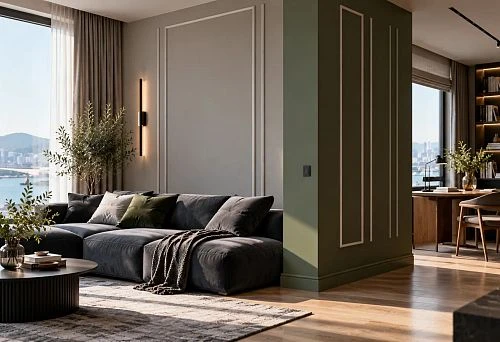
This is the most popular and rewarding spot. A molding frame on the wall behind the sofa — a rectangular outline of profiled molding — instantly creates a zone. It "holds" the sofa, forms a focal point, creates depth. You can use one large frame or a system of frames of different scales.
Wall behind bed finished with planks
A similar technique for the bedroom — a frame at the headboard or a molding panel above the bed. It creates an "architectural headboard" even where there is no actual furniture headboard.
TV area
A molding frame around the screen or a decorative panel with overlays allows you to integrate the TV into the wall architecture — so it doesn't look like a "black rectangle hammered into the plaster."
Hallway and corridor
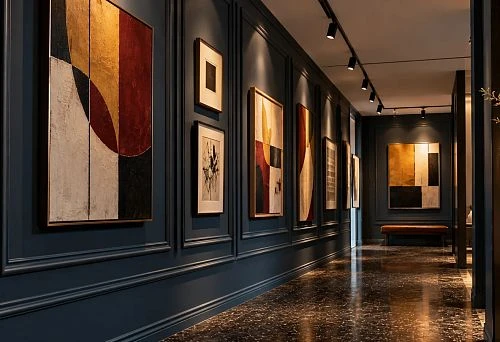
In the hallway, decorative molding works especially expressively — because it's the first thing a guest sees. Molding frames on the walls, a decorative cornice under the ceiling, and stucco decor for the interior create an atmosphere of a "real" space from the very first seconds.
Office
In the study, molding serves as "architectural dignity" — it creates a sense of a serious, substantial place. Panel frames on the lower part of the walls, a cornice, and ceiling molding — a set that makes a study a study in the full sense of the word.
Commercial spaces: beauty salons, showrooms, hotels, restaurants
For a commercial interior, artistic stucco is a tool for creating a "luxurious image" without the budget for expensive finishing materials. Moldings, frames, cornices, and decorative overlays provide the spatial quality that the client is willing to pay for.
Artistic stucco for the ceiling: a detailed breakdown
Cornice: the first and essential element
ceiling cornice made of polyurethane — this is not an additional option, but a basic element of any interior aspiring to completeness. The cornice covers the technical joint between the wall and ceiling, creating a horizontal frame for the entire space.
The size of the cornice is determined by the room height and interior style. For standard apartments — a cornice 5–10 cm high. For high ceilings — 10–20 cm or more. For classic style — with a pronounced profile and brackets. For modern interiors — with a minimal cross-section.
Ceiling rosette: the assembly point
The rosette is a decorative element for the center of the ceiling, from which the chandelier hangs. Its diameter is determined by the room size and the scale of the chandelier. A small rosette 15–20 cm for a compact room. A large one 40–60 cm for a large living room or dining room.
Important nuance: the rosette should be visually "subordinate" to the chandelier — meaning its diameter should be comparable to the size of the chandelier, not significantly larger or smaller.
Ceiling frame as a coffered ceiling
A frame made of molding along the perimeter of the ceiling, set back 15–30 cm from the cornice, creates a visual coffered ceiling — a recessed central zone. This is one of the most expressive yet simple techniques of ceiling stucco. The effect is significantly greater than the amount of work involved.
Stucco molding and lighting
One of the most successful modern techniques: hidden lighting behind a cornice with a stucco profile. The cornice becomes a "shelf" under which an LED strip is hidden, providing indirect upward illumination. Moldings made of polyurethane for this solution, profiles are selected that create sufficient depth for placing the strip.
Mistakes when choosing decorative stucco molding
This is not a theoretical list. These are real stories that ended with redoing the renovation.
-
Choosing decor only based on a beautiful photo. An interior photo has the right focus, angle, and processing. A real wall does not. Look at the dimensions in the catalog and match them to your space.
-
Not considering the wall size and ceiling height. Decorative stucco molding on the wall should match the scale of the wall. A 120×80 cm frame on a 5-meter wide wall looks lost.
-
Too many ornaments at once. Cornice with brackets + wall overlays + ceiling rosettes + frames + pilasters = chaos, not decorative stucco molding.
-
Mixing different style profiles. A French classical cornice and minimalist thin moldings do not combine in one room.
-
Forgetting about furniture. Heavy classical stucco molding with light Scandinavian furniture is a mismatch that ruins the look.
-
Not thinking through the color. Stucco painted with the same paint as the walls is good. But if it's painted with a different paint or a different brush, it's immediately noticeable.
-
Too small a molding profile. A 15 mm molding in a room with 3 m ceilings is perceived as a scratch on the wall, not as a decorative element.
-
The joint with the baseboard is not thought through. A molding belt at a height of 100 cm should be visually coordinated with the baseboard. If the baseboard is thin and the molding is wide, this mismatch is striking.
-
Ceiling stucco without connection to the walls. A ceiling rosette and cornice with a complete absence of decor on the walls look lonely. There should be at least a minimal 'echo'.
-
Buying individual elements without a plan. 'I'll buy this rosette, and this molding, and that overlay' — without understanding how it will all combine. The result is predictable.
What to buy for artistic stucco: a complete list
List of elements for assembling a complete stucco system:
-
Moldings made of polyurethane — basic profiles for cornices, belts, frames, trims.
-
Polyurethane decorative appliques — accent elements for walls, furniture, panels, niches.
-
Decor for Molding — corner inserts, rosettes, brackets, ornamental details.
-
Polyurethane Items — full catalog of stucco and decorative elements for the interior.
-
Capitals for pilasters — crowning elements for vertical decor.
-
pilasters and columns — vertical elements for classical and neoclassical spaces.
How to buy artistic stucco without mistakes: the final algorithm
1. Determine the room and the main decor area — walls, ceiling, opening, or furniture.
2. Choose a style: classic, neoclassical, art deco, modern minimalism.
3. Measure everything: ceiling height, wall width and height, dimensions of piers.
4. Decide what will be the main accent: a frame system, ceiling decor, or overlays.
5. Choose the main molding profile — all other elements must be coordinated with it.
6. Add additional elements — cornice, rosettes, overlays — only where they are justified by the plan.
7. Check the combination with the baseboard, doors, and furniture.
8. Determine the color scheme.
9. Study the installation technology in articles about installing stucco molding и installing moldings.
10. Go to the catalog artistic stucco molding and decorative products STAVROS and select a set of elements for your project.
About the company STAVROS
Artistic stucco molding requires a systematic approach — and a systematic manufacturer. STAVROS has been producing decorative polyurethane products since 2002. Own production in St. Petersburg, precise molds, profile control for each batch, over 4000 models and 20,000 modifications.
The STAVROS catalog has everything needed to build a stucco system of any complexity level: Moldings and cornices, Decorative Inserts, Decor for Molding, Capitals, pilasters and a full range polyurethane products for residential, country, and commercial interiors. Shipment from 1 piece. Contact us to confirm shipping to your destination. Custom production — from 5 working days.
FAQ: Answers to popular questions
What is artistic stucco?
This is a system of decorative elements — moldings, cornices, rosettes, overlays, pilasters, corner pieces — that together create an architectural composition on walls, ceilings, in openings, and on furniture. Unlike a single molding, artistic stucco shapes the space rather than just adding decor to it.
Where to use artistic stucco in an apartment?
On an accent wall behind the sofa, at the head of the bed, in the TV area, around a mirror, on the ceiling with a cornice and rosette, in the hallway, in the study. In each of these places, stucco solves a specific visual task.
Gypsum or polyurethane: which is better for stucco?
For apartments and most residential interiors, polyurethane stucco is more convenient: lighter, easier to install, easy to paint, does not require complex fastening. For restoration of historical objects or professional replicas of stucco — gypsum. For modern renovations — polyurethane.
Can polyurethane stucco be painted?
Yes. The surface accepts acrylic and water-based paint without special preparation. Stucco is painted in the color of the walls, made slightly lighter or darker, used in monochrome or contrasting solutions.
How not to overdo it with stucco?
Choose one main area. Use a single molding profile. Maintain symmetry. Consider ceiling height. Coordinate with baseboards, doors, and furniture. One meaningful accent is better than five competing ones.
Where to start choosing artistic stucco?
Start with measurements and style. First — ceiling height, wall width, interior style. Then — choose a base molding. After that — everything else. Without a plan, buying stucco ends up as a warehouse of unused elements.