Article Contents:
- Why a bench starts not with fabric, but with the base
- What is a bench frame and what does it consist of
- Why the construction matters
- Bench for the hallway
- Bedside bench for the bedroom
- Bench for the dressing room
- Hall, boutique, showroom
- For the hallway
- for the bedroom
- For a walk-in closet
- For a hall and showroom
- Too low and too high banquette: what's the problem
- Oak
- Oak
- MDF
- Classic
- Neoclassicism
- Modern classicism
- For a boutique or hotel
- What needs to be determined in advance
- Furniture legs
- Furniture hardware
- Materials for installation and finishing
- Decorative elements from solid wood
- Wooden Molding
- Furniture handles
- Material principle
- Principle of proportion
- Texture principle
- Color principle
- Mistake 1. Choosing only by photo
- Mistake 2. Not considering the thickness of the future seat
- Mistake 3. Taking a bench that is too long for a narrow hallway
- Mistake 4. Not checking stability
- Error 5. Mixing random fabric with a classic carved frame
- Error 6. Not considering the wood coating
- Error 7. Buying a ready-made bench if the project requires custom upholstery
- Error 8. Not thinking about compatibility with other furniture
- Bench with backrest
- Bench with drawer
- Sofa bench
- What is a bench frame?
- Why is a wooden frame better than a ready-made bench?
- Can I buy a bench frame at STAVROS?
- Is the bench frame suitable for upholstery?
- What is the standard height of a bench?
- Where is the best place to put a bench?
- How to choose the size of a bench for the hallway?
- Which bench is best for the bedroom?
- What should I buy together with the bench frame?
- Can I order a bench frame in custom sizes?
- What is the difference between an oak bench frame and a beech frame?
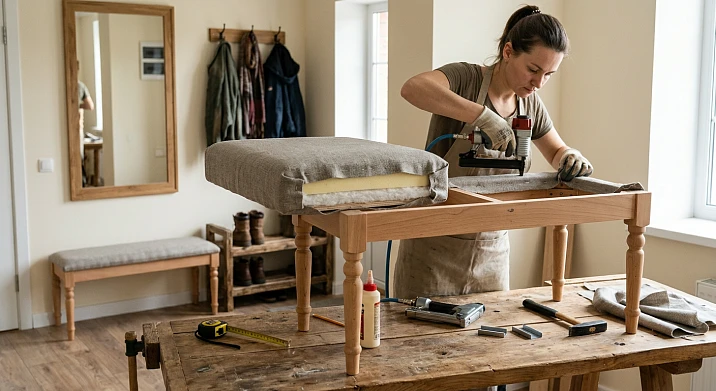
There is furniture that is chosen with the eyes. And that's understandable: beautiful fabric, pleasant color, expressive shape — all of this works for the first impression. A bench is one of those. It is photographed, it is shown in interior shoots, it is bought for its appearance. But this is where the trap lies, into which every second buyer falls.
The upholstery can be changed. The fabric will fade — it will be reupholstered. The filling will sag — it will be replaced. But if the frame is made of raw wood, if the joints are loose, if the structure is not designed for the load — no fabric will save the product. It will creak, wobble, and deteriorate regardless of how beautiful the velvet is on the outside.
That is why the right choice of a wooden bench frame This is not a technical question for professionals. It's the first thing any buyer who wants furniture for years, not just for a season, needs to decide.
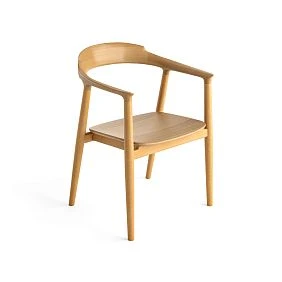
Why a bench starts not with the fabric, but with the base
Let's approach it from another angle. Imagine you're choosing a bench for your hallway. You find a beautiful photo: a soft seat, a noble wood shade, neat legs. You order it — and six months later you notice the legs are slightly loose, the seat has sagged, and the fabric you didn't choose has already lost its appearance. You want to reupholster it — and then it turns out the seating area of the frame isn't designed for a removable seat.
This is a classic story with mass-produced ready-made benches. There's no flexibility, no possibility for adaptation, no choice.
Now another scenario. You choose a solid wood bench frame — a wooden base with clear geometry, correct proportions, quality joints. Separately, you select the fabric, filler, type of upholstery, wood finish color. The result: a bench that exactly matches your interior — in size, style, material, and function.
This is not more complicated. It's smarter.




What is a bench frame and what does it consist of
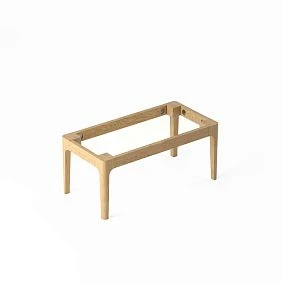
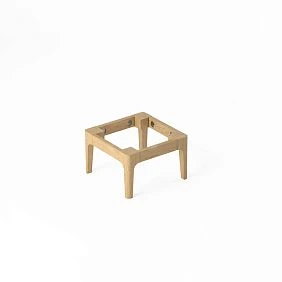
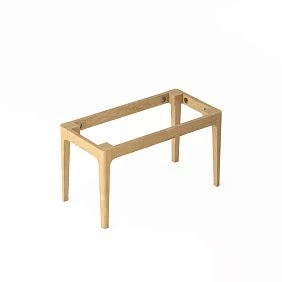
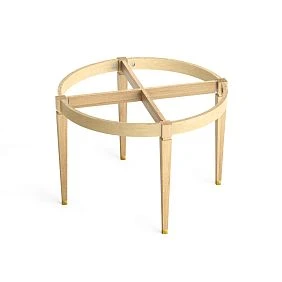
In short, Banquette Frame This is a load-bearing wooden structure onto which the soft seat is mounted. It determines the shape, height, stability, and style of the future product.
In a standard design, the frame includes:
- four legs — vertical load-bearing elements that transfer the load to the floor;
- aprons — horizontal crossbars between the legs that form the rigidity of the frame;
- side panels — additional elements that reinforce the structure and give it visual completeness;
- seating area — the upper part of the frame on which the soft seat block is placed;
- fasteners — hardware included in the delivery set.
For example, the frame of the STL-026-9 bench from the STAVROS catalog is designed exactly according to this principle: four legs, aprons, side panels, and a seating area for the seat. The product comes with a set of hardware — meaning the buyer does not need to separately select fasteners and mounting elements.
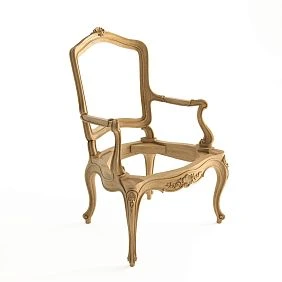
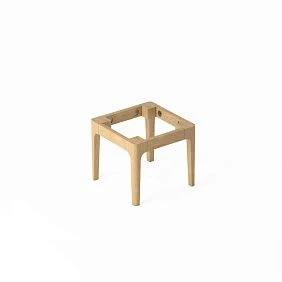
Our factory also produces:
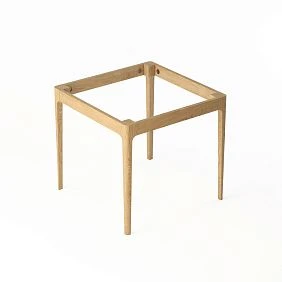
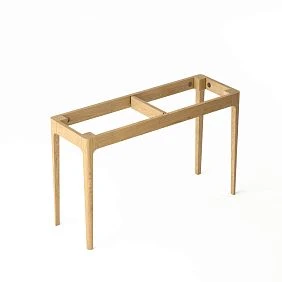
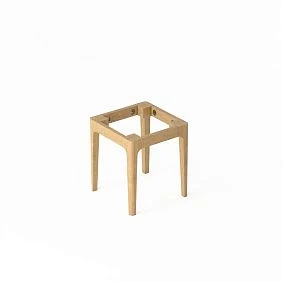
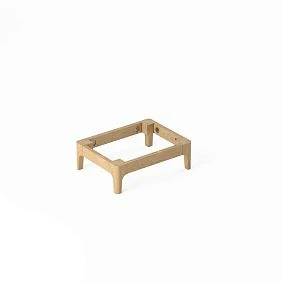
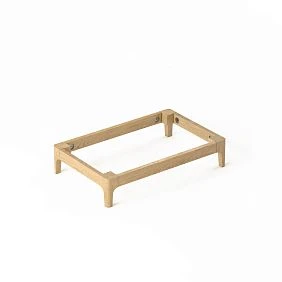
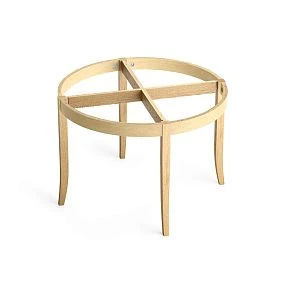
Why the construction matters
Unlike a table or cabinet, a bench experiences dynamic loads: people sit on it, stand up, and sometimes move it from place to place. The connections at the attachment points of the aprons and legs are the most stressed. If they are made with a safety margin, the product will last for decades. If not, it will loosen within the first two or three seasons.
Therefore, when choosing a wooden frame for a bench, it is important to look not only at the appearance but also at the structural logic of the product.
Get Consultation
Where to place a bench with a wooden frame: usage scenarios
A bench is versatile furniture, but each space has its own logic. Let's break down the main scenarios.
Bench for the hallway
The hallway is the most obvious scenario. If you want to buy a bench for the hallway, the first thing to consider is the function. Here, people sit to put on or take off shoes. This requires a comfortable seat height, a stable base, and a placement that does not block the passage.
A wooden frame in the hallway works in two registers at once: functional and decorative. On one hand, it is a practical seating spot. On the other, it is the final accent of the entry area, setting the tone for the entire interior. This is especially important in classic hallways, where the bench stands next to a console, mirror, or wardrobe and must maintain a unified style.
Compact frames without a backrest are well-suited for the hallway—they save space and do not visually overload. If the hallway is wide enough, you can consider a model with expressive legs and noticeable aprons.
Bedside bench for the bedroom
A bench at the foot of the bed is one of the most elegant details of the sleeping space. It simultaneously functions as a seating spot, a shelf for clothes, and a visual anchor for the entire area. A bedside bench for the bedroom is a detail used in design projects at the level of a hotel or private residence.
The key parameter here is length. Ideally, it should match the width of the bed or be slightly shorter. A too-small bench will get lost, while a too-long one will block the passage. In this case, the wooden frame is chosen according to style: it should echo the headboard, bed legs, or nightstands.
Bench for dressing room
A dressing room is a space where a bench is needed, but it is often forgotten. And in vain: it is here that it works most practically. A place for trying on shoes, temporary storage of clothes, a surface for a bag while changing — all in one piece.
For a dressing room, compactness and the correct seat height are important. The frame for upholstery is convenient because the fabric can be chosen to match the overall style of the dressing room — the same color, the same texture as in the finishing.
Hall, boutique, showroom
In the hall, a bench replaces a bulky armchair and does not overload the space. For a showroom or boutique, it is a seating place in the fitting area that should look expensive, withstand loads, and be neutral enough not to compete with the merchandise.
In commercial spaces, attention should be paid to the frame's durability and the possibility of using wear-resistant fabric — this is what makes a wooden frame for upholstery an ideal solution: you choose the fabric yourself, designed for intensive use.
Why a frame for upholstery is more profitable than a ready-made bench
This is not just a matter of aesthetics. It is a matter of control over the result.
When you buy a ready-made bench in an online store, you get a fixed set of parameters: a specific fabric, a specific color, a specific height, a specific style. If something does not match your interior, you will either have to put up with it or look for another piece.
When you choose wooden bench frame... in your hands is the foundation. From there, you control every parameter:
- fabric — velvet, leather, hessian, microfiber, jacquard — tailored to the specific interior and load level;
- filling — high-density or soft foam, spring block, latex;
- seat shape — flat, convex, with piping, with tufted upholstery;
- wood coating color — enamel, tinting, wax, varnish, patina;
- removable or fixed seat — depending on whether you plan to replace the upholstery in the future.
That's why interior designers, furniture workshops, and discerning private clients choose frames rather than ready-made benches. It's not more complicated — it's more precise.
How to choose the size of a bench for a specific space
This is a practical section that is often ignored when choosing furniture online. And that's a mistake: it's the size that determines whether the bench will be comfortable in a specific space or become an obstacle.
For the hallway
Passage width is the first parameter. If the hallway is narrow, the bench should not protrude beyond the passage line. The standard seat depth is 35–45 cm. The length is chosen based on the free wall: usually 80–120 cm for a small hallway, 120–160 cm for a spacious one.
It is also important to consider the distance to the cabinet and the front door. The bench in the hallway should not interfere with the door opening or block movement.
For the bedroom
The length of the bench at the foot of the bed is a key parameter. Ideally, it should be 10–20 cm shorter than the width of the bed. For a 160 cm bed, a bench 130–140 cm long looks good. For a 180 cm bed, 150–160 cm.
The seat height in the bedroom can be slightly lower than in the hallway — here the bench is more decorative than functional.
For the dressing room
In the dressing room, it is important that there is space around the bench for free movement. Usually, a compact model 70–100 cm long is sufficient. The seat height is standard or slightly higher to make it comfortable to put on shoes.
For the hall and showroom
Here there is more freedom. You can choose more expressive and longer frames — the space allows it. In the showroom, stability and the ability to withstand frequent use are important.
Seat height and fit: a subtlety often overlooked
This is one of the most underestimated parameters when choosing a bench. And one of the most common reasons for disappointment after purchase.
The standard seat height of a bench is 42–48 cm from the floor level. This is comfortable for most people when sitting down and standing up. But there is a nuance that is rarely mentioned in descriptions of ready-made products.
The frame is a wooden base. The soft seat adds height. Exactly how much depends on the thickness of the foam and the density of the padding. A thin seat of 3–4 cm barely changes the seating position. A seat 8–10 cm thick with high-density foam noticeably raises the position.
This means: if you choose a frame with a frame height of 38 cm and plan a soft seat of 8 cm, the final seating height will be about 46 cm. This needs to be calculated in advance.
This is precisely why the frame is chosen separately from the upholstery: you know the exact parameters of the base and control the final height of the product yourself.
Too low and too high bench: what's the problem
A bench that is too low (below 38 cm including the seat) is inconvenient for putting on shoes: it's difficult to stand up from, especially for older people. A bench that is too high (above 52 cm) starts to resemble a bar stool or work stool — that's a different type of furniture.
For the hallway, the optimal final height range is 42–48 cm. For the bedroom, it can be slightly lower if the bench is used primarily as a decorative element and a surface for clothes.
Frame material: oak, beech, MDF — what to choose and why
Material is not just aesthetics. It's function, durability, and finishing scenario.
Oak
Oak is a classic of premium furniture production. Dense fiber structure, high strength, expressive texture. Oak takes transparent and tinted coatings well: under varnish or oil, the texture reveals itself, and the wood starts to 'work' as a decorative element on its own.
An oak bench frame is a long-term investment. Such a product does not lose strength under regular load, holds fasteners well, and does not deform with humidity changes as much as soft deciduous species.
If the interior is designed in classic, neoclassical, or modern classic style with an emphasis on natural materials, oak is the obvious choice.
Beech
Beech has a slightly different character. Its texture is calmer, and its color is more uniform. This makes beech an ideal material for painting: under enamel, it provides a smooth matte surface without visible knots or variations. White, cream, gray, dusty pink, or anthracite banquettes are most often beech under paint.
The strength of beech is comparable to oak — it is a full-fledged structural material, not a compromise. If the project requires the banquette to be painted in a specific Farrow & Ball or NCS color, beech is the right choice.
MDF (740–760 kg/m³, emission class E1/E0) provides ideal geometry, uniformity, and better base for enamel: high adhesion, smooth surface, absence of knots and cracks.
MDF is used in furniture frames where stable geometry and a smooth surface for coating are needed. This material is not prone to deformation with humidity changes, cuts and mills well, and ensures precision of parts.
MDF frames are suitable for certain structural solutions — where the flatness of the part and surface uniformity are important, rather than visible wood texture.
In the furniture frames and table bases STAVROS products made from natural oak, beech, and MDF are presented — for different tasks and styles.
Frame style: classic, neoclassical, modern classic
The frame shape sets the style of the entire banquette. This is not decoration — it is the architecture of the product.
Classic
A classic frame features expressive legs with profiling, figured aprons, and decorative details. Upholstery in classic style usually includes tufting, piping, fringe, or tassels. The fabric is velvet, jacquard, or damask.
Such a frame is appropriate in a hallway with stucco, in a bedroom with high ceilings, in a living room with a fireplace. This is furniture that makes a statement immediately.
Neoclassicism
Neoclassicism is a balance between ornamentation and restraint. Legs are slightly simpler, aprons without extra decor, but proportions are clearly maintained. Upholstery — velvet, smooth fabric, piping is possible. Wood finish — enamel or tinting.
This is the most sought-after style today: it suits most modern interiors, does not look archaic, and yet has character.
Modern Classic
Minimal decor, clean geometry, emphasis on proportions and material quality. Fabric is solid, without pattern. Wood finish — natural oil or clear varnish. Leg shape — strict, straight or with a slight taper.
Modern classic is the choice of those who love wood for the material itself, not for decorative frills. The frame here is visible and valued on its own.
For a boutique or hotel
Commercial interiors require a more decorative frame with increased structural strength. Durable fabric (category 5+) is important, strong fastenings, possibility of seat replacement in the future. The style follows the space's concept.
Upholstery: what needs to be decided before choosing the frame
Paradox: upholstery is chosen after the frame, but a number of decisions need to be made before purchasing it. Otherwise, you might end up in a situation where the frame is already bought, but the fabric does not fit it in size or construction.
What needs to be determined in advance
Seat shape. A flat seat is the simplest. If a convex ("cushion-like") or slanted seat is planned, this affects the size of the frame's seating area.
Seat thickness. Determines the final height of the bench (as discussed above). Must be coordinated with the frame height.
Removable or fixed seat. A removable seat is attached with screws and can be easily removed for reupholstering. A fixed seat is glued or permanently attached — this is cheaper to produce but more difficult when replacing fabric.
Presence of piping. Piping (edging cord or leather strip along the seat edge) is a detail that needs to be included in the upholstery work process card. It slightly increases the seat size.
Tufting. If tufting is planned, sufficient foam thickness (at least 8 cm) and the correct seat shape are required. This is decided in advance, not at the upholstery stage.
Wood coating color. It is chosen in conjunction with the fabric. Light enamel and gray linen — one look. Dark walnut and burgundy velour — another. This needs to be thought of as a unified system, not separately.
What to buy together with the bench frame
Once the base is chosen, a quite logical question arises: what else is needed for assembly? The good news: most additional elements are also available in the STAVROS catalog.
Furniture legs
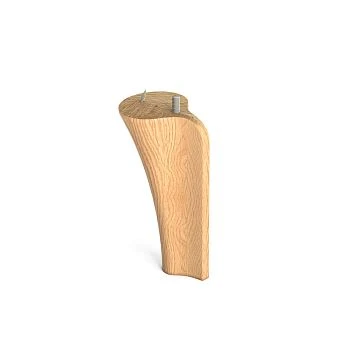
If the bench frame involves replacing or choosing legs, this is an important detail. wooden furniture legs STAVROS are made of solid oak and beech, available in various shapes and heights. This allows you to choose legs for a specific style — from strict straight to shaped turned.
Furniture fittings
Fasteners, ties, hinges, and auxiliary fittings — all of this is necessary when installing the seat and assembling the structure. Furniture hardware in the STAVROS catalog is selected for working with wooden products.
Materials for installation and finishing
After assembling the frame, additional materials are often required: primers, varnishes, oils, adhesive compounds. Mounting and finishing materials STAVROS allow you to finish working with the base before handing it over to the upholsterer.
Decorative elements made of solid wood
If the banquette is built into a hallway or wardrobe system — it often needs to be supplemented with decorative accents. Solid wood decorative elements STAVROS are rosettes, overlays, corner pieces, and other elements that help create a visual connection between furniture and finishing.
Wooden moldings
If the hallway or bedroom is decorated with solid wood moldings, cornices, or baseboards, it is important to maintain a consistent material and tone. Wooden trim STAVROS allows you to create a cohesive image of the space, where the bench is part of a unified system rather than a separate item.
Furniture handles
If the hallway project includes a bench with a storage drawer, furniture handles will be required. wooden furniture handles STAVROS are made of solid wood and fit organically into classic and neoclassical interiors.
Bench in the interior system: how to achieve stylistic cohesion
A good bench is not just a piece of furniture. It is a detail of the space. It either works for the overall image or stands out from it. To make the bench part of the system rather than a random item in the corner of the hallway, several principles need to be considered.
Material principle
The wood of the bench should echo the wood in other items of the space. If the hallway has a console made of oak with a dark walnut stain, a bench with the same finish will create visual unity. If the hallway is completely white with enameled facades, white or cream enamel on the bench frame will support this look.
Proportion principle
The bench should be neither too small (it will get lost) nor too large (it will dominate). Its size should match the scale of other items: console, cabinet, mirror.
Texture Principle
The bench fabric creates a textural dialogue with other surfaces. If the walls are finished with burlap, a fine textured seat fabric will support this rhythm. If the interior has many smooth surfaces, velvet will add tactile contrast.
Color Principle
The upholstery color is chosen in relation to the dominant or accent color scheme of the room. Monochrome interior — neutral upholstery shade. Colorful interior — the bench can become an accent.
Typical Mistakes When Choosing a Bench and Frame
Experience working with designers, workshops, and private clients allows us to highlight several typical mistakes that are repeated over and over again.
Mistake 1. Choosing only by photo
A photo does not convey scale, does not show the quality of joints, and does not give an understanding of how the product will stand in a specific space. You need to look at dimensions, structural scheme, and material characteristics.
Mistake 2. Not considering the thickness of the future seat
The frame is not yet a finished bench. The final height will change after installing the soft block. If you don't account for this in advance, the bench will be uncomfortable to sit on.
Mistake 3. Choosing a bench that is too long for a narrow hallway
A common mistake when choosing a bench for a hallway: the buyer focuses on a beautiful long model without considering that it will block the passage or hit the wall. Always measure the space before purchasing.
Mistake 4. Not checking stability
The frame should stand without wobbling. If the legs differ slightly in height or the joints are poorly made, the bench will wobble. This is critical for a hallway where people regularly get up from it.
Mistake 5. Mixing random fabric with a classic carved frame
A classic carved frame with cheap synthetic fabric will look disharmonious. The upholstery level should match the base level. If the frame is made of oak with shaped legs, the fabric should be of the same class: velvet, jacquard, natural linen.
Mistake 6. Not planning the wood finish
The finish is chosen in relation to lighting, decor, and fabric. Matte white enamel and glossy white enamel produce visually completely different results. Natural oil and varnish give different effects for the same type of wood.
Mistake 7. Buying a ready-made bench if the project requires custom upholstery
If your designer has chosen a specific fabric, a specific wood color, a specific seat shape — a ready-made bench from the store won't deliver the desired result. In this case, the right approach is a wooden frame for upholstery, where you control every parameter.
Mistake 8. Not considering compatibility with other furniture
A bench is part of the interior. If it's bought separately and randomly, there's a high chance it won't match other items in style, material, or color. Plan the bench as part of a system.
Additional scenarios: bench as part of a collection
Another advantage of working with wooden frames is the ability to create coordinated furniture collections. If the hallway has an oak console with a tinted finish, the bedroom has nightstands from the same wood species, and the dressing room has a coat rack and dresser — it's logical that the bench in each of these spaces will be made from the same wood with the same finish.
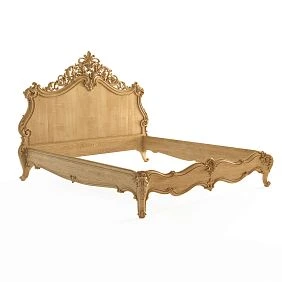
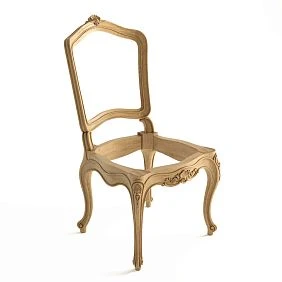
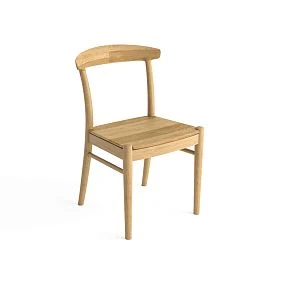
The STAVROS catalog offers frames not only for benches but also for other furniture items: Furniture and interior itemsarmchairs, consoles, cabinets, tables, beds. This allows you to create a unified line where all elements are united by the same material, style, and manufacturer.
This approach is especially valuable for design projects that require complete interior unity — from large furniture to decorative details.
Custom frame: when standard doesn't fit
Sometimes standard frame sizes don't match the task. Non-standard passage width, specific bed size, atypical ceiling height — all of these can dictate individual bench parameters.
In this case, the optimal path is Custom item manufacturing. STAVROS works with custom projects, allowing you to get a wooden frame exactly to specific requirements: the right size, the right material, the right finish, the right design.
For designers and architects, this is especially relevant: custom furniture rarely fits standard catalog sizes. The ability to order a frame according to specific drawings opens up a completely different level of design freedom.
Bench and hallway: a complete look for the entry area
I want to focus separately on the hallway, because it is here that the bench carries a double load — practical and aesthetic.
The hallway is the first space that greets someone entering. This is where the first impression of the interior is formed. And this is where the bench is often the only piece of upholstered furniture — everything else is hard: wardrobe, shelves, hooks.
Buying a bench for the hallway correctly means choosing a product that:
- is comfortable in height for putting on shoes;
- is stable under regular load;
- fits the overall style of the hallway;
- does not overload the passage;
- works as a decorative accent, not just a utilitarian object.
A wooden frame allows meeting all these criteria simultaneously: the correct height is set at the stage of choosing the base, stability in the design, style in the shape of legs and rails, decor in the upholstery.
Bench in the bedroom: a subtle detail that changes everything
A bench at the foot of the bed is a detail that is hard to replace with anything else. It doesn't take up much space but radically changes the perception of the sleeping space. A room with a bench looks complete, lived-in, and well-thought-out.
A bedside bench for the bedroom works correctly when chosen precisely in size and style. Too short — looks like a random bench. Too long — overloads the space. Too high — disrupts the proportions of the bed.
Fabric in the bedroom is chosen especially carefully: it should relate to the bed's textiles — linens, throw, pillows. Warm tones of fabric in the bedroom work better than cool ones. Plush and velvety textures create a feeling of coziness.
A wooden frame in the bedroom is an opportunity to precisely match all parameters to a specific look.
Final commercial block: STAVROS and wooden frames for upholstery
STAVROS is a manufacturer of solid wood furniture products that covers the key element of any designer bench: the wooden base. If you are looking for where to buy a bench not as a mass product, but as a base for an individual project — this is the right address.
In the Solid wood bench frames Models made of oak and beech are presented, with a clear structure, correct proportions, and hardware kits. For example, the STL-026-9 frame is a ready-made base for upholstery with four legs, stretchers, and side panels, allowing you to create a bench for a specific interior: hallway, bedroom, dressing room, or showroom.
In addition to bench frames, the catalog also includes wooden furniture legs, Solid wood decorative elements, Wooden trim, Furniture hardware и Mounting and finishing materials. This allows you to complete the entire cycle of working with the wooden part of the product in one place.
For those who find standard sizes unsuitable, custom sizing is available Custom item manufacturing. An individual project, precise dimensions, the desired material and style — this is how STAVROS works with designers, furniture workshops, and private clients.
Additional key scenarios: what else to consider
Bench with backrest
A bench with a backrest is a separate structural type. The backrest adds character and coziness to the product but requires a different frame design: vertical posts, crossbars, and reinforced connections are needed. Such frames make sense in a hallway with a wide niche, in a foyer, in a waiting area, or in a boutique.
When choosing a bench with a backrest, it is important to pay attention to the backrest angle (should be comfortable when sitting) and its height (a too-high backrest creates the image of a chair, a too-low one creates a decorative border).
Bench with drawer
Bench with storage drawer is a popular search query for hallways. The drawer adds functionality: you can store shoes, scarves, gloves there. But this is a different structural task: the frame must provide a seat underneath for the drawer, hinges, guides, or a flip-top lid.
If you are looking for a bench with a drawer for the hallway, clarify the frame design in advance: not every base provides this option.
Sofa bench
A sofa bench is an intermediate format between a bench and a soft sofa. It is wider, softer, with a more pronounced backrest. This is a solution for a hall or spacious hallway where seating for several people is needed. The frame design in this case is significantly more complex than a standard bench.
Summary: seven questions to ask yourself before buying a bench frame
Before choosing a wooden bench frame for upholstery, go through this short list:
-
Where will the bench be placed? Hallway, bedroom, dressing room, hall, showroom — each space has its own logic of size and style.
-
What size is needed? Measure the space, account for passage, correlate the length with other items.
-
What seat height is needed? Calculate the final height considering the thickness of the soft seat.
-
Which material to choose? Oak — for visible texture and natural finish. Beech — for enamel and painting. MDF — for stable geometry.
-
Which style? Classic, neoclassical, modern classic — define the space's style and choose the frame shape accordingly.
-
What upholstery is planned? Fabric, filler, seat shape, presence of piping or tufting — all this needs to be decided before purchasing the base.
-
What else needs to be purchased? Legs, hardware, finishing materials, decorative elements — the list depends on the specific project.
FAQ: popular questions about banquette frames
What is a banquette frame?
A banquette frame is a wooden load-bearing base on which the soft seat is installed. It includes legs, side rails, side panels, and the seating area. The frame determines the stability, seat height, style, and durability of the finished product.
How is a wooden frame better than a ready-made banquette?
A frame for upholstery allows you to independently choose the fabric, filler, wood finish color, type and shape of the seat. This is the optimal solution for design projects where precise stylistic and dimensional fitting to the interior is important.
Can I buy a banquette frame at STAVROS?
Yes. In the catalog Solid wood bench frames STAVROS offers models in oak and beech, including STL-026-9, STL-026-10, STL-026-11 and other items.
Is the bench frame suitable for upholstery?
Yes. The bench frames from the STAVROS catalog are designed specifically for this scenario: they have the correct seating area, come with fittings, and are ready for the installation of a soft seat.
What is the standard height of a bench?
The standard height of a bench with a soft seat is 42–48 cm. When choosing a frame, keep in mind that the soft block will add 3 to 10 cm depending on the density of the filler.
Where is the best place to put a bench?
The most popular scenarios: hallway, bedroom at the foot of the bed, dressing room, hall, boutique or showroom. Each space has its own logic of size, height and style.
How to choose the size of a bench for the hallway?
Measure the width of the passage, determine the free space along the wall, consider the distance to the door and other objects. The seat depth is usually 35–45 cm, the length is from 80 to 160 cm depending on the size of the hallway.
Which bench is best for the bedroom?
A bedside bench at the foot of the bed. Its length should be proportional to the width of the bed — 10–20 cm shorter. The fabric is chosen in coordination with the bedroom textiles.
What should be purchased together with the bench frame?
Depending on the project — wooden furniture legs, furniture hardware, Mounting and finishing materials, Solid wood decorative elements и Wooden trim for stylistic coherence with other interior items.
Can I order a bench frame in custom sizes?
Yes. STAVROS offers Custom item manufacturing — this is relevant for design projects where standard sizes do not fit a specific space.
What is the difference between an oak bench frame and a beech bench frame?
Oak has a pronounced texture and high density, suitable for natural and tinted finishes. Beech has a more neutral texture, ideal for painting with enamel. Both materials ensure high strength and durability of the structure.
About the company STAVROS
STAVROS is a Russian manufacturer of solid wood products: furniture frames, legs, decorative elements, moldings, fittings, and finished furniture. The company works with designers, furniture workshops, private clients, and commercial projects — everyone who values material quality, construction precision, and the ability to create furniture for a specific project rather than choosing from what is available on the mass market.
In the furniture frames and table bases STAVROS Frames of banquettes, armchairs, beds, chests of drawers, consoles, tables, chairs and other furniture items are presented — made from natural oak, beech and MDF. This is the foundation for those who want not just to buy furniture, but to create it.