


































Article Contents:
- Why a flower stand can be assembled from ready-made wooden parts
- Which STAVROS products are suitable for a flower stand
- Bracket characteristics that are important for a stand
- Wall-mounted or floor-standing stand: which to choose
- How to choose a bracket for a flower pot
- How to make a wall-mounted wooden flower stand
- How to make a floor-standing wooden flower stand
- How to calculate the load from a plant
- Material and finish: how to protect wood near plants
- Where to use a flower stand made of carved brackets
- What to buy together with brackets
- Mistakes when choosing and making a stand
- Who will benefit from a stand made of carved brackets
- How to buy a wooden bracket for a flower shelf on STAVROS
- FAQ
- How to make a flower stand from wood without complex carpentry?
- Can a carved bracket be used as a stand base?
- Which bracket to choose for a flower pot?
- What is better: a wall-mounted or floor-standing flower stand?
- How to calculate the load from a pot with soil and water?
- How to attach a wooden bracket to a wall?
- What to coat a wooden flower stand with?
- How to protect wood from moisture?
- Can I make a flower stand on a single bracket?
- Which STAVROS brackets are suitable for a stand?
- What to buy together with the brackets?
- Where to buy a wooden bracket for a flower shelf?
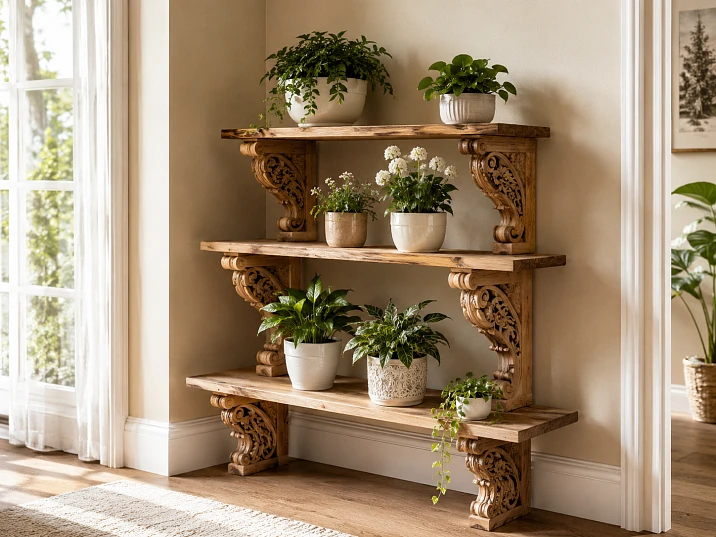
Live plants rarely look beautiful if the pot just sits on a windowsill, floor, or random stool. Flowers need height, light, stability, and a neat support, while the interior needs a detail that doesn't look temporary. So the question 'how to make a wooden flower stand' most often arises not from a desire to do complex woodworking, but from a practical task: you need to beautifully place the planter, not overload the room, and not buy a faceless plastic rack.
A wooden stand can be assembled in different ways. One way is to saw all elements from scratch, select boards, cut out supports, sand each part, and spend a long time adjusting the shape. The second way is simpler and neater: take ready-made carved STAVROS brackets as a base, choose a shelf platform, fasteners for the wall type or furniture legs for the floor version, and then protect the wood with a finishing coat. This approach is especially convenient if you want to get not a rough homemade shelf, but an interior plant stand with expressive wooden decor.
The main idea is simple: the bracket works not only as a decorative detail but also as a support for a shelf, console, or platform for a planter. If you correctly calculate the pot size, weight of wet soil, shelf depth, type of fastening, and finish, the stand will look like part of the interior, not like a random board on the wall. That is why in this article we will analyze not only the assembly principle itself but also which wooden bracket for a shelf to buy, when to choose a wall-mounted structure, when a floor-mounted one, what to buy together with the brackets, and what mistakes most often ruin the result.
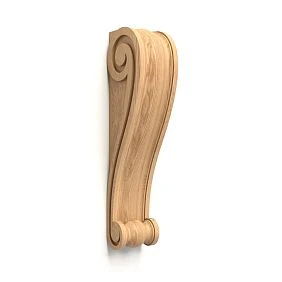
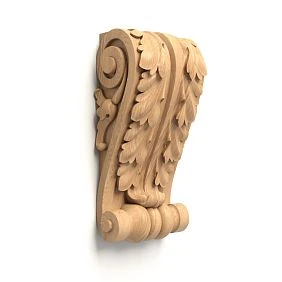
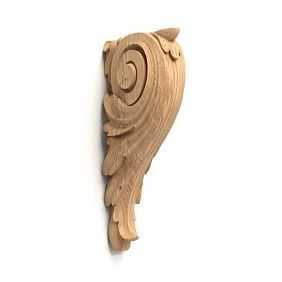
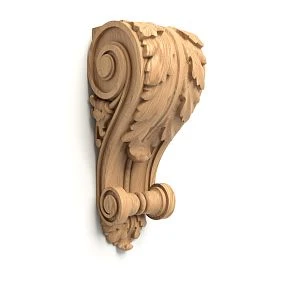
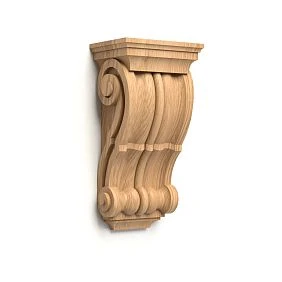
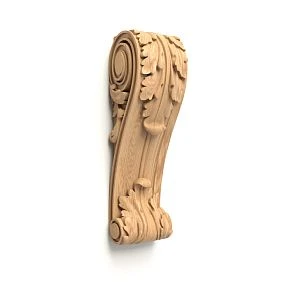
Why a plant stand can be assembled from ready-made wooden parts
Many instructions on how to make a wooden plant stand start with the complete fabrication of all elements: sawing blanks, making a template, cutting supports, assembling the frame, and processing the ends. This path is suitable for those who have a workshop, tools, experience, and time. But if the task is to quickly and beautifully place plants in the living room, hallway, bedroom, kitchen, or foyer, you don't have to start from a blank board.
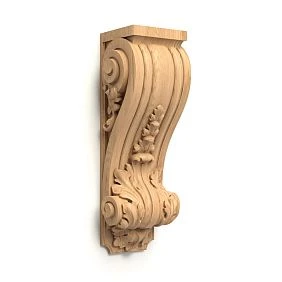
Ready-made wooden brackets solve several problems at once. They set the shape, take on a decorative role, help make the shelf expressive, and eliminate rough homemade appearance. The buyer only needs to choose the size, material, fastening method, platform for the planter, and protective coating. This is especially important when the stand should be a visible part of the interior, not a temporary structure "just to hold it."
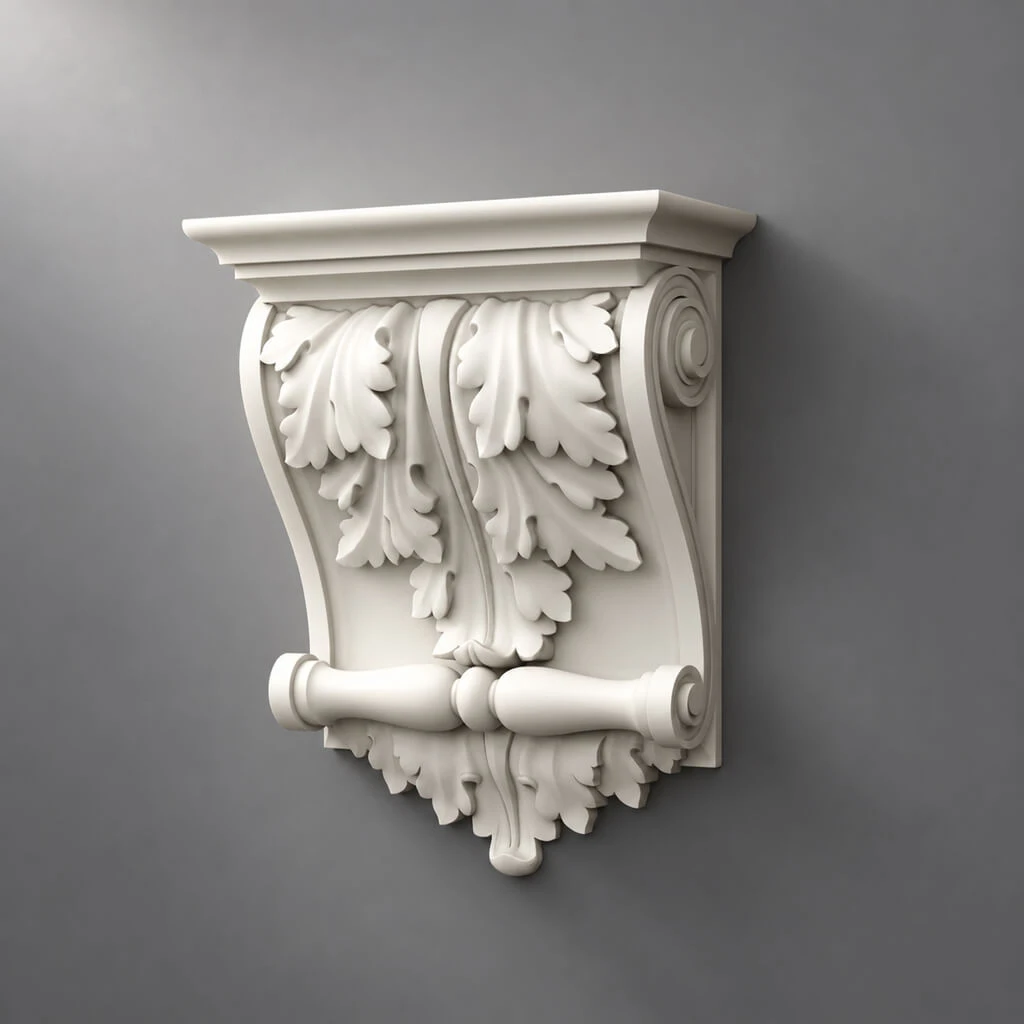
The bracket is convenient because it already has a finished silhouette. The carved shape makes it a decorative element, and the wooden base allows it to be combined with a shelf, furniture, trim, stair parts, wooden frames, window sills, countertops, and other solid wood products. Unlike a metal angle bracket, a wooden bracket does not need to be hidden. On the contrary, it can be made the main visual accent of the stand.
If the buyer wants to make a wall-mounted wooden plant stand, brackets help solve the problem without unnecessary bulkiness. A pair of carved supports and a neat shelf take up less space than a floor stand, free up the window sill, and allow the plant to be raised to a convenient height. For a small apartment, narrow hallway, kitchen, or loggia, this scenario is especially practical.
If a more expressive composition is needed, brackets can be used as the base of a small decorative console. It looks good not only with a planter but also with a vase, candlestick, small sculpture, or seasonal decor. In this case, the plant stand turns into an interior element: it decorates the wall, supports the room's style, and helps place the plant where a regular shelf would look too simple.
For a large plant, a wall-mounted structure is not always suitable. Then it is better to think about a floor version: a round or square wooden platform, stable supports, protective glides, and a finish. But even here, the logic remains the same: not to assemble a random stand from unsuitable parts, but to select wooden elements deliberately — by size, load, material, and style.
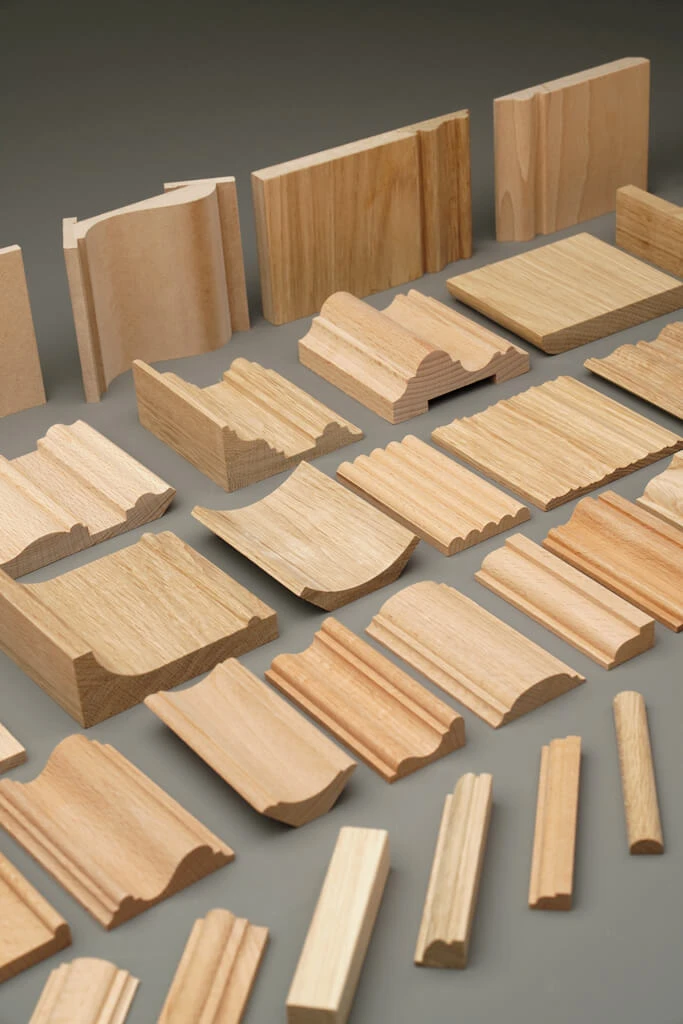

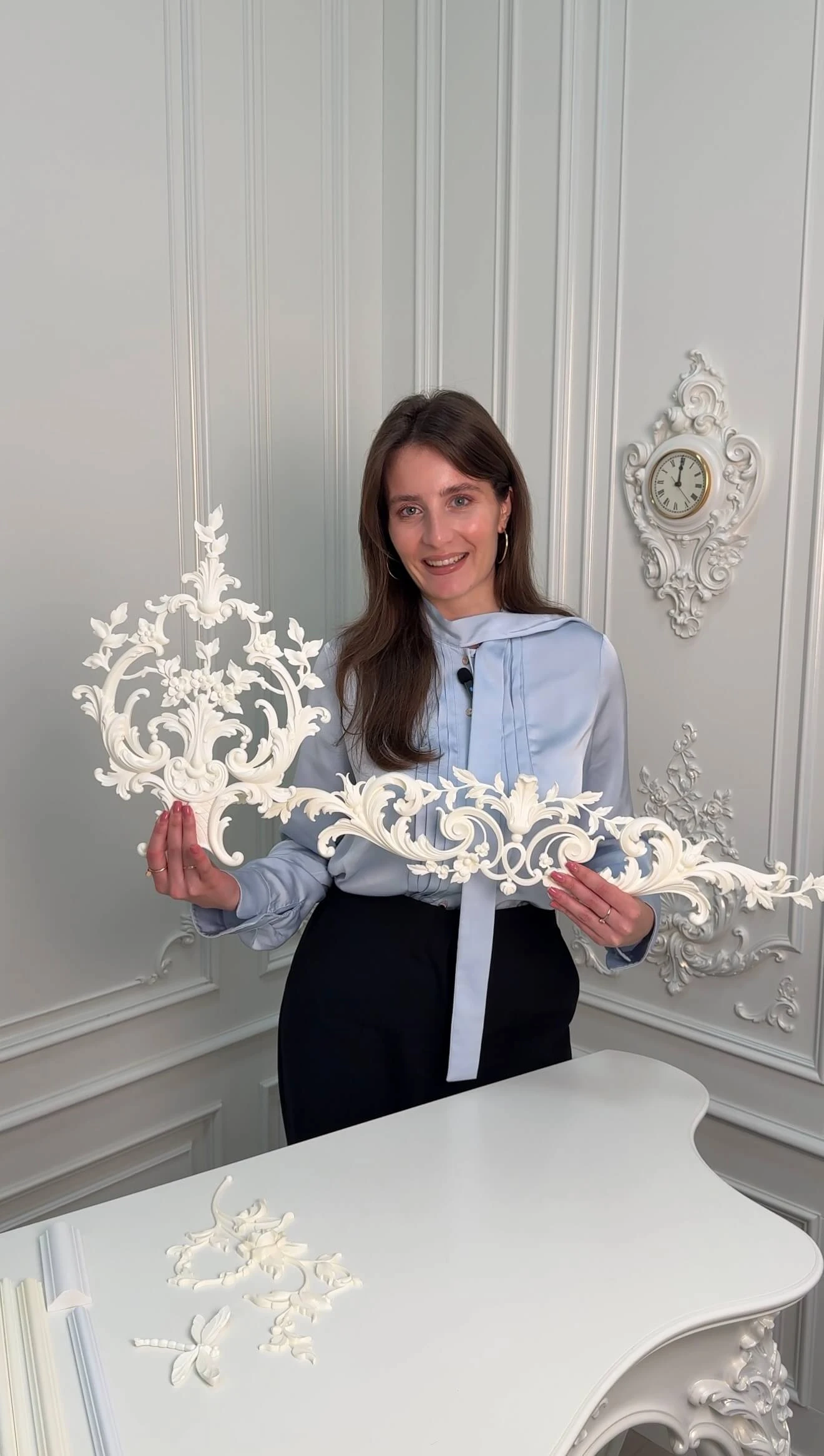
Which STAVROS products are suitable for a plant stand
The base of such a stand is a wooden bracket. It can hold a shelf platform, function as a decorative console, support a wall composition, or become part of a more complex structure. In STAVROS, several groups can be considered for this task: carved brackets, solid wood brackets, mounting and finishing materials, solid wood products, and furniture legs for floor solutions.
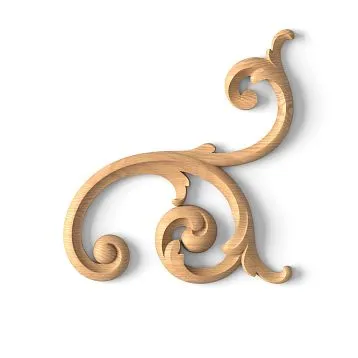
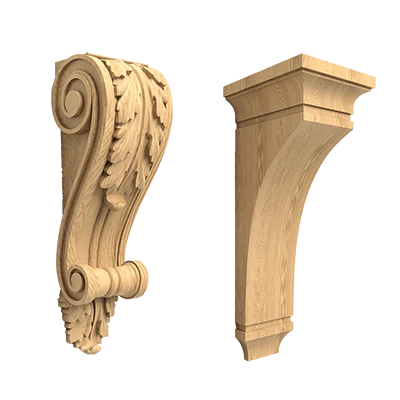
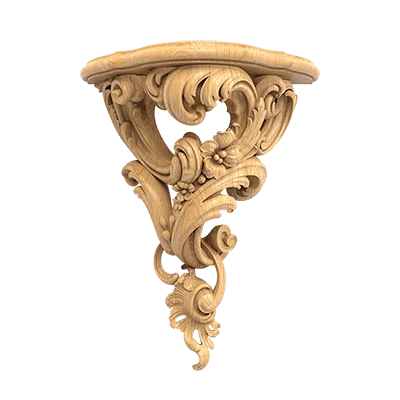
If you need a wall-mounted plant stand, the first thing to look at is carved wooden brackets STAVROS. In this group, it is convenient to choose a decorative support for a shelf, console, or small platform for a planter. Carving helps make the stand part of the interior, not just a technical fastener.
For projects where solid wood, material, and structural expressiveness are important, it is useful to study Solid wood brackets. This section is suitable when the buyer wants to select a wooden support for painting, tinting, varnish, or oil and link it in advance with other solid wood furniture.
Large carved models are good for decorative consoles and prominent wall stands. For example, you can check the price of the carved bracket KR-068R, if you need an expressive right support for a large decorative shelf. Paired with it, it is logical to select the carved bracket KR-068Lto create a symmetrical composition for a long shelf or console.
For more compact solutions, you can choose the carved bracket KR-017R. It comes in several sizes, making it easier to fit into different scenarios: from a small wall shelf for a planter to a decorative support in a hallway or living room. If a different pattern and proportion are needed, you can order the carved bracket KR-055 and select a shelf piece of the required depth for it.
A separate consideration is Carved Bracket KR-019when a wooden support with a different silhouette is needed. Before purchasing, you need to open the product card, check the size, material, sanding options, glue joint quality, and current availability. The bracket is bought not by its name, but by whether it fits the specific planter, wall, and shelf.
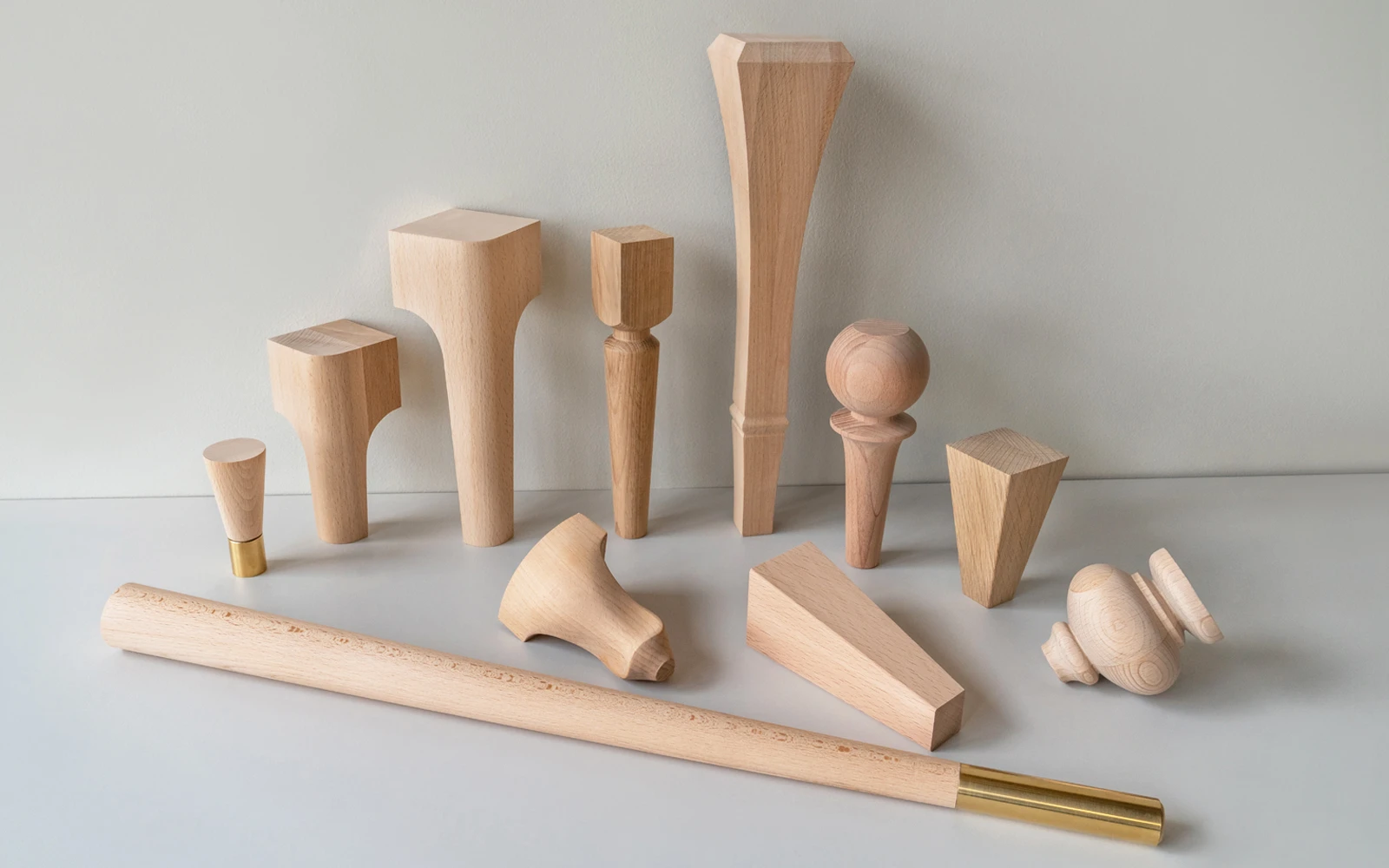
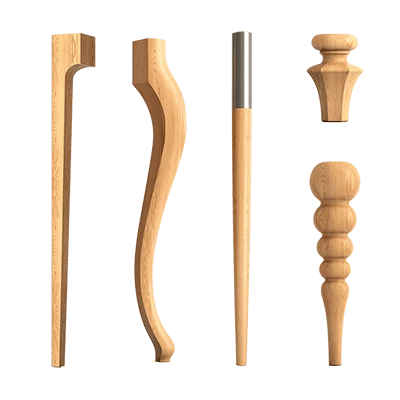
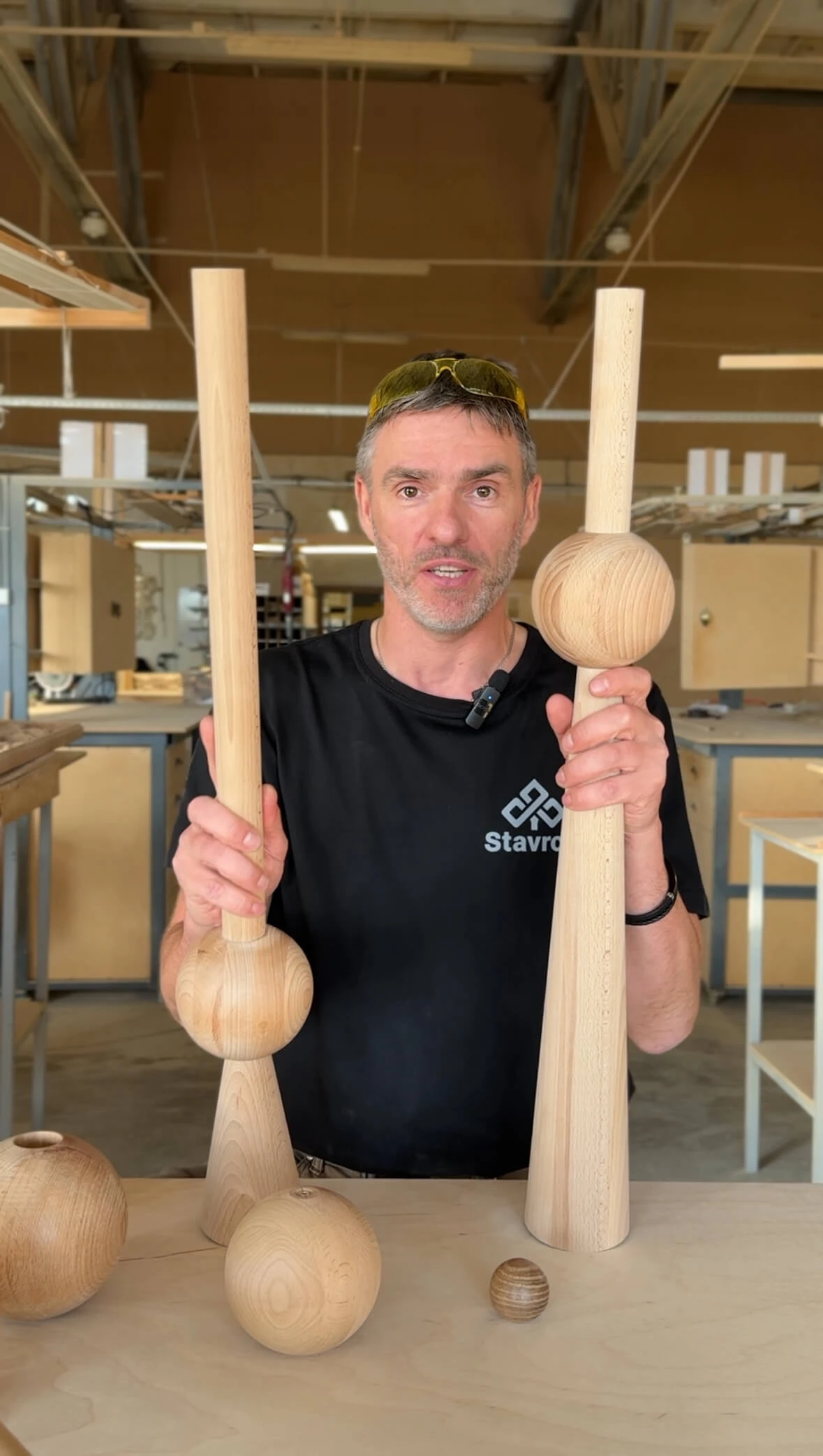
If the stand is made floor-standing, not only brackets will be needed. For this version, you can choose STAVROS furniture legsto assemble a stable platform for the plant. And for preparing, securing, and protecting the tree, it is worth opening in advance Mounting and finishing materials. So the buyer collects not just one decorative detail, but a complete set for the result.
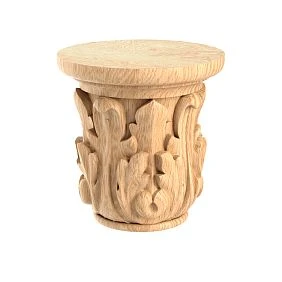
Our factory also produces:
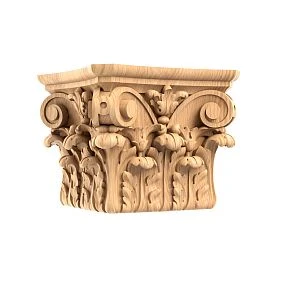
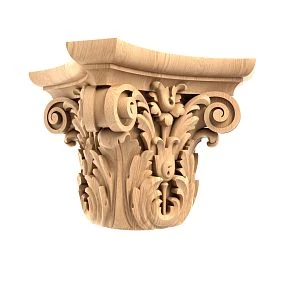
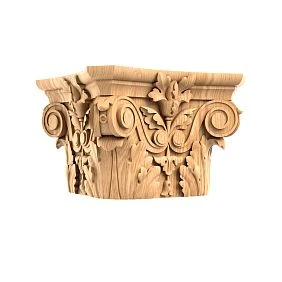
Characteristics of brackets that are important for the stand
For a flower stand, the bracket cannot be chosen only by thread. A plant is not a figurine. The pot has weight, the soil becomes heavier after watering, water can get on the shelf, and the structure itself must hold on the wall or stand stably on the floor. Therefore, size, material, support depth, type of finish, quality of sanding, and compatibility with the shelf platform are important.
Below is a table with product details for those brackets that are suitable for the stand scenario. It shows confirmed sizes and materials where data is available in the product cards. For load, fasteners, and exact configuration, you should focus on the specific project, wall type, shelf size, and plant weight. These parameters are best clarified before ordering, because a small planter with dry soil and a large ceramic pot after watering are completely different loads.
| Product or group | Type of application for the stand | Confirmed sizes | Material and finish | What to check before ordering |
|---|---|---|---|---|
| Buy carved bracket KR-068R | Right decorative support for a large wall shelf or console | 750 × 192 × 192 mm | Beech under enamel, oak under tinting; Standard/Prestige sanding | Is a paired left support needed, does the shelf depth fit, will the base hold |
| select the carved bracket KR-068L | Left pair to the right bracket for a symmetrical shelf | 750 × 192 × 192 mm | Beech, oak; under enamel or under tinting | Matching material and finish with KR-068R, shelf length, mounting scheme |
| choose the carved bracket KR-017R | Compact or medium stand for a planter, shelf, decorative console | 273 × 80 × 45 mm; 341 × 100 × 56 mm; 453 × 133 × 74 mm; 511 × 150 × 83 mm | Beech, oak; under enamel or under tinting; Standard/Prestige | Pot size, shelf depth, wall type, whether a pair of brackets is needed |
| order the carved bracket KR-055 | Wall shelf, decorative console, plant shelf | 268 × 120 × 73 × 80 mm; 335 × 149 × 91 × 100 mm; 435 × 194 × 118 × 130 mm | Beech, oak; under enamel or under tinting; Standard/Prestige | Installation height, shelf platform depth, moisture protection |
| View carved bracket KR-019 | Alternative wooden support for shelf or decorative stand | Actual dimensions should be checked in the product card | Material and finish are specified in the product card | Compare silhouette, size, and compatibility with the task |
| Solid wood brackets | Selection of support groups for shelves, consoles, and stands | Depends on the model | Wood array, options depend on the product | Material, dimensions, type of grinding, finish |
| Mounting and finishing materials | Mounting, preparation and protection of the wooden stand | Depends on the selected material | Glues, compounds and related products in the section | Compatibility with wood, wall and future load |
This table helps to quickly understand the main thing: you need to buy a wooden wall shelf bracket not abstractly, but according to the size of the plant and shelf. The larger the planter, the more carefully you should approach the pairing of supports, platform depth, type of fastening and load margin.
Get Consultation
Wall or floor stand: which to choose
Before purchasing parts, you need to decide which type of stand suits the room. A wall-mounted structure saves space and lifts the plant above the furniture level. A floor version is more convenient for large plants, heavy pots, and situations where the wall cannot be drilled. A corner stand helps fill a niche, and a decorative console turns the plant into a central wall accent.
| Stand option | When it fits | What to use | What to pay attention to |
|---|---|---|---|
| Wall stand | Small or medium planter, space saving, empty wall | One or two wooden brackets, shelf platform, fasteners | Wall type, pot weight after watering, shelf depth |
| Pair wall shelf | Two to three plants, long composition, symmetry | Pair of brackets, long shelf, protective coating | Distance between supports, shelf deflection, installation level |
| Decorative console | Living room, hall, entryway, accent area | Large carved brackets, expressive shelf, interior-matched finish | Wall scale, carving style, coordination with furniture |
| Floor stand | Large plant, heavy pot, no ability to drill into wall | Wooden platform, furniture legs, fasteners, floor protectors | Stability, height, floor and wood protection |
| Corner stand | Niche, loggia, entryway, small room | Compact bracket and shelf or floor triangular platform | Access to watering, humidity, distance from the wall |
| Multi-level stand | Plant collection, vertical gardening | Several shelves and brackets or a floor frame | Total weight, ease of care, light for each plant |
A wall-mounted stand is best suited for lightweight planters and decorative plants. It frees up floor space, doesn't interfere with cleaning, and helps create a beautiful vertical arrangement. However, such a structure requires the right wall. Mounting into concrete, brick, or a solid partition differs from mounting into drywall. If the wall is weak, a heavy pot can become a problem even with a nice bracket.
A paired wall shelf is a good option when you need to place not just one pot, but several. Two brackets distribute the load more evenly and look more balanced. For a symmetrical shelf, paired right and left models, such as KR-068R and KR-068L, are especially convenient. It is important that both supports match in material, size, finish, and installation height.
A floor stand wins in stability for large plants. Ficus, monstera, dracaena, a large palm, or a heavy ceramic planter feel better on the floor than on the wall. In this case, the bracket may not be the main support but a decorative addition, while the main load is taken by the legs, platform, and correct geometry of the support. Therefore, for the floor version, it is worth choose STAVROS furniture legs considering stability in advance.
How to choose a bracket for a flower pot
To buy a wooden shelf bracket without mistakes, start not with the pattern, but with the pot. Measure the diameter of the planter, its depth, height, approximate weight with dry soil, and actual weight after watering. Wet soil is noticeably heavier than it seems, and a ceramic planter adds load even without a plant. If the shelf is too shallow, the pot will end up on the edge. If the bracket is too small, the stand will look unreliable and may actually fail to handle the task.
The second parameter is shelf depth. The bracket must support the platform so that the pot's center of gravity does not stray too far from the wall. The deeper the shelf and the heavier the plant, the more stringent the requirements for the fastening. For a small planter, a compact support is sometimes enough, but for a large shelf, it is better to use a pair of brackets and a reliable base.
The third parameter is installation height. The plant should receive light but not obstruct passage, door opening, curtains, furniture, or care. A stand that is too high makes watering difficult. One that is too low defeats the purpose of wall placement. In the living room, the stand is often placed at the level of a decorative console; in the hallway, above the shoe and bag zone; in the kitchen, so that leaves do not interfere with the work surface.
The fourth parameter is carving style. Flowers themselves provide softness and living form. If the bracket is too ornate and the plant is lush, the composition may become overloaded. For small plants, a more noticeable carved support is suitable. For large greenery, it is better to choose a bracket with an expressive but not competing shape.
The fifth parameter is material. Beech is convenient for enamel and dense painting. Oak reveals itself in tinting and transparent finishes when the wood grain needs to be preserved. If the stand must match furniture, windowsill, floor, or wall panels, it is better to choose the material in advance, not after purchase.
The sixth parameter is moisture protection. A plant stand is constantly near water. Even with careful watering, drops, a wet mark from the planter, or condensation may appear on the shelf. Therefore, wood cannot be left unprotected where the pot will stand permanently. You need to consider the final coating and use a gasket, tray, or protective platform between the planter and the wood.
How to make a wall-mounted wooden plant stand
A wall-mounted stand is built around three parts: bracket, shelf, fastening. Everything else—finishing, protection, tray, decorative integration with the interior—enhances the result but does not replace the foundation. If the bracket is chosen incorrectly, the shelf is too narrow, or the fasteners do not match the wall, beautiful carving will not save the structure.
First, choose a location. Do not place the stand where the plant will obstruct passage, cabinet doors, curtains, or constant movement. Flowers need light, but most houseplants are harmed by overheating, drafts, and direct contact with heating appliances. Therefore, a wall near a window is often more convenient than the windowsill itself, but the exact spot must be selected for the specific plant.
Then determine the size of the planter. The width and depth of the shelf should be larger than the base of the pot so that it does not sit on the edge. If the planter is round, it's convenient to add margin on the sides. If rectangular, it's important to check not only the length but also the depth. A plant shelf should not be "tight": during watering, care, and turning the pot, a small margin protects the wood and wall from accidental impacts.
Next, a bracket is selected. For a small planter, you can consider one decorative bracket and a compact platform, but for greater stability, it's often better to use a pair. If the shelf is long, a pair is mandatory. For symmetry, right and left brackets are suitable, for example, you can Buy carved bracket KR-068R и select the carved bracket KR-068L under one shelf.
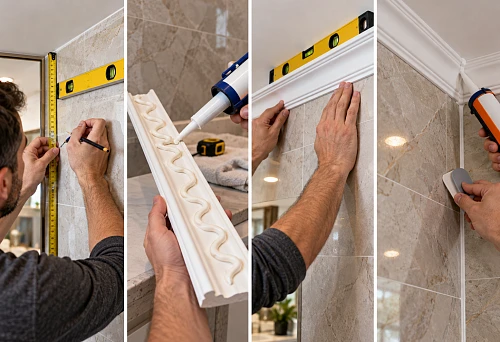
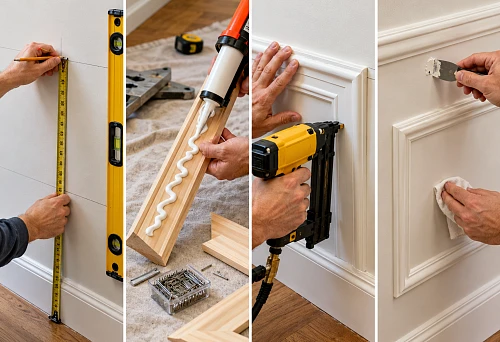
After that, you need to make markings. A shelf for flowers is especially sensitive to misalignment: water in the tray, the tilt of the pot, and the visual line of the wall immediately show an error. It's better to check markings with a level, not by eye. If there are two brackets, it's important to install them at the same height and at the correct distance from each other.
The next step is checking the wall. Concrete, brick, wood, aerated concrete, and drywall require different fasteners. You shouldn't use random screws if the shelf will hold a heavy plant. Drywall without embedded supports and reinforcement is especially dangerous for heavy planters. If in doubt, it's better to check with an installer which fastener is suitable for the wall and load.
It's better to finish the shelf and brackets before the final placement of the plant. If you paint or coat the wood after installation, it will be harder to treat the joints, underside, and carved areas. Wood is prepared differently for enamel, tinting, varnish, or oil, so the finish should be chosen based on the material and the desired visual result.
The final detail is protection under the planter. Even well-finished wood should not be constantly wet. It's better to place a tray, cork or silicone pad, decorative plate, or other protective layer under the pot. This helps preserve the shelf, avoid stains, and extend the life of the stand.
How to make a wooden floor stand for flowers
The query "how to make a wooden floor stand for flowers" differs from the wall-mounted scenario. Here, the main task is stability. The floor stand must support the weight of the plant, not wobble, not scratch the floor, and not tip over if the pot is accidentally bumped. Decoration is important, but it should not come before the structure.
The most straightforward option is a platform on three or four legs. Three legs work well on slightly uneven floors but require precise placement of the center of gravity. Four legs are more familiar, more stable for square and rectangular platforms, but on uneven floors, one leg may "wobble." For heavy plants, it's better to choose a wider base and a lower height.
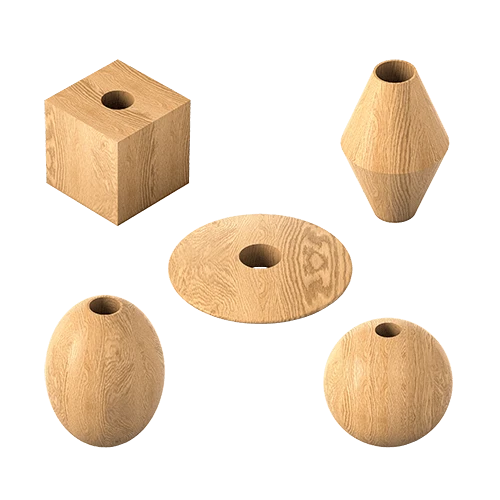
The platform can be round, square, or rectangular. A round shape suits a round planter and looks softer in the interior. A square shape is easier to mark out and pairs well with furniture. A rectangular shape is convenient if the stand will hold two small plants. The main thing is not to make the platform too small: the pot should sit securely, not balance on the edge.
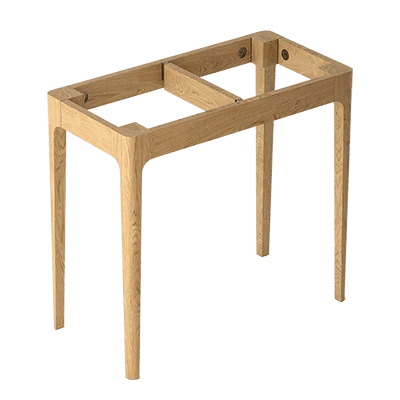
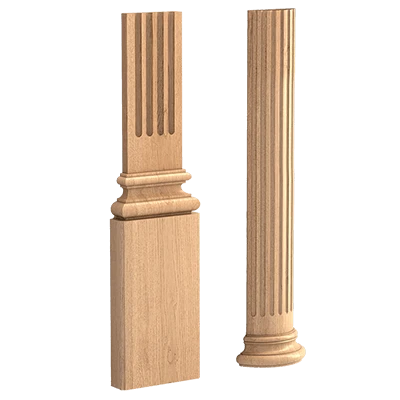
For the floor version, you can use Solid Wood Items as a starting point for selecting wooden parts. If the stand should look like a piece of furniture rather than a utility rack, it's worth tying the legs, platform, trim, and decorative elements into one cohesive look in advance. A single material and repeating shapes help with this.
The bracket in a floor stand can be used in different ways. It can become a side decorative support, an element of a small console, a reinforcement under the platform, or part of a more complex structure. But if the plant is heavy, you cannot make a carved element the only load-bearing part without calculation. For the load, the geometry of the support, fasteners, and stability are more important.
To protect the floor, you need base pads or soft overlays. Moisture, soil, and water often cause the stand to be moved during cleaning. Without protection, wooden legs can leave marks, and the floor can get scratches. This is a small detail only at the idea stage, but in real use, it quickly becomes noticeable.
How to calculate the load from a plant
One of the main mistakes is to calculate the weight based only on the empty pot. In reality, the load is created by the planter, soil, water, the plant itself, the saucer, and sometimes decorative pebbles or drainage. A small plastic pot with light soil hardly loads the shelf. Large ceramics with wet soil can be several times heavier.
For a wall-mounted stand, you need to consider not only the total weight but also the distance from the wall. The farther the center of the pot is from the wall, the greater the load on the fasteners. Therefore, a deep shelf for a heavy pot requires a more substantial pair of brackets and a reliable base. If the bracket is beautiful but shallow in depth, it may not be suitable for a large flower pot.
For a floor stand, the center of gravity is important. A tall plant in a narrow pot can tip over more easily than a short, wide one. If the stand is tall, the risk increases. Therefore, for a large plant, it is better to choose a wide platform and low supports. For small plants, you can afford a more elegant height.
You cannot forget about watering. After watering, the soil becomes heavier, and drops may appear on the shelf surface. If the stand is designed "just right," real use will quickly show weak points. It is better to build in a margin and not place a heavy planter on a single small bracket.
A practical approach is this: first, estimate the weight of the plant's heaviest state—after watering. Then, choose a shelf with a margin in area. Next, select one or two brackets for the depth and length of the platform. After that, choose fasteners for the wall type. Only in this sequence will the stand be reliable.
Material and finish: how to protect wood near plants
Wood near flowers must be protected. Even if the plant is watered carefully, drops of water, a damp tray, soil, and condensation can leave marks. An untreated surface gets dirty faster, absorbs moisture, and loses its appearance. Therefore, the question "what to coat a wooden plant stand with" is not secondary, but one of the main ones.
Beech is well suited for stands under enamel. If the interior is light, classic, or neoclassical, wooden brackets can be made in the color of the wall, furniture, door, or shelf. Enamel helps visually unify details and hide differences in slats if the product is chosen for opaque painting.
Oak is better revealed in tinting, varnish, or oil. Its texture is decorative in itself, so it does not necessarily need to be covered with dense paint. An oak bracket under a plant looks good in a study, living room, hall, interior with natural wood, warm tones, and furniture with visible texture.
Varnish provides a denser protective film, but the visual result depends on the specific composition and surface preparation. Oil highlights the wood differently but also requires proper application and care. Tinting changes the color and helps match the furniture shade. Enamel covers the texture and makes the bracket part of the painted interior scheme.
For a plant area, not only the wood coating is important, but also the contact of the planter with the shelf. Even a coated surface is better protected with a tray. A wet pot should not be placed directly on the wood after watering. A good stand should be beautiful, but it should not suffer from routine plant care.
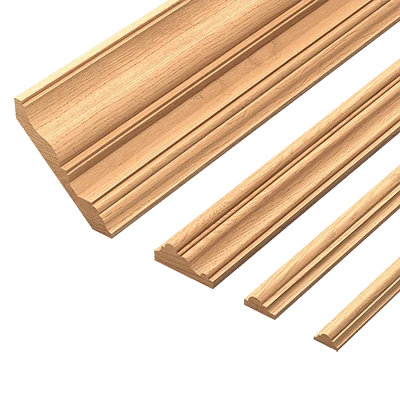
Before ordering, it is worth immediately opening Mounting and finishing materials and thinking about what to coat the parts with, how to fasten the elements, and what will be needed for neat assembly. This way, the buyer won't be left with beautiful brackets but without a solution for protection and installation.
Where to use a plant stand made of carved brackets
In the living room, a plant stand often becomes a decorative accent. It can be placed next to the sofa, near the window, in the space between doors, above a console, or next to a mirror. In this scenario, a carved bracket supports not only the plant but also the overall style of the room. If the interior already has wooden frames, baseboards, trim, or furniture with carved elements, the stand looks especially natural.
In the bedroom, it's better to choose calm solutions. Flowers here should not interfere with passage, bed care, or opening cabinets. A small wall shelf on neat brackets is suitable for light plants that do not require frequent heavy watering. If the planter is heavy, it's better to place the plant on a floor stand by the window or next to the dresser.
In the hallway, a stand helps enliven the wall but requires caution. Here, there are often narrow passages, bags, outerwear, and active movement. A wall shelf should not be placed where it can be bumped by a shoulder. It's better to choose a compact depth and reliable fastening. A carved bracket in the hallway can support classic furniture, a mirror, a console, or wooden trim.
In the kitchen, a plant stand can be a place for greenery, small pots of herbs, or decorative planters. But the kitchen involves humidity, temperature changes, and dirt, so wood protection is especially important. The stand should not be placed too close to the sink, stove, or active cooking area.
In the study, a wooden stand helps add a living detail without disrupting the strictness. Oak brackets for tinting work well here, especially if the room has a desk, cabinets, or panels with natural texture. A plant on such a shelf does not look random: it becomes part of a calm work area.
In a commercial interior—salon, showroom, cafe, studio, floral space—a stand made of carved brackets can serve both decorative and practical purposes. It helps place plants on the wall, free up passages, and support the room's style. But for a public space, it's especially important to build in a safety margin because the structure may be accidentally bumped by visitors.
What to buy together with brackets
A plant stand rarely consists of just one bracket. Even if the decorative support is chosen correctly, you will need a shelf part, fasteners, finish, and moisture protection. For a floor version, legs, glides, and platform fastening will be added. Therefore, it's better to assemble a kit in advance rather than returning to purchase parts separately.
For a wall-mounted stand, the first thing to do is buy or select a bracket. If the shelf is small, sometimes one expressive element is enough. If the shelf is long or will hold several plants, it's better to use a pair. In that case, you should not just buy a wooden bracket for a shelf, but select right and left elements with the same material, size, and finish.
The second element is the shelf platform. It should be deeper than the base of the planter and wide enough for the plant to sit steadily. The platform can be simple because the decorative role is already taken by the bracket. But the material and finish should match the support: beech under enamel is best paired with a painted shelf, oak under tinting with a natural or semi-transparent finish.
The third element is the fastener for the wall type. It cannot be chosen randomly. What works for brick does not always work for drywall. What holds a lightweight decorative shelf may be weak for a pot with damp soil. If the wall is complex, it is better to clarify the fastener with an installation specialist in advance.
The fourth element is wood protection. Finishing materials that are compatible with the chosen wood species and the task will work. For this, it is convenient to to select materials for installation and finishing together with the brackets, rather than after assembly. Then the stand is immediately prepared for real use near water.
The fifth element is a liner or tray under the planter. This is not a decorative trifle, but protection of the shelf from wet marks. Even a beautiful wooden stand will quickly lose its appearance if a wet pot is constantly placed on it without a layer.
For a floor stand, supports will be needed. Here you can choose STAVROS furniture legs and connect them to a wooden platform. If you want to make the item more decorative, you can add a carved bracket as a side element or accent, but it is better to think through the load-bearing scheme separately.
Mistakes in choosing and making a stand
The first mistake is choosing a bracket only for its beauty. Carving is important, but for a flower stand, constructive logic comes first. The pot must stand stably, the shelf must have sufficient depth, the fastener must match the wall, and the bracket must match the size and load. A beautiful but too small element under a heavy planter will be a bad choice.
The second mistake is not considering the weight of wet soil. The buyer picks up the pot before watering and thinks the load is small. After water, the weight changes. If the plant is large and the planter is ceramic, the load can become serious. A wall-mounted stand should be calculated for the working condition, not for an empty pot.
The third mistake is using one weak bracket under a heavy shelf. One bracket may be suitable for a small decorative platform, but a long shelf and several plants require a pair of supports. Sometimes more than two support points are needed, especially if the shelf is wide and heavy.
The fourth mistake is attaching the structure to drywall without reinforcement. A drywall partition may look sturdy, but a heavy pot creates a pull-out load. Without embedded supports, special fasteners, and checking the base, such a stand is risky.
The fifth mistake is placing a wet planter directly on wood. Even good finishing doesn't override common sense. Water, soil, and mineral traces can leave stains. A tray or pad is always necessary, especially if the plant is watered frequently.
The sixth mistake is making the shelf too narrow. The pot should not sit on the very edge. Extra space is needed for stability, maintenance, and wall protection. A narrow shelf may look elegant, but it is often inconvenient for plants.
The seventh mistake is not checking the level. A tilted shelf under a plant is immediately noticeable. Additionally, water in the tray will drain to one side, and the pot may gradually shift. Level marking is mandatory.
The eighth mistake is mixing different wooden parts without a unified finish. An oak bracket, a shelf made of another material, and a random painted area can clash. If the interior is calm, it's better to stick to a single material or a pre-planned contrast.
The ninth mistake is forgetting about plant care. The stand should allow easy removal of the pot, wiping the shelf, watering the plant, and turning the planter toward the light. A placement that is too high or inconvenient quickly becomes annoying, even if it looks beautiful in a photo.
The tenth mistake is buying random parts from different places. Each part may have its own size, shade, sanding quality, and material. If you want a neat result, it's better to select the bracket, accompanying elements, and finish as a single set.
Who is a stand made of carved brackets suitable for
This solution is suitable for those who want to make a wooden plant stand without complex joinery work but with a beautiful result. A ready-made bracket takes care of the most difficult decorative part: there's no need to cut a shape, design carving, or manually finish the support. All that remains is to properly select the shelf, fastening, and finish.
A stand made of carved brackets is especially appropriate in classic, neoclassical, vintage, country, and eclectic interiors. It pairs well with wooden doors, architraves, baseboards, staircases, solid wood furniture, carved frames, and decorative panels. In such spaces, the bracket does not feel out of place but rather supports the existing interior language.
It is also suitable for those who want to liven up an empty wall. A plant on a carved stand works more softly than a painting or a shelf with souvenirs. Live leaves add volume, and the wooden support makes the composition warm. This is a good technique for a wall section, corner, window area, hallway, or foyer.
For small apartments, a wall-mounted stand helps free up the floor. The plant can be raised higher without taking up space with a cabinet or stand. If you choose the shelf depth correctly, the stand will not obstruct movement. Compact brackets and neat planters are especially useful here.
For large plants, a floor version is better. If the pot is heavy, it is better not to overload the wall. A floor stand on furniture legs allows you to raise the plant, protect the floor, and make the composition more furniture-like. The bracket in such a design can be used as a decorative accent if it does not conflict with stability.
You should not choose a carved stand if the interior is strictly minimalist and does not support decorative wooden elements at all. In such a space, simple smooth shapes work better. Also, a bracket may be unnecessary if the plant itself is very large and active, and there is already a lot of carving, patterns, and decorative details around.
How to buy a wooden bracket for a flower shelf on STAVROS
The query "buy wooden bracket for shelf" is best clarified by the task. For flowers, you need not just a bracket, but a support for a specific pot, shelf, and wall. Therefore, the purchase route should be: choose the type of stand, determine the plant size, select the bracket, check the product card, resolve the issue with the shelf, fasteners, and finishing.
If you need a decorative wall shelf, start with the section carved wooden brackets STAVROS. There, it is convenient to choose the shape to match the room style. If a massive wooden base is important, you can go to Solid wood brackets and compare options by material and size.
In the product card, you need to look not only at the photo. Check the article number, size, material, sanding quality, gluing quality, availability, and manufacturing conditions. For KR-017R, for example, there are several sizes, and this is convenient for different stands. For KR-068R and KR-068L, pairing is important: the right and left supports help assemble a symmetrical shelf.
The commercial choice should not end with a bracket. Immediately think about what to buy together: a shelf, fasteners, protective coating, tray, gasket, and for the floor version — legs and support pads. If this is not done, the finished part will lie unassembled or the stand will turn out incomplete.
Before ordering from STAVROS, it is worth checking the current parameters in the product card. If the plant is heavy, the shelf is long, the wall is complex, or the stand will be in a frequent watering area, it is better to clarify details with a manager. This way, the buyer gets not just a beautiful bracket, but a clear solution for a specific location.
FAQ
How to make a flower stand from wood without complex carpentry?
The simplest way is to use ready-made wooden brackets as a base. You need to select a bracket for the size of the planter, choose a shelf platform, fasteners for the wall type, and protective coating. This way, you won't have to cut decorative supports by hand.
Can a carved bracket be used as the base of a stand?
Yes, a carved bracket can be used as a decorative and supporting part of a wall-mounted stand. But it needs to be selected based on the size of the shelf, the weight of the plant, the depth of the planter, and the wall type. For heavy pots, it is better to use a pair of brackets.
Which bracket to choose for a flower pot?
First, measure the pot and estimate its weight after watering. For a small planter, a compact bracket will do; for a long shelf, it is better to take a pair of supports. For an expressive console, you can look at large models, such as KR-068R and KR-068L.
What is better: a wall-mounted or floor-standing plant stand?
A wall-mounted stand is suitable for small and medium plants when you need to free up the floor and decorate the wall. A floor-standing stand is better for large and heavy plants. If the pot is massive, stability is more important than decorative lightness.
How to calculate the load from a pot with soil and water?
Evaluate not the empty pot, but the planter with moist soil, plant, tray, and drainage. For a wall-mounted stand, also consider the shelf's extension from the wall. The heavier the plant and the deeper the shelf, the more reliable the brackets and fasteners should be.
How to secure a wooden bracket to a wall?
Fastening depends on the wall: concrete, brick, wood, aerated concrete, and drywall require different solutions. For heavy plants, random fasteners cannot be used. If the wall is drywall or the base is questionable, it's better to clarify the installation method with a specialist in advance.
What to coat a wooden plant stand with?
For the stand, you can consider enamel, varnish, oil, or tinting depending on the material and interior. Beech is often chosen for enamel, oak for tinting or transparent finish. Near plants, wood needs to be protected from water and wet marks.
How to protect wood from moisture?
Use a top coat and do not place a wet pot directly on wood. Place a tray, protective pad, or decorative saucer under the planter. This will help avoid stains, swelling, and water marks.
Can a plant stand be made with a single bracket?
Yes, if the planter is small, the shelf is compact, and the wall is reliable. But for stability and symmetry, it's often better to use two brackets. For a long shelf, a pair of supports is almost mandatory.
Which STAVROS brackets are suitable for the stand?
For different tasks, you can consider KR-068R, KR-068L, KR-017R, KR-019, KR-055 and other models from the brackets section. The choice depends on the plant size, shelf depth, room style, and desired finish.
What to buy together with the brackets?
You will need a shelf platform, wall-type fasteners, a finish coating, a protective pad or drip tray for the planter. For a floor version, furniture legs, glides, and platform fasteners are also needed.
Where to buy a wooden bracket for a flower shelf?
Wooden brackets for a flower shelf can be selected on the STAVROS website in the carved decor and solid wood sections. Before purchasing, you need to check the size, material, finish, and compatibility with the future stand.
Conclusion: a beautiful stand starts with the right foundation
A wooden flower stand doesn't have to be a complex carpentry project. By taking ready-made carved brackets, choosing a shelf, fasteners, and a protective coating, you can get a neat interior solution without random DIY. The main thing is not to choose parts based only on a photo. For plants, weight, humidity, shelf depth, wall type, material, and ease of care are important.
STAVROS carved brackets allow you to assemble a stand that works in two directions at once: it holds the shelf and decorates the interior. For a small planter, a compact wall shelf is suitable; for several plants, a paired composition; for a large pot, a floor platform on stable supports. In each case, the buyer can move from an idea to a specific set: bracket, shelf, fasteners, finish, wood protection.
Before ordering, it is worth opening the product pages of the selected items, checking the dimensions, material, sanding quality, option for enamel or tinting, current availability, and manufacturing conditions. If the stand will be for a heavy plant or a complex wall, it is better to check compatibility and installation nuances with a STAVROS manager in advance. Then the stand will turn out not just beautiful, but well-thought-out, stable, and convenient for daily care.